
January 28, 2021 · 37 minutes · Episode 211
About this episode
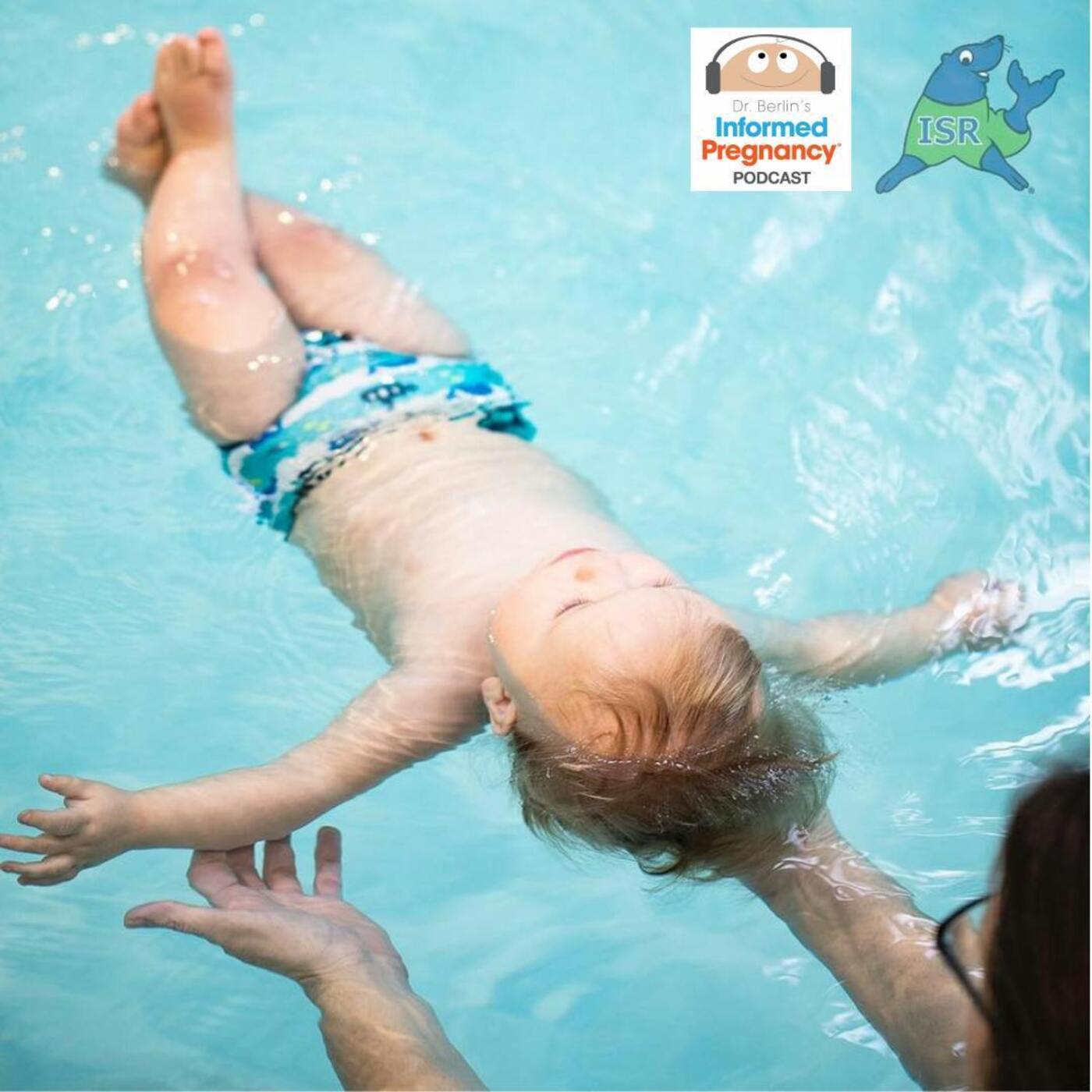
Drowning is one of the leading causes of death in children under five years of age. Infant Swim Resource lessons help prevent infant drownings by preparing children ages six months through six years of age to survive unintended water encounters.

Learn more about your ad choices. Visit megaphone.fm/adchoices
See Privacy Policy at https://art19.com/privacy and California Privacy Notice at https://art19.com/privacy#do-not-sell-my-info.
Key quotes
“so let me start by saying that drowning is a leading cause of death in children ages 0 up to 4 years old and”
“If your child can crawl or roll they can get to a water source”
“Absolutely not. Puddle jumpers, floaties of any kind, you do not want your child in at any point because it puts them in a vertical position, which is what we call the drowning position.”
“It is always that second and it's silent.”
“but I can save other people's kids so that is what I'm here to do”
Related episodes
- Ep. 471 Understanding & Preventing Food Allergies with Dr. Carina Venter
- Ep. 141 Jen Lilley – After Birth
- Ep. 522 Hyperemesis Gravidarum with Marlena Fejzo
- Ep. 511 Identity in Fatherhood with David Arell
Transcript
AI-generated transcript with speaker labels — may contain errors, especially names and medical terms. Dr. Elliot Berlin, DC appears in blue; Melissa Teigue in orange.
Download PDF of the Transcript
Dr. Elliot Berlin, DC [1:13] Welcome to the informed pregnancy and parenting podcast. I'm your host dr. Elliott Berlin in this episode We are going to talk about the importance of water safety for infants My guests grew up a military brat But stayed in one place long enough to earn a degree in business marketing and then spent over a decade working in live events After experiencing a personal tragedy and a very scary family water incident She decided to change career paths and now spends her time and efforts educating parents about infant water safety and swim instruction Melissa take welcome to the podcast Thank you. I'm excited to be here. I'm curious to learn because that's a very big career shift
[2:19] But I don't want to jump right in to that. I want to start at the beginning. Where you from originally? I was born in Sacramento Almost Sacramento was like growing up in Sacramento
Melissa Teigue [2:29] I wouldn't know because I was there for maybe a couple of years that I don't remember and then we moved to Japan. Oh, what was it like growing up in Japan? I remember the yen store and the cherry blossom trees
Dr. Elliot Berlin, DC [2:42] Wait, how long were you there for? I was there for three years. Oh from what age to what age from three to six Okay, so you don't remember a ton You speak any Japanese
Melissa Teigue [2:54] No, I can count to ten, but either in that later in life. So it doesn't get me anywhere. Mm-hmm
Dr. Elliot Berlin, DC [2:59] I know where'd you go from? There's your pen
Melissa Teigue [3:02] Then we moved to Panama. I was Panama. I mean now you're a little bit older. So yeah Yeah, so we were there two years loved Panama. Everything that I can remember was amazing And from there we went to the Air Force Academy Springs
Dr. Elliot Berlin, DC [3:17] What is it and this is for your dad your dad was in the Air Force he was in the Air Force Yes, so is Japan and Panama already Air Force? No Yeah, they were Air Force versus okay and then you went to Air Force Academy and stayed there for a while
Melissa Teigue [3:33] Stayed there for four years and then moved to Hawaii. Oh, wow
Dr. Elliot Berlin, DC [3:37] What? For another four years. Yes. I know I always wonder what's it like as a kid like in such Developmental stages of life. What's it like to move to a new place all of a sudden over and over again? We're you always is like amazingly social as you are now
Melissa Teigue [3:55] Yeah, so I think I had to be and honestly, I think everything from my younger childhood and Everything because of the Air Force got me to where I am today in terms of my career path and where I went Developmentally, you know you look back and you think oh my gosh, there are issues There are abandonment issues and I can't hold on to a friend because I'm gonna move away but in the end when I look back at it, it's all the experience that I got of the people and cultures and I've been on a plane more times than probably someone who's 80 years old and I love it I love looking back and knowing that I have that under my belt
Dr. Elliot Berlin, DC [4:40] Okay, so a few things first of all, I wish I was a military family because I can't hold on to friends But I have no excuse So there's that Number two is do you still have friends from each of these places and like every stayed in touch with people?
Melissa Teigue [4:56] I have one friend. Actually, I'll say two so I have one friend from when we were 10 years old, third grade, so 10 years old. And it's been 30 plus years now that we've been in touch. And then I have my wife who I met when we were 16.
Dr. Elliot Berlin, DC [5:13] Oh, wow. 16. Hold on one second. You guys have us outdone. We were 18 and 20. Yeah, but we weren't technically together and that's a whole other story. So you and your wife beat us because you were together since you were younger. 16 where?
Melissa Teigue [5:30] South Carolina. Sumter, South Carolina.
Dr. Elliot Berlin, DC [5:32] And what were you each doing there?
Melissa Teigue [5:34] So we were in high school. My dad was stationed there. Her parents were retired Air Force there.
Dr. Elliot Berlin, DC [5:39] Oh, Air Force Air Force Air Force Air Force.
Melissa Teigue [5:42] And we were there for two years and then I moved back to California and stayed in California.
Dr. Elliot Berlin, DC [5:48] Wait, where did you go after high school?
Melissa Teigue [5:51] So I did a freshman year in Hawaii sophomore junior year in South Carolina and my senior year here in California. And then I just stayed in California since.
Dr. Elliot Berlin, DC [5:59] OK, and then you went for a degree after?
Melissa Teigue [6:03] Yeah, Bachelor of Science in business marketing at Cal Poly Pomona.
Dr. Elliot Berlin, DC [6:07] Oh, Cal Poly Pomona. That's fun to say. In business marketing, did you choose that because you have a particular interest in that area?
Melissa Teigue [6:16] I wanted to go into advertising. I wanted to be the person that placed products on the shelves and decided what those advertising campaigns were going to be. And I thought I was never going to get into sales. My family tried to push me into sales and I said, no, I'm not doing it. And then, lo and behold, I end up in media sales after I graduated. And I loved it, but it was boring. It was redundant and I needed something different. And so that's how I got into events. I took a career change and a much lower salary base than I had originally for three years and got into events, which is what I loved.
Dr. Elliot Berlin, DC [6:51] Yeah, events. I mean, that can mean a lot of things to a lot of people. What kind of events are we talking about?
Melissa Teigue [6:55] So I catered under Wolfgang Putt catering. That's where I started.
Dr. Elliot Berlin, DC [7:00] Oh, yeah.
Melissa Teigue [7:01] Small, unknown.
Dr. Elliot Berlin, DC [7:03] Small and unknown, no one knows them. So like all kind of personal events and business events or?
Melissa Teigue [7:09] Personal business, work the Oscars.
Dr. Elliot Berlin, DC [7:12] Yeah, I've heard of that one.
Melissa Teigue [7:14] Yep, that, yeah, all of it. Small dinner parties of 10 people, up to a thousand person seated dinners.
Dr. Elliot Berlin, DC [7:19] Wow. But events, you know, I have a very rich past in terms of jobs that I've worked, I used to work in catering. Events are like high pressure, very stressful. Yes. And you're working all the time, just 24 7 because, you know, everyone's event is most important and that's how you have to take it. So, yeah, yeah, I don't know if I could have done that long term. Like you did it for 13 years. I think I would have passed out for 13 years.
Melissa Teigue [7:50] Yeah. And was going to continue doing it. Yeah, but things change.
Dr. Elliot Berlin, DC [7:53] So you said that you and your wife kind of met at 16, but weren't together. When did you really bring it together in 2005?
Melissa Teigue [8:01] So we met in 96, 2005. We were engaged 2008. We got married on October 24th before Prop 8 passed. We were grandfathered in to the same sex marriage and we've been married ever since.
Dr. Elliot Berlin, DC [8:16] You met in 96 is the year we got married. Yeah, my wife and I. Yeah, that's great. We were together for a couple of years before that, but I was like, wait a second, 96. That rings a bell. So when you guys got married from the beginning, were you planning on having a family?
Melissa Teigue [8:34] Yes, I always want to be pregnant. That was my goal in life is to have kids. Yes, I wanted six kids. She wanted two. So I said that's compromise at four. That was a compromise.
Dr. Elliot Berlin, DC [8:47] I see. How many siblings do you have?
Melissa Teigue [8:49] I'm the second of four girls. And she has an older brother and that's it.
Dr. Elliot Berlin, DC [8:54] Oh, so you're worried sticking kind of towards your comfort zone. Six is a big number today. Like you don't see a lot of families that have six kids.
Melissa Teigue [9:03] I mean, the fact that we want to have a fourth and people are like, you want what? Why? I want more than one. I'm like, I can't have only children. Like that's just not, you know, that's not our thing.
Dr. Elliot Berlin, DC [9:15] So, yeah, I mean, we have foreign people always say you have such a big family. I'm like, you know, in my community, in the Orthodox Jewish community, we kind of have a smaller family. That's the truth. So, I mean, there are people with literally dozens of kids that drive passenger vans, like the kind you would take to the airport. Yes. So, you know, it's another way to go. How was your first pregnancy and your birth?
Melissa Teigue [9:40] So my very first pregnancy was a miscarriage at six weeks. And then we had our daughter, Malin, and we got pregnant with her through IUI. And she was good. They induced me because they thought that she was intrauterine growth. restriction and wasn't growing inside me at 38 weeks. She was four pounds, 11 ounces, but she was a strong little girl and didn't end up in the NICU or anything. She was healthy.
Dr. Elliot Berlin, DC [10:10] Did they figure out why she was a year?
Melissa Teigue [10:12] No, I think what ended up happening was it's just in our genetics. My mom had all small babies. My sister has had small babies and I just have small babies.
Dr. Elliot Berlin, DC [10:22] So just proportional to small.
Melissa Teigue [10:25] Yeah.
Dr. Elliot Berlin, DC [10:26] And we threw a bunch of terms out. IUIs, intrauterine insemination.
Melissa Teigue [10:30] Yes.
Dr. Elliot Berlin, DC [10:30] And IUGR, intrauterine growth retardation. I always say growth restriction. I think some of the medical terms are pretty harsh.
Melissa Teigue [10:40] Yes.
Dr. Elliot Berlin, DC [10:40] Try to change them up a little. Great. So you got induced and you had a good induction?
Melissa Teigue [10:45] I had a good induction. I mean, it's 42 hours. You know, I was hoping to do like a whole natural thing and after 18 hours of Pitocin, I'm like, no, I need nepodural. So I had nepodural and it was a slow, slow progress, but she finally came and it was good. I had my vaginal birth.
Dr. Elliot Berlin, DC [11:05] How soon after that, did you go for another one?
Melissa Teigue [11:09] So we actually tried when she was a year old. And in that time I had had what I thought were three more miscarriages. I had actually had a miscarriage and two blighted ovums. And for people who don't know what a blighted ovum is, your body thinks it's pregnant. But when you go in for that heartbeat ultrasound, it's an empty sack. So you basically can choose to have a DNC or miscarry it naturally. I decided I didn't want a DNC to mess with anything going on inside my uterus. And I ended up having just miscarried it naturally. And my body felt it was pregnant for 12 weeks. So for an additional four weeks, I felt pregnant until it miscarried.
Dr. Elliot Berlin, DC [11:53] So were those also IUIs?
Melissa Teigue [11:56] Yes.
Dr. Elliot Berlin, DC [11:57] They were all IUIs. Wow. So you did a lot of them.
Melissa Teigue [12:00] Yeah. And my body loves being pregnant. Apparently it just doesn't always hold on. Right.
Dr. Elliot Berlin, DC [12:06] Um, so one was a miscarriage, meaning you saw heartbeat?
Melissa Teigue [12:09] No, that one was, that one was a six week.
Dr. Elliot Berlin, DC [12:12] Oh, six week.
Melissa Teigue [12:13] And then two blighted ovums.
Dr. Elliot Berlin, DC [12:15] Okay. And then.
Melissa Teigue [12:17] And then we got pregnant through another IUI.
Dr. Elliot Berlin, DC [12:20] And how old was Malen then?
Melissa Teigue [12:23] She was three and a half at that point.
Dr. Elliot Berlin, DC [12:25] Okay. So this is two and a half years in between until you're pregnant again.
Melissa Teigue [12:29] Yeah.
Dr. Elliot Berlin, DC [12:30] Um, and how was that pregnancy?
Melissa Teigue [12:32] The pregnancy was good until the 20 week ultrasound, the anatomy scan, and they found heart defects. They found what they thought was a correction of the aorta and a ventricular septal defect. And we were then sent directly to the pediatric cardiologist at UCLA. And he confirmed it and they watched us very closely. And he said, if all the heart defects, these are kind of the best ones to have. They're the most successful in terms of surgeries. And we thought, okay, great. You know, we were very hopeful. We started searching for pediatric cardiologists. We're looking at CHLA and long story short, cause there's a lot of in between, but we ended up having to do a scheduled C-section because
[13:17] they didn't think that she was going to be able to survive a vaginal birth. And that was at 35 and a half weeks that they did the C-section. And she was actually four pounds. So she ended up in the NICU at Cedars and we had a group of amazing doctors and nurses. In the end, she was actually born on December 21st, three years ago today. So today's her birthday, which is why I thought it apropos podcast, if I get emotional, excuse me, but yeah, it's been an interesting day.
Dr. Elliot Berlin, DC [13:47] It's a little crazy. Cause we've been talking about doing this for a while. I just randomly came out on this day, or maybe not randomly. Let's do this. So she was in the NICU is kind of where we left it, right? Let's take a little break and come right back and hear the rest of that story. We'll be right back.

Dr. Elliot Berlin, DC [16:23] slash Dr. Berlin for up to 30% off. Welcome back to the Informed Pregnancy podcast. We're talking to Melissa Pegg. I mean, it's gotta be just that moment. My heart is always pounding when we go in for that structural ultrasound. It just feels like the biggest test ever. Like you just want everything to be okay. And you guys had already been through a lot, and to get that news about a cardiac defect
Melissa Teigue [16:51] must have been scary. It was so scary, and I should say this. When we did the 20-week ultrasound with Malin, our oldest, they found an echogenic bowel, and so they thought that there might be some chromosomal issue, and we did it further testing, just blood tests, and everything came back okay. So that 20-week ultrasound always got me, and when we went in for this one, like I could tell from the sonographer, I'm like, something's wrong, and she's not saying it. It took a really long time, and the doctor came in, she told us, and I just started crying because I just knew. So when she was born, and when the cardiologist had told us, okay, these are like the great kind of heart defects to have,
[17:34] we were very hopeful. Like we didn't think anything of it. And when she was born, and all was okay, and everything was going okay, and then the doctor said, you know, she's showing signs that she's going to need surgery earlier than we thought, we had to make a choice. Do we go to CHLA to a surgeon that we hadn't talked to or knew, or do we go to Stanford, where they have the best surgeon that does these heart surgeries, and his name is Dr. Frank Hanley up at Lucille Packard Stanford Hospital, and he took her and worked on her little dime-sized heart and repaired it, and it was very strong. Cut to us. How did we get up to Stanford? So they, she was transported via plane, I believe it was.
[18:18] Neither of us were allowed to be on the plane with her, but my wife flew up before me because we had to figure out plans for Malin back here, and I just had a c-section. So I was still in the hospital. I hadn't been discharged yet. And I ended up going up there a couple days after, like the day before she was going into surgery. And that whole point of sending your child a newborn, at this point, she was six days old going into surgery, is just something you don't get past. Your child is getting put under, she's sedated, and you're just hoping she survives it. I mean, being under and being brought back, let alone the surgery itself. So I believe they said it was going to be a few hours,
[18:59] and it ended up being an additional three or four. So we were just sweating, wondering if the phone calls, everything okay. Finally, we did, we met with the doctor, everything was okay. She was moved to the cardiovascular unit up in the ICU there. And we ended up living there for 10 weeks because she could not hold onto any fluids and her lymphatic system was compromised. So anything that was going in was coming out and they couldn't stop it. And they didn't know what it was. And as we started doing more research into it, and they were talking to Children's Hospital of Philadelphia, because they deal with lymphatic system, we learned that she has a very rare disease that's mainly found in dogs,
[19:41] and it's called lymphangiectasia, and it's rarely found in humans.
Dr. Elliot Berlin, DC [19:47] What does that mean that's happening?
Melissa Teigue [19:50] It means that their lymphatic system is just draining all over. So there's just holes all over and nothing is staying in. So they're very immunocompromised because they're not holding on to any… food. I mean, we would have to put like blood in her. We did transfusions. I mean, everything to try to get her to grow. And she had a couple of infections. The first infection, she became septic and the doctor said, you know, she survives this. We're going to have to wait and see what happens next, because we don't know. And she survived that weekend. We actually were Catholic, so we had her baptized because we weren't sure. Those were the longest two days. And then she survived for another month. And towards
[20:33] the end, her organs just started shutting down. She got another infection and she just wasn't turning for the better. And at that point, we kind of already knew what is the life for her because there was no stopping these fluids coming out of her. There's no treatment for that. There's no treatment. Like they had tried a treatment that had happened before on other babies that had worked. But what their lymphangiectasia wasn't as profuse. Hers was just profuse. So everywhere. So February 28, 2018 is when we lost her. And to say goodbye to your child is so unimaginable. I think for so many parents that you just never, you don't get past it. You know, we still grieve and people still ask,
[21:24] when are you going to be over it? And we say, you're never over it. You move through it. And every day, it's, you don't know. You don't know to expect. It could be a good day. It could be a bad day.
Dr. Elliot Berlin, DC [21:34] I'm sorry. And I just hope that her memory is a blessing for you. And I know that the work that you're doing now is, you know, with her spirit in mind. I also wonder, because at that point, Malin was already four and a half years old.
Melissa Teigue [21:53] She turned four February 12 while we were up there. So we celebrated her birthday up in the hospital. Yeah, so that must have been really challenging for her because she's aware enough. She was definitely aware. And it was kind of amazing. And I think that was one of the blessings we got, especially after meeting so many parents who had kids and they were going through the same thing. And their kids couldn't be with them. We had Malin, we chose to have her up there with us. And we stayed at the Ronald McDonald House, which is an amazing charity, just an amazing organization that I didn't even know what they did until we had to use them. And they take in families
[22:32] whose children are sick, and they're usually right next to a hospital. So you can be right there with your child and not incur the expenses of hotels for an endless amount of time. We thought we were going up there for a week and should be back down to LA. That was not the case. We were up there for 10 weeks. So it would have been expensive paying for a hotel, but we stayed at Ronald McDonald House and Malin was able to be in the hospital room with us. And it was cute because every morning we go in, one of us would always stay at the hospital overnight. So we'd take turns and the other one would bring Malin the next day. And whenever she came in the room, it was like,
[23:07] Adeline's eyes would open up and she'd be looking around for this voice that she heard every time. It's like she knew who she was. And Malin would read books to her and she would sing. We'd all sing to her. And even to this day, Malin has a relationship with her that even I don't understand. There's such a connection and she talks about her and she misses her. And you know, we speak very openly about it in our house. Nothing's a secret and no question is taboo. We're very open about death with her because she was with us through it all. And she saw it and she sees us crying and she wants to know why. So it's definitely going to shape her life.
Dr. Elliot Berlin, DC [23:46] You know, it's very powerful, the way that kids interact with other kids, even babies, it's kind of amazing to watch sometimes. And she clearly developed a close relationship. Speaking of babies, you did have another baby.
Melissa Teigue [24:01] We did have another baby, you know, just because I think God just likes to laugh at us. We had this baby on May 1st of this year. In the beginning of this crazy pandemic. So, you know, as I wanted my all natural birth and you know, at the hospital with a doula this time, I didn't get my doula. I got her virtually. Kaden is her name and she's now seven and a half months and she is a healthy little darling and we love her to death.
Dr. Elliot Berlin, DC [24:32] And for the pregnancy, no complications?
Melissa Teigue [24:35] No complications. She was my biggest baby. She was seven pounds 11 ounces. She's as big as the other two combined, pretty much. Pretty much. And she was born at 41 weeks, because I decided to induce I didn't feel comfortable personally going to 42 weeks just with everything we'd already been through. And I just didn't want to risk anything. And so I was induced with her the toast and the whole thing, but I did it naturally until Literally the transition stage when I was screaming for an epidural and my wife is like no you can do this You're so close. I'm like, give me the epidural the epidural comes and the minute it goes in I'm like this baby's coming out. I need to push and
[25:19] 15 minutes she was out. Oh I don't even think that the girl was in my system at that point because I still thought everything
Dr. Elliot Berlin, DC [25:27] You're learning a lesson that I'm still trying to learn which is just listen to your wife We promised this episode was gonna be about water safety and You had another experience a family member of yours had an experience with water safety issue I feel like that's what kind of triggered this for you, right this shift
Melissa Teigue [25:55] Yes, so back in 2014 Malin was six months old and We were at a family party at a pool. It was for my niece's two-year birthday and my grandma's role was always wear life jackets around the pool if you don't know how to swim and Prior to this we had looked into some lessons for Malin because swimming to me is very important And I had seen this video of this little boy falling in the water and rolling to his back to float to save himself And I'm like that is so cool Those lessons for my children we looked into them and we found the price and I'm like, oh my gosh, it's so expensive I don't know if we should do it cut forward to 12 weeks later and we're at this family party
[26:38] My sister's getting ready to sing happy birthday brings up the cake and she looks around she's like we're Charlotte her four-year-old my niece We're all looking around all of a sudden. My sister spots her face down in the pool. She jumps in Was her my Wife Taryn and mom start doing CPR on her because we had just taken CPR because we had just had Malin so I'm calling 9-1-1 with Malin in my arms and It seems like 30 minutes go by nothing's happening and I'm calling 9-1-1 again and I say just call but I don't hear them what's taking so long what's happening and I will say this for anyone that has a cell phone find out the nearest 911 number to put into your phone if you dial 9-1-1 from your cell phone
[27:27] It does not connect to the closest station. They have to farm it out basically So from that point on I found out from my city what the actual 9-1-1 number was so I could connect them Directly should anything happen? So as I was calling I could hear the sirens they come up I turn around She's starting to cough stuff up. They decide to move her because my grandma's kind of on a hill They want her to you know, get closer to the ambulance when they come they come and pick her up basically, the doctor said if she were to have an IQ of a hundred it would now be like 98 and She had no brain damage It's amazing because How she was blue and she took forever to resuscitate
[28:10] So it's really truly a miracle that she is still alive, especially now knowing what I know I
Dr. Elliot Berlin, DC [28:17] Mean water safety you just never know personally I've heard so many stories of the pool of a tub of a hot tub so many stories and then there's just water That accumulates anywhere in a flood could even do it There are so many situations in which if you don't know how to survive in water You can end up in a big problem really quickly I want to learn more about the program that you do and the information that you have we're gonna be right back with Melissa Tague Welcome back to the informed pregnancy podcast. We're talking to Melissa Tague and we've got some very Practical information about water safety for infants. Where do we start?
Melissa Teigue [29:07] so let me start by saying that drowning is a leading cause of death in children ages 0 up to 4 years old and There's a lot of parents that believe well my child can't get to water So they're fine until you know, they're one or two years old to have some lessons That is not true If your child can crawl or roll they can get to a water source Whether it be a bathtub a hot tub of neighbors pool Even if you don't have a pool like you had mentioned it could happen in floods You just never know when there's gonna be that occasion that they could fall into something They're not prepared to save themselves. That's where we come in So the company is ISR and that's infant swimming resource and
[29:48] After we had gone through that incident with my niece Tara and I looked at each other and we said we don't care how much it costs. We're putting her in these lessons We immediately reached out to the insurance and we had her lessons that fall of 2014. And she learned how to roll onto her back and float. So the structure of these lessons is different than any other kind of lesson that you might go to once a week for 30 minutes. So these lessons are every day, day through Friday, 10 minutes per day. They are survival swimming lessons. They are meant to teach your child that if they were to fall into water, they will be able to save themselves. So from ages six months up to however old,
[30:31] I know some instructors who teach adults, we will teach six months to 12 months old, how to roll back to float to get to their back to float and yell out and call out for whoever or cry until someone can come get them. And from 12 months and older, it just depends because 12 months could be too young depends on the skillset for the child. Every child is different. And the lessons are customized to that child, but they learn the swim float swim sequence. So they will swim for four seconds to their back to float and then continue to flip over and swim to the steps, the side of the pool, whatever it is to get out. And that is the main goal of these lessons.
[31:08] It's so important because so many parents I get who contact me say they know someone or my child has been in these lessons for two years and we go once a week for 30 minutes and they haven't learned anything. And so it's a commitment. We tell parents, it's a commitment to do these. It can go from anywhere for four weeks up to eight weeks, just again, depending on the child because every child is different and some kids can go faster and some kids take a little bit longer.
Dr. Elliot Berlin, DC [31:35] What's the age range I'm teaching them? Like when can you start?
Melissa Teigue [31:39] So six months is the youngest and I usually teach up until five years old is what I've done as the highest. But I always recommend parents because I get parents who have a lot of two and three year olds who don't know how to swim and that's the age where curiosity kicks in. They wanna try to swim. Some of them are fearless and they try to like they're in the water with their parents and they're trying to get out of their arms and they don't know what to do after that. So the parents are coming to me saying, I'm so scared. They're gonna just jump in one day and not know what to do.
Dr. Elliot Berlin, DC [32:08] Yeah. And you know, again, there are just so many different areas where you just turn your back for a second and they can find themselves in water trouble.
Melissa Teigue [32:16] It is always that second and it's silent. Like when my niece went under, she even said, she's like, I tried screaming out and you don't hear it. You slip in and that's it. And the other big thing- She remembers falling in. It's weird, but yeah.
Dr. Elliot Berlin, DC [32:33] Wow.
Melissa Teigue [32:34] And sometimes we don't know if it's because she's heard the story so many times, but it happened. I think she had said something to that effect like right after the incident. So she wasn't even around anyone that was talking about it. The other big thing that I get from parents is the floaty question. Well, should I put my kid in floaties until they can get into lessons? Absolutely not. Puddle jumpers, floaties of any kind, you do not want your child in at any point because it puts them in a vertical position, which is what we call the drowning position. When they're in that position, they can't get horizontally on the water to swim to get to safety or to float.
[33:12] So when I get a child that has been in floaties, they are more challenging because it's getting them from a vertical position to a horizontal position. And they also have that false sense of security and that's what my niece had because she had been swimming, quote swimming in a puddle jumper, some kind of floaty and she thought she could swim. So when she had it off, she had taken it off, she went right into the water thinking she could swim and she couldn't. And that's what happens to a lot of kids who grow up with those.
Dr. Elliot Berlin, DC [33:40] Wow. By the time you made this career shift, cause you had talked about getting into events and taking a pay cut, but you worked your way up events.
Melissa Teigue [33:49] I worked my way up. I was the vice president of a company here in Los Angeles and events. And like I said, I thought it was something I was gonna be doing for years. So what happened is after Adeline passed away, we took the time off and our bosses at the time allowed us to take that time off. Taryn works for Netflix and they are an amazing, amazing company. And she was able to take up to a year off if she wanted to grieve and to figure out what we wanted to do with our lives. And I had decided at that point, I couldn't go back to events. I just honestly couldn't go back to caring about people's weddings when I just lost a child. And I always thought when we had put
[34:31] Malin in these lessons that I would retire one day and I would become instructor because I was that passionate about it. And cut to, you know, we lose Adeline and I realized, wait a minute, I should just do this now. Why not? This is something I'm passionate about. I wanna save other people's kids. So might as well do it. And I had the time because I decided to quit my job of, you know, 13 years.
Dr. Elliot Berlin, DC [34:55] What's the training like to become an instructor?
Melissa Teigue [34:58] So it's about a nine week. training and you're in the water with master instructors for anywhere like five to six hours a day sometimes and then it's a lot of reading and assessment testing so you're writing essays answering questions as to how you would work with a child it's behavioral psychology in about nine weeks so it's a lot but you learn everything and it's so fascinating to see it all play out and I never get tired of teaching a child how to float when I can just see like a seven month old in front of me floating I think it's the coolest thing yeah I mean it's really hard to
Dr. Elliot Berlin, DC [35:35] picture where you even start with like a six month old or a seven month old I had a hard enough time getting them open the mouth so I can stick that baby mush in there
Melissa Teigue [35:48] and the biggest thing for us is the safety of the children so that's why the lessons are 10 minutes a day because a lot of parents like well can't we just do an extra 20 or 30 and we say no it has to be 10 minutes because we're putting them through challenging things and they're learning so it's a big ask for parents to you know sign their kids up for this but it's so important it's so important it's something that's preventative and that's what gets me every time when I hear about a drowning it's so preventative do you generally go to them to do it in their environment or do they come to you I do offer private lessons where I go to someone's home to do it but I generally prefer using a pool I don't have a
[36:28] pool myself so I have host families who will let me use their pool to host lessons for a couple hours a day and the children come to me they're one-on-one with me in the water it's not like a group of kids that are hanging out on the side of the pool so they're in the water with me for 10 minutes is there a place online where people can get more information about this type of water safety yeah they can go to my website it's www.socalisr.com and my instagram handle is at socalisr and they can find me there too and they can message me or dm me call me email me that's a lot of ways to reach you it's a lot of ways I am available and of course as you can imagine with this pandemic it was a very
[37:15] different year this year so I'm hoping and praying that by spring I'm back in full session and able you know to take on all the kids I possibly can yeah I mean you know we don't
Dr. Elliot Berlin, DC [37:29] normally talk exactly about when we're recording podcasts and they just kind of live up for a long time but you know in case the world comes to an end in the next 10 days and you find this recording it is the end of December 2020 the year that we will hopefully be the worst year in the history of my life and it's almost over I don't even usually stay up until midnight anymore it's been a long time since we did that but this year I'm definitely planning up to stay past midnight I want to be sure 100% that it because this is how I like to say that 2020 becomes hindsight because I'm looking forward to a great 2021 well Melissa thank you so much for coming on and sharing some really personal stories I know that's not easy to do and
[38:16] I know exactly why you do it to help other people and I know you will help other people I sadly know several babies that came either very close or didn't make it after water drowning incidents and so this is really even personally kind of near and dear to my heart from just personal stories in our circles we always teach kids to be water safe but we never did it that young and I didn't even realize you could do it that young and so I learned that tonight from you and I certainly with all the mommies and babies running through my office will make sure that they know as well please do I always say I couldn't save my own daughter
Melissa Teigue [38:57] but I can save other people's kids so that is what I'm here to do yes and I can only imagine
Dr. Elliot Berlin, DC [39:03] that she is smiling down and looking at the the work you're doing in her name and the efforts and the joy that you bring into the world through her with the work that you're doing when you could have just been VP of events in a very different world thanks again at home thanks for listening to inform pregnancy if you like our program share us with your friends leave us some feedback in your podcast app I do read all of them even the ones that are like one or two stars they freak me out because I'm an anxious Jew but I do look at them so I can learn from them constructive feedback is more than welcome and you can find us on instagram at dr berlin it's spelled out d-o-c-t-o-r-b-e-r-l-i-m
[40:00] I gotta
Want more pregnancy + parenting? Start your FREE TRIAL of Informed Pregnancy+ and get access to all our curated pregnancy and parenting content — original series, iconic birth films like The Business of Being Born, prenatal workouts and more.
