“These poses offer physical and emotional benefits for expectant partners while cultivating closeness with their significant other. A wise yoga teacher once told me “it’s yoga practice, not yoga perfect” and I encourage you to welcome the unexpected and the awkward as you dive into unfamiliar territory.”
Pregnancy by default puts the birthing partner at the center of the action. Not only is their physical body changing and their entire being evolving, but they bear the brunt of the physical “work” it takes to grow a human and bring that human earth side. This can often create a disconnect between partners for the simple reason that one of them is experiencing something that the other is not. That disconnect isn’t necessarily good or bad, but it may bring a feeling of distance or misunderstanding.One amazing way to support and nurture connection with your partner during this unique time is through partner yoga. Partner yoga helps foster a deeper connection between you and your loved one and can contribute to a boost in mood for both of you. It involves physical contact, support, and vulnerability. Learning to trust your partner to support you in various poses can translate into improved trust and communication in other areas of your relationship. Partner yoga also allows couples to explore physical intimacy in a unique and healthy way. The practice involves holding, balancing, and stretching with your partner.
Discuss your intentions, comfort levels, and any physical limitations with your partner before starting. During the practice, maintain an open line of communication through verbal cues and non-verbal cues like eye contact and touch. These poses are relatively simple and can help you build trust and familiarity.
Once your doctor or health professional has cleared you for this kind of movement, I invite you to roll out your mat and try something new with your partner!
Suitable Space for Partner Yoga Checklist:
Quiet, spacious area without distractions
Solid, flat floor should be beneath your yoga mat
Blankets, yoga blocks, pillows, candles, incense, or anything else that can make things more comfy and inviting
Relaxing, non-instrumental music
Temperature adjusted to your liking, slightly warm is ideal
Comfy, loose fitting clothing
Honestly, no one needs anything special to do yoga. A mat, props, straps, and bolsters are just nice to have!
Get Going
Take a comfortable seat on the floor or mat.
Next, Sit up as straight as you can, allowing the spine to extend vertically.
Then, Facing each other, begin inhaling and exhaling in unison.
Finally, take ten deep breaths, holding at the top and bottom of the breath for 4-5 seconds.
Partner Yoga: Cat/Cow Stretch
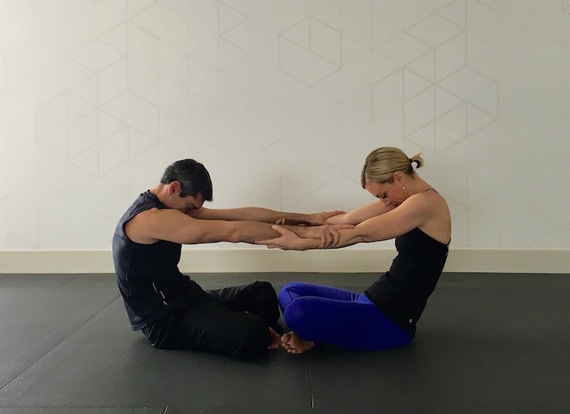
First, Sit on the floor facing your partner, cross-legged.
Next, Let your hands rest palm down on your knees.
Then, As both of you inhale together, lift your chest toward the sky, arch your back slightly, and arch back as far as your comfort level allows.
On the exhale, draw your chin to your chest and your belly button to your spine, allowing the back to round.
Continue this synchronized movement for 7-8 slow breath cycles.
Partner Yoga: Wide Legged Twist Together
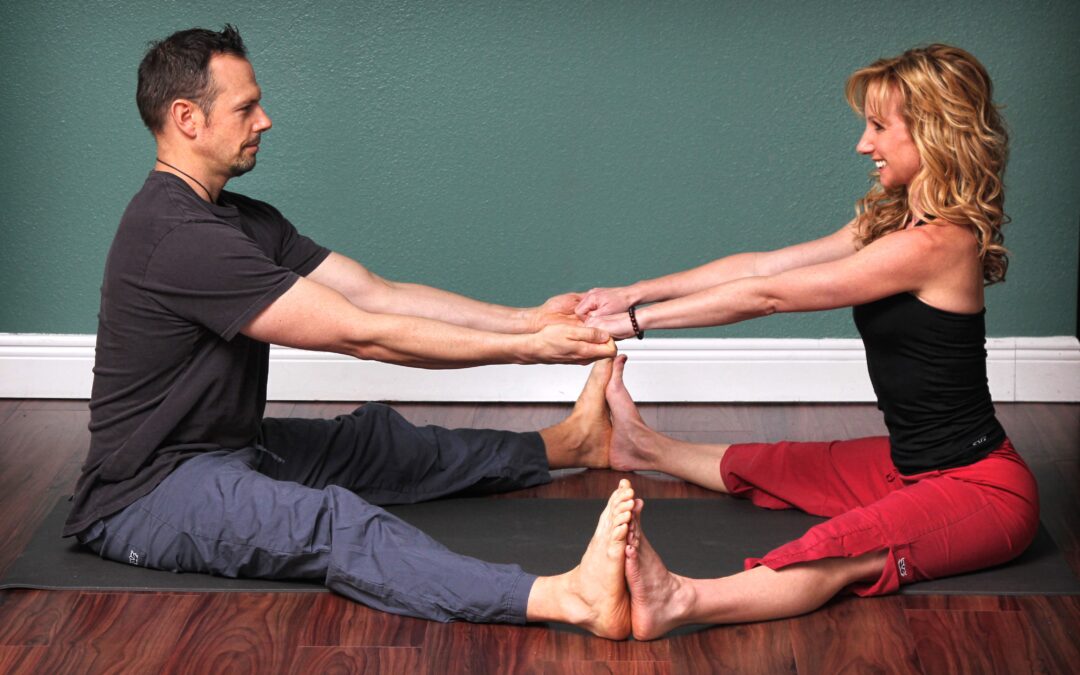
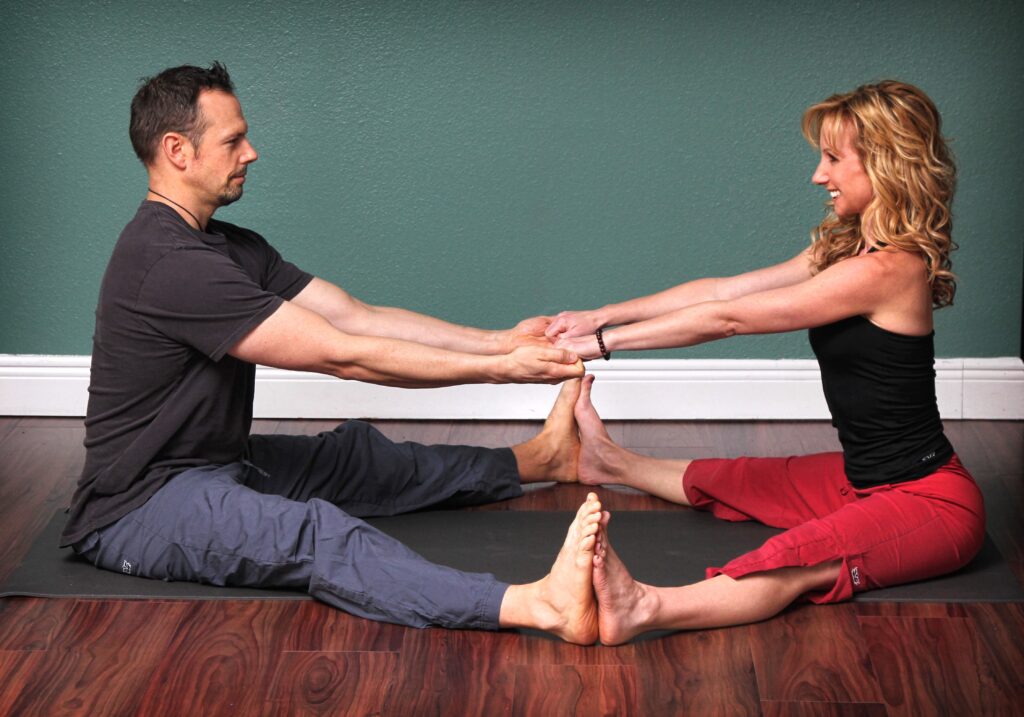
Sit facing your partner and stretch your legs out straight and into a straddle position.
It may feel more comfortable to bring your legs closer together in the straddle position and put your legs over your partners, bringing you closer together.)
Clasp opposite hands, and make eye contact with your partner. Ensure that you’re sitting straight up.
While holding hands, one partner twists left, the other twists right. Then move back to center, facing each other, still holding hands.
Flow back and forth in a gentle, washing machine-like motion, or hold the twist on each side for 3-5 breath cycles on each side.
Partner Yoga: Back to Back Chair Pose
This one’s more of a challenge!
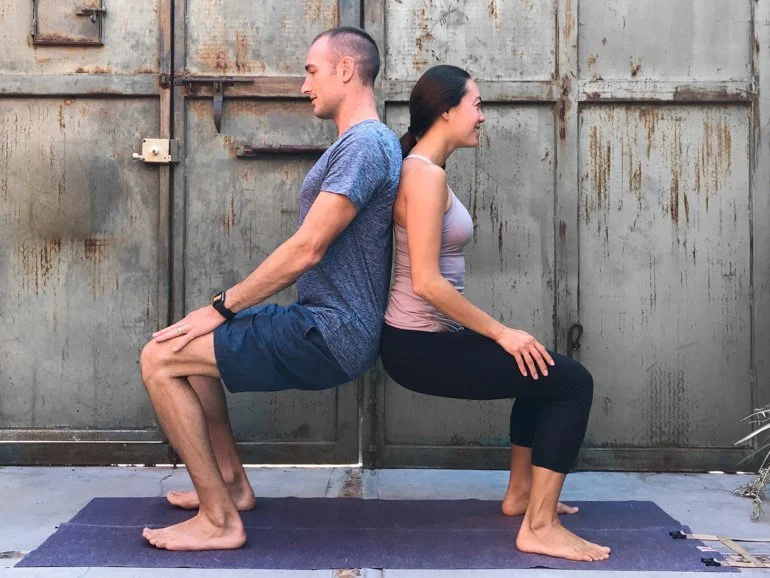
Stand up with your partner and have your backs touching.
Start to slowly walk your feet forward and bend the knees slowly as you press your backs against each other for support.
Walk your feet out far enough so that your thighs are parallel to the floor and your knees are behind or just over your ankles. Do not allow the knee to go past your ankles (when viewing from the top.)
Then, Press against your partner’s back and also press down into the ground with your feet.
Raise your arms above your head in true Chair Pose or keep the elbows bent with hands in a prayer position.
Finally, do this for 3-5 slow, deep breaths, and then slowly stand up. Repeat 1-2 times.
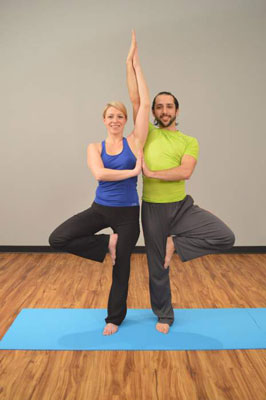
Partner Yoga: Double Tree Pose
Stand next to your partner facing the same way with 1-2 feet between you.
Raise your inside arms straight up and touch palms or grab hands for more stability.
Bend at the knee on your outside leg and bring the bottom of your foot and touch your calf or inner thigh. (above or below the knee). But do not put your foot directly on the knee.
With your outside arms, bring the hands in front of you and place your palm on your partner’s palm, creating a prayer position.
To help balance, each partner should find a spot on the floor a few feet in front of them and focus on that. (This spot is also known as a drishti in Sanksrit.)
Cycle through 3-5 breath cycles, then swap places with your partner and repeat the pose to even it out.
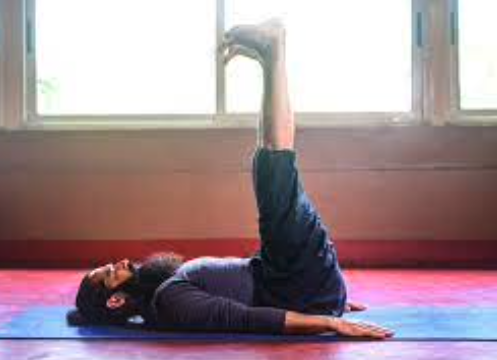
Legs Up with Support
First, lie on your back with your legs extended upward.
Next, rest your calves or feet in your partner’s hands as they stand up facing the back of your quads.
Then, your partner can place their hands gently on your calves, ankles, or feet to provide support (and maybe give you a little foot rub!)
Finally, stay in this position for 5-10 minutes, focusing on deep, calming breaths.
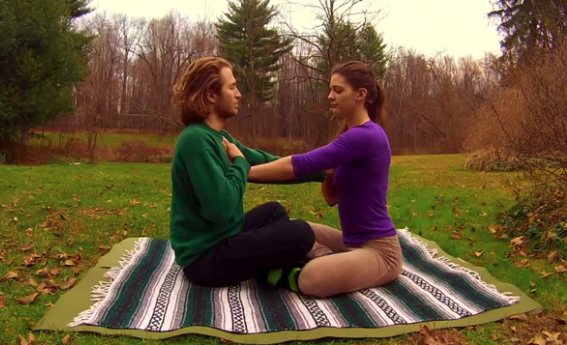
Heart-to-Heart Meditation
First, Sit cross-legged facing each other, maintaining eye contact.
Then, start a timer for anywhere from 2-10 minutes so you don’t have to wonder about how much time has passed.
Next, Place your left hand on your partner’s left side where the heart is. Then have your partner do the same to you.
Place your right hand over your partner’s left hand, and have them do the same.
Relax, close your eyes, take full, deep breaths, and sync your breathing with each other, inviting your sole focus to be your partner’s breath and heart beat.
I hope these 6 exercises inspire you to grow your connection with your partner. Additionally, these partner yoga poses offer physical and emotional benefits for expectant partners while cultivating closeness with their significant other. A wise yoga teacher once told me “it’s yoga practice, not yoga perfect” and I encourage you to welcome the unexpected and the awkward as you dive into unfamiliar territory. Embrace this opportunity to bond, focus on each other, and prepare for the life changing journey of parenthood together. Namaste.
Olivia is a former competitive gymnast, certified yoga teacher, and content specialist living in Los Angeles. She found yoga in her late twenties and credits the practice as the single most impactful influence in her lifelong journey navigating major depressive disorder. She enjoys introducing yoga to others, fostering animals, and going thrifting. Also, naps.
**This is a classic Informed Pregnancy article repost
“When I refer to feeling ‘sexy’ during pregnancy, what I mean is accepting and enjoying your pregnant body. Not only are you undergoing the amazing task of growing a child, but you have the opportunity to flaunt and move the most womanly assets you have – your breasts, belly, hips and butt. Instead of ignoring them or hiding them away, get off the couch and find ways to make those body parts look and feel good. Freedom to move without any inhibitions is sexy.”
Empowerment
“Empowerment” is not just a buzzword. It feeds our self-esteem, our confidence, and our identities. I think that’s why motherhood changes so many of us for the better. While parenting always has its challenges, it can also make us feel strong, feminine and joyful, all at the same time.
Another thing that has always given me a feeling of empowerment is exercise. I would never say that exercise is equally empowering as bringing new life into the world, but working out does fulfill my desire to feel strong, sexy and happy.
Before you roll your eyes and turn the page, let me define what I mean by exercise. I’m not insinuating grueling hours at the gym (unless that’s your thing, in which case, go for it!) For me, exercise means waking my body up, keeping my muscles alive and enjoying the ability to move.
I’m a pre and postnatal exercise specialist and as I write this, I’m 35 weeks pregnant with my second child. I’ve always preached that every pregnancy is different, and now I know that for sure. With my son, I had no pain, no bothersome symptoms, and was still doing jumping jacks on the day he was due (He made his debut ten days later.) This pregnancy has been a different ride in many ways, and no, I don’t think that necessarily means I’m having a girl. I just think I’m three years older and my body is coming from a different place, or perhaps this baby simply has his or her own unique needs, just like all of us! Despite the differences in my pregnancies, one need has not changed for me; I’m still determined to keep my body fit and healthy so that I can have the best possible pregnancy, labor and birth, as well as an easier postnatal recovery.
Instagram is where the info is! Follow Dr. Berlin for updates on Informed Pregnancy content!
When I created a DVD fitness program for pregnant women, I had three main goals in mind. The first was to include exercises that allowed expectant moms to feel and be strong. Secondly, I wanted to inspire and motivate pregnant women with movements that made them feel womanly and sexy. Finally, I wanted to create fun routines so moms-to-be would smile, laugh and enjoy their workouts. I believe the combination of these three powerful elements – strong, sexy and fun – is the perfect recipe for an empowered workout, body, and life.
FEEL STRONG
A strong body and mind are essential for a successful labor. I’m sure all expectant mothers would love to feel the strongest and healthiest they’ve ever been when they go into labor. Lunging to keep your legs and butt strong, stretching your back and chest to release tension and stay limber, and elongating your limbs to work your balance and core are some of the best ways to keep your body safe and strong through your pregnancy.
FEEL SEXY
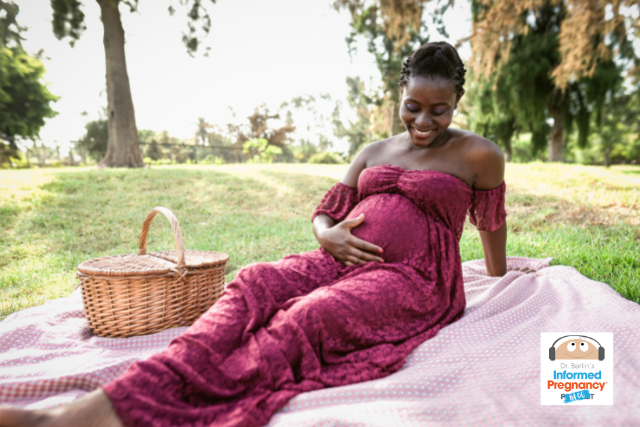
When I refer to feeling ‘sexy’ during pregnancy, what I mean is accepting and enjoying your pregnant body. Not only are you undergoing the amazing task of growing a child, but you have the opportunity to flaunt and move the most womanly assets you have – your breasts, belly, hips and butt. Instead of ignoring them or hiding them away, get off the couch and find ways to make those body parts look and feel good. Freedom to move without any inhibitions is sexy. Why not put on your favorite maternity dress and go for a walk outdoors somewhere that you love? Feel the sand or the soft grass between your toes, enjoy the breeze blowing through your hair, and hold your baby bump close. Be proud of your amazing body!
HAVE FUN
As you progress through your pregnancy, movements that once seemed fun and enjoyable may start to feel awkward and uncomfortable. Rather than getting frustrated, I’ve found the best way to handle this challenge is to work on changing your state of mind. Working out during pregnancy should not be about burning calories, looking a certain way, or sweating your butt off. Instead, focus on just moving your body each day and finding ways to stay active and have fun.
If traditional workouts aren’t for you, just do something active that makes you smile – head to the beach, run and play with your older children or the family dog, hold hands with your spouse or partner, and enjoy being fully present in the moment. After all, no matter how many children you already have, a new arrival changes everything!
I wish you a healthy and fit pregnancy and a joyful introduction (or re-introduction!) into motherhood.
Sara Haley is a fitness expert who specializes in pre- and postnatal exercise. Drawing on more than twenty years of fitness and dance training, Sara has developed her own brand of fitness DVDs, The Daily Sweat®, which includes her award-winning prenatal workout program, Expecting More®. Follow @SaraHaleyFit on Facebook, Twitter and Instagram.
**This is a repost of a classic Informed Pregnancy Project article.
“The squat is the queen of pelvic floor exercises, so you can ditch all of the kegels and start squatting each day!”
As a yoga teacher and doula, I have discovered that healing the core postpartum does not require hundreds of kegels and crunches. In my experience, the body does much better when slowly building on a solid foundation. This begins with relearning your body after the changes of pregnancy and childbirth.
Your core consists of your diaphragm, the muscles of the abdomen and low back, and the pelvic floor (the hammock of muscles at the base of your pelvis that stretch from your pubic bone to your tailbone).
Here are step by step instructions on how to feel these muscles and begin to bring them on board in all of your daily movements.
Breath Awareness – The first step in regaining integrity in the core postpartum is to simply reconnect to it with your breath. These are the very first exercises you can begin right after having your baby. There are two types of breathing to practice.
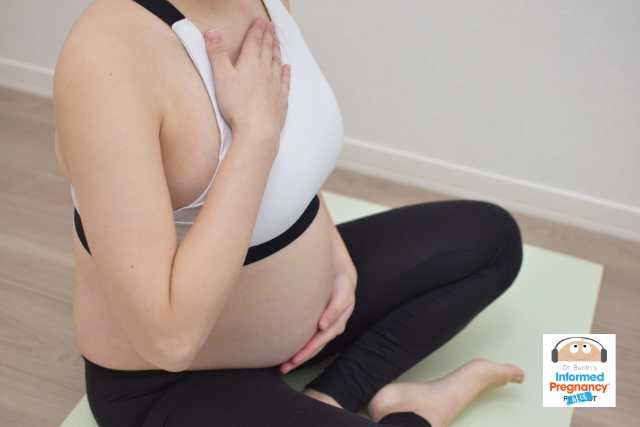
Pelvic Breathing – Gently inhale into the bowl of your pelvis. Notice the bones of the pelvis and the muscles in between. See if you can feel a slight expansion as you inhale and a relaxation on the exhale. There is no need to add any squeezing or tightening, just sense the muscles.
Belly Breathing – Gently inhale into the low belly. As you breathe in, let the belly soften and expand. As you exhale, allow the belly to relax back to its resting state. Note: Many people are used to sucking their bellies in when they inhale and pushing them out when they exhale. It may take a bit of practice to learn to reverse this way of breathing. You can think of softly blowing air into your belly, like blowing up a balloon on the inhale and the air leaving on the exhale.
Find Transversus Abdominis – Your transversus abdominis (TA) is your own inner belly band. It is the deepest abdominal muscle and wraps from the low back around to the front of your midsection. It is a large muscle that runs the length from your low ribs to your hip bones. The TA supports all of your abdominal organs and your posture.
Need more Informed Pregnancy? Click to check out this related podcast episode!
Sit up tall with your back against a wall or straight back chair for support. Inhale into your belly as you exhale. Imagine an inner corset wrapping from back to front, and hug these muscles toward your midline as you draw your belly back toward your spine. This is different from the habit of sucking your belly in that many women are used to. Instead, the belly button draws back, and the ribs and hip bones move toward the center. It’s a hugging in rather than a sucking in.
Posture – Now that you’ve found your TA, you can use it to support you as you move around in the world, and you will strengthen your core simultaneously. Engage your TA about 25-30% of the time while sitting, feeding your baby, and walking. While lifting things or standing up from sitting, engage your TA as much as 60-70%. Build up to using your TA more and more over time, and continue to breathe into your belly and side waist. Avoid the pitfall of over stiffening and not breathing.
Walk – Walking is one of the best exercises for toning your pelvic floor, and when you bring your TA on board, you’ll also be building abdominal strength. You will also be getting some cardio and enjoying fresh air. A good pair of sneakers with arch support will make all the difference. Walk around barefoot as much as possible when you are at home and around your yard.
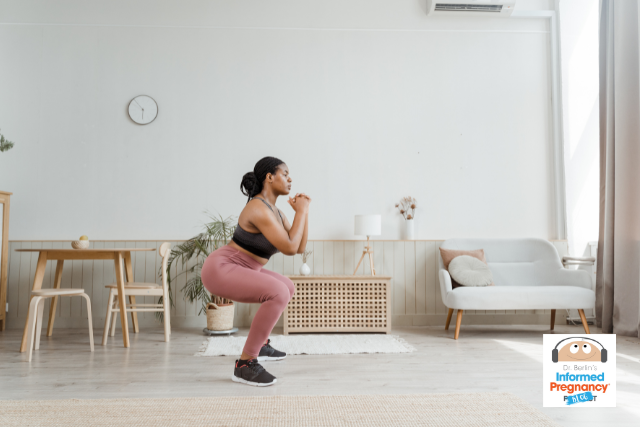
Squat – The squat is the queen of pelvic floor exercises, so you can ditch all of the kegels and start squatting each day! Here’s a way to come into a squat that is easy on the knees. Stand with your feet a little bit wider than hip distance, and allow your toes to turn out about 45 degrees. Engage your TA, bend your knees enough to keep the spine straight as you fold from the hinge at your waist and bring your hands to the floor. Then bend your knees completely, dropping your butt toward the floor. This will take you into a full, low squat. Be sure that the toes and knees are pointing in the same direction. If your heels do not touch the floor, fold up a yoga mat or blanket and place it underneath them.
Postpartum recovery is a gentle and patient process. Be sure to balance any exercise with lots of rest, water, and a variety of healthy foods. Time is one of your best partners in restoring your core. Instead of focusing on what your body used to be, celebrate the subtle changes toward strength and health that happen over time.
Lara Catone is helping to establish the field of sexual wellness as a yoga teacher and somatic sexologist with a specialty in women’s health. She has attended nearly 50 women in birth as a birth doula and midwife assistant. In 2011, she began development of the Restore Your Core Program that includes nonsurgical approaches to diastasis recti (abdominal separation) and pelvic pain and dysfunction.
Lara trains fitness, birth, and medical professionals in her progressive approach to core health. She has a thriving private practice in Venice, CA and teaches workshops and retreats worldwide. Lara recently expanded her global community through the launch of an online studio with live webcam classes. Her mission is to empower radiant health and pleasure. Visit www.laracatone.com for musings and educational media as well as videos of transversus abdominis (TA) and pelvic floor exercises.