Beautiful Births – Jacqui Blue
“I became a mother when I was twenty-one, and had a c-section with twins. I didn’t know a lot about childbirth at that time, except for the fact that I was terrified of it. I knew my life was about to change in a drastic way, and everything about that was new and scary.”
Informed Pregnancy+ is Dr. Elliot Berlin’s brand new multi platform streaming channel dedicated to pregnancy, postpartum and parenting. The Filmmakers Spotlight blog series features creators whose work is showcased on the channel. To learn more or sign up for a yearly or monthly subscription, click here!
Surrender. This is the word I associate most with childbirth. It’s an amazing and humbling experience to bring a new life into the world through my body, and one I’ve experienced five different times. Each time it’s been a whole new experience, vastly different from the one before it.
I became a mother when I was twenty-one, and had a c-section with twins. I didn’t know a lot about childbirth at that time, except for the fact that I was terrified of it. I knew my life was about to change in a drastic way, and everything about that was new and scary. My water broke spontaneously when I was 33 weeks and one day into my pregnancy. The surgery itself was painless, as I had been numbed with spinal anesthesia, but the recovery was the most painful experience of my life. My twins spent the first four weeks of their life in the NICU and I embraced my new role as “mother”.
When my twins were two weeks shy of turning two years old, I had my first VBAC (vaginal birth after cesarean). Because of my awful experience recovering from the surgery, I was determined to not have a repeat of that experience, and spent the entire pregnancy researching how to avoid another c-section. I started learning about the midwifery model of care, and reading books by Ina May Gaskin. I joined online forums and groups where people shared positive birth stories, and I began to prepare for a successful VBAC without pain medication. I was met with opposition from my care provider, who told me she’d never seen anyone give birth without an epidural. I knew having an epidural would increase my chances of having a repeat surgical birth, and I didn’t want that so I was stubborn and held strong to my convictions. I went on to have a successful and drug-free birth without Pitocin or epidural, in a hospital in the Midwest, thanks to a supportive L&D nurse who dubbed herself “the underground doula” of the hospital system. She massaged my feet, fed me, and gave me liquids during my labor, while the lights were dimmed and music from a playlist of my choosing serenaded me in the background. My child was born with ease as the song “The Night You Saved My Life” by Tonya Donnelly played, and my mother held my hand.
My second VBAC, third birth, and fourth child was a completely different experience. We had moved back to Florida during this pregnancy, and although my doctor claimed to be pro-VBAC throughout my pregnancy, when I went into labor, he pulled a bait and switch on me. Suddenly he was threatening me with a c-section if my child wasn’t born by 2:00 PM that day. My mother and one of my cousins acted as my support system through this one, and between the three of us, we managed to fight off the nurses who tried to force interventions upon me that I didn’t want. This time around I had to spend every minute of my labor fighting with hospital staff to procure the birth I wanted, and it made for a much more painful labor because I was tense and under so much stress due to the mean nursing staff. My cousin massaged my lower back to help with pain relief and my mother advocated for me when I couldn’t speak for myself. There was no music playing, and it was not a peaceful environment, but I did manage to have another drug-free, successful VBAC. However, I was left with emotional trauma due to how I was treated while in labor by the hospital staff.
When my husband and I got pregnant for a fourth and final time, I had sworn that unless it was a literal life or death situation I would never give birth in a hospital again. This time I found a freestanding birth center in Hollywood, FL and a wonderful midwife, Debbie Marin. This pregnancy and birth experience were different than any before. She listened to me and my concerns. She taught me about prenatal nutrition, something no previous care provider had done. This birth was such a beautiful experience; in water, by candle light, with music and my husband behind me in the tub. I was laughing and joking in labor. I had learned a little about self hypnosis and utilized it during contractions. I felt pressure but no pain. Debbie gently guided me through the birth of my baby, allowing me to be in full control but let me know she was there to do all the dirty work while my body did what it was designed to do.
Stay up-to-date with Informed Pregnancy+ and Dr. Berlin!
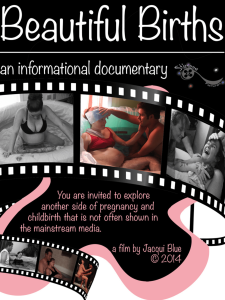
The birth of my fifth child was such a beautiful experience that it inspired me to make a documentary several years later called Beautiful Births. I wanted to educate and inform other people that they had options when it came to how and where they had their babies. I wanted to share information that I didn’t have until this pregnancy. I wanted the world to know about the Midwifery Model of Care and how it was different from the Medical Model of Care. Both have pros and cons, and I felt that every person should have the right to decide for themselves rather than be forced into a hospital birth just because it’s what their mom did, or what was considered “normal”.
I went onto study hypnotherapy and became a certified hypnotherapist, with specialization in pregnancy and childbirth. I created a whole hypnotherapy program, different from what already existed, with one on one options as well as a self study program, and coming in early 2023, also an interactive book version of the program too! My book has the full and detailed versions of all my birth stories. I wanted to work with people one on one to custom tailor my hypnotherapy for childbirth to their personal needs and regardless of how or where they chose to give birth, whether with the medical model of care or the midwifery model of care. My job is to support the parent-to-be and their wishes because I’ve experienced both and I have no judgment, only support to help people have better birth experiences.
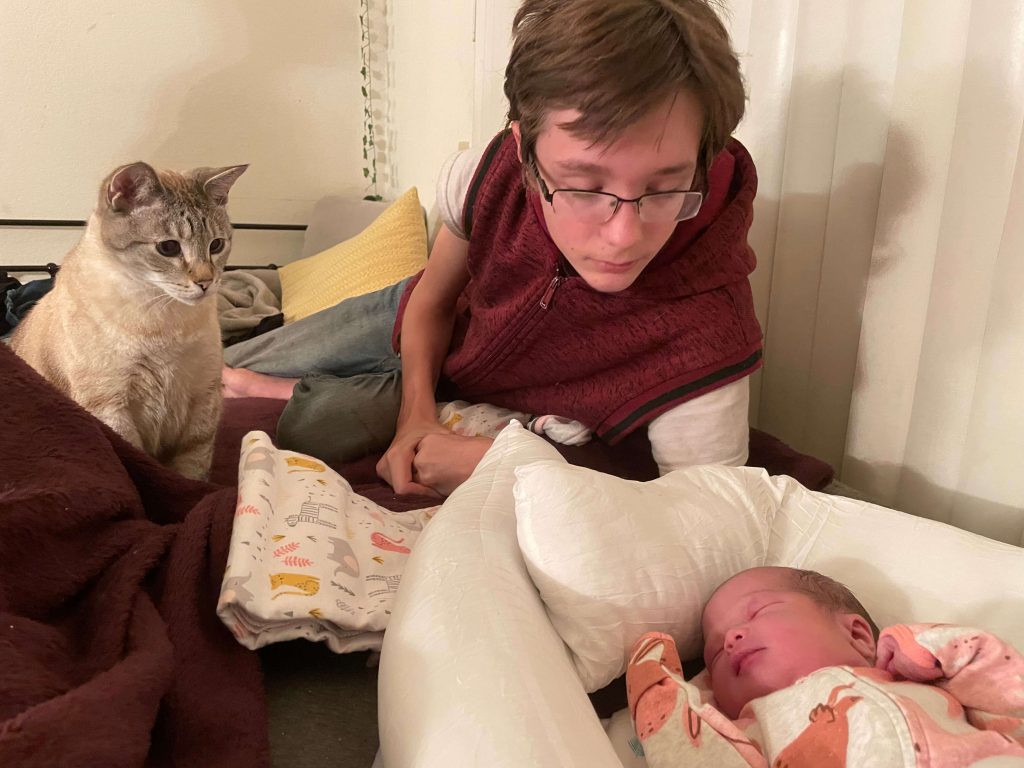
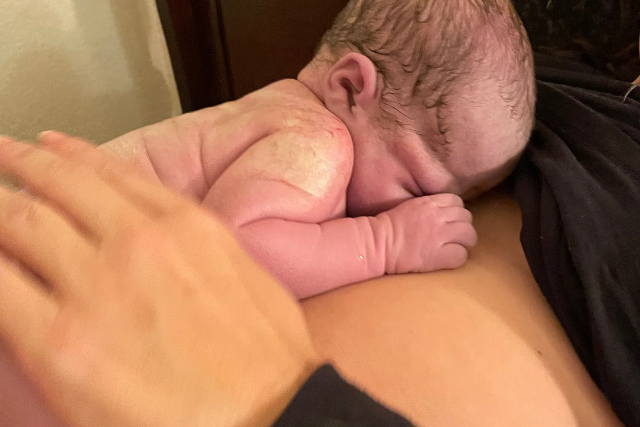
Thirteen years after my water birth experience which inspired my documentary, I got pregnant with a surprise baby. I was now 39 years old and this time it was considered “geriatric pregnancy”. I dealt with a lot of antepartum depression the entire pregnancy, but the only thing I was looking forward to was having another water birth. I was planning for another beautiful birth experience. I imagined candles lining the tub at the birth center, while leaning on my partner in the warm water. I was curating a playlist of music to listen to while in labor. I had talked about my birth plans with my midwifery team, and with my daughter’s father. It was the one thing I was confident about. But my unborn daughter had other plans. This time, I went into labor five days before my estimated due date, and my labor was precipitous – active labor was less than three hours; from seeing bloody show at 5:30 to first hard contraction around 6:00 PM, and my daughter on my chest at 7:51PM. Nothing about this birth went the way I planned. It ended up being an unassisted birth, dry birth, on my bed with only my 15 year old son holding my hand. There was no time for anyone else to make it to me. I had to just surrender to the moment and I was able to do so without fear because of all my knowledge, research, and hypnotherapy training. I utilized my own teachings from my program and went within. The soundtrack to my daughter’s birth was my own primal growls, also referred to as “birth singing”. According to my son I hit every octave in the human vocal range, and then lifted my baby onto my chest. I couldn’t have done it so easily and effortlessly without surrendering to the moment.
Surrender. Birth is about surrender. In the moment, it is the most powerful thing we can do, and honestly, it’s the only thing we can really do. Regardless of circumstances or our plans, birth is a wildcard and sometimes it happens so fast that things are beyond our control, that all we can do is surrender to the experience and let it happen.
Check out this blog post on pediatric chiropractic by Dr. Brandie Elizabeth Keates, DC!
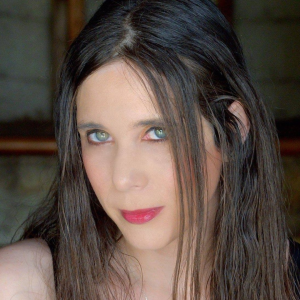
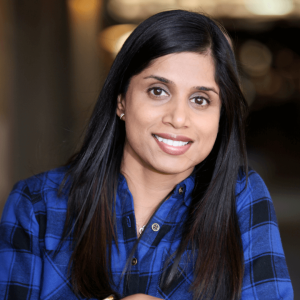
Jacqui Blue is a Filmmaker, Certified Hypnotherapist, and Author who created the Beautiful Hypnosis-Births program and first ever interactive hypnotherapy book due out in 2023. She is also a mother of six children and an animal rescuer, who resides in Southern California with her children and rescue pets. She enjoys painting and photography in her free time.
You can find Jacqui online at https://jacquiblue.net and https://mindmagiccoach.com