by Informed Pregnancy and Parenting Project | Jan 31, 2023 | Labor and Delivery, Podcast Transcripts, Pregnancy
Elliot: Welcome to the Informed Pregnancy and Parenting Podcast. I’m your host, pregnancy-focused chiropractor, Dr. Elliot Berlin.
Today, we’re speaking with an operation supervisor for a biotechnology company working in biotherapeutics by day and birth work by night. And we’re going to compare her two birth experiences. Hannah Gill, welcome to the podcast.
Hannah: Hi, Dr. Berlin. How are you doing?
Elliot: I’m doing amazing. What a combination of night and day. By the way, I picture, based on my own introduction, I picture you’re going into a phone booth when somebody’s in labor and putting on a superhero outfit and flying over to save the day. But let’s talk about what you’re doing. Where are you from originally and what’s this biotech business?
Hannah: I was born in Kansas City, Missouri. But I’ve spent the majority of my life in Indiana, with a brief stint in Nebraska, and then back to Indiana.
Elliot: Okay, which part of Nebraska?
Hannah: Tekamah. Very, very —
Elliot: It sounds like not very many people.
Hannah: No. The population was less than my high school.
Elliot: Wow!
Hannah: It’s about an hour north of Omaha, so it’s very small.
Elliot: So, a gas station and a saloon?
Hannah: Basically.
Elliot: And a church?
Hannah: Everyone knows everyone and everyone’s related.
Elliot: Oh, boy. All the people know my business. Alright, and then, where did you go to school?
Hannah: So, undergrad, I went to I.U. Bloomington in Indiana. And then, for grad school, I did I.U.P.U.I., which is Indianapolis University-Purdue University.
Elliot: And you studied?
Hannah: Undergrad, human biology. And then, my master’s is in forensic biology.
Elliot: What does that mean in English? Forensic biology.
Hannah: So, forensic science, what a lot of people see on CSI, but it’s nothing like that.
Elliot: Okay, because?
Hannah: It’s very fabricated on TV.
Elliot: Oh, I see.
Hannah: And the process is taking much longer than that.
Elliot: Oh, doesn’t take 45 minutes to figure it out.
Hannah: No. And most of the time, there’s not an answer.
Elliot: Oh, that’s even worse. And no commercial breaks though, which is nice. Okay. And then, where’d you meet your hubby?
Hannah: We started dating in high school. So, we’ve been together since I was 15 and he was 17.
Elliot: Wow! Did you know?
Hannah: Did we know what?
Elliot: Like in high school? Did that feel like this was going to be a forever?
Hannah: Yeah, probably.
Elliot: Really? Wow, that’s very special. How cool. Alright. And then, kids. Was that like, “Hey, now we should have kids? Since we’ve been dating forever.”
Hannah: Yeah, we always wanted to have kids. We got married in 2016 and decided to not really start trying but not try in 2019 when I got diagnosed with PCOS.
Elliot: Were you having symptoms when you were trying to get pregnant?
Hannah: Yeah. So, I stopped birth control the year prior, and I had been on birth control since I was basically started my period like a lot of women are. And I stopped birth control in 2018 because I was just over it. I was tired of being on it so long, and I was tired of the side effects.
Elliot: THE pill?
Hannah: Yep, the pill. And then, after that, I started having two periods a month instead of one. So, then, I went to my OB-GYN because I said, “This is obviously not normal.” And they did an ultrasound and some blood testing and found like the string of pearls or whatever they call it for PCOS. And then, my testosterone levels were super, super high. So, that’s how I got diagnosed. I don’t have like the traditional PCOS symptoms besides those two things.
Elliot: Oh, so only the diagnostics. You didn’t feel PCOS?
Hannah: Right. So, I don’t have like the insulin resistance or anything like that.
Elliot: Oh, metabolic X syndrome.
Hannah: Right. And the only symptoms I was having was the two periods a month.
Elliot: Wow! With high testosterone, which is like —
Hannah: Yeah, I’ve had acne my whole life, so I just assumed it was just who I was. But it was apparently part of my PCOS. [inaudible 04:24]
Elliot: Symptoms of low testosterone. I feel like, “I’ll take some of yours.” Can we do that? Is that like a thing?
Hannah: Take it away, please.
Elliot: Yeah. Okay. So, then, PCOS, and have you treat that?
Hannah: So, I decided not to treat because they said you can get back on birth control to help. But I was like, “No, I don’t want to do that. I don’t want to be on birth control anymore.” So, my OB-GYN said, “Well, it could take you a while to get pregnant or it could be really fast, it just depends.” And we got pregnant, literally, the first time.
Elliot: The first time that you were off birth control? I mean, no.
Hannah: Like the first time not preventing.
Elliot: Okay. So, after the pill, you were doing something else to block.
Hannah: Yes.
Elliot: So, you were ready. You said, “Let’s try and see what happens.”
Hannah: Yeah, I said, “Well, it could take a while, it could be fast. So, let’s just not prevent and let’s just see what happens and –”
Elliot: Boom!
Hannah: Literally, the first time.
Elliot: How was your pregnancy?
Hannah: Awful.
Elliot: Oh, come on.
Hannah: Not awful. Not horrible, but I was sick the entire nine months for my first pregnancy.
Elliot: Sick. Nauseous, or also something –?
Hannah: As in like vomiting all day.
Elliot: So, hyperemesis?
Hannah: It was very borderline. So, it wasn’t officially hyperemesis because it wasn’t like constant all day every day. But the majority of my first trimester was constant all day. And then, the second and third trimester, it was at three to four times a day. But it never ended after the first trimester.
Elliot: That’s something hyperemesis to me. First of all, did it stop as soon as the baby was born?
Hannah: Oh, yeah.
Elliot: Yeah. So, it does sound like its hyperemesis. Because we have a couple episodes about hyperemesis. One with Amy Schumer discussing her experience with pregnancy and hyperemesis, and then one with a few doctors. But the doctor said is that they’re kind of nailing it down to hormones created by the placenta.
Hannah: Okay.
Elliot: So, [tied it to hormone 06:07] that makes you feel full all the time. So, in excess production so that anything you eat makes you feel like overfull. Like you’ve had too much like you have to get rid of it. So, it’s a little bit sounds like that. But there’s a foundation called the Her Foundation, H-E-R, and they have great resources for people who are struggling like that during pregnancy. And one of them is an app where you can kind of input your symptoms and then send it to your doctor to get a better handle on whether that’s hyperemesis or not. So, I was already grateful that you did the podcast, but now, another chance to help people who experience pregnancy like that.
Hannah: Agreed, because I was never diagnosed with it.
Elliot: Was there a plan for birth?
Hannah: Yes. So, I had planned to do an unmedicated hospital birth. And I just took the basic hospital birth class, and then an advanced labor birth class is what they called it to kind of help you get through it without medication.
Elliot: Also at the hospital?
Hannah: Yes, but it wasn’t after looking back at my experience and what I know now was not very helpful. It was a very fast, just like quick and dirty type of class on “here’s some comfort measures,” but it didn’t really help prepare me.
Elliot: Sometimes, the hospital birth class feels like how to be a good patient at our hospital.
Hannah: Oh, yes! I agree. That’s what I know now.
Elliot: I usually recommend if you want to do something that’s a little out-of-the-box for typical hospital birth to do a non-hospital birth class.
Hannah: No one I knew had ever birthed outside of a hospital, and the majority of people I knew did not birth unmedicated. So, I just thought, “Oh, you go to an OB, go to a hospital and that’s how it is.” I didn’t know what a birth center was. I had never even heard of a doula at that time, or I didn’t know anyone had a home birth. So, I just kind of took the route that I do best, and that’s what happened.
Elliot: Alright. Well, let’s take a quick little break and when we come back, we’ll see how that birth went. Don’t go anywhere. We’ll be right back.
[break]
Elliot: Welcome back to the podcast. We’re talking to Hannah Gill. Okay, so first pregnancy, boom! Right out of the gate and horrible motion vomiting all the way through. But then, you took a hospital birth course on childbirth and you did an extra class for unmedicated childbirth. And how did your labor start?
Hannah: So, I didn’t really feel like the gradual build-up a lot of people talked about. It was more of as soon as my contractions started, they were extremely intense and five minutes apart.
Elliot: Wow! Okay, what time of day was that?
Hannah: About 5:30 in the morning.
Elliot: Okay. So, boom! And so, I assume it woke you up.
Hannah: Yes. I had gotten up to go to the restroom and then try to go back to sleep, and that was not happening. So, I decided to get in the shower to see if that would calm anything and it definitely did not.
Elliot: I mean, it just progressed?
Hannah: It just kept getting worse and worse as far as the pain goes. So, my husband is already at work at this time.
Elliot: What?
Hannah: Yes. And I just called it. Yes, he leaves for work around 5:00 am.
Elliot: Holy moly. Okay.
Hannah: So, I called him —
Elliot: Before he left, nothing.
Hannah: No, it was not until he left, of course.
Elliot: And then, half an hour later, raging.
Hannah: Yeah.
Elliot: Okay. And then, he came back.
Hannah: Yeah. So, I gave him a call at work, or I actually texted him first. And I said, “Hey, I’m starting to have contractions. They’re really intense. I’m going to try to get in the shower, but I’ll let you know how things go.” And I started using that contraction timer and it said, “Go to the hospital.”
Elliot: Oh, wow.
Hannah: So, I called him on like the work line because he wasn’t answering his cell. And I told them, I said, “Get him home now, please.” And he got home and I was on the birth ball and he was like, “What am I supposed to do?” I said, “Just grab the bags. Let’s just get going.” And of course, it by this time, it was getting close to rush hour around where we are. And I was not looking forward for about 30 minutes from the hospital. I was [unintelligible 10:10].
Elliot: Oh, my.
Hannah: So, it was interestingly —
Elliot: If only you were in a small town with 200 people.
Hannah: Oh, yes. Like before.
Elliot: Yes, rush hour would be like rush minute.
Hannah: Yes. So, the drive to the hospital was pretty rough with having to wait in traffic.
Elliot: With that kind of intensity especially.
Hannah: Yeah.
Elliot: We’re you in the front seat?
Hannah: Front seat.
Elliot: Like buckled in like or on your hands and knees?
Hannah: At first, I was buckled in and then I got off buckled, took my coat off because I was sweating. Rolled the window down and mind you, this was December and it was freezing, but my husband was cold. I was like, sweating. So, no, I was buckled in at first. And then, it was just like bracing myself and holding on to the door, trying to breathe through my contractions.
Elliot: I mean, it sounds like a caged animal.
Hannah: Yes. That’s exactly how it felt.
Elliot: I’ll probably get in trouble for saying that, but that’s what it just sounds like. You need to have space and get out of there and move.
Hannah: And I was vomiting my entire labor, too.
Elliot: Oh, in the car?
Hannah: Yeah.
Elliot: What happened when you got to the hospital?
Hannah: So, they had me sign all those fun forms as I’m reading through my contractions and then got me into triage and I was only three centimeters.
Elliot: Ouch. Okay.
Hannah: Yeah.
Elliot: Have you been checked before?
Hannah: Yeah. So, my first pregnancy, I did get checked the day before I went into labor. I was 2 centimeters and I had my OB membrane sweep.
Elliot: Oh, okay. Do you think that contributed to the morning events?
Hannah: Probably, yes.
Elliot: Okay.
Hannah: I think so because it was much more intense than I had expected. So, maybe the sweep kind of escalated that.
Elliot: Was there like any blood after the sweep?
Hannah: No.
Elliot: Okay. So, 3 centimeters only. In your words, 3 centimeters?
Hannah: Yes, because [I had been to 11:59] the day before and with how intense my contractions were, I was expecting to be way further along. So, that was kind of —
Elliot: Six or something?
Hannah: Yeah. And they did check my platelets. I did not mention I had gestational thrombocytopenia, where your platelets are low.
Elliot: Oh, wow. We do have a whole episode on gestational thrombocytopenia with Dr. Nate Fox, that was triggered by Mandy Moore who had it with at least her first pregnancy. Wow. So, does that mean you were borderline epidural?
Hannah: I was borderline. So, I wasn’t as low as where you absolutely know for sure you can’t have it. It was always really borderline. And for my hospital when they checked it, it was like right at the level. So, that’s why I decided, “Okay, I’m just going to get it.” Because who knows, in a couple hours, I may not be able to anymore.” So, I just went ahead and got it because my contractions were so intense and I was right on that level. So, I got them right away.
Elliot: I mean, it also sounds like with the intensity and the progress, like your mind might have been easily persuaded anyway.
Hannah: Oh, yes, it was all mine game. Yeah, for sure.
Elliot: Okay. So, did it work?
Hannah: The epidural? Yes, it worked wonderfully. And I took a nap.
Elliot: Okay, great. And how did the rest of that labor progress?
Hannah: So, I progressed very quickly. I got my epidural around 8:00 or 9:00 o’clock, started pushing around 1:00 o’clock.
Elliot: So, four hours? And this is 1:00 pm.
Hannah: Yes.
Elliot: So, really not that long after your entire labor started.
Hannah: Right.
Elliot: Okay. So, how was pushing?
Hannah: I pushed for four hours.
Elliot: Did the epidural start to wear off? Did they turn it down?
Hannah: No. The epidural was so strong. I could not even tell I was pushing.
Elliot: Oh, wow.
Hannah: Which is part of the problem.
Elliot: Oh, four hours of that.
Hannah: Yes. So, four hours of that.
Elliot: What position?
Hannah: Just like the semi-reclined position. So, I couldn’t —
Elliot: You couldn’t get into like hands and knees or stuff like that?
Hannah: I didn’t know that was an option at the time. So, yeah.
Elliot: Well, if you could go back in time, listen to this episode.
Alright. So, pushing on your back with your pelvis closed and numb from the chest down.
Hannah: Right. And then, the whole holding your breath counting for 10 seconds. Push, push, push, push, push, that type of thing. So, the “coach pushing” that everyone hears about.
Elliot: Yeah. Okay. And in the four hours, was the baby handling it well? I assume [inaudible 14:25].
Hannah: There was one [unintelligible 14:27], but they didn’t make a big deal about it. They just had me put some oxygen on and rest for a minute.
Elliot: Okay. And then, what happened?
Hannah: So, we figured out that baby was most likely asynclitic, the way he was coming down. And we didn’t know if it was a boy or girl at this time, just a side note. So, the way the baby was coming down, just kept coming down, going back up, coming down, going back up. So, after this four hours, I opted for a cesarean.
Elliot: Okay. Asynclitic essentially means not lined up with the runway very well. So, all that pushing is not really coming down, it’s just flexing the head sideways. And then, as soon as you stop pushing, the head flexes back up. Always recommend seeing a baby chiropractor after a labor like that, by the way. Okay. So, how is the cesarean for you?
Hannah: It was not great. Like, I actually felt a lot more than I expected to. So, they gave me —
Elliot: Oh, great. You didn’t feel you’re pushing, but you felt your abdominal surgery.
Hannah: Right. So, I was like basically screaming and telling my husband like, “I need something else. This hurts really bad. I can feel a lot.” So, they gave me some additional medication through the epidural, whatever they give you that’s extra. And I kind of dozed off for a few minutes, I think. I don’t know if I fell asleep or what they gave me just kind of knocked me out a little bit, but I don’t remember my baby being born, basically.
Elliot: I was afraid you’re going to say that.
Hannah: Yeah. I don’t remember hearing him cry. The first thing I remember is my husband saying, “Babe, it’s a boy,” because we didn’t know. And I was just so out of it and so loopy that I don’t really remember much of it all.
Elliot: I’m so sorry.
Hannah: Thank you. I mean, I appreciate the sentiment there. And I know it’s hard for a lot of women who have that experience. I know a lot of people go through it, especially if they’re having to be put under general anesthesia, too. Thankfully, I didn’t have to do that.
Elliot: But it sounds like you’re pretty close.
Hannah: It was pretty close, yeah. I mean, I just had the epidural, so I didn’t need general. But they did give me, I don’t know what they gave me additional to help with the pain, but I kind of dozed off for a little bit.
Elliot: For a key moment.
Hannah: Yes.
Elliot: So, how was your recovery?
Hannah: So, in actual recovery room, I went hypotensive and I hemorrhaged really bad. So, I was like on the verge of completely passing out because my blood pressure was so low and I had a lot of blood loss. So, during that process, I was kind of out of it. But my husband was trying to help my son nurse at the same time, but I was like shaking and I couldn’t really hold him. So, he was helping him do that.
Elliot: Oh, this begs the question, did he get any pictures or video of the baby coming?
Hannah: Not of him actually coming out, but like in the operating room. We got some photos of him on, like the warmer thing.
Elliot: I was saying anything to fill in the blanks of when you were out.
Hannah: Not really. They got a picture of us all three together in the OR. But I don’t really remember that being taken. I just see the picture.
Elliot: Okay, so something.
Hannah: Yeah, something.
Elliot: That you can look at. Okay. And then, recovery at home. Wait, so did your blood transfusions?
Hannah: I did not have to get transfusions. They just said it was more than they would like to see from the cesarean, but not enough to get a transfusion.
Elliot: Related to the thrombocytopenia?
Hannah: I don’t know. I guess it could be. That would make sense. I don’t know if it was that or I know that if you, I guess pushing for a long time cause that.
Elliot: The uterus doesn’t, yeah. Okay. How was your home recovery?
Hannah: It was pretty rough. I was on quite a bit of pain postpartum at the hospital and at home, and I didn’t really feel comfortable doing much of anything for several weeks. And I think it was a lot of emotional pain as well as physical.
Elliot: So, on the physical side at the incision?
Hannah: Yeah. And in my abdomen in general.
Elliot: Are you athletically?
Hannah: I was before I got pregnant. Yeah. Not as much during my pregnancy or postpartum.
Elliot: My observation, it seems to affect people more than people who are less, you know, in tune with the body.
Hannah: Right. And I’ve heard that the like tension, if your muscles are tighter, can cause a lot of issues too. So, if you are athletic and you have really tense muscles and they’re not relaxed, they can cause some issues.
Elliot: Well, again, in my observation, clinically in the office, one of the things that we see is if you’re strong and also tight, combination of strong, tight creates a rigid environment. And if the baby’s not lined up well with the runway, then it’s a bit harder to maneuver in that static environment. And that’s where you end up spinning your wheels a lot in labor.
But the cool thing about that is if you can do something, get rid of that tension, the excess tightness, the dysfunctional shortness, and all you have is the strength, then it goes the other way. Those are like the most powerful births that I’ve ever seen.
And then, emotionally, how were you feeling? You said that was also uncomfortable.
Hannah: Yeah, it was really just kind of thrown off and shocked by my birth experience. And I ended up with postpartum depression and anxiety and had to go to therapy to help talk through that, which was extremely helpful. I recommend it to anyone that needs it. So, it was a rough postpartum, physically and mentally, for sure.
Elliot: Did lactation go well for you?
Hannah: Yeah, yeah. He actually nursed great. Breastfeeding was wonderful and we breastfed for a year.
Elliot: Oh, okay. At least, there’s some things that did go well.
Hannah: Positivity?
Elliot: Yeah. In your way that you wanted them to go. I guess looking back, would you have done anything specific differently?
Hannah: I probably would have waited on the epidural. Or if I would have known at the time, gotten a doula for that birth, but I didn’t know what a doula was. I didn’t know that was the thing. So, that’s probably what it done differently. And then, I also would have, I didn’t mention this, but they did break my water at 9 centimeters. I asked them to break it because I didn’t know any different. And I feel like he could have gotten a better position if my water wasn’t broken.
Elliot: Yeah. It’s hard to know, but one wonders for sure. And just getting ready for the hyperemesis before we move on to your next baby, was it like literally that same day that it stopped?
Hannah: Yeah. I wasn’t sick at all. I was sick all through labor, and that I wasn’t sick at all afterwards.
Elliot: Were you hungry?
Hannah: I was hungry. I think the only other thing that made me sick with my pain meds postpartum. That made me sick until they got the right one.
Elliot: This is when you start going to phone booths and helping other people in labor. Tell me about that.
Hannah: So, I started out with childbirth education first.
Elliot: Okay. Becoming a childbirth educator?
Hannah: Yes, yes.
Elliot: A specific method?
Hannah: Not a specific method. I just wanted to become an out-of-hospital specifically. Because of how my experience with my birth class and how I did not enjoy it. And I thought, “Well, there needs to be a better option for people because that wasn’t great.” So, I just started to do that first. And then, I did not get into doula work until after the birth of my second.
Elliot: Oh, wow. Okay, wow. That sounds like an excellent place to take a quick break. And let’s find out about the second pregnancy, birth, and the doula work. We’ll be right back.
[break]
Elliot: Welcome back. We’re talking to Hannah Gill. And let’s talk about baby number two. So, was that planned?
Hannah: Yes, the second was planned for sure.
Elliot: Super fast again?
Hannah: It took two cycles, but still relatively fast, yeah.
Elliot: Pretty darn fast. Especially, people get very nervous with PCOS. So, that it’s always going to take a while. How was your second pregnancy?
Hannah: So, the first trimester was extremely rough for about 17 weeks. Again, borderline. Probably, this time was actually hyperemesis again. I wasn’t diagnosed. But I did end up in the hospital with fluids because I couldn’t keep anything down, and how to take time off work. So, the first trimester was rough, but then it got better after that this time.
Elliot: Good thing about taking time off at work is usually don’t get the answer anyway.
Hannah: I know.
Elliot: So, nobody will even know you’re not there. Okay. So, wow, you said 17 weeks. Does that mean that got better?
Hannah: Yes. After 17 weeks, it got better. I was still nauseous here and there, and had random bouts of vomiting, but nothing nearly like my first.
Elliot: Right. So, it sounds like the first part of your second pregnancy was worse than the first pregnancy.
Hannah: Oh, yes.
Elliot: But then it got a lot better than the first pregnancy. So, interesting how it works. Who knows? And then, what was your plan for this one?
Hannah: So, this time, I originally wanted to do birth center, but it is illegal to VBAC in Indiana in a birth center.
Elliot: Really?
Hannah: Yes.
Elliot: It’s how they made VBAC outside the scope of practice of a birth center.
Hannah: Yes. It’s not allowed.
Elliot: That’s weird.
Hannah: I know. I didn’t know it was a thing until I looked into it.
Elliot: I could see insurance not wanting to cover it but to [outlaw 23:46] it seems strange.
Hannah: Yeah, it’s a little drastic.
Elliot: I feels like restrictive in a free country.
Hannah: Yeah.
Elliot: Okay.
Hannah: So, after figuring that out, I thought, “Well, let’s go the route of home birth.” But the closest midwife to me would not take the first VBAC after cesarean. She would only take the second VBAC after cesarean. So, the closest midwife to me that would take me on was about two hours away, and I didn’t feel comfortable driving that far for appointments. So, everywhere else was out of my service area, unfortunately. So, I decided to stay with my OB that did my cesarean because she was great as far as supporting me through that. And she was completely on board with me having a VBAC.
Elliot: That’s cool.
Hannah: And then, I hired a doula as well.
Elliot: Okay. And did you have the thrombocytopenia again?
Hannah: I did, yes.
Elliot: Okay. So, that was still a question mark in terms of how that might affect you.
Hannah: Yeah. So, I just completely plan to not have an epidural and didn’t even think of it as an option in my mind, just in case.
Elliot: I think the thrombocytopenia kind of risks you out of the out-of-hospital birth anyway.
Hannah: Yeah, it does. Depending on the level, I believe.
Elliot: Right. Yeah.
Hannah: Mine were never that low, I don’t think.
Elliot: In the second?
Hannah: Yeah. They were low in the second, but it was more of just risking you out of an epidural versus out-of-hospital.
Elliot: If you’re low enough to risk out of an epidural, you’re probably too low for a home birth.
Hannah: Yeah, potentially, I think so.
Elliot: It’s my guess. It’s not my area of expertise. But anyway, anything else that popped up during that second pregnancy?
Hannah: I had a marginal cord insertion with my placenta.
Elliot: Okay.
Hannah: And that was the only other weird thing. So, they just did a couple extra ultrasounds just to make sure baby was growing okay. But baby was always fine.
Elliot: Cool. How did that labor start?
Hannah: So, again, it was fast and furious. But when I went into the hospital, I didn’t know I was in labor. I just had some excessive bleeding. That was concerning.
Elliot: Interesting. So, where is this in relation to your due date?
Hannah: I was two days past my due date.
Elliot: Okay.
Hannah: I was a week early with my son, the first.
Elliot: Was there a sweep on the second?
Hannah: No, I did not have any cervical checks and no sweeps.
Elliot: Oh, wow. Okay. So, then, you just start bleeding a bunch, you go to the hospital.
Hannah: Yeah.
Elliot: No contractions though?
Hannah: No contractions.
Elliot: Okay.
Hannah: So, I get to the hospital and they put me on the monitor. They want to check and make sure it’s not placental abruption or anything like that. And I was 3 centimeters at that time. And they said, “Well, how about we –” Actually, probably closer to four. So, they wanted to sit me on the monitor because I wanted to labor at home as long as possible. So, I plan to go home if we could because I wasn’t having contractions. And they wanted to monitor me for about an hour just to see if I made any progress. And in that hour, I dilated another centimeter. So, we just decided to stay at the hospital at that time.
Elliot: Okay. So, now, you’re like 5-ish. No idea where that blood was coming from?
Hannah: No. They said that it just kind of trickled off. It didn’t happen a lot. They said it could have been a partial abruption. It could just have been part of like, a bloody show that was more intense.
Elliot: Yeah. Okay.
Hannah: They didn’t give me an answer on that.
Elliot: And how the labor progress?
Hannah: So, it was a whirlwind, but we got to the hospital around 8:00. I progressed extremely quickly. And my entire labor was five hours.
Elliot: Oh, wow. And how was the intensity?
Hannah: So, it was still pretty intense. But I had done a hypnobabies course. So, I was pretty good at staying relaxed. And then, my husband was very helpful as well. But they were really intense when they picked up. The first ones were very gradual. But then, right around transition, obviously they got super intense.
Elliot: Were you planning to stay unmedicated?
Hannah: Yes. Yeah. So, I was planning no epidural whatsoever. Unless, it was absolutely needed.
Elliot: And was the team around you, the hospital staff, supportive?
Hannah: Yes. So, the nurse we had was super supportive. I was up and moving. I was on the toilet and the shower. She was great about letting me do my thing. And I had wireless monitors. They tried to keep him on as best as possible, but I was moving so much it didn’t really work.
Elliot: Okay. And then, how does that birth end?
Hannah: So, my doula almost didn’t make it because it was so fast. I was texting her throughout the process on like how I was doing. And I text her around right when my water broke, which was a little after five centimeters. I was GBS-positive. So, I did have to get a round of antibiotics.
Elliot: But we should explain that. Group B Strep is a type of bacteria that can sometimes colonize in the birth canal. Generally, In the United States, everyone gets swabbed for it somewhere around 37 weeks. And if you’re positive, then the general recommended treatment is IV antibiotics during labor. Usually, every few hours.
So, you have the GBS. There’s also an episode on Group B Strep Positive with Rebecca Dekker from Evidence Based Birth. And she goes into a lot more detail about what it is, and if there is anything that you can do to prevent it and other potential treatments. Check them out.
Okay, so you have GBS. You’re getting your IV antibiotics.
Hannah: Mm-hmm. And I was up and moving after that, but my water did break around 5-ish centimeters. And right after my water broke is when things really, really picked up.
Elliot: Where were you when it broke?
Hannah: I was still in the bed because I had just got down to my antibiotics. And then, after that, I basically got up and went to the toilet and sat there for an hour.
Elliot: Was it a big old gush?
Hannah: It wasn’t a huge gush, but it was quite like it. Isn’t like obviously a gush, but it was a ton of fluid that came out. Yeah.
Elliot: Okay. It wasn’t like, “Oh, did I just pee a drop?”
Hannah: No, it was like, “This happened.”
Elliot: Okay. Alright. Sitting on the toilet with people around you or did you –?
Hannah: My husband was with me in the bathroom while I was on the toilet, getting me washcloths for my face, rubbing my shoulders, that type of thing. And so, I was on the toilet for at least an hour and that’s when I started transitioning. At the dilation station.
Elliot: What did that feel like?
Hannah: So, my contractions were on top of each other at that point. Like one, back-to-back-to-back. And that’s when my doula walked in, and I told her — her name’s Julie. I said, “Julie, I need an epidural.” She said, “Well, let’s maybe try to switch positions, get off the toilet.” So, we moved to the shower at that point, which was extremely helpful.
Elliot: Warm. Warm water?
Hannah: It was warm. At first, it was way too hot and it was really sensitive on my back, and I had to wait till it cooled down. So, I was leaning over the sink counter until I could get in.
Elliot: Was the intensity in your back? Was it like more period –?
Hannah: No. It was in my pelvis. Like I felt like I was pushing, basically. My husband got in the shower with me and I was hanging on him around his neck. And then, my doula was behind me putting the water on my back.
Elliot: Sounds streamy.
Hannah: Yeah. And I started basically bearing down and pushing in the shower.
Elliot: Grunting?
Hannah: Yeah. And the nurse was like, “Well, maybe we should move to the bed.”
Elliot: Yeah. Did you?
Hannah: We did eventually move to the bed. I was very reluctant to do so, but we moved to the bed and I got on hands and knees to start my pushing process.
Elliot: Was that instinct or was that planned?
Hannah: So, my doula suggested it because I had a partial cervical lip. So, she said with the position of the lip that being on hands and knees would kind of help push that away.
Elliot: Cervical lip, just a piece of the cervix is not quite out of the way yet for the baby to pass through more easily. Okay. And were you starting to push?
Hannah: Yes. So, I was pushing at that point. I pushed on hands and knees for about 10 minutes. And then my doula suggested switching to squat position to kind of help it become down more.
Elliot: Did you have a squat bar?
Hannah: Yes. We had a squat bar. And I was very reluctant to move to that as well because I was just exhausted, and it was great to lean on the back of the bed. And I said, “There’s no way I can hold myself up with a squat.” So, I had this squat bar and then my husband supported me as well.
Elliot: From behind you?
Hannah: Kind of on the side. Like holding my back up so I wouldn’t fall backwards a little bit.
Elliot: How long was pushing?
Hannah: So, it was a total of 15 minutes.
Elliot: Oh, my goodness!
Hannah: Yeah, hands and knees. And then, as soon as I moved to a squat position, it was maybe two contractions and the baby was out. She didn’t have any head mold or anything. She came out so fast.
Elliot: Just came right through. Did that surprise you?
Hannah: It did. Because pushing was like the one feat I wanted to get past because it was so long with my son that I was pushing. And it was intense, and I just felt like she just shot out.
Elliot: Wow! What was going through your mind at that point?
Hannah: First of all, we didn’t know if it was a girl or boy again. So, I wanted to first find out if it was a girl or boy. But it was just so intense and I thought, “Okay, just if I could just get her out, then there’s no chance I’ll have a C-section.” I just wanted to get her out. I just wanted to get past that. But yeah, the ring of fire was brutal.
Elliot: Oh, really? For how long did that last, would you say?
Hannah: Just probably 30 seconds.
Elliot: Okay, 30-second ring of fire.
Hannah: Yeah.
Elliot: How was your recovery?
Hannah: It was great. So, I just had a slight second-degree tear just because she did come out so fast and I didn’t control the pushing to slow it down much at all. But I had a little bit of a retained placenta as well. So, it took a little bit for them to really get all that out and they did an ultrasound to make sure. I actually had to get more of it removed several weeks later.
Elliot: Later? Oh, wow.
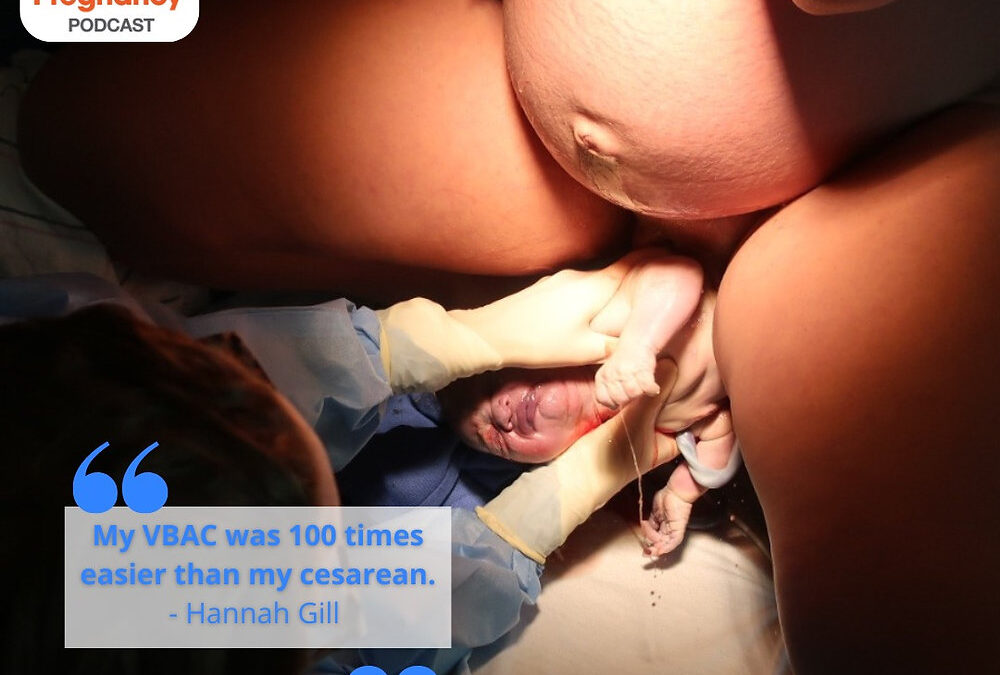
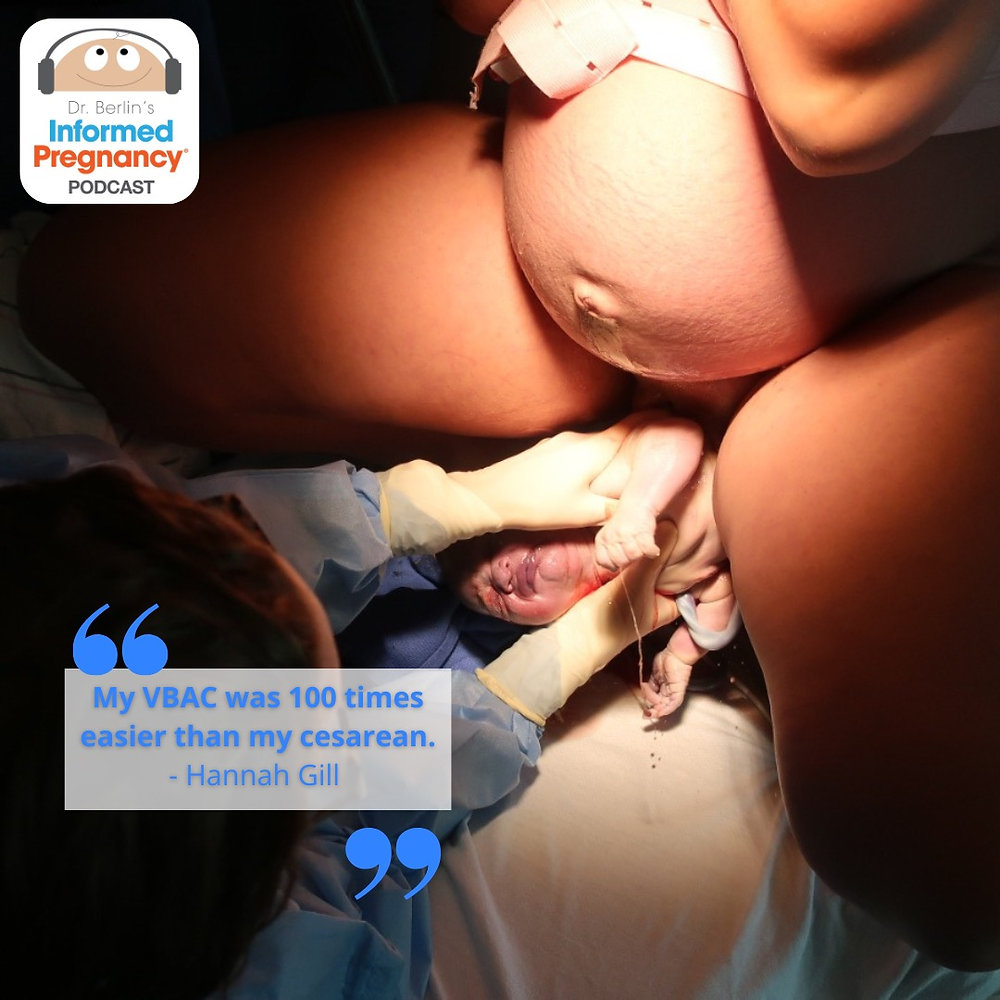
Hannah: Because it’s still there. But, overall, recovery from the VBAC was 100 times easier than C-section.
Elliot: Mind and body?
Hannah: Mind and body, yes.
Elliot: Hmm. Well, congratulations.
Hannah: Thank you.
Elliot: I know you worked hard for that. And what an intense journey from beginning to end even just finding out that you had PCOS and the question marks that that brings up. What would you do with a third pregnancy for the birth?
Hannah: One hundred percent home birth, as long as I’m able to.
Elliot: Because now you can — The second VBAC, now that you have a “proven” pelvis.
Hannah: Right. But as long as my platelet levels are fine and everything checks out, I would 100% want to have a home birth.
Elliot: We just have to do another episode in a couple of years. Before we go, tell me about your new nightlife.
Hannah: Yes. So, I am a childbirth educator, birth and postpartum doula. I am owner of Ebb and Flow Birth Co., is what my business is called. So, I do doula support for postpartum and birth, and I’m in Indianapolis in that area. So, I’m really liking it so far. I just started doula work. I’ve only had one birth for my birth support, but I have childbirth education classes lined up as well.
Elliot: Is that what you named your kids, Ebb and Flow?
Hannah: No, no. They’re Hudson and Marley.
Elliot: Oh, Hudson and Marley. I though they’re going to be like Evan and Florence.
Hannah: No.
Elliot: Hey, Hannah, I thank you so much for joining and for sharing your story. And for now, the amazing work that you do supporting others.
Hannah: Thank you.
Elliot: Tell me where we can find you online.
Hannah: So, Instagram is @ebbandflowbirthco. No underscores or anything like that. And then, my website is ebbandflowbirthco.com.
Elliot: Amazing. And we’re over there on the Instagram as well @doctorberlin, D-O-C-T-O-R-B-E-R-L-I-N.
by Informed Pregnancy and Parenting Project | Jan 10, 2023 | Podcast Transcripts, Pregnancy
Elliot: Welcome to the Informed Pregnancy and Parenting Podcast. I’m your host, Dr. Elliot Berlin. My guest today is a nutritionist and founder of medicinal mushroom-focused company, Fungirl, who is currently pregnant with her first child and planning a home birth with a midwife and her mother as her doula. Isabella Zar, welcome to the podcast.
Isabella: Hello. Thank you for having me. I’m excited to be here.
Elliot: Oh. I can’t wait to pique your brain about all things that I know nothing about. But before we get to that, you are just holding up your other doula.
Isabella: Yes, this is my assistant doula. If my mom doesn’t make it in time from Australia, then he’s going to step in, my 8-pound dog.
Elliot: What kind of doggie?
Isabella: He’s a Maltese Yorkie, a Morkie.
Elliot: A Morkie.
Isabella: A Morkie.
Elliot: A Morkie. Excellent. He looks doula-like, so it’s fun for me to always meet another male doula.
Isabella: Oh, yeah. There’s not many of you on the field, so.
Elliot: We’re in limited supply. Let’s start with the beginning. You don’t sound like a New Yorker. Where are you from?
Isabella: I am from Australia. I grew up in Sydney and moved here three and a half years ago. And yeah, I definitely have like a, not a super strong accent, so some people kind of like find it hard to decipher exactly where I’m from but, yeah, Australian.
Elliot: I think the initial confusion is Australia or New Zealand.
Isabella: Yes, that’s an easy one that people make all the time.
Elliot: And then, if we’re getting a little bit more, it’s like, is that South Africa, maybe it’s somewhere in the United Kingdom.
Isabella: Yeah, I get the UK a lot. My parents aren’t Australian, which is why I believe I sound the way I sound. My dad’s German, my mom was born in New Zealand, so neither of them have crazy strong Australian accents either. So, I didn’t have.
Elliot: Okay. But they have a mix of sort of European and a little fish-and-chips New Zealand over there.
Isabella: Yeah, and then, the islands.
Elliot: Very confusing.
Isabella: Yes.
Elliot: But it kind of explains you a little bit. You’re kind of a nice blend of all things interesting.
Isabella: Thank you.
Elliot: All right. What brought you to the U.S., Los Angeles in particular about three years ago?
Isabella: My husband, the main reason. We met and got married really quickly. It was all within like a few months, really. I think like three, four months after meeting, spending time together, we got married. And then, I finished my degree, I finished studying back home in Australia. And then, I moved over to LA to start a life here with him.
Elliot: That’s really quick even for my people. Orthodox Jews usually go on two dates, and then, decide if they’re going to keep it or not. And if they do, a few more dates, and then, they’re married very quickly, you’re competing with that.
Isabella: Yeah.
Elliot: Why so fast? How’d you meet?
Isabella: We met at a cafe. We’ll come back to this cafe as well because it’s also part of like how I got into what I’m doing.
Elliot: Oh, foreshadowing.
Isabella: Yeah. But we met at this little vegan cafe called Orchard Street in Bondi. I was sitting there at the bar, having a drink. My friend worked there at the time, and I was crying over my ex-boyfriend, who I had just broken up with. And then, he walked in and sat next to me. I don’t know, the timing was like very special. And that he was only there for like another 12 hours or something before he caught a flight. And we met and kind of just hit it off pretty quickly.
Elliot: Kind of can’t wait to see the movie.
Isabella: Honestly, it would make such a good movie. I just need to write a script.
Elliot: That’s what I’m saying, wow. All right. What you do now is you’re a nutritionist, and you’ve created a medicinal mushroom-focused company called Fungirl. In the second segment, we’re going to talk all about that. But you guys got together, got married very quickly. And now, you’re pregnant. So, how long ago was it that you met?
Isabella: Well, it’s been three years now, over three and a half years.
Elliot: So, you waited a second before having the baby.
Isabella: Yes.
Elliot: By choice?
Isabella: Yeah. It was definitely by choice. I’m 28 right now. I always knew that I wanted to have kids young, but it was interesting. As soon as I got married, I had this shift because I was like, “Oh wow, I could actually have babies right now. Like, I’m married, I have a husband. Like, I feel safe enough that I could have kids with this person.” It kind of made me retract from that feeling all of a sudden I was like, “Oh, maybe I’m good for a while, actually. Don’t want to quite dip my toe into that pool just yet.” Yeah, I was 25 when we got married. Having kids that quick was not what I wanted in the end. And plus, it gave us time to just be a couple, and be together. Like, we barely knew each other. We were like strangers reading vows to each other. It was really special to have that time of our relationship, just getting to know each other without a baby.
Elliot: I have a question about that, too. But I just had an image of my head, where you’re kind of at the altar, and you’re like whispering as you’re, “Who’s that?” “Oh, that’s my brother.”
Isabella: Okay. So, we didn’t even have a wedding. We just eloped at Santa Barbara Courthouse.
Elliot: Oh, wow. Well, that’s what I was going to ask you also. This whole thing kind of is pandemic-y.
Isabella: It was pre-pandemic.
Elliot: When you got married?
Isabella: Yes.
Elliot: Okay. And then, okay. You get married, the world falls apart, and then, you wait a year or two and have a baby?
Isabella: Yeah. We really got to know each other during COVID, like most people. So, that was like a good, intensive time, just sped up.
Elliot: Are your families, I mean, were they there, or just the two of you?
Isabella: No. It was the two of us, and then, one of his closest friends married us. And then, his wife was there as well.
Elliot: Oh. His closest friend’s wife, not your husband’s wife?
Isabella: Yes.
Elliot: Okay.
Isabella: It was just four of us.
Elliot: It was the four of you. A double date, but it started different than it ended.
Isabella: Yeah. It honestly wasn’t really planned that well, either. We knew that we were going to get married sometime within this two-week period. For visa reasons, we had to do it within a time frame.
Elliot: Oh. This sounds like “90 Day Fiancé.”
Isabella: Basically. But we woke up one morning, we were in Santa Barbara. We were doing this whole wine-tasting trip with our friends. And we woke up, and we were like, “Okay, maybe this is the day. Like, let’s just walk over to the courthouse, see what we like.” And all of a sudden, we’re just like getting married. It just like happened.
Elliot: Wow. That’s my other question. How do your families take that?
Isabella: Well, they knew that we got engaged, so. It was funny. I remember because we went on a trip to Byron Bay, when we were still in Australia, spending time together. And no one had met him, none of my friends, none of my family. And I came back from this trip engaged. And I sat down at my parents with my mom and my dad, and I was like, “Oh, Mom, I have to tell you something.” And she was like, “What?” And she’s like mid-eating a salad, she’s like, “Are you pregnant?” I was like, “No, I’m not quite. I’m engaged.” And her face was just so like she couldn’t understand why. She’s like, “I don’t get it.” She hadn’t met him. No one had met him. It was a little confusing at first, but.
Elliot: Yeah. As a dad, I would be like, “What?”
Isabella: Yeah.
Elliot: I don’t have a clear vision of how it’s going to go, but I do sort of have some kind of expectation that we’ll meet, you know, the old traditional, like I asked my father-in-law, before I proposed to my wife, you know, for “his permission,” for her hand in marriage. If I remember correctly, he said, “No,” but I asked, at least. I asked.
Isabella: Did it anyway.
Elliot: Yeah. So, yeah, I could see the shock. I can almost see how pregnancy would be less shocking.
Isabella: Yeah. Honestly, it would have been, if I was just like accidentally pregnant. I think that would have been way more like, “Oh, oops.”
Elliot: Yeah. Okay. So, did you have a celebration with family at some later point, or?
Isabella: We did. We did something in Australia with my closest friends and family. And then, we had an engagement party in America, when I came over, right before we got married.
Elliot: Okay, so all bases covered.
Isabella: Exactly. We always wanted to have a wedding. And then, by the time I moved over here, it was like three months. And then, COVID happened, no one was traveling. And then, all of a sudden, we’re married for three and a half years. And it’s like, we’re such old news like, that’s not exciting anymore.
Elliot: Yeah.
Isabella: So, I don’t know.
Elliot: You might as well wait seven more years, and have a party when you renew your vows.
Isabella: That’s exactly what we’ve said. We’ll just do a vow renewal party.
Elliot: Just the four of you.
Isabella: Yeah.
Elliot: All right. Let’s take a little break. When we come back, I am so curious to know about these mushrooms. Don’t go anywhere. We will be right back.
[break]
Elliot: Welcome back to the Informed Pregnancy Podcast. We’re talking to Isabella Zar. And okay, tell me about mushrooms. How did you get into this, nutrition? You’re very fit, your body’s very strong and healthy, how did that all begin and involve?
Isabella: Well, I guess it kind of goes back to how I was brought up. My parents are kind of more on the earthy side, you know. We never had Advil and things like that in the house. I remember as a kid, whenever I had a toothache, my mom would give me the head of a clove, and she’d crush it onto the tooth that was aching. And it’s a natural astringent, so it would create a little numbing effect. So, that was kind of the feel in our household. It was very natural.
Elliot: Yeah, your food is medicine.
Isabella: Exactly. My parents had a restaurant when they moved to Australia. So, cooking with fresh, healthy food was always really important to my parents, and I just grew up seeing that. And then, I guess, I got more and more interested in food, as I started getting older, I’d cook a lot with my dad.
And then, when I was about 15, I started modeling. And that’s when I became more aware of the physical side of me. I mean, you’re always aware of your physical side, obviously. But it was different. All of a sudden, it was like, really about the way I looked and my body and my face and how I took care of myself. And I definitely took that to an extreme, I think. As a young girl, that can kind of mess with you. So, I definitely developed some eating disorder kind of things. I had a funny relationship with food for a long, long time. But that almost triggered my interest in healthy eating even more. So, it was like, it became a little obsessive.
But then, I had a switch when I was about 19. I remember just feeling so disconnected from myself. And I was in this world that was completely unhealthy and was glamorized. And it was anything but that. And I just remember wanting nothing to do with it. I really didn’t. So, I just kind of like quit anything fashion-related and modeling. And I started Googling courses of like, what can I do with food and healthy cooking and blah, blah, blah. And I came across like a nutrition college in Sydney. And I didn’t even know it was a thing, becoming a nutritionist. I mean, I’d seen dietitians growing up, but nutrition, I didn’t know was a career path that I could even explore. So, that was when it kind of all started. I remember enrolling in this course. And three months later, I was taking it, and I just became obsessed.
Elliot: Okay, a bunch of questions. Number one, what kind of restaurant did your parents have?
Isabella: It was in The Rocks in Sydney. And it was kind of just like modern Australian but had a European influence because my dad was from Germany. He liked to get creative with food.
Elliot: Yeah. That’s a hard tagline for marketing purposes.
Isabella: It’s definitely not a one-liner.
Elliot: And then, do you have siblings?
Isabella: I’ve got two brothers, an older brother and a younger one.
Elliot: Oh, right. So, you’re the cream in the Oreo cookie.
Isabella: I’m right in the middle.
Elliot: Do either of your brothers have kids?
Isabella: Yes. My older brother has three kids.
Elliot: Oh, wow. You have some catching up to do.
Isabella: Yeah. And then, my younger brother is six weeks behind me, having his first.
Elliot: No kidding? Okay, wow.
Isabella: Yeah.
Elliot: Okay, so your parents are going to be busy.
Isabella: They’re going to be so busy. I mean, that’s five grandkids by the end of the year. That’s a lot.
Elliot: It’s a lot of nappies to change.
Isabella: Well, sadly, luckily for them, I’m not nearby. They don’t have to change any nappies for me, but.
Elliot: No, yeah, you can’t really do virtual nappy changing.
Isabella: Sadly, no. We got to figure out a way.
Elliot: And when you were modeling, what kind of modeling were you doing?
Isabella: A lot of like e-commerce stuff like magazines, clothing labels. Nothing crazy. I was doing it part-time, and I did it for a few years.
Elliot: And were there elements about it that were a bad experience for you, or did you not like what the industry sort of projects for other women? Or both?
Isabella: Both. Honestly, going into it, I remember thinking it was just the most glamorous thing that you could do. It was like, “Oh my gosh. Like you see these women, and they’re gorgeous, and they’re done up, and it looks so fun from the outside.” And listen, it was fun. I had a ton of fun. But I also think it made me grow up really quickly because I was surrounded by people that were much older than me, had been in the industry for a long time. And then, it created this really unhealthy relationship between me and my body.
Elliot: And you wanted something different. It’s pretty cool that at that age, and in that glamor, you were able to realize that and walk away from it.
Isabella: Yes. I’ve always been told that I’m an old soul. So, I kind of was just like the quiet one that would just see things, and I’d really like take it in and listen, and also very intuitive. And it got to a point, where it didn’t feel right anymore like, something’s not good here.
Elliot: Unlike your parents’ restaurant, I think old soul is a great tagline for you like, having to spend time with you, there’s this like deep sense of maturity and observation and understanding that I’m almost envious of.
Isabella: Thank you.
Elliot: It’s cool. And it’s one of your like puzzle pieces, that make you a very interesting puzzle. Okay, so that’s 19 then, you’ve had that realization, you are excited about nutrition, where does it go from there?
Isabella: Yes. So, I’m deep in my course. It was four years. And I remember, we touched base on mushrooms at one point. No idea where it was. But mushrooms did come up for a little bit. There were certain topics we kind of like brushed over quickly. But I remember learning about them and being really fascinated. And I ended up kind of diving into them more myself just on the side. And then, what coincided with that is I actually started working at that cafe, where I met my now-husband. And I took my old friend’s job. So, she left the cafe, I took her job at this cafe, while I was studying.
And it’s kind of similar to Moon Juice, a little different, a big focus on adaptogens, you’d make certain lattes with adaptogens and mushrooms. And it was so fun. People would come in, and they’d ask for something specific to help them with a certain feeling. So, someone came in, they’re like, “I’m feeling like super fatigued today. Like, what powders can you give me to help with that?” And I’d be like, “Oh, perfect, let’s give you a little like cordyceps for energy and some maca to like give you that spark. So, I got to play this role of helping people with whatever they were going through by choosing from my wall of alchemy powders behind me. It was so fun so that just drove that passion even deeper.
Elliot: And it’s all food-based, plant-based?
Isabella: Yeah. Yeah, yeah, yeah. They’re all —
Elliot: So, it’s not like snake venom and other weird things like that?
Isabella: Yeah, no, definitely plant-based.
Elliot: Okay. So, I can see how that gets even more excited about using the medicinal power of food to help people.
Isabella: Oh, yeah. And I started feeling the differences myself as I started taking these powders as well. For example, lion’s mane is a mushroom, my favorite, favorite mushroom. It’s so incredibly good for your brain. It literally increases the growth of neurotransmitters in your brain. So, just like, it makes you fire much more optimally than you normally do, but not in like a caffeine kind of way. It just gives you this like brain boost. It increases your memory and focus and concentration.
So, I remember when I started taking lion’s mane consistently, every day, and then, I’d stop for a couple of days, I felt that dip, and I was like, “Whoa. I’m not functioning as well as I was like a week ago.” So, that’s when I started to really kind of feel the difference myself. Sometimes, it’s hard like, if we take so many supplements and things and it’s like, “Well, what is actually working?” Sometimes, I was feeling the difference firsthand, and that was insane to me.
Elliot: I have that same exact experience with vitamin S and vitamin P. I sometimes take one, sometimes, take the other, you know, Starbucks or Pete’s Coffee. And then, if I don’t take it for a day, so I feel the dip.
Isabella: You definitely feel the dip from that.
Elliot: But lion’s mane coffee, that could be my new venture. I have a question. So, do any of these mushrooms have the hallucinogenic or psychedelic effects?
Isabella: Yes. I mean not the ones that I’m using at the cafe.
Elliot: Okay.
Isabella: I mean, there’s so many different types of mushrooms. So, you’ve got the ones that are psychedelic with psilocybin, and then, you have the ones that are not. I started playing with the ones that were not psychedelic at the beginning for years. And it wasn’t until I actually came to the States that I first started trying psilocybin mushrooms, the psychedelic ones.
Elliot: We have that effect on a lot of people.
Isabella: Apparently, you guys do. You guys like them a little bit here, which I’m all for.
Elliot: We like not feeling like ourselves.
Isabella: Yeah, apparently.
Elliot: Had you been experimenting with other drugs as a teenager?
Isabella: Oh like, you know, smoking weed and things like that, but like, nothing crazy like, not mind-altering things.
Elliot: Okay. You have to get creative with the movie script.
Isabella: Exactly. A couple of things in there.
Elliot: So, in your experimentation with more psychedelic mushrooms, what was your experience with them?
Isabella: I didn’t know what to expect. I’m trying to think the first time I took them. I can’t really pinpoint the first time.
Elliot: That might be because you were high on mushrooms.
Isabella: Maybe. I think I was in Big Sur, which was the perfect place to take them, to be honest, surrounded by nature, with people that you feel safe with, in the right environment. Like, that is everything like, set and setting, where you are and then, also, how you’re feeling yourself, so.
Elliot: How do you consume them physically?
Isabella: Different ways. You can eat them raw, literally, like it could be a dried mushroom, and you can just eat some of that. That’s what I would do at first. I really liked, they’re super earthy tasting like, really tastes like they’re just from the ground, which they are.
Elliot: They are.
Isabella: But I liked that taste. So, I would just eat them dried and raw. But some people grind them up into powders. And you can have them in different forms in chocolate and honey and capsules.
Elliot: My first thought would be pizza.
Isabella: Oh, yeah. Pizza is a great way to go.
Elliot: Thank you. In fact, because your company is called Fungirl, which you’re going to talk about in a second, but if I could think of another venture, I would open a medicinal mushroom pizza store. And here’s my name for it, Funguy.
Isabella: Yeah.
Elliot: So, perfect. Funguy, from mushrooms or fungi.
Isabella: Yeah.
Elliot: And maybe we need a sibling to your company. Okay.
Isabella: So, do you have lion’s mane pizza?
Elliot: Yes. So, sharks. Okay.
Isabella: Yeah.
Elliot: All right. So, you’re experimenting with the more fun mushrooms, and where does that lead you?
Isabella: Oh, man. There’s a lot that came from playing with them. At first, I guess, when I would take them, it was definitely more an environment with friends. It was social. I just noticed that people were using them a lot recreationally. And they open you up, like they’re expanders. They open up your mind, and you’re hot. And honestly, the person I am today, I’m very different to how I was three years ago. And I have to pay a lot of that to my use of psilocybin. I think it just opened me up as a person. And it just showed me how to be more empathetic and caring and slow down and see the world for what it has to offer and what it is. And it just helped me grow a lot. So, for me, they’re really special. And they’re sacred.
So, I started to feel this shift and not wanting to use them in such recreational settings. So, I like pulled it back. And then, I started playing with microdosing them, so you just have a really small dose, 0.1 of a gram every day. You do it for like a couple of days. And you take a break. I mean, that’s like taking any sort of supplement, you know, but this was like really good for your brain. Like, you can function throughout the day. It’s not like you’re taking some substance that’s tripping you out or anything. You don’t even feel the dose at that stage. So, it’s like, I could still walk and do this podcast and microdose, not that I am now because I’m pregnant, but the point is, you could take a low dose and reap the benefits from them. It helps with anxiety and depression and PTSD and a ton of things like that.
Elliot: I have two thoughts about that. Number one, it seems like it’s going to be a tiny pizza.
Isabella: It’s going to be minuscule.
Elliot: And then, number two is it seems like half of all Americans are on medicine for those things anyway, anxiety, depression, and whatnot.
Isabella: Yes.
Elliot: So, going back to food is medicine, microdosing some mushrooms seems like not a crazy idea.
Isabella: No, it’s not. I know a ton of people that have gone from taking prescription medications for certain things switch to microdosing and not even needed their other meds anymore. And they’re feeling better than they ever have.
Elliot: Yeah.
Isabella: It’s really powerful.
Elliot: Since we’re based in America, I would say, don’t make any changes without consulting your doctor. I’ve never done, I don’t think, ever any kind of recreational drug, and you’re selling it well.
Isabella: Thank you.
Elliot: You’re selling it very well. I want to feel the way you described open on the inside and just take off some of the tough boundaries that I’ve built up over the years to be protective and defensive and in the harsh world. Your company is not about those mushrooms. They’re medicinal, but not psychedelic. Is there any other big takeaway from your time with the psychedelic mushrooms?
Isabella: I can wish everyone could be taking them. I think the world would be a very different place if we were.
Elliot: You know, I feel like there should be a filter for certain people, you know, like someone with road rage. And then, this guy with road rage and this is guy who would have had road rage on a fun mushroom.
Isabella: Uh-huh, be very different version.
Elliot: Ah, this is what my life is like on Instagram, and this is my real life. It’s the exact opposite. Okay. Let’s talk about Fungirl. So, your passion here has led you to continue trying to help people with the power of [indiscernible 00:26:15] medicine. What kind of products have you developed?
Isabella: Yes, so I have got a range of chocolate bars, medicinal mushroom chocolate bars, which are clean, organic, vegan.
Elliot: There’s no milk?
Isabella: No, they don’t even need it. Next time I see you, I’m going to bring you some to try.
Elliot: Okay, fine.
Isabella: You won’t even miss the milk. And I’m not even vegan. But if I’m going to have a treat, I want it to be clean. It’s not even milk. It’s like a milk solid when it’s in a chocolate bar. And just like, it makes you feel funny, so.
Elliot: I feel funny anyway. Are there different ones for different things?
Isabella: Yes, so I launched with my first one, which is called the Mane Bar.
Elliot: I know what’s in there.
Isabella: You know it’s my favorite, lion’s mane. And that was all about being like a brain bar. So, the whole idea behind Fungirl was I wanted people to be able to incorporate mushrooms into their day-to-day, even if it’s in a smaller amount, you know, like, “Okay, if you take a mushroom coffee, great. You get a little there. If you want some chocolate at night time, have some Fungirl. You get a little there.” So, you’re getting more than you think you are. So, yeah. So, I made the lion’s mane bar. And that was all about giving you like a brain boost, getting that dose.
And then, people really wanted more of an all-encompassing one. So, I ended up doing the Mushpit Bar, which is four different mushrooms. You’ve got lion’s mane, reishi, cordyceps, and chaga. So, that gives you a real boost of all those four mushrooms in the chocolate.
Elliot: Is it the Mushpit? M-U-S-H?
Isabella: Yeah.
Elliot: Oh, very cute, I like all your names.
Isabella: Thank you. So, yeah, so that’s what I launched Fungirl with. And they’ve evolved, you know, when I launched it, the packaging was different, the chocolate was different. And now, it’s at a point, where I’m, you know, hate to be biased, but they taste really good. And they’re doing well. People really love them, just a nice healthy treat to have.
Elliot: Are they contraindicated during pregnancy?
Isabella: You know, there aren’t any studies. Like most things with pregnancy, they just haven’t done any studies on women and mushrooms, women being pregnant taking mushrooms. I’m still taking mushrooms in powder form and in the chocolate. I just have way smaller amounts.
Elliot: Okay. And you’re taking these kind of mushrooms.
Isabella: Not the psychedelic ones, no.
Elliot: Okay. Well, color me curious, made me wonder, but I could almost already taste the passion that’s in your product, knowing that it comes from personal experience, personal evolvement, and wanting other people to get the benefits out of them that you do. That’s really cool. How pregnant are you? How many weeks are you?
Isabella: 39 weeks.
Elliot: Okay. So, according to my calculator, you’re going to be a mom pretty soon.
Isabella: Yeah.
Elliot: Let’s take one more break, and when we come back, we’ll find out what’s in store for your birth.
[ Music ]
Elliot: Welcome back to the podcast. During the break, I realized I’m hungry for chocolate and mushrooms now, so thank you.
Isabella: You’re welcome.
Elliot: You’re 39 weeks, going to have a baby soon. What’s your plan?
Isabella: My plan is to rest until this child comes. I’m having a home birth. I have my midwife, Katie Hamilton, who I feel so lucky to have found.
Elliot: Angel from heaven.
Isabella: Oh, she’s the best, honestly, feel very aligned with her.
Elliot: I feel compelled to ask this question since less than 2% of people in America have babies at home. Why?
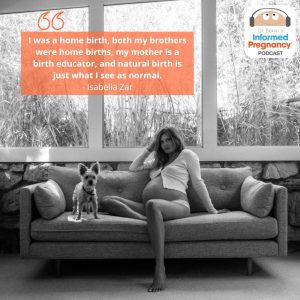
Isabella: I was a home birth, both of my brothers were a home birth. My mom, she is a former doula, birth educator. She’s been in the birth world for a really, really long time. And so, natural birth is just what I grew up with and what I saw as normal.
Elliot: How much younger is your younger brother?
Isabella: Two years younger and then, my older brother’s six years older.
Elliot: Were you at the birth of your little brother?
Isabella: I was, yeah. I don’t remember it. But I was somewhere in the house.
Elliot: Okay. You had an exposure from a very young age to birth, like being a normal natural kind of thing.
Isabella: Yeah.
Elliot: Okay.
Isabella: I remember being a kid and when people would ask, “Where were you born?” I was so embarrassed that I was born at home. But it’s so hippie and weird. I would lie, and I’d make up like the nearest hospital, St John’s or whatever.
Elliot: It’s kind of interesting. We had our fourth baby at home. And we rent our house, our landlord has the house right next door, and he lives there. So, I came out one morning, and I’m like, “Hey, [indiscernible 00:31:13] we had a boy.” And he’s like, “Oh, really? Tell me what room Melissa is in,” my wife, you know, “at the hospital, because we’ll send flowers.” I’m like, “Oh, she’s, at the moment, in our bedroom.” And he’s like, “What? When did you have the baby? She’s already home?” I’m like, “Well, we had the baby at home.” He’s like, “You didn’t make it to the hospital in time?” I’m like, “We planned to have the baby at home.” And at that second, like his brain went to a completely different area, which was like, “Oh, my goodness. How are the floors?”
Isabella: Yeah, being the landlord.
Elliot: I think that’s where he went. But he wasn’t thinking about the floors when he thought we did it by accident. It was only like when we planned to have the baby at home, he’s like, “I want my floors.” Anyway, so, yes, whatever, like I said, less than 2% of people do it. In my community, it’s a lot less common.
Isabella: That’s a small percentage. I didn’t realize that’s what it was. That’s low.
Elliot: Yeah, it’s low. You’re weird. So, in your mind, what are the pros and cons of home birth? And as a follow-up, what are you excited about or nervous about?
Isabella: Pros and cons, you know, I didn’t immediately decide on a home birth. That actually took me a minute to get there. But when I would think about giving birth in a hospital and that environment, I just knew that it wasn’t where I wanted to be. I didn’t want to be somewhere like sterile with hundreds of people that you didn’t know running around and this sense of emergency, and knowing that I would be on this time limit. Like, hospitals are a business. Like, they’re trying to get people in and out. And I get that. But I know that birth is also this mysterious thing that could happen in 20 minutes or 45 hours, you know. It’s like you can’t put a time limit on it. So, I never wanted that feeling.
And also, it’s like the hospital to me, I’m like, “That’s where people go when they’re sick,” you know. Birth is sacred. And I’m excited to experience it in its natural form. But yeah, it took me a minute to get there. I was definitely a little nervous, as you know, I’ve expressed that to you.
So, the pros for me about a home birth, being in your own environment, having all your things around you, not having to rush to the hospital, going at your own pace, you can walk around and eat and drink, jump in the shower, have a bath, lie on the bed, watch a movie, whatever.
Elliot: Snack on mushrooms.
Isabella: Exactly.
Elliot: Whatever you need. And in that sense, what are the cons of home birth?
Isabella: The cons of home birth, for me, there aren’t many, to be honest. I mean, the one that comes to mind is if something actually does go wrong, or there is something that needs medical attention, whether it’s myself or the baby. Well, I mean, there’s a ton that the midwife can do to help with certain things. But if there’s something that the midwife can’t do, I’m not just in the hospital, able to go to the operating room or whatever, and have an emergency C-section or something like that. That’s kind of where I go.
Elliot: First of all, you left out your husband. I can’t tell you how many times it’s the husband who needs medical care from, you know, passing out, smacking their head on the floor. But if any of you do need more hospital-based medical care, do you have a plan for that?
Isabella: The [indiscernible 00:34:38] is like five minutes away, so.
Elliot: Okay, so that’s a hospital, a local hospital right near you.
Isabella: Yeah.
Elliot: Okay. This thought goes through my mind a lot, like from when I used to live in Nebraska. Like when you’re in Nebraska, giving birth at a hospital, frequently, there’s no surgeon in the hospital while you’re giving birth there. There’s no anesthesiologist in the hospital where you’re giving birth. They’re not just waiting for a birth crash to happen. If something comes up, they need to assemble a team and get the operating team ready.
And here, [indiscernible 00:35:09], the hospital you referenced has 9,000 babies a year. They always have surgeons and anesthesiologists, and [tox 00:35:16] ready to go. And so, quite conceivably, somebody who lived where you are, having a home birth who needed some sort of intervention quickly, might get it substantially faster than someone giving birth in a hospital in Nebraska.
Isabella: Yeah.
Elliot: Right? And I’m not trashing Nebraska. I’m just saying, it’s a practical reality is that when you live in the bigger cities, you have this kind of hospital accessible to you. When you live in smaller out of the big city hospitals, then oftentimes, that’s the scenario. And it’s not like your midwife isn’t trained, like you said to handle certain types of emergencies into stabilize and transport. So, it’s just a food for thought idea.
There are some people who are very excited about home birth and love it. Some people are very not excited about it and hate it. But one thing I think that they don’t think about is that you’re in a place where you have access to care very, very quickly should you need it. If non-emergency, if you felt like for whatever reason you transferred to the hospital to continue laboring there, is that something that you’re okay with if you feel like you need it in the moment?
Isabella: I am. I’ve definitely come to peace with the idea that anything could happen for me. I really didn’t want to have a C-section. That was what I was trying to avoid. But now, I think just throughout my pregnancy, I think your mindset kind of shifts a little. And like, for me, it’s like, “Okay. However this baby comes out, I want to be healthy. I want her to be healthy and both of us to be safe. However that’s done, it’s going to be done.” Like, it’s going to play out how it’s meant to. So, I am okay, if that were to happen, if I were to transfer and continue laboring there. Obviously, that’s not my ideal, that’s not my goal. But I feel like I have to be open to any possibility.
Elliot: Right. It’s not the path that you’re hoping to take to the destination that you’re planning to get to.
Isabella: No, not at all.
Elliot: But if a detour comes up, you’re okay moving to a different way to get from point A to point B.
Isabella: I feel like you have to be, right?
Elliot: You do, but not everybody is.
Isabella: I know. Yes, you’re right.
Elliot: It’s nice that you’re able to. And because you’re incredibly cool, and you’re an open book with no TMI button, you’ve also agreed to do our new program called “My Birth,” where you’ll come back, not only to share your birth experience on the podcast here in an after episode but also, on our new streaming platform and Informed Pregnancy Plus, with pictures and videos. So, we’ll be right there with you. We’ll all be your doula.
Isabella: I know. I’m excited. Even through this decision to have a home birth, it’s definitely opened up a lot of conversations within my own network of friends. So, you know, I’m not pushing anything on anyone, but I hope that I can be an experience that people look to and see this positive home birth story, you know, however it ends up. I hope that I can help inspire people to like at least explore the option, you know.
Elliot: Sure, yeah. And also, I think you’re open-mindedness and flexibility are admirable. And it’s your thing. You look at something 360 and not just focus in on one dot on the picture. So, I think that’s healthy. At your home birth, who’s going to be there?
Isabella: I’m going to have Katie, my midwife, my mom, my doula, and my husband, Aaron.
Elliot: And your Yorkie, your dog.
Isabella: Oh, oh my gosh. How could I forget, my doula assistant, Bubba.
Elliot: Bubba. “This is my doula, Bubba.” Now, that’s going to work well for the movie.
Isabella: He’s great. He’ll be there.
Elliot: He’s a Morkie. That’s what I was going for.
Isabella: Oh yeah, a Morkie.
Elliot: Morkie Bubba.
Isabella: Yes. And then, the midwife will have an assistant, as they usually do. So, that’s four people?
Elliot: Well, it depends, you and your partner.
Isabella: Yeah.
Elliot: Your mom.
Isabella: Mom, midwife.
Elliot: Your midwife, your midwife assistant, and your Morkie.
Isabella: Okay.
Elliot: And then, eventually, the baby.
Isabella: Yeah, so six, soon to be seven. That is plenty. Like, I had questions like, “Are you going to have a photographer, a videographer, this, that?” I’m like, “I want as few people there as possible.”
Elliot: Kind of like, when you conceive.
Isabella: Yes, exactly. I want privacy.
Elliot: It’s an intimate experience.
Isabella: Yeah.
Elliot: Okay, cool. Any predictions on the baby’s size?
Isabella: From the patients, my midwife said that it’s a girl. She feels like kind of average size, probably about like 7 pounds right now. So, I’m hoping like a nice 7.2 baby comes out.
Elliot: Okay, my prediction is going to be eight.
Isabella: Really?
Elliot: Does that even change anything, a tiny bit for you? Normal goes up to at least nine and a half.
Isabella: Oh, man.
Elliot: It’s a weird calculation that your brain is doing right now because you’re thinking of two static things, the size of your pelvis and the size of your baby, right?
Isabella: Yes.
Elliot: But neither one of those is a static thing. Your pelvis is a whole bunch of bones connected by soft tissue, like ligaments and cartilage. They can expand and contract quite a bit. I’ve seen smaller, like really petite ballerina girls have a 10.5 pound baby, no problem, by the way, not even tearing. And your baby’s head is not a solid bone either. It’s a bunch of bones that are able to mold through a smaller space. So, sometimes, I think what gets lost is the physiology of how a larger structure can come through small, and your soft tissue also is designed in that neighborhood to expand quite a bit, and then shrink back down to how it was. Perhaps this visual will be helpful, maybe not, but almost like an elevator door, that opens up, somebody comes out, and closes back up again.
Isabella: Yeah. No, you’re completely right. And a mantra that has been helping me is reminding myself that my body is never going to create something that’s too big that it can’t come out. Like our bodies are so smart and complex and whatever’s growing inside of us is able to come out of our bodies.
Elliot: Sure. That might not be exactly true if there was some sort of genetic mishap or something like that. In your case, everything is looking just fine, normal, 8 pounds, 8.5 ounces, totally within the normal realm. It’s just that, your logic brain starts to run away with that and try to figure out all the what-ifs. And that’s where anxiety comes in. So, it’s a natural thought. I’d be worried about you if you never had thoughts like that.
Isabella: Yeah, no, they’re definitely there. Don’t worry.
Elliot: Okay, sweet. Now, I’m not worried about it. Okay. Well, time’s on this gig you’re amazing to talk to. And I’m very excited. I would send you the most positive birth energy possible, you and your six, probably well-fed guest. And I look forward to talking to you on the other side.
Isabella: Yes, me too, excited to share the story on the other side.
Elliot: Where can we find you and, or Fungirl online?
Isabella: Yes, Fungirl, mainly on Instagram @fungirl, website fungirlgoods.com. That’s where you can find all our goodies.
Elliot: Okay, so that’s where we find you online. Great. Listeners, thanks for listening to us. And if you want to find us online, I would go at this point to either informedpregnancy.com, where you are not going to just see our podcasts or access to our documentaries and things like that, our blog which is exploding right now, but all the details about the new Informed Pregnancy Plus String Channel will be there. Alternately, if you’re a visual person, go to Instagram and we’re @doctorberlin, D-O-C-T-O-R-B-E-R-L-I-N.
by Parijat Deshpande | Dec 28, 2022 | Health Conditions, Pregnancy
“The difference between pregnancy and any other time of life is that you are in a body that is constantly changing. That means that the context of your risks, as well as the level of risk and what the potential treatment plan could be, is always changing. Staying up to date with what your providers think is critical.”
Although we are fortunate to have a plethora of resources for many aspects of pregnancy, when it comes to high-risk pregnancy, the conversation often stalls and the resources dwindle. Even our statistics are lacking, making it easy to ignore the reality of high-risk pregnancy in the United States both publicly and privately.
The clearest measurement of high-risk pregnancy that we have is from UCSF identifying 8% of all pregnancies as high-risk ones, a number which is expected to be much higher when we factor in additional indicators of risk such as age and history of chronic illness. Yet, even just 8% should be enough to cause concern. Although the majority of pregnant people go on to have low-risk pregnancies with no complications, we have to be prepared for how to support the 8%+ that don’t. All pregnant people should have access to resources to know how to support their own pregnancies should they find themselves living through a high-risk one.
What Is High-Risk Pregnancy?
High-risk pregnancy is a broad term that encompasses any pregnancy at risk of developing maternal and/or fetal complications. Diagnosing a pregnancy as high-risk doesn’t guarantee complications or even necessarily mean that there will be adverse outcomes; it simply identifies that the pregnant person is at risk of developing certain complications during pregnancy and therefore warrants added monitoring depending on the specific circumstances. Just like the broader umbrella of pregnancy experiences, high-risk pregnancies can also look vastly different from one person to the next.
Who Is at Risk?
The range of people who are at risk of high-risk pregnancy is wide and often includes anyone who is underweight, overweight, or a teenager. In the United States, it’s also qualified as anybody who is pregnant over the age of 35. Other indicators of risk include:
- Alcohol or substance use
- Smoking during pregnancy
- Carrying multiples
- History of hypertension, diabetes, epilepsy, thyroid disease, asthma, cardiovascular disease, blood disorders, and cancer
- Previous experience of pregnancy complications, preterm delivery, stillbirth, or recurrent pregnancy loss
Follow Dr. Elliot Berlin for all the latest Informed Pregnancy news and content!
Can I Mitigate My Risk?
Mitigating risk is possible and it starts with surrounding yourself with the best possible care team who can identify how your risk might impact your overall health and your pregnancy health.
If you think you are going to be high risk for any reason, set up a relationship with a maternal-fetal medicine specialist before you’re pregnant or as soon as you know you’re pregnant. You may never need their services but it’s important to be established as a patient before you need those services. This will help you make appointments sooner in case you end up needing their care during your pregnancy.
Second, it’s important to be on top of your care plan so you always know what your medical team is recommending and why. This includes understanding what options or alternative solutions they’re encouraging and which ones they’re discouraging you from and why. During this time, you want to know exactly what your provider is thinking and why they’re thinking it. Leave nothing unsaid so you can make genuinely informed decisions for your pregnancy.
At every step of the pregnancy, ask what else you can do to lower your risk. This can be before you’ve developed a complication and certainly after you’ve developed one. Sometimes you will hear there’s nothing you can do. If this happens, make sure your team is a complete team—that you have specialists who are looking at your health from a variety of different angles to make sure that all your bases are being covered. For example, if you are at risk of or have hypertensive disorders during pregnancy or prior to pregnancy, you want to have a really solid cardiovascular specialist on your team. If you have a thyroid disorder, then you want to make sure you have an endocrinologist on your team whose sole focus is managing your thyroid condition during pregnancy. Rounding out your team also includes having an integrative health strategist who can look at your health from a trauma-informed and neurobiological perspective which is often missed in traditional medical care. This will ensure that you have a whole health perspective on your care plan and reduce the risk of preventable errors.
Although it can sound overwhelming, you want to make sure that, at every stage of the process, you understand the impact of your risk, what it means for your pregnancy to be at risk for various complications, how those complications might impact your health and the baby’s health, and what the potential treatment plan is. The difference between pregnancy and any other time of life is that you are in a body that is constantly changing. That means that the context of your risks, as well as the level of risk and what the potential treatment plan could be, is always changing. Staying up to date with what your providers think is critical.
A high-risk pregnancy is a category that simply means you will likely need extra monitoring for some portion of your pregnancy. It does not at all imply that something will go wrong. The more involved you are in your care plan, the earlier you prepare for your future pregnancy, and the more you care for your body from all angles in preconception and during pregnancy, the more you’re equipped to support your body through a healthy high-risk pregnancy.
Check out another Informed Pregnancy post by Dr. Nate Fox, MD!

Parijat Deshpande is an author, speaker and the CEO of a global, boutique company dedicated to reducing pregnancy complications and ending preterm birth. On a mission to end the high-risk pregnancy crisis, she has served and supported hundreds of women through her programs, one-on-one work and bestselling book, Pregnancy Brain: A Mind-Body Approach to Stress Management During a High-Risk Pregnancy.

by Angelica M. Ortiz | Dec 6, 2022 | Health Conditions, Pregnancy
** This is a repost of a classic Informed Pregnancy Article
” Some signs and symptoms that should always trigger a call to your medical provider include any sign of dehydration, dizziness, dark-colored or infrequent urination, vomit containing blood, fever, abdominal or pelvic cramps, inability to retain food or drink, or a decrease in weight greater than five pounds.”

Nausea and vomiting aren’t the most desirable pregnancy symptoms, however, they are fairly common. Between 50 and 90 percent of women experience some degree of nausea, with or without vomiting during pregnancy. Typically nausea will subside by week 14, but symptoms can continue longer depending on the severity. Although it is often referred to as ‘Morning Sickness’ these symptoms are more likely to be present throughout the day.
Severe cases of nausea and vomiting are referred to as Hyperemesis Gravidarum. This diagnosis is given when vomiting and nausea are occurring daily and in some cases, several times each day. During Hyperemesis Gravidarum a person may lose more than five percent of their pre-pregnancy body weight.
Less severe cases of nausea and vomiting in pregnancy usually do not require medical treatment. However, medical advice should be sought if you are concerned or would like to explore medication to help with the symptoms. Some signs and symptoms that should always trigger a call to your medical provider include any sign of dehydration, dizziness, dark-colored or infrequent urination, vomit containing blood, fever, abdominal or pelvic cramps, inability to retain food or drink, or a decrease in weight greater than five pounds.
Follow Dr. Berlin for all the latest updates!
There is no single explanation for the cause and severity of nausea and vomiting. Factors believed to play a role include genetics, previous pregnancies with nausea, gastrointestinal issues when not pregnant, or having multiples. For people who experience nausea in the morning and then feel better the rest of the day that may be caused by the peak of a hormone called Human Chorionic Gonadotropin (HCG) also referred to the ‘The Pregnancy Hormone.’ HCG is the hormone that urine based pregnancy tests are looking for; when it is detected the test reads positive.

If you are experiencing symptoms of nausea and vomiting there are some changes you can make to try and ease the nausea. Overeating or hunger can cause cause nausea. Eating well balanced meals and snacks throughout the day can minimize the symptoms. Studies have shown that ginger helps to diminish nausea when compared to a placebo. Ginger chews are widely available and might make a good snack. Avoiding triggers, such as food and odors that make you nauseous. The iron in your prenatal vitamin may be upsetting your stomach but taking it at night will make nausea less noticeable. Your provider may also suggest a prenatal vitamin with no iron until the symptoms are behind you. Vitamin B6 is thought to help in decreasing nausea. After eating, try taking a walk before laying down. Smelling fresh lemon, mint, or orange or using an oil diffuser with these scents may also be useful as it not only combats nausea but can also enhances mood and emotional balance, cover offensive odor, and boost the immune system. Many women have also found relief through acupuncture. If you find other tips and tricks that help ease your symptoms, share them with us at info@informedpregnancy.com.
Check out the brand new Informed Pregnancy+
Angelica M. Ortiz is a former pregnancy focused chiropractor and current life coach based out of Denver Colorado. You can find more information at ohmyourlife.com
by Needed | Nov 30, 2022 | Fitness & Nutrition, Pregnancy
*This is a sponsored post.
“Modern food processing depletes food of naturally-occurring enzymes, and oftentimes pregnant mamas don’t produce enough themselves. That’s what taking a pregnancy-safe digestive enzyme supplement can help.”

With the holidays around the corner, digestion is on the minds of many. Being pregnant during the holidays comes with added digestive challenges, like heartburn, bloating, constipation, feelings of fullness, and more.
Plus, improper digestion can impair nutrient absorption, and pregnancy certainly isn’t the time you want to mess with nutrient depletion. Here are 7 tips to help naturally support your digestion while pregnant so that you can get through the holiday season feeling comfortable and optimally nourished.
1. Stay hydrated
Water helps to keep food moving through the digestive tract. Not drinking enough water is a common cause of constipation. Your hydration needs are elevated when pregnant, so it’s important to focus on getting enough water. Of course, water alone isn’t always enough to hydrate properly, so consider adding a pregnancy-safe electrolyte supplement like Needed’s Hydration Support.
Other ways to stay hydrated include soups, smoothies, pregnancy-safe herbal teas, and bone broth.
2. Manage stress
Pregnancy + holidays is a stressful combination. But stress has been associated with a number of digestive concerns, from nausea and ulcers to diarrhea and constipation.
Stress hormones like cortisol directly affect your digestion. When your body is in a stressed out or sympathetic state (also known as fight-or-flight mode) it directs all of its resources toward essential bodily functions like vision and cardiovascular functions, and diverts energy away from “nonessential” functions like digestion and reproduction. This means that your digestion will slow, leading to discomforts like bloating and constipation.

Some effective ways to manage stress include mindfulness activities like breathing exercises, meditation, and yoga. You can also take a pregnancy-safe supplement like Needed’s Sleep and Relaxation Support. It includes magnesium for relaxation, L-theanine which promotes alpha-wave brain activity, the brain waves that help reduce stress and anxiety, L-glycine for improved sleep quality, and chamomile which is traditionally used to promote overall relaxation.
3. Chew thoroughly
Digestion starts in your mouth, and the process of chewing helps to activate your body’s digestive enzymes which help to break down your food.
Chewing food thoroughly helps to take some burden off of the rest of your digestive system, which alleviates symptoms like indigestion, bloating, and heartburn. Try to focus on eating slowly and mindfully without distraction to support your body’s natural digestive process.
Stay informed with Dr. Berlin on Instagram!
4. Take digestive enzymes
We know that digestive enzymes are essential for healthy digestion, but sometimes, even with adequate chewing, the body isn’t able to produce enough on its own.
Modern food processing depletes food of naturally-occurring enzymes, and oftentimes pregnant mamas don’t produce enough themselves. That’s what taking a pregnancy-safe digestive enzyme supplement can help. Needed’s Digestive Enzymes support digestive comfort and overall gut health, plus nutrient absorption which helps immunity, energy levels, and mental alertness.
5. Introduce gentle movement
Even light exercise can help food move through your digestive system. A simple walk after your meal can help to improve digestion, reducing bloating and constipation.
6. Take a probiotic
During pregnancy, the hormones estrogen and progesterone increase, which can change the composition of gut microbiome and affect the digestive system. A recent study found that probiotics significantly improve the symptoms of pregnancy-related digestive concerns like nausea, vomiting and constipation.
Needed’s Prenatal Pre/Probiotic supports a strong and healthy microbiome, including not only your digestive tract, but also your skin, and vagina, and the gut of your baby to be.
7. Incorporate fiber
Fiber has a number of benefits during pregnancy. Fiber can help to reduce the risk of insulin resistance and glucose intolerance which can contribute to diabetes. It can also help to reduce the risk of preeclampsia and can also help support digestion and ease constipation.
There are two types of fiber – soluble and insoluble. Most plants contain both soluble and insoluble fiber, but in different amounts. Soluble fiber dissolves in water, and absorbs water in your intestine. Soluble fiber is found in oats, barley, seeds, beans, lentils, apples, and citrus. Insoluble fiber doesn’t dissolve in water, so it adds bulk to the stool making it softer and easier to pass through the stomach and intestines. As it can help food pass more quickly, insoluble fiber can support constipation. Insoluble fiber is found in cruciferous vegetables, nuts, green beans, potatoes, and whole grains.
The bottom line Pregnancy involves so many changes in the body, including digestive changes. But the good news is that many of the digestive challenges that pregnancy presents can be managed with simple tweaks and additions to your nutrition and lifestyle.
Check out IP+ the brand new pregnancy-focused streaming service from Dr. Berlin!
 Needed is a nutrition company delivering optimal nourishment for women and their partners before, during, and after pregnancy. Needed is the #1 women’s health brand among nutritionally trained practitioners, and is backed by the recommendation of thousands of perinatal health experts. Their products and educational content are grounded in the latest clinical research and the in-practice experience of its practitioner collective. Needed delivers what you need to thrive, not just survive, along the perinatal journey and the parenting years beyond.
