
by Kathleen Valenton | Nov 8, 2022 | Health Conditions, Mental Health, Pregnancy
**This is a repost of a classic Informed Pregnancy article.
“Stress is also implicated in decreased birth weight. The hormones that are released in a chronic stress state affect blood vessel constriction and may decrease the appetite of the mother, in turn affecting the growth of the fetus.”
Pregnancy can be an anxiety-provoking time. Not only are there constant new and often unexpected physical changes, preparing to be a parent is also emotionally taxing. While we mostly focus on things like eating nutritious food, avoiding toxins, and taking prenatal yoga classes when we talk about ‘having a healthy pregnancy,’ we should also consider our mental wellbeing and how chronic stress might adversely affect pregnancy. There is a normal amount of stress in any pregnancy, but chronic or extreme stress – like what one might experience after a death in the family, or a stressful living or financial situation, can have a significant impact on a woman’s pregnancy. Although some of the links between stress and adverse outcomes in pregnancy are not clear, we do know that in response to perceived stress our brains secrete corticotropin releasing hormone (CRH). Correlations have been made between increased levels of this hormone and an increased risk of preterm birth and even miscarriage.
Follow Dr. Berlin on Instagram to stay up to date on The Informed Pregnancy Project!
Stress is also implicated in decreased birth weight. The hormones that are released in a chronic stress state affect blood vessel constriction and may decrease the appetite of the mother, in turn affecting the growth of the fetus. Additionally, chronic stress can decrease the effectiveness of a mother’s immune system, leaving her more prone to viruses and bacteria. Not only are there possible short term effects of stress, there are some researchers who believe that there is a connection between chronic stress in pregnancy and the emotional, behavioral, and physical development of children later in life. Again, these links are not clear, but it makes sense to try to decrease chronic stress during pregnancy as much as possible.
What are some effective ways to reduce stress?
Sit in silence. In our high-tech environment, the overstimulation surrounding us is not conducive to a relaxed, stress-free pregnancy. Try meditation or a long bath or shower, focusing on breathing deeply in and out. Move. Exercise has been proven to reduce stress, lift your mood, and give you more energy. This is excellent during a time when one feels sluggish and emotional. Avoid negative energy. Turn off the television if it is provoking fear or anxiety. Avoid conflict at work and, if possible, in your family and social life. Therapeutic massage. A good massage by someone trained to work with pregnant patients reduces bodily tension on muscles and bones that are bearing more weight than usual as your baby grows.
A massage can also help with posture and breathing. Stretching is an effective adjunct to this. Express your emotions. Laughter and crying are effective ways to release any tension that might be held inside. We all know how cathartic it can be to have a good cry! Realize you can’t do it all. Accepting that not everything is under our control can help ease anxiety. Saying no to projects or tasks that may be too difficult is okay, especially during a time when your body is vulnerable. Seek out social support. Confiding in family and friends or in a healthcare professional can help alleviate stress.
Check out this new post on the Informed Pregnancy Blog!
 Dr. Kathleen Valenton received her Bachelor’s Degree in Psychology from the University of California, Berkeley. After earning her Master’s Degree in Psychology and working as a senior therapist for children with Autism, she went on to receive her Medical Degree from the prestigious University of Vermont College of Medicine, consistently rated one of the top 10 medical schools in the country. She received exceptional training in Obstetrics and Gynecology at the highly acclaimed Cedars-Sinai Medical Center, and has continued to serve on staff as an attending physician providing optimal obstetric care and offering operative gynecologic procedures. She participates in resident education, and is highly involved in nursing and MD collaborations. She has recently extended her practice to the well-reputed St. John’s Medical Center. Her main interests in the field of OB/GYN are in obstetrics, pelvic pain, infertility evaluation, and minimally invasive surgery. Her focus of research includes Infertility, Polycystic Ovarian Syndrome, Vitamin D Deficiency, Anorexia and Bulimia in Adolescents, and Social Media and Medicine.
by Dr. Nate Fox | Oct 5, 2022 | Health Conditions, Labor and Delivery, Pregnancy
“It is very important not to stop any necessary asthma medications due to a possible pregnancy without speaking to your doctor because an asthma attack in early pregnancy due to stopping medications can also be very dangerous to you, and your baby.”

Asthma is a common medical condition. As such, many women have asthma during pregnancy. Pregnancy may affect asthma and asthma may affect the outcomes of pregnancy. The following is meant to be an overview of asthma during pregnancy.
The Effects of Pregnancy on Asthma
The effects of pregnancy on asthma vary among women. Approximately one-third of women with asthma improve during pregnancy, one-third worsen, and one-third stay the same. Interestingly, pregnant women aren’t likely to experience asthma exacerbations, or shortness of breath, coughing, and wheezing, during labor. Additionally, the changes in physiology during pregnancy do not significantly alter spirometry (testing of lung function) values in asthmatic patients, so spirometry remains an excellent technique to detect and manage pregnant women with asthma.
Asthma has been shown to increase the risk of fetal growth restriction, preterm birth and perinatal mortality. However, this is most likely related to the quality of asthma control, and if well-controlled, women with asthma tend to have similar pregnancy to those without asthma. Thus, the key is having the asthma well-controlled!
Click here to listen to Dr. Nate Fox on The Informed Pregnancy Podcast!
Management of Asthma during Pregnancy
Asthma is managed similarly in pregnant and non-pregnant patients, and is primarily based on the severity of the asthma. For women with mild asthma (rare exacerbations and symptoms), usually an inhaled bronchodilator (relaxes and opens the lungs) like albuterol are used as needed. For those who need this “rescue inhaler” more than a few times a week, usually an inhaled glucocorticoid (steroid) is recommended daily or twice daily. For those with even more severe symptoms, additional inhalers and even oral medications are used to keep symptoms under control.
Safety of Asthma Medications in Pregnancy
The inhaled bronchodilators and the inhaled steroids are considered safe in pregnancy in all trimesters, so they are used liberally for pregnant women with asthma. For this reason, if someone has asthma and only requires inhaled medications, they can typically continue the same medications in pregnancy. The oral medications tend to be considered safe as well, but someone who requires oral medications should check with their asthma doctor or OBGYN, ideally prior to getting pregnant. It is very important not to stop any necessary asthma medications due to a possible pregnancy without speaking to your doctor because an asthma attack in early pregnancy due to stopping medications can also be very dangerous to you, and your baby.
Conclusion
Although asthma is a very common condition found in pregnancy, there are many ways to treat symptoms, so it usually will have a minimal impact on the health of your pregnancy. The key is to have tight control during pregnancy, minimizing any chances of an asthma exacerbation.
What’s up doc? Click here to find documentaries about childbirth!
 Dr. Nathan S. Fox is a board certified Obstetrician/Gynecologist with the subspecialty certification in Maternal Fetal Medicine. Dr. Fox completed medical school and residency in Obstetrics and Gynecology at Mount Sinai School of Medicine and his fellowship in Maternal Fetal Medicine at Weill Cornell Medical College. To learn more check out www.mfmnyc.com and www.healthfulwoman.com
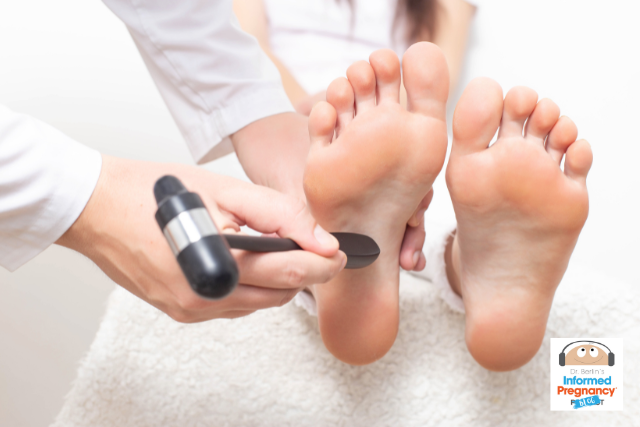
by Libby Levine | Sep 28, 2022 | Health Conditions, Pregnancy
“In the past, women with MS were told that they should avoid pregnancy, mostly because of an increased risk of relapse in the postpartum period and lack of effective and safe treatments for peripartum use. But with the use of careful monitoring and/or highly effective medications, having a baby, and even breastfeeding that baby, can be safe even if you have MS.”
What is MS?
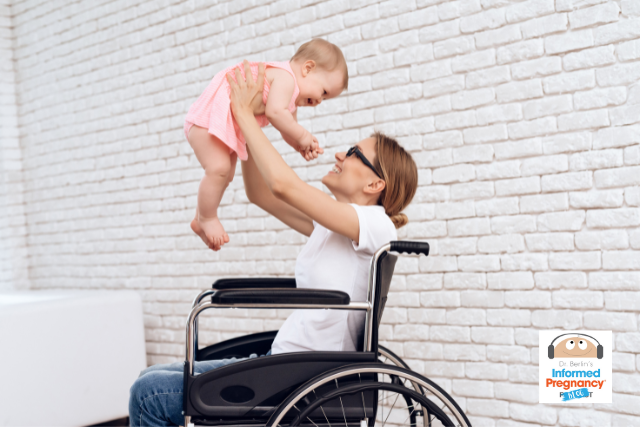 Multiple Sclerosis (MS) is a chronic autoimmune condition that affects the central nervous system. It can cause symptoms of fatigue, numbness, weakness, visual disturbances, and bladder and bowel problems (to name a few). Most people with untreated MS experience “relapses” where new symptoms develop, worsen for a few weeks, and then partially or completely resolve. MS is most commonly diagnosed in individuals of child bearing potential and as such, one of the most common questions on patients’ minds is often, “Can I still have kids?” The answer is yes. There are some risks. However, with careful monitoring and open communication between provider and patient, most of these risks are greatly diminished. We have come very far in learning how to safely manage pregnancies in patients with MS. Yet we often forget about the extra support that new and expecting birthing parents with MS need.
Having MS Today
Many patients with MS are surprised to discover they can still have the family they have always wanted. They often tell me the only person they know with MS, for example, is their older relative who was very disabled and therefore didn’t have kids. Or they immediately assume they will be in a wheelchair in 5 years. However, having MS in 2022 is not the grim picture it once was. We’ve gone from three modestly effective treatments in the 1990’s to over 20 different therapies today, including some that are highly effective at reducing the risk of MS relapse and others that have shown to slow disease progression. If caught early enough, many MS patients walk around today with very little or absolutely no hint of disability.
In the past, women with MS were told that they should avoid pregnancy, mostly because of an increased risk of relapse in the postpartum period and lack of effective and safe treatments for peripartum use. But with the use of careful monitoring and/or highly effective medications, having a baby, and even breastfeeding that baby, can be safe even if you have MS. Of note, given the increased risk of relapse after pregnancy, it stands to reason that many women are diagnosed with MS soon after delivery.
Check out this popular Informed Pregnancy Blog post by Dr. Elliot Berlin to learn about D-MER!
Formulating a Peripartum Plan
After a postpartum relapse, new moms with MS often come to me with questions about breastfeeding. Then they ask me if they can have another child. They wonder: Which drugs can be used while breastfeeding? Which drugs take longer to work? Which drugs are safe for me? Which will I tolerate best? What happens if I relapse when I’m pregnant or breastfeeding?
When the time comes to plan the next pregnancy, they are forced to revisit the trauma of their MS diagnosis. They wonder: Will I have another relapse after delivery? Can I have an epidural? Which drugs to treat MS are safe to use in pregnancy? Which drugs can increase risk of rebound relapse when discontinued? These women and their families are understandably flooded with questions and filled with uncertainty. I do my best to quell their anxieties and help them formulate a solid and safe peripartum plan.
The key to a safe pregnancy when you have MS is open communication between the patient and the provider. Specifically, there needs to be plenty of discussion between the patient and the provider about the patient’s tolerance for risk of relapse and risk to the pregnancy. Additionally, the provider will need to provide education to the patient about data available around pregnancy, breastfeeding, MS medications, and MS.
More and more patients are learning that having MS does not mean they cannot have a family. This is wonderful. However as this population of parents with MS has grown, it has become apparent that providing education and formulating a peripartum plan to reduce risks of relapse and dangers to the pregnancy is not enough. We need to do more to support new and expecting parents with MS
.
What else can MS providers do to help?
As a woman who recently had a baby, I can attest to the challenges of trying to conceive, being pregnant, and then caring for a newborn (and toddler at the same time!) without having to manage a chronic illness (I don’t have MS). For example, mood changes such as anxiety and depression can be heightened in the peripartum stages. During and after pregnancy many women experience issues with body image, sexual function, pelvic floor and bladder function, keeping up with health maintenance, and fatigue.
These challenges are all heightened in people with MS. Consider a patient with MS who already struggles with these issues at baseline. Maybe she already suffers from frequent urinary tract infections due to neurogenic bladder. Or perhaps she is concerned her occasional hand incoordination, exacerbated by fatigue, will limit her ability to breastfeed. Will her balance also worsen like it did when she first relapsed if she is exhausted from feeding the baby every 3 hours? Will she fall while she is carrying the infant?
With questions like these running through her mind, it is clear that she needs support. She will need emotional support and access to various physical therapies. She may need to have more help lined up at home for when the baby comes. For this reason, our social worker and I have initiated a series of informational and supportive “Zoom Meet-Ups” for expecting and postpartum MS parents with the help of the Nightingale Award. We will cover the issues that many face around pregnancy (fatigue, bladder issue, self-care, mood issues, diet, etc) but will be providing information about how these issues affect people with MS. We also hope to create a safe space to discuss these issues. There is an obvious gap in support for women with MS who are considering pregnancy. It is our hope that we can begin to bridge that gap with Meet-Ups such as these .
Follow Dr. Berlin to stay up to date on The Informed Pregnancy Project!

Libby Levine is a nurse practitioner who has worked at Columbia University’s Irving Medical Center’s Multiple Sclerosis Center since 2015. She earned her bachelor’s in nursing from New York University and her Master’s in nursing from Columbia University. She is an MS Certified Nurse and is board certified as an Adult Gerontology Primary Care Nurse Practitioner. She is also the recipient of the 2022 Nightingale Award offered with the support of EMD Serono through the International Organization of Multiple Sclerosis Nurses (IOMSN).
by Kim Walls | Sep 20, 2022 | Pregnancy
**This is a repost of a classic Informed Pregnancy Project article.
“Treating new stretch marks usually leads to better results than treating older stretch marks, but preventing them from occurring in the first place is obviously even better.”
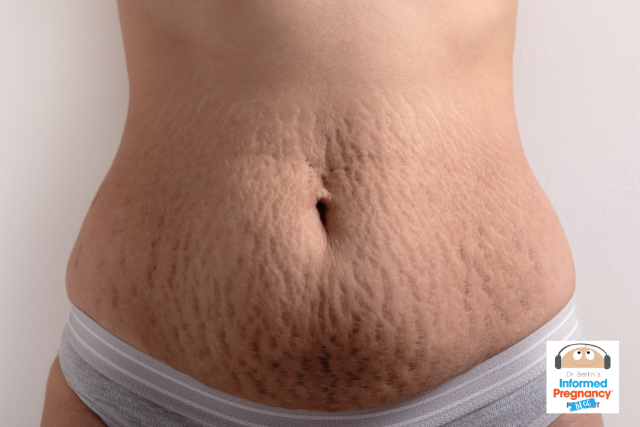 One of the most common changes in a woman’s body during pregnancy is the emergence of stretch marks, clinically known as striae. If you are feeling self conscious about your stretch marks, it might help you to know that as many as 90% of women develop at least some stretch marks during pregnancy. These tiny tears in the skin usually appear on the tummy, breasts, hips and thighs, and result from the skin failing to ‘keep up’ with the rapid growth of your body during pregnancy. Surprisingly, you can even develop stretch marks after your baby is born, possibly as a result of the rapid downsizing of your belly immediately after giving birth. The good news? Your stretch marks will probably be one of the first signs of pregnancy to diminish after your baby is born. The bad news? They may never disappear altogether.
The severity and longevity of stretch marks are determined by a combination of factors that are mostly out of your control, including your genetic code and fluctuations in the levels of the hormones estrogen and relaxin during your pregnancy. Treating new stretch marks usually leads to better results than treating older stretch marks, but preventing them from occurring in the first place is obviously even better. Well hydrated and moisturized skin is thought to be key in preventing the breakdown of collagen — the supportive elastic tissue beneath the skin — which causes the depressed ridges that characterize stretch marks.
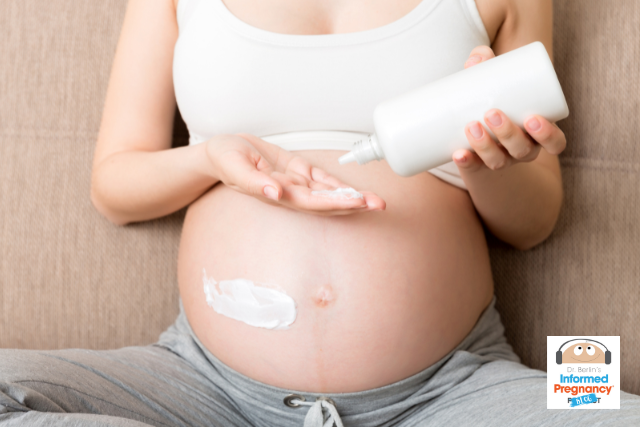
Stretched skin also tends to be itchy. The best defense against both itching and striae is to gently massage the skin and keep it well-hydrated at all times. Massaging your growing body parts with a probiotic-rich moisturizer that soothes and softens stressed skin and contains a full spectrum of vitamins and minerals to nourish and foster skin repair can help prevent dryness and act as a natural mood booster. With massage and great products, you can soothe your skin and your mood at the same time!
An added benefit of using moisturizers chocked-full of probiotics on your growing belly is that you can transfer this healthy microflora (‘good’ bacteria) to your baby by maximizing early skin-to-skin contact. Your baby can start to benefit from the healthy colonization of beneficial microflora on your skin within moments of birth, playing an important role in helping to optimize your newborn’s immune system. Stretch marks usually diminish 6-12 months after childbirth. The pigmentation fades and the marks usually become lighter than the surrounding skin. The right skincare products can potentially help minimize stretch marks and reduce healing time.

Choose a natural moisturizing serum that is designed with nutrient-rich fruit oils to help increase skin’s elasticity, lock in moisture and help increase collagen production, all of which could help minimize the discoloration and appearance of stretch marks over time. The most important thing to remember about stretch marks is that you should never feel embarrassed or ashamed by them – they’re just a small reminder of the amazing feat your body performed in growing and nurturing a new life. Focus on the connection between yourself and your baby, and love the skin you’re in!

Kim Walls is an internationally recognized skincare expert focused on optimizing health through skincare. Leading child health advocacy groups and national media rely on Kim’s clinical expertise to help parents navigate the often confusing world of natural skincare. You can read more about her here.
by Nousha Salimi | Sep 7, 2022 | Pregnancy
“Some ingredients are not safe during pregnancy like retinol. You want to keep your routine really simple and sweet, and not use a lot of products with active ingredients because we never really know how our skin is going to react while pregnant.”
Changes to skin during pregnancy

Hormones can change your skin during pregnancy. There is one hormone that we release when we are pregnant to help loosen up the ligaments and joints called elastin. When there is a lot of elastin in the body, I find that the skin elasticity in the face tends to feel more loose and it stretches and people get a little bit of that pregnancy bloating in their face. So, that’s you know, one of the biggest things that changes when we get pregnant. The other thing is the fact that with sun exposure we become super likely to have pigmentation issues. A huge percentage of women will get the pregnancy melasma, which luckily goes away a lot of time after pregnancy, but there’s still a chance that it can give residual effects post pregnancy.
Hormonal acne can come up along the jawline while pregnant and I often tell people to keep their pregnancy skincare routine really simple. A lot of exfoliation to help cleanse the skin I think is great. I often will recommend the Obaji product line or the Kora Organics turmeric scrub for use one to two times a week which will help reduce the chance of having any blemishes. I also suggest a cleanser by IS clinical which is really clean, easy to use and helps remove any dirt and residual things that are left on the skin that can exacerbate hormonal acne. Then you can use a bit of CBD oil, which I used throughout my pregnancy. I feel like it is safe and the one I used has rose, arnica, and bromelain, all things that help bring down inflammation which is something that is super common while you’re pregnant.
Some ingredients are not safe during pregnancy like retinol. You want to keep your routine really simple and sweet, and not use a lot of products with active ingredients because we never really know how our skin is going to react while pregnant.
What can you do about it?
I love the brand Bao Laboratory to hydrate stretch marks which helps prevent them from getting worse. You can also get a CO2 laser treatment to help take down the pigmentation issues from the stretch mark but only after you have had the baby. Usually you want to wait a year after breastfeeding to use a laser because they are actually super effective.
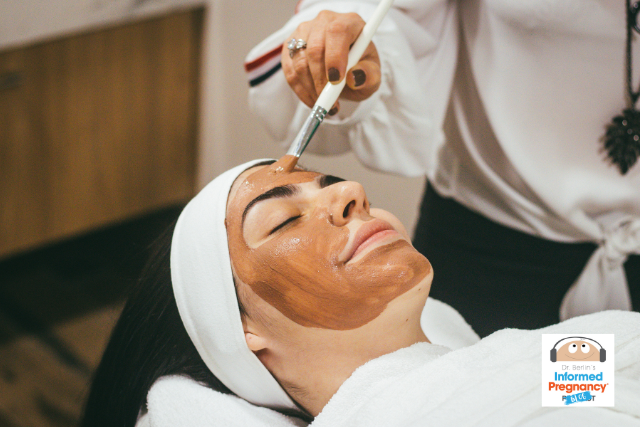
Deep peels are not appropriate during pregnancy because we don’t know if there’s an issue with the blood barrier that would potentially cross into the placenta, and because the skin is more hormonally sensitive so you can have issues like hyperpigmentation and brown spots that come up. Getting a facial while pregnant is totally safe. Many places customize facials specifically to be pregnancy safe. Microneedling is also safe while pregnant just to give a nice little glow, exfoliate, and shrink the pores. You can also safely get a really light microneedling session, with a customized formula using Aquagold and I recommend hyaluronic acid because a lot of times when we are pregnant or breastfeeding we are dehydrated and the skin shows it. So, I like to replace that with hyaluronic acid.

Nurse Nousha Salimi has been New York’s secret skincare weapon for well over a decade. Having collaborated with some of the most elite faces of the fashion, finance, society and art communities, she has become a master in her craft whilst working alongside top New York facial plastic surgeons.
Today, she sees patients at her Los Angeles office alongside world renowned plastic surgeons Dr. John C. Lake and Dr. Paymon J. Danielpour. To connect with Nousha check out www.rejuvenatewithnousha.com
