
by Sarah Goldberg | Sep 20, 2023 | Family and Relationships, Health Conditions, Mental Health, Parenting and Child Development
“I was so happy with the way I was handling the new addition that my following depression blew me out of the water. My husband was away on a trip, and I got a new car. Sounds like a good thing, but somehow I found driving a new car with its new buttons and pockets in different places to be overwhelming. To be fair, it was also a nine-seater. I’ll let you sit with that.”
I am a mother of eight. My youngest is 16 months old and my oldest is expecting my first grandchild at 22 years of age. I am extremely blessed. I am also a woman who has experienced multiple episodes of Postpartum Depression (PPD.)
I’m told I’m predisposed to anxiety, which resonates with me. As far as I know, I didn’t experience PPD with my first two births. For what it’s worth, all of them were normal, healthy births. After my third, a lot of things irritated me. A lot! I found my fists clenched all of the time and it took a bit before I realized that wasn’t normal. I wanted to enjoy my baby, husband and other kids but everything set me off. I got a psychiatrist referral from my doctor who promptly prescribed psychotropic meds. I started getting debilitating headaches and was concerned that they were a side effect of the meds. My kids were making a lot of noise when I reached out to the psychiatrist by phone and had my concerns dismissed. He surmised that if he had as many kids as me, and it was so noisy around him, he too would have a headache and hung up. Imagine what he’d say about the five more kids I have now!
Needless to say, I deleted his contact, and told my OB to take him off of his referral list. When a person is in a vulnerable state, she needs understanding and empathy; not cruelty and sarcasm.
Then came baby number five. I had a bit of a bumpy ride leading up to the birth because my parents had divorced a year earlier and my dad was getting remarried. It was a bit dysregulating, (read: one of the hardest experiences of my life emotionally). I mention this because at that time I may have already been in a high stress situation and standing at the edge of the cliff. Maybe, who knows? I had the best time with my baby for four weeks. I was present, my other kids were excited, and they were in camp during the day so I had some time alone with the baby. I even had my dad and stepmom over for the first time. The higher you are, the harder you fall.
I was so happy with the way I was handling the new addition that my following depression blew me out of the water. My husband was away on a trip, and I got a new car. Sounds like a good thing, but somehow I found driving a new car with its new buttons and pockets in different places to be overwhelming. To be fair, it was also a nine-seater. I’ll let you sit with that. When my husband called that evening, I told him I couldn’t breathe because that’s how I felt. I hadn’t realized at the time that I was having a panic attack. I actually think I only figured it out recently.

When he returned home, and I was clear that something was horribly wrong, I tried to find a psychiatrist that I could trust but they all had a minimum two week wait. At this point I was getting desperate. I asked to be hospitalized and was turned down because I wasn’t a danger to myself or anyone else. I did not feel like I could be left at home. All I knew is that I needed to be “fixed” ASAP.
My OB prescribed Xanax to tide me over until a psych appointment. I took one pill and slept for 17 hours straight. When I awoke, I couldn’t follow anything with my eyes. That’s when it all started to fall apart. I couldn’t sleep, even for a minute. You’d think having a one month old would’ve made me tired but I physically could not close my eyes. I couldn’t eat, never mind drink, and I’m usually a stress eater not a starver. My closet seemed too overwhelming for me to choose an outfit so I stayed in pajamas. I couldn’t go near the baby and then I couldn’t even leave my room. Everything seemed so frightening. I felt like the walls were going to cave in, literally. If I hadn’t experienced it myself, I wouldn’t believe it. Now I feel like it’s just a movie I once watched. I was afraid to do things I had been doing for decades because they all seemed overwhelming. The future seemed scary and bleak. Does this mean I can’t have any more kids? Will I ever be able to take care of the baby? Leave the house? Get dressed?? What will my other kids do? It was a dizzying spiral. And then, a friend of mine brought over her friend who had PPD with her first child.
I knew this woman. She had a full life, a normal life. She had a second child after her episode and it all went well. We spoke and she gave me hope, even if it was the tiniest bit. I had some old meds (I do not recommend trying this at home) so I took one. And the world was different. It was so different. I don’t think it’s common for people to turn around as quickly as I did, but I’m grateful. I felt like I could see a way out, and once things were a bit more stable, I was able to wait for my doctor appointment with more ease. I met my superstar psychiatrist, Dr. Jennifer Yashari. She focuses only on the woman’s cycle, so things like PPD, infertility, pregnancy, adoption, menopause etc. She wanted me to get more out of the medication so she made me a cocktail that I’ve been taking ever since.

When the baby was 15 months old, I found myself with a surprise twin pregnancy, yes I know how that sounds. It scared the living daylights out of me. Dr. Yashari reminded me that this time was different. I had knowledge, I was prepared, I had her, my meds, and we were watching. I stayed on the meds throughout the pregnancy, as research has not concluded that it’s dangerous, but unstable mental health definitely is. As far as I know, one of the babies was a bit sleepy for a day and that was the extent of the effects my meds had on the pregnancy. When my life was at its most hectic, with three kids aged two and under, plus another four above them, I was at my most stable.
Eight years later, we went for one more, just for fun. It was the most amazing pregnancy and an awesome postpartum experience. Since then we have also married off a child, are expecting a grandchild and I have been open and honest about my challenges with my kids. My pregnant daughter finds comfort in knowing that I am looking out for her and will do everything to keep her safe. PPD should not be stigmatized; it’s not a guarantee, and it’s treatable. We need to educate our partners and family members to keep their eyes out for anything that seems unusual and have them bring it up in the most gentle of ways. If you or anyone you know is questioning their mental health after giving birth to a baby, reach out to a professional and get evaluated. You are not alone and you won’t be like this forever.
***
This post is written in memory of my superstar OB, Dr. Jay Goldberg. Like many of his patients, I considered him a cherished friend. His days were too few, his accomplishments many, and his loss devastating to those who knew him. He helped bring my lights into this world all the while emanating his own bright light and he is missed by many, every single day.
***
Resources for Postpartum Depression:
The Mayo Clinic – Postpartum Depression
Mental Health America – Postpartum Depression Test (New & Expecting Parents)
NIH, National Library of Medicine – Use of Prescribed Psychotropics during Pregnancy: A Systematic Review of Pregnancy, Neonatal, and Childhood Outcomes
Recurrence Rates and Risk Factors in Perinatal Mood Disorders

Sarah Goldberg is a licensed life coach in private practice. She is on sabbatical while she immerses herself in the joys of raising a toddler and a family of 10. She lives in Los Angeles, where she can be found at a different public playground every day!
She welcomes any questions or opinions on pregnancy, labor, or child raising and can be reached through sarahlgoldberg@gmail.com.
by Sallyann Beresford | Mar 29, 2023 | Family and Relationships, Labor and Delivery
“(B) enefits – What are the benefits of the recommendations given?
(R) isks – What are the risks of the recommendations – to me and/or my baby?
(A) lternatives – Are there any alternatives to consider before making my decision?
( I ) nstincts – What are my instincts telling me?
(N) othing – What if we wait a while and do nothing at this time?”

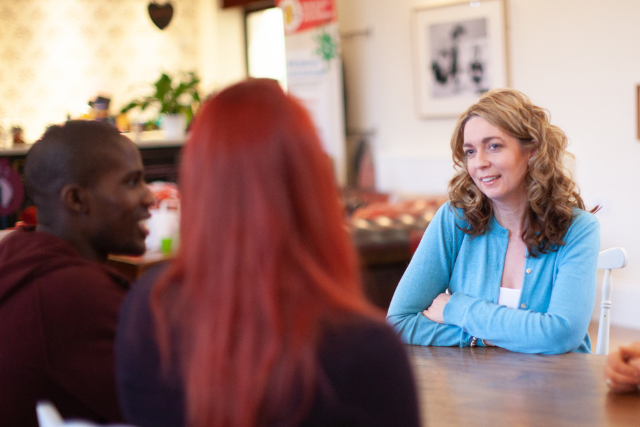
I’m sure you have already considered who might be at the top of your guest list when it comes to choosing your birth partner. Their role is essential to you and the process, so you should both become acquainted with the possibilities of their support and understand what can be achieved when a partner feels well prepared. You may also plan to invite a doula, family member or friend to be part of your team. Whoever you choose, remember that part of their job will be to help you feel calm and relaxed – so avoid inviting anyone who stresses you!
Here are my 5 top tips to prepare your partner, so they feel ready to offer the right support for the birth you are planning.
1) Birth Planning Sessions
I recommend you arrange at least one or two birth planning sessions with your partner and anyone else that will be supporting you, to take place around 32 and 36 weeks. If you are attending an antenatal course together, schedule one to take place before the start of the course, and the other once it is complete. Book these appointments into your schedule in advance to ensure that you are free from all distractions.
During these sessions, openly discuss your thoughts and preferences about giving birth. If you identify any gaps in your knowledge, this is the time to address them.
Here are some potential questions to guide your discussion:
- What are your wishes or preferences for this birth?
- What are your worries or concerns?
- What do you think might irritate you?
- What birth management techniques do you want to try or avoid—breathing and relaxation, hypnobirthing, comb, stress balls, tens machine, acupressure, Entonox (gas), epidural, opioids?
- What comfort measures or important tasks can your birth partner help you with during labor and birth—touch or massage techniques, hypnobirthing, cold or warm washcloths, documentation (photos or videos), communication with people outside the birthing area?
- What are your preferences regarding the following: monitoring of the baby, vaginal examinations, induction of labor (including cervical sweeps), abdominal birth (c-section), optimal cord clamping, placenta encapsulation, feeding the baby, skin-to-skin contact, vitamin K?
- If it becomes necessary, how would you like your birth partner to advocate for you?
- What do you need to know about them and their needs during the birth?
At your second session, I recommend you talk through your birth plan and pack your
birth bag together. This will help your partner understand what is available for
them to use on the day and what each item is for.
2) Be Honest!
Be really honest with your birth partner about your personality style and how you feel it may influence your labor. What are your strengths? What do you think are areas where you might struggle and need more support? Do you find it easy to relax and let go of control? Perhaps you already know that you don’t want to be touched. Or maybe you have a really clear idea about them supporting you with techniques such as hypnobirthing. Now is the time to tell your birth partner how you want to be cared for in labor and give details about the ways to uphold your wishes. If you keep forgetting to breathe, for example, how would you like them to remind you? Do you want them to breathe with you, would you prefer them to count your breaths, or just tell you to ‘breathe?’ Are you happy for them to touch you, or do you want to not be touched at all? Are you particularly annoyed when they look at their phone? How would you feel if they were constantly making jokes and trying to entertain you when you would prefer a quiet, relaxing environment? Watch birth videos online and observe the birth partner’s behavior to see what you like, and conversely what you don’t. Once they have a clear idea of their role, you can feel confident they will take great care of you.
3) Safety Word
Once you have implemented tip one and two, you can then introduce the idea of a ‘safety word’. Just as it sounds, this is a code word that you can have in place to protect you and your birth partner throughout labor. This is such a useful tool to have in your toolbox. In principle, having a safety word in place gives you the added security of knowing that if at any stage during the birth process you have a moment of doubt or something I fondly refer to as ‘a wobble’, your partner won’t instantly want to rescue you, but is more likely to support you through that moment. During that confidence dip, they can show you how much they believe in you, without the fear of making a mistake. If you do decide to use your safety word, you are clearly indicating that you would like to switch from Plan A – the set of preferences you shared with them in the prenatal period – to Plan B or C. A safety word allows you to vocalize as much as you want throughout the experience, without them switching to ‘fix it’ mode – a common trait with partners. This tool reminds anyone supporting you, that whilst nothing is set in stone, you are keen to ensure that you only deviate away from your plan A, if you decide you want to do so!

4) Advocacy – How to use your BRAIN
Sometimes, during pregnancy, labor and the postpartum period, the need may arise for you or your partner to ask questions regarding your options. Whilst recommendations can be made by your care providers at this time, nothing can happen to you without your consent. The BRAIN acronym helps you gain additional information. Ask your care provider any or all of the following questions, and then ask them to give you and your partner some privacy before you share your decision.
(B) enefits – What are the benefits of the recommendations given?
(R) isks – What are the risks of the recommendations – to me and/or my baby?
(A) lternatives – Are there any alternatives to consider before making my decision?
( I ) nstincts – What are my instincts telling me?
(N) othing – What if we wait a while and do nothing at this time?
If for any reason you need to ask your care provider additional questions, these might include:
- Is this your personal opinion or an evidence-based recommendation?
- Please can you show me the evidence?
- What are the actual statistics that are relevant to me and my situation?
5) The Ultimate Birth Partner – Being Not Doing!
Lastly, the best possible birth companion is someone who truly understands the concept of being present with you in labor without feeling the need to do anything at all. If labor is progressing, they can sit close by and quietly observe. As a doula myself, I like to adopt a ‘less is more’ approach and try not to be too active. What is important is to ensure that your birth partner meets all your physiological needs. So, ensure they have access to plenty of your favorite snacks and drinks, they know what positions you like and feel comfortable with, they understand how to prepare the environment to facilitate the right hormones for birth – making you feel safe and loved, and encourage them to stay calm and quiet which can help to raise your oxytocin levels. Typically, only an occasional confident smile or kind word is required to remind you that your birth partner is nearby if you need them. If your birth partner can stay out of your eye line, you won’t feel too observed and less likely to be tempted to engage in conversation. You can then relax and get into the birthing zone more easily. This helps you to produce more and more oxytocin – the hormone required to dilate your cervix. The more oxytocin you produce the quicker your labor is likely to be.

Sallyann Beresford is a UK based doula and birth educator with over 20 years of experience supporting pregnant women and their partners. She is the author of two best-selling books: Labour of Love – The Ultimate Guide to Being a Birth Partner and The Art of Giving Birth – Five Key Physiological Principles. Sallyann has also designed a range of birth planning journals to help pregnant women document their pregnancy and explore their feelings in preparation for a really positive birth experience. In addition, she produces her own popular weekly podcast – The Ultimate Birth Partner Podcast.
Website www.birthability.co.uk
Instagram @theultimatebirthpartner

by Dr. Elliot Berlin | Jan 4, 2023 | Family and Relationships, Mental Health
“Doing acts of kindness benefits us all. They boost feelings of confidence, control, happiness and optimism. Sign me up for that!”

♫ It’s the most resolute time of the year! ♫
With tension everywhere these days, my 2023 New Year’s Resolution is to adopt habits and practices that reduce stress, promote happiness and help make the worlds around and within me better places. I invite you to join me by taking on one or more of Dr. B’s ‘Be’s’ this year.
Be Proactive
Being proactive means taking responsibility for making things happen rather than responding to things that have already happened.
Waiting for opportunities to fall in our laps rarely leads to success. Let’s take the reins on the things we can control so we can push forward and accomplish our goals. When we do this we avoid wasting precious energy spinning our wheels or focusing on those things that are beyond our influence.
Be Kind
A little bit of kindness goes a long way. When we express a simple smile or warm greeting we have the power to turn around someone’s otherwise blasé day. People tend to pay kindness forward so I invite you to be the first link in a chain of kindness and positivity that will cycle through your whole community.
Doing acts of kindness benefits us all. They boost feelings of confidence, control, happiness and optimism. Sign me up for that!
Check out Dr. Berlin’s brand new extremely fun streaming channel!
Be Present
Being present, or mindful, means being focused and engaged in the current moment and not distracted by past worries or future planning. Anything you do in life you will do better if you can focus on what’s in front of you. I know for many this is easier said than done. For me, in order to shut out all the noise and fully enjoy spending time with my family I sometimes have to go out in the middle of nowhere and unplug from the digital universe. Then I can take in the complete experience of their feelings, expressions, mannerisms, voices and giggles.
Imagine the difference between scarfing down lunch on the run, and taking an hour to sit and enjoy your meal. Experience the appearance, aroma, taste, texture and even how the nutrients make you feel. Now imagine the meal is your child. Ok, that didn’t come out right – but you get my point.
Be Informed
As a new or expectant parent you have a lot of choices to make. Some people like to have choices made for them. I, and many others, like to be an active participant in conversations and decisions that affect me and my family. In order to be proactive and use our voices to choose from all the available options, we need information.

For the last ten years my Informed Pregnancy® team and I have set out to find and deliver unbiased information on everything pregnancy related from fertility to family and all the important stages in between. The podcast has grown tremendously over the years and the listener response has been heartwarming and encouraging.
This year I am pleased to announce our latest endeavor, Informed Pregnancy+, a streaming service dedicated to films, web series, podcasts, courses and meditations for every stage of family growth. I proudly invite you to visit informedpregnancy.tv to help educate yourself as you relax and enjoy our growing library of content. It’s also available on the Apple Store, Google Play and Roku. Try it for free on any platform!
I look forward to growing in these ways and hope you will as well. May the new year bring you joy, health and peace and may you bring proactivity, kindness, and presence. Don’t worry about information – we’ve got you covered!
Follow Dr. Berlin for all the latest Informed Pregnancy news!

Dr. Berlin is an award winning pregnancy-focused chiropractor, childbirth educator, and labor support doula as well as the host of the Informed Pregnancy Podcast where each week, parents, birth professionals, and parenting experts weigh in on a full range of topics surrounding the perinatal period. Dr. Berlin runs a successful perinatal wellness group in Los Angeles, CA with his wife Dr. Alyssa Berlin with whom he shares four kids and one dangerously smart Aussiedoodle.

by Informed Pregnancy and Parenting Project | Nov 23, 2022 | Family and Relationships, Parenting and Child Development
“Grandparents are often enthusiastic about spending time with the kids but that doesn’t mean there aren’t limits. Make sure to keep the dynamic healthy for everyone by limiting the help you ask for to things you really need.”

Do plan gift giving
Family members that don’t live with you and your kids may not be up on what things they have and what they’re into, (it can change so fast.) You could leave your parents or in-laws to their own devices to pick out gifts but that can lead to extra stuff around the house that your kids aren’t into. It’s also a bit of a letdown for the gift-giver when the gifts are not well received so no one wins. If you know your child is due for a new stuffed animal or set of headphones, why not let your family members know ahead of time so they can “reserve” those items for gift-giving. Even better, you may want to assign gift “types” such as clothes or art supplies to one set of grandparents each so going forward they can stock up throughout the year without bugging you to ask what they should get. It might also be helpful to keep an updated list of clothing sizes for growing kids who get clothes as gifts.
Don’t ignore boundaries
Many grandparents still have full active lives outside of their parenting and grandparenting responsibilities. Just because they’re crazy about your kids it doesn’t mean they’re available at the drop of a hat. Make sure to notice and respect boundaries that may include scheduling babysitting and play dates a few weeks ahead of time, or not staying out for that second drink on date night when they’re babysitting and it’s getting late. It’s tempting to treat family with less formal respect in some situations but beware, that can breed resentment and less help in the long run.
Do respect house rules
Maybe your strict upbringing is something you’ve decided not to emulate with your kids, that’s one of the great things about being a parent – getting to do it your way – but when you’re at your parents or in-laws home make sure your kids know that the house rules are to be followed even if they’re different than your rules at home. This is a great lesson for your kids about adjusting behavior to the space and situation but it also reinforces the grandparents as authority figures who warrant respect. That is something that’s especially important for grandparents who help with regular childcare but the most important reason is that a respectful dynamic is a strong foundation for your kids’ relationship to their older family members for their entire lives.
Follow Dr. Berlin for all the Informed Pregnancy news!
Don’t over ask
Grandparents are often enthusiastic about spending time with the kids but that doesn’t mean there aren’t limits. Make sure to keep the dynamic healthy for everyone by limiting the help you ask for to things you really need. Maybe your parents are happy to babysit on a Friday night here and there – maybe it’s tempting to hit them up every weekend but doing so may wear out the favor too quickly. Play the long game and make sure you cultivate a dynamic that’s sustainable long-term.
Do acknowledge their help and effort
Grandparents get to do a lot of the fun spoiling but childcare is childcare so even if your family members are happy to help, make sure to acknowledge the time and effort that goes into that help. Not to mention, many older folks have a lot less energy than they used to, so chasing toddlers in your 70s is a lot harder than in your 30s.

Don’t undermine them in front of the kids
There’s nothing harder than caring for kids who don’t respect your authority. You may disagree with some things your parents do with your kids but barring extreme circumstances it’s best to discuss it later when the kids aren’t around. If your kids see you arguing with or disobeying your parents they are likely to assume it’s okay for them to do it as well and that may have long-term damaging effects on the grandparent/grandchild relationship.
Do communicate clearly and honestly
It’s important to cultivate honest communication. Tell your parents what you want and need and then be prepared to listen honestly to whether or not those things work for them. Having kids inevitably changes the dynamic of any family in fun and complex ways for everyone and your parents are likely thrilled to be along for the ride but also probably exhausted. They raised you, after all.
Interested in sponsorship opportunities? Message Rose for more info!

Rose Hart-Landsberg helps produce the Informed Pregnancy Podcast hosted by Dr. Elliot Berlin, DC and serves as managing editor of the new Informed Pregnancy Blog. She also spearheads podcast and blog sponsor partnerships and helps with various related content and copy writing for The Informed Pregnancy Project and Berlin Wellness Group.
In her free time she enjoys editing and writing fiction, makeup artistry, and is currently learning Turkish.
by Dr. Alyssa Berlin | Oct 25, 2022 | Family and Relationships, Mental Health
“Let’s all agree that unilaterally, parents typically mean well and truly have your best interests at heart. That being said, after having a baby, chances are that your parents fit into one of two categories: there is the “I love you…you are amazing…I could not have done it without you” (we will call that category A), and then there is the “I love you, but you are making me crazy, and if you don’t get out of my face and give me some space I am going to scream” (category B). ”
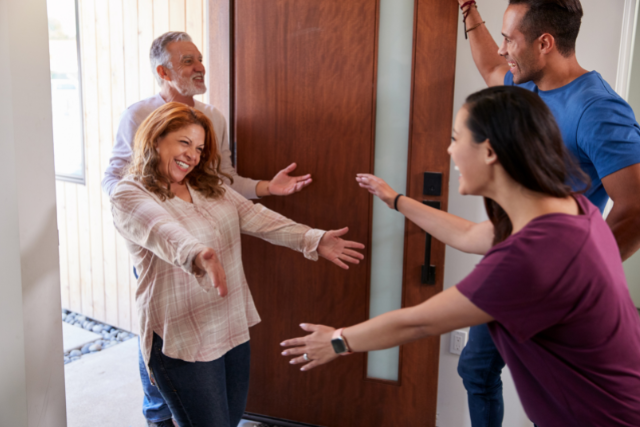
The old saying: “You can’t live with ’em, you can’t live without ’em” must have been referring to parents/in-laws. Nothing challenges your relationship with your parents more than joining the ranks and becoming parents! Yikes! I am one of them.
Having a child often shines a spotlight on both the positive and negative experiences and feelings that you have towards your own parents. Becoming a parent can serve as catalyst for bonding with your parents in a new way, or it can serve as a direct reminder of the ways that mom and dad may have neglected to be the parent you were wanting.
The postpartum period, however, is not a good time to remind mom and dad about all the ways they may have failed you and how you are going to do better with your child. So if you are noticing some of those feelings come to the surface, pregnancy is a wonderful time to explore and work through those experiences before your baby arrives.
Let’s all agree that unilaterally, parents typically mean well and truly have your best interests at heart. That being said, after having a baby, chances are that your parents fit into one of two categories: there is the “I love you…you are amazing…I could not have done it without you” (we will call that category A), and then there is the “I love you, but you are making me crazy, and if you don’t get out of my face and give me some space I am going to scream” (category B).

The problem is that oftentimes you will not know which category your parents belong to until after your baby is born. Then it might be too late – you already committed yourself to having your mom move in with you, sleep on the couch, and be there 24/7 for the first 6 weeks of your baby’s life. (Insert scream here).
When you find yourself with category A parents – you are in luck. Embrace them and revel in the support they can offer you as you adjust to motherhood. Remember that there is nothing wrong with accepting help. In my opinion, it is the strong women that can utilize help from others, recognize that they are a part of a village, and do not have to do it all alone. There is not a special award given out to women who feel a need to prove that one day post delivery they can be superwoman. It doesn’t exist, so relax and enjoy the helping hands around you.
There are usually clues along the way that you may have a category B parent on your hands. I want you to remember that right after you have a baby, you are feeling vulnerable and emotional. You will likely not be feeling your best or in the mood to entertain any high maintenance, not self-sufficient guests. You will probably be looking to surround yourself with safe people who won’t take your mood changes, pointed comments, or emotional moments personally and will be empathic of your need to recover from birth and appreciate the emotional magnitude of your journey to parenthood.
Follow Dr. Alyssa Berlin, PsyD on Instagram!
So, if your parents are typically high maintenance, needy people who like to be catered to, chances are they are going to fall in the latter category and might not be an optimal choice to play a major role on your postpartum care team. Situations tend to get more stressful after having a baby, not less. So, if under the best of situations, an evening out with the folks usually results in you needing a stiff drink and an ice pack, then….you guessed it – great contenders for category B and an awful contender for a long-term post birth houseguest.
That doesn’t mean that mom and dad don’t have a role in the process. It simply means you want to think about the situation more strategically and please, I am begging you, don’t have them sleep on your couch or in a second bedroom in your house. There are wonderful hotels/motels or awesome friends that would be happy to host your parents so that you can enjoy the best of both worlds: quiet time alone as well as nice visits with mom and dad.
They may, however, make great people to run errands, do the food shopping, pick up dry cleaning, and other valuable contributions to your postpartum experience in a less hands-on way. As you envision your postpartum experience, it is advisable to think about everyone’s strengths and how they will be most helpful to you during this special time. Yup, you guessed it; this time is all about you and what you need in the moment to ensure that you have the best possible start to motherhood.

If one parent has a particular skill in cooking, assign them to cooking duty. If another parent enjoys shopping, they get shopping duty and everyone can pick straws for cleaning duty. Sit down with your partner while you are still pregnant and jot down a list of daily activities/errands that have to get done as well as some of your favorite recipes. You can disseminate the various tasks to different people or leave the list on the refrigerator. And in the absence of parents or in-laws, there are other wonderful people: doulas, nurses and professional services, drop off and delivery services, and cleaning services around you that will be happy to be a part of your village and postpartum team.
One last note: if during the pregnancy, you already have strong thoughts regarding what you may or may not want from your parents or what role you may or may not want them to play, I strongly recommend you share it with them before the baby’s birth. This will alleviate a lot of stress on you after the birth and will likely give them a better chance to honor your requests.
You have a plan for birth, now make sure you plan for what comes after. Click for more info!

Dr. Alyssa Berlin is a clinical psychologist specializing in pregnancy, postpartum, and parenting. She offers private counseling for women individually and with their partners. Dr. Berlin is the creator of The AfterBirth Plan™, a program that prepares couples for what to expect after a baby is born. The workshop teaches couples how to prepare for a healthy postpartum transition for the baby, for each partner, and for the evolving relationship. She combines her psychological background and her doula training to help women and their partners feel empowered and comfortable in the labor and delivery process, both on a physical and emotional level. Dr. Berlin has specific expertise addressing fear and anxiety that may arise before, during, or after birth.
Dr. Berlin is on the Board of Advisors for the International Cesarean Awareness Network (ICAN) and is a faculty member of Maternal Mental Health NOW Training Institute. She conducts live pregnancy and parenting workshops throughout Southern California and online. You can read Dr. Alyssa’s blogs on the Huffington Post where she contributes to PBS’s ‘This Emotional Life” project. Dr. Berlin received her doctorate degree at Argosy University in Atlanta, GA and went on to become a certified Gottman educator. She is a member of the American Psychological Association. She and her husband, prenatal chiropractor Dr. Elliot Berlin, live in Los Angeles and are the proud parents of four amazing children.