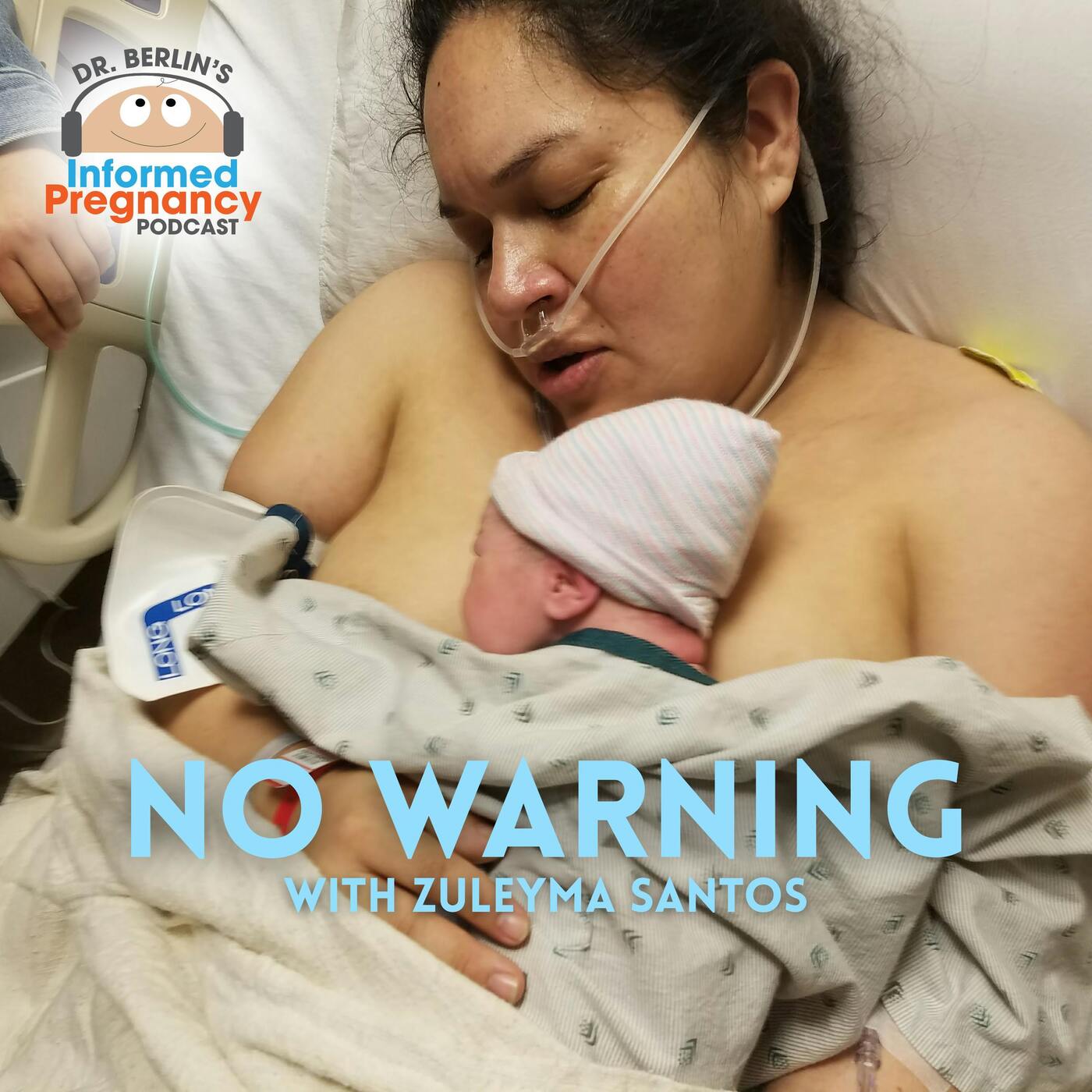
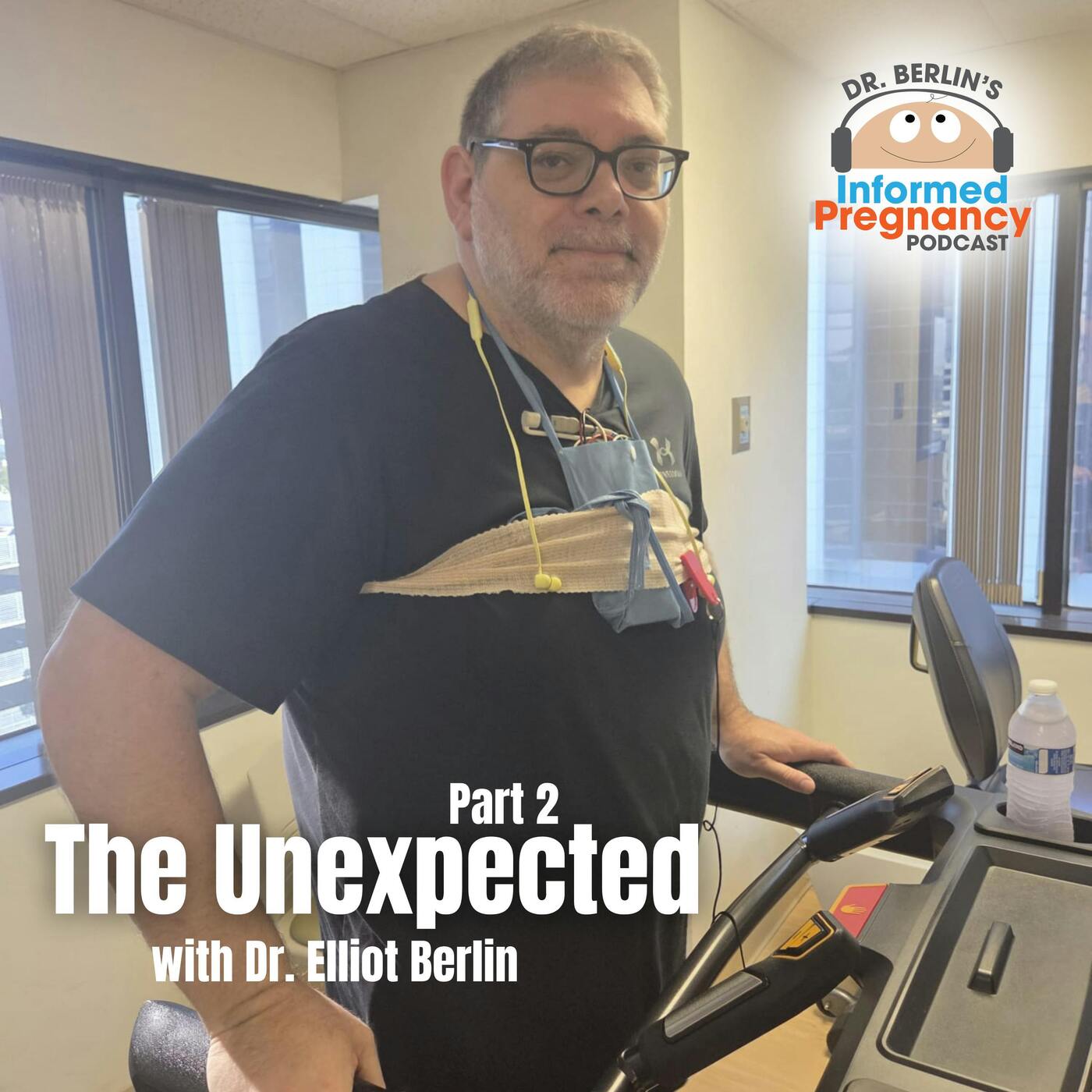
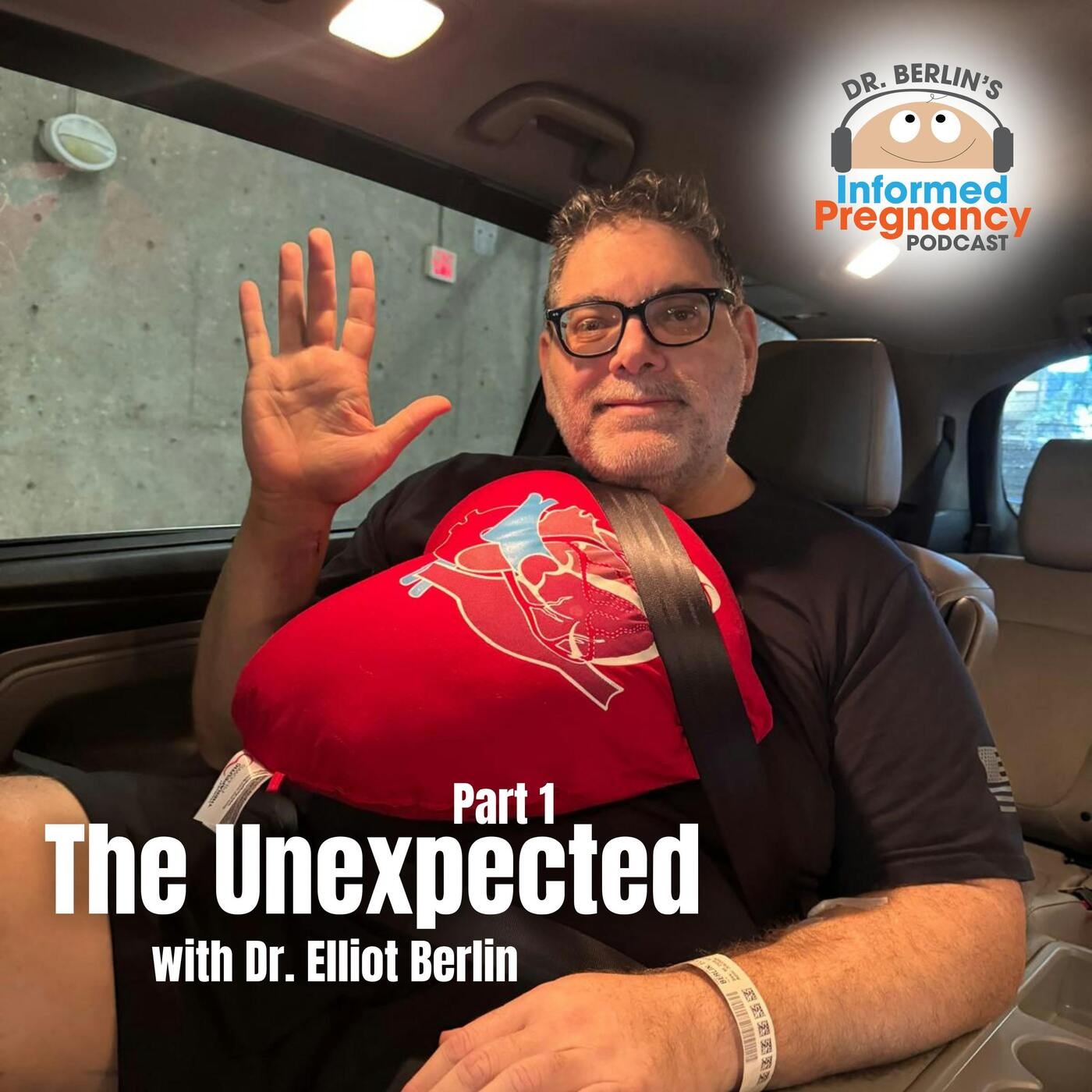
What if the biggest threat to your health didn’t come with a warning? Mother of two Zuleyma Santos had a pregnancy and postpartum journey that suddenly turned life altering, testing her strength and instincts.
Grow with us on IP+! Informed Pregnancy Media presents two all new intimate short-form video series following Garrett and HeHe’s real-time pregnancy journeys as they prepare for an empowered birth and postpartum experience. Each episode features weekly updates with personal photos and videos to help bring these raw stories to life, a visually dynamic guide through each mother’s emotional and physical experiences.
AI-generated transcript with speaker labels — may contain errors, especially names and medical terms. Dr. Elliot Berlin, DC appears in blue; Zuleyma Santos in orange.
Dr. Elliot Berlin, DC[0:00] What if the biggest threat to your health didn't come with a warning—just symptoms you didn't know to take seriously? Today's guest is a mom of two whose pregnancy and postpartum journey took a sudden and life-altering turn, one that would test her strength, her instincts, and ultimately reshape her purpose. Now she is using that experience to help others listen more closely to their own bodies. As part of our Heart Health Awareness series this month, this conversation is especially timely. I'm pregnancy-focused chiropractor Dr. Elliot Berlin, and you're listening to the Informed Pregnancy Podcast. Suleima Santos, welcome to the podcast.
Zuleyma Santos[0:53] Thank you so much. Thank you. I'm glad to be here.
Dr. Elliot Berlin, DC[0:57] I'm glad you're here, and also I'm eager to learn from you. So you have kind of a big story. Let's start with the background. Where are you from originally?
Zuleyma Santos[1:06] I'm Salvadorian. I currently live in Los Angeles, California. And what was life like before babies? Oh, before babies, it was great. You know, I've always been a working woman, you know, working, enjoying life. And at the time, you know, I was with my kid's dad. You know, we were just enjoying traveling, you know, before we had kids. Was your first pregnancy planned? We planned it, but not to the day and time and month. But it was something that,
Dr. Elliot Berlin, DC[1:41] you know, we welcomed and wanted. So excited to find out that you were pregnant. And how was the early stages of that first pregnancy?
Zuleyma Santos[1:50] Oh, it was very great. I couldn't imagine anything else. Any sickness, morning sickness was mild. You know, I know your feet swell, but I was able to still work. I was able to still enjoy food and life. Everything was good. And how did that pregnancy unfold? Unfortunately, when I was going to reach 21 weeks, I had a miscarriage.
Dr. Elliot Berlin, DC[2:20] I'm so sorry. That's always hard. Even early on, even when you didn't plan on a pregnancy,
Zuleyma Santos[2:26] but it sounds like you were all in, like very excited to become a mom. Oh, yes. That's actually one of the things that, you know, up until right now, I could
Dr. Elliot Berlin, DC[2:35] say I've always dreamt that I would be a mother. And thank God that I have two beautiful babies
Zuleyma Santos[2:41] right now. Well, did you catch the miscarriage? Did you know before going to the doctor, did you have symptoms of it? Bleeding. I was at work and I started bleeding. And, you know, I'm just like anybody else, you know, as a pregnant female, if you're bleeding, you want to get yourself to the hospital. You want to get yourself to your doctor, see what's going on. And that's exactly what I did at the moment. And I went to the hospital and that's when they did an ultrasound and informed me that there was no more heartbeat. That's devastating. At the time, did they have any ideas why? They actually didn't. I wasn't educated actually on anything. I was brought into a room, told that there was no heartbeat,
[3:32] that the baby was just waiting, you know. And I asked, I said, what do I do? I don't understand. Obviously, I didn't understand. I've never been a mother. I've never been pregnant. And he said, you know, go to your doctor's office. And then I said, what is my doctor going to do? And, you know, they just basically sent me off. They discharged me and they sent me off. They said, you can go home or you can go to your doctor's office. And I drove to my doctor's office and obviously he sent me home. And I was confused the whole time. They just want you to wait for the pregnancy to pass naturally? Yeah, they did. But none of that was explained to me.
[4:17] And I couldn't understand why I couldn't stay at the hospital if I was that far along. I was, you know, 21 weeks. Yeah, more than half. And no explanation. And my doctor the same. It was a very weird time. And I didn't have answers for what was happening either.
Dr. Elliot Berlin, DC[4:40] Prior to then, did you have any known medical history?
Zuleyma Santos[4:43] No, no, not at all. My family, thankfully, is good. As far as I know, there's no heart failure. You know, my mom had healthy kids. My sister has had healthy kids. I have healthy kids, but I'm the one who ended up with, you know, peripartum. But yeah, no, everything was great up until that day. How long until you tried again? It was about seven, eight months.
Dr. Elliot Berlin, DC[5:11] And were you given any advice on subsequent pregnancy?
Zuleyma Santos[5:16] No, I did see like a specialist, but I always felt that the specialist was there just to, you know, see where I was mentally because of what happened. I mean, me myself, I never put the pregnancies like, oh, this happened or, you know, I should check myself. Those are things that until now, I think, oh, I should have done this or I should have researched that.
Dr. Elliot Berlin, DC[5:42] So even in your second pregnancy, there was by that point, no indication of what might have gone south the first time. Why? I mean, I would imagine mentally it's hard the second time around, you know, knowing what happened the first time. How was it for you?
Zuleyma Santos[5:58] Yes, I try to be very positive and I always see, you know, try to see the light, but it was hard. You know, some days I thought, is it going to happen today or, you know, what happened last time? You know, when I was getting close to getting to know, we never found out the sex of the baby that we lost. And I felt, you know, that was God not giving us that chance, you know, I'm just because, you know, we had names picked out. We didn't know. I mean, with my son, once we found out it was a boy, I was scared, you know, I mean, just happy and so happy because the pregnancy was going very well, but you still think about what happened or is it going to happen again?
[6:46] Finding out that he was a boy, is that more scary because you're more connected? It's more real, more to lose? Yeah, yeah, it felt that way. The knowing part and also thinking, could it happen again? So yes, and like I said, I tried to put all that in the back, you know, or else it takes over you. But yes, those are thoughts that tried to take over me.
Dr. Elliot Berlin, DC[7:12] All right, let's take a little break. When we come back, we'll find out how that pregnancy ended up and what kind of thoughts you had for birth. Don't go anywhere. We'll be right back.
Dr. Elliot Berlin, DC[7:32] Welcome back. We're talking to Salima Santos. Okay, so the second pregnancy, you're bonded. It sounds like a combination of excited and nervous at the same time. Did you have thoughts on how you wanted the birth to go?
Zuleyma Santos[7:48] Just I wanted everything to, you know, be natural, fast, definitely, you know, with no complications. That was my thought.
Dr. Elliot Berlin, DC[7:57] And as you got closer to the end, how did things go?
Zuleyma Santos[8:01] Um, I can't say they went, you know, bad, but while I was in labor with my son, I did have fluid going into my lungs. At one point during the long labor hours, I was not breathing correctly. I felt like if a film was filling my throat, I would have to spit in order for me to be able to breathe. I let the team know, I said, Hey, you know, I feel like I can't breathe. I feel like I'm getting some type of, you know, mucus, some type of film in my throat. I've been, you know, trying to spit it. That's the only time that I feel relieved. You know, they came in, they started doing tests. You know, at the end of the hour, they just let me know that I had fluid in my lungs.
[8:52] And that was the only complication. Right after that, they cleared me. I was able to have my baby.
Dr. Elliot Berlin, DC[9:00] Fluid in the lungs doesn't seem like a common thing in labor. So did they have a theory on why you might've had fluid in your lungs? Did they put you on a heart monitor or anything like that?
Zuleyma Santos[9:10] No, they actually didn't. They actually didn't. And I felt that at the time for myself, I was just very relieved that I, you know, had given birth my baby. I could hear him cry. I could, you know, see them cleaning him. And I felt that, you know, when I think back on it, I concentrated on that happiness instead of the fact that something did happen right before I had him.
Dr. Elliot Berlin, DC[9:40] But that was a vaginal birth?
Zuleyma Santos[9:43] Yes.
Dr. Elliot Berlin, DC[9:43] So fairly the way you wanted it?
Zuleyma Santos[9:46] Yes.
Dr. Elliot Berlin, DC[9:47] Okay. After delivery, did you have any postpartum complications?
Zuleyma Santos[9:52] No, no complications. I was good after the, you know, episode that I had with the fluid in the lungs and the baby was great.
Dr. Elliot Berlin, DC[10:03] Okay. Now you have another baby. How long in between the babies?
Zuleyma Santos[10:10] 18 months.
Dr. Elliot Berlin, DC[10:11] Okay. So you're on the fast truck.
Zuleyma Santos[10:14] Yeah. I was changing diapers two times when I was able to. Bottle feeding at the same time. Yes.
Dr. Elliot Berlin, DC[10:22] Wow. How was the third pregnancy?
Zuleyma Santos[10:25] It was great. You know, the same, I was able to, you know, take care of myself, take care of my home, take care of my, you know, growing son and take care of, you know, my growing baby and my stomach. I worked, you know, the only thing I had was the usual, you know, morning sickness, you know, the baby didn't want to eat too much. So she was the picky one so I couldn't eat anything, but it was a great pregnancy up until, you know, I had her.
Dr. Elliot Berlin, DC[10:55] At some point your partner fell ill.
Zuleyma Santos[10:58] Yes. He was actually battling cancer for a few years. So he was, you know, doing the chemo and going into remission and it was back and forth for a couple of years.
Dr. Elliot Berlin, DC[11:13] That's already so much to juggle between his journey and the pregnancy loss,
Zuleyma Santos[11:20] then the baby, then another baby and working. Yeah, no, it was.
Dr. Elliot Berlin, DC[11:26] I mean, I always say like women are incredible how much you can do.
Zuleyma Santos[11:31] Thank you.
Dr. Elliot Berlin, DC[11:32] A handful of guys could do some of that, you know, intensity, but it's really unique and special what you guys can do. So the pregnancy was healthy and then you're planning on a similar type of birth?
Zuleyma Santos[11:46] Yeah. Yeah, same thing. I said, let's hope, you know, everything's good. And, you know, once again, you think back of what happened. The first pregnancy, you think back of what happened. You know, the second pregnancy and I just try to stay positive. Everything is good. They've been checking the baby, you know, but yeah, no, everything up until once again, the last hour.
Dr. Elliot Berlin, DC[12:07] Okay. What happened in the last hour?
Zuleyma Santos[12:10] I thought everything was, you know, great. I was hooked up to the monitors and all of a sudden
Dr. Elliot Berlin, DC[12:18] you're talking about typical labor and delivery monitors,
Zuleyma Santos[12:20] like the, you know, heart rate, the baby. Yeah, the baby, everything, you know, I was already in labor in the hospital and all of a sudden, you know, the team comes in, you know, nurses and I'm assuming, you know, doctors, unhooking me, telling me that they have to take me into the OR to do an emergency C-section. I was stunned. I'm laying there. I feel good, but something, you know, that they noticed, thankfully, I wasn't right. And all I remember was just going into the next room and lights out.
Dr. Elliot Berlin, DC[12:59] Whoa. Did they tell you what it was that sparked them to want to shift gears so quickly?
Zuleyma Santos[13:05] They said that the baby was losing its breath. It wasn't acting normal anymore. So they were afraid that the baby was, I don't know, maybe not dying. I don't know. I didn't ask. And at the moment they just said, you know, something's wrong with the baby. We're taking you to a C-section.
Dr. Elliot Berlin, DC[13:27] Wow. So a sudden crash, like everything in your mind was going great. And now it's an emergency C-section. You said lights out. So did they totally knock you out? Generalize to you?
Zuleyma Santos[13:38] Yeah. Yeah, yeah. I remember, you know, being in the room, obviously with my head up. And I just felt a coldness of something that they put on my belly, I'm assuming, you know, liquid before they do the C-section. And I just remember going under.
Dr. Elliot Berlin, DC[13:57] Oh, my goodness. Yeah. So you were not present for the, conscious for the baby's arrival. What's the next thing you remember after that?
Zuleyma Santos[14:07] Waking up in the room. Waking up back in the same room that I was in before. And I'm looking at the time and, you know, asking, you know, what happened? You know, where's my baby? I mean, that's when they let me know that the baby was in the NICU.
Dr. Elliot Berlin, DC[14:24] Oh, man. Just procedurally, or did the baby need support?
Zuleyma Santos[14:29] Procedure. You know, when I hear that, obviously, my mind, it's, you know, what's going on. But because it was an emergency C-section, they decided to monitor her there.
Dr. Elliot Berlin, DC[14:42] Okay. How long was she in the NICU?
Zuleyma Santos[14:45] For about a day and a half.
Dr. Elliot Berlin, DC[14:46] And then you guys went home?
Zuleyma Santos[14:48] No, we were still in the hospital. The day that we were going to go home, I had my heart failure episode.
Dr. Elliot Berlin, DC[14:55] Okay. So, essentially, you need three or four days to recover from the cesarean, and then you're planning to go home.
Zuleyma Santos[15:02] Yes.
Dr. Elliot Berlin, DC[15:02] And then things go really south.
Zuleyma Santos[15:05] Yes.
Dr. Elliot Berlin, DC[15:06] Let's take a little break and come back and learn more about that. Welcome back. We're talking to Zelima Santos. Okay. So, on top of everything else that happens, you're getting ready to go home, and then your body really starts to have major issues. What happened?
Zuleyma Santos[15:35] Yeah. It was the day that my daughter and I were going to get discharged, and I felt good. Once again, happy. My son and my husband were actually on the way to the hospital to see us and pick us up with my sister-in-law. And as I was feeding the baby, I said, you know, in my head, I'm like, it's going to be our last feed here. We're going to be going home. But no, I was feeling out of breath. I was feeling like every second that went by, I was getting weaker and weaker, and my breath was getting more shallow. So all I felt was I need to call for help because I don't know why I feel this way. And yeah, I called, you know, I pressed a button and called in the nurse.
Dr. Elliot Berlin, DC[16:24] What did they find?
Zuleyma Santos[16:26] You know, she looked at me, and you know, I could see it in her face. I'm sure I look pale. I look scared. She grabbed the baby. You know, she laid the baby down. And she just started calling, you know, the doctors and, you know, everybody to go in there. I mean, I just remember she sat me on the bed and, you know, I'm trying to breathe. And I don't know how much time passed from the time that she took my daughter till the time that they were actually there to help. But it just felt like the whole room was filling with doctors and machines and, you know, call so and so that we need to see what's going on. And finally, they were able to inject me
[17:13] and they did an EKG right there in the same room. And then that's when the doctor told me you have an enlarged heart. You know, you have heart failure. You had a heart failure episode.
Dr. Elliot Berlin, DC[17:27] Wow.
Zuleyma Santos[17:29] I didn't know.
Dr. Elliot Berlin, DC[17:30] Once again, I mean, for you, that's out of nowhere.
Zuleyma Santos[17:34] Yeah. Yeah. Like, what do you mean? Like, what? Like, and then I thought back to the two pregnancies. Oh, my gosh. You know, and once again, we didn't catch it.
Dr. Elliot Berlin, DC[17:47] Meaning the miscarriage.
Zuleyma Santos[17:50] Yeah, because I thought back to then. And, you know, up until today, I still think, you know, that me not knowing that my heart was different or weak, you know, led to that. But it did also lead to, you know, having my two babies.
Dr. Elliot Berlin, DC[18:09] But also the fluid in the lungs in your first birth,
Zuleyma Santos[18:12] you know, as your heart is struggling. Yeah, I thought about that, too.
Dr. Elliot Berlin, DC[18:16] Potentially not adequate. And so the fluid starts to back up into your lungs. A lot's transpired. This is about six years ago now when this first episode happened for you. And you've learned a lot. How did things unfold from that point? Meaning it's the scariest thing. First of all, how old were you, if you don't mind saying?
Zuleyma Santos[18:37] I think at the time I was 35, 36.
Dr. Elliot Berlin, DC[18:40] So young and no history, no medical history, no family history. To hear heart failure has got to be the scariest thing on the planet.
Zuleyma Santos[18:50] Oh, it is. The organ that keeps you here. It's very scary. Yes.
Dr. Elliot Berlin, DC[18:56] How did things unfold from there? What happened next?
Zuleyma Santos[19:00] You know, pretty much after they, you know, let me know what happened. Like I said, my family was on the way. They were able to discharge my daughter. So thankfully, and I was very grateful that she was able to go home. And I knew, you know, that she was going to be safe. I felt, you know, as a mom, of course, I want to be there. But I was grateful that she was healthy enough to be able to go home. I, on the other hand, stay behind five days in cardiology.
Dr. Elliot Berlin, DC[19:33] At the hospital?
Zuleyma Santos[19:35] Yes.
Dr. Elliot Berlin, DC[19:35] And over those five days, what do they find and what can they do for you?
Zuleyma Santos[19:40] I mean, honestly, I felt that I just sat there with the, you know, heart monitor. But, you know, when they started me on medication, I wasn't getting, obviously, any strength, any better. So literally the last day, every day, I kept asking what's going on. You know, is this something, you know, and they finally told me. So your diagnosis is peripartum cardiomyopathy, which is an enlargement of the heart.
Dr. Elliot Berlin, DC[20:11] Peripartum, are they saying that at that time,
Zuleyma Santos[20:14] it's circumstantial just around the birth? Yeah, yeah.
Dr. Elliot Berlin, DC[20:18] Because this can happen before pregnancy or up to six months after pregnancy. So the assumption was it's just going to go away? Like if you're not having a baby, then it's not going to be an issue?
Zuleyma Santos[20:32] Yeah, yeah.
Dr. Elliot Berlin, DC[20:33] So you get discharged on medication?
Zuleyma Santos[20:36] Yeah, medication. You know, they gave me, you know, heart-healthy pamphlets. They did, you know, tell me to start seeing a cardiologist. And I was able to find one.
Dr. Elliot Berlin, DC[20:50] And how did that go? Was there any other advice?
Zuleyma Santos[20:53] Everything was good. I was able to, you know, find a cardiologist. I felt that I was recuperating. You know, obviously, I'm just giving birth. You need time to, you know, recuperate. I had a C-section, so I didn't feel or I never concentrated on the fact that, okay, aside from a C-section, I also have a heart problem now. But I kept on, you know, seeing him. I took, you know, the medications that they said. They ran the test that they run to see, you know, how your heart function is doing. And everything was good. I thought that I recuperated. And right after my leave of absence from, you know, from birth, I thought I'm ready to go back to work, to normal.
Dr. Elliot Berlin, DC[21:41] And?
Zuleyma Santos[21:42] And I did for a few months until the next summer. I started feeling, you know, the same thing out of breath. I'm nauseous. I'm not hungry. I couldn't eat. I'm in the San Fernando Valley, so the summers are really hot. I, because of everything that was going on at the time where my husband was in, he was actually in the hospital doing chemo treatments that summer. And because it was COVID, thankfully, I was able to be at home taking care of my two kids because my, you know, everything was shut down. You know, so I felt that a lot of things happened, but a lot of things kept me at home, too. Thank God. Then with the help of my family, if I needed to go,
[22:34] when I started going to the hospital because my legs were swollen, you know, once again, I feel nauseated. I feel like I'm going to faint. My mom would come and, you know, take care of my kids, and my sister would drive me to the hospital. And this went on for a couple months.
Dr. Elliot Berlin, DC[22:51] I mean, these are all signs that your heart's struggling, are they not?
Zuleyma Santos[22:55] Like, oh, yes, yes.
Dr. Elliot Berlin, DC[22:56] And so are they any more diagnostics or therapeutics or just?
Zuleyma Santos[23:02] No, anytime that I went to the ER and I explained to them that I had heart failure, I explained to them that my heart, you know, I had a diagnosis that my heart was enlarged. I said it could probably be because of that. You know, that's why I advocate because, you know, we need to ask questions. We don't. And I kept on telling them it's my heart failure. And they said, oh, no, you know, we'll give you Lasix and you'll be relieved and we'll discharge you. They gave me Lasix. Obviously, my legs would feel better. I would go home. I'm taking so much Lasix right now. I feel like a pregnant woman in her ninth month. Yeah, yeah. So, you know, and it relieves you.
[23:50] But that was the only relief that they were giving me.
Dr. Elliot Berlin, DC[23:54] And Lasix, you know, symptomatically, it's going to force the fluid. It's a medication that makes you pee a lot. So the fluid comes out of your system. But it's like, why is the fluid there in the first place in a young 35 year old, otherwise healthy woman? Okay. So if we zoom out to the big picture, how did things sort of progress between then and now?
Zuleyma Santos[24:17] Between then and now, you know, I pretty much ended up in the hospital in a coma. By then, I thank God that my husband was in remission and he was now taking care of our kids. And I was now in the hospital.
Dr. Elliot Berlin, DC[24:34] How old is your baby at that point?
Zuleyma Santos[24:37] Savannah, when I got intubated, when I went into the hospital, she was a year and maybe two months old.
Dr. Elliot Berlin, DC[24:45] Wow. Okay. And then what happened?
Zuleyma Santos[24:50] One day, I actually did another five day stay in the hospital. They said, you know, we can't do anything for you here. You have to find a doctor. I went home and that night that I went home, we had to call an ambulance after my kids went to sleep. I told my husband to call an ambulance because I felt that I was having my last breath. They came, you know, asking questions. They thought I was having some type of panic attack. Once again, I said, no, it's heart failure. I have heart failure. I don't know how else to tell everybody. They put me in the ambulance. Once I got to the hospital, I was intubated for the next about five, six days.
Dr. Elliot Berlin, DC[25:38] Intubated and were you conscious? Were you in a medical induced coma?
Zuleyma Santos[25:43] Yeah, medical induced coma. Yes, yes.
Dr. Elliot Berlin, DC[25:47] I mean, it sounds like your heart was failing again.
Zuleyma Santos[25:50] Oh, yes.
Dr. Elliot Berlin, DC[25:51] So what after that episode was under control, was there any more of a diagnosis or a plan?
Zuleyma Santos[25:59] No, actually at the hospital that I was at, I don't know how this is going to sound, but the plan was for them to just let me perish. They told my mom and my husband to go get my things and they let them know that I wasn't going to wake up anymore, that there was nothing that they could do.
Dr. Elliot Berlin, DC[26:24] They thought you were too far gone to do any kind of treatment?
Zuleyma Santos[26:27] No, not at that hospital. And I don't know what angel after all that, I was there for about six days. I don't know who contacted Keck Hospital of USC, but I got transferred there and they saved my life. Thank God. They saved my life after, I know they told my family that I wasn't going to wake up anymore and that hurts me because my mother had to hear that. My mother had to hear and we already lost a brother, so my mom already has lost a son and I felt, what will she do? And so I was thinking about them so much, my kids, but I woke up at Keck Hospital about three days after they took me there and they put a life-saving machine in me. It was called an impella on my shoulder.
[27:35] It was a pump that went to the heart to help the flow and I couldn't believe that I was still alive and I was just grateful.
Dr. Elliot Berlin, DC[27:48] I mean, it's mind-boggling that that's the first time someone offered you a treatment.
Zuleyma Santos[27:55] Yes. Yes. No one.
Dr. Elliot Berlin, DC[27:56] To help your heart that was struggling so hard for so long.
Zuleyma Santos[28:00] No one. No one. When I was going in and out of the ER, one time they did an x-ray. They told me that I might have gallbladder stones.
Dr. Elliot Berlin, DC[28:12] Oh my.
Zuleyma Santos[28:14] I'm like, no, it's heart failure.
Dr. Elliot Berlin, DC[28:17] I see why you became an advocate because you knew. Okay, at first you didn't know and there were some signs and you wish you had known, it sounds like. And then you knew and no matter how many times you would say it, nobody was taking you seriously and looking at the actual problem and offering solutions and that's so frustrating. And we're talking about a human life, yours, a mom, with two little needy babies and a partner in your own family there's so much on the line and no one's taking it seriously. And sometimes our system fails that way and the consequences are so heavy. Was that little pump meant to be a long-term solution?
Zuleyma Santos[29:01] Short-term, just while I was in the hospital and see what the next step was going to be.
Dr. Elliot Berlin, DC[29:08] Yeah, so how did things go after that?
Zuleyma Santos[29:11] They let me know that I needed a heart transplant. So imagine hearing that while you just got operated. I actually got operated twice the night that they brought me in. They put one pump, but I was too, my organs were gone, everything. So they took me into the OR a second time to place the second pump that was stronger than the first one.
Dr. Elliot Berlin, DC[29:38] Okay, a heart transplant, that would shake me. I don't know if I could take the news even. You haven't had a heart transplant?
Zuleyma Santos[29:47] No, no, I live with the implanted machine right now. It's called an LVAD.
Dr. Elliot Berlin, DC[29:53] Oh, and you're ventricle?
Zuleyma Santos[29:55] Yeah.
Dr. Elliot Berlin, DC[29:56] Like essentially a much stronger pump.
Zuleyma Santos[29:58] Yeah, a strong pump. It goes in through my abdomen area. I have a drive line and there's a pump in there. And then I actually carry the batteries with me 24-7.
Dr. Elliot Berlin, DC[30:11] Okay.
Zuleyma Santos[30:13] Because it's attached to me.
Dr. Elliot Berlin, DC[30:15] Wow. Okay. Are you still waiting for a heart transplant?
Zuleyma Santos[30:19] Yes. I was when I was in the hospital. I was in there for a while. We were trying to do treatments. My body creates antibodies that won't let a heart transplant be a safe one because my body can fight it. So while I was in the hospital, you know, while my organs recuperated, I had the machine. I was trying to gain my strength back. We also did treatments. They were called plasmapheresis. It's like some form of dialysis. I'm sure I've tried to clean up the blood. They wanted to suppress my immune system in order for me to safely get a heart transplant.
Dr. Elliot Berlin, DC[31:03] And where are we now with that?
Zuleyma Santos[31:05] Because of how long it was taking and my body wasn't, nothing was changing, they recommended the LVAD. They said, you know, you have your small babies. They knew what we were going through with the cancer, having, you know, some kids at home. And they asked me if I wanted to, the LVAD. With the LVAD, it was a bridge to transplant. I would be able to recuperate, go home, and then pick up, you know, getting a heart transplant later on in the future.
Dr. Elliot Berlin, DC[31:43] And is that currently the plan?
Zuleyma Santos[31:46] That's the plan. What they want me to do is admit myself into the hospital and do the treatments that we were doing. Because I'm living a good quality life and my babies are still small, I feel that I should be here. If I was able to, you know, if their father, you know, was able to, you know, take care of them, it would be different. Maybe I would feel different of going in. But I am waiting pretty much. So my team is waiting for me to say, let's admit myself. Let's start doing the treatments. But the treatments can be three months, six months, nine months. And that's where I get stuck, where I want to be here.
Dr. Elliot Berlin, DC[32:31] You know, I think it would be daunting for anyone,
Zuleyma Santos[32:34] even if you didn't have little kids and everything else going on.
Dr. Elliot Berlin, DC[32:36] Yeah. Are you able to work?
Zuleyma Santos[32:39] I work from home. I am a motivational life coach. Before this, I was working in retail, so I've always worked in fast pace. But right now, even though I do live a good quality of life, I wouldn't be able to work as I used to if I was out there.
Dr. Elliot Berlin, DC[32:58] I mean, you've been through so much. Each one of those things would break me. And you still sound so strong and so positive. And your story is not over. You still have a long way to go. And when I had my bypass, I was in the ICU on the same unit as the transplant patient's heart and lung. And I looked at myself, and I'm like, wow, I have all this stuff going on and so many things to recover from. And I looked at my neighbors in there who had transplant, and they had even more things to recover from. But thankfully, the technology for both of us has come so far. Like the idea that we could even do a transplant or a bypass is modern medical innovation.
[33:52] And I think medicine has a lot of shortcomings, but also medicine has a lot of incredible advances at the same time. If there was some way to fill in the gaps and strengthen the weak points, then I think we would have an incredible system. But either way, you're an incredible person. And you've definitely motivated me. I want to stop complaining about the little things.
Zuleyma Santos[34:16] That's why I'm here.
Dr. Elliot Berlin, DC[34:17] I appreciate you coming on and sharing your in-depth story with us. And I only have, from the bottom of my heart, that's bumping now, finally, I only have the deepest warmth for you and prayers for a solution that gives you your full capacity of life back and safety and security in your health for you. And for your family. And maybe we'll follow up with you again down the road when you're able to have that real solution for yourself. In the meantime, where can we find you online?
Zuleyma Santos[35:01] I have a website, motivationallifecoach.net. That is my coaching for me to inspire. And then I do have Instagram and Facebook, Suleima Santos.
Dr. Elliot Berlin, DC[35:16] Suleima, thank you again for joining us. I appreciate you. And at home, thanks for listening to the Informed Pregnancy podcast. For more pregnancy, parenting, and heart health information just like this, visit us online at informedpregnancy.com.
Want more pregnancy + parenting? Start your FREE TRIAL of Informed Pregnancy+ and get access to all our curated pregnancy and parenting content — original series, iconic birth films like The Business of Being Born, prenatal workouts and more.
Originally from Sweden, Emilia Davis discusses her three dramatically different birth experiences: a highly medicalized first delivery, a planned home birth with a midwife, and going nearly 42 weeks with her third baby before a last minute decision changed everything.
Grow with us on IP+! Informed Pregnancy Media presents two all new intimate short-form video series following Garrett and HeHe’s real-time pregnancy journeys as they prepare for an empowered birth and postpartum experience. Each episode features weekly updates with personal photos and videos to help bring these raw stories to life, a visually dynamic guide through each mother’s emotional and physical experiences.
“I actually had two miscarriages before I had my first, which was a shock, right? Because I didn't even think about miscarriage as being an option.”
“And then I basically said yes to every intervention and every drug and like everything that they suggested or like proposed or even offered. I was like, sure. Yes, let's.”
“I'm never going to let anybody break my water again, because it was scary.”
“I think the universe kind of just aligned for me to do what I wanted to do in like the weirdest of twists.”
AI-generated transcript with speaker labels — may contain errors, especially names and medical terms. Dr. Elliot Berlin, DC appears in blue; Emilia Davis in orange.
Dr. Elliot Berlin, DC[0:00] My guests today move from Sweden to the United States at age 18 to pursue dance, eventually building a career in advertising and brand development here in Los Angeles before shifting her focus to motherhood. She's now a mom of three girls and has experienced three dramatically different birth experiences from a highly medicalized first delivery, where she trusted every intervention offered to a planned home birth with a midwife. But then going nearly 42 weeks before a last minute decision changed everything. I'm Pregnancy Focus Chiropractor, Dr. Elliot Berlin, and you're listening to the Informed Pregnancy Podcast. Amelia Davis, welcome to the podcast.
Emilia Davis[0:56] Thank you so much for having me.
Dr. Elliot Berlin, DC[0:57] I'm excited to hear your trio of stories. So let's start at the beginning. You're from Sweden.
Emilia Davis[1:04] Yes, correct.
Dr. Elliot Berlin, DC[1:05] Wait, is Linkchen Pell, did I say that wrong in Sweden?
Emilia Davis[1:09] Linkchen Pell?
Dr. Elliot Berlin, DC[1:10] Linkchen Pell, yes.
Emilia Davis[1:11] Yes, Linkchen Pell is from Sweden. Or it is a city in Sweden, rather.
Dr. Elliot Berlin, DC[1:15] We had a guest from Linkchen Pell.
Emilia Davis[1:18] I heard her story.
Dr. Elliot Berlin, DC[1:19] Aha, okay. But you're from Sweden.
Emilia Davis[1:21] There's a lot of Swedes. There's a lot of Swedes in the United States.
Dr. Elliot Berlin, DC[1:24] I noticed that. It seems like almost more here than in Sweden, but also you're from southern Sweden.
Emilia Davis[1:30] Correct.
Dr. Elliot Berlin, DC[1:31] Like right near Copenhagen.
Emilia Davis[1:32] Yep. Yep. So I'm from Malmö, which is the third largest city, but it's south. Yeah. And then I went over to Copenhagen, which is cool. You can jump over.
Dr. Elliot Berlin, DC[1:43] What was that upgrowing like in Sweden?
Emilia Davis[1:46] It was really nice. It was very calm, tons of outdoor play, lots of freedom at your early age, lots of independence that came with that. But it was nice. I remember it being like almost too calm, which is why at 18 I was like, and I'm out.
Dr. Elliot Berlin, DC[2:08] Freedom. It depends. I guess your mother's not Jewish.
Emilia Davis[2:11] No.
Dr. Elliot Berlin, DC[2:12] And then you moved to the U.S. in age 18. Pretty young. What brought you out this way?
Emilia Davis[2:18] I think I just wanted to scratch an itch of going in like a little bit of a higher tempo and, you know, growing up, I danced my whole life. There was a lot of dance in the U.S. I was like, I'm just going to go see what happens kind of thing. And then I really like the U.S. and I think California specifically. So I decided to pursue a bachelor's degree here. And then shortly after I graduated, I got a job at an advertising firm and simultaneously I kind of, you know, met my boyfriend who's not my husband. And then we got married and now we have three kids and I didn't think I would be here. But here I am.
Dr. Elliot Berlin, DC[2:58] Here you are. I feel like you kept going further and further west, New York, Chicago, Los Angeles, any more west and you have to swim.
Emilia Davis[3:05] Yeah.
Dr. Elliot Berlin, DC[3:06] So I guess you're not going to Hawaii. You're sticking it out over here. Yeah.
Emilia Davis[3:10] Hawaii is a little too far for me.
Dr. Elliot Berlin, DC[3:12] And then you had a career here and then you shifted into motherhood. Was it always your choice to like stop the career and pick up motherhood or were you thinking about doing them together?
Emilia Davis[3:22] I don't think I ever thought about it. I think I was just rolling with it. I really liked working specifically at the latest agency that I was at when I became a mom. I was there and then right when my oldest was born was kind of when COVID hit.
Dr. Elliot Berlin, DC[3:41] Oh, interesting time to have a kid.
Emilia Davis[3:43] And since I was leading business development, there was no business development. It was kind of just retaining the clients that we had. But there was no pitching, there was no traveling, there was kind of nothing of nobody was spending money. So that kind of was a blessing in disguise, right? Because there was no work to be done. I kind of took an extended maternity leave.
Dr. Elliot Berlin, DC[4:05] So did the COVID hit right after you have your baby?
Emilia Davis[4:08] Yeah. So my oldest is born January 2020 and then March 2020 was kind of when the whole world shut down.
Dr. Elliot Berlin, DC[4:14] That's when I got it. OK, so that pregnancy when everything was just sort of peachy in the world pre-COVID, because we talked about in the intro how you had this big shift in your approach to birth. What was your approach for the first one?
Emilia Davis[4:29] I didn't have one. I wasn't informed, so to say. I was thinking like, oh, well, you know, got to get the baby out somewhere and others. I went the hospital route, as I think you do when you don't know different. I went into it kind of blindly. You know, I found a great OB that I really liked and trusted her fully. And she was great. And I didn't know much about birth. I actually had two miscarriages before I had my first, which was a shock, right? Because I didn't even think about miscarriage as being an option. So very early on with both of my first two pregnancies, there was no heartbeat. And I remember coming in into the ultrasound and being like, what do you mean
[5:15] there's no heartbeat? Like, of course there is, check again. So, yeah, that was devastating, like crushing, like no percent of my brain had even thought about that being a possibility. So after I got pregnant for the third time, I was actually in Mexico spending my 30th birthday and I was like, ah, whatever, I'm pregnant, but it doesn't matter, what's probably going to happen. Yes, I was kind of feeling like depleted and defeated at that point, being like, you know, I get pregnant, but they kind of don't stick. And I was kind of angry with everything at that point. But anyway, some part of me obviously still held on to hope, at least a little bit, but then I had that ultrasound and there sure enough was a heartbeat.
Dr. Elliot Berlin, DC[6:04] So third time's the charm. I feel chills, but that pregnancy, I mean, a lot of people just don't think about it. Was that you meaning you have a doctor, you have a hospital? The assumption is when it's time, you figure it out and go to the hospital and have your baby. Totally, totally. So the pretty common in the USA birth plan was your birth plan.
Emilia Davis[6:24] Yes.
Dr. Elliot Berlin, DC[6:25] How did it go? How did the labor start? How did it progress? How did it go for you?
Emilia Davis[6:28] It didn't. So, um, it didn't start. I was 40 weeks and like a couple of days, I think like two or three days. And my OB was like, you know, I'm leaving town next two days. So if you want me to deliver your baby, you have to be induced like tomorrow. And I didn't think twice of that. I didn't really read up on, you know, the side effects of induction. I was just like, well, I obviously want you to deliver the baby because now I have a relationship with you and I trust you, so I will do that. If you think I should do that, I will do that. So I got induced at like 40 plus five, but I was like zero centimeter open. When I came, there was like nothing showing that I was even remote to
[7:14] going into labor at that point. So we did the Foley balloon and then we did the Foley balloon. I got fentanyl because the Foley balloon was so bad. So I was knocked out like completely out of it.
Dr. Elliot Berlin, DC[7:27] Would the actual placement of it or once it was in or both?
Emilia Davis[7:31] I remember like crushing pain and nobody had even warned me that it was going to hurt, but for me, it was so bad. And then I basically said yes to every intervention and every drug and like everything that they suggested or like proposed or even offered. I was like, sure. Yes, let's. And that would ended up being a very, very long labor. Like that was, I think like 25 plus hours.
Dr. Elliot Berlin, DC[7:59] Well, once you got the drugs, no pain.
Emilia Davis[8:02] No pain.
Dr. Elliot Berlin, DC[8:03] Okay. I mean, for a first baby, 25 is not so long. I always tell my patients to expect 24 on average.
Emilia Davis[8:11] Yeah. Yeah. It just felt long, I guess, because you know, you were just there. And I mean, I didn't feel anything really, because I had epidural starting at like five centimeters after the Foley balloon came out. Kind of, you know, within two hours, I got the epidural and then was kind of just like a weight game, but I wasn't really in tune with my body. So also coming from a dance background, that just felt so crazy to me. Like I didn't feel what my body was doing. So I didn't like that experience.
Dr. Elliot Berlin, DC[8:45] I do find athletes, dancers included, oftentimes find it weird to be so disconnected and so numb and your brain is sort of screaming, get up and move around when you're in labor and you're like, I can't even feel you. Totally. Sometimes takes people by surprise. All right. Let's take a little break because then you had another baby and your thoughts already started to shift. We'll be right back. All right. We're back talking to Amelia Davis. So you have this sort of very common birth plan. Just go to the hospital and have your baby. Also you have a common birth situation, which is you go past your due date, and we sort of treat it like an expiration date instead of like a
[9:32] sell by date, it's more like a use by date. And then you're like, Oh, we got to get the baby out now. And then you had the whole cascade of interventions, which, you know, I guess once you had that really uncomfortable Foley balloon, which also looks like it's all over the map. Some people don't seem to even really feel much at all. And some people find it excruciating, but then more intervention was sort of welcome and you went down the whole cascade, but you had a vaginal birth.
Emilia Davis[9:58] Yes. Yeah, I did.
Dr. Elliot Berlin, DC[9:59] So the second time around, what did you learn or want to do differently?
Emilia Davis[10:05] So the second time I kind of expected to go over. So, you know, 40 weeks comes along. I was like, whatever, you know, this is just what it is. And I told my OB that I don't want to be induced, that I really want the labor to start naturally. And she was like, I won't let you go past 41 weeks, but if you want to wait until 41 week work, like let's so, you know, I'm kind of doing everything for that last week to get baby to move, but nothing like not even the slightest little cramp, like, you know, pregnancy is moving along, like babies hanging in there. And there was like no signs of labor at all. So 41 weeks rolls around, my induction date comes and I'm like,
[10:54] oh crap, you know, I really wanted. This to go differently, but I come to the hospital. I was not even again, not even remotely there, barely one centimeter, you know. So we did the Foley balloon again. This time I was like, I want nothing. Like I want to feel fully present in my body. So the same reaction to the point. I didn't actually. And maybe, maybe I did, but my mentality around it was stronger or maybe my body just actually felt better this time around. I really don't know, but it didn't hurt as bad. It still is pretty bad, but it wasn't even remotely to what the first one was. So anyway, so then I, you know, started laboring with the pitocin and basically got to seven centimeters and, you know,
[11:46] had my headphones in was feeling it was moving around in a room. I had my husband there and at some point the midwife came in. And I think her name was Margo, but I'm not a hundred percent sure. She owned a birth center in Pasadena and she retired and she only had like one night shift at Cedars, like every blue moon, like every month. And she just happened to be there that night and I loved her. Like I told her I wanted to try it to go natural and she was fully supportive and she advocated for me when they were trying to, you know, check me every hour. And I said, I want like as few interventions as possible and try to do this just on my own time, obviously granted with the pitocin and she
[12:29] was checking in on me all the time. It was so nice. And at six, seven centimeters, I was like, I don't think I can do it. Like I am so tired. I've been now, you know, in so much pain for so many hours. And I told my husband at that point, I said, I wish I was home because I know if I was home, I could have done this without epidural, but here I want this to stop, you know, I want the baby to just be out. The room felt very cold. I had blankets on top of me. No matter what kind of music I put in my headphones, nothing really got me into the head space anyway. Got the epidural and then Margot actually told me, she said, look, you don't have to have that girl in the whole time.
[13:12] Just have a little dose of it and then take it out. And that way you will still feel the sensations. You will feel your legs, which was my biggest concern that scared me the first time and then they can just take it out and you can still have, you know, the pain away, but you can still feel things. And so it's just a lower dose basically. So she advocated for me to have them take the epidural out so I still had the feeling. And then they broke my water. And when they broke my water, the baby's heart rate just plummeted, like dropped. So apparently then quickly within like a minute, they pumped the water back because her umbilical cord was wrapped so hard that when they pulled the
[13:52] water, she was kind of choking. So then I was thinking in my head, obviously I didn't really say it at the time, but I was thinking, I'm never going to break my water again. I'm never going to let anybody break my water again, because it was scary. Anyway, then literally the baby flew out. Like shortly after that, you know, the epidural got me to 10 within a couple of hours. And then I pushed twice and the baby was out.
Dr. Elliot Berlin, DC[14:18] That part sounds nice.
Emilia Davis[14:20] That was very nice. That was very nice.
Dr. Elliot Berlin, DC[14:23] Well, congratulations on number two at this point in our story. Was the major take home there? Like, I don't want that intervention breaking my water, or it sounds like you almost started to envision yourself at that point as a home birther.
Emilia Davis[14:40] Yeah. So I knew if we would have another one, if we would be so lucky, I want to do it at home and with a midwife.
Dr. Elliot Berlin, DC[14:48] At that point, were you already listening to the podcast?
Emilia Davis[14:51] At that point I was.
Dr. Elliot Berlin, DC[14:52] Yeah. That must be why it was so much less painful. Maybe I take full credit.
Emilia Davis[15:00] Yeah.
Dr. Elliot Berlin, DC[15:01] I mean, we do have a lot of home birth episodes to kind of take you into it and give you a sort of a visual of what it could be like.
Emilia Davis[15:08] Totally. You know, that was definitely informative.
Dr. Elliot Berlin, DC[15:12] At this point, I guess it's a couple of years after COVID, still not a lot of biz dev going on. So are you mostly focused on the family?
Emilia Davis[15:20] Yeah. So I actually worked all of my seconds. So my two first ones are actually just 20 months apart, so they're closing age and I basically came back to work only to work for like a month before I told them that I'm pregnant again. And I remember one of my coworkers looked me dead in the eye and he goes, come on, I know, sorry. And that was a surprise though. That was not a planned pregnancy. I actually thought there was something wrong with my prescription sunglasses that was giving me a headache and making me feel nauseous. I had just gotten my ice check and I was bearing prescription sunglasses all the time I was out and about with my almost one year old.
[16:02] And I was complaining to my husband every night. I said, just feel like crap. There must be something wrong. They must have tested my eyes wrong. And then like two weeks later, he's like, sure. You're not pregnant. No way. You know, oops.
Dr. Elliot Berlin, DC[16:18] Okay. Good surprise.
Emilia Davis[16:20] Yeah, it was a fun surprise.
Dr. Elliot Berlin, DC[16:23] One question before we go to break, do you know if it's the same type of system in Sweden? For what birthing, for example, the, I will not let you go past 41 weeks type of statement. I mean, it sounds like everything was a little bit more free and open.
Emilia Davis[16:40] Yeah. I think they definitely do let you go past 41 and there's also midwives working in every single hospital. So it's a little bit of a different care system and they are, I mean, my sister had a baby just a while ago and just sounded a lot calmer. Like they're not intervening as much. They're not rushing as much. She was there and kind of, they were just like, well, you're going to have to work and you're going to have to work and you're going to have to do the labor at your own time and you have the room. And I kind of felt like, and this is just my take on it, but I kind of felt like I was a little bit in the way, and maybe it's just like,
[17:18] I'm naturally kind of like, oh, skittish about these things. But I was like, ah, I just like, I want to be happy here. You know? So, and Sweden, I feel like it's a lot more encouraged to take your time not constantly being checked on. I think it's a lot slower.
Dr. Elliot Berlin, DC[17:35] The, uh, the non-observed pot. All right. Well, luckily you had another chance to, as your arc continues from very medical and not really having wants and desires on how birth goes to a bit less medical and having more thoughts on how you'd like a future birth to go, there is one more. Let's take a break and when we come back, we'll find out what happened with baby number three.
Dr. Elliot Berlin, DC[18:12] Welcome back. We're talking to Amelia Davis. Okay. So during your second birth, it sounds like you became determined that if you have another baby, you'd be entertaining home birth. Was that something that you made a conscious choice of before you got pregnant or early in the pregnancy? How did it go down?
Emilia Davis[18:30] It was early in the pregnancy. I actually had the first visit with my OB because I wasn't really tapping into the route yet of finding midwife. I was like, well, let's see what happens. You know, let's see if this is even a viable pregnancy. So I went to my OB and I actually, in that first meeting, I said, I think I'm going to do the route of home birth with a midwife. And I remember she looked at me. She goes, well, you know, as a medical professional, I cannot advise for against anything, but she's like, if there's a candidate for a home birth, cause she delivered my previous two, it would probably be you, but I cannot really say that on record.
[19:12] So God bless, you know, go ahead. And I was like, great, cool. Like I have your sign off. Perfect. So we kind of parted ways there. And then I was just trying to figure out who would be a good midwife fit for me and actually on your podcast, I had heard about Abby Vidikin and she just sounded really sharp and like completely knowing what she was talking about. So I pinged her and then we, I think our first call was like two hours, like an hour and a half. Like we just were talking about everything from like Europe to babies, to motherhood. So I actually didn't even talk to anybody after that. She was the first and only one.
Dr. Elliot Berlin, DC[19:57] Did you have in your mind pros and cons to home birth? You were just totally excited.
Emilia Davis[20:03] I was just excited. Well, it was also my third, right? So the other two were not like quote unquote, easy deliveries. You know, I had to be induced and there's interventions, but they were, you know, they were came out perfectly healthy and like nothing crazy happened during those deliveries. So I wasn't really scared of anything. I was just like, my body's going to know what to do. So I just felt like it was more for me, like a mental preparation of doing a home birth, like not having the interventions, not having, you know, the options for the pain release and that kind of stuff. So I kind of just went in to prep my mind for it more so than being
[20:48] scared of the actual, you know, birth or delivery of the baby.
Dr. Elliot Berlin, DC[20:53] And your pregnancies tend to go a little long. Your babies prefer late checkout. Is that something you talked to Abby about before you got there? What was that conversation like?
Emilia Davis[21:06] She was like, it's fine. They're chubby and they're good, you know? So she was like, don't worry about it. Like I have my ways, like, you know, and there's not even think about the due date as a due date. You know, she reframed that for me very nicely. So she was like, we'll just estimate that the baby is going to be here by a certain date and then we'll take it from there, but like kind of type A with these things. So I'm like, oh, but we do need a day, you know, a day. And at that point, you know, I was already chasing my other two around. I was so big and so heavy. I was like, I don't know. Yeah. I was red D like capital R, you know, I was so over 40 weeks.
[21:54] Yeah. So we went into 40 weeks and I was like, Abby, we need to do some sweeps. The sweeps did nothing. And no, okay. And she's like, are you sure this is not hurting? Like, I'm very aggressive. I'm like, can barely feel it.
Dr. Elliot Berlin, DC[22:12] Came a long way from that first balloon.
Emilia Davis[22:14] I did. I did truly at one 80. So yeah, we did a couple of sweeps. We did a couple of more sweeps. We did a couple of more sweeps. And then Abby was like, you know what? Let's try midwife's brew. So it's basically castor oil with, I don't even know, almond butter and peach juice or something like that. Yeah. I cannot even say the word castor oil really before it like kind of flips in my belly. Affected badly. Oh, it was foul. It sat in my mouth for a good couple of seconds. And my husband's like, you need to swallow it. Aye, aye, aye. But did that when I was 41 plus two.
Dr. Elliot Berlin, DC[22:58] Did it stimulate any contractions or just upset stomach?
Emilia Davis[23:02] It did. Well, the upset stomach for sure, which was a pretty terrible side effect, to be honest, that was not fun, but it also gave me really good contractions. So after I leave the bathroom, right. Cause I was there for a good while. Yeah, yeah, I did. I was like, you know what? I need to get out of here. But I came out and then right after that, like shortly after that, like within 30 minutes, I think my contractions started kicking in. And I was like, Oh my God, you know, it's happening. Hallelujah. I was so excited. And then they pick back and they picked up and they picked up and they were getting close and they were pretty intense really fast.
[23:45] So what we did, my mom was actually here from Sweden. So we sent my mom and my two other girls off to my sister-in-law's house. Cause it was like 6 PM. So I was like, let's just send them off and have them sleep there. This baby is coming. So then after we sent them off, I go, you know, back, I send them off. I go back to the couch and I'm really like having really strong contractions and I, you know, sit with my husband. He was very, very nice, but like right after they leave within like 20 minutes, such a cool joke, the contractions stop.
Dr. Elliot Berlin, DC[24:18] No. Are there things you try to bring them back on?
Emilia Davis[24:23] I tried. Yes. So we basically did the peanut ball between my legs. I was up and walking, doing squats, like kind of testing it all out. And now in afterthought, when I was thinking about like, why did he go away? Maybe it was because I sent my kids away and I need that they're off toasting level around me. I don't know. It's just, it would make sense in my head to justify it like that. Cause right after they left, make attractions. Just stop the peanut ball.
Dr. Elliot Berlin, DC[24:55] What else?
Emilia Davis[24:56] The peanut ball. I kept on moving around. I actually tried jumping even. Like I tried truly everything to get this baby to go. I did not take any more cast royal.
Dr. Elliot Berlin, DC[25:09] Okay. Good, good.
Emilia Davis[25:11] And Abby came over around 8 PM and she already knew that contractions had stopped, but she was like, she gave me a check and she was like, you're six, seven centimeters, you're basically fully effaced by call me tonight. Like I'll see you at 2 AM. This baby is coming. So, you know, I went to bed and we were just sleeping. I actually slept with the peanut ball between my legs that night, just to try to kickstart the contractions again. And then I wake up the next morning and nothing. And I was just like, ah, all that for no baby.
Dr. Elliot Berlin, DC[25:48] Do you try pumping?
Emilia Davis[25:50] Pumping? Yes. I did do that. I did do a lot of pumping.
Dr. Elliot Berlin, DC[25:55] All the things, no contractions. No, that must be frustrating.
Emilia Davis[26:00] Yes. It was very frustrating.
Dr. Elliot Berlin, DC[26:03] Especially after the castor belly.
Emilia Davis[26:06] Oh yeah. That, oh yeah, that was rough.
Dr. Elliot Berlin, DC[26:10] So what options do you have at that point?
Emilia Davis[26:13] So basically Abby was like, let's give your body rest today. Right. Cause that was a lot. And then we'll try another round of the midwife brew tomorrow. And that's surely going to get you there. You know, you're so close. Like all you need is like one good contraction and this baby is coming. So we did the casserole again and then I had all the lovely side effects, but zero contractions at least the last time you had contractions. I know. So that was so sad. That was just crushing. And I was like, Oh my, like, what do I do now? So then Abby's like, don't worry. Like baby's going to come. She kept on reassuring me. Like we got this, you know, we still have time because legally in California,
[27:07] you can't do a home birth after 42 weeks with a midwife.
Dr. Elliot Berlin, DC[27:11] Correct.
Emilia Davis[27:12] Yeah. Yeah. So I was like, but what are we going to do? Like what's plan B? And she's like, baby's coming. Like, trust me, we've got this. So then that was on Thursday. And then I, again, did everything. I pumped, did the peanut ball between my legs all night. And then that night I told Abby, I said, I am running out of patients. I can feel the baby's head kind of coming down. Like I feel so heavy down there and I'm so uncomfortable. And if there's no contractions tomorrow by noon, I'm just going to go to the hospital. And she was super supportive of that. And she said, I totally get it. She's like, we could wait one more day, but then I would be 41 plus six.
[28:01] I was like, in my head, I was like, a day is not going to get us there. So I would much rather suffer for one less day than that. Anyway. So noon comes around. I was like, let's go. So my husband and I drive to the hospital. Then I get checked at triage and they're like, wow, you're like almost eight centimeters and fully a face. They're like, why is this baby not coming? Oh, you tell me progress. Yeah. Yep. So then they were like, well, obviously we'll get you a room. So I got checked in and then the resident doctor comes in. And since I didn't have an OB, so she comes in, she's like, I want to check you. I was like, but they just checked me.
[28:44] And I explained to her, I said, listen, I wanted a home birth. I'm here because I lost my patients. I have another two days to go. I technically could be waiting, but like I'm here because I'm running out of patients and I really, really, really want to try to do this without minimal intervention. I really want to try to do like the home birth in the hospital kind of thing. And she's like, ah, kind of skeptical to that whole approach.
Dr. Elliot Berlin, DC[29:07] Why just not having an epidural?
Emilia Davis[29:09] You mean, or I just didn't want checks.
Dr. Elliot Berlin, DC[29:12] I knew you, but what was the doctor's skeptical on?
Emilia Davis[29:16] I think she was skeptical to home birth. I think she was also pretty young. So I think she was, you know, the type that kind of followed the protocol, like the way that she probably should have. And, um, she wanted to check me. And then she wanted desperately to break my water because she was like, listen, you're so far along. Like we break that water and the baby comes. And I said, I absolutely do not want you to break my water. And I actually explained it to her. I said, listen, when my second baby, I had a scare with the breaking of the water, so I really, really don't want to do that. And she was like, well, we might have to. So then I call Abby.
[29:51] Abby's like, I'm coming. Don't let them break your water. So she came and then the nurse kind of left Abby and us were chilling. We were watching like, love is blind. We had like a good time for an hour and then they wanted to come check me again. At that time I was really starting to have extremely painful contractions. So like, you know, we shut down, love is blind. Yeah. It was kind of like, it progressed really quickly at the end. I mean, all of this is in the span of four hours. So everything is happening quickly. That little dose of pitocin seemed to be all I needed.
Dr. Elliot Berlin, DC[30:30] Okay. You didn't have that much more to go.
Emilia Davis[30:33] No, no, exactly. I was so close, but I was on the toilet and Abby's like, listen, if you don't want to birth this baby on the Cedars toilet, you got to do that. So we moved into bed and at that point, I'm kind of, you know, shutting my eyes and lose the ability to speak. And the nurse comes in again and she goes, or not the nurse, but the resident doctor, and she comes in and she goes, seems like you're progressing, but I still want to check you and I can't speak. Like I am pretty much dying at this point. I feel like someone is pulling at both hit bones. Like I'm in so much pain and Abby looks at her and she goes, you know what, she's progressing beautifully.
[31:16] Can you just give us just 20 more minutes? And if there's still nothing, if we still in the state, then why don't you check her then, you know, but let's just see what happens here, cause you can see that she's laboring beautifully. So she is like, fine. Okay. I'll leave you to it. And then, so shortly after she leaves, it's just Abby and my husband and me in the room. And the baby comes like the head comes together with the water. So like the water, two strong contractions and with the head, the water breaks, nobody from the hospital was in the room. No, they had just left and I declined the check at that point. Cause last time they checked from like a slightly different
Dr. Elliot Berlin, DC[32:02] setting, that's kind of the birth. You want it anyway, right? You and your husband and Abby.
Emilia Davis[32:07] Exactly. I think the universe kind of just aligned for me to do what I wanted to do in like the weirdest of twists.
Dr. Elliot Berlin, DC[32:17] Wow. Cool. What was it like?
Emilia Davis[32:19] And was that like, it was amazing. It was beautiful. And I remember like my eyes were shut in the hospital bed and I was picturing myself in my own bed and I literally had like a handful of really strong contractions and then the head came with the breaking of the water and that feeling was like, Oh Eureka, it was so good. I'd like the pressure of that. And then after her head, Abby is like, Oh my gosh, press the button, press the emergency button because the next action, this body is going to fly out to my husband in panic, you know, presses that emergency button and they says, baby's coming. You know, but at that point, I'd be already, you know,
[32:59] pulled her up on my chest.
Dr. Elliot Berlin, DC[33:02] Oh, so they missed the whole birth.
Emilia Davis[33:03] They missed it.
Dr. Elliot Berlin, DC[33:04] Oh, that's so cool.
Emilia Davis[33:07] I mean, it was, nobody really could have predicted what happened, you know, so we call it the home birth at the hospital.
Dr. Elliot Berlin, DC[33:14] Yeah, literally with a little of this and a little of that.
Emilia Davis[33:17] Yes.
Dr. Elliot Berlin, DC[33:18] Oh, that's just so exciting for you.
Emilia Davis[33:21] It was, it was truly really nice. It was very, very few interventions and, and very calm. And it was the two people I wanted in the room and somehow we did it, you know, and eventually one more, eventually one.
Dr. Elliot Berlin, DC[33:35] How old's the baby?
Emilia Davis[33:37] She's going to turn one in a few weeks.
Dr. Elliot Berlin, DC[33:39] Oh, happy birthday.
Emilia Davis[33:41] Oh, thank you.
Dr. Elliot Berlin, DC[33:42] Um, are you done? Uh, I don't know. That's the big question. Let's say if there's another one, do you have a vision for how you would do that one?
Emilia Davis[33:52] Yes, I do. I would still want to do it. Like I did my third. I would still want to do it. I would probably do, you know, sweep starting at 39 weeks and, and midwife sprues starting at 40 weeks. No, I'm just kidding, but I would do everything I did, but like faster and harder to try to get the baby move in. Yeah.
Dr. Elliot Berlin, DC[34:13] Coming sooner. And of course then you'll have three little ones jumping around at home waiting for you and needing your attention in those last weeks of pregnancy. What a great story. Thank you so much for coming on and sharing separate from this. You don't do dance. You don't do marketing. You do 35 millimeter photography. Tell me more about that in a nutshell.
Emilia Davis[34:32] Yeah. So after I had my second, I got really into film photography. I started capturing a lot of photos of my own two ladies. And then I just thought it was so rewarding, you know, film is different than digital and it's beautiful. And I feel like I was very in the zone when I was doing it. And I caught like a crazy passion for it. And then I started sharing the photos with my friends of the kids. And they started asking me to capture their kids. And I love motherhood. I like love families. I love kids and babies. And I also really love photography and, you know, the creative aspect of that. So the two kind of merged and it naturally unfolded.
[35:12] And then it was all kind of word of mouth. And all of a sudden I was shooting and getting paid for it. So it was a very natural evolution of things. And, you know, it's still me and it's, you know, it's small, but I absolutely love it. I absolutely love it. It gives me a lot of fulfillment and joy. And I love being around families and getting like a little snippet of like sneak peek of like what their family is like, you know, inviting me to their home and seeing the chaos that everybody has with toddlers in their house, which is kind of a fly on their wall. A hundred percent. It's very sweet.
Dr. Elliot Berlin, DC[35:50] Sounds cool. Where can we find your work online?
Emilia Davis[35:53] So it's an Instagram Amelia Davis photo.
Dr. Elliot Berlin, DC[35:57] Perfect. Amelia, thank you again for sharing your story and congratulations. And cool to watch the progress from one to two to three. If there is a fourth, I guess we'll have to have you back.
Emilia Davis[36:08] Yes, we'll see.
Dr. Elliot Berlin, DC[36:09] We'll see. Thank you again. And at home, thanks for listening to the informed pregnancy podcast for more pregnancy and parenting information. Just like this, visit us online at informedpregnancy.com.
Want more pregnancy + parenting? Start your FREE TRIAL of Informed Pregnancy+ and get access to all our curated pregnancy and parenting content — original series, iconic birth films like The Business of Being Born, prenatal workouts and more.
Informed Pregnancy Media and Mahmee present an all new podcast! One Way or a Mother is a new narrative podcast from Dr. Elliot Berlin, DC. Each season is an intimate story of one woman, one pregnancy, and all of the preparations, emotions, and personal history leading up to the birth. Episodes feature the expectant mother along with her family, doctors, and birth work team.
AI-generated transcript with speaker labels — may contain errors, especially names and medical terms. Dr. Elliot Berlin, DC appears in blue; Jenna Pastuszek in orange.
Dr. Elliot Berlin, DC[0:00] All right, who knew? 500 episodes and the 500th was going to be me. Hopefully you're not too bored yet as I share my journey that took place just a month ago and kind of explains why we haven't had any new episodes recently. Up until last week, I couldn't even really talk. But I'm here to share what the surgery was like and what I learned from the aftermath and the medical care that I got. And I couldn't host myself, so I asked my wonderful dear friend Jenna Pastuszek to be our guest host and here she is.
Jenna Pastuszek[0:33] Hi, everybody. My name is Jenna Pastuszek and I am your host of today's episode of the Informed Pregnancy podcast. And we are here with Dr. Elliot Berlin as he shares his medical saga. Dr. B, welcome back to your own podcast. Thank you for having me. You are welcome. Thank you for being here. Thank you for sharing your time and talents with us today. So to catch up people to remind them where we were at the end of our last episode, you were lying on a cold surgical table ready to have your heart cut open. So tell us what happened in the six hours of surgery that entailed.
Dr. Elliot Berlin, DC[1:27] Okay, so I am laying on that cold table. There's a mask over my face and I hear them take some deep breaths. It's just oxygen, which it was. And then he let me know at some point it's going to be some other mitigation, like the air that makes you drowsy. And then I took a couple of deep breaths. Maybe I was supposed to count from 10 to one, but I probably only got through three numbers and then the next thing I knew I woke up. During that time what they do, they harvested veins from my body, from my left leg, my right arm, both sides of my chest so that they can make new vessels to bypass the clogged, almost totally obstructed coronary arteries, five of them. So it was a quintuple coronary artery bypass surgery.
[2:12] They call it a coronary artery bypass graft, C-A-B-G. So they call it cabbage. And every place you go, they're like, oh yeah, you had cabbage times five. So no, I can't even eat coleslaw. Other versions. So they have to harvest those veins first, and then they cut open your chest, so first the skin, and then they saw the breastbone in half from top to bottom, retract it open to get to the heart, and then they take the veins that they harvested and kind of affix them to the coronary arteries that are blocked and shunt it. So they make the blood flow through these new veins and then close you back up again. I woke up and my wife was there. I remember that. And it was just very calming that she was
[2:59] right there holding my hand when I woke up. And the first thing I noticed was the breathing tube was still in my throat, so I couldn't talk. And it was incredibly irritating. And I just remember pointing to it like intensely, like this has to come out. This is so horrible. And I remember, well, there was probably a nurse just saying certain benchmarks had to be met. Certain amount of time had to go by, or they were looking for my heart rate to stabilize to a certain level. And first they said it would be 10 minutes, and I was just counting, you know, 60, 59, 58, and then again. And then they said, no, it's going to be another 10 minutes. You didn't meet the benchmark. And I was just like pointing to them like it's got to come
[3:44] out. It's so horrible. I wasn't really aware of anything else. That was the only thing. It was so bothersome, intense and bothersome. And then I remember they finally did pull it out, which was a relief, but also my throat was so irritated from where it was. And I was just like a drink. That's the first word I probably said, can I get a drink? I need a drink. I said, no, you can't have any liquids yet. You know, I was like ice chips, anything. No, but they had this little sponge on a stick. And they said my wife could dip it into water and she could like brush it around my mouth and lips. So maybe I would felt like I had something to drink. I didn't. But it was just so raw and so dry. So eventually one of the
[4:30] nurses said, oh, you could do that if you want to. We had some Gatorade that we brought. She's like, you could do that with the Gatorade, just dip it in there. So she would just dip it in Gatorade and put it in my mouth. And I would bite it until I can get all the Gatorade out of it and swallow a little bit. And that was just like the first hour of my consciousness. I was just trying to get as much liquid into my raw, irritated mouth and throat. As things became more lucid to me, I realized I had a lot of stuff coming out of me. I had a whole collection of IVs coming out of my neck, my jugular vein area. I had a bunch coming out of my left arm, including one in an artery, an arterial line. I had four chest
[5:09] tubes coming out of me, sucking fluid out that they did not tell me I would have. I had a temporary pacemaker, so these wire leads sticking out of me and straight through my chest into my heart on the other side. And they had it hooked up to a machine so they could speed up or slow down my heart rate whenever they wanted to or needed to. I had a urinary catheter. I had this thing called a wound vac. I just couldn't even move right or left because there were so many wires and cords and whatnot. And the ICU nurses were really good. If I'm going to kind of move the story along quickly, I would say that I was on a lot of different medications. My pancreas, kidneys, and liver all did not
[5:51] respond well to the surgery. It was a big trauma. It was multiple surgeries that were going to be honest at the same time. And I also couldn't use my arms at all because anything I would do would sort of pull my chest open. And so it was a tough couple of days. I mean, that was Wednesday that they did it. Wednesday was rough. Thursday was rough. Friday was rough. One of the most amazing things is I have a guy who does my haircuts and he has the option to go to his shop or he comes to your house. I'm like, any chance you can come to the hospital? Like, it had been too long and I was just uncomfortable in every way. And I just thought that could help me feel more comfortable.
[6:30] And he came. And he also was a Sabbath observant and he got it. He came before Shabbat.
Jenna Pastuszek[6:35] Nice.
Dr. Elliot Berlin, DC[6:36] And you can't light candles at the hospital, but we have these like little glowy tea lights. My wife went two of those. And honestly, from the time they went on, I just felt a little better. When I was feeling crappy mentally or physically, I would look over at them and it would just give me joy. And things started to improve a bit during that time from Friday night through Saturday. And getting out of the ICU was sort of like a combination of trying to get all those labs back to normal or close to normal or stabilized. My pancreas not working right meant my blood sugar was all over the place. So they started having me on insulin and two other diabetic
[7:17] medications. My kidneys and liver not working right kind of limited what kind of pain medication I could take. And they wanted to stabilize them. You know, one guy came in and he's like, Oh, your kidneys are at a stage two and at stage five, you're on dialysis for life. I'm like, Oh, great. Not reassuring. Yeah. I thought I was just here for a heart problem. You just made my heart palpitate again. But one thing that was pretty strong all the way through was my heart. Like the cardiologist came by every single day and he's like, your heart looks good. I just kept focusing my eye on the prize. So getting out of ICU is mostly about, you know, stabilizing those numbers and getting as many of the things that are attached to you
[7:58] out that you can get out. One of the things that was attached, I talked about these chest tubes. One of them was sitting right on a nerve by the rib and intercostal nerve. And I could not breathe in any time I breathe in the tube would push into the nerve and it'd be excruciating sharp pain. I mean, I was like, okay, I surrender. I'll take the epidural now. And sort of only semi comedically, they sent the pain team to evaluate it. And he's like, we have two options for you, an epidural or a nerve block. I was like, Oh, I was just joking about that. Okay. They put a nerve block in to block that nerve, which sometimes they do in labor as well, where instead of inserting a catheter that they leave so that they can add more medication as
[8:46] needed, they just put in a big bolus of medication and then pull the needle out. And it's supposed to last for X amount of time. In this case, they said about 30 hours. So it made it able for me to breathe. And they wanted me to go for walks, starting literally day one to get up and go for walks. But it was a process. You always had to have a few people come get all those, the chest tubes and the containers that they go into, catheter and the container. It goes into all the IVs straightened out that were coming out, just all the different things that would take about 10 minutes to just prep you for a walk and to make them mobile, the heart monitor, mobile version of that.
[9:28] And then they had this big walker and until I could even just stand up and stand in front of the walker would take a couple of minutes. And then there's a guy following you with a wheelchair just in case you pass out. And then all that for like a three minute walk. That's what life was like on the other side of the surgery. And I mean, at least my hair
Jenna Pastuszek[9:50] looked good. So every day you were there, your goal was almost like to get another thing out of you so that you'd have one less thing to walk around with. And also one step closer to achieving that checklist of things you need to do before you can be discharged.
Dr. Elliot Berlin, DC[10:06] Exactly. Yeah. And I was looking forward to having each of those things removed. But then I wasn't looking forward to having each of those things removed. Each one seemed like a little uncomfortable.
Jenna Pastuszek[10:17] Talk about how it felt to be an individual in the system. Did you feel like you were battling the system? Did you feel like you were working within the system?
Dr. Elliot Berlin, DC[10:26] So it was some of each. The system I would say has two parts, the caregivers and the insurance. I'm very blessed and lucky to have good insurance. And as much as I was panicking about not working for several months, I didn't really have to worry that much about the medical bills. I was in a hospital that's in network with my insurance company and the doctors are mostly in network with the insurance company. So I was fairly lucky there. There were a few fights that I had to have with the insurance company. But for the most part, I got lucky. The care also, I mean, some of the most incredible giving, nurturing, caring people. I just one after another was so blessed. But then sometimes
[11:06] the system is rigid in ways like it feels like it shouldn't be. I'll give like a couple of small examples. One example is where that chest tube was, the pain started to come back. And one of the things that made it feel better is walking to get up and stretch out, take some of the pressure off of it. So it was like 6am. I couldn't sleep. I hadn't been able to sleep for a few hours already. And I asked the nurse, could I go for a walk? I know that's going to help this pain go away. Then I'll get some sleep. And she said, no, you can't go for a walk because there's too many people who need a walk. They're online before you. And then my shift will be over. So maybe the next person can take you for a walk. All right,
[11:46] I get it. There's limitations like, right, like it happens to be a full day. There's too many people waiting for a walk. So the second thing I was like, how about Tylenol? Can I just take some Tylenol? That'll probably be enough to numb the pain to the extent that I could fall back asleep. And she said, no, I can't give you Tylenol because it's only 6am and the order for Tylenol is for 9am. And I was like, okay, but I didn't take the Tylenol last night. Like it passed on it because it had been feeling better. So it's not too soon to take Tylenol. Can we change the time for the order to 6am? So I get some Tylenol and go to sleep. She's like, no, but I see here that if you want, we can give you some Oxycontin.
[12:27] You're like, so I can have an Oxy, but not a Tylenol. Exactly. There's a standing order for the Oxy. I'm like, I would really prefer not to take the narcotic for several reasons. Do you think we can call in and get the Tylenol change for 6am? And she was absolutely rigid. No, we can't. And I didn't want to take the narcotics. So I just decided to do whatever I could to try to get comfortable, you know, suffer, but try to get comfortable and fall back asleep. I fell back asleep a half an hour later into a light sleep. And then she came back and she's like, we got to get you up and into the chair. There's like only two positions. There's the bed and the chair. And the chair is
[13:05] like one of those fancy chairs that can recline and get it, you know, but she's like, we're gonna get you in the chair. I'm like, I literally just fell back asleep. You know, I had a horrible night's sleep. I didn't sleep at all. I don't want to go to the chair. I just want to go to sleep. I need the rest. And she's like, well, the surgeon really likes to see you in the chair, not so much in the bed. I'm like, do you think you could explain to the surgeon that I had a bad night's sleep? I just started to fall asleep. So that's why I'm in the bed. And she's like, again, not rigid, not flexible at all. No, no, no. They really like to see you in the chair. And at that point, I sort of felt like a little bit like
[13:40] an animal at a zoo. Like, oh yeah, we need to move you over here. That's where the guests want to see you. And I'm a doula. My wife's a doula. And several things came up like that, that were really hard to advocate for ourselves. And I just wanted to have that person, like, turn off the part of their brain that is rigidly tied to the protocols that are made for the masses and think about me as an individual for just one minute and say, doesn't make sense. I get that you can't take me for a walk if there's a way to squeeze me. And that would be amazing. But if not, doesn't it make sense for me to take Tylenol and not Oxy? Isn't there a way to work within the system to do it? And there were plenty of
[14:18] people who would, but that person wouldn't. So it's like at that point, I have to decide, do I want to ask for a different nurse? You know, do I want to try to go up the chain? But it's hard. It's hard when you're weak and there's so many things going on. And when you depend on that person for so many things, I don't want to ruffle the feathers.
Jenna Pastuszek[14:35] Yeah. You know, in terms of fertility clinics, this is something that I think women deal with where there are some fertility clinics that just follow protocols. And step one is this. Step two is that. Step three is this. Step four is that. And if and when it doesn't work to get pregnant or if and when the pregnancy results in a miscarriage, they just simply go back to step one, step two, steps three and follow the book. And so I know personally in dealing with a clinic that was following steps like that, I had to ask myself in a moment of weakness. And my weakness was that I wanted to be pregnant again and I wanted to have a baby. And so I had
[15:16] to say, do I risk leaving this clinic and try to find a doctor who will be a little bit more flexible and, you know, work with me and, you know, be a little more supportive in the ways that I need versus this clinical approach. And so there's definitely, you know, instances where what you're dealing with is exactly a parallel to what we are dealing with on the
Dr. Elliot Berlin, DC[15:37] other side, too. Right. And as a doula, I would see that frequently, like a nurse that's just so rigid in the protocol that they can't see you as an individual and make decisions with you or for you as an individual. And I think, you know, that is a lot of why we have people come share their stories, their birth stories, why we made documentaries about things like VBAC and rich birth and why we can constantly look for new ways, new media that we can use to kind of educate and empower people to advocate for themselves to see where they might need to advocate and how to advocate and when to advocate. And it's just so important because the system will sometimes, like for me, I overall can't complain. The system was very
[16:20] good to me. I got very lucky. I realized that my friends who were praying for me, like the prayers were definitely working. I wasn't my father or my uncle. I was able to, in the right time, get diagnosed and get treated and have a new lease on life. And so I'm grateful for those prayers. I'm grateful for the experience. But still, there are weaknesses in the system where if you can't be a strong advocate, you're going to fall through the cracks. So I see it was kind of like that in every now and then something would be removed. And it wasn't nearly as bad as I thought it was when it was removed. And then it left me feeling one step closer to the Holy Grail, the next Holy Grail,
Jenna Pastuszek[16:59] which is going home. And we'll take a break and hear about that when we get back.
Jenna Pastuszek[17:16] Welcome back to the Informed Pregnancy Podcast with your host, Jenna Pastuzic. And our guest today is Dr. Elliott Berlin, the normal host of this podcast. And we are now speaking about the Holy Grail, the final you are allowed to go home. So how many days later?
Dr. Elliot Berlin, DC[17:36] Okay, tell me. I'm in the ICU for a few days, then there's a step down unit. So it kept being, are we going to go out of the ICU today or tomorrow? The numbers are fluctuating. They're good. They're bad. We have to take this out and that out. It happened in a few days time, step down unit against some of the most incredibly giving, caring, amazing people, explaining everything that's happening before they do it as they do it, the benchmarks we need to meet to be able to go home. So now the next question is, are you going to go home on Tuesday or Wednesday or maybe Thursday? I had a couple of things that weren't happening as fast as they'd like. And one of them was fluid. My body was still making a ton of fluid.
[18:17] And it was showing up around my lungs. It was showing up in my legs. And in the hospital, they can give me IV drugs that make it, you pee it out very quickly. The home version of that, the pill is not quite as effective. So there was that and some other lab numbers they wanted to see. One of the other things they wanted to do a bacteria culture. And for some reason, the protocol is they have to do two blood draws from two different veins for the bacterial culture. And the first person they sent missed the first two. So I needed to give four blood draw per Excel at the same time. And it did remind me a little bit of that glucose tolerance test that sometimes people have to do if they quote unquote fail the initial glucose
[19:06] screening. Yeah. Little parallels like that. I was like, oh, this is not fun. And then eventually I met the benchmarks and they sent me home.
Jenna Pastuszek[19:16] Did your wife have to prepare your home any differently?
Dr. Elliot Berlin, DC[19:20] A little bit. Yeah. So first of all, speaking of my wife, from the minute she came to the hospital before surgery, until I was released, I think she might have left for a few hours to take a shower. And outside of that, she was at my side every single second. And I couldn't do anything for myself. So she was doing everything. She was advocating for me wherever she could in ways that were tremendously helpful, but just everything sitting by my side, talking to me, holding my hand. I could move and she would help me move. I couldn't open. They brought meals at some point. I started to eat again. I couldn't even reach forward to unwrap the meals or anything. And there was nothing
[20:04] she wouldn't do. And I don't know how people do it without that kind of support. It was just invaluable. My kids, they're teenagers. They're 15 through 21. They were nervous. They were a little numb. At least some of them. Not sure what to make out of the whole thing. I got very emotional several times after the surgery. I started crying like a baby. And I realized when my father died when I was 19, I didn't process it at all. I just put it in a closet and left it there to build up for 30 years. And it's still sitting in a closet in Staten Island. And it slowly would come out. Like on that Shabbat, like I said, I turned a corner. A few of my friends walked over because we don't drive. It's like a
[20:53] well over an hour walk from the community to the hospital. And one of them started talking about the rabbi. Our rabbi gives a really good speech every weekend, every Saturday. Very practical stuff that he talks about. He never has an introduction. And so he's like, good Shabbat. And then he goes into his speech. And that week he gave an introduction about me. And I pitch in as much as I can around the synagogue. I do a lot. And he just started talking about the different things that I do. And when they came and retold me that, I just couldn't keep it together. I mean, for one thing, it sounded like the beginning of a eulogy. And it could have been. And then when the rabbi himself came to visit was so powerful,
[21:35] just the fact that he and his wife, they both came and made the time to be there. My friends were so strong support wise. It just made me emotional again and again. I just couldn't hold back the tears. And even when I came home, I noticed my 15 year old, my youngest, seemed to be struggling the most with the whole thing. And I had a moment alone with him after I came home, the day I came home. And I just said, you know, when my father died, I didn't process it at all. I didn't even start to process it until we had our first kid who's named after my father. And a lot of it's still there. I was just numb. And people came to the Shiva house and like, oh, it's so terrible. You must be so sad. And I was
[22:19] just numb. I was like, I almost felt like I was comforting them. Right, right, right. And I said, it's okay to feel numb. It's okay to be confused, you know, or to, you know, be scared or sad or whatever. Just let yourself feel things. And we had a big like 10 minute cry together. I'm sure that was really meaningful to him in that moment. I think so because I'm a little hard on him because he's very smart, but also very lazy. He's a 15 year old, yeah. But a very smart and very lazy 15 year old. So he can smart his way out of anything instead of working through it. And I crack down on him a lot. I'm like, come on, do the work. Yeah. And I realized that I don't tell him nearly enough
[23:02] how proud I am of him, how smart I see he is and how sweet and kind he is. Not kind of what you expect from a 15 year old boy. He's very empathetic and he'll do things for people. And it was just a great opportunity for me to realize and share with him my full spectrum of how I view him and see him and appreciate him and love him. So that was great. And he also was just very stepped it up hardcore, realizing I couldn't do anything for myself. Dad, can I get you this? How can I help you? What do you need? You know, all my kids.
Jenna Pastuszek[23:40] You know, I brought home a baby with a three year old. And even though my son is only three, there was still that moment of acknowledgement that like, mommy isn't well, mommy is recovering from something like I have to step up and help. And so it's a really nice opportunity, actually, as a parent to be able to connect with your kid on that level and also allow them to take that next step in their own life of, okay, now I can also give back to the people who care for me and help and contribute. And so it's really a beneficial way to also offer an
Dr. Elliot Berlin, DC[24:17] opportunity for independence and growth. Absolutely. And I think by nature, I'm more of a giver than a receiver. And so it was an adjustment for me to have my wife doing that much. She always does so much, but this was like above and beyond. And to have my kids doing that much for me was just a big adjustment. Now it seems like, you know,
Jenna Pastuszek[24:41] it feels like we could be saying, and then we got home from the hospital and we lived happily ever after, but I feel like there might be another side to the story. So when we come back from a break, you're going to tell us what happened. I sure will. Welcome back to the Informed Pregnancy Podcast where we are not talking about pregnancy today. We are talking with our guest and normal host, Dr. Elliott Berlin. Hello. Hello. Okay. So you come home from the hospital, you're supposed to be getting better every single day. And instead, what
Dr. Elliot Berlin, DC[25:25] happens? Well, one question you asked that I avoided answering is did we have to prepare the house any differently? And yeah, I couldn't use my arms at all. I couldn't lift anything more than approximately five pounds. I couldn't reach to, you know, too far to the right or left, certainly not over my head. And so things just had to be set up for me. Like if I would sit on my sofa prior to surgery, I would sometimes have one of my kids use all their might to pull me up off the sofa. That wasn't going to fly anymore. So I had to take like double sofa pillows and stack them up. So I'm kind of like upright. I was very lucky to find on Craigslist, one of those nice recliners, electric recliners that recline back and a leg lift
[26:07] comes out for your legs. And it can also go the other way, almost lift you up and push you out when it's time to get up. They're like $700 to $1000 on normal retail. And I found this brand new one. I don't know why they were selling it for $250, but they were. We have a great handyman who went to pick it up and came in and installed it. On Craigslist, I also found for $50, what's normally an $800 electric bed frame that can lift the head up and lift the knees up. $50. Wow. Yeah, it turns out she had put it out for bulk pickup because nobody had wanted it. And I was like, no, no, no, I'll take it. And so we sent, gotta go pick it up. But I needed all these things. When I came home, my main issues were I had a lot of
[26:50] fluid in my body and the fluid like to accumulate around my lungs and in my left leg. The one they took all the veins out of was like three times the size of normal and starting to get infected. So there was a gap in coverage there too. I had called the surgeon's office and I went through all the different, you know, phone menus, thought I got to the right place. And I'm like, Hey, you gave me this medication to drain fluid out of my body, but only for five days. And I don't see you for seven days. Shouldn't I have at least two more days until we can figure out if I still need it. I couldn't get like through to anybody. So I just eventually gave up. And on the two days I wasn't taking the
[27:28] medication, those issues definitely got worse. And then I got to the doctor's office and like, Oh, they only give you five days. I'm like, yeah, try to call you guys. And they're like, I wish they would stop only giving people five days. They know we need at least seven days. Like, I wish that too. So help me. So that was one issue. And the other issue, which now five weeks later, I still have, but it's gotten a lot better is sometimes I can't talk because I go into these coughing fits. And that seems to be from where the breathing tube was that awful breathing tube that I woke up with. I'm going to guess, but I don't know for sure that they train somebody
[28:04] on how to insert that breathing tube when the surgery was happening. It is a teaching hospital, but it's more irritated than typical in there. And so talking just irritates it. But together with that fluid that I was having, anytime I would lay back and try to get into a rest or go to sleep position, I would just have these awful coughing fits pulling my sternum apart and making it impossible to sleep. So I will say when you find someone who's above and beyond in the medical, it's really refreshing. And I went to a pulmonologist and like, is this a lung issue? Why you can't breathe? And he quickly realized it was not a lung issue, but he had gone through every medical record all the way
[28:43] back through COVID six years ago and everything that happened in between and everything that happened in surgery. He was fully aware of all the medications I was taking. And he said, I would adjust that Lasix by 50%. You know, very respectful, wanted to confer with the surgeon first and make sure the surgeon was on board. But that was a game changer. When I started taking 50% more Lasix, I all of a sudden peeing a lot more again, like a pregnant woman. I even came back to the office for an hour at a time now and my office manager's nine months pregnant. We're always fighting for the restroom. You know, but that was such a game changer that I had
[29:21] scheduled a thoracentesis, which is where they stick a big needle into the area next year long and try to suck out all that extra fluid. And it was about three days after the medication change. And when I went to do it, the doctor was like, there's not enough fluid to do this. It doesn't make sense to do this. And I was like, oh yeah, that makes sense why it's been easier to breathe. And he's he follows up with me every few days wanted to, he saw I was a little anemic and he wanted to make sure we were addressing that. And it was just like, it wasn't even his thing. Like it wasn't a pulmonary thing. The lungs are clear, but he like took control
[29:54] of that situation and made sure that all these things didn't fall through the cracks. And I'm forever grateful to him. I went to an ENT, they did a scope and they saw the irritation in my throat. And so she gave me a steroid, just a five day dose of steroid. And that made the cough manageable. After that, I could sleep. I could have this opportunity to do this podcast. I couldn't have done it like a week ago. I didn't talk. And so those two things really turned a corner for me. My leg is a lot less swollen now and I can talk and I can breathe and I can sleep. And just a few days ago, the surgeon told me, this is probably my last visit with you. Unless anything comes up on your end, you're doing well.
[30:37] The cardiologists will take over from here. And also like you could ease back into driving on local streets and you can start to get back into your body work. You know, he's like aim for small people. You're like, so not women who are nine months pregnant? Exactly. And people who you, you know, who are going to be understanding if you start to cough or something like that. And so, you know, I'm very gently just starting to ease back into like one person a day max. And it's more like the postpartum who need lighter lymphatic work or scar work or craniosacral stuff. But I'm easing in and I'm building up. It's funny. I said, can I start taking my
[31:18] supplements again? And he's like, well, what do you take? I'm like, it's a long list. And he goes, well, what's most important to you? And I'm taking his antibiotic because my leg was so swollen, started to get infected. I've been on it for 20 days. So I'm like, I really want to take my probiotic, but I take mostly needed supplements. Anybody who listens to our podcast has heard me talk about needed a million times. I love the company. I love the founders and I love the quality of their products. But their men's probiotic is marketed as sperm support, sperm plus, because it's great for that. And they are centered around, you know, fertility, pregnancy, postpartum. So when the doctor asked me without even
[31:59] thinking about it, I'm like, I'd really love to get on my sperm support. So he's like, I wouldn't advise having a child at this moment. Yeah, exactly. He's like, is that's the first one, huh? Like, oh, it's a probiotic. But that's one of the two times I got him a smile. So yeah, life is just starting to get back to a little more normal. Every day at around 637 p.m. I get so tired and I start to cough and it's just not a fun time. So I have to do everything meaningful before that. I have really, as an incredible blessing, felt the love and support from my family and my community. But, you know, it was just Passover and spending all this time with
[32:43] my wife and with my kids made me realize how much I had neglected that sacred time. And it's been a big blessing in disguise. Now that I can be up and about more, my wife is like really this old breadwinner right now. Every day I've been cooking dinner and then we sit down. Does she have notes for your cooking? Oh, absolutely. But she also told me she's like, if you're cooking dinner, I'm not complaining at all. Yeah, that's right. And whenever we can, we sit down as many of us as possible and have dinner together. And it just made me realize what I've been missing out on and what I've been depriving them of. And as I ease back into work, way too early for me to overdo it anyway, but I'm
[33:25] very conscious of finding that balance. And I think I've been chasing that balance for years. I think that was what I used to call the holy grail, the work-life balance. And I think that I am a fan of Stephen Covey, The Seven Habits of Highly Effective People. And one of the things he talks about is a paradigm shift. He talks about, as an example, I think he was on a subway in New York City. And all of a sudden, this guy and his two kids get on the subway. The guy sits down. The kids are running up and down the subway car, you know, kind of loud and sloppy, just not careful. They knocked over someone's coffee onto his newspaper. And Stephen Covey is getting more and more upset and angry
[34:11] with the guy. And eventually he says to him, like, don't you think you should control your kids, discipline your kids? And the guy kind of snaps up and he's like, oh, I'm so sorry. We just came from the hospital where their mother died. And I guess I don't really know how to handle it, or they don't really know how to handle it, and I don't know either. And in that one second, you go from really being angry and in disbelief on how somebody could be so irresponsible with their kids to like, oh my gosh, what can I do to help you, a person who I never met before? It's a paradigm shift. And so I've had a definite paradigm shift here. I always tell, by the way, new moms
[34:49] who are going to go travel with their infant for the first time, or a newborn, I'm like, here's Dr. B's air travel survival kit with a newborn. First of all, if you're breastfeeding, bring a boob or two, because that's all your baby cares about. Number two, bring little miniature Hershey chocolate bars. And number three, bring earplugs. And so when you first get on the plane, you give little chocolate bars to everybody around you. And that's the paradigm shift, because then if your kid is screaming, even on the middle of a red eye, instead of hating you, they're going to feel for you and want to help you and like you, because you gave them little Hershey bars and crackle and missed
[35:29] a good bar. And if your baby still screams and you reach into your bag and pull out earplugs for everyone, then you're just an angel from heaven, you know? So it's the paradigm shift. And I've had the paradigm shift. I love what I do. I'm so blessed to have in life been guided to a career path that gives me joy, that helps me help people have better pregnancy, birth, postpartum infertility, parenting experiences. There's a lot of stress involved in that work as well. But the joy way out shines the stress, way outweighs the stress. And so I love what I do. And it's easy for me to get trapped into doing it too much. And I'm very committed to moving forward, not losing
[36:12] what I have now, helping my kids more hands on with their homework or with the other things that they're doing in life, helping with dinner, helping and just having that family time where we're together relating to each other and being there for one another and with one another. And that's a huge blessing that I don't know that would have happened without this bolt of a paradigm shift. And why did
Jenna Pastuszek[36:35] you want to share this story with the listeners as the 500th episode marker?
Dr. Elliot Berlin, DC[36:41] Well, for one thing, as my patients are finding about it who listened to the podcast, I know I was going to have to tell the story at least 500 times, with my throat being what it is. There was no way I could do that. I just think there's a lot of lessons that I learned. And on one hand, I wanted to share those lessons, whether it be the work-life balance lesson, whether it be more involved in prevention and health maintenance. That's more for the dads who are listening, who are more likely to avoid that. I think women are better at it. But anybody, you know, I also, I'm 51 and haven't had a colonoscopy. Like, I'm the worst. I think a lot of doctors are the worst.
[37:23] So I scheduled my colonoscopy, my first one. It's like, don't push these things off. Take them seriously. Do them. We have modern health care. There's a lot of things we can do to keep ourselves healthy and active and enjoying life longer. And there's no point in pushing them off. But also, just having had that health care experience, you know, I see, I see some of the cracks. I'm incredibly grateful to Cedars-Sinai Medical Center. I'm incredibly grateful to my primary care doctor, my cardiologist, my cardiothoracic surgeon, and all the other players, that pulmonologist. Dr. Matusav is just, like, he was such a game-changer. And he's, like, who I
[38:03] aim to be as a care provider, you know. But there are definitely places where there's weaknesses in the system and cracks in the system. And, you know, you need to know where you can advocate, what the options are that should be available to you, and how to get those options available to you when they're seemingly out of reach. And so when it comes to informed pregnancy, I am redoubled in my efforts and my drive and my passion. And I think that if you listen to this podcast, it's great if you share this podcast with other people, actively share it, and get more and more people listening. That's how we create momentum in terms of informing and empowering people and
[38:43] giving them information that they need when they can still do something with it, not when it's too late. And if you haven't already, check out Informed Pregnancy Plus. That's our streaming platform. It allows us, you know, if a picture's worth a million words and those video content are very, very valuable. It's growing. We have a lot of stuff that we produce ourselves. We're just working on a fourth trimester piece where I think there's a lot of under-spotlight and underserved community after the baby comes. And the more that you can, anybody listening, can share, listen, spread, then we can start to have a more meaningful impact and hopefully make
[39:24] fertility, pregnancy, childbirth, postpartum, the whole collectively parenting experience better, more powerful. Well, thank you so much for
Jenna Pastuszek[39:33] coming on the podcast today, Dr. B. We really appreciate you sharing your vulnerability and sharing your story with us and we will see and hear you all in the next episode. Thanks,
Dr. Elliot Berlin, DC[39:45] Jenna. I look forward to getting back to my other microphone. Yay. And I'm forever grateful to you too. You're a really great friend. You're a super dynamic person and I feel lucky to have been a part of your experience and to have you in my life. Thanks. All right. If you enjoy this type of content, don't forget to look for more pregnancy and parenting information just like this at informedpregnancy.com.
Want more pregnancy + parenting? Start your FREE TRIAL of Informed Pregnancy+ and get access to all our curated pregnancy and parenting content — original series, iconic birth films like The Business of Being Born, prenatal workouts and more.
Grow with us on IP+! Informed Pregnancy Media presents two all new intimate short-form video series following Garrett and HeHe’s real-time pregnancy journeys as they prepare for an empowered birth and postpartum experience. Each episode features weekly updates with personal photos and videos to help bring these raw stories to life, a visually dynamic guide through each mother’s emotional and physical experiences.
AI-generated transcript with speaker labels — may contain errors, especially names and medical terms. Dr. Elliot Berlin, DC appears in blue; Jenna Pastuszek in orange.
Dr. Elliot Berlin, DC[0:00] So, I was like, what do we do for our 500th podcast episode? It's gotta be something big, something different, something interesting, and it just doesn't come together in time, so we made this placeholder until we could find something awesome, and I even did this shtick on social media where I took AI and I made me pregnant as if this episode is due, but it's not coming, and we did a blessing way, and I did my inversions off the couch and acupuncture with too many needles, and I was eating all these dates, and there was all this pressure, and we were getting close to a great guest, and then all of a sudden, I had my own very big surprise experience,
[0:41] and going through it, it was a medical experience, going through it, I realized how challenging the current medical climate is, our system is for people going through it. That's why we put together Informed Pregnancy Media, that's why we do the podcast, why we have the blogs, why we have the streaming, and all the documentaries, and I just realized how much more important it is than I thought it was, and it became clear to me that I am actually the 500th episode, probably a two-part series, but who wants to hear me interview myself, so I reached out to my amazing, funny friend who's been a guest on the podcast before, Jenna Pastasek, and I'm turning over the microphone
[1:25] to Jenna, you're listening to the Informed Pregnancy podcast, I am not your host.
Jenna Pastuszek[1:31] I am.
Dr. Elliot Berlin, DC[1:32] Elliot Burling, your guest.
Jenna Pastuszek[1:35] Mya, the tables have turned, leaving the Informed Pregnancy podcast in the hands of moms everywhere. My name is Jenna Pastasek, and I am a proud two-time guest on the Informed Pregnancy podcast, and long-time listener of the series, and also a client of Dr. Elliot Berlin, the one, the only. And right before his own medical event happened in March, there I was on his table getting ready to be adjusted, and we were talking about this upcoming 500th episode, and we were spitballing ideas for a way to make it special and unique for the listeners, and to celebrate the podcast's legacy, and little did we know just what might happen, and what we might get to talk about today.
[2:25] So, very excited to welcome to the show, the one, the only, Dr. Elliot Berlin.
Dr. Elliot Berlin, DC[2:44] Well, Jenna, thank you for having me on my own podcast.
Jenna Pastuszek[2:47] You're so welcome.
Dr. Elliot Berlin, DC[2:48] Thank you for sharing the microphone and the stage.
Jenna Pastuszek[2:52] So, let's dive in. And I sort of wanna frame this episode like a pregnancy journey, if you will. And so, I thought it might be fun to start it pre-pregnancy, what was happening, what was your life like?
Dr. Elliot Berlin, DC[3:07] Life was great. Pre-pregnancy, life was good. I mean, I was working a lot, I would say, in the peak of my career. Obviously, my main thing is the wellness services that we provide at my practice, personally. A combination of chiropractic and massage for all stages, fertility, pregnancy, postpartum, newborns, parenting. And that's what I do specifically, and our wellness center offers a lot of other services along those lines, like counseling, which my wife does, but also acupuncture and massage and craniosacral therapy. And we do Abhyanga, you know, Indian energy healing and lymphatic massage and all sorts of physical therapy, both orthopedic and pelvic floor.
[3:53] And it takes a lot. It takes a lot to run that ship and it takes a lot to do my own care. I like to try to provide very good care, so I spend a lot of time with patients and charting takes a long time. I was working a lot. Some would say, my wife and kids, too much. Perhaps even my doctor would say too much, and they're not wrong. I was working a lot. Now, I used to be a doula also, so on top of that, I used to run out in the middle of the night and go support people in labor, which was really a wonderful trip and a magical thing to be a part of. But I had stopped doing that because it was too crazy. I wasn't sleeping at all. But pre-quote unquote pregnancy here,
[4:28] we have four kids. They each have different needs. They're incredible kids. I was just spread really thin and getting really fat.
Jenna Pastuszek[4:37] Getting really fat. Okay, so not prioritizing your own personal.
Dr. Elliot Berlin, DC[4:41] Yeah, I was eating too much. I wasn't exercising at all. I wasn't sleeping. I was caffeinating myself to be the Energizer Bunny. It wasn't good. I will say the one thing is I went to the doctor and he's like, dude, you're pre-diabetic. Something's gotta change. So I went for the easy one. I took Manjaro for six months, lost 30 plus pounds. And my A1C, my blood sugar overview, got really healthy. I went from being pre-diabetic to being envied. People were like, wow, you got a really good A1C. So that was one thing that I was doing. But it's definitely in some ways I was cheating the system.
Jenna Pastuszek[5:19] Okay, so not feeling your best, but also too busy to even notice.
Dr. Elliot Berlin, DC[5:24] Yeah.
Jenna Pastuszek[5:25] So would you say aside from the pre-diabetic diagnosis, was there anything else that your doctors had sort of warned you of or made you aware of before this health incident?
Dr. Elliot Berlin, DC[5:37] For years since I was maybe 20 years old, they've noticed I had high triglycerides. My cholesterol itself wasn't terrible, but components of the cholesterol were off. And I had non-alcoholic fatty liver disease, just the beginnings of it. Actually, if we're gonna use the pregnancy analogy, he went and the lab numbers were off for my liver. So he sent me to get an ultrasound. And the place I went, every other person was pregnant, like clearly nine months pregnant. And it was me sitting with my belly in the waiting room with their bellies in the waiting room. And even when I went in and she was doing the ultrasound, I couldn't help it. I'm like, can you tell the gender?
[6:19] What is the sex of this baby? It was just weird. But yeah, determined that I had non-alcoholic fatty liver disease, which means I don't drink. So I was just eating too much of the wrong junk and my liver wasn't able to process at all. So those things were there. I probably fell through the cracks a little bit on the medical system. Was not taking a statin despite that lipid panel being not quite right. And my blood pressure was a little high. So I was taking medication for blood pressure for several years. And it was normal with the medication, but I fell through the cracks partially. I don't think I had a doctor who was really on the ball that well.
[6:57] And partially that was my choosing. And partially I feel like even in my own practice, like men, obviously now I do a lot of pregnancy work, but I see the whole family. Like if partners wanna come in, if fathers wanna come in, I'll take care of them. I generally see women will wake up, something doesn't feel quite right. And I'll get a phone call 20 minutes later. Hey, when can I get in to fix this? Men will deal with it for like 12 to 15 years. They come in if they're peeing blood and coughing up blood and can barely walk. And they say, oh, I just thought it would go away by itself. And I'm definitely, if I'm gonna characterize people, obviously we're not all the same, but I'm in that group.
[7:35] I didn't like going to medical doctors. I went far fewer times than I should. And that definitely made it harder for my doctor to be on top of things. So I am definitely guilty there.
Jenna Pastuszek[7:45] I will say in defense of women having to advocate for themselves as a pregnant person at about 32 or 33 weeks, I broke my leg. And for six or seven weeks, all of my medical providers just told me that I was suffering from swollen ankles because it's a pregnancy thing. So after multiple failed attempts at telling people when something felt wrong, finally they did an x-ray and found that I did in fact have a non-displaced fibular fracture on my right side. So there is something to what many people speak about about women feeling like nobody's listening to them at the doctor. And so that's probably why you're used to having your patients insist that you listen to them
[8:29] and insist that they get in.
Dr. Elliot Berlin, DC[8:31] I like it. Like if you're feeling something, then you have a billion sensors I don't have. So I might have some textbook knowledge, but you have the billion sensors. And so it's really together, if I'm listening to you and you're listening to me, that's usually how we get to the bottom of things the fastest and get the best results. I was thinking even more so if we have multiple providers working together, like there are certain obstetricians that I work really well with and they also are listening and sharing. And if we're open to each other as a team, we can usually diagnose and treat things a lot better than if we're just speaking and not listening.
Jenna Pastuszek[9:09] Yeah, and I actually think that tying this all together with what you were talking about of overworked, underslept, undernourished, really, because you're not prioritizing nutritious foods, for example, just simply because you don't have time. It's hard to hear those sensors going off in your body if and when something is wrong because you are choosing to ignore the symptoms because you're just unable to hear them at that time.
Dr. Elliot Berlin, DC[9:38] Right, and then on top of that, my sort of distaste for medicine and doctors, I just want it to be something else. I ignored things for too long.
Jenna Pastuszek[9:47] So you had some irregular labs that you mentioned. And then you also had a one concerning number that was your heart rate.
Dr. Elliot Berlin, DC[9:59] Oh, so that is what was like, I don't know if that's pre-labor. That was like at the very end. I would love to tell you all about that after we take a quick commercial break. Let's be right back.
Dr. Elliot Berlin, DC[10:22] Welcome back to the Informed Pregnancy Podcast with your host, Jenna Pastuzek.
Jenna Pastuszek[10:27] I love the sound of that. Thank you. Our guest today is the one, the only Dr. Elliott Berlin, founder of this podcast.
Dr. Elliot Berlin, DC[10:33] Yes. Okay, so before the break, you asked me one unusual number. Here's what happened at the very end, before the big event. I told you like my A1C was pre-diabetic. I took the GLP-1. I've lost weight without doing any exercise. And two things happened. We had Shabbat, and on Shabbat we don't drive. So I walked to synagogue, it's a 20 minute walk, fine. It's up to industrial flights of stairs. I climbed the stairs and when I got to the top, I was like, oh, I feel my heart working hard. It was not chest pain, it was not palpitations. It was just like noticeable. My heart is working hard, I'm out of shape. And then we had the meal at a friend who walks a lot faster than I walk.
[11:16] And halfway through the walk, I was like, there it is again. I feel my heart working, but he walks a lot faster than I walk. So I'm just pushing myself to keep up with him. It did not feel dangerous at all, just noticeable. So that's Saturday night. I said, I've done all this work, lost this weight, got my blood sugar out of the diabetes territory. Why don't I start doing some cardio? Get some exercise. I was like, if I could just force my butt onto the treadmill for 25 minutes, one time, I bet that would get the ball rolling and I would be motivated to do more. We got to my treadmill, which is outside in my backyard, under an overhang, but outside.
[11:54] And for the first time, I like blow off all the dust. And then I put my hands on the sensors, which is the handle bar, but it gives you your heart rate. And then my heart rate was 160 plus. And that's at rest. I hadn't turned on the machine yet. Normal is more like 60 to 90, something like that, at rest. 160, if you're terrified, maybe makes sense. Or if you've just done an intense workout, even then it would be a little high. So I thought, oh, the sensors got rusty or something outdoors. It's the sensors fault, yeah, yeah. Yeah, of course. I do it two or three times and it's 160 every time. So I do two things. One is I decide to do a slow 25 minute walk.
[12:37] Again, no chest pain, no palpitation. Nothing's wrong, except my heartbeat seems to be beating very quickly. And at the same time, I decide to order a pulse oximeter on Instacart from Target so I could double check. I do my 25 minute workout, I feel fine. I get off the treadmill, drink some water, cool down, put my finger in the pulse ox, and it's actually a normal heart rate, just 60. So I was like, oh, that stupid treadmill scared me for no reason. And I went to bed. The next morning, Sunday morning, as part of my overworking, I went to the office to see two patients and I saw them, but then I had this nagging feeling like, is my heart beating fast again?
[13:16] So I stuck my finger in the pulse oximeter and it was over 160 again.
Jenna Pastuszek[13:21] And you just happened to bring it with you because somewhere in your brain, you were like, I should just carry this pulse ox around.
Dr. Elliot Berlin, DC[13:27] I really, I did. I was like, I'm not totally convinced it's a rusty sensor. But then again, it said 60. So I was just like, let's have it. At 160, again, now I have confirmation from two devices. I reached out to my primary care physician and to my blessing, he got back to me right away. And he said, go to the emergency room, the local one here, Cedars-Sinai. And I went there. Sunday, some of my kids were home. We don't want to scare them. So my wife and I agreed.
Jenna Pastuszek[13:58] So what did you do? Did you call your wife from the office and say, listen, I…
Dr. Elliot Berlin, DC[14:02] Yes, I called my wife from the office. The office is very close to the house. I, A, didn't want to have my car at the hospital because if they were to admit me, it would be a whole spiel. And B, I remember going in with COVID, which was totally different over five years ago. The only things I got to keep around me were the things I happened to bring with me. So I was like, let me go home for two minutes and get some things that are important to me if I'm gonna be in the hospital, even for a day. So I went home, got all my stuff. We decided that she'll stay home because my kids were home. We didn't want to freak them out. And so I took an Uber to the hospital.
[14:38] And I've never been treated so quickly at a hospital. They took me in immediately, did an EKG. They saw that the atria, the two upper chambers of my heart, were beating very, very quickly. So it's called atrial fibrillation, quick and inefficient. They don't really have enough of a oomph to squeeze all the blood from the upper chamber to the lower chamber. But the lower chambers, the ventricles, which are far more important, and they're the ones that bring blood to the whole body, they were sort of compensating and they were beating at a effective rate and an effective mechanism. So the issue wasn't like you're having a heart attack. The issue is the upper chambers are going crazy
[15:16] and that blood that doesn't get fully pumped could coagulate and then parts of those coagulated blood could shoot up to your brain or other areas and cause a stroke. That's really what they were worried about in the moment. It was sort of like, why is your atria doing that? But also let's make sure you don't have a stroke. So they put me on blood thinners. Within 10 minutes, they started an IV, took labs, did a chest x-ray, did a secondary EKG. They were moving very quickly. My doctor came to the ER on that Sunday morning, probably half an hour after I got there. I'm so grateful to him. And he said, you need to have a cardiologist. I'm gonna assign you one.
[15:52] And then that cardiologist came to the hospital to see me. And he's like, some things don't look quite right. We're gonna admit you so we can do more testing and figure out why your heart rate is so high. And he said, but sometimes that atrial fibrillation just works itself out and you're going to just have a normal heart rhythm again, so.
Jenna Pastuszek[16:12] Okay, well, hold on. I have a few questions that you.
Dr. Elliot Berlin, DC[16:14] Fire away, make yourself loose.
Jenna Pastuszek[16:15] Okay, so first of all, those AFib machines in a hallway, you know that you get trained, some people get trained to use. Would this have helped you in this circumstance?
Dr. Elliot Berlin, DC[16:30] I don't know which ones you mean, but there are a lot of devices now.
Jenna Pastuszek[16:34] Those little white boxes that you can get.
Dr. Elliot Berlin, DC[16:37] Oh, no, no, that's a DFib.
Jenna Pastuszek[16:39] Oh, DFib, okay.
Dr. Elliot Berlin, DC[16:40] Yeah, that's not for what I have. That's if your ventricles aren't doing their job.
Jenna Pastuszek[16:45] So that's like a shock to wake them up to do the job.
Dr. Elliot Berlin, DC[16:48] Yeah, one of the rhythms is ventricle fibrillation. If the ventricles are just going crazy and not pumping effectively, not on a good rhythm, then you could defibrillate it. But generally, you're not real conscious when that happens because you have no good blood flow.
Jenna Pastuszek[17:01] Okay, my second question is I wanna go back to, you know, similar to when you arrive at the hospital and you're in labor and you're like never come to the hospital before, you know, you've never been in labor before, perhaps it's your first kid. What are you feeling when you get to the emergency room? Are you feeling stressed? Are you feeling nervous? Are you feeling calm? What's your demeanor like?
Dr. Elliot Berlin, DC[17:23] I am a little bit stressed and nervous and also confident that I'm doing the right thing. Like I need to do this now. Again, I didn't have any pain. I didn't have any palpitations. I didn't have any signs like sweaty, like all of a sudden I'm real sweaty. I'm breathing fine. I didn't have the sense that I was having a cardiac emergency, but I felt like something is off. And once I put on that pulse ox and I confirmed that my heart was beating like very fast, I couldn't not be aware of it anymore. And then once they gave me a room at the hospital, you're just looking at the monitors right in front of you. And I'm like closing my eyes, taking deep breaths,
[18:08] trying to do my vagal stimulation, trying to get my meditation going to meditate away my atrial fibrillation. But I think every time I opened my eyes and I saw that it was still like a hundred plus, that just sent me back into making it even faster, like triggering my autonomic nervous system into fight or flight mode.
Jenna Pastuszek[18:27] Would you say that the staff was, you did mention that your doctors came on a Sunday to the hospital. Would you say that the other support staff who you were dealing with immediately were?
Dr. Elliot Berlin, DC[18:37] The room was tough. First of all, I will say, I was in the ER, you have a little ER room for yourself and probably the first doctor that came in, it's a lot of technicians and nurses and things. The first doctor came in, she's like, Dr. Berlin? I said, yeah. She goes, oh my God, I love your podcast. I'm not even kidding. I was like, oh, thank you so much. I'm gonna have to make sure she listens to this episode.
Jenna Pastuszek[19:05] Yeah, yeah.
Dr. Elliot Berlin, DC[19:06] Everyone, the nurses were great, the technicians were great. Honestly, the people that came in to check the supplies and make sure there was enough supplies were so kind and respectful. It was great. Everyone there was wonderful.
Jenna Pastuszek[19:20] Were you worried being there by yourself?
Dr. Elliot Berlin, DC[19:23] Not so much. I mean, with the connectivity, being able to FaceTime or call or text or WhatsApp, my wife and other family members, even my friends, I didn't feel alone. Like I reached out to my friends, I'm like, ugh, atrial fibrillation, they don't know what it is. They're giving me heparin, a blood thinner, to try to prevent a stroke. But I was like, say a little prayer for me. Something's up. And so I didn't really feel alone. And at that time, even the cardiologist wasn't all that freaked out. He's like, we gotta figure out why you're having atrial fibrillation and make sure you don't have a stroke. But because they didn't like the EKG, they didn't love the chest x-ray,
[19:59] he wanted to do more testing. He's like, we're just gonna admit you for overnight to do more testing.
Jenna Pastuszek[20:04] And at that point, were you bumming because you knew you had to cancel your entire schedule the next day?
Dr. Elliot Berlin, DC[20:08] I was so panicked about my schedule. See, yeah. You're in my head, you're 100% right. I was like, wait, like for overnight, for like just Monday? And I even texted my message. I'm like, ugh, I have a little doctor visit. Just cancel my Monday. I'll be back on Tuesday, you know, probably. I was, and I was calculating like, wow, that's gonna be a hit. Not working one day.
Jenna Pastuszek[20:30] Now, are heart problems in your family?
Dr. Elliot Berlin, DC[20:34] Okay, so that is an excellent question. My mother has the high blood pressure that I got. My father, when I was 19 and he was 48, just dropped out of heart attack. And his may have been somewhat induced by a medical mix-up, but it wasn't the medical mix-up by itself. And his brother, my uncle, was young 50s when the same thing happened. Just died from a heart attack. So definitely runs in the family. Good chance, my father had some things that I had and never had the chance to diagnose and treat them. And perhaps my uncle too, I don't know. But yeah, it's in the family. And that's also, that's in the back of my mind, like part of the confidence
[21:16] that I should be here doing this right now and not ignore this.
Jenna Pastuszek[21:20] And you have a background as an EMT, don't you?
Dr. Elliot Berlin, DC[21:23] Yeah, I've seen a lot of people go through real cardiac emergencies, real heart attacks, all levels. And does it always look the same? No, it doesn't always look the same. I mean, sometimes they code, you know, the heart just stops working altogether. And sometimes it's the pain and the pressure and there's no relief from it. Or sometimes they're just very calmly walking themselves into the ER like you did. Yeah, usually not actually having a heart attack, but I wasn't having a heart attack. That's right. I just had some atrial fibrillation. So that's why I was sort of nervous, like what is this? And also knowing that I've neglected myself for a long time,
[21:59] and also knowing the cardiac history in my family, those things made me nervous, but also confident, like, don't ignore this, take care of this, take it seriously. And the way I was treated when I got to the hospital, also, I had such good care, it made me, again, confident, like these people are gonna help me, they're gonna figure out what I need and make sure I get it.
Jenna Pastuszek[22:19] Okay, so after you get over the fact that you have to cancel your entire Monday and potentially let people down and not be able to aid other people who are in pain, then what happens?
Dr. Elliot Berlin, DC[22:30] So I get into a room, it's kind of a weird room, it's definitely not a private room, there's no bathroom. You have roommates separated by curtains and there's, I guess, four bays for patients and one central monitoring station around them. And they're like, you're just here for monitoring, so this'll do. I'm like, okay. And I'm on this IV heparin, and the next thing I think to do, and but my family can come, but also their families can come, so it's like really quiet. And you're just much too aware of what everyone around you is going through. I guess they're aware of what you're going through. And the next thing that happens is an echocardiogram,
[23:09] it's basically an ultrasound of the heart. And the cardiologist did not like what he saw in there. I'm gonna fast forward to get through the story, but this all unfolds over about a day and a half. So then he orders a CAT scan of the arteries of the heart with contrast. And it's a lot of contrast, so they have to start a bigger IV in a bigger vein to be able to shove all that contrast through. They have like a pump that just flushes into your body all at once. And so I'm still by myself, and I get transported. It's kind of funny, you gotta wait for the transport people to come and call it Uber, like U-B-E-R, Americans here. I was like, oh, to my wife,
[23:51] I'm like, Uber is here, gotta go, U-B-R. And then they took me down, and they first did some CAT scans without the contrast. And then even that guy, that technician was so good at telling me what to expect and made me breathe and relax at the right times, and they pumped that contrast through. And he's like, it's gonna feel like you just downed a big shot of Jack Daniels or something like that. And then just you feel the heat come all the way down your body, from your throat down into your toes. It was weird. But then he very quickly did the, while the contrast was moving through, he did the CAT scan of my coronary arteries. And Jenna, I have never,
[24:31] I've seen a lot as a medic, I have never seen someone as panicked as when that guy came out from behind the little wall. He was sweating. And he was like, I could feel his heartbeat moving quickly. Like, wait a second, you're not having a heart attack, right? Or you didn't just have a heart attack? Or have you ever had a heart attack? Have you ever had stents put in your arteries? And I was like, no. And then I'm like, what do you see? And he's like, oh, I'm not really allowed to tell you. Oh, great. I'm like, well, you're not hiding it very well. That point made me kind of nervous. In fact, when he put me in the waiting area for UBER to come transport me back
[25:07] to my little semi-room. He was concerned about the timing of the UBER, yeah. I was concerned about the timing. And I called my wife and I'm like, baby. I got to cancel my Tuesday, yeah. Yeah, I've got to cancel Tuesday for sure. But also I was like, something's wrong. Like that guy came out so panicked. I don't know what it is exactly, but I'm in trouble here. Something's wrong. I wrote to my friends, pray harder. It's not working. It's not working. Something's really going on. I really did. I'm like, keep praying. I needed the test didn't go as well as I had hoped. And we made a plan for my wife to come to the hospital because it was clear things were ratcheting up.
[25:46] And so yeah, from that point forward, I was a bit freaked out.
Jenna Pastuszek[25:51] Okay, and on that note, it feels like we should leave a cliffhanger and go to a commercial break. I guess we'll be right back. Welcome back to the Informed Pregnancy podcast where today we are not talking about informed pregnancy. We are talking about Dr. Elliott Berlin's medical mishap of March, 2026.
Dr. Elliot Berlin, DC[26:21] Informed cardiology. Yeah, so that guy was freaked out. That guy was freaked out. My wife came, the cardiologist came. And he said, look, your coronary arteries at least two of them are very blocked and one is moderately blocked. And so the next thing he wanted is that cardiac catheterization. That's where they take some sort of instrument and insert it in your lower body and weep their way through the arteries up until your coronary arteries.
Jenna Pastuszek[26:50] So it's not really a surgery or is it?
Dr. Elliot Berlin, DC[26:53] It's a procedure.
Jenna Pastuszek[26:54] Procedure, sure.
Dr. Elliot Berlin, DC[26:56] And they can either go in through your groin, which is kind of traditional, or they can go in through an artery in your wrist, which is newer. They just tell you those are the two options and prepare for both, depending on what the procedureist would like to do.
Jenna Pastuszek[27:09] Great.
Dr. Elliot Berlin, DC[27:10] So they leave a little mystery in your mind. And the goal is twofold. It could be diagnostic. It's the best way to see the coronary arteries, what is going on with these arteries. And if they find partial blockages, they could insert a stent, a little kind of piece of material that will hold open the artery and allow blood flow to go through, even though it's partially occluded. And they said, if we're just doing diagnostics, it'll take about 20 minutes. But if we start to put in stents, then it'll take more like 90 minutes to two hours. Okay, I know what to expect. I go in there. They went in through the wrist in case inquiring minds want to know.
[27:46] And also incredible staff, keeping me very relaxed and calm and aware of what to expect.
Jenna Pastuszek[27:55] Are they laughing at any of your jokes?
Dr. Elliot Berlin, DC[27:57] Yes, thankfully they are. Nobody else recognized me from the famous podcast, but I did have one other. Well, I went to do an escape room at the Universal City. I walked in there and she's like, wait a second, I know that voice. Berlin? I was like, yes. And she's young. She was like 21. She doesn't have kids. She's just like, I don't know how, one of my friends turned me on to your podcast. I listen every week. I'm like, you'll be ready when the time comes. So they do the procedure, I would say 10 to 15 minutes into it. He's like, I can't do any stents. Everything's just way too blocked.
Jenna Pastuszek[28:33] He says that out loud while you're in this procedure.
Dr. Elliot Berlin, DC[28:36] Yeah. They give some medicine to make you, I think I got fentanyl or propofol, something. I was like semi there, semi out of it. I recall the whole thing, but not totally clearly. I just remember him saying, I'm referring you for a surgical consult. And then they wheel me back to my room and I share this scary news with my wife. I cried a little bit right then and there. Like it became very real for me. I put a fire under my friends. I'm like, come on, guys.
Jenna Pastuszek[29:09] So you were crying in that moment because why?
Dr. Elliot Berlin, DC[29:13] It became real to me that I could have had a heart attack, could still have a heart attack.
Jenna Pastuszek[29:19] Yeah.
Dr. Elliot Berlin, DC[29:20] Didn't have to be alive right now. Could have been over already. But I'm in the right place at the right time and we can deal with this. But also I think on the other side of it, wow, coronary artery bypass surgery, cardiothoracic surgery, that's huge.
Jenna Pastuszek[29:38] Right.
Dr. Elliot Berlin, DC[29:39] And also I'm gonna have to cancel
Jenna Pastuszek[29:40] at least through Wednesday. Right.
Dr. Elliot Berlin, DC[29:44] I mean, that thought went through my mind.
Jenna Pastuszek[29:47] Yeah.
Dr. Elliot Berlin, DC[29:47] Thankfully my wife and I both work and we both have good jobs, but we support ourselves on both of us working. So how long will I be out of work? I originally thought maybe a day. That was honest. I thought maybe a day, maybe two days, maybe a week. Now it's like maybe months.
Jenna Pastuszek[30:03] The parallels are interesting because with pregnancy it's one of those things that you really have to learn to relinquish control because you can't always choose your due date. You can't choose when you go into labor. You can't choose if there is something wrong with the pregnancy and then you have to go into the hospital and do bed rest for a few weeks, like all of those things as well. And so coming to terms with the fact that at the end you're just not really sure what life is going to look like and when things do need to stop. And so my dad had cart surgery a few years ago and he had a few months notice. And so he was able to sort of project into the future.
[30:45] And while that was useful for planning, I also think that that wasn't useful in terms of mindset and mentally because he was really overwhelmed with this for a really long time before the surgery. Whereas with you, I don't think an emergency situation is necessarily better, but it is truncated where you have to go through all of the emotional aspects of acceptance quite quickly because there's nothing else you can do except die if you don't do what you need to do.
Dr. Elliot Berlin, DC[31:14] You're right about that. I think even you'll see in just a minute, like even if I had to wait a few days, I might've gone mentally crazy because I just felt like a ticking time bomb. And I started to think through what will the surgery be like? What will recovery be like? Will it be successful? I hear my patients all the time talk about the struggle of taking maternity leave. It's different for everyone, but people who run a company, like if they started a company and run a company, it's like they already have a baby that they have to walk away from.
Jenna Pastuszek[31:45] Yeah.
Dr. Elliot Berlin, DC[31:46] And then you can only walk away for so long.
Jenna Pastuszek[31:48] Yeah, and make sure it runs smoothly while they're away
Dr. Elliot Berlin, DC[31:50] and try to dedicate enough time to this new baby, this new family unit, the growing family, and also not neglect the company. And I see all the time people struggling just a regular employment job. How long can I take away before I need to go back financially? But maybe I'm not ready to go back. And sometimes they go back too soon and that's not good either. So on that level, it was something I could relate to. I'll never be able to relate to pregnancy and birth, but some of the experiences here gave me a little taste of what some of those struggles are like.
Jenna Pastuszek[32:24] So tell me about this overnight scramble
Dr. Elliot Berlin, DC[32:26] to find a surgeon. Well, 20 minutes after I got back to the room, I only got to cry very quickly.
Jenna Pastuszek[32:33] You got to shed one single tear.
Dr. Elliot Berlin, DC[32:34] One tear. And then the nurse in that, I got a real room with a bathroom and everything. The nurse in that area was not my favorite. Energy-wise, you're gonna have some that you resonate with better than others. She was a little bit colder, less accommodating. There's certain things that I wanted and she was just like, no. But 20 minutes after we got there, a PA came by from a cardiothoracic surgeon's office and she's like, your cardiologist referred you to us and the doctor will stop by in the morning. Now it's like 9 p.m. I was like surprised that they even had somebody to come by. She's like, the surgeon will come by in the morning. It was a Tuesday night.
[33:16] We're gonna try to get the surgery done by Friday.
Jenna Pastuszek[33:19] What?
Dr. Elliot Berlin, DC[33:20] And I was like, is that quick? Is that slow? Like, am I gonna die before that? Like, what's the deal? I mean, they did have me on all sorts of stabilization medications and whatnot. It was a lot to process. I could not really sleep that night at all. It was physically uncomfortable and mentally uncomfortable. At 6 a.m., the surgeon came by. Now the other thing is at 9.30, we started texting everybody we know who's a doctor or who's affiliated with the hospital or whatever. Like, I didn't wanna just go to any coronary artery surgeon. Who's the best?
Jenna Pastuszek[33:53] Yeah, of course.
Dr. Elliot Berlin, DC[33:54] And I sort of was panicking that we're gonna get all these different recommendations and not enough time to really explore any of them. But one thing that was really amazing is pretty much everybody who wrote back was like, this guy, I'll say his name is Dr. Ismailian. They're like, he's amazing. He's the best. And that's who had come by. And so that was a little reassuring. And at 6 a.m., Dr. Ismailian himself walked into the room, very hard to make him smile, by the way. Very serious dude, which is, I guess, fine for you. That's what you want for a heart surgeon. But it did become a little mission of mine. Could I get him to full smile? Could I get a little chuckle out of him?
[34:36] I was successful twice in our whole relationship so far.
Jenna Pastuszek[34:39] Yeah, more so than me and my dad's surgeon
Dr. Elliot Berlin, DC[34:41] who I got to laugh zero times. Oh, really?
Jenna Pastuszek[34:44] Heart surgeons, they're just tough, yeah.
Dr. Elliot Berlin, DC[34:46] Yeah, yeah.
Jenna Pastuszek[34:48] I mean, they do cut up hearts for a living,
Dr. Elliot Berlin, DC[34:50] so they're heartbreakers, if you might. You want them, like, you don't have to laugh. But it was gratifying. Like, if I get him to laugh twice, maybe I can get back into stand-up comedy. So he came by at 6 a.m., Wednesday morning, and he introduced himself. And he said, did you have breakfast yet or anything to eat today? And I said, no, and he said, don't. We're gonna try to do it today.
Jenna Pastuszek[35:13] Whoa.
Dr. Elliot Berlin, DC[35:14] Also, sort of scary and sort of relief at the same time. More relief, actually, than scary.
Jenna Pastuszek[35:18] Yeah.
Dr. Elliot Berlin, DC[35:19] And that's it, he was able to work it out so that we can do it that morning.
Jenna Pastuszek[35:23] Now, how long were you in surgery?
Dr. Elliot Berlin, DC[35:25] I was in surgery for about six hours,
Jenna Pastuszek[35:27] five to six hours. And what did they do?
Dr. Elliot Berlin, DC[35:30] Ah, you know what? That could be a whole nother episode. Stay tuned for part two of the Informed Pregnancy Podcast, celebratory 500th episode where we are interviewing the one, the only Dr. Elliott Berlin about his latest medical journey and what he learned that pregnant women everywhere can appreciate. Yeah, any medical patient anywhere. I definitely learned a lot. We'll be back for part two.
Want more pregnancy + parenting? Start your FREE TRIAL of Informed Pregnancy+ and get access to all our curated pregnancy and parenting content — original series, iconic birth films like The Business of Being Born, prenatal workouts and more.