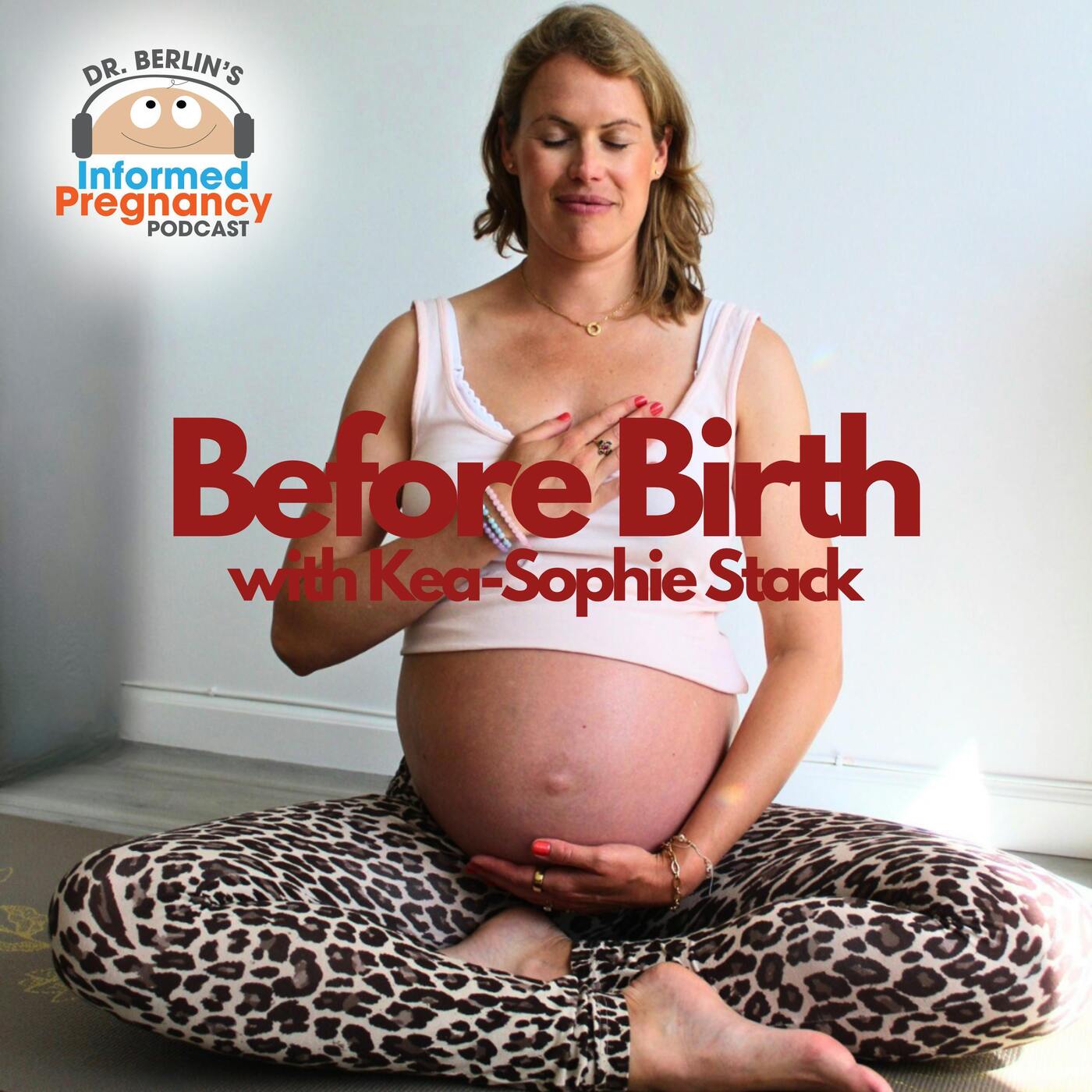
Wellness practitioner Kea-Sophie Stack discusses her search for healing and profound personal growth along with preparations for her first baby at age 41.
Grow with us on IP+! Informed Pregnancy Media presents two all new intimate short-form video series following Garrett and HeHe’s real-time pregnancy journeys as they prepare for an empowered birth and postpartum experience. Each episode features weekly updates with personal photos and videos to help bring these raw stories to life, a visually dynamic guide through each mother’s emotional and physical experiences.
“And I started to develop an eating disorder. And that was kind of like my sign, my wake up sign, that there was something going completely in the wrong direction.”
“So I did consult a couple of doctors and they both didn't even take me serious. They were like, oh, you look great. You have a great figure. You look great. Like one of the doctors literally said, I don't believe you.”
“I literally thought I'm going to eat myself to death in that time because I had no distraction. You know, I was just kind of completely confronted with myself, but miraculously the exact opposite happened.”
“But essential oils are really highly concentrated aromatic plant extract that are usually sourced through either steam distillation or cold pressing.”
“So yeah, no basil, no clary sage and no jasmine. Those are the main oils that are really a no-go.”
AI-generated transcript with speaker labels — may contain errors, especially names and medical terms. Dr. Elliot Berlin, DC appears in blue; Kea-Sophie Stack in orange.
Dr. Elliot Berlin, DC[0:00] My guest today is a wellness practitioner focused on aromatherapy, longevity, resilience, and personal transformation. Before entering the world of holistic health, she spent a decade practicing copyright and trademark law, building a successful career that looked great on paper, but left her feeling deeply unfulfilled. Her search for healing led her through yoga, recovery work, meditation, essential oils, and profound personal growth. Along the way, she left the legal profession behind, built a new career helping others heal, moved halfway around the world for love, and is now preparing to welcome her first baby at age 41. Life doesn't always unfold according to plan. Sometimes, the detours end up becoming the journey.
[0:46] Today we'll talk about reinvention, healing, pregnancy after 40, and the wellness practices that help transform her life. She'll also share practical tips on using essential oils during pregnancy and beyond, including which oils she found most helpful, which ones to avoid, and how to use them safely. I'm pregnancy-focused chiropractor Dr. Elliot Berlin, and you are listening to the Informed Pregnancy Podcast. Kia Sophie Stack, welcome to the podcast.
Kea-Sophie Stack[1:29] Hello, thank you so much for having me today.
Dr. Elliot Berlin, DC[1:32] Both of you. It's an honor, and also I think there's a lot of curiosities around essential oil. More and more people are into them and using them, but not always enough instruction on how to use them, which are the best oils. There's, you know, the popular three that everyone uses, and then there's a ton more oils that we could be using for lots of different things if we knew, and also when not to use them. We'll get to that soon. Let's start at the beginning. You grew up in Germany. What was your childhood like, and what led you to a career in law?
Kea-Sophie Stack[2:06] I did grow up in Germany. I spent most of my adult life in Germany. I actually just came to the U.S. three and a half years ago. So my growing up and childhood was pretty smoothly. I would say I have great parents that I still have a really nice relationship to. I had this dream starting at some point in high school that I wanted to go into hotel managing. And in Germany, we have career advice in about 11th or 12th grade. And this lady said, well, you either study economics or you study law. So I really didn't want to study economics at the time. And I knew zero attorneys or lawyers around me. So I was totally naive and thought, oh, yes, that sounds great.
[3:01] I've seen that on movies. I can do that. And so that's what led me to studying law and going to law school in Germany, in Mannheim, Germany.
Dr. Elliot Berlin, DC[3:11] OK. And so you started to practice after that in Germany?
Kea-Sophie Stack[3:15] I did. Yes, I started out very traditionally. Well, first I became a trademark and copyright law. So these were my specialties. And I started at a law firm very traditionally during my law school. I kind of left this wish of becoming a hotel manager or working at a hotel. So, yes, that was kind of the first job I got myself into. Although I must admit studying law, I contemplated many times if I should drop it, then also being done and finally graduating. I contemplated again, do I maybe want to do something else? But also, as here in the US and in Germany, it's even a little longer. It's a very long, very hard education. So when I was finally done with it and did it, I didn't see myself just dropping it.
[4:12] Like, I thought, OK, I've spent so much time and effort and nerves in this. I have to make it a career. So I have to say I forced myself into it a little bit. Yes.
Dr. Elliot Berlin, DC[4:25] Once you forced yourself in, were you enjoying it or did you still not really love it?
Kea-Sophie Stack[4:30] I did not love it. No, I never really loved it. There were parts of it that I enjoyed, but most of it I never really loved.
Dr. Elliot Berlin, DC[4:40] And then your health started to suffer. What happened?
Kea-Sophie Stack[4:44] So I worked at a law firm for about three and a half years. And then I did my first cut where I thought, OK, I definitely don't want to be just an attorney anymore. Can I find something that's a little more open, still related to law? And so I started working for a political foundation, which gave me a little more freedom in my practice, but still didn't fulfill me all the way. And so for one, I started to feel very exhausted, mentally exhausted, emotionally exhausted during that time. And I started to develop an eating disorder. And that was kind of like my sign, my wake up sign, that there was something going completely in the wrong direction.
Dr. Elliot Berlin, DC[5:36] How did the eating disorder manifest?
Kea-Sophie Stack[5:38] So I was told it was a kind of bulimia, but I did not vomit. I just had the binge eating and then fasted it out. And that was my continuous cycle.
Dr. Elliot Berlin, DC[5:53] Oh, it's a terrible cycle. Were you able to get help for it?
Kea-Sophie Stack[5:57] I did start a therapy, which was definitely very helpful in the beginning. Otherwise, I found it pretty difficult to get help for it, to be honest. I made a few very unfortunate experiences where there were two sides of it. On the one side, I completely denied it in front of myself and everybody else that I'm sick and that there is something not right. On the other side, like something in me knew and I was seeking for help to get better. So I did consult a couple of doctors and they both didn't even take me serious. They were like, oh, you look great. You have a great figure. You look great. Like one of the doctors literally said, I don't believe you.
[6:44] So that was really disturbing and kind of like threw me back. And I didn't know what to do for a while until I then got myself into therapy. And that started breaking it up a little bit. And then really my first yoga teacher training that I did while I was working. She put me on the spot and she maybe not in the nicest way at the time, but it was definitely working and very helpful. So I finally realized and came to admit that I have this disease and that I'm actually going and seeking for help and actual recovery.
Dr. Elliot Berlin, DC[7:30] Put you on the spot means she called out your eating disorder.
Kea-Sophie Stack[7:33] Yes, she did. In front of the whole group.
Dr. Elliot Berlin, DC[7:36] Oh my gosh. Okay. I probably wouldn't fly here in America. But were you still working as a lawyer?
Kea-Sophie Stack[7:44] I was. Yes, I was during that whole time.
Dr. Elliot Berlin, DC[7:47] And still not loving it?
Kea-Sophie Stack[7:48] Still not loving it, no.
Dr. Elliot Berlin, DC[7:51] So after she called you out and you acknowledged more completely that you had this eating disorder, where did your health journey take you?
Kea-Sophie Stack[8:02] I would say there were several components then starting to kind of interact with each other. For one, as I mentioned, I had started doing a yoga teacher training and the daily practice, the daily yoga practice and the daily meditation practice helped a lot. Starting to feel myself again because I had completely dissociated from my body, from my feelings, from everything. I was like more in this complete functioning mode. And so I would say the yoga practice definitely was a part that helped a lot with embodying it. The therapy has helped a lot with understanding things, but it didn't really. It's very much on a mind level and on a rational level going to therapy and just talking about things.
[8:57] So it didn't really drop in my body, but it was still helpful to understanding where it comes from and why I'm so unhappy. And then parallel to the yoga teacher training, essential oils entered my life.
Dr. Elliot Berlin, DC[9:11] And I want to know a lot about the essential oils. Let's take a little break. When we come back, we'll talk about the unexpected injury and personal awakening that completely changed the course of Kia Sophie's life. We'll be right back.
Dr. Elliot Berlin, DC[9:38] Welcome back to the Informed Pregnancy Podcast. We're talking to Kia Sophie Stack about the journey that led her from the legal world into the wellness and healing world. So you were practicing law, you kept exploring healing through yoga, coaching and essential oils. How did you get into essential oils and what role did they play for you in your healing?
Kea-Sophie Stack[9:59] So during my first yoga teacher training in 2017, I encountered a lady who worked with essential oils and I had just talked about having a eating disorder. So a tummy ache was kind of my daily companion, I would say, because I would never feel completely great in my tummy. And so she asked me if I have anything that's bothering me. And I said, well, you know, I have a little bit of a stomach ache. And so she gave me an oil and said, just put that on and see if it does something for you. And she gave me a brochure and I put it on my stomach and I walked off. And like 10 minutes later, my tummy ache was gone. And I was like, this is so crazy. How did that just happen?
Dr. Elliot Berlin, DC[10:53] What oil was it?
Kea-Sophie Stack[10:54] It was a mixture. It's a blend that's called Digesen. It contains peppermint and ginger and fennel and all the very digestive friendly herbs and spices. So I was flashed just by this short little experience. And so I called her a week later, maybe, and said, I want to know more about this. And that's how my journey started. From then on, I purchased my first essential oil kit that contained 10 different essential oils. And I started experimenting them. I started using them daily. And it really didn't take long that I could not almost exist without them anymore. I mean, obviously, we can exist without a lot of things, but I didn't want to exist without them.
[11:44] Let's put it that way. And so that's how my whole curiosity started. That's how I started to educate myself with them. Then later on, taking trainings and at some point really deciding that I want to start working with them, which I first I was at that point still an attorney, still working. And it took from that point, it took almost another three years until I actually quit that career and pivoted in a completely different direction.
Dr. Elliot Berlin, DC[12:19] Sounds incredible. And, you know, I've used digestion actually when I'm not feeling well. And it's amazing to rub on, but also just the smell of it seems to be very helpful.
Kea-Sophie Stack[12:31] Yes, it's also a very helpful tool during pregnancy. Oh, right. There's a lot of digestive things that come up during pregnancy.
Dr. Elliot Berlin, DC[12:37] Exactly, exactly. We'll talk about that soon. You had an accident that fractured a vertebra.
Kea-Sophie Stack[12:46] It did, yes. So as we heard, I was still on my healing journey, still working as an attorney and on my healing journey to heal my eating disorder. And I had an accident or yeah, it was just very unfortunate. I was on a train. It was really nobody's fault, but myself. I was not holding on. And the train was a little rough and I tripped and I fell with my back against the wall and I broke a vertebra. And that was a moment. It hurt a lot. I didn't think anything of it. I went on a weekend trip. I came back from the weekend trip and a couple days later I taught yoga and I showed them a backbend. And the moment I did that backbend, I thought this was not a good idea.
[13:42] I had totally already forgotten about the little accident I had, but I could feel in my back that something just completely went out of order. And so I laid in bed all night with the craziest pain ever. Went early in the morning to the doctor and she sent me to get an MRI right away because on the x-ray she couldn't see anything. So she sent me to the MRI and the MRI showed that it was a broken vertebra. I think it was L1 or L2. And when I came back to the doctor's office, she said, you're going to have to stop working and stay calm for the next six weeks. So pretty much no sitting, either walking, standing up or laying down flat. And I was like, okay.
[14:38] I just kind of like saw myself. I literally thought I'm going to eat myself to death in that time because I had no distraction. You know, I was just kind of completely confronted with myself, but miraculously the exact opposite happened. Actually a couple of days before I had the last binge eating attack ever. So I went home. I did what she told me to and I started recovering from day to day. And it was really the thing that saved me. I would say.
Dr. Elliot Berlin, DC[15:16] So interesting because for most people it would be devastating, but for you it was a turnaround. But how, how did you do it? I mean, it seems like for many of us that would be depressing. You know, not having the distractions or being able to work or just have a social life would make us eat.
Kea-Sophie Stack[15:32] I know. And I think for me in that moment, I started reading a lot. I read a lot of self-help and a very spiritual book during that time. I wrote a lot. I journaled a lot and I went for walks, hour long walks, because that was literally the only thing I was allowed to do besides laying down. And I think the combination of that relieved something in my body that had been stuck and clocked for such a long time and I didn't have the freedom. I mean, I would usually experience when I was on vacation, it would get a little better, but then there was always in the back of my head, okay, like in a week or two, I have to go back. And so I felt like knowing that it would be six weeks just kind of
[16:26] gave me this time out that my body and my mind and my psyche obviously needed.
Dr. Elliot Berlin, DC[16:32] The way you described it, you were sort of trapped in a career that you didn't like. And with all the effort and time and the journey that led you to that career, you seemed trapped in a way that you couldn't just pick up another career and leave that career. And just one wonders, maybe six weeks of not having to do that career, like getting out of the trap, maybe it was therapeutic for you?
Kea-Sophie Stack[16:55] It was very therapeutic. And I think I just realized a lot. I realized that I could pivot. So part of that job at the political foundation was that I moderated a lot of legal discussions and that was a part of my job that I highly enjoyed and that I loved a lot. And so during that time I thought, well, maybe I can just do a moderation training and call into my life being a moderator for life events and teaching yoga, working with essential oils and kind of like pivot and going a different way. And I think the space that opened for me during those six weeks actually made me feel like I can do it and that's possible. And so at that point I made the decision.
[17:48] I didn't quit my job right away. It would still take half a year until I stopped it. But I made the decision during that time. And I think that's what kept me on the healing journey and made me not relapse.
Dr. Elliot Berlin, DC[18:02] Especially even if you didn't love the career choice you had made, you know, you were successful at it and it's really hard to break out of that mold sometimes. So that's really inspiring that you're able to do that and especially to go from law to a wellness career. Although I think there's overlap. I think in both cases you sort of try to counsel people and help people sometimes feel better through something difficult that they're going through. I think there is overlap, but on the surface they seem very different. So what did the new career look like?
Kea-Sophie Stack[18:35] Well, so just to give you a little idea of the time we were in, I quit to the end of 2019. So I wanted to start my new career beginning of 2020 where we all know the world kind of changed. So the first thing I actually did, well, there were two things and two great wishes. I wanted to fulfill myself before actually getting into this new career. The first thing was I really wanted a doc. So I adopted a little street puppy from Romania. The other thing was I wanted to go to India and I did both of these things and I went to India for four weeks to a yoga and meditation retreat in Rishikesh that was in February 2020. And after that I thought great, you know, I'm going
[19:31] to hop into my new career. I start building this and on that journey I met my now husband. So there were kind of, you know, little other tracks set already during that vacation time, but I did go back to Germany. He went back to LA and the pandemic literally started two days after we both each got back home. So there was also no way to travel to see each other at first. So I thought, well, I mean at first nobody knew what's happening, right? But then I had already been teaching at a couple yoga studios. I had already been starting consulting people about aromatherapy. So that was already going a little bit and the only thing that I really wanted to build
[20:22] more was the moderation business for event moderation, which of course starting with pandemic, there were no events, there was nothing to do. So that really kicked me into the whole wellness because everybody during that time to keep their own sanity wanted wellness. They wanted yoga. They wanted essential oils and it was all really easy to be done online. All the studios I taught to, they pretty quickly switched to online classes. So I started just teaching from at home to my students wherever they were at home and the same with the essential oil consultants. So yeah, the first year of that new career was definitely very different than I had imagined it.
[21:11] But as you said, so very truly in your introduction life often doesn't go as we plan it. It's really the journey of life that we have to embrace.
Dr. Elliot Berlin, DC[21:22] Sometimes big arrows come up and say go this way, go this way and then like in a video game. Right. All right. Let's take another break. When we come back, we'll talk about love as you found it moving across the world pregnancy after 40 and how essential oils fit into all of this. We'll be right back. Welcome back to the informed pregnancy podcast. We're talking to Kia Sophie stack about love pregnancy birth prep and the wellness tools she uses every day. Okay. So you told us you met your husband while you're traveling in India, then you get grounded. So it's a long distance relationship for a
Kea-Sophie Stack[22:10] little bit. Yes. And then we, I mean, it's a long story with a lot of leaps, but we started traveling. He came to Germany for a while and eventually he asked me if I could see myself moving to LA with him.
Dr. Elliot Berlin, DC[22:24] And you did.
Kea-Sophie Stack[22:25] And I did end of 2022.
Dr. Elliot Berlin, DC[22:29] Okay. Post pandemic. How do you like California?
Kea-Sophie Stack[22:33] I like it. It's definitely a very nice place to be. I cannot deny that I miss home in a way too, and all the different facets. But yes, it's definitely a nice place on earth being in California.
Dr. Elliot Berlin, DC[22:49] It's so funny because right now the world cup is happening and I see so many Europeans traveling across America being like, wait a second, this kind of nice over here, right? Not how it's reported in the media to us. Yeah. So I'm glad you like it. Welcome aboard. Your English is amazing.
Kea-Sophie Stack[23:05] Thank you.
Dr. Elliot Berlin, DC[23:06] Everyone learn English in Germany?
Kea-Sophie Stack[23:08] Well, I have a little secret. I did a high school exchange year when I was 16. I spent a year in Arkansas. Don't laugh. It was great. It was great.
Dr. Elliot Berlin, DC[23:18] You said don't laugh too much.
Kea-Sophie Stack[23:19] Definitely one of the best years of my life and I still love Arkansas. So yes, I think that helped.
Dr. Elliot Berlin, DC[23:28] Okay. That makes a lot of sense. So you came here in 22 and you at some point talk about having a baby because it looks like you waited a few years.
Kea-Sophie Stack[23:38] Yeah. Well, we talked about it back and forth and we were both certain that we would want to become parents. We were just not so certain about the timing. And so when I first landed here, we didn't want to just jump right in it and kind of adjust for a minute. And so we waited off a little bit until we started trying. But then when we did start trying, it also still almost took one and a half years until it actually happened. So yeah, that's been how it just all took a little longer.
Dr. Elliot Berlin, DC[24:12] How have yoga and aromatherapy supported you during pregnancy?
Kea-Sophie Stack[24:18] A lot. Really a lot. I want to just kick back for one second to make sure our audience knows what essential oils really are and why they're so potent for us because a lot of people hear oils and they think we're talking about some fatty oils like olive oil or sesame oil or something. But essential oils are really highly concentrated aromatic plant extract that are usually sourced through either steam distillation or cold pressing. And they come from different parts of the plants. It can be the leaves, the petals, the roots, the bark, whatever. You know, if we're talking about a flower or a tree or other kind of grasses or citrus fruits is usually
[25:06] the peel that is cold pressed. And the essential oils in a plant is the communication system of the plant. And so they're so potent and just working so great for the plants that some very smart humans many thousands of years ago, we actually already find them in some Egyptian graveyards, which is crazy, have found that we can really also use them very potently for ourselves as humans. And therefore we can either inhale them so they go right to our limbic system and that's why they work so greatly with our emotions and our nervous system because that's right here in our limbic system in the brain or we can apply them on our skin and that will pull them
[25:58] into our blood system and they're literally spreading within 10 minutes to half an hour throughout the whole body. So that's just how they work and why they are so potent for us as humans.
Dr. Elliot Berlin, DC[26:14] And sometimes ingest them.
Kea-Sophie Stack[26:16] And sometimes ingest them. Yes. I mean the quality of an essential oil is essential. You can say that because it's so so important because they're like really being sucked right in by our bodies. It's so important that we don't have any synthetic fillers, that we don't have any alcohol in there. Like a lot of essential oils that you can get on the market are just not pure. But they're so cheap.
Dr. Elliot Berlin, DC[26:45] Yeah, that's great. But they're cheap, right?
Kea-Sophie Stack[26:48] And there's not great regulation. I mean, I don't want to say cheap is always bad. That's definitely not true. But in terms of essential oils, not all expensive essential oils are great, but the great ones are usually expensive. Let's put it that way.
Dr. Elliot Berlin, DC[27:04] Like you said, it's going on your body into your body.
Kea-Sophie Stack[27:07] Exactly.
Dr. Elliot Berlin, DC[27:07] You want this is one of the places where you want better quality.
Kea-Sophie Stack[27:11] Yeah.
Dr. Elliot Berlin, DC[27:11] Okay. So with now that we have an understanding of what they are and how they work, what have you been using during pregnancy?
Kea-Sophie Stack[27:18] So one of the oils I literally got obsessed with, it's not a typical pregnancy oil, but it was just one of my journeys is rose. I mean, I love rose essential oil anyway. It's one of the most expensive, one of the just yeah, most valuable essential oils and something already in my early pregnancy just kept drawing me back to my rose oil bottle. So I went through several through this whole pregnancy, but that's really, I would say more an emotional component and not something I would say rose helps you with this and that it's really something I am personally drawn to maybe somebody else. It's drawn to wild orange or citrus or, you know, something else.
Dr. Elliot Berlin, DC[28:04] It's interesting. Rose is one of the five that we offer during body work at our practice in Los Angeles and it's the least chosen I think of the five. But when someone says, I don't know, surprise me, I'll usually go to Rose for them and like, well, that's really nice, like pleasant, calming and they like it. So we've generated a bunch of Rose fans over the years.
Kea-Sophie Stack[28:29] Yeah, that's great. I mean, I got to appreciate it when you treated me and I did chose it to choose the Rose and it was so great to get your, yeah, to get your treatment with the Rose oil. So the other oil that especially at the beginning of my pregnancy where I don't want to deny that I was a little nervous and anxious at times just because it had, I mean, probably everybody is in their own way. For me, the background was just, it had taken so long and I was very afraid to lose it again. So Vitever is a really great oil. It's so grounding. It's deeply grounding, especially if you put it on the bottom of your spine and it's an oil that has the
[29:15] ability to give you a lot of trust. And so that was really one of the oils I used. I still use it every once in a while, but in the first month of my pregnancy, it was definitely in my daily oils because I needed the support to find my inner trust. Obviously, that's what it's all about to, you know, find the strength and trust within us. But these little helpers can just support that really, really well. And so Vitever is definitely one oil I would recommend to everyone. The other one I used, obviously, I mean, it's an all-rounder. It's Lavender. Lavender is really, it has the calming factor. It can help you sleep. I'm a super sleeper. So I call myself
[30:04] a super sleeper. And in first trimester, I literally couldn't sleep anymore. I would lay awake for hours every night and was bright awake. I was reading, listening to music, listening, trying to listen to meditations. And Lavender or Serenity, which is a blend with Roman chamomile in it. And those are really the oils that help me sleep and help me get back into like calm down my nervous system and get back into the sleep. So that's definitely something I would totally suggest to have too.
Dr. Elliot Berlin, DC[30:44] I think two things, probably most people listening don't know of Vitever as they haven't heard of it, but it's a grass. It's kind of like earthy.
Kea-Sophie Stack[30:51] Yes, it's a grass. And the essential oil is made out of the roots of that grass.
Dr. Elliot Berlin, DC[30:57] Okay.
Kea-Sophie Stack[30:57] And they have very long and thick roots.
Dr. Elliot Berlin, DC[31:01] I myself, after surgery, I had a hard time sleeping. It was one of the harder things to overcome. And I used the Serenity oil and it's really helpful. And I sort of have metrics on it because I wear a sleep tracker and I definitely sleep better with it than without it. I just put a few drops on my pillow and it's kind of
Kea-Sophie Stack[31:22] amazing. Yeah, many people report that. It's also very great if you put it on the bottom of your feet because we have a lot of nerve endings at the bottom of our feet. It's, you know, better than I am, of course. But the body is able to even faster pull in the components of the essential oils through these nerve endings. And so they spread and go into the whole body and yeah, Serenity is a great because it has the Roman chamomile as an addition to the lavender and that's something that's definitely potent on top when it comes to sleep and calming down the nervous system.
Dr. Elliot Berlin, DC[32:03] It's a really beautiful blend together. And then we talked a little bit about it. People do have digestive things come up during pregnancy during the first trimester. Oftentimes there's nausea or nausea and vomiting or worse hyperemesis. Are any of the oils helpful there?
Kea-Sophie Stack[32:22] Ginger and peppermint or that blend that I was referring to earlier, Digesen. I personally use ginger the most. I was very surprised. I thought peppermint would be my oil in pregnancy because peppermint is a great oil whenever I feel tired or unwell in my tummy. It's just something that's very, very helpful and usually helps me very quick. But for some reason the smell of peppermint was not my favorite. It's not that I couldn't smell it at all. Like I know that many people are very sense sensitive during pregnancy that fortunately that was a little bit of my fear. I was like what if I can't smell my oil anymore? That would be terrible. It didn't happen
[33:10] to me, fortunately. But peppermint just, I didn't love the smell of it anymore. So ginger was my first choice when it came to any digestive issues. You can put them on the pulse points on your wrist or you can rub it always diluted on your tummy. And that's something that's very, very calming and yeah, just helpful for the whole digestive system. Just smelling it or drinking it also great.
Dr. Elliot Berlin, DC[33:40] Are there oils that we should avoid during pregnancy?
Kea-Sophie Stack[33:44] We should avoid oils that can have impact on our hormones. So there are no hormones in essential oils. So that's not the issue, but there are some essential oils for example, jasmine and clary sage that can affect our hormones and obviously we don't want to mess with our hormones during pregnancy. And so these two oils are definitely oils that we should avoid. Another oil that we should avoid is basil because basil can actually get you into contractions and obviously we don't want that until it's time. So yeah, no basil, no clary sage and no jasmine. Those are the main oils that are really a no-go. I mean, if you're not familiar with using essential oils,
[34:41] I think you should always be precautious or have somebody like me or you know, there are many others out there. Who can consult you in what's safe and what's not safe. But a lot of people also don't use any oils that can release toxins from the body. Because if you use them in higher amounts, it can also just, you know, the toxins that are released in the body, they can go into the amniotic fluid and then go into the baby so that can like get you in a whole cycle. So those kind of oils like oregano or clove or cinnamon are also oils that should be avoided. They can be used under guidance.
Dr. Elliot Berlin, DC[35:27] All right. That's super helpful. How many weeks are you now?
Kea-Sophie Stack[35:30] I'm 36 tomorrow.
Dr. Elliot Berlin, DC[35:33] Okay. Getting close to the end, the final stretch. Do you have a vision for your birth? How you'd like to see it unfold?
Kea-Sophie Stack[35:40] I would love for it to be completely natural. I mean, I'll have a hospital birth. So as natural as it can be in a hospital. But yes, I would love to start labor spontaneously. I would love to be unmedicated. I already made a lot of oil mixtures for myself and blends that I can use during labor. So yeah, that is my wish and my hope for my birth and our little girl entering this world.
Dr. Elliot Berlin, DC[36:10] Aside from the oils, are you doing things to prepare your mind, body, and spirit?
Kea-Sophie Stack[36:15] I do hypnobirthing. So I'm listening to some audios of that every day. I feel very fortunate and blessed that I've had a very good pregnancy. I have hardly had any symptoms. I had an iliosacral thing going on in early pregnancy. That's how we met and that's what I saw you for. But other than that, I've been feeling I move a lot. I think that's my secret. I move a lot. I eat very healthy. You know, I'm not like completely stressing out about it, but I try to nurture myself very balanced and healthy. I go swimming. I'm still doing a little bit of weightlifting. I walk a lot and I visualize a lot and I meditate a lot. That's really something that helps
[37:11] me to like chanting mantras to the baby and meditating is something that yeah, is also for the practice within. I always say there's a practice on the outside. There's a practice on the inside and oftentimes the practice within is a little more important than the practice on the outside.
Dr. Elliot Berlin, DC[37:31] Well, you are doing a lot and you have done a lot over your lifetime to enrich your health on all three planes, my body and spirit and generally it tends to reward you during childbirth and I'm wishing you a wonderful experience. Kia, Sophie, thank you so much for sharing your personal journey and great information about essential oils that I don't think we've done before on the podcast. If somebody wanted to learn more, where could they find you online?
Kea-Sophie Stack[38:04] They can find me on Instagram. They can find me on my website. Everything is associated with my name. I don't know if you can put it in the captions because for many people here it's a little difficult because it has a hyphen, the kia is spelled with an E, so it's K-E-A- hyphen S-O-P-H-I-E Kia, Sophie, and then my last name is Stack. But if you Google that, you should find me on all different channels.
Dr. Elliot Berlin, DC[38:31] Yes, and we'll put it in the show notes as well. Looking forward to great news. Thank you again for joining me and for sharing your wisdom. And at home, thanks for listening to the Informed Pregnancy podcast. For more pregnancy and parenting information just like this, visit us online at informedpregnancy.com
Want more pregnancy + parenting? Start your FREE TRIAL of Informed Pregnancy+ and get access to all our curated pregnancy and parenting content — original series, iconic birth films like The Business of Being Born, prenatal workouts and more.
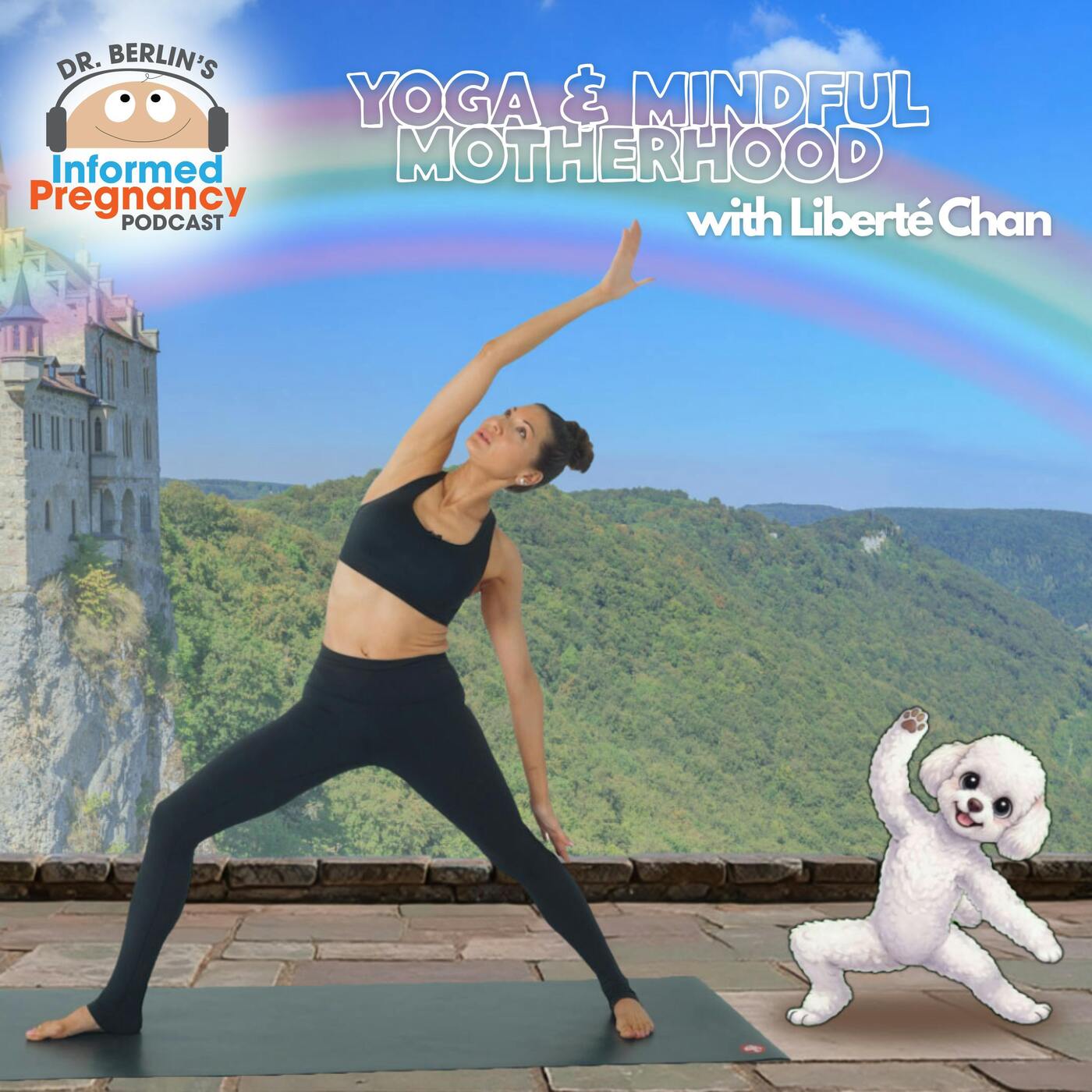
Liberté Chan is a former competitive figure skater, longtime television meteorologist, and devoted student of yoga. She’s navigating postpartum life and turning an unexpected connection with her daughter into a brand new program designed to help strengthen mother/baby bonds.
Grow with us on IP+! Informed Pregnancy Media presents two all new intimate short-form video series following Garrett and HeHe’s real-time pregnancy journeys as they prepare for an empowered birth and postpartum experience. Each episode features weekly updates with personal photos and videos to help bring these raw stories to life, a visually dynamic guide through each mother’s emotional and physical experiences.
“I'm not thinking about the future. I'm not thinking about the past. I'm just here right now. And that feels good.”
“So I feel like it really helped to get my body back into alignment physically and then mentally. It just allowed me to find that beautiful magic space of presence when I felt like I didn't know what I was doing, raising this little baby, taking care of this little baby.”
“And I was like, oh, my gosh, Mila is a natural yogi. And then I started to look at other babies and I started to laugh because I'm like, well, all babies are natural yogi. They're all flexible. They all do these poses. And maybe, you know, babies have been around forever. Maybe yoga just kind of borrowed these poses from them.”
“Mm, so my hope for Mindful Minis is to give kids these simple foundational tools for movement, mindfulness, breathing, and self-awareness that they can carry with them throughout their life.”
AI-generated transcript with speaker labels — may contain errors, especially names and medical terms. Dr. Elliot Berlin, DC appears in blue; Liberté Chan in orange.
Dr. Elliot Berlin, DC[0:00] Today's guest is a longtime television meteorologist, former competitive figure skater, and devoted student of yoga who recently entered a whole new chapter as a mother. Now she's navigating postpartum life, getting back on screen, and turning an unexpected connection with her daughter into a brand new program designed to help other families strengthen mother-baby bonds and build important life skills for today's pressure-filled world. I'm pregnancy-focused chiropractor Dr. Elliott Berlin, and you are listening to the Informed Pregnancy Podcast. Liberty Chan, welcome back to the podcast.
Liberté Chan[0:51] Thank you so much for having me.
Dr. Elliot Berlin, DC[0:54] I'll take whatever form I can get of your magical energy.
Liberté Chan[0:58] You're too kind, and thank you for that lovely intro.
Dr. Elliot Berlin, DC[1:01] Ah, my pleasure. I mean, you've been on the podcast before, and I learned a lot from you. Every time I see you, I learn something from you, but you have something new up your sleeve. You don't have any sleeves. You have something new brewing, and it's very exciting. But before we get to there, last time I talked to you, you'd just become a mom. What was early motherhood and postpartum like for you?
Liberté Chan[1:26] It was tough. Early motherhood, postpartum, I didn't have any depression or anything like that. It was just a lot all at once, and I felt very unprepared. I kept looking to experts and people who'd been parents before me. I kept texting new mom friends, and I think I probably reached out to you a few times, and Luis, my husband, has had three children prior to our current baby, so he gave me a lot of advice. But I kind of felt like I was in a world that was unlike any other I'd ever experienced. It was like this tiny human needed me 24-7, and she still does, and I didn't know what to do, how to take care of her. But I feel like now it's been about 16 months.
[2:18] I feel like I've gotten into a groove.
Dr. Elliot Berlin, DC[2:21] Yeah. I mean, would you say the challenges were physical and sort of emotional, and not in a depressed way, just in a big learning curve, and when someone's, like you said, dependent on you, it's pressure?
Liberté Chan[2:37] It's a lot, because you put yourself and all of your needs aside, because obviously she's number one, she's the priority. Now I'm trying to do a little bit more self-care and not forget about myself, and she has shown signs of a little bit of independence here and there, which is lovely. It's kind of bittersweet, actually. Like two weeks ago, she stopped breastfeeding. She just turned her head, and I was heartbroken. And I loved that connection and bond, but that was a sign of independence, so she's growing up, and I know that I'll get that little hit of oxytocin and bonding with her in a different way. But initially, it was 24-7, and yes, there were some physical challenges.
[3:21] I think my feet swelled up like I couldn't fit any of my shoes. Now it's fine, but that really was painful. I think you actually helped me work through that. And then I had an elbow issue because I was carrying her outside. And then just emotionally, it was a lot. I'd never felt so much love for a tiny human in my life, and I feel like every day it just grows exponentially, which is lovely. You know, there's a learning curve, but you got the hang of it. Yeah, I feel like yesterday I got her to the park, I got her to music class, I had her dressed, her hair was done. That was a win.
Dr. Elliot Berlin, DC[3:59] And my hair was actually done. But you're also, on top of that, you're back to work, back on screen this time at CBS. And it's just something else to juggle.
Liberté Chan[4:09] Yeah, yeah. It's a lot. And I love being back on air, especially in a new space, and it's like a completely different green screen. It's this AR-VR, this augmented reality, virtual reality space, which it's like a huge green fishbowl. And you go in and it's very challenging because it's a whole new system that I have to learn. The same weather, the weather I can talk about, you know, all day, every day, but it's the way that it's presented is different. And so I had to train. So I felt like I was back in my small market days working and felt like a fish out of water. But now I've gotten into a groove.
Dr. Elliot Berlin, DC[4:46] With all the new things, new responsibilities, new tasks, are you having to cut some of the things from your pre-mommy life?
Liberté Chan[4:57] Oh, gosh, yeah. I feel like the self-care and the sleep thing to go. But right now, I feel like, you know, she is sleeping through the night, you know, for the past three weeks. I just, you know, I hope that this continues and she doesn't have a major regression. But for the past three weeks, she's been sleeping through the night, which has been life changing because sleep impacts everything. So that was lovely. So I guess self-care for me, I'm kind of a movement exercise fanatic. I love it. So before baby, I would go to, you know, two classes a day. I would do a spin class. I would do a yoga class every day, you know, or five days a week. And now it's I go to one class a day, if that.
[5:42] And if not, I work out, you know, at my house where we have a small gym. So, you know, movement is definitely daily. And I really try to carve out at least half an hour, you know, my body would be so happy if I did right today. Yes, yes, it's so important. But for me, it's more than just the physical. It's the mental that helps me show up for myself and then show up for her.
Dr. Elliot Berlin, DC[6:06] Right. And one thing that's physical and mental is yoga. And you have a long history with yoga and it's carried you through a lot of different stages, I imagine, including this stage. Let's take a little break and we come back. We'll learn more about your yoga journey. Don't go anywhere.
Dr. Elliot Berlin, DC[6:34] Welcome back. We're talking with Libertate Chan. OK, let's talk about yoga. When did you get started with yoga and how?
Liberté Chan[6:41] Mm hmm. I started yoga when I was 20 years old. Twenty twenty one, I think I had graduated early from college and I was back home living with my parents. And I was really depressed and I was really anxious. And my mom's like, I think you should try yoga class. Like, I think it helps with stress. And I was like, OK, you know, I'll try it. So I went to a class in Brentwood and it was just me. Like no one else showed up for the class. And I met this beautiful yogi instructor. She was probably in her 40s at the time, but looked like she was 25. And she just had like this amazing energy about her. Like she was so kind, so loving. Her name's Sydney.
[7:25] And we still talk here and there, but she doesn't teach anymore. But she gave me this class that just made me feel so good after practicing for like an hour and a half. And it was my first class. And I was like, oh, it does help with stress and anxiety. I'm not thinking about the future. I'm not thinking about the past. I'm just here right now. And that feels good.
Dr. Elliot Berlin, DC[7:47] Yeah, yeah. That that lovely feeling of presence.
Liberté Chan[7:51] I was a competitive figure skater. And so I feel like the same feeling that I used to get on the ice where I wasn't thinking about the future or the past. And I was just very, very present and in my body. I felt like that on the mat. So I saw her that week. You know, I probably went to her class the day after and the day after that, because I just got hooked. I became obsessed with yoga and I followed her from studio to studio. And then about 10 years ago, I wanted to just deepen my knowledge of yoga. So I went and I took my teacher training. So I learned a lot more about the philosophy behind yoga and how it's more than just the physical practice.
[8:31] You know, it's this eight limb practice. And the first two limbs are these yamas and niyamas, which basically are the principles, the foundations of yoga. And I guess boiling it down for kid-friendly content, which is what I do in mindful minis, it's are you a nice person to yourself? Are you a nice person to others? And I think that's a beautiful way to live. I imagine as a figure skater getting into yoga, it starts off more physical.
Dr. Elliot Berlin, DC[8:59] Oh, yeah. And then you could already tap into the way you described how you were present in the moment, which is so beneficial on the mind and spirit level. But then it sounds like when you did your teacher training, you delved much deeper into the full spectrum of the effects that can have on the mind, body and spirit at once.
Liberté Chan[9:17] Exactly. And I love that you brought up the mind, body and spirit because yoga, the word, the Sanskrit word, the root of it means union or to yoke. And that is, you know, the yoking, the union of the body, the mind and the spirit. And when all of that is aligned, it's such a beautiful place to be and to kind of navigate through the world. And it's hard to stay there.
Dr. Elliot Berlin, DC[9:41] Totally. It can be so helpful during different stages and challenges in life. Did your yoga practice change during pregnancy?
Liberté Chan[9:52] So I think my practice changed a lot during pregnancy. I had to modify poses. I really just couldn't go as deep. And especially towards the end, when my belly got really, really big, my center of gravity, it just shifted. So that was kind of a weird feeling to experience. I also couldn't hold the poses for as long as I had before pregnancy because I was carrying so much extra weight and Mila was literally pushing up against my lungs and organs. So it became really hard to breathe and I had to take a lot more breaks just to catch my breath. So while I practiced all the way up until the day, I went into labor. My practice definitely looked and it felt different.
[10:30] That said, I had a fairly smooth delivery and I was able to have her vaginally and my recovery. It was pretty quick. I feel like yoga just helped me maintain strength in my pelvic floor. And maybe more importantly, it just kept me deeply connected to my body and just aware of how I was feeling while I was pregnant and postpartum and yoga. You can practice yoga while you're washing your dishes. You can practice it while you're doing your laundry. It's just can you bring your full awareness into that present moment? And again, that feels really good. It kind of like activates that parasympathetic nervous system. And therefore, it lowers your stress and anxiety.
[11:10] So who doesn't know what the question was? But yeah, I kind of went on a tangent. Oh, yeah. So sorry to circle back. I feel like I'm speaking a mile a minute. I did have to physically change my practice a little bit because just your center of gravity changes. But I did practice headstands and handstands just because I feel like I I wouldn't recommend that to most people who do yoga. But I just feel like for me, I've been practicing for so long and it just felt like it was OK. And I practiced every day. So my body changed and I probably didn't hold the poses quite as much. But, you know, I modified a few poses, but I was able to practice up until the day I delivered.
Dr. Elliot Berlin, DC[11:53] Wow. I hope you have pictures of that for us.
Liberté Chan[11:56] I do. OK, great.
Dr. Elliot Berlin, DC[11:58] How about postpartum postpartum?
Liberté Chan[12:00] I feel like it really helped me physically and mentally. But physically, like, you know, like you feel like your whole middle part of your body is disconnected. You know, it's like you have to rebuild your pelvic floor and you have this huge belly and then you push this baby out of you. And things change and they get misaligned, I guess I can say. So I feel like it really helped to get my body back into alignment physically and then mentally. It just allowed me to find that beautiful magic space of presence when I felt like I didn't know what I was doing, raising this little baby, taking care of this little baby.
Dr. Elliot Berlin, DC[12:39] I feel like then something happened that you probably couldn't have planned for. Yoga practice they've been doing for more than 20 years started to become something that you shared with that little baby, with your daughter. Let's take a little break. When we come back, we'll find out what happened and what you're doing with it now that could benefit all of us. We'll be right back. Welcome back with Liberty Chance. I mean, you got lucky enough to be exposed to yoga at a pretty early time when it was helpful for you physically, when it was helpful for you emotionally. But then you got such a deep love for it that you became a practitioner and you used it to, I mean, you drew all the benefits of it
[13:33] for the challenges of motherhood from pregnancy to labor and delivery, which we didn't even talk about, to postpartum. And then somehow your little girl started to say, I want some of that, too. What happened?
Liberté Chan[13:48] You know, I feel like just practicing her while I was carrying her kind of just set her up on this path of, you know, she's going to be exposed to this outside the womb. She was exposed while she was inside the womb. Hopefully she'll like it. I'm not going to shove it on her. I'm not going to push it on her, but I will expose her to this practice and hopefully she'll love it, you know, maybe as much as me, or at least be willing to learn a little bit. But I guess going back to your question, which I forget it at the moment.
Dr. Elliot Berlin, DC[14:21] How did she express her interest to you?
Liberté Chan[14:25] OK, so she started to within the first few months of her life, she started to just get into these poses naturally, like organically. She would sleep in baddha konasana. That's like reclined butterfly pose. And some of these sleep sacks are literally shaped like that so that they can sit or lay down and sleep in baddha konasana, this reclined butterfly pose. So that kind of piqued my interest. And then she would be on the changing table and do this happy baby pose. And I was like, oh, my gosh, she's a natural yogi. And then when she started to turn onto her belly, which is a huge milestone for babies, she started to do Cobra, you know, lift up her chest and her head.
[15:09] And then she started to strengthen her back. And then she started to use her arms and push up into seal pose. And I was like, oh, my gosh, Mila is a natural yogi. And then I started to look at other babies and I started to laugh because I'm like, well, all babies are natural yogi. They're all flexible. They all do these poses. And maybe, you know, babies have been around forever. Maybe yoga just kind of borrowed these poses from them. And, you know, we do child's pose. She now sleeps in child's pose quite often. So it's funny because it's like what came first, the chicken or the egg. But I just feel like these poses are so natural to everyone.
[15:47] So I look at my husband who's, you know, he's a little tight. He's not the most flexible person. He's very strong, but he is trying to work on his flexibility. So I always say to him, I say, Luis, you know, I know you say that you're not flexible, but you were at one point, right? When you came out of your mom's belly, you were doing all of these poses that Mila is doing. You were super flexible. You were super open. Let's just start tapping into that. And then I thought, well, if Mila is already this flexible and all babies are this flexible, why not kind of lean into that and nurture that and kind of just teach them yoga right from the get-go
[16:26] and teach them these skills of this body awareness and not always just about the poses. Of course, we'll do the poses, which are fun for her, but also just kind of make her a little bit more aware of what her body's doing, this whole like attention and focus to how she's feeling on the inside. So that kind of just sent me down a path of I need to create videos. I need to create a video series. I need to create this mindful mini series. And how do I make this interesting or fun for kids? So I have this dog named Bala, which is short for Balasana. Her name is just the root of Balasana, which means child.
Dr. Elliot Berlin, DC[17:05] I did not know that till right now.
Liberté Chan[17:08] So Bala is the Sanskrit root for child-like one or little one. And she's teeny tiny. You've seen her. She's like eight pounds.
Dr. Elliot Berlin, DC[17:15] Yeah, adorable.
Liberté Chan[17:17] Yeah, and she's adorable. So, you know, kids love animals and Mila loves Bala. So they're always together. And I thought, OK, how do I make these videos interesting? And how do I encourage kids to watch? And I'll go back to screen time in a second. But how do I get them interested in watching these videos so that they can learn a little bit of yoga? So I basically I took my real life dog yoga and I made her into an animated dog. And Bala is next to me doing these yoga flows and yoga postures and breathing exercises because, you know, kids love cartoons.
Dr. Elliot Berlin, DC[17:53] They do love cartoons. And, you know, it's pretty powerful that you have this idea. And then also the animation idea for Bala. And then you executed it really well. Like sometimes it doesn't translate from what's in your head to what's on the screen all that well. But yours came out really great.
Liberté Chan[18:13] Thank you. Thank you. That means a lot.
Dr. Elliot Berlin, DC[18:15] And the series is called Mindful Minis. How did you decide what to put into each one?
Liberté Chan[18:22] So I kind of broke it up into 15 mini flows. So you're not going to get a handstand. You're not going to get a headstand. You're going to get simple, accessible foundational poses. And they're going to be short flows. So mom can do it. Toddler can do it. Or young child can do it with mom, with dad, with caregiver, whoever wants to practice with them. They can also do it alone. But basically I just wanted them to get into their bodies, be able to do these postures. That's why I kept it pretty, I don't want to say basic, but accessible for most. And then it just kind of, I wanted mom and toddler or dad and toddler to be able to connect with each other.
[19:09] Because how much fun is it to watch something and practice it alongside your mini? Like I love practicing yoga next to Mila. And all of a sudden, without me even asking her to do it, she started to, if I get into Downward Dog, she automatically does it. And then if I say, let's do yoga, she immediately goes down into Downward Dog or Tabletop, which are these natural poses for her. And she looks at me and babies and toddlers, they just want that connection. They want that reaction from you. So of course I applaud and I encourage her to practice next to me. And it's just kind of this fun, joyful moment that I can have with Mila. And I hope that other moms, dads, caregivers
[19:58] can have that as well with their littles.
Dr. Elliot Berlin, DC[20:00] And it seems a little intimidating because you've been doing yoga for 20 years.
Liberté Chan[20:05] Again, you're not going to get a handstand in any of these flows.
Dr. Elliot Berlin, DC[20:09] Right, I'm just saying, do you need any yoga experience?
Liberté Chan[20:12] No, no. Any beginner could start them. Any beginner can start. So, okay, so I should explain what else is on Mindful Mini. So there are these 15 mini flows that, you know, it's the movement, it's the flow, but it's basically going to be a flow that's four minutes or less. And you can stop at any time. You know, it's tabletop, it's cat-cow, it's going to be downward dog, maybe a warrior one, accessible poses, you know, seated baddha konasana, so butterfly pose. And a lot of these poses, like I said, they're natural for these toddlers. So you say you can't do it, but you did it when you were a baby and a toddler. So I bet you, you couldn't do it.
[20:53] Even if you're not, you know, an advanced yogi. So in addition to the flows, there are a couple videos on breath work. It's basically lion's breath and horse's breath, which I kind of just feel like helps channel all that energy and gets the wiggles out of kids. And then I do simplify the yamas and nyamas, those principles and ethics of yoga. You know, for example, ahimsa means non-harming, kindness. And I kind of just take the ancient practice of ahimsa, which is just kind of being a kind person. And I give like an example for a toddler, you know, it's like, can you share your toy with another toddler, with a friend? And Bal is next to me doing it.
[21:40] So there's breath work, there's the flows, there's the yamas and nyamas. And then lastly, there's the mudras. And I call them magical mudras, which, you know, are really just fun hand gestures. And they send these energetic signals to the body. So I have like the happy tummy mudra, which is the hand gesture that you do. And it kind of helps your belly feel better. So, you know, maybe after a snack time, you could do that with your little.
Dr. Elliot Berlin, DC[22:07] Such a great little toolkit for parents and little ones. How has the reaction been?
Liberté Chan[22:13] It's been good. It's been really good. Everybody loves Bala. Every like the second they see Bala. I'm so glad that I had to find this AI editor because, you know, how do you create a real life dog into an animated dog and make them do yoga? I had never seen that before, but he was able to do that. So I think Bala is kind of the winning ticket.
Dr. Elliot Berlin, DC[22:37] I think the combination is the winning ticket. You have a great energy and a passion for yoga and you have a great way of demonstrating the poses that's not intimidating. And then Bala just seals the deal. She does. She's like the little sprinkle on top. What do you have planned for Mindful Minis moving forward?
Liberté Chan[22:59] Good question. I have a couple of events lined up. So I want to do some mommy and me events. Of course, I have like Bala 2.0 version. Will Bala maybe she'll talk in the next few videos? Who knows? But I just feel like these videos are endless. You know, I can do so many different mini flows and create these moments of connection that you can have at home or in person if I end up doing more mommy and me events. But it's funny, I sent a few of the videos to some of my girlfriends and one of them has a son and he's three years old. And she put it on and they did one and it was over in like three minutes. And he's like, mom, again, again. And he did it like three more times.
[23:46] So I said, okay, we're going to do more. They had a lot of fun doing it. So I think it's just, you know, I hear really good feedback from moms and that's my target group.
Dr. Elliot Berlin, DC[23:56] So I feel like somebody, Mila is going to realize this whole thing started because you saw her squirming around into these positions naturally. What kind of things do you hope she understands about why you created Mindful Minis?
Liberté Chan[24:11] Mm, so my hope for Mindful Minis is to give kids these simple foundational tools for movement, mindfulness, breathing, and self-awareness that they can carry with them throughout their life. I think that by introducing these practices early on, they become natural tools kids can return to as they get older. I really just think it can help them navigate these big emotions that we all feel. I'm hoping Mindful Minis can move on to something bigger than just yoga videos. I'm hoping it can move into other wellness spaces like nutrition, we cook a lot, I bake a lot, but it's always kind of in a healthy fashion because I want her to get her nutrition.
[24:55] It could be that. I just hope that she is not super embarrassed that she's kind of the star and the inspiration maybe I'm hoping that she'll, I'm hoping she'll love it until maybe she's a teenager. And hopefully she'll want to practice alongside me for years and hopefully she'll invite her friends to do it as well.
Dr. Elliot Berlin, DC[25:15] And eventually her children.
Liberté Chan[25:17] Exactly.
Dr. Elliot Berlin, DC[25:19] Well, right now we have Mindful Minis streaming on Informed Pregnancy Plus. Where can we find the home of Mindful Minis and where can we find you online?
Liberté Chan[25:30] So there is a website. It's mindfulminis.us. You can find all the videos there. It's on YouTube, on my channel. I believe it's at Liberté Chan or maybe it's at the Liberté Chan. I should probably know that. And then I'm on Instagram at Liberté Chan or at Mindful Minis Official. So yeah, we'll see what happens next with it.
Dr. Elliot Berlin, DC[25:55] Amazing. I'm really glad that you created it. I think if somebody was going to do it, you're the right person with the right energy, the right expertise and the creative vision that you were able to bring to screen in such a spectacular way. I recommend everybody listening go check it out. Liberté, thank you so much for joining me today and being on the podcast again. I'm going to figure out how to find out how to get you back yet another time because first of all, the audience loves you and it's always great to spend a little time with you.
Liberté Chan[26:27] Oh, thank you so much. You're the best.
Dr. Elliot Berlin, DC[26:30] My pleasure. At home, thanks for listening to Informed Pregnancy. For more pregnancy and parenting information just like this, visit us online at informedpregnancy.com.
Want more pregnancy + parenting? Start your FREE TRIAL of Informed Pregnancy+ and get access to all our curated pregnancy and parenting content — original series, iconic birth films like The Business of Being Born, prenatal workouts and more.
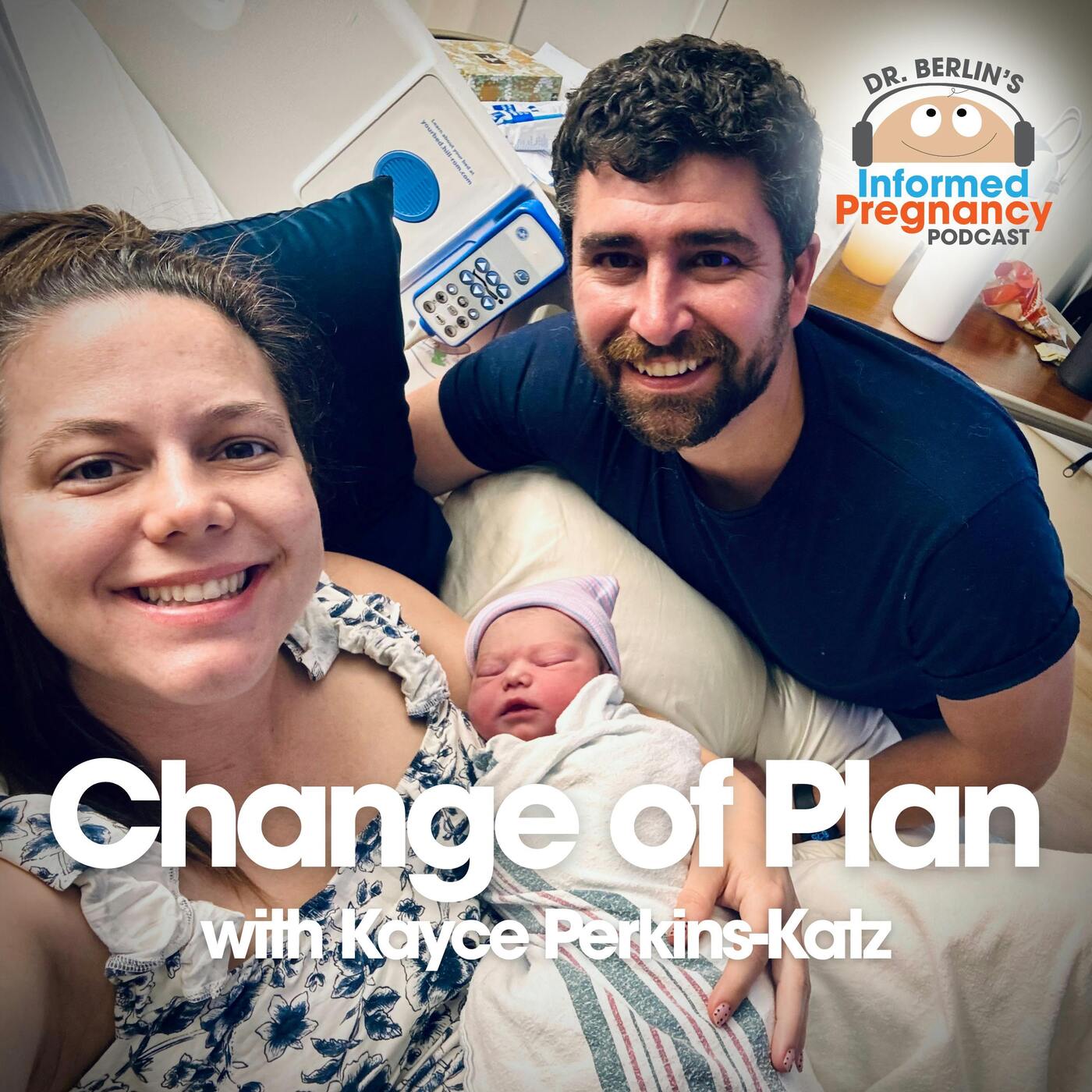
Kayce-Perkins Katz went into pregnancy with a pretty common birth plan in mind. As things progressed, her view changed as she considered what her body was actually capable of and unexpected circumstances arose.
Grow with us on IP+! Informed Pregnancy Media presents two all new intimate short-form video series following Garrett and HeHe’s real-time pregnancy journeys as they prepare for an empowered birth and postpartum experience. Each episode features weekly updates with personal photos and videos to help bring these raw stories to life, a visually dynamic guide through each mother’s emotional and physical experiences.
“Birth has such an ancient, there's like an ancient strength, all like so many women, millions of women before us have birthed babies and you can't birth a baby that is too big for you.”
“I never felt like I couldn't handle it. That's what was really surprising to me.”
“I was feeling so much like just pure joy and ecstasy and excitement.”
“It's not scary birth. You don't need to be scared. You don't need to be fearful.”
AI-generated transcript with speaker labels — may contain errors, especially names and medical terms. Dr. Elliot Berlin, DC appears in blue; Kayce-Perkins Katz in orange.
Dr. Elliot Berlin, DC[0:00] Today's guest went into pregnancy with a pretty common birth plan. She figured she'd get to the hospital, get an epidural, and hopefully come home with a healthy baby. But as pregnancy progressed, something began to change. The more she learned about birth, the more curious she became about what her body might actually be capable of. By the time labor arrived, that curiosity was about to be put to the test, including laboring at home, an hour-plus drive to the hospital, a baby in a challenging position, and a surprising number when she finally got checked. I'm pregnancy-focused chiropractor Dr. Elliott Berlin, and you are listening to the Informed Pregnancy Podcast.
[0:54] Casey Perkins Katz, welcome to the podcast. Hi, thanks for having me. Great to see you again. Motherhood, which was quite a journey, and yours I think took an interesting twist. But before we get into pregnancy and birth, give us a little background. Where did you grow up, and what was life like before becoming a mom?
Kayce-Perkins Katz[1:16] Yeah, so I'm originally from the Santa Clarita Valley, and I've been living in New York and Los Angeles when I was pregnant. So before that, I've been working as a school psychologist, and I'm a big soccer player. So I think a lot of before birth was just I like working with kids with disabilities, and my husband and I got married two years before, so kind of building our marriage and that foundation together, and playing sports whenever I can before my knee injury.
Dr. Elliot Berlin, DC[1:49] So how did you end up working with kids?
Kayce-Perkins Katz[1:52] I was originally working as an autism behavioral consultant, so I worked in the classroom, special ed classrooms designed for more teachers than kids, for more like moderate to severely impacted, those were kind of the old terms. And then I just found that through ADA, there was some really great maybe like skill based learning you can do, but it maybe was missing like a social emotional component, or kind of looking at a child and like the whole perspective of like all the aspects of their personality. And so I kind of got into school psychology because I wanted to be equipped to really support kids, not just behaviorally and maybe helping them learn to write, or to follow
[2:32] directions or complete a math problem, but also how to express themselves emotionally, and really begin to understand themselves and be able to communicate with adults, especially for those higher risk anxiety and suicide, the tough topics.
Dr. Elliot Berlin, DC[2:47] Wow, that's super meaningful work. And now you, just to jump ahead a little bit,
Kayce-Perkins Katz[2:54] what are you doing career-wise now? So now I'm in just a quick doctorate program for clinical psychology at Pepperdine, and I absolutely love it. It's a four-year program, but I'm completing it in five years. They were really wonderful to kind of accommodate my, me being a mom, becoming a mom in the beginning of the program. So I'm hoping to pursue a degree in pediatric neuropsychology. That's the goal.
Dr. Elliot Berlin, DC[3:19] Super cool and very meaningful work.
Kayce-Perkins Katz[3:22] Thank you.
Dr. Elliot Berlin, DC[3:23] So exposure to kids, working with kids before becoming a mom, and somewhere along the line you met Dan, your husband. How did you guys get together?
Kayce-Perkins Katz[3:32] Yeah, so we met on Bumble actually in New York. I was obtaining my master's degree at the time. And we honestly, I think we share a love for travel and he brings out this like spontaneous breath of life that I'm a little more calculated and planning. And so he's more off the cuff. And I think together we kind of make a really good team. And we met in New York right before the pandemic actually. And we went on a date and then like the whole city closed down and we didn't reconnect for maybe three or four months, I think just out of safety. And then when I was able to fly back to New York, we loved seeing each other and kept it going. Even when he lived in Switzerland for a while, we just a long distance.
Dr. Elliot Berlin, DC[4:19] Long distance. No kidding. Okay. And then how soon until you got married?
Kayce-Perkins Katz[4:24] We dated for, oh my gosh, you're really testing my postpartum. It's the dating game. It is, yeah. I'm like numbers. So we got married in 2024. So we dated for four years and we've been married for two.
Dr. Elliot Berlin, DC[4:41] And did you think you'd start out for kids right away?
Kayce-Perkins Katz[4:45] You know, I think so. I wanted at least a year of just being married and just kind of figuring out what it meant to be married and how that kind of shifted for us versus just being kind of dating and being partners. But we both knew we wanted children and it was really important to me to have energy and to be dedicated for the kids. So after a year, we were like, all right, let's start trying. And nine months later, we were blessed with a little girl.
Dr. Elliot Berlin, DC[5:15] Oh, wow. Well, nine months later, you're blessed with a little girl pregnancy.
Kayce-Perkins Katz[5:20] Yes.
Dr. Elliot Berlin, DC[5:22] So when you found out, was it a surprise? I mean, nine months is a little bit of a trying without success yet.
Kayce-Perkins Katz[5:31] Yeah, I think I was surprised. I think it was a mix of learning, ovulation, and kind of learning that path as well, finding the best time for us to try. And also, Dan being in New York or traveling for work, it's really hard to make a baby when you're not in the same place. Yeah, it's a little hard no matter what you learn about your cycle. So I was so excited when I took the pregnancy test, I actually, my husband works remote and he works New York, Switzerland hours. So he's up really early. And I like ran into his office while he was on a conference call and I was like, look, and he's like, oh my gosh, like I'm in a meeting. So I can't celebrate right now. And I was like, that's okay.
[6:15] I just wanted to let you know. So we were really excited. After the call, we got to properly kind of, you know, talk about it and celebrate.
Dr. Elliot Berlin, DC[6:22] Very sweet. And once that ball's rolling, you know, at some point, you have to think about the other end. How do we get the baby out of you? When did you give that thought? And what was the picture like for you at the beginning?
Kayce-Perkins Katz[6:36] So, you know, I don't think I actually put a lot of thought into it in the beginning. I really just wanted a healthy baby and I just wanted to be healthy. At the time, I had just started my first year of grad school. So it's the densest part of our coursework. So I think I was really invested in my learning and pregnancy kind of took a back seat. I was exercising and doing little things, trying to eat healthy. But I was really trying to make sure that I could keep up with the academic rigor while I was also learning how my body was changing. And then it wasn't until, I would say, my third trimester when finals were done, I was almost done with my first year of courses and I took that same student mentality and kind of
[7:22] plugged it into, oh, I need to learn about pregnancy. And throughout the pregnancy was listening to books and I listened to your podcast, actually. And my doula recommended me to, that's how we got connected to kind of see you and help kind of with some soreness and discomfort I was feeling in my back and shoulders. And I think we, our conversation actually sparked me to be like, oh, you don't have to just go into pregnancy and birth with, I just want my baby to be alive and I want to be alive. That can be actually assumed. You can actually have a birth that is a little bit more magical and maybe more unique to yourself. That maybe I chalked up before is like, oh, that's like my crunchy granola friends,
[8:04] that's not me. And once I really started reading and learning, because you never, for me, at least in my life, I never really was exposed to different outcomes. My mom had two C-sections for me and my brother because she had slit discs in her lower back and had to have back surgery like two weeks after. And so it was too much of a risk at the time for her to try and give birth without possibly damaging her lower back. So I didn't really have a generational questions I could even ask. And so just that student just started reading books and podcasts and my doula gave me so much support. Leslie was amazing and she offered a lot of resources that I took very late in the game.
Dr. Elliot Berlin, DC[8:47] So I had asked you, let's say early to mid pregnancy,
Kayce-Perkins Katz[8:52] what you thought birth would look like. How might you have answered? I just want to be alive and my baby to be alive. That was it. I'm okay with an epidural. I'm okay with anything. I just want us to be safe and healthy. That was it.
Dr. Elliot Berlin, DC[9:06] And then you started talking and learning and digging into a whole bunch of resources and something changed. Let's take a quick commercial break. When we come back, we'll talk about what happened during the pregnancy that took you from assuming you'd just want to be alive into maybe a different type of experience.
Dr. Elliot Berlin, DC[9:26] We'll be right back. Welcome back, Casey. We were talking about your pregnancy and how we met because you were not feeling amazing. You had some neck and shoulder pain, some headaches and things like that, that we were able to work on. And I was honored to meet you and work with you of great energy. And then when I see somebody who's young, strong, healthy, and the birth plan is I just want to live, I'm like, maybe it could be more than that. And so we talked a bit. You talked to your doula a lot. You did a lot of homework and research. And it sounds like you kind of latched onto the idea that birth could be maybe better than just survival. What kind of things were you picking up? What kind of thoughts were
Kayce-Perkins Katz[10:21] you having? Well, a few of my friends had had home births. And one of them wanted to have her birth in a birthing center. And I had just never, I don't think I would have considered any of that actually until now being on the other side of giving birth. When you said, some people like to give birth in a strawberry field, I was like, that's not me. I want there to be lots of doctors. I also have like vasovagal syncope episodes throughout my life to different triggers. Fainting. Yeah. And so when I faint, I faint and then I convulse a little bit. So it's like shocking for me, but it can be scary for other people. And I think I was really worried about having an episode during birth, especially because after
[11:14] a tilt table test that I was positive or they lay kind of horizontal and then some angle vertically, they recorded me fainting and having my heart stop for like 16 seconds. So I don't know how often that happens. All the cardiology appointments I've had, we've never really been able to like pinpoint when the heart stops or how often it does. So I'm healthy and, you know, it doesn't really impact me except in those moments. And so I knew I wanted to be in a hospital, but I didn't really understand why people had birth plans. I didn't know enough. And so once my doula really started, between you and my doula, I think you guys teamed up. I think just understanding that
[11:59] birth can be this like really beautiful experience that you can be not stressed out for and you can kind of be relaxed and grounded. I think that thought wasn't very tangible for myself. I thought birth was this really painful experience. And I started listening to a lot of, actually on your podcast and on YouTube, a lot of positive birth stories. And that really shifted my mindset and speaking to friends who had had positive experiences too.
Dr. Elliot Berlin, DC[12:30] Shifted your mindset into a vision for yourself that could be different?
Kayce-Perkins Katz[12:35] Yeah. So I started applying kind of these thoughts of, I think there was an episode on your podcast about pain tolerance, like the different types of pain management, I mean, for birth and how it affects you and your baby. And I found that really insightful. I didn't realize the possible effects that could impact breastfeeding, like the epidural or impact your baby. And I think for me, I started thinking about, okay, well, do I even want an epidural? What if I can do non-medicated pain management methods and I did, I was able to do that at home kind of before labor. And I started really learning about the importance of the chest to chest, like the skin time right after. And I think for me,
[13:22] it was less about even the fear of tearing. Like a lot of women are really worried about, you know, how bad they're going to tear and how that's going to affect their pain and their life after like postpartum. And I wasn't nervous so much about the tearing, but for me, it was like, nobody tells you how like when the baby's head comes out, like what that feels like, you hear things like it's the ring of fire or it's the worst pain you're ever going to experience. And I think my mind can probably come up with a more extreme version of what I experience just. And so for me, I think it really shifted this mindset of like, well, maybe I can go into it with all the tools that I possibly can and kind of,
[14:04] as cliche as it sounds, surrender related, like the feeling. And when I started getting more concrete answers, like when you're ready to push the like fetal ejection reflex that you feel, like I could name it. And that was really helpful for me. When I felt it, I was like, oh, my whole body almost did like a backward belly roll. Like I don't even know how to describe like this, like the push ejection feeling, but when it happened, I could name in that moment in the car actually was the first time I felt it. Yeah. And then the feeling like you have to poop because that's like when the best one to push, like timing that together, I think was really helpful for me. Leading up to birth. Did you have discussions with
[14:47] Dan about maybe trying a more natural experience and how did those conversations go? Yeah. So Dan was really supportive. He really let me be in like the driver's seat for whatever I felt was best for me. He had a really hard time wrapping his head around, you know, if this is supposed to be the most painful experience, why wouldn't you use pain medication? You know, if you have a headache, you take an Advil. And so I think he didn't understand the why, but he was really exceptional at supporting the what and how I wanted to support that. And so I joke with him because when we were laboring, I don't know if I'm jumping ahead, but if we were, when we were laboring, I had a list of like different
[15:30] remedies that were really helpful and soothing for me to try at home that weren't any pain medicine. And one of them was essential oils, but he couldn't find them in the moment. And he grabbed like a potpourri and I was like, here, here, and like sprayed it in the air. And I was like, no, no. Different oils have different effects on the mind. Yeah, exactly. But it actually made me laugh so hard that it still kind of worked and
Dr. Elliot Berlin, DC[15:58] it's a fact of like taking me out of my head and kind of more into my body a little bit. Ah, so now we recommend everybody put potpourri in the hospital bed. Or just make sure your husband knows where your essential oils are. Or that. What kind of things were you doing at the end to prepare mentally,
Kayce-Perkins Katz[16:14] physically, spiritually? I forget the name of the exercises, but I did it every single night. I had a kind of like a circuit of stretching circuit. Maybe it was the miles. I don't know. Cause I don't, I think it was a mix of miles and also just the binder, my doula gave me, but yeah, but it was a lot of like hip, like widening and stretching my groin and like my pelvis out and my legs. And I would do that every night before bed. I listened to these hypno birthing tracks that I had got from, I went to a birth class that my doula had recommended as well. And I did not think I would like them. I was like, this is going to be too fairy, magical for me, but I ended up loving them. There was this chime noise. I can't even
[17:10] replicate it, but I just be like, damn, play the chime again. It just was really beautiful. And in the moment when you're feeling new sensations, I think it was so helpful. And we listened to one track on repeat the whole, or maybe two tracks down to the hospital. I found that really helpful for my mindset. They're kind of guided tracks. So it helped me with my breathing. So I was preparing physically, I was preparing kind of emotionally and spiritually in that way. I would say I had affirmation cards around my house. Cause we also moved, right? We moved from an apartment to a house about a month before my due date. That was also super fun. But the affirmation that I held onto a lot was that like
[17:57] birth has such an ancient, there's like an ancient strength, all like so many women, millions of women before us have birthed babies and you can't birth a baby that is too big for you. Or, you know, I think that really, that strength that you can empower from like all the women before me was really impactful. And that really sat with me kind of as a mantra, almost through like, I'm just like pulling on the strength and the wisdom of those before me.
Dr. Elliot Berlin, DC[18:23] The very end, I guess, just before labor started,
Kayce-Perkins Katz[18:27] would you describe your mindset as excited, anxious, nervous, or some kind of combination? I think I was definitely excited. I think I was just open is how I would describe it. I was really open for whatever comes. It's going to be a whole new experience. And I've really reminded myself, I've done everything I can to prepare myself. And no matter what, I have a great support system. I have a great team. I felt so empowered by my medical team, my doula. Dr. Quimby and my doula are like, they've worked together before. So I think that was really helpful for me. Having you in my corner was a big relief. Whenever you had reminded me of the headaches, I forgot how bad my really bad migraines throughout
[19:15] pregnancy. But every time something hard came, I still got through it, and there was light on the other side. So I was hopeful. I was nervous, but I felt prepared and ready.
Dr. Elliot Berlin, DC[19:27] Well, with that in mind, let's take a little break when we come back. Your labor begins at home, and we'll find out how it progressed and ended. Don't go anywhere. We'll be right back. Welcome back. We were talking to Casey, and you learned a lot during your pregnancy about birth. And it sounds like you went into birth open-minded, better educated, and curious, and excited, and probably just a little nervous, like everybody. How did labor start, and where were you in relation to your due date?
Kayce-Perkins Katz[20:13] So labor started for me the day after my due date. I was due May 25th, and I gave birth on May 26th. I was at home, so I woke up around 2.30 with some very mild contractions. And I knew the first thing I wanted to do if I felt contractions was make sure I get as much sleep as possible. So that was my goal, was just to be well rested. I was really knowing that the average labor is 24 hours. I think I really wanted to have the energy to sustain. So I went to the bathroom. I didn't wake up my husband. I just went back to sleep. And I was able to stay asleep until about, I want to say between seven and eight, somewhere, 7.30, 8.30, where I woke up and the contractions were coming in more frequently. And the sensation
[21:09] was a little bit harder to ignore. I couldn't just sleep through it. And I actually remember sending a few emails that I had put on the back burner. I was like, Dan, after you walk the dog, can you help me just respond to these three things? So then I can just go to the hospital and not worry about it. So he was really helpful with that. But most of my labor, I would say, happened in the bathtub, the toilet and the bed. And it kind of, again, I love my circuit. So Dan drew like a warm bath for me. I would sit backward on a toilet with a pillow kind of so I can lay. And I got really nauseous. And there was a moment where I felt a lot of, I would say I was nervous because I felt the nausea was really similar to how I
[21:56] feel right before I faint. And I wasn't expecting if I would have an episode, I would be at the hospital, not at home. And so I had like a little, maybe like a two or three minute mental block. And I called my husband over and I was like, Dan, I was like, I had thrown up and I was like, what do I do if I have an episode? I wasn't prepared for that, right? You can never be prepared for everything. And he's like, well, if you have one, we'll deal with it. And we can go to the hospital earlier if we need to, whatever makes you feel comfortable. But you're still talking to me. I don't see you faint. I'm right here next to you. And I think just having that conversation and alleviating the
[22:35] what if moment was really helpful because I was able to stay on the toilet, facing backward and kind of take on the next contraction. For me, the contractions were pretty regular and they had like a very clear peak and a very clear drop. So I feel very lucky in that regard that I could anticipate and breathe for me. I didn't think I would do this, but I really liked the, oh, like the really low guttural. Those were so helpful. You sound so wild, but they helped me so much as just kind of regulate the tenseness that might have built otherwise because I was really focused on the tone. And if my tone started going higher, I could regulate it back down. And that really helps me just try and be as
[23:27] stress-free and calm as possible. So that was really, it was bath, toilet, bed. And
Dr. Elliot Berlin, DC[23:35] I learned don't move during a contraction. That was, yeah, that's a good tip. As things progressed,
Kayce-Perkins Katz[23:43] what was Dan's role? And if the doula joined you at some point, what was Leslie's role? Yeah. So Dan was timing my contractions and also just grabbing anything that I needed in the moment. There was a moment in the bathtub, my, maybe my chest was feeling a little cold and so I had him grab me like a rag so I can wet it and put it on me just while I was kind of laboring on my back and then I'd rotate and kind of labor on all fours. So he just really supported me if I was hungry, made sure I was drinking water. I also asked him, I tend to hold a lot of tension in my eyebrows and my jaw. And so I'm not always aware when that's happening. And so I just asked him
[24:29] to gently nudge me if I had, you know, my eyebrows kind of pursed or my teeth clenched, if you could just remind me I was doing that so that I could kind of just be mindful and really take that moment to like kind of pay attention to that part of my body and de-stress it and relax it. And I think that also really helped me in labor because I was able to do that with my face, my shoulders, my jaw, like I said. And so just those little paying attention to those little things was something we practiced before labor. It was really fun, like awkward to practice because I had to like make different faces, but he was really, really great with that. And then Leslie, we knew
[25:10] things were ramping up when she asked him to take a picture of my butt, like my butt crack. And he thought it was a joke. He was like, really? But I guess there can be like a purple line that can indicate dilation. And so she wanted to see where I was with that. And I was like, please, whatever information I can give you so you can give me information is really helpful. And so at that moment, she was telling Dan, you don't need to rush, but you should get your things like make sure you're on your way soon to the hospital. And I kept telling my husband, I was like, no, I don't want to get to the hospital too early. A lot of the reading and kind of the information I'd gathered really said that
[25:52] labor can be stalled in the car. And hospitals aren't intuitively this like warm, cozy kind of nook like my bedroom is. And so when you kind of get out of this relaxed state into this kind of like, I would say more of that like stress, fear, kind of state, you're not as relaxed anymore and it can take you out of the flow, I guess. So Dan basically had to be like, no, Leslie's saying we need to go. And I think it's a good idea. He had to really convince me. And I think I'm glad he did. There's also the long car ride. You're not
Dr. Elliot Berlin, DC[26:27] close to the hospital. Right. Sometimes if you wait too long, not only could the baby come in the car, but the more intense part of labor could happen in the car, which is not the greatest place to be trapped while that's happening. So it sounds like eventually you guys decided to go. What was labor like in the car?
Kayce-Perkins Katz[26:49] Actually, pretty great. So Dan put a like, we have a four inch mattress topper we use for one of our spare, like our pullout couch. And he had folded that and put the seat down. So I was laying, you know, parallel with the car, but I was able to kind of be surrounded by this like smush and this comfy, almost like a bed. And it was a little product coming here. Yeah, there you go. I needed help getting up there because I'm really short. But once I was in, you know, I had a pillow, my water bottle. And because there was also so much, I did feel pretty safe. I really told Dan, I didn't want to speed or, you know, I don't want him to take any risks of like running lights or anything.
[27:32] And so I would say it was really smooth, even though he took the back way instead of the freeways, which I was like, Oh no, there's going to be more bumps. What are you doing? But it ends up working out just fine. There was one turn, I think it was like a yellow and he was trying to make it. And I remember that contraction being the most painful out of my entire birth experience. I think because I had to brace, you know, I just had to like tighten as the car kind of moved. And I may have been a little sharp in my, let's not do that again. Like just stop, you know, it's not worth it. But other than that, I actually highly recommend the mattress topper in the car.
[28:11] Really helped me stay calm and cool and comfy.
Dr. Elliot Berlin, DC[28:14] When you get to the hospital, they left the check and see where you are. Did you have a cervical check soon after you got there?
Kayce-Perkins Katz[28:23] Yeah. So they greeted me with a wheelchair in the parking lot and I went straight through triage and I didn't have to do any paperwork. They just, they put me in a room and I used the restroom as soon as I arrived and they checked me and I was seven centimeters, which I was in complete disbelief. What did you think it was going to be? Like three. Okay. So that's a nice surprise. Yeah. It was a great surprise. I couldn't believe how quickly I was progressing from my first pregnancy. And I think from now on, I was just in constant disbelief because even when my doctor was, you know, gloving up and get, I was like, no, really? Like maybe he's going to come right now. I was like, but this is an average, you know, I was like,
[29:11] statistically, this is not normal. I just couldn't wrap my head around it.
Dr. Elliot Berlin, DC[29:15] How were you faring through the surges, the contractions at seven centimeters?
Kayce-Perkins Katz[29:22] You know, I think that they were, they were pretty consistent. I think what helped me was the changing positions. So I would kind of be on my side or my back or on all fours, just finding what was comfortable to then kind of sit in. And at this point, I think people were like, do you want music? And I was like, no, I want darkness. I want the birth comb really helped. So I squeezed, apparently I'm a very strong little person. So I was almost breaking my doula's hand and she's like, I have this birth comb you're going to love. So that, I think that really just being able to focus the poking into my hands really took my head away from maybe the pain. And even when I was feeling back labor,
[30:09] which I didn't realize that that was a little bit more intense of a feeling than front labor. Well, my doula was really eager to help me switch. She was like, you know, I think we can reposition the baby if we do some movements. And I was like, I don't think I can do that. Like, I don't think I can move. And she was really patient and encouraging. And I did some, I guess, just like, pelvic thrust kind of in the air a few times that she had instructed and kind of slow danced with my husband. And that really helped turn the baby to stop with the back labor. Oh, that's nice. Yeah, that was amazing. So glad she was there. But it was also just for me, it was making sure I was breathing
[30:51] the guttural sounds, having Dan tell me where I was tense again, and just kind of like scanning, doing a lot of like body scans, where did I feel tension? If I couldn't handle, I guess I never felt like I couldn't handle it. That's what was really surprising to me. Every urge and every time I went up and came down, it was predictable, it was consistent. And I had everybody I needed in that room. And I even asked myself when she was, I already had felt her head, which I know is like too late for an epidural. But I was like, do I need one? I like thought about it. I was like, I wonder at what point is like the point someone would ask, you know, because I don't think I ever felt a pain that I felt like
[31:30] I couldn't tolerate or handle. And even, you know, when her head when she was crowning, I remember my doula after I had given birth, she was like, Casey, she's like, you know, for most people, that's like the most pain ever. And she's like, and you didn't even change, like your demeanor was very just like breathing and, you know, kind of rocking and squeezing. And she, I told her, I was like, you know, that wasn't actually the worst pain I've ever felt. She's like, well, really? And for me, the worst pain I ever felt was after my ACL recovery, I had some scar tissue built up and I was told I needed to straighten my leg because my knee was naturally staying curved. And it went straight and putting ice packs and
[32:16] weights and like pressing down on my knee. That to me was like the most pain I've ever experienced. That was, and that was only like 30 seconds or a minute at a time. And to me, that felt worse than actually have than childbirth, which is not the common, I would say experience. I was pushing for you. Pushing was, it was really smooth. I pushed for 30 minutes. I think once I found my rhythm, my doctor was counting of how long I should hold the push, which I think was really helpful. I learned that I needed to find when the fetal ejection reflex was happening and then line up my push with that. And for me, that was the key. At first, I think I was maybe following cues from my doctor when to push and I realized
[33:05] it maybe wasn't as effective because it wasn't at the time my body wanted to push. And so once I kind of, I was communicating like, no, I'm not pushing now. I'm going to wait because your body like naturally gives you breaks, which I think is you lose a little bit with an epidural is I would have before they would ramp up or increase. My body would give me some like lower level contractions that I could breathe in and get through. And then they would come in a little bit more intensely. And when that ejection, like reflex came and I pushed with her counting, that's when she was moving really quickly
Dr. Elliot Berlin, DC[33:41] through the birth canal. Wow. That's really good feedback because I think a lot of times, even if you're unmedicated and you do feel those things, people around you just have a way of wanting to coach you and guide you and tell you what to do. And sometimes if you slow down and just listen to your body to tell you what to do, it's more potent. And sometimes we accidentally get you pushing before your body's really ready just because you're 10 centimeters or have you push on a timeframe that doesn't work well with the natural inner workings of what your body's trying to do. So it's really powerful. You mentioned earlier in the podcast that you weren't sure what that moment would be
[34:24] like when the baby comes through the ring of fire that everyone talks about and you did it without external medication. So what was it like for you?
Kayce-Perkins Katz[34:33] For me, I think the best comparison is like that feeling when you really have to poop and just like you're not supposed to push when you poop, right? But you do want to push when you're having a baby. That's the feeling and that's the urge. I felt a lot of tension and pressure when she was crowning, but I wouldn't describe it as like a burning ring of fire. I think somewhere I read to mimic the feeling you could like take your fingers and pull your mouth. And that's like a way to replicate the sensation. Because for me, I'm so muscle memory and I'm really in tune with how my body feels. I think I was trying to replicate any feeling I could. And that actually for me was not
[35:15] felt at all. It just felt like an extended deep pressure. But it was again, like it was tolerable for me. I wouldn't say I was like crying with like pain. I would say I was more experiencing like, oh my gosh, I'm going to be my baby soon. I was feeling so much like just pure joy and ecstasy and excitement. And I got to reach down and touch her head, which I highly recommend anybody. My doctor was like, do you want to? And I was like, yeah. And I was still able to talk like I was still able to move. I was tired. I learned that the pushing I think is where I imagine where people's energy really gets depleted. And so really kind of aligning the pushing really helped me conserve energy.
[35:59] Because that's when I started feeling weak, like my body was just like getting tired.
Dr. Elliot Berlin, DC[36:04] What was the moment like when you finally got to meet her and hold her?
Kayce-Perkins Katz[36:08] Hmm. It was a mix of like, just so much happiness and warmth. I was a little nervous because she came out very limp and she wasn't crying right away. So as much as I was happy to like touch her and have her be on me, I also, it was like a juxtaposition of like something's, you know, she's something's not right. But then the minute they were like, we're going to pick her up to kind of arouse her a little bit more. They picked her up and then she started crying. And so I think that was the moment when any other like uncertainty or maybe an anxiousness kind of just like dissipated. And I really, I just got to lay with her and hold my baby and she was crying and it was just so cute. And even when they were sewing
[36:55] me up, they numbed that part, but I didn't feel it. I declined the pitocin that kind of helps your uterus like, or helps the clotting. I started breastfeeding as soon as possible. It was kind of crazy. She'd latched on her own, really on my left. I just kind of did a like burger C cup and brushed my nipple to her nose and mouth. And she was able to kind of latch and start sucking maybe within like the first 30, 40 minutes. I don't think I had milk at the time, but it was, I just remember feeling like there's no, that feeling is hard to describe. It's like just this elation and warmth. And my husband and I were together and that golden hour was just magical. Even coming home and smelling her head. Yeah.
Dr. Elliot Berlin, DC[37:42] Golden was just, ugh. Like I said at the beginning, it was a real honor to be added to your team in some role and to work with you and meet you. You have really wonderful, positive energy and it's great to be around. And I'm so grateful for everything that you shared on the podcast today. I guess my question would be for someone who's just kind of towards the beginning and thinking about their options for birth, or in the same light, if you could tell, you know, early pregnancy Casey something, a piece of advice now that you've been through the journey, what would you say?
Kayce-Perkins Katz[38:20] Yeah, I think I guess what I wish I would have embraced more and believed is, you know, it's not scary birth. You don't need to be scared. You don't need to be fearful. I think I tend to be a little bit more anxious with certain things and kind of worried. And I think for me, birth, it was so beautiful and it was intuitive. My body knew before I like intellectually understood. I think that's where the reading and the podcast really like helped compliment like what my genetic and body like already knew what to do and making sense of those feelings. And like the sensations really helped just with that confidence and that kind of surrender that letting go of what I don't know and what will come and just embracing that.
[39:09] I know my body and I know my baby and it's the moment you get to meet your baby. And so I think that's what I wish I would have known. It doesn't have to be scary. I think I was so worried about how much is going to hurt. And I wish I would have spent more time maybe reading a little bit more about the sensations your body feels and also planning for postpartum. I think we're so worried about, you know, I was so focused on birth that I think it's important to make some time for the changes you experience kind of shifting in parenthood. I wish I would have spent more time there.
Dr. Elliot Berlin, DC[39:43] We could and probably should do a whole episode on postpartum. But for now, I really appreciate you again coming on and sharing so honestly. And I wish you the best of luck and full enjoyment in all the phases that come. And should you choose to do it again? We'll look forward to perhaps recording what it's like the second time around. Yes, I definitely want to. Thank you, Dr. Berlin. Thanks for having me. And thanks for being a part of my team. At home. Thanks for listening to the Informed Pregnancy podcast for more pregnancy and parenting information. Just like this, visit us online at informedpregnancy.com.
Want more pregnancy + parenting? Start your FREE TRIAL of Informed Pregnancy+ and get access to all our curated pregnancy and parenting content — original series, iconic birth films like The Business of Being Born, prenatal workouts and more.