
July 10, 2026 · 40 minutes · Episode 509
About this episode
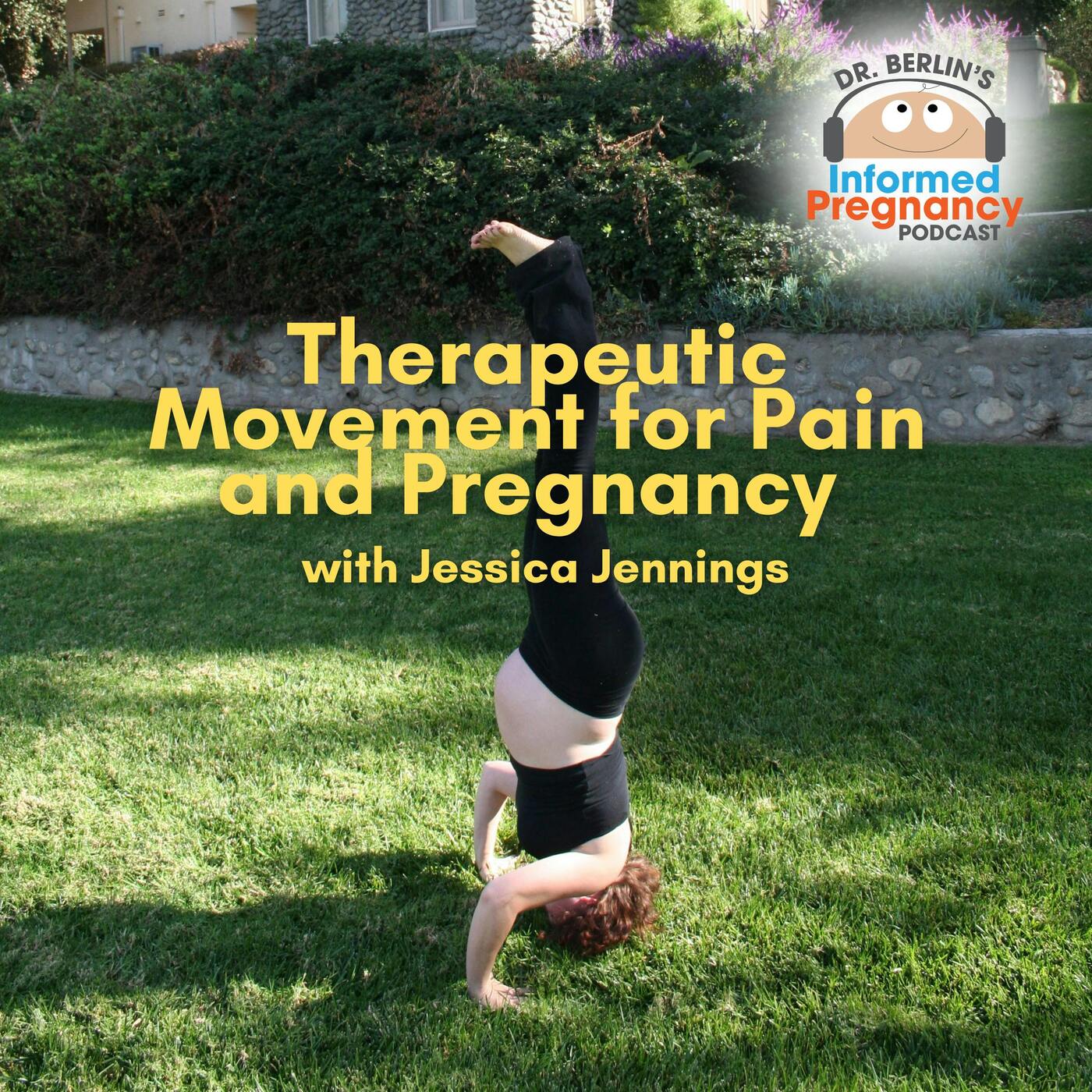
What if back pain, pelvic pain, disconnection from your body, exhaustion, and anxiety aren’t things you just have to live with? Jessica Jennings of MaYoga discusses her philosophy and how therapeutic movement and rehabilitation science can help new and expectant mothers prepare for birth, recovery, and beyond.
Connect with the guest:
Grow with us on IP+! Informed Pregnancy Media presents two all new intimate short-form video series following Garrett and HeHe’s real-time pregnancy journeys as they prepare for an empowered birth and postpartum experience. Each episode features weekly updates with personal photos and videos to help bring these raw stories to life, a visually dynamic guide through each mother’s emotional and physical experiences.
Keep up with Dr. Berlin and Informed Pregnancy Media online!
Learn more about your ad choices. Visit megaphone.fm/adchoices
See Privacy Policy at https://art19.com/privacy and California Privacy Notice at https://art19.com/privacy#do-not-sell-my-info.
Key quotes
“The idea is that the pose that you're in really doesn't matter. It's really about what we're doing inside the pose.”
“When we're pregnant, we're looking at this huge mountain that's labor and we're like, if I can just get through that, everything will be fine. And what we don't realize is what we thought was like sky behind that is another mountain that's, you know, a thousand times bigger, that is motherhood.”
“When we learn to turn inward and listen and mother ourselves, we begin to step into that highest, most powerful and wise ma self.”
“Instead of thinking I need to stretch here, think about I need to give myself a hug with my muscles.”
Related episodes
- Ep. 493 In Conversation with Esther Friedman Schwartz
- Ep. 517 Change of Plan with Kayce-Perkins Katz
- Ep. 514 Before Baby #4 with Kara Sutton
- Ep. 500 The Unexpected with Dr. Elliot Berlin Part 1
Transcript
AI-generated transcript with speaker labels — may contain errors, especially names and medical terms. Dr. Elliot Berlin, DC appears in blue; Jessica Jennings in orange.
Dr. Elliot Berlin, DC [0:00] Many expectant and new mothers are told that back pain, pelvic pain, exhaustion, anxiety, and feeling disconnected from their bodies are simply part of the journey. But what if some of those struggles aren't things you just have to live with? My guest today has spent decades exploring why some movement helps people heal while other movement seems to reinforce the very patterns causing pain. Her work combines rehabilitation science, therapeutic movement, and a philosophy that has helped countless pregnant and postpartum women feel stronger, calmer, and more prepared for birth and recovery. Today we'll talk about why slowing down can sometimes be more powerful than pushing
[0:42] harder, and how everyday movement patterns shape the way you feel during pregnancy, and why learning to mother yourself may be one of the most important skills you'll ever bring into parenthood. I'm pregnancy-focused chiropractor Dr. Elliott Berlin, and you are listening to the Informed Pregnancy Podcast. Jessica Jennings, welcome to the podcast.
Jessica Jennings [1:18] Thank you so much. I'm so happy to be here.
Dr. Elliot Berlin, DC [1:20] I'm so happy you're here. We don't do enough on yoga and practical therapeutic tools that people can use to help them feel better in mind, body, and spirit, and you are a master of those things. But before we talk about your company, MyYoga, and your work with pregnancy and postpartum, let's start at the beginning. You grew up in New Jersey. What was that like?
Jessica Jennings [1:42] Well, I was kind of a spiritual kid, and I kind of, well, my dad had back pain all his life, and I think this was kind of formative. I remember I was nine years old, and he was driving me to school, and he was putting his briefcase in the car, and all of a sudden he was flat on his back on the ground. I had to help him in, and, you know, this wasn't unusual. He just had, you know, a bad back, they said. And, you know, even as young as I was, it didn't make sense to me. The doctor said he just had to live with it and try to ignore it. I just felt like our bodies were trying to tell us something when we have discomfort and pain. And I think even back then I just was determined to try and figure out what
[2:30] that language was so I could help people out of pain.
Dr. Elliot Berlin, DC [2:33] It's hard to watch your parents struggle in that way, become really almost disabled for that time period in that way. And, you know, back pain is a struggle. It's like can be so all-encompassing and really limit what you can do and so painful. And that must have been hard to watch. Do you think that planted the seeds for the work that you're doing now?
Jessica Jennings [2:57] I think it did. I felt really helpless. And, you know, I kind of decided I wanted to do something to help people who had pain, but my life took me in different directions. And in my 20s, I decided I was going to be a filmmaker and uplift people in that way. And I had my own pain. So I had an undiagnosed scoliosis, but I had, you know, all the pains and back pain, sacral pain, neck pain. I remember standing on a Seattle street corner with a friend. And she was like, Jessica, turn your head. And I could like turn my head maybe an inch. And she said, go to yoga. And at the time, I thought yoga sounded really boring. And I like to get stuff done. But I went begrudgingly and it was truly amazing.
[3:51] Even just that first session, you know, the teacher basically conveyed through just super simple guiding cues for breathing and moving that I was enough as I was. And I just let go of this pressure. And I walked out and I just felt like taller and lighter. And the pain was gone. And even like really early, I knew that I wanted to share this with others. I knew this was going to be my path. But I also knew that I didn't want to be the kind of teacher that if someone was in a pose and they said, oh, my back hurts, like, I didn't want to be like, oh, well, maybe don't do that pose or, you know, try to breathe through it. Right. Again, I just felt like I wanted to understand why yoga works so well
[4:38] and how healing happens.
Dr. Elliot Berlin, DC [4:41] How old were you at the time that you were having all this pain
Jessica Jennings [4:45] or at the time that you had that first yoga experience? I was in my late 20s, kind of starting artist, filmmaker.
Dr. Elliot Berlin, DC [4:52] I was a heavy smoker and it was probably 27 that I found yoga. So any idea why you had all that pain as such a young person? It sounds like by 27, you had had it for a while. And it seems to me that would be scary considering your father's experiences with back pain. But was there any trauma that led up to it? Was there any reason that you would have known, oh, this is the cause of my pain?
Jessica Jennings [5:21] No, there was no sense of why my body constantly hurt. Looking back, I just had a pattern that was very deep. We all have little patterns. We might lean one way or another. I actually used one eye more than another, and I think that was part of it. But it caused what they call a functional scoliosis. So this was not something I was born with, but there was like this twist in my spine. And this is probably why going to yoga helped me so much, because the teacher would say something simple, like stand on both feet. And that was like a journey for me. But when I got there, it felt great.
Dr. Elliot Berlin, DC [6:00] I think like chiropractors, there's a lot of diversity in yoga and different forms of yoga. And many times you go to five different classes and five very, very different experiences. And I think that once you realize that yoga wasn't just something you wanted to practice for yourself, but that you wanted to bring to others, you really took it down a unique path. And we're going to take a commercial, but your journey started with a search for relief for yourself, and then you became determined to understand why yoga worked, why it sometimes didn't work, and what was actually happening inside the body when healing occurred. When we come back, we'll talk about how that curiosity
[6:40] led into Jessica learning kinesiology and rehabilitation science and the development of something called therapeutic yoga. We'll be right back.

Dr. Elliot Berlin, DC [7:01] Welcome back to the Informed Pregnancy Podcast. I'm talking with Jessica Jennings, founder of MaYoga. We're going to talk about MaYoga soon, but once you started teaching yoga, what kind of questions were you trying to answer and where did you look for answers?
Jessica Jennings [7:17] Well, it's funny because I started teaching at a community college and I basically just mimicked my teacher. So I would say exactly what she said, but it really wasn't sustainable. And one day I saw a flyer for a kind of yoga that was alignment-based. I didn't quite know what that meant, but they said anybody who has shoulder pain, wrist pain, come to this workshop. So I came and watched the teacher do the slightest little adjustments for people. Sometimes it was verbal, you know, telling them just where to breathe and gently draw their shoulder blades together. Sometimes they actually use their hands, and it was like a miracle. People could be in poses
[7:59] that they'd never been able to be in without pain. We joked around about, you know, people throwing their crutches and saying hallelujah, but I knew that this is what I wanted to learn. And the idea is that the pose that you're in really doesn't matter. It's really about what we're doing inside the pose. And we can be hurting ourselves on the mat and we can be healing ourselves while we're driving. So it's really about learning, again, the language of the body, these basic principles that the body uses to find its balance of stability and freedom. So I dove deep into biomechanics. I got my master's in kinesiology and studied cadavers and stuff.
[8:43] But honestly, it wasn't until I was asked to teach yoga to pregnant women that I really began understanding what the body is trying to say.
Dr. Elliot Berlin, DC [8:53] Okay, you glossed over working with cadavers. It seems to me most yoga instructors don't work with cadavers. Chiropractors do. We have to do gross dissection. And I only bring that up because I volunteered for dissection to spend time preparing the cadavers and helping out other students because I was so fascinated by it when it comes to the musculoskeletal system in areas where you have overlapping soft tissues, even just muscle, there are some areas where you let's say have five layers of muscle. And to know that and to see it on a picture or to see it on a model is way different than to see it on a human body and where the origins and insertions are
[9:37] and why it is that when they contract those muscles, certain movements happen or where dysfunction can take place on a group of muscles or scar tissue, things like that. I was in massage school and chiropractic at the same time. And I had wished for my massage classmates that they were able to do gross dissection because it gave such an intense understanding of how the body works and how the musculoskeletal system works in particular. So I don't know how you got involved with cadavers. I'm curious about that, but also that I think would give you so much depth and understanding that's hard to get without working with cadavers.
Jessica Jennings [10:17] Yeah, I learned so much from that period. One of the things I learned was that it is the fascia, the covering of it all that can kind of hold a pattern. I wanted to understand which muscles help us stabilize and which ones allow us to move. And of course, every muscle has both jobs. So I think the other thing that I really learned from that is there's more than what the eye can see. So in Chinese medicine, we have these kind of meridians. In yoga, these channels carry what's called prana. Whatever you want to name it, it's basically how your body is communicating with itself, how the brain is talking to the muscles, the nerves, and even just the flow of the blood throughout the body.
[11:09] So you're not gonna be able to see these, but what I came to understand is that we can support that flow with alignment. When we move, for instance, toward the natural curves of the spine, everything's gonna flow better in the body. And when we move away from it, our bodies are gonna tell us, hey, this isn't the right direction, and it's gonna give us discomfort.
Dr. Elliot Berlin, DC [11:36] That's really a great perspective. Now, you said when it came to pregnancy, everything changed for you.
Jessica Jennings [11:42] Yeah, so after my first really long teacher training, I was asked to teach pregnant people, and I knew very little about it except the basics. I walked in and I thought, okay, well, I learned a lot about the goddess and stuff in my yoga teacher training, so I'll just try that on them. And I talked about how feminine they were and how they had everything within them, and they just kind of looked at me like I was nuts. I mean, they were just like, okay, I have a new ache and pain every single moment, it seems like. I have to pee all the time, I'm not sleeping. It feels like some being has taken over my body, and I'm looking down the road at the most intense physical experience in my life,
[12:26] so maybe you could be a little more helpful. So I moved on and I started saying, okay, well, there's so much instability in pregnancy, mentally and emotionally, but also just physically, because of all the changes in the hormones. So how about I just do some alignment-based therapeutics? So I said, hey, you know, who has wrist pain, who has back pain, people would raise their hand, and we would spend the class getting them out of pain, and it was great. I mean, I thought that it was very helpful. But honestly, I really did feel that I was missing something still, and it wasn't until I started just asking myself this one question that I kind of fell in love
[13:08] with teaching pregnant people and moms, and that was, what is the opportunity that pregnancy brings? For me, it just couldn't be just all limitations and do's and don'ts. It's natural, right, that there had to be something that was a gift for us, and I wanted to find it.
Dr. Elliot Berlin, DC [13:27] I think you definitely just related to 90% of our audience with the description of things that people feel during pregnancy, certainly at our office, that's what people come in saying all the time. So where were you able to pursue a deeper understanding?
Jessica Jennings [13:43] I kind of witnessed what transformation was happening with my students in class. They would start out pretty isolated and anxious, having a bunch of aches and pains. And by the end, there was just different energy about them. They felt grounded. They felt connected to their own inner resources, their bodies, intelligence, and power. It was like when we sent them off, we just knew that they were ready. And I realized that what was happening, although, of course, the poses are great and helpful and the community is just a beautiful thing, it started from a choice to slow down, to turn inward in a loving way and to really begin to honor what our bodies are asking for.
[14:32] And I think pregnancy is this beautiful opportunity for that, for a lot of people. A lot of people do this maybe even for the first time, really start to have this motivation to take care of themselves. But we don't have to be pregnant to do that, right? It taught me that we can all slow down and begin to listen. And unless we're listening lovingly to our body, right? Unless we're letting go of the frustration we often feel or beating ourselves up for somehow not doing things right, we're not gonna hear it, right? And so this is the opportunity that I realized is this part of us, right? In yoga, we have Shiva Shakti in Chinese medicine, it's yin and yang,
[15:17] but it's like this more feminine part of us. It's less achievement oriented and making it happen. And I got this kind of mindset and more allowing things to unfold and kind of feeling our way forward as if someone turned the lights out using our intuition and sensing. This is the gift, I think, of pregnancy.
Dr. Elliot Berlin, DC [15:39] Did you start teaching pregnancy
Jessica Jennings [15:42] before you experienced pregnancy? I did, I was teaching for six years and learning from them, just really kind of coming to understand what it's like to have everything change, physically, mentally, we're dealing with, how is this gonna affect all my relationships, my work, everything, and emotionally, some people are having these waves of love, some people are not really feeling connected yet, right? And then spiritually, for me, there's like three births, right? So we're dealing with the birth of the baby and even the birth of the mom to this baby, right? Because every baby is different and so we're a different mom to each one. But then there's this idea of the birth
[16:29] of our ability to mother ourselves, right? This sort of when we turn inward lovingly, who's turning in, right? It's the birth of that person, just this kind of higher and nurturing self.
Dr. Elliot Berlin, DC [16:43] How did that play out for your own pregnancy?
Jessica Jennings [16:47] Well, it was a beautiful thing, honestly, to be able to just be fully pregnant several times a week with my new pregnant friends. Of course, I had the aches and pains, but it just helped keep them all at bay and it really helped me feel ready for labor. I was very focused on labor. I wanted to have a beautiful labor. It did not go quite as I had imagined it would, but I feel like the yoga helped me be okay with the different directions that it took and find the beauty in it all, which I do. I look back on it, even though it was an epic four-day event and I'm very grateful for every part of it. Honestly, the yoga did not quite prepare me for motherhood.
Dr. Elliot Berlin, DC [17:39] In what ways would you have expected it
Jessica Jennings [17:41] to prepare you for motherhood that it didn't? You know, I'm not sure I was thinking very much about motherhood at all. I have this image of like, when we're pregnant, we're looking at this huge mountain that's labor and we're like, if I can just, you know, get through that, everything will be fine. And what we don't realize is what we thought was like sky behind that is another mountain that's, you know, a thousand times bigger that is motherhood. And I guess, you know, I just hadn't quite learned how to take care of myself. I knew how to go to class. I knew how to stop at Whole Foods and get healthy food, but with very little time feeling completely depleted,
[18:27] you know, having had a cesarean and trying to heal from that and then being 45 minutes away from where I had taught yoga. So I didn't even have an easy way to connect to, you know, the mom friends that I had made. It was really hard.
Dr. Elliot Berlin, DC [18:45] I'm sorry, that is a transition that I think you're echoing what I hear all the time is that people spend a lot of time preparing for birth and a lot less time preparing for motherhood and birth may be 24 hours, motherhood or lifetime in a very big transition. I wanna talk more about your work for pregnancy, birth and postpartum after the break and also very practical take-home tips that listeners can use immediately. But before we go to that break, we kind of threw out the term therapeutic yoga. The kind of work that you do in yoga is unique to what I generally see. And I would love for you to sort of describe in a nutshell what that means, therapeutic yoga.
Jessica Jennings [19:31] Yeah, for me, therapeutic yoga means using the yoga to support healing. And so there's gonna be a lot of different takes on that and some might say yoga always supports healing. And I do think every kind of yoga you do has some benefit. But for me, what becomes really therapeutic is when we address our patterns and make the shifts on every level of embodiment. So what does that mean? Like physical, right? So a lot of times, especially in my yoga teacher world, there's this idea that we can make pain go away with intention or like that it's just stress, you know? And it's true, stress can cause us to move into some patterns that then cause pain.
[20:20] But stress is natural and shouldn't cause us pain, right? And if we take ourselves out of a stressful situation and we take a vacation, if we go back into that stressful situation, it's probably gonna come back, right? So really making these shifts on a physical level means understanding what are my patterns. And it might be as simple as breathing into a slightly different part of our lungs or rooting down a little more through one side. And then mentally, emotionally, right? That understanding of, you know, not just our story, but just what those patterns are and even the ways we think energetically, how that energy, that prana or whatever you call it,
[21:04] chi is moving through the body and supporting it to flow in its optimal way. And then spiritually, remembering that there is always support for us. There is this bigger intelligence and when we reach out or end, when we turn in, we're gonna get guidance. And for me, that's what therapeutic is. Yoga is all about.
Dr. Elliot Berlin, DC [21:25] Has a lot of depth to it. I think oftentimes people think about yoga as a good stretch and this is so much more than that. Healing doesn't just happen during a workout or yoga class. It happens in the way we sit and stand and breathe and work and rest and move throughout every minute of every day of our lives. When we come back, we'll talk about how those ideas evolved into my yoga and what Jessica has learned and now teachers and can offer to people locally and worldwide from her years of supporting pregnant and postpartum clients. We'll be right back. Welcome back. We are talking to Jessica Jennings, founder of my yoga. Okay, so you've got years and years
[22:23] and years of experience teaching prenatal, postpartum. What patterns did you begin to notice and how did that transform into this platform, my yoga?
Jessica Jennings [22:36] Well, it really came from my own experience of becoming a mom and of course I loved yoga and I loved meditation, but it fell away. And honestly, there was this sense that like, if I'm not gonna do a full hour of sweaty practice or literally my meditation teacher had said, if you don't do 20 minutes twice a day, then don't even bother. And at some point I started getting a little bit annoyed that there were these people and honestly, mostly men who created yoga, mostly four men who weren't responsible for this little life. And I started to think, well, if I only have two minutes, what would I do? What could I do, right? Whether it's to relieve this back pain
[23:24] or my neck tension, or to just get rid of this feeling of complete overwhelm and negativity to be able to show up as my best self for my family or just to feel that I'm on my path. So I started paring things down to their essence. I used this framework of the five natural elements of space, earth, water, fire and air. And basically it's just like, we can start with just space. Forget about meditation, forget about all the complexity, but can you just take one minute and become as spacious as you can? I started holding onto the edge of my kitchen counter and stretching back and just doing one pose while my baby was distracted with a toy, I had five minutes left of their nap.
[24:15] And so everyone says sleep while baby sleeps, but I wasn't a big napper. But what I could do is lie there still. And what I felt was that I would kind of drop into this really deep relaxation that revitalized me on a really deep level, maybe even more than sleeping. I wasn't even calling it meditation at the time. So there are these little practices that we can do that can really make a huge difference.
Dr. Elliot Berlin, DC [24:44] I love that because in today's very, very busy world in general and the extra busyness that comes once babies arrive, it's just so daunting to say, I'm gonna go do an exercise class or a yoga class. And I know with our clients that you work with, you give them little tips and tricks and things that they can do, just even the way they describe little tiny adjustments that they make in the way that they sit or stand or pick up their child, that can be making therapeutic improvements throughout the regular day without committing to going to a class, taking a class, coming back from a class, getting all the sweat off of you from the class. And that's super powerful.
[25:26] And I think that sometimes people actually will go overdo a class, especially if they haven't done much yoga before and sometimes actually get injured from doing a full class without modifications or jumping in too deeply. And sometimes yoga doesn't have to be a class. It could literally just be little things that you do throughout your day that don't take up a lot of time and don't take up a lot of resources. So I guess the name ma yoga, what does that represent to you?
Jessica Jennings [25:57] Yeah, so I chose the name ma yoga because the syllable ma in every language pretty much means mother. And in the language of yoga, Sanskrit, it also means the highest, most powerful and wise. Like ma kali is the mother of all goddesses. So I love this idea that, and this really is aligned with what I saw with my pregnant students, when we learn to turn inward and listen and mother ourselves, right? We begin to step into that highest, most powerful and wise ma self. So whenever I start working with someone, that's always the beginning is just a nice restorative pose. I've had people come in. One woman said, I don't really like getting on the floor.
[26:45] And I was like, that's fine. So we just sat on the couch and she wanted to learn, I think what we all wanna learn. Just like, why do I have this discomfort, this pain? And what can I do to make it go away? So we worked on just really simple little shifts in how she was sitting, the muscles she was using. We moved to standing and we don't just start from a place of loving ourselves, of listening to our body. And there's an exercise we can do where it's like you're literally, if you think of a toddler learning to walk, you're literally, you can take some of those words that you'd say and say them to yourself right now. Like the toddler falls, you wouldn't say, oh, there you go again.
[27:34] It's just gonna be like this forever. There's just something missing. There's just something wrong with you. And you might as well just give up, right? We would never say that to a little one, yet a lot of times we say that to ourselves. So our subconscious understands language. So if we just say, it's okay, of course you're gonna fall. And don't worry, I am here for you. We're gonna figure this out together and you're doing beautifully and you have everything within you that you need to do this. I try to keep that running through all the practice, not just the beginning, but as we're working, we never let that effort take over. It's always listening lovingly.
Dr. Elliot Berlin, DC [28:15] Is this along the lines of mothering yourself?
Jessica Jennings [28:19] Exactly. It is this idea of learning to mother yourself and to step into that ma-self for ourselves. You know, it's something that I wish I did more with my daughter. I mean, she's amazing. She's 19. But at the time, she came first in every way, you know? If she even like made a sound, I would wanna make sure that that was a positive experience. And honestly, I think kids benefit from seeing that their moms take care of themselves and from having a little bit of that boundary where, oh, mom's meditating right now. She has that shawl on. So I know I'm allowed to just sit on her lap right now, but I have to wait until she takes it off before I can talk to her.
Dr. Elliot Berlin, DC [29:05] I know that a lot of the people listening right now are pregnant. They have the aches and pains and discomfort, the neck pain, the rib pain, the sciatica, the hip discomfort. Is there something simple that anyone can do to sort of address some of that discomfort?
Jessica Jennings [29:27] Well, I could give you something for a specific discomfort. I think first I'll just say that it doesn't take much to learn the language of the body. So a neck pain is gonna need something different from a back pain. And we can use these elements to say, do I need space here? A lot of times when we have an ache or a pain, we think we need to stretch. But actually, pregnancy hormones, relaxin and progesterone, they actually create instability in the body. This is also baby's head can get out of the pelvis, right? So we need that to open up, but it also creates instability in every joint. Instead of thinking I need to stretch here, think about I need to give myself a hug with my muscles.
[30:16] So what does that mean? When we're sitting, driving, we can even put like a big water bottle between our legs and just very gently hug in. If we are on the mat, we can roll up a towel, or if you have a block, put it between the thighs, gently squeeze it. And I'm not talking 100% effort, just like 30%, just to feel that gentle hug that stabilizes our joints and can make a huge difference with those little aches and pains that we get.
Dr. Elliot Berlin, DC [30:45] Yeah, another thing I noticed is that when you do your assessment with our clients, you are looking for things, not just that are too tight, but also things that are weak or unstable, things that are out of balance from front to back, right to left, and then use your methods to address all of those things, strengthening the things that are too weak or stabilizing the things that are unstable, balancing the things that are out of balance and loosening the things that are too tight. If somebody came to work with you, let's say during pregnancy, since you have so much expertise there, what might a session look like?
Jessica Jennings [31:23] Well, we would start by just chatting on the couch and I'd just hear what's arising for the person. And I would put that person into what's called a restorative pose, which uses props, maybe it's a rolled blanket or a bolster, to make someone really comfortable while they're moving toward optimal alignment. So for instance, if someone says, yeah, my low back's been hurting, I would make sure that we are supporting the curve of their low back and right away they're gonna feel ah, that ah feeling. And I would probably have some music on and be just talking them through just a relaxing meditation to have them start to connect with their body in a new way.
[32:10] And from there, we would just explore. So the first session is just always a discovery, what feels good, what doesn't, we're moving slowly, we're doing simple poses. Some people come in and they're like, I've been working it, I've been working out and I really want the strength and so we'll lean more toward that. Some people have never done yoga before, so it just really depends on the person. After that first session, one of the priorities is to end a little bit early and make sure that we record a short five minute practice that will be therapeutic and something that will help the person feel better right away and over time to make this the new normal.
[32:53] So I'm not there to try to get people addicted to coming to me, I'm there to really help people have a practice that you can do even just five minutes a day that reconnects you to your center and makes you feel grounded and free.
Dr. Elliot Berlin, DC [33:09] And at the moment you're seeing people live in person here in Los Angeles at our clinic, Berlin Wellness Group, we're so grateful to have you. But the great news is you don't have to be local to work with you. Tell me how that would work.
Jessica Jennings [33:23] This is true. So on myyoga.com you can go to our offerings and I offer Zoom sessions and I've been teaching on Zoom since 2012. I actually have a prenatal certification program so I'm on Zoom a lot. And it's so easy to click in and I get to connect with people from all over. So it's really nice plus it's kind of nice to be able to have that video of what happened. So yeah, I love connecting with people wherever.
Dr. Elliot Berlin, DC [33:57] You mentioned meditation and I think meditation is one of the most powerful and underused tools for helping regulate the nervous system, the autonomic nervous system in particular and can have really profound effects on how we feel, mind, body and spirit, but also on birth. And I'd love for you to share a little bit more about your thoughts on meditation, the effect that just meditation alone can have on the body and in particular on our birth.
Jessica Jennings [34:31] Yeah, that's great. So yeah, I see meditation and I kind of call it ma meditation. I see it as connected to this mother love and that when we do it, we connect to the body's intelligence and power. Our cells know how to give birth. Our cells even know our next step, right? I think of it as like, if you think of an acorn, it has the map to becoming that oak tree. It knows how to do it. And so in a lot of ways, pregnancy is one of these things where we just wanna get out of our body's way and see what we can do to support it. So the meditation, you know, for me as someone who had this scoliosis before, I was kind of stuck. So I recommend if somebody has had a really long pattern
[35:26] in their body, you know, definitely go to a chiropractor. Sometimes your muscles, your bones, they're stuck and they need some help to be moved. And then we can do the yoga and the meditation and kind of keep moving in that optimal direction. So eventually I was able to use meditation to just allow my body to move literally to I would feel it untwisting. And as a prep for labor, you know, we're gonna have to breathe through intense sensation. We're gonna have to know how to calm our nervous system because the moment we start getting stressed and resisting those contractions, it can hurt a little more, it can take a little longer. So all of the breathing and the awareness,
[36:13] you know, just turning in. And again, like turning our inner eyes and our inner ears in, especially if we have some understanding of the language of the body, of the optimal ways energy flows in the body, you know, we can just be in a really good space. No matter where we're giving birth, hospital, birth center, home, we can have a beautiful experience. It's really about what's happening inside.
Dr. Elliot Berlin, DC [36:38] And I always feel like we come to this question with just a minute or two left and then need to do another whole episode on it. But you mentioned that in your own pregnancy, yoga didn't prepare you for motherhood. The beginning of motherhood is oftentimes a bumpy transition than postpartum. Maybe the first 12 weeks or so, a lot of people listening recently had a baby, probably feel also kind of that bumpiness of that period or maybe being unprepared for that period. Is there a tip or suggestion you can give? I know you have a lot of online resources for this as well, but for someone in the newly postpartum period?
Jessica Jennings [37:21] Yeah, thank you for asking this. So a lot of people say, well, when can I start? And, you know, I haven't gotten the okay from the doctor yet. Now, obviously for, you know, intense, sweaty yoga practice, you want the okay to exercise. But there are things, unless you're on bed rest and this applies for pregnancy and postpartum, there are always poses you can get into to help your body align optimally and postpartum to really help it begin to heal. So according to yoga, when we give birth, whether it's, you know, vaginal, cesarean, it doesn't matter. All of our energetic channels have exploded and your body is recreating it from scratch. So when we support that healing
[38:11] with just really simple poses and breath work, we can be moving in that optimal direction. I believe we have about a window of a year to make sure that our organs are back to where they belong, that we're not creating adhesions where things are sticking. So my recommendation is always, you know, do some therapeutic yoga, get a practice that works for you. You know, find a physical therapist who is a pelvic floor specialist, have them check you out and, you know, use this time to be very gentle with yourself, but to support healing.
Dr. Elliot Berlin, DC [38:50] I have learned so much from you today and I know that the audience has as well. If we wanna learn more, where can we find you online?
Jessica Jennings [38:58] Well, it has been a pleasure and I am at MaYoga.com, Amazon Mary A as in AppleYoga.com. I train teachers in therapeutic yoga. So we have, you know, classes all week long and you can actually try a week for free on Zoom. They're mostly for prenatal, postpartum and busy moms, but everybody's welcome. You can also work with me one-on-one and yeah, there's a community blog and lots of info, hopefully useful stuff for everybody.
Dr. Elliot Berlin, DC [39:32] Thank you again for sharing your personal story and such great tips and advice for our listeners. And at home, thanks for joining in. If you liked what you heard and want more pregnancy and parenting information just like this, visit us online at informedpregnancy.com.
Want more pregnancy + parenting? Start your FREE TRIAL of Informed Pregnancy+ and get access to all our curated pregnancy and parenting content — original series, iconic birth films like The Business of Being Born, prenatal workouts and more.

0 Comments