
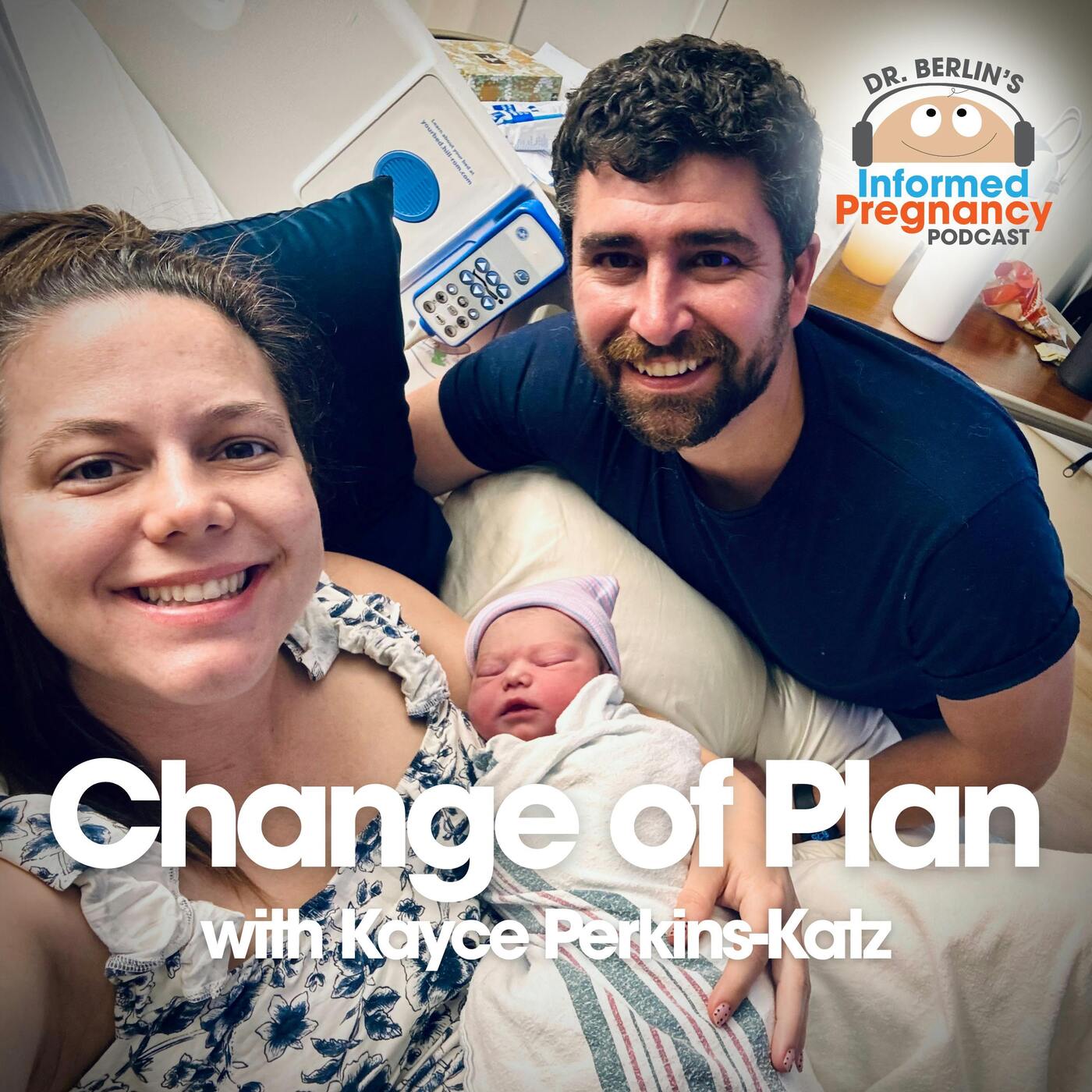
September 3, 2026 · 41 minutes · Episode 517
About this episode
Kayce-Perkins Katz went into pregnancy with a pretty common birth plan in mind. As things progressed, her view changed as she considered what her body was actually capable of and unexpected circumstances arose.
Connect with the guest:
Grow with us on IP+! Informed Pregnancy Media presents two all new intimate short-form video series following Garrett and HeHe’s real-time pregnancy journeys as they prepare for an empowered birth and postpartum experience. Each episode features weekly updates with personal photos and videos to help bring these raw stories to life, a visually dynamic guide through each mother’s emotional and physical experiences.
Keep up with Dr. Berlin and Informed Pregnancy Media online!
Learn more about your ad choices. Visit megaphone.fm/adchoices
See Privacy Policy at https://art19.com/privacy and California Privacy Notice at https://art19.com/privacy#do-not-sell-my-info.
Key quotes
“Birth has such an ancient, there's like an ancient strength, all like so many women, millions of women before us have birthed babies and you can't birth a baby that is too big for you.”
“I never felt like I couldn't handle it. That's what was really surprising to me.”
“I was feeling so much like just pure joy and ecstasy and excitement.”
“It's not scary birth. You don't need to be scared. You don't need to be fearful.”
Related episodes
- Ep. 500 The Unexpected with Dr. Elliot Berlin Part 1
- Ep. 493 In Conversation with Esther Friedman Schwartz
- Ep. 509 Therapeutic Movement for Pain and Pregnancy with Jessica Jennings
- Ep. 514 Before Baby #4 with Kara Sutton
Transcript
AI-generated transcript with speaker labels — may contain errors, especially names and medical terms. Dr. Elliot Berlin, DC appears in blue; Kayce-Perkins Katz in orange.
Dr. Elliot Berlin, DC [0:00] Today's guest went into pregnancy with a pretty common birth plan. She figured she'd get to the hospital, get an epidural, and hopefully come home with a healthy baby. But as pregnancy progressed, something began to change. The more she learned about birth, the more curious she became about what her body might actually be capable of. By the time labor arrived, that curiosity was about to be put to the test, including laboring at home, an hour-plus drive to the hospital, a baby in a challenging position, and a surprising number when she finally got checked. I'm pregnancy-focused chiropractor Dr. Elliott Berlin, and you are listening to the Informed Pregnancy Podcast.
[0:54] Casey Perkins Katz, welcome to the podcast. Hi, thanks for having me. Great to see you again. Motherhood, which was quite a journey, and yours I think took an interesting twist. But before we get into pregnancy and birth, give us a little background. Where did you grow up, and what was life like before becoming a mom?
Kayce-Perkins Katz [1:16] Yeah, so I'm originally from the Santa Clarita Valley, and I've been living in New York and Los Angeles when I was pregnant. So before that, I've been working as a school psychologist, and I'm a big soccer player. So I think a lot of before birth was just I like working with kids with disabilities, and my husband and I got married two years before, so kind of building our marriage and that foundation together, and playing sports whenever I can before my knee injury.
Dr. Elliot Berlin, DC [1:49] So how did you end up working with kids?
Kayce-Perkins Katz [1:52] I was originally working as an autism behavioral consultant, so I worked in the classroom, special ed classrooms designed for more teachers than kids, for more like moderate to severely impacted, those were kind of the old terms. And then I just found that through ADA, there was some really great maybe like skill based learning you can do, but it maybe was missing like a social emotional component, or kind of looking at a child and like the whole perspective of like all the aspects of their personality. And so I kind of got into school psychology because I wanted to be equipped to really support kids, not just behaviorally and maybe helping them learn to write, or to follow
[2:32] directions or complete a math problem, but also how to express themselves emotionally, and really begin to understand themselves and be able to communicate with adults, especially for those higher risk anxiety and suicide, the tough topics.
Dr. Elliot Berlin, DC [2:47] Wow, that's super meaningful work. And now you, just to jump ahead a little bit,
Kayce-Perkins Katz [2:54] what are you doing career-wise now? So now I'm in just a quick doctorate program for clinical psychology at Pepperdine, and I absolutely love it. It's a four-year program, but I'm completing it in five years. They were really wonderful to kind of accommodate my, me being a mom, becoming a mom in the beginning of the program. So I'm hoping to pursue a degree in pediatric neuropsychology. That's the goal.
Dr. Elliot Berlin, DC [3:19] Super cool and very meaningful work.
Kayce-Perkins Katz [3:22] Thank you.
Dr. Elliot Berlin, DC [3:23] So exposure to kids, working with kids before becoming a mom, and somewhere along the line you met Dan, your husband. How did you guys get together?
Kayce-Perkins Katz [3:32] Yeah, so we met on Bumble actually in New York. I was obtaining my master's degree at the time. And we honestly, I think we share a love for travel and he brings out this like spontaneous breath of life that I'm a little more calculated and planning. And so he's more off the cuff. And I think together we kind of make a really good team. And we met in New York right before the pandemic actually. And we went on a date and then like the whole city closed down and we didn't reconnect for maybe three or four months, I think just out of safety. And then when I was able to fly back to New York, we loved seeing each other and kept it going. Even when he lived in Switzerland for a while, we just a long distance.
Dr. Elliot Berlin, DC [4:19] Long distance. No kidding. Okay. And then how soon until you got married?
Kayce-Perkins Katz [4:24] We dated for, oh my gosh, you're really testing my postpartum. It's the dating game. It is, yeah. I'm like numbers. So we got married in 2024. So we dated for four years and we've been married for two.
Dr. Elliot Berlin, DC [4:41] And did you think you'd start out for kids right away?
Kayce-Perkins Katz [4:45] You know, I think so. I wanted at least a year of just being married and just kind of figuring out what it meant to be married and how that kind of shifted for us versus just being kind of dating and being partners. But we both knew we wanted children and it was really important to me to have energy and to be dedicated for the kids. So after a year, we were like, all right, let's start trying. And nine months later, we were blessed with a little girl.
Dr. Elliot Berlin, DC [5:15] Oh, wow. Well, nine months later, you're blessed with a little girl pregnancy.
Kayce-Perkins Katz [5:20] Yes.
Dr. Elliot Berlin, DC [5:22] So when you found out, was it a surprise? I mean, nine months is a little bit of a trying without success yet.
Kayce-Perkins Katz [5:31] Yeah, I think I was surprised. I think it was a mix of learning, ovulation, and kind of learning that path as well, finding the best time for us to try. And also, Dan being in New York or traveling for work, it's really hard to make a baby when you're not in the same place. Yeah, it's a little hard no matter what you learn about your cycle. So I was so excited when I took the pregnancy test, I actually, my husband works remote and he works New York, Switzerland hours. So he's up really early. And I like ran into his office while he was on a conference call and I was like, look, and he's like, oh my gosh, like I'm in a meeting. So I can't celebrate right now. And I was like, that's okay.
[6:15] I just wanted to let you know. So we were really excited. After the call, we got to properly kind of, you know, talk about it and celebrate.
Dr. Elliot Berlin, DC [6:22] Very sweet. And once that ball's rolling, you know, at some point, you have to think about the other end. How do we get the baby out of you? When did you give that thought? And what was the picture like for you at the beginning?
Kayce-Perkins Katz [6:36] So, you know, I don't think I actually put a lot of thought into it in the beginning. I really just wanted a healthy baby and I just wanted to be healthy. At the time, I had just started my first year of grad school. So it's the densest part of our coursework. So I think I was really invested in my learning and pregnancy kind of took a back seat. I was exercising and doing little things, trying to eat healthy. But I was really trying to make sure that I could keep up with the academic rigor while I was also learning how my body was changing. And then it wasn't until, I would say, my third trimester when finals were done, I was almost done with my first year of courses and I took that same student mentality and kind of
[7:22] plugged it into, oh, I need to learn about pregnancy. And throughout the pregnancy was listening to books and I listened to your podcast, actually. And my doula recommended me to, that's how we got connected to kind of see you and help kind of with some soreness and discomfort I was feeling in my back and shoulders. And I think we, our conversation actually sparked me to be like, oh, you don't have to just go into pregnancy and birth with, I just want my baby to be alive and I want to be alive. That can be actually assumed. You can actually have a birth that is a little bit more magical and maybe more unique to yourself. That maybe I chalked up before is like, oh, that's like my crunchy granola friends,
[8:04] that's not me. And once I really started reading and learning, because you never, for me, at least in my life, I never really was exposed to different outcomes. My mom had two C-sections for me and my brother because she had slit discs in her lower back and had to have back surgery like two weeks after. And so it was too much of a risk at the time for her to try and give birth without possibly damaging her lower back. So I didn't really have a generational questions I could even ask. And so just that student just started reading books and podcasts and my doula gave me so much support. Leslie was amazing and she offered a lot of resources that I took very late in the game.
Dr. Elliot Berlin, DC [8:47] So I had asked you, let's say early to mid pregnancy,
Kayce-Perkins Katz [8:52] what you thought birth would look like. How might you have answered? I just want to be alive and my baby to be alive. That was it. I'm okay with an epidural. I'm okay with anything. I just want us to be safe and healthy. That was it.
Dr. Elliot Berlin, DC [9:06] And then you started talking and learning and digging into a whole bunch of resources and something changed. Let's take a quick commercial break. When we come back, we'll talk about what happened during the pregnancy that took you from assuming you'd just want to be alive into maybe a different type of experience.

Dr. Elliot Berlin, DC [9:26] We'll be right back. Welcome back, Casey. We were talking about your pregnancy and how we met because you were not feeling amazing. You had some neck and shoulder pain, some headaches and things like that, that we were able to work on. And I was honored to meet you and work with you of great energy. And then when I see somebody who's young, strong, healthy, and the birth plan is I just want to live, I'm like, maybe it could be more than that. And so we talked a bit. You talked to your doula a lot. You did a lot of homework and research. And it sounds like you kind of latched onto the idea that birth could be maybe better than just survival. What kind of things were you picking up? What kind of thoughts were
Kayce-Perkins Katz [10:21] you having? Well, a few of my friends had had home births. And one of them wanted to have her birth in a birthing center. And I had just never, I don't think I would have considered any of that actually until now being on the other side of giving birth. When you said, some people like to give birth in a strawberry field, I was like, that's not me. I want there to be lots of doctors. I also have like vasovagal syncope episodes throughout my life to different triggers. Fainting. Yeah. And so when I faint, I faint and then I convulse a little bit. So it's like shocking for me, but it can be scary for other people. And I think I was really worried about having an episode during birth, especially because after
[11:14] a tilt table test that I was positive or they lay kind of horizontal and then some angle vertically, they recorded me fainting and having my heart stop for like 16 seconds. So I don't know how often that happens. All the cardiology appointments I've had, we've never really been able to like pinpoint when the heart stops or how often it does. So I'm healthy and, you know, it doesn't really impact me except in those moments. And so I knew I wanted to be in a hospital, but I didn't really understand why people had birth plans. I didn't know enough. And so once my doula really started, between you and my doula, I think you guys teamed up. I think just understanding that
[11:59] birth can be this like really beautiful experience that you can be not stressed out for and you can kind of be relaxed and grounded. I think that thought wasn't very tangible for myself. I thought birth was this really painful experience. And I started listening to a lot of, actually on your podcast and on YouTube, a lot of positive birth stories. And that really shifted my mindset and speaking to friends who had had positive experiences too.
Dr. Elliot Berlin, DC [12:30] Shifted your mindset into a vision for yourself that could be different?
Kayce-Perkins Katz [12:35] Yeah. So I started applying kind of these thoughts of, I think there was an episode on your podcast about pain tolerance, like the different types of pain management, I mean, for birth and how it affects you and your baby. And I found that really insightful. I didn't realize the possible effects that could impact breastfeeding, like the epidural or impact your baby. And I think for me, I started thinking about, okay, well, do I even want an epidural? What if I can do non-medicated pain management methods and I did, I was able to do that at home kind of before labor. And I started really learning about the importance of the chest to chest, like the skin time right after. And I think for me,
[13:22] it was less about even the fear of tearing. Like a lot of women are really worried about, you know, how bad they're going to tear and how that's going to affect their pain and their life after like postpartum. And I wasn't nervous so much about the tearing, but for me, it was like, nobody tells you how like when the baby's head comes out, like what that feels like, you hear things like it's the ring of fire or it's the worst pain you're ever going to experience. And I think my mind can probably come up with a more extreme version of what I experience just. And so for me, I think it really shifted this mindset of like, well, maybe I can go into it with all the tools that I possibly can and kind of,
[14:04] as cliche as it sounds, surrender related, like the feeling. And when I started getting more concrete answers, like when you're ready to push the like fetal ejection reflex that you feel, like I could name it. And that was really helpful for me. When I felt it, I was like, oh, my whole body almost did like a backward belly roll. Like I don't even know how to describe like this, like the push ejection feeling, but when it happened, I could name in that moment in the car actually was the first time I felt it. Yeah. And then the feeling like you have to poop because that's like when the best one to push, like timing that together, I think was really helpful for me. Leading up to birth. Did you have discussions with
[14:47] Dan about maybe trying a more natural experience and how did those conversations go? Yeah. So Dan was really supportive. He really let me be in like the driver's seat for whatever I felt was best for me. He had a really hard time wrapping his head around, you know, if this is supposed to be the most painful experience, why wouldn't you use pain medication? You know, if you have a headache, you take an Advil. And so I think he didn't understand the why, but he was really exceptional at supporting the what and how I wanted to support that. And so I joke with him because when we were laboring, I don't know if I'm jumping ahead, but if we were, when we were laboring, I had a list of like different
[15:30] remedies that were really helpful and soothing for me to try at home that weren't any pain medicine. And one of them was essential oils, but he couldn't find them in the moment. And he grabbed like a potpourri and I was like, here, here, and like sprayed it in the air. And I was like, no, no. Different oils have different effects on the mind. Yeah, exactly. But it actually made me laugh so hard that it still kind of worked and
Dr. Elliot Berlin, DC [15:58] it's a fact of like taking me out of my head and kind of more into my body a little bit. Ah, so now we recommend everybody put potpourri in the hospital bed. Or just make sure your husband knows where your essential oils are. Or that. What kind of things were you doing at the end to prepare mentally,
Kayce-Perkins Katz [16:14] physically, spiritually? I forget the name of the exercises, but I did it every single night. I had a kind of like a circuit of stretching circuit. Maybe it was the miles. I don't know. Cause I don't, I think it was a mix of miles and also just the binder, my doula gave me, but yeah, but it was a lot of like hip, like widening and stretching my groin and like my pelvis out and my legs. And I would do that every night before bed. I listened to these hypno birthing tracks that I had got from, I went to a birth class that my doula had recommended as well. And I did not think I would like them. I was like, this is going to be too fairy, magical for me, but I ended up loving them. There was this chime noise. I can't even
[17:10] replicate it, but I just be like, damn, play the chime again. It just was really beautiful. And in the moment when you're feeling new sensations, I think it was so helpful. And we listened to one track on repeat the whole, or maybe two tracks down to the hospital. I found that really helpful for my mindset. They're kind of guided tracks. So it helped me with my breathing. So I was preparing physically, I was preparing kind of emotionally and spiritually in that way. I would say I had affirmation cards around my house. Cause we also moved, right? We moved from an apartment to a house about a month before my due date. That was also super fun. But the affirmation that I held onto a lot was that like
[17:57] birth has such an ancient, there's like an ancient strength, all like so many women, millions of women before us have birthed babies and you can't birth a baby that is too big for you. Or, you know, I think that really, that strength that you can empower from like all the women before me was really impactful. And that really sat with me kind of as a mantra, almost through like, I'm just like pulling on the strength and the wisdom of those before me.
Dr. Elliot Berlin, DC [18:23] The very end, I guess, just before labor started,
Kayce-Perkins Katz [18:27] would you describe your mindset as excited, anxious, nervous, or some kind of combination? I think I was definitely excited. I think I was just open is how I would describe it. I was really open for whatever comes. It's going to be a whole new experience. And I've really reminded myself, I've done everything I can to prepare myself. And no matter what, I have a great support system. I have a great team. I felt so empowered by my medical team, my doula. Dr. Quimby and my doula are like, they've worked together before. So I think that was really helpful for me. Having you in my corner was a big relief. Whenever you had reminded me of the headaches, I forgot how bad my really bad migraines throughout
[19:15] pregnancy. But every time something hard came, I still got through it, and there was light on the other side. So I was hopeful. I was nervous, but I felt prepared and ready.
Dr. Elliot Berlin, DC [19:27] Well, with that in mind, let's take a little break when we come back. Your labor begins at home, and we'll find out how it progressed and ended. Don't go anywhere. We'll be right back. Welcome back. We were talking to Casey, and you learned a lot during your pregnancy about birth. And it sounds like you went into birth open-minded, better educated, and curious, and excited, and probably just a little nervous, like everybody. How did labor start, and where were you in relation to your due date?
Kayce-Perkins Katz [20:13] So labor started for me the day after my due date. I was due May 25th, and I gave birth on May 26th. I was at home, so I woke up around 2.30 with some very mild contractions. And I knew the first thing I wanted to do if I felt contractions was make sure I get as much sleep as possible. So that was my goal, was just to be well rested. I was really knowing that the average labor is 24 hours. I think I really wanted to have the energy to sustain. So I went to the bathroom. I didn't wake up my husband. I just went back to sleep. And I was able to stay asleep until about, I want to say between seven and eight, somewhere, 7.30, 8.30, where I woke up and the contractions were coming in more frequently. And the sensation
[21:09] was a little bit harder to ignore. I couldn't just sleep through it. And I actually remember sending a few emails that I had put on the back burner. I was like, Dan, after you walk the dog, can you help me just respond to these three things? So then I can just go to the hospital and not worry about it. So he was really helpful with that. But most of my labor, I would say, happened in the bathtub, the toilet and the bed. And it kind of, again, I love my circuit. So Dan drew like a warm bath for me. I would sit backward on a toilet with a pillow kind of so I can lay. And I got really nauseous. And there was a moment where I felt a lot of, I would say I was nervous because I felt the nausea was really similar to how I
[21:56] feel right before I faint. And I wasn't expecting if I would have an episode, I would be at the hospital, not at home. And so I had like a little, maybe like a two or three minute mental block. And I called my husband over and I was like, Dan, I was like, I had thrown up and I was like, what do I do if I have an episode? I wasn't prepared for that, right? You can never be prepared for everything. And he's like, well, if you have one, we'll deal with it. And we can go to the hospital earlier if we need to, whatever makes you feel comfortable. But you're still talking to me. I don't see you faint. I'm right here next to you. And I think just having that conversation and alleviating the
[22:35] what if moment was really helpful because I was able to stay on the toilet, facing backward and kind of take on the next contraction. For me, the contractions were pretty regular and they had like a very clear peak and a very clear drop. So I feel very lucky in that regard that I could anticipate and breathe for me. I didn't think I would do this, but I really liked the, oh, like the really low guttural. Those were so helpful. You sound so wild, but they helped me so much as just kind of regulate the tenseness that might have built otherwise because I was really focused on the tone. And if my tone started going higher, I could regulate it back down. And that really helps me just try and be as
[23:27] stress-free and calm as possible. So that was really, it was bath, toilet, bed. And
Dr. Elliot Berlin, DC [23:35] I learned don't move during a contraction. That was, yeah, that's a good tip. As things progressed,
Kayce-Perkins Katz [23:43] what was Dan's role? And if the doula joined you at some point, what was Leslie's role? Yeah. So Dan was timing my contractions and also just grabbing anything that I needed in the moment. There was a moment in the bathtub, my, maybe my chest was feeling a little cold and so I had him grab me like a rag so I can wet it and put it on me just while I was kind of laboring on my back and then I'd rotate and kind of labor on all fours. So he just really supported me if I was hungry, made sure I was drinking water. I also asked him, I tend to hold a lot of tension in my eyebrows and my jaw. And so I'm not always aware when that's happening. And so I just asked him
[24:29] to gently nudge me if I had, you know, my eyebrows kind of pursed or my teeth clenched, if you could just remind me I was doing that so that I could kind of just be mindful and really take that moment to like kind of pay attention to that part of my body and de-stress it and relax it. And I think that also really helped me in labor because I was able to do that with my face, my shoulders, my jaw, like I said. And so just those little paying attention to those little things was something we practiced before labor. It was really fun, like awkward to practice because I had to like make different faces, but he was really, really great with that. And then Leslie, we knew
[25:10] things were ramping up when she asked him to take a picture of my butt, like my butt crack. And he thought it was a joke. He was like, really? But I guess there can be like a purple line that can indicate dilation. And so she wanted to see where I was with that. And I was like, please, whatever information I can give you so you can give me information is really helpful. And so at that moment, she was telling Dan, you don't need to rush, but you should get your things like make sure you're on your way soon to the hospital. And I kept telling my husband, I was like, no, I don't want to get to the hospital too early. A lot of the reading and kind of the information I'd gathered really said that
[25:52] labor can be stalled in the car. And hospitals aren't intuitively this like warm, cozy kind of nook like my bedroom is. And so when you kind of get out of this relaxed state into this kind of like, I would say more of that like stress, fear, kind of state, you're not as relaxed anymore and it can take you out of the flow, I guess. So Dan basically had to be like, no, Leslie's saying we need to go. And I think it's a good idea. He had to really convince me. And I think I'm glad he did. There's also the long car ride. You're not
Dr. Elliot Berlin, DC [26:27] close to the hospital. Right. Sometimes if you wait too long, not only could the baby come in the car, but the more intense part of labor could happen in the car, which is not the greatest place to be trapped while that's happening. So it sounds like eventually you guys decided to go. What was labor like in the car?
Kayce-Perkins Katz [26:49] Actually, pretty great. So Dan put a like, we have a four inch mattress topper we use for one of our spare, like our pullout couch. And he had folded that and put the seat down. So I was laying, you know, parallel with the car, but I was able to kind of be surrounded by this like smush and this comfy, almost like a bed. And it was a little product coming here. Yeah, there you go. I needed help getting up there because I'm really short. But once I was in, you know, I had a pillow, my water bottle. And because there was also so much, I did feel pretty safe. I really told Dan, I didn't want to speed or, you know, I don't want him to take any risks of like running lights or anything.
[27:32] And so I would say it was really smooth, even though he took the back way instead of the freeways, which I was like, Oh no, there's going to be more bumps. What are you doing? But it ends up working out just fine. There was one turn, I think it was like a yellow and he was trying to make it. And I remember that contraction being the most painful out of my entire birth experience. I think because I had to brace, you know, I just had to like tighten as the car kind of moved. And I may have been a little sharp in my, let's not do that again. Like just stop, you know, it's not worth it. But other than that, I actually highly recommend the mattress topper in the car.
[28:11] Really helped me stay calm and cool and comfy.
Dr. Elliot Berlin, DC [28:14] When you get to the hospital, they left the check and see where you are. Did you have a cervical check soon after you got there?
Kayce-Perkins Katz [28:23] Yeah. So they greeted me with a wheelchair in the parking lot and I went straight through triage and I didn't have to do any paperwork. They just, they put me in a room and I used the restroom as soon as I arrived and they checked me and I was seven centimeters, which I was in complete disbelief. What did you think it was going to be? Like three. Okay. So that's a nice surprise. Yeah. It was a great surprise. I couldn't believe how quickly I was progressing from my first pregnancy. And I think from now on, I was just in constant disbelief because even when my doctor was, you know, gloving up and get, I was like, no, really? Like maybe he's going to come right now. I was like, but this is an average, you know, I was like,
[29:11] statistically, this is not normal. I just couldn't wrap my head around it.
Dr. Elliot Berlin, DC [29:15] How were you faring through the surges, the contractions at seven centimeters?
Kayce-Perkins Katz [29:22] You know, I think that they were, they were pretty consistent. I think what helped me was the changing positions. So I would kind of be on my side or my back or on all fours, just finding what was comfortable to then kind of sit in. And at this point, I think people were like, do you want music? And I was like, no, I want darkness. I want the birth comb really helped. So I squeezed, apparently I'm a very strong little person. So I was almost breaking my doula's hand and she's like, I have this birth comb you're going to love. So that, I think that really just being able to focus the poking into my hands really took my head away from maybe the pain. And even when I was feeling back labor,
[30:09] which I didn't realize that that was a little bit more intense of a feeling than front labor. Well, my doula was really eager to help me switch. She was like, you know, I think we can reposition the baby if we do some movements. And I was like, I don't think I can do that. Like, I don't think I can move. And she was really patient and encouraging. And I did some, I guess, just like, pelvic thrust kind of in the air a few times that she had instructed and kind of slow danced with my husband. And that really helped turn the baby to stop with the back labor. Oh, that's nice. Yeah, that was amazing. So glad she was there. But it was also just for me, it was making sure I was breathing
[30:51] the guttural sounds, having Dan tell me where I was tense again, and just kind of like scanning, doing a lot of like body scans, where did I feel tension? If I couldn't handle, I guess I never felt like I couldn't handle it. That's what was really surprising to me. Every urge and every time I went up and came down, it was predictable, it was consistent. And I had everybody I needed in that room. And I even asked myself when she was, I already had felt her head, which I know is like too late for an epidural. But I was like, do I need one? I like thought about it. I was like, I wonder at what point is like the point someone would ask, you know, because I don't think I ever felt a pain that I felt like
[31:30] I couldn't tolerate or handle. And even, you know, when her head when she was crowning, I remember my doula after I had given birth, she was like, Casey, she's like, you know, for most people, that's like the most pain ever. And she's like, and you didn't even change, like your demeanor was very just like breathing and, you know, kind of rocking and squeezing. And she, I told her, I was like, you know, that wasn't actually the worst pain I've ever felt. She's like, well, really? And for me, the worst pain I ever felt was after my ACL recovery, I had some scar tissue built up and I was told I needed to straighten my leg because my knee was naturally staying curved. And it went straight and putting ice packs and
[32:16] weights and like pressing down on my knee. That to me was like the most pain I've ever experienced. That was, and that was only like 30 seconds or a minute at a time. And to me, that felt worse than actually have than childbirth, which is not the common, I would say experience. I was pushing for you. Pushing was, it was really smooth. I pushed for 30 minutes. I think once I found my rhythm, my doctor was counting of how long I should hold the push, which I think was really helpful. I learned that I needed to find when the fetal ejection reflex was happening and then line up my push with that. And for me, that was the key. At first, I think I was maybe following cues from my doctor when to push and I realized
[33:05] it maybe wasn't as effective because it wasn't at the time my body wanted to push. And so once I kind of, I was communicating like, no, I'm not pushing now. I'm going to wait because your body like naturally gives you breaks, which I think is you lose a little bit with an epidural is I would have before they would ramp up or increase. My body would give me some like lower level contractions that I could breathe in and get through. And then they would come in a little bit more intensely. And when that ejection, like reflex came and I pushed with her counting, that's when she was moving really quickly
Dr. Elliot Berlin, DC [33:41] through the birth canal. Wow. That's really good feedback because I think a lot of times, even if you're unmedicated and you do feel those things, people around you just have a way of wanting to coach you and guide you and tell you what to do. And sometimes if you slow down and just listen to your body to tell you what to do, it's more potent. And sometimes we accidentally get you pushing before your body's really ready just because you're 10 centimeters or have you push on a timeframe that doesn't work well with the natural inner workings of what your body's trying to do. So it's really powerful. You mentioned earlier in the podcast that you weren't sure what that moment would be
[34:24] like when the baby comes through the ring of fire that everyone talks about and you did it without external medication. So what was it like for you?
Kayce-Perkins Katz [34:33] For me, I think the best comparison is like that feeling when you really have to poop and just like you're not supposed to push when you poop, right? But you do want to push when you're having a baby. That's the feeling and that's the urge. I felt a lot of tension and pressure when she was crowning, but I wouldn't describe it as like a burning ring of fire. I think somewhere I read to mimic the feeling you could like take your fingers and pull your mouth. And that's like a way to replicate the sensation. Because for me, I'm so muscle memory and I'm really in tune with how my body feels. I think I was trying to replicate any feeling I could. And that actually for me was not
[35:15] felt at all. It just felt like an extended deep pressure. But it was again, like it was tolerable for me. I wouldn't say I was like crying with like pain. I would say I was more experiencing like, oh my gosh, I'm going to be my baby soon. I was feeling so much like just pure joy and ecstasy and excitement. And I got to reach down and touch her head, which I highly recommend anybody. My doctor was like, do you want to? And I was like, yeah. And I was still able to talk like I was still able to move. I was tired. I learned that the pushing I think is where I imagine where people's energy really gets depleted. And so really kind of aligning the pushing really helped me conserve energy.
[35:59] Because that's when I started feeling weak, like my body was just like getting tired.
Dr. Elliot Berlin, DC [36:04] What was the moment like when you finally got to meet her and hold her?
Kayce-Perkins Katz [36:08] Hmm. It was a mix of like, just so much happiness and warmth. I was a little nervous because she came out very limp and she wasn't crying right away. So as much as I was happy to like touch her and have her be on me, I also, it was like a juxtaposition of like something's, you know, she's something's not right. But then the minute they were like, we're going to pick her up to kind of arouse her a little bit more. They picked her up and then she started crying. And so I think that was the moment when any other like uncertainty or maybe an anxiousness kind of just like dissipated. And I really, I just got to lay with her and hold my baby and she was crying and it was just so cute. And even when they were sewing
[36:55] me up, they numbed that part, but I didn't feel it. I declined the pitocin that kind of helps your uterus like, or helps the clotting. I started breastfeeding as soon as possible. It was kind of crazy. She'd latched on her own, really on my left. I just kind of did a like burger C cup and brushed my nipple to her nose and mouth. And she was able to kind of latch and start sucking maybe within like the first 30, 40 minutes. I don't think I had milk at the time, but it was, I just remember feeling like there's no, that feeling is hard to describe. It's like just this elation and warmth. And my husband and I were together and that golden hour was just magical. Even coming home and smelling her head. Yeah.
Dr. Elliot Berlin, DC [37:42] Golden was just, ugh. Like I said at the beginning, it was a real honor to be added to your team in some role and to work with you and meet you. You have really wonderful, positive energy and it's great to be around. And I'm so grateful for everything that you shared on the podcast today. I guess my question would be for someone who's just kind of towards the beginning and thinking about their options for birth, or in the same light, if you could tell, you know, early pregnancy Casey something, a piece of advice now that you've been through the journey, what would you say?
Kayce-Perkins Katz [38:20] Yeah, I think I guess what I wish I would have embraced more and believed is, you know, it's not scary birth. You don't need to be scared. You don't need to be fearful. I think I tend to be a little bit more anxious with certain things and kind of worried. And I think for me, birth, it was so beautiful and it was intuitive. My body knew before I like intellectually understood. I think that's where the reading and the podcast really like helped compliment like what my genetic and body like already knew what to do and making sense of those feelings. And like the sensations really helped just with that confidence and that kind of surrender that letting go of what I don't know and what will come and just embracing that.
[39:09] I know my body and I know my baby and it's the moment you get to meet your baby. And so I think that's what I wish I would have known. It doesn't have to be scary. I think I was so worried about how much is going to hurt. And I wish I would have spent more time maybe reading a little bit more about the sensations your body feels and also planning for postpartum. I think we're so worried about, you know, I was so focused on birth that I think it's important to make some time for the changes you experience kind of shifting in parenthood. I wish I would have spent more time there.
Dr. Elliot Berlin, DC [39:43] We could and probably should do a whole episode on postpartum. But for now, I really appreciate you again coming on and sharing so honestly. And I wish you the best of luck and full enjoyment in all the phases that come. And should you choose to do it again? We'll look forward to perhaps recording what it's like the second time around. Yes, I definitely want to. Thank you, Dr. Berlin. Thanks for having me. And thanks for being a part of my team. At home. Thanks for listening to the Informed Pregnancy podcast for more pregnancy and parenting information. Just like this, visit us online at informedpregnancy.com.
Want more pregnancy + parenting? Start your FREE TRIAL of Informed Pregnancy+ and get access to all our curated pregnancy and parenting content — original series, iconic birth films like The Business of Being Born, prenatal workouts and more.

0 Comments