
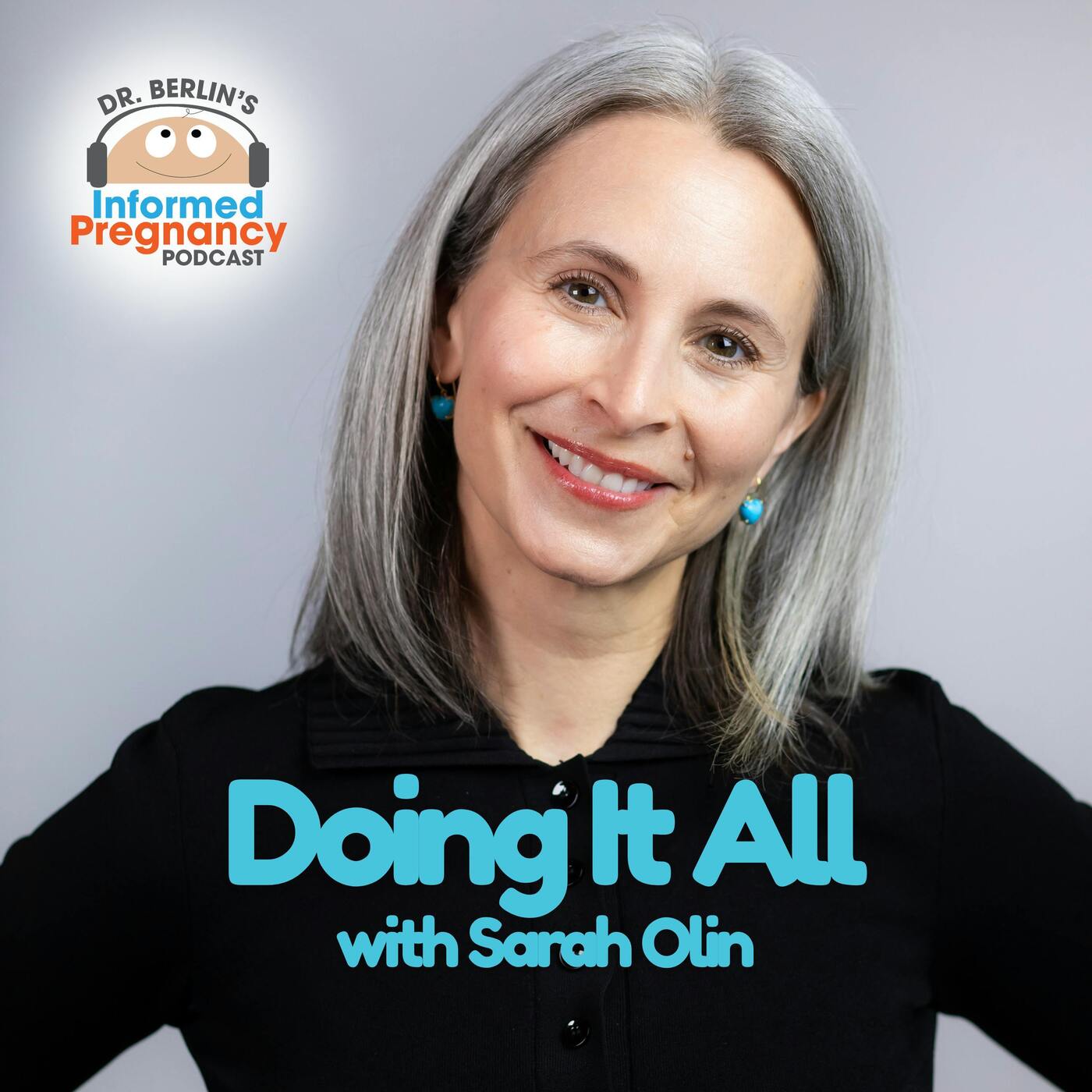
August 27, 2026 · 42 minutes · Episode 516
About this episode
Even after of years practicing and teaching mindfulness and self care, Sarah Olin’s preparedness for the emotional and physical demands of motherhood was challenged in many ways.
Connect with the guest:
Grow with us on IP+! Informed Pregnancy Media presents two all new intimate short-form video series following Garrett and HeHe’s real-time pregnancy journeys as they prepare for an empowered birth and postpartum experience. Each episode features weekly updates with personal photos and videos to help bring these raw stories to life, a visually dynamic guide through each mother’s emotional and physical experiences.
Keep up with Dr. Berlin and Informed Pregnancy Media online!
Learn more about your ad choices. Visit megaphone.fm/adchoices
See Privacy Policy at https://art19.com/privacy and California Privacy Notice at https://art19.com/privacy#do-not-sell-my-info.
Key quotes
“And I meditated and asked the baby, what should I do? And I heard, don't move me.”
“But one thing that we beat the drum of all the time is wellbeing, wellbeing, wellbeing, wellbeing.”
“One of the antidotes to guilt is curiosity.”
“I feel like moms are the thermometer, the thermostat of the home, right?”
Related episodes
- Ep. 512 The Fourth Trimester with Eboni Nash
- Ep. 493 In Conversation with Esther Friedman Schwartz
- Ep. 514 Before Baby #4 with Kara Sutton
- Ep. 500 The Unexpected with Dr. Elliot Berlin Part 1
Transcript
AI-generated transcript with speaker labels — may contain errors, especially names and medical terms. Dr. Elliot Berlin, DC appears in blue; Sarah Olin in orange.
Dr. Elliot Berlin, DC [0:00] Today's guest spent years practicing and teaching mindfulness, meditation, and self-care. So, you might think, she was unusually well-prepared for the emotional and physical demands of becoming a mother. And then she actually became one. A baby who stayed breech changed the birth she had envisioned, a difficult recovery challenged some of her expectations about motherhood, and trying to balance a new baby with her own needs and ambitions eventually forced her to reconsider an idea so many parents struggle with, that somehow, if we're doing it all right, we should be able to do it all. I'm pregnancy-focused chiropractor Dr. Elliott Berlin, and you are listening to
[0:41] the Informed Pregnancy Podcast. Sarah Olin, welcome to the podcast.
Sarah Olin [1:00] Oh my gosh, Dr. Elliott, thank you.
Dr. Elliot Berlin, DC [1:03] I'm thrilled to be here with you. I'm thrilled to be with you.
Sarah Olin [1:06] You're like a dynamo of energy and information. I've got some.
Dr. Elliot Berlin, DC [1:09] You've got lots of both, and I want to tap into both of them. Before we talk about motherhood, take me back to the beginning. Where did you grow up, and what was your childhood like?
Sarah Olin [1:20] Oh my gosh, I grew up in a small town called North Smithfield, Rhode Island. It was a beautiful, idyllic New England town. There were a hundred kids in my graduating class, great parents. They split up when I was 11, but they were so fabulous about it. They never said a bad word about the other. Amazing, I'm the oldest of three. Grew up with a lot of family around me.
Dr. Elliot Berlin, DC [1:46] Wait, so you already had two kids.
Sarah Olin [1:50] I already had two kids, and my sister is 18 months younger than I am. Oh, wow. Yeah, so we're-
Dr. Elliot Berlin, DC [1:56] I mean, I sort of say that a little jokingly, but a little seriously, and then especially if your parents split when you're 11 and they're younger, does that put you in a little bit of like a support role for them?
Sarah Olin [2:08] You know, it was really interesting because my mom was a stay-at-home mom until my parents split up. And when they did split up, that definitely put me more into, I remember she went to work and it was okay, put the meatloaf in the oven, set the table, get everybody ready, that sort of thing. But she, I feel like I won the lottery with both of my parents, and they're very different people, very fun and interesting. So yeah, they're great and very human.
Dr. Elliot Berlin, DC [2:39] Okay. We're allowed to be human. It sounds wonderful and also like maybe you just had a, at a slightly younger age than other people become more independent and look out for yourself.
Sarah Olin [2:51] Yeah, I think I did grow up fast and I think I always had, I remember my grandmother when I was a kid, I was serious, I was a very serious child, and she'd sing a song called Be a Kid that she made up only that one line, be a kid, be a kid. She'd be like, Grandma, I'm going to be the teacher and you're going to be my student. I'm going to teach you some math. And she's like, oh, my God, this child. So be a student or whatever else I feel like, you know, today.
Dr. Elliot Berlin, DC [3:21] Yeah.
Sarah Olin [3:22] Okay. And you started working pretty young. Tell me about that. I did. I mean, you know, it's funny. I was thinking about my teenage summers compared to my daughter, who's now 14. We went on a three week trip to Europe this summer. I didn't get on a plane till I was in college. And I remember I had my first nannying job when I was 12 or 13. There was a family up the street that owned an HVAC company and I was taking care of three kids from eight to five. I mean, it was just normal. People worked and did stuff. And then I worked in a restaurant and it was just part of what you did. And I was, you know, expected to perform all over.
Dr. Elliot Berlin, DC [4:04] Really performing. You were studying communications at some point, and then you moved to New York to pursue acting.
Sarah Olin [4:12] I did. I did. And, you know, it's funny because I got a great transition. It's a fabulous transition. I am my own horn. There you go toot toot. I studied communications and women's studies in college, and I always wanted to be an actress. And I remember talking to a professor that I trusted and loved so much. And she said, don't do it. It's a terrible life. And I said, okay, I want to make a lot of money and have a real job. And then I eventually got back to acting and I wasn't, you know, it's funny, I look back at my time when I was acting and I was finding yoga meditation, all of that world. And I was teaching and I was started training teachers and I was very
[4:56] committed to that practice. And it brought me so much joy where I found acting just didn't bring as much joy. It wasn't as good at it or whatever it was, but I did do a fabulous hummus commercial that shot in Greece.
Dr. Elliot Berlin, DC [5:11] Now that was a real thrill.
Sarah Olin [5:12] Oh, wow. Yeah, that was kind of receiving a lot of hummus. No. No, I didn't, but it was a fabulous trip.
Dr. Elliot Berlin, DC [5:22] I will say that. That's nice. What about yoga and meditation was like fulfilling for you? What did, what did you get out of it?
Sarah Olin [5:32] It's a cousin to the work I do now where it really helped me just access the parts of myself that I liked the most. I could be less reactive. I could be calmer and more joyful, have a better experience. If I meditated and took care of myself.
Dr. Elliot Berlin, DC [5:52] And it's something that you were seemingly using successfully for yourself,
Sarah Olin [5:57] but then also teaching other people. Yeah, I'm very entrepreneurial and I had a business in New York called relax already. There's nothing more New York than that relax already. And we went into big companies and we taught people meditation around a conference room table.
Dr. Elliot Berlin, DC [6:17] I love the name, but it's also like, it kind of gives insight into how we think and work because I do chiropractic adjustments for a living. Sometimes people get nervous and I sometimes feel like when I say, okay, take a deep breath and relax. As soon as I say the word relax, they just tense up every little muscle in their body. And I'm like, okay, it's not as easy as just saying relax or relax already, you kind of have to work at it and you had the tools to be able to do it and you shared it with other people and taught them how to do it and teach others how to do it, which is kind of a wonderful thing. I feel like if that's spread across the planet, you know, cable news
[6:53] might go out of business. People would just be nice to each other. Yeah.
Sarah Olin [6:57] There's some data to support that too. So yeah, shark tank.
Dr. Elliot Berlin, DC [7:02] Okay. Now back to you. Um, how did you and meet your husband and where,
Sarah Olin [7:08] Oh my gosh. So this is a great story. So I had just been in India for a month doing a big meditation course and I came home and I used to work Sunday afternoons at a bar in Brooklyn to accommodate all my acting and yoga teaching lifestyle. I would work at Sunday afternoons at this bar in Brooklyn. And he walked in one day and said, I'd, he wanted to watch the tar heels. He went to UNC undergrad and he wanted to watch the tar heels. And I said, I just put on NASCAR for this guy, but if you come back later, I'll put on a show for you. I don't even know what made me say it, but he came back. He said, I think we have a lot in common. I said, Oh my God.
[7:52] Yeah. So I said, listen, if you want to go on quick, well, I mean, yeah, we chatted the attraction, just the initial connection. Yeah. He just, you know, and this was a great confusing thing for many a sweet man back in that time. I was literally paid to be nice to people that it was my job to be friendly and I'm giving them drinks. So it's like, it can be a very confusing experience for people, but I was in a very happy place. I had just meditated for a month straight basically. And we started chatting and he said, I'd love to take you out. And I said, okay, if you really want to take me out, because obviously as a bartender, I've been to this
[8:32] party before I said, call me three weeks from today at three o'clock on the dot. If you do that, I'll go out with you. And he did.
Dr. Elliot Berlin, DC [8:39] Wow. This is exciting. Okay. Do you remember where you went on our first day?
Sarah Olin [8:45] I do because we're supposed to go out to dinner and I had shot a commercial and crazy enough in Rhode Island that day. So I'd gone from New York to Rhode Island and I was coming back and I was exhausted. And I said, why don't we just do takeout at my place? And he was like, wow. I'm like, no, it's not that kind of party. It's literally just takeout literally, but we did and we hit it off and we had a nice little smooch and that was it. And then the next week was another dinner out and you know, from there onward. And I remember I was covering my friend's yoga class that was at 10 30 in the morning and you're only getting the elderly or the unemployed that
[9:25] come to a yoga class at 10 30 in the morning. And he showed up with his little yoga mat. I said, this guy is going to do anything for me. And he did and he still does to this day.
Dr. Elliot Berlin, DC [9:36] That's amazing. Yeah. What a great story. No, you got married and at some point you were like, let's have a kid.
Sarah Olin [9:44] Well, yeah, we were, we found out I was pregnant the day I got home from my honeymoon and yeah, I remember my best friend calling me saying, how was it? And I said, lady, we got big a fish to fry. I'm pregnant.
Dr. Elliot Berlin, DC [10:03] Is it something you had talked about or?
Sarah Olin [10:05] Yes, totally for sure.
Dr. Elliot Berlin, DC [10:07] So you're both on board.
Sarah Olin [10:08] Oh, totally on board. What was pregnancy for you? Uh, it was trimester. One was brutal and I just felt like trash every day. So nauseous, exhausted 24 seven never got sick once by the grace of some greater being never got to me.
Dr. Elliot Berlin, DC [10:30] You didn't throw up. You were just never nauseous the whole
Sarah Olin [10:32] time.
Dr. Elliot Berlin, DC [10:33] Exactly. Oh, I don't know which is better.
Sarah Olin [10:36] I know. And I was just dead dog. I mean, I would sleep 12 hours and just, I could, I felt like I had just run three marathons and then the second trimester started. I'm like, Hey, Hey, I got a little energy going. Yeah. I mean, and then in the third trimester, my daughter went heads up and that was tricky because, you know, having a really big yogic background. I mean, I was a geriatric pregnancy at a mean 36, just over the border, just over the border. And I really, exactly. I mean, the youngest of the old people. Uh, and I was very committed to, you know, I wanted a natural, but, and this was the most important and all the things. And I mean, I've heard a lot of people
[11:29] reference on the show, the business of being born that documentary, Sandy Woods was my midwife. Dr.
Dr. Elliot Berlin, DC [11:36] Marietz delivered my daughter.
Sarah Olin [11:37] Oh, wow.
Dr. Elliot Berlin, DC [11:38] I mean, wait, so that was your mindset? Like when you thought about birth, when you thought about labor and delivery, you were thinking in, like in bathtub or you're thinking hospital with a doctor because you're over 35 or what's
Sarah Olin [11:53] our plan was the birthing center at Roosevelt hospital, Dr. Woods. Everybody's on board and she was breech. And Sandy said, we don't deliver breech babies here. All right.
Dr. Elliot Berlin, DC [12:06] We're going to get to that in segment number two, see what happened, but during the first trimester out of curiosity, were the sort of mindfulness things, yoga things helpful at all for coping?
Sarah Olin [12:21] Oh, for sure. Absolutely. You know, I remember, you know, being in New York for 10 years and my teacher was fabulous. And we were so close and, you know, she was very practical and down to earth. And she said, sorry, you just have to rest. You're tired. You rest. That's what you do. And it really gave me permission to rest. I did my best. And, you know, I was really fortunate because again, kind of running my own show.
Dr. Elliot Berlin, DC [12:46] And what was your plan for the future career wise? Were you planning to continue the things that you were doing?
Sarah Olin [12:56] That's a great question. I was pregnant with Mira. I'm still doing the meditation and big companies situation. And I said, I know there's more. I know there's something bigger. I'm going to be a therapist or guidance counselor, some kind of helper. So my plan was, and I was researching graduate schools to go back to school. Okay.
Dr. Elliot Berlin, DC [13:17] Let's take a little break here. When we come back, we'll talk about the fact that your daughter settled into a breach presentation and see how that impacted your birth and maybe eventually your career. We'll be right back. Okay.

Dr. Elliot Berlin, DC [13:43] Welcome back to the informed pregnancy podcast. We are talking with Sarah Olin. Okay. So yoga, meditation, this great energy, this natural birth mindset in a birth center attached to a hospital, just on your own steam, on your own power, it's going to be great. And then the baby's breach. And by this point, very few doctors and midwives are delivering breach babies. And so you have, I guess, two choices, get your baby into a head to home position or have a C-section, which is the other side of the birth plan, like total opposite spectrum. Did you do things to try to encourage head down positioning?
Sarah Olin [14:21] Um, Dr. Elliott, I did literally everything. You name it. I did it. Everything. Frozen peas on the belly. I laid on an ironing board upside down. I mean, even has an ironing board anymore. Literally. I mean, we probably bought it for that.
Dr. Elliot Berlin, DC [14:38] I think it should be the breach board. That is how they market it now.
Sarah Olin [14:42] I did acupuncture, moxibustion. I worked with the chiropractor, one of the top three in New York City. I did everything. Earphones on the baby, prayed, baby, move, you know, I mean, I went to the YMCA. I was like a beach ball and my husband's trying to hold my legs up and I'm crying. It's not, I mean, you know, I did everything. And ultimately it wasn't and I remember Sandy saying, do you want to do the external version? The external version. And the day before it was scheduled, I was at my sisters in Rhode Island and I was meditating and praying and I said, what should I do? I don't know. And I didn't think I was, they had hinted at, I wouldn't be a great candidate
[15:28] for that external rotation because there wasn't a lot of fluid and I was small and this, that, and the other one. And I said, okay. And I meditated and asked the baby, what should I do? And I heard, don't move me. And I called and canceled. And I said, we're, unless she moves, we're going to have a C-section. Yeah.
Dr. Elliot Berlin, DC [15:48] I mean, I, in a first time mom, your odds of the baby turning or less than 50% to begin with, and then certain things will make it even lower, like having low fluid or your placenta in the front or other things like that. And so I think there's no right answer. There's no wrong answer really on whether to do it or not. It's just your own gut feeling. And your baby was telling you, no, I don't want to turn. So that really changes your birth plan to the total opposite end of the spectrum. Instead of being super present and active, you know, you're, it's more of a passive birth and someone does it for you and their surgery involved. What was that decision like
[16:24] when you realized that's, I'm shifting from A to Z on the birth plan. And then how did it actually go down?
Sarah Olin [16:31] You know, it's funny because before I made the decision, I remember being in my birthing class and they asked, you know, what's the worst thing that could happen to you here? And I said, having a caesarian birth would be the worst thing. And, um, first of all, I was wrong. And second of all, it wasn't true, but in my mind, because of, you know, where I was coming from and my orientation towards it, when I found out she was breach and I even remember when it happened because I remember being in the shower and feeling this crazy movement. I was like, Whoa, that was so groovy and it was very, you know, sort of interesting and thinking something big just happened.
[17:12] And, um, yeah, when I found out officially that she was, I said, okay, I'm going to do everything I can. And what's most, you realize really quick, what's most important. And it was that this child is delivered in a safe and healthy way and that I am safe also because, you know, I'm 36. I've never done this. It's important.
Dr. Elliot Berlin, DC [17:35] Yeah. It's a shift in paradigm. When you understand what's most important. Um, did you know her name
Sarah Olin [17:41] was going to be Mira?
Dr. Elliot Berlin, DC [17:42] No, no. Cause then you could have said Mira Mira on the wall. Tell us how you'd like to be born.
Sarah Olin [17:52] Exactly. I just said it without the name, but it was my pelvis. Will your head fall?
Dr. Elliot Berlin, DC [17:59] Please go south child. What was the cesarean
Sarah Olin [18:03] birth like for you? I remember the day perfectly because it was, we had to be at the hospital, maybe around 11. It was scheduled for the afternoon and we went to my teacher's studio. My husband and I meditated for a couple of hours. I couldn't eat. We went over and I remember being in a holding area and there were all women in active labor, you know, and I'm sitting there. I'm like, oh my gosh, this is so wild. And then I had to go and get all prepared without my husband. Because, you know, when they're giving you the
Dr. Elliot Berlin, DC [18:36] epidural, it's a weird
Sarah Olin [18:38] custom to kick out your support person, but very strange, but I'm also exceptionally good at getting support. So I'm like, Hey nurse, come stand here and hold my hand.
Dr. Elliot Berlin, DC [18:48] Oh, good for you.
Sarah Olin [18:49] Oh yeah. Oh, and the dentist. I'm like, all right, everybody, this is how it's going to go. Yeah. Action. Yeah. You hold my hand. You say one, two, three, and try this hummus. You're going to love it. Yeah. Y'all says it's delicious.
Dr. Elliot Berlin, DC [19:09] Okay.
Sarah Olin [19:09] So, and then what about
Dr. Elliot Berlin, DC [19:11] the actual procedure?
Sarah Olin [19:13] So the procedure we go in and I was so lucky because a friend of mine from yoga was a nurse. She was my nurse that day. I knew Dr. Moritz. I thought he was great. They were playing soft music. They had dimmed some lights. I mean, I really got the best sort of experience. It was the best it could be versus I wanted to be chanting the whole time, you know, the whole meditation situation. So they had the music. They had the lights and my husband was supposed to come around to this one side. And that was the side with the IV in my hand. I wanted him to be on the other side. So he comes over and he knocks down all this stuff. So, you know, it was a whole thing.
[19:57] And two minutes later, you know, he pulls the baby. He says, baby, baby, baby. I do remember bouncing around a little bit because they were tugging so hard. And I was so lucky because he's a very talented doctor. And I had no problems. And then Matt came over and I said, go over to the baby, go over to the baby. And they brought her over to me. And then we were off to the races. But it was my sister had had a cesarean birth. My niece is six or seven months older than Mira. And I remember asking her, how is it? She's like, it's not that bad. I'm like, OK. And then a few weeks later, I'm like, why did you tell me that? And she said, I didn't want to scare you.
[20:43] I'm like, OK, well,
Dr. Elliot Berlin, DC [20:45] no points for honesty. OK, a couple of questions here. Number one, did you learn why the baby had been breached?
Sarah Olin [20:53] Well, I don't know, but I do know Dr. Mariette said the cord was wrapped all around her neck.
Dr. Elliot Berlin, DC [20:59] So if it's more than once, especially, you know, makes the cord short and very hard to move around. Yeah, so likely that. Number two, what was physical recovery like from your cesarean birth? And what view did you have of postpartum? Have you given it any thought what it might be like? And then how was actuality compared to that?
Sarah Olin [21:22] No, thank you, God. I didn't think of it. I think I was just so, you know, in the moment and I had bigger fish to fry with like in my how is this baby coming out? I was very focused on turning her, but it was a surprise and I had some. It was just so intense. You know, you're cutting this major abdominal muscle and it was really painful. The first few days were brutal. I mean, we paid for a private room and this was 14 years ago. It was a thousand dollars
Dr. Elliot Berlin, DC [21:58] a night back then.
Sarah Olin [21:59] Wow. Out of pocket, right? Because they're not, you know, go stay with someone else. They're not putting you in a private room unless you're paying for it. So it was tough. My mom came. She was incredible when we went home. And I remember, you know, being on medication, I was having so much trouble breastfeeding like so many women. It was rough. It was hard. I was exhausted, of course, and sore and all the things. And I had this. And I don't know if a lot of women have this. I would shake, shake, shake, shake, shake and get really cold. And my husband would have to lay down on top of me and just try to settle, you know, settle me down. It was really strange.
[22:45] And I I was spoiled. My acupuncturist came to the house the next day and every other day for a week or two, you know, to try and help things move from a healing perspective. But it was tough. But after a week and a half, two weeks, I was feeling much better a month. I'm feeling like a million bucks.
Dr. Elliot Berlin, DC [23:07] Well, I mean, that's like a reasonable trajectory, probably what a lot of people experience.
Sarah Olin [23:13] Yeah.
Dr. Elliot Berlin, DC [23:14] What did you think would happen after, you know, four or six weeks? Just in general, Cesarean or not, like, what was the plan for juggling motherhood and all the other things you were already juggling?
Sarah Olin [23:27] Yeah, because my my husband's work was flexible, we had a friend who was a babysitter and we were just piecing it all together. Now, when I decided that I was going to go into a pretty intensive coaching program in New York and we were moving to Charlotte, that's when, you know, we moved to Charlotte nine months after my daughter was born, North Carolina from Brooklyn. And my in-laws are here, my sister-in-law, niece and nephew. So we had a lot of family and support here. And it was very intentional and we're like Rhode Island, North Carolina, Rhode Island, North Carolina. And the weather went out because we had just been, you know, battling New York winters for 10 years.
[24:12] And we've been in North Carolina ever since. And it's just been really, really good to us.
Dr. Elliot Berlin, DC [24:17] So you're moving away from family.
Sarah Olin [24:21] My family, yeah. Oh, moving away from family. And closer to my husband's family.
Dr. Elliot Berlin, DC [24:26] OK, and you're traveling for coaching. Is that coaching that you're on the receiving end or you're becoming a coach?
Sarah Olin [24:35] I was becoming a coach. And this was, you know, way before COVID. So it was all in person. And I was flying back to New York once a month. I did that for a year. And I fell in love and I became an apprentice with that group and then eventually a trainer. So I did that travel for six or seven years.
Dr. Elliot Berlin, DC [24:54] Well, that's intense with the little one. How was that juggle for you? Just taking care of a baby and taking care of your other baby. The career.
Sarah Olin [25:03] Oh, my gosh, it was a lot. You know, it's funny. If I did not have the husband that I have, who is so supportive and just a true, true partner in parenting, I wouldn't have been able to do it. And my in-laws who I mean, every weekend that I left, my husband packed up Mira and they headed straight to my in-laws. He had it made. He's got his mom cooking. I mean, taking care of the baby. I mean, it was wonderful. They were all so close. My husband and my daughter are so close because of it, I believe. But it was hard. There was a moment. She was she was probably 10 months old. I came home one night and she woke up in the middle of the night and she wouldn't come to me.
[25:48] She wanted my husband and that about killed me.
Dr. Elliot Berlin, DC [25:52] That's always hard, especially, I guess, if you feel like you're under delivering. And I think by the time we had our second kid, I realized that the kids go back and forth. Yeah. With who they want to be held by and who they don't want to have anything to do with. And you just kind of learn to enjoy the time off when they want the other person. But when that first starts happening, it really tugs at your heartstrings. And so how did you react to that? What did you do?
Sarah Olin [26:23] Oh, I cried. I was so sad. And, you know, fortunately, I had a great coach and she supported me and said, let's talk about it instead of just, you know, pretending it didn't happen or I'll be OK or operating on top of it. I got supported. And, you know, I had to really be thoughtful about, you know, what am I committed to? What are my highest commitments? And one of my beliefs is that in order for our kids to have a great life, we need to have a great life. And that means relationships, friendships, career, being a fully expressed human being.
Dr. Elliot Berlin, DC [27:02] Right.
Sarah Olin [27:02] If I want that for Mirabel, which I do more than anything in the world, I want her to have work that she loves so much that she just can't believe how lucky she is to be able to do it every day. That's what I dream for her someday, you know, in addition to many, many things. But, you know, it was important to me to do this and I loved it and I was good at it and I found something that where I could really make a difference.
Dr. Elliot Berlin, DC [27:26] How did these motherhood experiences affect your coaching?
Sarah Olin [27:32] I think I've always been a pretty compassionate person, but it just cracked open my heart at the next level. And even now, with a teenager, I'm learning and growing all the time because of her. And it does. It really challenges you and makes you grow. And it's informed everything because, you know, it's funny in the coaching industry, for sure. I was attracting so many moms, so many new moms, moms further down the road, moms really successful and crushing it in their career, but totally overwhelmed. And like, is this it? I've checked all the boxes and this is what I got. You know, so it was really cool to be able to work with these incredible women
[28:15] doing huge things and support them.
Dr. Elliot Berlin, DC [28:17] So many moms. You could have been… I said so many moms. Your practice could have been mom.com. Mom.com. Or .mom. OK, let's take a little break. But you start working with more and more moms coaching and you notice that moms have like similar problems showing up again and again, like the similar challenges. And you come up with this idea totally, I love to relax already. But now you come up with a different idea, a term that when we come back, we're gonna need you to explain, which is the luscious mother. We'll be right back. Welcome back. We're talking to Sarah Olin. OK, tell me about luscious mother. What is this about?
Sarah Olin [29:14] OK, so it's the coolest thing. I had been coaching for a while and my coach at the time asked me, you know, I was saying, I had this opportunity to coach leaders at the United Nations. And then I wanted to write a book and I wanted, you know, the first big milestone in your practice when your coach is, you know, yeah, I wanna make the six figures, the all the things, right? And she said, who would you need to be to create all that in your life? And I said, luscious mother. And it became my moniker. It became what people knew me for. I started doing, I had my buttoned up Sarah Olin coaching practice, but I'd hold these luscious mother retreats for moms to come and have something for them,
[30:03] to have a weekend to slow down and get some tools and get supported and connect with other women. It was so fabulous and joyful.
Dr. Elliot Berlin, DC [30:13] What are some of the concepts and really solutions for, look, I have this theory that's semi-popular and semi-unpopular. I think that men and women are wired a little bit differently traditionally. And when it comes to procreating, I think that after a new baby comes into the family, there's this hard wiring in women to be around the baby, be around the nest and wanna give. It's not universal, but I think it's a general trend. And men have this general animalistic feeling like I need to go out and hunt and gather more and supply and provide more for the growing family. In today's society, both men and women are kind of encouraged to go out and hunt and gather.
[31:07] And so he fulfills his internal animalistic instinct and gets rewarded from it. Oh, good job. But she gets pulled in two directions much harder typically to be around the nest and to be hunting and gathering at the same time. And my observation comes from working with so many women for two decades now plus, and watching them struggle with that and try to do everything and try to do it really well and feel like I can't do it, like I'm not giving enough to this and I'm not giving enough to that and I'm failing on all fronts and it's a miserable feeling. I imagine a lot of your coaching clients have these problems. And I just wonder what kind of advice,
[31:53] coaching, observation, relief is there for them?
Sarah Olin [31:58] Yeah, I think there's a few different places I look, but one thing that we beat the drum of all the time is wellbeing, wellbeing, wellbeing, wellbeing. And there's the great debate, can women really have it all? Can mothers really have it all? That whole thing. I say, I don't know. And when I am taking care of my body, mind and spirit, when I am taking care of, I have the experience of having it all, do I? I don't know. It's a very personal conversation. So number one, I wanna know how's your wellbeing and likely it's a trash, right? So we've got to do something about that because your experience is gonna get exponentially better as your wellbeing improves.
[32:49] The other thing is what's most important to you? Pick three things. It can't be everything.
Dr. Elliot Berlin, DC [32:56] Oh, that's nice.
Sarah Olin [32:58] It cannot be like, you want me to have the perfect house, be a gourmet chef, sex goddess in the bedroom, fit as a fiddle, make a half a million dollars and be mom of the year, pick two. Like what is most important? And if you say everything, that's your problem. Like you have to be willing and especially for high performing women, near I say perfectionist, it can be incredibly painful to give up your winning strategy of creating success in your life, which is usually outworking everybody. It's not gonna work once you have a baby.
Dr. Elliot Berlin, DC [33:35] Yeah, it's got a major pitfall. Even if, I think even without having a baby, that doesn't work forever.
Sarah Olin [33:41] It doesn't, exactly.
Dr. Elliot Berlin, DC [33:43] But then you throw a baby on top of it and that accelerates the burnout. And I just wonder, cause I hear you saying something pretty smart and what you would think is intuitive, which is prioritize yourself, give yourself, like how is your health? Take care of yourself. But then I also see a lot of people have guilt around taking care of themselves.
Sarah Olin [34:06] Yeah, and I think that I believe one of the antidotes to guilt is curiosity, is really being curious. Like people feel guilty and then they just sit in that versus getting really curious, like what is actually going on here? What's happening? Because if we just accept, like when we think about guilt and what it is, it's like, did you commit a crime? No. Maybe your crime is being amazing or wanting to do too much, I don't know. But people have to challenge it because we're inside of, if you're in the US, you grew up in a particular way, right? I was taught like you work hard, you do all the things, right? And it can't be, it can't be everything.
[34:58] It just can't be. And I'm not saying lower your standards. I'm not saying, you've got to do what's most important for you and your family, but you have to be thoughtful and live in reality. I've never baked a birthday cake for my daughter. I've never baked a birthday cake. In fact, I met my business partner in my daughter's preschool classroom because she emailed the parents saying, hey, I'm the class mom. And does anyone want to donate to this teacher's present or whatever? And I said, lady, if you're buying, I'm doing what, I'm going to send that money. Like you got it, lady. You're my hero. And she was like, who is this crazy woman? We became fast friends
[35:43] and now we run a business together, but it takes a lot. It takes a lot.
Dr. Elliot Berlin, DC [35:49] But it's like in the airplane, they always tell you put on your oxygen mask first right before you put on the kid. Because if you pass out, you're useless to everybody.
Sarah Olin [36:02] 100%.
Dr. Elliot Berlin, DC [36:03] Sometimes if you zoom out, you realize that anything you do to take care of yourself as a mom is taking care of all the people that you're responsible for.
Sarah Olin [36:13] I mean, I feel like moms are the thermometer, the thermostat of the home, right? You know, when I come home and I'm in a great mood, my family is the benefactor of that. When I've, you know, eaten well and I've moved my body and I've sat down to meditate, you know, when I come out and I'm right and connected to them and I can be present for them, we're having a whole new experience. Their lives are better because I've taken care of myself. I care about my life and I care about their life. And if I want them to have a great life, I need to have a great life too.
Dr. Elliot Berlin, DC [36:55] Everything you just said resonates so powerfully and it's so important I think for a mom to be happy and healthy and well-fulfilled and everybody else in the house. You're right, she's the thermostat.
Sarah Olin [37:06] We all get to be, we all get to have a great life, but it's not a guarantee, right? It takes something, you know, and I've worked my butt off for it. Like with her, with my husband, you know, I mean, it wasn't just like, Shangri-La, it's wonderful. Like, you know.
Dr. Elliot Berlin, DC [37:24] What are some of the other common things
Sarah Olin [37:26] that people struggle with in this phase of life? They stop being in a romantic relationship
Dr. Elliot Berlin, DC [37:34] with their partner.
Sarah Olin [37:36] And roommates don't last very long. Yeah, right. That roommate situation, I mean, it's real tough. For so many women, they're just radically under supported. They're doing three jobs. I mean, easily. And they don't have the infrastructure to do it.
Dr. Elliot Berlin, DC [37:54] Right, and I think that if,
Sarah Olin [37:56] do you work with both partners or? Sometimes, I mean, we ask organizations to foot the bill for the work that we do. So we do, our work is more inside of organizations, giving parents the tools there, but yeah, we work with everybody.
Dr. Elliot Berlin, DC [38:11] I mean, I think that sometimes, just going back to what you said previously, if you explain to a guy like, hey, if you provide these basic needs, you know, like make sure she's well-fed and well-rested and other things like that, your life is going to be amazing. Like, you know, the romance and intimacy will just come back naturally in a very gratifying way for everybody. It's like, what guy wouldn't wanna go make sure that his partner is well-fed and well-rested.
Sarah Olin [38:41] Right, and I think that guilt that you talked about leads women to do too much, like over function. So then dad's kind of hanging out over here, but she's actually trained him that she's gonna do everything or has to be the one to do this, that, and the other. So.
Dr. Elliot Berlin, DC [38:58] I mean, your daughter, Mira, is growing up in a different world than you grew up in, and you've learned a lot from life experience. What kind of lessons would you want her to take out of these as she sort of embarks on adulthood, which is not that far away?
Sarah Olin [39:14] Oh my gosh. I want her to learn that her happiness is her responsibility, that no one outside of herself can make her happy. Right, I want her to learn how to have hard conversations with people and tell the truth, even when it's uncomfortable. I want her to learn that creating things in life takes something.
Dr. Elliot Berlin, DC [39:38] Powerful messages for adults and children alike. I've learned a lot from you today, and I'm gonna listen back to this episode at least once or twice to pick up on some of the nuggets that I know you dropped that I missed. Um, because there's a lot, a lot of powerful stuff. I mean, I'm really grateful that you came on and shared in this way.
Sarah Olin [40:00] It's my pleasure, you're a lamb chop.
Dr. Elliot Berlin, DC [40:02] Oh, well that's the first time
Sarah Olin [40:04] I've gotten that feedback.
Dr. Elliot Berlin, DC [40:06] Well, not gonna be the last, I can tell you that. Um, Sarah, where can we find you online?
Sarah Olin [40:13] Oh, I'm on LinkedIn, LumoLeadership.com. If you Google Lumo or Sarah Olin, I'm around. People, you can find me, I'm available.
Dr. Elliot Berlin, DC [40:24] Tell me about Lumo.
Sarah Olin [40:25] We do human-centric leadership for parents and caregivers and everyone in between. We've really expanded beyond that, but we believe that the transition from working professional to working parent is a great unlocking of leadership and it should be treated as such and it is incumbent on organizations if they want to keep this extraordinary talent pool of working parents that they need to invest in them and take care of them.
Dr. Elliot Berlin, DC [40:51] How'd you come up with the name?
Sarah Olin [40:53] Lumo. Lumo. Luscious Mother, baby.
Dr. Elliot Berlin, DC [40:57] Oh, Lumo, Luscious Mother. Oh my goodness.
Sarah Olin [41:01] See, I knew I dropped some nuggets.
Dr. Elliot Berlin, DC [41:04] I'm gonna have to go see.
Sarah Olin [41:04] Well, I didn't say it, but it was actually my husband's idea because we knew that Luscious Mother wasn't gonna get through a firewall at a big, you know, a fortune fan. So he said, what about Lumo for Luscious Mother? And I said, let's do it.
Dr. Elliot Berlin, DC [41:20] Brilliant. All right, I'm gonna check out those resources online and listen to this at least twice. Thank you again for joining me. And at home, thanks for listening to the Informed Pregnancy podcast. For more pregnancy, parenting, and working mom information just like this, visit us online at informedpregnancy.com.
Want more pregnancy + parenting? Start your FREE TRIAL of Informed Pregnancy+ and get access to all our curated pregnancy and parenting content — original series, iconic birth films like The Business of Being Born, prenatal workouts and more.

0 Comments