
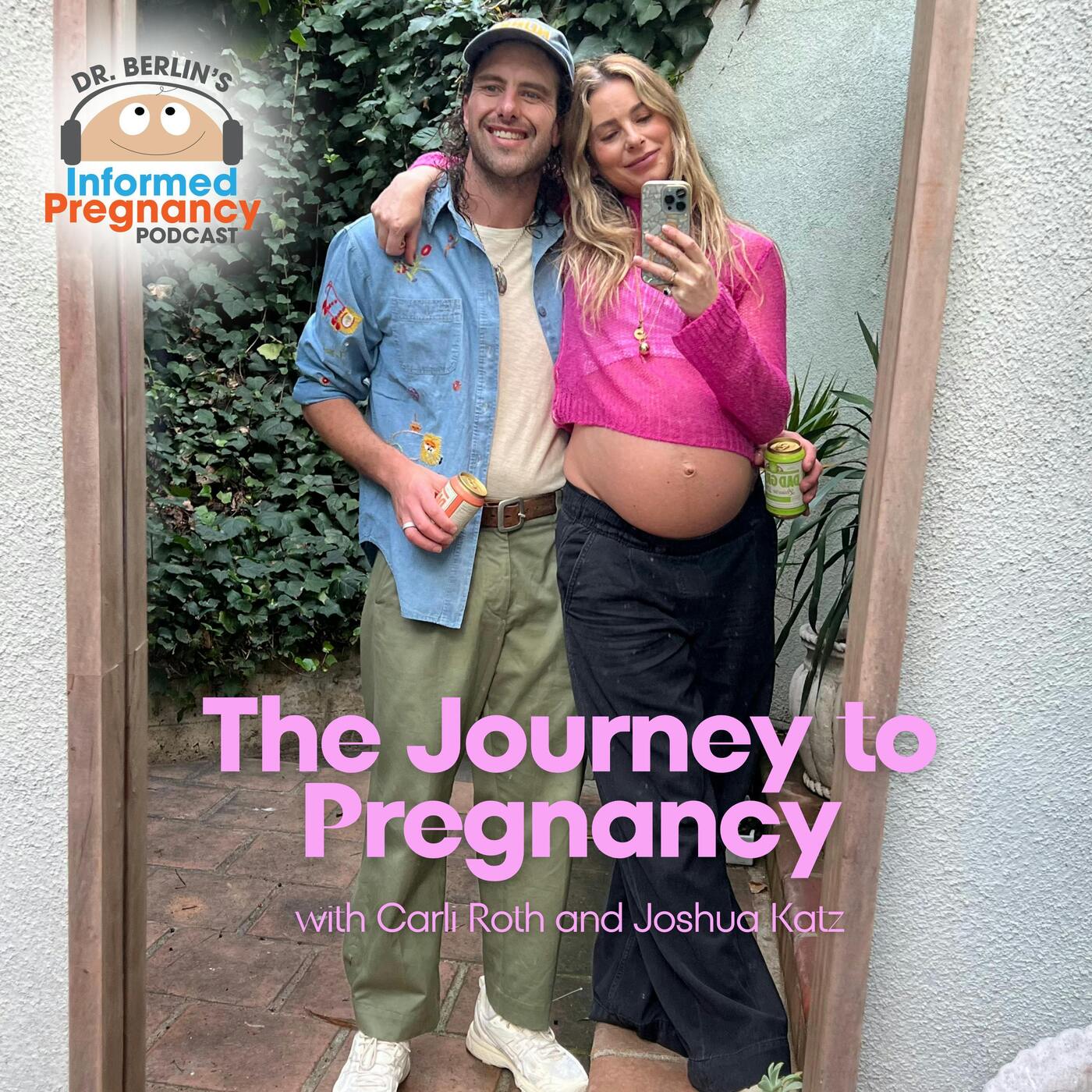
December 11, 2025 · 49 minutes · Episode 489
About this episode
Carli Roth and Joshua Katz are expecting their first baby after a successful pregnancy with eggs retrieved before they even met. They discuss their journey to pregnancy and what inspired them to create a company based on an often uncomfortable topic – hemorrhoids.
Connect with the guest:
Grow with us on IP+! Informed Pregnancy Media presents two all new intimate short-form video series following Garrett and HeHe’s real-time pregnancy journeys as they prepare for an empowered birth and postpartum experience. Each episode features weekly updates with personal photos and videos to help bring these raw stories to life, a visually dynamic guide through each mother’s emotional and physical experiences.
Keep up with Dr. Berlin and Informed Pregnancy Media online!
Learn more about your ad choices. Visit megaphone.fm/adchoices
See Privacy Policy at https://art19.com/privacy and California Privacy Notice at https://art19.com/privacy#do-not-sell-my-info.
Key quotes
“It was never something that I talked about.”
“And I think the timing of this baby is just so wonderful and aligned and perfect”
“at least you're not a perfect asshole.”
“it's hemorrhoids with a smile”
“at the very least, at least they won't be suffering in silence.”
Related episodes
- Ep. 493 In Conversation with Esther Friedman Schwartz
- Ep. 514 Before Baby #4 with Kara Sutton
- Ep. 500 The Unexpected with Dr. Elliot Berlin Part 1
- Ep. 520 Before Birth with Kea-Sophie Stack
Transcript
AI-generated transcript with speaker labels — may contain errors, especially names and medical terms. Dr. Elliot Berlin, DC appears in blue; Carli Roth and Joshua Katz in orange.
Dr. Elliot Berlin, DC [0:00] My guests today are a couple who took one of the most cringe-inducing, universally-avoided health topics and turned it into a mission-driven movement. After nearly two years of fertility hurdles, miscarriages, multiple IUIs, and ultimately a successful IVF transfer, using eggs frozen long before they ever met, they're now joyfully expecting their first baby any second, and planning a natural hospital birth with a doula by their side. What makes them remarkable isn't just their journey to pregnancy, but the humor, vulnerability, and total honesty they bring to conversations most people run from. In the process, they've built a company that's changing how millions approach hemorrhoids
[0:42] and other once-taboo health issues, and they've strengthened their relationship along the way. I'm pregnancy-focused chiropractor Dr. Elliot Berlin, and you're listening to the Informed Pregnancy Podcast. Carly Roth and Joshua Katz, welcome to the podcast.
Carli Roth and Joshua Katz [1:12] Thank you for having us. I would not be happier to have anybody talk about any topic other than hemorrhoids. It's what we do, it's what we know, and a big part of our conversations on a daily basis now. That and pregnancy. That and pregnancy now.
Dr. Elliot Berlin, DC [1:27] Hemorrhoids and pregnancy, which oftentimes go together like a horse and carriage. So why don't we start at the beginning, Carly, before pregnancy and before getting norms, what were you doing professionally, and how did you get into this realm of things?
Carli Roth and Joshua Katz [1:42] So for the past four and a half years, I've been running community for Female Founder Collective and working side-by-side with an incredible team of women who are supporting the entrepreneurial journey for females from startup mode inception, pre-launch into women who are building businesses doing well over $400 million in revenue a year. And as a previous founder myself, I swear I would never do it again, but here we
Dr. Elliot Berlin, DC [2:08] are.
Carli Roth and Joshua Katz [2:09] Being part of FFC has been a beautiful experience in a reminder and just the challenges that come with a female founder and raising money, sourcing operations, building a team. And it has led to incredible opportunities for me to also become an angel investor myself. So I see a lot of businesses, I hear a lot of stories. My role tends to be a little mix of therapists, customer service, hospitality, support for a lot of our members and our growing community. And, you know, when I met Josh very early on, he can talk more to this, but he brought up the idea, you know, and I think of starting a hemorrhoids company and there's so much more to norms than just hemorrhoids.
[2:55] But in the beginning, it was that and he mentioned it. And so it's always been something that's kind of been sitting in the corner to get started. So it's kind of amazing that you fast forward three and a half years, four years into where we are now. And now it's an actual full thriving business.
Dr. Elliot Berlin, DC [3:14] Well, congratulations on that judge for you hemorrhoids are a little more
Carli Roth and Joshua Katz [3:20] personal. Yeah, but apparently I brought him up on our second date, according to Carly. So I guess I might have already started to have grown out of the shame and embarrassment that I had carried with me along with my hemorrhoids for 20 something years. So, yeah, hemorrhoids don't define me, but they've definitely been there with me through much of my career and adult life. Although Carly and I only finally crossed paths about four years ago, we definitely kind of lived in similar worlds doing different things. And so it's really fun to be able to do this business and to do this life with her because she knows what it means to be an entrepreneur.
[4:03] And she also knows what it means and what's required of supporting them. And she does both of those really well.
Dr. Elliot Berlin, DC [4:10] And yeah, I can only be a lot of analogies between entrepreneurship and hemorrhoids. They're both.
Carli Roth and Joshua Katz [4:18] Well, that's starting with that. They do have cycles to them. You know, a typical hemorrhoid flare up, you know, might start with only a little bit of discomfort and then towards, you know, days five or six, you might be reaching peak pain and discomfort. And then like everything else, it wanes and diminishes. And then like starting multiple businesses, as soon as you're done with one hemorrhoid, you've forgotten all about the pain and suffering that you went through and you act like you're never going to do it again or have it again. And then sure enough, you do it again. And so I'd say that there are, at least in my experience, quite a few parallels.
[5:00] And, but what's I think dissimilar is that there's no one for entrepreneurship. Not yet. If there is, I haven't found it.
Dr. Elliot Berlin, DC [5:10] Yeah.
Carli Roth and Joshua Katz [5:11] But, you know, one of the big differences is that people seem to like to talk about their startups and the journeys that they go through. And I think that particularly on podcasts and other forums that have developed over the last decade, there's become a culture of conversation around not just the wins that happen and starting and operating businesses, but the challenges and losses and for embarrassing self-care issues, such as hemorrhoids or diarrhea, gas, bloating, constipation, funky foot fungi, all the things that we're working on in terms of products and other solutions, you know, there isn't really a forum for conversation around these things.
[5:51] And so there isn't really a normalization kind of movement, you know, in those categories, certainly not in the way that the solo entrepreneur has become part of a community by virtue of there being these types of forums for it, but also, you know, for pregnancy. And I think for women's health, there's been amazing progress in, you know, digitizing and connecting the conversations that women are having, whether it's around, you know, pregnancy and postpartum or menopause or other things. And so it's interesting because there are these inspirational kind of analogs that we can look to with something like norms and hemorrhoid care, and two of them are right here today.
[6:36] You know, one is conversation around pregnancy and being a mom, becoming a mom, and also, and even just talking to people about the stuff that, you know, whether it's on business or otherwise that they maybe otherwise wouldn't celebrate or talk about.
Dr. Elliot Berlin, DC [6:49] I've been doing what I've been doing for about 25 years and a lot of pregnancy care and pregnant, and our clients open up to me about what I thought was about everything. And we have this show on our streaming platform, Informed Pregnancy Plus, and it's called Growing With Hihi. And I follow a woman, her name is Hihi Stewart, through her pregnancy, she had years of being a childbirth professional before she had her own baby. And so it's kind of neat to follow her through and watch her go through all the stages that she's supported so many other people through from both the doula lens and the person going through it lens, the pregnant mama lens, and she kind of talks about everything very openly.
[7:34] And at one point she's like, can we just talk for one minute about the discharge? I think she was in her third trimester. And she's like, it is like the cheesecake factory down there. Now, first of all, I think I immediately lost any opportunity of getting the Cheesecake Factory as a sponsor of our podcast, but also nobody had ever said that to me before. And again, people open up about everything. And after that episode came out, I'm like, you know, what do you think about that cheesecake factory? Yeah, yeah, I have it, but nobody really talks about it. So I assume that you suffered with hemorrhoids for a long time before you felt comfortable talking about it.
Carli Roth and Joshua Katz [8:12] Yeah, absolutely. I made a joke earlier about talking to Carly early on about hemorrhoids, and perhaps I delivered it through a vehicle of a new business idea as an indirect way of telling her about something that I hadn't told virtually anybody, but yeah, I mean, for 20 years and through multiple relationships, you know, live in girlfriends, an ex-wife and so on. It was never something that I talked about. It was something that I hid both, you know, me suffering from it and the tubes of yellow butt cream that I, you know, stash around the bathroom and in my travel toiletries kit. And certainly wasn't something that, you know, I spoke to a doctor or spoke
[8:58] to, you know, friends or informed individuals about, and, you know, I think as I got older, you know, the silliness of that became more apparent, but also the gap in, you know, products, brands and spaces to, you know, ask the questions and have the conversations. It was quite surprising to see that, although I'd been talking about doing this for maybe five or six years during that time where I was just talking about it, still nobody had done anything about it. And that was a real good signal to me that if somebody else wasn't going to do it, I had to do it. And thankfully, although Carly fortunately hadn't suffered in the same way, you know, she'd been around me enough to understand the urgency
[9:43] of it and kind of what it means to us beyond just being another brand that we launch or product that we sell. So a big piece of that too, is just those conversations, right? You know, no one's having them. And when you were talking about comparing them to the business conversations that are happening on podcasts and the entrepreneurial insights that people get when we talk to people about what we're building and what we're doing and, you know, we're standing at a party and we'll be standing with six people. And it's kind of like, has anyone had a hemorrhoid before? It was always like one person, they put their hand up, they're a little shy or Josh notices them.
[10:20] And he asks like the right next question and they engage in the conversation and they share their story. And I think having an underlying mission of normalizing, embarrassing self care, because we're all doing it behind the bathroom door anyway. I mean, the times Josh has walked out of the bathroom with an itchy foot, you know, an itchy bum, and then a stye on his eye. You know, he's like, this is why we're building what we are. And being able to have those conversations, whether they're on a platform like this or one by one in our New York City clubhouse, where we've created a space for people to come in and have these conversations and safety and comfort, you know, it just makes everyone
[10:55] feel like they're not alone and they don't have to be navigating this by themselves.
Dr. Elliot Berlin, DC [10:59] Right. As you said, Josh, even hiding it from the people that you're closest to, because it's just embarrassing. All right. Let's take a little break. When we come back, hopefully you'll still be pregnant because I mean, wait, 39 weeks, 40 weeks tomorrow, 40 weeks tomorrow, 36. So I'll make the commercial break real quick. And I want to, when we come back, I want to find out more about how you guys met and got to this stage. Don't go anywhere. We'll be right back.

Dr. Elliot Berlin, DC [11:38] Welcome back to Carly and Josh. I want to talk to you about how you first met.
Carli Roth and Joshua Katz [11:46] Do you want to share Josh or do you want me to take it? I would love you to share. Okay. So I had just moved here from New York. I was Los Angeles. Here's Los Angeles. And I was about five months in on living by myself after living with a couple of friends who came to do a two month stint. And I was at a concert with friends. Met a lovely human named Jesse who was doing a movie screening for his documentary the next night. And I was in a place of yes. And I just wanted to say yes to everything that I could to meet people and then specifically meet Jewish men. And anyway, Jesse invited me to his screening and I went and I remember it was a rainy Monday night in October and I went by myself.
[12:39] It was great. Hung around for some drinks afterwards and Josh was there with another friend and he was recently out of a very long-term relationship. I was very much not recently out of any long-term relationship and we met, it was very brief. We connected. He found me on Instagram later that evening and slid into my DMs, which I now know is not something he does. Even knew how to do. And that was Monday and we went for a hike early morning on the Friday, which is not something I usually do that early. And while we were hiking, I think it must've been like a two and a half hour time spent together and learned a lot and you know, my ears really
[13:23] perked up when I heard that his dad was South African and me being a South African Jew, I was like, Oh, you don't say, and you know, the rest is history. You know, I pulled into his driveway that Friday morning and he's like, I've kidnapped you. Or what did you say? Like you can't leave. And there's some truth to that, right? Like I arrived and you know, our relationship was just going and it went and we're here. So yeah, nine weeks and six days. Yeah. Most natural. I'd prefer you leave out the kidnap to you part of it is out of context. So Carly, thank you for your version of the story, which is pretty consistent with mine and normally I would be standing next to you inserting
[14:06] myself with slight edits, but I've got no edits to your version of the story. And I think just the follow-up to that is how both of us were at a time in our lives where we actually knew what we wanted. And so in addition to me being comfortable talking about my hemorrhoids, maybe on a second date, we also talked about family and kids and you know, our homes and our timelines. And it was romantically. We were next to a fire. I remember we had like a conversation cards that I think our friend Liz gave us for Hanukkah and we sat by the fire and played them like really early on. And it was just, I remember just being like, we are totally aligned. Yeah.
Dr. Elliot Berlin, DC [14:49] That's a perfect dream. Yeah.
Carli Roth and Joshua Katz [14:54] Oh, that's good. So I think from that time, it was easy for us to actually think about the future while not just only living for the future. And so it seems like both forever and a small amount of time all at once. And certainly, you know, the time since we got married and, you know, started to try to make a family to now has been similarly, it feels like a long time, but no time at all. Oh yeah.
Dr. Elliot Berlin, DC [15:21] So I mentioned that in the introduction that it didn't come super fast or easy for you.
Carli Roth and Joshua Katz [15:27] No, but you know, and I remember women saying this to me, but clarification, it always comes fast and easy for me, but that's not the issue here. Super sperm. Yeah. And I remember women saying, you know, it all comes in due time and it's so quickly, so quickly how you forget when you get pregnant, like what the journey was, but you know, I say this and I swear by it. But I got pregnant September. We got married that June. So a couple months later, and if we would have had that baby, the following June, our lives would be very different. There would be no norms, you know? And I think the timing of this baby is just so wonderful and aligned and perfect, you know, so I wouldn't change the process for a
[16:11] thing because it just feels right.
Dr. Elliot Berlin, DC [16:14] I mean, but in the moment, it can't feel very good.
Carli Roth and Joshua Katz [16:17] No, it didn't. But, you know, I think eggs earlier. Yeah. You know, the perk of having a Jewish mother on your, on your shoulder, reminding you that you should always use your eggs and have your eggs available, you know, she wanted me to do them when I was 28, I was living in New York at the time and they're like, you're fine. And then I ended up finally agreeing to do them and I ended up flying back home to San Diego to freeze them in February of 2020. And, you know, cause my mom wanted to keep them close. She always kind of knew I was going to come back to California, I guess. And she watched over them. Yeah. She kept a very close eye on them.
[16:56] And, you know, it worked out great. And, you know, it's really a fascinating thing because most of my friends have frozen their eggs and none have really been able to use them. They either got pregnant naturally, or when they defrosted them or they thawed them, defawed them, sorry, you know, they didn't work. And so I recognize how lucky we are that we were able to have used them, gotten three healthy embryos and now have two more on ice, but that wasn't family. Yeah. And it's nice to know that, you know, if we go through it again and or even going through it the first time we didn't have to do that first half, right? So the transfer felt pretty simple.
[17:36] Cause it was only the second half of the process. You did the first half earlier.
Dr. Elliot Berlin, DC [17:41] How's the pregnancy been?
Carli Roth and Joshua Katz [17:42] Pregnancy has been great. I love it. It's been very enjoyable, easy, no nausea, no morning sickness. My body's taken it like a champ. I feel strong. I've been sleeping well. I feel like this is my gift of having a two-year fertility journey.
Dr. Elliot Berlin, DC [18:00] It does make you appreciate things in a different way, but it's really interesting for you to say that literally at 40 weeks, because a lot of people say that at 24 weeks, 26 weeks.
Carli Roth and Joshua Katz [18:10] I mean, minus my huffing and puffing into the microphone.
Dr. Elliot Berlin, DC [18:13] Oh, there's no more lung capacity.
Carli Roth and Joshua Katz [18:16] No, it feels good. I'm still sleeping. I mean, I think Josh is the one getting less sleep with me grunting every time I'm turning over. Well, I blame the chiropractic care.
Dr. Elliot Berlin, DC [18:25] Okay. So you have a plan for your birth. What's the vision?
Carli Roth and Joshua Katz [18:31] The vision is a unmedicated vaginal birth at Cedars with my loving husband and incredible doula Stacey Blackwell by my side.
Dr. Elliot Berlin, DC [18:44] What went into that thinking? I mean, there's a lot there. There's vaginal versus the serine. There's hospital versus out of hospital, unmedicated versus medicated.
Carli Roth and Joshua Katz [18:54] I am a naturally curious person. And I think when it comes down to it, I really want to understand what the body is actually capable of doing. I know it intuitively and I know it in theory from stories from other women and just knowing that women have been doing this since the beginning of time, like every single human since the beginning of time has come to this planet in the same way and has started their life in the same way. And you know, the curiosity of like, if I can do it and kind of testing myself with it, which I feel very confident that I can, but I also understand that these are birth preferences.
Dr. Elliot Berlin, DC [19:31] I feel your entrepreneurial spirit coming out again.
Carli Roth and Joshua Katz [19:34] I think we live a little too far from a hospital to feel safe doing this at home. And I think for me, knowing that medical interventions are available at the door if needed makes me actually calmer than attempting a home birth. But, you know, Stacey's absolutely incredible and she's really prepared us and I feel more so excited more than anything and just understanding the physiological components that go into birth and understanding what the body's doing and how it works and the mechanisms and the hormones and everything that comes into play to actually make it possible is really just spectacular.
Dr. Elliot Berlin, DC [20:14] How do you see the role of Stacey versus the role of Josh?
Carli Roth and Joshua Katz [20:19] Josh is there for me and Stacey is sort of there for the two of us. So she's really the vocal one who's kind of the intermediary between the nurses and the doctor and she knows what we want. But this way Josh gets to be a hundred percent next to me and my support. And he doesn't have to try to be in three different places at once and thinking through any of the things that we went over and he can just be there.
Dr. Elliot Berlin, DC [20:45] Yeah, actually my wife and I were both doulas and we hired a doula for the birth because I wanted to be the partner, I wanted to be the husband. Anybody can be the doula. Was that hard for you? Did you catch yourself sort of leaning into your doula instincts? A little bit. I think there's overlap between like if you have experience with birth and you have some training, I think there's some overlap, but only one person can be the partner like Josh knows you a lot better than Stacey knows you. He knows what makes you tick. He knows what makes you smile. He knows what your expressions mean. Even when you're not talking and doulas can kind of tap into that
[21:23] somewhat, but your partner is the only one who really can sometimes just hold you in a little embrace or whisper just the right thing or just, you know, a little kiss at the right time and just make you feel safe that way. But also generally, especially on a first birth doesn't really have experience with what's going on and what's normal and what's atypical. So where a doula can kind of come in and make you feel safe that way. Oh, that thing that you're feeling that you've never felt before. It's intense, but it's totally normal. And if you surrender to it, it'll feel a lot better. So I think the two have different roles with a little bit of overlap.
[21:57] And I wanted to be the partner without having the kind of pressure, and like you said, to also be the doula. Carly, you didn't get hemorrhoids during your pregnancy. Is that no pun intended, but does that bum you out? Like it's your whole thing. Do you have nothing to talk about?
Carli Roth and Joshua Katz [22:12] We have been. Fingers crossed it's not over. I haven't pushed yet, so there's still a possibility. I did have for the past two weeks or so, I have had an itchy inflammation situation happening between like my nipples, my butt, my vagina, my belly is just crazy itching. And I thought when that was starting on my butt, I was like, we're doing it, we got our hemorrhoid. But it turns out it's just like dry discomfort.
Dr. Elliot Berlin, DC [22:42] At least you have dry, itchy nipples and stuff to talk about.
Carli Roth and Joshua Katz [22:45] Yeah. I mean, I went through all the products when I had that moment of thinking it was hemorrhoids and everything was incredible and I'm still using our witch hazel wipes. Sometimes I'm using the cream, but you know, it's not there yet. There's still a chance. We're still hoping.
Dr. Elliot Berlin, DC [22:59] How has pregnancy affected the relationship for you, Josh?
Carli Roth and Joshua Katz [23:04] I think it's been fantastic on a lot of levels. I think while we were trying to get pregnant, it was very, although, you know, certain aspects that were dramatic, it was also very comforting to see how the two of us can navigate something like that. Because, you know, you see how each of you endure and support each other. And in some ways it seems like a good test for all the other tests that are, you know, ahead. And maybe that's the silver lining on something that, you know, we have now seems so far behind us, but I think since she's been pregnant, it's been similarly really amazing to see Carly kind of, you know, preparing and becoming a mom.
[23:49] And it's been good for me to see whether or not I really have it in me to step up and evolve and, you know, do the types of things that, you know, maybe a younger self with me doubted I could do or would do with grace. And seeing that, you know, for the most part I am, and, you know, I almost cringe when Carly talks about how easy her pregnancy has been, because I know how difficult it can be for a lot of other moms. And so similarly, you know, I say this next thing with all due respect is that Carly is just a damn joy to be around in general. And, you know, as she's been pregnant, it's been just more of the good stuff. And so, you know, she said she's been very fortunate not to be sick,
[24:35] not to have any physical complications. So aside from, as she says, you know, her heavier breathing at night and convenient inability to do certain things that she probably could do. But now has an excuse not to, you know, it's been really good. And it's also really fun to have a project together, a project that's not work, a project that's not about something ephemeral, but also, you know, that has gravity to it. And I know that it's just the beginning of a project, but even the project of becoming pregnant and then the project of, you know, getting ready to have a baby, those are fun things to do with people that you'd like to be a partner with, you know?
[25:17] Yeah. It's been fun. And we just work and live in the same space. The only times I'm not around Carly's when she's at one of her many, many appointments, whether she's to see a chiropractor on the west side of Los Angeles, or she's doing any number of things with her many amazing healers and support system. But other than that, we're together all the time and it couldn't be more joyous. I think pregnancy is all about the pillows and all about the appointments.
Dr. Elliot Berlin, DC [25:47] The pillows.
Carli Roth and Joshua Katz [25:48] You heard it from a doctor, Josh. That wasn't me. Yeah. I mean, okay. So I'm going to assume that Dr. Berling is a bit biased in this, but the amount of pillows, specialty pillows, pillows of all shapes, sizes, densities, and I still don't even have one of those big pregnancy pillows.
Dr. Elliot Berlin, DC [26:04] Oh, the giant U shape. We have that one and many others as Josh is talking about in our house. I called it the Berlin wall because I needed an intercom to talk to my wife over the pillows to see how the weather was on her side of the wall.
Carli Roth and Joshua Katz [26:20] Yeah. Yeah. Shane, even snuggling is like so hard sometimes because it's just like either way you turn, there's either a pillow or a belly and you can't get too much closer.
Dr. Elliot Berlin, DC [26:28] Yeah.
Carli Roth and Joshua Katz [26:29] These are the good things and, you know, the good problems to have. So yes, I will be curious to see what we do with all these highly specialized pillows, because even if one of those huge body pillows, that's something that we could have converted or otherwise utilized, you know, postpartum, but there's some very unique ones that I'd be interested to see how Carly chooses to creatively utilize those in the future.
Dr. Elliot Berlin, DC [26:53] A dog bed. What I like actually, what you can't see at home is Carly is squirming around quite a bit and I'm just hoping that her water breaks on the podcast that has never happened.
Carli Roth and Joshua Katz [27:03] You know, I was, I was actually just thinking that I'm getting so flooded with like love and appreciation from even just hearing Josh speak and just kind of going through all of this. So I'm like, there's so much oxytocin probably running through my body right now that will be an interesting thing to trigger some courage and actions later.
Dr. Elliot Berlin, DC [27:20] I could do better.
Carli Roth and Joshua Katz [27:22] No, no, no.
Dr. Elliot Berlin, DC [27:22] I'm out of practice. Insert a cheek popping noise, replicating water break. Uh, actually that is our sound that goes into commercial breaks. So why don't we do that right now? When we come back, we've teased all this information about get norms. I want to get serious about it. Learn more about what it is and how people can access it. Don't go anywhere. We'll be right back in case you're wondering, Carly is still pregnant and let's talk about get norms. Okay. So this is the other baby get norms and it started with hemorrhoids, which plague a lot of people. Let's start there. What are the stats? How many people actually struggle with hemorrhoids?
Carli Roth and Joshua Katz [28:13] Um, statistically speaking, 15 million plus American self-report having hemorrhoids each year and 50% of us will get them before we're 50. As you probably know, 40% of women experience hemorrhoids during or after pregnancy. And oftentimes it, uh, is a recurring condition after a new mom has them that might either be caused by them being pregnant or the act of childbirth. So it's incredibly common. You know, it's statistically more common than a lot of other and less taboo personal health conditions that we talk about. And most of us have products for, you know, year round in our medicine cabinets, and yet, you know, it's underrepresented in, you know,
[29:04] popular conversation and misrepresented in popular culture. So it's not just me out there.
Dr. Elliot Berlin, DC [29:10] I'm going to go back about 15 years, maybe even more, probably somewhere between 15 and 20 years ago. I was really differentiating myself in the world of prenatal care, which is not, you know, at the time certainly wasn't a car product specialty for various reasons. All the arrows pointed in that direction. That's where our practice was moving. And I had my first lunch with an OB GYN. Actually it was my second lunch. I came the first time and I came because we had several clients in common and I was doing all these things to help them sometimes with back pain and other types of discomfort. And sometimes just to improve function of the low back hips and
[29:54] pelvis for the pregnancy and for the birth, better function for birth and based on what his clients were saying, he didn't really understand what I was doing. So I wanted to kind of go in there and show them. And it's also unique that I went to massage school and chiropractic school and smushed them together. So it's not exactly what a typical chiropractor does. And I say it's my second lunch because I went the first time on lunch time with my spine. I walked in with my big spine to hold it and show them what I was doing. And I waited for a little bit. Then I went into his office and he goes, where's lunch? I'm like, Oh, was I supposed to bring lunch?
[30:28] And he goes, you don't come to a doctor's office for a lunch without lunch and he nicely kicked me out. He's like, I got to go get lunch. So we never had a chance to talk about it. He goes, look, I'm going to give you a second chance. Come back next week with lunch. And I came and there were a couple of other doctors and I brought a whole deli platter from Pico kosher deli of blessed memory. And at first they kind of showed me into his office and he was on the phone. This story has a point and he's on the phone and he seems to be talking to a woman and I could even hear her through the phone. It was kind of loud and she's really worked up. And I'm like motioning to him.
[31:06] Should I leave while you're talking to one of your patients? Like, no, no emotions to me. Sit down. And she is just really worked up talking about something that very uncomfortable. I don't know. And how am I supposed to deal with this and blah, blah, blah. And I don't even know what she's talking about until he says to her, he says, you know, Judy, you know, the great thing about having hemorrhoids. And then there was a pause and he goes, at least you're not a perfect asshole. And she laughed also. I could hear her laughing and they just made her feel so better with a tiny bit of humor. And that was probably one of the earliest biggest lessons for me too,
[31:45] that at the right time, you know, sometimes it's just psychological first aid, you can make somebody feel better in their mind than you can make somebody feel better in their body.
Carli Roth and Joshua Katz [31:53] Yeah, a hundred percent comfortable. I mean, that's a big underlying mission of ours is we always try to say it's, you know, it's hemorrhoids with a smile and our cream, our creams come with these multicolored finger cots so that you have something joyful to put on your finger and apply the cream if, you know, touching your own hole is uncomfortable, which is for many people. And there's a fine line that we ride in terms of not making fun and not making it full of puns and creating shame, but creating a space of comfort and humility and, you know, making people smile and like adding humor to it, but like not saying it's funny because you have hemorrhoids.
[32:38] Hemorrhoids can be funny, but without, you know, shaming people.
Dr. Elliot Berlin, DC [32:41] Right. I think it's brilliant and it is a fine line. And that's what I learned at that moment. He just had the right delivery. I mean, I guess that's good for an OBGYN.
Carli Roth and Joshua Katz [32:50] Hey, absolutely.
Dr. Elliot Berlin, DC [32:53] That's what you, that's what you want. And I had the right delivery platter. Everybody was really happy. And we forged a great relationship, working relationship back and forth. So hemorrhoids is how you started and it's sort of community and products, right?
Carli Roth and Joshua Katz [33:08] Yeah. I mean, I think ultimately our products are at the center and the products have to work for the people that we design and build them for. But building off of Carly's note around humor and levity, you know, those are entry points into a conversation that needs to be have had in order for people to understand, you know, what to use and when, when it comes to medical products, like the ones we make, but also, you know, the kind of lifestyle modifications and, you know, other things that people can do to either prevent or minimize the severity or duration of hemorrhoids. And so, as Carly said, you know, we try to have fun with, but not make fun of these topics because it is one entry point into something that
[33:59] oftentimes most people have not been led into, but we also have to meet them there with, you know, trusted products and trusted information. So in addition to Carly and I, you know, there, we have a founding partner and medical advisor named Dr. Wendy Labrette. And she is amazing, a double board certified gastroenterologist that also happens to be one of the most followed GI docs on TikTok. So she has been instrumental, not just in, you know, fortifying our technical understanding of all things, gut to butt, but also, you know, helping all of us figure out how to bridge the gap between doctor and patient or, you know, brand and products company and
[34:43] community. So we have aspirations around the idea of community, but we also know that, you know, being a member of the hemorrhoid diarrhea and athlete's foot community isn't on the top of everyone's list, but to create places where people can share information or access information and just otherwise not feel like they're the only ones. I think that's kind of the driver of our ideas around community. And if it's been fun over the last few months to have our store in New York, in Soho, which just on the surface, having a hemorrhoid store on a high street is notable in and of itself, but to approach that as a friendly place where people can talk about the things
[35:24] that they don't normally want to talk about. And yes, they can also learn about maximum strength hemorrhoid relief products and have a little fun and potentially buy them. That's, I think, pointing in the right direction. Now, I think a store dedicated to diarrhea might have to have different flooring than our current one does, but you can see how the idea is expansive enough to take things like retail. And normally you find hemorrhoid products on the worst shelf of the most embarrassing aisle of a poorly lit, bright pharmacy store. And to take that out of that context and put it into a place where the products are accessible and friendly, but honest in terms of
[36:07] packaging, the people there are knowledgeable, but aren't talking down to you and put it in a place where, you know, there'd normally be a coffee shop or a fashion boutique. I think that is representative of just the types of improvements that can be made on the overall kind of way that these things are talked about or treated. Yeah. And even having, you know, the way people walked into the store and have been walking into the store, just excited to share their experience and understand and know more about the products because they're familiar with the experience and their first time they found out, you know, everyone's like, everyone's got their first time sex story,
[36:45] but like we get to hear everybody's first time they found out they have a hemorrhoid story and you know, there's consistencies. Most of them called their mom, you know, there was, you know, there's stories they were embarrassed at the CVS. They couldn't get it out. There was a price check, like, you know, kind of Josh's real life stories. It's very validating for me. Not only do I suffer from all of the gross bodily dysfunctions that we endeavor to help treat, but that also millions of other people out there have the same stories navigating them. So I think it's doing something right. Cause I have friends who are like, I want to get a hemorrhoid.
[37:20] I want to be part of the club.
Dr. Elliot Berlin, DC [37:21] I get it. With you. Yeah.
Carli Roth and Joshua Katz [37:25] You can go pregnant to try to get one in, but nothing. I'll tell you just being in the store and actually like interacting with people all day long, the group of people that are most vocally communicate and seem to identify with what we're doing are moms. And that's not just new moms that have recently had children, but in New York, you know, whether they're recently pregnant or whether it's been 10, 15, 20 years, they're the ones that usually come right on in and will tell whoever from my teams at the front of the store, all about their hemorrhoid story, and it's great because, you know, we get to learn a lot. And also they've never been supported by any human being, you know, that's
[38:09] tied in with a product or brand. And so it's fun being just human entrepreneurs that also have these things that are trying to do things a little bit better than those old stuffy brands that have been around for decades and decades.
Dr. Elliot Berlin, DC [38:24] My standup comedy show all about having babies, which is, you know, pregnancy, postpartum, breastfeeding relationships, infants, toddlers, teens, tweens, the whole thing. They're all filled with different struggles and triumphs. And it started with a childbirth education class where we just kind of made it fun and we did it in a comedy club and part of it was education, part of it was the improv and we had beer and we had mocktails and it was just fun. And then people were like, wait, we had our baby, can we come back? And like, it's kind of childbirth education. It was called ultimate prenatal date night. And then we made it ultimate prenatal and postpartum date night.
[39:04] And then people came back and we still do it. And people are like, so I'm having my second baby now. I'm like, it's ultimate prenatal and postpartum and parents of second baby date night. And eventually we realized, okay, let's get rid of the childbirth education and just do the comedy part. That's what people are coming for. And we just thought it was called a kidding comedy about having kids. And we do it about four times a year, but people have said it's incredibly therapeutic to bring up these things that, you know, comedians can bring up that people don't really talk about. This is Josh's whole point. Comedians have a way of, you know, bringing it all together.
[39:40] So it can break the ice on a topic. It can help couples talk about things that are hard to talk about or hard to do and makes it a little bit easier. So I get that feedback all the time and it's rewarding to help people that way. And so I see that's what you're doing with get norms and I plot it. And I do wonder what's on the horizon, what uncomfortable bodily discomforts are coming next.
Carli Roth and Joshua Katz [40:03] Well, actually, let me quickly just reflect on the comedy and comedians and particularly standup comedy and how it's actually becoming very much part of the norms world. We like to say that we have kind of two tent poles in terms of the influential communities that we interact with in order to help us reach larger audiences. And one of those is health care professionals. So the HCP community, which really for us is led by Dr. Wendy, is incredibly important because helping doctors help their patients and also embracing a new generation of doctors that communicate and interact with patients on a different level and through different mediums. That's a huge opportunity, right?
[40:44] So beyond just doc talk and influencers is just knowing that whether it's doctors are learning from other doctors or even patients are learning from doctors through social media. That's a really amazing space for us. But the other tent pole is standup comics. So not just the vague notion of comedy, but we have been working a lot with standup comics because, you know, as you said previous, is that comedians are very good about talking about the things that we don't normally talk about and bringing into light these things that make us uncomfortable. And I think that if you have it at two ends of the spectrum, you know, it's important to bring people in and standup comics are great at elevating
[41:26] the conversation, but then you also have to meet them with trustworthy information and solutions. And that's where the healthcare professional community comes in. Two great tent poles. And everything else fits in between, right? And so, in fact, actually one of our investors is the comedian Pete Davidson, and I was asked the other day, you know, why is he so into hemorrhoids? I said, well, I can't speak for him as to how into hemorrhoids he is, but what I do know that, you know, he's into is talking about the things that oftentimes make people uncomfortable. And we actually, while we've been in New York, we've been working with different amazing New York based standups, doing a man on the
[42:04] streets style, you know, kind of comedy videos, because our store is too small to be a good room for standup comedy, but the streets of New York are vast, and there's plenty of subject matter to do crowd work with. And so we actually just did our ninth session with different ninth comedian and really amazing comedian, also a cat's like myself, Louis Katz. I'm not sure if you've heard of him. He is an amazing comedian, a comedian's comedian. I highly recommend looking up Louis Katz hemorrhoids, which is one of his bits that from a few years back that, you know, I always watched whenever I wanted a good laugh. And so we've got a lot of things in store on that level, because as
[42:43] you said, you know, it's not just comedy, but I think standup comedy and that format and that really human vulnerable format is such a amazing trigger for the types of conversations that can and should be had doesn't mean we're asking comedians to educate people about hemorrhoid treatment. But if you can start the conversation, then you can provoke the education and hopefully then people can make better choices about treating themselves. And if they have that choice, maybe they'll select norms, but at the very least, at least they won't be suffering in silence.
Dr. Elliot Berlin, DC [43:16] Mission accomplished. What beyond hemorrhoids?
Carli Roth and Joshua Katz [43:19] We like to say we're moving from the butt to the gut and beyond. So hemorrhoids are largely caused by pressure on the lower rectum. That's why pregnant women oftentimes get hemorrhoids when they're pregnant, not just through the act of childbirth, but because the baby is in there and it's putting pressure on their guts and lower rectum and all of that and inflammation of those veins, which is what we conventionally call a hemorrhoid, but you know, constipation is really the key driver. And so when we talk about things to prevent or mitigate hemorrhoids, we talk about how do you prevent being constipated? So working from the butt to the gut and beyond is a laxative
[43:59] products and other things that both can help, you know, relieve the discomforts of constipation, but also help diminish the prevalence of hemorrhoids. And we're also working on some products to treat those funky fungals that turns out I'm not the only one that gets like athlete's foot and jock itch and Carly alluded to it earlier, really there's nothing that's off the table for us. In fact, as long as, you know, they are conditions that are essentially underserved and that there are legitimate medical relief solutions for, so I get ice dives three times a year and I've used these same wipes that I buy on Amazon. I probably spend $70 a year on these wipes.
[44:42] Now one would say you should probably move upstream and figure out why you're getting ice dives three times a year, but in the meantime, I figured, Hey, you know, we know something about educating people about maybe the causes and preventative solutions, but we're very happy to provide better versions of the, you know, the medical product solutions in the meantime. So, you know, there's a few fun things in store that you're
Dr. Elliot Berlin, DC [45:06] serving the underserved.
Carli Roth and Joshua Katz [45:08] You know, that's, we're just here to provide solutions for the marginalized, disenfranchised groups of gross kids like me.
Dr. Elliot Berlin, DC [45:17] All right. So a few things, first of all, I was vetting a comedian for our show and I was watching her a little bit and she goes, they say that what happens in Vegas stays in Vegas, but I don't think so because it still burns when I pee. And I was like, okay, that's hilarious, but you know, who talks about it? So the standup comic thing, 100%. We should do a show together here. We should merge our topics, but more important than anything else. I want to wish you guys an incredible birth in the next hopefully couple of days or hours, and I want to know where we can all go to find more about get norms online.
Carli Roth and Joshua Katz [45:57] The best place to find more about norms is at get norms.com, which is our website. I think you, Dr. Berlin will be really excited to see our own kind of version of a podcast series that we call totally normal conversations. And it's Carly and I endeavoring to do what you do along with Dr. Wendy, who's our founding partner and medical advisor. And there's fun little segments on there. One of them is Carly talks about things that no one else will, and it's where Carly as very much herself asks questions related to hemorrhoids and sex and the body and pooping and all the things that I'm too proper to bring up, and that's the role she plays oftentimes.
[46:41] So there's a bunch of great fun, but also very informative educational content. You see me trying my best to entertain people, but also educate people. And there's a lot of really amazing content with Dr. Wendy, who is a very great communicator and established physician. And I let her handle all the more technical sides of the much needed educational content that we've been creating. So get norms.com.
Dr. Elliot Berlin, DC [47:10] Sounds like a great combination.
Carli Roth and Joshua Katz [47:12] Don't forget about Amazon. Oh yeah. And then also head to Amazon and purchase our products.
Dr. Elliot Berlin, DC [47:18] Yeah.
Carli Roth and Joshua Katz [47:18] Our whole thing is, you know, when you need hemorrhoid relief, you need it as soon as possible. So we actually decided to launch on Amazon exclusively before you finish clicking out. Yeah. You know, the truth is that they can do a way better job of delivering you your norms, hemorrhoid products than I can from our Shopify store because, you know, they've got depots nearby. And so here in Los Angeles, you can get it oftentimes same day, you know. So that's where you can learn about it. And that's where you can enjoy it and hopefully get some relief from it. And follow us on Instagram and TikTok at get norms from both of them. Social media guy, Devin does an incredible job with all of our
[47:59] content and it's, it's a fun account to follow.
Dr. Elliot Berlin, DC [48:02] Yeah. Carly, we're off and Joshua counts and a little baby soon to be named. Thank you so much for joining me on the podcast for sharing openly this very uncomfortable topic. I really appreciate it. Enjoyed it at home. Thanks for listening to the informed pregnancy podcast for more pregnancy and parenting information. Just like this, visit us online at informed pregnancy.com.
Want more pregnancy + parenting? Start your FREE TRIAL of Informed Pregnancy+ and get access to all our curated pregnancy and parenting content — original series, iconic birth films like The Business of Being Born, prenatal workouts and more.

0 Comments