
July 31, 2025 · 39 minutes · Episode 470
About this episode
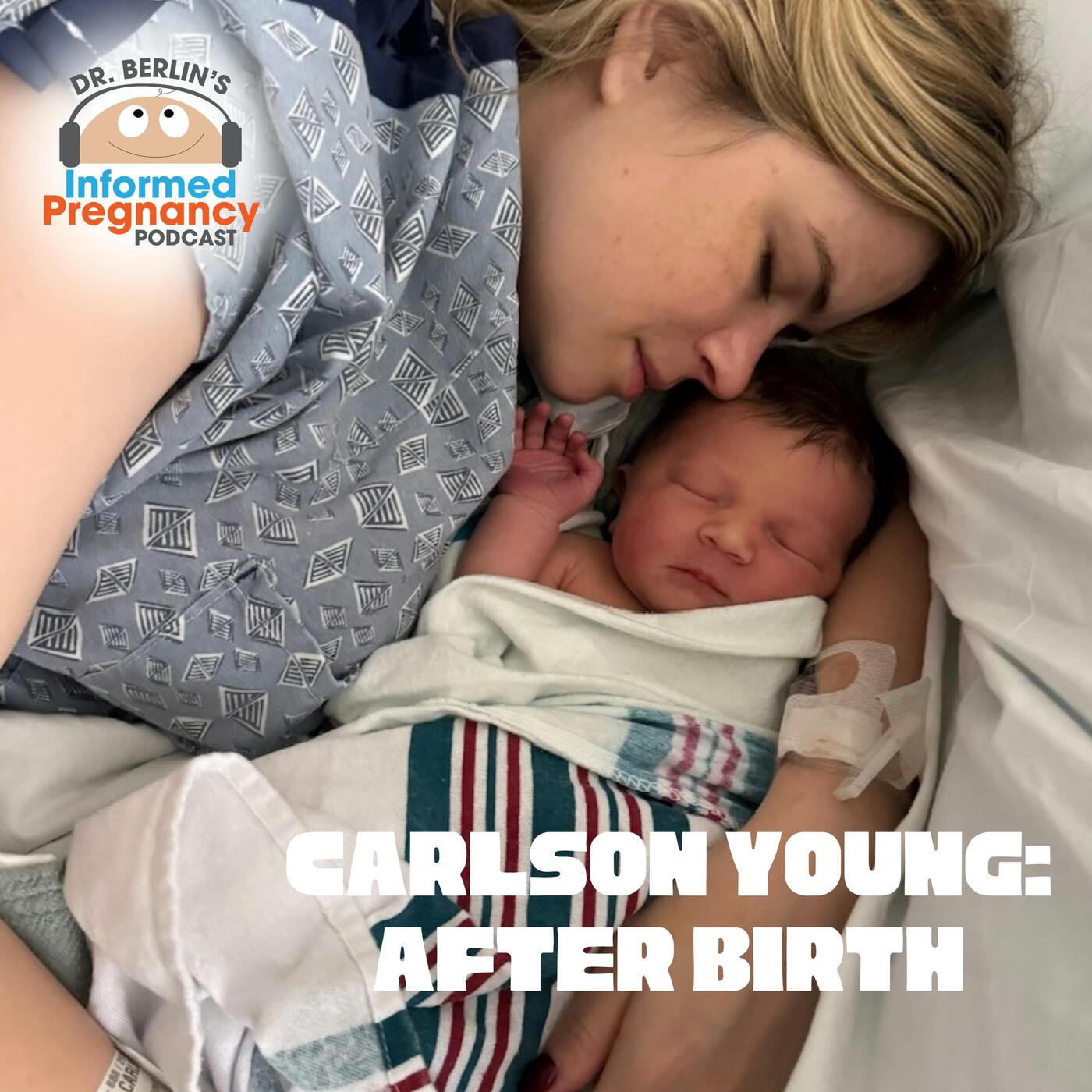
Actress and filmmaker Carlson Young returns to discuss her birth plan, labor, and delivery in this after birth story.
Connect with the guest:
Informed Pregnancy Media and Mahmee present an all new podcast! One Way or a Mother is a new narrative podcast from Dr. Elliot Berlin, DC. Each season is an intimate story of one woman, one pregnancy, and all of the preparations, emotions, and personal history leading up to the birth. Episodes feature the expectant mother along with her family, doctors, and birth work team.
Start listening to Episode 1: I Should Have Died featuring Arianna Lasry
Keep up with Dr. Berlin and Informed Pregnancy Media online!
Learn more about your ad choices. Visit megaphone.fm/adchoices
See Privacy Policy at https://art19.com/privacy and California Privacy Notice at https://art19.com/privacy#do-not-sell-my-info.
Key quotes
“It was a major magical trip of an experience.”
“And the only fuel that I had, because no one would give me a snack was breath. It was all that I had. So I would just breathe. I was finding incredible refuge in the breath.”
“Rothbard gets there and it's like, he is such a magical elf man that it feels like when he walks in the room that everything just stands still.”
“And she just laid on my chest and she just stared up at me for what felt like an eternity. She was just staring at me, staring at me. And it was the most beautiful thing ever.”
“And the love is obscene obscene. We cannot stop looking at her. She is perfect.”
Related episodes
- Ep. 469 Carlson Young: Before Birth
- Ep. 474 Prenatal Coaching with Kelly Hof
- Ep. 473 Home Birth with Katelyn Fusco
- Ep. 466 A Before & After Birth Story with Aimee Carrero: Part Two
Transcript
AI-generated transcript with speaker labels — may contain errors, especially names and medical terms. Dr. Elliot Berlin, DC appears in blue; Carlson Young in orange.
Dr. Elliot Berlin, DC [0:00] She's directed films during a pandemic, premiered at Sundance and juggled passion projects with pregnancy, but nothing could have prepared her for the intensity of what came next. I'm Pregnancy Focus Car Producer, Dr. Elliott Berlin, and you're listening to the Informed Pregnancy Podcast. Carlson Young, welcome back to the podcast. Congratulations. The last time we talked to you were 39 weeks. You had your bags packed, the nursery was ready, logistic things were under control. And all I know since then is that A, you had the baby and B, you said it was a harrowing experience.
Carlson Young [0:49] Yes. Yes, it was. It was a major magical trip of an experience.
Dr. Elliot Berlin, DC [0:57] Well, let's talk about that last, because I interviewed you at 39 weeks, you were getting pretty close.
Carlson Young [1:03] Yes. I guess when I talked to you, I was maybe like a week out, something like this. Because I think I was a bit earlier, I might have been 37 weeks when I talked to you. I delivered right at the actual day of 38 weeks.
Dr. Elliot Berlin, DC [1:19] Oh, a 38. Oh, wow. Okay. So what happened in the week in between?
Carlson Young [1:26] Well, let's see, this started, I gave birth on a Thursday. On the Monday, I started feeling really crampy and like she was super low, I could barely walk. And I felt like, okay, like, I think my body is starting something here. And then by Tuesday, I was having a lot of cramping and contractions, at least what I assumed were contractions, because I was like, this feels very different. And I think I was having some level of back labor, because my back was just what was really killing me. So I called Dr. Rothbard and I said, you know, I'm pretty sure I'm having contractions. I don't know if it's exactly timed 551 or how they say that, but it's pretty
[2:13] painful. And he said, can you still, you know, talk through the contractions? And I was like, I mean, yes, I can, I just have to like freeze my whole body. And he said, well, come to the hospital when it is truly you can't speak anymore. I think that would probably be best as I don't want them to turn you away. So I said, okay, and stuck it out for another day. And then I went to the hospital and I was three centimeters when I got to the hospital.
Dr. Elliot Berlin, DC [2:40] Well, that's pretty cool that you got there three centimeters. I have so many questions already. Number one, like, was it on a pattern at that time? Were you feeling them every X number of minutes or?
Carlson Young [2:50] Yes, it was every X number of minutes, but they weren't super close together. It was like one every like 15 minutes, you know, and then they would disappear for like two or three hours. That's why I kind of, yeah, I was like, I don't really like know what's going on. I feel like my body is slowly, gradually going into something.
Dr. Elliot Berlin, DC [3:12] And you were feeling them mostly in your back or some in the back?
Carlson Young [3:16] Some in the back, some in the front. Certainly the most severe ones were like in my pelvis.
Dr. Elliot Berlin, DC [3:22] In like your pubic pelvis in the front?
Carlson Young [3:24] Yes.
Dr. Elliot Berlin, DC [3:25] Okay. What did you do for passing the time getting through those?
Carlson Young [3:31] Let's see. I was just bouncing like a maniac on the ball, on the little exercise ball. I was trying to walk as much as I could, like between, not obviously during a contraction, but I was trying to move to just like get the process officially off to the races. And so I was walking and then what really like Strather broke the camel's back and sent me to the hospital was my mom came in town because I called her and I said, I really think that it's going to be like tonight or tomorrow. I think my body is like, I think we're going into this. So she got on a flight, God bless her and like came in like three hours. It was so cool, meaningful. And so did my sister.
[4:16] And so they both showed up and I was like, well, no contractions right now. Let's go on a hike. So we walked to the end of my street and we went on this little hike and I got about 10 minutes down the path and I said, we need to turn around right now. This is not happening. So I like kind of trekked back up the hill, got in the car and went to the hospital.
Dr. Elliot Berlin, DC [4:40] And you were three centimeters. Can you compare the sensation of those surges that you were having at home to anything else that you've experienced before?
Carlson Young [4:50] No. I actually had no level of expectation because I knew it was somewhere between a period cramp and something completely foreign, but no, like it's like surges through your entire body. And so I found myself just kind of like on my hands and knees trying to breathe.
Dr. Elliot Berlin, DC [5:09] When you got to the hospital, did you have an expectation in your mind about where your cervix might be?
Carlson Young [5:16] I was like, I would be shocked if I was not somewhere on the wheel of dilation because of what I had been feeling. And I do have a pretty high pain tolerance. At least that's what my husband and my family says. So, but I was like, but nonetheless, like, you know, I'm going to be really shocked if I'm not somewhere on the spectrum. And so I wasn't surprised to hear that I was.
Dr. Elliot Berlin, DC [5:44] Okay. So three centimeters, you get admitted, what happens next?
Carlson Young [5:49] I had slightly, slightly high blood pressure, but it was because they had taken all my vitals while I was having a contraction. So it wasn't anything to worry about. They were like, that we feel you're normal now that we rechecked it. So we think that was just a contraction related. So they admit me, I get in, I go to the room. Everything is fine. And you know, I had said before, I wanted to wait as long as possible to get the epidural to kind of let gravity do its thing and let the rhythm start. So I got into the room, I went from three to four in an hour, which was really fast. And then in the middle of four to five, they kept asking me like, you sure you
[6:35] don't want the epidural? Are you sure you don't want the epidural? Because it could take up to an hour to kick in and like, we don't, scheduling wise, we don't know how quickly we can get someone here. So in the middle of that four to five, I said, okay, actually, yeah, sure, let's get that epidural down.
Dr. Elliot Berlin, DC [6:52] What was it like placing the epidural? Did you have any concerns about it?
Carlson Young [6:56] No, I was like so uncomfortable and in pain that I was like, you just put that thing right in there. I didn't even like flinch. My husband was like, that was astonishing. You literally did not, like that was like, you did not even flinch. And I'm like, I, yeah, I mean, it felt like a shot. I don't know. It's like felt like that. It wasn't anything that was particularly painful in comparison to what you're feeling at the time.
Dr. Elliot Berlin, DC [7:23] So yeah, did your mom or sister come with you also or they did?
Carlson Young [7:28] My husband was in the room and my mom was in the room actually the whole time.
Dr. Elliot Berlin, DC [7:32] Oh, wow.
Carlson Young [7:33] Yeah.
Dr. Elliot Berlin, DC [7:34] That's pretty cool support.
Carlson Young [7:35] Yeah. It was really cool. If you had asked me, Hey, do you want your mom in the room for your entire labor? I would have said, no, but at the time it just like made sense and I wanted as much support as possible.
Dr. Elliot Berlin, DC [7:51] Okay. So get the epidural and then you stop feeling the pain altogether.
Carlson Young [7:56] Yeah. And then it takes, you know, 10, 15 minutes. I'm just flying high. I am totally good and I felt amazing and I kind of like lay back and I feel like, frankly, it's almost like I felt so good and my body kind of entered this really positive kind of spiritual experience. And then after about an hour of feeling great, things started to shift and I was laying there and I started to get really agitated, like really, really agitated and feeling weird. And so I sat up and I was like very dizzy and my ears were ringing and I just started projectile vomiting, a lot of throwing up and all the doctors rushing and I was just having like crazy low blood pressure, like a blood pressure
[8:49] crash.
Dr. Elliot Berlin, DC [8:51] So when you first got there a little high during your contraction, now it's
Carlson Young [8:56] dropping out.
Dr. Elliot Berlin, DC [8:57] Mm hmm. Dropping out. And so. Is that a result of the epidural?
Carlson Young [9:03] Like a side effect? They put some blood pressure medication in my IV, it stabilized things and they, you know, kind of asked me how I was feeling. I was like, I don't know how to articulate this, but I feel like because I can't feel anything, it's freaking my body out. And like all of that, whatever energy is down there that I can't feel, it seems to be like radiating upward. I don't even know if that makes sense, but that's just my suspicion. And they said, well, let's, you know, turn down the epidural. Like you're at a 10 right now, let's take it down to an eight. So you'll feel a little pressure, but no pain. And I said, I think that's a great, I think that would like ground me a lot.
[9:42] And so they did that and everything kind of started going back to normal and my vitals chilled out and I was back in the game.
Dr. Elliot Berlin, DC [9:51] Welcome back. What time did you get to the hospital?
Carlson Young [9:55] I got there around five to six PM on Wednesday.
Dr. Elliot Berlin, DC [10:00] Okay. And do you have an idea where on the clock you are when you have this crash?
Carlson Young [10:07] It was around two to three AM, I believe.
Dr. Elliot Berlin, DC [10:11] Okay. And then when you come back and the drugs are a bit more muted, are you starting to feel some of the contractile activity and what do you feel?
Carlson Young [10:23] Yeah, I did. I started to feel like it, it just felt like pressure. It wasn't pain.
Dr. Elliot Berlin, DC [10:29] Okay. Cool. Well, I'm super curious what happens next. So let's take a little break and we'll be right back.

Dr. Elliot Berlin, DC [10:47] Welcome back. We're talking to Carlson Young and I should say just like mama of one week. This was not that long ago.
Carlson Young [10:53] No, it was not that long. This was all going down.
Dr. Elliot Berlin, DC [10:57] Exactly one week ago to be exact.
Carlson Young [10:59] Yeah, it's a week.
Dr. Elliot Berlin, DC [11:00] Uh, congratulations. Okay. So what happened is you go in, you're three centimeters, you're progressing nicely, you're uncomfortable. And I think just like I am, like if I'm in my office and I'm like, okay, I'm going to, I'm going to have a good diet day today. And then someone keeps coming in with piping hot cinnamon streusel doughnuts.
Carlson Young [11:19] So you want a doughnut? Okay. No, it was exactly.
Dr. Elliot Berlin, DC [11:23] Then I tackle the guy and have the whole box of doughnuts. And so you got the epidural and then it's going well, but then a couple hours later, it sounds like you crash your blood pressure just crashes. And then it's out.
Carlson Young [11:34] Yep.
Dr. Elliot Berlin, DC [11:35] A little meds to help you boost your blood pressure and also turning down the epidural. Now you're feeling pressure. When's the next time that you check to see your progression?
Carlson Young [11:47] They checked me. Oh gosh. I don't know. Somewhere an hour or two hours after that hours just fly by. Like it was crazy the way that I would just be sitting there and be like, Oh, well it's been an hour. So once here again, like time was a very different, it was like a diff on a different field in that room. And it was really funny was I was staring at this broken clock on the wall that the, the hands of the clock kept going and just like spazzing out. And then like it, there was a digital part of the clock that just kept like blinking zeros and that would like do random numbers. And we were laughing. We're like, I feel, I was like, I feel like I'm in a
[12:28] David Lynch movie right now. Think of that is like not working. Is anybody seeing this? And everyone was laughing about the clock and they were like, it's very appropriate that this is the clock that would be in your room. Um, but yeah, no time was like a very strange thing during this whole experience. So they checked me about two hours later and I was only at a five, which I was shocked because it had been several hours at that point. And I, the last time they checked me, I was in between a four and a five. So like my dilation process just like completely stalled when I got the epidural, which is what I was kind of afraid of, and which was what I
[13:08] wanted to avoid, alas, um, things.
Dr. Elliot Berlin, DC [13:12] Were they surprised or just you surprised?
Carlson Young [13:15] Just me. I mean, they weren't concerned or anything like this or surprised. They were just like, yeah, it sounds normal. But I was like, oh, damn it. I wish that I had held out a little longer because I was just like, so, so going. And then the epidural just brought everything to a screeching hall.
Dr. Elliot Berlin, DC [13:33] Ben, you had like one of those cases where you're just wanting to labor spontaneously, did some work at home, got in in a good rhythm and things were going nicely. And then we intervened a little.
Carlson Young [13:44] Yeah.
Dr. Elliot Berlin, DC [13:45] Okay.
Carlson Young [13:46] I said yes to the donut.
Dr. Elliot Berlin, DC [13:48] You said yes to the donut. There's always an upside to the donut. All right. So you're a little surprised, maybe even frustrated. Mm hmm.
Carlson Young [13:57] Mm hmm. So I can't believe it's been all these hours and I've like not even made so much progress. And so it was just hours and hours. I finally get up to, let's see, like an eight or a nine. And I'm getting close. And by the way, I am like starving. I did not realize that you couldn't eat once you got to the hospital. And I frankly had not been very terribly hungry for the Monday and Tuesday and Wednesday leading up to go into the hospital, like my stomach was so squished.
Dr. Elliot Berlin, DC [14:39] Yeah.
Carlson Young [14:40] Like I went in on empty because I just wasn't, I wasn't able to eat that much that week. So I kept like, my mom was like making fun of me yesterday. She's like, you would not stop asking the staff, anybody that you could find for like, Hey guys, just like, I think I asked somebody for a single goldfish at one point, like you had got to give me something to eat eggs. I didn't have any fuel. Like I was, I mean, at least have, I haven't been there in a while, you had Jell-O and ISIS, not that they ice. And I, and I did, I got all that stuff at different points in the night and the early morning, but it's just like, I mean, it's all just like sugar and water.
Dr. Elliot Berlin, DC [15:29] I don't fully get it. You know, at home, you just eat whatever you're hungry for.
Carlson Young [15:34] Totally. I guess it's like, you know, if they ever, if they need to put you under or something like this, but anyway, nobody told me that if I had known that I would have like fueled up a little bit better or more efficiently before I went to the hospital. I think what I see people do is fuel up their little hospital bag with stuff. And then I had so many snacks. I brought lots of snacks. Actually. I was, I had a whole snack bag and I couldn't even eat any of them. And I was like glaring at, I saw him like in the corner, like chowing down. I am so jealous.
Dr. Elliot Berlin, DC [16:09] People usually just do it when there's nobody in the room with you.
Carlson Young [16:13] Yeah.
Dr. Elliot Berlin, DC [16:14] You followed the rules.
Carlson Young [16:16] I didn't know. I didn't know. I should have, I should have just done my own thing, but I was like being as uncharacteristically rigid rule follower. And I was starting to
Dr. Elliot Berlin, DC [16:27] one of the things you said in the pre-birth interview is that it was important to you to maintain energy.
Carlson Young [16:35] I wish I had the cliff notes of our recall so I could have remembered that.
Dr. Elliot Berlin, DC [16:40] Not being able to eat is definitely not working towards that goal. Okay. So wait, but did you say you were eight or nine, meaning you progressed to eight or nine centimeters?
Carlson Young [16:49] Yes. I mean, but over the course of like 10 hours, like it was so long. So if I was doing that time, I was, God, it's a really good question. I don't know. I don't know. My husband had his laptop open and we were watching Return of the King, we were watching more of the rings, but I kept kind of like, we kept stopping and starting cause I would any, I was just very sensitive, like anything that I was getting overstimulated like really easily. So we'd be like talking, talking. And I'd be like, everyone shut up. It was like,
Dr. Elliot Berlin, DC [17:29] were you like that with temperature too? Like getting hot and cold.
Carlson Young [17:32] Yes. And I was just like side to side to side to side to side. And by the way, little girl inside of me was completely non-blussed. Like throughout the entire thing, she could not be bothered. She was steady, so steady the entire 27 hours labor.
Dr. Elliot Berlin, DC [17:52] During the times of emotional sensitivity, what was comforting to you?
Carlson Young [17:58] Oh man. I just had to breathe through it. I mean, there was a point where I just was like bawling uncontrollably. Like I was crying and crying. I don't know why. If you ask me why I would say, I don't know. I just felt these like tidal waves of emotion just crashing over me. I was very emotional. I think my hormones are just going bananas and then I would be okay. And then once I got through the tears, it was like a wave of anxiety. And then I would breathe through that and get through that. And the only fuel that I had, because no one would give me a snack was breath. It was all that I had. So I would just breathe. I was finding incredible refuge in the breath.
Dr. Elliot Berlin, DC [18:52] I think also breath is our portal of entry into taking control, taking the reins of the autonomic nervous system and by setting the tone with slow, deep breathing, you're telling the whole nervous system, regardless of what you are thinking, we're not in danger and you can kind of let the fear go, let the anxiousness go. You can let the adrenaline go and, you know, to the extent possible, replace it with oxytocin at that time, which is the more ideal hormone. Okay. So all this time passes, you get close to 10 centimeters.
Carlson Young [19:30] Yes. Oh, and I forgot to mention that I'm on a pitocin drip augmenting the labor. Yes.
Dr. Elliot Berlin, DC [19:38] Is that because you hadn't progressed?
Carlson Young [19:41] That's right.
Dr. Elliot Berlin, DC [19:42] That's five. So they started to run them.
Carlson Young [19:43] That's right.
Dr. Elliot Berlin, DC [19:44] Oh, that's how you got to nine quickly. I'm like, all of a sudden you're like, yeah, now I'm nine.
Carlson Young [19:50] Well, even with the pitocin, it took hours and hours and I kept being like, Oh, you want to, you want to up that toast and make this someplace to be quicker. I know something to eat, but yeah, it was gradual. It was gradual even with the pitocin. So by the time I get to eight, nine, I'm doctors are kind of coming in, getting ready. They let my doctor know that I was not so far away at this point and I start, I guess I get to nine and then we have the pushing conversation and I start learning how to push, which I didn't realize that you can only push when you're in the middle of contraction. I didn't realize that was your window. So that was new to me.
Dr. Elliot Berlin, DC [20:46] It's really interesting the way it happens at the hospital. And again, the way it happens at home or with midwife care in general, oftentimes they don't tell you anything about pushing though. It's a little different because you're numb from the medication. So maybe you need coaching in that case, but at home, you just get an urge at some point to push. When you have the urge, you push. And when you don't, you don't. And sometimes the urge coincides just right with the surge, the contraction, sometimes it doesn't. At the hospital, it tends to be a very, very heavily coached part of the labor where we're going to pull your legs back, take a deep breath.
Carlson Young [21:26] I felt like I was like on a sports team, you know, or something. I felt like we were all like huddling up and like creating a strategy. Like it really did feel like that. So once that happens, I start feeling enormous amounts of pain. So much so that, you know, everyone's like, you know, do we need to just like pump this epidural up or we need to get you like a push cocktail through the epidural, because it's not supposed to be hurting like this.
Dr. Elliot Berlin, DC [21:54] Where, where were you feeling that pain?
Carlson Young [21:56] In my pelvis.
Dr. Elliot Berlin, DC [21:58] So then a little more information.
Carlson Young [22:00] She is stuck. Like she's so low, by the way, this entire process, like she was in, they kept saying station one. Like she was in correct. Oh, low plus one.
Dr. Elliot Berlin, DC [22:12] Low plus one. Okay.
Carlson Young [22:14] Um, so she's like the entire labor, even when I came in, like she was in low, like she was essentially in position. It was just about getting my cervix to match where she was. So she, at a certain point in those very late dilation hours, I start feeling insane, insane contraction pain. And I'm like, this epidural is actually not working at all. And they like talking me through it. I'm trying to remember play by play. It was insanely painful. And I kept like turning side to side, to side, to side. And I was a hundred percent of faced. She's in position and my cervix is just lagging behind a little bit. So they were giving me medicine for that medicine for your
[23:06] cervix to finish the right thing.
Dr. Elliot Berlin, DC [23:07] Or yeah. Finish the right thing. Do they try to do it manually?
Carlson Young [23:11] Manually. Yeah. Manually. So they were doing that. And I couldn't feel that, but there was like a certain part of the contraction that my epidural like was not covering. It was like localized really low in my pelvis. I know they kept saying localized pain. So I'm side to side, side to side, essentially experiencing the pain of the contraction at nine, 10 centimeters. It was really, really intense. And it's like a weird combination actually, cause you're feeling some of the pain, but you also don't have all the mobility. No. So I can't be like somebody turn me. I'm turning like a rotisserie chicken, but I have like no feeling whatsoever technically.
[23:59] But like I can feel it, but I can't, but I can. It was a very strange brain. My brain was going nuts. Like what is going on? Going nuts right now.
Dr. Elliot Berlin, DC [24:10] All right. Hopefully. I mean, it sounds like you're getting close. Let's take a break. And when we come back, we'll get the rest of this harrowing story. Welcome back. What a weird sensation Carlson Young is feeling at this point in her story. The pain of the surges at nine centimeters is coming through, but not everywhere, just a spotty coverage, like my cell carrier, and then also can't really move. So like normally when you feel, if you're not medicated and you feel that discomfort, you just naturally move into positions that are more comfortable and probably your body wants you to move. There's some more productive, but here people are just having
[24:57] to flip you around from side to side. Now you're learning how to push. Are you starting to push already, even though you're not fully 10 centimeters?
Carlson Young [25:05] No. I want to say it was kind of like soft push practice test push. Yeah. Test push. So then I get to nine, five, 10, I think somewhere in the middle of nine and 10. So then I do start pushing because my cervix has gotten to where I think it was like just right there and like they were manually trying to get it there. And then finally it's there. So I pushed for a total of two and a half hours and the first hour of that was without the doctor. So it was two nurses, my mom, my sister, and my husband. And I swear to God, couldn't have done it without every single one of them. Like it was.
Dr. Elliot Berlin, DC [25:55] Okay. So that's a lot of pushing. Did they resolve the situation where you're still feeling a lot?
Carlson Young [26:01] So for the first hour of pushing, I was feeling it. Like it was really, really painful and they were giving me different levels of things and kind of seeing what would work. Finally, they gave me a push cocktail. They said that through my epidural that ended up working, I really didn't want to stop the progress by not feeling anything because I knew that my body just does not seem to respond well to the no feeling whatsoever. So I was kind of like pushing through the pain and then just accepting that like, this is going to be really painful.
Dr. Elliot Berlin, DC [26:38] Are you on your back?
Carlson Young [26:39] Yeah, I'm on my back with a little bit of prop up.
Dr. Elliot Berlin, DC [26:43] Okay. Are people pulling your legs back?
Carlson Young [26:46] Yes. Yeah. I got a nurse on one leg, got my sister on one leg and I got my husband like holding my back up.
Dr. Elliot Berlin, DC [26:52] Wow. Okay. That's a lot of support, I guess.
Carlson Young [26:55] Yes. It was like a lot of support. Um, by the way, I should say that was not the positioning for the first hour and a half. That's just when I got so tired that I was just kind of like a limp noodle. The energy management wasn't happening. Energy management was nowhere to be found. And I kept like saying everyone like, guys, like my arms have given out. My arms have given out. I cannot use my arms anymore. I can't pull my legs back because my arms are noodles at this point. Like I kind of like taxed myself out in all of the first hour.
Dr. Elliot Berlin, DC [27:33] Are they giving you feedback on your pushing?
Carlson Young [27:37] Yeah. Yeah. Everyone's like, good, good. Yes. That's good. That's good. Keep going. Keep going. And so I would give every single push. I would give it all I got determined.
Dr. Elliot Berlin, DC [27:50] Did they offer you to look with a mirror?
Carlson Young [27:53] Yes. So at first I was like, nah, no, thank you. I will no pass pass. And then, yeah, after an hour and a half, I said, absolutely. Bring that mirror over here. And all of you guys hold up my limbs like a marionette, like modesty. What is modesty? Everyone get over here. Cause it's gotta be a full team effort.
Dr. Elliot Berlin, DC [28:18] Was it weird to watch?
Carlson Young [28:20] Yes. It was shocking, shocking. Like I've seen a birth video, but like, I was like, Oh my God, it's like, that's what's going on down there.
Dr. Elliot Berlin, DC [28:31] Right. Right. Okay.
Carlson Young [28:32] I see why this mirror is important. And it helped me focus my energy on an end goal and on a fixed point. And it was actually incredibly helpful to see what was going on. It made a lot of difference.
Dr. Elliot Berlin, DC [28:47] Made more efficient pushing.
Carlson Young [28:48] Yes.
Dr. Elliot Berlin, DC [28:49] Made pushing. Cool. How much longer?
Carlson Young [28:53] Uh, another hour and a half.
Dr. Elliot Berlin, DC [28:55] Oh my God.
Carlson Young [28:56] It was so, so taxing. My body was so tired. And like I said, I kept giving every push, everything I got, everything I got, everything I got. And you could see her head the whole time. It was crazy. It's in the mirror. Once they brought over the mirror at an hour and a half, you can see her head, like she had full head of hair. And it was like, the nurse was like, you can braid her hair. And I was like, Oh my God. It's like what nobody in my family has ever had hair, by the way. Like we're all Paulies when we're born. And so like, that was really fascinating. And I can see it. I can literally look in the mirror and see this baby's head and she's just
[29:40] stuck, she's stuck in my pelvis. Like, but she has to go, like she's got to get under this bone to come out. So I'm just trying with everything that I have to get her through that final checkpoint. And so finally the doctor comes in, Dr. Rothbard gets there and it's like, he is such a magical elf man that it feels like when he walks in the room that everything just stands still. It's like this eerily magical calm and he is just such a calming presence. And so like, when I see him, like, I'm like, I am doing this. Like I'm doing it. I have to do this. He's here. And so it kind of, I feel like this sort of ceremony like commences at that point. And so he starts his thing and just so much oil on me and like massaging down
[30:35] there and like trying, he's like, it's so crazy how much hair she has. And just like really working it down there and I couldn't feel anything. Like I said, and then the, the push cocktail kicks in and then the contractions become just pressure. So even though I can't feel the pain, I can still feel vaguely where and when the wave of contraction is coming. So I know when to push and I would just sit there and be like, okay, everybody, let's go. And then sure enough on the machine, it would be like contraction. So I was in control in that sense of the pressure was felt enough to where I had kind of a map of where and when to push. And so my muscles are nowhere to be found in this last 30 minutes.
[31:27] My arms are shaking. Like I'm just so out of gas and I start making this connection. Like my mom was in my ear and she just kept saying like, use your head, use your head, use your head. And when I started to use my head, my head started making this connection of breath and that the only fuel source that I have at my disposal at this point is my breath. And so I started like creating this like modular breath pattern in my head of one, two, three, four, five, but using like the strength of my breath in different levels during that five seconds. And so once I started making that connection, I stopped trying to use my muscles and I stopped trying to exert physical effort and just using like my
[32:25] breath and this like downward motion, like downward flow motion and like one, two, three, four, and then a big five. And once I started to do that, she came, she came all the way and she was sun side up.
Dr. Elliot Berlin, DC [32:39] Oh, really?
Carlson Young [32:40] Yeah.
Dr. Elliot Berlin, DC [32:41] So it sounds like it didn't really take that many pushes. Once you,
Carlson Young [32:45] it was like, I think it was like, it was like a half an hour from there.
Dr. Elliot Berlin, DC [32:50] Did you feel something different when she came through?
Carlson Young [32:55] I mean, it was just this enormous relief and they throw her on my chest and I just was like in shock. My husband was bawling and crying. I was in shock. I know I just, I could not believe it. I had been staring at this head for hours and then all of a sudden she like has a face and a body and she's like a real little baby, baby. And she just laid on my chest and she just stared up at me for what felt like an eternity. She was just staring at me, staring at me. And it was the most beautiful thing ever.
Dr. Elliot Berlin, DC [33:35] Well, she didn't cry.
Carlson Young [33:37] She did. She cried like, I guess after, you know, everyone's like bopping her around and she cried, she let us know that she was okay, but no, I mean, she was very observant. She, she cried and like she got through the blue and she turned like a normal color fairly quickly. She had a little cone head cause she was truly stuck in that pelvis for a long time. She was so observant. She was just staring and staring at me. It was so sweet.
Dr. Elliot Berlin, DC [34:06] Wow. This is a beautiful moment. I have a couple of questions for you. Congratulations again. And by the way, sunny side up. That was a part of the challenge.
Carlson Young [34:16] Yeah, for sure.
Dr. Elliot Berlin, DC [34:17] Two questions. One is when did you get to eat and what was it?
Carlson Young [34:25] So we get to the postpartum room and we ordered pizza.
Dr. Elliot Berlin, DC [34:30] Yes. Okay. Celebratory cuisine. And then how was the first week of motherhood then?
Carlson Young [34:40] Uh, it's been like a dream. All of the cliches, like every day I find myself speaking in cliches, which is embarrassing as an English major, but I cannot. Believe like how amazing it is. And the love is obscene obscene. We cannot stop looking at her. She is perfect. I just did not even know that this was possible. Yeah, not at all.
Dr. Elliot Berlin, DC [35:11] You mentioned when I interviewed you before you had the baby, that your approach to birth would be a blend of intention and surrender. Sounds like that was accurate.
Carlson Young [35:23] Yeah, absolutely. I mean, I do wish I had taken notes on my own self. When we talked, because the fuel thing was like a big hurdle that I took me 27 hours to figure it out.
Dr. Elliot Berlin, DC [35:39] To get some pizza.
Carlson Young [35:40] Yeah.
Dr. Elliot Berlin, DC [35:40] To get some Papa John's. And that you expected that it would be unpredictable and that you would try to be flexible and adapt for help when you need it. It just sounds like speaking. It was how you sort of visioned it.
Carlson Young [36:01] Yeah. Yeah. I had a friend come over last night and meet her and I was telling her this story and she was like, well, look, she's like, you go hard. You go hard. Like you go into the hospital. Like you knew it was going to be some level of intense and I'm like, you're right. It's very true. Yeah.
Dr. Elliot Berlin, DC [36:19] It sounds like kind of a really beautiful birth story. I wonder looking back, is there anything that either you would have done different or next time, something you learned from this experience that if you did it again, you would be like, maybe I'll do it this, this time.
Carlson Young [36:33] I think my one note is the food. I mean, and also I didn't know you could like sneak a little snack. What? Nobody told me that.
Dr. Elliot Berlin, DC [36:41] I used to have a doctor that told his patients all the time, actually at the same hospital, you know, if they ask you when the last time you ate was, or he would say this about the external version, you know, when you, when you go try to turn the baby and, you know, anesthesia asked you when was the last time you ate it. He's like, you either have to not have breakfast or tell them that you didn't have breakfast. He would literally tell his patients that. So, you know, yeah, my sense is we should tell you the pros and cons of eating and not eating and let you be an adult.
Carlson Young [37:18] Right.
Dr. Elliot Berlin, DC [37:19] It doesn't exactly work that way. Cool. Now, one thing you told me also before the baby came is that five weeks after the baby comes, you're shipping off to Spain to do a movie that seems like it's only a few weeks away now.
Carlson Young [37:33] It's just a few weeks away. Just applied for her little baby passport and getting her little photo tomorrow, so yeah, that's all still happening and she's so perfect. I cannot wait to have this experience with her. Like I can't imagine ever doing anything without her ever again. It's crazy.
Dr. Elliot Berlin, DC [37:55] Carlson. I'm so happy for you. Thank you for coming and sharing your story. Where can we find you online?
Carlson Young [38:02] Um, Instagram. It's just, or Twitter. It's just Carlson Young.
Dr. Elliot Berlin, DC [38:06] The Graham or yeah. Amazing. Thank you again for sharing at home. Thanks for listening. Oh my gosh. I'm going to have you anytime you want to come back. Such, I was saying during the break, you're such a great storyteller. Had me, I was like, okay, then what happened? Thank you at home. Thanks for listening to the informed pregnancy podcast for more pregnancy and parenting information. Just like this, visit us online at informedpregnancy.com.
Want more pregnancy + parenting? Start your FREE TRIAL of Informed Pregnancy+ and get access to all our curated pregnancy and parenting content — original series, iconic birth films like The Business of Being Born, prenatal workouts and more.

0 Comments