
June 20, 2024 · 52 minutes · Episode 412
About this episode
Artist, mother of two, and past guest Joanna Bavero returns to the podcast to talk about her second pregnancy and birth experience.

Connect with the guest online: @joannabaverofineart, @thejoannapiccoli, and joannabavero.com
Father’s Day is this month! Know a new or expectant dad who needs some helpful parenting prep (like guidance through pregnancy, labor, or birth)? David Arrell’s Welcome to Fatherhood online program is available to stream now exclusively on Informed Pregnancy Plus!
Key quotes
“I really struggled with both postpartum anxiety and depression, but more anxiety. And now that I've had the experience again, I think a lot of it was really coming off of so much trauma that I didn't even know I experienced in my first birth, but it really lived like physically in my body.”
“It was the first of many examples of me learning this time around what it is to really surrender to your baby and the process.”
“I mean, I also truly believe that like the people that are supposed to be there are the people who are sent to you in that time. And it really managed to stay such a sacred birth space.”
“And I actually just started crying at how beautiful it felt just to like be present to him and I working in tandem to get him Earth side. It was really cool.”
“So, yeah, I just felt really connected to all the women that came before me and present to how powerful it is that we as women, if we choose, get to do this.”
Related episodes
- Ep. 411 Welcome to Fatherhood with David Arrell
- Ep. 414 Aly Michalka: After Birth
- Ep. 424 Leedia Riman: After Birth
- Ep. 418 Exploring Freebirth with Catalina Clark
Transcript
AI-generated transcript with speaker labels — may contain errors, especially names and medical terms. Dr. Elliot Berlin, DC appears in blue; Joanna Bavero in orange.
Download PDF of the Transcript
Dr. Elliot Berlin, DC [0:12] Welcome to the Informed Pregnancy and Parenting Podcast. I'm your host, pregnancy-focused chiropractor, Dr. Elliot Berlain. My guest today is a past guest who told us about her first pregnancy and childbirth experience, which involved a very active and creatively positioned baby. Now she's back to share her second experience, Joanna Bavaro. Welcome back to the podcast.
Joanna Bavero [0:58] Thank you so much for having me again.
Dr. Elliot Berlin, DC [1:00] It's a pleasure. I don't know anything about this birth, so I'm going to be listening and learning and asking questions that I think the audience wants to know. Why don't we jump right in? Your first birth, just as a little recap, the baby just was not in a good position.
Joanna Bavero [1:15] No, she was in an awful position. Definitely an awful position for me. I don't know
Dr. Elliot Berlin, DC [1:23] if it was as bad for her.
Joanna Bavero [1:25] Yeah, but not easy to get out. Definitely not easy to get out. A lot of pushing and just a really long labor with
Dr. Elliot Berlin, DC [1:37] intense back labor. If I remember correctly, that one, you wanted to be on the more natural side of birth, with a long birth with poor positioning and a lot of back labor, and you got an epidural.
Joanna Bavero [1:51] I did. And like you said, worked it out. You were able to push this baby out after a long, long time. Then some time went by. You're also an artist. Yes, I am. And still making the art? I am. I feel like, knock on wood, like really starting to hit our stride as a family of four with this baby, just kind of getting back into myself, doing the things that make me feel the most like me. And art is a huge part of that, physically, psychologically.
Dr. Elliot Berlin, DC [2:29] I remember you talked about how it helps you process trauma, past trauma. So I'm glad you have that in your life and you're hitting a stride with it. It should be only with joy and success. All right, so now you have this other baby and things have changed in general. You've moved location. Yes, so a lot has changed. We moved across the country from New Jersey to Texas.
Joanna Bavero [2:54] Totally different accent. Yes, yes. I think I sound pretty much the same, but everyone else sounds a little different. What prompted the move? So it was a couple of things. You know, it was mid COVID, more kind of towards the tail end of COVID, but everything was still kind of shut down on the East Coast, whereas Texas opened up a lot sooner. And then my aunt, who is my mom's sister, her and her family have been here for about 30 years in the same town that we're currently in. So we had family here anyway. And then both my sisters moved to Texas. Oh, wow. Yeah, yeah, so we kind of all did this mass exodus, like moved kind of together within a short period of time of each other.
[3:51] I'm very close with my sisters. So I live near each other.
Dr. Elliot Berlin, DC [3:56] We do within like a half an hour or 40 minutes of each other now. One of your sisters was at your first birth.
Joanna Bavero [4:03] Yes, my eldest sister was at my first birth. And I was hoping, well, we kind of put it out to the universe. If she was meant to be at the second, she would. And if not, you know, whoever was supposed to be there would be there. Time will tell.
Dr. Elliot Berlin, DC [4:20] We'll find out. The suspense is growing already, Joanna. Okay. So you all moved to Texas. Do you like it there?
Joanna Bavero [4:26] Yeah, we love it. The only thing I have to say negative about it is the allergies are crazy here. Oh, for you, for your kids, for my kids, for my husband and I, but my kids have it really bad. So we've had a little learning curve with that. But besides that, it's beautiful. It's sunny. It's convenient. Everything is like so close by and it's so family friendly, which is what I love about it. Like everyone has a lot of kids here and everyone just takes their kids everywhere. Like restaurants are geared towards children and families. The parks are ridiculous here. Like whimsical parks and splash parks and just everything. There's just a lot geared towards everyone having a good time.
Dr. Elliot Berlin, DC [5:17] That's so nice. Yeah. Before we get into your second pregnancy and birth, what was the aftermath of your first birth for you? Hmm.
Joanna Bavero [5:27] It was a rough one. I really struggled with both postpartum anxiety and depression, but more anxiety. And now that I've had the experience again, I think a lot of it was really coming off of so much trauma that I didn't even know I experienced in my first birth, but it really lived like physically in my body. It being such an intense experience, I think just set us up for being really on edge for the first few months.
Dr. Elliot Berlin, DC [6:05] Can you talk more about the trauma? I guess some that you did know about and some that you sure. Yeah.
Joanna Bavero [6:12] I mean, it was just such an intense birth. It was hard to get her out. She had a really misshapen head, you know, from being in the birth canal so long, which I know is common, but hers almost looked like a bubble on top and when it went down, she had almost like a contusion or like hematoma-ish spot, which kind of threw her Billy Reuben off a little bit. And then she was also born with a heart-shaped tongue, or it looked like a forked tongue almost, that her frenulum was so restricted that she couldn't even move her tongue past her gum line. So that was kind of set us up for not the best latch, not the best transfer. Her latch actually wasn't bad, but there wasn't a lot of milk transferring.
[7:13] And, you know, it was my first time breastfeeding, so we ended up getting it snipped in the hospital, but that was literally like two hours before we left the hospital. I think we only breastfed once more before leaving the hospital, like a quick session, which in hindsight, I feel like didn't set us up for success. So, you know, she had lost within the normal range, but she was jaundice. So, you know, we were struggling with breastfeeding and getting her, you know, back to her birth weight. I was just on such an emotional roller coaster after such a long birth. And it's funny because my daughter kind of has this energy anyway. And I feel like it almost kind of like reverberated in my body, but she has
[8:09] this like frenetic energy about her that she's just always kind of vibrating. And I felt that like when she was in utero even, which is why I think she was just moving around so much. And it was a very like anxious, nervous energy after getting home. And my husband is a very anxious person. So I'm usually the calm one. And, you know, it's hard to be calm when you've just given birth. Yeah, yeah, there was no calm one.
Dr. Elliot Berlin, DC [8:42] How did you work through that period?
Joanna Bavero [8:44] Um, you know, what was really a blessing? It's hilarious. This is ridiculous, but we ended up calling 911 on our first night home with my daughter. She was fine. She was okay. But she was really bubbly after being in the birth canal so long. So she just had a lot of amniotic fluid coming up. And it was like, my husband literally thought he was going to like stand and just watch her sleep that whole night. And we were like getting up for a feed and she was just bringing up some amniotic fluid and having trouble getting it up. So, you know, I kind of was like patting her on the back, but I was frantic because she looked scared and it was a scary, you know, we were
[9:33] fresh out of the hospital. So we called 911. She was fine by the time they got there. My husband literally just like grabbed her and like sucked the fluid right out of her mouth. So that was like dramatic, but my sister who was at my birth kind of like sprung into action after that and got us a night nurse for the very next night, which was such a blessing because we were just so tired and maxed out and stressed. And she was wonderful. She just really helped calm us and let us get some rest. And she was also a breastfeeding lactation specialist. So she helped me with that and showed me all the things like, this is how you get your baby to sleep.
[10:29] This is where to put the sound machine. This is how to swaddle the baby. So she really set us up for success.
Dr. Elliot Berlin, DC [10:36] How long until you could start thinking about baby number two?
Joanna Bavero [10:41] Oh God, it was a while. I wasn't ready for a while. So we started like right after we moved. So my daughter was two going on three by that point, but this time took us a little longer to get pregnant once you decided to try. Yes.
Dr. Elliot Berlin, DC [11:04] So it ended up taking nine months total, which I know in hindsight is not super long, but my daughter was like kind of first shot out of the gate.
Joanna Bavero [11:14] So then it does seem like, yeah. So I kind of expected it to be somewhat similar and you know, we had a chemical pregnancy four months into that, you know, yeah. So it was, it was. Really challenging because you think you have it. Yes, exactly. And you just play all these mind games with yourself. When you're trying to conceive, you're just like, I'm not going to test this time and then I'm going to wait until I've missed or like, I can't wait. And you know, you're just going through the scenario. So yeah, I made it till like six weeks and then started bleeding. So that was really hard, really devastating. And then I was kind of thinking, oh, well, I got pregnant, so I should
[12:07] get pregnant pretty soon after that. Cause a lot of people like right away get pregnant again, but it took us another couple months and during that time we started seeing a fertility specialist just to kind of check everything and see if everything was in good health, which it was, but it was like a reckoning. I was like, how did we go from like getting pregnant super easily to all of a sudden, you know, now thinking about IUI and IVF and like all of these considerations. It was the first of many examples of me learning this time around what it is to really surrender to your baby and the process.
Dr. Elliot Berlin, DC [12:56] And because in the big picture, it's a normal, considered normal amount of time that I would take to conceive. And you sort of did conceive in there and that was a chemical pregnancy. Um, so you needed a conception that was going to be compatible with life that was going to go grow all the way through chemical pregnancy is really a very early miscarriage. And it's called that because you can see the pregnancy test is positive, so the chemical test. But when you look on an ultrasound, you don't really see much. And so it's just super early. But still if you've been trying and you're ready and you think you have it, that can also be pretty frustrating, even devastating.
[13:36] So it took you longer. And then what was it like when you found out the second time? Were you nervous that maybe it's another chemical?
Joanna Bavero [13:43] You know, it's so interesting because I just feel like I was more nervous the first time with my daughter, but like, I don't know something about it, it just felt so strong that time. Like the line was like right away, super strong. And I just had a feeling that this was my baby. I had a feeling.
Dr. Elliot Berlin, DC [14:06] Yeah. Um, and you were right. Okay. So now we got to the pregnancy. Let's take a quick break, find out how pregnancy was and what you were planning for your second birth. We'll be right back.

Dr. Elliot Berlin, DC [15:53] Welcome back. We're talking to Joanna Bavero, who is sharing the second experience with conception, pregnancy, and childbirth. Now, your first pregnancy, if I remember correctly, was good. The pregnancy was good. You were strong, healthy, fit, active. How was the second pregnancy?
Joanna Bavero [16:11] Similar, very similar. It's funny because even though it ended up being two different genders, none of it applied. I felt very similar through both pregnancies. Yeah, I felt great. I'm super fortunate that, you know, I get a little bit of like food aversions, but I don't get super nauseous. I don't throw up. So I'm very thankful for that. I felt good. I was exercising throughout. It's the end of the pregnancy. That's a little more challenging for me for multiple reasons. So it's funny because on our last episode, you had asked me when we were talking about my daughter's position, if I knew what my fluid levels were. And this time I asked, I can't remember if it was my 20 week scan.
[17:11] I think it was because that is probably where they're looking at fluid, or it might've been a little later. But I was higher, like not high enough that it was an issue, but I was right on that border just below what they consider to be high fluid. Okay.
Dr. Elliot Berlin, DC [17:33] So generous amount of fluid, but in the normal range, which is a pretty big range, so at the top of a big range, but still normal.
Joanna Bavero [17:41] Yeah.
Dr. Elliot Berlin, DC [17:41] So that just always has my babies acting crazy. Cause they could move around. I mean, that's the thing as you get further and further into the pregnancy, they usually run out of space. They have to pick a position when you have a lot of extra fluid volume, there's more fluid space to move around. And so they sometimes at the very end of pregnancy, and especially on your second, when your uterus is a little less tense, you know, it expands and contraction expands against something so tense. So there's more room there too. They can move around quite a bit. Now it sounds like a prelude to this baby was moving around like crazy too, but I mean, knowing what happened last time, did you have ideas or thoughts
[18:22] on what you wanted to do the same or different this time?
Joanna Bavero [18:26] I did. So I had been seeing a chiropractor, a Webster chiropractor with my first as well, but I started seeing one even earlier this time, and I made sure because we moved to locations, the doula that I found, who is absolutely amazing, she's one of my best friends now, she had a lot of experience with getting babies into a good position during birth also and during So I made sure that I would have a lot of support during and before so that we could get the baby into the most optimal position, you know, and we were doing all the things we were doing, spinning babies, head stands, moxibustion, I was getting adjusted like twice a week, just to make sure.
[19:33] And how was the baby in the final week's position was? Yeah, so he kind of moved around a bit, but he was head down and was not posterior, so that was the big difference, but like, it was so hard because I was like, kind of constantly feeling obsessively, like is that a hand, is that a foot, and, you know, my doctor, she couldn't really tell, like, sometimes the positioning, she was like, oh, I like think that's his butt and that's his head, but he was kind of like three quarters a lot and then was head down, but neither of my babies really like settled down into my uterus the way that some do.
Dr. Elliot Berlin, DC [20:29] Locked into your pelvis.
Joanna Bavero [20:30] Yes, locked into the pelvis. Like none of them settled deep down into my pelvis. They stayed pretty high. Both times I didn't drop until like actually getting ready to birth.
Dr. Elliot Berlin, DC [20:43] Okay. So what was the vision for birth number two? Are you at a hospital? Are you with a doctor or midwife? Who else is on the birth team? Are you thinking more natural or more medical?
Joanna Bavero [20:56] Yeah. So my vision was a really calm and peaceful hospital birth because I was too nervous and there are so many wonderful birthing centers here. And home birth is like a really big thing here, but I was too nervous after my first time that like, God forbid I needed that pain relief. I wanted to, and was really set on not getting an epidural this time, but I wanted to make sure that if I absolutely needed it, I would have it as an option. So I decided to go with the hospital. I had an OB, but she's a, is it a DO? Osteopath? Yes. She's an osteopath. So she was… So like open-minded? Yeah, totally open-minded. I felt like she was very good about just kind of letting me do my thing.
[21:57] She didn't make it to the birth. Spoiler alert. Oh, no spoiler alert. So, um, she was great. And then, um, like I said, yeah, my doula was so amazing. So I was planning on it being just us and like my doctor, the doula, my husband, and possibly my sister, if she could make it.
Dr. Elliot Berlin, DC [22:25] From the first birth. Okay. But it sounds like still wanting more non-interventive.
Joanna Bavero [22:31] Yes.
Dr. Elliot Berlin, DC [22:32] But open and also more than open. Like if you feel like you needed it, wanted to have it ready.
Joanna Bavero [22:38] Yeah. But in the back of my head, I really wanted to go without, but I just kind of had those doubts of like, will I be able to do it?
Dr. Elliot Berlin, DC [22:49] Okay. How did your labor start?
Joanna Bavero [22:52] So it started very different than the first time. I started having a lot of movement and contractions like Braxton Hicks in the week leading up to labor. So in my 39th week, because I was like worried about positioning, I was doing a lot of curb walking and I was doing a lot of like side laying on the peanut ball and balancing on the birth ball. So I could definitely tell there was a lot of opening that was happening. And I lost my mucus plug like two days before I went into labor, which I wasn't expecting. Yeah. It just was so like, I kind of expected like, okay, we're like, yeah, we're ready. So I was kind of just waiting for things to kick off.
[23:46] And then one night it was very interesting cause my daughter, she never comes into our bed. She's really good about sleeping in her own room. And that night she knocked on our door at like maybe like 10 and was like, can I come sleep with you? And I was like getting ready to go into labor. So I was like, no, like I need rest and I need to be comfortable. So she was like, literally like, can I just sleep outside your door? Which was so bizarre. It was like, she knew it was coming. Wow. Yeah. It was very strange. I feel like you're both intuitive. Yeah. It was a wild experience and she definitely is very intuitive. So I was like, okay, let's get you back to bed.
[24:42] I got her back to bed and that was fine. And then I was laying in bed and I had one contraction and I felt a little pop and my water, not a huge gush, but like a little bit of water came out.
Dr. Elliot Berlin, DC [24:56] Oh, that was your first contraction?
Joanna Bavero [25:00] It was the first, like non-Braxton Hicks kind of thing.
Dr. Elliot Berlin, DC [25:04] Okay. Yeah. They say the real one. Yeah.
Joanna Bavero [25:09] I didn't know if it was or not because I had been kind of having them on and off, but that one, I was like, Ooh. And then I felt it a little gush out. So I was like, Ooh, I think that could be my water. This is nighttime. Yeah. So this was probably one AM maybe. So I called my doula or I texted her and I was like, Oh, I think my water just broke possibly. And she kind of coached me through it was like, okay, this is kind of what it will look like. You know, why don't you rest a little and see like if anything picks up. So I decided to go back to bed, but things started to kind of intensify a little bit. And because it was my second, I was really nervous on like, was this
[25:59] going to go at warp speed? Yeah. So she ended up coming over for a little bit, just to observe me and kind of monitor what was happening. And at some point kind of how it happens, like maybe three or four, we were like, okay, it's slowing down. And I was like, I think I could probably sleep for a little bit. She went home because she has two young children also. And then I slept for a few hours or at least tried to, and then decided, you know, we'd reevaluate in the later early morning.
Dr. Elliot Berlin, DC [26:47] So you're having surges, but you feel like they slow down in intensity or frequency picking up. Yeah.
Joanna Bavero [26:54] They kind of like lulled, like I would have them, but they were irregular, not consistent and weren't super intense. And by that time I was really tired. So I just kind of rested. Okay.
Dr. Elliot Berlin, DC [27:08] Well, if you're taking a rest, we should take a rest. Let's take one more break. When we come back, we'll find out the rest of the story. So we're back with Joanna Baviero and the second birth. And the first one was a little traumatizing and, uh, the baby was all sorts of funny positions. Here you are going in with your baby head down and, uh, well rotated and labor comes, but doesn't really pick up. So you take a little rest sometime in the middle of the night. What happens next?
Joanna Bavero [27:49] Yeah. So we wake up around seven and you know, my daughter is up by that point and I get to say goodbye to her. My other sister was staying with us and she was going to be taking care of my daughter. So I called my doula, you know, my water had been broken for a while and I didn't want to jump the gun, but again, I didn't know how fast it was going to go. So I felt like things were intensifying a good bit. So I think around like eight, maybe we got to the hospital just to get checked in and not feel rushed. Cause I kind of just wanted to be where I was going to be to like settle into my groove. That's fair.
Dr. Elliot Berlin, DC [28:37] When you get to the hospital, they do any kind of evaluation.
Joanna Bavero [28:40] They did. So they checked me and they also did the swab to make sure it was my waters, which it was, but yes, but it was a slow leak. Like there was not much water coming.
Dr. Elliot Berlin, DC [28:55] What'd you put on the, uh, pelvic check?
Joanna Bavero [28:57] So I was at a four and I was thrilled to hear that because everything felt like really manageable at that point. And that was way further than I was the first time around. So I felt good about being a good ways along and feeling really good and strong at that point.
Dr. Elliot Berlin, DC [29:22] And did you go in because the contraction pattern had picked up again?
Joanna Bavero [29:26] Yeah. Everything was picking up the intensity and like how close they were together. And then I also just kind of was anxious to get into like my birth space and kind of like get into my zone.
Dr. Elliot Berlin, DC [29:46] So then, I mean, you're maybe connected to machines, but you don't have any medication. Yeah.
Joanna Bavero [29:51] So the only thing I did ask in the intake, I was like, Hey, I heard you guys have nitrous. Yeah. The good stuff. And the nurse confirmed and it was funny because she was kind of like, you know, it's not actual pain relief. So a lot of people don't find it super helpful.
Dr. Elliot Berlin, DC [30:14] Have you taken it before?
Joanna Bavero [30:16] And I was like, yes, I have.
Dr. Elliot Berlin, DC [30:18] For dentistry or? No, just recreationally. Yeah.
Joanna Bavero [30:24] I didn't even know that was a thing. Okay. Yeah. You know, I used to go to a lot of fish festivals and stuff and, you know, you just get a little silly. So I knew I liked it. What I had also heard was if you are not getting or don't plan to get an epidural, it just takes the edge off a little bit instead of, you know, the nurse basically put it like people who know they want an epidural, it's not going to help, you know, if you're looking for that, like complete
Dr. Elliot Berlin, DC [31:02] relief, if you want to be disconnected, if you want to not be feeling anything of what I saw with my clients with nitrous and my doula days was that it would help almost more with the anxiety about the pain than the pain itself. So they would feel it coming, take a puff instead of getting anxious with like, you know, that adrenaline, they would relax and feel some oxytocin and then they could feel the intensity of the surge, but it didn't bother them.
Joanna Bavero [31:30] Yes, exactly. Like it just lets you like settle in to your body. And I just got into a zone, like really being able to enjoy and as much as you can enjoy that, but it is enjoyable in a sense. Like I could just like sink into myself and it just got me through the hard part until it got really hard that it wasn't helping anymore.
Dr. Elliot Berlin, DC [31:57] And how far were you when that happened? Did they recheck you? Yeah.
Joanna Bavero [32:02] So after we got checked in, my doula came, you know, I didn't get nitrous right away, I checked in and got set up. My doula showed up a little while later and we just kind of vibed out, got settled, you know, some essential oils, some little candles. And the nurse that I had was so wonderful because she was able to sit down with me and she was a godsend really. She was like, what are you picturing? What do you have in mind for this birth? You know, I'm going to be really hands off as much as possible if that's what you want from me, but what can I get you? So she got us a stool, she got us a mirror, she got us the peanut ball and just all of the things to kind of aid us in what we were
[33:02] doing and support us, but then really stayed kind of in the background.
Dr. Elliot Berlin, DC [33:10] Oh, that kind of sounds birth century.
Joanna Bavero [33:14] Yeah, it was amazing. She was very, very cool. I mean, I also truly believe that like the people that are supposed to be there are the people who are sent to you in that time. And it really managed to stay such a sacred birth space. Like there weren't people coming in and out. It was just the nurse, Jennifer, my doula and my husband. And we were just vibing out. You know, I was feeling really good. I was not having any back labor, which was amazing. So the positioning was definitely much better. So I think at about a six, I was like, okay, why don't you see about that nitrous, Jennifer? And she was like, yeah, I'm on it. So she went and got it.
[34:07] And I got really silly with it for a little bit. I sent your assistant a picture of me. You'll have to put it on the. I have a friend in the socials. Yeah, it's amazing. It's me like laughing hysterically when the nitrous hit the first time. So I was just feeling really good at that point. And I was just, yeah, finding my flow. So, um, he ended up being slightly, I think when she checked me that time, he, at a six, he was slightly asynclytic to the right, which my daughter was also in my right hip. So my doula was like, okay. I was kind of like on the ball by being, and she was like, we're going to have to do some work here to get him a little more centered.
Dr. Elliot Berlin, DC [35:08] So yeah, asynclytic, meaning the head is not lined up exactly with the runway, but sort of tilted a little bit. And sometimes that can be challenging when you push instead of the baby coming through the head, just tilts even more, okay, but you have this doula who kind of has a subspecialty in helping with positioning. So what kind of things do you do?
Joanna Bavero [35:29] Yeah. So she made me get into a tree pose. If anyone is familiar with yoga positioning, like a tree, basically. Yeah. So I'm standing on my left leg and I have my right foot on my left, like the side of my knee. So it was funny because I kind of was like, Maya, I'm not doing that. Are you kidding me right now? Are you kidding me? And she was like, come on, you got to do it. You can take the mattress with you. Just come on. I was like, fine, fine, fine. I'll do it. You know, I feel like in birth, you just kind of have to like pretend you're not going to do things, but you have no other choice. So you're just like, okay, I guess I'm going to have to do this hard thing.
[36:17] So we worked a little bit on opening that right side to get him a little more aligned, which seemed to help and work because he did definitely start descending a lot more during that time. And it was so cool because like last time I wasn't like so present because it was just so intense, the back labor that I couldn't really feel as much what was happening in my body and what was happening with my baby. But this time I could just feel him moving downward. And I actually just started crying at how beautiful it felt just to like be present to him and I working in tandem to get him Earth side. It was really cool. Wow.
Dr. Elliot Berlin, DC [37:12] That's so beautiful. I remember the first time because we have something in common, right? That we lost a parent at age 19.
Joanna Bavero [37:19] Yes.
Dr. Elliot Berlin, DC [37:20] I lost my father and you lost your mother. And then at your birth, there was a pretty powerful moment with your sister. Also just visualizing, like your sister was saying, mom has your baby.
Joanna Bavero [37:36] Yes.
Dr. Elliot Berlin, DC [37:37] And then you pictured your mom almost like handing the baby to you.
Joanna Bavero [37:40] Yes.
Dr. Elliot Berlin, DC [37:41] Didn't mom appear at this one?
Joanna Bavero [37:44] No, in the sense that it wasn't an actual visual of that, but this birth, I really just felt very connected to women and my ancestors and just really present to the beauty of what happens in a physiological birth. And that's so many women before me had done that. My mom had done that. So I actually had just a few months earlier lost my grandma, my mom's mom. Oh, so we had gotten very close and right before she died, I was able to tell her that I was pregnant, which was really special. So, yeah, I just felt really connected to all the women that came before me and present to how powerful it is that we as women, if we choose, get to do this.
Dr. Elliot Berlin, DC [38:47] I've said this before in the podcast, but as a kid, when I found out how babies come into the world, I'm like, Oh, thank goodness I'm a dude. But then after a tiny birth, a lot, you sort of like, wow, that's like the most crazy magical thing. All right. So take us through the ending here.
Joanna Bavero [39:02] Yeah. So one side note, my doula and I now share a birthing date. So her daughter, I mean, yeah. One on the day that my son, yeah. So that was so special. Cause I was just like, so present to like, Oh, I'm like so connected to this, like, you know, how powerful and divine all of this is. Yeah. So things started to really intensify after that, after we got him kind of set up and in the right position. So by that point, I had kind of been on either the birthing ball on the toilet or on the stool, like kind of moving things. And as things started to intensify, I kind of felt the need to get up and on the bed almost. So for a little bit, I was on my back, but I didn't love that.
[40:09] So, I mean, I don't know how much time went by, but at some point I felt like I was getting pretty close and things were really intensifying. So the doctor kind of popped her head in and was like, okay. Um, where's she, Oh, it wasn't my doctor though. Uh, she was at another hospital. So it was a doctor. And so the nurse, well, I was on hands and knees at that point. And I was like, you want me to get on my back? Like, are you crazy? And she was so sweet. She actually had gone to the nurse's station and was like, is anybody really good at cervical checks, um, dilation checks, uh, on hands and knees. And everyone was like, no, who is good at that?
[41:01] Are you crazy? So she actually tried to do a check that way, but she was like, I just can't tell. So I was like, okay, I will get on my back, but like, we got to make this quick. So she checked me and I was at a nine. This is exciting. Yeah. So super exciting, but for some reason, the doctor knowing it was my second birth was like, okay, let me know when she's complete and left. Yeah. Oh, oh, I was like, that's silly because I'm going to be complete in like a second, right? Yeah. I mean, up until this part, I had not had any other pain relief besides the little bit of nitrous. So I was like, she's crazy. She's just going to leave. So I kind of said to the nurse, like, if she's not back,
[42:04] like you've got this right. And she was like, yeah, yeah, I totally, I've done this before. It's fine. And the task that I had given my husband this time, cause he's a very anxious person, I gave him the task of recording everything. So I was like, take pictures. And when the baby is close, do not miss getting a video of him coming at. Like that's your only job in this. And it's a big one, like don't miss it. So I was on my hands and knees and he was kind of taking some video of me like laboring. And in like the one video, I kind of reviewed them today, just so I'd be like fresh. And the nurse is like doing intermittent monitoring and just kind of like there.
[42:53] And my husband's like, Whoa, I think I saw his hair. And she was like, no, I think that's just like a little blood or whatever. Like I think he kind of popped out for like one second and he was like, oh, okay, what do I know? So everyone was kind of taken off guard at how kind of fast things moved from there. So she had made up a cart for herself and she asked me if she could recheck me to see if I was complete so she could call the doctor, but I was on my hands and knees and I was complete. And I was like, there is no way. I am turning back over. Like it is just not happening. So my doula had said to her, you know, is it okay if she doesn't want to be
[43:43] checked again? And she was like, yeah, I mean, okay. Um, so at that point, I kind of just went into like my, you know, animalistic drive that I was just like ready. So I kind of just started tuning everything out. So I was on hands and knees. So I'm facing the head of the bed. My doula is next to me. So she's not really seeing what's happening behind her. She's just like by my side and my husband is recording and all hell just breaks loose in the delivery room. It's like a sitcom. So I just was like, yeah, I don't know if I verbalized, like I'm going to start pushing now, but like, you know, it just happens. Like your body just takes over. So I was like, okay, I'm like getting ready to push.
[44:39] So I start pushing and the nurse went to grab a towel that was on the cart that she made up. And when she pulled it off, my husband was like, it was like a magic trick, she like pulled it and the whole cart goes. Oh, no. And so this video is like the Blair Witch project, cause it's just like, he's like trying to record it. And then like all of these tools start flattering to the ground and there's like all this commotion as that's happening, he's coming out. So his head pops out and he actually had a nukle hand. So his hand was by the head. Yeah. So like his hand pops out and then his whole arm pops out. And she just was like, not expecting all of this to happen.
[45:35] And in the video, I didn't hear this. Like, I don't remember hearing this, but she's like, don't push, don't push. He's got like the cord around his neck and there's a cord, there's a cord. So she's trying to like figure out how she's going to do. And I just look at my doula and I'm like, is everything okay back there? She had such a poker face. She was like, it's fine. Everything is great. So during that time, yeah, when he's half out, the doctor walks in and it's just like, what is happening in this delivery room right now? So she's like, yeah, he's like coming out and he's got a cord and the doctor is just like, uh, you've got gloves on, right?
[46:27] Just like let her keep going, which I wasn't listening to any of this. I was planning on keeping going. Like there was no stopping this train. I was just like waiting for the next contraction. I was like, all I can focus on is like, I got to get this baby out of me like now. So the doctor just takes like a towel and kind of like the both of them kind of catch him and take the, you know, cord around and whatever. So he had a nuchal hand and then like the cord was wrapped around his neck, but he was obviously totally fine. But I did have a little. Cognium in my waters. So they were just standing by to make sure that he was good and breathing well, which he was, so they kind of, I just warmed him up a little and, you
[47:23] know, rubbed him a little and then just put him right back on my chest.
Dr. Elliot Berlin, DC [47:27] How is that feeling for you? I mean, it's unmedicated really at this point. My God.
Joanna Bavero [47:35] Yeah. It was so amazing in the video. Like I just am like, I did it. We did it. I did it. I did it. I was just, you know, crying and it's really amazing because the oxytocin and like the chemicals that your body makes and when things just happen kind of the way, not that they should, but you know, that physiologically when there's no complications that it's such a high, it's so powerful. It's so beautiful. I was just in awe of the fact that we worked so beautifully together and I was just really, really relieved that I was done and that I had made it through.
Dr. Elliot Berlin, DC [48:27] A really beautiful birth story. And I wonder if this experience led to a different postpartum experience.
Joanna Bavero [48:35] Totally different. So one thing that I started researching a little bit, and I don't know if you've ever heard anything about this, but with my daughter, I got pitocin and there is one study that links postpartum perinatal disorders with pitocin, which was really interesting because there's just like that dysregulation that happens to, you know, your normal chemicals you're producing and kind of gives you that really high, high, and then I feel like I crashed a little bit after my first. And this just felt like such a different experience. I mean, also my baby is a very different baby from his sister. It's hilarious. Cause her birth video, she's just coming out like, hi, I'm here.
[49:33] And that's like how she is. And my son is just like chill as she'll look at me. He was just like, yeah. So it definitely was a very different experience. It felt like chemically, like my hormones were just much more regulated the second time after having like no interventions happen during that birth and having it be like a much more calm experience, delivering on hands and knees. I didn't tear at all.
Dr. Elliot Berlin, DC [50:09] That's amazing.
Joanna Bavero [50:10] Yeah. So I didn't even need a stitch, which was amazing. So I felt really good physically. And then he latched literally the golden hour. He was latched the entire time for a full hour.
Dr. Elliot Berlin, DC [50:26] Like a platinum hour.
Joanna Bavero [50:28] Yeah, it was crazy. Like he just got it right away. So I think that the fact that like breastfeeding was really easy the second time around. Both physically for him and also, you know, I knew more what I was doing. And then the fact that the birth was so much more calm. It really set me up. And then, of course, the experience of having been not, you know, I wasn't a first time mother this time. I also set myself up with postpartum support. Yeah. So I had a night nurse for several weeks after. She didn't come every night. She came a couple nights a week and that really helped get us just the rest that we needed. So it was a lot different the second time around.
Dr. Elliot Berlin, DC [51:24] Well, I'm so happy for you that you're able to have a birth more in line with what you had dreamed, envisioned, and that you were able to find support and that you cut it on video.
Joanna Bavero [51:38] Yeah.
Dr. Elliot Berlin, DC [51:38] Just like you wanted to.
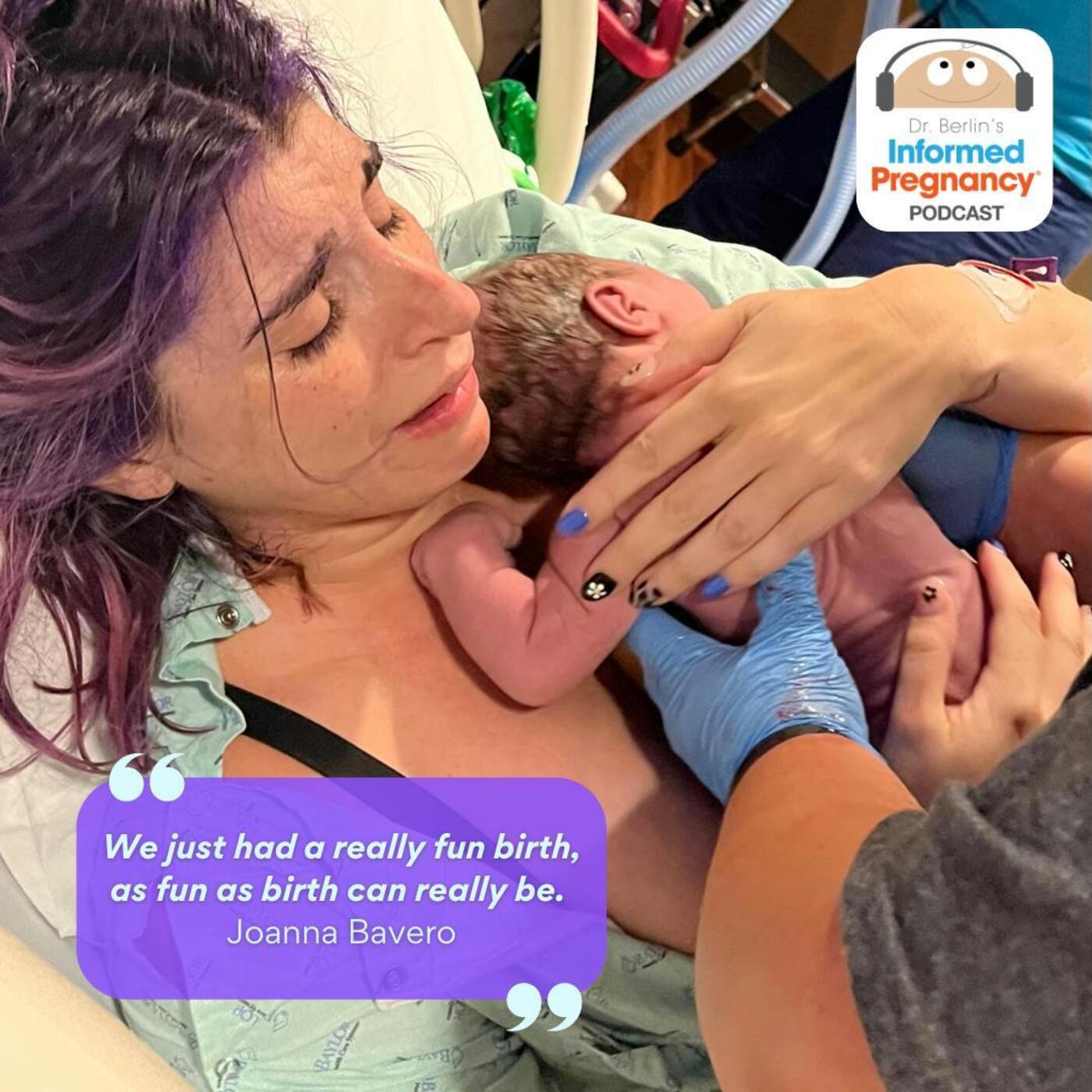
Joanna Bavero [51:40] Yeah. It's a silly video, which is just so in line with who my son is. He's such a ham and he's just like the happiest baby, always smiling and laughing. And we just had a really fun birth, like as fun as birth can really be.
Dr. Elliot Berlin, DC [51:58] We were just cracking jokes and I love comedy births births. You know, I love lots of different birth, but sometimes you just feel that like lightness and comfortableness with everything that's going on and you laugh and smile and your body knows you're not in danger and you can relax better.
Joanna Bavero [52:17] Yeah.
Dr. Elliot Berlin, DC [52:17] Um, again, thanks for coming on. Thanks for sharing these two different birth experiences, both very real and from the heart. Joanna, where can we find you in your artwork?
Joanna Bavero [52:27] Yeah. So my Instagram is at Joanna Bavaro fine art. And I'm also on Facebook as Joanna Bavaro. And then my website is Joanna Bavaro.com.
Dr. Elliot Berlin, DC [52:44] It was going to be my guess. Yeah. I'm going to go check them out. Thank you again for joining me here and at home. Thanks for listening to the informed pregnancy podcast for more pregnancy and parenting information, just like this, visit us online at an informed pregnancy.com.
Want more pregnancy + parenting? Start your FREE TRIAL of Informed Pregnancy+ and get access to all our curated pregnancy and parenting content — original series, iconic birth films like The Business of Being Born, prenatal workouts and more.
