
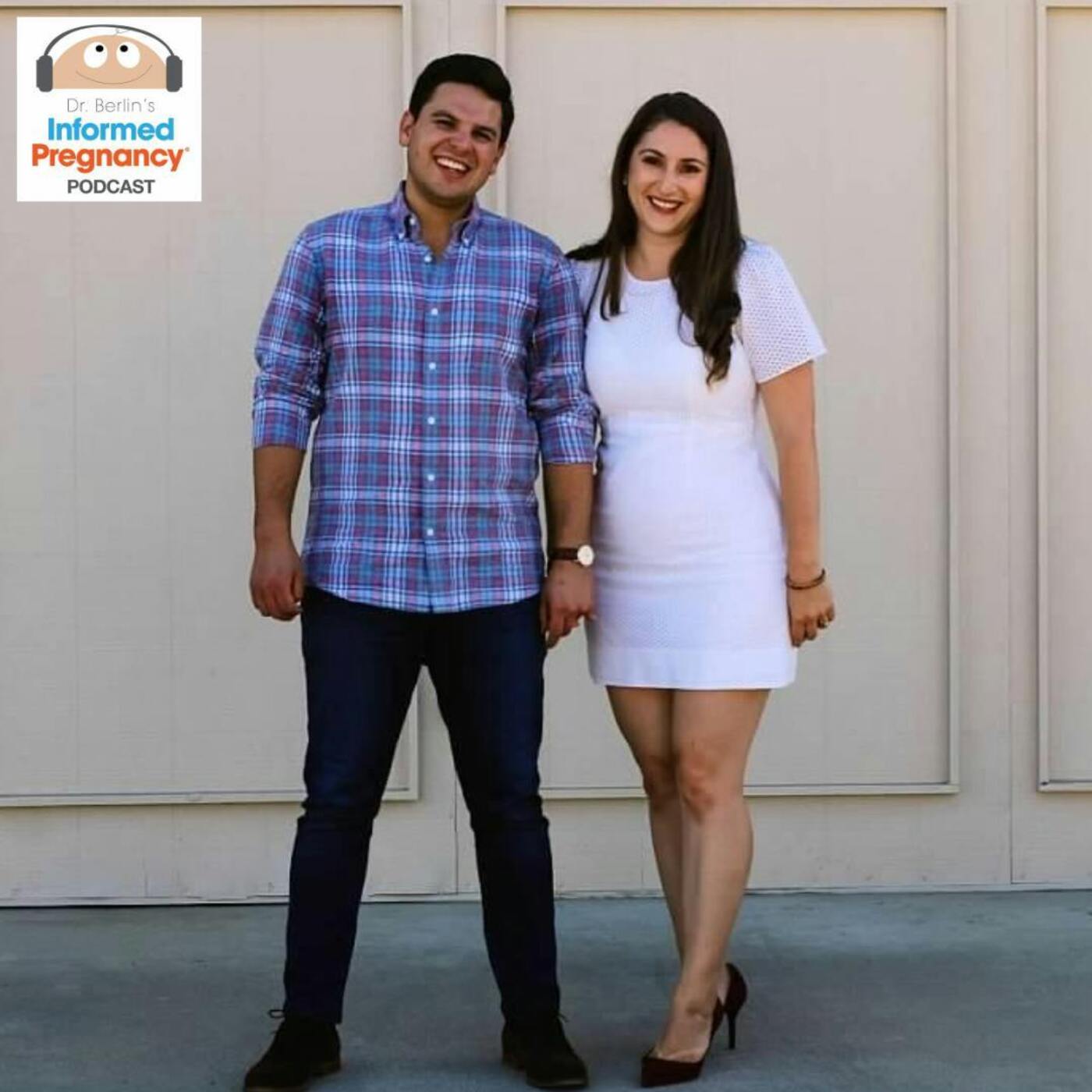
September 3, 2020 · 44 minutes · Episode 191
About this episode
Elise, an Informed Pregnancy Podcast listener, shares her very personal experience with late term pregnancy loss in hopes of helping others who might find themselves or a loved one in a similar situation.

Learn more about your ad choices. Visit megaphone.fm/adchoices
See Privacy Policy at https://art19.com/privacy and California Privacy Notice at https://art19.com/privacy#do-not-sell-my-info.
Key quotes
“I feel so lucky to be able to share my story with you and you've helped so many people and I'm just so Grateful to be able to be here with you and hopefully help support some more”
“With my oldest daughter, it was like it was blissful. It was like the best time of my life. It was so much fun.”
“what I want people who might be going through a loss to know is that while it has gotten easier overall, it's just gotten easier to live with. And grief is such a roller coaster. And the grief is something that I was unprepared for.”
“So I would say that just give yourself time, you know, a loss will break you and you'll feel dead and you will feel like you're at the end, but it won't, it won't end you, you can find out a lot about yourself and a lot about your own value.”
“But ultimately, I think what helped me the most was getting therapy and reaching out to a specific provider for maternal mental health.”
Related episodes
- Ep. 396 First Baby After 40 with Rachel Gerrol
- Ep. 162 Postpartum: When you don't bounce back
- Ep. 487 Love & Loss with Kristin Mundy
- Ep. 467 A Before & After Birth Story with Aimee Carrero: Part Three
Transcript
AI-generated transcript with speaker labels — may contain errors, especially names and medical terms. Dr. Elliot Berlin, DC appears in blue; Elise Serna in orange.
Download PDF of the Transcript
Dr. Elliot Berlin, DC [1:36] Welcome to the informed pregnancy and parenting podcast. I'm your host dr. Elliott Berlin in today's episode We're going to be touching on a very difficult topic that isn't talked about very much, which is late term Pregnancy loss if you listen to the podcast frequently you probably can tell I love what I do every day I get to go into the office and help really nice people for the most part feel better During a really nice time in life and once in a while when pregnancy doesn't go well It bites really hard even just to be around somebody who's going through that difficulty My guest today is a California native. We've only just met but I can already feel she's an incredible person
[2:17] just so much warmth and passion and she's come to share her story and The only reason why she's doing it is so that she could potentially help somebody else And it's a really courageous thing to do. I'm very grateful to you Elise Serna. Welcome to the podcast
Elise Serna [2:36] Hi, it's so good to be here I feel so lucky to be able to share my story with you and you've helped so many people and I'm just so Grateful to be able to be here with you and hopefully help support some more
Dr. Elliot Berlin, DC [2:53] Hashtag mutual Feelings are very mutual so you're from California originally
Elise Serna [2:59] Yes, I'm from a very small town outside of San Diego the Imperial Valley and I went to Undergraduate school at UC Santa Barbara where I met my husband and lived there for a while and then I lived in Texas and I Yeah, I know I Was studying abroad For a year I did some post-bachelor work there to get me to my masters and I'm a speech therapist by trade so I Worked in LA and that's where I was a speech therapist and I worked in the school setting with little kiddos and now we're in San Diego to be closer to family and to be You know away from the hustle and bustle of of LA
Dr. Elliot Berlin, DC [3:51] Yeah, it sounds really nice actually So when did you kind of go down the path of having kids?
Elise Serna [3:59] If you ask me too late in life, no, I've always wanted to be a mom I always wanted to have children of my own when I met my husband. I was like, yes I want to have your babies It was just a It's meant to be but I Remember like distinctly talking to my mom when I was little I carried my baby dolls everywhere They were my first children. I fed them. I flowed them. They went everywhere with me and I knew I wanted to be a mom when I met my husband and We waited, you know, we tried to do like the right thing of finishing our degrees getting married, you know Finding a very responsible place or what we thought was a responsible place and in LA to live to have a baby and so
[4:54] We just kind of started there going along that path. Do you work with kids? I did. So now I am a stay-at-home mom. I am able to stay home with my daughter.
Dr. Elliot Berlin, DC [5:05] So you stay home.
Elise Serna [5:06] I love it.
Dr. Elliot Berlin, DC [5:07] You just keep working. So how long was it from the time that you thought, I want to have your babies until you actually set out to have babies?
Elise Serna [5:17] Almost 10 years.
Dr. Elliot Berlin, DC [5:18] Oh, wow. You waited for the elusive perfect moment.
Elise Serna [5:22] Right? Yeah, we were. Yeah, exactly. I mean, I think now there is never a good time. Like timing is, you know, so sensitive in general of a concept. But after my husband and I got married, you know, we wanted to wait a little while and buy a house and do all those things, check all those boxes. But my husband and I had been married. It was almost two years when we had our our first daughter.
Dr. Elliot Berlin, DC [5:48] Oh, and then once you started trying to get pregnant, did it take long?
Elise Serna [5:53] No, my husband would proudly tell you that it was not very long. But no, it was such a beautiful time. It was such a beautiful experience to just be in that stage. And I guess technically, I guess we still are in that stage of like the idea of having babies and, you know, raising a family and that kind of thing. So, no, the time from when we started to think about having kids to when I got pregnant with my daughter was very quick.
Dr. Elliot Berlin, DC [6:23] How was pregnancy for you?
Elise Serna [6:26] With my oldest daughter, it was like it was blissful. It was like the best time of my life. It was so much fun. That being said, I did a lot of work. Like, I really delved deep into the birth world. I did a lot of like I researched hypno birthing. We did hypno birthing. I was very mindful about like what I was putting out into the world, you know, when I was pregnant because I wanted to have such a happy pregnancy. I wanted to be so just like blissed out with my belly and with my daughter. And it kind of worked because she was just so healthy all the time. She just had such a personality already in my belly from like day one.
Dr. Elliot Berlin, DC [7:16] I have to get more blissful with my belly. That's a goal. That's one of my goals for this year. New Year's resolution, blissful with my belly. You said hypno birthing. Are you more of a natural minded person in general or just when it came to birth?
Elise Serna [7:31] Yes. So yeah, that kind of came coincided with getting pregnant. I kind of delved into that natural world. I always knew I wanted well, I initially had wanted to have a water birth with my daughter. But then my husband was like really? I think I kind of took him aback by how I don't want to say natural, but how natural I was with my intentions with my daughter. And he was like, where did this come from? Like all of a sudden you want to have an unmedicated birth? Like, are you sure you want to be doing this? And I was like, yes. And I did and I did. I had a successful unmedicated birth with her. I ate a million dates. I had a doula, you know, I listened to your podcast.
[8:17] I listened to a million other podcasts.
Dr. Elliot Berlin, DC [8:20] Were you in a hospital?
Elise Serna [8:22] I did. So I delivered, I don't know if I can say the name, but I delivered in a downtown LA hospital, which my husband was a little bit nervous about and he was like, are you sure you want to deliver there? But they had really good reviews for their labor and delivery and I had an amazing experience there. I recommend all my friends who live in that central area of the downtown area. So we're like, Highland Park is where we were.
Dr. Elliot Berlin, DC [8:53] Oh, yeah. Did your hypnobirthing come in handy?
Elise Serna [8:56] Yes. Yes, it set. Well, I did it with a previous guest on your show Alicia Tempere and she was amazing. And, you know, it was so validating for me because it was everything that I had kind of intended. And like I had always told my husband like, oh, this is, you know, you have to deny the IV and like all the stuff, you know, and then to have her say it, my husband was like, oh man, yeah, you know, that should really and I was like, man, I told you that, you know, but to hear it from someone else, it clicked for him.
Dr. Elliot Berlin, DC [9:34] I think a lot of partners are like that. You hear from your own partner, it goes in one ear out the other. You hear from somebody else like, oh, that's interesting. And also Alicia, especially she's like a little Jedi. I feel like she has magical powers and she'll just say things three times and you have to do it.
Elise Serna [9:48] She does and she was so soothing and like I channeled so much of that during my birth and like it just helped and my husband, I mean he kind of of was suspicious of the title of hypnobirthing, but he really got on board and he was such a good partner. And if you ask him, he gave birth unmedicated as well, so, you know.
Dr. Elliot Berlin, DC [10:10] Did you have a doula with him?
Elise Serna [10:13] I did. I did. We did the doula route and I'm so glad that she was there because, you know, in the moment she wasn't really as supportive for me as I thought she would be. But for my husband, my husband was so glad to have her there. Like he was like, oh, you know, just someone else to talk to or to kind of like he would take a break and like go to the restroom and run and hide as I was delivering unmedicated as I was laboring. But I think it really helped him, to be honest, more than me. But I loved her and she was great. And I didn't want anybody at the birth. I just wanted it to be me and my husband and this doula who I had just met two weeks
[11:00] prior. But no, you know, it worked out really well.
Dr. Elliot Berlin, DC [11:04] Close to your delivery. It sounds like it was a magical experience. From the way you describe it, you put in a lot of work, researching and mind preparation and body preparation and it paid off. You had a good experience.
Elise Serna [11:19] It was beautiful. I loved it. It was so great.
Dr. Elliot Berlin, DC [11:22] Let's take a little break and when we come back, we will talk about your second pregnancy. We'll be right back with Elise Serna.

Dr. Elliot Berlin, DC [13:56] Welcome back to the Informed Pregnancy podcast. We are talking to Elise Surna. After your beautiful first birth story, how was your transition to motherhood?
Elise Serna [14:06] It was good. It wasn't as beautiful and blissful. I mean, a little bit of a bumpy ride, I would say. Yeah, I think nothing can prepare you for the sleep loss, the sleep deprivation, those first four weeks. Everybody says, oh, get your sleep now, but there's no way to prepare for that. It's crazy. We were so tired, and my husband was such a good help, too. It wasn't like I was by myself or anything. He was such a good helper, but we were tired, and breastfeeding was a whole ball game of learning curve. It was tough. I mean, I think like that, what do they call it? The fourth trimester was definitely a learning experience. But then I feel like once you've started sleeping through the night,
[15:00] and it got easier and then it became pretty blissful and then it was all good, yeah.
Dr. Elliot Berlin, DC [15:05] How soon after you had her did you feel ready to do it all over again?
Elise Serna [15:12] About six months, so when I was like six months, yeah and I think you know just from my own thoughts like I was like maybe I was so ready again because I had such a beautiful pregnancy with her and I had such a beautiful delivery and it was pretty much everything that I wanted so when she was six months old I was like ooh okay like let's start thinking about it again but I knew that would be pretty crazy so I like for my own self I thought oh maybe that's like a little too much so we waited, we meaning I told my husband let's wait a little bit longer but yeah it was I mean it was fairly short timing like I really wanted my children to be close
[15:59] in age you know I thought that I could plan it and you know I was blissfully ignorant I guess but you know. Did you have your cycle back even? Yes yeah so at six months exactly I think it was I was trying to remember the other day but I think it was yeah it was six months exactly I was breastfeeding I breastfed my daughter for a year and so I don't know it was like my body it was just like a click a little switch oh yeah everyone gets it back at a
Dr. Elliot Berlin, DC [16:26] different time I wonder if you willed it back because you were ready for another one that's an interesting I know maybe at least you're gonna have to tune into this podcast that was a little like that so from the time you decided let's get pregnant again would your
Elise Serna [16:46] husband very proudly say it happened quickly again yes he was like don't worry about it and I was like okay you know like maybe I should eat like you know do a diet like encourage one gender or the other get my body ready like you know all those things that I was like totally ready to dive you know into head first in terms of like researching and planning and he was like babe don't worry about it we're gonna be fine it's gonna be great and it was
Dr. Elliot Berlin, DC [17:16] oh and you got pregnant quickly yes we're lucky yeah so did that pregnancy I mean a lot of people say the second pregnancy is more difficult I would imagine you're always older so that plays a role you've been pregnant or taking care of a little tiny human for a while less time for self-care sometimes when you already have a toddler
Elise Serna [17:37] how was the second pregnancy for you um it was actually better okay once in a blue moon somebody says that no I'm just like such an anomaly no um it was actually better because I was uh less tired with my daughter I could fall asleep it was actually very funny because some people early on in my pregnancy found out I was pregnant because they came to the house at like 4 p.m or 5 p.m and I was like dead asleep I could sleep with my daughter I remember one time I was driving home and I realized I was like oh my gosh I'm so tired this is probably unsafe right now and I like had to just drive straight home because I was so tired and I could just sleep forever and with my second pregnancy with my second daughter
[18:28] I had a lot more energy which was nice but you know I just was so excited maybe that was what was you know really propelling me forward but I was so excited and so we're still living in Los Angeles no we moved out of LA when my daughter was about seven months old and we moved into a bigger house here in San Diego and so maybe that was it too like the move like I felt like we can spread out now like maybe I have you know some more room to grow um but no and that was like another learning curve too of finding another doctor who would support me and I was so bummed that I was gonna have to find another doctor in another place to give birth and it ended up being okay yeah what did you settle on so I really wanted a home birth um
[19:24] initially but I was not quite in the mental space for that fight yet so I settled on um UCSD here University of California in San Diego has a whole wing a whole midwife department similar to UCLA but I think it's a little bit bigger um in comparative size and they have a whole wing at the hospital and they're really really supportive of unmedicated birds they have a lot of doulas on call and so that's ultimately, where I chose to live out my second unmedicated birth.
Dr. Elliot Berlin, DC [20:05] How did things go as you got closer?
Elise Serna [20:09] Well, there were just like little things that right away from my first appointment, they found something in my blood called an antibody that is very, very rare. So my blood built up kind of a resistance to my husband's blood. So I developed it kind of it's under the umbrella of the RH factor. And so they were monitoring that there's no cure. So they were just monitoring me to make sure that my blood was not fighting with the baby's blood to put it very, very, very basically. So right away, they found that. And then at 14 weeks, they found that she had a filamentous cord insertion. And that's just a difference in the placenta that they kind of assured me was not anything that I needed to be concerned about.
[21:03] But it was something that they would have to monitor throughout the labor. So it was just kind of one thing after another that I felt like, oh, this is very different than my first pregnancy. This is very a very different case in terms of, you know, my previous my oldest daughter was so just everything was picture perfect, textbook perfect. And then this pregnancy, my second pregnancy, it was just a little bit different every appointment. It was just different.
Dr. Elliot Berlin, DC [21:34] And then as you got closer to the end, were there other things or was it those two things that they were still monitoring? Would your body's blood attack the baby's blood, essentially? And with that cord, which is not inserted in the typical way, would it stay attached to the placenta and keep feeding the baby?
Elise Serna [21:54] Mm hmm. Yeah, those were the two main things. And I was having monthly blood draws and I was still under the umbrella of the midwives, but I was seeing a perinatologist. And everything from their aspect was going well. They all just thought that I was still on track. She was growing. She was moving around. I started feeling her kicking pretty early. One of the midwives was like, I don't think that you actually she was like, you know, kind of looking at me skeptically when I said that I had started feeling her kicking it 15 weeks. But I knew what it felt like because my older daughter and I knew. So, yeah. OK.
Dr. Elliot Berlin, DC [22:40] When did things change? When all of a sudden they not go as well?
Elise Serna [22:46] Well, at about 26 weeks, I just started to feel different. And I've asked myself so many times, like, what was it? And I couldn't even put it into words. And I remember telling my husband, like, I just feel not good. I'm feeling her kicking less than I would feel her kicking less. And I I was not feeling well myself, but it wasn't like something that I could put my finger on. I was more tired. I was just kind of like in a funk. And my husband was saying, well, call your doctor, you know, call and see what's going on. And I was kind of putting it off. And I was thinking, OK, well, you know, I have my 28 week appointment coming up and maybe maybe I'll just wait and I'll ask them for an extra ultrasound then.
[23:37] But at 26 weeks, she was still moving. She was still kicking. And so I was thinking, OK, it's maybe it's just me. And then at, you know, like 26 weeks and it was like five days, I started really noticing that she was moving less. And it was right around Thanksgiving. And so I was thinking, you know, Thanksgiving was on Thursday. And I remember thinking like, OK, I need to call my doctor. I need to do this. And on Friday, I was so tired just from like the holiday. I was almost seven months pregnant with my two year old or my she was almost going to be two and a few short months. And so it just was like that moment of I didn't want anything to be wrong.
[24:25] As terrible as that sounds, but that Monday. So I was almost 27 weeks on Wednesday. So that Monday, I knew something was wrong. I got super puffy. I kind of like puffed up and I was really tired and kind of dizzy. And so I just knew something was not right.
Dr. Elliot Berlin, DC [24:45] Did you call the doctor at that point?
Elise Serna [24:48] Yeah. So on that Tuesday, I emailed my doctor and I said, hey, you know, I'm wondering if I can bump up my appointment to. 27 weeks instead of 28 can I come in tomorrow and the way that the email service works no one got back to me and I was not sure how to move forward I wasn't sure if I should call the midwife or if I should call the perinatologist and so on Wednesday morning I just woke up and I called the hotline there's like a hotline and I said I don't know who I should talk to but I really need an ultrasound and I'm just really worried my baby's not moving and at that point she had really not been moving and they said okay well you're very advanced you're almost 28 weeks and you need to
[25:38] come just straight to the hospital to do a non-stress test and so that's what I did so I took my daughter and it's just to my next-door neighbor and I drove to hospital oh yeah you were by yourself I was by myself it was just this really unlucky turn of events my husband had driven up to LA the day before to actually give his final notice to his job there in LA he was still working remotely here in San Diego and so he was in LA and I called him and I said hey I'm I have to go to the hospital I think everything was okay but I still was really hoping that everything was okay and he actually left the day before on that Tuesday and I said please don't go
[26:23] I'm not feeling well you know I just really want you to be here just in case you know if anything happens and I don't want to say that I knew but maybe some part of me knew that she was not as healthy as I had hoped that she would be and I really just wanted him and he he was like no I have to LA and so he was in LA and I drove to the hospital well at least if you don't
Dr. Elliot Berlin, DC [26:52] mind I would just take our final break oh yeah come back and hear the rest of your story okay yeah all right we'll be right back welcome back to the informed pregnancy podcast we're talking to Elise Serna so you went to the hospital by yourself for a non-stress test what happened when you
Elise Serna [27:23] got there I just got really calm and I don't know how to say it but I just thought super like maybe all that birth work with my older daughter I just got super hyper focused and I was like okay like I don't want to get emotional or like lose my cool because I have to be present and I knew I had to make a decision to be calm and to be mindfully present at that time because as soon as I got there they strapped me to the heart rate monitor and I heard her heart and I was like oh my god thank god and I just like immediately got a wave of relief came over me and I was so happy that I went and I called my husband I said don't worry I'm hearing her heartbeat and you know
[28:17] don't worry you don't have to come home from LA and as soon as I hung up it was like strategic timing the nurse came in and she was like okay the baby's not moving and we're gonna give you some juice and then I drank a juice and then like two seconds later was when it just all went dramatically downhill and like 12 people came into this little tiny room of the stress test and they started hooking me up and doing a big ultrasound and right away I knew just because I could see the ultrasound and there were like it was like two perinatologists and they just were not very reassuring looking and they said that she wasn't moving and that even though her heart was
[29:02] beating pretty solidly that she was really struggling and she had developed high drops and high drops is a form of anemia or it is they believed that the high drops that she had was based from previous anemia so it was tough. What were they recommending that you do? Well right then I mean they did the stress test and there was not good scores and like right away they were like okay let's deliver this baby let's have a c-section and for like those five minutes that were following I was just like oh no like I've done hypnobirthing oh no are there any other options you know can we wait for my husband one of them but you know are there any other alternatives
[29:54] and it was very clear right away there was no alternative I checked in the hospital at 9 and she was born at 11. Oh Two hours later. Yeah, so it was was very fast moving by c-section Mm-hmm. It was you know, all that prepping and you know time in a hospital goes so slowly And I think that turnaround really indicated that it was supposed to happen quickly for them And it was it was a cesarean birth Yeah, I mean just mechanically. How was that for you? It was awful. It was I mean, I just like once again, I was just trying to stay calm and I was trying to you know be so Present and thinking okay, like this is what's happening. This is what's happening and every alarm that was going off
[30:52] You know, like no, I don't want to have a c-section I I give birth and I remember like almost telling the doctor like I give birth really well I think didn't I'm medicated please like and I just realized you know as I was being wheeled into the Or like oh my gosh, this is I'm living my worst Possible nightmare not just like my own birth nightmare, but like my own You know just being alone Being in an OR like it's all very There's no empowerment with a c-section There's no it's a different scenario than what I had had before and also just being so premature and Yes, and knowing that that something was not right with the baby Right and yeah, and that was you know knowing because of the high drops the staff was
[31:48] Amazing and they were so so great and I think I was still Very much in shock even like as they were like putting me on the table I was in such shock and I remember like leaning down From my spinal block because they did a spinal block and I remember thinking like oh my god This is what it's happening and I just couldn't believe that that was like the outcome that you know Just you know a week prior. I felt like she was fine. She was happy. She was healthy You know, I was going down this road of like Another unmedicated birth and then boom like, you know in a matter of days Everything changed every and in a matter of hours that everything changed right after her birth
Dr. Elliot Berlin, DC [32:35] What happened next were they able to put her on you or did they have to take her away for?
Elise Serna [32:40] No, the whole team worked Really, you know to be honest. I I've even Not sure who was even there I know it was a whole NICU team was there I mean there were 20 people in the room and it was really really quiet and it was really really intense and I was just by myself. I was wondering what was happening one of the perinatologist came After she was born and he said, you know It's looking pretty grim and he was like she's gonna have a very difficult journey You know it if she is able to be revived I think that's I think he used the word revived, but you know, it was all just such a blur at that point and I just kind of Well, I was in so much shock and so much disbelief and I know that you know
[33:36] It's crazy to say like how can you not, you know be aware of what was going on But it all happened so fast and it was so quick and it was I mean it
Dr. Elliot Berlin, DC [33:47] Must be surreal on some level very much I think just the human mind alone just kind of Mutes things to protect you a little bit from how strong the feelings would be otherwise in the moment
Elise Serna [34:00] Yeah, and I didn't want to get hysterical like I was already so scared Having a spinal block and I was like, oh my gosh if I start crying then maybe I wouldn't be able to breathe and One of the the anesthesiologist actually was so nice and he said do you want to listen to some music and At that time Kanye's album had just come out and I was like just like You know, and it was just a really big moment of relief that it was like a It was very comforting and so yeah So I was like listening to God you came trying to think here what the doctors were saying and I mean Laughed right now, but it was it was awful and I just wanted my husband to be there
[34:44] but then I was also grateful that he wasn't because I don't know if I could have remained so strong and Have him next to me
Dr. Elliot Berlin, DC [34:54] Were they able to revive her?
Elise Serna [34:57] No No And, um, I think I forgot who she was, but she was with the NICU team and she said, well, we, we did, you know, I think she said it was like 50 reps or no, she said normally we do 50 reps, but we gave her 70 and she was sweating like I could tell she at one moment in the O.R. just everyone was crying and it was really hard and I looked around and I was like, oh my gosh, you know, everybody was crying for me and my baby and to see that level of emotion and to see her dedication and when she told me, you know, we, we regularly do 50, but we tried so hard we did 70. I think she was talking about, um, reps on the panel. I don't know. I don't know, to be honest. I know, I don't know what it was, but everybody tried
Dr. Elliot Berlin, DC [36:05] very, very, very hard. I'm so sorry Elise. You know, it was, it was tough. It's,
Elise Serna [36:13] it's, it was tough because that's not the outcome that anybody envisions, but it's definitely was the furthest from my mind that it could ever be a possibility for me, for my baby, for my family, for my daughter, for my older
Dr. Elliot Berlin, DC [36:33] daughter, you know, I have so many questions. One is, do they know what ultimately happened if it was one of those two things that you mentioned earlier?
Elise Serna [36:43] So apparently no, it was nothing that they were monitoring. Um, a very long story short because of the high drops. It's a very, very, very rare condition that's, like I said, it's sometimes caused by anemia. It's sometimes caused by an infection. Um, they wanted to determine the cause of that. And so I, by virtue of delivering at UCSD, I participated in a research study and they looked at a lot of different things. And ultimately it came down to genetics, I guess. And so that I think that's where we are in this journey of determining what the cause was. And we did some genetic counseling and that's what they, they kind of decided was the cause.
Dr. Elliot Berlin, DC [37:37] How long ago was this?
Elise Serna [37:40] It was about eight months ago.
Dr. Elliot Berlin, DC [37:42] How has your recovery been since then?
Elise Serna [37:47] That's, that's the part of the story that I really want to share. And what I want people who might be going through a loss to know is that while it has gotten easier overall, it's just gotten easier to live with. And grief is such a roller coaster. And the grief is something that I was unprepared for. And I think that living through loss, whether it's loss of a baby or whether it's loss of a family member or a loss of a relationship, grief is something that is, it is a beast. It is a wild ride that you can't prepare for because everyone's grief looks different. And so in these eight months, I've learned so much about grief and the grief grieving process and how I personally deal with
[38:53] loss and how my husband deals with loss and how our grief and our navigating loss can look very different.
Dr. Elliot Berlin, DC [39:02] From each other?
Elise Serna [39:04] From each other. Yeah. And right away in the hospital, you know, just how we handled it. He arrived as I was being wheeled into the recovery room. And right away, we both handled it just so much differently than each other. And his grief looked very different than mine. And it still hurt them. You know, I had to be the one, like I said, you know, I was kind of glad that he wasn't there because I would have had to support him as well and supporting my own self through that. But right away, you know, he started crying and his grief was very physical and he was very emotionally upset. And I was still very in disbelief. I was in the shock and denial of grief. And I think he already had gone to
[39:58] the pain and the guilt. stage of grief. Like he right away wanting, you know, to call all of his family and get that support. And he needed the faces to be there next to him. He needed the voices to tell him that, you know, he was loved. And I wanted none of it. I didn't want anybody there. And, you know, to the whole stage of these last eight months, I've just wanted to be very private in my own grief, and which is ironic because now I'm on a podcast. But I wanted to be very private and he needed all of that support. He needed the room full of people giving him hugs and supporting him that way.
Dr. Elliot Berlin, DC [40:42] Have you been able to find some common ground?
Elise Serna [40:46] Yeah, you know, we've definitely had moments of common ground and we've definitely come together in our grief, ultimately. But I think that's something that is very important to think about when you're thinking about loss is it can be isolating from your partner as well. And the way that you handle your grief, does it look like the way that your mom would handle her grief or your partner would handle their grief or the way that maybe you would have handled your grief years prior or with a different relationship. And so we've been able to find common ground, but it was very, very difficult at first just because we were grieving differently. But ultimately we
[41:37] realized that, you know, coming together is what we needed.
Dr. Elliot Berlin, DC [41:41] Again, I'm just really grateful to you. This is obviously still quite raw and you know, it makes sense that it would be. And for you to be interested, to reach out to us, to want to share your story because ultimately while birth tends to go pretty well and pregnancy tends to go pretty well, this happens. Anybody who's in the birth world for a long enough period of time will see it. And it's always so difficult and so challenging and hard and sad. And, you know, some people who listen to our podcast are birth providers, we have medical doctors, we have midwives, we have do-bas and nurses. And some people are expecting or new parents or people just curious about
[42:31] pregnancy. And in all those groups of people, I think that being able to hear someone, you know, strong and courageous to be so upfront and real about the story and the journey and the experience that you had, you're definitely, definitely going to help people out by sharing. So I really appreciate you. Is there one take home idea or message or thought or resource that you can think of that might be helpful to somebody else should they end up in the situation?
Elise Serna [43:09] I mean, yes, yes, yes, I have so much, so much to say. But yes, I think allowing yourself to grieve and allowing yourself, all those emotions are justified. You know, I thought there were only five stages of grief, but I've learned that there are up to 12, but seven, you know, the pain and the guilt and the bargaining and the anger, all of those are so, so real. And I would encourage anybody to be open with themselves and feel whatever they're feeling and know that that's okay. And I would hope to encourage you to have grace and show yourself grace and allow yourself that, that time to, to grieve and to heal the way that you feel like you need to heal, whether that's
[44:08] like my husband, you know, surrounding yourself with a lot of people and, you know, getting all the hugs and the kisses and the, you know, support or whether it's like me, you know, just really focusing on my own self and processing the grief and navigating, I tried to best steer myself and learn all that I could about grief, kind of like how I went through the birth process, you know, I wanted to research all about it and learn and allow myself to understand everything. So I would say that just give yourself time, you know, a loss will break you and you'll feel dead and you will feel like you're at the end, but it won't, it won't end you, you
[44:54] can find out a lot about yourself and a lot about your own value. systems through grief. But ultimately, I think what helped me the most was getting therapy and reaching out to a specific provider for maternal mental health. And that was a very difficult thing to do, not because I wasn't searching for it or not because I felt like I didn't know where to look, but because there's not a lot of resources, I think, that are readily available. When I left the hospital, the hospital gave me all these really well intentioned brochures of grief support groups and, you know, navigating loss and specifically infant loss. And all of them were expired or all of them were groups that were no longer
[45:49] meeting or met on Tuesdays, and they were very well intentioned. But therapy is ultimately what I found in a therapist who specializes in maternal loss and maternal mental health. I was very lucky.
Dr. Elliot Berlin, DC [46:08] It's really invaluable to have that kind of support from someone who's so focused. And, you know, it's such a unique area that a generalist may be able to help you, but somebody who has experience in this field will probably be able to help you better. At least, again, I'm really sorry that you had this experience and you're just such a passionate person. I can tell that you're overflowing with maternal energy and love. And, you know, I just I send you a blessing of comfort that you should find comfort and meaning and that moving forward that you should have no more loss or suffering or grief.
Elise Serna [46:51] Thank you. That means so much.
Dr. Elliot Berlin, DC [46:55] I really appreciate you. At home, thanks for listening to our podcast. For more information and we'll try to put some of the resources that Elise mentioned, visit us online at informedpregnancy.com.
Want more pregnancy + parenting? Start your FREE TRIAL of Informed Pregnancy+ and get access to all our curated pregnancy and parenting content — original series, iconic birth films like The Business of Being Born, prenatal workouts and more.
