
February 29, 2024 · 30 minutes · Episode 396
About this episode
It’s an unbelievable personal story about the long path to parenthood. Recognized for her dynamic work in innovative philanthropy with a global impact, co-founder and CEO of NEXUS Rachel Gerrol joins the podcast to talk about her years long IVF experience, her first pregnancy at 45 years old, and how she’s preparing for birth.

NEXUS is a premier international community of young investors and social entrepreneurs who collaborate to use their wealth to accelerate social, political, and environmental justice and change.
Connect with Rachel online: @rachelgerrol
Learn more about NEXUS: nexusglobal.org
Key quotes
“Yeah, I think that the pain and fear and loss inspires you to think, what can I do differently? And how can I have any element of the future pregnancy is controlled for? And if there exists a science or a technology, I wanted to leverage it.”
“It was one of those kisses for the storybooks. I can't unremember it. So I said, well, this was definitely meant to be. I know this is going to work. And people lit candles all over the world for us on February 2nd. And now I'm going to have a baby in about a few hours.”
“You know who you are. You know how strong you are. You know what you can do. And everybody seems to just give you extra credit every day.”
“And as a result of all those things, I feel better than I felt in 15 years. I feel stronger. I feel healthier. I'm happier. My body loves me. I love my body. It's great.”
“And so I think surrendering to honor what's medically sound and what my child probably is telling me he wants are things I'm willing to do.”
Related episodes
- Ep. 393 Directing Your Own Birth with Rylee Ebsen
- Ep. 395 Birth and Advocacy with Dawn Thompson
- Ep. 394 Radical Love with Alexis Jones
- Ep. 397 Rachel Gerrol: After Birth
Transcript
AI-generated transcript with speaker labels — may contain errors, especially names and medical terms. Dr. Elliot Berlin, DC appears in blue; Rachel Gerrol in orange.
Download PDF of the Transcript
Dr. Elliot Berlin, DC [0:12] Welcome to the Informed Pregnancy and Parenting Podcast. I'm your host, pregnancy-focused chiropractor Dr. Elia Berlin. My guest today is the co-founder and CEO of Nexus, a global company created to bridge communities of wealth and social entrepreneurship. But what I'm excited about, in addition to that, is that she's currently pregnant and expecting her first birth, and she's 45 years old. Rachel Jarrell, welcome to the podcast.
Rachel Gerrol [1:00] Thank you. Thank you for having me. It's my pleasure to be here.
Dr. Elliot Berlin, DC [1:04] I really want to do on the podcast because I have a lot of patients who are in their 40s, and oftentimes I'm like, God, you have, like in your case in particular, more energy than two nuclear submarines. Pregnancy can be amazing, and they have all these interesting terms for it when you're over 35. But I wanted to find out more about you because every time you come in, I leave and need to take a nap. I'm worn out by your amazing energy. Let's start at the beginning. Where are you from originally?
Rachel Gerrol [1:36] I was born in Brooklyn and raised in Brooklyn and in Princeton, New Jersey.
Dr. Elliot Berlin, DC [1:40] Which part of Brooklyn?
Rachel Gerrol [1:42] Park Slope.
Dr. Elliot Berlin, DC [1:43] Park Slope. I was right over the bridge in Staten Island.
Rachel Gerrol [1:47] There you go. Shame we didn't meet then. I mean, I thought you looked familiar, except that nobody looks familiar to me.
Dr. Elliot Berlin, DC [1:54] Anyway, moving forward. So from Brooklyn to?
Rachel Gerrol [1:57] Princeton, New Jersey.
Dr. Elliot Berlin, DC [1:59] Joyzee, the Garden State.
Rachel Gerrol [2:01] Yes.
Dr. Elliot Berlin, DC [2:02] And then did you spend a lot of time in Princeton?
Rachel Gerrol [2:04] No, I actually went to college at Penn, which is the arrival of Princeton. So skedaddled out of there down to Penn and then was in DC for 15 years, trying to change the world and then New York. And then there was a pandemic.
Dr. Elliot Berlin, DC [2:19] Oh, and that's it. Thanks for joining us. Okay. Wow, so much. What did you study at Penn?
Rachel Gerrol [2:27] I studied sociology, so clearly I didn't want a career.
Dr. Elliot Berlin, DC [2:32] It's funny. Yeah, I was wondering what sociologists do, but I didn't study anything like that. But I did spend a lot of time in anthropology, the store, buying stuff for my wife to make up for when I screw stuff up in the marriage. So I'm sort of an anthropologist.
Rachel Gerrol [2:48] I see that. And your wife benefits. So that's great.
Dr. Elliot Berlin, DC [2:51] Yeah, it works out well. If that store goes under, I'm in deep trouble. So sociology, but was there a drive, a mission, an end goal?
Rachel Gerrol [3:01] I went into college, I think wanting to be on the news and be in some type of a important capacity where I was talking about important things. And I didn't know what the important things were. And then somewhere in the middle of my college experience, I got offered this free trip to Israel and I went and I came back and I realized that I didn't want to talk about important things. I wanted to help heal the world and do important things. So my shift in my thinking was towards, how do we help society heal itself and be the superheroes that we've been waiting for?
Dr. Elliot Berlin, DC [3:36] Oh, that's so interesting. Now I have to think, do I want to be on TV talking about stuff or actually doing stuff? Depends on the day. Sometimes I just want to be on the sofa. So DC, what brought you there in 15 years is a good amount of time, what'd you do there?
Rachel Gerrol [3:54] So I think when I graduated Penn, the people who wanted to make money went to New York and the people who wanted to change the world or changed our country went to DC. So basically two of us went to DC and so I worked in lobbying for a year and then I worked for an amazing ambassador to the UN, Nancy Rubin, who was the U S ambassador to the UN for human rights and really learned about how we can try to influence policy and hearts and minds and make a better world. So I tried to do that for a very long time and then stumbled and by accident happened to create this nonprofit that I run today. Accidental babies. I'm familiar with an accidental nonprofit.
[4:39] So every year is the international year of something and 2011 was the international year of youth and the preamble to the United Nations says we the peoples, not we the nations. So any person can write to the UN under the international year of banner and say, I'd like to host a program about. And so I. said, I'd like to host a program uniting next generation young people from the world's most influential families, bring them together to the UN and figure out how they could leverage their access and their influence to try to make a difference on humanitarian issues. And the UN said, sounds great. We'll give you a room. You can do this in six weeks.
[5:19] And so we had six weeks to just host this event for fun. And that happened to go well. And so people got in a long line and they said this was meaningful. And I met people who cared about human trafficking or climate or other things that they didn't know that they had allies in who just lived in other countries, but were similarly positioned to make a difference. And so people got in the line at the end of the event and I thought they were coming to thank me, but they said, this is great, but there aren't enough people from Africa and there aren't enough people from Saudi and there aren't enough people from Australia. And I thought, well, that's really nice,
[5:51] but the event's over. And they said, this can't be over. We need to continue these conversations. We have the ability to make real change happen fast, but we came because we were invited. And so I said, okay, I'll go back to the UN and get a bigger room, see if we can do this again. Once the only caveat is it has to be this year in the international year of youth. So let's work on it, but you're the only people who responded to my cold calls. So they each, those 75 people who came to this event, each invited three or five more that they thought around the world were young people who could really move the needle. And I got a bigger room. And at the end of the second event,
[6:28] people said, this needs to come to China. This needs to come to the UK. And I realized I had birthed a movement by accident. I'm also tough. The birthing of a baby was much harder than the birthing of a global movement. I'll just tell you.
Dr. Elliot Berlin, DC [6:43] I gotta tell you, for cold calling, 75 people is, you got an incredible response, especially people who are probably contacted much more often than they can reply.
Rachel Gerrol [6:55] I think I'm pretty good to talk to. But I also think when you get to say, come join us at the UN, you're only invited to send one member of your family who really cares about making an impact. That scarcity mindset, I think also works pretty well.
Dr. Elliot Berlin, DC [7:08] Oh yeah, good call, good strategy. Okay, so now that's like a whole thriving thing, because this was more than 10 years ago.
Rachel Gerrol [7:18] Yeah, almost 13. We've done over 45 summits all over the world with heads of state since then.
Dr. Elliot Berlin, DC [7:24] Wow, incredible. Congratulations.
Rachel Gerrol [7:27] Thank the people. I'm just here to do what they want from me.
Dr. Elliot Berlin, DC [7:30] I wanna take a little break. When we come back, talk about your journey towards parenthood during that time and leading all the way up to right now. We'll be right back.

Dr. Elliot Berlin, DC [10:12] Welcome back. We're talking to Rachel Jarrell, plus one, your little baby. Not yet here, but imminent. How many weeks are you? I'll be 39 weeks tomorrow. Out of like traditionally 40. Yes, out of traditionally 40. All right. So I want to talk about this pregnancy, but fertility-wise or on the journey to parenthood, when did that start for you? Did you envision yourself as a mom in general, and if so, at a specific point in life?
Rachel Gerrol [10:47] You know, I am the oldest of three, and I have two cousins who are like siblings, so I'm the oldest of five, basically. And I was there when my brother was born, up until the last minute. And when my sister was born, the whole time, and cutting the umbilical cord. Where were they born? My brother was born in Brooklyn, and my sister was born in New Jersey. At home? No, at hospitals.
Dr. Elliot Berlin, DC [11:12] Oh, so you were in the hospital like a kid relatively.
Rachel Gerrol [11:16] Oh, yeah, definitely as a kid. Yeah. How was that for you? It was the best contraceptive you could ever imagine. I was like, I'm not going to do that, anything that could get me into that situation for a very long time. But truly those days that my brother and sister and my cousins were born, those four days were the best days of my life. And so I knew I would be a parent one day, and I would add more days to that best day of my life list.
Dr. Elliot Berlin, DC [11:44] Oh, that's amazing. But not a sort of plan on when?
Rachel Gerrol [11:49] Well, two years after we were married, we got pregnant, and that was thrilling. And that was 10 years ago. And that pregnancy didn't turn out. I'm sorry. Thank you. And I decided that I wanted to try to have control in my life and take charge. And so I wanted to go the route of freezing embryos and genetically testing them, so that never again should I have a pregnancy that would be a non-viable one. And I thought I was a genius for discovering this idea and taking a mortgage on our house to make it possible.
Dr. Elliot Berlin, DC [12:22] Oh, wow. Okay. Oh, all the best laid plans. And you're only 35.
Rachel Gerrol [12:27] Yeah, yeah.
Dr. Elliot Berlin, DC [12:28] No, I'm just saying you're young in terms of, I mean, I guess, advanced maternal age then too, but still young in the big picture.
Rachel Gerrol [12:35] Like, potentially I could have just kept trying.
Dr. Elliot Berlin, DC [12:37] Try again?
Rachel Gerrol [12:38] Yeah, without a new mortgage. Yeah, I think that the pain and fear and loss inspires you to think, what can I do differently? And how can I have any element of the future pregnancy is controlled for? And if there exists a science or a technology, I wanted to leverage it.
Dr. Elliot Berlin, DC [12:57] Okay, three questions if they're not TMI. Was that an intended pregnancy? And if so, did it take some trying to get there? And how far into the pregnancy was the loss?
Rachel Gerrol [13:10] It was intended in that it was our first attempt. So we didn't intend to get that successful. And I think we're about 10 and a half weeks in.
Dr. Elliot Berlin, DC [13:21] Oh, wow. So it was like in there.
Rachel Gerrol [13:23] We had planned the little, you know, in a week, we were going to announce to everybody and we had a cute little way.
Dr. Elliot Berlin, DC [13:28] That's so hard. That's so hard. I'm so sorry. And you felt so lucky because your first time trying too. You were infallible at that moment. All right. And so you stopped trying naturally?
Rachel Gerrol [13:44] Yeah, we just went straight to the best doctors we could find for all the best recommendations to do all the science.
Dr. Elliot Berlin, DC [13:51] And you made embryos or?
Rachel Gerrol [13:53] We made embryos and we genetically tested them.
Dr. Elliot Berlin, DC [13:56] Okay. And how many embryos did you end up with?
Rachel Gerrol [13:59] We ended up after three rounds with four embryos.
Dr. Elliot Berlin, DC [14:03] Oh, three rounds of IVF? At least the first part, stimulation and retrieval.
Rachel Gerrol [14:09] Yeah, exactly. So it turns out it was lucky that we did that because that was really, really, really low return on investment, I would say.
Dr. Elliot Berlin, DC [14:18] Seriously. Do they know why?
Rachel Gerrol [14:20] A lot of people use the word geriatric pregnancy, low ovarian reserve, unlucky. I don't know. We just kept trying and that's where we ended up.
Dr. Elliot Berlin, DC [14:29] I would just think because you're a mean person.
Rachel Gerrol [14:32] Also that.
Dr. Elliot Berlin, DC [14:34] Wow. That whole thing is so challenging. I mean, the pregnancy loss at 10 and a half weeks. And then I assume when you got into this part of it, you thought, okay, we'll get like eight embryos, put them in the freezer and just have kids as we want them.
Rachel Gerrol [14:47] Exactly. We thought we were geniuses doing everything right. And we did one round and oops, and two rounds and we didn't get anything. And then we switched doctors and did a third round. And then finally. thought oh we have four they're genetically tested as perfect that should give us two to three kids we thought and we're made in the shade we have an insurance policy in the bank now we can go build our companies and heal the world and come back one day and everything will be perfect and that's what we thought for probably eight years. Did you try using them? Yes so during the pandemic when my husband and I both run run our own companies two CEOs crazy we said
[15:29] finally we get to stand still let's put in one of these embryos we've been banking on for so long and we called up and the doctor said actually it's really three not four the fourth one doesn't look like it really survive a thaw and that was like a dagger in your heart why didn't you tell me that eight years ago we would have done another round you know we would have done a GoFundMe campaign so immediately on the phone call it went from four to three and they also told us the genders on the phone call which we had not asked for and weren't prepared to hear and there was one of one gender so we thought oh my gosh we'd better try to get another of
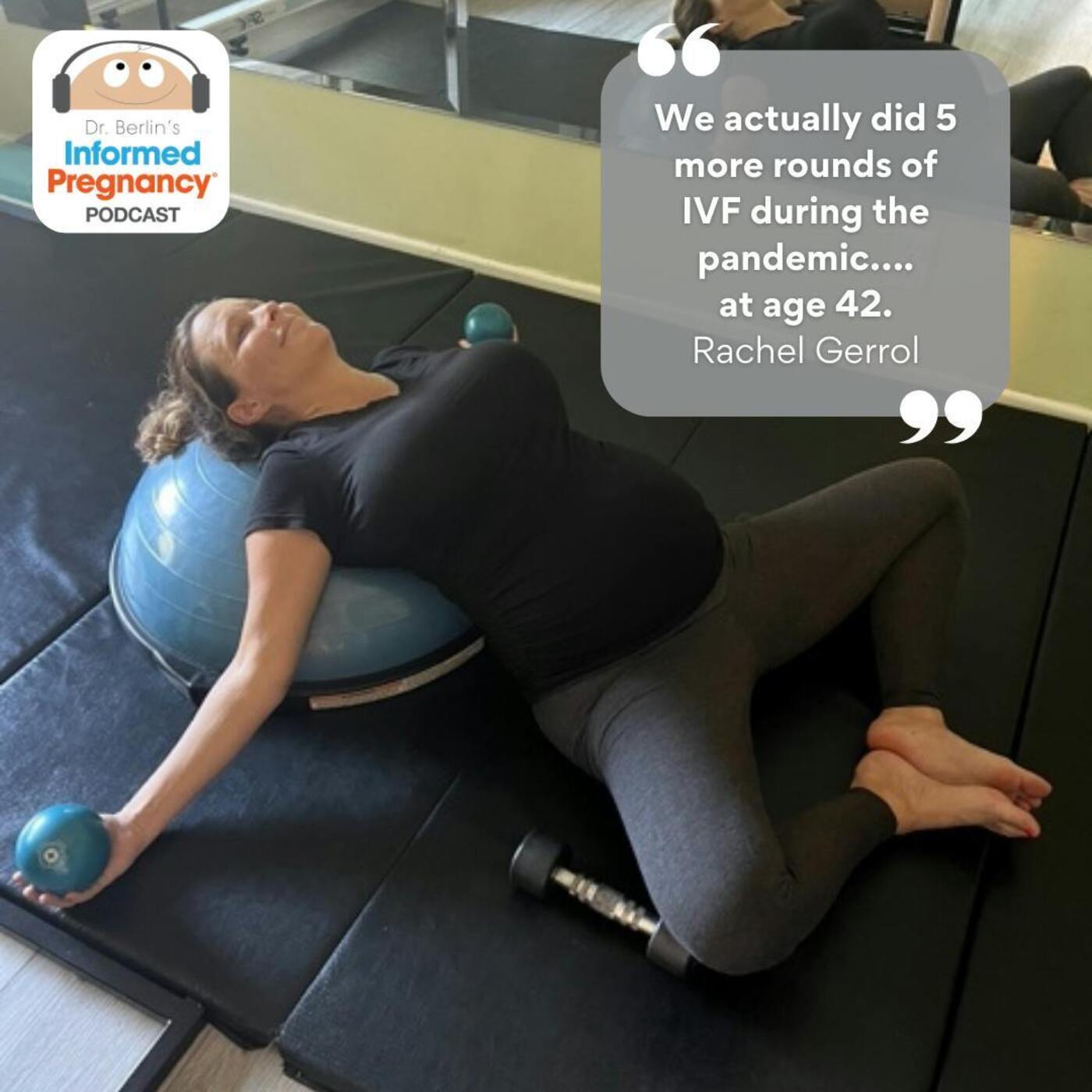
[16:06] that gender so we actually did five more rounds of IVF during the pandemic holy cow
Dr. Elliot Berlin, DC [16:13] at age 42 yeah it's just not an easy process physically emotionally financially not an easy process and so five more rounds yielded how many more embryos you didn't get any out of the five no i was i'm heartbroken for you you put so much into it yeah yeah we did but at the end of
Rachel Gerrol [16:33] those five new rounds i could actually feel complete i could look at myself in the mirror and say i have tried everything i could i did crazy hormones i did new supplements i did all the things and these were the embryos back from eight years earlier that were the ones that were meant to be our natural children so i could actually feel like there was nothing
Dr. Elliot Berlin, DC [16:58] more i could do wow yeah like i said at the beginning you have so much energy and it's like so much positive energy yeah i would never have guessed you've been through such struggles to get to where you are today it gets worse oh keep going okay i'll sit back relax and
Rachel Gerrol [17:19] no we said okay diana if we have any it's just wonderful let's let's put in an embryo and we did it and we had one girl embryo we put her in and we were so thrilled and she took right away because we're the luckiest most magical people and then we got double lucky because the doctor said that actually the embryo split into two we were having twins oh no i would normally be ecstatic at this moment but right but we don't have twins today yeah so one of the sacs burst and cut off the blood supply to the other and so then there were none and then there was a massive surgery surgery for you oh wow but they were worried in the surgery that i would lose my uterus that it would be over that there wouldn't be
[18:05] the possibility to carry a child and i'm on this podcast with you today because that didn't happen and yeah but i mean how during things like that how do you hold on and move forward and stay positive well you you grieve honestly for the the dreams you didn't have the pictures in your mind that never get to go in frames but then you find the silver lining i mean yeah like you didn't lose your uterus right i'm carrying a baby right now that is a miracle i just don't even know like does it strain your relationship these episodes i think if you have a real honest open communication it strengthens it and if you try to keep everything bottled inside
[18:53] it'll strain even your relationship with your best self is that like a real open strong honest
Dr. Elliot Berlin, DC [19:00] relationship include chat gpt help this one okay so if i'm not on my side i can't speak for my it's quite possible wow okay so then you had two embryos and we had two please tell me this is the first of the two this is the first of the two yes yes yes
Rachel Gerrol [19:26] okay and he didn't split no the doctor said come in let's do this again right away right away oh really and and i said great but let's just take a look around at the plumbing and make sure everything's good because really traumatic you know scarring uterine surgery and they went for a looksie and said oh my god you grew polyps in the last three months we have to do another surgery oh my goodness so they went in for the polyps and they got them out and they said now you got to wait you know three to six months so then we waited and then they were ready again and said let's go it's been three to six months. And I said, You know what, I want to take a look again.
[20:05] I just want to make sure we've only got two precious embryos. I want to make sure everything's clean. And actually, at that time, a really beautiful well intentioned nurse said to me, Rachel, at some point, you just have to believe this is going to work. And I said, Oh, I do. But when I buy a car, I kick the tires. Let's go look. And they looked and I'd grown back even more polyps. And the embryo never would have taken. Never. They were just these stringy, jellyfish looking things hanging everywhere in my uterus. So I learned to trust my gut, which I hear is important as a mother. So thank you for those lessons along the way, uterus that's still in my body. Yes. We did a second polyp removal surgery.
[20:46] And then had to wait again. Yeah. And then we had to wait again. And I went online to Dr. Google and Dr. Google showed us all these research studies that you have to implant between 90 days and 120 days. Or if you're a person who loves to grow polyps, you'll just keep growing more. So they doctor called and said, we need to implant in February 2nd. That's the magic day in this window. And February 2nd was the date of my first kiss with my husband many, many years ago. Oh my gosh. How do you remember that? It was one of those kisses for the storybooks. I can't unremember it. So I said, well, this was definitely meant to be. I know this is going to work. And people lit candles all over
[21:29] the world for us on February 2nd. And now I'm going to have a baby in about a few hours.
Dr. Elliot Berlin, DC [21:36] Wow. You just dragged me through an emotional rollercoaster. I want to find out about your pregnancy and how it's been and what you're planning for birth. Let's take a quick break and we'll be right back. Everybody, we're back with Rachel Jarrell, now 39 weeks pregnant with a baby, a full grown almost term baby. And I want to know a little bit more about like, so once you got pregnant, let's say break it down into trimesters, both mentally and physically because of everything you've been through.
Rachel Gerrol [22:18] How was the first trimester? The first trimester, I felt incredible guilt because I had no symptoms and no morning sickness. And everyone wanted me to keep saying, are you having cravings? Are you having morning sickness? So I almost wanted to, just to make them feel better else's experience. Did that make you nervous though?
Dr. Elliot Berlin, DC [22:37] Cause some people like feeling the pregnancy symptoms, knowing that things are happening.
Rachel Gerrol [22:42] What made me nervous was I was waiting for blood loss. I was waiting to see a sign that it didn't work. And one day that did happen at about eight and a half weeks. And I panicked and called the doctor and came in and she said, no, he's fine. Everything's good. He just likes to give you a scare, get ready for parent day. Halloween baby. Yeah, exactly.
Dr. Elliot Berlin, DC [23:05] Okay. So not too worried?
Rachel Gerrol [23:09] No, I think that I was waiting every day for something to go wrong, but it didn't.
Dr. Elliot Berlin, DC [23:14] And then being over 35 in your case, now 45, has the pregnancy been treated differently at all, either by you or by your medical providers?
Rachel Gerrol [23:25] They give me extra tests, which is fun. I get extra ultrasounds, which I recommend to everyone. And I think that I get more understanding and sympathy and cheerleaders from strangers. They're like, good for you. I don't think that that's because I'm like five feet tall and pregnant. I think that's because they see that I'm geriatric. So I think it's been good on the cheerleading and building your home team crowd front. So yeah, I recommend pregnancy over 45. You know who you are. You know how strong you are. You know what you can do. And everybody seems to just give you extra credit every day.
Dr. Elliot Berlin, DC [24:01] Oh, I want extra credit. And what about, so the middle trimester, the second one is when people usually feel pretty good.
Rachel Gerrol [24:09] Yeah, the second trimester, I just kept waiting for a baby bump. I was ready to tell everyone I was pregnant and I didn't look at yet. So I was so grateful when it finally started popping out. I think I wore the tightest clothes I've worn since I was sweet 16 or something just to prove. Look, look, look, I did it. It's real.
Dr. Elliot Berlin, DC [24:28] And what about physically though? Good energy, body changes.
Rachel Gerrol [24:33] I've had positive experiences this entire time. No aches, no pains, no nothing that anyone wants me to be experiencing and lamenting about. Unfortunately, I don't get the benefit of commiserating with other pregnant women. You'll have nothing to talk about at the
Dr. Elliot Berlin, DC [24:48] water core except for everything that went up to this. Okay, third trimester.
Rachel Gerrol [24:53] Third trimester, I realized I was going to have a baby and so I immediately enrolled in prenatal pilates. prenatal yoga, prenatal exercise. I started coming to see you. I thought I better do everything possible. This is real. And as a result of all those things, I feel better than I felt in 15 years. I feel stronger. I feel healthier. I'm happier. My body loves me. I love my body. It's great. Somewhere along the way I got gestational diabetes and that's been the coolest thing because I wear a little sensor on my arm and my husband can track my status every day and my blood sugar. And so he gives me high fives all day, rock star and a varsity diabetic
[25:35] and makes me smoothies in the morning. And my friends are pregnant. Their babies are getting croissants and sugary cereals and ice cream as their nutrition. And I'm keeping mine healthy. So even that's been a blessing.
Dr. Elliot Berlin, DC [25:50] Okay, first of all, you're the only person I think who ever was diagnosed with gestational diabetes. This is so cool. And also, you're right. I love that you feel so good because you did all these things or are doing all these things. It makes me think I should try prenatal Pilates.
Rachel Gerrol [26:08] Definitely, I think you love it.
Dr. Elliot Berlin, DC [26:11] It's funny, I have a patient who does Pilates all the time and the class that she wanted to go to was booked. So she's like, oh, at least there was one class that was prenatal and she's like, oh, I'll do the prenatal class. And then she got in there and she's like, it was so hard because it's all arm focused and she doesn't really have any arm strength. And then she felt really inadequate with all these very pregnant women doing things that she struggled with. I'm like, if you wanna feel adequate, do Pilates with me. Birth, so it's around the corner. What is your ideal birth and what's the backup plan?
Rachel Gerrol [26:45] Breaking news, as of today, we have a plan. So I, this whole time, have been incredibly open to whatever is gonna be the healthiest and safest medical way for this little boy to join us on earth. And I would have loved that to include music and candles and foot rubs and ice cream. But if it included razor blades, and cutting my hair and shaving it or anything else crazy, I'd probably have said yes also. But my son has a very large head. And so I am now scheduled for a C-section in 36 hours.
Dr. Elliot Berlin, DC [27:20] Oh, it's really coming very soon. Wait, can there not be music and candles at your C-section?
Rachel Gerrol [27:27] I don't think so, but I think it's gonna be fast and it's gonna be fun.
Dr. Elliot Berlin, DC [27:33] Again, fun, not the typical surgical description. But you know what? I think you could have your music and those glowy candles, you know what I mean?
Rachel Gerrol [27:45] I think what I might actually do is put some beautiful scents, like a lavender, like you use or something, and put it just right under my nose, above my lips, so that whatever's going on in that room, I don't know what operating rooms smell like, but probably not lavender, but I'd like to smell lavender the whole time.
Dr. Elliot Berlin, DC [28:01] Yeah, they're cold and germicidal. But yeah, you could sometimes we just put it onto a washcloth and just drop a few and they can smell it whenever you want to. That sounds good. You might even make a couple of different ones, lavender, mint, if you get nauseous sometimes, mint or citrus is helpful.
Rachel Gerrol [28:17] Oh, so that's good. And I think it's gonna be fun because there's nothing for me to do but relax.
Dr. Elliot Berlin, DC [28:23] Okay. So that's a really different framing than how most people approach birth.
Rachel Gerrol [28:27] So it's gonna be fast and it's gonna be fun because I'm just there for the ride. Everybody else has to be really focused and really intense and working on their breathing and their focus and I just get to lay back and wait to meet my son and maybe smell a washcloth with lavender.
Dr. Elliot Berlin, DC [28:46] Yeah, also to be clear, it's not like your doctor said, hey, your baby's head is too big, we can't do a vaginal birth. Your doctor was kind of on board with the vaginal birth, but with the baby not engaging, started to become skeptical and sort of, I think the way you said it was like, show me that the baby will go in there and we'll do this, but your baby A has a big head and B hasn't engaged at all.
Rachel Gerrol [29:11] Yeah, he's got a lot of opinions about engaging and his own rules of engagement. We tried for, we knew that the head was big for six weeks and the past two weeks, I've been bouncing in a ball every day, I've been doing step walking and curb walking and coming to see you and doing crazy Pilates and yoga squats all day and having spicy food and having red raspberry leaf tea and talking to him and telling him, engage, engage, go down, go down, but we're now hitting a point where he's not interested. And so I think surrendering to honor what's medically sound and what my child probably is telling me he wants are things I'm willing to do.
Dr. Elliot Berlin, DC [29:51] To render. Okay, well, that means in 36 hours, that means we could do your after podcast in about 48 hours.
Rachel Gerrol [30:00] I'll be available.
Dr. Elliot Berlin, DC [30:04] Well, amazing. Are you doing anything in advance to prepare for postpartum?
Rachel Gerrol [30:11] I think I am as of today, Amazon's number one customer. I'm really pleased that my son chose to give me all this knowledge when yesterday happened to have been one of these, you know, Amazon prime. It feels like, you know, he's aligned with my values of getting deals, but yeah, I've ordered now I had dueling Amazon carts, one for the vaginal birth supplies and one for the C-section supplies. And I was going to return whichever one I didn't need and order everything in advance.
Dr. Elliot Berlin, DC [30:41] So now you could just have one cart.
Rachel Gerrol [30:43] Yeah.
Dr. Elliot Berlin, DC [30:44] Uh, well let's say it was trucks on the road. I'm trying to do this for the climate ever since you moved to DC. Well, Rachel, you're a fascinating person. You're a positive and inspiring person being around you is always uplifting. And I'm very jealous of your baby for all the, uh, maternal love that will be showered upon him and for just having a really great human. I don't know your husband, but I assume also, so having two really great humans around him to help him navigate this world, I'm sending you lots of positive energy, love and light for an incredible experience. And I look forward to talking to you on the other side to see how everything went and is going.
[31:29] In the meantime, where can we find you online?
Rachel Gerrol [31:32] I believe every social media platform I'm on, though I don't post really is at Rachel Jarrell, R-A-C-H-E-L-G-E-R-R-O-L. And if you're interested in learning more about Nexus, that would be nexusglobal.org.
Dr. Elliot Berlin, DC [31:47] Amazing. Thank you again. And at home, thanks for listening to the informed pregnancy podcast for more great pregnancy and parenting information, including podcasts, blog, and the almost streaming site informed pregnancy. Visit informedpregnancy.com.
Want more pregnancy + parenting? Start your FREE TRIAL of Informed Pregnancy+ and get access to all our curated pregnancy and parenting content — original series, iconic birth films like The Business of Being Born, prenatal workouts and more.
