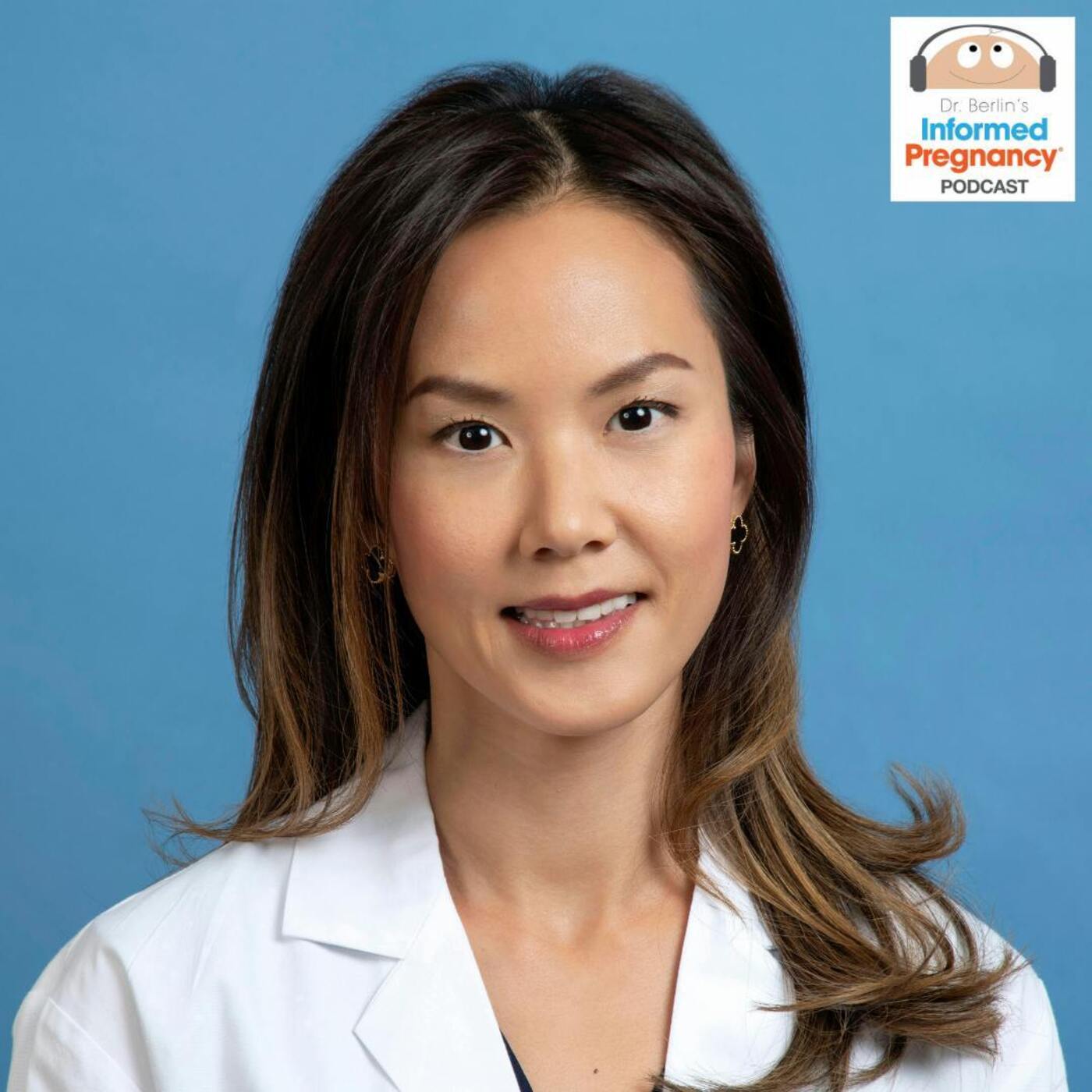
October 22, 2020 · 49 minutes · Episode 198
About this episode
Obstetrician and brand new mom Dr. Michelle Tsai shares her professional thoughts and personal experience with a planned elective cesarean.
Learn more about your ad choices. Visit megaphone.fm/adchoices
See Privacy Policy at https://art19.com/privacy and California Privacy Notice at https://art19.com/privacy#do-not-sell-my-info.
Key quotes
“Because you know as many of our listeners, you know know that there is no right time You know, you can plan all you want but I think at the end of the day, you know being a hundred percent ready I don't know if anybody is ever in that situation”
“The pregnancy was really rough and you know now looking back I think it was a way for me to become a better obstetrician in terms of Personally experiencing every symptom that I would counsel my patients about”
“Yeah, sure. So for me, I think from the very beginning of my medical training, over a decade ago, I had always known that with me being more type A, more of a planner, that eventually I'd very likely want an elective C-section. And even though that was in my mind, I was always intrigued and curious for when the day actually came if I would change my tune, maybe I would change my mind and decide that I wanted a vaginal delivery instead.”
“deliveries, some of the pros of having an elective C-section really would be timing. And the timing, obviously you can choose the time and the date of your cesarean section.”
“Absolutely. And even, you know, per ACOG, again, you know, our governing body, really, in terms of the stance that they take on, you know, maternal request for elective C-section, is that really should be, you know, a shared decision-making process. And that, you know, really, patients decide to deliver, whether vaginally or C-section, you know, for all different types of reasons. And really, as long as the patient is informed of the risks and the benefits, the patient should be free to make that decision on their own.”
Related episodes
- Ep. 114 Stuart Brazell – Creating your own brand
- Ep. 523 Chiropractic Care for Mothers & Babies with Dr. Estefania Magallanes
- Ep. 519 Genetics, IVF, & Motherhood with Jennifer Veatch
- Ep. 518 Yoga & Mindful Motherhood with Liberté Chan
Transcript
AI-generated transcript with speaker labels — may contain errors, especially names and medical terms. Dr. Elliot Berlin, DC appears in blue; Dr. Michelle Tsai in orange.
Download PDF of the Transcript
Dr. Elliot Berlin, DC [1:36] Welcome to the informed pregnancy and parenting podcast. I'm your host dr. Elliot Berlin today We're talking about elective cesarean birth. My guests and her husband are both medical doctors He's a pediatrician and she is an obstetrician They've both shared their expertise on previous episodes of the podcast But today's episode is a hybrid as our guest shares both her expertise and her very recent personal experience Brand new mom dr. Michelle. Sorry. Welcome back to the podcast. Thank you so much for having me. Oh, it's a pleasure I know, you know, I love being around you and learning things from you But now I'm super excited because you just became a mom and hoping so many people become a mom for the first time
[2:20] New parents for the first time. It's always curious to hear how the experience went from the other side of the table
Dr. Michelle Tsai [2:28] Absolutely, and I see this, you know in all my patients every day, you know becoming moms for the first time But being on the other side is quite the experience
Dr. Elliot Berlin, DC [2:36] And it'll be kind of interesting to hear things from both your perspective As the doctor and as the patient in both of your episodes actually yours and your husband's we talked about How you guys met and you were in medical school together and you loved obstetrics and he didn't love obstetrics How you just got into your respective fields we talked a little bit about your Experience and expertise and how you got into your current practice here in Los Angeles But I don't think we talked about what it was that you guys decided. Hey, maybe we should have kids
Dr. Michelle Tsai [3:08] Sure, and I think you know, it was a little unusual because in our situation I think my husband had to do some of the convincing Because you know as many of our listeners, you know know that there is no right time You know, you can plan all you want but I think at the end of the day, you know being a hundred percent ready I don't know if anybody is ever in that situation So ever since we got married two years ago, I think you know, it's been an ongoing conversation about you know, when would be the right time when we would be ready and Finally, we said we're both in a good spot in our careers We had just bought a house recently and I think the logical next step would be let's try
[3:52] let's kind of see what happens and Like many of my patients if I had a dollar for every time I heard this but you know people would say wow, I didn't expect it to happen so quickly and that's kind of what happened to us and making that decision was much easier when Pregnancy was kind of in this distant imaginary point in the future But when it actually happened for reals, I think it definitely took a little bit of Adjustment and it was a little bit of a shock at first. Did you know right away? Yes, I was one of those people who you know was like something but something just feels off Let's just see. Let me do a pregnancy test and lo and behold it was positive and eight more pregnancy tests later
[4:38] I was like, okay, I guess it's real so like I said it was it I was in disbelief for a little while and it took a little while to Really kind of become acclimated to the idea that we were gonna have a baby
Dr. Elliot Berlin, DC [4:51] And did you take a bunch of tests like everybody else does? Oh, yes
Dr. Michelle Tsai [4:56] I think after the first three I was still in disbelief And to be perfectly honest with you, I think because the two of us are in our respective fields We were kind of in this face of you know, maybe it's real. Maybe it's not real we know kind of how a lot of pregnancies go in the first trimester in terms of first trimester loss and I think we were Kind of bracing ourselves for you know, potentially this might not work out and finally around maybe 24 weeks We said, you know, I think it's time to start telling our families that we're probably gonna And my own OB who's one of my colleagues from the very beginning said, you know, Michelle You know as well as I do that in the majority of these cases in terms of pregnancy
[5:46] There is gonna be a baby on the other side So you better start becoming accustomed to the idea but I think we were kind of in this state of shock and disbelief And you know, what if something happens and so we didn't really tell our friends and family until We were 24 weeks probably Wow more than halfway there. Yes
Dr. Elliot Berlin, DC [6:06] You didn't give them a whole lot of time to get ready for this exactly what my in-law said they said
Dr. Michelle Tsai [6:12] Wait, you're six months pregnant and you're telling us now So it caused quite the shock kind of across, you know, our friends and family circles
Dr. Elliot Berlin, DC [6:22] I mean have 24 weeks. Did you start to feel ready yourself? No, not at all still not ready I mean, I'll be honest with you. I'm not quite ready for my son and he's 16 years old. So Almost there I feel it I'm getting closer and that's that that's what I'm saying
Dr. Michelle Tsai [6:38] I'm like man, we have the baby ten days ago and I'm still not ready. So
Dr. Elliot Berlin, DC [6:44] For the new parents out there. I feel ya. Yeah, it's 10 days is still a little fresh though But I'm glad that we're getting your story when it's still so fresh in your mind How was your pregnancy? How was your first trimester?
Dr. Michelle Tsai [6:57] The pregnancy was really rough and you know now looking back I think it was a way for me to become a better obstetrician in terms of Personally experiencing every symptom that I would counsel my patients about So first trimester definitely a lot of nausea, you know A lot of already aches and pains and that's actually how I came to know dr Berlin because I was having a lot of sciatica back pain Symptoms and you know, I started seeing you, you know very very early on and Had had the pleasure of seeing you throughout my whole pregnancy and having you manage my symptoms Which made going through the pregnancy a thousand times easier. So thank you so much for that
Dr. Elliot Berlin, DC [7:38] Oh my god such an honor to work with you in that regard I wonder now that the baby's out have those like static and pelvic pressure symptoms gone away or
Dr. Michelle Tsai [7:48] Yes, so luckily, you know after the delivery one of the first things I noticed was oh, you know The back pain the sciatica symptoms definitely got better But as a lot of the new moms know and probably tell you now It's replaced by a whole slew of new mom symptoms, you know with wrist pain back pain probably from Positioning with breastfeeding and these are of course symptoms I hear about all the time with postpartum patients But again going through all of these symptoms firsthand. It's quite the experience
Dr. Elliot Berlin, DC [8:22] Yeah for sure a lot of the wrist pain and it seems like the lower back stuff kind of shifts up to the middle and Upper back and into your neck and kind of call it mommy neck and mommy back occupational hazard
Dr. Michelle Tsai [8:34] Exactly. So you're gonna see me back soon for all of that
Dr. Elliot Berlin, DC [8:37] You know carpracters always say we're glad to see her back Thank you. So we can't wait for you to come back and then how about the third trimester?
Dr. Michelle Tsai [8:46] The third trimester really even though I tell patients and third trimester really is the fastest it goes by so fast Before you know it there's a baby with you on the outside I think I didn't quite expect it to go so quick and their trimester Of course was filled with kind of the quintessential Discomforts just with baby getting bigger and a little bit more back pain hip pain difficulty sleeping You know that baby's head always on your bladder But I do feel like the third trimester really just it went by so quick Especially with our delivery being preterm. I think I wasn't quite ready for the delivery to happen When it did really? Yeah, so, I mean we'll get into that shortly but your baby came how much before your due date
[9:34] So we were 35 weeks. So it was about a month or so before our due date
Dr. Elliot Berlin, DC [9:40] Okay, so that makes the third trimester significantly quicker. Yes Actually, if you haven't told your family until 24 weeks Before they knew it there was a baby. So I were pregnant poof. Here it is
Dr. Michelle Tsai [9:53] Yes
Dr. Elliot Berlin, DC [9:56] Yes, so you were working pretty intensely in the last trimester also.
Dr. Michelle Tsai [10:03] I was. And the funny thing was that when I went into labor, preterm labor, it was actually before I went on maternity leave. So it was very stressful. I was still taking 24-hour call, delivering babies, doing surgeries, having full schedules at the office. And even after I delivered, I had a full schedule that my office kind of had to work around. And I delivered on a Saturday. I actually had a surgery scheduled for Monday. So with my patients listening, I'm really sorry that I didn't get to do your surgery. But I think most of my patients, as moms themselves or moms-to-be, definitely understand the potential for just surprises in having a baby.
Dr. Elliot Berlin, DC [10:53] Totally. And your kind of job is both physically and mentally very demanding. When you do shifts, you do long shifts. When you're doing surgery, it's a lot on your body. And also, you don't always have the easiest cases to deal with. And so sometimes they can be really stressful. And it sounded like you got your hands full towards the end of your pregnancy.
Dr. Michelle Tsai [11:13] And I think partly it was a blessing just having had the time and the mental space to really take care of my patients until the very end of my pregnancy, literally. And I always tell patients, it's kind of nice to have something to kind of occupy your time with in the third trimester. Because at that point, a lot of times, things tend to become so uncomfortable that you just need something to kind of get through the day. And having a very demanding job, both physically and mentally, definitely helped to make that third trimester go by even faster.
Dr. Elliot Berlin, DC [11:50] I mean, to me, it seems like it must have been awkward to, let's say, you're in your second trimester be treating people in their second trimester and then go be treated by somebody because you're in your second trimester.
Dr. Michelle Tsai [12:01] Absolutely. And I think that's why they say doctors many times make the worst patients. And it's just we're not really accustomed to being on the other side. And many times, even though we counsel patients on the same issues, we give patients the same advice and recommendations, it doesn't necessarily mean that we take those recommendations the way that a good patient would or should. And when I tell you my birth story, a lot of that is gonna come into play.
Dr. Elliot Berlin, DC [12:29] Oh, I can't wait for that. Look, we're gonna take a quick break. In our next segment, we're gonna talk about your choice for a planned cesarean birth and how you came to that choice and your ideas both as a doctor and as a patient on what some of the pros and cons of that choice are. And then in the third segment, we'll find out how your birth actually went down. We'll be right back with Dr. Michelle Tsai.

Dr. Elliot Berlin, DC [15:10] B, four times brand C, four times, and brand D, four times. Welcome back to the Informed Pregnancy Podcast. We're talking to Dr. Michelle Tsai. Okay, so a lot of people think that me, personally, as an individual, I'm pretty pro-vaginal birth and anti-cesarean birth, which is not true at all. I'm really very much a fan of informed choice, of really learning what choices you have and what the pros and cons of the various choices are, and being able to make an informed choice and being supported in whatever choice you make. I find that oftentimes people want to have a vaginal birth, but for one reason or another are not supported in that choice, and that's why sometimes our episodes here or the documentaries that we make focus on
[16:01] being able to have a vaginal birth against the odds. But I've also been involved now multiple times in trying to help somebody who does not need medically to have a cesarean birth, but wants one, be able to have their choice honored to have an elective cesarean birth. I know that your choice was to have an elective cesarean birth, so I'd love to learn more about what went into your thinking for that choice, especially since you have so much experience with all types of birth, and then in your mind, both as a doctor and as a patient, what do you see some of the pros and cons being?
Dr. Michelle Tsai [16:34] Yeah, sure. So for me, I think from the very beginning of my medical training, over a decade ago, I had always known that with me being more type A, more of a planner, that eventually I'd very likely want an elective C-section. And even though that was in my mind, I was always intrigued and curious for when the day actually came if I would change my tune, maybe I would change my mind and decide that I wanted a vaginal delivery instead. And I think many times when I first meet patients at the beginning of their pregnancy, I really do tell them that in terms of the birth plan or what you have planned for both your pregnancy and your delivery, really it needs to be individualized. And it's really because
[17:24] all deliveries, all pregnancies are completely different and they're your own experience. And what was right for one person may not be right for you. And really in terms of finding the right fit for an obstetrician and a hospital system, any sort of medical office to take care of you and your pregnancy, you need to make sure that you find someone in a system that really supports you in terms of what you would like to do, whatever that choice ends up being. And of course, pregnancy is a marathon. And so throughout that marathon, it's good to have a provider who can constantly check in with you in terms of have your wishes changed because things happen during pregnancy and people change their minds
[18:07] and they should be allowed to change their minds in terms of what they decide for the pregnancy and the delivery. And I think for me as an obstetrician who's seen thousands of deliveries, some of the pros of having an elective C-section really would be timing. And the timing, obviously you can choose the time and the date of your cesarean section. Some people like to have that choice. Some people choose that because they have other children at home and perhaps coordinating childcare is difficult. And many times I see this with folks who've had previous C-sections before and they're trying to make that decision. Do I want a trial of labor after cesarean? Do I want a repeat C-section? And so I counsel
[18:51] them really in terms of C-section. I think the most obvious pro is that you have control over when it happens, especially for patients that have anxiety about the pregnancy, about the delivery. Sometimes having that sense of control is very helpful for them to become adjusted or acclimated to the whole idea of having a baby. Other pros of having a C-section would really be other than getting to choose the time and the date. Some people will say, what if the baby doesn't fit? What if the labor stalls? I think having an elective C-section gets rid of a lot of the what ifs because it just happens. You are able to schedule it. You know exactly what's going to happen,
[19:35] which is not to say that complications don't happen because let's be real, a C-section, even though it's the most commonly performed surgery, it is a surgery. It's a major abdominal surgery, which means that there are risks and benefits that come with that. I think all of those points are very important to talk to your provider about to see what would be the right choice for you. off the top of my head, those are some of the, you know, the big benefits in terms of having a C-section.
Dr. Elliot Berlin, DC [20:05] I mean, especially, like you said, with other kids around and sometimes people don't have any family around. And so I do see when they want to schedule when to bring the family in and to coordinate care. And also depending on the type of anxiety, you know, anxiety over the control of when and how things are gonna go down can help, you know, by having that control over your schedule, but also anxiety about medical procedures sometimes can go the other way. In terms of the medical pros and cons of vaginal delivery versus cesarean delivery, I know you said that there can be complications either way.
Dr. Michelle Tsai [20:45] Absolutely, and in terms of medically, just, you know, kind of looking at it strictly from the medical sense, you know, we do counsel patients as well as our governing body, the American College of OB-GYN, and really we say that a vaginal delivery, it is safer, it should be kind of considered the first option unless there are other indications for considering a cesarean delivery. And I think, you know, in terms of just outcomes, studies that have been done, because many times I do get asked by patients, you know, is there any evidence in terms of, you know, kind of the urban legends that are floating out there, you know, in blogs, online, et cetera,
[21:27] is it true that having a C-section decreases the risk of pelvic floor disorders? Is it true that, you know, in terms of sexual function, choosing one route of delivery over another, if there's any merit? And I think in terms of the studies, really many of the studies, and you can imagine, you know, studying the route of delivery and outcomes, it's a very difficult thing because there's many biases and confounders that kind of go into each case, because again, no pregnancy and no delivery is ever the same, but there is relatively strong evidence that in terms of a planned C-section, there is a lower frequency of maternal post-primer hemorrhage.
[22:08] So it does make, you know, the risk for blood transfusion a little bit lower. However, you know, C-section, because it is a surgery, it is associated with a longer hospital stay, and you know, risk of complications related to the surgery itself. For example, you know, wound infections, bleeding from the wound, anesthesia complications, things like cardiac arrest and need for hysterectomy after the delivery of the baby. And then also, I think what we know very well about is in terms of future risks that are associated with just history of cesarean section, things like, you know, uterine rupture, where the old scar on the uterus opens up in a future pregnancy or delivery,
[22:50] placental implantation abnormalities, again, the need for a hysterectomy. And, you know, in terms of having this type of conversation, I think it should really happen early in a pregnancy, especially if the patient or, you know, the patient's even thinking about having a C-section, all of these topics in terms of the risks and benefits really need to come up soon so that you have the time to kind of mull over the points that are made to make that best decision for you.
Dr. Elliot Berlin, DC [23:18] So switching hats to a more personal story, for you, was the driving factor the schedulability, the just control, type A control?
Dr. Michelle Tsai [23:28] Yeah, so for us, it definitely, you know, had a lot to do with control and anxiety because even though I'm an obstetrician and I've seen, you know, many pregnancies, many births, I think when it came to our own, especially with my husband being a pediatrician, we kind of have seen the gamut of the things that could go wrong. And, you know, this is not really a realistic thing for, you know, most people just because obviously complications are very rare and, you know, the horror stories that people hear about the umbilical cord being tangled and, you know, low fluid, the baby's heart rate dipping and, you know, having emergency C-sections, you know, I think most of those cases
[24:11] are a few and far in between, but I think between the two of us, we just have experienced firsthand, you know, so many of those cases where we know things can potentially go wrong and I think having that planned C-section, you know, prior to labor starting, knowing that things are relatively in control, this is not an emergency section where, you know, the team is getting called in at the last minute or, you know, in the middle of the night, I think all of those things just kind of looking at all the possibilities. It made having a elective C-section very attractive for us.
Dr. Elliot Berlin, DC [24:46] Yeah. You know, as a body worker during birth, as a birth worker myself doing sort of like doula support but more hands-on doula support, I've had the honor of working with OBE and midwife and doula clients. And they're always, especially with the unmedicated birth, they're always kind of the most exciting for me to work with, but also the most challenging in the sense of everything you just said, having seen so much, having knowing so much about each step of the way. And I think sometimes also, you know, with the medical training of just always being on the lookout for what could possibly go wrong, you know, when it's happening how do you get your mind to shut off and focus on the fact that everything is statistically,
[25:31] most likely, going to go right? You know, and I think that that happens in other professions. I used to work in ambulances, and after being called to the scene of a horrible crash, and sometimes people die, when I get behind the wheel the next time, even though the risk hasn't gone up for me, I'm a little bit more focused on, will I get into a horrible accident? But mostly, you know, we all know that when we get into those cars and start driving, there's a risk of being de-boned by an 18-wheeler, but mostly we're not thinking about that. We're thinking about, I need eggs, I need milk, I need whatever. And that's the trick, I think, is how do you get to that point in labor?
[26:07] And it's challenging, seemingly, for most people, but even more so, I think, for birth professionals.
Dr. Michelle Tsai [26:13] Absolutely. And I think you make a very good analogy where it's true, you know, these complications, it's not common, but at the same time, if that anxiety is kind of taking over, you know too much, as we say, and it's taking away from just how beautiful the moment is, and how miraculous it is that you're having your child, I think having that option to have a life of C-section, that's so important for a patient to have that choice.
Dr. Elliot Berlin, DC [26:43] Right. And so, you know, I recently had a patient who is very strong, like you, fit, healthy, young, smart, and no medical indications for cesarean, but her mother had had a vaginal birth that became complicated, and she had lifelong complications from it. And so, psychologically, that left a mark on her as something that she didn't think she wanted to experience, and didn't want to put her mind and body through. But her doctor was very hesitant to do it, and just telling her, you don't need to do it, it's a surgery, and you should just have a vaginal birth. And at the end of the day, I just, you know, I kind of reached out, her doctor is a friend
[27:21] of mine, so I reached out to talk to her and just sort of advocate. And in the end, she kind of came around to it and did do her lactose surgery, and everything went really well for her. But I just couldn't imagine a scenario where you, A, why, in today's day and age, and in America, where it's a free country, why you would force somebody into a mode of delivery that they don't want. And B, should she have had complications from that vaginal birth? You know, she would never really seemingly forgive either herself or her doctor. And, you know, it's hard. I think sometimes it's hard. You want to do something for your patient because you think it's best for them. But at the end of the day, they do the
[27:59] research and make an informed choice, and we have to support their choices.
Dr. Michelle Tsai [28:02] Absolutely. And even, you know, per ACOG, again, you know, our governing body, really, in terms of the stance that they take on, you know, maternal request for elective C-section, is that really should be, you know, a shared decision-making process. And that, you know, really, patients decide to deliver, whether vaginally or C-section, you know, for all different types of reasons. And really, as long as the patient is informed of the risks and the benefits, the patient should be free to make that decision on their own.
Dr. Elliot Berlin, DC [28:34] It's kind of interesting to me, because statistically, it seems like a small number of cesareans are elective, that most of them are because, you know, something came up medically.
Dr. Michelle Tsai [28:45] Yeah, you're definitely right. So only, you know, it's less than 3% of births in the US are C-section upon maternal requests. So really, what we're talking about is very, very small portion of all deliveries. And yet a pretty significant number of
Dr. Elliot Berlin, DC [29:02] my friends and colleagues who are obstetricians either choose it or strongly consider it. So I think that everything that you're saying just really makes sense in terms of just being so exposed to all the things that could possibly happen and not really feeling relaxed to go down that path. I would love to take a quick break. When we come back, let's hear your birth story. And we'll be right back with Dr. Michelle Tsai. Welcome back to the Informed Pregnancy Podcast. We're talking to Dr. Michelle Tsai. All right, let's talk about it. So you plan to have a cesarean at, I assume, around 39
Dr. Michelle Tsai [29:46] weeks? Correct. So in terms of elective C-section, we do recommend waiting at least until 39 weeks, just because prior to that, we know that there are, you know, higher proportions of babies that do suffer for natal outcomes, like breathing issues, blood sugar, blood temperature regulation issues, NICU emissions, and C-sections prior to 39 weeks. So, you know, the original plan was we were going to wait until we are past 39 weeks and have our elective C-section.
Dr. Elliot Berlin, DC [30:16] Okay. But then, I know that you, because we were going to actually record a before and after podcast, as we sometimes do on here. And it was right around the Jewish holiday, I got an email from you saying, uh, we better schedule soon. I'm getting close. And something came up. What came up? So unfortunately, my blood pressure started
Dr. Michelle Tsai [30:35] going up and I was diagnosed with gestational hypertension, which meant that my C-section had to be moved up to 37 weeks. And going back to my point earlier about physicians being terrible patients, I was kind of fighting my obstetrician tooth and nail about getting delivered early. I did not want to have my C-section at 37 weeks. I felt like it was too early despite knowing the recommendations. And I would make the same recommendation to any patient that had hypertension or preeclampsia. So, you know, after a lot of bargaining and trying to negotiate, I wanted, you know, 38 weeks at least. I finally agreed to a C-section at 37 weeks in one day. Oh, wow. You got a day.
Dr. Elliot Berlin, DC [31:23] I mean, I know we did a whole episode on health syndrome and there we talked a little bit about preeclampsia and the whole spectrum starting with just a strong hypertension, but is it not a treatable? Yeah. So that's a great question. And really
Dr. Michelle Tsai [31:35] in terms of preeclampsia and gestational hypertension, really in terms of the blood pressure, of course treatable. We have, you know, many good medications to treat the blood pressures, but really the risk after 37 weeks when baby is considered full-term is that the disease course can worsen very acutely. So for example, for my gestational hypertension, potentially I can develop preeclampsia pretty much at the drop of a hat. And once baby's full term, really in terms of the placental function with high blood pressure, really all studies and evidence and, you know, the best practices really recommend delivery once the baby's full term. So at 37 weeks is the
Dr. Elliot Berlin, DC [32:18] recommendation that we make. 37 is term no longer preemie. Correct. Okay. But you didn't make it to your 37 weeks in one day. What happened? No, so we didn't make
Dr. Michelle Tsai [32:28] it. It was a big surprise because literally right after this whole saga happened where I was upset about having to deliver at 37 weeks, I didn't get my 38 weeks as planned. Pretty much two days after that, I woke up one morning and my water broke. And it was when we were 35 weeks. So that was when I knew ready or not, you know, whether or not we agreed with the plan or were ready in any way the baby was coming.
Dr. Elliot Berlin, DC [32:57] Was there any doubt that it was your water breaking or you're that it was 100% sure? The funny thing is,
Dr. Michelle Tsai [33:04] and I hear this from patients all the time, you know, patients will tell me the sensation of your water bag breaking is feels like a little pop. And at the time I was in bed and it was very early in the morning and I felt it. And I said to myself, hmm, it didn't feel like it was a very big pop. I don't think this is it. But then when I got out of bed, I felt that big gush of fluid. And that was what I always counsel patients on. Hey, if you feel a big gush of fluid, your water bag broke, please call me. So that was when I kind of knew with a sinking feeling in my heart that we were going to have a preterm baby. I mean, but luckily not extremely preterm, just a little early, a little bit before term.
[33:48] Yeah, absolutely. And, you know, we were very lucky that we made it until 35 weeks because, of course, in terms of breaking your water bag preterm or going into preterm labor at all, we could have been much earlier. But again, kind of that old anxiety about all the potential terrible things that could happen and, you know, all the pretermers, they've seen liver complications, et cetera. It was really at that moment, everything kind of flooded my brain. So it was a very stressful moment, I think, for both me and my husband, my husband, especially because he was actually on his way out the door to get an oil change for his car. So he was literally
[34:28] about to walk out the door. And I said, hey, before you go, just so you know, I think my water broke. So he freaked out a little bit.
Dr. Elliot Berlin, DC [34:36] So oil change could wait, I assume.
Dr. Michelle Tsai [34:39] It had to wait. We still haven't done it.
Dr. Elliot Berlin, DC [34:42] Do you have any idea why, like, switching hands again, do you have any idea why your water broke at 35 weeks?
Dr. Michelle Tsai [34:48] And, you know, that's the million dollar question. If I had an answer to, you know, the question, why did I go into preterm labor? Why did my water bag break early? You know, there is no answer. You know, many, many of my friends and family were speculating, you know, is it because you were still working? Was it because you were on your feet? Was it because you had a full day of office prior? And, you know, I'll tell them what I tell my patients. No, in general, you know, it's not black and white. It's hard for us to say or pinpoint exactly what the cause of preterm labor was. And we know there's something, you know, some kind of chemical cascade
[35:26] that triggers these sequence of events that leads to preterm labor. But it turns out that I had actually been contracting prior to my water bag breaking that morning, but without really realizing that they were contractions. Oh, meaning only in retrospect you realized that there were contractions? Yes, in retrospect, I realized that there were contractions because once my water bag broke, that the menstrual type cramping started happening more frequently. And that was when I realized that the cramping I had been having for the prior 24 hours was probably contractions. Okay. And it goes to show, even for a trained obstetrician, you know, board certified obstetrician
[36:08] that takes care of, you know, thousands of patients, I mean, experiencing the symptoms for yourself, it's not what you would expect.
Dr. Elliot Berlin, DC [36:15] Yeah. And like you said earlier, it's gotta change how you provide care. It's just your ability to relate to what your patients are feeling, what they're gonna feel. Hopefully you're comfortable with me sharing this. I think of that I asked you early on when we started talking about your elective cesarean choice. I said, well, you know, like if your water breaks and you just start going to labor, would you still wanna have a cesarean birth? And you said, yes. You said you still definitely would opt for a cesarean. But I feel like at one of our last sessions, somehow it came up again and there was, it was less a hundred percent, there was less concrete in your mind.
Dr. Michelle Tsai [36:55] Absolutely. And I myself was surprised by this because again, having kind of planned for this for the last at least decade of my life that I was gonna go just have a elective C-section thinking about going into labor, you know, prior to that planned C-section, it was more of a academic exercise in terms of, you know, just an exercise in my mind. And when it actually happened, I think there were so many thoughts that were kind of running, running through both my mind and my husband's mind. And we ended up, you know, talking to our obstetrician, of course, who's one of my partners and multiple other partners of mine. And, you know, texting my very good friends
[37:37] from a residency, you know, my previous chiefs that had trained me. And at that point I was just thinking I was kind of overcome with doubt. And I said, you know, I'm already in labor. And actually by the time I got to the hospital and I was put on a monitor, it had confirmed that I was indeed contracting. And at the time I had a cervical exam and it turns out 70% of faced already. I was, you know, dilated one to two centimeters. I was contracting regularly. And at that time I was faced with the question, would I still want that elective C-section given that you're already in labor, the baby is small because we're preterm and baby's smaller than, you know,
[38:20] what we had expected. Of course at full term, what are your thoughts? And I think faced with that decision at that moment, that was already very stressful in terms of, you know, just being active preterm labor, it was very stressful moment.
Dr. Elliot Berlin, DC [38:35] Meaning you felt pressure one way or the other? Self pressure?
Dr. Michelle Tsai [38:39] I would say, you know, I wouldn't say that anyone pressured me into, you know, making a decision one way or another, but it definitely gave me more insight in terms of what patients face when they are posed, you know, the same question, you know, C-section versus vaginal delivery. And especially, you know, for someone like me who I know the kind of technicalities, ins and outs of, you know, kind of every aspect of the situation, I feel like I already have more information than most people when, you know, they're kind of faced with the same question. I can't even imagine what it must feel like to be a patient just, you know, with no medical training,
[39:24] kind of faced with that decision at that very moment. So I think for us, it was really more, you know, are we making the right decision? And what should we do for the baby? You know, what are kind of the pros and cons? So at that time, we kind of had to run through the pros and cons of the route of delivery all over again.
Dr. Elliot Berlin, DC [39:42] Yeah, I mean, like in my mind, so many things pop in there. Like you said, it sounded like what you were saying that is if a vaginal birth goes well, uncomplicated, and a cesarean birth goes well and uncomplicated, that the uncomplicated vaginal birth wins in terms of pros versus cons.
Dr. Michelle Tsai [40:00] medically, medically, medically, absolutely. For both mom and baby, we know that, you know, both parties do better with a vaginal delivery. However, that's if everything goes perfectly. And even for somebody who's in active labor, I often tell patients, I wish I had a crystal ball. Yeah, I wouldn't know everything that was going to happen. But the truth is we don't and no one can make promises a hundred percent. And you know, to me, there's nothing that's more heartbreaking than, you know, making it towards the end of the labor. And you know, you're in the second stage of labor, you're pushing and you push for three or four hours and for whatever reason,
[40:40] the baby either doesn't fit or the baby is in distress and the patient ends up with a C-section. And to me, it's just heartbreaking because you work so hard to get to that moment. And you're so close to the finish. And at the very end, you know, you end up having to have a C-section, which, you know, obviously for most folks at that juncture, that's not part of their birth plan. But I think the most important thing and what I had to remind myself was that at the end of the day, having, you know, healthy baby, healthy mom, that's really the goal. And regardless of the route of delivery, that's considered a win, you know, for everybody that yes,
[41:20] there's a healthy baby, healthy mom. That's really the most important thing.
Dr. Elliot Berlin, DC [41:23] It's sort of interesting because a lot of times people ask me for help. I'm trying to think through a vision or a birth plan or birth intentions. And my philosophy on it generally has evolved to the fact that it's a flow chart. So I usually tell people, but you're giving me a little food for thought here. I usually tell people think about the most natural type of birth that you would want to have, whether it's at home or at a hospital with a midwife with a medical doctor, medicated, unmedicated, vaginal, whatever it is, the most natural one you want, make that page one of your birth plan, aim for that, but know that you're trying to steer a hot air balloon. Once it starts,
[41:56] you know, the wind gusts one way or the other, you're probably going to take a different route to get to the same destination. And, and the flow chart begins. So, you know, sometimes before you leave the gate, your breach or you have placenta previa or the phenolic presentation of the cord or active herpes lesion. Sometimes once it does start, you know, something will come up and you have to, for one reason or another, have induction or augmentation or pain relief, whatever it is. It's a flow chart. And at the end of the day, what's needed for healthy mother and baby is a cesarean. That is part of the flow chart. That is part of the birth plan.
[42:28] The plan hasn't failed. You've just followed it all the way through to the end.
Dr. Michelle Tsai [42:33] Absolutely. And like you said, it's sometimes out of our control. And I often tell patients, it's the first lesson as parents that you learn that things are not up to you. And, you know, if you plan to deliver vaginally and you ended up with a C-section, it's not a failure. It's not a failure, you know, on your part. It's not anything that anyone could have done. And again, you know, like you said, it's a flow chart. And at the end, as long as there's a healthy baby, healthy mom, that's a win for everybody.
Dr. Elliot Berlin, DC [43:03] Yeah. I don't care how you do it. The fact that you grow a human inside your body and use your body to bring that baby into this universe makes you my hero and farthest thing from a failure, no matter how you did it. But you give me food for thought because now I'm sort of thinking for my patients who are planning for an elective cesarean. You know, maybe that's a flow chart too. Maybe that's plan A. But if your water breaks and you know, you were one to two centimeters, but I have a feeling if you would have been like seven or eight centimeters, you probably just would have gone with the flow.
Dr. Michelle Tsai [43:30] Yes. And you know, at the end of the day, that's kind of our thought process as well, because baby looked beautiful on the monitor and she was doing well. And you know, labor was, it was happening, but at the same time we were realizing, you know, one to two centimeters, really we're at the start of this journey. And you know, particularly with baby being preterm and the water bag being broken, there was a high risk for infection. So, you know, for us, I think, you know, there was a lot of other voices kind of in the room, all well intentioned, of course, but at the end of the day, we said, you know what, this is what we planned for in the beginning.
[44:08] And for all the same reasons that we planned for it in the beginning, in terms of avoiding any sort of sudden catastrophe, you know, potential harm to the baby. Really, we're, we're going to stick with our guns and we're going to go without like the C section. And at the end of the day, that's what we went with. And you know, even now looking back, I'm so happy that it went the way that I did because my baby is beautiful and she's healthy. And even though she was preterm, she didn't spend any time in the nursery at all. She was with us from the moment that they put her on my chest for skin and she rooms in with us throughout the whole hospitalization. And you know,
[44:48] now she's really doing very well.
Dr. Elliot Berlin, DC [44:51] Okay. Huge congratulations on that. And also you're a very healthy person. So it makes sense that you'd have a pretty healthy baby. I can't imagine what it's like to be on the receiving end of a cesarean after having done so many.
Dr. Michelle Tsai [45:07] It is so surreal. And the funny thing is all throughout my pregnancy, all the C-sections that I did and really, you know, even all the vaginal deliveries, I felt like I started to see deliveries through a different light and just, you know, growing that life inside of me. It really, it made kind of my perception of, you know, my job so different. And I really started to see, you know, not that I didn't before, but the whole process really became, you know, more meaningful and miraculous to me. And especially, again, knowing all the complications that can happen, it was just bringing in a life, a healthy life at the end of the day, you know, having a
[45:47] healthy baby, healthy mom again, it's nothing short of a miracle, you know, for that to happen, knowing how many junctures where things could have gone wrong, you know, throughout the whole journey.
Dr. Elliot Berlin, DC [45:58] The experience, the physical feeling of having that surgical birth, did it feel like you thought it would feel?
Dr. Michelle Tsai [46:07] It was terrifying. I will definitely say that. And then, you know, experiencing it firsthand and kind of envisioning how it would be for all my patients again, I think is just really eye opening. And it changes me as an obstetrician. And I think just kind of knowing obviously the flow of the C-section, kind of what the next steps are and kind of listening at the surgeons, you know, in terms of, okay, I'm going to guess they're probably here at this step right now, it definitely felt like an out-of-body experience, truthfully. And, you know, luckily had great anesthesia. I didn't feel anything during the C-section, but just, again, it's kind of a mental exercise where just knowing every single step of what's
[46:53] going to happen and hearing things happen in the room and knowing that the baby was coming, it was a very surreal experience. And I think it really, in terms of what I expected, was completely different and there was no way I could have imagined this experience or even began to imagine the experience just going through it for the first time, there was no way that I could have imagined what it was going to be like.
Dr. Elliot Berlin, DC [47:20] I imagine that seems true with vaginal birth.
Dr. Michelle Tsai [47:22] Absolutely. And I hear from my colleagues that have had vaginal deliveries and it's a very strange position to be on the other side, just kind of knowing kind of what the next steps are going to be, knowing all the things that can happen, and then just wrapping your mind around the fact that you have a baby and that this being that you were growing in your body is actually real and seeing them for the first time outside of you, it's really, it's a life changing, you know, for the lack of a better term, it sounds really cheesy, but you know, it really kind of changes everything.
Dr. Elliot Berlin, DC [47:57] I mean, time is flying by here. I have three final questions for you. Number one, how big was she at birth?
Dr. Michelle Tsai [48:06] So Kiddo at 35 weeks was six pounds. She was a very good size, which yes, and I know we had many conversations about how big I thought she was going to be at term. And it's very true. And, you know, we were lucky that she was six pounds that she, you know, she did so well as preemie. Yeah.
Dr. Elliot Berlin, DC [48:25] I mean, at full term, that would have been a healthy little baby. Okay. So the second question is how's recovery been your 10 days out?
Dr. Michelle Tsai [48:36] Recovery has been challenging. And again, this, you know, another thing that has really kind of opened my eyes in terms of my practice of obstetrics is that, you know, even though a C-section is a common procedure we do, it is major abdominal surgery. And I think for all the counseling I've done for patients over the years, in terms of what to expect for the recovery, it is a process. The first couple of days, you know, definitely you are having pain and, you know, of course, coupled with everything else going on, the breastfeeding, the hormones recovery is, it's a process, but generally after the first week, things kind of start getting better and better.
[49:14] And that's kind of been my personal experience as well.
Dr. Elliot Berlin, DC [49:17] Glad you're out of that first week and headed towards the end of the second week. And that's usually when I see also, again, you're a fit person before pandemic where a significant work router and you eat well. And so I generally do see healthy people recover pretty fast after that second week is over and hopefully it'll be the same for you. So my last question is like this. Now that you've had the cesarean birth experience and it's different than what you thought it would be. Should you have another baby? Are you even more convinced that you want to have an elective cesarean the second time around, or are you also somewhat curious about vaginal birth?
Dr. Michelle Tsai [49:55] So I will say I am curious and you know, I do kind of often think about what would have happened in, you know, the day that my water bag broke early. What if we had gone with a vaginal delivery? And again, I wish I had a crystal ball just to tell me what would happen. But I think now, knowing what I know, having gone through the whole experience, that next time I would choose to have a repeat C-section.
Dr. Elliot Berlin, DC [50:18] Yeah, it's familiar to you now.
Dr. Michelle Tsai [50:20] Yes, it's familiar. I think a lot of the kind of fear of the unknown, even as a provider, you know, a lot of the fear of the unknown has kind of, you know, gone by the wayside because we've experienced everything. And I think now, knowing what I know, I would have a repeat C-section the next time.
Dr. Elliot Berlin, DC [50:38] I don't have a crystal ball, but I do have a magic eight ball for my childhood. I wouldn't use it for significant decisions like this, but oftentimes, it helps me figure out which toppings to put on my pizza. Oh, you know, that's a very important decision to make, so. It is. And sometimes I go for the olives and I regret it. But I follow the magic eight ball. Dr. Michelle Tsai, always great to talk to you. I'm grateful to you for sharing your personal story. So unique to hear it from both sides. I'm sure it was unique to experience it from both sides. But I opened up by saying people think that I'm an advocate of vaginal birth, the exclusion of cesarean birth, and that couldn't be
[51:20] the farthest thing from the truth. I'm an advocate for informed choice. And I know that you're an advocate for informed choice. And it's really great to hear this option kind of laid out in greater detail. So thank you.
Dr. Michelle Tsai [51:33] Thank you so much for having me. And I really hope that, you know, one of the major takeaways for our listeners is that this is a choice that you can make and, you know, to bring it up with your provider and to have that open discussion for informed consent, which is so important.
Dr. Elliot Berlin, DC [51:50] Perfectly said. At home, thanks for listening to the Informed Pregnancy podcast. If you would like some more pregnancy and parenting media, visit us online at informedpregnancy.com.
Want more pregnancy + parenting? Start your FREE TRIAL of Informed Pregnancy+ and get access to all our curated pregnancy and parenting content — original series, iconic birth films like The Business of Being Born, prenatal workouts and more.