
September 17, 2026 · 28 minutes · Episode 519
About this episode
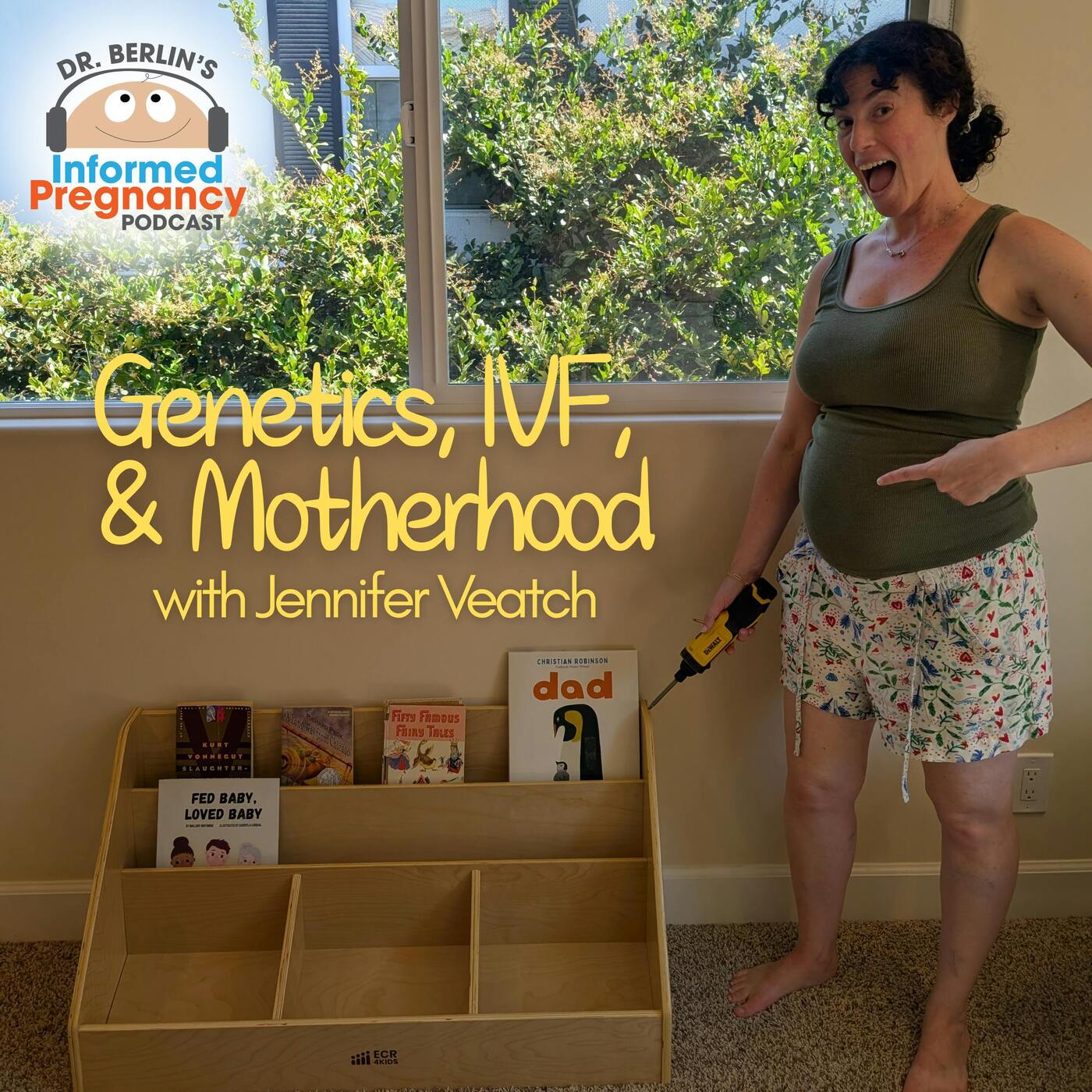
Jennifer Veatch shares her story of making it through through two years of genetic testing and IVF before arriving where she is today, in her third trimester getting ready to meet her baby.
Connect with the guest:
Grow with us on IP+! Informed Pregnancy Media presents two all new intimate short-form video series following Garrett and HeHe’s real-time pregnancy journeys as they prepare for an empowered birth and postpartum experience. Each episode features weekly updates with personal photos and videos to help bring these raw stories to life, a visually dynamic guide through each mother’s emotional and physical experiences.
Keep up with Dr. Berlin and Informed Pregnancy Media online!
Learn more about your ad choices. Visit megaphone.fm/adchoices
See Privacy Policy at https://art19.com/privacy and California Privacy Notice at https://art19.com/privacy#do-not-sell-my-info.
Key quotes
“IVF to target the genetic mutation and then pick an embryo without it, which the biggest gift I want to give my kid is just a clean bill of health. She will never have to deal with this. I want her to just have a full life and never have to think about it. So”
“I was like, take whatever you can get out of that 72 number. Our doctor told us we had, I believe it was a 7% chance for one embryo to not have any of the three mutations.”
“My attitude in life is I never was like, it’s not going to work. To me, it was like, I’m a very positive forward. If there’s a will, there’s a way. So to me, there was never a”
“start to feel real? I think somewhere in, oh my gosh, I think the first time I heard her heartbeat. I was so taken, I started crying and just really hearing her heartbeat. I just didn’t expect to cry, but it became real in that moment. It’s like she’s living, she’s healthy,”
“maybe that’s not the best thing for you. All of that. But you have to be ready to really handle the reins. If you’re going to do something like this, it is not for the faint of heart is my one piece of advice. Are you thinking about another children’s book?”
Related episodes
- Ep. 514 Before Baby #4 with Kara Sutton
- Ep. 493 In Conversation with Esther Friedman Schwartz
- Ep. 500 The Unexpected with Dr. Elliot Berlin Part 1
- Ep. 520 Before Birth with Kea-Sophie Stack
Transcript
AI-generated transcript with speaker labels — may contain errors, especially names and medical terms. Dr. Elliot Berlin, DC appears in blue; Jennifer Veatch in orange.
Dr. Elliot Berlin, DC [0:00] My guest today always knew she wanted to become a mother. What she didn’t know was that a genetic discovery in her 20s would eventually shape not just how she built her family, but some of the biggest and most personal decisions she and her husband would ever have to make. Her path took her from the Bay Area and a childhood love of theater, to an unexpected career in tech, to writing a children’s book inspired by a very special dog, and ultimately through two years of IVF and genetic testing before arriving where she is today, in her third trimester, getting ready to meet her baby. I’m pregnancy-focused chiropractor Dr. Elliot Berlin, and you’re listening to the Informed Pregnancy Podcast. Jennifer Veach, welcome to the podcast.
Download PDF of the Transcript
[0:58] Thank you for having me. You have such a great energy and such an interesting story, not one I hear every day, and I’d love to get to the juice of that story, but let’s start at the beginning. Before pregnancy and all the things that are happening right now, where did you grow up and what were you like as a kid? Thank you. First and foremost,

Jennifer Veatch [1:18] it’s a compliment coming from you as one who’s very high achieving. I grew up in the San Francisco Bay Area. As a kid, my parents discovered I had a personality, which to a bunch of introverts was very confusing, so they signed me up for some theater courses, and that’s how I got into musical theater. As a kid, I’d be dancing, singing, coming up with fun characters and things like that, and that actually traveled all the way into college, so I have a minor in theater arts as well. How young? Probably about seven is when I started telling my first joke. My mom actually says I didn’t smile for my first year as a kid, so I guess nothing was funny to me until a little bit later. I really wonder what changed
Dr. Elliot Berlin, DC [2:04] that. Okay, so growing up in theater, not afraid of being on stage, not afraid of putting on a show.
Jennifer Veatch [2:10] Nope. And did you think that was going to be the career? It was always my childhood dream. I never really considered it as a career because I became really interested in psychology, so I ended up majoring in psychology in college, and I actually was on my way to becoming an MFT, and two weeks before my graduate program, I got a call from Facebook, and they were like, do you want to come do some contract operations work? And I went, okay. It was just that moment where that felt right to me. It was a huge leap of faith, and that’s what jump-started my tech career. Okay, did musical theater or psychology help at all in your tech career? A thousand percent. I’m a people person. I love
[2:55] talking to others when you’re in operations or people operations. You have to get very comfortable having different kinds of conversations. Improvising is a big one on the spot. You got to get comfortable with. And being very open-minded, which, you know, when you’re on a stage acting out a character from The Wiz and all of that, nothing is going to make you more open-minded
Dr. Elliot Berlin, DC [3:15] than being a munchkin. I really do think everybody should do some improv. It’s such an important skill builder if you have to work with other people, if you have to be on your toes. A little terrifying, I guess, at first, but then it really could be a lot of fun and very productive. How did you meet Nicholas? I met my husband. We weren’t supposed to meet. It was
Jennifer Veatch [3:40] actually a work event. One of my coworkers was like, can you come out with us? You’re personable and we need help in sales. I wasn’t working in sales. I was like, I don’t know. I kind of just want to stay home, relax. And then he was like, please, please, please. This friend actually ended up marrying us at our wedding. So thank you, Brandon, for pulling me out. I guess we were supposed to meet. Apparently so. The universe said, get the heck out there. And so I show up to this event. It was a book reading. To this day, I have not read the book. And my future husband was standing in a crowd of Black. He was wearing a very bright blue blazer, which stood out to me. And my first thought was either
[4:20] this guy is going to come hit on me or I’m going to the sushi bar. So I stood at an equidistant point. I’m not kidding. Win-win. Exactly. So as soon as the talk was over, luckily Nicholas ended up walking over to make a move on me. He tripped over a chair, which scared the crap out of me. But he very suavely recovered, held out his hand and said,
Dr. Elliot Berlin, DC [4:47] hello, I’m Nico. And that was 10 years ago. Wow. I once heard Jim Gaffigan talking about how we sometimes commit to going things. And then on the day of we’re just like, why did I do this as you’re driving there, as you’re parking, you know, getting ready to go out, all of it. But I guess for you, the event worked out. It worked out so well. Dude,
Jennifer Veatch [5:08] my hair wasn’t done. I have like a Liger t-shirt on. I was not prepped to like go man-meat that night. So if that’s the universe saying this is your person, like I took it. And you never know. You did prep for the sushi. I did. I did. Let’s talk about Penny. Who is Penny? Penny was my little Bijon up in the SF Bay area. She was a family dog and she inspired my first kiddos book. So we brought her home. She had a very funny first day story where we brought her home. Everybody was kind of nervous. She got stuck under a bike and I was like, you know, this is a great story. So she ended up being the inspiration for my kid’s kiddo book.
Dr. Elliot Berlin, DC [5:50] Before Penny, was there a thought of writing a kid’s book? Where did that come from?
Jennifer Veatch [5:55] That was actually inspired. It’s funny you were asking ages, probably around four or five, by my grandmother. My dad used to have my grandmother call me from St. Louis and she wrote a bunch of short stories. So she would read me her short stories over the phone or he would read them. And as a kid, I just remember thinking being an author is so cool. So that was always in the back of my mind. Wow. I mean, that is a very engaged for that, but you had strong inspiration for it. Yeah. And then what do you hope people will take away from the book, Penny and Pals? When I wrote the book, I was also babysitting these two adorable little boys who were different ages. And I was hoping the book,
[6:35] I clearly have a very tech mindset, would be a good solution for different ages. So one of the boys was old enough to be reading on his own. The other one was too little to be reading. So I hope one, that children can take away from the book, that they can go in any direction with it. However, they want to read it. It’s their own journey. And for the general audience to learn about the concept that, you know, sometimes when we make our own families, it can be scary, but we’re always in this together. And no matter what,
Dr. Elliot Berlin, DC [7:04] it will work out. Well, that’s the opposite of what I take out of Shakespeare. So how refreshing for me now. My goodness. Well, it’s not a tragedy, luckily. That’s what I’m saying. This is so positive. I love it. Does it feel different? I mean, when you wrote it, you were not on the cusp of having a child. Does it feel different
Jennifer Veatch [7:24] now that you’re entering that arena? Oh, that’s a great question. It does, because as you just said that, I just realized my daughter’s going to read it, you know, and so she’s going to come up in her own mind, however her imagination takes it and all of that. But I hope it still teaches her the same core lessons in all of that. And actually, I hope it also teaches her to be very empathetic towards animals. I love dogs. So mainly I hope it goes in that direction for her. We’re going to take a quick commercial
Dr. Elliot Berlin, DC [7:52] break. When we come back, we’ll talk about the genetic discovery Jennifer made in her 20s and how it eventually changed the way she and Nicholas approach starting a family.

Dr. Elliot Berlin, DC [8:00] We’ll be right back. Welcome back to the Informed Pregnancy podcast. We’re talking to Jennifer Veach, childhood musical theater actress, psychology major, tech guru, and children’s author. Now pregnant, but that wasn’t the easiest thing to get to. So we kind of tease that you found out something significant about your health when
Jennifer Veatch [8:33] you were in your 20s. What did you find out? I found out that I was diagnosed with BRCA1. It’s a genetic mutation. It’s very common in Ashkenazi Jewish women, and it essentially means that you’re more than 50% likely to get breast cancer in your lifetime.
Dr. Elliot Berlin, DC [8:49] That sounds like something scary to discover. How did you even come about it?
Jennifer Veatch [8:54] So that led to me eventually getting tested. And yes, while it was scary, and I just remember praying, please don’t have it. Please don’t have it. I felt very supported. Nicholas was, we were dating at the time and he was on my right. I remember when we actually got the news. So while it was scary, I had a very good support system in him. It’s scary. The earlier you know about it, the more there is that you can do about it. What did that mean for you and health, your future, childbearing? So for me, I found out that I essentially had to start doing
[9:39] MRIs at least once a year, and then mammograms as well. It’s a lot of time at doctor’s offices, meeting a bunch of wonderful staff. I started at UCSF before I moved to LA. You see LA has been amazing. And essentially, it’s a lot of time with also genetic counselors to discuss exactly that question of, you do need to think about your future in the sense of, you know, you’re a carrier, right? With that comes responsibility. And when you know things early, yes, you can be proactive and do a lot about it. But you also then need to think about how is this going to look if I want to start a family? You know, and I know I have this. Is that something I’m considering passing on?
[10:20] So I guess two different thought processes at the same time. How does this affect you?
Dr. Elliot Berlin, DC [10:26] And if you have kids, how does this affect your children?
Jennifer Veatch [10:29] It affects me in the sense that for years I was like, I’m gonna eat so healthy. I’m gonna not drink alcohol. I was like very just like hardcore about anything I could do to prevent it until a doctor was like, you can have fun. Like, you know, you need to live your life while having this, which I really appreciated that mindset on it. So that’s been really helpful. I know down the line, I’ll be doing a double mastectomy and doing everything I can to essentially eradicate any of the scary parts of it. So that was part of the discovery journey. And in terms of having kids, it was because of all this that it was actually recommended. Have you considered IVF where if you don’t want to pass this on, you can use
[11:15] IVF to target the genetic mutation and then pick an embryo without it, which the biggest gift I want to give my kid is just a clean bill of health. She will never have to deal with this. I want her to just have a full life and never have to think about it. So that’s where we landed with the IVF choice. Double mastectomy down the road because you
Dr. Elliot Berlin, DC [11:37] don’t need it now or because you want to wait till after having kids? Like, why wait?
Jennifer Veatch [11:43] Good question. So if in certain cases like mine, my doctor is a big fan of, she calls it the 10-year rule. So she goes 10 years before your mom’s timeline, right? Because it can be preventable. So I always knew it was going to be at the end of my thirties, early forties. And then second, because I want the full total experience with having my kid, like she is going to, you know, get all the milk I can give her. I get to yell at her for destroying my breasts before I get them, you know, picked up back up again. So she doesn’t get to know that. I hope she doesn’t listen to podcasts.
Dr. Elliot Berlin, DC [12:18] Hey, she will one day want her to be informed. So informed pregnancy. Okay. So, and then I just wonder maybe this is just how my mind
Jennifer Veatch [12:26] works. Like a lot could change in 10 years and maybe we’ll have a cure. I hope so. I love, I love that Dr. Berlin. Like that’s exactly what we’re hoping for as well. And we’re big proponents of, we give a lot back to cancer research anytime we can help out in any way so they can find the cure would be phenomenal.
Dr. Elliot Berlin, DC [12:45] Okay. So you hadn’t previously thought about IVF and doing fertility treatments in your case
Jennifer Veatch [12:52] is not because of infertility, it’s because of gene selection. Yes, I consider myself very lucky. I am well aware of so many amazing women who have gone on their IVF journeys. They’ve gone through a lot. It’s been very difficult. I was a fertile myrtle. So our doctor told us on average, they pull out about eight embryos in a session. We did two sessions, which totaled about 72 embryos.
Dr. Elliot Berlin, DC [13:17] So that is insane. First of all, when you think about college tuition, but also, I mean, did you hyper stimulate?
Jennifer Veatch [13:26] As my dad says, I look like a pregnant chicken because everything was just pulled forward and all that jazz. So my body went through a lot, but it was honestly not terrible. I mean, I was just grateful to have that many, because on top of my BRCA1, we had discovered that my husband also has a genetic mutation for Lynch syndrome. And then through the IVF process, you have to do a bunch of genetic testing at the top of it as well. We discovered a third mutation actually for a mental disability called pre-fragile X. So I was like, take whatever you can get out of that 72 number. Our doctor told us we had, I believe it was a 7% chance for one embryo to not have any of the three mutations.
Dr. Elliot Berlin, DC [14:11] Wow. That’s a massive attrition.
Jennifer Veatch [14:15] Yep. The fun part, because as you can tell, I am a go-getter and nothing’s going to stop me, including looking like a pregnant chicken. We ended up out of the 72 embryos with three embryos. It didn’t have any of the mutations.
Dr. Elliot Berlin, DC [14:28] Well, did you find out the genders of the three embryos?
Jennifer Veatch [14:32] That was my present to my husband. He’s the one who got to learn what the genders were. I didn’t want to know. I wanted some surprises in all of this because, you know, there’s a lot you learn up front. My husband has been keeping the genders secret for over two plus years.
Dr. Elliot Berlin, DC [14:47] Oh, wow. Okay. Maybe I’ll do an episode with him. You should. He will not tell you anything is what we have learned.
Jennifer Veatch [14:55] He’s a good secret keeper. He’s really, really good. Like everybody
Dr. Elliot Berlin, DC [15:00] tried to break him. People gave him alcohol. He is rock solid. I mean, this process that you’ve been through to get to this point, was it hard emotionally? Did you wonder like after all this, what if it doesn’t work?
Jennifer Veatch [15:14] Because sometimes it doesn’t. That’s a great question. Yes, it was hard emotionally because you have to make certain decisions of what is the perfect outcome for you, right? So for us, we knew that meant no mutations. Some couples are like, I’m okay with a little bit of A, a little bit of B, but you have to make decisions around what is it that we’re willing to take and what is it that we have to let go of. So that was the hardest. My attitude in life is I never was like, it’s not going to work. To me, it was like, I’m a very positive forward. If there’s a will, there’s a way. So to me, there was never a question of failure in any of this, even though many aspects of it, there are moments
[15:58] of failure. That’s just how the process works. It’s super normal. You have to be okay with moments of being uncomfortable with it, but I just knew what we’re meant to do and just keep
Dr. Elliot Berlin, DC [16:08] going no matter what. I feel like sometimes when you start to privatize your genetics, you learn things that are not just about you or your partner, but that extend deeper into the family and that can get messy without revealing anything you don’t want to. Was it clean cut for you or did it get messy? Great question. That was
Jennifer Veatch [16:31] actually probably harder. We started learning exactly that. We had members of our family who weren’t supportive for personal, religious, things like that, or they just weren’t comfortable because it brought up stuff for them. So that was really, really hard because you lean on these people. You’re like, I hope you’re there for me no matter what. And at the end of the day, it’s my child’s health is the biggest thing that you’re asking about here. I do want to say I’m really lucky. My dad has been nothing but supportive. He was just the man who I was like, Dad, we need some saliva to do some genetic testing. So we have a 99% accuracy of finding some of this stuff. And he was like, whatever you need. And I just remember he
[17:16] didn’t actually do that. He was going to laugh and he was like, whatever you need. And I just remember calling him a couple of times and crying because it’s a lot emotionally. And he was great throughout it. And again, the top person though was Nicholas. He’s going through it with me, but he just was by my side through all the ups and downs and everything. So as hard as it was to learn maybe some members of our family are not as for this and everything, but again, looking at the people who were there for me, I’m incredibly blessed and grateful. I think that takes a lot of courage and strength and
Dr. Elliot Berlin, DC [17:54] especially a little bit sounds like with part of the family, you’re swimming upstream like a salmon. And I’m always inspired by the salmon and I’m inspired by you.
Jennifer Veatch [18:05] Appreciate that. And I mean, I hope your listeners take that as if there’s a will, there’s a way again. And no matter what, even if you don’t have the support, if it feels right to you, you just go for it. That’s the answer. And there was a way because you got to this
Dr. Elliot Berlin, DC [18:20] point in your third trimester of pregnancy. We’ll take one more break and we’ll find out how you found out you were pregnant and how it’s been going. And finally, what you’re planning for birth. We’ll be right back. Welcome back. We’re talking to Jennifer Veach, who is now in her third trimester of pregnancy. All right. So you did embryo transfer. A lot of attrition from 72 embryos. You got three with none of the markers you were hoping to avoid. What was the transfer like and did the first one work?
Jennifer Veatch [18:59] So we had a really great doctor, Dr. Mark Kalin here in LA, who works at LARC. And he’s done a great job with the transfers. The transfer was really smooth. He was so helpful in answering all the questions and everything and making sure that everything went really well. She took right away. There was no issues with that. I still remember him walking out and throwing down the pregnancy test and going, you’re pregnant. It was very, very exciting. So again, when you have a phenomenal doctor like him, who I will shout out, then referred us over to our OBGYN, Dr. Jason Rothbart, who is amazing, and then sent me to you, who’s amazing. It’s always going to go well is the short answer. When did for you the pregnancy
[19:43] start to feel real? I think somewhere in, oh my gosh, I think the first time I heard her heartbeat. I was so taken, I started crying and just really hearing her heartbeat. I just didn’t expect to cry, but it became real in that moment. It’s like she’s living, she’s healthy, and she had a strong ass heartbeat. She almost blew out Dr. Kalin’s speakers, so I’m a very proud mom. But yeah, just already doing the musical theater. That’s it. She’s
Dr. Elliot Berlin, DC [20:15] ready to go. She’ll be dancing and doing Pippin in no time. How was the first trimester
Jennifer Veatch [20:21] for you? Rough. I felt like death the entire time. It’s a lot. And remember, I was also doing IVF drugs on top of it, right? So I’ll never know if there was a mix of that. It was probably just honestly though standard women first trimester stuff. I was fatigued. I couldn’t eat anything. My husband was just, I always say, my godsend. He literally kept me alive. He’d be running in between his work meetings and giving me peanut butter and jelly sandwiches, and my poodle hope just thought it was the best time ever because I was just laying on the couch for hours. And then she’d be licking off peanut butter off a plate and stuff like that. So she thinks it’s the best time ever. I thought it was the worst, but rough.
Dr. Elliot Berlin, DC [21:07] I imagine based on everything you’ve said, Nicholas was pretty supportive.
Jennifer Veatch [21:11] Nicholas is the bee’s knees. I have nothing but good things to say about my husband. He learned really quickly how to hold my hair properly. If I had morning sickness, he was running out to get any medication, anything. And the most important is he would put up with all my stupid cravings. I’m calling them stupid because I’d be like, I want an enchilada. He’d run out and get it. He’d bring it back. And I’m like, this tastes like poopy diapers. And he’d be like, all right. And then he’d just eat it and take care of it. I mean, that’s just him. I would eat it. I’ll give it to you next time.
Dr. Elliot Berlin, DC [21:44] And then did that pass magically as it crossed over to the second trimester or did it linger?
Jennifer Veatch [21:51] It lingered a bit. I remember asking Dr. Rothbard, when will I feel normal? He’s like, soon. And he’s a seer. He knows everything. So whatever he says goes. And he was right on the money. It was like, I think, two weeks after that or something. So I think I started feeling like a human again around 18 weeks, to be honest.
Dr. Elliot Berlin, DC [22:11] Okay. Almost halfway. And you’ve had a very medical experience getting to this point. And then you have choices to make now that you’re pregnant and getting close to delivery on how to get the baby out. It could also be very medical. It could be very natural or some sort of hybrid. Do you have a vision? We do have a birth plan. But as much as you
Jennifer Veatch [22:36] put together a plan, I love the phrase, my dad always says, life is what happens in between the plans, so be flexible. We will be going to a hospital. I am planning on an epidural. I loved your episode with the anesthesiologist. I was like, oh, I may get to meet him.
Dr. Elliot Berlin, DC [22:53] Oh, yeah. He’s at that hospital. He is. He’s a celebrity in my head now. And I really hope while drugged out,
Jennifer Veatch [22:59] I’m like, you’re the boss. So if you’re listening, search for the episode with Dr. Mark Zakowski. It’s fantastic. And it made me feel better about epidurals. So I really appreciated it. But yeah, just a standard hospital. Again, I love science. I have a family with doctors and all of that. So I’m very comfortable with it. I want to be well taken care of and have people who, you know, I don’t know what I don’t know how the professionals handle it, an epidural. And then I’m just really praying I don’t rip off Nico’s arm out of his socket is the main thing during the pain. Yeah, even I can’t fix that exactly. You can fix so much. You fix my hips, my back and everything. So yeah.
Dr. Elliot Berlin, DC [23:41] So glad you’re feeling better. And I will probably see you after the pregnancy and everything. So probably before our next podcast and all that. But I will always be here for you, pregnant or not.
Jennifer Veatch [23:51] Appreciate you.
Dr. Elliot Berlin, DC [23:53] Looking back at your journey, I mean, it was a big one to get here. And it’s awesome that you have such a supportive partner through the journey that you’ve had so far. Is there anything that you would change or do differently or recommend to others based on what you’ve experienced?
Jennifer Veatch [24:09] I mean, if I had it my way, you know, I would have loved to have gone through the whole like sex without condom part at the beginning and all that jazz. That was something I’d been looking forward to since I was 16. Like I was like, I’ve been holding out for such a long
Dr. Elliot Berlin, DC [24:22] time. But I mean, is that actually, once you brought it up, is that something that will always be an issue here? Because you don’t want to conceive naturally and leave it to chance.
Jennifer Veatch [24:32] It’s just more of, it seems like it was fun. So that’s the only thing, but you get to do that anyway when you’re pregnant. So who cares? I got to live my best life in my sex life. Win-win. Win-win. I’m sure my husband’s going to love that on the air. I would say, no, I honestly don’t have any regrets, even the hardest moments, the tears, you know, the really tough stuff. It’s all part of it, right? Nothing is smooth sailing. You have to be okay that there’s going to be some icebergs and all of that. But I wouldn’t, had the things not happened, I wouldn’t have her is how I feel. Does that make sense? So she’s, she’s what’s meant to be my little kicker. I’m so excited to meet her. She’s
[25:12] already got a hilarious personality. She does like musicals. We were watching gypsy. I’m so proud she was kicking. But I wouldn’t change a thing. My advice is moms, do you want to go through this route? My best friend was actually considering it. So we talked a lot about it, which I’m really proud of her for doing the research is do your homework, you know, make sure you’re comfortable. It’s a lot of different phases of things. I jokingly call it a project management situation. Like you have to be on top of it and make sure that you’re, you know, comfortable with things like we had to be doing progesterone shots, like, you know, every day at a certain point to make sure we could get pregnant. And,
[25:52] you know, if you’re the type where you want to go drink during Thanksgiving, maybe that’s not the best thing for you. All of that. But you have to be ready to really handle the reins. If you’re going to do something like this, it is not for the faint of heart is my one piece of advice. Are you thinking about another children’s book? I am. I have the manuscript is on my computer. I’ve always wanted to do. Oh, more than thinking my my actually my current poodle hope would be one of the stars in it. So I love bringing my worlds together. So I really wanted to have her character meet Penny and do a book on diversity meeting cats and learning it’s okay to be different. We can all get along. So
[26:31] yeah, that’s been in the works for a while, but you know, kind of having my kid
Dr. Elliot Berlin, DC [26:35] became more important. Well, I’ve definitely learned a lot from your unique story. Great energy. And I’m excited for you that you’ve gotten to this point and that pretty soon you’ll be holding a baby in your arms. Also excited that you’ll come back and share the birth story and what it’s like to actually meet your baby on the other side. Jennifer, thank you for joining me. Where can we find Penny and pals online? Well,
Jennifer Veatch [27:00] thank you for having me first and foremost. I think I’m going to be calling you two minutes after giving birth so you have to hear me in my epidural slur. Soon as I can bring her and she’s coming in to say hi and thank you for taking care of us because again, your work really saved my back and made me feel so much better. So everybody should go to you. In terms I will always do a healthy plug for people I love in terms of where to find me the best would be Amazon and you’re going to drop the link in but my Penny and pals book. That’s my author name and everything it’s under Jenny Brunstein but Jennifer Veach is my professional name. So if you ever need anything,
[27:37] that’s the best way to look me up. Amazing. Thank you very much. And at home,
Dr. Elliot Berlin, DC [27:42] thanks for listening to the informed pregnancy podcast. For more pregnancy and parenting information just like this, visit us online at informedpregnancy.com.
Want more pregnancy + parenting? Start your FREE TRIAL of Informed Pregnancy+ and get access to all our curated pregnancy and parenting content — original series, iconic birth films like The Business of Being Born, prenatal workouts and more.
