
March 25, 2021 · 41 minutes · Episode 221
About this episode
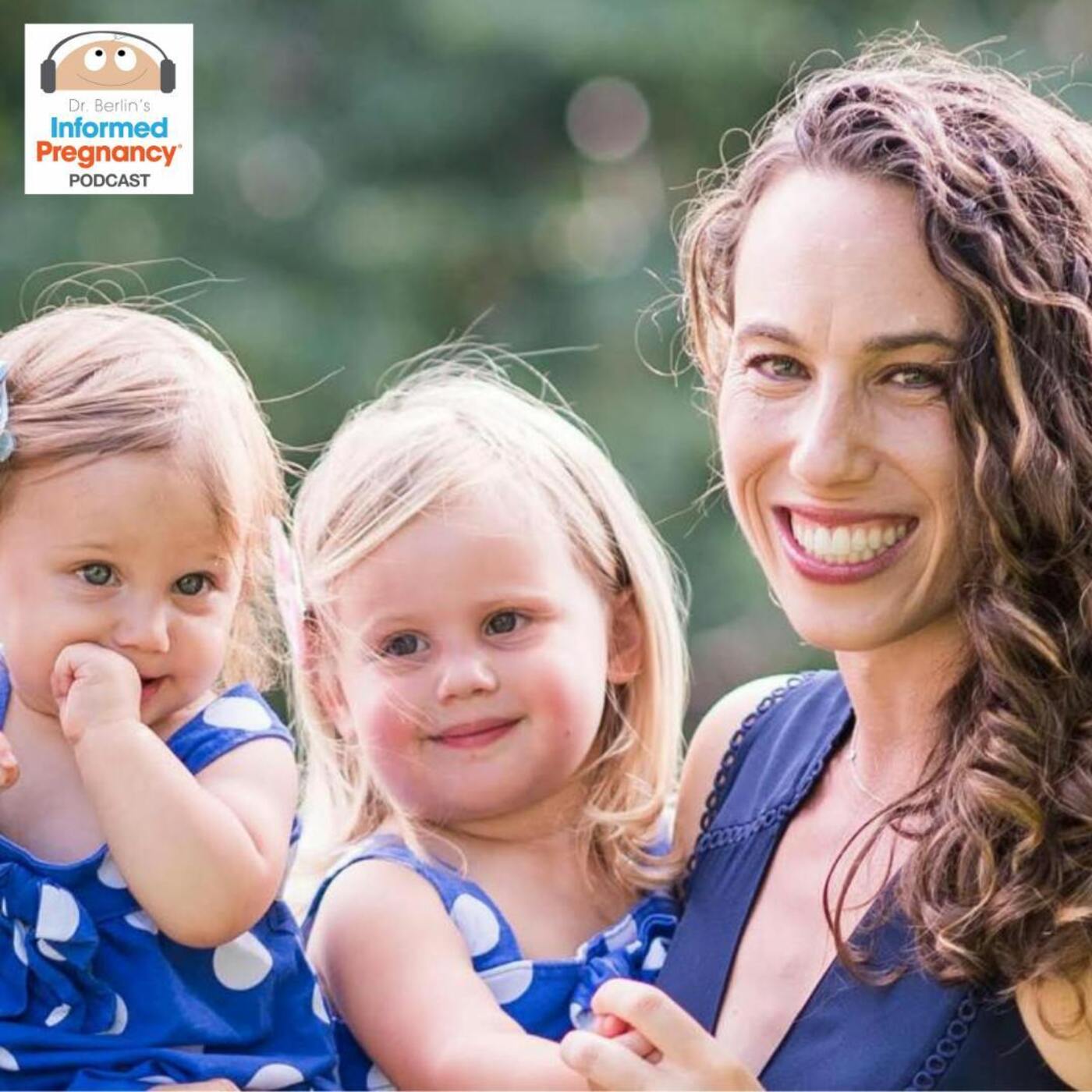
Mother of two, Anna, has overcome fertility hurdles at a young age and is now expecting her third,. After having one vaginal birth and one cesarean Anna is now planning for a vaginal birth after cesarean.

Enjoy special offers from our sponsors https://www.doctorberlin.com/sponsors .
Learn more about your ad choices. Visit megaphone.fm/adchoices
See Privacy Policy at https://art19.com/privacy and California Privacy Notice at https://art19.com/privacy#do-not-sell-my-info.
Key quotes
“And, you know, something that I've learned in my you know, starting a journey to get pregnant and through all my infertility is that there's not a lot of control in getting pregnant in the whole process. But one thing that's very empowering is to have information.”
“I think this happens to a lot of women until you have a miscarriage you don't even realize how common it is you know and when I ended up sharing it with family or friends I learned you know so many people had had miscarriages”
“And so I remember when they, you know, wheel me in and I'm on this operating table, it's just, you know, it's surgery. It is 100 percent surgery.”
“it's really been one of the biggest pieces of me and it's certainly given me a sense of appreciation and gratitude for my children that I'm not sure I would have had I not, you know, gone through the struggles that I had.”
“Yeah, it really was. It's so funny because my expectation I had planned, I imagined laboring at home for like 10 hours and my doula would be at my house and then going to the hospital. And of course, as with most things in life, you can't plan for it. And it was completely unexpected.”
Related episodes
- Ep. 203 Tamara Rey – After Birth
- Ep. 202 Tamara Rey – Before Birth
- Ep. 219 Mandy Moore – After Birth
- Ep. 220 Hilary Duff – BEFORE Baby #3
Transcript
AI-generated transcript with speaker labels — may contain errors, especially names and medical terms. Dr. Elliot Berlin, DC appears in blue; Anna Prager in orange.
Download PDF of the Transcript
Dr. Elliot Berlin, DC [1:13] Welcome to the informed pregnancy and parenting podcast I'm your host dr. Elliott Berlin and my guest today is grateful to be pregnant and expecting her third child very soon after receiving disappointing fertility news in her 20s She has experienced a challenging yet triumphant fertility journey Additionally after a vaginal birth with her first baby and a cesarean birth with her second She is now planning a vaginal birth after cesarean. Oh my goodness You could write the guide Anna Prager. Welcome to the podcast. Thank you. Thank you so much for having me
Anna Prager [2:09] It's a pleasure to be here
Dr. Elliot Berlin, DC [2:10] There's so many topics we could have in just one guest here the Zagat guide and different types of delivery and also An interesting fertility journey. So let's start there at the beginning. Where are you from? And how did he end up in Los Angeles?
Anna Prager [2:23] I'm originally from a small town in Maine called York. I grew up there. I stayed in Maine for college and after college Spent some time living in Israel then I moved to New York City and while I was in New York I was introduced to my now husband who had been living in Los Angeles at the time and I moved here for him. He likes to say he imported me here. He imported you fresh from Maine We're just studying in college. I was a Mandarin Chinese major and my undergraduate and then I went to graduate school for International relations. Okay, what did you pick Mandarin? From a young age. I really enjoyed learning languages and I studied French in high school
[3:11] And I was an exchange student in France when I was a senior in high school and after learning French I wanted to learn another language and after an experience as a counselor with 30 Taiwanese high school girls I became really interested in the Taiwanese culture specifically the differences between American body image and Taiwanese body image and I felt like the best way to really understand a culture is to learn language So I figured I would try Chinese and I really enjoy it. So I made it my major
Dr. Elliot Berlin, DC [3:42] Okay, first of all, that's a fascinating whole nother topic for a whole nother podcast So we're up to at least three with you. I suspect we'll be seeing you again. Are you conversational? I
Anna Prager [3:53] Was I majored in Chinese? I lived in China for some time. So when I graduated college I was getting close to fluent but unfortunately haven't used my Chinese and now over ten years And as I say with languages if you don't use it you lose it But I understand a lot it's still on one of my running lists of things that I want to pick up again or use
Dr. Elliot Berlin, DC [4:13] Again, so are you watching me how come in with your kids? I'm not but I should be okay. They're slowly ease your way back into it So you met your husband how long before you got married about two years
Anna Prager [4:26] I would say I think we dated for about 11 months and then we're engaged for ten months and then got married and
Dr. Elliot Berlin, DC [4:33] There were kids something you were looking at right at the beginning or was there a plan?
Anna Prager [4:39] Good question. I got married on I would say the youngest side I was 26 and It was very clear between the two of us that we wanted a family We wanted to have you know more than one kid I think we had always kind of imagined having three kids And I think our plan was to kind of see how it went and soon into our marriage, I think both of us felt ready and we're anxious to build our family so we really didn't wait too long after we got married and were you actively blocking babies before that or just being careful I have been on the birth control pill for probably since I was 16 years old nine years that's actively blocking that's a solid goalie and then you just stopped the pill I think I stopped and you know had been
[5:27] told by my gynecologist that especially after having been on contraceptives for so long and take the body a while to kind of regulate and so I think the doctor had kind of suggested that maybe take a month or two before actively trying and then you know yeah so I think I probably follow those instructions if I recall correctly did you get pregnant pretty quickly no I would say we've been trying for about six months with no luck and I felt like after six months perhaps there was an issue and the first thing I did was I read a book it's called taking charge of your fertility I've heard the book but I haven't read it it's really interesting I always recommend it to
[6:12] all of my girlfriends who are in the process of trying to conceive because it taught me a lot about when I started to have kids I don't think before that I really realized exactly when I ovulated or you know the importance of the timing I don't think I really ever knew and so this book really outlines a woman's menstrual cycle and the different parts of it and when you're most fertile and when you're not fertile and it provides a whole way of tracking your temperature to know when you're close to ovulation or when you've ovulated as you can really use the method actually as birth control or as a proactive way to try to get pregnant so I was following this method I was tracking my temperature and I was
[6:50] finding I almost kind of diagnosed myself that my temperature wasn't rising after ovulation when it technically should be so I kind of myself realized hmm something doesn't seem quite right here so I went to my gynecologist who said it's only been six months you're 26 years old here's some Clomid so I tried two months of Clomid that didn't work then he gave me letresol and after I took letresol a similar medication to Clomid I did get pregnant but I had a miscarriage I'm sorry after all that
Dr. Elliot Berlin, DC [7:22] trying it must have been especially hard to have a miscarriage how many
Anna Prager [7:26] weeks long do you remember well it was really interesting about my miscarriage is that I knew from very early on that it was not going to be a viable pregnancy because the doctor measured my HCG levels and measured them you know 48 hours apart and saw they weren't doubling so the doctors suspected that it wasn't gonna be viable so it wasn't like I guess I never really had too much of an opportunity to get too excited obviously like first saw a positive pregnancy test that was really amazing after not having seen that for so many months but I knew soon after that it wasn't gonna be viable and ended up having a DNC probably around seven or eight
[8:01] weeks so was there a blame for that or is it just run-of-the-mill bad luck no it was simply that you know I think you know one in three pregnancy then in miscarriage you know that the doctor wasn't concerned he said he thought it was a great sign that I got pregnant and encouraged me to try again with using letresol again mm-hmm I think if you know people have a
Dr. Elliot Berlin, DC [8:25] bunch of kids you know most of them myself and my wife included have miscarriage somewhere along the way just bad luck that it was your first done after so many months of trying and I don't think I even until I have mine
Anna Prager [8:37] I think this happens to a lot of women until you have a miscarriage you don't even realize how common it is you know and when I ended up sharing it with family or friends I learned you know so many people had had miscarriages that I didn't even realize so it is so common I think fortunately now in our culture it's becoming you know more talked about it's not as
Dr. Elliot Berlin, DC [8:55] stigmatized as it had been yeah I mean for what it's worth I think some even just the past couple of years some celebrities have shared their miscarriages online and you know they have large following so if nothing else people become aware of the fact that they happen and maybe learn a little bit more that they're not so uncommon and it's almost like a typical part of fertility which is your body a lot has to go right and if it doesn't your body has to kind of recognize that it's not going right and reject it and try again next time so you tried again with medicated cycles I tried
Anna Prager [9:26] again and I recall what happened with you know we waited a month and had the miscarriage I waited a month and tried again and the next month again I was still kind of tracking my cycle and after when ovulation with this would happen I got my period like three days later and so I knew that that's not you know there's no way a pregnancy is gonna happen if I'm having a menstrual cycle that's only 15 days long and so my reaction to that was okay I think I need some more assistance beyond just my regular OB-GYN and so I had a consult with a fertility doctor that was recommended to me by a girlfriend who she had been seeing and she did a full workup on both me and my husband to see what was going on. What did you find? So
[10:13] we found that she diagnosed me with a condition called diminished ovarian reserves or premature ovarian failure. Basically that even though I was 26 years old at the time, my ovaries were prematurely aging and the amount of eggs I have or had at the time were nearly as many as I should have had and they're able to tell this by specific hormone levels. The two they measure are your FSH and your AMH and my FSH was more than double what it should be and my AMH was very low. Your AMH you want to actually to be around I think for a 26 year old woman it's around three or four or something like that. Mine was like one. So my hormone levels were not where they should be for someone who's
[11:05] 26 years old. So essentially your fertility window is closing a lot faster than it should. It was immediately you know we don't know if this means you're gonna go into menopause soon. There are you know a lot of unknowns as to possible fast decline, a slow decline. She didn't know but the hormone level suggested that at that moment in time things weren't good.
Dr. Elliot Berlin, DC [11:30] Well it's not a crazy cliffhanger because I already spilled the beans that you're pregnant with your third so we know you get past it somehow. Let's take a little break and find out how your journey continued. We'll be right podcast. We're talking to Anna and you 26 years old would think that you have 15 years at least you know left to consider having babies, how many babies, space them out however you want to, but after having some unusual cycles a pregnancy that ended in miscarriage and then more unusual cycles you went to see a reproductive endocrinologist and found out that your ovaries were aging very quickly. So what do they recommend to do at
Anna Prager [14:35] that point? So the doctor who I was seeing at that time basically said to me you need to do IVF immediately in bank embryos. You want to have you know more than one biological child. So her recommendation was to create as many embryos as possible and freeze them and it was obviously very shocking to get this diagnosis and to go from to have to jump into IVF I really didn't know much about it. IVF so I got a second opinion from a doctor who I ended up using whose approach was much more take it month by month and work with whatever my body is looking like make a decision based on that month. She felt as though even though I had this diagnosis I you know because I was still
[15:17] just 26 years old hopefully the eggs that I did have were of decent quality so she felt like you know putting my body into multiple rounds of retrievals to create embryos was a little bit extreme and so her recommendation was let's start this month and we'll see how many follicles you have and we'll make a decision about what to do and so the first month or two we tried a few IUIs in preuterine inseminations which didn't work and so she eventually said those IUIs with medical stimulation or just yes yes with medical stimulation injectable or
Dr. Elliot Berlin, DC [15:57] injectables yeah okay so so just in case people don't understand what you're saying you would take medication that would try to stimulate your ovaries to produce more than usual and then take a semen sample from your husband you said you tested your husband everything come out textbook over there yeah so take a semen sample they probably spin it and clean it up a little bit and then right at the right time it's literally like a medical version of the Martha Stewart turkey baster where they basically take a little medical catheter inserted probably ultrasound guided right to where the egg would be coming down and then just kind of push the head of the syringe so the sperm
[16:38] literally are waiting there for when you ovulate they trigger your
Anna Prager [16:41] ovulation to or just wait for natural ovulation yes my doctor also felt as though in addition to the diminished ovarian reserves another problem I had was that I didn't ovulate properly so she it was very important that she would be the one to trigger ovulation to make sure it occurred at the right time and you said you did a few cycles of IUI to her next recommendation was to go to IVF so I started an IVF cycle and about probably six or seven days maybe five or six days into the injections my hormones the levels were just not coming back at numbers that she was happy with she felt as though the numbers indicated the eggs weren't great quality so there would be no
[17:24] reason to go in and retrieve eggs that you know weren't going to be strong so she canceled the IVF cycle which for anyone who's gone through IVF knows how hard that is after you've spent several days a tremendous amount of money trying to get to that point so I remember being really disappointed and feeling very much like my body can't even respond to IVF you know am I really going to be able to have biological
Dr. Elliot Berlin, DC [17:49] children because there's there's not really much past that right in terms of the world of assisted reproductive technology that's that's the end of the line there's outside of using a different eggs or a surrogate or something like that but using your body your eggs your husband's sperm that's kind of like the end of the line if that doesn't work we don't have what to offer right so I remember at that point even thinking
Anna Prager [18:11] okay is you know I think I even asked her are we at the point where we talk about donor eggs and I remember she said you know not yet again her approach was to take every month exactly you know do whatever we could given the circumstances and she didn't want to waste the month she said okay this month isn't good for IVF but you can still try naturally you know she said I'll figure you so you ovulate properly and you can try naturally and it's a very small chance but again why waste a month so that's what I did and lo and behold I got pregnant oh yeah what a nice
Dr. Elliot Berlin, DC [18:45] surprise I mean that's the opposite then you're really not expecting it so
Anna Prager [18:51] yeah I was not you know I had absolutely no expectation it was gonna
Dr. Elliot Berlin, DC [18:54] work as given what happened with the IVF cycle oh my god even though it's three babies ago I'm so happy for you I'm trying to picture your response when you got a positive pregnancy test yeah yeah it was really amazing and it was a thank God very easy healthy pregnancy were you because you know I met you with your second pregnancy we'll get into that soon and you are just a super fit healthy person that makes me feel bad about myself in every possible way were you like that before you conceived your
Anna Prager [19:28] first child yeah I was but while I was going through infertility I was also trying to do a lot of different self-care methods to try to boost my fertility I was on a very special diet and I was doing acupuncture and I remember my acupuncturist actually suggested to me that she felt like a lot of the high-intensity workouts that I was doing was not helpful and she felt like I really needed to work on relaxing and still you know exercising but not high intensities. I was doing a lot of walking. That was the one thing I was doing a lot of when I did eventually conceive in my first pregnancy.
Dr. Elliot Berlin, DC [20:07] And that's probably to some degree why your pregnancy was a dreamy. Did you get any of the symptoms, the nausea, vomiting, fatigue, or?
Anna Prager [20:15] Very little, not very minimal nausea at the beginning. I had some sacral pain at one point, but it really was quite easy.
Dr. Elliot Berlin, DC [20:27] How old were you at that point?
Anna Prager [20:29] I was 27, I guess, about the time.
Dr. Elliot Berlin, DC [20:33] So pretty young, I mean, according to national averages on first baby. How was your birth?
Anna Prager [20:40] To answer that question, I have to talk about the labor and then the birth, because today my labor was kind of your textbook dream labor. I went into labor at 39 weeks, five days. From the moment I went into labor, my contractions were like five minutes apart. So I went right to the hospital. It was very fast. And I got to the hospital and I labored there.
Dr. Elliot Berlin, DC [21:05] Who was with you?
Anna Prager [21:07] My husband and my doula. I had a doula. And I got to the hospital around probably eight o'clock in the evening and my daughter was born at midnight.
Dr. Elliot Berlin, DC [21:17] So that's like just the right amount. I mean, people who give birth faster than that tend to kind of describe it as too fast and people who give substantially slower than that describe it as too slow. That seems like almost like a perfect amount of time.
Anna Prager [21:31] Yeah, it really was. It's so funny because my expectation I had planned, I imagined laboring at home for like 10 hours and my doula would be at my house and then going to the hospital. And of course, as with most things in life, you can't plan for it. And it was completely unexpected. But the way that was really great. And then I think when I started pushing, I think after pushing, she was born 15 minutes later. But after I gave birth to her, I had a significant amount of hemorrhaging. At the time, I don't think I really realized what was going on, but I became an issue the next morning when I got up to go to the bathroom and passed out.
Dr. Elliot Berlin, DC [22:09] Oh, wow. You were still hemorrhaging overnight?
Anna Prager [22:12] No, not overnight. The doctor was able to stop the bleeding.
Dr. Elliot Berlin, DC [22:15] Okay. It's also kind of weird with a faster labor. I'm a young, healthy person with a
Anna Prager [22:20] fast labor. I wouldn't expect that. So what I had was a sulcus tear, which is an internal tear that happens relatively high up. So from what I understand, it was probably something as random as perhaps the way she came down the birth canal, like her elbow might have just moved in a way that caused this tear. I think that what had happened was the doctor, there was a lot of bleeding and he had a hard time locating where the tear was. And so it took a while to find it. And that's why I think I bled so much.
Dr. Elliot Berlin, DC [22:52] Did you have a transfusion?
Anna Prager [22:54] I did.
Dr. Elliot Berlin, DC [22:56] Okay. And then, but you had a transfusion before you passed out?
Anna Prager [22:59] After.
Dr. Elliot Berlin, DC [23:00] Oh, so once you passed out, they realized you were pretty low. Okay. And that was the next morning?
Anna Prager [23:05] Yeah.
Dr. Elliot Berlin, DC [23:06] Got you. Okay. So after the transfusion, did you bounce back?
Anna Prager [23:12] Yes. But I definitely had a rough recovery after that. I was in a lot of discomfort and pain for, I would say at least two weeks after birth. I was pretty immobile and yeah, just in a lot of pain.
Dr. Elliot Berlin, DC [23:26] I would have, again, expected for you because you were young and fit and healthy to kind of bounce back. So do you think that some of that was from the hemorrhaging?
Anna Prager [23:35] Absolutely. Just because, and we'll talk about this in a minute, but my C-section recovery was like 10 times easier than my vaginal recovery, which you don't often hear.
Dr. Elliot Berlin, DC [23:45] Yeah. I hear it once in a while.
Anna Prager [23:47] I was up walking a few hours after my C-section was, you know, I do think that the reason why the recovery was terrible was because of the tearing.
Dr. Elliot Berlin, DC [23:55] All right. Before we go into another break, I got to figure out, I mean, so curious about getting pregnant again. You know, after the journey you had the first time, were you nervous that it would take a long time again or that you would have to do interventions? I mean, after all, even though you were stimulated, you just kind of cut the stimulation, just had the baby the old fashioned way.
Anna Prager [24:15] Right. I was, and I very much recognized that I may need assistance, I may not, and I would do what I needed to do. So my doctor suggested breastfeeding for six months and then coming back and kind of reevaluating and see where things were with my body. And so that's what I did. And I went back to see the doctor, when my daughter was six months and I had stopped breastfeeding, to try to see what we needed to do to get pregnant again. I would have preferred to wait longer. I wasn't really ready to have another baby, but again, there was this concern and pressure of time and how much time do I have left. And my hormone levels weren't so great and they
[25:00] I thought for a short time that it was possible because of the hemorrhaging, I had developed a condition called Sheehan syndrome, which is very rare and can cause pituitary damage and is most often occurs in women who have a significant amount of bleeding during
Dr. Elliot Berlin, DC [25:15] birth. All right. So your oxygen levels are low and your pituitary gets cut off from oxygen, a little hypoxic. Exactly.
Anna Prager [25:22] So that was then introduced, but luckily, thank God, several weeks later.
Dr. Elliot Berlin, DC [25:27] But you were able to breastfeed, right?
Anna Prager [25:29] So for six months, so yeah, that was exactly something that confused my doctors, but thinking, hmm, had this happened, breastfeeding probably would have been an issue for you. So we don't, we don't know why for a few months it's possible that when I had stopped breastfeeding, it's possible. I body just needed a few months to kind of reregulate and start working again and having a menstrual cycle again. But for a few months that added a whole level of complications just to trying to get pregnant because at that point there was no way I could get pregnant naturally. I would have had to do IVF, but eventually a few months later things improved and I
[26:07] wasn't diagnosed with Sheehan syndrome and we decided to try IVF again.
Dr. Elliot Berlin, DC [26:12] How'd it go?
Anna Prager [26:14] It worked on the first time.
Dr. Elliot Berlin, DC [26:16] Oh, wow. Amazing. And when you did IVF, did you put in one embryo or two?
Anna Prager [26:21] One.
Dr. Elliot Berlin, DC [26:22] I was talking to a reproductive endocrinologist and he also felt like, you know, based on experience that giving your body a chance to rest after all the stimulation, even though the frozen in some ways, you know, has less of a chance of taking than a fresh that your body might be more receptive to it. So, I don't know. There's pros and cons to both. But just to clarify what you're saying is in an IVF, the first thing that happens is just like an IUI, you stimulate using injectable hormones, you stimulate the body to overproduce follicles that grow and then you go harvest the eggs. You're going to kind of take all the eggs out of each follicle, mature eggs,
[27:13] hopefully. Then you kind of look at them under a microscope and this is where it's different than IUI because you've taken the eggs out of the body. You can examine them. You can either have them swim together with some semen with some sperm or you can actually inject a sperm into each egg and then watch them grow. You can let them grow enough to be able to take off a couple of cells and do some genetic testing if you want to. And then at the end, you have this blastocyst, this fertilized egg that starts to grow to a certain size called blastocyst. And then you can either freeze it and wait until you're ready to implant them or you can go right ahead and implant one or two right away.
[27:50] Now, the benefit of implanting one is you're less likely to have multiples like twins. The benefit of implanting two is it's more likely to take. But you said you did a fresh cycle and put in one embryo.
Anna Prager [28:01] Correct.
Dr. Elliot Berlin, DC [28:02] And it took. And it took. Another happy surprise.
Anna Prager [28:06] Yeah, yeah.
Dr. Elliot Berlin, DC [28:08] All right. Well, let's take another little break. When we come back, we'll find out how your pregnancy number two went and when you ended up with a cesarean birth, maybe you chose it. We don't know. And then we'll talk about this pregnancy. Number three, curious plans. Want to know how you got pregnant again and how you're planning for the third type of delivery. We'll be right back.

Dr. Elliot Berlin, DC [28:39] Welcome back to the podcast. We're talking to Anna who's pregnant again. I mean, right now, but also in our story, how was your second pregnancy?
Anna Prager [28:47] I'm good. Similar to my first pregnancy. Um, easy, teeny bit of nausea at the beginning, but that was really it, you know, I did a lot of prenatal pilates during that pregnancy, which I think at the time I thought was good for me. But perhaps when we talk about what happened later in my pregnancy, perhaps that wasn't so helpful. My daughter ended up being breached, which was something that I found out at 36 weeks, so really far into my pregnancy and something that I had not even considered would happen. And so that was jarring to learn that at 36 weeks and to have to navigate that. But beyond that, it was a easy, smooth pregnancy. Yeah.
Dr. Elliot Berlin, DC [29:31] So 36 weeks, obviously not a lot of time to react. Did your doctor offer you some options?
Anna Prager [29:38] She offered me a C-section. I mean, she said that she would not deliver, um, a breech baby bad morning, which I think is the consensus, probably what 98% of doctors in the country, something like that. But she did offer me suggestions of ways to flip the baby. And I spent a good. Probably, you know, two to three weeks doing everything in my power to get my daughter to
Dr. Elliot Berlin, DC [30:06] flip. Yeah. So this is how we meet. One of the things you explored was chiropractic and massage work to try to open up your pelvis and see if we can make some, you know, obviously your body can handle a head down baby because you already had a head down baby. So there are certain things that we know we can rule out in terms of the cause of the breach. Right? Sometimes it's just functional. You're too stiff, tight and rigid and either the baby doesn't want to go head down because of that or they're just not able to. Your body's not accommodating the movement. It's resisting the movement. In your case, I think we have this term in the office that we use called athletic
[30:39] pelvic syndrome, which is where you have a combination of muscles or tendons in your low back, hips and pelvis that are very, very, very strong and also very, very tight. And this is what you walked into the office with. And there was a baby inside you who seemed happy as a clam in the position they were in. And just, you know, the amount of time there was to try to make a significant change in your body because it was so, you know, in that category, athletic pelvic syndrome was not enough. Even if it would take two weeks by then, it'd be thirty nine weeks from where we started. And the baby's getting bigger and bigger and generally harder to flip at
[31:16] that point. Did you also do the medical external cephalofersion?
Anna Prager [31:20] I did. And no luck, no luck. I saw you. I did the virgin. I did acupuncture. I did spinning baby's exercises. I really did everything I could to flip it. But as you said, I think that was partially, you know, discovering that that thirty six weeks didn't give me much time. That's how I learned maybe around thirty three weeks. Maybe that, you know, they would have been smaller. Perhaps I would have had better luck or maybe not. You know, I knowing my daughter, she she wants things a certain way and there's not a lot of flexibility. If it was possible, she was comfortable in that position. And that was it. And there was nothing I could do to change it.
Dr. Elliot Berlin, DC [32:01] So, yeah, generally speaking, I love for people to find out around thirty two, thirty three weeks, because at that point, around 90 percent of the babies plus or head down. So even though there's a good chance your baby will still turn even spontaneously, it's just good to know. So if there are simple things you can do to start helping the cons along, then you can start doing them earlier than later. So you live in a town where there are doctors who deliver bridge babies, especially was that ever a thought for you?
Anna Prager [32:27] So you had mentioned it to me. I didn't even know it was a possibility. And, you know, something that I've learned in my you know, starting a journey to get pregnant and through all my infertility is that there's not a lot of control in getting pregnant in the whole process. But one thing that's very empowering is to have information. And so when you told me that that was a possibility, my inclination was, well, I should go meet this doctor and get information and see if I'm even a candidate for it. And I can ultimately, you know, make a choice that works best for me. So I made an appointment with Dr. Brock, who would recommend it to me. And he he actually felt like I was a very strong candidate
[33:08] for a vaginal reach birth. But ultimately, I decided to have the C section. I think that the two main reasons that come to mind are that it was so late in my pregnancy, the idea of pushing doctors and just having to really make such a large change which just felt very anxiety provoking. And also there was a fear, given the leading I had had, that part of me felt like, well, you know, maybe this is a sign that I'm just not supposed to have, you know, another vaginal birth. And it seemed like it was introducing a level of risk that I wasn't comfortable with. And so I decided to go with the C section.
Dr. Elliot Berlin, DC [33:48] Yeah, as you said earlier, though, I love the fact that you were able to choose which mode you wanted. And you said your C section recovery was great. How was the actual cesarean?
Anna Prager [33:57] It was, I mean, thank God in terms of my medical perspective, it was uneventful and no complications and easy. And in terms of that, it was great. In terms of the experience, I would say it was disappointing. You know, I think that there's the process of giving birth. I didn't feel the same way I felt when I had a vaginal birth. It's obviously if you're in a sterile operating room, it's cold. It's impersonal. I don't know. I think in my mind, as I was preparing for the C section, I was kind of imagining a C section, but I had been imagining it in a labor and delivery room, which I had remembered from my first birth. And so I remember when they, you know, wheel me in
[34:39] and I'm on this operating table, it's just, you know, it's surgery. It is 100 percent surgery. So I know that, you know, Cedars, there's this whole movement to do something called a gentle cesarean, trying to make it as similar to a vaginal work experience as possible. But it felt disappointing. It didn't feel like the most. I don't want to use the word natural, because I think any way that you have to bring your baby. into the world is obviously natural, but it didn't evoke the same feelings that I had when I had given birth vaginally.
Dr. Elliot Berlin, DC [35:06] Mm-hmm, yeah, I think it's birthful. I've heard other women say it didn't feel natural, and I think whatever feeling you have to it as you're feeling it doesn't take away from somebody else's experience. People also have said after having a vaginal birth with the first one and the necessary one with the second one, just surreal is the word that comes up a lot. It was hard for the mind to catch up to the fact that the baby's out now because there was no transition in between. So that's a common sentiment.
Anna Prager [35:33] Even for my husband, I think it was a challenge. We were talking about it recently. He felt as though they told the baby out and they rushed the baby somewhere else and you don't have the skin contact as soon as you would as you would in a vaginal birth. My OB-GYN told me that at Cedars now, I think it's a new thing where, assuming there are no complications, you can have skin-to-skin.
Dr. Elliot Berlin, DC [35:54] They do try, yeah.
Anna Prager [35:56] But that wasn't an option, I don't think, and I did this three years ago.
Dr. Elliot Berlin, DC [35:59] It's been evolving. They are trying to make the process as natural as possible, as natural as you want it within the realm of the surgery. So they try to focus less on the surgery and more on the birth, even down to the terminology calling it a cesarean birth instead of a cesarean section, which I think does have implications on the overall feel. Here we are, pregnant again. So curious how you conceived round three.
Anna Prager [36:24] So I always heard these stories of women who are going through years of infertility and issues and failed cycles and finally they get pregnant using IVF and then they have a baby and four months later conceived naturally. And I think I, perhaps you have as well, I've heard a lot of this situation happen to a lot of different women. I think there's always this hope that it might happen for me too. I think there's always this hope that my body might show me that it can work in a natural way. And when I least expected it, it did. And it was a complete surprise. I really didn't think that it would ever happen naturally without any assistance. And so it was a surprise.
[37:08] I found that I was pregnant the same day as the shutdown back in March 14th or 15th.
Dr. Elliot Berlin, DC [37:15] So that's a lot. A purely COVID pregnancy. Meaning not that you got COVID but that you've been pregnant, like the whole time you've known you're pregnant, in a pandemic.
Anna Prager [37:25] Exactly. And maybe I smile and I think, of course, I'm gonna have this natural pregnancy that I've always wanted during a pandemic.
Dr. Elliot Berlin, DC [37:34] So you're at home with two very young ones and not able to go out too much. But I'll tell you what, you look strong and healthy and happy and it seems like you made the best of it so far.
Anna Prager [37:50] Yeah, it obviously hasn't been for so many people. It's been challenging. I'm very lucky in that right now in Los Angeles, preschools are considered essential services so they're open. So-
Dr. Elliot Berlin, DC [38:02] Oh, that's amazing.
Anna Prager [38:03] Both of my girls are actually in school now and I recognize that that's not the situation for most people. So I really am trying not to take that for granted but it's great for the whole family. For them, me, for everyone.
Dr. Elliot Berlin, DC [38:15] So you're at the end here, 35 weeks now and is the baby head down?
Anna Prager [38:21] Yes.
Dr. Elliot Berlin, DC [38:22] Okay. Okay, wonderful. So that's a relief. And your doctor's supportive of vaginal birth after cesarean. Yours is kind of interesting because you'll also have already had a vaginal birth. So it's vaginal birth after vaginal birth and cesarean which is a little different because, you know, I think the first time a baby comes through it's sort of like somebody walking through a thick cornfield for the first time. It generally takes time. Yours was pretty quick. And then the second time tends to go faster and smoother reliably but not always. And so the fact that you've had a cesarean but you've also had that great vaginal birth beforehand seems to put you in a category
[39:01] of pretty high success and low risk.
Anna Prager [39:04] I hope so.
Dr. Elliot Berlin, DC [39:05] Yeah. And it's the same doctor who did your cesarean last time.
Anna Prager [39:09] No.
Dr. Elliot Berlin, DC [39:10] Oh, you switched doctors. Okay. But the doctor that you're with is supportive of vaginal birth after cesarean. Are there any strings attached to it? Like things that have to be?
Anna Prager [39:19] No, you know, we had a conversation recently to talk exactly about kind of the question you just asked. They wanted to know, you know, what I want to go in knowing, you know, if X, Y, and Z are to occur, why might I need a C-section? And she, you know, very much said that she'll do everything in her power, you know, assuming that things are looking okay. She'll let me go till 41 weeks. They don't usually induce with feedbacks using medications like the Tosin but she said, you know, if I'm showing signs of dilation that she would try to naturally induce me. She could try to naturally induce me if they had got to that point. So she, I thought- What does that mean, naturally induce?
[40:00] Like she could break my water, but she, assuming that there really, she didn't really have any springs attached to that. I assume perhaps during the birth, there's obviously a complication of some sort. I recognize that obviously C-section may need to happen, but I felt like she was very much, even when I was at times expressing anxiety around the V-back because my hemorrhaging and all that, she still very much said she didn't see why, doesn't think I'm at any greater risk for that happening again, and that shouldn't be taken into account when deciding whether or not a V-back should or shouldn't happen to me. So it sounds like your doctor
Dr. Elliot Berlin, DC [40:41] is pretty V-back friendly. The hospital certainly is very V-back friendly, and you again seem like a good candidate for it, so hopefully things will go really well for you. I do have this other question. Are you having a doula again this time? I don't think I'm going to have
Anna Prager [40:57] a doula during the birth. My husband and I have been meeting with the doula that we used during my first birth just to prepare for labor because we're a little bit rusty since it's been, you know, almost five years since I have had a doula. We're talking to her to help kind of prepare ourselves and to remind him of things he can do to support me and also process some of the anxieties and fears just from, I think every birth experience comes with a little bit of stuff that you need to process, so working through some of those fears. I think if he and I can both go in confident and calm, you know, that's obviously hopefully gonna set us up for success rather than going in fearful. So that's kind of what we're trying to work on now,
[41:41] is getting through that. And yeah, so my plan right now is just to have him with me.
Dr. Elliot Berlin, DC [41:47] And it's also kind of, again, you have the choice at the last minute because the hospital wasn't even allowing doulas for a while, so it's cool that it's your choice to not bring a doula with you if you don't want to. All right, your journey is really fascinating and grateful for you for coming on and for sharing so honestly and openly for your fertility experiences. I think they're inspiring actually because you got some pretty devastating news early on, and here you are about to have your third baby. Has the journey changed you at all?
Anna Prager [42:17] That fertility journey changed you at all? Absolutely. I mean, I think it's in many ways, it's just become a big piece of my identity. You know, I think that my infertility in so many ways just, you know, I ended up leaving, I had been working and I ended up leaving my job to be able to focus on getting pregnant. So I think that for the past five years, it's really been one of the biggest pieces of me and it's certainly given me a sense of appreciation and gratitude for my children that I'm not sure I would have had I not, you know, gone through the struggles that I had. So it's absolutely changed me,
Dr. Elliot Berlin, DC [42:56] I think, for the better. I mean, you're kind of amazing to know and to work with and I was inspired by you before I knew all these details and now even more inspiring. I think the audience will probably send me a lot of hate mail if I don't invite you back to share how this birth goes. So I'm hoping that you will come back after what is going to be a great experience in sending all the positive mojo and birth energy I can your way. Thank you so much. I appreciate it. Such a pleasure. At home, thanks for listening to our podcast. If you like the program, share us with your friends, leave us some feedback in your podcast app, and if you like more pregnancy and parenting related media, visit us online at informedpregnancy.com.
Want more pregnancy + parenting? Start your FREE TRIAL of Informed Pregnancy+ and get access to all our curated pregnancy and parenting content — original series, iconic birth films like The Business of Being Born, prenatal workouts and more.
