
March 11, 2021 · 55 minutes · Episode 219
About this episode
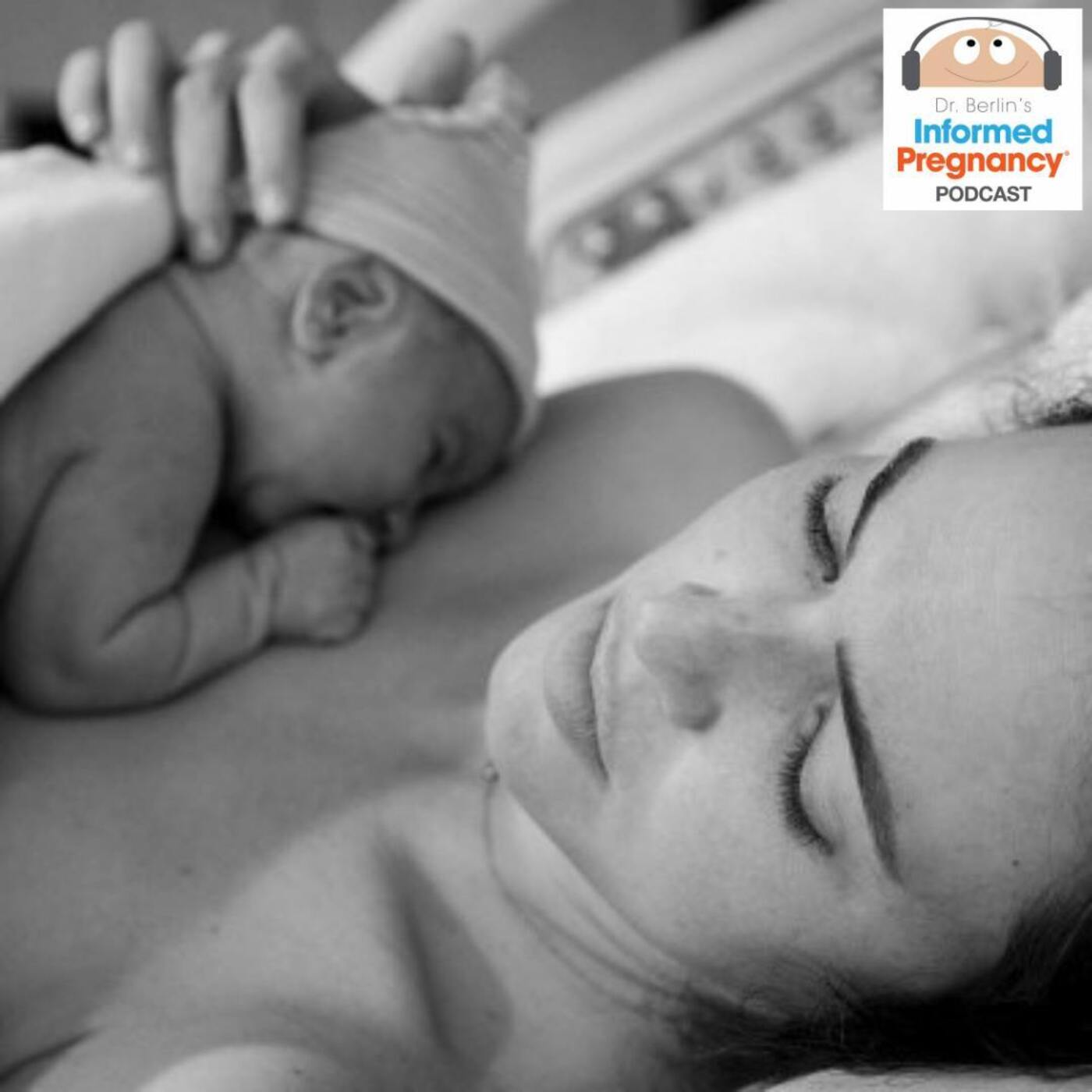
Mandy Moore returns to share her labor and birth story while it is still fresh in her mind.

Enjoy special offers from our sponsors https://www.doctorberlin.com/sponsors .
Learn more about your ad choices. Visit megaphone.fm/adchoices
See Privacy Policy at https://art19.com/privacy and California Privacy Notice at https://art19.com/privacy#do-not-sell-my-info.
Key quotes
“So yeah, it was bad, but I would do it all over again, a million times.”
“But like, ultimately, no, it was my eyes were closed. And I was on my own. It was my own narrative, my own story. And everybody else was just sort of like in the background.”
“It's like, you're on this trip, you're on this like acid trip or something like I was in my own head doing my own thing. Like I could hear people I could hear suggestions”
“Yes. Yes. I I was like, okay We've reached this like very important threshold and I just kept thinking I Can't wait to meet this guy. I can't wait to meet my baby”
“It is so powerful, like what our bodies are capable of what we are capable of like enduring no matter what your birth looks like no matter what your story is like it is so truly badass what we can do that we grow these babies that we birth them and then we feed them”
Related episodes
- Ep. 223 Anna Prager – After Birth
- Ep. 215 Mandy Moore – Before Birth
- Ep. 214 Richelle Monae – After Birth
- Ep. 205 Leslie and Carvens Lissaint AFTER
Transcript
AI-generated transcript with speaker labels — may contain errors, especially names and medical terms. Dr. Elliot Berlin, DC appears in blue; Mandy Moore in orange.
Download PDF of the Transcript
Dr. Elliot Berlin, DC [0:55] Welcome to the Informed Pregnancy and Parenting podcast. I am your host, Dr. Elliott Berlin, and we are back with Mandy Moore, who is now a mother. Congratulations.
Mandy Moore [1:46] Thank you so much.
Dr. Elliot Berlin, DC [1:48] It's so crazy because like maybe like a week ago when I was talking to you and you had your life and now your life is insanely different. Insanely different. And mine is almost exactly the same as it was before without the pigs in the background. That's true. That's true. You're not on a farm anymore. No. So, you know, last we talked, you were very close to the end of your pregnancy. You know, when I actually listened back to the episode, something struck me, which is that you talked about how awfully nauseous and everyday throwing up you were in the first part of your pregnancy.
Mandy Moore [2:22] Yes, definitely.
Dr. Elliot Berlin, DC [2:24] Was that diagnosed as hyper emesis or?
Mandy Moore [2:28] It wasn't hyper emesis. I mean, it was I think it was sort of borderline. But I mean, like I watched the Amy Schumer HBO Max like special that she had while I was pregnant and just thought, oh, good gracious, I don't know how anybody deals with like my hats off to someone who could handle it with such grace and humor and work and just like be able to like put your head down and get through it. I definitely was not in that same boat, but I was nauseous all day. I woke up nauseous. I just sort of stayed in bed or stand on the couch and like binged bad TV and tried to get my mind off of it. But yeah, I couldn't eat. I had real crazy food aversions, but it wasn't hyper emesis.
[3:12] I was just really nauseous and then threw up, you know, at least once, maybe a couple of times each day. It was pretty gnarly, but so crazy how the brain works and what like limited, you know, memory you really have, because obviously it was not the most pleasant thing, but as soon as you get to that second trimester and there's light at the end of the tunnel, you very quickly forget how brutal it was and you're just so grateful to breathe again and to wake up and feel relatively normal and to not look at food and feel super nauseous. So yeah, it was bad, but I would do it all over again, a million times.
Dr. Elliot Berlin, DC [3:51] Well, that's nice. That's I think why women have babies. Cause at least if my buddies and I had to have babies, houses would be so cheap, there would be no competition. Yeah. So my understanding of hyper emesis is that it's a spectrum and you know, there's milder cases and more severe cases. And it's the same with nausea and vomiting and pregnancy. There's milder cases and more severe cases, sometimes hard to tell when you've crossed over from one to the other, hyper emesis doesn't always last till the end of pregnancy. Sometimes it goes away earlier. And it doesn't mean that you can't get anything down. It just means that's kind of how you described it sometimes.
[4:29] So I'm no expert on it, but I did have three of the leading experts on an episode about it and they're doing all the research on both trying to understand what causes it and also how to keep mom and baby healthy during the experience and afterwards. And so one thing that was clear to me is that it's sometimes hard to diagnose. And so there are certain telltale signs that it is more hyper emesis than a typical nausea and vomiting. But I would love to say that they have a. It's called the Her Foundation AGR and it's at hyperemesis.org and if anybody is listening and you're not sure, like you're throwing up a lot and you're not sure what's going on, you're nauseous all the time, they have tools on there, like little tools where you
[5:15] enter how often you felt nauseous or threw up or if you're losing weight or gaining weight. You can actually send that information to your doctor from the tool and help get an earlier diagnosis because the earlier you treat it, the better things tend to go.
Mandy Moore [5:31] That is so interesting and I'm really fascinated to be able to tap into that information for perhaps the next go round.
Dr. Elliot Berlin, DC [5:38] Yeah. I mean, yeah, they all had interesting stories. I think it's good to listen to, you know, some of them had their babies years back and at that time it was really thought of maybe as more of a psychological issue and now we know for sure it's a physiological issue and it was just, you know, not treated well and not taken very seriously and sometimes like partners and employers, they're just like, okay, so you're nauseous because you're pregnant, you know, everyone else deals with it. Yeah, exactly. So obviously yours was more intense than typical and I don't know if you've crossed over or didn't cross over, but it just stuck in my head as I was listening back
[6:17] to it. I was like, whoa, that's pretty intense the way you described it. I wonder. All right. Moving on. How was the last few days of pregnancy?
Mandy Moore [6:25] The last few days were pretty fantastic. I really had a great rest of my pregnancy once I sort of, like I said, kind of like jumped into the, you know, I would say like the early part of my second trimester, I felt just a whole lot better and that kind of continued through the very end. I mean, I obviously saw you and had treatments and I tried to do my level best throughout pregnancy. In terms of self-care, I got regular chiropractic, I had acupuncture. Obviously I had visits with my midwife. I walked every day. Like I tried to sort of just practice as much of, you know, I guess like taking care of myself as, as I possibly could. And I think that really made a big difference and maybe I just sort of lucked into it
[7:12] as well, but I felt really good at the end minus a few, you know, bouts of feeling somewhat uncomfortable. There was a lot of like pelvic pressure and his head was quite low for a while and he was raring to go, but nothing out of the ordinary. I like definitely could have continued for another week or so, but I was so anxious to meet him. I was, I was like, okay, what can I do to get this baby to to come on out? And all it took actually was the day before my due date, I had an appointment with Haley with my midwife and she came and we were sort of catching up about everything and how I was feeling. And, you know, she took the Doppler and listened to his heartbeat and took my blood
[7:54] pressure and did all of that stuff. And then we discussed sort of like what the next steps would be, because I was like, you know, he's cooked. I've gone to the perinatologist to monitor his growth at the end for the last couple of weeks and he's got the all clear there and the hematologist. Well, my platelet levels are what they are, but like, you know, that isn't necessarily affecting the baby. So what can we do to get him out? And she was like, well, we could do the castor oil, you know, the midwife, like cocktail milkshake thing. And I was like, okay, that let's, let's table that for now. Maybe in a couple of days, she's like, well, I could just do a
[8:29] membrane sweep right now and, you know, just like do a cervical check and just see where you are. And I was like, okay, so we went back to the bedroom. She did it. And I was like, oh, that's it. Like I was like bracing for it to be super painful. And it wasn't, she was like, oh, that's a good sign. If that wasn't like painful for you, you would, you know, have a somewhat like higher threshold for pain. I was like, yeah, that's fine.
Dr. Elliot Berlin, DC [8:50] Um, I had to stop you with two things right there. Did she tell you at that point, anything more about those cervix, the faceman dilation, or if the baby was like, you're
Mandy Moore [8:59] about two centimeters dilated, about 60 to 70% effaced. And his head is like, you know, like still probably negative one station. I was like, okay. But I was like, great. So we do this membrane sweep and then, you know, perhaps I'll do the castor oil shake like in a day or two, and then maybe we'll do another one. If this doesn't really get things moving, but like fully expected. This was a Friday and fully expected. Like my husband and I were like, okay, we're, we're making big plans for Saturday. We're going to go to like pick up sandwiches from this place. And we're going to, you know, like have a fun sort of last hurrah thinking that the baby would be on his way.
[9:37] Like, you know, somewhat imminently. And I remember we ate dinner and I am a grandma and also just being pregnant. Like I was going to bed at like seven, seven 30 and we're like, I'm showered. I'm in bed and I also wake up early. So I've been up at this point, probably since like five 30 or six little pregnancy insomnia. So I'm like all snuggled up in bed. We're watching reruns of the office. And I'm like, hmm, I feel a little crampy. And my husband sort of got wide-eyed. And I was like, no, no, no, no, no, no. Don't like jump to any conclusions. Like I've been feeling somewhat crampy the last couple of days, so it's probably nothing. But he was like, you know what?
[10:20] I'm just gonna start the little, you know, contraction timing app. On the smartphone, yeah. I was like, okay, fine. But I really don't think this is anything yet. And he started timing them and they were, you know, like probably like nine minutes apart or something. And I was like, see, it's not really anything. I don't know if it's consistent enough. I just was so, I think the last couple of weeks, like so curious about, I'm sure as most first-time parents and mothers are, like, how am I gonna know when it's really like labor starting? And it's not just, I'd had crazy Braxton Hicks for weeks and weeks and weeks. And you know, every time I walked,
[10:57] I would feel like lots of contraction. So I was dubious that this was the real thing. And sure enough, it was. And it just like the contractions started getting closer. And he was like, you know what? I'm just gonna text Carson, who was our doula, cause she lives far away from us, just to give her a heads up that perhaps this is happening and text Haley, our midwife, let her know that perhaps this is happening. And you know, I was like, okay, I'm just gonna like lay here in bed and start tapping into my deep breathing and kind of like going inward a little bit. And the next thing I knew, it was a couple hours later and Carson was at our house.
[11:39] And the next thing I knew, Haley was at our house. And I, you know, you just lose all track of time. And then I was like full blown into, you know, like early labor, I guess, but it was starting to ramp up and you know, the girl suggested like, why don't you get in the shower? And Carson like brought her little peanut ball in. And I was on the bed with my husband, like with the peanut ball between my legs and like breathing and at some point actually earlier as labor, I'll backtrack a bit, was just starting Haley, our midwife recommended. She's like, you know what? Get a glass of wine, get a couple Benadryl and like just get in the bath with your husband
[12:23] and like chill out and see if you guys can like relax. And then maybe you can like take a nap and you can rest and like kind of sleep through this first part until like things get really starting. And I was like, okay, like my husband went and got a glass of wine. We like started the bathtub up. I think we were in the bath for like five minutes. I didn't do the Benadryl. I was like, I don't want to feel weird. Like, what if this is really like starting now? I don't want to be out of it. Like I want to be in my right mind. I think I took like a sip of wine, which was so weird because I haven't had any wine in like 10 months. And then I was like, I got to get out of the bath.
[12:57] I got to get back in bed. Like this is really happening. So yeah, like I said, Carson and Haley were there. And then before I knew it, it was like 3 a.m. And they're like, time to go to the hospital. You're six centimeters dilated. Let's start this journey.
Dr. Elliot Berlin, DC [13:14] So you went from two to six. The original membrane sweep, let's set out a timeline. In relation to your due date, is this already after your due date or just approaching?
Mandy Moore [13:24] The day before.
Dr. Elliot Berlin, DC [13:25] Oh, day before your due date, oh, that's so okay. And so you were having a little cramping ahead of time, but it wasn't like the cramping that came after the sweep.
Mandy Moore [13:33] And I just thought like that perhaps it was cramping because of the sweep and it wasn't necessarily labor.
Dr. Elliot Berlin, DC [13:39] And then do you remember what time she did the sweep?
Mandy Moore [13:42] Four o'clock.
Dr. Elliot Berlin, DC [13:44] Oh, so 4 p.m. is the sweep. And then like eight-ish is when things are starting to pick up and then by three in the morning, you're six centimeters. Okay, so a few things just on that feeling, how things felt to you. Had you had a pelvic exam during pregnancy before that one?
Mandy Moore [14:04] I had had one a week before because of the change in birth plans and the fact that I was going to be giving birth at the hospital with a midwife, with an OB attending. I had to go meet with the OB before and he did a pelvic exam then.
Dr. Elliot Berlin, DC [14:20] Okay, I mean, this won't be the same comparison because those are sometimes just not as comfortable to begin with. But something that people ask me all the time, the difference in feeling between a pelvic exam and a membrane sweep.
Mandy Moore [14:34] Well, the membrane sweep to me was obviously a little longer, but I guess it could be somewhat described as like slightly more uncomfortable just because of the length of it. I think it was like she counted like to 10 and she was kind of like just stretching the cervix, but it wasn't, I didn't find it to be like awful by any means. I was like, oh, okay, I was bracing myself for like, I mean, I have had two IUDs. inserted. And that was really painful. It was like kind of just bracing myself for like some semblance of that kind of pain. And it wasn't like that at all.
Dr. Elliot Berlin, DC [15:09] Okay, that's good to know. And then obviously, everybody feels it a little bit differently. But for you, everyone's body is different. So my second thing is when you're having these surges, and you're at a six centimeters, what are your contractions feeling like to you? Do you feel them in the front and the back both?
Mandy Moore [15:25] It's so hard to like really remember. I didn't really feel anything in the back. It was definitely more in the front. And it was just like, a wave of okay, like I could feel it coming. And it was like, I had to steal myself and like, lean into it. But it was like each time was sort of like a, here we go. Like, here we go again, I'm like diving into this wave as it's coming at me. It was crazy. I think that's what was so wild to me about just the concept of labor, like trying to sort of imagine what it would be beforehand. And then when you're in the throes of it, like, I guess, I taken all these classes, and we talk about breathing, and you talk about the techniques that you know, your husband's
[16:16] going to help you with and like the different tips and tricks. And I felt super prepared in terms of like, okay, cool, like, I know what I like, I know what's going to work with me. And all of that just went out the window. For me, it was just all about instinct. And I was just talking to my husband about this a couple minutes ago. It's like, you're on this trip, you're on this like acid trip or something like I was in my own head doing my own thing. Like I could hear people I could hear suggestions and like, sometimes agree with them. Sometimes I was like, no, no, no, I just have to like, stay the course of what's feeling good for me. But ultimately, it was
[16:55] like such an insular experience that I, which sounds silly, that I guess I didn't really imagine it, I felt like it was going to be somewhat more participatory, like with other people like, yeah, that I would like, see their faces and be awake and alert and like, listen to their suggestions and go like, Okay, yeah, I agree with that. But like, ultimately, no, it was my eyes were closed. And I was on my own. It was my own narrative, my own story. And everybody else was just sort of like in the background.
Dr. Elliot Berlin, DC [17:28] Okay, before we go to break, because we got to find out what happens when you go to the hospital before you go to break. What was on your playlist?
Mandy Moore [17:36] My husband and I like really thought a lot about it. And I remember the music from the beginning when we were at the house and I started crying because and I'm gonna cry now. It was music that we like fell in love to. So it was like there was a Dire Straits song, there was a Blue Nile song, like stuff that was very cut. I'm such a like weepy hormonal person right now. Everything makes me cry. It was like these just really tangibly beautiful memories of us as like an early couple falling in love. And it was like, oh my god, just this like, I was so caught up in the moment of like, wow, that was the beginning of our story. And now here we are, like almost six years later,
[18:21] it's really wild to be here. So like that stuff was on and then I don't remember any music again until right before he was born, which is crazy. And then I was like, oh my god, it was like one of our very, very dear friends, like an entire record of his was playing as our son was born, which was so special. So music played a very, very pivotal role, like initially, and then I knew it was on in the background when we were at the hospital, but it wasn't like something that was really top of mind for me again.
Dr. Elliot Berlin, DC [18:51] The weirdest music that I think I've ever seen at a birth with a baby coming out. Okay, salt and pepper, push it.
Mandy Moore [19:00] That's so appropriate, though.
Dr. Elliot Berlin, DC [19:02] It kind of is until the baby's out. And then you're like, oh my god, the first song my baby heard was push it. It's just like, real good. Yeah, okay. Yeah, it's because she had no energy left. And the doc was like, you gotta find something that has like some rhythm because she had totally unmedicated. And she just started at first just bouncing one finger around to the rhythm and then like a whole hand and then her body got into it. And she pushed a little baby out and it was push it. Okay. Not as romantic as a straight story. We're gonna take a quick break and we'll come back and see how this story unfolds. podcast. We're talking to Mandy Moore, who is currently six centimeters dilated in our story
[22:10] and contracting away. And the team decides it's time to go to the hospital.
Mandy Moore [22:15] How's the ride to the hospital? Awful. My sweet husband, they made a little bed for me in the very back of his car. So I was rising around in pain. My plan was to do an unmedicated home birth and then things had to shift. And I was getting to go to the hospital and still have midwifery care, which was really a huge priority for me. And I was really grateful for, but I still wanted to have an unmedicated birth. But while I was in the car on the way to the hospital, I was like, Taylor, I'm getting an epidural. I don't want you to be mad at me, but that's what's happening when we get to the hospital. You know, we live pretty far away. It was like almost a 40 minute ride to the hospital at like three in the morning.
[22:57] And very bumpy Los Angeles roads are just notoriously terrible. So it was like every bump was, oh, I like felt it in every part of my body. And we show up to the hospital. I remember like moaning like an animal and trying to breathe through like getting checked in and then getting into our room and getting settled in. And yeah. So then this was like, you know, probably three 45 close to four in the morning. And it took, I mean, not to jump too far ahead. Labor was intense. It was grueling. It was harrowing getting to 10 centimeters took me from four to 10 in the morning. So it took about six hours to do just those four centimeters. It was a lot. It was a lot of like, I think my contractions slowed down. They were like,
[23:55] you know, four or sometimes five minutes apart, which I guess, you know, in retrospect to like, I'd heard a lot about and read a lot about just, you know, sort of labor stalling a little bit when you change locations. And, you know, I, I'm like, I'm curious if I had stayed home if my labor would have been as long. Well, I mean, the bumpy ride in the car is
Dr. Elliot Berlin, DC [24:16] definitely not the city that your body's looking for to just ease into. I swear that the roads
Mandy Moore [24:23] leading up to that hospital are extra bumpy. Like, I don't know why. I don't know either. I was like, this is terrible. But yeah. So I remember vaguely like Naomi, our midwife arriving and then the doctor, the OB arriving. I don't know what time it was. I know that our midwife was there at first and, and was really helpful in terms of like, you know, figuring out with Carson, with our doula, like different positions to get in. I was, you know, pretty adamant about certain aspects of like what I wanted my birth to be, even though it was in a hospital setting. Like I had the block, but I didn't want to be on an IV so I could move around in case, you know, I didn't
[25:04] want to be like just in bed. I wanted to go into the shower. I wanted to be able to use a squat bar. I wanted to, you know, like lean across the bed and, and squat down and just have like all kinds of access to be able to move around and find what position felt comfortable, go on the toilet. And I thought that I would find a position that felt really good and nothing felt good.
Dr. Elliot Berlin, DC [25:27] Did you try all of those positions?
Mandy Moore [25:29] I did. I did. And that brought me comfort.
Dr. Elliot Berlin, DC [25:32] Even the toilet?
Mandy Moore [25:34] Even the toilet, especially the toilet. I felt like there was so much pressure and I just like, I couldn't settle down. I couldn't like having a contraction on the toilet was just torture. Way more comfortable to be like back in the room for me.
Dr. Elliot Berlin, DC [25:50] And was shower also wasn't helpful for you?
Mandy Moore [25:53] The shower felt good, but I felt like it didn't progress things in the way that I hoped it would. The thing that I kept coming back to was, you know, you have no real awareness of time, but I remember apologizing a lot, like to everyone on my team. Like, I'm sorry. Like, I'm sorry. This is taking so long. I'm sorry. And they were like, why are you apologizing? It's very quintessential Mandy to apologize. I didn't think that that would follow me into like my birth story. But yeah, I just remember feeling like surprised that I wasn't able to like progress things at a quicker rate, even though it wasn't really up to me. You know, my body was going to do what it was going to do.
[26:35] And this little man was also on his own journey. And so, yeah, I just remember feeling bad that it was taking so long to get to that pushing stage because she checked maybe two or three times and she was like, no, you're at eight, you know, you're at nine. And then finally it was like, you're at 10. But I remember all throughout, I was like, I want an epidural. And my platelet level went from 84 when I got to the hospital to 74 and then to 64, all about this six hours of going from, you know, six centimeters to 10 centimeters. So my platelet level was dropping pretty exponentially in the midst of labor. And so the anesthesiologist obviously was like, absolutely not.
[27:20] You cannot get an epidural. It wasn't on the table for me, which was, I guess, good because, you know, my initial thought was like, I do want to do this unmedicated. But once I was in the throes of how painful it was, it wasn't even an option for me.
Dr. Elliot Berlin, DC [27:34] It seems like a lot of pressure to not have the option.
Mandy Moore [27:39] Yeah, it was.
Dr. Elliot Berlin, DC [27:40] If you decided like this is too much and I can't take anymore, what do you have left?
Mandy Moore [27:46] Nothing, nothing. And I think the thing that also was most surprising to me was I was like, I am so ready for labor. I know I'm tough. I know I'm strong. Like nothing's going to get me down. And what was the hardest thing to sort of swallow was how exhausted I was. I felt like I started so depleted, like with a quarter of a tank, just simply when my labor started because I wake up so early. And so, you know, now we're getting to 10 o'clock in the morning. It's like, well, I've been up for 27 hours or something. Like, this is crazy. Like, I'm so deliriously tired that I just don't have any gas in my tank to do this. So by the time I got to pushing, which I've heard so many times from people,
[28:30] like I was so relieved to get there. Like, it felt so good to push to not have that experience. And maybe it's just because I arrived at that point, so exhausted. I was so tired that I was like, I don't know how I'm going to do this. Like, I don't know how this story ends. Like, I can't get an epidural. I'm already at pushing. So, like, we're kind of beyond that phase anyway. But, like, how is this baby going to get out of me?
Dr. Elliot Berlin, DC [28:57] You know, you are pretty tough and you've done some really intense things in your life with your mountain climbing and whatnot. Oftentimes, I try to use the analogy to try to explain how intense labor looks, right, from a guy who never really has squeezed anything out of his pelvis. I just have witnessed a lot of you guys doing it. And, you know, to somebody who feels like, oh, this will be no problem at all. This is a walk in the park. I'm like, it sort of looks like climbing Mount Everest. But you did that. And…
Mandy Moore [29:25] Well, I did base camp. I did the actual mountain. Probably like climbing the actual mountain. That was my takeaway.
Dr. Elliot Berlin, DC [29:32] Yeah. So, I mean, you've done pretty intense things with your body. And this kind of rocked you. I do wonder strongly how much the tiredness played a role for you because, you know, your whole mind and body work differently when you're well-rested versus when you're already fatigued.
Mandy Moore [29:50] And I'm a creature of the day, too. And I know that labor loves night, but I thrive during the day. Like, it could have started at four in the morning, and I feel like I would have just… handled it better or felt better or felt like I had not judged myself the way that I think I Did while I was in labor just simply because night sucks and I was so Tired to begin with like I said I go to bed at 7 o'clock and that's when things just sort of started I was like, oh crap. Oh No, I'd like this is how am I gonna get through this? But I just assume like it's you know, like an all-nighter I can do an all-nighter. I do that at work sometimes and I guess we can all be then memorizing some lines and like performing in front of a camera. This is way different
Dr. Elliot Berlin, DC [30:35] I guess we can all be happy. You didn't have a Benadryl Right With a baby there. Yeah But during those intense parts because you describe it as pressure like you felt was so much pressure Where were you feeling the pressure?
Mandy Moore [30:53] Just like in my pelvis like it's starting to be in my pelvis and then down in my butt Vagina like just all of it. It was just like that whole area Just it felt like the baby I wanted to push so much earlier than I was supposed to because the pressure just felt so intense I was like it's got to be time because he feels like he's right There like the entire baby is just ready to come out and nothing really gave me relief from that Nothing gave me relief like no position which was surprising to me. I was like, okay Like I found that when I was pushing what felt the best if you could even say that was they put the bar across the hospital bed and like pulling myself up on the bar felt good and then at the end I
[31:40] was sort of on my hip and had one leg on the bar and then I was pulling myself up with the robozo and Those two positions like when it came time to push was what felt best for me I didn't really respond at that point like being off the bed and like squatting or anything like that That didn't feel as good. It felt good to be like on my back somewhat like in between contraction So I could rest and like really Gather my strength and breathe deeply before that next surge came and it was time to go
Dr. Elliot Berlin, DC [32:12] Before you go to pushing were you able to eat and drink?
Mandy Moore [32:16] Um, I did have like some apple juice I remember that like a couple times Carson like coming in with like a really nice glass of cold apple juice That gave me a little bit of sugar. I probably had something to eat at like, you know Five o'clock in the evening and didn't have anything again until I was done with the labor. So no sleep. No food Yeah, no fuel. It was like all the things that You're doing like that shouldn't fuel you through labor exactly like all the don'ts full-on mind-body marathon Full-on marathon and that's I think what was so surprising to me I felt like when it happens the big day like I'm gonna be so equipped to handle it and it was you know
[32:58] all of the sort of luxuries that I guess I had sort of come to Assume that I would be able to rely on you know Even the option of having an epidural like all of that was off the table
Dr. Elliot Berlin, DC [33:09] How was the hospital because it's still covert going on. How was the hospital in terms of kovat?
Mandy Moore [33:14] I mean, I felt very safe. Like, you know, I had a kovat test. Everybody was in masks I was in a mask for most of my labor. Is that my choice or is that the hospital policy? That was a possible policy at some point it came off because I look back at pictures Carson's pictures, um a birth photographer and I'm so grateful it was very emotional to look back at these pictures, but it gave me some indication of like That's what happened. Okay, that's interesting. I didn't know that but at some point Yeah, my mask came off at some point during labor at the hospital. Yeah, it's crazy when that nose pops out
Dr. Elliot Berlin, DC [33:49] Everything starts to seem like risque All right, let's take a little break we come back We're gonna find out how the rest of this birth went and how your early motherhood is going

Dr. Elliot Berlin, DC [34:01] We will be right back. Welcome back to the informed pregnancy podcast We're talking to Mandy Moore and she's just powering through you are powering through this marathon with an empty fuel tank No sleep, no food and no chance for an epidural Which you screamed you said for sure in the car. You're gonna get one hours and hours later When it's finally time to push I know that your body didn't feel good. But at least in your mind We're like, ah finally
Mandy Moore [34:40] Yes. Yes. I I was like, okay We've reached this like very important threshold and I just kept thinking I Can't wait to meet this guy. I can't wait to meet my baby Like I want to get through this now I want to like show up in a way that I had been judging myself and judging my body and the experience thus far I was like Okay, even though I have an empty tank, like this is my time to shine. Everyone says there's such relief that comes with pushing, like this is gonna be the best part of my labor. And it was not.
Dr. Elliot Berlin, DC [35:11] No, I mean, cause you said earlier that you felt so much pressure that you just wanted to push.
Mandy Moore [35:16] I did, I wanted to push, but it f-ing hurts so bad. I just like, again, everybody that I've talked to, most people say that that is the best part of labor cause it's just like, ah, it's such a relief to get there that like you're pushing and I'm sure it hurts, but it feels so much better than, you know, active labor and transition and getting to that 10 centimeters dilated. And I just didn't have that experience. And again, maybe that's, you know, a credit to being exhausted and having a completely empty tank, but it was really harrowing. It was hard, really hard. Everyone, I feel like I've talked to you. They're like, oh, just wait till you get to pushing.
[36:01] That'll be the best part.
Dr. Elliot Berlin, DC [36:02] And you know. I feel like the majority of people do unmedicated birth that I've been to, I've been to a lot of them. So when they get to pushing, the mind goes into such a happy place because you can push that the body also kind of gets excited about it. And it looks harder and they say it's harder for them to just kind of surrender to all that pressure and not be able to do anything than to be able to at least be able to do something to move the ball forward. But you know, it's so different for everybody. At that point, you know, the drugs, you're not totally unmedicated. You're making a lot of your own drugs and what you're making and how it affects your body
[36:40] and how your baby's positioned and how your anatomy is. Just it's all so different from person to person and even birth to birth.
Mandy Moore [36:46] For sure. And I think what was hard was getting his little head underneath the pubic bone. It was like he got stuck there. I was like, what's happening? I remember asking that several times. Like, why is he not moving? Why is this not happening quicker? You know, in total, I think I pushed for three hours.
Dr. Elliot Berlin, DC [37:05] Oh, wow.
Mandy Moore [37:06] Yeah. On no fuel. On no fuel, no epidural. It was really hard. And then it got to the point where, you know, his head was starting to, you could see his head. I could feel his head. It was probably, you know.
Dr. Elliot Berlin, DC [37:21] Feel his head with your hand or feel his head?
Mandy Moore [37:22] I could feel with my hand. So he was probably, I'd say like, you know, a quarter of his head was on its way out and I could feel it. And you know, I could hear the elation each time there was a really good push like in the room.
Dr. Elliot Berlin, DC [37:40] From the crowd.
Mandy Moore [37:41] From the crowd in the stands. I could hear they're like, yes, it's yes. Oh babe, that was so great. Like my husband's like, babe, babe, babe, you don't understand. Like that was such a big one. He's so close. And you know, then a couple minutes would go by and you're still like not, there's no real relief in between. It's like, there's just this intense, immense pressure. And then, you know, the surge sort of overtakes you and you're like, oh crap, here I go again. Like I got to push again and I'm pulling myself up with the robozo. I mean, I was like, damn, this is the craziest workout I've ever done in my life with three hours of pulling myself up
[38:17] and my glutes and my hamstrings. And oh my God, my arms. The next day I was just like, I felt like, yeah, I'd been put through the paces of like the hardest workout of my life. But after three hours of pushing where, you know, they're checking his heart rate and I'm not hooked up to a fetal monitor because that was something I didn't want. So they're checking with the Doppler every now and then. And I got to the point where his heart rate was starting to drop. It was crazy. The OB was just like, literally like, okay, like shows over like seven people walked in and he's like, so this is a vacuum and I'm gonna attach this to the top of his head.
[38:58] And when I tell you to push, I want you to push harder than you ever have. And I'm gonna pull at the same time and your baby's gonna come out. And I was just like, what? Like what's going, it all happened so quickly, Dr. Berlin. Like it was one second, like everything was fine. And then the next second I was like, this is happening. And literally I pushed harder than I had and it went from no baby to a full body, like out in seconds, crazy, blue. And I was like, and he was crying. So I knew that he was okay instinctively, but I was like, he's blue, is he okay? And the doctor's like, no, no, this is how he's supposed to look. And like, without even batting an eye,
[39:41] like someone put him on my chest. He had a little hat on and it was just so unexpected. I was so confused. My husband was crying. I was like, this is not the way, like I didn't even have a concept of like, this is not the way I expected to feel. I just remember going like, I'm so. confused right now and quickly that transitioned into like, you know, being emotional too. And like, I just couldn't believe that it was over cause it happened so quickly.
Dr. Elliot Berlin, DC [40:08] Yeah. It was one push with the vacuum.
Mandy Moore [40:11] Yeah.
Dr. Elliot Berlin, DC [40:12] Cause sometimes it's not just that fast.
Mandy Moore [40:15] I know.
Dr. Elliot Berlin, DC [40:16] In retrospect, is that decision one that you're comfortable with?
Mandy Moore [40:21] Well, yeah, because it was the baby's health and his heart rate was dropping. I think he was a little in distress because I had been pushing for so long and wasn't making the progress that I needed to. After the birth, the doctor was like, are you a gymnast? Are you a dancer? I was like, no. He's like, horseback rider. I was like, no. And I found out afterwards, it's because like my perineum was just not moving. It was not stretching. It was just like a solid brick wall. And so he just assumed that I was a super active person in that regard. And I was like, no. I was so confused. I was like, I'm the worst dancer in the world. But like oxygen was flowing,
[41:02] but I was like, no, you don't want to see me dance. I'm a terrible dancer. I didn't know what he was getting at.
Dr. Elliot Berlin, DC [41:07] It's a weird, weird compliment. You got the perineum of a horseback rider.
Mandy Moore [41:11] Totally. I was like, no. But yeah, I guess that was sort of the issue is just like, it was not stretching. It was moving and he could not get his little head out.
Dr. Elliot Berlin, DC [41:21] Did you tear?
Mandy Moore [41:23] A lot, yes.
Dr. Elliot Berlin, DC [41:24] Boo. Did you feel yourself tear?
Mandy Moore [41:27] No.
Dr. Elliot Berlin, DC [41:28] Okay.
Mandy Moore [41:29] You don't feel it. You're not thinking about it. Like take it from me, someone that went from like having a quarter of a baby's head out to like an entire body ripped like through you. You don't feel it. You're not thinking about it. Like I didn't know until he started sewing me up. And I felt the little like pinch of the lidocaine or novocaine or whatever they were using to numb me. Yeah, I didn't even know. And then I realized like, oh wow, it's been like 20 minutes and he's still down there sewing away, like stitching away. Like I must've been pretty bad, but you're in this like oxytocin love bubble with your baby and with your support team.
[42:10] And it was not even on my brain. And the same with like the placenta. It was like, oh, give one little push. And I remember feeling pre-labor, like what's that gonna feel like? Is that gonna be weird? And no, not at all. Same thing. I remember one push and it was like watching the placenta. It was almost like a shrinky dink or something. Like it just, or not a shrinky dink. It went from like a bat or something. It just like, like popped out. Like it was so crazy. Like organ and you birth it. And then it just like kind of explodes into this tree of life. And Naomi, our midwife, like held it up. She's like, look, and here's part of the amniotic sax doe.
[42:50] And I was like, whoa, that's so cool. It's amazing. She had to pop. My water never broke. She had to actually break my water.
Dr. Elliot Berlin, DC [42:57] Oh, really? Right before the vacuum or?
Mandy Moore [43:00] No, not before the vacuum, but while I was in labor before I went to push, like my water never broke.
Dr. Elliot Berlin, DC [43:06] Oh, no kidding. So you make a strong, healthy sack. It's so amazing to look at those placentas and just the fact that your body makes this incredible disposable organ just for the duration and that that is what keeps your baby alive and gives it everything it needs and prevents it from having the things it shouldn't have.
Mandy Moore [43:22] It's really insane. I was so mesmerized. I'm like, oh, I'm so glad that I have pictures of it too. It was so beautiful. I was so moved by it.
Dr. Elliot Berlin, DC [43:32] Are you eating it?
Mandy Moore [43:33] I am eating it now, yeah.
Dr. Elliot Berlin, DC [43:34] Delish. Capsules?
Mandy Moore [43:36] Oh, you know.
Dr. Elliot Berlin, DC [43:41] Okay, so do you recall this moment? Cause it's one of the most beautiful things that I see at the birth is like, no matter how intense it is, how grueling, how crazy it is or how wonderful it is, how high you get, there is a moment where like, once the baby's on you, where everything just like is okay.
Mandy Moore [44:00] Oh yeah, immediately. Yeah, immediately.
Dr. Elliot Berlin, DC [44:03] Okay, do you remember that moment?
Mandy Moore [44:05] Yes, I do, I do. Once I sort of like got through that millisecond of confusion of like, how is my baby here? How is this over? Yeah, you're completely smothered in just that feeling of like, I have never felt higher. I've never felt this kind of love. I've like, yeah, it was like the world stopped again and you're not aware of like anything else that's going on. That's why like the tearing that like all of it, it doesn't exist, it doesn't matter. You just have your baby on you and I couldn't imagine anything else mattering.
Dr. Elliot Berlin, DC [44:38] As a fly on the wall observer at birth, that moment never gets old to me. Yeah, I look forward to it. I'm like, in my mind, I'm like, if you could see how you're gonna be in 10 minutes from now, you wouldn't believe it.
Mandy Moore [44:52] Like all of that floats away, how exhausted I was. I had no fuel, the vacuum, like all of it. None of. it like factored in. And it's so crazy that even I remember still, you know, while everyone hasn't said their goodbyes and you're still in like labor and delivery and the nurses like cleaning the baby or like tending to baby cleaning you up and like cleaning up blood and like all that stuff. I just remember sitting there going like, I can't wait to do this again. mental. I was just like, and even now like thinking back and recounting all of this to you. I've said to my husband so many times and really anyone that has like come by that will listen. I'm like, I can't wait to do it again. Like it's as harrowing as the
[45:40] journey was like I miss it. I'm sad that I don't get to relive it or do it again or something. Like, it's a hard feeling to describe. But like, I can look back now with such affection and fondness for myself and what that experience was because it brought me Gus like it brought me this this child who is like my whole world now and I'm so grateful for it. Like I'm grateful for how hard it was because now now I have the greatest gift in the world. And there's also like nothing on the planet you can't do. And totally. Now you know that for any birthing person like my hats off to them. It is so powerful, like what our bodies are capable of what we are capable of like enduring no matter what
[46:29] your birth looks like no matter what your story is like it is so truly badass what we can do that we grow these babies that we birth them and then we feed them afterwards like it it blows my mind every day to think back to it and just this experience now postpartum that I'm living it boggles my mind.
Dr. Elliot Berlin, DC [46:50] Yeah, whoever divided up like the jobs involved in making a baby didn't do the fairest job. Like it wasn't it wasn't the good end of this deck. You know, yes, I think ultimately you do. I remember as a kid being so grateful that I never had to give birth because it just seems so crazy like mind altering the impossible an equation that couldn't possibly work out. And then after being in so many as like, you know, once in a while, I'm like, wow, you know, I want to go. But I get it. But no. So there's a few more things here. The whole reason you had your baby in the hospital is because of the low platelets. And so did you end up having a problem clotting afterwards?
Mandy Moore [47:32] No. And apparently I lost less blood than most people.
Dr. Elliot Berlin, DC [47:37] Untypical. Wow. Okay. So there's that. Yeah. Is there to your knowledge, is there anything you can do between now and a future pregnancy to?
Mandy Moore [47:48] I will be interested to hear whatever podcast you end up doing with a hematologist and to hear their take on it. And it's something actually in my postpartum follow up with Naomi and Haley, both midwives who helped me throughout pregnancy and then for labor delivery, I'm going to be sort of downloading on all of this with them. And I know that that is going to be a topic for us to discuss. So I don't have the answer as of right now, I hope that there's something because I think I mentioned before in the last podcast that I had been diagnosed with ITP thrombocytopedia. So it wasn't the gestational form that women get during pregnancy. So it's sort of more of the preexisting form.
[48:29] So in that sense, I don't know if there is necessarily anything I can do. From what I've been told from my hematologist, they don't really treat this unless it needs an intervention. It's not like they can do anything in advance of it, or at least that was my understanding. Like they don't typically do treatment to like get you to a certain level. It's only if you fall to a certain level, you know, to kind of get you back to, I guess, in pregnancy, for instance, like get you back up to like, you know, above if someone's like at like 10 or 20,000 to get them up to a level where it's safe, I guess, for them to deliver a baby or, you know, to get an epidural perhaps, or to get anesthesia if they need a
[49:13] cesarean, so I don't really have the answer because I would love to try for an unmedicated home birth next time that that would be the goal. And obviously if I fall below that 100,000 threshold, I won't be able to do that. So fingers crossed, I can figure out a way to get my silly platelets up.
Dr. Elliot Berlin, DC [49:31] I'm going to be doing a lot of research too for you. And then also when I'm putting together an episode, either with a hematologist or a maternal food medical specialist about blood issues that come up in pregnancy in general, including thrombocytopenia. So stay tuned for that. And then a couple more questions here. How is breastfeeding for you?
Mandy Moore [49:51] You know, I feel, knock on wood, very lucky. I think maybe because I had such a grueling labor, like the gods were smiling down on me in terms of… of breastfeeding because it's been, knock on wood, relatively easy. He latched immediately. I haven't had any issues with supply. He is a very hungry, well-fed dude. You know, I had the newbie sort of nipple soreness and sort of had to like build up my tolerance and threshold for, I don't know, like I sort of liken it to like playing guitar where you get your calluses on your fingers, like, you know what I mean? Like you get your sort of calluses on your nipples and then it doesn't hurt as much. But he's a great feeder. He's a great sleeper.
[50:34] And that really like, it hasn't been an issue thus far. So I'm grateful that I have like an oversupply of milk. If anything, that's kind of been something that I've been dealing with, but I'm sure it will regulate itself and be fine down the road. But oversupply meaning you're uncomfortable or too much comes out at once? Maybe a little bit of both. I just like, I have a lot of milk and so like his feedings are not super long. Like he gets plenty in like, you know, eight to 10 minutes or something. And sometimes you need to go to the, you know, to the other side during a feeding because he gets plenty of milk. But yeah, like it hasn't been like a huge issue. I've had to pump a couple of times just for relief and just to
[51:17] help kind of get rid of some of the supply, but I'm storing it and yeah, I know it's all good. It hasn't been, hasn't been a real issue thus far. Where does his name come from? So his name is August. We found out in August that we were having a boy and we just loved the name and thought that it would be special to sort of like tie those ideas together. And yeah, we really love the name. And I also having an alliterative name, Mandy Moore, I was like, wouldn't it be so cool? My brother-in-law, his name is Griffin, Gigi. So I was like, it would be so cool if we could find a great G name so he could be something Goldsmith. And you know, we love the name August and we're like, oh,
[52:02] we'll just call him Gus and so Goldsmith. So yeah, so he's Gus, but we love the name August. And you know, as someone who kind of goes by their nickname and their life, I mean, my given name is Amanda, but I've always been Mandy. That's sort of how we're treating Gus as well, that he's August, but we sort of know him as Gus. Yeah.
Dr. Elliot Berlin, DC [52:24] Oh, it's so good that you didn't find out you're having a boy in October. That would be such a great name. It wouldn't have fit as well with the story. Toby, yeah, then you'd have to change the last name to a T. Exactly. All right. Any final thoughts about your journey? Would you, first of all, I did want to point one thing out. I do know who the OB is that you work with, and he is not a panicky guy. He does all sorts of things that are just very patient, very focused on, although he's not like midwiffic, when he knows what you want, he just really does sometimes bend over backwards to just let you do your thing until your baby comes out.
Mandy Moore [53:04] He was fantastic. And I mean, I think it says a lot about someone, a lot about a doctor who believes in midwiffic care and midwifery and is sort of there as part of the team, but like knew that obviously my journey was pointing me in the direction of like, I wanted a home birth and this is the kind of care and consideration I want. So to me, I was like, wow, this says everything about someone, if they're able to sort of be a part of a team and support that kind of care. But even in the moment, he wasn't panicky at all. It was very calm and collected. It was like, okay, this is what's happening. And as he was explaining, it was like the room sort of
[53:44] started moving and more people sort of started streaming in. But I felt like I was in such good hands because I just knew that like, there wasn't going to be an intervention taken unless it was really necessary. And so when you asked that question before, like, you know, do I have any regrets about it? Like, no, I mean, I wish yes, I wish that like, I had been able to like, completely fully push him out. But clearly that was not the story Gus and I were meant to have. And really, at the end of the day, it was just about his health and well-being. And if the doctor was at all remotely concerned, especially this doctor being as calm and collected as he is, I really trusted that like, okay, let's do what we have
[54:25] to do to like, get him out of there and make sure that he's safe.
Dr. Elliot Berlin, DC [54:28] Yeah, you rarely jumps into those interventions. So it's one of those doctors that I love working with, because all of us as doctors have different pros and cons. But you know, it's sort of like if he's like, we got to do this now. I don't have a question in my mind. It's like, yeah, we got to do this now. And that's like the safest way to work with, I think, medicine, which is to really have a great trust and be on the same page so that when they jump in and say, hey, we have to do this now, you're not starting to ask questions and doubt, do we really need to do this? So there's that. I also just had back to maybe a week or so before you gave birth and you had this crazy hip
[55:04] pain and your baby was just pushing into that hip and yeah I felt horrible torturing you to release that hip so the baby but by the time you left the baby was like more in the center and I was like oh it's like almost dodged a bullet there because when those babies are not pointed down when they're pushing into that hip and you start having your contractions you feel it in either the hip or in your sacrum in the back and it's all totally different big that's why when I was like okay were you feeling that in the front or the back and you're like I felt my front I was like yes yes so thank you that relief because I don't know if I could have gone through it if I felt it in
[55:44] my back I was excited to hear that it was done in the back Mandy Amanda you are so great to talk to I'd known for hours but I know that now you have a new full-time job and your boss is adorable as he is very demanding I don't want to take up more of your time but I really am grateful for you for sharing your story and just so open and honestly people listen to the podcast and I've no idea what to expect and you didn't sugarcoat it and you didn't hold back you know on all the parts that were great for you I can feel how excited you were and on all the parts that were hard for you so I appreciate you being here I'm so happy to talk and yeah I guess I could
Mandy Moore [56:32] just impart one thing it would be that again no matter what your story is no matter what my story was like the end result is the end result and that's what you're sort of working towards and that's all that matters and the rest of it just like is washed away and in fact like I said I miss it I think about it because it's what brought me to my baby and it's what's going to bring you to your baby so just lean in and it's a ride and it's wild but it is just like it's worth it every single second just pull up some apple juice and have a go yeah exactly thank you so much yeah my goodness my
Dr. Elliot Berlin, DC [57:15] pleasure um I cannot wait to see you for some new moment TLC yes me too I know you're going to be needing it um thanks for listening to the informed pregnancy podcast if you would like more pregnancy and parenting information visit us online at informedpregnancy.com
Want more pregnancy + parenting? Start your FREE TRIAL of Informed Pregnancy+ and get access to all our curated pregnancy and parenting content — original series, iconic birth films like The Business of Being Born, prenatal workouts and more.
