
October 28, 2021 · 30 minutes · Episode 253
About this episode
Film and TV manager / producer Anastasiya Kukhtareva discusses the physical and emotional evolution that occurred between her first pregnancy and birth and her current pregnancy and how they influenced her to plan for VBAC at home. She is due any day.

This podcast has been brought to you in part by STORQ. Storq makes super comfortable daily essentials for pregnancy, nursing, and parenthood in sizes 0 through 4X that feel good without compromising your personal style.
Use code BERLIN for a 10% Discount at STORQ.COM
Learn more about your ad choices. Visit megaphone.fm/adchoices
See Privacy Policy at https://art19.com/privacy and California Privacy Notice at https://art19.com/privacy#do-not-sell-my-info.
Key quotes
“You know, I was always very apprehensive about pregnancy because it felt like such a bizarre thing where you sort of lose control of your body.”
“And then a switch flipped somewhere mid pregnancy. And it was around the time that I first came to see you actually, where I sort of was like going from not wanting to know very much and sort of like the bare minimum to wanting to know everything.”
“Really for me, it was about like being curious about what that was going to be like and really wanting to be present in that moment, in that experience versus sort of having again, the interventions of drugs or other things that would take me out of that experience.”
“Right. I mean, I think it's like the preventative model versus sort of the reacting to the situation. And yeah, absolutely. I'm so grateful that, you know,”
“I guess that that's one of the words I keep hearing when it comes to birth in general is just surrendering. And that's easier said than done, I think.”
Related episodes
- Ep. 252 Bailey Gaddis – "Asking For A Pregnant Friend, 101 Answers to Questions Women are Too Embarrassed about Pregnancy"
- Ep. 268 Anastasiya Rul – After Birth
- Ep. 246 Pregnancy & Birth After Spinal Cord Injury – Part 1
- Ep. 254 Anastasiya Kukhtareva – After Birth
Transcript
AI-generated transcript with speaker labels — may contain errors, especially names and medical terms. Dr. Elliot Berlin, DC appears in blue; Anastasiya Kukhtareva in orange.
Download PDF of the Transcript
Dr. Elliot Berlin, DC [1:36] Welcome to the informed pregnancy and parenting podcast. I'm your host Dr. Elliott Berlin My guest today was born in Kiev, Ukraine, but moved to Alabama with her family at age 7 She was drawn to a creative career path and went to the film industry graduating from USC now pregnant with her second child She's here to discuss her personal evolution from her first pregnancy and birth to her current preparation for baby number twos arrival Anastasia cooked it up. I welcome to the podcast. Thank you so much for having me first of all I'm lucky in that I've known you in both pregnancies And you have an amazing energy and a great outlook on things in general and just like a nice analysis
[2:16] You have a very nice analytical mind. So it's always a joy for me to spend time with you Feeling is very mutual. Oh, thanks and you have a pretty unique story about your pregnancies and Birth experience number one and plans for birth experience number two without further delay. Let's jump right in So you moved to the US when you were seven. Did you speak any English?
Anastasiya Kukhtareva [2:36] I did not but I learned to speak English mainly from watching TV and Books on tape from the library, you know
Dr. Elliot Berlin, DC [2:45] I mean, that's a pretty young age to do that. Was there no like immersive English for immigrants program?
Anastasiya Kukhtareva [2:53] No, I mean, it's funny because I've blocked out a lot of those first few months but the school principal actually took time to sit with me and Like kind of helped me with pronunciation and all of that So I feel like that's kind of how I learned and just immersion I mean kids are like sponges and we were lucky enough to be here when I was so young that it wasn't as Much of a I mean it was obvious clearly I don't remember a lot of it actually like the first few months But I don't know but by like six months my mom was like you were fluid, you know
Dr. Elliot Berlin, DC [3:24] What language do you currently speak to your parents in we speak Russian? But your English I was saying before has no Detectable at least not to me accent. Um, yeah
Anastasiya Kukhtareva [3:35] I mean, I think that's Linguistically if you learn a language before you're like eight or nine you can hear the differences Like I've learned this now that like speaking to linguists like you stop hearing sounds Which is why if people try to learn a language later They have accents because they can't hear the differences you just barely made the cutoff, right? Exactly
Dr. Elliot Berlin, DC [3:57] All right. So your parents are both physicists. Mm-hmm. Do they work together?
Anastasiya Kukhtareva [4:02] They do and in fact did for many years. They're both retired now, but they didn't start out that way But when they moved here, they just happened to get jobs at the same university and then same department
Dr. Elliot Berlin, DC [4:14] With both parents following that career path, did you think you would find yourself in a similar genre?
Anastasiya Kukhtareva [4:21] Yes, and no I mean when I first moved out here the intention was to be pre-med and I was at USC and Decided to take a film class and that was sort of my First sort of introduction to the fact that there was like a whole industry based around entertainment Like I thought it was studio heads writers and directors and then that was it and I had no idea There was a whole industry behind it and what that meant and as I sort of started exploring that I realized like I wanted to Be part of that in you know, whatever way I could and started sort of a career path in production development And then now, you know, I'm currently a manager and I represent writers and directors
[5:00] Ah, I'm not a doctor, but I manage one on TV.
Dr. Elliot Berlin, DC [5:03] Yeah, exactly. How did you meet your partner?
Anastasiya Kukhtareva [5:07] Oh, we met in New Orleans. He was working on a movie and my best friend was like, come down to New Orleans with me. You'd love my friend Ben. And we could stay at his apartment for free. And it was a holiday weekend. And that's how we met.
Dr. Elliot Berlin, DC [5:23] Did you date for a long time?
Anastasiya Kukhtareva [5:25] I guess like three years. I guess that's a long time before we got engaged.
Dr. Elliot Berlin, DC [5:29] Was there a moment where you thought this is going to be the guy?
Anastasiya Kukhtareva [5:33] Yeah, basically when I first met him. And I wasn't really ready to have met my husband. I was going through a bad breakup. It was, you know, a long and trying road for a little bit. But then, you know, I wasn't ready to meet the guy I was going to marry. But he was persistent. And here we are.
Dr. Elliot Berlin, DC [5:51] How old were you at that time?
Anastasiya Kukhtareva [5:53] I was 25.
Dr. Elliot Berlin, DC [5:55] Oh, so I guess you got married at 28 if I'm doing my math correctly.
Anastasiya Kukhtareva [5:59] Something like, yeah, right before my 29th birthday, actually.
Dr. Elliot Berlin, DC [6:03] That must have been a happy birthday. Yeah. What point along the way did you guys start talking about having kids? Do you talk about it while you're dating after you got married?
Anastasiya Kukhtareva [6:13] We definitely talked about it while we were dating. Because it was definitely something that was important to both of us.
Dr. Elliot Berlin, DC [6:19] Did you have thoughts about when you might have kids or how many you might have?
Anastasiya Kukhtareva [6:25] We knew we wanted at least two. I've always wanted three kids. Ben is on the two-kid train. So that's a conversation we're having. But there wasn't really a conversation of when. It was more like when we felt ready.
Dr. Elliot Berlin, DC [6:43] And how soon after you got married did you feel ready?
Anastasiya Kukhtareva [6:46] Well, we had our first baby in 2019. So I guess I was 34 going on 35.
Dr. Elliot Berlin, DC [6:55] OK, so a healthy established marriage and relationship by that point. Yeah. When you decided you were ready, did it take long for you to conceive?
Anastasiya Kukhtareva [7:06] It did not, which I feel very grateful for. It was one of those things where we sort of started trying and were very surprised to be successful. Kind of quickly, which is a big blessing.
Dr. Elliot Berlin, DC [7:18] How was your first pregnancy compared to how you thought it might be?
Anastasiya Kukhtareva [7:22] You know, I was always very apprehensive about pregnancy because it felt like such a bizarre thing where you sort of lose control of your body. But it ended up I had like morning sickness and nausea for about five months. So that was a bit challenging. But overall, I kind of enjoyed it, which was surprising to me.
Dr. Elliot Berlin, DC [7:41] Did you start to kind of plan what your birth would be like? Did you think about that before pregnancy or during pregnancy?
Anastasiya Kukhtareva [7:48] You know, it's funny, I always say, like, reflecting on it back for me, it's almost like I didn't want to know anything about birth. I was kind of like, this is happening. It's going to happen. I don't know. And then a switch flipped somewhere mid pregnancy. And it was around the time that I first came to see you actually, where I sort of was like going from not wanting to know very much and sort of like the bare minimum to wanting to know everything. And sort of started like reading a bunch, reading about like my friend had given me a book written by a doula. And I was like, what's a doula? You know, what are all these things? And I think our first visit, I was like, I think I want a doula, but I don't know what that means.
[8:33] And you asked me a bunch of questions about what did I want? And then you helped connect me to a doula. And so that was, you know, really helpful. And then I sort of started like, I just wanted to know everything.
Dr. Elliot Berlin, DC [8:45] After all of your interactions and research and thinking it through, what was ultimately your concept for birth?
Anastasiya Kukhtareva [8:55] I think I had started out being like, I 100% want to be in the hospital. Like I'm confident in sort of the medical system and the doctors. And then in my first birth, I sort of ended up being like, I think I want a home birth. But like at that point, it was not that I don't think it's ever too late, but we weren't emotionally ready for that. But I did end up wanting a birth without intervention, sort of having done the research, like wanting to know what. Really for me, it was about like being curious about what that was going to be like and really wanting to be present in that moment, in that experience versus sort of having again, the interventions of drugs or other things that would take me out of that experience.
Dr. Elliot Berlin, DC [9:41] So your plan was to have your baby at a hospital with under the care of a medical doctor, but to sort of be as un-interventive as possible.
Anastasiya Kukhtareva [9:50] Correct. Yeah.
Dr. Elliot Berlin, DC [9:52] Let's take a little break. When we come back, we'll find out how your first birth experience actually went. We'll be right back with Anastasia.

Dr. Elliot Berlin, DC [12:26] Welcome back to the In 4 Pregnancy podcast. We're talking to Anastasia Kukdareva. And once the birth plan was set in place, you ultimately went into labor. How did you know?
Anastasiya Kukhtareva [12:38] I started having contractions, I think it was a Wednesday night, actually, after dinner with my friends. So I kind of knew, except they were pretty irregular at that point. And of course, we were calling our doula every, I don't know, two hours, like asking her a bunch of questions as first time parents, I'm sure do, you know, and we spent the next days at home, you know, bouncing on the ball and kind of doing all the things that walking around and doing a bunch of the things that we had read about and practiced and talked about. And that was my favorite part of labor before we went into active labor, which was just me puking.
Dr. Elliot Berlin, DC [13:18] Oh, I have a bunch of questions before you start puking. First of all, where were you in relation to your estimated due date?
Anastasiya Kukhtareva [13:25] He was born on Friday.
Dr. Elliot Berlin, DC [13:26] So I guess it started two nights early before your due date.
Anastasiya Kukhtareva [13:31] Yeah. But he was born on his due date.
Dr. Elliot Berlin, DC [13:34] Oh, wow. That's fair. And then you said you started having contractions, but they weren't regular. Had you been feeling any activity before that? Like Braxton or nothing? Okay. And then once it started, was it on the more frequent side, just not on a specific pattern?
Anastasiya Kukhtareva [13:51] It was very irregular. Like, and that's kind of what was at first confusing. And later I've sort of talking to a few people, it may have to do with positioning. You know, he was in a different position, which is why sort of like, what's it called, not active labor, sort of a good amount of time.
Dr. Elliot Berlin, DC [14:09] Do you remember what those early surges felt like?
Anastasiya Kukhtareva [14:13] Um, I remember that they were manageable and eventually they did get more and more intense, but you know, it felt like it was definitely something I could handle. Okay.
Dr. Elliot Berlin, DC [14:22] So your early contractions started around eight or 9 PM. And then how soon after that did it turn into active labor?
Anastasiya Kukhtareva [14:30] Around five or 6 PM the next day.
Dr. Elliot Berlin, DC [14:33] Okay. So already almost 24 hours. And are you home at this point?
Anastasiya Kukhtareva [14:39] At this point we're home. Like I said, I puked and the contractions started getting more regular. And so we decided to go get in the car and go to the hospital.
Dr. Elliot Berlin, DC [14:50] What signified to you that you had switched to after flavor?
Anastasiya Kukhtareva [14:54] Well, partly the puking, partly the contractions getting more intense.
Dr. Elliot Berlin, DC [14:59] Do you remember where you felt the intensity?
Anastasiya Kukhtareva [15:01] You know, it's funny as I don't, I just remember it being, you know, much harder to sort of breathe through.
Dr. Elliot Berlin, DC [15:07] What happened when you got to the hospital?
Anastasiya Kukhtareva [15:10] So at the hospital, we met our doula at the door and she helped me to the room. We were six centimeters at that point. They checked me and it felt good to have gotten to six centimeters on our own. And then the doctor suggested that we break my water to speed up labor. And I had said yes to that, which is one of the decisions in hindsight I wish I didn't make at that time. And right before the nurse left the room, she was like, whatever you do, don't bear down because that will make the cervix swell, which was a very confusing and kind of scary thing to say. And of course, the first thing that immediately after that happened was I felt the need to bear down.
[15:50] Like it was involuntary and I felt that I couldn't sort of control that impulse. And the next few hours were very challenging because of that.
Dr. Elliot Berlin, DC [15:59] Okay. A few questions. Was there a specific reason why you chose to break water and try to speed up labor?
Anastasiya Kukhtareva [16:08] I wish I could say there was, but it was one of those things like the doctor recommended it. I sort of had read that sometimes midwives do that too. And so I was like, oh, maybe it's okay. And I was also GBS positive. So again, in hindsight, and from my current midwives perspective, that was kind of not a great thing for them to suggest because it would increase the risk of infection and all sorts of stuff. So, you know, hindsight's 2020. And I think looking back on it now, like that's kind of one of those moments that I think about a lot and I wish I did it. Yeah.
Dr. Elliot Berlin, DC [16:43] Did you have pain medication at that point?
Anastasiya Kukhtareva [16:46] I did not. So at that point, like I said, the next few hours were challenging and the contractions got even more intense, but not so much the contractions, but sort of the bearing down and like me really wanting to not do that. Like that emotionally, it was really tough. Like it was less physically tough than emotionally tough. And then eventually my doula was like, look, you've been incredible, you know? And unfortunately, like we'd gotten to nine centimeters, but we'd stalled. And they were keep saying the words, the cervical lip. So, you know, I guess the cervix had swelled and Carson was like, maybe it's time for an epidural, which of course took another hour
[17:26] because the minute you sort of decide you want pain medication, feels like when it takes the longest. And that again was like, you know, one of the most challenging parts. We tried to like the gas, but then someone brought an empty gas tank of the nitrous oxide. And so that didn't work. And again, that was like probably the roughest part of labor for me. But really it was more emotional than physical. And maybe that's just my body sort of forgetting the pain, but I feel like the pain I could have handled, it was more like feeling like I was failing. That was tough. You know, it was involuntary, but it was hard for me to accept.
Dr. Elliot Berlin, DC [18:02] Meaning you just have this natural urge to bear down and push, but you were not quite clear of the cervix yet. And so you're fighting yourself to not push, even though your instincts are trying to push. And then when your cervix started to swell, you felt like you failed yourself.
Anastasiya Kukhtareva [18:19] Exactly. And later we found out again, it was because of positioning. But honestly didn't fully understand until I started talking to midwives.
Dr. Elliot Berlin, DC [18:28] So you're close to the end at this point. I mean, if you're already nine centimeters, I mean, you've done a lot of work on your own and you get the epidural then?
Anastasiya Kukhtareva [18:37] We get the epidural. We slept for a few hours waiting to see if the cervix would go down. It didn't. And at that point, also the baby's heart rate, he wasn't tolerating labor and they suggested we have a C-section. And so that's what we ended up doing.
Dr. Elliot Berlin, DC [18:52] When you heard that, were you like in your mind, this is a good idea? Like I'm ready for this too? Or did it hit you by surprise?
Anastasiya Kukhtareva [19:01] It hit me by surprise. And frankly, I was devastated because I had, you know, I didn't really sleep with the epidural, but I had sort of been like, okay, great. Like, let's do this. I'm excited. Like, you know, we got the epidural, we're gonna relax and do this. And then it was sort of out of the blue. They were like, actually, no, it's not gonna happen. And in fact, we're going the surgical route.
Dr. Elliot Berlin, DC [19:23] I guess both physically and emotionally, how was the cesarean birth for you once it was happening?
Anastasiya Kukhtareva [19:30] I was trying to be Zen about it. Like I was trying to sort of meditate and breathe, but it was hard because there was a lot of chatter in the room. And there was some conversations about, like, I think the doctor said something like, oh, your abs are so tight, you know, which is just felt to me like very inappropriate. And it was something I talked about at post-birth. I was like, you guys really can't do that. Well, some. on the operating table. And so that was really frustrating. And I was trying to sort of not make a fuss, mostly because I was just focused on just trying to relax. Cause for me, like surgery is a big deal and it was terrifying for me. And like I'd made every decision to avoid it basically,
[20:16] including the hospital I chose, you know, with the low cesarean rates and sort of the way that I had wanted to go about everything. And then I'd listen to your podcast about cesarean birth to sort of prepare, like in case it happens. So I sort of knew what to expect and I knew the things that I could have asked for. But in the moment, I just was, like I said, just trying to stay calm and sort of be present in the birth of my baby versus in the feelings.
Dr. Elliot Berlin, DC [20:44] Well, that makes sense. Also hard to do. And it's a weird mix of giving birth and having surgery at the same time. Right. That said, did the procedures go well?
Anastasiya Kukhtareva [20:55] Yeah, everything went well. You know, they did a really great job. Like I have a, a beautiful scar that's very minimal and our baby was healthy and you know, all of those things.
Dr. Elliot Berlin, DC [21:06] Flash forward, you're pregnant again and very close to the end. How many weeks now?
Anastasiya Kukhtareva [21:11] It's going to be 38 weeks tomorrow.
Dr. Elliot Berlin, DC [21:14] Okay. 38 weeks tomorrow. And you have a plan again for the second birth. So we're going to take a break. When we come back, we'll talk about your plans for your upcoming birth. Don't go anywhere. We'll be right back. I'll come back to the informed pregnancy podcast. We're talking to Anastasia and 38 weeks pregnant with baby number two. Surely you have thoughts on how this birth will go. Do you have any reflections from your past birth that you're bringing into this one? One of the things I learned in this
Anastasiya Kukhtareva [21:56] pregnancy, sort of doing research is OBGYNs are experts in surgical medical birth. And I'm so grateful that I had that option available to me when it was necessary in the last pregnancy and birth. And this time around, the thing that I realized about midwives that like kind of hit me is that midwives are experts in like physiology of like making sure your baby's in the right position. And that's something like, I guess I wanted in preparing for this birth, I wanted to know that we would have tried everything possible to get my baby in the right position before sort of getting to that surgical option. So at the end of the day,
Dr. Elliot Berlin, DC [22:36] the thinking is the reason the baby wasn't coming down and while your cervix was starting to swell is because the baby just wasn't lined up well with your cervix. Is that right?
Anastasiya Kukhtareva [22:45] Yeah, like he was posterior and he had his head, which is called military, like which is straight up versus like his chin tucked.
Dr. Elliot Berlin, DC [22:53] It's a tough combination. So his skull was against your spine and bone against bone, essentially, instead of being against the soft parts of your belly where it's easier for them to maneuver down. And then also his neck was sort of extended back. So hard for the descent to take place that way for the baby. Right. But the thing is, is like, no one really
Anastasiya Kukhtareva [23:12] told me that, you know, until after the birth. And I sort of was like, well, I feel like at least learning sort of more about the way that midwives approach birth, that that would be something that we'd at least have a sense of and be able to sort of do movement or other things that could help baby get into the best position possible.
Dr. Elliot Berlin, DC [23:34] So it sounds like, you know, at the end of the day, you're grateful for the fact that there are people who spend their entire life learning how to use the medical interventions that we have to provide options for safe birth for both mom and baby when necessary. But that may be in your mind, the experts on low risk pregnancy and trying to help along the way, even before you get into labor, prepare your body and probably even your mind for labor and delivery is something that is more done by midwives than medical doctors.
Anastasiya Kukhtareva [24:10] Right. I mean, I think it's like the preventative model versus sort of the reacting to the situation. And yeah, absolutely. I'm so grateful that, you know, I had such wonderful surgeons. The thing I didn't mention is I had two surgeons, two female surgeons, and, you know, one of them was like complimenting the other, you know, it was kind of cool to see two surgeons sort of like geeking out over each other, which was, again, bizarre, because I was the one on the table, but
Dr. Elliot Berlin, DC [24:35] it was interesting in hindsight. Okay, so now you're two weeks away. What is your plan for
Anastasiya Kukhtareva [24:43] this upcoming birth? So I guess the plan is to give birth at home under the care of a midwife.
Dr. Elliot Berlin, DC [24:51] We talked about in the first segment how you were considering towards the end of your first pregnancy, home birth and midwifery, but you didn't take that plunge, what changed this time around?
Anastasiya Kukhtareva [25:04] Part of it was doing a bunch of research and feeling more comfortable, but also we were more sort of financially able to do that this time around because one of the things about midwifery care, at least with, you know, our situation is it's not covered under insurance. And so that was a question mark because it wasn't just sort of midwifery care and having a doula, but also in the off chance that we do go to a hospital, that's another, even with insurance, there's a proportion that they don't cover. And so we need to be triple certain that like we could do all of it if it all came down to it. And so I think that's a big consideration. I feel like for a lot of people, you know,
[25:44] and I feel very blessed and privileged that, you know, this time around I had that option.
Dr. Elliot Berlin, DC [25:49] How has midwifery care been for you during the pregnancy?
Anastasiya Kukhtareva [25:53] It's been really great. I think one of the things that I love the most is I know, barring any extenuating circumstances, I know who's gonna be in the room with me, which with my last birth, we sort of decided to go with a practice. So actually the OB that I had been seeing wasn't the one present at my birth. It was one of the other doctors in the practice. And also, and you never know at a hospital, like which nurses are gonna be there. And some are wonderful and incredible. And this time around, I really comforted by knowing like who's gonna be there and who's gonna be in the room and that I have a relationship with them. And, you know, every appointment has been an hour long
[26:31] of like getting to know one another and like really talking through all of the fears and the things that could come up, which has been really incredible.
Dr. Elliot Berlin, DC [26:39] Besides the midwife, who else will be present?
Anastasiya Kukhtareva [26:43] So it'll be two midwives and Carson, our doula, and my husband.
Dr. Elliot Berlin, DC [26:47] And do you have, you know, home birth, I guess there's a different set of options, both in terms of things you can do to keep yourself relaxed or environmental things, positioning things, even land versus sea, so to speak. But there's other things that are not accessible to you, like the medical interventions that you had last time, medicated pain relief or surgical intervention, certainly not at home. So how does your plan look for navigating your way through what last time was a very intense labor for you? And also if anything were to come up, that was, you know, a complicating factor.
Anastasiya Kukhtareva [27:28] I think in terms of pain management, I feel like because I made it through the last time and had back labor and like, I remember it, but I don't really. But what I do know is that I made it through. And even at the point where we decided to get an epidural, it wasn't because I felt like I was suffering. It felt because it was one of those things that could potentially help sort of relax and sort of progress labor. So like I'm worried about it, but I'm not in a weird way. And then, you know, in terms of like having other interventions, I mean, I also feel really confident that my midwife would make the decision for us to transfer to a hospital,
[28:05] you know, and I trust her judgment as to what that would mean. And if there's like a true emergent situation, there's a hospital two minutes down the street from us. So we felt really safe. You know, even if it's not sort of the hospital where I have a care provider, I felt safe enough to, you know, be in that situation. And it's so rare to have those emergency situations.
Dr. Elliot Berlin, DC [28:27] In the hospital where you do have a care provider, is your provider aware of the home birth and supportive?
Anastasiya Kukhtareva [28:35] No, it's funny enough, it turned out in an interesting way that every time we tried to have a backup OB, like for whatever reason, either they stopped taking our insurance or our insurance couldn't make a deal with a provider. So there was three different options. And the first one was going back to my original OB. And I didn't wanna do that because of the model of care that it's, you know, you don't know who the doctor is gonna be. So that was tricky. And then the second doctor we saw, again, like they stopped using our insurance and so did the third. And so in my mind, I was like, it's just not meant to be to have a backup OB. And also I realized like,
[29:13] they don't love doing that either. So it was sort of hard to navigate that. And ultimately we just were like, it's gonna be what it's gonna be.
Dr. Elliot Berlin, DC [29:22] Have you been doing things to work on the position to try to encourage a better position this time?
Anastasiya Kukhtareva [29:29] Yeah, I decided to take a belly dancing class. Partly it was something I wanted to do for myself as like, I don't know if sexy is the right word, not to feel sexy, but to feel just something for me, something that like I had always wanted to do. And partly because one of the midwives I talked to was like, that's what I would have you do because you're shorter and you know, it just helps to kind of get into your muscles for movement.
Dr. Elliot Berlin, DC [29:54] Is it the pregnant belly dancing class?
Anastasiya Kukhtareva [29:57] Well, the instructor, she dance. while pregnant and it helped her give birth in Brazil, which is one of the highest C-section rates in the entire world. And she was like, that really helped me. And I don't know, it was almost random. I just felt a connection to her when I talked to her and was like, let's do this. It's kind of a random thing that I decided to do, but.
Dr. Elliot Berlin, DC [30:19] Sounds like you're enjoying it.
Anastasiya Kukhtareva [30:21] I'm enjoying it very much. And actually like in doing some research, I guess like belly dancing, I don't know like so I can't really speak to it, but something I read essentially alluded to the fact that like belly dancing was used to like alleviate menstrual cramps and help with labor. And that's something like women did in order to help progress labor, which I found fascinating.
Dr. Elliot Berlin, DC [30:43] So something you might use once labor starts.
Anastasiya Kukhtareva [30:46] Potentially.
Dr. Elliot Berlin, DC [30:48] It's a tool that you have accessible to you now. Yes. Anything else that you're doing to work on positioning?
Anastasiya Kukhtareva [30:55] Aside from just kind of doing a lot on my hands and knees to try to prevent the baby from going posterior again. But I'm not like, I mean, I've heard of the spinning babies classes and I have done some of those exercises as well, but I wish I could say I was more consistent with all of that.
Dr. Elliot Berlin, DC [31:14] I mean, I'm excited for you as you get into birth number two. I know you've done a lot of work, really mind, body work, mind, body, spirit work, getting ready for this experience. And it sounds like you've left space for the possibility that your plan may change. Your A plan may change and you have a backup idea and that you're open to it if it's necessary. And you know, we're getting close. So hopefully in the next couple of weeks, you'll have a great experience and whatever your experiences will come back and see how it went.
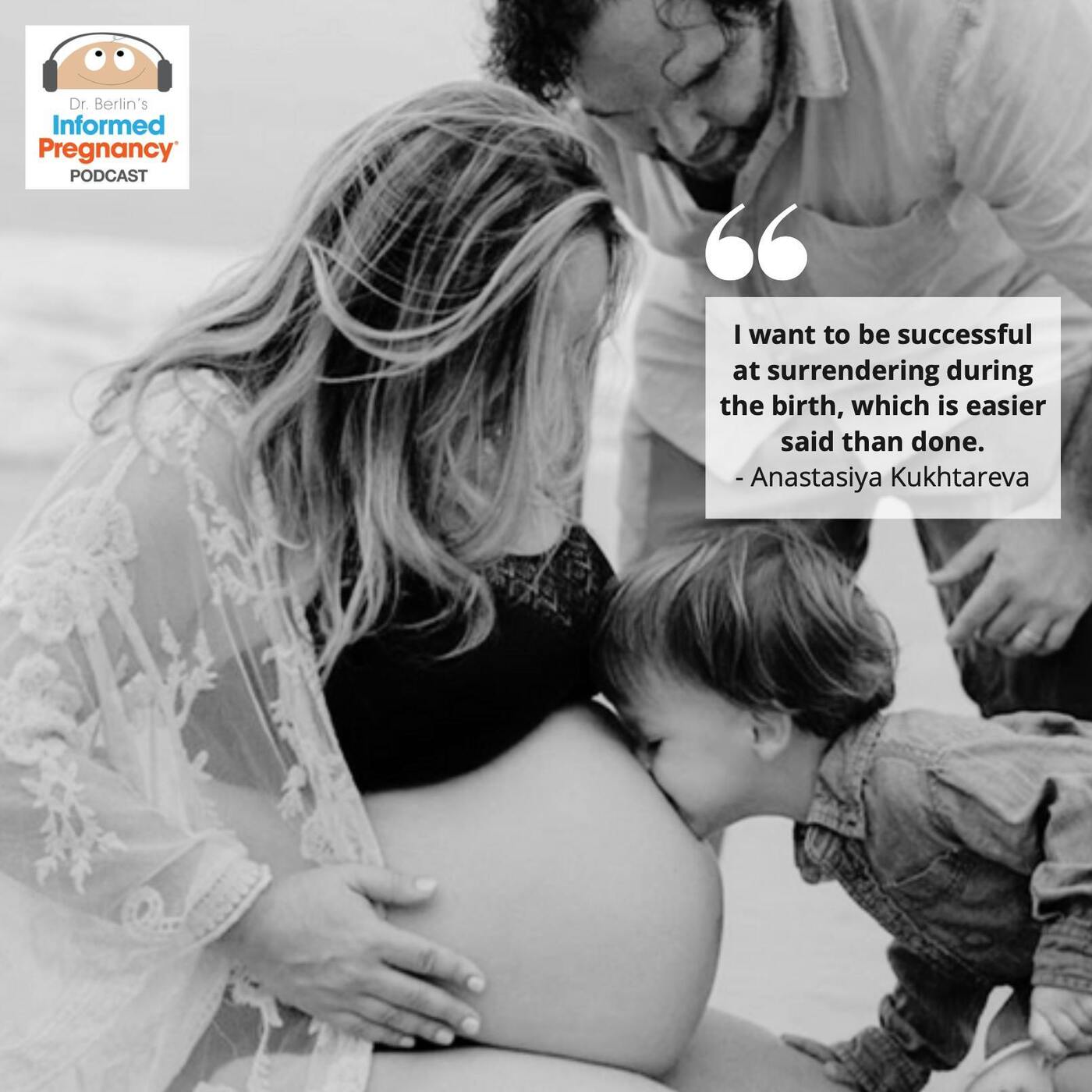
Anastasiya Kukhtareva [31:52] Yeah, I'm excited. I mean, I feel really good about it. I think for me, it's about just knowing that we're gonna try all the things or all the tools at our disposal. And I think this time around, like if I have to have a cesarean again, then that's what it's gonna be. I really tried to let go of control last time and I thought I was successful, but you know, I really wanted to be successful at sort of just like surrendering. I guess that that's one of the words I keep hearing when it comes to birth in general is just surrendering. And that's easier said than done, I think.
Dr. Elliot Berlin, DC [32:25] Anastasia, thank you so much for being on and sharing your story. And as I mentioned at the beginning, you have a really great mind for analyzing things and recapping them. And also you're willing to share your story, your very personal story so that other people can learn from it and just hear different experiences as they prepare for their own births. And for that, I'm grateful. I look forward to seeing you after you have this baby and learning how the second birth went down for you.
Anastasiya Kukhtareva [32:52] Thank you so much. It was such a pleasure.
Dr. Elliot Berlin, DC [32:55] And at home, thanks for listening to the Informed Pregnancy podcast. If you would like to connect with us, visit us on Instagram at Dr.Berlin. It's D-O-C-T-O-R-B-E-R-L-I-N.
Want more pregnancy + parenting? Start your FREE TRIAL of Informed Pregnancy+ and get access to all our curated pregnancy and parenting content — original series, iconic birth films like The Business of Being Born, prenatal workouts and more.
