
March 3, 2022 · 40 minutes · Episode 271
About this episode
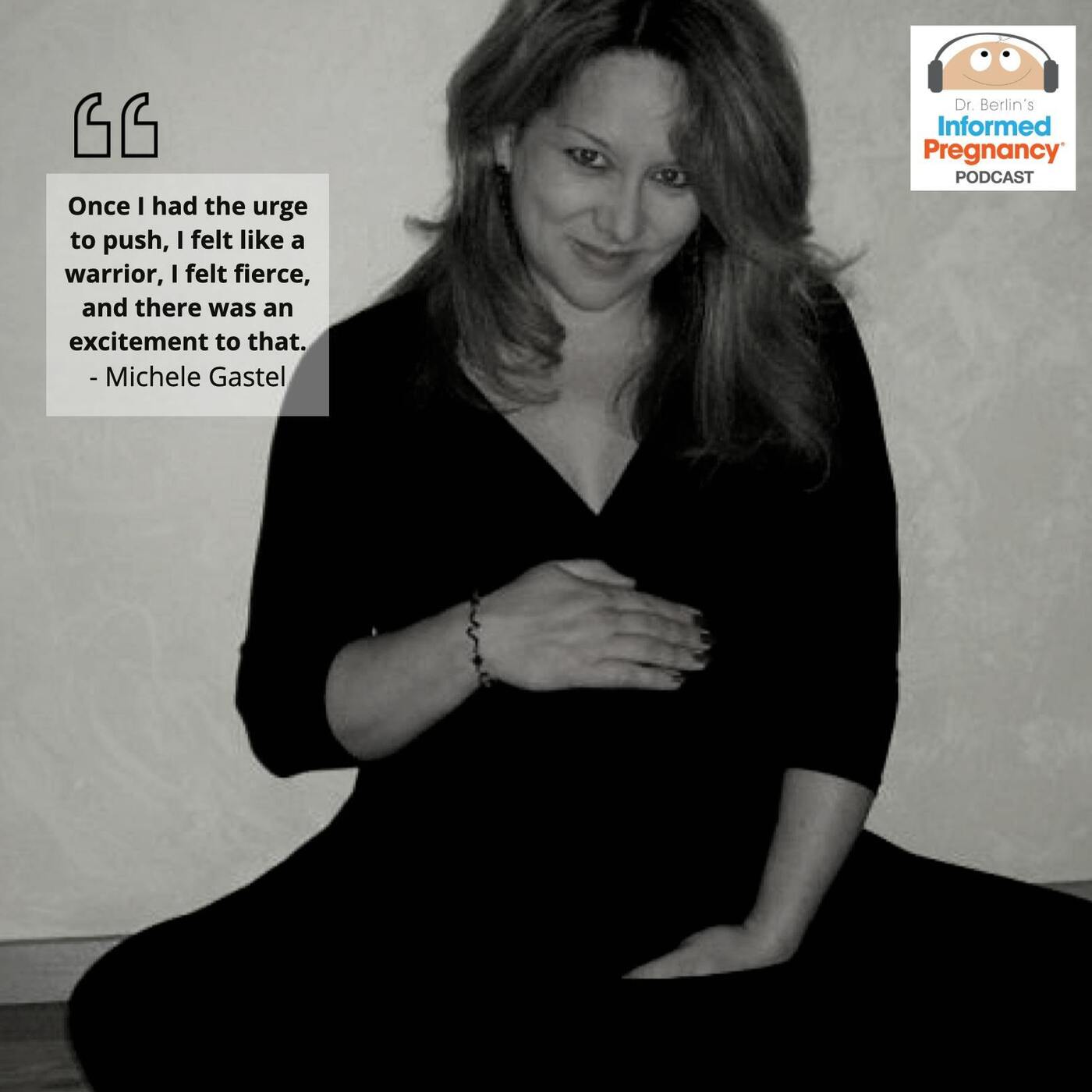
Career Educator Michele Gastel shares her birth stories from over 10 years ago, highlighting how the then brand new documentary film “The Business of Being Born” influenced her decision to have home births.

Learn more about your ad choices. Visit megaphone.fm/adchoices
See Privacy Policy at https://art19.com/privacy and California Privacy Notice at https://art19.com/privacy#do-not-sell-my-info.
Key quotes
“I realized how disappointed I was and I felt confused and I felt like I was on sort of a maternal conveyor belt. Like I was just being pushed through the motions and that there was very little personal connection.”
“It changed my life. It changed my life because every single birth that was depicted in that film made me cry and cry and cry. And I just thought, that's it. That's what it's supposed to be. That's what I want.”
“The most distinct moment I remember was when I said to her, you know, what would we do in an emergency? And she said so calmly and so plainly, name your emergency.”
“And Kara said, well, Michelle, you know, your vagina is not a sponge. It's not going to suck bacteria out of the air. So as long as we don't put anything in there, you're not going to have an infection.”
“I just felt almost more alone than I ever have in my life, but not lonely, just alone. And I felt like I'm just gonna kind of work through this. And it's me and you, kid.”
Related episodes
- Ep. 449 Birthwork & Motherhood with Jennifer Campbell
- Ep. 440 Holiday Top 10 Countdown: Part II
- Ep. 428 In Conversation with Women's Health Advocate Paula James-Martinez
- Ep. 409 The Face of Birth with Kate and Gavin
Transcript
AI-generated transcript with speaker labels — may contain errors, especially names and medical terms. Dr. Elliot Berlin, DC appears in blue; Michele Gastel in orange.
Download PDF of the Transcript
Dr. Elliot Berlin, DC [1:13] Welcome to the informed pregnancy and parenting podcast. I'm your host. Dr. Elliott Berlin today We're gonna hear from a longtime teacher educational administrator and mother of two who planned and experienced two births over a decade ago And after discovering the documentary the business of being born while pregnant things changed a great deal Michelle Gastel, welcome to the podcast
Michele Gastel [1:59] Thank you, dr. Berlin, it's a pleasure to be here and you're a listener that's how we connected I Am I am I love hearing women's birth stories and I found you through a friend who just had a baby a couple of months ago, and she was Enjoying all of the stories that she was hearing through the podcast and told me about it and I have been an Immediate fan and a very happy listener
Dr. Elliot Berlin, DC [2:22] I'm so glad and I'm also glad that you reached out and that you're open to sharing your stories before we recorded you And I Michelle we're talking about how you know most of the stories the birth stories we have on here are people who are in Pregnancy and about to deliver or somebody very recently delivered I think it's refreshing to a hear of two stories from about ten years back And especially since it involves the business of being born which I think people still I hear almost on a regular basis They see that film and it really opens their eyes and they start to look around a little bit more about different options Before we get into that where you from originally and what do you do?
Michele Gastel [3:00] So I am a native New Yorker. I grew up in Staten Island and I live in Manhattan now I am a lifetime educator. This is my 27th year as a teacher and an administrator I work in a private girls school at K through 12 girls school on the Upper East Side, Manhattan
Dr. Elliot Berlin, DC [3:16] Wow, I bet you didn't know what I'm about to say. I don't I'm from Staten Island, too
Michele Gastel [3:25] I did not know that
Dr. Elliot Berlin, DC [3:27] Amazing. My native Staten Island mother will probably correct me and say, you know, you were born in Boston But I moved to Staten Island very very soon after so I can't really call myself a native New York. Oh
Michele Gastel [3:39] We'll take it. Yeah. Thank you
Dr. Elliot Berlin, DC [3:43] So when did you start thinking about having babies?
Michele Gastel [3:46] You know, well, so my husband and I got married when I was 37 and I guess pretty soon after that because I was 37 so we immediately started working on that and happily had a very easy time getting pregnant I think it was only three months or so and I was delighted that I was pregnant on our you know earliest efforts and I was really excited about it But it's interesting that it wasn't something I felt this deep underlying need for like so many other women I know I think because I'm a teacher. I think a lot of my maternal stuff had been Satisfied through all of the amazing wonderful students. I've known over decades, but when I finally was pregnant, I thought oh gosh
[4:29] Okay, so this is a whole other level and I'm really excited about that in your life in general
Dr. Elliot Berlin, DC [4:34] If there was a spectrum and one side was super medical everything on one side was super holistic everything Pre-pregnancy, where would you put yourself on that spectrum?
Michele Gastel [4:44] Supermedical super medical. I'm a math teacher. I'm very logical. I'm incredibly organized I would have definitely said super medical
Dr. Elliot Berlin, DC [4:52] Okay, so like if you would have a headache you'd take a over to counter medicine to get rid of it or things like that Yeah, was that fair? Yeah. Okay. So with that in mind, when you got into your pregnancy, did you look at pregnancy still kind of like from a more medical perspective? Was there any element of holistic thinking there in terms of nutrition and other things like that?
Michele Gastel [5:19] Well, I mean, I think I'm a healthy person. I'm an active person. I exercise a lot and I think I eat well. But there was nothing that would have at the start of my pregnancy told me that I would do anything other than what was pretty typical of a woman in New York City at that moment in 2008 when I was pregnant. And so I fully expected that I would work with the same OB-GYN office that I'd been working with for years and that I would deliver in a hospital and it would be sort of the typical New York City woman experience.
Dr. Elliot Berlin, DC [5:51] Okay. And that's how you started your pregnancy and how were your visits?
Michele Gastel [5:55] Um, very quickly, very disappointing. I feel like within the first two or three visits, I realized how disappointed I was and I felt confused and I felt like I was on sort of a maternal conveyor belt. Like I was just being pushed through the motions and that there was very little personal connection. And I think that really quickly left me feeling sad and disappointed at each of those visits. And really after a few months, three or four months, I would leave crying. You know, I would, I felt like there's gotta be something better. This doesn't feel right. I think part of it was that I was an older mom, you know, geriatric, as they say. And I think that some of the time when I was at my visits,
[6:41] they just assumed this was not my first child because I was an older person. And, and I think, you know, they would say something and I would say, well, I don't really know what that means because I haven't done this before. And there was often kind of a sigh and an impatience, like, oh, okay. And so that just left me feeling like there was no personal attentiveness and connection. And I just thought this is a very personal thing that I'm going through and I'd really love to not feel so automatically pushed
Dr. Elliot Berlin, DC [7:08] through a system. That seems fair. And again, this is your doctor that you've been going to for a long time. That's right. That's right. So it seems like the energy shifted during pregnancy
Michele Gastel [7:19] for you. It's true. I felt that I wasn't connecting with an individual doctor, but I was with a practice and I had no way to know who I would see on any given day. And, you know, a visit during pregnancy, I certainly didn't have any guarantee that the person that I knew as my doctor would be the one delivering my baby when he was born. So yeah, it was a real shift and raised a lot of questions. At that time, where were you getting your information about pregnancy since it was your first one? I picked up a couple of books. I had, you know, the what to expect when you're expecting. And happily, I have good relationships with other women, including my own mother, who were incredibly frank about their experiences.
[8:00] My mom had great pregnancies. And so I wasn't in a fearful place at all. I was actually excited about being pregnant, but I really talked to other people who'd been through it. And that one book was great fun, you know, especially reading about the size of the baby in a given week. That was kind of cute and novel.
Dr. Elliot Berlin, DC [8:18] All right. Let's take a little break and find out how your first pregnancy and birth went. We'll be right back with Michelle Gastel.

Dr. Elliot Berlin, DC [10:47] Welcome back to the Informed Pregnancy Podcast. We're talking to Michelle Gastel. So okay, so you grew up on the more medical side. And when you got pregnant, felt something missing from your OB appointments, something that wasn't there that you were craving. So what do you do with that?
Michele Gastel [11:07] Yeah, fortunately, things just sort of happened in a really organic way after that. And I was at a school where I think eight of us were pregnant at the same time.
Dr. Elliot Berlin, DC [11:18] Wow.
Michele Gastel [11:19] Amazing, right? And another teacher who'd had a baby a few years before, had seen the business of being born and put out an email, I think to everyone, not just to the pregnant moms. But she said, I know there's a lot of pregnant people now, and you might be interested in this film. And it was showing at the film forum not too far from where I lived. And so she suggested we might be interested in seeing this film as pregnant women. And I saw that it was playing pretty close to my house, and I woke up my husband and we went to watch it. And all of a sudden, I mean, everyone says this. So many people reference this movie on your show. It changed my life. It changed my life because every single birth that was
[11:59] depicted in that film made me cry and cry and cry. And I just thought, that's it. That's what it's supposed to be. That's what I want. That's what's missing. And I came home that night and knew that a lot of the film, it took place in Manhattan. And so I looked up the midwife, who is so heavily featured in the film, Cara Muehlhan, found an AOL address for her, an email address, sent her an email. And less than a week later, I was in her home for a consultation and everything changed then.
Dr. Elliot Berlin, DC [12:32] Everything. Wow. OK, so first of all, just by way of perspective, this is kind of right around the time the movie came out.
Michele Gastel [12:40] That's right. That's right. It was in the theater. Yeah.
Dr. Elliot Berlin, DC [12:43] It was in the theater. Wow. And then interestingly enough, people come out of watching it now, you know, streaming it at home and feel exactly the same way. I mean, it hasn't lost its effect on people.
Michele Gastel [12:53] Oh, no, it holds up. I've seen it so many times I've lost count.
Dr. Elliot Berlin, DC [12:58] So when you get into the midwife, does that feel to you like, OK, this is what I was missing. This is what I was craving.
Michele Gastel [13:04] It really did in so many ways. And I think it was so wonderful how she engaged us and how she welcomed us. And my husband is a scientist, an engineer, and he was able to raise his own questions with her. And we shared the same questions. The most distinct moment I remember was when I said to her, you know, what would we do in an emergency? And she said so calmly and so plainly, name your emergency. And I thought, OK, I hemorrhage. What happens then? And she had an answer for that and told me what doctor we would see at what hospital. And then my husband named a different emergency. You know, I don't even remember what he suggested, but she had a different answer for six different scenarios.
[13:46] And we both thought, OK, we'd be in really good hands here. And it was so clear from her years and years of experience at that point, she had delivered very close to 800 babies. Yeah, that this was somebody who knew what she was doing and who would really guide us in our process. And it just felt exactly right.
Dr. Elliot Berlin, DC [14:07] Sounds like someone who's seen everything twice. That's OK. So with that in mind, I mean, aside from the nerves about complications and things going wrong, not having like the medical infrastructure there was any part of you, because there's also not like the medical comfort measures and you're from a medical background.
Michele Gastel [14:28] That's right. Yeah. So this felt so right to me. And I had that pull of what was sort of my more natural inclination. And so I happened to have an appointment set with my OBGYN just a few days after this. And I remember that conversation so clearly. I said to her, you know, this is something that I've learned about recently, home birth as a possibility. And I'm wondering, could we set it up so that you'd be my backup plan? If you know, if I try to have. a home birth and anything comes up or is problematic. And she said, well, I'll just tell you, because I was 38 at the time, that most geriatric patients who come in with a birth plan have it all go right out the window
[15:17] when things start happening. And so if you're hell bent on being au naturel, I think you need to prepare yourself that it probably won't go the way you hope.
Dr. Elliot Berlin, DC [15:28] Oh, wow.
Michele Gastel [15:28] And that was pretty much our last conversation.
Dr. Elliot Berlin, DC [15:31] Oh, wow, that's intense. Yeah. Yeah, I mean, people talk about different reactions when they have that conversation with their OB and it can be everything from, sure, I'd love to back you up. And I think you're a great candidate for home birth to what you described or more. Okay, so did you decide to use that midwife?
Michele Gastel [15:51] We did, we absolutely did. We committed to her right away. At that point, I was about five months pregnant. And so the rest of the pregnancy was with her in her care, with our prenatal appointments in her home, which was this lovely spot on the Lower East Side. It was just right.
Dr. Elliot Berlin, DC [16:07] All right, so flash forward to your first birth. How did your labor start?
Michele Gastel [16:13] People who know me well were not at all surprised to hear that my water broke on the day that my son was due. About three in the morning, I was just laying in bed and it happened. It wasn't a huge gush, but it was clear what happened. And I just said, oh, and my husband was immediately awake. And I said, my water broke. And I got up and felt more coming out of me and made my way into the bathroom to just sort of check the scene. I had nothing else happening in terms of labor symptoms. I simply had my water break. And so we contacted the midwife and she asked if anything else was going on. I said, no. And she said, so get some sleep. That was easier said than done.
Dr. Elliot Berlin, DC [16:59] Yeah, I was wondering, first of all, what emotion when your water breaks like that, excited, nervous combination?
Michele Gastel [17:07] Only excited, only excited. I really was nervous. I think once we made this decision between seeing the business of being born and the actual due date, I watched, I mean, every video I could get my hands on. I read every word Ina Mae Gaskin has ever written. And I just was feeling so positive and so good about this experience. So there was only excitement, only positive energy.
Dr. Elliot Berlin, DC [17:32] So you're not having contractions. There's no intensity, but it's hard to get sleep just because of the excitement?
Michele Gastel [17:38] Sure.
Dr. Elliot Berlin, DC [17:39] Yeah, I don't blame you. Okay, how did things go from there?
Michele Gastel [17:42] Well, I fully expected that the next morning, at some point things would kick in and we'd be having a baby that day because again, that was my due date and that's me. And didn't go that way. The entire next day, there was no sign of labor at all. No contractions, nothing, nothing. I felt totally fine. I did have sort of a steady leak. I remember so distinctly learning that you don't run out of amniotic fluid. I didn't know that was true. When my water broke, you know, I'm so trained because we all are through the media that I should probably be in a hospital, right? Because there could be infection. And Kara said, well, Michelle, you know, your vagina is not a sponge.
[18:26] It's not going to suck bacteria out of the air. So as long as we don't put anything in there, you're not going to have an infection. And every bit of this was like an eye-opening piece of information. And I thought this is crazy. At 39 years old, I had just turned 39, at 39 years old, how are there things I don't know about my own body around this process and birth? So yeah, no contractions, nothing the next day, nothing for the better part of the following day. It was very close to 40 hours after my water had broken that I had my first contraction. And that perhaps coincidentally came with Kara's suggestion to try some castor oil, a teaspoon full after doing a ton of walking
[19:08] and eating eggplant and having a glass of wine. And 10 minutes after the castor oil, contractions started.
Dr. Elliot Berlin, DC [19:14] That's what finally did it, huh? You like it.
Michele Gastel [19:17] Perhaps.
Dr. Elliot Berlin, DC [19:18] Just plain castor oil, did you mix it with anything?
Michele Gastel [19:20] No mixing, a little spoon, that's it.
Dr. Elliot Berlin, DC [19:22] Was there a flavor to it?
Michele Gastel [19:24] No, it was horrible. It has a bad flavor. It just has a really unpleasant texture. And so the flavor, I mean, it seemed like the flavor of Vaseline, if you ever ate Vaseline.
Dr. Elliot Berlin, DC [19:36] Oh. Yeah. I have not that I know of. Okay, so two days into it, you start having contractions.
Michele Gastel [19:45] Yeah. And then we had a birthing tub that my husband started filling as soon as the first contraction happened. And it was gentle to start, you know, probably seven, eight minutes apart, but it seemed pretty clearly to be contract. And since my water had broken so long before, there was little doubt that that's where we were. And so in the early hours of labor, which overall took about 18 hours, just trying to shortcut to the important parts of things. In the early hours, it was manageable. I was, for the most part, sitting on a yoga ball. One of the things that I'd read in Einame's book was if your face is relaxed, then your whole body will be relaxed,
[20:25] your uterus will be relaxed. And somebody had said, if you just make these weird sort of horsey noises, which are not, you're safe, you'll relax, right? And so I probably did that 9,000 times. And so I was in a space on this ball where I was just kind of making it work. We had a doula who was somebody that our midwife had recommended, who showed up probably four hours in and she was very comforting. But you know, it's the middle of the night now. And at some point, probably around six in the morning, both the doula and my husband fell asleep. And that was a really important moment in the whole thing for me. I think for a couple of hours, I just felt almost more alone than I ever have in my life,
[21:12] but not lonely, just alone. And I felt like I'm just gonna kind of work through this. And it's me and you, kid. And I thought about this boy that was on his way and it was hard. And the horsey noises didn't really do a whole lot to relax the rest of me, but it got me through. And at some point, probably then 12 hours in, the midwife arrived. And she had a very frank, honest conversation with me about needing to maybe get off that yoga ball and do some moving around. And I resisted, but ultimately she said, you have a few options here. You can get up and take a walk. You can take an ambient, but that'll probably delay labor. You can have a little vodka,
[21:58] but that'll probably delay labor. So these are your choices. And there was a huge thunderstorm outside. I did not wanna take a walk. I certainly didn't wanna take a walk outside, but if these were my only choices, that did seem the best option of the three for me. And so I got up to get dressed and I was furious and I did not wanna be off that ball and I was still making the horsey noises. And as soon as I got up, really, as soon as I got up, Dr. Berlin, I went to put clothes on and everything changed. And I am sure I made some sort of noteworthy sound. And the midwife from the other room said, what's happening? I feel like my butt is turning inside out.
[22:36] And she said, that means it's time to have a baby.
Dr. Elliot Berlin, DC [22:40] That's the universal sign.
Michele Gastel [22:41] I guess so, but I hadn't heard that before either. So I didn't know anything. So I, yeah, you know.
Dr. Elliot Berlin, DC [22:48] I guess it's a good thing you didn't go for the tequila and the ambient.
Michele Gastel [22:52] Yeah, yeah. I was in a one bedroom apartment in Brooklyn and she said, you know, now really is the time to get your walk in. And so I had one arm around her shoulders and one arm around my husband's and we walked around the living room in laps and the sensation was quite different. I definitely was in a more pushing kind of place and I liked it much, much better than I had liked the contractions. I wasn't needing the horsey noises at that point.
Dr. Elliot Berlin, DC [23:20] Why?
Michele Gastel [23:21] Because it was different. Because the horsey noises were getting me through the contractions. You know what? I talked about how we had a tub set up, a birthing pool, but Kara said, because my water had broken, she actually didn't want me laboring in that until it was really active labor because that actually could increase the possibility of infection. And so when it really became active labor, I did try to hang out in the tub, but I'd gotten into such a good place around sort of anticipating the contractions that when I got in the tub and I was really tired, the comfort of the tub made me doze off and then the contractions would blindside me.
[24:02] They would hit me from nowhere, right? And so I couldn't sort of anticipate them and do the horsey thing to get through it. And so that was just not my cup of tea at all. So that sent me back to the birthing ball, but back to the pushing part. Once I had that urge to push and I was walking with their help, it was a very different sensation from the contractions. It didn't hurt in the same way. Like I felt like a warrior. I felt fierce and I felt like this is gonna happen. And there was an excitement to that that was very different from the kind of biding my time in those first 15 hours or so.
Dr. Elliot Berlin, DC [24:40] All right, let's take a little break and we'll find out how this story ends and the next one begins. We'll be right back. Welcome back to the inform. pregnancy podcast. We're talking to Michelle. Thirteen years ago, her water breaks and labor takes a long time to come. But after a little castor oil, things start to happen. And then when the midwife insists almost that you get up and start walking, that's when things really kicked into gear. So you're doing laps around your apartment, supported on one side by your husband who woke up, I guess, at this point, and on the other side by your midwife. What happens next?
Michele Gastel [25:29] Well, Kara suggested, as other midwives have suggested to other birthing moms, that, you know, the toilet's a good place to sort of have that pushing sensation play out. So I went and sat on the toilet and I linked my arms around the back of my husband's neck and pulled down on him when I felt the pushing urge. And I mean, maybe my memory is a little fuzzy because it is 13 years ago, but I feel like I only did that for about 15 minutes. It seemed really short. And all of a sudden I said, there's the head. So I could feel without even reaching down that the head was there. And I touched and confirmed and there he was. And we let Kara know. And I said, I'd love to still deliver in the tub. So let's
[26:15] do it. My husband, who is not a shy person, was about to just hop in with nothing on. And I suggested maybe a bathing suit, you know, midwife and doula there. So he did put some trunks on and join me in the tub. And it was really a great experience having that last series of pushes. Once the head was there in the water, I really had wanted to experience water as part of my birth, given what I had learned by watching other mothers have their babies. And Kara did such a beautiful job. She had like a gel that she was using to sort of put on his head as he came out with each contraction a little bit. So as to minimize the risk of tearing, he came out a little bit and went back in and came out a little bit.
[27:01] It all felt like it was good. It was working. It was going well. And then she said something like, you know, within the next few pushes, you're going to have a baby. And my husband, who is fairly athletic, said that even though it surprised him a little, the best catch he ever made in his whole life was there in the tub just a few minutes later. So with one not really noteworthy push, everything came out and it was terrific. And so we were in this dim light in my dining room in the water. And I was only sort of vaguely aware that it turned very bloody. And, you know, there were lovely moments that the three of us got to share before the cord stopped pulsating. When the midwife invited him to
[27:44] cut the cord, once it was finally time, he did beg that we put the lights on so he didn't make any mistakes in the snipping process. And so once Riley was breathing on his own and disconnected from me, my husband and the baby went to go get to know each other and sit on the couch. And the baby, you know, wrapped his fingers around my husband's finger. And the doula and midwife were so attentive and sweet and wonderful to me and tried to help me get to a shower to get cleaned up. One funny, not funny part of the story here is that when I got into the shower, you know, I was weak and tired and that's understandable. Oh, no problem with the placenta either. That was easy. But I got into the shower and
[28:26] the midwife said, you know, you were so comfortable on that birthing ball. Maybe we'll just set you up so you can just sort of sit on that, let the water run on you. That sounded so lovely. What I didn't realize was how slippery the ball was going to be once wet. Yeah, it slid out from under me and I landed very, very, very hard on the floor of the top. Right on my vagina.
Dr. Elliot Berlin, DC [28:54] Like your immediate post birth.
Michele Gastel [28:57] Yeah, that was rough, but you know, all things considered, it wasn't so bad. The whole experience was just so beautiful. And then we all just, you know, got to know each other laying in our bed at home with, you know, the lights low and nice music on and snacks that I liked all the time. It just felt so right. And while we were all in my room getting settled, this amazing midwife and doula, they did a load of laundry and they made us a snack. And it was like we were being treated by these perfect elves of birth that, that just were nothing but love and nurturing. It was amazing.
Dr. Elliot Berlin, DC [29:34] It sounds dreamy and beautiful and quite different than the experience you were headed towards.
Michele Gastel [29:40] That is absolutely right.
Dr. Elliot Berlin, DC [29:42] For the business of being born. So a couple of questions. One of them is, have you seen the obstetrician since then?
Michele Gastel [29:50] No. Never again. No, no.
Dr. Elliot Berlin, DC [29:52] So do you do all your women's care with a midwife or just a different OB?
Michele Gastel [29:56] That's right.
Dr. Elliot Berlin, DC [29:56] Oh, you do everything midwifery. The other thing is you said you're an I don't remember if you said K through 8 or K through 12.
Michele Gastel [30:03] K through 12.
Dr. Elliot Berlin, DC [30:04] Yeah. So. Girls school. Especially then, because you mentioned like, how did I get to be 39 and not really understand how my body works when it comes to pregnancy and birth? Is that something you try to infuse in the right way though into education for the girls as they're getting into like upper middle school and high school?
Michele Gastel [30:28] Yeah, it's such a great question. I mean, so I'm a math teacher, so there's not really not a home for it in my discipline, but an amazing, wonderful school that has opportunities for us to sometimes veer off the sort of typical curriculum. And so in a couple of instances in the years since my birth, we've had chances for teachers to talk about something that they feel passionate for them to share something personal. And I had one incredible experience with a fellow educator who had an unbelievably different story from mine, really traumatic hospital births with both of her kids. And she knew my story. And so we put our heads together and created a presentation for students
[31:16] that was about our two experiences and not in any way trying to talk about why you would choose one over the other, but just as teachers to teach and talk about what we had learned, what the options are that are out there. And we only have our own stories, but that was an incredibly meaningful experience. And so when I've had the chance to do that, it is a story I am especially eager to share with young women, especially.
Dr. Elliot Berlin, DC [31:46] Yeah, and it's not to say because, you know, sometimes a home birth can be traumatic and a hospital birth can be beautiful. For sure. Your individual stories. And I think just knowing that there are options and learning more about the different provider types and setting types is really helpful, not to just start thinking about it midway through your pregnancy.
Michele Gastel [32:05] That's right.
Dr. Elliot Berlin, DC [32:06] All right. Then you had another baby.
Michele Gastel [32:09] Yeah. So I got pregnant almost. So my daughter was born 22 months after my son. And also, I'm very lucky, a really easy pregnancy. I had a huge work related thing on the horizon. And when my husband and I started looking at timing, I thought, OK, if I got pregnant today, it would be OK if I had a baby nine months from now or, you know, 40 weeks from now, because I'll be past that event. And I did get pregnant that day.
Dr. Elliot Berlin, DC [32:38] Oh, my goodness. No wonder you're a math teacher. You and your calculations.
Michele Gastel [32:43] But that was amazing. We couldn't believe that that's what happened, but that's what happened. And so the pregnancy was delightful. Really, everything in both of my pregnancies was terrific. I really was very, very lucky. Never sick. Some weird cravings, but that's minor.
Dr. Elliot Berlin, DC [33:00] I get those all the time.
Michele Gastel [33:03] With my son, it was ground beef. With my daughter, it was strawberry smoothies. So, you know, there I don't know what that says about those kids, but those are my differences. But the pregnancy were both beautiful.
Dr. Elliot Berlin, DC [33:14] Do you have one meat eater and one who's more veggie fruit?
Michele Gastel [33:17] No, not at all. They're not consistent with those. So the pregnancies were both great. And when I knew I was pregnant, I think it was about five minutes after I had a positive test. I called Kara and said, please tell me that you're going to be available when this baby's due, because I can't imagine doing a birth any other way. This is what worked for me last time. You're wonderful. This is exactly what I want to have happen again. And it was really great being able to be with her from the very beginning of the pregnancy. And what I really appreciated about her prenatal care with my second child was that much of it happened in my own home. And that was because of her very strong beliefs
[33:56] that she wanted the older child to be part of the process. And so my son was, you know, sitting beside me on the bed when Kara was measuring my stomach and checking my heart rate. And he got to listen with the stethoscope. And that was just beautiful. So all of that was absolutely terrific. What I didn't expect was that my daughter would be 15 days late.
Dr. Elliot Berlin, DC [34:20] And so, well, OK, since your first kind of got started right on the due date.
Michele Gastel [34:26] Exactly, exactly. And that's 15 days after the due date, 15 days after the due date. That's right. My plan was again to deliver at home because I'd had great success with that the first time around. At this point, we're living in Manhattan, not in Brooklyn. And my doula was actually going to be my oldest high school friend who had four babies of her own at that point. And I was to have somebody that was really personally connected as well as the midwife. And so when ultimately labor finally started, it was on Mother's Day. We had to do as well.
Dr. Elliot Berlin, DC [35:00] waiting for. Exactly. And she was waiting to become, you know, nine pounds, 10 ounces,
Michele Gastel [35:06] which is what she was. How big was your first? Seven, seven. Wow. Was labor different? Yes, it was. So I think the experiences were almost completely inverted. I found with my son, the first birth, that the contraction process was very, very hard. And pushing was kind of a lovely relief in comparison. And with my daughter, it was the complete opposite. It's not that contractions weren't hard, but I felt like I could manage them differently. And I have a theory about that, that no one in the medical field has ever confirmed for me. This is just my own theory. With my daughter, my water didn't break until nine minutes before she was born. And so I'm wondering if, and maybe you can confirm this from what you've learned through
[35:52] other moms, I'm wondering if when the water doesn't break, if there's some sort of cushion
Dr. Elliot Berlin, DC [35:57] in the experience. Absolutely. Yes, they always talk about, and if they tell you they're going to suggest breaking your water, they usually let you know your contractions are about to get much more intense once and for all. So your intuition is correct. That felt like what must
Michele Gastel [36:14] be happening, because I really did feel like I could manage them differently. There was not a horsey noise in the 12 hour labor. But once I got through the contractions and got to the pushing, partly because she was enormous, the pushing part was very, very hard. We had just moved into this apartment. And I remember I regretted not letting our neighbors know that this could be happening because I was very, very vocal. And yes, a hundred percent. And my high school friend who was with me, my beautiful doula Trish, she was doing nothing but cheering me on. The more sort of animal I sounded, the more she was like, yeah. When we got close to the end, because Karen was of course aware that I was 15 days beyond my due
[37:00] date, she was especially attentive to whether there were any signs of trouble. And so she said, please, if your water breaks and I'm not aware of it for some reason, please let me know, because I want to make sure there's no meconium in the amniotic fluid. And so when I felt the urge to push finally, and it was time to move into the tub, because I did do that in the same way I did with my son, my water broke a few minutes after I got into the tub and it was clear. So you couldn't see. And so I said breathlessly water and my beautiful doula ran to the kitchen sink and brought me a glass of water. So it was just an assurance that everything was fine. And that was terrific. And pushing her out was no small
[37:46] feet. How long did you push for? It really was not that long. I mean, I think, as I say, my water broke and nine minutes later she was born. I think I was probably actively pushing for about a half hour and I tried several different positions. I was finally on my hands and knees when she came out and it felt fully triumphant because that was a hard, hard experience. She was a little bit blue. She was extremely loud. I remember I said to Kara, what's wrong with her? And she said, well, Michelle, that's, that's her voice. Terrified me because I'd never heard that kind of thing from my son. Strawberry smoothies. We'll do it. Exactly. Exactly. And so that was it. And interestingly,
[38:34] I had with my son, the tiniest tear and with this enormous nine pound, 10 ounce baby girl, nothing, no any kind, right? Amazing body is amazing. It's incredible. You know,
Dr. Elliot Berlin, DC [38:46] I'm actually just in the middle of working on an article about the pelvic paradox, how sometimes very large baby can come through a very petite woman naturally and smoothly and without tearing. And then sometimes the little baby gets stuck in a mom with bigger pelvis. So it really boils down to function. Well, my husband might say engineering, right? I think. Well, engineering, it's not just structure. It's not the size of your pelvis and the size of the baby, but also how they're both functioning. Your pelvis is supposed to be able to expand and contract and help accommodate or facilitate the movements. And the baby's head is supposed to be able to mold into an oblong shape and pass through
[39:25] a smaller structure. If those things are happening, things tend to go better. But if not, then you could have a relatively small baby get stuck in a larger pelvis. So function is important. That's my point. That's where chiropractors come in, but it's not a pitch for me. You have two very beautiful stories. I'm going to share this with Ricky Lake, my good friend, Ricky, you know, I think it tickles her that still 13 years later. So, so, so many people have watched it and been affected by it.
Michele Gastel [39:55] And she changed my life. There's no question. And I know many of us say that her film. it was so helpful for talking with the other people in my life about our decision. I sat down and watched it with my mother. I sat down with my mother-in-law. I showed clips of it to my students in school. It really holds up for sure. And it really helped me explain to other people why we were making this decision. As we talked about at the very beginning of this, I'm really am somebody that was leaning more towards very sort of standard medical stuff. And that I'm a logical person, a thinker, a math teacher, I don't see that as inconsistent at all. What Rookie Lake shared with us and what the research bears out is that this, for us anyway,
[40:40] was the logical choice. Everything about what we learned resonated in a way that made us
Dr. Elliot Berlin, DC [40:46] think this is what's best for us. Michelle, not only do we both come from Staten Island, but we both come from more medical backgrounds. I was the guy in the family who made sure to have every little remedy for every ailment, every over-the-counter remedy for every ailment, a pill for every ail. I ended up working in emergency rooms and hospitals when I was 18 years old and I was on a trajectory towards medicine. But I took a shift over here. When I heard that people give birth at home still, because I had no idea, I assumed it was a fringe amount of like tree hugging vegan previous driving hippies. And then I would see patients of mine and I'm like,
[41:25] oh, which hospital are you delivering? I'm like, oh no, I'm going to have a home birth with a midwife. And I'm talking about medical doctors and lawyers and professional meat eaters still doing home birth. And that blew my mind. I didn't realize. And then once you start to look into the history and the two different models of maternity care, it becomes clear that there's something for everybody. And for the right people, home birth is a great option.
Michele Gastel [41:49] That's right. That's right.
Dr. Elliot Berlin, DC [41:51] All right. It's late for you, still in New York. I'm okay. I don't have little babies anymore. So I don't have to worry about them working up at the crack of dawn. I'm very grateful that you reached out. Thank you for listening to our podcast, for reaching out, for sharing your podcast with others, and now for sharing your beautiful birth stories. I really appreciate it.
Michele Gastel [42:12] Oh, thank you. It's really been my absolute pleasure getting to know you and all the amazing women in your care. And thank you for the work you're doing for girls and young women to share what it is to be informed about pregnancy. Teamwork. Absolutely.
Dr. Elliot Berlin, DC [42:28] At home. Thanks for listening to the informed pregnancy podcast. If you'd like to connect, find us on Instagram at Dr. Berlin D O C T O R B E R L I N.
Want more pregnancy + parenting? Start your FREE TRIAL of Informed Pregnancy+ and get access to all our curated pregnancy and parenting content — original series, iconic birth films like The Business of Being Born, prenatal workouts and more.
