
October 10, 2024 · 37 minutes · Episode 428
About this episode
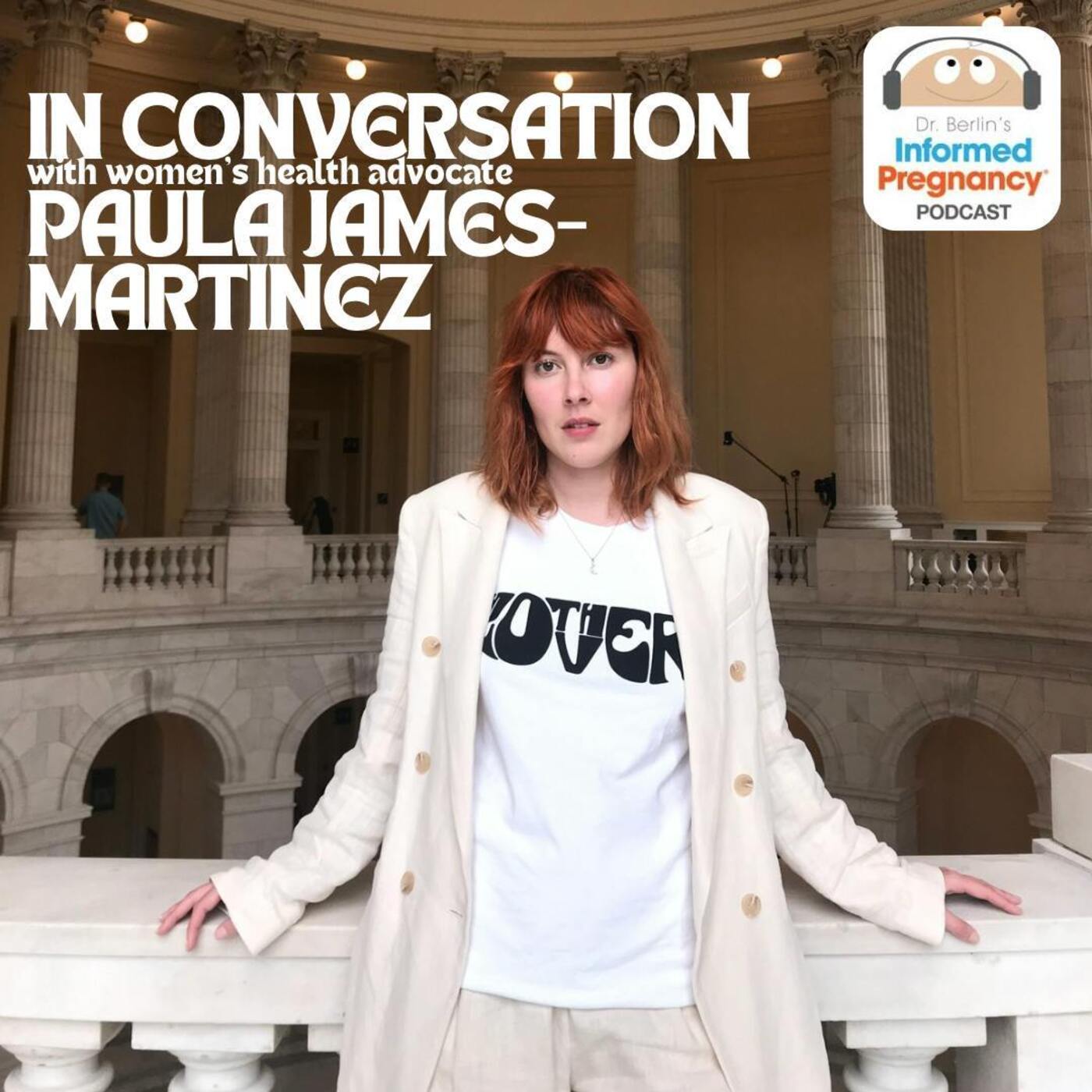
Today we chat with Paula James-Martinez, a passionate women’s health advocate and founder of the non profit The Mother Lovers. Currently working with our friends at prenatal vitamin company Needed, she’s a talented writer and producer who recently directed the birth documentary Born Free (now streaming on IP+).

Connect with Paula: @bornfreefilm, bornfreefilm.com
Filmmaker Paula James Martinez travels across the United States to understand what makes it the most dangerous and expensive nation to give birth in. From heartbreaking personal stories and harrowing facts to perspectives of experts both in the medical and legal fields, BORN FREE: BIRTH IN AMERICA shines a light on the true cost of giving birth in the US. The film is an invitation for every person to start a conversation about the state of maternal health. Watch Born Free on IP+
Key quotes
“I've never really had a plan in life. I feel like my life has been a series of happy accidents and joyful moments and less joyful moments, I guess.”
“But I then found it harder postpartum to complain about everything because I'd had this like dream version of a birth. So then it was like, if breastfeeding was hard or anything felt hard, I felt like I wasn't really allowed to complain because I'd been the girl with the unicorn burr, which was an interesting way.”
“no one know about this? Why does no one know you're 50% more likely to die than your own mother in childbirth? I was like, these statistics are insane. No one knows. And I was like, I didn't know. And I'm supposed to be this women's magazine journalist who knows all of the things about women's issues.”
“It was like the big story of what it means to me, you know, it's kind of like the canary in the coal mine for how we value women in society is how we value women in birth.”
“I think if you try and do things from the right place, the right people show up.”
Related episodes
- Ep. 435 Jackie Amézquita: After Birth
- Ep. 426 Mia Rigden: After Birth
- Ep. 445 Motherhood and Business with Sarah O'Leary
- Ep. 446 Perinatal Exercise with Sarah Zahab
Transcript
AI-generated transcript with speaker labels — may contain errors, especially names and medical terms. Dr. Elliot Berlin, DC appears in blue; Paula James-Martinez in orange.
Download PDF of the Transcript
Dr. Elliot Berlin, DC [0:12] Welcome to the Informed Pregnancy and Parenting Podcast. I'm your host, Dr. Elliott Berlin, pregnancy-focused chiropractor. My guest today is a passionate advocate for women's health. She's the founder of the nonprofit The Motherlovers and a talented writer and producer currently working with our friends over at the prenatal vitamin brand Needed. She's also the writer, producer, and director of the birth documentary Born Free, now streaming on Informed Pregnancy Plus. Paula James-Martinez, welcome to the podcast.
Paula James-Martinez [1:06] Thanks so much for having me.
Dr. Elliot Berlin, DC [1:08] An honor. Well, the audience when we jump in is going to see how amazing you are. Let's start at the beginning. Where are you from originally?
Paula James-Martinez [1:14] I'm from Essex, which is just outside of London, kind of small town middle of nowhere. But age 17, I decided that I'd had enough of small town middle of nowhere and moved to the big city to study fashion.
Dr. Elliot Berlin, DC [1:28] What piqued your curiosity into fashion?
Paula James-Martinez [1:30] I think I just liked this idea of glamour and creativity and storytelling. And at the time, magazines still existed in all their glorious forms. So it really felt like a world in which you could weave dreams. I think, unfortunately, that's changed a lot over the years, but I had the last days of that particular disco.
Dr. Elliot Berlin, DC [1:49] I mean, cool.
Paula James-Martinez [1:50] The end of an era.
Dr. Elliot Berlin, DC [1:51] Yeah, exactly.
Paula James-Martinez [1:52] Go with the bang.
Dr. Elliot Berlin, DC [1:53] And were you a fashion kid?
Paula James-Martinez [1:55] I was. I was a very aggressively stylish child. My poor mom. I had to wear specific clothes all the time. Thankfully for her, we have school uniform in the UK, so she can at least ship me off to school in the same outfit every day.
Dr. Elliot Berlin, DC [2:10] You lucked out.
Paula James-Martinez [2:11] Yeah. I think it definitely came from some strange, innate. My dad was a banker. My mom was a dentist. There was definitely no fashion in my background. It was just a strange, innate dream that I always had.
Dr. Elliot Berlin, DC [2:23] Wow.
Paula James-Martinez [2:24] A recessive dream.
Dr. Elliot Berlin, DC [2:25] Exactly. Somewhere deep that way. So you studied fashion. What did you do with it?
Paula James-Martinez [2:31] I actually dropped out of school because I got a job at Dazed and Confused, which was the coolest magazine in London at the time. And I started working at 19 as assistant to our publisher and had some wild, very fun years going to the Ritz in Paris and going back and forth to New York and kind of like learned everything on the job. And at the time, they were like, well, you're young, you can do the website. No one else wanted to do the website at the time because it was this strange throwaway thing in 2009, 2010, or whatever it was. So I started building a website from scratch. And by, I think, 22, 23, I met a French gentleman called Olivier Zahm, who I think
[3:19] magazine in New York called either the best or worst human being in New York, he was very French and very fashion. And he said, here's all the money, do whatever you want to do, build a website for my magazine, Purple. So I worked there for six years and went back and forth between New York and Paris and built a whole kind of wild universe in which I came across like everyone in fashion from artists to filmmakers to storytellers. I have a lot of stories from those times.
Dr. Elliot Berlin, DC [3:51] This feels a little like the devil wears Prada to me.
Paula James-Martinez [3:53] It was the devil wears Prada, but with no HR. The devil wears Prada is very tame in comparison to my fashion years.
Dr. Elliot Berlin, DC [4:01] Okay. And as you were talking about them, I actually liked, I want to see this
Paula James-Martinez [4:05] movie, I want the juicy details that you're leaving out. There's something technically in the works right now, but we'll see how that comes out it's in development. Let's say, hopefully it's one of those things that'll get out of development on the right side of it.
Dr. Elliot Berlin, DC [4:19] Okay. All that magazine stuff, what brought you to the States?
Paula James-Martinez [4:23] A job. I was headhunted to become the fashion director of Refinery 29, which at the time was the biggest fashion website in America. I was 25 and I had a staff of 30 people and I had no idea what I was doing and it was kind of a baptism of fire because it was also a meeting of like, they were also a technology player and they had a very different kind of corporate structure to the wild, freewheeling Parisian world that I'd come from, but I learned a lot and I learned a lot about America and I learned a lot about storytelling and I learned a lot about talking to women and I think that's really where everything that I've done kind of stemmed from was I realized all I've done my entire life is tell
[5:07] stories to women that women can kind of relate to and understand.
Dr. Elliot Berlin, DC [5:12] I feel like I can relate and understand to your story.
Paula James-Martinez [5:15] I mean, broadly, absolutely. That was my niche in terms of like being a magazine editor. I hope everyone likes my stories.
Dr. Elliot Berlin, DC [5:22] I just think you're a great storyteller and who wouldn't relate to your stories. So Refinery 29 and then it just kept growing from there. What happened then?
Paula James-Martinez [5:32] Then very un-career woman of me fell in love with a man who lived in California and I was at kind of a strange crossroads as well at that point in my career. I was like, I don't know if I want to do this for the rest of my life. Like I very much grounded my career on like, we can talk about lipstick and we can talk about politics and we can talk about sports and we can talk about the environment all at the same time and not everyone necessarily wanted me to do that all at the same time and definitely would prefer that I talked about shoes. So I think I was having a bit of an identity crisis at the time. So coupled with the falling in love, I was like, I'm going to move to
[6:11] California and reinvent myself in the age-old cliche that I asked. Uh, I wanted the horoscopes.
Dr. Elliot Berlin, DC [6:19] You want to do my horoscopes?
Paula James-Martinez [6:20] No, the horoscopes. That's why I read fashion magazines.
Dr. Elliot Berlin, DC [6:24] For only the horoscopes. I mean, Susan Miller is my go-to, to be honest. But this is good deep intel from the inside. For some reason, there's a lot of girl power in my house. And when the, uh, mags are around, that's what I turned to. I wonder what's going on with my horoscopes today. The guiding principles. I think it's nice to just hear what the universe thinks is in store for you. And then California, how did the reinvention go?
Paula James-Martinez [6:49] The reinvention went well, I guess I didn't have a plan. I've never really had a plan in life. I feel like my life has been a series of happy accidents and joyful moments and less joyful moments, I guess. And I ended up making a book called Voyage d'Etude, which I don't really know why I made at the time, but it was about a scrapbook of America and I just started telling my journeys across America and that sold in Barnes and Nobles and bookmark at the time, and I made a whole issue and it came out and that was fun. And then I was like, okay, I've done this. I don't know what I'm doing next. And I started consulting for brands. And then I found out I was pregnant, which kind of threw a
[7:30] spanner in the works of my reinvention.
Dr. Elliot Berlin, DC [7:33] Like found out total accident.
Paula James-Martinez [7:34] Yes.
Dr. Elliot Berlin, DC [7:35] Cause even now you sound surprised.
Paula James-Martinez [7:37] I think I'm still surprised. My now husband and I had probably been dating for about seven months at the time, so it was a very surprising time.
Dr. Elliot Berlin, DC [7:49] Okay. And how did you take to that surprise?
Paula James-Martinez [7:53] I think in all honesty, I was like, he's a really good guy and I can handle this whatever happens and he will be a really good dad. So I'll just give it a go and see what happens. And I was like, this is either going to work out really well, or he's going to be a really good co-parent someday.
Dr. Elliot Berlin, DC [8:10] Well, you sound happy.
Paula James-Martinez [8:11] So it seems like another happy accident in the path. It worked out. Yes. He's still here. He's still around. We're still pretty happy. We got married when my daughter was, I think eight months old. She attended the wedding. So it was a bit messy to start, but we course corrected.
Dr. Elliot Berlin, DC [8:27] Now you do all sorts of interesting things. You have a nonprofit, the mother lovers. You've made this film and you're still working with brands. I want to find out about everything, but I think we'll start with your pregnancy and birth experience, see if there are any happy accidents over there and we'll do it when we get back from this quick break, don't go anywhere.

Dr. Elliot Berlin, DC [10:27] Welcome back. We're talking to Paula James Martinez. Okay. Um, very interesting, happy accident background. Find out you're pregnant, but it sounds like it was not on your radar at all. So like when you got into your pregnancy, did you have any thoughts in mind about pregnancy, about birth, anything like that?
Paula James-Martinez [10:43] No, I knew nothing because I come from the UK where you become pregnant and then the NHS gives you a midwife and then you have a midwife birth, generally in a hospital, but you can choose a home birth. So I was kind of under the impression it would work in the same way, but being America, I would have to pay. I understood that much, but I didn't really understand the whole thing. So my husband was like, well, you need to find an OBGYN. And I was like, I guess she will give me a midwife. So I went to an OB and I was already kind of running late in the entire process. Cause I found out, I think around eight weeks because we hadn't been trying. And I was like, then trying to find this appointment, then
[11:25] trying to find the good doctor. And I went through the process and, you know, I discussed having birth with the midwives in the hospital and we had our four minutes appointments. And she told me that would be a possibility because I was young enough and healthy enough at the time. And I kind of followed along until I don't even remember, I think 28 weeks, whatever that appointment was. And she was like, Oh, by the way, I'm going to be out of state around your due date. And if anything happens, I won't be there. So if you want to have the baby with me, we should have an induction. And I was like, what, you know, I'd always kind of gone in thinking I was
[12:04] doing an unmedicated birth that I was probably going to try and do it with the midwives and it really threw me and I was very British. And I said, okay. And then I walked out very quietly and I said to my husband, we're never going back in that room ever again. And it was not, I think in reflection, any fault of hers. I actually respect her for her honesty. And I think so many OBs would not have been honest with me about that fact and kind of giving me that heads up until it was too late. But I was like, okay, this isn't going to work. I'm not going to have the birth that I want to try for. I'm not going to have this unmedicated birth that I want to do.
[12:40] What should I do? And one of my best friends in LA is super hippie and she was very excitedly training to be my doula. She'd always wanted to do left for someone. So during my pregnancy, as soon as she found out I was pregnant, she started taking doula training. So she could be my doula at the birth. And she was like, Oh, I know a midwife. I know middle wives at Del Mar. You could probably change. I have an inn. And so I turned up at Del Mar, I think 30 weeks pregnant and was like, Hey, I want a midwife. And I was like, I'm going to be fine because I'm British and I have a plan and it's going to work out. And I think my conviction may be convinced them because they took
[13:24] me on very late as a client. And at 38 weeks, I decided I was kind of like mentally done being pregnant. It was a full moon and I read something on the internet, probably in the horoscopes that if you go outside and rub your belly under a full moon, your baby will come. And so I did it. And then I went to bed and I was watching a movie with my husband and my waters broke, but still no contractions, nothing. And then after like half an hour, I was like, these feel quite bad. They feel quite bad. I was like, maybe it was a bad decision to not have a medicated labor. I was like, I don't know if I can do this. This is coming super fast.
Dr. Elliot Berlin, DC [14:06] I thought you were going to say bad decision to rub your belly under
Paula James-Martinez [14:08] the open room, maybe both of them were a bad decision. And I started timing them and they were pretty fast, but I was like, maybe I'm timing them wrong. We called the midwives and she was like, well, if you feel like you need to come in and you should come in. And I was like, I think I need to come in. This was probably about, I think my waters broke at around 1130. We got to Delmar by about 1230. And then I was just very quiet. I'd done hypnobirthing and all I could remember was she told me to hum. So I didn't make any noise apart from humming. And I breathed like a deep hum, like a deep hum. And I was very, very internal, apart from the point that I don't
[14:49] remember, but apparently I thanked everyone for coming for my birth. And I was sorry.
Dr. Elliot Berlin, DC [14:54] You gave an Oscar speech.
Paula James-Martinez [14:57] Okay. Exactly. And I was like, I'm very thankful for you all being here and sorry. It's the middle of the night. So polite, which my husband said was the most British thing I've ever done. But yeah, so it progressed pretty fast. And, but because I was so internal and I kind of asked for no checks and we seemed to be doing fine. Everyone thought it was going to be ours because I was so quiet. My husband was cold and he asked the midwife if he could go to the car to warm up, which at Delmar is literally the other side of the door. So she said, yeah, it's going to be a while. Just go and sit, turn on the heating. I'll call you if anything progresses.
[15:34] Cause I was very in it with my doula. My husband did not exist in my bath. His only job was to DJ Hawaiian lullabies in the back corner. And that's all he did. He was perfect at that.
Dr. Elliot Berlin, DC [15:46] He could probably even do that from the car. Where were you laboring?
Paula James-Martinez [15:49] I labored in the tub for a while and then they were concerned about the baby's heart rate. So they brought me out of the tub and I was laboring over the side of the bed on my hands and knees, just holding my doula's hand. And then the midwife had a call. So she stepped out of the room and my doula best friend just held my hand and was like, it's just you and me now. You're going to be fine. Breathe. And I was like, okay. And then I breathed and the baby's head came out and she was like, oh my gosh, call the midwife.
Dr. Elliot Berlin, DC [16:20] Obviously this is her first delivery ever as a doula. Call the midwife might be the second most British thing you ever said.
Paula James-Martinez [16:26] Exactly. Um, midwife came rushing in just as her body came out. And I think my entire late, and that was probably about three a.m.
Dr. Elliot Berlin, DC [16:36] Wait, and your husband is still in the car.
Paula James-Martinez [16:39] So then my doula went out to the car, knocked on the window and he was like, oh, is something happening? She's like, yes, yes it is. The baby is now.
Dr. Elliot Berlin, DC [16:48] Wow.
Paula James-Martinez [16:49] Minor update. Yeah, exactly. So that was my kind of semi wild burst story. I think I had two cups of tea and then I went home and we ordered breakfast burritos in the car on the way home to meet us at the house. And my husband was like, I've been to longer dinner parties than this. And now we have a newborn.
Dr. Elliot Berlin, DC [17:06] And that was your first birth. You know, the one that's supposed to take forever. Was that also the doula's first birth then after training? Wow. What a way to start a career.
Paula James-Martinez [17:18] So it was a really like odd birth in the sense that it was nothing that anyone had told me it would be, you know, that like you said, they were like it's first birth and it's going to take a really long time and you should mentally prepare yourself for all of this time. And my husband had made lentil soup, I think for me to eat at the birth center, because we were going to be there for 48 hours as we all understood it and he was like, no one ate my lentils.
Dr. Elliot Berlin, DC [17:40] Wow. First of all, I told you the horoscopes will point you in the right direction. Look at that. You have no idea how many people listening to this are going to be out under the next full moon rubbing their bellies, wanting this birth story.
Paula James-Martinez [17:53] I don't know if I'd recommend that speed. I think afterwards it was almost hard to reconcile with because it had been so fast and people were like, it's a miracle birth and it was in so many ways. But I then found it harder postpartum to complain about everything because I'd had this like dream version of a birth. So then it was like, if breastfeeding was hard or anything felt hard, I felt like I wasn't really allowed to complain because I'd been the girl with the unicorn burr, which was an interesting way.
Dr. Elliot Berlin, DC [18:25] Did you feel like it was too fast in the moment? Like, wow. Cause sometimes that happens, like a train moving through you in a way.
Paula James-Martinez [18:32] I think it did feel too fast.
Dr. Elliot Berlin, DC [18:33] Yeah.
Paula James-Martinez [18:34] Yeah.
Dr. Elliot Berlin, DC [18:34] But it's hard for people to imagine a birth being too fast, but there's a whole mind body experience. And when one's moving faster than the other and they're out of sync, it looks disorientating and just very intense.
Paula James-Martinez [18:46] No. And I think that whole like moment, as Laurie Bregman says, you know, like opening of the portal and the crossing over from maiden to maid, like that happened like that, you know? And so I was suddenly just like, ah, and I think my daughter kind of felt quite alien to me for the first two days because it had been so fast, but I didn't have that mental time to like, be like, okay, she's coming, she's making her way into the world, she's here.
Dr. Elliot Berlin, DC [19:12] Yeah. The mind needs time to catch up. So was breastfeeding difficult? How was postpartum?
Paula James-Martinez [19:18] Breastfeeding was kind of difficult, but it was the strange British upper lip, like stiff upper lip thing where I was like, I'm just going to make it work. And I remember day four when all like, you know, they say the tears come and the milk comes. And I was like, it's not working. And I was like, I just need YouTube. And I watched like 27 YouTube videos on how to breastfeed back to back and tried every single way. And by the end, it was kind of working. And she's not something I recommend to anyone. I'm like, actually get a lactation consultant to not watch 27 YouTube videos on how to breastfeed and try every single technique on reflection. It would have been better to get a lactation consultant.
[19:57] And then after that I had crazy oversupply. Like if a baby would look at me in the grocery store, I would like just milk would just like pour out of my boobs for like a really long time, which also was like an odd thing because again, I couldn't complain about that because so many people struggle with the supply. And I was like a milk cow, you know?
Dr. Elliot Berlin, DC [20:16] Yeah. Look, everybody has their own struggle. It could be too much or too little of anything.
Paula James-Martinez [20:21] Yeah. So I think I had a lot of abundance, which obviously is an insane privilege. It was just, I think I found that part a little hard to reckon with because it felt like I had to be happy about everything all the time.
Dr. Elliot Berlin, DC [20:37] Yeah. That's hard. It's a different kind of hard. After your birth and postpartum experience, is that when you started working on the film?
Paula James-Martinez [20:44] Yeah. Well, that was part of this like same thing of like, I had to be happy all the time, but also the recognition that I did have this abundance and at the same time during my pregnancy, I had another friend who did not necessarily have the resources that I did, who was not as aggressive as I was as a journalist to push back against a doctor who was not British, who all the things, and she ended up having an induction, which went to an emergency C-section and she bled out and she almost died and I remember sitting there at like three or four months postpartum being like, was I a unicorn and was it just luck or were there certain things about my privilege and my birth
[21:29] story that happened because of my privilege? And that's when I went down the wormhole of the maternal mortality statistics in the United States, which at the time, this was like 2017, it wasn't in the news in the same way. It hadn't risen to a four in the same way. So really the whole idea of the film kind of came from me questioning, was it all just good luck or was there something more to the fact that I'd had this great birth experience?
Dr. Elliot Berlin, DC [22:00] Had you made a film before?
Paula James-Martinez [22:03] No, I'd made like four minute fashion films for Armani or Gucci or all of the things. And I remember telling my husband, I was like, why does no one know about this? Why does no one know you're 50% more likely to die than your own mother in childbirth? I was like, these statistics are insane. No one knows. And I was like, I didn't know. And I'm supposed to be this women's magazine journalist who knows all of the things about women's issues. So what should I do? And he had been a film producer and one of his many past lives and he was like, well, you could just make a film. And I remember calling a producer friend who I'd known forever going, can I just make a film?
[22:38] And he was like, well, you could go to film school for four years and spend a lot of money or you could make a film and also spend a lot of money, but you'd have a film at the end. And so he was like, you'll pretty much learn as much making a film as you would going to film school. So I just started and it was a really interesting experience because the film was such like a heartfelt piece, not just from me, but I think from everyone involved, from everyone who helped fund it, my entire crew on Born Free identified as female from my VFX to my attorney, to my DPs, to my editor. And it was like, the more we all collectively learned about the issue, the more passionate everyone got for it and the more everyone
[23:27] wanted to make it work and make this something important.
Dr. Elliot Berlin, DC [23:32] There's a lot of passion there. And like you said, I think even though technology sort of came in and as a way of improving things, the statistics got worse and only
Paula James-Martinez [23:44] in the U S which was another part of this equation for me that felt very odd as a British person going, well, the maternal mortality rates gone down in the UK, but it only costs the national health service $1,500 per birth.
Dr. Elliot Berlin, DC [24:00] So why are we here in the US throw so much money at it, which, you know, seemingly in hopes of making things better and it was getting worse, so to have that realization, it's not just, you know, statistics on paper, it's actual lives. And then when you start that little fire and keep adding gasoline to it with people who are either directly or indirectly affected, but all women, I can't imagine, you know, the passion and the energy that went into the film, which hopefully made up for the lack of film school.
Paula James-Martinez [24:34] No, I did. It wasn't very like everyone held my hand a lot because they wanted to make it work, you know?
Dr. Elliot Berlin, DC [24:41] Yeah. I want to take one more break and we come back, find out more about the film itself and how it came out and has been received. And then also your nonprofit, the mother love first. We'll be right back. Welcome back. We're talking to Paula James Martinez, and we were discussing her film born free. So you had the story to tell and you just said, okay, we'll make a film as you do and the passion grew. What was the ultimate message? How did you feel about the finished product and how has it been received?
Paula James-Martinez [25:24] I wanted to tell the story in a way that had optimism. And I also wanted to tell the story in almost a way that could be broken up into lessons because I'd come from this kind of fashion content where I was like, women and men have short attention spans now, and how can I get especially younger people who may not even be in the place that they're going to give birth yet to pay attention and to understand that this was something that they needed to pay attention. This was a human rights issue. This wasn't just like, oh, I'm having a baby now. I'm going to watch this film. I'm like, no, no, no, I don't carry. Like you're a 22 year old boy. You should be watching this film because human rights.
[26:06] So as I unpacked it, it was very much about the society that's caused this to happen as much as the stories within the hospital. It was like the big story of what it means to me, you know, it's kind of like the canary in the coal mine for how we value women in society is how we value women in birth. So to me, it was kind of a reflection of what was happening for women in America at the time and looking at it holistically from history to, you know, racism to what was happening in Congress, to what was happening with women's rights and how all of these stories were together. And also it was supposed to, this sounds like some of it's so heartbreaking, but it was supposed to be funny.
[26:49] It was supposed to be captivating. My poor visual effects girl. I was like, can you make some Disney birds fly around my head and land on my shoulders? It was like, sure. I did it with that in mind that like people would watch it and it would be colorful and it would be engaging. And even if you knew nothing or cared nothing about the subject, it would kind of hold your attention.
Dr. Elliot Berlin, DC [27:13] Yeah. And the style of the film is quite unique and entertaining, especially for the genre.
Paula James-Martinez [27:19] Yeah. And I think that was surprising, I guess, for a doc. And I remember having serious doc friend producers being like, it's not like super heavy and heartbreaking. And I was like, Charles's story is heartbreaking. There's definitely stories in there. Charles is one of the fathers who lost his wife in childbirth. I actually sit on the board of his nonprofit for Kira and he was a really passionate figure and I definitely left space for those sad stories, but I was like, we need people to pay attention. And if it's just gut wrenching the entire time, I think it's going to be really hard to hold people's attention. And that was also the fashion goal in me that I was like, it's
[28:00] got to look shiny and it's got to look pretty and it's got to be fun. And it's got to be colorful because that's how you get people to pay attention.
Dr. Elliot Berlin, DC [28:08] Yeah. What an interesting blend of elements.
Paula James-Martinez [28:11] And I was going to say that I think that was the other part of this all coming together that even I had discounted. I was like, fashion people get a really bad rap, but they were kind of like ride or die on this. So many people from the fashion industry went to bat, like Chanel donated the money to do our New York premiere. And not because it made sense for Chanel as a brand, but because the women of Chanel understood this was a really important issue. And, you know, Goop did the same thing for us in LA and like, there was just so many people who came in or I have a favor, I have a friend at CAA or I have this person that was like connections that
[28:55] were baked in from all my magazine years that I think helped me make the film in a way that I didn't realize was going to happen.
Dr. Elliot Berlin, DC [29:03] That's amazing. Uh, and obviously, you know, from that perspective, the reception's been good. How was the feedback and impact?
Paula James-Martinez [29:12] I think the feedback's been great. Actually, it's really odd when you make something like that, cause you put it out in the world and then you see the people at the premieres, but half of those people, you know, anywhere and they're not going to be rude to your face, but it's those moments when I get like a random message on Instagram of someone who's watched it on Amazon or some other like, you know, and they're like, this really changed my life or I didn't know I could do this. Or I was outraged. Every single one of those individuals are like the most important feedback I get. Cause I was like, that might be changing one person's birth story
[29:47] or that might be changing one person's trajectory. And if I can do that for one person, that's really vital. And we've also gone out and we have impact producers and we've gone to colleges and universities and trying to kind of like start this conversation in a much younger way.
Dr. Elliot Berlin, DC [30:05] Is so critical because people get so far along into pregnancy, just like you, you know, in their twenties, thirties and beyond, and still don't really have any idea of what the options are, choices are, pros and cons. That's amazing. And also every time you affect one person, you affect many people because it's that person and their baby and their family and that baby will then have babies. So it's perpetuating. Do you have other films?
Paula James-Martinez [30:32] It's funny because everyone's now like make another documentary. I'm working on a project that hopefully I can talk about soon, but it's wrapped up in studio development, scariness, but that's actually about fashion. But I think for me, the birth world took on a really different space that I was like, I will help tell stories. I'm actually working on a paid leave, like short film right now for a nonprofit, but also the nonprofit side of things and coming together to like lift up all women, mother lover, which is my nonprofit came out the back of born free because I was like, firstly, I don't want to make any money from this film. So everything the film makes goes back into mother lover and
[31:16] that gets dispersed out in grants to all sorts of different orgs because what I realized making the film was there was all of these people who'd been doing the work for a really long time and no one had heard their stories and they had no way to tell those stories. And like I said, I'm lucky enough that I'm in LA. I've been in New York. I can talk to Chanel. I can talk to these brands. I can talk to magazines. These people can't. So to me, mother lover was like the funnel in which I could take some of that money or take some of that recognition and then throw it back out to the people who really need it.
Dr. Elliot Berlin, DC [31:55] That's more fantasticness. It really just snowballed.
Paula James-Martinez [31:59] Yeah. I remember we were like running out of money and we needed to do like sound on the film. So we made some t-shirts with a friend who had a brand in Paris and she was like, I'm not going to charge you anything. Just send them to the store. And we sold out of like 5,000 t-shirts in a day and we had models wearing them for us. And I was like, Oh, I guess this can just happen. You know, like that snowball effect of like people caring and wanting to make things happen happened. And then we raised extra. So I was like, we'll give extra back. And there's been some like really amazing people and brands that honestly have just knocked on my door and said, can we help?
[32:37] And sometimes I've been like, I'm really busy. I have like a child and a day job and I'm doing 10 other things and they're like, well, we'll just do it. And I was like, okay, great. And so there's been a lot of that that I feel like I can't even say I've been running this nonprofit. I've just been like funneling the right people to the right people.
Dr. Elliot Berlin, DC [32:57] So I said at the beginning without even doing an introduction, the audience here is going to see like how magical you are. And it's true, just a magical person. First of all, I hope one of the projects you're working on is called happy accidents. And it's the story of your life, but I'm kind of jealous about how you just make a decision and go with it. And probably five years after I have a thought to make a decision, I'm still, should I do this one or should I do that one? And you've already done 10 things and moved on. Congratulations on all the things, the accidental career, the accidental partner, baby movie, nonprofit.
Paula James-Martinez [33:36] Yep.
Dr. Elliot Berlin, DC [33:37] And also you're working with my favorite people at Needed. What are you doing over there?
Paula James-Martinez [33:41] I'm working as their editorial director, also kind of in a happy accident kind of way. I was introduced through an old fashioned party friend to Ryan, one of their founders. And she was like, Paul, the does birth things you should talk. And, you know, they're doing incredible things and not just in the supplement world, but I think what I really respect about Needed is it's a mother led company and they really, truly believe in what they're doing and they kind of walk the talk and they really hold space for all of the women they support, not just through the business and through, you know, the supplements they create, but in terms of like the community and their
[34:22] staff, and it's a really kind of great magical place to be in the sense of, you know, people have calendar holds that say no nanny after 2pm. And that's just part of the company culture. So to me, that's how we make the change, you know, is to work with companies and support companies and businesses that actually live what we need for mothers in this country.
Dr. Elliot Berlin, DC [34:46] I think sometimes you can't tell from a product, you know, it's just a bottle of the product. And even if it's a great product, you don't know what's happening behind the scenes. So it's really nice for you to bring that out. And I think that Julie and Ryan are amazing what they've built and continue to build and the passion behind it, just like you and your film is incredible. Okay. I do have one other question before we wrap up. What can we expect from Paula next?
Paula James-Martinez [35:16] Honestly, I feel like probably more stories, who knows in five years, maybe I'll like, try and become a farmer or something. I really don't know what the future holds. But I think for right now, you know, with Needed, I'm trying to really just give women as much information as possible across the breadth of like, their perinatal period and like, do that well. I'm trying to tell stories that feel real and honest for me. As I said, I'm working on a scripted project too. I'm working on a YouTube project with Ruma Willis as well, which we will soon be able to talk about, which is also in the parenting universe. She's the crunchy to my scrunchie mom.
[35:59] So, you know, I think I'm just going to try and keep falling up and probably fall down a lot of times, which I also do. And I want to make that clear to everyone that not everything I do is a success. And I've definitely made many mistakes and Born Free was an originally a three and a half hour long film because I was like, everything is great. And we have to cut it in half because it's not great. You know, I think I've just learned by doing and I'll just keep doing and try and do it from the right place. I think if you try and do things from the right place, the right people show up.
Dr. Elliot Berlin, DC [36:31] Powerful. I love all the things that you're doing and I really appreciate you sharing Born Free on Informed Pregnancy Plus. We've had a great reception to it and I appreciate you for coming on here and telling your story, pure magic. So basically what you're saying is we're going to have to keep checking in on you to see what kind of cool things are coming next. How can we do that? Where can we find you online?
Paula James-Martinez [36:55] You can follow me on Instagram at all as an explorer and you can find Born Free at bornfree.com to learn more. And you can find the motherlovers at the motherlovers.com as well to support the nonprofit. And I guess as everything else comes out, I'll update you and you can put a little card in the office to say this is what Paul is doing now.
Dr. Elliot Berlin, DC [37:17] This is what Paul is doing now, Paul the Explorer. Amazing. Thank you again for joining me and at home. Thanks for listening to the Informed Pregnancy podcast for more pregnancy and parenting information, just like this, visit us online at informedpregnancy.com.
Want more pregnancy + parenting? Start your FREE TRIAL of Informed Pregnancy+ and get access to all our curated pregnancy and parenting content — original series, iconic birth films like The Business of Being Born, prenatal workouts and more.
