May 8, 2023 · 37 minutes · Episode 348
About this episode
Pelvic floor physical therapist and mother of two Dr. Carrie Pagliano specializes in pregnancy and postpartum pelvic health for active women. Dr. Pagliano walks us through her career journey, explains what pelvic health physical therapy really is, and shares strategies for supporting the pelvic floor during pregnancy and postpartum.

- Check out the Informed Pregnancy Blog post “Postpartum Healing: How to Support Emotional Healing after Pregnancy and Birth”: https://www.informedpregnancy.com/single-post/post-partum-healing-how-to-support-emotional-healing-after-pregnancy-and-birth-by-susanne-grant
- Check out the Informed Pregnancy Blog post “How to Restore Your Core Postpartum”: https://www.informedpregnancy.com/single-post/how-to-restore-your-core-postpartum-by-lara-catone
- Check out Dr. Pagliano’s podcast The Active Mom: https://carriepagliano.com/active-mom-podcast/
Keep up with Dr. Berlin and the Informed Pregnancy Project online!
www.instagram.com/doctorberlin/
www.facebook.com/InformedPregnancy
Learn more about your ad choices. Visit megaphone.fm/adchoices
See Privacy Policy at https://art19.com/privacy and California Privacy Notice at https://art19.com/privacy#do-not-sell-my-info.
Key quotes
“laminated my birth plan. I wouldn't recommend that. I thought I was”
“water breaking and pitocin unmedicated. Just not cool. Like definitely want to get out of your body”
“the right ones with the information that you had. 12 years later, I have completely different”
“Those muscles are kind of more like a dimmer switch. They're going to be on a little bit”
“it's just understanding what relax actually feels like.”
Related episodes
- Ep. 349 Ciara Whaley: Before Birth
- Ep. 369 Jill Magoffin: Plus Size Birth and Doula Insight
- Ep. 350 Ciara Whaley: After Birth
- Ep. 367 Laura Callea: Pelvic Floor Physiology
Transcript
AI-generated transcript with speaker labels — may contain errors, especially names and medical terms. Dr. Elliot Berlin, DC appears in blue; Dr. Carrie Pagliano in orange.
Download PDF of the Transcript
Dr. Elliot Berlin, DC [0:36] Welcome to the Informed Pregnancy and Parenting podcast. I'm your host, Dr. Elliott Berlin. In this episode, we're going to discuss pelvic health, physical therapy, and especially strategies to support pregnancy and postpartum, and even more, especially for active moms. My guest today is a pelvic floor physical therapist, mom of two, and host of the Active Mom podcast, Dr. Carrie Pagliano. Welcome to the podcast.
Dr. Carrie Pagliano [1:01] Good morning. Thanks for having me on the show.
Dr. Elliot Berlin, DC [1:03] Oh my goodness, I'm excited to learn from you. Before we jump into the physical therapy bit, let's get a little bit more about your background. Where are you from originally?
Dr. Carrie Pagliano [1:11] Sure. I'm originally from upstate New York, so south of Rochester area, but I've been in Northern Virginia now for longer than I was in New York. So I guess I'm a Virginian now. I don't know.
Dr. Elliot Berlin, DC [1:22] Gosh, they seem so different from each other.
Dr. Carrie Pagliano [1:25] They are. They're a little bit different. Yep, absolutely. Much less snow down here.
Dr. Elliot Berlin, DC [1:28] Do you go back?
Dr. Carrie Pagliano [1:30] No, my parents live in their RV, so we don't have a home to go back to. We just go wherever they happen to be in the moment.
Dr. Elliot Berlin, DC [1:36] Wow, that's so exciting. I love that. Okay, so you're a physical therapist with a specialty. Tell me about that.
Dr. Carrie Pagliano [1:44] Yeah, so I am a pelvic floor physical therapist. I have board certification in women's health as well as orthopedics. So a long time ago, I had no idea that this is kind of what I was going to go into, but was very interested in kind of pelvic health and did orthopedics. And, you know, 25 years ago, those things were very separate. And now we've realized that the body is the body and we mash it all up into one spot. And so that's where I spend most of my time. But more recently, hyper niching, working with active moms in pregnancy and postpartum, more specifically, runners, CrossFit athletes, moms that do HIIT, yoga, Pilates, all sorts of things like that, ultra marathons.
Dr. Elliot Berlin, DC [2:23] Okay, so on every level, I am not your demographic. However, many people listening are. So I would love to get some practical tips from you. But in the third segment, we're going to give a lot of information based on your experience and expertise. Let's kind of go back. You said that's not really what you were planning to do. What was plan A?
Dr. Carrie Pagliano [2:41] No, when I graduated PT school, I was going to, you know, help people and work with people who had strokes and spinal cord injuries. Like a lot of us think about PT as unfortunately, when I graduated, sort of the bottom dropped out of PT and six of us out of 60 in my graduating class had jobs. And so I kind of took what I could, ended up in home care in North Philadelphia, which was quite an experience. And then thought for a hot second, I'd go to med school and decided I didn't want to go to school that long. And you probably still be there. Yeah, right. Exactly. At least still paying it off. But one of my first jobs in the D.C. area was I was hired to do public health, which was considered women's health.
[3:21] At that time, there wasn't a lot of men's health. And so I took the job and not really having any sense of what I was getting into. And that was kind of the very, very first step to having some fantastic mentors and really finding an area where at the time there weren't a lot of people doing pelvic health at all. And so it's really been just an absolute pleasure to watch how much education in pregnancy and postpartum health and just pelvic health has grown. And we have so much more work to do. And I think that's the best part of being in this is we're kind of developing that research and what we're doing as women are growing and what their possibilities are in pregnancy and postpartum.
Dr. Elliot Berlin, DC [4:01] So two things come to mind, everyone. Then as to become a public health physical therapist, is that an additional training block?
Dr. Carrie Pagliano [4:09] So, no, I mean, all of us for physical therapy school, usually we have some like a lecture or something like that. In a specific topic. And honestly, I don't actually remember that lecture. I know, I know in gross anatomy, my group got assigned to the genitalia. And I was really mad because if you're a PT, you want to do a shoulder, you want to do a hip, those sorts of things. You know, irony of all ironies, I ended up with the genitalia, which I would kill to have that cadaver time again. But no, there was special training at the time. There really wasn't a lot of education that we could take. And honestly, the education was very basic. It was pregnancy or postpartum.
[4:46] The emphasis was a lot on strengthening of the pelvic floor. And we know there's far more to that now. And then if you wanted to work with people with pelvic pain, it was mostly addressing muscle overactivity. And, you know, we know far more about. that now than we did, you know, 25 years ago. So it was one of those things where you got basic education and you were sort of thrown to the wolves because if physicians didn't know what to do with their patients, they tossed it to us to see what we could come up with. And again, yes, very much. So I mean, my organization that I used to be president of the Academy of Public Health, physical therapy, we're only, I think we're
[5:22] actually the same age. So we're 46 years old. So it's not that old of a profession. And it started because physical therapists who were moms were having their own issues and they had no one to go to to figure this out. So they created their own association and organization and specialty. And that's sort of where we evolved in PT practice.
Dr. Elliot Berlin, DC [5:43] Okay. So just a very brief side point. You said also there is no men's pelvic health
Dr. Carrie Pagliano [5:48] physical therapy? Oh, well, everybody has a pelvic floor. So when I used to do kind of whatever showed up. So there's a lot more specific education now in men's health for chronic pelvic pain, for incontinence. Initially, it was more post prostatectomy, so post surgical. There's also pelvic health for kids. I actually got training in that because my son had some bedwetting for a while. And so I got training in that to understand what was going on with him. It's literally kids from a couple years old to, you know, people in their nineties, we really can work across the lifespan, but it's also pregnancy postpartum. It's neurological issues. It's, you know, things related to geriatrics.
[6:29] There's just so many kind of hyper specialties now, whereas initially it really was just pregnancy postpartum.
Dr. Elliot Berlin, DC [6:36] That's so fascinating. And I didn't even know I all the time see patients. I'm like, look, I think you should at least get a public health physical therapy for what's going on.
Dr. Carrie Pagliano [6:47] Exactly.
Dr. Elliot Berlin, DC [6:48] And so I'm always happy to educate and sometimes like really mind blowing breakthroughs by addressing the pelvic health that just are not responding to other types of care. And again, in the third segment, we're going to talk about very practical things about pregnancy, about postpartum and about physical therapy and understanding what's going on and understanding where the issues may lie and what kind of strategies there are for dealing with them effectively. Before we do that, I want to get into your personal story, both the athleticism and the motherhood. We're going to take a quick break and we'll be right back.

Dr. Elliot Berlin, DC [9:03] Welcome back. We are talking to Dr. Carrie Pagliano. Okay. So you have kids too.
Dr. Carrie Pagliano [9:08] I do.
Dr. Elliot Berlin, DC [9:09] How was your pregnancy journey, your birth journey, your pathway to motherhood?
Dr. Carrie Pagliano [9:16] Not at all what I expected. I had been a public health physical therapist for about 12, 13 years before I got pregnant with our oldest, and he's 12 now. And, you know, it's a little insight into my psyche where I laminated my birth plan. I wouldn't recommend that. I thought I was being considerate, you know, and you know, I joke that to this day, my son has not and will not read it.
Dr. Elliot Berlin, DC [9:42] Well, at least you didn't physically edge him into stone.
Dr. Carrie Pagliano [9:45] No, no, that probably would have been the next step. But I think, you know, again, at the time, and this is where I have to give myself a bit of grace is there's so much that we did not know then and so much progress has been made then. But I think the initial intent was I be as active as possible. I would run through my pregnancy. I would run into the delivery room, if I could. And I started running and was pretty active, was hiking, doing all sorts of things. And then getting closer to 18, 19 weeks, I remember going out for a run. And we lived near Georgetown, near the Potomac River in DC. And so you have to go downhill to the river. And I remember just having excruciating pubic bone pain, my bladder being really
[10:28] uncomfortable and not even like a mile away from the house, sitting down on a boulder in a parking lot next to the river, calling my husband and saying, okay, I'm done. I can't get home.
Dr. Elliot Berlin, DC [10:38] Oh, wow.
Dr. Carrie Pagliano [10:39] You need to come get me. And so that was not part of the plan.
Dr. Elliot Berlin, DC [10:44] To put that in perspective, you're a very active person before that.
Dr. Carrie Pagliano [10:48] Yeah. No, I've been a runner since, you know, middle school. The only sort of hiccup before this, I guess probably about five, yeah, it would have been four or five years before I was pregnant. I had a FAI injury, so femoral acetabular impingement injury in my hip. And so that was related to a run. I joked my second marathon, my first and my last, and had some hip issues related to that. And back then it was a very new surgery. It's not like it is now. We're like A-Rod and you know, Lady Gaga got it. There wasn't a lot that we knew. And so probably some of what I was dealing with was somewhat related to that. But again, I was still running. It wasn't anything that I had seen coming really.
[11:33] And so that was sort of the first indicator that I joked that, you know, the sort of the second you conceive is when you need to start to get used to that you've lost control as a parent. Yeah. So I mean, my running sort of ended there and then got to, I guess, both my kids were 41 and a half weeks. Like they like to be in there. Check it out. Yeah. No, my oldest, he's very much a homebody. So he's been on brand since day one. I joke, but for his delivery, the amniotic fluid levels were low. They wanted to induce. We kind of slowly did that. And the induction, like it was a three day induction. It was not a short stint. Tried to do unmedicated as much as I could, but I would not recommend
[12:17] water breaking and pitocin unmedicated. Just not cool. Like definitely want to get out of your body kind of scenario. Did get to push for a couple hours. He was not recovering well at that point. And so ended up with a C-section that I hadn't planned on. And that's where I think I had sort of a not so good prep for that scenario because I had not even looked at what was involved in a C-section. And that's just, you know, being naive. And you would think, as a PT, you would be prepared for that. But again, at the time we weren't seeing postpartum moms until a couple months after delivery. We weren't seeing them a couple weeks after like we do now. So having to deal with the significant swelling and pain and also
[13:02] just trying to navigate being a mom of a kid who did not sleep, who it would take an hour to put him down for a 20 minute disaster nap. Like it was kind of a hot mess. And so good news is, you know, he eventually did sleep, kind of got back to running to a degree. We had a miscarriage at 14 weeks between our kids. And then we got pregnant with my daughter. Thank you. And she was a little bit better. We were contemplating doing a V-back and same deal. But I did go into labor with her, but it was one of those situations. Again, we weren't sure that she was going to drop and I wasn't about to go through basically a whole kind of labor and then end up with a C-section. So I did have more ownership of
[13:45] that decision, which I felt much better about. And that part was good because, you know, basically we were in out home. She was pretty easy. And she slept. It's a wonder she exists because of her brother, but she slept, had a little tongue tie issues, but we got that cleaned up right away. And she continues to be my little bit easier child, but the recovery, I think was much easier because I had a little bit better sense of what I was in for. And again, yeah, exactly. And with two kids, you know, you have to kind of go, you don't have that luxury of kind of time to figure things out. You, the older one did not
Dr. Elliot Berlin, DC [14:22] care. Yeah, you could not sleep a wink. And then when they wake up, they got the zoomies. Wow. So that's quite a journey. I wonder in retrospect, I mean, is there anything you would have done differently with everything you know now leading up to the pregnancy or the
Dr. Carrie Pagliano [14:42] birth or your laminated birth plan? Yeah. Yeah. First of all, I wouldn't have done that, but here's the thing is, and this is what I say to patients all the time, because again, I work with a bias data set most of the time where people had things happen that they did not anticipate. And you have to trust that the decisions that you made at the time were the right ones with the information that you had. 12 years later, I have completely different information. I've got money, says with my hip issues, with some previous back issues. I probably had some pelvic floor muscle overactivity. I think I was 34 when he was born and both my kids were big. They were eight, six. They were not small peanuts. And I have
[15:20] a feeling that had we looked at moving things along a little bit sooner, working on kind of getting that pelvic floor relaxed a little bit more. But again, I had a slow induction. It wasn't like hard and fast. So on one hand, I joke that I should have a third just to do the do-over because I think I could do all of it better. But there's no, that's just tempting fate. That's just tempting fate. That's why I have my patients so we can do better with them. But again, like there's some things where I just have to give myself grace that at the time I thought I was doing what was right. And the decisions that I made, I needed to mourn my first experience in
[15:59] order to get pregnant again. Our miscarriage, unfortunately, I found it myself because I do real time ultrasound imaging. I knew something was up. I found it myself. Went back two weeks after the DNC and the OB had been changing from paper to electronic medical records. He came into the room, saw 15 weeks and said, Oh, have you felt the baby kick yet? And I'm sitting there with my son in my lap, having just gone through a DNC two weeks ago, and I'm about to lose my you know what. So all of those things, like I had to kind of work through all that. And fortunately, my midwife for our daughter was really great about I sat down with her and I said, Look, this is
[16:38] what I've gone through. I need to trust you that the decisions going forward are going to be what I'm happy and comfortable with. And I don't have to do this whole, you know, more in peace again. So yes, on paper, I could do it better. But I also have to be at peace with kind of how things went and what I have learned from it. Because I ended up with leakage, I ended up with pelvic organ prolapse. Yes, you can get that even with C section because you still carried a baby for nine months. Abdominal separation, all the things that I treat every day, were things that I have had to navigate and really ran into a dead end on anything beyond very basic stuff. So to get back to running, there were no guidelines,
[17:21] there was no information. I started doing CrossFit when my youngest was three, there was no information, there was no guidelines. And so if I had not had that experience, it would not have put me in the place that I am to help the people that I help now. So again, on paper, okay, I could do it better. But I feel like I've been able to do good with what I've learned. And that I wouldn't change.
Dr. Elliot Berlin, DC [17:44] Wow, you just said so many powerful things in one minute. But I absolutely 100% agree that you at the moment you're making these decisions. And there are so many decisions to make. You have in your hand, you have some cards and you play the best hand you can with the cards that you have. Sometimes you can get better cards. And that is really in the currency of information. And that's why you and I both do what we do in terms of outside of our clinical work, trying to help gather and deliver information, so people have better hands and can make more empowering decisions. But at the same token, who knows, you never know if you look back, you know, I was just talking to a patient the other day who did
[18:26] an external cephalic version with a breech baby. And it worked. And when she stood up and got off the table, her water broke. And at 37 weeks, she had to be induced. And, you know, it was, it was a decent birth, but it was, you know, in her mind before the baby was ready to come out and a little bit more aggressive than a natural birth would have been. And she was wondering the other day if her baby's development is slow, there's some signs. And she was just really beating herself up for maybe I shouldn't have done that external version. I'm like, who knows what would have happened if you didn't do that external version, you cannot go back and play because
[19:01] maybe you would have had that cesarean birth and something else could have come up. And, you know, it's the same thing for you, you could go back and do a different, right. It's the information you have, but who knows what would happen even if you did it different, you know, ultimately, on some level, you have to imagine that babies come out the way that they're supposed to, even if we don't understand it, even if we would have chosen. That's parenting 101, the stuff you can control and the stuff you can't.
Dr. Carrie Pagliano [19:26] Right. That's pelvic floor 101, too.
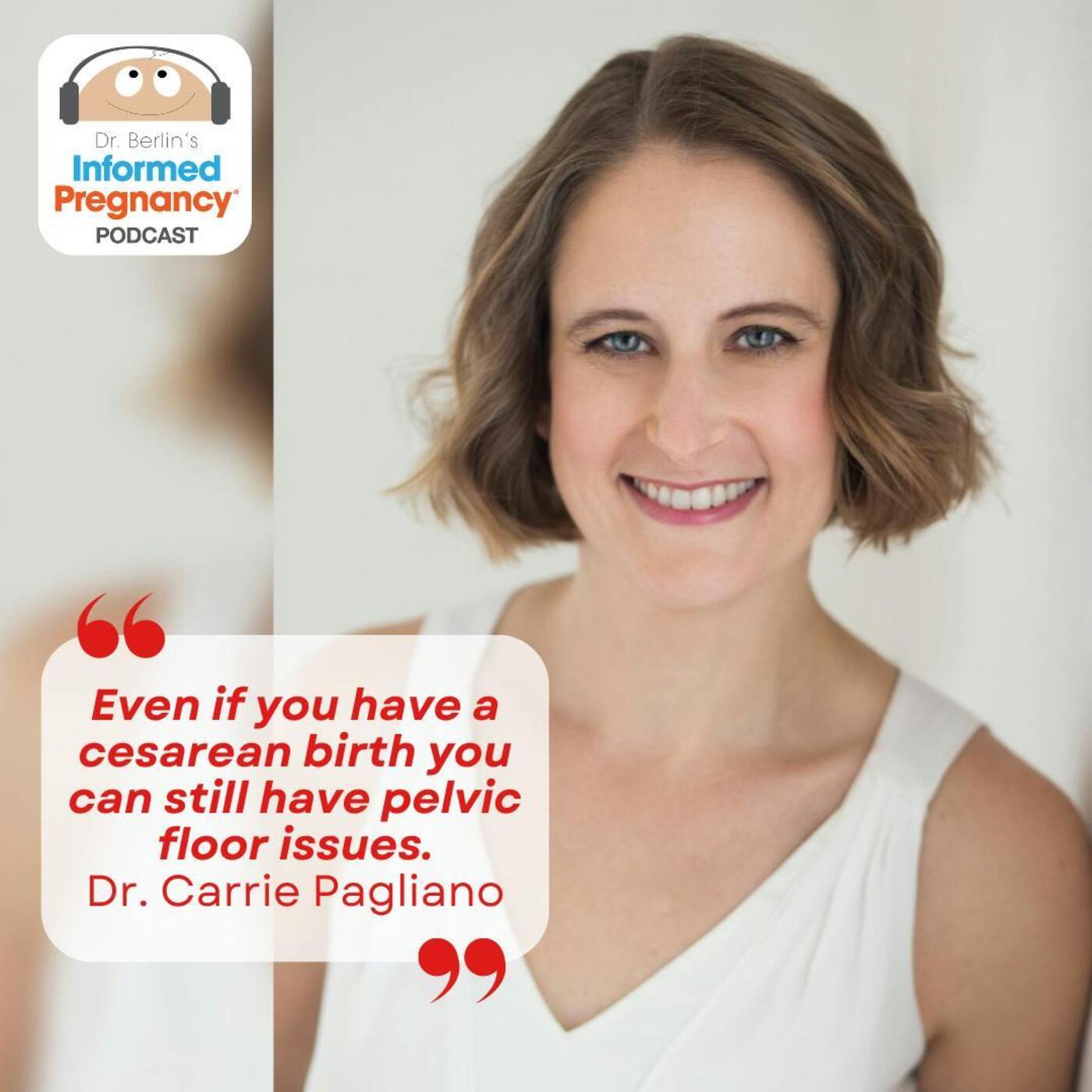
Dr. Elliot Berlin, DC [19:29] Yes, it is. And then the other thing that you said is even if you have cesarean birth, you can still have public health issues. And that's something that people do not think about oftentimes. And then all of your experiences and all things that you have that now you work with are going to make you an incredible wealth of resources. For segment three, when we come back, we're going to talk about what is the pelvic floor and whether some of the things that happen and how we can deal with them. We'll be right back. Welcome back. We're talking to Dr. Gary Pagliano. Okay. So you are a pelvic health physical therapist, a mom who has been through it all. And I always say this, but until I started
[20:17] working with this population, I grossly under-appreciated both my mother and my wife. And every day that gets a little more clear. What you guys do is insane in terms of growing children, delivering children, feeding children, raising children. It's insane. Your bodies are designed to do it, but there are things that can come up and often do. And when it comes to the pelvic floor, I think there's a lot of lack of information or misunderstanding. So let's start with the basics. What is the pelvic floor?
Dr. Carrie Pagliano [20:47] Yeah. So interestingly enough, I feel like the first time women get a chance to have permission to talk about the pelvic floor is pregnancy and postpartum. When the fact of the matter is every human, animals have it too, pelvic floors. And we think peeing, pooping, sex, that kind of stuff, but they're also postural muscles. They help out a lot with kind of our posture and lifting and also their accessory breathing muscles, meaning they help us breathe. So when it comes to their role in our body, kind of from a musculoskeletal perspective, they participate in all the things. So if you have a back injury, it's important to look at the pelvic floor.
[21:27] Obviously, if you have a birth injury, we want to take a look at the pelvic floor. But as I mentioned earlier, people don't think of pelvic floor issues in the context of cesarean delivery. But if you were like me and you pushed for a couple hours, there's still labor, there's still that going on, but we also carried the baby for nine months. And whatever your body did in that time, from the time you were born till the time of that birth, you use that pelvic floor in some capacity. So even though pregnancy and postpartum is kind of that first time we have permission to talk about it, when I'm talking with patients, I want to understand what sports did you do growing up? Did you have any leakage? Did you have any
[22:09] giggle incontinence? Or if you were jumping on a trampoline, do you remember leaking? Did you have bedwetting? Because this is our pelvic floor history that we walk into adulthood with. And then, did you have leakage before you had kids? Did you have any symptoms of things, back issues, hip problems, all that can be connected? And that's, I think, what people forget is because the pelvic floor is so integrated into other systems and movement and things like that, we have this whole pelvic floor history before we're even pregnant. And so it's important to take that into consideration. And now we're getting to see more women that are looking for
[22:46] that information and want to understand what they can do to prepare for birth. And so we can have that conversation and look at what the pelvic floor is doing before they even set foot into that delivery room. And so that's a newer part of understanding pelvic health. Beyond delivery, it's what happened from a trauma perspective. Did organs get shifted around a little bit? What is the role of the pelvic floor in supporting those organs and supporting pressure? And then looking forward into periodomanipause and menopause, we're learning more now about the role of hormones, how important that is in tissue integrity for our pelvic floor, making sure that we're not having leakage as we age, those sorts of things. So again,
[23:25] really, we're understanding the pelvic floor through the lifespan far more than we ever did before. Visualize, where are these muscles? So the best imagery, I think, is it's like a hammock basically between your tailbone and your pubic bone. So it's sort of the bottom of a bowl, but the sides of the bowl are hip muscles, they're hip rotators. So if I'm palpating or kind of trying to find those muscles from an internal approach, and usually that's vaginally, you can also look rectally, we're able to feel those muscles or that inside layer. And then there's outside muscles too. Their job is a little bit more kind of the closure and closing off the urethra or their sphincter
[24:03] muscles. The anus is one of those as well. And the rectum kind of supports along the rectal. So the anus is going to be the closure of the rectum there. So we deal with issues of fecal incontinence, constipation, all that kind of stuff as well. So those muscles not only provide support for the organs, but provide support. And from the pressure coming from above for breathing, coughing, sneezing, all that kind of stuff as well.
Dr. Elliot Berlin, DC [24:28] Are the things that happen to those muscles similar to other muscles, where they can become too stiff, tight and rigid, or they can become overly stretched out, weak and stable? Is it similar?
Dr. Carrie Pagliano [24:40] Yep, it is. For a long time, no, thanks to Dr. Kegel. The emphasis has always been on contracting the muscles. And that's, I think, again, what people are most familiar with. Even OBGYNs that I feel like are great providers, you know, as you're walking out the door during pregnancy, Oh, don't forget to do your Kegels. remembering that the uterus is the thing that contracts, the pelvic floor has to relax. So again, just like your bicep, there's a lot more automatism again, because it's related to breathing and that kind of stuff. But the muscles have to contract and they have to relax. A kegel is a maximal contraction. And there's very few times during a normal day that you
[25:21] would do a maximal contraction, just like you wouldn't do a maximal bicep contraction. Those muscles are kind of more like a dimmer switch. They're going to be on a little bit more if the task or the pressure is higher. They'll be on a little less if you're just sitting supported breathing, that sort of thing. So they function more like a dimmer switch, but unfortunately we're taught that they're kind of on off switch sorts of muscles, which just doesn't reflect what their capacity is.
Dr. Elliot Berlin, DC [25:45] Or like a halogen floodlight.
Dr. Carrie Pagliano [25:47] Right. Exactly. Exactly.
Dr. Elliot Berlin, DC [25:49] And so the work then, I mean, if kegel is a misnomer, if not everybody needs to, you know, crossfit their pelvic floor, then instead, what are some of the things that you would do therapeutically for a pelvic floor, either in preparation for pregnancy, if you're not pregnant or birth?
Dr. Carrie Pagliano [26:10] I think the first thing is just to understand what your biases are in your pelvic floor. So I mentioned earlier, I ask a lot about what sports people do when they're younger. So for example, if you were a dancer, if you were a figure skater, gymnastics, you tend to be more flexible if you gravitate towards those sports, but those are also very aesthetic sports. You tend to grip and hold a bit more ballet dancers, especially. And so if that's the kind of movement strategy you were taught from a very early age, we tend to kind of hold onto those strategies later on. And as adults, maybe we're not doing those sports or those activities anymore, but we genetically have more
[26:52] kind of flexibility. So our brain's looking for a way to provide that stability. So lots of times kind of understanding what moms are walking into pregnancy with, we want to understand, are you biased more towards overactivity? Are you showing signs and symptoms already? Maybe chronic constipation, maybe painful sex, maybe difficulty starting your urine flow. Those sorts of things can give us indications that you might be biased more towards muscle overactivity, meaning that those muscles are on more than they should be. And we're going to want to spend some time retraining your brain and retraining those muscles how to relax a little bit better. I would say that's probably
[27:29] the one that people miss the most. And again, because we want that pelvic floor to really relax during delivery, we want to make sure that that box is sort of checked. And even if you don't have those predispositions, just to understand that there's kind of an on and an off, understanding how to relax in a hip opener or something along those lines. It's important to know how to contract, but I think probably more often than not, it's just understanding what relax actually feels like.
Dr. Elliot Berlin, DC [27:57] Right. And so if you have a history of gripping type of activity and then you
Dr. Carrie Pagliano [28:02] do those Kegels, you're just furthering the over grip. Yep, exactly.
Dr. Elliot Berlin, DC [28:07] Okay. And then on the other side, though, there must be some people who don't grip enough.
Dr. Carrie Pagliano [28:13] You would think there would be more. I think what ends up happening sometimes is people try to do pelvic floor muscle contractions and they can't figure out how to do it. And there's been some research on a certain percentage of people just don't have that coordination or that connection. And that's where we can be helpful too in teaching that. I have found anecdotally that there's those people that just cognitively, you tell them to contract something and we're trying to figure it out with real time ultrasound imaging and that connection just isn't there. But you have to make the assumption that because they're continent, because they can hold their urine in, they can cough and sneeze,
[28:49] things don't go flying out. We have lots of layers to continents. So just because you can't cognitively call on those muscles or think and get them to do what you want, that doesn't mean you're doomed. But that's definitely a small group of people that if we can't teach you cognitively how to do that, don't feel like all hope is lost.
Dr. Elliot Berlin, DC [29:10] So then the people who are sort of over grippy or hypertonic, you teach them
Dr. Carrie Pagliano [29:16] exercises to help them relax their pelvic floor. Yep, exactly. And again, depending on the context too, we want to teach them to relax, but then also how to use those muscles again, but come back down. So a lot of women that are biased a little bit more towards overactivity, they tend to be over exercisers, high stress jobs. I live in the DC area. So kind of, you know, this is sort of an epicenter for that. I'm not sure how it is out in California, but.
Dr. Elliot Berlin, DC [29:43] It's a little more chill, but it's a different kind of stress.
Dr. Carrie Pagliano [29:46] It's a different kind of stress. Yeah, exactly. But once we teach them to relax, we need to teach them how to use those muscles and context. So once they're on, make sure they come down in a reasonable amount of time. So it's that coordination piece. we teach them how to do that, they have plenty of strength in there. It's just accessing it. And if those muscles are on too much and we teach them to relax, now we have more capacity. So it's more just kind of accessing that availability by improving their coordination and that connection with their brain. Well, it seems like more people need to be doing Peglianos than… Definitely need a little bit more chill, that's for sure.
Dr. Elliot Berlin, DC [30:23] And then on postpartum, so, you know, after a marathon, you probably go get evaluated and you did something pretty intense with your body and do some evaluation and maintenance. Is that the same with pelvic floor? It is. I think the tide is turning a
Dr. Carrie Pagliano [30:42] little bit. Again, I think this is where, you know, the root of Kegels came from was thinking, okay, these muscles might've been damaged, there might've been tearing, we need to find strength in them again. I think we've kind of had some long oversight missing some of that overactivity. If you have women who've had a traumatic delivery, a lot of tearing, a lot of pain postpartum in the perineum, again, did they have hip issues? Did they have back issues? Those sorts of things. I think there's a lot more overactivity that we're missing in postpartum than we realize. And again, prior to maybe eight or 10 years ago, the emphasis was on contractions. And there was a little bit of
[31:22] relax, but we would mostly do, you know, longer contractions, shorter contractions, making sure that we were addressing the fast and the slow twitch muscle fibers in that area. But what we started to realize more recently, and again, I think this is with moms being more active, certain kinds of stress incontinence, meaning if you're running, jumping, coughing, sneezing, that can actually be probably more overactivity as well. If those muscles are already on too much and that pressure comes or that impact comes, you don't have any more to give. And then you have leakage. And then I've been looking more recently, probably the last two to three years at actually more overactivity in the context of
[32:01] pelvic organ prolapse. And that was kind of spawned honestly at the beginning of COVID when we weren't doing in-person sessions, all the moms I knew were in fight or flight, and they would have an increase in their prolapse symptoms. Interesting. Just describe what prolapse is. So a prolapse can be basically the organ on the inside descending towards the outside, and there can be varying degrees of it. But sometimes you can have that feeling of pressure or heaviness in the perineal region. Sometimes it can feel like a tampon is kind of dangling inside or feeling like it's going to fall out. So the pelvic floor, you described like a hammock from behind the front of the pubic bone into the
[32:44] front of the tailbone, holding up the pelvic organs. Well, yes and no. It has a support component, but there's a lot of ligaments that provide support as well. And that's where, again, you've got to remember we're pretty resilient, but what we started to realize was there were patients that I had that, you know, we were treating them for prolapse. Their symptoms got worse at the beginning of COVID. And we looked at that in the context of, okay, we're definitely more stressed out. We're not as active. What's going on? And just starting with awareness of breath and tension, we were all in upper chest breath. We were all, you know, neck tension, fight or flight sorts of things. Just when I started to have moms say,
[33:26] okay, let's just focus on that right now, it made an impact on their prolapse symptoms. So that started to make me think, okay, this is stuff that we use with overactivity and leakage and pelvic pain and that sort of thing. What if we provided this kind of overlay to our prolapse symptoms? Because some clients feel these symptoms and they're checked by their OB and their OB says, no, I don't see anything. And then these poor moms think they're crazy when actually what I think it is, is we have this hypersensitivity or this hyper awareness that something is there that probably may be related to increased pressure with, again, that fight or flight or that tension
[34:02] or that overactivity in the pelvic floor. So stay tuned on that. This is all anecdotal. I've seen more clinicians that were starting to consider that. It's not defined in the research yet, but I have a feeling there's far more overactivity in postpartum moms than probably we realize because we're under far more stress than we used to be. We're also far more active, I think, with kind of what our challenges are for our daily life and our exercise demands and things like that, I think are more than they ever have been
Dr. Elliot Berlin, DC [34:27] before. I also wonder what the hormonal changes are doing.
Dr. Carrie Pagliano [34:31] Yes. On top of that,
Dr. Elliot Berlin, DC [34:32] in fight or flight, you're just so much more hyper aware. If you're being chased by a tiger, you need to feel the second something touches you. You just become hyper aware. And if you could kind of move that thermostat back towards the middle or more parasympathetic, then I wonder if even almost like my daughter had that. And when she would put on her shirt, everybody, you feel your shirt and then you stop feeling your shirt. But if you're hyper sensitive, that way you're constantly feeling your shirt becomes really over stimulating and irritating.
Dr. Carrie Pagliano [35:04] Yeah. So the goal is not to like put the organ back, but to dampen the sensation of feeling. And that's what moms are looking for. Like no one's going to look down there unless you feel something going on. And so we want to be able to run and work out and lift weights and not feel anything funky down there. And so I think the more we can start to impact those symptoms, I think that makes a huge difference for moms wanting to be active.
Dr. Elliot Berlin, DC [35:29] I want to learn a lot more from you. I already learned so much. And I'm sure after listening to those moms who are either thinking about pregnancy, pregnant recently had a baby, are going to want more of your wealth of information. Luckily, even if they couldn't come see you in person, you are accessible in other ways. One of them is the active mom podcast. Tell me just a little bit about your podcast. Yeah. So we started the active
Dr. Carrie Pagliano [35:54] mom postpartum podcast, I guess it was February, 2022. And basically we're talking to postpartum moms, but also postpartum professionals. It's a great place where we talk to professionals that talk a little bit more about what they do. So moms have a better sense of what's out there, but then moms get a chance to share their stories and their journeys. And if there's anything that I have learned about moms is that unfortunately the villages that used to support us, they may not be here locally, but they're definitely here virtually. And so the more that we can share about our experiences, our resources, that sort of thing, it's just a way to kind of keep that village mindset and that community support going.
[36:34] And so we've had a lot of fun with it. I've had some great guests on and you've been on as well. So I'm one of the village people. Yes. So to speak. Amazing. Thank you so much. Tell me where we can find you online. Yeah. I spend most of my time on Instagram at Carrie Pagliano, and you can also find more about my practice in Arlington, Virginia. I have in person, but also work virtually and with telehealth. And that's carriepagliano.com.
Dr. Elliot Berlin, DC [36:58] Doc, thank you very, very much. And I'm going to check you out and learn more because as a professional working with this population, even just in this podcast, learned a whole bunch of things that I'm going to go continue researching and bring back to my patients. So I appreciate you on many levels. Thanks so much. And to our listeners, if you'd like to find us online, visit us at informpregnancy.com or for our streaming platform, informpregnancy.tv.
Want more pregnancy + parenting? Start your FREE TRIAL of Informed Pregnancy+ and get access to all our curated pregnancy and parenting content — original series, iconic birth films like The Business of Being Born, prenatal workouts and more.