
November 2, 2023 · 36 minutes · Episode 379
About this episode
Actress, director, and conservationist Bonnie Wright, best known for her role as Ginny Weasley in the Harry Potter film series, is pregnant with her first child. Bonnie talks about her entertainment career, climate activism, fertility journey, pregnancy, and plans for the upcoming birth.

Connect with the guest!
- Follow Bonnie on social media: https://www.instagram.com/thisisbwright/
- Follow ‘Go Gently’ on social media: https://www.instagram.com/gogently.earth/
- Check out ‘Go Gently’: https://www.gogently.earth/
Keep up with Dr. Berlin and the Informed Pregnancy Project online!
- Check out our post on getting ready for a new baby on the blog: https://informedpregnancy.com/single-post/5-steps-for-setting-up-your-home-for-new-baby/
- www.informedpregnancy.com
- www.instagram.com/doctorberlin/
- www.facebook.com/InformedPregnancy
- www.twitter.com/doctorberlin
Learn more about your ad choices. Visit megaphone.fm/adchoices
See Privacy Policy at https://art19.com/privacy and California Privacy Notice at https://art19.com/privacy#do-not-sell-my-info.
Key quotes
“So I think that sort of practicality informs the way I see the climate work I do.”
“And I think how unique it is for each person. Even if you're pregnant at the same time with a friend, you could literally be having totally different experiences. So even as you become more informed, you almost have to kind of push everything aside you've learned and just kind of experience as it's happening.”
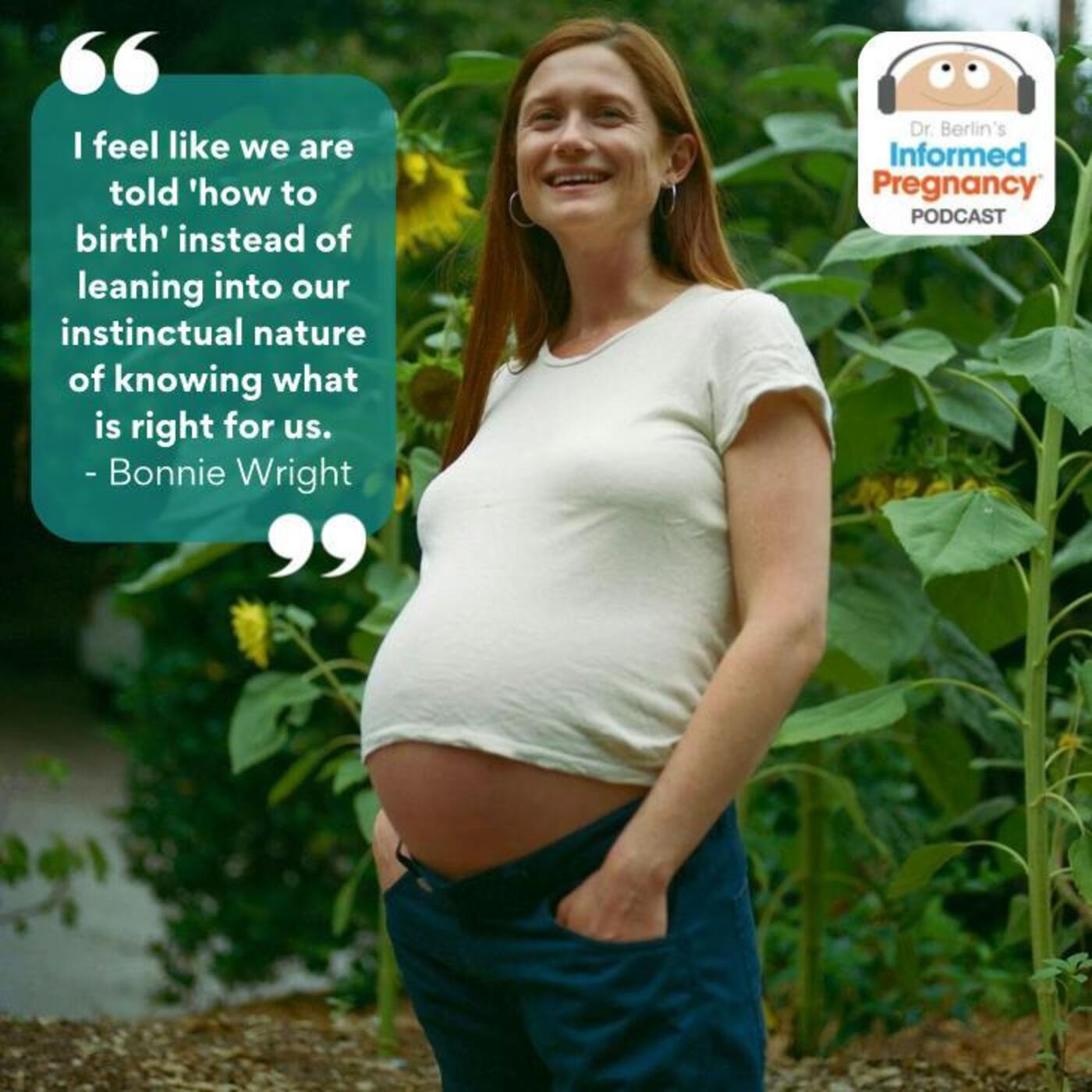
“that you're like, oh wow, I can truly make it work for me. And we think it's prescriptive and it's sort of a medical event and it needs to happen this way and we're told what we can and can't do and we're told hell to birth rather than leaning into sort of instinctual nature and knowing what feels right for us.”
“Yeah, and I think it's, you know, hearing other people's stories is what empowers you to feel confident in your own. Even if they chose something totally different, just that they felt confident and safe and the choices they made make you feel like, oh, I can feel confident and safe in the choices I make.”
“So for us in the end, that has looked like choosing to have the baby at home, working with midwives.”
Related episodes
- Ep. 380 Bonnie Wright: After Birth
- Ep. 350 Ciara Whaley: After Birth
- Ep. 349 Ciara Whaley: Before Birth
- Ep. 335 Natalie Dreyfuss: Before Birth
Transcript
AI-generated transcript with speaker labels — may contain errors, especially names and medical terms. Dr. Elliot Berlin, DC appears in blue; Bonnie Wright in orange.
Download PDF of the Transcript
Dr. Elliot Berlin, DC [0:12] Welcome to the Informed Pregnancy and Parenting Podcast. I'm your host, pregnancy-focused chiropractor Dr. Elliot Berlin. My guest today kicked off her acting career at just nine years old when she was cast as Ginny Weasley in Harry Potter. These days, she's also working behind the camera as a writer, director of short films, music videos, and commercials, as well as guiding readers to make environmentally friendly choices with her book, Go Gently. Bonnie Wright, welcome to the podcast.
Bonnie Wright [1:04] Hello, thanks for having me.
Dr. Elliot Berlin, DC [1:06] Oh my goodness, thanks for joining. I want to know everything, but let's start with the obvious. Where are you from originally?
Bonnie Wright [1:12] Yeah, I'm from London, England.
Dr. Elliot Berlin, DC [1:16] And what was that like growing up in London?
Bonnie Wright [1:19] I loved it. I feel like I had a lot of access to so much culture and there was a dull moment, I feel. There was so much access to exhibitions and theater and just like street life. I definitely always felt like I would be a city girl, but I now don't really live in much of a city, but I always love going back to London and miss it often.
Dr. Elliot Berlin, DC [1:42] And now you're in the Los Angeles area. Do you feel like our culture matches up or are we pale in comparison?
Bonnie Wright [1:52] Different way to say it. Yeah, I guess I really came to, I mean, you know, obviously there's an entertainment industry in LA, which is helpful, but I really actually was drawn to LA and California generally because I've always really loved the ocean and being outdoors. That's kind of where I find most of my comfort and joy. So I really was drawn to California because I was interested in how I could like have a life that could both balance access to work, but also have that kind of really good downtime and access to so many amazing landscapes that we can drive to from from LA, whether it's the desert, the ocean, the mountains.
Dr. Elliot Berlin, DC [2:28] It's incredible how in one day you could drive 40 minutes and go skiing and then go back to where you started, drive 40 minutes the other way and go for a beach day.
Bonnie Wright [2:37] Yeah, it's amazing. And it never gets old to me. I mean, sometimes it does, but most of the time I'm always, you know, making sure I take advantage of that.
Dr. Elliot Berlin, DC [2:47] Let's go back to nine year old Bonnie in amazing London, and you start working.
Bonnie Wright [2:53] Yeah.
Dr. Elliot Berlin, DC [2:54] How does that happen?
Bonnie Wright [2:56] So I guess I mean, at nine years old, like many nine year olds, I didn't really have like a clear path of what I wanted to do. It probably was changing day by day. So getting into acting wasn't really something that I was like, you know, specifically driven towards. I mean, you know, I wasn't really in any extra like drama, after school clubs, I was just doing what was happening at school. But people heard that they were making the books of Harry Potter into films. And my brother, my older brother, Lewis had actually read the first two books. At that point, I hadn't read them. And he very specifically sort of said, you should go and audition for the
[3:35] role of Ginny Weasley. Like he was quite specific to that knowledge. So I was like, I don't know who that is. But that sounds fun. Like, how do we do that? And my parents aren't in the industry at all. And my mom was like, I don't know how you like, they're auditioning for these films, but I have no idea how we get an audition kind of thing. So she called the publishers in England, Bloomsbury, and they gave the number to the casting director. And then we ended up like, you know, sending some they asked for some photos of me and why I wants to be in the films and what character and, you know, at the beginning, the role is very, very small, Ginny's role in the first two
[4:12] films, a very small kind of character. So yeah, I ended up going for two auditions, never thinking I would get it thinking like everyone else is going to be, you know, way more experienced than me. So it was all quite a surprise to find myself actually in these films, when it had ended up just being like a fun thing that my brother and I thought would be fun to go into. So yeah, I was totally thrown into the industry, knowing nothing about it, and really fell in love with filmmaking, acting storytelling during that 10 years on those sets, like I wouldn't maybe have ever kind of found myself in that world if I hadn't have had that opportunity.
Dr. Elliot Berlin, DC [4:50] Yeah, wonder. So up until that point, had you ever auditioned for anything?
Bonnie Wright [4:54] No, nothing. I didn't even know what an audition was.
Dr. Elliot Berlin, DC [4:57] Wow. I mean, was that scary? Are you?
Bonnie Wright [5:00] I think I was so young that I think that sort of when you're not that self-conscious yet and you're kind of just doing things for like the novelty factor I think for me it was like and my brother were like let's go and see what this is about in that kind of curiosity way you know because I think we just didn't think it was gonna have like we had no belief that I was really gonna get the part you know what I mean so which probably helped my nerves really if I kind of was relaxed yeah some sort of like interviewing for a job that you don't really care about getting experience yeah and then you get it and then what was the learning curve like yeah I mean I think you know you going through these like incredibly formative years of your life simultaneously filming
[5:48] and sort of growing up and doing a sort of a job you know I think that's kind of quite confusing where you're like still doing your schooling work as we all were we were still being kids going through puberty and you know having fun and then at the end of the day we were also required to really show up and give our full attention and energy as it was a kind of professional high stakes kind of big movie set so it was a very interesting experience I feel like I'm so grateful that we were all sort of a similar age in it together you know I wasn't just like a kid on a predominantly adult film set like I was with other people my age which allowed us to still be kids and be goofy and kind of do things that you should still do
[6:31] so I'm grateful for that and yeah I just made you know lifelong friends and I learned so much about the film industry that then inspired me to kind of step behind the camera so I feel like the people I got to work with like the other incredible actors and sort of like adult actors as we call them when we were kids and a lot of the creative people behind like the actual filmmaking process well you know it's the best of British cinema at that time you know you're working with the best production designers, costume designers, camera people, etc.
Dr. Elliot Berlin, DC [7:03] Are all of you still sort of close?
Bonnie Wright [7:06] Yeah it's um when we're all in the same place we all try to see each other everyone's kind of spread across the world and it's funny because yeah now people are having kids or have had children and so it's nice to like go through those you know big kind of life moments or reflect on them And I think for all of us like we were so in that world when we were filming it that it really took finishing the films to sort of like each let the experience digest and like realize how big they kind of were globally and also just the impact they had on people's lives and our lives. When you're kind of in it you're just sort of what you know but when you finish you're like oh well that was really unusual.
Dr. Elliot Berlin, DC [7:50] Yeah I'm gonna move on because I want to find out the stuff you're doing now on the other side of the camera but before you get there I didn't realize quite how recognizable you are to your character probably for me because I'm face blind I have absolutely no facial recognition I was born without it but even just people that I know that would see you walk by would be like kind of starstruck how does that feel you must not be able to go any place and be anonymous.
Bonnie Wright [8:15] I feel like I still can have a somewhat kind of okay normal life I think what's wild about Harry Potter is you keep meeting new generations of people who are into it so it's not like something that then becomes like. You know obsolete for only only a certain age of people like I'll you know me eight year olds now who just like obsessed with Harry Potter and it's like their world so it's kind of this never ending like fandom so it doesn't haven't like fizzled out or become you know you don't become less recognizable I feel like it's kept kind of going which is kind of interesting but yeah I don't know I feel like in certain places yeah you can instantly know places you walk into and you're like I'm going to be probably recognized in this place or room and then other places you can be totally lost in the crowd or the atmosphere.
Dr. Elliot Berlin, DC [9:01] Must be a very dark room. It'll be curious to see what your kids think of it when. So you've moved on you like the art of storytelling it sounds like through film and you're working on all sorts of things what projects are meaningful to you that you're working on now.
Bonnie Wright [9:22] Yeah I'm in sort of post production editing a sort of documentary style TV show that I made earlier this year that basically is an extension of the book I wrote go gently that came out last year. So probably have a similar title and it essentially was a road trip where I drove through California and Oregon meeting different people working in sort of community scale solutions around the climate crisis. So trying to kind of engage their local community and connect with issues that they were being faced with locally, when it comes to the climate. So it's very much like a. trying to get on the road and sort of shed light on the people doing the work basically and doing
[10:05] the work in a way that is joyful and kind of collaborative and at a scale we can comprehend and really that was what my book was about you know issues like the climate crisis you know either you read sort of news headlines or statistics we're not meeting or these kind of very sweeping statements that can feel absolutely kind of overwhelming but hard to relate to yourself or your day-to-day life so my book and this tv show is really trying to sort of bring these issues to a scale that we can kind of comprehend and therefore feel like we have an impact or a kind of power over when we've been very much left to feel disempowered.
Dr. Elliot Berlin, DC [10:48] Yeah interesting I mean I think even just the idea of climate change and certainly the terminology climate crisis you know it's hard for people to absorb and I guess it's a little controversial there's some people who are 100% sure the climate is in crisis and some people are 100% sure it isn't and everything in between but it's hard for people who are not on a polar end of that ideology to absorb it and digest it I mean if I look at the window I don't see anything crazy going on right now so it's hard to feel like you're in a crisis but I love the idea of bringing the elements down into bite-sized digestible pieces which just sounds like you're doing so that just the average person the self-thinker can sort of take it in and
[11:37] learn more and make choices and decisions you know for themselves that will also impact
Bonnie Wright [11:43] everyone around them and the future like our children. Yeah and I don't think what was so important to me in my book and any way that I communicate any of this stuff is it's not prescriptive there's no right or wrong way to act in the world like there's no right or wrong way to make a sustainable choice like sadly it isn't that black and white and easy like it essentially is about being more informed and making consumer choices habit life choices that you feel that you know a little bit more about what that means whether it's like knowing what's behind a product knowing the kind of repercussions of that like just being more aware and curious and informed so that when you make choices you feel like okay I've made this choice to
[12:25] the best of my ability but I don't believe that there's like the perfect way to be or the perfect kind of way to be an environmentalist because I feel like it holds us back a lot if we think we need to either be like a hundred percent sort of all guns blazing and be an activist every day and second of our life it holds a lot of people back from doing anything so it's kind of celebrating that sort of like imperfect in process so activism. I love that I
Dr. Elliot Berlin, DC [12:51] mean because if it's all or nothing a lot of people choose nothing myself probably included.
Bonnie Wright [12:55] Yeah and it is quite you know intimidating or it feels like too intense and too much so I think it's really about like how can it work for you and your lifestyle because everyone has to make choices based on their family their access to things where they live like how much time they have outside of work you know the same thing doesn't work for everyone. I don't
Dr. Elliot Berlin, DC [13:14] know if that's where the title came from but go gently it sounds like that approach like you don't have to like smash you over the head with you must do this and you must do it now. I also like the idea of informed obviously we're informed pregnancy and it's the same thing though two things are right for everybody but it's great to be able to get as unbiased sources of information as possible and to process and make decisions and to live with the decisions that you make. When did? Yeah and I think with the informed of pregnancy
Bonnie Wright [13:43] like a lot of the things you don't really begin to inform yourself of until you become pregnant I will realize that there is so much more to it or options you know there are so many more pathways when you become pregnant that you realize exist that unless you were kind of birth curious you probably wouldn't know and it kind of is the same when it comes to the climate once you sort of open the pandora's box of all the issues you're like oh wow it's actually so much more like interesting and nuanced in here than just like the climate crisis and like statistics of you know temperatures rising like it's so much more than that.
Dr. Elliot Berlin, DC [14:19] Yeah well said my audience is birth curious and your audience is earth curious. Yeah look at us all right so speaking of the future you're pregnant due pretty soon with your first let's take a little break and when we come back we'll find out more about how your pregnancy is

Dr. Elliot Berlin, DC [16:16] Welcome back to the podcast. We're talking about Bonnie Wright. And before we move into your baby, I wonder, you seem passionate about the earth and treating it nicely. Where did that come from?
Bonnie Wright [16:27] Yeah. Good question. Without realizing it, I guess my parents are always very like resourceful, creative people or very like, they never liked to waste things or, you know, buy too much food that we weren't going to eat or not think to fix something before we buy something new. You know, they're very like creative and resourceful in the way they saw things, which to me is a very environmentally conscious way to be, to sort of not just keep buying something new or sort of like wasting things, kind of worrying about it. So I think that sort of practicality informs the way I see the climate work I do. And then even though, as I said, I grew up in London, very much kind of city sort of
[17:07] childhood, we also spent a lot of time on the south coast of England on a beach there. And I realized as I grew up that actually that coastal sort of environment had a big impact on where I found joy, which was in those kind of ocean, seaside landscapes. And I noticed in my teenage years already the kind of issues that were being faced on that coastline. And I sort of loved that beach so much that I began to be like, what's happening and why is this happening? So that kind of sparked these kind of questions to me when I was in my like early teens.
Dr. Elliot Berlin, DC [17:41] No, no pun intended, but it was all very organic.
Bonnie Wright [17:44] Yeah.
Dr. Elliot Berlin, DC [17:45] All right. Pun slightly intended. All right. You're pregnant now.
Bonnie Wright [17:50] Where did you meet your husband, how did you guys meet? Yeah, Andrew and I met, I ended up going to his New Year's Eve party. I didn't know him or anyone at the party, but I worked with my friend, Georgia. And we had actually planned, Georgia and I just to go camping and surfing, which we still were doing. But then she was like, oh, my friends are having a party. Should we go there too? I was like, okay, sure. I don't know anyone. But it sounds fun. And it ended up being Andrew's party and yeah, and then we were actually friends for like a good year or so before we began to date. And then that's how we met and we're all like, I guess the activity that we always
[18:26] used to hang out doing, which was what Georgia and I, my friend loved to do was surfing. I love to surf and as is he, so that was always our kind of like our thing to meet up and do our like activity that would bring us together. Bonding. Yeah.
Dr. Elliot Berlin, DC [18:41] It's interesting. Your life is so far in my mind is like your brother's like, hey, why don't you try out for this thing? And then that's Harry Potter. And then your friend is like, hey, why don't you come to the party? And then you get married and start a family. I got to start listening to the people around me more.
Bonnie Wright [18:56] Yeah, that's the most of the other things that ended up being failed. Other things, I probably was forcing too much. So things that felt weird and spontaneous ended up working.
Dr. Elliot Berlin, DC [19:07] Those are the good ones. So was children in your mind, even before you met Andrew and together with Andrew, was it always a thought for you starting a family?
Bonnie Wright [19:17] I never was someone who ever said like the sentence like when I have kids, you know, it was never this like definite thing. It was like if I have kids, I guess it'd definitely be something that I would love the opportunity to be able to do. But I never assumed, I guess we never assume that necessarily we're like going to be able to easily. And then secondly, to me, I think it was always like finding the partner I truly wanted to do that with. I don't think it really all slotted into place to me until the other part of that partnership kind of showed itself and felt like a safe partnership and exciting partnership to have kids. I think I've always been attracted to being a caregiver and looking.
[20:00] after people, animals, you know, the planet, different things. So that like motherly feeling in me is definitely like there and I'm definitely someone who's like always thinking about other people in the room and are they happy and is everyone kind of, you know, comfortable. So I think that motherly instinct is there. I just never always assumed it would have to be like my own children. So that really only came or solidified I think for me when I met Andrew and it felt like, oh, okay, this makes sense now.
Dr. Elliot Berlin, DC [20:30] What about him as a dad? Did he picture himself having kids?
Bonnie Wright [20:34] He kind of was very similar, actually, to me, never really assumed 100% that he would become a dad. I mean, he has loads of nieces and nephews, so he's definitely around and has been around lots of kids his whole life. But he kind of was the same, never like 100% assumed but like the idea of it. But again, kind of all felt right as it became right between us.
Dr. Elliot Berlin, DC [20:58] When did it become on your joint radar?
Bonnie Wright [21:03] I think I was probably more like I probably thought about it, or I think my instincts of the relationship were very like clear and it being like early on, I don't know, unlike other relationships in my past, I feel like I was very quietly, calmly, like secure and felt safe and like there was a real future in our relationship. I mean, I think he did too, but I think I thought more. But I guess it came, I don't really know. I think it was just like one of those things where just like these tiny little bits of conversations that slowly build to like a reality. I don't know, like even our choice to get married wasn't like a proposal. It was very much like a
[21:39] slow feeling out and conversations that ended up feeling right, which I kind of like as a way to make decisions. That's kind of like how I even make decisions in my like work life. Accumulative like feelings that feel really like right, rather than big like statements of
Dr. Elliot Berlin, DC [21:57] deciding. Yeah, was there a moment where it was accumulative?
Bonnie Wright [22:04] Yeah, I guess I mean, we got married at the beginning of last year, March 2022. And it was kind of something that we thought we'd sort of like think about when we wanted to do it after we got married. And then logistically, I guess we wanted to have fun just being a married couple for a year. And that's literally how long we have been a married couple, just us for a year. And then we're already like a year and a half from when we got married. And I guess it all happened faster than I thought. Like the journey of getting pregnant, we're very fortunate that it was smooth and great. So yeah, I guess there was a moment of like, okay, I guess it's now I mean, we moved into our new house and home and it felt like, okay,
[22:48] this is where we want to have kids. I think that was also a missing piece, like finding the place that we wanted to have children was also really important to us.
Dr. Elliot Berlin, DC [22:59] Wait, so did you think conceiving would take a long time?
Bonnie Wright [23:04] Yeah, I guess you just never know, you just really don't know. And I guess that had always been something to me, even in like I was saying, like wanting to be a mother generally, that was always something that I'd never assumed to be a straightforward path, because I feel based on life and other people that, you know, struggle with fertility, you kind of think that could be you too. I think as we know, there are so many factors that go into our ability to conceive. And I know and believe that I feel like it's happening has become harder for women with so many different things out in the stuff that we consume and eat and the emotions we feel like there's just so many things. So I was fortunate that it was okay.
Dr. Elliot Berlin, DC [23:46] It was quick for you.
Bonnie Wright [23:48] Yeah, I think I was doing a lot of work to my health in years before that, before I even began the kind of like conceiving journey. I think as many women like experience different hormonal imbalances in their life, you know, I had to in different, you know, years of my 20s. And I feel like I really committed years before to shifting what I was putting in my body to be much cleaner and, you know, being very aware of the things I was eating and kind of things like meditation or yoga and really trying to look at a more holistic way that I looked at my health. And I think in a way, that was like work that really helped me to make the conceiving journey easy. Like I think I was already on that path
[24:31] long before I realized.
Dr. Elliot Berlin, DC [24:33] Interesting. So were you surprised when you found out you were pregnant?
Bonnie Wright [24:39] Yeah, I was surprised because basically I took a test and it was negative. And then I like two days later, I took a test and it was positive. So I had a bit of an extra 180 experience where I was like, okay, well, that's fine. Like, you know, another month, here we go. And then I was like, oh, wait, no, I was wrong. So yeah.
Dr. Elliot Berlin, DC [24:57] At the very end of your third trimester. What have the different trimesters been for you?
Bonnie Wright [25:03] They've been, yeah, you can see why they're into three because they feel very different. You know, I was very lucky in the first trimester that my main kind of symptom was just really being really, really tired. Like I didn't feel physically too nauseous and sick like that. If I did, it kind of fade easily by just having a snack or something. Like I felt like I could manage that. And then just as I was filming a TV show that I mentioned earlier, I like just hit my second trimester when we filmed that show. So I remember like 10 days before we started filming, I finally started to not feel so tired all the time. And I was like so grateful because I was so worried that on the shoot
[25:45] I would just be like half asleep. So it kind of worked out perfectly. And then the second trimester was as described where you're suddenly, oh my God, I feel great. Like got this energy back and beginning to actually feel and look pregnant. You're getting that buzz of the kind of pregnancy. And then the third trimester, you just get bigger and bigger and things just get harder and harder. And then you're like, okay, wind back down. So yeah, I mean, the whole thing is a fun roller coaster to be on. And yeah, at this point I'm just so, yeah, it's uncomfortable. I'm just like dreaming of the day I can lie on my back asleep in bed and do those normal things.
[26:22] Yeah, or your belly. Yeah.
Dr. Elliot Berlin, DC [26:25] Have there been surprises along the way or things that you, I don't know, just learned from going through the experience that you didn't know?
Bonnie Wright [26:34] I think so much. I mean, even just in the course of the nine months how, as we were saying, like you become more informed and you become more curious as it's happening to you. And I've just learned so much that I just had no idea about the process of pregnancy, birth, so many different things. It's been a really interesting kind of thing that you just didn't really have any sort of, I didn't have any need to know before it happened to me. And I think how unique it is for each person. Even if you're pregnant at the same time with a friend, you could literally be having totally different experiences. So even as you become more informed, you almost have to kind of push everything aside
[27:14] you've learned and just kind of experience as it's happening. Because you can get too hung up, I think sometimes like, oh, I read this and it said that I shouldn't be feeling this by now and I am feeling this. And you definitely like end up Googling some interesting things when you're pregnant.
Dr. Elliot Berlin, DC [27:28] Yeah, I think even slightly more interesting is even the same person for two pregnancies.
Bonnie Wright [27:34] Yeah, for sure.
Dr. Elliot Berlin, DC [27:35] They could be quite different experiences. So, all right, so now we're in the third trimester and towards the end, you must have made some thoughts and plans and visions, intentions for what the birth is gonna be like. Have those plans changed during the pregnancy or did you kind of have an idea of what you wanted before you conceived?
Bonnie Wright [27:57] No, I didn't really have any idea of how I wanted my birth to look. I think because I didn't really know that there were different ways to give birth or different environments to give birth in or different people to have supporting you during that birth. So really my inquiry into what it would look like began sort of after we got pregnant.
Dr. Elliot Berlin, DC [28:19] I guess especially because having kids was an if for you up until you pretty much decided to do it. So, it's not like you had these-
Bonnie Wright [28:27] Yeah, I didn't have this big plan, you know.
Dr. Elliot Berlin, DC [28:30] Maternal dreams since you were 10 years old
Bonnie Wright [28:33] about what everything would be like. I kind of think that was the same when I think about our wedding. I didn't have some big plan I'd been dreaming of since I was a young girl. I was like, oh yeah, what does a wedding look like? I don't know.
Dr. Elliot Berlin, DC [28:44] Oh, well now, so close to the end, you must have thought it through and have some intentions about it. Let's take a quick break and when we come back, we'll find out what you have in mind. Welcome back, we're talking to Bonnie Wright, very pregnant, sort of crampy.
Bonnie Wright [29:10] Very crampy, very pregnant.
Dr. Elliot Berlin, DC [29:14] Very crampy. All right, so now, you know, you've only had eight months really to sort of do the process of getting information and thinking through a plan for birth. So what kind of resources have you used? What kind of sources of information have you found helpful? And what have you pieced together in terms of birth intentions?
Bonnie Wright [29:35] Yeah, I mean, I'm definitely grateful that there's just so much out there. It's definitely something that once you start looking, you realize there's this amazing network of people that are either birth educators, practitioners, kind of looking outside of the system in modern or old ways, you know. So I feel like I've learned a lot, for instance, listening to your podcast. watching documentaries, sort of joining sort of educational sort of online pregnancy, prenatal groups, leaning into amazing accounts that exist on Instagram that people provide a lot of information, kind of moving my body in ways that kind of are made to support pregnant people.
[30:18] So there's just so much out there and so much of it also can be totally accessibly free as well, which is so cool. So it's been amazing to navigate all of that and just get excited, I think. You get so inspired by people's stories and they all look so different, that you're like, oh wow, I can truly make it work for me. And we think it's prescriptive and it's sort of a medical event and it needs to happen this way and we're told what we can and can't do and we're told hell to birth rather than leaning into sort of instinctual nature and knowing what feels right for us. So it's been really cool to realize that there's just this whole world out there
[30:55] of people making, you know, just broadening the way birth is looked at, which is not necessarily new. It's like that lovely mix of like looking backwards to what we did in the past and looking forwards as to how we can like implement that into our modern lives. So yeah, I feel like I've learned a lot from all those great resources that exist and then made my choices or we made our choices through that.
Dr. Elliot Berlin, DC [31:21] Well, I like the idea of looking back to see ahead. A lot of the things that are coming up as like new age alternative are just how it was always done. And then we kind of modernize the whole thing, which has a lot of benefit to it, but also some downsides. And now re-emerging is the idea that you could sort of do things any way you want to. There's so many different options and not everybody has to have the same experience, the same type of provider, the same setting. So yeah, where did you land on those things?
Bonnie Wright [31:53] Yeah, and I think it's, you know, hearing other people's stories is what empowers you to feel confident in your own. Even if they chose something totally different, just that they felt confident and safe and the choices they made make you feel like, oh, I can feel confident and safe in the choices I make. Cause I think mainly making your birth and tension plan is just like knowing where you're gonna feel most supported and safe and open. So for us in the end, that has looked like choosing to have the baby at home, working with midwives. And I've really enjoyed working with midwives in terms of like all these eight months, nine months. Like I really loved the attention to detail in that care
[32:33] and just the more holistic sort of relationship and approach that I have with my two midwives. I actually already knew my midwives before I became pregnant. So my friends, Tiffany and Taylor, they haven't practiced together. They're identical twin sisters.
Dr. Elliot Berlin, DC [32:46] That's the coolest.
Bonnie Wright [32:47] Together, yeah. They're practiced called DOS midwifery. And I knew them before. And so when we were exploring the idea of like home birth option was like, oh, I know two midwives. So let's call them up and talk to them about how this looks.
Dr. Elliot Berlin, DC [33:01] All the midwives.
Bonnie Wright [33:02] Yeah, all the midwives.
Dr. Elliot Berlin, DC [33:04] Great show.
Bonnie Wright [33:05] And you know, in England, midwives practice in NHS hospitals very differently than they do here. So when I speak to friends of mine and they're talking about their checkups and different things in England, they meet with midwives in the hospital. So that was also an interesting exploration just how different this hospital system is here. There's not many similarities, but it is slightly different. So felt really great about working with Tiffany and Taylor. And then I feel like what's really helped me during the whole choosing different things and the whole process, if I've always been very like, if I change my mind, that's okay. You know, not just changing my mind
[33:47] because in the end we have to transfer for a certain reason to hospital. But even if I just suddenly wake up one day and I'm like, actually, I've changed my mind. Yeah, even at 38, 39 weeks, like I've always been quite like, okay, with that happening, I haven't been like, I have to have it this way, which has definitely helped. So yeah, we have our midwives. And then about like halfway through the pregnancy, I met with Patti Quintero, who's a doula here in LA and felt just like instantly, immediately, so calm in hearing her voice and her presence. And just really felt like she was a perfect piece to the team and just her experience and just her knowledge and her just like calming energy
[34:30] made me feel great. So she's our doula and I really loved working with her. And I feel like what's been great about even understanding what a doula is and what they do, I think what I've most enjoyed is seeing how helpful having a doula brings my husband, Andrew, into the whole story. I feel like it really helps them to kind of become more educated and feel like that they're a needed piece of the puzzle and they have like a job to do. And I feel like that's very helped in that doula relationship.
Dr. Elliot Berlin, DC [34:59] Because… of times I hear partners say, you know, I don't want to have a doula because I want to be your doula. And I'm like, it's just a very different role. And for me in our first birth, I didn't have any experience with childbirth at all. And we hired a doula and she was amazing at giving me the confidence, you know, to just relax and just be there and support my wife in all the different ways I could. And even with suggestions on maybe this would be helpful. I'm like, yeah, that's a good idea. You know, but at the end of the day, by the time we had our third and fourth kid, I was a doula and my wife was a doula and we still hired a doula. I think I had a few
Bonnie Wright [35:37] contractions during the interview. Well, I see you Friday. Yeah. If you're still. Yeah. Yeah. I think the whole weekend made me suddenly because my due date is until the 20th of September, which is like, what two weeks away. But it was the whole weekend and my daily physical feelings that I'm just like, I'm confused now. Is it tomorrow?
Dr. Elliot Berlin, DC [35:59] Yeah. It's such a weird time, even if you weren't feeling all that, just to wake up and say, it could be today, it could be a month. It's just very strange.
Bonnie Wright [36:07] Yeah. All right. Well, either way, either I'll see you Friday or you'll
Dr. Elliot Berlin, DC [36:11] already have had a great birth. Yeah. They both worked for me. And I'll have the stories to tell. Amazing. Have a great night.
Bonnie Wright [36:18] Thank you. You too. And at home, thanks for listening to
Dr. Elliot Berlin, DC [36:21] informed pregnancy podcasts. For more pregnancy and parenting information, visit us online at informedpregnancy.com.
Want more pregnancy + parenting? Start your FREE TRIAL of Informed Pregnancy+ and get access to all our curated pregnancy and parenting content — original series, iconic birth films like The Business of Being Born, prenatal workouts and more.
