
March 16, 2023 · 44 minutes · Episode 335
About this episode
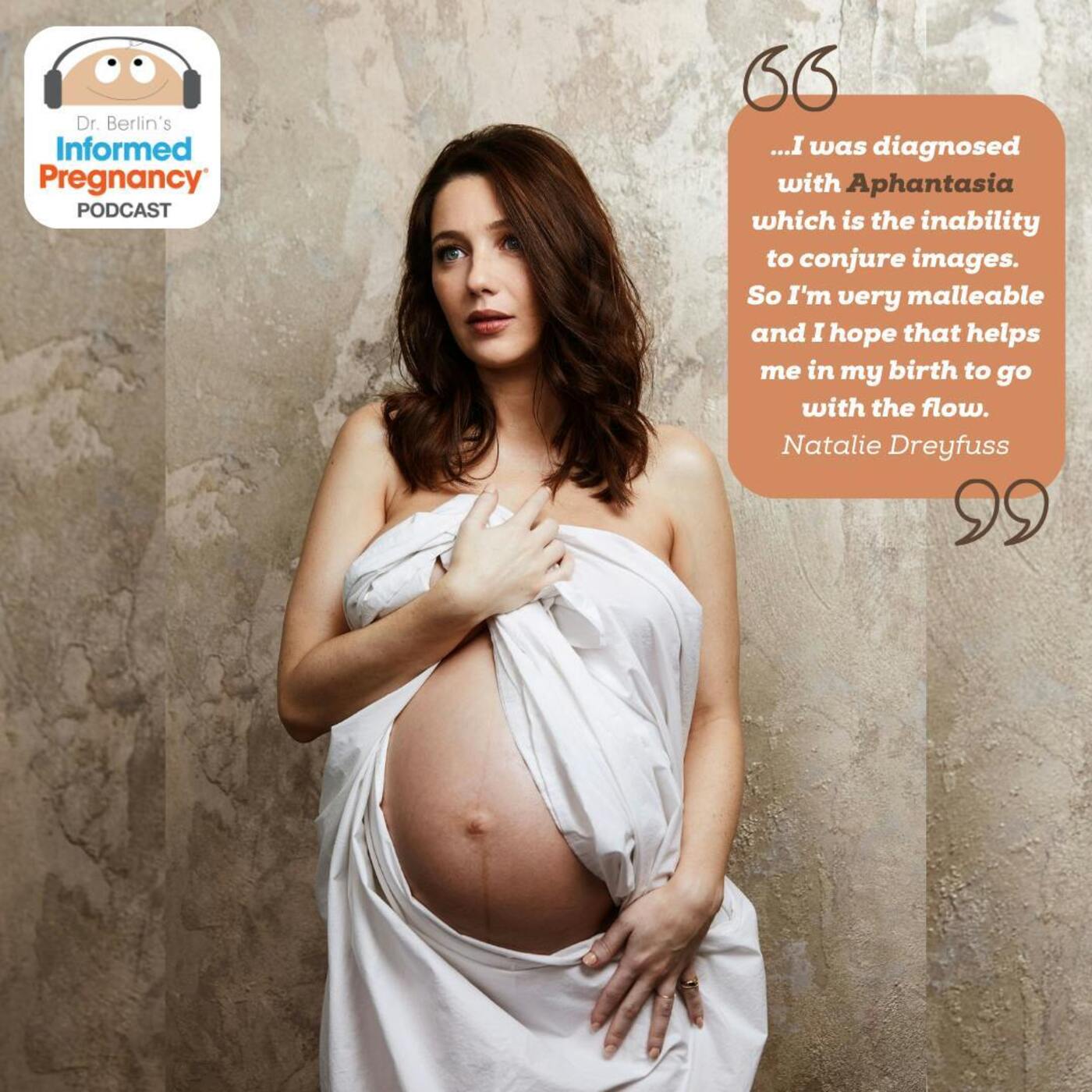
Actress Natalie Dreyfuss is expecting her first baby. In this episode, she shares her fertility journey, her battle with endometriosis, plans for her upcoming birth, and her unique diagnosis of Aphantasia, the inability to create mental imagery.

Connect with Natalie online: https://www.instagram.com/nataliedreyfuss/
Keep up with Dr. Berlin and the Informed Pregnancy Project online!
www.instagram.com/doctorberlin/
www.facebook.com/InformedPregnancy
Learn more about your ad choices. Visit megaphone.fm/adchoices
See Privacy Policy at https://art19.com/privacy and California Privacy Notice at https://art19.com/privacy#do-not-sell-my-info.
Key quotes
“We tried once and she showed up and I could not believe it my whole life. I just thought this is going to be a huge long journey for me. And I was really prepped for that. And that is not what happened. And I feel like, Oh my God, like miracles showed up.”
“Yeah, I think I didn't realize what my life would be without endo. And so being able to experience it for the past nine months has just been so like, just transformative.”
“Yeah. I'm like, people have Netflix in their heads. Like they go to sleep at night. They close their eyes and they have Netflix in their head. Like I'm so jealous. I'm so”
“I want to labor strongly with, you know, focus and attention to what is needed in the moment. I want to ask for help when I need it, or I want to be tender with myself when I hit a moment that I wasn't expecting or surprises me in a way I don't like, or, you know, I intend to like be connected to this love that's around me and the support that's around me. I have a great team and just to allow that in and just a lot of permission,”
“Yeah. I don't want to be putting myself through trauma for the sake of like proving something to myself or, you know, just getting through it and being tough. And that's very much who I am.”
Related episodes
- Ep. 379 Bonnie Wright: Before Birth
- Ep. 336 Natalie Dreyfuss: After Birth
- Ep. 353 Madison Young: Before Birth
- Ep. 327 Valentina Trentini: Before Birth
Transcript
AI-generated transcript with speaker labels — may contain errors, especially names and medical terms. Dr. Elliot Berlin, DC appears in blue; Natalie Dreyfuss in orange.
Download PDF of the Transcript
Dr. Elliot Berlin, DC [1:13] Welcome to the informed pregnancy and parenting podcast. I'm your host pregnancy focus chiropractor. Dr. Elliott Berlin My guest today is a TV actress who has battled endometriosis She's now pregnant and expecting her first baby very soon. We're gonna talk about career Endometriosis pregnancy plans for birth and I'm super curious about a condition that she has called a fantasia Which has some similarities to my weird Parasite nosia stay tuned Natalie Dreyfus. Welcome to the podcast. Hi, I'm so excited to be here I'm so excited. You're having contractions. I know he caught me on a good day on a crappy day Amazing we're gonna get into everything. Well, let's start at the beginning. Where are you from originally? I
[2:23] Am from Los Angeles. Did you leave and come back or you're still here? I'm still here Oh, you didn't travel around no rare native Seriously, first of all, I thought everybody was a transplant, but I have been to the east the north the south Midwest I like it here best
Natalie Dreyfuss [2:41] Yeah, I'm definitely not attached to it I would be happy to live somewhere else eventually, but it's interesting to be born in LA and raised in LA Yeah, it's like, you know the city of broken dreams I was just in it Placed here I didn't come here. So it's an interesting place to grow up. You were cast in this dream Yeah, it's a little bit of like a lonely city You asked how did you get into that I have avoided it as long as I could really When you're from LA, I think you make that choice pretty early to either stay far away or get into it But I was a ballerina growing up and then I actually taught preschool for a little while And then I missed like a performing art. And so a friend said, you know, you should take an acting class
[3:33] It's really fun. You love games. It's a bunch of games and I was like, oh But I did and I ended up really falling in love with it It was so different for me than ballet was it was just like as unique as you can be That's the best way to go On the ground Yeah, it's not a torture chamber and the ballet was just like you have to fit this mold and you're never gonna fit it And acting is the opposite. And so I got pretty hooked. It was later in my life. That was like 21 22
Dr. Elliot Berlin, DC [4:05] That's how I feel about airline seats How do you feel about airline seats it's like you have to fit this mold and you're never gonna fit it Right, right. Yeah, that is ballet so much in common. Did you start believe a little little little I
Natalie Dreyfuss [4:20] Did yeah, I was an ice skating first. I was probably five and then into ballet. Mm-hmm. That's getting Yeah, I chose all these strange solo sports But I was oddly graceful as a kid so I would win the competitions and stuff and Found myself in dance because I had this like I think about it now I'm like what a weird kid like I just had this like longing and like grace Like a five-year-old seven-year-old was like, what is that? Just falling in love with classical music and like just this bittersweet of like this child. I don't know. I think it's so interesting to think about as an adult, but I got really far in that career and took it too seriously.
[5:09] And then once I was injured, I danced on that injury for a long time and eventually it was like, okay, so no one's happy here. I gotta get out of here. But I had dedicated, yeah, I dedicated so much of myself to ballet that I had no real education. I dropped out of everything. And so I just always loved babies. And I went to a preschool, walked in and was like, I'm great at this. Can I just be here for a couple of years? And they were like, no, that's not how this works, no. No, but they let me be a TA for a while and I started hanging out with the kids and I feel like they really saved me.
Dr. Elliot Berlin, DC [5:45] It's probably mutual.
Natalie Dreyfuss [5:47] Yeah, I hope so. I hope those kids remember me. But I've just always been sure about wanting kids and feeling like that was what I was meant to do.
Dr. Elliot Berlin, DC [5:56] First of all, do you watch ballet or do you appreciate other people doing ballet or you enjoy doing it yourself?
Natalie Dreyfuss [6:05] It's pretty painful, honestly, because it was just such a traumatic life and there was so much that went into that. Really, I couldn't get back into a ballet class as an adult. I couldn't really enjoy it anymore. So watching it is kind of like, oh, hurts a little bit. But I've gotten to do some ballet on my series that I work on. And once they found out that I could do it, they kind of wrote it into my character. So that was the first time that those two worlds had collided, which is really cool for me. Yeah, my ice skating world collided with a lot of people.
Dr. Elliot Berlin, DC [6:37] I bet. Yeah, I did not have fun with ice skating. Okay, so you take an acting class. So curious what kind of games, was there anyone that sticks out in your head as like that was a fun game or like a purposeful exercise?
Natalie Dreyfuss [6:51] An acting class?
Dr. Elliot Berlin, DC [6:52] Yeah.
Natalie Dreyfuss [6:53] Oh my gosh, there's so many. I still to this day get so addicted to games like catchphrase or like code names, like anything where you're on a team and you're working together and you get to like play in each other's mind. You're like, oh, I bet this person thinks like that. I'm gonna preemptively decide like how to get them to say what I want them to say or affect them in a certain way. There was a lot of games like that in acting class. And it just felt so fun. I don't know physically, but mentally.
Dr. Elliot Berlin, DC [7:21] Mentally, mentally. There should be mental survivor.
Natalie Dreyfuss [7:25] Yeah, I don't know that you or I are equipped for that, but I don't know, but I'm definitely not equipped for the other survivor.
Dr. Elliot Berlin, DC [7:34] So then from those classes, how did you like get your start and build your way up?
Natalie Dreyfuss [7:40] You know, I think because I was born here and born around this business, I just had a good attitude about it. I didn't really want anything from it. I didn't crave fame or success or any of that. So auditioning, it just put me in a good position where I really was like, I'm good at this, so take it or leave it. Like, you know, I came in with a lot of confidence because there wasn't a lot to lose for me. I really just knew I wanted to be a mom and that this was kind of a way to make money to do that. And I enjoy it. I enjoy it for reasons that are probably different than other actresses, but I like the teamwork part. Like I like being on a set and being like a really great teammate.
[8:25] Where I fall on the team, like I don't care that much. Like if it's in front of the camera or not or directing or whatever it is, I just like to be like a really great cog in like the mechanism of making something with a bunch of people. And I like to bring a lot of like really positive, really grateful, happy energy to a set because all sets could use it. So anyone that's worked with me knows me as the girl that is happy to be there.
Dr. Elliot Berlin, DC [8:50] The positive one? I appreciate it. Like, oh good, the girl that likes to be here is coming today, great. I was happy around craft services, but outside of that, I was a theater major and anytime we had a production, I loved two things about it. One is that puzzle piece, you're a piece of a puzzle, you're a piece of an orchestra. Like, you know, one musician has a bad note, one instrument goes south, the whole, you know, well-tuned orchestra sounds funky. And then also the live audience, the response, the interplay with the live audience was, you know, I don't know for me, that was almost therapeutic, having that instant gratification.
Natalie Dreyfuss [9:28] Yeah, me too. I fell in love with multi-camera comedies because they're live audience. And so it was the best of both worlds, you know? Oh, yes. Television, but live and it was so fun. That was always my dream was to continue on that path. I mean, after COVID, we'll see what that looks like, but that's like where I really shine.
Dr. Elliot Berlin, DC [9:47] That's a win-win. I didn't even think about that.
Natalie Dreyfuss [9:49] Oh, it's so fun. And it's the best schedule too. It's such a fun schedule because you're rehearsing all week and then you shoot on Fridays. And it's just like a big play every Friday. And then you drink and have fun afterwards and then do it all again on my day. It's a good time.
Dr. Elliot Berlin, DC [10:06] You're selling it. Well, I'm going to say that. And I'm like, okay. So you've always wanted to have kids. Now it sounds like your wish is coming true here in the not too distant future. Where's your partner from? How'd you guys meet?
Natalie Dreyfuss [10:19] I found a lovely Canadian man. We, yeah, I love Canadian. We met 10 or 12 years ago, and then we started dating six years ago. And on our first date, we went and had a drink together and I knew he was a writer and he sat down and started telling me like how much he wanted kids and like how much family meant to him and how this business doesn't really mean anything to him and I just did not buy any of it. I was like, you're such a writer. Like who told you my story? Are you selling me right now? Like I did not buy it. He's handsome and sweet and Canadian. I was like, what is going on? Who is this? This is going to be a problem. So I brought in reinforcements.
[11:00] I was like, guys, come meet this guy. This makes no sense. I think he's lying about everything or he's the perfect person. I don't know. That's a fine line. Yeah, it was really scary. I was like, I've dated in LA for too many years to fall for this. And we laugh about it all the time because now we're having this little baby girl and we talk about that date a lot and how much we spoke about this on that day.
Dr. Elliot Berlin, DC [11:22] On your first date?
Natalie Dreyfuss [11:24] Yeah, it was our first date. We talked so much about having babies together and not necessarily together, but like what it meant for each of us.
Dr. Elliot Berlin, DC [11:32] That you each wanted to have children.
Natalie Dreyfuss [11:35] Yeah. That it was like number one. And in LA, you don't really hear that everyone looks at me like I have two heads because I care more about having a family than the career. But, you know, I get in other parts of the world. That's not crazy, but Los Angeles it is. So I just couldn't believe I'd met a man who felt this way. And every other guy I dated had said a lot of stuff like, you know, yeah, yeah, one day I'll totally want that. And I'm like, okay, well you're 45. Let me know when you are ready. So yeah, I think it was really meant to be that I ended up with this person that cares so much about this. And the pregnancy has been so fun because he's made it so fun.
Dr. Elliot Berlin, DC [12:16] I got to meet him. He's sweet.
Natalie Dreyfuss [12:18] Yeah. He's a really classically Canadian, nice person. I can't stop saying it, but does he say, oh, yeah, I say it now. Well, he's French Canadians. It doesn't say a boot, but he does say we both go.
Dr. Elliot Berlin, DC [12:33] Oh, that's crazy. All right. So then since six years ago, you have this conversation about having kids. Did you plan like when you were going to have kids?
Natalie Dreyfuss [12:47] Yeah, we actually went through a breakup right before the pandemic, which I didn't think we would make it back from and 2020, man, it just changed. Changed all of us, but yeah, my life really just took a weird turn for the last couple of years. And it was super, super challenging. And we broke up in like November of 2019. So by the time March came around, you know, nothing really dramatic happened between us. It was just a decision. And then we both were like, so we're going to be there for each other, right? During this, we live five minutes away from each other. We're not going to not take care of each other. So we spent a lot of time together in the pandemic, just making sure
[13:30] we were in a bubble, you know, who do you want to watch movies with? It's like the person you've been watching movies with for three years and feel comfortable with. And I really feel like it brought us to a different place in our relationship. But I was traveling a lot because I was shooting in Canada. So I did five 14 day quarantines. So I did like two and a half months in a room by myself for exposure. Yeah. Cause every time you go to Canada, you have to quarantine 14 days in a hotel room, like can't open the windows, can't open the door. Like they leave food at your doorstep and walk away. And it was like mentally, it really broke me. It actually like broke me.
Dr. Elliot Berlin, DC [14:10] Yeah, I know.
Natalie Dreyfuss [14:12] And five of them, it was intense. And so I really felt like I needed comfort so much when I was home and I was scared of everybody. I had this autoimmune disease and I took it really seriously. I was also working and so grateful to be working. So I was completely isolated and he agreed to like really isolate with me. We took it very, very seriously and it really brought us together and put us on this new path towards like eventually having this conversation of like, are we ready to try and have a baby? And we had that conversation and this little miracle showed up.
Dr. Elliot Berlin, DC [14:46] Almost like I love the silver linings.
Natalie Dreyfuss [14:49] Yeah, it was a crazy path. Honestly, I listened to your podcast so much since you like took my phone and saved a bunch of episodes and I got super. addicted to this podcast, I just loved it. And I started listening to it's a bunch of my friends have been on it and you know, it's a small town and I just kept thinking, I'm like, wow, what is my story when he asks me like, how did I get here? I just started thinking about the last couple of years and this path to this baby and wow, it was interesting to think about what I was going to say when you asked me, you know, I haven't really reflected on it too much because it's all happening so quickly.
Dr. Elliot Berlin, DC [15:26] Oh, I love it in real time.
Natalie Dreyfuss [15:28] Yeah, it happened definitely in real time, just hearing other people's stories and their paths to pregnancy and what this has been so far, even before this baby gets here, how much it's changed everything. So I've done a lot of reflecting in the last couple of days.
Dr. Elliot Berlin, DC [15:42] I'm glad I can help.
Natalie Dreyfuss [15:44] Thanks.
Dr. Elliot Berlin, DC [15:46] What were you shooting in Canada?
Natalie Dreyfuss [15:48] I work in a show called the flash.
Dr. Elliot Berlin, DC [15:50] Barry Allen. Very much. So I'm like 12 year old talks about it. That's so sweet. Very on Barry on. He got everybody in our family to watch the flash and not just like an episode. He would sit down even for the ninth time of season one, episode one, with a family member who's visiting him from out of town and be like, you gotta watch the flash with me and he would watch all those episodes all over again till they were all caught up.
Natalie Dreyfuss [16:14] That's awesome.
Dr. Elliot Berlin, DC [16:15] So at least something came out of your five 14 day quarantines.
Natalie Dreyfuss [16:19] Yeah. I really worked hard for this job.
Dr. Elliot Berlin, DC [16:24] He appreciates you.
Natalie Dreyfuss [16:25] Yeah. It was a really great experience. They're done now. So I wasn't able to make it for the final season, but I am so super grateful for all the time I got to spend with them and it's a great show to be on.
Dr. Elliot Berlin, DC [16:37] I hope so. What else was the cheerful person after you left?
Natalie Dreyfuss [16:40] I know they know me as the person that loves to be there.
Dr. Elliot Berlin, DC [16:44] All right. Now let's take a break. When we come back, we're going to find out about your pregnancy. We'll be right back.

Dr. Elliot Berlin, DC [18:27] Welcome back. We are talking to Natalie Tref is very pregnant beyond 37 weeks. So in the zone could happen any minute and well, what started the meeting you have endometriosis. When did you find out about that?
Natalie Dreyfuss [18:41] I've always had really a tough GI system and it's been called lots of things over the years, but I have struggled with a lot of autoimmune stuff and been to a million different doctors and specialists. And there's a weird one because it's invisible and very hard to diagnose. So it took a long time to get a formal diagnosis and really the only way to do that is to open you up and look for it. And so my plan was always to wait until like six months before I was going to try to get pregnant before I did that surgery and I ended up not having to do that. I was able to get pregnant and much, much faster than I thought I would be able to. We tried once and she showed up and I could not believe it my whole life.
[19:30] I just thought this is going to be a huge long journey for me. And I was really prepped for that. And that is not what happened. And I feel like, Oh my God, like miracles showed up.
Dr. Elliot Berlin, DC [19:39] That's so crazy.
Natalie Dreyfuss [19:40] So symptoms like really severe chronic pain, daily pain, not just like menstrual pain. There's like two days a month where like, I really can't move during my cycle. I have what I believe to be endo on my cold. one. And so it causes like extreme motility and spasms and cramping really like fun symptoms every day. And it kind of mirrors stuff like Crohn's and colon cancers and stuff, but I've been scoped for a lot of stuff a million times. And the only difference is it's every day. There's not flare ups. So, you know, I've been on a lot of medications and I've tried a million different healing modalities and eventually, especially in the last couple years, I took like a
[20:31] real left turn and started doing some somatic stuff and trauma stuff and finally started looking into that. And I do feel like there was some really beautiful stuff that came out of that. But I've gotten to live the last nine months with no endo. It is the best. I can eat whatever I want. No pain. It's like the coolest experience to just have a normal life for a full nine months.
Dr. Elliot Berlin, DC [20:56] Your pregnancy is helping with the symptoms.
Natalie Dreyfuss [20:59] Yeah, it's amazing.
Dr. Elliot Berlin, DC [21:01] Maybe this is why you didn't realize, but internally, you always wanted to have a lot of babies. I mean, I think there's probably many reasons, but
Natalie Dreyfuss [21:09] that's definitely one of those contributing factor contributing factor.
Dr. Elliot Berlin, DC [21:12] Yeah, being able to eat is a real bonus. I mean, I'm really glad that you I guess the opposite of the typical reputation that pregnancy gets is making you achy and uncomfortable for you. It's the opposite.
Natalie Dreyfuss [21:27] Yeah, I think I didn't realize what my life would be without endo. And so being able to experience it for the past nine months has just been so like, just transformative.
Dr. Elliot Berlin, DC [21:39] Would surgery be at all corrective for you?
Natalie Dreyfuss [21:42] The surgeries are tough, you know, you can remove it does grow back. So you know, it's abdominal surgery, which takes quite a while to recover from I was playing a superhero on TV, like in a tight suit, like there wasn't a lot of abdominal surgery time to recover. And then, you know, after it grows back, it's only a few months of relief. So they say that, you know, pregnancy can have like lasting positive effects, and it's different for every person. And there's just not enough information about it. So basically, I just want to be pregnant forever.
Dr. Elliot Berlin, DC [22:15] Are there certain things? I mean, now you're at the very end, but highlights about the pregnancy, about things that you felt and things that your body has done or changes that took place that are highlights for you either on the ups or down highlights?
Natalie Dreyfuss [22:29] Yeah, you know, I made this decision that getting pregnant and staying pregnant was going to be a huge challenge in my life. And I braced for this huge challenge for years and years. And to make this decision to try and to have this happen on my first try and come so easily and come so quickly and stay with me and, you know, make it past that 12 week mark. I just feel like miracles happen, you know, like you just don't know what you're bracing for. And I was so convinced that I was like on this really tough path. And I'm trying to really, like, keep that with me before this labor and before being a parent is just like, you don't know, you don't know what's coming and you don't know
[23:13] what to be bracing for. And you can't like predict how good things can just show up for you.
Dr. Elliot Berlin, DC [23:20] That's really sweet to hear. Maybe a reward from the universe for all your positivity on set.
Natalie Dreyfuss [23:28] I do bring a lot of positivity. I'm like, guys, there's free food here. What are you so mad about? Let's have a good day.
Dr. Elliot Berlin, DC [23:36] I could see it not being as boring with your energy there. Okay. So what kind of things have you been doing to take care of yourself, mind, body, otherwise during your pregnancy?
Natalie Dreyfuss [23:47] You know, I've met a really amazing group of people, yourself included in this world of birth and labor and all these practitioners. And like, it's such a cool world. I got to you through Britta Bushnell, who's been such an amazing angel throughout my pregnancy journey.
Dr. Elliot Berlin, DC [24:06] Transformed by birth.
Natalie Dreyfuss [24:08] Yeah, I love her book so much. And I got really overwhelmed at the very beginning of my pregnancy with how much information I just had never really researched pregnancy and birth. And I was like, oh my God, where do I start? And someone in a mommy group said, you should read Britta's book. I think it's really like a nice middle ground of making you feel like you're not going to set yourself up to be disappointed or fail in some way, if like, there's a certain way you get attached to wanting to do this. So I think, you know, to take care of myself, like mentally and spiritually, I have really followed that path and like really wanted to just give myself the opportunity
[24:45] to be transformed by this birth and meet some incredible people on the way through like chiropractic like you or pelvic floor therapy or my incredible doctor. And I have to become birth obsessed. It's like a rabbit hole. sucked in, and then, like, I've been listening to your podcast and stuff, and it's just so fun. Like, I feel like it's going to be such a big part of my life forever now.
Dr. Elliot Berlin, DC [25:09] Well, I think you attract things from the universe. It happens to be in Los Angeles. We're pretty tight-knit. I feel like we're a pretty tight-knit birth community. And I just feel super blessed to work with colleagues that are so good at what they do and so dedicated to what they do and so into the process and then make a living at it versus, like, how can I milk some money out of this? Britta's been on the podcast a couple of times in her episodes. They're so popular, even people who have never met her. Just the pearls of wisdom that she has from her depth of background in so many different areas. And then Euro B is also a friend of mine. She's wonderful. How did you guys connect?
Natalie Dreyfuss [25:54] I was actually working with a different OB, and I had a pretty scary experience, and I just felt really dropped. And I felt like, you know, I've been through a lot of medical trauma stuff, and I really followed my instinct and was like, you know what, I know I'm like 32 weeks into this, but this just isn't the right place for me, and I need to find something else. And it's hard to find someone at 32 weeks. Nobody wants to, like, start seeing you. So I called everyone I knew, and I asked Britta for help, you know, to find a new OB. And when I met Dr. Perlo, I just knew right away that this was going to not only change my birth experience, but also my endo experience. She's an incredible
[26:37] woman that cares so much about women's care, and she taught me a lot about, like, advocating for myself. She was really proud of me for leaving and being ballsy about it, and just knowing that that wasn't the right doctor for me. And that, you know, I'm standing up for myself. I got pretty mad at that. So I definitely stood up for myself and was like, this isn't okay. You can't treat people like this. And walked away. So I'm so happy. It was like this weirdly dramatic experience, but it brought me to this incredible woman. And yeah, I just feel like she's going to be in my life forever.
Dr. Elliot Berlin, DC [27:06] I feel like if ever you had to switch at 32 weeks, Dr. Perlo's amazing to switch to because she's so available and spends so much time with you anyway, that it's not like you're only going
Natalie Dreyfuss [27:17] to spend five minutes a week with her. No, she's taking care of me like I've never felt in my life. When I met you, your baby was not head down. She was breech. She was breech.
Dr. Elliot Berlin, DC [27:29] When did you find out about the breech?
Natalie Dreyfuss [27:32] I was breech at 34 weeks. It turned out that's why I was having preterm labor contractions. And when I got to Dr. Perlo, she knew right away, she was like, your baby's breech. Why didn't they catch this? And so basically, she took it really seriously right away and wanted me to do all the spinning baby stuff and come see you. And I took it really seriously and was trying everything I could to help her turn. And then seeing you, I was so grateful because you really put my mind at ease that she was going to do it. You were like, I believe she's going to do it. And I was like, Oh, I hope she does. And then I saw you one time and
Dr. Elliot Berlin, DC [28:08] she turned the next day. Oh, that's amazing. You know what? I would never say that if I didn't think it was true, but I mean, just all the different factors that you had going on in your particular case really seemed like she was going to end up head down. So I'm really glad for you that she is in your back on track. Yeah. It's also just changed my back problem so
Natalie Dreyfuss [28:28] much. And I didn't realize how hard it was to carry her around when she was breech. It's hard
Dr. Elliot Berlin, DC [28:32] now for different reasons. Yeah. The pressure is someplace else. Exactly. Yeah. Okay. Let's take a little break. When we come back, we'll talk about your intentions for birth, but also this crazy thing called a Fantasia. We'll be right back. Welcome back to the informed pregnancy podcast. We are talking to Natalie Dreyfus. Okay. You're going to have your baby in a minute, but right before you do that, let's talk about this. We're having a conversation and I don't even know exactly how it came up, but you're like, Oh, I have a Fantasia. I'm like, what is that? And you tell me what it is. I'm like, I thought I was weird because I have presopagnosia, which means I'm face blind. I can never picture
[29:21] somebody's face in my mind. I can't describe it. Every time I see a face, it's like a new one every time. And then you tell me, Oh, well, this is what a Fantasia is. What's a Fantasia? A Fantasia is a blind mind's eye. So it's the inability to conjure images. Right. First of all, how did you even realize you have it? Cause like, who knows that you're not seeing things the way other people are when they close their eyes and try to imagine.
Natalie Dreyfuss [29:48] Yeah. I mean, it definitely is something I had no idea. I was living this totally unique human experience until I think two years ago. And I saw it on social media. around like a test. It was a really simple test. It just said, picture a purple apple. And then it started asking you questions about what you were seeing, whether it was like, you know, the shade of it or if there's like light hitting it. And I was like, what are we talking about? Like, I've never seen a purple apple. Like I know purple and I know apple, but I can't bring up an image of those things and then describe it to you. Like, what are you talking about? And they showed like a graph of like things you might see and there's a huge spectrum
[30:32] and mine is an abyss. Like I see black, I see nothing. So I started to look into what this meant and I was like, I really think that this makes a lot of sense for who I am. Like so many parts of my life started to fall into place. And it's such a weird thing because it really is a unique human experience. And you had mentioned to me, you were like, yeah, I have face blindness and I was like, I have mind's eye blindness. I love weird neurological things. Let's talk about it.
Dr. Elliot Berlin, DC [30:59] Yes, must do a series at some point. We must do a series on this. Here's what's crazy though. You told me about an eye was so fascinating because I've spent the past now it's about 10 years since I know about my face blindness, just telling people about it. And they're always like, Oh, tell me more. It's so fascinating and curious. And I've seen people diagnosed after having a conversation with them because, you know, they had no idea what it was. And they say face blindness is about one and a half percent. So one and a half out of every hundred people might have it. And it's also a spectrum. Any fantasia seems actually a little bit more common, more like four or five percent. And I was just so fascinated. I went home,
[31:43] I was sitting by my computer and I was reading all about it. And it was like, rainbow. And I closed my eyes. I'm like, okay. And all these other things. So I was like, yeah, I can do that. And then I was like, wait a second, can I do that? And I didn't realize until I had to hold up a bottle of Aquafina in front of my face, look at it, see it, and then close my eyes and try to visualize it. And I realized I have the abyss. I just have like a black screen with little shades of lighter darkness moving around. But I don't see that bottle at all. I can describe it. I can tell you the label, roughly how much of the bottle the label takes up, the shades of the color on there. But it's
[32:27] a logical description. It's not a visual description, not describing what I'm seeing, describing what I know the bottle to be. And now I've taken a bunch of people, literally since meeting you and you telling me that, I've taken at least a hundred people on my close your eyes, picture rainbow. Can you see the rainbow? Do you see the colors? What's the second color down? Can you turn the rainbow upside down? Now it's on its back. What's the second color down now from the top? And some people just see it. You can tell in living color, like the highest 4K, whatever they can see everything. You could ask them to pivot three degrees to the right and they can tell you what that looks like. Some people grasp
[33:07] with it. Some people see real rainbow. Some people see cartoon rainbow. But then I do your test about the purple apple. And then you can really tell, you know, and people are like, wait a second, I'm not seeing the apple and just describing the apple. It's really interesting. And the diagnosis only came around like 10 years ago or something
Natalie Dreyfuss [33:23] like that. So yeah, there's not a lot of research about it, but they have some really interesting Ted talks about it. And it does go hand in hand with face blindness quite often, which is why I thought of it. When you said that I was like, oh, I have this thing. And sometimes it goes hand in hand with face blindness. I don't have face blindness, but I couldn't describe my mother's face to you. Like, I know it. I know that she has blue eyes and white hair and I could describe her to you, but it's not because I'm conjuring the image of my mom and then just looking at it and describing that image to you.
Dr. Elliot Berlin, DC [33:59] You're doing with your mom, what I do with the Algofina bottle.
Natalie Dreyfuss [34:01] Yeah. I mean, that was one of the tests I found online was like picture someone's face that you should know inside and out, like have no problem bringing up an image of, because you stare at it all the time. And then they ask you like, which direction is it facing? And it just gets me every time because I'm like, no direction. Yeah. I'm like, people have Netflix in their heads. Like they go to sleep at night. They close their eyes and they have Netflix in their head. Like I'm so jealous. I'm so
Dr. Elliot Berlin, DC [34:32] mad that I see an abyss. This is ridiculous. But you're a dreamer.
Natalie Dreyfuss [34:37] I do dream. It's interesting because your mind is like hungry for images. So when you dream, you do see a bunch of images. It's just in your waking life. Like when you're trying to conjure an image, you're not able to do that. It's really weird. And it affects me specifically in like really specific ways that I always just felt a lot of shame around. I was telling you, like I get lost all the time. a mental map because I can't picture like the route home until it's there like I'm driving up to it I'm like is it left and you know just weird stuff like that I'm a very like on it responsible girl so it's weird to me that I'm lost all the time or that like I can't seem to ever stay
[35:16] organized when like I really want to but a drawer is like my nemesis I close the drawer and it's like well who knows what's in there until we open it again but you can't picture what's in the drawer right so you have to kind of memorize or how it's laid out yeah so like things
Dr. Elliot Berlin, DC [35:32] like labels are like such a relief like some kind of agnosia there for you too like topographical agnosia like Oliver sacks he didn't know gps so he could never figure out how to get home unless he took the same exact route every single time oh yeah I definitely have some of
Natalie Dreyfuss [35:50] that what's weird is that like I told my mom this and she was like this makes a lot of sense about you and she also said what did you think directors were doing like you've been in this business for a long time like what did you think directors were doing and I was like I genuinely thought they were just getting a bunch of people together that are good at their department and then saying I basically want something like this and then just seeing what happens and she was like what no they see it in their hands and they like get people that are good at that thing and they put them together so they can have these images come to life and I'm like what that's insane because to me I was just like oh get someone that's great
[36:32] at lighting and then explain to them like what you want the feel of the film to be and then
Dr. Elliot Berlin, DC [36:36] see what they do wow you know we launched this platform informed pregnancy plus with video and like films and content also in the same demographic as our podcast but one of the things I'm putting together is a library of guided imagery meditation and even though it's a video platform I was really just going to have like obscure shapes on there just things that if you're watching it on tv it'll just help your mind zoom out but after our aphantasia conversations and discoveries I'm actually doing it differently I'm going to put in things like when I'm trying to have you visualize things I'm going to try to have those things on the screen at that moment so that if you're not able to if there is no mind's eye
[37:20] you can open up your eyes and be brought to that place is my hope so yeah that's great I
Natalie Dreyfuss [37:25] have that like on headspace you know the meditation app will show you like cartoons of different like really big concepts that they simplify and kind of make cartoons out of and it always is just such a great way for me to understand a concept that's complicated is just to see it played out in front of me because that's not something that I'm able to
Dr. Elliot Berlin, DC [37:44] do yeah I don't dream and once in a blue moon I'll have a dream but all I'll remember about the dream is there were no faces right so I don't even know who the dream was about
Natalie Dreyfuss [37:56] yeah I definitely don't have faces in my dreams either that's weird I don't know I definitely see colors you see colors in your dreams for sure I see colors because you know I will remember them when I wake up and I'm like oh yeah that was a colorful dream so I know I see something but it's an interesting thing to be an actress from this perspective because I feel like it really helps me be better at my job because I'm not like married to some image of what I'm supposed to be doing or how I see the script playing out so when I get to set I'm so malleable because you know if you explain to me basically what you want I'm like okay great I'll show you that in a million different ways and you can choose
[38:38] your favorite and never the same way twice yeah and I'm not going to be mad if it's different from what's in my head which is very difficult for a lot of actors to let go yeah so I'm hoping it helps with my birth as well is that I don't have this image of how it's supposed to go
Dr. Elliot Berlin, DC [38:52] I actually find as a doula that being a doula for actors experienced actors is unique happening in itself because you take direction really well especially also you have had such intense pain in your life physical pain I don't know I think those two could actually work in your favor with the direction it's sort of like the brittas stuff where if your conscious mind is starting to go in one direction somebody who you trust around you could potentially help you fairly easily move to a different take a different perspective on what's happening in that moment and I just find even with coaching and breathing if that's what somebody wants when I'm at a birth that actors take it really well you're great with direction so hopefully
[39:38] that will serve you but I'm glad you brought that up because that's our last little thing to talk about right here before you go have your baby what are your intentions for birth
Natalie Dreyfuss [39:47] yeah I mean like you said Britta's book has really shaped my intentions I love that she talks about making pregnancy and birth and labor and new parenthood like a real meaning making experience you know a lot about rites of passage. And I had to make all these decisions. You know, I got pregnant and that's like, okay, you have to make all these decisions. Where do you want to give birth? And how do you want to do it? Do you want to do drugs? Do you want to do this? Do you? I'm like, no, I don't know anything about this stuff. And so you fall down all this like information rabbit hole. And then your Instagram figures out that you're pregnant and starts showing
[40:18] you a million different things. And like, suddenly I'm inundated with information and I'm like, oh my God, okay, if I just have enough information and the right information, then I can really nail this to have this incredible experience with my birth. And when I finally found her book, I was like, okay, this is all about letting go of having these goals and these really rigid ideas of what you want to do and how you want it to go and really like allowing this experience to be wild and unpredictable. And that being a meaning making experience and a rite of passage is just like letting go of an idea of like, this is what it has to be. And just being open to this unknown and this incredibly uncomfortable
[41:05] feeling of just having such mystery of, I have no idea what's about to happen and I don't know what it's like to have a child. I don't know what it's going to be like and what it's going to feel like and how much it's going to hurt. And I don't know if I'm doing it right. And having that be the meaning making experience is just allowing this uncertainty. And I wrote down a lot of intentions that she helped me shape and stuff. And my intentions are stuff like, I want to labor strongly with, you know, focus and attention to what is needed in the moment. I want to ask for help when I need it, or I want to be tender with myself when I hit a moment that I wasn't expecting or surprises me in a way I don't like, or,
[41:45] you know, I intend to like be connected to this love that's around me and the support that's around me. I have a great team and just to allow that in and just a lot of permission, like give myself permission to feel like an animal, give myself permission to be impolite or anti-social if that feels right. Or, you know, practice receiving help, which is not my strong suit. So just really like to the best of my ability, receiving some help when I need it or refusing it when I don't and just see what happens. I just want to meet each moment for exactly what it is. And I intend to be at home for as long as I can. I hope to make it to like seven or eight centimeters. And I see the like
[42:27] physiological benefit of getting that labor train going. And if I can do it with like as much presence as possible and not numbing out physically, I'd like to do that. But if it feels like I'm, I think you said this on one of the episodes I listened to, that you said something like being in pain and suffering are two different things. And that really stuck with me. And I wrote that on like my board and stuff that the pain is not going to deter me, but I don't want to suffer. And if I'm suffering, I'm going to ask for
Dr. Elliot Berlin, DC [42:57] help. Yeah. I think that comes in penny sinking. There's a difference between pain and suffering. Pain is ouch. And suffering is a negative emotional response to ouch.
Natalie Dreyfuss [43:08] Yeah. I don't want to be putting myself through trauma for the sake of like proving something to myself or, you know, just getting through it and being tough. And that's very much who I am. I was raised in ballet, of course, and I deal with a lot of pain in my life. So I was really like, Oh my God, I could be so transformed with how I deal with pain. If I could prove to myself, like you could do anything. And I just let a lot of that go. You know, I think being tender with myself is much more challenging or like allowing other people to be there for me and receiving help. That's really challenging. And I'm just going to try to do less. I'm just like
[43:47] not effort so much and just allow, which I think is going to be mentally difficult for me because I'm like, what do I do? Okay, I got it. Give me directions. I love directions.
Dr. Elliot Berlin, DC [43:58] I will say that those birth intentions sound beautiful and practical and they make sense for
Natalie Dreyfuss [44:07] you. Yeah. I just want to meet each moment, you know, with what it's going to be and not get married to some idea, which helps that I don't have images.
Dr. Elliot Berlin, DC [44:19] Well, the image that comes to my logical mind at this moment is kind of like a hot air balloon. You're taking off on this beautiful flight. And if you're very rigid about the direction you're taking, exactly where you're going to land, you're going to have a bad trip. But you know, roughly where you're taking off and roughly where you're landing and, you know, you let the journey reveal itself. Yeah. It doesn't sound like you have a contagion because that was really cool. Well, thanks. It's only because over the summer, I did my first hot air balloon and I was like, don't we want to be going that way? He's like, we'll get back there. We'll get back there. And then we landed in the parking lot of
[44:58] a fast food restaurant. So, It was practical. So all roads lead to something delicious. Yeah. Red lobster. What was it? Something like that. That sounds great. Well, I'm so grateful for you for coming on and sharing and just grateful to even know you and work with you. I think you're fantastic. I have learned so much from you even about myself. And for that always be grateful and excited to hear how your journey goes, how your flight goes. And maybe you'll land at a Wendy's. Who knows? One can only hope. Natalie, in the meantime, where can we find you online? You can find me on Instagram at Natalie Dreyfuss. How did you come up with that one? I'm so creative. It's really kind of phenomenal that it was available.
[45:43] I imagined it. Finally, at Natalie Dreyfuss on Instagram. We're at Dr. Berlin D O C T O R B E R L A N at home. Thanks for listening to our podcast. If you're curious and you want to check it out and you want to see the all new Informed Pregnancy Plus, I would head over to informedpregnancy.tv. That's informedpregnancy.tv.
Want more pregnancy + parenting? Start your FREE TRIAL of Informed Pregnancy+ and get access to all our curated pregnancy and parenting content — original series, iconic birth films like The Business of Being Born, prenatal workouts and more.
