
January 11, 2024 · 44 minutes · Episode 389
About this episode
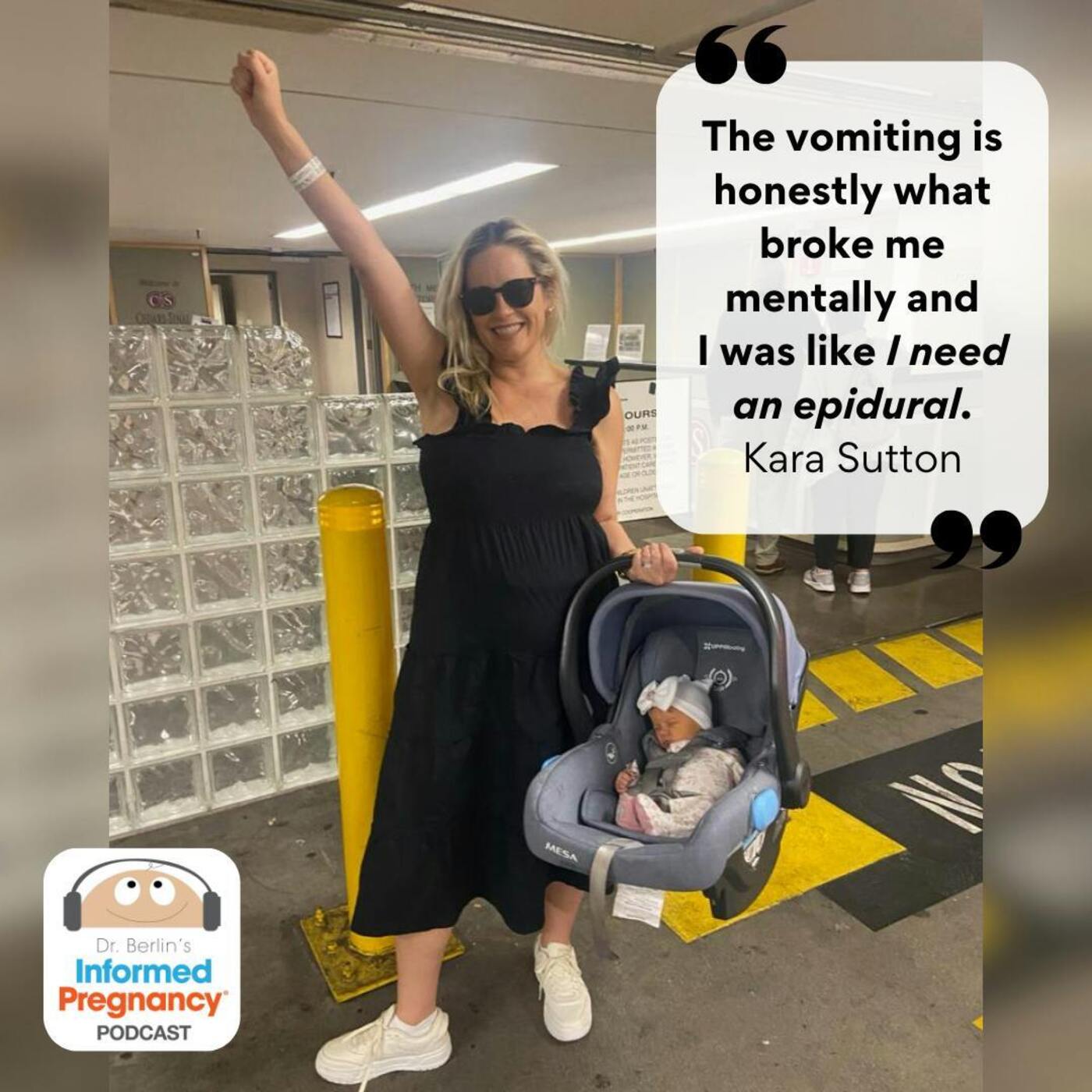
Brand strategist and SoCal native Kara Sutton returns to tell us about the ups and downs of the birth of her third baby. She shares all the exciting details about labor and delivery including the outcome of her desired VBAC.

- Connect with Kara online: https://www.instagram.com/ikaraboutyou
- Start your FREE TRIAL of Informed Pregnancy Plus (IP+) and get access to all our curated pregnancy and parenting content: https://www.informedpregnancy.tv/
- Birth Film Spotlight: watch The Business of Being Born on IP+ now!
Keep up with Dr. Berlin and the Informed Pregnancy Project online!
www.instagram.com/doctorberlin/
www.facebook.com/InformedPregnancy
Learn more about your ad choices. Visit megaphone.fm/adchoices
See Privacy Policy at https://art19.com/privacy and California Privacy Notice at https://art19.com/privacy#do-not-sell-my-info.
Key quotes
“and I ate it all, which is gross, but sometimes you need a McMuffin to just like level up and get yourself to a place where you can really get into an athlete mindset.”
“I felt happy that I wasn't crazy. I don't know why, but sometimes it's just like nice to be validated that, you know, the emotional roller coaster of what you're feeling is valid and you are in labor and you are dilating, right. And so that felt good. It was”
“I felt like someone with food poisoning being asked to run a marathon”
“I'm glad I pushed back on everyone throughout the whole process, my doctors included. I think it's so important to make decisions for yourself and not feel like people are making those decisions for you when you're in the middle of bringing life into the world.”
“Yeah, I would have stayed at the hotel even longer than I did. Like I said, once you're in that system and you're checked in at the hospital, it's a challenging uphill battle to stay in a space where you are connected to your body.”
Related episodes
- Ep. 388 Kara Sutton: Before Birth
- Ep. 424 Leedia Riman: After Birth
- Ep. 423 Leedia Riman: Before Birth
- Ep. 416 Hilary Duff: A Birth Story (Part 1)
Transcript
AI-generated transcript with speaker labels — may contain errors, especially names and medical terms. Dr. Elliot Berlin, DC appears in blue; Kara Sutton in orange.
Download PDF of the Transcript
Dr. Elliot Berlin, DC [0:12] Welcome to the Informed Pregnancy and Parenting Podcast. I'm your host, pregnancy-focused chiropractor, Dr. Elliot Berlin. Last time we talked to today's guest, she was 39 weeks pregnant and preparing for the birth of her third child after two cesarean births. She shared her hopes, fears, and plans for her vaginal birth today. I'm excited to welcome her back and hear about the conclusion of her pregnancy, her birth experience, and her third postpartum journey, Kara Sutton. Welcome back to the podcast and congratulations.
Kara Sutton [1:07] Thank you! I'm excited to be back. I'm alive. I'm in deep anticipation. I have no idea what happened since the last time I spoke to you. My life hasn't changed at all, as I like to say,
Dr. Elliot Berlin, DC [1:18] but yours probably has. Let's talk about this. You were 39 weeks pregnant when we snuck in that interview. How was the rest of your pregnancy? It was good. I think I saw you
Kara Sutton [1:28] guys for acupuncture and I went into labor naturally like a day or two after I saw you. I think I was 40 weeks in one day. Oh yeah, just to go right over the edge there by one. Exactly. I went over my due date really wild the number of people who think your due date
Dr. Elliot Berlin, DC [1:48] is when you'll actually have the baby. Yeah, and also how many people think you must have the baby by that date, meaning as if it's the use by date, but at best it's the sell by date. If you throw out all the eggs and milk by the sell by date, you're wasting a lot of dairy.
Kara Sutton [2:04] That part was shocking to me because the number of texts and people who were like, oh, when are you getting induced? Because I was over by, I think, honestly like a day. I was like, what? I'm not getting induced. By the way, what you were over is the estimated due date, which is just a number on a bell curve. It is not probably provided by me because they probably asked when my last period was. I was like, I have no idea. You know what
Dr. Elliot Berlin, DC [2:28] I mean? So I have trouble tracking mine too. So the monitor is no use to me. Anyway,
Kara Sutton [2:37] so were you yourself getting any anxiousness about it? I was getting annoyed, you know, I was getting not with myself. I stayed pretty calm with what I believe would happen that my body would go into labor when it was ready and that the baby would come when it was ready, but I was getting annoyed with the amount of people who, everyone from parents, in-laws, friends, et cetera, coworkers, like, have you had the baby yet? And it's like, no. And so that part was a little annoying, but also at that level of pregnancy,
Dr. Elliot Berlin, DC [3:09] everything was annoying me. So. Yeah. I mean, understandably, there's a lot going on for you every second of every minute of every day. Before we move forward into how your labor spontaneously started, would you mind recapping in one sentence what happened during your first
Kara Sutton [3:23] birth and then your second birth? Yeah. First pregnancy went into labor naturally, conceived naturally, and then ended up having an emergency C-section after, you know, going into labor. And basically I had let them break my water and blah, blah, blah, thrown into emergency C-section, wasn't happy about it. Second pregnancy, it was the middle of COVID. I was delivering December, 2020, had a lot of anxiety from the first horrific delivery experience. So I planned a C-section, couldn't get to a place where I felt like I'd let go that trauma from the first one. So those were the first two. Those were the two.
Dr. Elliot Berlin, DC [4:01] Okay. So you had one labor that started and it sounds like you went down the cascade of interventions. Am I putting words in your mouth? No. Okay. And the second one for various reasons, there was too much for you to contemplate. Yeah. And too much anxiety that whole year. Yeah. Too much PTSD for the VBAC. So with the third baby here, you're planning for the VBA2C, the vaginal birth after two caesareans, but it sounds like you were over the anxiety part of it. Like you were more just like, let's do this.
Kara Sutton [4:36] You might remember I had a miscarriage in between the second and third pregnancies and that miscarriage randomly and weirdly made me completely get over the trauma from the first experience. So that was like almost like a healing experience where I started to trust my body again and believe like, oh wow, your body knows what to do, how to do it. I'm just sort of a participant on this journey a little bit. So it made me reevaluate my relationship with trusting my body again, that I could do it without someone needing to cut the baby out of me essentially.
Dr. Elliot Berlin, DC [5:11] Honestly, it sounds like you guys went to therapy and worked it out.
Kara Sutton [5:15] Did it, don't have time, don't have budget for that. But yeah, you know, you can take a miscarriage and look at it in a positive way that your body knows that the fetus wasn't viable and got rid of it for you. I think, you know, it can be a blessing in a weird way. It's obviously sad, don't get me wrong, but it did help me realize that I could do it, you know?
Dr. Elliot Berlin, DC [5:35] Yeah, sometimes sad things have a silver lining. Okay, so how did this labor start? I had 40 weeks in one day, way over your due date.
Kara Sutton [5:45] So late, it was crazy. I started my contractions on Wednesday afternoon and was just texting with a girlfriend. And basically I assumed they would kind of be there and then go away. I don't know why. I didn't think it was like the real deal. And then they just kept going. They were not strong. I texted my husband and just said, hey, I've been having contractions all afternoon. Nothing crazy, but they've stayed consistently kind of coming. And then they really picked up later that night and started to be pretty painful. Around midnight, they woke me up. And so I continued having contractions all night and the pain level, you know, started to pick up
[6:26] and I didn't have anything to compare it to because I have not had a full labor previously to this. So for me, it was really painful. I was a little concerned that my daughters who were sleeping in the other room who are two and four would be able to hear some of the moaning that I was. I don't know what the sound is at this point, but.
Dr. Elliot Berlin, DC [6:47] Well, can I ask you a few questions? Where were you feeling the pain and what were you doing to help besides noises of some sort? What were you doing to help alleviate them?
Kara Sutton [6:59] I was feeling the pain in my back and sort of in my front, like in my uterus low, like a strong, strong cramping. My husband was applying counter pressure and I was moving around like everywhere. Like I took a shower, I ate toast in the kitchen, I got in the bathtub, I was in my bed on the toilet. I sort of just couldn't sit still. So sort of like moving around in various positions trying to find something that would get me to a place of being comfortable.
Dr. Elliot Berlin, DC [7:28] And is this exciting to you? Are you pretty sure this is it?
Kara Sutton [7:32] I'm pretty sure this is it. It's exciting to me, but I also have this overwhelming like concern and anxiety in my head. This is LA and the hospital Cedars-Sinai that I was gonna be delivering at is sort of landlocked in the middle of Beverly Hills, West Hollywood area. And if you don't get there, morning traffic was like weighing on my brain, which sounds weird, but my worst fear would be to be having these really strong contractions in the car. I wanted to be in a place where I could be comfortable. And I was also really concerned that my daughters would wake up and hear they don't really understand. Like they just get very, my oldest especially,
[8:10] gets very nervous when she thinks I'm in pain or sees me in pain. Like if I like stub my toe, she's like, are you okay? So I kept saying to my husband, like, I just don't wanna wait until early morning trying to get to the hospital during prime time, like rush hour. So he, while I was having contractions and sort of in my own head space, looked up a hotel, a nice hotel, very lovely, fancy hotel near the hospital, like five minutes from the hospital. And he's like, hey, like, why don't we have your dad come over while the girls are sleeping? It's I think four or five in the morning at this point. They'll wake up and he can get them breakfast and we can drive ahead of rush hour
[8:50] and go to this hotel and you can hang out there for as long as you want and be as loud as you want for laboring naturally. Cause I think you may or may not remember, but I was trying to have an unmedicated labor, which can be long and can be a roller coaster of emotions and also feel like the contractions can really start and then kind of die off a little. So I didn't really know that. But anyways, so we did that. My dad came over around 4.30 or 5 a.m. with McDonald's and I ate it all, which is gross, but sometimes you need a McMuffin to just like level up and get yourself to a place where you can really get into an athlete mindset. So we drove up to West Hollywood
[9:33] and I had contractions the whole car right there, but it was fine.
Dr. Elliot Berlin, DC [9:36] How long does that drive?
Kara Sutton [9:38] Without traffic, it's like 15, 20 minutes from where I was with traffic that would take potentially an hour and a half. Right, it's crazy. It's crazy. It can become a parking lot and then you're just sort of sitting there. So we checked into a hotel, a really great hotel around 6 a.m. right off of Santa Monica Boulevard. So-
Dr. Elliot Berlin, DC [9:57] Is there a shower? Is there a tub? Are those things- interested in?
Kara Sutton [10:00] My husband got a sweet, really nice big tub and a huge shower, which had a bench in the shower, which was nice. And so I got there and immediately sort of calmed down and was able to sleep for a little bit. And we texted my doula that I had moved locations to.
Dr. Elliot Berlin, DC [10:18] Not the most intense cliffhanger, but now that we've changed scene, let's take a quick break and come back and find out what happens next. Welcome back. We're Tarkin and Karen. We're getting her exciting birth story. So it's like 6 AM in Los Angeles and you check into a hotel. One can only imagine what you look like and sounded like while you're waiting to check in. How did the reception team over there take it? So imagine like this fancy chic hotel
Kara Sutton [12:19] in the middle of West Hollywood on a Thursday. And you're rolling in at 6 AM, so obviously in labor, clutching your back. The front desk and poor valet guys valeting our car looked so alarmed. They kept asking, is there anything we can do? And by that, I think they meant, can we call an ambulance and get you there? Is there any way we could assist you to not be here? I think I just was stuck with my size and my obvious, I'd be fine talking. And then it'd roll over me like a, and I'm just like, ugh, kind of keel over. Focus on not talking and focus on getting through the contraction. So anyways, yeah, I think they were alarmed and probably like, please don't bleed all over our carpet.
[13:03] But. By the way, just in a very tiny way,
Dr. Elliot Berlin, DC [13:06] this reminds me about a year ago when I took my 19 year old son to play golf for the first time and they realized it was our first time ever playing golf. And we were just like, knew nothing. And like, you don't want to play here. It's very expensive. And they were doing everything they could to talk us out of it. And then all of a sudden, everything they could to talk us out of it. And then when I took my first swing and I hit a piece of grass, the size of a dinner plate across the green, I got it, I totally realized. So hopefully you had better luck at the hotel.
Kara Sutton [13:34] Yeah, they were, I think, trying to be nice, but it was all just young men checking me in in West Hollywood. So yeah, and then we got up the elevator, found the room, got there, and I felt really good once we were in a place where I felt like I was settled and could not have other worries on my brain. So yeah, so that was great.
Dr. Elliot Berlin, DC [13:56] Cool, and you mentioned that you called your doula.
Kara Sutton [13:58] Yes, we called my doula. She was like, okay, wow, you're already at the hotel. And then was trying to figure out at what point she should meet us. And then from there on out, my husband sort of took over texting with her because I was sort of in and out of moving around and just in my own space, I think, at that point. Yeah, so I got some sleep. It was Thursday morning at this point, was feeling good. And then the contractions started to like completely wear off. Like when I went to take a nap, it was weird. I don't know if you've heard this, but I guess sometimes the contractions will slow down when the sun comes up kind of a thing. I didn't know that, but it kind of felt like
[14:37] that's what happened. Like the sun came on my body, like we're good.
Dr. Elliot Berlin, DC [14:40] More research necessary, but I have a feeling it's connected to the melatonin, to the sleep cycle. When you feel safe and relaxed and you know.
Kara Sutton [14:48] Yeah, it probably, I don't know. I just was like, oh, okay. And then I felt sort of silly. Like, did I have my dad come over and do all this stuff and get a hotel? And you know, there's just this moment of doubt where I'm like. this maybe not it. And that was just like me being dramatic, you know, so my doula was like, just go on, you know, business as usual. So we walked and got breakfast and coffee around 10 am. And of course, I ran into some chic coworkers from previously. And I'm like, at this trendy restaurant in, you know, West Hollywood, on Melrose. And she's like, Oh, my gosh, like USB do any minute. I'm like, I'm actually in labor. How's your day going?
[15:30] Yeah, and it was like an influencer event on a Thursday morning. So all these like beautiful, you know, like, you know, in between my matcha latte. I mean, it was fine. But luckily, at that point, the contractions were doable where I could just sort of be silent and not be, you know, they were still coming, but they were spread out and they were doable contractions. So anyways, yeah, so that was that and then we went back to the hotel after that walked back and they started right back up like really heavy again, and picked up majorly so it's like two o'clock at this point. And they're feeling pretty steady. And so my husband calls the doctor's office at that point and
[16:12] gives them the heads up that the contractions are pretty consistent and long like they're like a minute long and they are continuing to come pretty consistently at that point, like I think five minutes or six minutes apart. So at that point, we all decided it's probably best or I started feeling like it might be best to transfer over to the hospital to avoid you know, another moment of just movement in the middle of sort of labor. So yeah, so we started to gather our things and head to the hospital.
Dr. Elliot Berlin, DC [16:43] Did you order any food from the hotel itself? No, that kills my pun. Womb service.
Kara Sutton [16:51] All right, that is great. I thank you very much. I'm sad that we paid for how it never actually spent the night there. But you know, it's fine. We call this baby the expensive baby. They're all expensive. She got everything handed to her. So you know, anyways, how is the reception at the hospital? Meaning like how you check in, you know, and I assume they're gonna check on you and see where you're at. Yeah, I was at that point, I was, I think almost six
Dr. Elliot Berlin, DC [17:21] centimeters dilated. So it was. So now a couple of
Kara Sutton [17:26] questions contrast to your first how far did you get with your first? I want to say only like four. Okay, so you know, interventions, there was interventions was because everyone wants to get me moving quicker, you know, like so that with my first one there was, you know, let's break the water. Let's do this. Let's do that. Let's try to move this thing along. But luckily, because I labored a little longer, I think I was in a better position, got to the hospital was having major contractions. And then they sort of stopped again. It was really weird. I don't know if I, I kind of felt like walking down the hallway again, and being in labor again. My husband agreed, like brought us back
[18:07] to our first one where we like walked that same hospital, parked in that same garage and sort of felt like, I don't know, maybe I got scared or something, you know, and like felt fear. I think I let that majorly affect me because it definitely made everything slow down and sort of shut off a little bit to the point where my doula when she met us at the hospital was like, are you sure this is what you said on the phone? Like, you know, my husband's like, No, I swear, like, you have so much proof from all these influencers who no doubt got you for Instagram.
Dr. Elliot Berlin, DC [18:37] No, no, no, it's actually it's all over social media. Check this out. Okay, tick tock. So my question for you is six centimeters. What did that feel like mentally for you? Like on an emotional scale? Is that exciting? Was that like, I don't know, anything
Kara Sutton [18:53] that I wasn't crazy. That is totally not true. I felt happy that I wasn't crazy. I don't know why, but sometimes it's just like nice to be validated that, you know, the emotional roller coaster of what you're feeling is valid and you are in labor and you are dilating, right. And so that felt good. It was interesting, like once they got me checked in, the first thing they do is offer you an epidural like off the bat, I don't think the hospital is very used to seeing or maybe they are like, if they see you in pain, the answers to offer you pain medication right away, which, you know, I had given them my birth plan. And the first thing it said is
[19:32] like, you know, trying to go for a vaginal delivery after two caesareans. And so the first nurse who came in was like, oh, like, should we get an epidural going for you? And I was like, I'm okay. I want to keep, you know, trying to stick with this. And then this doctor came in and she was really intense about me getting an epidural, or at least getting it put into my back ahead of time. And was that
Dr. Elliot Berlin, DC [19:55] because of the VBAC?
Kara Sutton [19:57] I think so. She's like, you've had two caesareans. And in the event we need to, it was already sort of like planting this, like in the event we need to like bring you in for a third cesarean kind of a thing. And that annoyed me and I was like, no, and she's like, well, you could end up going into surgery and then there won't be time, blah, blah, blah, blah, blah. Honestly like it was sort of like, you're going to die if you don't get this. And I was like, I'm willing to risk that. Thank you so much for your concern. And she was like, the attitude was very like, yeah.
Dr. Elliot Berlin, DC [20:29] You know, well, is this a doctor from your practice or just one of the doctors on staff?
Kara Sutton [20:35] Okay.
Dr. Elliot Berlin, DC [20:36] You know, who's coming in to check to see where you're at.
Kara Sutton [20:38] Okay. So much for not feeling crazy. It's like you're going to die if you don't get this. And I was like, you know, let's just risk it. Let's just go for it. So yeah, so I labor until 10 o'clock that evening unmedicated at which point, you know, I'm all over. I'm on a ball. I'm walking around. I have a fetal RA monitor on my belly. That is like a mobile one so I can walk around and trying to just stay in a good place. But it's hard in the hospital to not be interrupted by the amount of people who come in and check things and beeping near monitor moved and you know, you're really trying to get in the zone. And it's sometimes I found it personally pretty challenging in a hospital setting
[21:25] to do a unmedicated natural birth vibe because it kept being disrupted by the amount of random peeps who come in. 24 hours into it at least.
Dr. Elliot Berlin, DC [21:39] Yeah. Yeah. And so that's a long time. Not a lot of sleep either.
Kara Sutton [21:44] No, very little sleep.
Dr. Elliot Berlin, DC [21:46] And just as egg McMuffin brewing in your McDonald's bowels. But I would just wonder two things. So one is generally you start to make your own like feel good hormones and drugs on the inside. Did you feel any of that on a mind and or body level? And second of all, like at this point now, have the surges begun to pick back up again?
Kara Sutton [22:11] Yeah, they picked back up once I got comfortable at the hospital and got over at the, you know, doctor telling me I was going to die. And once I got back into a good head space, they picked up, they were really strong. No, I never got to a place where I hit any type of, it was a lot of pain. I got in the bath at one point at the hospital, which like no one ever does. My doula drew the bath and put like essential oils and all this stuff. I basically it's like nighttime, you know, late at this point and I get out of the bath and the contractions are so, so strong and I start throwing up like vomiting. I was like, I feel nauseous and then I'm throwing up and there goes, you
[22:52] know, the McDonald's and anything else in my system and I throw up three more times and I'm like, just gutted at this point. I have no liquid in me and I don't know that vomiting is kind of honestly what broke me mentally. And I was like, I need an epidural. So, you know, seven ish centimeters after laboring a pretty long time and then heaving and heaving. I was like, I got, no part of me felt like I'd be able to push a baby out with the lack of energy that I had. I felt like someone with food poisoning being asked to run a marathon and I just felt so weak. So my doula was like, are you sure? I tried to rehydrate. I tried to eat more, but the nausea, it was just wild.
Dr. Elliot Berlin, DC [23:34] Should have had that womb service. Okay. Uh, so a couple of quick questions before we take one more break. Question number one, uh, seven centimeters sounds, you know, closer, albeit slow, you know, but other factors, like, are they talking about as a baby in a good rotation? Is a baby moving down any further in your pelvis?
Kara Sutton [23:52] I think the baby's moving down and I was 90% of faced when I got to the hospital. And so I haven't been checked in a minute and I'm trying to avoid cervical checks or like do too many, because one, they're not always accurate and it can be really deflating sometimes when you're in a good space and you're moving towards things and someone's like, ah, you're only this many centimeters and you're like, oh man, like I thought I was further along. And so there's that mental piece of it. And then also I just didn't want to keep introducing like bacteria into a place that I'm trying to push a baby out of, you know, so. Okay.
Dr. Elliot Berlin, DC [24:26] And at this point, your water still intact?
Kara Sutton [24:28] Yep.
Dr. Elliot Berlin, DC [24:29] Yeah. Okay. Well, that's an excellent place to take a break. We'll be right back.

Dr. Elliot Berlin, DC [24:44] Welcome back. Well, if you got so entrenched in that commercial break that you forgot what happened, Kara is in labor, undoubtedly with her third baby. The first was a labor that went through the cascade of interventions and ended in an. emergency or unscheduled cesarean. The second one was during COVID with a lot of PCSD and a scheduled cesarean, and now she's gunning for a unmedicated vaginal birth after two cesareans, but about, I don't know, 30 hours or so into it, tired, vomiting, dehydrated, and feeling like an epidural is a great idea. What happens next?
Kara Sutton [25:24] I get the epidural and I'm so happy I did. I was happy to let go of the pain and move forward and honestly get a little rest. I felt like I knew I was going to do vaginal and I was focused on that and I wanted to gear up mentally and physically to be able to get to a place where I could push, so I was able to get the rest that I needed. They did the epidural, kind of washes over you like a warm hug, totally get why people do drugs. Just kidding, but I did need that rest. Once I was able to have that happen, I chilled a little bit and it's late at this point. My doctor arrives and he's Dr. Brock, he's sort of known for doing v-backs, so he's been doing it for a long time and has done breech v-backs and all sorts of things. He
[26:20] recommends breaking my bag and I was a little bit hesitant to do that because of what happened the first time and also I know that sort of puts you on the clock and whatnot, but he is like, the baby's moving down but the bag is just sort of there and it's not getting lower and lower the way it needs to because it's just pushing against the bag. So he recommends breaking the bag, I say no, I think on it, you know, I think about how badly I kind of want to meet the baby at this point and how over it I'm getting, to be honest with you, like I'm just over how long this is taking. In my head, I thought I would have had the baby by now. So then I call him back and I'm like, Hey, let's just break the bag. And my husband
[26:56] was like, are you sure you want to do that? And he looks terrified because last time we made this decision, we got thrown into an emergency C-section very quickly. And I was like, yeah, you know what? I trust him. And at this point, I want to get the show on the road and so let's do it. So we break the bag and you know, it was seemingly fine. And so things keep sort of moving along. And he then comes back and he's like, Hey, like, I want to do some pitocin. And I'm like, Jesus, this went from like an unmedicated birth to all the things. All of a sudden, I'm starting to really get afraid that this is cascade of interventions, right? Where you're like,
[27:34] all of a sudden I got the epidural, the contractions slowed down, they broke the bag. Okay, now we want to put me with pitocin and now I'm on an IV. And before I was not on an IV getting any liquids. And so now I'm on all the wires and all the things and getting a little bit afraid that it's going further and further away from my birth plan, right? And to me, that made me a little bit afraid that I'd be getting closer to a C-section. Anyways, I think, okay, these contractions, he looks at it and goes, these aren't strong enough to push, right? Like these contractions, and I can see on the monitor if they're not the epidural, I think, slows down your contractions, right? Or
[28:10] mutes them. They're certainly not where they were. I'll say that.
Dr. Elliot Berlin, DC [28:13] Sometimes. So for you, it sounds like it might have. Yeah. And also, does
Kara Sutton [28:19] this mean you're at 10 now? I don't know. Honestly, maybe I guess I'm getting to a place where Dr. Brock is thinking it's getting close to push time, right? He's like, you know, let's have you push around 4am. 4am comes and goes. I end up getting the pitocin. It does help kick the contractions up a level. I get to a place where he comes in, he's like, all right, let's push. And I do not feel ready to push at all. And I look at him and like, are you saying this because you think I'm ready to push or because I know you have a surgery that you have to get into? He later told my husband, I'm very opinionated. But I think that's a good thing. And you're very opinionated. And I'm the one in labor. So I'm like,
[29:03] pushing back on all of his stuff. And I think maybe he wants me to just trust his recommendations. And each one, I'm like, I don't know about that. And so anyways, like, I kind of am like, are you saying that I'm really ready to push? Or do you just want to get this baby delivered before you have to go into surgery? And I know he has surgery that morning. And he's like, let's try. So we try. It just is not happening. Baby is not coming down like it's not working. So he says, let's take a break. And he's going to go to his surgery. It's like 6am at this point. So we literally stop pushing after I've been pushing, which is really, you know, weird to me. What does that feel like? I'm strange. I
[29:42] felt like a athlete that someone gave up on. Like, I felt like someone was like, ah, you can't do it. Never mind. You know, that's kind of what that like, I know. So I was like, okay, fine. We'll take a break. I never felt ready to push anyways, which I voiced and so I was sort of like mad kind of that we even push, I guess, but the pushing didn't go anywhere. So it's okay. Like it wasn't coming down. You know, he was like the baby's going down and then back up is what's happening. So you know, so then we take a little break, like an hour I rest and then he comes back. It's close to nine 30 a.m. now on Friday morning. So labor started Wednesday.
[30:23] We're now on Friday. I think my parents and everyone at this point is like, oh my gosh, like what's like, why is it taking so long? Then he comes back to push and I push as hard as I can. Never push before. It's my first time pushing. So super exciting to me. I loved the pushing part of it. I felt involved and I felt really determined like this needs to happen right now because I don't know how much strength is left in me mentally, emotionally, physically. And at some point in my head, I'm like, I would almost rather just do a C-section. I'm about to give up on this dream, this vision of mine that I've prepared for because I'm just so beaten down at this place finally.
Dr. Elliot Berlin, DC [31:00] So do you feel pushing?
Kara Sutton [31:03] I can feel it, but not anywhere near where I would have liked to have felt it. So I'm relying on them to say, OK, push, which I don't love, because obviously if you can feel the contraction, you know, urgently. And so I was just relying on sort of my doula has one leg. My husband has the other leg. My doctor is, you know, at my crotch and like in the movies. Yeah, exactly. And I'm using these like stirrup things to pull with my arms, almost like a rowing machine.
Dr. Elliot Berlin, DC [31:32] You're good at a workout. Arms are strong, almost like an assisted workout. Yeah. Is there any option for position for pushing?
Kara Sutton [31:40] Um, yeah, my doula recommended maybe we get on all fours, even though at the epidural, I actually felt good in this position. I was so like squatted down, just not as much with gravity as I would have liked, obviously. I'm not vertically squatted. I'm just like very squatted on my back, kind of. So I start pushing and I'm only pushing for a little bit before I asked for a mirror so I could like see where we're at, which I think was helpful for me, at least, like to be able to see what was happening down there. I mean, what's it like to see a baby coming through you magical, amazing everything I wanted so far from a baby being cut out from you, where there's a, you know, a big
[32:20] screen and you have no idea, anything, you're just a corpse sort of, at least in my experience about like, you know, we're just laying there before and then they hand you a baby and you're super drugged up. This felt like I was pushing actively to get my own baby out and that felt really empowering and exciting to me because this is what I wanted for like a long time, you know? And so I can see a lot of things. I can see what's happening to my body, which is frightening, but I'm like, OK, we're going to just deal with that later. Moving on. And then, you know, we start to see the head and that was super exciting to me. And once I could see that we were crowning, I'm getting this baby out of me.
[33:01] And I pushed and gave it one more push and she came out and it was perfect and beautiful. I was so excited. It was thrilling. They gave me the baby, put her on my chest. I'm like crying. My husband's crying. I'm like, we did it like we did it. Oh, my gosh. Such a beautiful moment. That moment lasts for maybe all of 45 seconds before I start hemorrhaging and gushing blood out of my and the pediatrician starts saying, she's too purple. She's too purple. She's too purple. And that's all I hear. And then they take the baby off my chest. And it's like a Grey's Anatomy scene within. I mean, this moment of excitement and euphoria was so quick before tons of doctors
[33:44] rushed in and started attending to both me and my daughter.
Dr. Elliot Berlin, DC [33:51] Wow. What happened?
Kara Sutton [33:53] Um, you know, they don't know why I hemorrhaged. I personally believe and we'll still say this, that it's because I was pushing when I wasn't ready and something I was sort of pushing against my body. Anyways, I pushed and I could feel this like hot, warm river coming out of me that I know is blood. And some doctor runs in and jabs a needle into my thigh. Dr. Brock is yelling out different things. Someone's holding my abdomen. They're trying to start a second IV. They're, you know, taking gauze and trying to stop the blood. And then my husband's over at the like warming station with the baby. Just giving each other a thumbs up, like we're fine. We're fine.
[34:36] And yeah, so they stopped the bleeding on me. Finally, baby goes to the NICU. She swallowed a bunch of my blood on her way out. So it was hemorrhaging. She gulped it. So it was stuck in her lungs and stuck in her belly. So she goes to the NICU to have it pumped out of her stomach. And I'm sort of just like left alone at that. point. Is your partner went to the NICU? Yeah, so my husband goes to the NICU. But you have your doula? My doula's there and I just like start sobbing and I'm like what just happened? Like it just was such a rush of different emotions. So I was sort of in shock at like I had the baby I pushed her out yay but then it wasn't this golden hour moment of getting to sit there and
[35:21] take it in and just stare at my baby. You know I'm sitting there thinking by the way wow I'm gonna be that small percentage of women who rip open their cesarean scar and bleed out and have to have like a hysterectomy. That's what I'm thinking by the way when I'm bleeding because I'm like this is a lot of blood. So I lost 1,600 cc's of blood which is a lot. I ended up having a blood transfusion on the third day in the hospital. I had two bags of blood transfused into me and my daughter was in the NICU with a bunch of wires and cords attached to her which was really hard to see. So she was fine. She was seven pounds, nine ounces, healthy, obviously
[35:59] fully baked and the NICU if you haven't been there before it was a little scary to me because there's a lot of babies there that are on all these different tubes and tiny you know four pounds and five pounds and you know smaller. So anyways so after a few days we were able to leave the hospital but it was a long process after delivering to lobby for what I wanted which was breastfeeding. They kind of push formula and bottles in the NICU because they can measure how many milliliters babies having but I was pretty adamant about you know breastfeeding right. This is my third baby and so I'm not new to breastfeeding. So yeah saw Courtney Kardashian and Travis Barker in the NICU a lot. They delivered the same
[36:41] time as me. So that was my one like fun element to you know creep on how Courtney was doing her hair while I was in a synthetic you know place. So Courtney told me she saw this crazy blonde in the NICU. What yeah now I get it. So it was a weird feeling of like yeah I did the vaginal delivery and wow the baby's not with me in the room and what just happened and my lips are white from a lack of blood you know like all the color drained
Dr. Elliot Berlin, DC [37:18] out of my face. So even I'm having like all these crazy emotions come super excited for you like triumph and victory and then all of a sudden just like you know the contrast the dramedy of just like being so happy and then all of a sudden having pulled right out from underneath. I think you have an amazing sense of humor. Did that help you at all get through these very
Kara Sutton [37:40] challenging times? What did help you? I think I was just making jokes trying to laugh and you know I was like I didn't think this labor could be more dramatic than our first one but I think it wins and it's very rare for the sequel to the original like that. Coming out of it you're both healthy. Yeah both healthy. I stay an extra night in the hospital because they are keeping her in the NICU to monitor even though she's totally fine but once you're in the NICU sort of system there's a whole process where they obviously want to watch the 24 hours blah blah blah. I end up doing the blood transfusion so I stay an extra night. I get to leave Monday
[38:21] morning with my baby and my husband and myself and we're all healthy and fine and moving on is pretty much what happened I would say. Well I sort of
Dr. Elliot Berlin, DC [38:32] wanted to do a whole section on introducing this baby to your other kids and whatnot but that might have to be another episode. How old is the baby now? She just turned four weeks so. Okay so this is less than a month ago this is all happening. I don't know if it's enough time to process but I know you left your first birth with PTSD. Yes. And your second birth feeling like well really I don't know what you felt after your second birth. How did you feel after the second? Kind of like meh. The meh emoji is one of the most
Kara Sutton [39:03] powerful to me. It's on point I don't know I just felt apathetic towards it like of course I was excited to have a baby but I don't know it was a surgery it was a planned surgery there was no beauty and pain in it the way there is with sometimes other births. After your miscarriage you
Dr. Elliot Berlin, DC [39:18] decided you know let's do this and you fixed your relationship with your body and you guys were excited to work together for this end. One sort of wonders now after this experience what's the emoji leaving this one I mean you know in retrospect I suppose you know Monday morning quarterback had you seen this in the crystal ball would you have just gone for another caesarean birth? I don't know if you're having another kid but now with having had this experience if you were pregnant again planning another one what would you do then? I would take this experience over a
Kara Sutton [39:54] caesarean any day I think pushing out and getting to see my daughter come out my body was incredible and healing and empowering, even though I hemorrhaged, even though she went to the NICU, all those things, ultimately, I would still do it, you know, the way I did it. There were super scary moments, but I think that I ultimately really cherish this memory. And I think my husband and I are trauma bonded forever.
Dr. Elliot Berlin, DC [40:20] So trauma bond is strong, you know, tragedy plus time equals company. So but your husband and you trauma bonded sounds sounds well, the bonded part sounds amazing. What about you and your relationship with your body now?
Kara Sutton [40:34] I am impressed by how strong I am. I'm impressed that I can bleed out and lose all the blood in me and still be fine. And I think the strength and the wanting to breastfeed and the wheeling myself up to the NICU every three hours, like I'm just impressed with the determination and this strength that's within women, honestly, and within me that I didn't know was there until you're pushed to the edge. And then you're sort of like, okay, like, what am I going to do? I'm glad I pushed back on everyone throughout the whole process, my doctors included. I think it's so important to make decisions for yourself and not feel like people are making those decisions for you when you're in the middle of bringing life into
[41:16] the world.
Dr. Elliot Berlin, DC [41:18] Well, I couldn't agree with you more about that strength and power and determination of women in general, but also of you in particular, you're pretty bad ass. I do have this final question. So what you saw in the mirror and you're like, we'll deal with that later. How's that physical recovery going?
Kara Sutton [41:34] Wow, I had no idea that your butt was just so injured during pushing. Like I'm doing fine now. I'm totally fine now. I'm also impressed with how quickly you heal, you know, down there. But yeah, I didn't end up meeting any stitches on the outside, which was nice. But I was like, wow, I had no clue that the pushing made everything look the way it did when I first got home. I was like, this is wow. So I don't want to be too graphic, but yeah, there's a lot that happens down there that needs healing for sure.
Dr. Elliot Berlin, DC [42:08] Post delivery sounds like a month out and you feel like you're pretty much
Kara Sutton [42:13] there. Yeah, I mean, I played tennis. Oh, wow.
Dr. Elliot Berlin, DC [42:16] OK, that's early.
Kara Sutton [42:19] Wow. OK, no, I don't know if that's needs to be like cleared, but here we are. Like, it's just, it's fine. You're just sort of like, I'm going to take my moments when I can do it.
Dr. Elliot Berlin, DC [42:27] You know, so yeah, yeah, I don't play tennis, but I watch pickleball.
Kara Sutton [42:31] Yeah.
Dr. Elliot Berlin, DC [42:32] So, you know, even, you know, as a spectator, it's almost the same. I guess one question, my final question for you is looking back at the whole experience. I know I can for sure pick one thing, but are there any key things that you've learned from the experience that you might do differently or have chosen to done differently? I know you wanted to push when you didn't feel ready to push, but is there anything else?
Kara Sutton [42:59] Yeah, I would have stayed at the hotel even longer than I did. Like I said, once you're in that system and you're checked in at the hospital, it's a challenging uphill battle to stay in a space where you are connected to your body. I would have still probably gotten the epidural. The pain was pretty intense for me and the vomiting didn't help. Yeah. I would have not pushed. I would have waited and just said, you know, I'm going to just chill here until I feel ready to push. I think that could have avoided the hemorrhaging. I'm sure my doctor would say that's not true, but that's just how I feel, you know, listening to your body and listening to your intuition
[43:36] is so important and every time that you deny that those are the only regrets that I have, not for the way things turned out, just for the moments when I didn't lobby harder for myself, maybe.
Dr. Elliot Berlin, DC [43:47] So even though you lobbied pretty hard.
Kara Sutton [43:49] Yeah. I also didn't realize how the mental strength of it is, I think so much more than it gets credit for. So, yeah. Yeah.
Dr. Elliot Berlin, DC [43:56] Thank you for sharing that in general. Thank you for sharing this very personal story and I wish deep congratulations to you and your trauma-abundant husband and your kids, your whole family. You're an amazing spirit and I'm inspired by you and honored to play a tiny role in your epic journey.
Kara Sutton [44:14] I played a huge role, a huge role. I really appreciate, you know, being a patient of yours was wonderful. I learned a lot both physically and mentally and spiritually. So.
Dr. Elliot Berlin, DC [44:23] Well, if doctors could Yelp review their patients, you would have five plus stars and I'd be telling all my doctor friends to try to get you. Thanks again. And at home, thank you very much for listening and joining us. Please remember to share our podcast with your friends and leave us feedback in your podcast app for more pregnancy and parenting related media, visit informedpregnancy.com until next time it's Elliott Berlin reminding you to get informed and be empowered.
Want more pregnancy + parenting? Start your FREE TRIAL of Informed Pregnancy+ and get access to all our curated pregnancy and parenting content — original series, iconic birth films like The Business of Being Born, prenatal workouts and more.
