January 18, 2024 · 52 minutes · Episode 390
About this episode
Dr. Nathan Riley, an OBGYN specializing in low intervention home births and palliative care, joins us to discuss how he got into birth work, his approach to prenatal lifestyle counseling, and life as a dad of two.

- Connect with Dr. Riley online: @nathanrileyobgyn and bornfreemethod.com
- Start your FREE TRIAL of Informed Pregnancy+ and get access to all our curated pregnancy and parenting content: https://www.informedpregnancy.tv/
- Birth Film Spotlight: watch The Business of Being Born on IP+ now!
Keep up with Dr. Berlin and the Informed Pregnancy Project online!
www.instagram.com/doctorberlin/
www.facebook.com/InformedPregnancy
Learn more about your ad choices. Visit megaphone.fm/adchoices
See Privacy Policy at https://art19.com/privacy and California Privacy Notice at https://art19.com/privacy#do-not-sell-my-info.
Key quotes
“there's no right way to die, but I would argue there's not a right way to have a baby either. And so once you apply the lens of palliative care and challenging communication”
“You're not a patient. You're a client. You're somebody here for my services”
“intuition. And if I may borrow some language from some of our midwife colleagues, your intuition is authoritative knowledge. I mean, if you feel like something's not right, it's probably not right. If you feel like everything's okay, it's probably okay.”
“It's not like gala apples and Honeycrisp. It is like apples and corkscrews. Like it's completely different products that you're pursuing there.”
“I actually think that that's a very, very important thing because we focus so much on the birth of the baby that we forget that everything to come is actually the hardest part. Growing a baby and having a baby is relatively easy compared to parenting. Parenting is very, very hard.”
Related episodes
- Ep. 409 The Face of Birth with Kate and Gavin
- Ep. 388 Kara Sutton: Before Birth
- Ep. 392 Transformational Birth with Adriana Lozada
- Ep. 411 Welcome to Fatherhood with David Arrell
Transcript
AI-generated transcript with speaker labels — may contain errors, especially names and medical terms. Dr. Elliot Berlin, DC appears in blue; Dr. Nathan Riley in orange.
Download PDF of the Transcript
Dr. Elliot Berlin, DC [0:36] Welcome to the Informed Pregnancy and Parenting Podcast. I'm your host, pregnancy-focused chiropractor Dr. Elliot Berlin. My guest today is a most unique medical doctor. He's an OB-GYN who specializes in low intervention and home births, and also palliative care. He is a dad times two. We're going to discuss how he got into birth work, his refreshing philosophy and approach to prenatal lifestyle counseling for a better postpartum experience. Dr. Nathan Reilly, welcome to the podcast.
Dr. Nathan Riley [1:05] Thank you, Dr. Berlin. From doctor to doctor, I have to start by saying, I don't know if you remember coming to Kaiser to speak about breach, but I was at that talk and you combined with Stu Fishbein and one of my mentors, Milo Chavira, were all there and it really kind of set me off on this path. So I have to thank you in advance of this conversation. Unbeknownst to you,
Dr. Elliot Berlin, DC [1:25] you were actually a huge influence for me. Oh, I remember the screening really well and I remember coming out of there and talking to some of the Kaiser midwives and I was like, wow, he's going to dynamite the entire industry. All right, let's start at the beginning and then we'll get to that point and see where you are now. Where are you from originally?
Dr. Nathan Riley [1:44] I grew up in Pittsburgh, Pennsylvania. Cold, cold, cold and snowy, slushy, not just snowy, but slushy. There was always snow and dirty slush everywhere. Yeah, it's the dark, dirty snow. That's terrible. It's good for the first minute when it comes down. It's lovely coming down and then it ends up piled up for about six
Dr. Elliot Berlin, DC [2:03] months on some bank somewhere, embankment, and becomes sort of the bane of our existence as Pittsburghers. As a former New Yorker, I can totally relate. As a current Angelino,
Dr. Nathan Riley [2:15] I have no idea what you're talking about. And now you're in Kentucky. Yeah, I'm in Kentucky. I got recruited out here by a hospital system that simultaneously wanted me to do inpatient OBGYN laborist support, meaning I'm a hospitalist dealing with emergencies, and do inpatient palliative care because those are my two board specialties. So I was recruited from San Diego, maybe even nicer than Los Angeles, and ended up finding myself in Appalachia, which is not that bad, actually. It's quite nice out here. Oh, sweet. A lot of great things
Dr. Elliot Berlin, DC [2:49] come from Kentucky. Okay, so let's talk about your practice. It's unique and different to typical. I have to start there because it's exciting and anybody who's listening will be very curious about it. And then we can sort of talk about how you got from Pittsburgh to where you are now. So tell me about the type of care you'll offer.
Dr. Nathan Riley [3:08] Well, you know, a lot of people are like, so, you know, they say, so you're kind of like a midwife, and I would never say I'm a midwife, because that would be a bit of a slap in the face, I think, to the tradition of midwifery. And I'm not speaking directly to traditional midwifery. I mean, all midwifery. I think that midwives do it better. And as you mentioned, I had a couple of great mentors. They were CNMs, certified nurse midwives at Kaiser, who really allowed me to articulate the beauty of practicing without intervening. And then of course, the rest is kind of history from there. But when I found myself in a position where I can leave the hospital system and start a home birth practice, I actually said,
[3:43] if I really believe in midwifery, why not support midwives? So actually, the first thing I did when I got out of the system was I developed what I called my collaborator program for midwives and midwives around the country can use me as their collaborative physician, which unfortunately, in many states is required for midwives of any caliber to actually practice. So I started there. And then I realized, oh, man, a bunch of people are still not able to have home births or out of hospital births, because licensing restrictions, as they are in many states, many midwives can't take clients who are, you know, quote, high risk. I'm using air quotes on my end, because frankly, our risk stratification system is kind of
[4:19] problematic in that almost everything down to like a hangnail sometimes can risk you out of midwives. So I started taking home birth clients as well. So I do a combination of home birth about 10% of my time. I support midwives about 60 to 70% of my time. And then I do a lot of holistic gynecology on the side. And I actually bring in my palliative care skills into that in order to be a better doctor, really a better human. So that's what it looks like right now. And if you asked me in six months, it'll probably look a little different, but that's sort of the fun and exciting attribute of where I found myself in a career where I get to really do things the way that I want to do without asking permission.
Dr. Elliot Berlin, DC [4:56] So it sounds amazing. I wonder we keep throwing around the term palliative care, because it's different than OB-GYN. If you can define what that is and what your attraction was to it. Well, when I was in medical school,
Dr. Nathan Riley [5:12] my father was at the very end of a long struggle. I won't say battle, because I don't like that war terminology, but a battle with or a struggle with multiple myeloma, which I think he developed as a consequence of being exposed to Ancient Orange when he was in Vietnam as a bomb bay mechanic on an aircraft carrier. So he was very, very sick on the cusp of getting into med school. And then in the midway point of med school, he finally passed away. But in the meantime, he had met up with a palliative care department at UPMC that is actually sort of legendary. Some of the people who sort of founded this as a separate discipline were still working. I think they're still working Bob, Bob Arnold's name that comes to mind.
[5:50] And he met with them and they were able to open up this like kind of rough and tough rust belt HVAC mechanic guy to talk about some of the things he was most afraid of, you know, and to get him to open up spiritually about what his fears were and his existential threats and this dread that a lot of people have around mortality. And I was like, wow, that was fascinating to watch a person sort of without even knowing him very well, kind of weasel their way into his inner sanctity and actually get him to be very, very vulnerable with them. And as I was watching that happen, and really, I guess around the time that I chose to become an obstetrician, I was like, man, if we were that
[6:26] skilled at our communication, how much better could our care for pregnant and birthing people? How much better could that be? And so I found myself as a hospice and palliative care physician as a subspecialty, and it was very healing for me to be in that space because there's no right way to die, but I would argue there's not a right way to have a baby either. And so once you apply the lens of palliative care and challenging communication around hard things to birth, it opens up this entire box of opportunities to really get to know people in order to align their healthcare resources with whatever they're dreaming of in their birth. So technically speaking, hospice and palliative care is chronic illness on the
[7:05] palliative care side, which eventually leads to six months or less, presumably, a guesstimate, in which case you could be enrolled into hospice. And I did do that work for some time. I mean, I might even say that the death work, you know, working in that space is actually my calling, but applying that to obstetrics and gynecology has made me a far better physician
Dr. Elliot Berlin, DC [7:24] in that realm as well. That's really interesting. And I think you also see with doulas that they kind of move into different areas. And one of them is death doulas that, you know, the transition out of this world, and it can be quite beautiful work. And I think also there's a lot of fear around both, fear around bringing something to the world and fear of us dying. So the crossover makes sense. I had two patients, one who was a corporate lawyer who became a doula and one who was a doula who became a corporate lawyer. I'm like, what the heck? And then one of them explained to me, it's like advocating for somebody, it's counseling somebody, it's helping calm somebody's fears and navigating through difficult
[8:04] trials and tribulations. And there's a lot of similarity there. And I see that in your case,
Dr. Nathan Riley [8:08] too. Very fascinating. And now you do both. Yeah, I don't technically at this moment have a role in hospice and palliative care. But you know, truthfully, if a person reaches out to me and they say, I've got this ordeal around my pregnancy, or I've got this ordeal and now I'm being presented with these options around my cancer treatment, it's almost the same exact approach I take into those two spaces because there's this huge element of uncertainty in the end-of-life process. And I can't tell you what the right way to go about this is. I need to know what your values are and your belief systems before I start recommending things. If you just replace a couple of those words with uncertainty around this labor or the childbirth process or
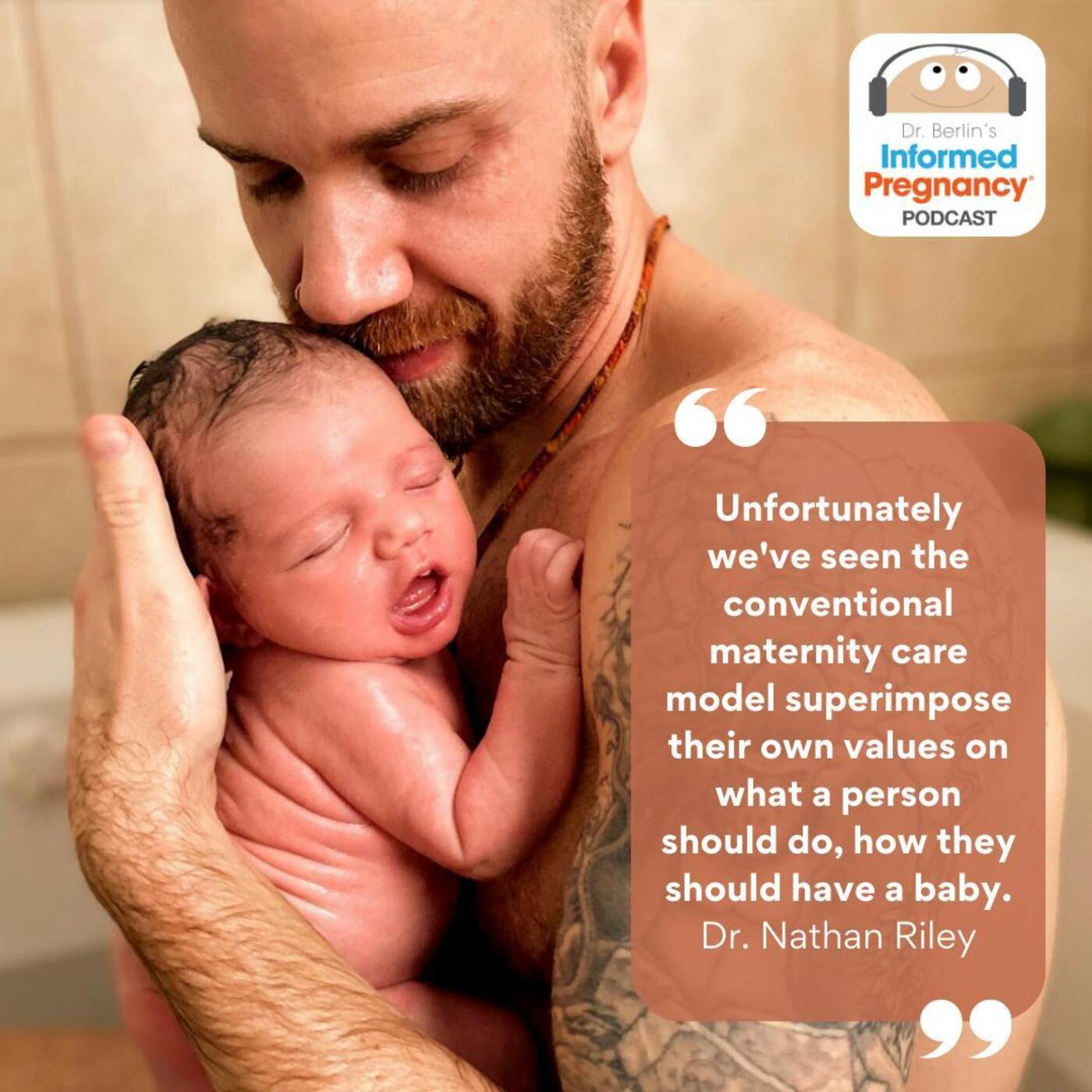
[8:49] the C-section or whatever intervention is being recommended, it's the same process of what is really important to you. And you can't take my word for it. I don't know who you are. I can't make this decision for you. Unfortunately, we've seen the conventional maternity care model superimpose their own values on what a person should do, how they should have a baby in the same way that sometimes oncologists impose their values on whether or not a person should receive the poison, the cutting or the burning away of cancer. So it's actually a very, very similar communication style that you use for both. But currently I'm not working in hospice and palliative care. In fact, I got fired from my last hospice job during COVID for
[9:28] taking my mask off, caring for somebody at the end of their life. And we don't have to get into
Dr. Elliot Berlin, DC [9:32] that, but it was a blessing in disguise. Wow. Wow. Okay. I'm fascinated. And by the way, in a world where generally you go to the doctor and you're lucky if you have 10 minutes to pee in a cup and have your belly measured, at least that's what they do to me, then to even have these thoughts about what's important to you and what are your values and goals and ideals, the amount of time that it requires and the amount of listening and space. It's just totally out of the model on that level alone. Let's take a little Welcome back. We are talking to Dr. Nathan Reilly. By the end of this podcast, everybody is going to wish they lived in Kentucky. I mean, the cost of living is sufficient that most people could probably justify
[11:51] it when they see how green and beautiful it is, but not too many will dream of moving to Kentucky. I don't know. You're making it appealing. Okay. So I want to get deeper into things. One of the things I remembered from that screening, first of all, the first time Dr. Shavira, you mentioned Emiliano Shavira. He's been on the podcast a bunch. When he saw the screening, he raised his hand to ask questions afterwards. And it was the first time I met him. I didn't know who he was. I knew he was an OB-GYN. He came to the screening and he raised his hand. In the film, we're talking about his heads up, the disappearing art of vaginal bridge delivery, which by the way is now streaming on Informed
[12:24] Pregnancy Plus. Okay. Back to you. So at the end of the film, we have a side-by-side comparison. And it's a woman giving birth, vaginally breech, and also a woman giving birth by cesarean. And he raises his hand and he starts talking. He's like, I want to talk about that side-by-side at the end, which has received some criticism, a lot of praise, and some criticism for people who say, oh, it's not fair to put them side-by-side. You know, you're really creating a visual that doesn't really exist. It's not that different. And I assume that's where he was going to go, something like that, the OB-GYN and also MFM raising his hand to talk about that scene in particular.
[13:05] And he said two things. He said, number one, I'm sure people realize that the cesarean birth there is not a breech baby, which is true. And he goes, and I'm sure that's true because they don't really let you film cesarean births and you have to take what you can get.
Dr. Nathan Riley [13:20] Right.
Dr. Elliot Berlin, DC [13:20] Which is absolutely true. Already pretty sharp and, you know, for other people who might have criticized, oh, it's not a fair comparison, one's breech, one isn't. And then he said, and also it's kind of amazing because you chose a cesarean birth, whatever choices you had, you chose one where the mom is happy and it's not the birth she wanted, but she's smiling and she's happy. And when the baby comes, she's so excited. And he said there's still that intense difference between the vaginal birth and the cesarean birth. Imagine all the ones where she's not happy, not calm, not comfortable, and it wasn't her choice
Dr. Nathan Riley [13:58] and maybe she didn't need it. Right.
Dr. Elliot Berlin, DC [14:00] And I was like, okay, I love you. If it doesn't work out with your wife. Remove the Utah. You can have a couple. You guys can all be married to one another. Yeah. Amazing. Utah or Kentucky. I mean, and then at the screening where you were there, I remember this distinctly, and this is what made me really excited for you becoming OB-GYN, which was that by the Q&A, you said something like this, which is like, wait a second, because you were in a Kaiser system that didn't offer vaginal breech delivery. You said if we don't offer vaginal breech delivery, isn't it like part of our informed consent where we have to say, we don't offer this, but there are doctors in town who do offer this. And it created this
[14:42] spark between some of the higher ups there making the case, well, it's not necessary to have a vaginal birth, but of course it might feel necessary to her. And otherwise we're forcing surgery. And that whole debate that you sparked, I knew this guy's going to shake it up and make it different. And here you are doing that. So I'm curious before you went to medical school, what was your thought plan? What was your path because things seem to have taken a turn along the way
Dr. Nathan Riley [15:08] Before medical school, I wanted to be a physicist actually. I was very very I don't know I had this fascination with the sort of subatomic world and the sort of theoretical side of it But my major in college ended up being Spanish language and literature Hispanic language and literature So I still wasn't very traditional even there and I wasn't even certain I wanted to go into medical school until after college I had my degrees and I went to teach English in Korea and One little interesting takeaway from that was man. I had traveled quite a bit But I remember seeing these older people were so healthy and so vibrant and so vital and I remember coming back and seeing
[15:50] You know the complete opposite and what I actually was most called to do was let me bring in all the lifestyle medicine Into whatever, you know specialty I end up in and then I thought obstetrics and gynecology was great because pregnant women want to Take care of their temple and they're the gatekeepers to how many families are eating and how they're connecting and all that So that was actually I don't know the first step into medicine. And of course, my life has taken a very very different turn
Dr. Elliot Berlin, DC [16:16] And when you started medical school because health and fitness are different than medicine, right? We call it the health care system Oftentimes it's sort of criticized more as a disease care system because it doesn't do things to keep you healthy It only tries to sort of return homeostasis when you're unhealthy So if you're health oriented going to medical school, what was the mindset?
Dr. Nathan Riley [16:39] I mean, you know when you're 18 you're expected to choose your career path I just naively thought that this is what doctors do they make people better, you know They help model what great health and great skin and this vitality. I thought that's what doctors represented I mean unbeknownst to me I was actually going to be sort of pigeonholed into pushing pharmaceuticals and surgery as the only means of taking care of a person and Frankly when I got finished with all the training I look back and I was like I don't know what the hell I was thinking but this is not at all what I was hoping to do someday So, you know if you're looking specifically at pregnancy gosh the variety of pregnancy
[17:16] Complications that seem almost endemic within rich developed nations are completely preventable and Meanwhile, I have seven minutes with each of my clients and I say clients because you're not sick because you're pregnant You're not a patient. You're a client. You're somebody here for my services You know the seven minutes I had with him I didn't have time to talk to them about any of that stuff I all I had to do was check the boxes that Kaiser had laid out for me and do the things that Acog's guidelines told me to do and that was neither fun nor exciting nor creative and it didn't work It just seemed to make people worse. So Very very early on Elliot. I was like, I don't know where I'm at
[17:52] But I'm gonna have to make this work because I'm not dropping out of residency, you know I'm gonna have to get through this and try to make something for myself So fortunately, I'm in a position now to do that, but it's been a long journey for sure
Dr. Elliot Berlin, DC [18:03] Yeah Two things that you said that struck out to me number one You said clients not patients and while it seems like a small nuance oftentimes that terminology makes a huge difference Yeah, and the imagery of being somebody who's a patient who's sick who's needy, you know versus a client who's you know They could be a personal trainer and they could be your client somebody who's healthy and vibrant expressing life Yeah makes a huge difference and the other thing about seven minutes per patient I don't know how you got the extra two minutes compared to most of the other doctors, but
Dr. Nathan Riley [18:32] Yeah, well I was always you know, including my comments like what I had said at the screening I'd been in the principal's office so many times in residency I was on remediation two or three times Like they really didn't think I was cut out for this and the biggest thing was that I wasn't getting the wrong answers On the test. I was spending more time with people. I was sitting at the bedside with them I was bouncing on their Swiss ball trying to understand the dynamic between You know mom and the father of the baby Like I was doing all the things that are sort of basic human things and Frankly, it wasn't acute enough. I was not tough enough. I was too crunchy granola
[19:08] I I was too naturally minded like those are supposed to be negative criticisms. I was too calm in the OR That was my favorite one Yeah, I mean I even saved one of my attendings from choking and they told me that I did it wrong It was like I did I did the Heimlich on something and food flew out and they said I did it wrong It was like are you guys? I mean, this is just becoming absurd. Like it was like a SNL sketch So, you know, they put the food back in until you know, do it like this. Yeah, try it again
Dr. Elliot Berlin, DC [19:40] Yeah, exactly. Yeah. Yeah Okay, so you come out of that and you end up sort of in this practice I mean most I would say when I was doing do the work I stopped about a year ago, but I would go to a lot of different settings home birth birth centers hospital birth back of you hall, whatever. So you would see in the hospital, oftentimes a nurse who has never seen unmedicated birth, for one thing. Sometimes doctors have not really attended unmedicated birth, at least not on purpose. And so with the training that you had, how did you fill in the gap to be able to offer either home birth or these low intervention births and kind of learn how to support them and attend them?
Dr. Nathan Riley [20:27] Well, after that screening, I mean, it all goes back to that day, that fateful day at Kaiser during our lunchtime learning. Stu Fishbein, who of course you're close to as well, he's a good friend of mine and mentor. We text all the time, we talk all the time. But back then I didn't know who he was. I just knew he was doing something different. So I actually reached out to him and he took me to a birth with Bliss Young was still apprenticing and Julie Anderson was there. And Julie Anderson and I have gone to Burning Man together now. It was a really great, great crew. And I had never seen a home birth. I'd never been there. But man, you only have to see one to really
[21:03] appreciate the difference. Going back to the observation that Milo had of this sort of highly-interventive, I mean, as interventive as you can get, even when a woman's smiling in an operating room, it's not all that pleasant, I'm sure, to be strapped down to a table and somebody's operating on your intestines while chatting about their kid's softball game or whatever. Like, I'm sure it's not the greatest thing to go through. And then on the other hand, I'm in this room with a woman in a birth in a bathtub and she's beautiful. She's naked. She's just leaning into her husband, laying on him and they're like humming together and there's candles lit and one of their kids is sleeping. And as soon as the baby
[21:41] emerges, the little kids on the bed with them and they're in these satin red sheets, I just remember it like it was yesterday. You know, we went and made her a smoothie and their daughter came and helped us and it was like the sun's coming up and there's babies on their chest in their bedroom where they probably conceived her. And it was just like, this is everything that I thought birth would be about. And if I end up having kids, which I now do, the second was born at home, by the way, on our bed in a very similar scenario, I was like, man, I would love for that for my wife. If she could see this, this would change her entire narrative around birth. And so
[22:16] it was a deconditioning and a deprogramming that took a long time. And then quite frankly, if you're out there and you're a doctor or somebody listening, the only way to get comfortable with it is to throw yourself into that space of discomfort and uncertainty, but also leaning on the fact that, hey, like most women are going to do just fine having a baby at home. And in that rare circumstance in which a transfer is required or an emergency emerges, a midwife can handle that. Like I had to actually get all of that silliness that I had been sort of programmed with. I had to get that out of the way and really sit with my discomfort. And fortunately, my hospice and palliative care training,
[22:54] sitting with death makes you very good at sitting in discomfort, in silence, and just sitting on your hands and waiting for the opportunity to arise where you actually have to be involved. And so I had good mentors. I had a lot of people that encouraged me, a lot of midwives that allowed me to go to births with them. And then I just had to say, shingles up, let's do this. And now I only take high risk home birth clients because I am generally able to encourage them to hire midwives because midwives are just so good at what they do. So frankly, I'm not sure how I did it. I just had to, I guess, stay true to who I was and continue to read the literature. I used to carry a big binder this thick with
[23:28] papers that justified my unwillingness to intervene in childbirth. And the attendings, they couldn't forsake me because I had the data also to back up the thing that I wasn't willing to do that people didn't want me doing, you know, like cervical exams in the middle of the night, like I wasn't doing those things. And I was getting better outcomes than my co residents. So, you know, to each his own. For me, it was just a matter of staying true and like knowing that there's something here I want to get to and I just have to kind of stay on that path and reinforce my skills and my connections and communications with others who have done this before me and then take a plunge. And here I am.
Dr. Elliot Berlin, DC [24:03] That description of the first home birth you went to is I got chills because I also remember the first home birth that I went to. And, you know, with our first baby, we have four kids and our first one was a hospital birth that was 42 hours long and completely unmedicated except for 400 milligrams of Advil, which I kept taking for my headache. My wife had no drugs. Yeah. So we called it we used to say, oh, we had home birth at the hospital. And we said that so many times. She said that and I said that home birth at the hospital. And then I was called into a birth to kind of help try to loosen up hips on this baby that was rotated poorly and not coming down. And the scene just blew me
[24:43] away. Everything that you just discussed and they had already been like 25 hours into it. She was high as a kite heavily medicated on her own drugs that she made internally. And it was amazing to see the whole thing was incredible. And I came home and I'm like, baby, we had natural birth at the hospital. But we did not have home birth at the hospital because a key missing ingredient is the home and that setting and that environment. Where you're safe, you feel comfortable, yeah. The whole difference of even just sort of checking your autonomy at the door and going in and wearing what they tell you to wear. And the biggest difference I see is at the hospital, they're constantly asking, can
[25:19] I do this? Can I eat this? Can I wear this? Can I go pee? Can I go whatever? And at home, if anybody's talking, can I? The people around you, hey, Monica, do you mind if we use this towel for this? Yeah.
Dr. Nathan Riley [25:31] You know, it's you are in the driver's seat squarely. Yeah, it seems very subtle, but this whole permission slip, this conditioning we have that you have to ask permission to do everything, that's an institutional thing. Like you don't ask permission to do what you want in your own home. So naturally it's a tremendous shift in how you're showing up as a birthing couple when you're in your own home. Like I don't walk into your house with muddy shoes. I am every step of the way making sure that I'm doing what I think you would want me to do. Right? And if there's any doubt, I ask. That is not what happens in hospitals. It's just the fact. There's good reasons to have hospitals.
[26:05] But if you want to have an autonomous birth on your terms, the only way really to do that is to get out of the hospital system. And I'd say 85% plus of women can do that without even worrying about the treacherous things that we hear so much about in the media when, quote, birth goes wrong or whatever. It's a really beautiful shift also for us as birth workers. Like I don't have to be in charge. I can just sit here and be with you and hold space and be present. When you're present with a home birth, it really does shift you. Like it makes you inspired again about the work. It makes you realize just how intimate and how precious this is, how sacred this
[26:39] experience is as opposed to it being a medical procedure that is just begging for intervention.
Dr. Elliot Berlin, DC [26:45] So true and just very well stated. Before we take a break, in the third segment, I really want to pick your brain more about somebody who might be considering home birth versus hospital birth and just like what are maybe some things that you truly consider to risk people out of home birth or not risk them out. But before we get to that, you know, becoming a dad after helping so many people and attending so many people in their pregnancy, in their birth and postpartum, what was it like personally for you to be a part of that journey with your own children?
Dr. Nathan Riley [27:14] That's a good question. So the first time, I think I was really still kind of stuck in this what if kind of mindset. And for me, I mean, I'd had gone to a number of home births, but really it was kind of the ultimate test. It was like the final exam. If you really, really, you know, quote, trust in this or, you know, if you really feel like this is your calling, can you do it with your own baby? Like it's just the ultimate high stakes poker match. And initially our first birth was in the hospital because my wife, I think, just felt better there. And that's still her decision. I'm going to honor that. I don't even know if I would have been prepared for home birth at that point.
[27:50] But, you know, like you said, as unmedicated and undisturbed as they try to make it, there's still a lot of stuff there that my wife didn't feel good about. So then fast forward to number two, and that was like part two of the final exam. So the first one was, can you shut up and get out of the way? The second one is, are you able to really see this through? And the home birth experience was probably one of the most important experiences of my life, but certainly of my career, where all of those things that I had been conditioned to believe that it's irresponsible to have a baby outside of the hospital. I mean, I'm a heretic as an OBGYN to have a home birth.
[28:26] I mean, I think people need to appreciate that. Every single doctor I'd ever interacted with thought that that was absolutely bonkers. Apart from, you know, the people that your audience already knows, like Stu Fishbinding, you know, he was very proud of this and whatnot, but proud of me and my wife. But for the most part, it was just heresy. So it was very isolating. And it was just me having to do the work of really, really helping to support my wife in this decision, which, by the way, was only because they were swabbing people's noses during COVID. And she was like, I don't want that. Like, it was bad enough being in the hospital. I don't want this other thing.
[29:00] And then there's stories about babies being taken away because mom or dad are positive and you can't get your baby out of the NICU until you've both got a negative swab. Like, there was just so much stuff that my wife didn't want to have to think about. So the home breath was 90 minutes long. Her water's open. We started a breath work style of breath called effigy. What's that? It's basically a conscious hyperventilation. Okay. And it hyperoxinates the body. So if you're pregnant or you're in labor, it's totally fine. The baby actually thrives and it really kind of resets the nervous system in such a way. So Everly came out asleep on her chest without anybody having to do
[29:36] anything. It was really this remarkable kind of picture. So of all the births, that was also probably the most beautiful birth I've ever been to. I mean, of course it's your own child. So it's extra special, but it was as remarkable as a home birth as the 180 degree flip side would be the most horrific hospital birth. It was like just as polar opposite as that. And so it was at that. that I was really able to put on my big boy pants and say, I can do this home birth thing. Like, we've got this. If I can sit through this and check all of the things that I learned to be worried about, if I can keep those and check the birth of my own daughter, then I can do this for other people.
Dr. Elliot Berlin, DC [30:14] Wow. You know, this kind of reminds me of a story. Do you know Dr. Jennifer Ling?
Dr. Nathan Riley [30:19] Yeah, she's a good friend of mine.
Dr. Elliot Berlin, DC [30:20] Okay. So she came on the podcast and shared her first story and she was an OBGYN and she scheduled herself a C-section with her first baby, even though she was young, strong, super fit, brilliant. And in the middle of her pregnancy, probably about halfway in, she was doing surgery and the older attending kind of looked across at her and said the weirdest thing, even though he didn't know her birth plan. He's like, hey Jen, isn't it better to be doing surgery than having surgery? And it just kind of made her freeze for a second. And when she went home, she started thinking about, why am I going to have surgery to deliver my baby? And what she said was,
[30:59] if there's a functional door for my child to leave my body, why am I cutting a hole in the sheetrock? And she ended up doing this really long fear release hypno birth session with Alicia Tamburi, like hours long. And she realized the whole reason she was doing that was because of fear. And it wasn't fear of things that she had seen as an OBGYN. It was what you talked about, fear of how she was trained in medical school, that everything is about what could go wrong and thinking early and often, even no matter how unlikely something is to go wrong, how I can intervene as early and often as possible to control things. And that's what the fear was from.
[31:36] And when she did that fear release, she decided, you know what? I'm going to try to have this vaginal birth. And she had this epic birth at Cedar Sunday where she got onto the tub to labor. And she just started having the fetal ejection reflex. And she told her husband, close the door. They're going to make me get out of here. And she delivered, she had one of the only water births I've ever known about at Cedar Sunday. And she had her other two babies at home with the midwives. So it's a lot of that deep programming. And she became the greatest OB ever, but she never really wanted to be an OB. She wanted to be a gynecological oncologist. And it was like a stepping stone to get there.
[32:10] And she was doing two at the same time. But she'll be working on an ovary and her client goes into labor. And she couldn't be in two places at the same time. But for that window of time, she was practicing like you. What do you want? What are your values? What's important to you? And not from a place of fear and defensive medicine, things like that. I'm just starting to pick your brain up. You have so much practical information. That's what I wanted to delve into in the third segment. We'll be right back.

Dr. Elliot Berlin, DC [32:47] Welcome back. We are not wasting a minute with Dr. Nathan Riley. Let's jump right in. So first of all, I noticed that home birth went up during COVID in my area. A lot of people who were not necessarily home birthers or were on the fence about home birth just didn't want to go into that system. A, where all the COVID in the city was in that building. And also B, whatever autonomy you had before was cut in half. And you couldn't bring people with you and you had to wear a mask the whole time. At home you could call the shots and it just seemed so much more important to them. So obviously a lot of people who may have considered home birth but would have done hospital birth
[33:23] were now birthing at home. And a lot of those were like blown away about how amazing it was and just so grateful to COVID and whoever created it. Anyway, so.
Dr. Nathan Riley [33:33] Maybe a silver lining there. Yeah, thank you. Tiny silver lining.
Dr. Elliot Berlin, DC [33:38] So what do you say to somebody who's like not sure or wants either a more natural birth or a more set of in the driver's seat birth but is worried about giving birth at home, especially now since like everyone's encouraged to induce at 39 weeks. And you're constantly told your baby's too big or too small, your fluid's too high or too low, your placenta is too clean or too calcified. There's always something going on. So obviously the thought is I obviously can't give birth at home because I have all these problems.
Dr. Nathan Riley [34:07] Yeah. Well, I think it's important to consider that we're not just choosing a location. I'll give you an analogy. If you want to buy fresh dairy, right? Raw milk, you're excited about this new raw milk. You don't go to Home Depot to get raw milk. They don't sell that there. Likewise, you don't go to the hospital if you want to have an autonomous birth because it's not on your terms. That's not the deal. That's not the deal with the hospital system. They have one prerogative, which is to keep you and your baby alive until you go home and then they've done the good job. So if anything were to arise from you wanting to balance out this desire to have a home birth
[34:49] with your fear kind of putting you into the system, you're ultimately gonna lose to that fear because there's gonna be something that arises in the multiple ultrasound. which may or may not, you know, necessarily be all that helpful or maybe even harmful in certain situations. All of the urine dipsticks, all the blood work, all of the stuff, the NSTs, all that, that's all leading you to jumping on the medical train and it's very hard to get off the medical train, right? Not to mention that if you have any doubts at all, the language and the short visits and the kind of straight-to-the-point fear-mongering. I mean, there's oftentimes fear-mongering. It's not even conscious fear-mongering.
[35:27] It's the way that we were trained to talk to people. Generally sets you up to be so afraid of what might happen that your ability to ascertain this risk just leads you just kind of succumbing to the system. And I think oftentimes, Elliot, that that actually leads to a sort of an inner betrayal where you know in your heart you want this thing, but your head is now in the way and that is leading you over here for that one-in-a-million thing that might happen, right? You could hemorrhage. You could get a shoulder dystocia. Your baby could be breached at the last second. Like all of those shoulda, woulda, coulda, like that stuff just messes with actually our
[36:04] intuition. And if I may borrow some language from some of our midwife colleagues, your intuition is authoritative knowledge. I mean, if you feel like something's not right, it's probably not right. If you feel like everything's okay, it's probably okay. We fortunately have some technologies that can assuage some of that uncertainty, but not really, you know? There's so many unknowns and our defiance of mortality itself has led us to do so many unnecessary things in an effort to control nature, which is an extension of our controlling all nature, you know, our waterways, our soil, our air, whatever, the forests. Like we're so determined to control this, to reduce mortality down to zero, that we'll go to far lengths in order to make
[36:46] sure that you are going to have as many of those variables, those unknown factors controlled. So when a person is saying, I want a home birth, but I'm worried about all these things, you have to really question, like how determined are you to have a home birth? Because what I don't want you to do is what happened with my last client. I was in Oceanside for about four weeks and at eight and a half centimeters, she just succumbed and she went to the hospital to get an epidural and she would have had a baby in a couple hours, but instead seven hours later, she's now pushing for four hours with an epidural, can't feel anything, gets a big laceration and all of that. And I think a part of that was not so much that she was afraid.
[37:22] I think that what I would like to have unpacked in retrospect is who is it that you're afraid of disappointing? Are you afraid of disappointing yourself? You know, if you don't have a hospital birth, are you afraid that your family or whatever is not going to forgive you if something bad happens? Like what is the real story there? I think that we kind of miss out on the mental, emotional, and even spiritual aspects of what drives our decision-making. On the other hand, if you're pretty determined to have a home birth, just stay away from the hospital in OB-GYNs. Get a midwife. Find somebody like you and, you know, a doula out of hospital care team
[37:55] who's not going to center your care around preventing some terrible thing from happening, even if it is less than 1%, but rather focusing on the likelihood that you have a 99% plus chance of that thing not happening. And that's where the real shift in the approach actually, I think, distinguishes itself. Midwifery care and OB care. It's not like gala apples and Honeycrisp. It is like apples and corkscrews. Like it's completely different products that you're pursuing there. So I don't have a way of motivating or totally assuaging somebody's fears, but I think it is important to remember that the vast majority of babies born at home are way better off than the media and the news outlets and many of podcast even will actually give them credit.
[38:40] Instead, we focus on this one terrible thing that happened and there's a midwife on trial for a dead baby. We focus on that for failing to realize that tens of thousands of babies are being born at home or even without an attendant in the woods somewhere and they're doing just fine. You know, our ability to ascertain risk is really really strange when it comes to the health of a baby and the survival of a baby.
Dr. Elliot Berlin, DC [39:03] Yeah, I heard doctors too say one day that, you know, thousands of airplanes take off and land every day with no incident, but you're never going to hear about that on the news. You'll hear about the one that had an issue and it doesn't mean you're never going to fly in an airplane. Right. Are there certain factors that you believe truly risk people out of home birth?
Dr. Nathan Riley [39:23] The only thing is probably a placenta previa, like a complete previa. Like birthing through the placenta is not a good idea. Fortunately, or unfortunately, we'll start with the fortunately, a complete placenta previa is pretty rare. Unfortunately, we are now finding every stretch of the term placenta previa in order to risk somebody out of midwifery care out of hospital birth. So a low lying placenta, we used to call it a marginal placenta. It could be even a couple of centimeters from the ass and they'll say you got to have a C-section. Meanwhile, if you talk to Christine Laria, who's attended over 500 breach births, let alone whatever, you know, incredible.
[40:00] number she's attended from, you know, South Sudan. She works for Doctors Without Borders. She said, like, listen, we don't have a surgeon on staff. So if there's a little edge of the placenta there, we just push it aside along the baby's head pass, and the babies do just fine. But that's out of necessity. And they're still getting good outcomes. I just returned from a trip from South Africa, the indigenous midwives outside of Johannesburg and the villages, they don't even think about placenta previa, because the likelihood of you having a full placenta previa and not knowing it, you know, until you reach 40 weeks, and you're going into labor, is extremely unlikely.
[40:32] So apart from that, or, you know, I would say, I guess, if you've got raging blood pressures, 200 over 110, and your liver and kidneys are both shutting down, I would want you in the hospital, because it's not so much the birth I'm worried about, it's actually the mom I'm worried about, requiring some intensive level care. But man, I struggle with that question. There's very, very few people that I think are absolutely no, because ultimately, at the end of the day, it's not my decision. If you're willing to assume the risk, and you want to exercise your autonomy, you have the right to refuse all treatment, even if it's a C section, at the cost of maybe your baby's life. It's still my job to support
[41:08] you. I can recommend, I can inform, I can counsel, I can do whatever. But to coerce you to do something that is otherwise against what you're feeling on the inside through your intuition, and compelling you to betray yourself, is also not good for your mental, emotional, or spiritual well-being. So we have to keep all of that kind of in balance, I would say.
Dr. Elliot Berlin, DC [41:28] And that is a great answer to that question. But maybe a fine-tune question would be, are there times that you would, if somebody asked for your opinion, say, hmm, this is probably better done at the hospital?
Dr. Nathan Riley [41:42] Yeah, like, you know, if you're in labor at 28 weeks, I probably wouldn't have a preterm baby before 28 weeks, or even before 34 weeks, for that matter. I mean, it hasn't happened yet. You know, I think it's important to remember that OBs are technically doctors to the mothers, not to the babies. They have this organ unit there. And if we have a PEDS team that can help care for a baby that is born with whatever disorder, you know, whether it's diagnosed prenatally or not, it's helpful to have them there. But ultimately, it's my job to keep the mother alive. Sometimes that might even suggest or presume at the cost of the baby. So I look at the whole health of this person. Is this
[42:19] person going to survive childbirth at home? And is their number one priority to stay alive through childbirth? I know it seems like a wacky suggestion, but just because we're trained to avoid death doesn't necessarily mean that my client is gung ho around avoiding death. It sounds like a silly embellishment, but that's actually my job is to really figure out what is important to you. And if getting to your goal of being alive through this is not going to be possible at home, there's a couple reasons, you know, like the severe hypertension and those types of things. I would not say you can't have a home birth. I would say I would strongly suggest if you were my wife to
[43:00] be in the hospital because I'm worried about these things happening because the risk of that happening is far higher than baseline, you know, even if it was 10%, 20%. But I don't know what your risk threshold is. I ride a motorcycle and that's extremely dangerous, according to people in LA. I've never had a motorcycle accident. So should I not ride a motorcycle because there's a chance that I might get in an accident? I don't know, to each their own, you know, is risk ascertainment tricky?
Dr. Elliot Berlin, DC [43:24] Yeah, your own risk benefit analysis. Okay, let's turn it around a little bit differently. As a holistic minded, health minded OBGYN, for anybody, wherever they're planning to have their baby, do you have any basic tips for healthy mind and body for pregnancy and birth?
Dr. Nathan Riley [43:43] Yeah, I think it's important to really know who you are, right? So at the end of life, we do something called advanced care planning, where you actually document everything about yourself kind of telling your story. And we have these nice little packets where you fill in the blanks and all that. But I think it's actually very helpful to write out, like who are you? Not what are the labels? Not what do you do for a living? But who are you? What do you stand for? I think having that written out is actually helpful for you to start stand in your own sovereignty. Because if you don't know who you are, how am I going to help take care of you? I need you to know who you are. So I think that's a
[44:14] really, really good practice that can be used as a birth plan, actually. It's actually way better than the sushi menu checklist birth plans that I'm seeing floating around. The second thing, of course, I think is from a lifestyle standpoint, staying active, eating, you know, nutrient rich foods, people are afraid of beef liver. If you eat beef liver regularly in pregnancy, you're going to be far more nourished than most Americans. And don't worry about vitamin A toxicity, you almost can't eat enough liver. It's not palatable to eat that much liver for you to suffer some sort of consequence from that. So you know, nourish yourself well, move well, it's going to help
[44:46] labor, you know, exercises, the best study, the best documented way in order to avoid a variety of pregnancy complications. And then I think that actually the most important thing, which is probably going to be a surprise answer is instead of focusing on the day of the birth, Focus on the 18 years that are going to come afterwards during which you and your partner are going to have to keep this little baby alive and connected and make them feel loved despite you guys being utterly exhausted and sometimes at wits end with one another, with your child, with your role, with the loss of identity. I actually think that that's a very, very important thing because we focus so much on the birth of the baby that we forget that everything to come is actually the hardest part.
[45:25] Growing a baby and having a baby is relatively easy compared to parenting. Parenting is very, very hard.
Dr. Elliot Berlin, DC [45:31] Well, it's autopilot for the most part, the first part of it. Now you sound like my wife who's a perinatal psychologist and she says frequently that people spend nine months planning for the 24 hours that might be labor and delivery and no time at all planning for the 24 years that follow. So do you have thoughts on creating a map, a roadway for healthy postpartum? Like when you say focus a little bit on the postpartum, like a little more detail about that.
Dr. Nathan Riley [45:59] Well, that is a big conversation. Well, first and foremost, I'll say that what we sort of anticipate as healthy postpartum, even in the most high minded circles, is probably completely inadequate for what our birthing partners actually need. Rochelle Garcia Saliga, who's a midwife and specializes in the sort of sacred postpartum period, she told me once that we need to ensure that the mom and the dad, however they identify, both have to support people afterwards. And in our more and more isolated environment siloed off, I don't think we generally have adequate support, you know, in the realm of not just, hey, can I come over and make you a meal, but like really somebody to alleviate those initial stressors so that you can really start to, you know, if you completely dissolve and are reborn again after postpartum, which is something that when you're present, you kind of see this happen.
[46:56] It takes weeks to months for a woman to be completely intact after this experience. So it goes beyond just eating, nourishing foods and trying to get sleep and connecting and bonding with the baby. There's also this co-regulation that I think needs to take place between mother and baby, but also the mother and the father. And that co-regulation is really, really helpful, not only for our nervous systems and helping to become, you know, sort of reformed anew as parents now, but it's actually also critical for the baby's nervous system to develop the ventral vagal, the third part of the nervous system, at least through the lens of polyvagal theory, doesn't fully form, you know, they don't become fully intact from a nervous system standpoint until about six months afterwards.
[47:39] So this idea that six weeks in, you're supposed to be back at the gym, back at work, you're supposed to be back to business as usual. It's like we're starting with a rocky foundation. It's way more than six weeks. It's maybe six months, if not a whole year that we really need to honor this lying in period. And not just like, don't lift anything or whatever. It's really like, you need to actually be still and be allowed to just rest and to like recover from this process. This whole notion that, you know, you have this red badge of honor for getting back and getting to it, you know, shortly afterwards is something that we praise, but I don't think it's the best thing for postpartum women or their partners or their babies for that matter.
[48:16] So whatever we can do to circle the whole community around the birthing experience, I think is helpful. You know, the Sundance, that whole ceremony. This is another thing that Rochelle, you know, told me about, but that's actually an allegory, not just for sperm around the egg, but also these circles of men and women around the dancers providing support, cheering them on for days on end of dancing without water, food, they're in the sweat lodge. Like this is a nightmarishly long festival. That is, you know, equitable probably to the longest fast that most of us have done and we feel like we're quote starving at the end. Those Sundancers aren't able to do that without these rings, these concentric rings of people in the community and the tribes supporting them.
[49:01] And if that were an allegory for how we support this sacred postpartum period, everything in our society would have to change where everything is circulating around who's giving birth and how can we put all of our community resources around that person. So I know it's not the answer, it's not a very direct, practical answer, but I really do think we need to reevaluate how we're treating women who are giving birth because this is a very, very important moment up until I think at least six months after the birth. That alone is mind opening to what to expect and, you know, globally how to kind of view that landscape. That's sort of right. You know, if you get in the car and you're expecting a 15 minute drive and then Waze says it's going to be six and a half hours, you're off to a very bad start.
Dr. Elliot Berlin, DC [49:52] Yeah, exactly. Nathan, thank you so much for everything that you do and for sharing your expertise and passions. with us and insights today. I have two final questions. One is, are there any particular resources that you like to lead people to when they're on the mission for information? Are there any either books or documentaries or anything like that?
Dr. Nathan Riley [50:16] Yeah, my book recommendations are generally not birth-related. They're actually more around connecting to nature, actually, because I think one of the big issues, the big squabbles we end up in is that we're constantly at war with nature as I've described. And for a birthing person to be reconnected with just how tremendously powerful and sacred, I mean, how powerful it is just to be a woman, like to re-inspire women to embrace their femininity, embrace their creative potential, I actually think is really important. So books like Ishmael by Daniel Quinn, I think is really helpful. Black Earth Wisdom is a great one. If there's any women of color in the audience,
[50:53] in particular. Grounded by Erin McMorrow, who you should probably know, she's pretty wickedly talented and powerful. Those types of books I think are really, really helpful. Oh, and one last one, of course, is Braiding Sweetgrass by Robin Wall Kimmerer. It's really a matter of reframing our relationship to nature. I'll give you a small example in the Potawatomi language, which is a First Nations tribe up in sort of upstate New York area. This botanist, Robin Wall Kimmerer, she wrote this book, Braiding Sweetgrass, after having explored the Potawatomi language as a PhD botanist. And she had been trained to classify these organisms in nature based on what they can do for us.
[51:31] There's this medicinal property in this one. If you use the flowers for this, they can do this for our heart or whatever. And in learning Potawatomi, she struggled because the grammar of the Potawatomi language is not subject-object grammatically. It's subject-subject. So the word for tree is the beingness of a tree. And this really flummoxed her because we're no longer classifying ourselves as the stewards or the dominators of nature. We're actually one, and seeing eye to eye with another living organism. And it seems tangential, but actually getting in touch with a sort of natural order of things and how our bodies want to thrive if we can get all these unnatural technologies
[52:06] and things out of the way also ultimately helps you have a more natural birth. So I would recommend those resources. And I cover a lot of this in my program, The Born Free Method, which people can go to bornfreemethod.com. It's probably the most comprehensive program out there on a variety of these topics.
Dr. Elliot Berlin, DC [52:22] I'm really glad I asked that question because that's not the answer I was expecting, and I'm gonna go check out those books. My final question is, where can we find you online in general?
Dr. Nathan Riley [52:31] Yeah, belovedholistics.com is my website. Nathan Riley OBGYN is effectively my landing page. That's Instagram. It's everybody's landing page nowadays. And I have a podcast of my own. I'd love to have you as a guest soon, Dr. Berlin. It's just been a scheduling nightmare for me. I know. That's the Holistic OBGYN, but you guys are listening. We'll get to hear Dr. Berlin. We'll flip seats for an hour and we'll get you on the show as well.
Dr. Elliot Berlin, DC [52:54] I'm looking forward to it. I'm sure it'll work out soon. Lots of different places to find you and lots of different resources, amazing, unique, creative resources that you put out. Thank you again for joining us. And at home, thanks for listening to the Informed Pregnancy podcast. For more pregnancy and parenting information, visit us online at informedpregnancy.com. I got a.
Want more pregnancy + parenting? Start your FREE TRIAL of Informed Pregnancy+ and get access to all our curated pregnancy and parenting content — original series, iconic birth films like The Business of Being Born, prenatal workouts and more.