
August 15, 2024 · 40 minutes · Episode 420
About this episode
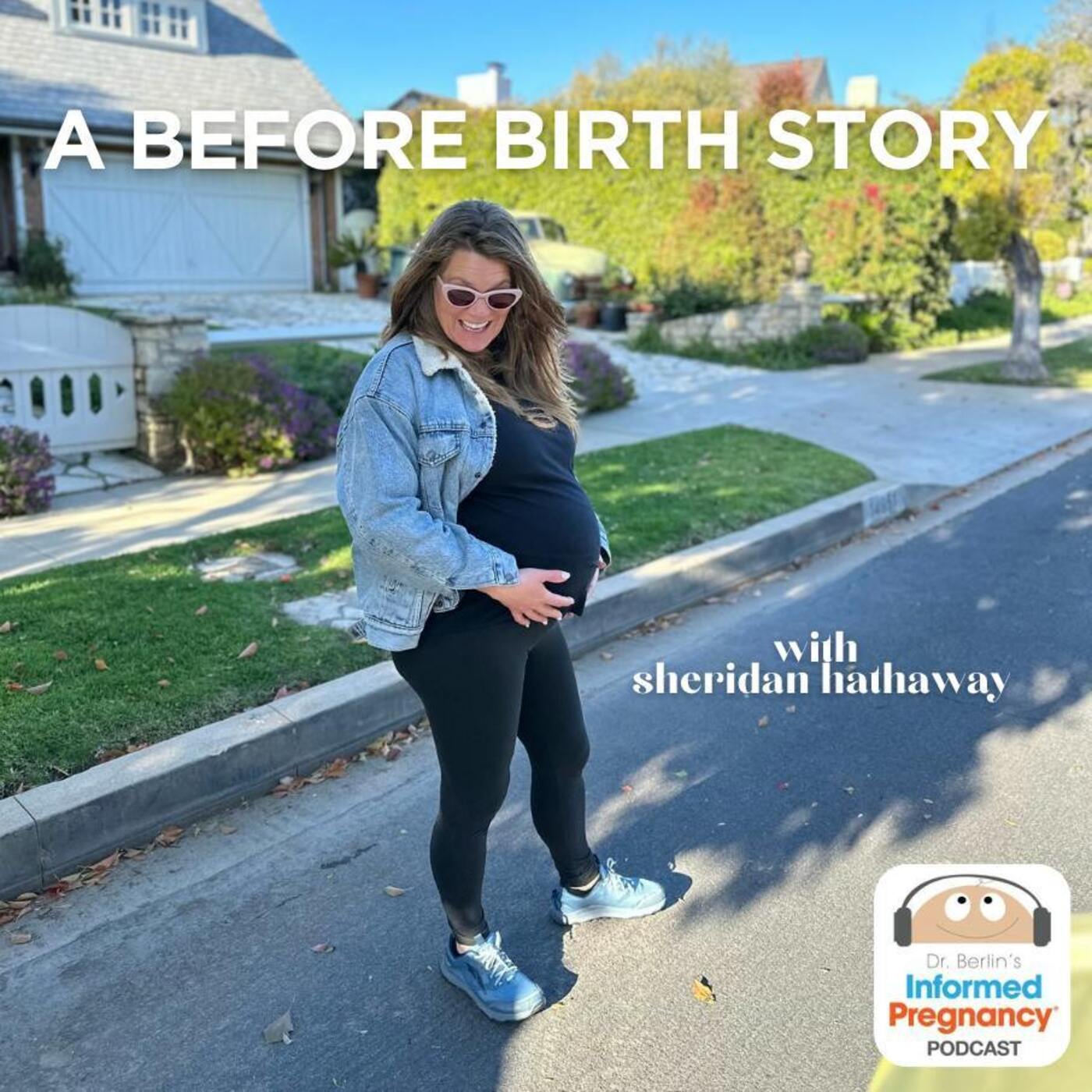
Sheridan Hathaway joins the podcast at 39 weeks pregnant to share about her plans for the birth of baby #2. After a challenging first birth resulting in a C-section, she’s hoping for a home birth after cesarean (HBAC) with a midwife and an empowered natural birth experience.

Key quotes
“It's just incredibly helpful. And I think any mom who's been through a similar situation or just any sort of traumatic birthing and delivery experience can say that you feel very alone and you feel like you're the only one who's going through this. You're confused. You're not sure why things are transpiring the way that they are. And so to hear other narratives, similar stories, parallel stories, it's just incredibly helpful for that healing process to recognize that you aren't alone.”
“And so I will say the second time around, I've never felt so empowered. And that's something that I hope that all women take away from this is that there's so much within your control and your body. You just have to trust your body and let things, if that is the path that you want to take, let things transpire naturally and know that everything for the most part will be okay.”
“in the comfort of our own home, having space to move around because when I was induced, I was able to move around with a monitor, but it was very limited. And because I was hooked up to Pitocin, I of course had to walk around with an IV drip everywhere. So I'm very much looking forward to laboring freely. And I would say the thing I'm most excited for is just letting my body do things naturally, because I feel like that was robbed from me the first time around.”
“you know, like mentally and emotionally from the first birth is recognizing that even though I am going about things totally differently this time around, there is a chance that things will not go the way that I would like. And so I've had to come to peace with that. And I think I'm more or less at a place where I am so confident in my team. They know that it is a last, last, last resort for me. So I can only imagine it happening because of the baby's position or an issue with like the baby himself, as opposed to me needing pain relief or something like that.”
“I don't think so. I think the biggest thing I'd love to share with others is that you're not alone in any experience that you have. That's something that I've really, really learned. And no matter what course or path you choose to take, it's the right one for you. And I think a big thing to keep in mind is don't compare yourself to what your friend is doing or what your mom did or what an aunt did. I definitely have struggled with that from time to time, but it's so important to recognize that all of our bodies are entirely different and have different needs. And, you know, one isn't better than the other.”
Related episodes
- Ep. 414 Aly Michalka: After Birth
- Ep. 425 Mia Rigden: Before Birth
- Ep. 423 Leedia Riman: Before Birth
- Ep. 416 Hilary Duff: A Birth Story (Part 1)
Transcript
AI-generated transcript with speaker labels — may contain errors, especially names and medical terms. Dr. Elliot Berlin, DC appears in blue; Sheridan Hathaway in orange.
Download PDF of the Transcript
Dr. Elliot Berlin, DC [0:36] Welcome to the Informed Pregnancy and Parenting Podcast. I'm your host, pregnancy-focused chiropractor Dr. Elliot Berlint. My guest today is 39 weeks pregnant and preparing for a transformative second birth. After a challenging first birth that didn't go according to plan and resulted in a cesarean section, she's now embracing the journey towards a home birth after cesarean, HBAC, with a midwife. She's seeking an empowered and natural birth experience. With a rich background that spans from Los Angeles to London and a shift from the bustling world of digital marketing to the deeply personal realm of motherhood, her story is one of resilience, discovery, and hope. Today, we'll delve into her past
[1:15] birth experience as well as preparations for her imminent birth. Sheridan Hathaway, welcome to the podcast.
Sheridan Hathaway [1:22] Thank you. It's a pleasure to be here.
Dr. Elliot Berlin, DC [1:24] Ah, you're such an inspiration. Okay, let's jump in. Okay, we said a little bit about this broad travel. Tell me a little bit about your background, where you're from, and how you got to live in such cool places.
Sheridan Hathaway [1:34] Yeah, I was born and raised in Los Angeles, went to the University of Colorado at Boulder a long while ago. And during that time, actually throughout the whole course of my childhood was always exposed to travel and the importance of discovering and learning about different cultures. So it was always something that was very important to me. And so I wanted to study abroad while at the university. So I did that in Barcelona, Spain. And then after college, I wasn't exactly sure what I wanted to do in terms of my career. I was very interested in the fashion industry. So I was trying to pursue that for a while. And ultimately, I was kind of working a bunch of odd jobs at the time doing fashion
[2:19] internships, trying to dip my toes in the industry. And different situations kind of led to travel opportunities. So an opportunity presented itself for me to move to Buenos Aires, Argentina. So I lived there for almost a year. And then after that, I was actually working as an au pair or a nanny for a family of three boys for a number of years, and they actually relocated to the UK. So I had the opportunity to move with them and live in London for a while, which was so wonderful. Well, that sounds incredible. Just moving around from place to place and taking it all in. How is your Spanish? I'm fluent in Spanish. It's not that great anymore, just simply because I'm not
[3:02] practicing as regularly as I once was, but I can most certainly communicate. Did you learn before you went or just immerse yourself? Yes. Yeah, even before I went.
Dr. Elliot Berlin, DC [3:12] Okay, so very cool experiences. How did you end up back in Los Angeles?
Sheridan Hathaway [3:17] Um, I think I just kind of had this urge to settle down. So I came back and I kind of randomly was thrown into the world of digital media, online advertising, digital marketing, and actually started a position that ultimately led to me directing the account management division of a digital media agency. But I started out from the bottom and basically worked my way up knowing nothing about the internet space or about advertising itself. It was a fantastic learning experience for me. And ultimately I was managing my own team of about, I think it was 12 at the time for a number of years. And I loved it. It was a very, very fast paced environment and different from anything I had kind of known prior to working
[4:04] in that industry, but it was great. And then I ultimately, after having our first sign going on maternity leave, decided to resign from that position, which was a very, very challenging decision at the time, but the best one I could have made for our family.
Dr. Elliot Berlin, DC [4:19] I think again, just a little jelly I am of you and all these things that you're just like, you know what, I'm going to go do that. And then you just do it like with your full commitment, whole body jump in the water. And I feel like there's several times where I'm like, maybe I should do this. I'm like, nah, that seems like too big a move. And you just do what you want, which I think also set the stage for who you are when it comes to pregnancy and birth. So where'd you meet your partner at what point in these journeys?
Sheridan Hathaway [4:49] So my partner and I met two and a half years ago now, and we met on hinge. And the reason I find this to be so funny is because I'd always promised myself that I would never join any type of dating app. It's just not how I usually choose to communicate and connect with people. But I had a friend who spoke so highly of it, just in terms of it broadening your perspective and your sphere, the network of people that you're introduced to. And so both my partner and I kind of at the same time had come out of pretty rough relationships. And we joined hinge around the same time. I was actually only on it for a couple of weeks before we connected. And we pretty much met on a beach in Malibu and have spent every
[5:36] single day together since. Oh my gosh, that's a hinge success story. Yeah. So to anyone who's skeptical, I highly recommend that you at least give it a try.
Dr. Elliot Berlin, DC [5:47] Yeah. So that was after the pandemic. Yes. Because I think the online dating sites really skyrocketed even more during the pandemic when you couldn't really meet people in person. Right. Right. Yeah. Okay. Well, congrats on that. Was having a baby like, hey, let's have a baby or did nature just say, let's have a baby? No, it was something that we had talked
Sheridan Hathaway [6:08] about. Again, we both actually sort of stumbled into each other's lives very quickly and unexpectedly. And because we had just come from these previous long relationships, we weren't really looking for anything serious. But because we connected so deeply, men obviously fell in love so quickly. The whole process just fell into place very naturally. We talked about how we both wanted families and it just felt right. And we got pregnant about four months after we initially met, which is quite quick. And again, it was something that we had sort of discussed, but we have sort of lived our lives in a very non-traditional way and sort of have let things run their course naturally. And it's
[6:54] worked really, really beautifully for us. So I guess the question is, would you consider yourself as having been trying or not trying? Well, the way I like to put it is that we weren't technically trying, but we weren't being protected, if that makes sense. We didn't have a plan, but we were over the moon when we found out that we
Dr. Elliot Berlin, DC [7:16] were able to get pregnant that quickly. Was that a surprise? And how did you figure it out?
Sheridan Hathaway [7:22] I don't think it was a surprise, just simply because we were not using any protection. And so we knew that it would happen at some point. But I think the reason we were surprised is because within that four month span, my husband is Polish. And so he was traveling back and forth to Poland. I was traveling a lot for work. So we actually really only spent maybe about two of those four months together. And so things really escalated quickly during that time. So yeah, it was something that we both wanted, but I wouldn't say that we were actively trying. It was just something that we really wanted and we wanted to occur naturally.
Dr. Elliot Berlin, DC [8:02] Okay. In your life, are you someone who's a little bit more holistic and nature-oriented, or you're somebody who's more medical or somewhere in between?
Sheridan Hathaway [8:12] Definitely more holistic and nature-oriented.
Dr. Elliot Berlin, DC [8:14] Where did that stem from?
Sheridan Hathaway [8:17] Probably initially with my parents. I grew up going on like five plus mile hikes when I was only a few years old. I spent a ton of my childhood outdoors. My parents are very into nature, hiking, camping, backpacking in their early years. And so it's something that my brother and I were very, very accustomed to growing up. And I think as a result of that, the more time that you spend out in nature, you recognize the benefits of it, you recognize the spirituality of it. And so that's something that I've really carried with me my entire life.
Dr. Elliot Berlin, DC [8:53] And how did that translate to pregnancy?
Sheridan Hathaway [8:55] That's a good question. I think through especially like the observation of nature and specifically life forms like animals, kind of recognizing like how we as a species can go about doing things naturally without intervention, without, you know, the modern world in a lot of ways, just letting things again sort of develop as they would evolutionarily.
Dr. Elliot Berlin, DC [9:22] Had you had any experience with pregnancy, like friends or family who had recently had a
Sheridan Hathaway [9:27] pregnancy or birth, or was it sort of all fresh powder, new territory? No, it was all pretty much fresh powder, new territory. I would have loved to attend a birth at some point prior or to have had more direct experience with it. But I would say for the city of Los Angeles, I fell a little bit on the younger end of pregnant moms. So I didn't have any friends at the time that were actually that's not true. I had maybe a couple of friends who were pregnant or had had children, but I didn't have any direct experience with that, meaning like attending a birth or in a hospital or at home.
Dr. Elliot Berlin, DC [10:06] How did you find the various stages of pregnancy?
Sheridan Hathaway [10:09] In general for my first son, first trimester was very, very challenging. I was nauseous not only in the morning, but afternoon and evening. I mean, it was just pretty much all day long when I was working. So honestly, I feel very blessed that I was working at that time, because I think it was a good distraction instead of being more in agony than I was. And then I would say second trimester, that sort of bled a little bit into second trimester, although I would say more or less it was a lot better. And then the third was a little bit more rough, just simply because I was expecting in September, it was a very hot summer and I broke out into like a horrific rash and I was experiencing just a lot of exhaustion
[10:58] at that time. And so I kind of went through these waves of having a challenging pregnancy and then feeling really, really great physically, and then struggling again. But actually throughout the course, in terms of a mental and emotional standpoint, I was feeling really great. It was just the physical things that were bothersome.
Dr. Elliot Berlin, DC [11:16] Okay. That takes us to birth. We're going to take a little break, but when we come back, we'll talk about what you had planned for birth and how things went down. We'll be right back.

Dr. Elliot Berlin, DC [12:56] four times. And Brand D, four times. Welcome back. We're talking to Sheridan Hathaway. She's 39 weeks pregnant with baby number two. But in our story, we're just about to give birth to the first baby. Okay. So you grew up in a kind of outdoorsy, active, more natural lifestyle. You brought that into pregnancy. What did that translate into a plan or a vision intentions for your first birth? And also, I guess, along with that, what kind of things did you do to sort of gather information or prepare? So applying reflection, I think that I thought
Sheridan Hathaway [13:38] I was a lot more educated than I actually was. With our first son, we were seeing an OB and I had brought up how important it was for me to have a home birth. And that was something that she mentioned that she couldn't be a part of. Obviously, I'd have to, you know, connect with a midwife and a doula if I so chose to. But not even be a part of as a backup OB? Like just period? No, just fully correct. Fully out of the situation. And did she say that as a philosophy or like there was a insurance reason for it or anything else like that? You know, that's a good question. I think I inquired as to why, but she said she didn't give details. She said that's just simply that I don't feel comfortable participating in.
[14:22] In hindsight, I think it was probably due to liability. I don't know. But ultimately, I had expressed that and then what ended up happening is at the same time, this was early on in the pregnancy, we were discussing the fact that I had had open heart surgery when I was two and a half years old. And typically when you bring that up to a provider, you know, red flags go off. And so she had recommended that we then see a fetal cardiologist to make sure that there was nothing wrong with our son's heart. And so we ended up seeing this fetal cardiologist and turns out that he did have a minor heart condition. However, the fetal cardiologist was very funny sort of in his response to us coming to see him. He
[15:08] said typically when you tell an OB that you've had a heart condition, they automatically think that that's going to be passed down to your child. And that is very rarely the case, specifically for my condition, which was atrial septal defect. So I just had a hole in my heart that needed to be closed up. Yep, ASD. Exactly. But the problem was, is that now that we have that information, the home birth was completely off the table. That was what my husband and I were told. We were told that it would not be safe to do a home birth by the cardiologist, as well as by our OB. Okay. Yeah. And our fetal OB. So your baby had the same thing in ASD? No, no, he had something called right arch. So I think instead of the aortic valve going
[15:53] up and around the heart, it went up and around the breathing chamber, like the trachea. So they didn't know, they didn't have enough information to know that upon birth, would that be restricted or would it not be? So it was highly, highly recommended to do a hospital birth so that he could then go directly to the NICU upon delivery.
Dr. Elliot Berlin, DC [16:14] Curiosity, why did you want home birth? I only asked that because the overwhelming majority of people give birth at a hospital. And usually when you choose to give birth at home, there's a reason for it or feeling behind it. It's not terribly surprising. Again, based on the intro, you're definitely someone who looks at something that you want to do and you just do it, you know? But what was driving you? For me, I just wanted to be within the
Sheridan Hathaway [16:39] comfort of my own home. I wanted to have my team around me, which included my husband and my mom and my dad. No dogs? No, I wanted to stay away from, I didn't feel comfortable going down the hospital route. And this may be very, very closely linked to the fact that I had open heart surgery at such a young age, but I've always really struggled with hospitals and feeling comfortable in and around them. And so that could be linked into my desire to do a home birth as well. But I think in general, I love the idea of letting my body, let it do its own thing from an evolutionary standpoint. And I think that we as women definitely have the ability to give birth to children in our own home in a very safe way. But I think that it's been
[17:29] impressed upon us that we don't have that strength or it's not safe. There are other things that have come into play. And I will say that I was very greatly influenced by those our first time around, because I think we were new parents. And, you know, when you're told something by a medical professional, at least for myself, I recognize now I should have pushed back a little bit more, but we just simply didn't because I didn't have the information
Dr. Elliot Berlin, DC [17:51] that I thought I had. Okay. So that kind of explains more about why your comfort zone was giving birth at home. After you got the information from the fetal cardiologist and the obstetrician strongly recommending not giving birth at home,
Sheridan Hathaway [18:08] what did your plan become at that point? It was to do a hospital birth.
Dr. Elliot Berlin, DC [18:12] With that same OB? Yes, with the same OB. Okay. You know, there's lots of different kinds of hospital birth. Did you have any more specific kind of plan for like once labor began, what would be important to you or what you visualize how things might go? Honestly, the reason we chose to go
Sheridan Hathaway [18:31] with the hospital that we did is because it's the closest, most well recognized hospital to where we lived. And we know a lot of people who work at that hospital. And I probably of all the hospital options felt most comfortable with that. So unfortunately, I didn't reach out to any other hospitals or birthing centers at the time to kind of compare or ask about, you know, c-section rates or induction rates or anything like that. I basically just entrusted our OB in terms of helping guide us the right way through. And also this OB, you know, had the ability to birth babies and has done so for many, many years at this specific hospital. So at that point, I didn't feel, given how far we had come and what information
[19:22] had presented itself, I didn't feel comfortable changing providers, which of course now I wish I had. Well, now that you say that, let's get into the actual birth and what happened. How did things go? So basically at 39 weeks, my husband and I went in for our final checkup with our OB and we were told that my amniotic fluid was very low, which was risky because as a result, it doesn't allow the baby to move around and the womb is freely, the cord could get more easily stuck around his neck. And of course, hearing this as a first time mom and dad, we would never in that situation say, oh no, we'll wait it out because obviously we weren't as informed as we should have been or as educated.
[20:08] And so given that information, she basically told us, you know, I'd like to meet you at the hospital at noon. This was literally like two hours or three hours after with her. So we rushed home, ate lunch, turned around and headed to the hospital. So the whole situation was very surreal because we one, of course, we're never expecting it. And so we were sort of in this state of shock that entire day. We show up at the hospital. I was induced. I think I was able to go through labor for 12 hours on Pitocin until I had just completely exhausted myself. Oh, Pitocin without pain meds, you mean? Wow. Okay. 12 or 13 hours.
Dr. Elliot Berlin, DC [20:54] Was that all they did for the induction was Pitocin or did you know?
Sheridan Hathaway [20:58] Yeah, just Pitocin. And do you remember your starting stats in terms of like effacement dilation, station rotation, anything like that? Nothing was going on. I was basically across the board. Yeah. Okay. All right. So after 12 or I think it was 12 or 13 hours of laboring on Pitocin with no epidural, I had only dilated two or three centimeters. And at that point, I just thought, okay, my goal was to live for this child with no intervention and no pain medication. But I thought if I'm only dilated two centimeters, there's no way I can continue to 10 with no pain relief. So at that point, I decided to get an epidural and I then labored for another
[21:46] 12 or so hours with an epidural and had only dilated to four centimeters at which, of course, as you know, Dr. B, between those two things, those two interventions, of course, our baby's heart rate is decreasing. My blood pressure is skyrocketing. I mean, there were all these things that were going on that seemed like major fire drills at the time. We had nursing staff running in and out of the room. And then finally we met with our OB and she said, look, the baby is not moving his way down. We need to get the baby out right away. So it was a very long, exhausting journey in which I felt like I had failed sort of
Dr. Elliot Berlin, DC [22:30] as a mom and my body had kind of failed me. It's a terrible thing to feel, especially at that time. You already felt that before you went in for your cesarean? Oh, I felt that when I had to go in and be induced. Oh, okay. I can only imagine built-in intensity. Yes. I'm sorry, but that was essentially the option you were given, right? Like now it's time to go. Correct. Yeah. Have a cesarean birth. It sounds like it was really not good on your mind and spirit. How was it on your body? Yeah, it was terrible mentally and emotionally. I
Sheridan Hathaway [23:07] would say physically it was also terrible because again, in hindsight, don't think my body was it already. So I think that with the pitocin, they were trying to make things happen that wouldn't have naturally occurred on their own. So physically when it came time for the C-section, I was so exhausted. I was probably so drugged up. I felt very out of it. And at that point, I just kind of relinquished control and obviously decided to go through with the C-section because our OB made it seem like that was the only option at the time and had expressed it with such urgency. So yeah, I went into the C-section, which seemed to happen very, very quickly. And to be honest, the whole laboring and delivery process is a bit of a blur.
[23:54] And I think a lot of that has to do with the fact that again, there were so many things going on outside of my control. I had received so much pain relief that I really didn't feel my body. I felt completely out of my body, to be honest.
Dr. Elliot Berlin, DC [24:10] Do you know if they gave you medication for like anxiety as well?
Sheridan Hathaway [24:13] No, I did not have any medication for that. It was just simply epidural.
Dr. Elliot Berlin, DC [24:17] Okay. I mean, the total opposite of what you were aiming for.
Sheridan Hathaway [24:21] Yep. Total opposite.
Dr. Elliot Berlin, DC [24:24] How was postpartum?
Sheridan Hathaway [24:26] Postpartum was actually fine. I would say the most challenging part was probably having to recover in the hospital and feeling trapped in a room where you couldn't move for three days. I'm a very, very active person. Like I said, I love being outdoors. And so we were in a room that had a window exposed to sort of an outdoor terrace, but I just felt imprisoned. And my body wanted to move. I was told not to move from the bed, I think, until the final day and a half where they made an exception for me and I could walk around the halls, which I did for quite a while. But I think ultimately what happened is I was so in love with our baby. I was really sort of riding probably that endorphin high,
[25:13] and I didn't really have a chance to process the trauma of everything until much, much later. And I think that was sort of my body's reaction, like, you know, sort of protective nature to help me move on. So I didn't experience any postpartum depression, anxiety, anything like that, which I feel very, very blessed about. But definitely processing the trauma many months, let's say years afterwards, is just as painful, I think, as like those immediate symptoms postpartum.
Dr. Elliot Berlin, DC [25:44] When did you start to process and how?
Sheridan Hathaway [25:47] I don't think I really truly started to process until I got pregnant with our second. Because there were certain things that I felt that had gone on in meeting with our OB and attending the hospital and the whole labor birthing delivery process. But that didn't really become real for me until we met with that same OB again. And I recognized this is not a good fit. I brought up the home birth again. And she had the same reaction with, you know, not wanting to be a part of that or basically saying that she couldn't be active in that decision. And that's what sort of spurred me to start interviewing midwives and doublas, and basically put together my team for a whole new experience.
Dr. Elliot Berlin, DC [26:34] Are there specific things that you've done to help process other than shifting birth plan?
Sheridan Hathaway [26:40] Yes. You have been incredibly, incredibly helpful in that journey,
Dr. Elliot Berlin, DC [26:44] just listening to your podcast and hearing other women's stories. Wait to hear my episode with Sheridan Hathaway.
Sheridan Hathaway [26:52] It's just incredibly helpful. And I think any mom who's been through a similar situation or just any sort of traumatic birthing and delivery experience can say that you feel very alone and you feel like you're the only one who's going through this. You're confused. You're not sure why things are transpiring the way that they are. And so to hear other narratives, similar stories, parallel stories, it's just incredibly helpful for that healing process to recognize that you aren't alone. You can, you know, change things the way that you want them to go. And it's never too late to do so. And so your podcast has been really, really helpful in that. I also have watched while I'm watching trial of labor right now,
[27:35] pray your recommendation, which has been so fantastic because it's a bunch of women sharing their VBAC stories. And then I also meet with a therapist every few weeks. In addition to that, I have been doing some prenatal aquatic sessions at a place called Dolphins Gate Sanctuary in Culver City. Absolutely fantastic. What do you mean by, yeah, tell me more about that. So it's this woman who has this pool in the back of her property and she is basically a water therapist. So she helps you through meditation, through like concepts of spirituality. She helps you connect with your baby as well as with your partner. And it's a very transformative experience. It feels very, very raw when you are sort of
[28:23] exposing your mind to these traumatic experiences through the element of water in which your body is really able to relax. So that's been really,
Dr. Elliot Berlin, DC [28:32] really transformative for me. That sounds pretty cool. Yeah. Okay. Well, now you're towards the end of the next pregnancy. Do you still, and even before you got pregnant again, do you still think about your birth on any kind of frequency here? The first one?
Sheridan Hathaway [28:47] Yeah. All the time. All the time. It's still a process in terms of letting go. It's taken a lot of therapy, meditation to relinquish control of the past and recognize that I'm now able to direct myself and our family down a path that I ideally wanted to take initially. And so I will say the second time around, I've never felt so empowered. And that's something that I hope that all women take away from this is that there's so much within your control and your body. You just have to trust your body and let things, if that is the path that you want to take, let things transpire naturally and know that everything for the most part will be okay. If it's not, that's another thing I've come to terms with is if it's not,
[29:36] that is the amazing thing about having hospitals and surgeons is that they can come in during those times of need. But I think outside of that, it's best to sort of listen to your body and let your body run its course naturally. Yeah. I think all these types of
Dr. Elliot Berlin, DC [29:51] practitioners and modalities have a place in healthcare. Absolutely. It's just the order, right? Like starting sometimes with drugs and surgery is the wrong order for people. And sometimes we just gloss over like the natural things that can be possible, especially with childbirth, which is an inherently natural experience. So yeah, I feel your empowerment. And as I said at the beginning, it's kind of inspiring. I'd love to come back and find out more specifically about your plans for this upcoming birth. We'll be right back. Welcome back. We are talking to Sheridan Hathaway and you're sitting here and you're, I said 39 weeks, you're almost 39 weeks.
[30:42] In three days, it'll be 39 weeks. Okay. That means you're going to have this baby pretty soon. Yes, we are very excited. I know. I see it and I love how like just calm and chill and excited all at the same time you are. So you interviewed midwives. You decided I'm going to do this at home. And how was the process of interviewing midwives and who's the team that you selected? So for my husband and I selecting our team
Sheridan Hathaway [31:10] was actually incredibly easy because we choose things based off of energy. So if we are not feeling connected to someone on a deep level through, you know, any type of dialogue, then it usually isn't the best fit. And so we interviewed three midwives. The first of which was actually Jennifer Ruiz. And we interviewed with her. We connected with her so deeply. And I turned to my husband and I said, I'm pretty sure she's going to be our midwife, but I still want to go through the process of interviewing a few more just because this is our first go around. Ultimately, we went through that interview process with a couple more and we just felt as though Jennifer Ruiz was the best fit and she's been so incredible for us.
[31:57] So that is our midwife. In terms of our doula, I was planning on doing the same thing, interviewing a few. Jennifer had some recommendations. We interviewed the first person who was listed on the list that she provided me with. And we had just, again, connected so deeply that I didn't even feel the need to interview anyone else. So I just feel really lucky that we were kind of able to come up with our team fairly swiftly. And I think that was probably around month five. So to be honest, it felt late to me and it was sort of on the later end in relation to what they were saying is sometimes people choose their team very early on. Yeah, exactly. So yeah, that's how we came up with our team. And you know,
[32:42] my husband and son and I, we live with my parents. And so that was also a big part of the conversation is how do my parents come into play with this whole home birth? Because it was very important to me to have them present for that. So I needed to have a team that was very supportive of working with other people. That's pretty cool and different. Okay. Will your son be there too? Yes, he will, if he's not asleep at the time. But we're honestly going to play it by ear. I don't know, you know, how he's going to react. I don't know how I'm going to react to having him around with everyone else. So we'll see. But the plan is
Dr. Elliot Berlin, DC [33:21] as of now to have him around. Okay. And I guess there's probably a midwife assistant as well. Yes, correct. All right. Anybody else? No, that's it. Okay. It only seems like people. And then are you more of a water person, a land person?
Sheridan Hathaway [33:42] Water, for sure. Water is my element. Based on your therapy, I would have. Yes.
Dr. Elliot Berlin, DC [33:48] Okay. So are there any nuances in terms of this home birth because it's after a cesarean? Is
Sheridan Hathaway [33:54] there anything that you do or plan for differently? Not particularly. I think just the biggest thing is just making sure that I'm a good candidate from a health perspective, which everything has checked out. And our midwife has come to the conclusion that I'm an ideal, perfect candidate for a be back. And so there's nothing really in particular that I have had to do or have been instructed to do that's different from any other first time natural birth. Your doctor wouldn't be involved. So is there another doctor who will be back up? Yes. The doctor that we would use and our midwife have a very close relationship. We haven't actually met that doctor. We had the opportunity to, but I'm comfortable not meeting
[34:36] with that doctor and moving forward if the situation comes to a point where I would need
Dr. Elliot Berlin, DC [34:41] to go to a hospital. Okay. Are there things at home or for this birth in general that you are excited about or the things that you care really worry about? Are there particular comfort measures that you're looking forward to? I'm very much looking forward to just being
Sheridan Hathaway [34:59] in the comfort of our own home, having space to move around because when I was induced, I was able to move around with a monitor, but it was very limited. And because I was hooked up to Pitocin, I of course had to walk around with an IV drip everywhere. So I'm very much looking forward to laboring freely. And I would say the thing I'm most excited for is just letting my body do things naturally, because I feel like that was robbed from me the first time around. So I could not be more excited for that, but that's not to say that there aren't any fears. I would say my biggest fear is because I was induced and didn't go through a more natural process,
[35:40] I didn't necessarily experience pain in the same way that I would have with a more natural birth. And so I think that unknown is a little bit scary. That makes sense. Fear of
Dr. Elliot Berlin, DC [35:53] the unknown in general and something that's going to be intense, obviously. Although my doula brain says you did Pitocin for 12 hours with no pain meds and those surges tend to be stronger, longer and closer together unnaturally. So I don't know, I think you did experience some
Sheridan Hathaway [36:11] intensity. Maybe the other way around. It's funny you mention that Dr. B because the nurses at the hospital I was at with our first son multiple times said, I can't tell you the last time we had a patient that went this long without an epidural. And to me, I take everything with a grain of salt and like, oh, they're probably just saying that to make me feel better. But I've been hearing that time and time again. So that
Dr. Elliot Berlin, DC [36:35] makes me feel a little more hopeful. Yeah. I mean, just food for thought. I don't know exactly what this one will be like in comparison, but it does seem to me like you've had some intense labor. Did you do a fetal echo with this baby? Yes. Yes. All clear? Yep. All clear. Okay. It sounds like if some point along the way for whatever reason you feel like, or your midwife feels like, you know what, this birth, they have a way of not staying at home when pink flags show up and waiting to see, is this just going to go or turn into a red flag? They have a way of saying, you know, at this birth right now, because of this indicator, maybe we should move
[37:15] and do this at the hospital. You sound like logically you are prepared for that. And if it comes to that, you will do it and you will make your peace with it. Am I reading that
Sheridan Hathaway [37:26] right? Yes, you are. You are. That's kind of been a whole part of the recovery, you know, like mentally and emotionally from the first birth is recognizing that even though I am going about things totally differently this time around, there is a chance that things will not go the way that I would like. And so I've had to come to peace with that. And I think I'm more or less at a place where I am so confident in my team. They know that it is a last, last, last resort for me. So I can only imagine it happening because of the baby's position or an issue with like the baby himself, as opposed to me needing pain relief or something like that. But yes, I have come to terms with the fact that that is a possibility and I am okay with
Dr. Elliot Berlin, DC [38:15] it. I hope if you feel at the moment that you do need pain relief and you go for it, that you love yourself as much as we do. Yes. Nonetheless. I will do that as well. What role do you see the different people around you as having a midwife, midwife assistant, doula partner, parents, and maybe toddler? Is it all just like you guys are the puzzle, it'll work out or do you see different people having different roles in supporting you?
Sheridan Hathaway [38:45] I think I see it as people having different roles. My goal is to labor for as long as I can with just the assistance of my mom and my partner. I'm totally comfortable with my dad being a part of that experience as well. But for me, I'd like it to be with as few people as possible. I just want it to be a very intimate environment where I don't have many people coming and going because again, that was something that I didn't particularly care for with my first experience. And my dad is going to be amazing and taking care of our one and a half year old during the waking hours. And when I do feel like I need more immediate guidance from our doula, then I think I'll probably call her in. But I'd like to really do as much of the
[39:30] laboring early end, if possible, active labor by myself, if possible.
Dr. Elliot Berlin, DC [39:37] Amazing. It sounds like you're geared up for a great experience. Is there anything, any thoughts that you have that I didn't ask about that you wanted to share?
Sheridan Hathaway [39:47] I don't think so. I think the biggest thing I'd love to share with others is that you're not alone in any experience that you have. That's something that I've really, really learned. And no matter what course or path you choose to take, it's the right one for you. And I think a big thing to keep in mind is don't compare yourself to what your friend is doing or what your mom did or what an aunt did. I definitely have struggled with that from time to time, but it's so important to recognize that all of our bodies are entirely different and have different needs. And, you know, one isn't better than the other.
Dr. Elliot Berlin, DC [40:24] Well said. Sheridan, thank you so much for coming on and sharing your personal story, sending all the positive, amazing birth energy, mojo, juju vibe your way. And I look forward to talking to you on the other side when you have the rest of the story.
Sheridan Hathaway [40:43] Thank you so much. It's been an absolute pleasure.
Dr. Elliot Berlin, DC [40:45] My honor. At home, thanks for listening to the Informed Pregnancy Podcast. For more pregnancy and parenting information, visit us online at informedpregnancy.com.
Want more pregnancy + parenting? Start your FREE TRIAL of Informed Pregnancy+ and get access to all our curated pregnancy and parenting content — original series, iconic birth films like The Business of Being Born, prenatal workouts and more.
