
September 19, 2024 · 39 minutes · Episode 425
About this episode
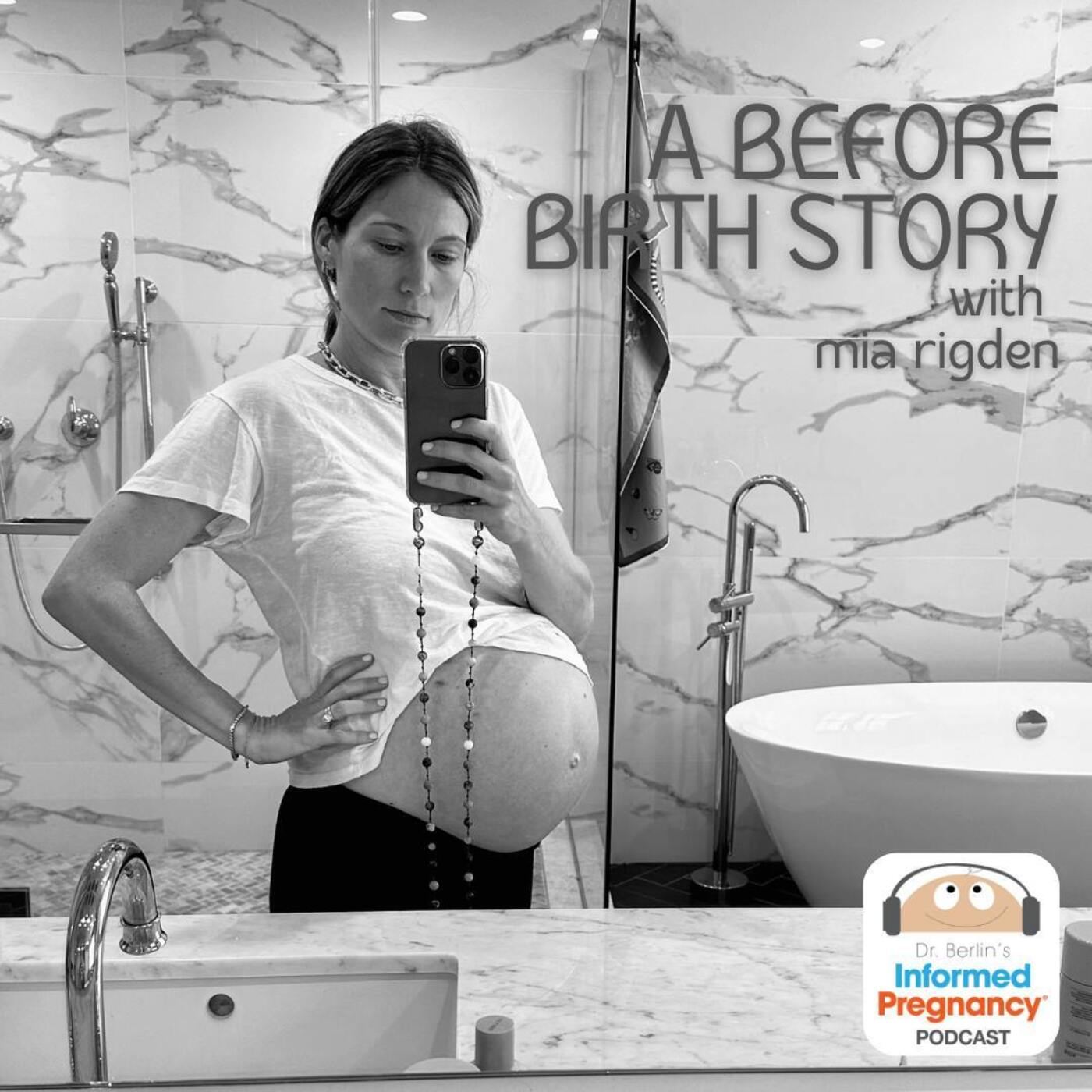
Mia Rigden, a board certified nutritionist and classically trained chef from Marin County, pivoted back to nutrition after a whirlwind ride in the restaurant business. She’s working toward a VBAC (vaginal birth after cesarean) and she joins the podcast to talk about her pregnancy and her intentions for the upcoming birth dh in this before birth story.

Connect with the guest: miarigden.com and @mia_rigden
Key quotes
“Yeah. Yep. My book Foodwise launched in January. And really it's all about my nutrition philosophies. And the book is really a celebration of food. And through the book, it's how you can find recipes and routines that you enjoy and that are, you know, really nourishing for your body.”
“eat as much protein as you can. You know, you're already starting every single day on the back foot. You know, it's harder to sleep when you're pregnant. You're maybe not able to move in the way that you used to move. I think that it's easy to feel a little bit more anxious when you're pregnant.”
“I'm very squeamish. I like to joke that the reason that I'm a nutritionist is because I don't want to get sick and have to get a shot for anything. I really am not good with needles. I'm really not good with it. Like it's an irrational phobia of mine. So my reason for not wanting the epidural, I wanted a drug free birth, but I didn't want the needle. I was more afraid of the needle than the pain.”
“Yeah, I actually feel pretty confident about it as well. And unless something, you know, completely out of my hands happens like last time, then I don't really see any real reason for it. You know, I'm not planning to get induced, which I know increases the risk of uterine rupture. But I think that that risk is very small, especially because of the scar that I have and the time in between.”
“There wasn't an anatomical reason why I couldn't give birth to my son. So I think that what I don't really like about the hospital system, even though I'm giving birth in the hospital, is that I just feel like they're always looking for a problem.”
Related episodes
- Ep. 426 Mia Rigden: After Birth
- Ep. 414 Aly Michalka: After Birth
- Ep. 424 Leedia Riman: After Birth
- Ep. 442 Jessica Zadeh: Before Birth
Transcript
AI-generated transcript with speaker labels — may contain errors, especially names and medical terms. Dr. Elliot Berlin, DC appears in blue; Mia Rigden in orange.
Download PDF of the Transcript
Dr. Elliot Berlin, DC [0:13] Welcome to the Informed Pregnancy and Parenting Podcast. I'm your host, Pregnancy Focus chiropractor Dr. Elliott Berlin. My guest today is a culinary enthusiast from Northern California who took New York City by storm. After years in the hectic restaurant world, she pivoted back to her first love, nutrition, founding a business on the belief that good food should also be good for you. She's currently pregnant, nearly at her due date, and she's working towards a vaginal birth after cesarean. We'll discuss nutrition, her first pregnancy and birth experience, and her intentions for the upcoming birth. Mia Rigdon, welcome to the podcast.
Mia Rigden [1:16] Thanks for having me, Dr. Berlin. I'm so honored and I want to learn everything. You exude healthiness.
Dr. Elliot Berlin, DC [1:22] That's a huge compliment. Thank you. Oh, it's my pleasure. And it's coming from somebody who feels like he exudes unhealthiness. So I want to learn from you. I want to learn everything I can about nutrition. I know that it's wickedly important to A, put things in the body that it needs and uses to cleanly provide energy and to avoid putting things that gum up the works. But that's about my experience with nutrition, my know-how, and I think you can change that. Let's start at the beginning. Where are you from originally and how did you get interested in food?
Mia Rigden [1:51] I grew up in Marin, so just out of San Francisco. Everyone in my family really loves to cook and, you know, Marin County, Northern California has just like incredible access to food and produce. I mean the whole of California, but I grew up going to the farmer's market every weekend and, you know, cooking was always just such a source of, you know, fun and deliciousness and community for me growing up. And my grandmother actually studied nutrition. She studied to be a dietitian at Carnegie Mellon in the 1930s.
Dr. Elliot Berlin, DC [2:22] Wow, ahead of her time.
Mia Rigden [2:23] Yes, she ended up having eight children. And so, you know, she was a mom more than anything else, but she was always very, very engaged in nutrition and she was like slathering coconut oil all over herself in the 80s and the 90s when no one would touch a fat. And she was just a real trailblazer. And so, you know, my whole family, but she really got me into food and nutrition. And so, you know, that was kind of my introduction to it.
Dr. Elliot Berlin, DC [2:52] Early on, so is that like from an early age where you're like, this is what I'm going to do?
Mia Rigden [2:57] Well, you know, I wasn't quite sure. I went to UC Santa Barbara and I wanted to study nutrition, but when I got there, they didn't have it. And so I didn't think that far ahead. So I ended up studying English. And then after I graduated, I was working in San Francisco for a couple years for a restaurant PR firm. And, you know, I knew I loved food and I wanted to be around food. And I ended up moving to New York like a year or two later to go to culinary school. I went to the French Culinary Institute. So then I was working for Chef Daniel Balloud, who is incredible in the office because they're like, oh, you can cook and you know how to use a computer. This is great. So I was working in the office and
[3:38] then I got back into PR. So this was in my, you know, early to mid 20s. And it was so fun because I would be having dinner at, you know, the top restaurants in New York, which I certainly couldn't afford at the time. And, you know, getting to try all this food, but I really didn't feel good. And I started to become obsessed with nutrition and wellness, but I was doing all of these extreme juice cleanses and all this like very extreme stuff. And I couldn't figure out how to rectify my love for food and dining and sharing dining experiences with friends and families and others and my desire to feel good. It just felt like those two things were at odds. And you mean beyond the instant
[4:24] gratification. Yeah. You know, I felt like I was just like yo-yoing from one extreme to the next, like some crazy five course meal and then, you know, celery juice or whatever it was. And I couldn't find my middle point. And so then long story for another podcast, but I met my now husband and he had a little bit of a green card issue. So he's British. We ended up moving to Hong Kong. And when I was in Hong Kong, I had a little bit of a moment to step back and think about what I wanted. And that's when I decided to go back to school and to really focus on nutrition. And that's where my business was formed. And now I've been doing this for over a decade and the clients that I work with, they come to me
[5:07] because, you know, they're probably a lot like me. They want to go try the new restaurant. They want to have their friends over for dinner. They like food. They want to travel and have these culinary experiences and try things, but they also want to feel good. And they have, you know, maybe it's clinical nutrition goals. Maybe it's more lifestyle based. Now that I'm a mother, I work with a lot of moms or a lot of women through, you know, the various stages of motherhood and womanhood. And, you know, for me, it's always how can we blend the clinical with the practical and how can we find foods that you really love that also make you feel good so that you will feel encouraged to
[5:44] continue eating that way instead of going on a diet, eating foods that aren't satisfying
Dr. Elliot Berlin, DC [5:48] and don't necessarily fit into your life. Yeah. So seemingly people who actually make these changes naturally, they have better longevity at keeping the changes versus either a radical up or down or a drug to kind of suppress until you hit your goal and then you stop taking it. So that all sounds wonderful. I know that the philosophy we mentioned in the intro is that food that is good for you should also taste good. And along those lines, you just had another baby, a brand new cookbook.
Mia Rigden [6:21] Yeah. Yep. My book Foodwise launched in January. And really it's all about my nutrition philosophies. And the book is really a celebration of food. And through the book, it's how you can find recipes and routines that you enjoy and that are, you know, really nourishing for your body. Because I think that when you can connect the dots, as far as, you know, finding foods and routines that are easy for you and that feel good and that also feel celebratory and fun and indulgent, then you won't feel the need to like cheat on your dietary needs. Or I think if you don't enjoy it, then it's never going to work. So that's the point. I wanted to create recipes that were healthy, but also felt
Dr. Elliot Berlin, DC [7:05] celebratory. Yeah. There's been more than one occasion where I've needed to go to therapy with my dietary needs because- Well, you know, food is delicious and it's definitely emotional as well. Yeah. Although because I cheated on them. So back to you, how do you people access the work that you do? Is it individual one-on-one? Is it virtual in-person
Mia Rigden [7:28] classes? Do tell. I do work with a lot of clients one-on-one. So, you know, I take a handful of new clients every month. My program is eight sessions long. It's really important for me to understand whomever I'm working with and what their lifestyle is like and what their preferences are like. You know, I view myself as a nutrition expert and an accountability partner, and I have a lot of recipes and meal ideas. But in order for someone to be really successful, how should I put this? I have two rules in my practice and all my clients know this. You have to like the food and it has to be easy. So I know clinically what people need. I understand that component of it and I
[8:09] have a lot of different ideas, but I don't know what's easy and enjoyable to a specific person because everyone has, you know, their own preferences and their own schedule. Some people travel a lot. Some people live with picky eaters. They don't like to cook. They love to cook. You know, everyone is different and has their own challenges and other things that are easier for them. So for me, it's all about how can we find the solutions that are really going to work for them. And that takes time.
Dr. Elliot Berlin, DC [8:37] Eight sessions that are like an hour?
Mia Rigden [8:39] Yeah, about that. And then all of my clients have full access to me in between sessions. So I get a lot of emails every morning with updates from everyone, which I love because
Dr. Elliot Berlin, DC [8:49] you have a great because, you know, those questions come up and you need a little motivation and some of that positive energy you have. Wow. Amazing. Why don't we say here, where can we find you online?
Mia Rigden [9:02] So miaRigdon.com is my website or on Instagram at Mia underscore Rigdon. I have a lot of content on there and I have some online courses as well for people who don't work with me one-on-one.
Dr. Elliot Berlin, DC [9:13] Amazing. Now I want to get into your personal stories about pregnancy and childbirth. Let's take a break and we'll be right back with your first pregnancy and birth story.

Dr. Elliot Berlin, DC [11:00] Welcome back. We're talking to Mia Rigdon. Okay. So you're currently pregnant with your second. How deep into the pregnancy are you? I am 39 plus weeks. So there. Not too many, not too much to go. Before we get into this pregnancy, let's talk about your first one. How was pregnancy for you? Did it come easy for you? Or did you have to work hard at it?
Mia Rigden [11:21] And what was pregnancy itself like? My first pregnancy was really easy. I, you know, had a little bit of nausea the first trimester, but nothing outrageous. And then I felt great in my second and third trimester. My husband and I actually moved from New York to LA when I was about 28, 30 weeks pregnant. And I was very pleased with the move. And so I found the transition easy and everything went great. I had the easiest pregnancy up until the birth. It caught me by surprise because it had just been kind of just a textbook, healthy, easy pregnancy before that. Mixing two things together. Were there nutritional observations, changes, things that you learned for nutrition during pregnancy as a result of your pregnancy?
[12:11] Absolutely. You know, prior to being pregnant, I try to lead my practice with empathy. And prior to being pregnant myself, you know, you look at the clinical data as far as the nutrients that a woman needs, folate, omega-3 fatty acids, protein intake, those sorts of things. But when you're actually pregnant, especially the first trimester and you're not feeling well, I remember feeling very stressed that I didn't want to eat vegetables, that certain foods were not appealing to me. And it kind of rocked me and gave me a different perspective on, you know, how I want to help other people through that. Of course, it's just a few weeks and you know, you do the best you can. And I have a lot of thoughts
[12:53] on first trimester and how to get through it. But at the end of the day, it's very common to have food aversions and you shouldn't force something down that is going to feel awful for you. The stress is also not great for your body. But that was an interesting learning for me.
Dr. Elliot Berlin, DC [13:09] Sometimes it's good to be the patient. Yeah. Same thing. I go to a chiropractor. I learn a lot from the other side about how to be a better doctor. Do you want to share one or two pregnancy nutrition tips for our listeners? My biggest pregnancy nutrition tip is to try to
Mia Rigden [13:25] eat as much protein as you can. You know, you're already starting every single day on the back foot. You know, it's harder to sleep when you're pregnant. You're maybe not able to move in the way that you used to move. I think that it's easy to feel a little bit more anxious when you're pregnant. And so things that didn't make you feel good before are not going to make you feel good when you're pregnant. So I think that, you know, in our culture, you know, there's a fine line between nutrition and wellness and diet culture. And so a lot of women feel like, and I see this a lot with first pregnancies, that the moment they get pregnant, it's like, okay, let's sit on the couch and eat ice cream
[14:01] and order pizza and do all these things that they probably wouldn't have done or eat foods that they would have, you know, had second thoughts about prior to being pregnant. But because of the pregnancy, they think, oh, I'm just going to eat whatever because it doesn't matter because I'm pregnant. But that doesn't make you feel good. So, you know, with a lot of my clients who are planning for pregnancy, what we really focus on is, you know, for me, it's not about weight. I'm not a weight loss coach. I'm a nutritionist. But what are the foods that make you feel good? What is good for your digestion? What is good for your mental health? What is good for your sleep? What is good for your energy levels? And those are
[14:36] the routines that you want to carry into pregnancy. So, you know, personally, I don't change my diet very much. I mean, I think of myself as a very intuitive eater. So if there's something that I want, if it's pizza or ice cream or whatever, I will have it. But I also want to feel good. And I know that if I don't eat enough protein, or if I eat too much sugar, then I'm not going to feel my best. And I'm already on the back foot. And so it's really important to prioritize that. And I found in this pregnancy, I've been wearing a continuous glucose monitor for the past few months. And I've noticed that as I've paid more attention to my blood sugar levels, and my protein intake that in my third trimester, I've
[15:15] had so much energy and been able to be, you know, a lot more active than I anticipated, especially about a four year old. And so being able to work all day and then be a mom to him and play with him and do all these things is really important for me. I don't want to be exhausted. I mean, I'm definitely tired sometimes pregnant, but I found it really helpful. Any surprises on the monitor? Well, sleep and stress really affect your blood sugar. Interesting. Also, you know, fruit alone in the summertime, there's lots of stone fruits, you know, so in Southern California, we get such amazing fruit and fruit is also a very healthy food, but just eating it on its own, I noticed I get really
[15:58] big blood sugar spikes. So those have been definitely some learnings. Yeah. All right.
Dr. Elliot Berlin, DC [16:07] So you said, though, that first pregnancy a few years ago was fairly good, easy, smooth, comfortable until birth. Did you have a plan going into your birth or did you have thoughts and intentions on how you wanted to do it? Yeah, I wanted to have an unmedicated birth
Mia Rigden [16:22] in the hospital at the hospital. I'm very squeamish. I like to joke that the reason that I'm a nutritionist is because I don't want to get sick and have to get a shot for anything. I really am not good with needles. I'm really not good with it. Like it's an irrational phobia of mine. So my reason for not wanting the epidural, I wanted a drug free birth, but I didn't want the needle. I was more afraid of the needle than the pain. Yeah, I know many just like that. So I told everyone if I'm asking for it, that means that it must be pretty intense. Okay. Did you have like sort of how you would deal with the intensity if not the drugs? Well, you know, and this was really naive of me. I had, you know, all of Ina May's
[17:05] books and people recommended things, but I kind of struggled to listen to the birth stories in my first pregnancy because I hadn't experienced it before and it felt really overwhelming. And everything up into the birth had been very easy for me. So I just kind of thought I'd be able to handle it. I did some classes and we had a doula, but I didn't do a lot of prep as far as reading birth stories and hypnobirthing or anything like that. I did have nitrous. Oh,
Dr. Elliot Berlin, DC [17:32] you did. Okay. Have you ever had nitrous before that? I mean, maybe in a dental procedure, but I can't really remember. That's the greatest thing about nitrous oxide in case you need to have something done to your teeth while you're in labor.
Mia Rigden [17:45] So did labor start spontaneously? So I was eight days late. My son was born nine days late, but seven days after my due date, I walked seven miles. Yeah. I was walking all around Venice. I was at the beach. I walked all day. I had no pelvic pain at all. So I had a very comfortable pregnancy, which I now realize because he was high. And I went out to dinner with my husband and the next morning my water broke. So on the eighth day after my due date and I was at home and yes, yes. What time of day? It was first thing in the morning. So 7 AM right when I woke up, my water broke and I was waiting for the contractions to start. I hadn't had any cramping, any contractions. I didn't notice any Brexton Hicks and I had nothing.
[18:38] And then my water broke and we kind of waited around all day. I didn't go to the hospital and about 12 hours later, I think probably around seven or eight PM I started to feel some contractions and then we went to the hospital. And then later that evening, I think
Dr. Elliot Berlin, DC [18:53] maybe 10 or midnight, they started to come on really strong. And were you in touch with
Mia Rigden [18:58] people from your birth team during that time? I was. We had moved. And so I felt like there was this little bit of a rush because we had already had a team in place in New York and then we moved. And so I found a new doula and I don't know if we just didn't spend the time to really connect with her, but we were in touch with her, but she wasn't at the hospital with us because we thought it would be a while. And then it was the middle of the night. So we were trying to be respectful of her sleep and waiting for the nurses to tell us that it was time to call the doula and tell her to come. Which in retrospect was not the right approach.
Dr. Elliot Berlin, DC [19:38] I mean, you said they were intense. What did you feel? Where did you feel it? What did it feel like in comparison to other things you had experienced before?
Mia Rigden [19:46] Well, I wasn't really having very intense contractions or anything. And then out of nowhere, it got very intense and I was using the nitrous oxide. And at first I said to my husband, I feel like I'm like the only one at the party that's drunk. And it was kind of fun. And then I started calling the nurse saying, oh, the tank's out. And she's like, no, it's not out. It's full. I was like, no, there's nothing left in here because I'm not feeling it anymore. And I couldn't move. I was sat at the edge of the bed and I was just clutched because I was in so much pain. And I remember that the nurse made a remark that my contractions were very close together and that if I were on pitocin, she would
[20:25] have turned it down. That was what she said. That was one of the things. So my water had broken. So they didn't want to check me or they were being cautious not to check too much, which I appreciated. And then finally I was in a lot of pain and she said, well, I think you're probably going to want to call your doula soon. And, you know, we're probably getting close. So let's check you. And then when she checked, I was only two centimeters. Oh my gosh. So I can feel the deflation. Yeah, I panicked. I screamed for the epidural. I was so upset and I got the epidural and I fell asleep. And I think, I don't remember, but I think this was around four o'clock in the
[21:03] morning. And when I woke up, the doula was there. I think it was around 8 a.m. and I was eight centimeters dilated. Now that I've told people this story, I think maybe I was in back labor. So that's what I was wondering. You felt it in your back more than in the front? Yeah, a lot in my back, but I have back pain and I'd never been in labor before. So I didn't know that any of this was abnormal. And there wasn't anyone really in the room. And so the nurses would kind of come in once an hour. I was attached to the monitor, but it's really just my husband and I and they're alone. And we had never had a birth experience before. So we didn't know that there was anything.
Dr. Elliot Berlin, DC [21:45] Yeah. Two questions before we move on in the story. Number one, what did nitrous, when it was working, what was the experience for you? Did it help? Because it's the kind of thing that you puff when you feel like you need it. Yes. You know, now that I'm about
Mia Rigden [21:59] to do it again, I've been reading and listening and the nitrous, I was in so much pain that I would just pop in it the whole time. And in the beginning, I just felt, you know, giggly. And it did really ease the pain. But I don't think that I was using it properly. I didn't mind the mask. I know some people say that they really don't like the mask, but that didn't seem to bother me. And I do think that it did ease some of my anxieties around it. You know, like I mentioned, I have this irrational fear of needles. I wanted to give birth in the hospital and I'm giving birth in the hospital this time. But I think hospitals make me feel afraid and unsafe now that I've been reflecting on it.
[22:41] And I definitely had anxiety when we arrived. And I think that the nitrous really helped
Dr. Elliot Berlin, DC [22:46] to kind of lighten the mood a little. Yeah, you know, I think most of us do not feel the most comfortable walking into a hospital, especially as the one who's the subject of care there. And my experience with nitrous as a doula working with clients who are in nitrous is more of an anti anxiety about the pain than a pain reliever itself. So maybe that's the effect it was having. And then when that back labor kicked in, it just wasn't the right match for you. And then the other thing is knowing that you had this giant fear of needles and that you were more nervous about the needle than the labor pains. How was getting the epidural for you when you got it?
Mia Rigden [23:26] I remember I had to wait because he was with somebody, the anesthesiologist was with somebody else and it was excruciating, but I don't remember getting the actual epidural.
Dr. Elliot Berlin, DC [23:36] So probably not that bad or just fuzzy memory.
Mia Rigden [23:40] I remember my husband had to leave the room and I didn't want him to leave the room.
Dr. Elliot Berlin, DC [23:43] Yeah, I don't get that either. I'm not sure why they do that. So that's what you need support. I don't get it. I need to get some anesthesiologist on the line here and find out what that's all about. All right. So you did get the epidural. You got some rest. You
Mia Rigden [23:57] woke up at eight centimeters. I woke up at eight centimeters and so everyone was very encouraged. The epidural allowed me to relax. I clearly was in a lot of pain and was just clenching and not allowing myself to dilate. And so especially you, you're pretty strong. Yeah. I mean, I think I just was like just clenched at the edge of the bed, not moving. And yeah, I think that the epidural was helpful for what it did. In retrospect, maybe if I wasn't back labor, there was some spinning babies moves or some things that someone could have done to help me to help the baby reposition or help decrease the pain or help me to relax. But the epidural certainly helped me to relax. And,
[24:42] you know, the nurse, the doctor came in and the nurses, they said, you'll probably dilate another centimeter an hour and we'll probably be pushing in two hours. So I thought, great. Okay. We watched a movie, which is also kind of strange to me because we had a doula and no one was moving me. I wasn't told that I could change the intensity of the epidural. I was really numb from the waist down. There was no feeling whatsoever. So now that I look back on it, I feel a little bit confused as to, well, I was just sitting there watching a movie paralyzed from waist down.
Dr. Elliot Berlin, DC [25:15] Yeah. You're not selling it well.
Mia Rigden [25:17] I mean, I'm not opposed to the epidural. I just think that I wasn't, I don't know. I don't think I had the best team with me or the best, you know, maybe I just didn't get lucky with the nurses that day, but that was at 8 a.m. that I was eight centimeters.
Dr. Elliot Berlin, DC [25:32] Now, since you're going for a VBAC, we'll assume that turn into a cesarean birth.
Mia Rigden [25:36] Yes, that did. So 8 a.m. I was eight centimeters all day. I was eight centimeters. They kept coming in. And then I was shocked when my doctor said to stop eating because I think she suspected that I was going to need a C-section.
Dr. Elliot Berlin, DC [25:53] Yeah. I'm surprised you could eat anyway. They don't usually let you eat too much.
Mia Rigden [25:58] Well, I would eat anyways, but I brought a lot of food. I've got a lot of good snacks in my hospital bag already. But, you know, then we just kept hoping because I didn't believe that I was going to need a C-section because I thought, why would I need a C-section? I've had such an easy pregnancy. I have no issues. It just seemed like something that was not going to happen to me. And then around 7 p.m., the doctor came in and I guess the baby's heart rate was climbing. And I had a fever. I got antibiotics. It was the first time in my life I ever had taken antibiotics, which was kind of wild. And the antibiotics, I mean, it was fine. And then she said, it's not an emergency. It's your decision. But I think we need to
[26:43] do a C-section. And she said, take a minute. You know, everyone seems safe and healthy, but you're not progressing. And it's been almost 12 hours. And it had been 36 hours at that point since my water had broken. That was the main issue was the water had broken. I know a lot of doctors don't like to go past 24 hours. We went 36. And the doula said, I agree. And I trusted that. I feel like at that point, I probably did need the C-section. I think that in the almost eight hours that I was lying in the bed, maybe I could have moved positions or had a peanut ball or we didn't have any of that. How was the cesarean? I was very upset, probably the most upset I've ever been. And it was not a great experience for me. I remember
[27:35] I was shaking a lot. It's like the lights are so bright. They feel like wheel you to the
Dr. Elliot Berlin, DC [27:40] operating room. I mean, you don't like hospitals and you don't like needles. I imagine you don't
Mia Rigden [27:46] like getting cut open. When the baby came out, did that change things for you? Or are you just too far removed at that point? I remember I was shaking a lot. I think from the epidural, my teeth were chattering so much that I thought I was going to crack a tooth. But I will say after my recovery was very, I'm not going to say easy, but I didn't take any pain medication besides Tylenol. And I recovered within a week I was walking.
Dr. Elliot Berlin, DC [28:18] So that sounds like it was an easier recovery than you thought it might be.
Mia Rigden [28:22] Yeah. I mean, it wasn't fun. You have to stay in the hospital and I felt very swollen from all the IVs. And it definitely was not what I planned. But I told myself afterwards, my doctor said my son was eight pounds, 13 ounces. And I'm tall. I'm five, eight, my husband six, two. I think she thinks I have a small frame, which I do, but I feel like that was my baby. And he was nine days late. I didn't feel like that was, I know it's on the cusp of big, but- I don't know. To me, it all seems more like function than structure. Yeah. I was told that maybe the baby was too big for me.
Dr. Elliot Berlin, DC [29:02] Yeah. I don't know. I don't generally buy that, but, you know, it's possible with those numbers. It doesn't sound like it should be if there's good function. Mia, let's take a break because who knows? Your water can break any second. We'll come back and talk about what you have in store for your imminent birth. Welcome back. We're talking to Mia Rigdon. Mommy Mia is pregnant again and two. So if I could recap last time you were playing on an unmedicated birth at the hospital and where things started kind of light, they turned intense quickly. And in retrospect, seemingly had back labor. Nitrous oxide was good for a minute. And then the epidural came through because when you got checked, you were barely progressed. The epidural
[30:00] seems to have helped you relax, open up, and you started to dilate and go to eight centimeters and then stayed at eight centimeters for the foreseeable future. So not what you wanted, but the cesarean birth was recommended and not a great experience for you, but a decent recovery. And you brought home the prize. Here we are pregnant again. And especially since, you know, we've thrown out there that maybe the baby was too big for your pelvis. What are your plans for delivering this one? So I'm planning on a hospital birth
Mia Rigden [30:34] again, but this time I'm coming into it a lot more confident and I have an incredible doula. Can I plug her? Sure. Stacey Blackwell. She's awesome. Oh my God. We talk about Stacey all the time because she's so good. And she's just been really helpful in helping me feel confident and, you know, confident in my body and in, you know, my ability to get birth to this baby. I've done a lot of research on VBACs. My C-section was four years ago, so I feel like I'm sufficiently healed. I've had ultrasounds. The scar has not thinned. I feel very strong. I'm going to see you all the time or helping me stay aligned and open. So I feel much more confident and informed.
[31:22] I think I was a little naive the first time, and now I feel like I can advocate for myself a little bit better and what I need. Yeah. And how would you say your body is this time compared to last time? In some ways, this pregnancy has been much harder. I've had a lot of work. You know, I had a book that came out. I had to go to New York for a week when I was seven weeks pregnant. I was very, very sick. And that was really hard for me and like speak in front of people. And I have taught a toddler this time, which is more difficult, but I will say that my energy levels are really good. I'm sleeping great. I do a lot of acupuncture, Pilates, chiropractic work, body work. So all things
Dr. Elliot Berlin, DC [32:04] considered, I feel really good. Are you planning to do things any differently this time? I know you have a different doula and you're really well connected with her, which is an amazing start. Do you plan to have your doula come to your home and labor with you? And do you have any measures in place if the surges start to feel
Mia Rigden [32:28] intense? Yeah. So it depends on when and how quickly. I'm already starting to feel signs, which I didn't in my first pregnancy. So my hope is that my body's doing a little bit more work so that when labor actually starts, I'll be further along than I was the first time. So that feels positive. So if it happens quickly, we'll have her meet us at the hospital. If it's in the middle of the day and on a Sunday and my husband needs to deal with our son, then maybe I'll have Stacey come to support me or we're going to kind of play it by ear. But I'm manifesting arriving at the hospital like five or six centimeters. I like it. I can get behind that. Yeah. And then I guess if for whatever reason this one, are you planning to
[33:14] do it without the epidural again? I'm going to try. I'm open to it because I do think that there are certain instances where it can help you relax. My ultimate goal is to get the baby out and have a feedback. I'm not opposed. If I'm at a point, and I've talked to Stacey and my husband about this, that if they feel like I'm at a point where it would be beneficial for me to have the epidural, then I will 100% get it. But we'll try to have it. We've talked about different positions that I can move in even with the epidural to make sure that the position of the baby is good. The baby is measuring big, which I know means nothing. It's completely inaccurate, but I know that that's a fear of my doctors. And also if the
[33:59] baby is big, then I think that at least from my own research, that the position is more important. And so having some mobility either without medication or delaying medication, or having some movement with the epidural will be really helpful to just get the baby in the right position. Totally. What if for some reason it progresses into a repeat cesarean? Are you mentally prepared for that? I feel like I just have to go with that that's not
Dr. Elliot Berlin, DC [34:30] what we're doing. And then if it happens, we'll deal with it. But I would be really disappointed. Yeah. Put on all my effort into you and opening up. There's this thing when someone's like strong and tight together, you know, it's just a feel. I've been doing this for so long. You could just feel the pelvis is so rigid, the soft tissue, the bony tissue. And when you have that kind of scenario and then you don't feel comfortable either with the environment or with the intensity and you sort of go into fight or flight mode and everything tenses up again, you know, on top of what was already sort of a rigid environment, I do see like, unless the baby's just right lined up with the runway, in which
[35:15] case they can shoot out really quickly, they have to do any kind of maneuvering. It seems like it could be more challenging in that scenario. So I do, I've seen a change in you where you're still very strong, but not as tight as when we started. Each time it seems to loosen up a bit and become more functional. And I also love the idea of movement because the ambulation that sort of helps babies move around and get into a good position and the openness to an epidural. If you feel like you need one or want one or the baby's not in a great position or things are very tense, you know, because you can't relax. I think all those things can be really helpful
[35:54] for you, but also you dilated to eight last time. So it's not your cervix's first run with 80% of the doorway opening. So I feel good about it. I want this for you, you know, and I think it's in reach. I think we're headed there.
Mia Rigden [36:10] Yeah, I actually feel pretty confident about it as well. And unless something, you know, completely out of my hands happens like last time, then I don't really see any real reason for it. You know, I'm not planning to get induced, which I know increases the risk of uterine rupture. But I think that that risk is very small, especially because of the scar that I have and the time in between. So in my mind and all the research that I've done and maybe I'm off here, but like, I don't really see the difference between this VBAC and just a repeat vaginal birth, except for that I have this scar in my uterus. There wasn't an anatomical reason why I couldn't give birth to my son. So I think
[36:53] that what I don't really like about the hospital system, even though I'm giving birth in the hospital, is that I just feel like they're always looking for a problem. So, you know, they put VBAC, they put I'm 38, even though my doctors never mentioned that, but, you know, they put those little things on there. And I think that makes them a little bit more to know maybe she's not going to be able to do it. But I feel very confident. I don't see any reason why this would be a different scenario than if I hadn't had a C
Dr. Elliot Berlin, DC [37:18] section before. Yeah, I think once you put your mind to it, and you study the risks and benefits, and you accept them, then it's just a birth now. You don't have to put any precursors to it. Mia, I'm excited for you, and I'm honored to play a little role in your epic journey here. And I also learned from you regarding nutrition. And if nothing else, just the way you're talking about like, oh, how's this food going to make me feel mentally? How's this food going to make me feel energetically? How's this food going to make me feel, you know, in terms of overall well-being? I never think that way when I eat. I'm like, when do I have three minutes to shove whatever it is down my throat and keep
[37:56] going? I can feel like my body resonating with that saying, listen to her, because
Mia Rigden [38:02] we want to feel all the feels. And food should be enjoyed and shared. And I know your wife has a lovely cookbook. And, you know, I've been cooking food all day. I made sesame ginger pulled pork. I made bolognese, you know, grass-fed beef that has the organ meat in it. I made chicken soup. So I'm freezing all of that for my postpartum. You're not kidding about the protein. Really great veggie soup, green veggie soup too. So lots of vegetables in there too. But
Dr. Elliot Berlin, DC [38:30] yeah, I mean, the food, it's got to be fun. Otherwise, what's the point? I like the approach. I wish you a really empowered journey. And I hope it goes the way you would like it to go, your primary choice. And I am grateful for everything that you've shared so far and look forward to hearing the rest of the story when you come back, maybe in a few days. And at that point, maybe we'll also get some postpartum nutrition
Mia Rigden [38:54] tips. Yeah. Well, thank you so much for having me. I appreciate it.
Dr. Elliot Berlin, DC [38:57] My pleasure. Tell us again where we can find you online.
Mia Rigden [39:00] MiaRigdon.com or on Instagram at Mia underscore Rigdon.
Dr. Elliot Berlin, DC [39:05] Mia underscore Rigdon. Is there a Mia Rigdon that's not underscored or the underscore doesn't count? An underscore works well for you. Thank you again on the home. Thanks for listening to informed pregnancy. For more pregnancy and parenting information, including our blog, our podcast, and our streaming service, visit informedpregnancy.com.
Want more pregnancy + parenting? Start your FREE TRIAL of Informed Pregnancy+ and get access to all our curated pregnancy and parenting content — original series, iconic birth films like The Business of Being Born, prenatal workouts and more.
