
January 23, 2025 · 34 minutes · Episode 443
About this episode
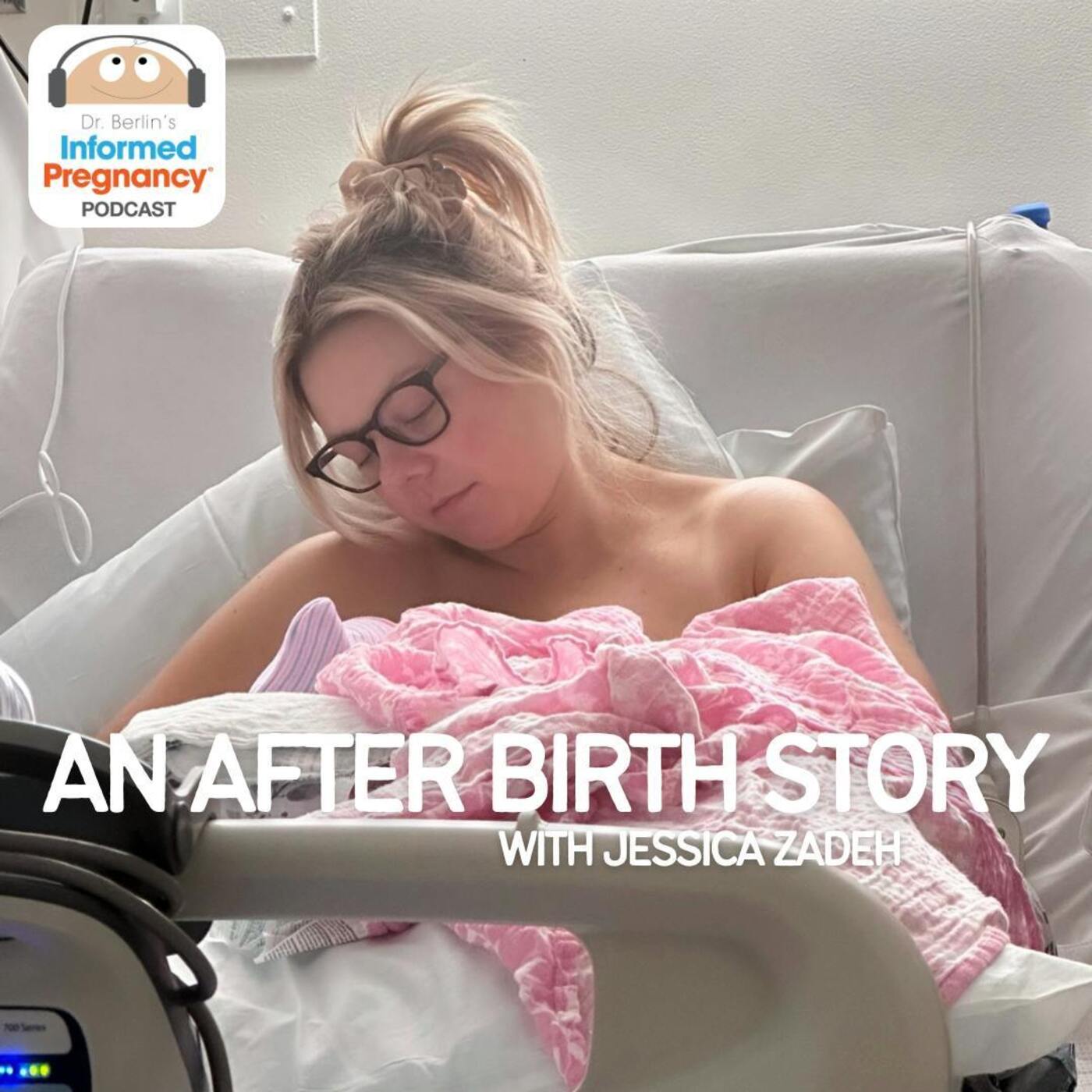
Functional prenatal and postpartum nutritionist Jessica Zadeh returns to share the birth story of her first child. Jessica’s nutrition masterclass is now streaming on Informed Pregnancy Plus.

Connect with the guest: @holistic.mama.nutrition and wholisticmethodnutrition.com
Jessica’s nutrition master class on IP+
Key quotes
“And they brought her right to my cheek and she started like sucking on my cheek right away. I have a picture of it. It's very sweet. And yeah, it was all very, very quick.”
“been at all what I anticipated. It's been the hardest they have ever done in my life,”
“She literally came to my house and said, well, don't you want what's best for your baby? And I said, yes, of course I do. I said,”
“I think, in my beliefs around modern medicine and maybe a little more dichotomous about nutrition and holistic health. And now I'm a little more middle of the road on it”
“postpartum cart that I had made, because everyone on Instagram tells you, you need a postpartum cart with the Frida bottle and the, you know, the ice packs and all these things.”
Related episodes
- Ep. 442 Jessica Zadeh: Before Birth
- Ep. 426 Mia Rigden: After Birth
- Ep. 435 Jackie Amézquita: After Birth
- Ep. 424 Leedia Riman: After Birth
Transcript
AI-generated transcript with speaker labels — may contain errors, especially names and medical terms. Dr. Elliot Berlin, DC appears in blue; Jessica Zadeh in orange.
Download PDF of the Transcript
Dr. Elliot Berlin, DC [0:36] Welcome to the important pregnancy and parenting podcast. I'm your host, pregnancy-focused chiropractor Dr. Elliot Berlin. In our last episode, we spoke with a functional prenatal and postpartum nutritionist who was in her third trimester of her first pregnancy. She shared her thoughts on preparing for birth, navigating body changes, and her approach to wellness during pregnancy. Today, she's back to share how her journey unfolded from those final weeks of pregnancy to her birth story and now early postpartum experiences. Jessica Zadeh, welcome back to the podcast. Thank you so much for having me. Mazel Tov. Thank you. Yes. You're a mama. Okay. Let's jump right in. Last time we spoke,
[1:17] you were at the end of pregnancy. You were getting ready to meet your baby. How did the final weeks of pregnancy go for you? Well, it was, I guess,
Jessica Zadeh [1:24] the beginning of the unexpected. I think I texted you at maybe 40 weeks because I was having really, really bad sciatic pain. I was able to get in with another doctor in your office and she told me that my sacrum had lifted and that was causing some of the pain. Pretty much the last week, I couldn't really walk at all. I was walking through Erwann on one foot. My husband thought it was hilarious, but anyway, that was the beginning of the end, but I wasn't dilating at all. Starting at 37 weeks, I wasn't dilating at all. By 40 weeks, still wasn't dilated and my OB let me go all the way to 42 weeks.
Dr. Elliot Berlin, DC [2:05] Wow. Who does that anymore? But also during that time, what are you doing? Are you doing
Jessica Zadeh [2:10] anything to try to get the ball rolling? I was doing all the things. I was still going to Pilates almost every day up until I was induced. I feel horrible about myself. It was the only time I wasn't in pain is when I was on the Pilates reformer, to be honest with you. That was pretty much the sole reason. Incentive. Yeah. I was walking. I was going on the treadmill. I was going to Pilates. I was doing all the exercises they tell you to do. I was eating dates. I was drinking the tea. I tried to think what else I was doing. I was pretty much doing anything and everything. I kept having to go in for the non-stress test because I am older, because I was approaching 42 weeks and the non-stress tests were all clear
[2:54] and my OB kept offering me an induction. I kept denying it, but finally by 42 weeks, I was like, okay, the induction is kind of sounding good now because I was in just so much
Dr. Elliot Berlin, DC [3:03] back pain. Were things changing over those two weeks?
Jessica Zadeh [3:07] No. Nothing. Nothing. Every time I went in to get checked, he was like, nope, still nothing, still not dilated. And I was like, ugh.
Dr. Elliot Berlin, DC [3:15] And no mucus plug, no contractions, nothing like that?
Jessica Zadeh [3:18] Nothing. And I kept texting my doula who I love. You introduced me to my doula. Thank you so much. I love her so much. I wish she would move in with me. That was another piece of post-partum. I was like, I don't want you to leave me. I kept texting her. I'm like, is this something? She was like, no. So it was nothing, literally nothing was happening. Apparently I was having little contractions. So here's a plug for Pilates. I was actually having contractions. The only reason I knew was because of the non-stress tests. And my OB's nurse was like, that's a contraction. You're not feeling that.
Dr. Elliot Berlin, DC [3:52] I was like, no. So you could see them, but not feel them?
Jessica Zadeh [3:55] I could see them, but I literally felt nothing. Once they showed it to, could you feel it with your hand on your belly, just the light tightening? Yeah, a little bit, but it was weird. I didn't really feel like anything to me, which I didn't expect. All right. So all the way to
Dr. Elliot Berlin, DC [4:11] 42 weeks and then induction sounds welcoming. What kind of induction?
Jessica Zadeh [4:15] Yes. So my OB offered me an induction. It was actually a couple of days shy at 42 weeks. So he explained to me, you know, if you want to do it, we can do it. It was on a Wednesday and I discussed it with my doula and I was just in so much pain. I was like, let's do it. So walked into Cedars. It was a Wednesday night and they said they were going to start me on side attack, which is like a suppository. And I did three rounds of side attack. And then they wanted to do the Foley balloon to try and get me dilated.
Dr. Elliot Berlin, DC [4:47] Okay. Just for anybody listening, you might have to do these things or want to,
Jessica Zadeh [4:52] what did it feel like to place the side attack? And did you feel any changes once it was in? So here's the thing. I was in so much pain because of my sciatic issue. And I did have a preexisting pinched nerve and a herniated disc. So I'm sure that exacerbated it. So honestly, that was the bulk of the pain and I really couldn't walk. So because I was in so much pain, they wanted to give me something for the pain. And I really didn't want that. And it wasn't part of my birth plan, but I was in so much pain for that. They actually did give me fentanyl, but I have such a high tolerance to drugs. It sounds horrible that the fentanyl didn't do anything. They gave me two rounds of fentanyl and I was like, I still feel
[5:35] everything. So I did feel the first placement of the side attack and it feels like the most uncomfortable pap smear you've ever had in your life. Actually, you know, you know what it felt like now it's coming back to me. It felt like when you get an IUD placed, which is super uncomfortable. So I got the first side attack placed and then they'd give you a couple hours and nothing happened. Okay. So they gave me another round of fentanyl and I was still screaming in pain. So then they said, well, we can start you on the epidural, which this is the other thing. I didn't want an epidural going into this. At that point, they told me you're probably going to have to have another couple of rounds
[6:19] of side attack of the suppositories. The goal was, was to place the Foley balloon. But they said that because I wasn't dilated at all, they can't place the Foley balloon until I was three centimeters dilated. So the first goal was to get me to three centimeters. So at that point I was in so much pain and I was on the phone with my doula and I was like, you know what, I can't, let's just do the epidural. So the thing is I ended up getting the epidural because of the pain of the Foley balloon. Yeah. So they did the three rounds of side attack and I finally got to three centimeters after that. And then they placed the Foley balloon, which I didn't feel because I had an epidural, but apparently
[7:01] that's supposed to be more painful than the side attack and they insert like a catheter and then they blow up this balloon with saline. So that was in for, I think this was the following day at this point. It's all kind of like a blur now, but this was over the course of three days and the Foley balloon kind of worked, kind of didn't. It got me to like four centimeters and they were, everyone was disappointed. They were like, what is going on?
Dr. Elliot Berlin, DC [7:26] Well, the Foley balloon would normally, that would come out at around four centimeters.
Jessica Zadeh [7:31] So it came out and I was only at four, but then I wasn't progressing after that.
Dr. Elliot Berlin, DC [7:35] So then they broke my water. What did that feel like?
Jessica Zadeh [7:39] I didn't feel anything because I had an epidural.
Dr. Elliot Berlin, DC [7:41] Oh, okay. So just in theory, there's moisture.
Jessica Zadeh [7:45] Yeah. I really didn't feel anything. And then because I would have such a high pain tolerance or such high tolerance to the fentanyl, they turned my epidural up so high, they turned it up too high. So I like really couldn't feel anything. And the only thing that I did feel is I was having, which this was something that I had never even discussed with my doula, but I had the like shakiness and the chills really bad and I was vomiting and I couldn't even keep bone broth down. So it was like a real good time. So yeah, the Foley balloon got me to four and then they came and broke my water and then I got an infection because they broke my water. So they started me on IV antibiotics.
Dr. Elliot Berlin, DC [8:24] Were they just taking your temperature or did you feel symptoms of the infection?
Jessica Zadeh [8:28] They informed me that I had an infection. So yeah, I guess I did have a fever. So yeah, they gave me IV antibiotics with such the other thing as someone that wanted as natural rebirth as possible, pretty much all went out the window, but I did keep denying. They kept wanting to give me acetaminophen for the fever and I kept denying that and they just kept looking at me like I was crazy because I brought my own dye free acetaminophen and the nurses thought I was just this most insane person ever. So I kept requesting that instead. Anyway, so 33, 34 hours in I was finally at seven centimeters. So making progress, I finally made progress. My doula was there. She created a whole
[9:15] vibe. We had candles. We had the essential oils. I had picked out. We had my playlist. I was finally calmed down. I really calmed down. Once she got there, I was kind of espoused until that point. But then at about 36 hours into this process, I looked up and my OB was standing there and I was like, what are you doing here? And he was like, they texted me. I'm so sorry. The baby's heart rate is over 200.
Dr. Elliot Berlin, DC [9:42] I have to do a C-section. Oh my goodness. Okay. Let's take a little break because your birth at this moment has taken the biggest turn from what you were planning and hoping for. And I want to talk about what that was like in my body and spirit level.

Dr. Elliot Berlin, DC [9:58] We'll be right back. Welcome back. We are talking to Jessica Zadeh. And okay, you're kind of a holistic person in life. You do things on the more natural side, pregnancy and your plans for birth were no exception. But, you know, there's only so much you have control over. I think at a time when a lot of doctors are pushing for induction at 39 weeks for just everybody, yours was, you know, open, maybe not his first choice, but open to your choice and desire to keep going. So you went to almost 42, got induced a lot of pain, got some drugs in you, went through various levels of induction, including side attack, including the Foley balloon, including having a water break,
[10:56] which then led to an infection, fever. And then you're progressing and you're getting down to the final few centimeters and your doctor appears and says the baby's heart rate is jacked up. What we need to do is to say right now, okay, how do you feel in that moment?
Jessica Zadeh [11:14] I just remember my doula was at the end of the bed and I remember looking at her like, no, like, this is not what we planned for. This is not what I want. And she really calms me down and she was like, I know this isn't what you wanted, but I guess I was kind of looking for her to be like, yeah, this is what you have to do, which obviously it's, you know, you have to do it. And I just remember telling her like, it's okay, you're going to go meet your daughter now. And I looked over at my OB who he also has a very calming presence and he was like, you know, it's going to be okay. The hospital though, it's unfortunately, they don't allow your doula in the OR, which I was very upset about that, but she kind of gave everything
[11:56] she could to my husband to kind of take over from there. And it all happened very, very quick. And I don't really remember a lot of it. I remember it was a very weird sensation of being completely anesthetized and numb. And they're trying to get you from one gurney to the other. And I just remember feeling like it was just such a weird thing. Cause they're like, okay, roll. And I'm like, I'm trying. So they, yeah, it's just, it's just very strange. And so I remember my husband had my phone next to playing my playlist next to my head and they were, I remember Dr. Rothbart was just talking me through it and he was telling me a story about something. Cause I think he was trying to distract me. It sounds like it
[12:40] worked. It did work cause I don't remember. And they got her out quick. And he did say that she had the cord around her neck when he took her out. So that was probably another raise in her heart rate was spiking, but she was completely fine and healthy. Thank God. And they brought her right to my cheek and she started like sucking on my cheek right away. I have a picture of it. It's very sweet. And yeah, it was all very, very quick. And then they brought me into post-op and said, you know, everything went great. And we tried to start breastfeeding right away, which that was the beginning of a whole journey in and of itself. And yeah, she was good. She was seven pounds, 1.9 ounces, pretty tall.
[13:25] And yeah, then we were in the hospital. He did discharge me a day early from the hospital because I was doing pretty well. And I didn't really have any pain after the C-section. The nurses, again, all thought I was a complete nut job because I kept denying the pain medicine. And I took the GeneXa acetaminophen, I think for like a day and a half after my C-section, but that was pretty much it. And yeah, the nurses were just not having me because I kept denying the drugs and I kept denying all of the horrible meals that they kept trying to feed me. I was like, this is not food. I'm not going to eat this. So we were ordering food from Erewhon and my husband was going to get stuff for me. But yeah, the actual C-section was
[14:04] very quick and went very, very well. So the postpartum, that was another situation.
Dr. Elliot Berlin, DC [14:13] Okay. Before we get to postpartum, the C-section was quick. Do you remember
Jessica Zadeh [14:18] having sensations during the birth, the abdominal birth? Yeah, it's very weird. I know people say they feel like tugging, but I didn't actually feel much. The last thing I remember feeling is the anesthesiologist rolling something around my shoulder, or maybe it was on the top of my stomach, asking if I could feel it. And I could. And then the next thing I knew, you feel your body kind of shifting a little bit. And this might be really disgusting, but honestly, the thing that I remember the most is the smell. You smell the burning skin, which is when they're, yeah.
Dr. Elliot Berlin, DC [14:52] That paints a picture. Yeah. Yeah. That's lovely, isn't it? Did you look?
Jessica Zadeh [14:59] No. I mean, there's a curtain. And the other thing is I have a picture of myself. You're literally strapped down with your arms. So maybe that's where part of my shoulder pain is coming from. But yeah, you can't move. It's very strange. It's very strange. And I do remember just telling myself, don't think about what's happening, because I had done research into C-sections prior, and I was trying not to think about all the layers of body they were cutting through. So I was trying to kind of distract myself.
Dr. Elliot Berlin, DC [15:30] Sounds like when I eat chicken. Anyway, back to you.
Jessica Zadeh [15:36] Yeah. It wasn't the worst thing, but it wasn't the best thing.
Dr. Elliot Berlin, DC [15:41] Physically, that's your assessment.
Jessica Zadeh [15:44] Yeah. Yeah. I will say root canal's worse.
Dr. Elliot Berlin, DC [15:47] Okay. That's good for comparison. You know, it sounds like for the health of the baby, this was the call that had to happen. I assume that makes it easier to swallow than it happening for other reasons.
Jessica Zadeh [15:59] Yeah. I mean, I still have definitely gone to a place of like, what did I do to cause this? Like, I don't know.
Dr. Elliot Berlin, DC [16:07] Well, probably nothing. But the cord was around the neck. Is that suspected to be part of why the baby wasn't coming down well? Or did they have any other thoughts or ideas on why labor was moving slowly? You know, because again, 42 weeks and some days and several induction methods, you had to pause because the baby's heart rate was jumping up. But is there any indication of why the baby wasn't coming down?
Jessica Zadeh [16:31] Well, you know what's interesting is I went to pelvic floor therapist, maybe like two months before I delivered. And she told me that my pelvic floor was extremely tight. And I tend to be a highly anxious type A person. And she actually told me, she was like, you need to work on releasing and like calming your physical body down because you're just very like tight like this all the time. And looking back, I kind of think maybe that had something to do with it. And my doula has kind of joked, she's like, you did too much Pilates. So I don't know if it's just the way I'm wired or if there is some juice to that. I'm not real great at relaxing. So maybe that was part of it,
[17:17] but I don't know. Do you know what you would do in a subsequent pregnancy? I go back and forth because part of me would say I would do a VBAC because I want like the redemption, I guess of it, because I do feel like I kind of got jipped, I guess, out of this experience that I had planned. And then the other part of me is like, well, okay, I already have the incision, may as well just use it again. And I know people who have had a second C section and they always talk about it in such glowing terms because they're like, you have your date, you just walk in, there's no drama. And I guess because of what I went through the first time, there's no guarantee that that wouldn't happen again. So that was, I guess,
[17:58] more traumatic for me going through everything and having it not work just because the type of person I am, like I'm a Taurus and I'm very much like, if I'm going to do something, I'm going to do it right. And it's going to work out. And so I don't know. I go back and forth on
Dr. Elliot Berlin, DC [18:12] it, I guess. I don't really have. Well, you certainly don't have to decide today.
Jessica Zadeh [18:16] That's true. I have some time. Yeah. Okay. You said postpartum was challenging. Tell me about that. So I wanted to breastfeed. I am breastfeeding, but the breastfeeding journey has not been at all what I anticipated. It's been the hardest they have ever done in my life, harder than any test I've ever had to take or anything. It's beyond difficult. And in the postpartum unit, my doula and I were texting and she said, request to have a lactation consultant come in. So we did. And she told me the lactation person in the hospital said, oh, she's latching great. Just keep cluster feeding. Anytime she cries, it just means that she's hungry. Just keep nursing. But I had this feeling that she wasn't really latching,
[19:03] even though she told me that she was. So by the time we got discharged, which I think was three or four days later, I was having a lot of pain and it just didn't feel right. And she, oh, the first day that she was born, she was born on a Friday. The first day she was born, she had seven meconium diapers. But then the subsequent days after that, she didn't poop at all. And we were like, well, this is weird. So the day after we got back from the hospital, I think you had texted me and said, you know, how's it going? And I'd said something about like the breastfeeding is not going well. And the lactation consultant that my doula had hooked me up with that lives out near our new house, because we moved, she wasn't responding to my
[19:45] text messages. So I did a virtual consult with someone from mommy. And she essentially told me that basically I was starving my child inadvertently, that she wasn't eating enough. And she asked if we had any formula. And I said, I did have some emergency formula in hand that I had ordered from Germany just in case I needed it. And she said, you need to give her a formula bottle. And I had a whole meltdown over that because that's not what I was planning. And because of what I do for a living, I was determined to give her breast milk. And it really came down to like literally my husband sitting me down on the couch and looking at me very seriously and saying to me, like, okay, it's coming down to what you want
[20:33] versus like, we need to feed our child. And at that point, I was like, okay, I felt like personally, it would be selfish for me to not give it to her. So we gave her the bottle of formula. And oh, I should mention she also hadn't had a wet diaper in like two days. Oh, wow. And then I just started pumping. I just started pumping like crazy. And my milk finally came in. So the lactation consultants that my doula had set me up with, she came into the house visit, I think it was five or six days after she was born. And she told me that, you know, my milk supply was still not exactly where it needed to be. And the baby still wasn't getting enough food. So she suggested that we start
[21:16] triple feeding, which is triple feeding is something you have come to know well. So you nurse the baby for a minimum of 20 minutes. And then after they're done nursing, you pump. And while you pump, you give the baby a bottle of pumped milk. So each feed basically takes about 40 to 60 minutes. And we started that, that first week. And initially I was told, like, okay, we're just going to do this until you get your milk supply up until she, you know, gets back to her birth weight, because she had lost quite a bit of weight right after she was born. Anyway, and I ended up triple feeding. Actually, we're still doing it. It's eight weeks later. So we're a little modified now. So we started doing that. And then
[22:10] she got one formula bottle a day, which I feel more confident in now. At the time, I got very mixed messages from different lactation people. You know, one lactation consultant said, this is what you need to do. The other one had some very choice words for me. She literally said, and this is one of the reasons why I'm not working with her anymore. She literally came to my house and said, well, don't you want what's best for your baby? And I said, yes, of course I do. I said, I'm trying. I'm doing the triple feeding. I'm taking all the supplements. I'm eating a lot of protein and fat. That's the other thing she asked me. She said, you know, there's certain things that you should eat for breast milk supply.
[22:54] And I looked at her and I said, do you know what I do for a living? Like, I know. Anyway, and she said, well, don't you want what's best for her? Don't you want her to only have breast milk? I said, I do, but I also don't want her to starve to death. So that was hard. But anyway, so we did the triple feeding and then each week when the lactation consultant would come to our house, she would do a weighted feed. So she would weigh her. She would let her nurse for 20 minutes, then weigh her again to see how much milk she was getting. And by the time she was three weeks old, she still was only getting a quarter to a half an ounce at each feed, which was not what she should be getting. So she examined under
[23:39] her tongue and said that she had a submucosal tongue tie. So not the typical tongue tie, but it's like under the tissue and said that we should get it released, referred us to an ENT and said that we get it released with a laser. It's a very short procedure. And then after we got it released, that she would be able to latch properly, ergo get closer to three ounces per feed and crisis averted. So we did the tongue tie release. It was four weeks ago this past Monday and I was very kind of on the fence about it. I don't think she minded it much. The hardest part for me was you have to hold their little arms down and that smell of the burning tissue. Yep. It came back a little PTSD from that. Anyway, so we got the tongue tie
[24:31] release. After the tongue tie release, you have to do these stretches where you pull up their tongue and stretch the tissue so that it doesn't heal back the way it was. Basically you're creating a new wound. So you do the stretches six times a day. This one lactation person told me we would do that for six weeks. Another lactation consultant told me three weeks. So four weeks was this past Monday. We called it at four weeks and then we were given other stretches to do. We also saw a doctor in your office for craniosacral and she gave us some stretches to do. And it kind of got to the point over this past week where all the stretches with the tongue, with the shoulders, with the back, the triple feeding,
[25:18] I just got so overwhelmed by it. I was like, I can't do this much longer. Like it's going to be eight weeks. And I got upset about it because I just wanted to be able to just like nurse my baby and not have it be this production each time. So long story short, we're now kind of like a modified triple feed schedule. So I now am only actually nursing her once a day. Then the rest of the feed, she gets a bottle of pumped milk. And then during the night she gets one bottle of formula and that's kind of a happy medium we've landed on. And then the rest of the day I just pump. That's all I do. No, it's not pumping. Okay. And she's gaining well. And she's finally gaining weight. She's still pretty small,
[26:07] but yeah, she's finally gaining weight. So that's good.
Dr. Elliot Berlin, DC [26:10] All right. So let's take another break and we'll come back, find out what other experiences you've had postpartum. And, you know, I want to know how this impacts the work that you do, because this is the population that you work with. We'll be right back. Welcome back. We're talking to new mama and nutritionist, Jessica Zada. Okay. So now that you have been through the experience, you know, you hear a lot of people say you plan and then it just doesn't go how you planned it. That seems like your title story here. For the things that didn't go how you would have hoped. Are you processing well mentally and spiritually?
Jessica Zadeh [26:58] It's been a journey. I will tell you that. I will say I was very nervous about possibly having postpartum depression before I delivered, just because I have a history of depression. And about five years before I got pregnant, I worked with a functional medicine doctor and a psychiatrist to taper off of antidepressants that I had been on for 20-ish years. And that was, like I said, a five-year process. So that was kind of in the forefront of my mind. I was very concerned about that. So while I was pregnant, I did a lot of additional supplementation and additional things to kind of be preemptive about it. What I didn't foresee was having pretty bad postpartum anxiety, which I've been
[27:46] dealing with for the past eight weeks. That I didn't really see coming, which I probably should have seeing as I'm a generally kind of anxious person. But yeah, just the anxiety about the baby, about her health, about breastfeeding stuff. So I've been very cognizant about my diet and supplementation and doing things like that. But it's been interesting because in these mommy groups that I'm part of now, now I'm in a mommy and me class. It's interesting how much education there is not around it, I've found. And that's been really interesting and kind of sad to see, because I feel like no one really talks about, well, the only thing I feel like that really is talked about is like, okay, well, you can go into an antidepressant or an
[28:31] anti-anxiety drug, but there is a lot that you can do around, you know, in the holistic space around nutrition and supplementation that does help and-
Dr. Elliot Berlin, DC [28:42] What kind of things?
Jessica Zadeh [28:44] So one of the things that, and this was the other thing that this lactation person told me, a lot of people just tell you, especially if you're trying to breastfeed, to just eat carbs, which is pretty much the worst thing that you can do for brain health and anxiety, because sugar feeds anxiety essentially. So I am eating a ton, so, so, so much fat, healthy fats, that is, and taking an obscene amount of fish oil and phospholipids and really loading up on protein. I'm doing red light therapy. It's been hard the past couple days because it's been like gray and rainy, but I sometimes will just like sit in my backyard and look up at the sun, get the vitamin D. So all of those things. And I started,
[29:28] I basically pleaded with my OB. If he complied, I started working out about 10 days after my C-section because I just needed it for my mental health. And he was okay with that. And so I got back on the treadmill, I think it was 10 days after, and I started doing online bar workouts and obviously not to the level that I was before I got pregnant, but that's been huge for me to just be able to be active again. That's been a huge part of the mental component.
Dr. Elliot Berlin, DC [29:59] That's your happy place.
Jessica Zadeh [30:01] Yeah, the endorphins and it makes me feel, I think like we talked about last time, I have a history of having body dysmorphia and I really didn't feel good in my body while I was pregnant. So I do remember that first day I got back on the treadmill after the C-section and it was like the best feeling in the world because I was able to move again and I didn't have back pain. And I started to feel a little bit of me again, which-
Dr. Elliot Berlin, DC [30:23] Oh, that's pretty cool.
Jessica Zadeh [30:25] Yeah, it's good.
Dr. Elliot Berlin, DC [30:26] All right. I appreciate you coming on because sometimes when the plan doesn't go how you wanted it to, it's hard to share that story. And it's really important to me that we share stories. That's part of the reason we do before and after is because you have a plan and then we want to see how it went and what you learned from it and what you can share with other people that you will learn from only having gone through it. And if we only shared the ones that went exactly according to plan, it would be a big disservice to our listeners. Because, you know, it could go any way. And luckily, you had for every step of the way where it didn't go exactly how you wanted it to, there were other options for how
[31:07] to safely and healthfully get to the next step. And, you know, I'm grateful to Modern Science for making those available to you and I'm grateful to you for sharing all of that with us. Do you think that having gone through these experiences will influence you, will have an effect on the work that you do? I mean, it certainly seems like you have just a whole different perspective on this transition. This is what you work with. This is your population, people before and after they have a baby. Definitely. It's 100% changed my
Jessica Zadeh [31:39] perspective. I think, you know, prior to going through the birth experience, I was pretty rigid, I think, in my beliefs around modern medicine and maybe a little more dichotomous about nutrition and holistic health. And now I'm a little more middle of the road on it because of my experience. And that was definitely the biggest takeaway is that, you know, I think that was the universe showing me like, okay, you need to relax a little bit. You need to relinquish control. And I think I'm much more, yeah, in the way that I practice now, a little more cognizant of that, I guess. And yeah, it's not going to go the way you plan ever. And weird things happen. Like I made an Instagram post about this
[32:25] postpartum cart that I had made, because everyone on Instagram tells you, you need a postpartum cart with the Frida bottle and the, you know, the ice packs and all these things. And I got home and I didn't need to use any of it. And it was just staring me in the face for four weeks. And finally, I was like, I need to get this out of here. So it's all those things, but yeah, it's definitely made me more understanding and compassionate. And yeah, I think I'm shifting more into the postpartum space versus the prenatal space, which I'm excited about too.
Dr. Elliot Berlin, DC [32:51] Dave Korsunsky Wow, it's going to be a tremendous asset and resource to other people who are going through the transition. Where can we find you online?
Jessica Zadeh [33:00] So my Instagram is at holistic.mama.nutrition. And my website is holisticmethanutrition.com. And my program on informed pregnancy plus is up there too.
Dr. Elliot Berlin, DC [33:12] Dave Korsunsky Yes, your master class on prenatal and postnatal nutrition on informed pregnancy plus is streaming and popular. I encourage you to go check it out. And then for more resources like that to visit Jessica's website and Instagram. Thanks again for sharing your story. It's been really inspiring to hear your journey. And at home, I would encourage you also, if you liked this episode to give us a little five star rating and share it with other people. The whole reason we make these is so that people can get the information before it's too late, before they have to make decisions and you can help them get it by sharing it with them. For more information,
[33:49] just like this, visit us online at informedpregnancy.com.
Want more pregnancy + parenting? Start your FREE TRIAL of Informed Pregnancy+ and get access to all our curated pregnancy and parenting content — original series, iconic birth films like The Business of Being Born, prenatal workouts and more.
