
April 10, 2025 · 48 minutes · Episode 454
About this episode
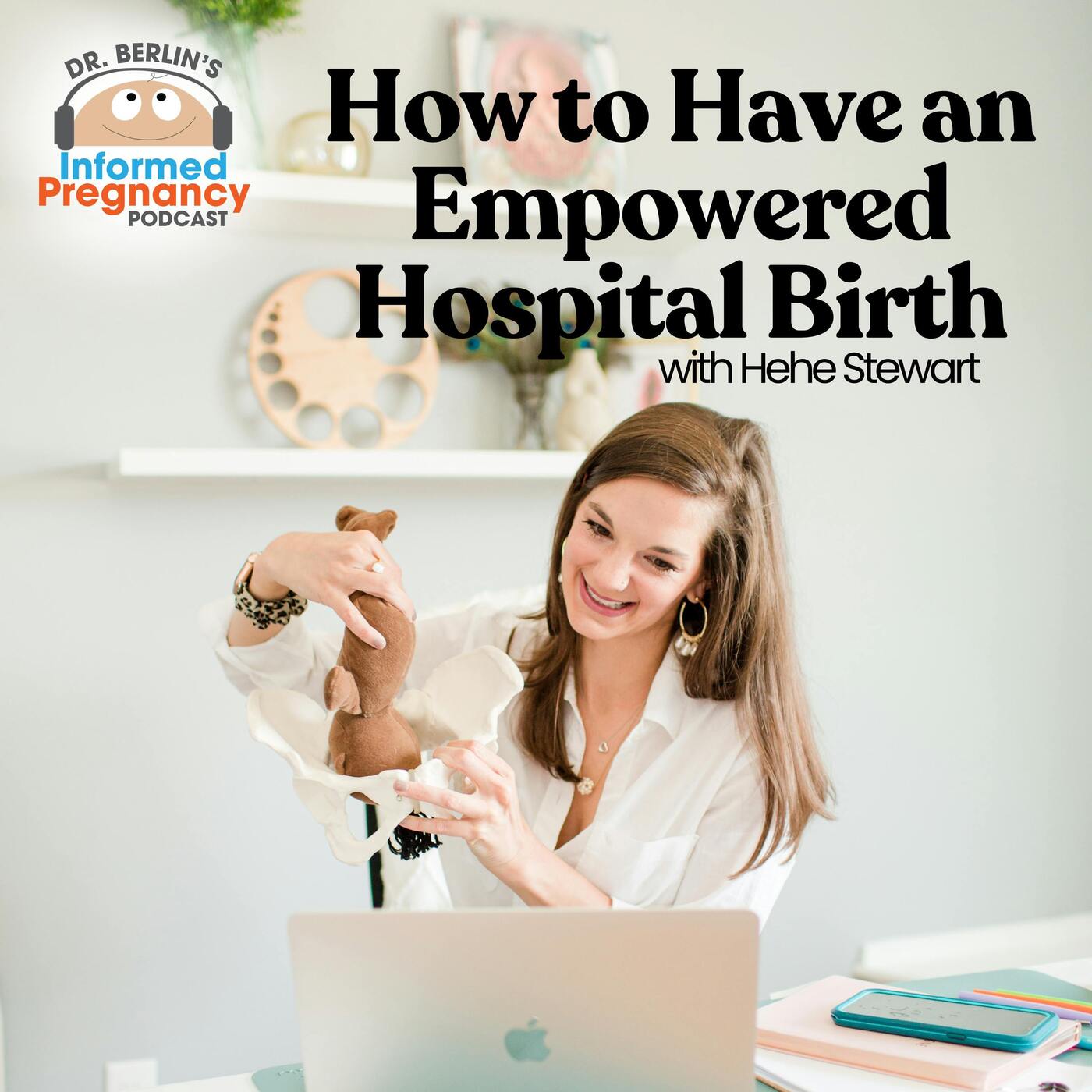
Hehe Stewart is a doula, educator, and the founder of one of the most engaging birth communities online. In short, her goal is to empower women in medical settings. Today’s conversation will help you feel more confident about advocating for your own preferences, reducing the risk of unnecessary interventions, and switching off people pleasing so you can own your birth space.
Connect with Hehe:
Key quotes
“you don't need permission from your medical team. You are your permission. You are the authority over your body.”
“Number one, people pleasing is self-sacrifice. So somebody's will will be done at your birth. It can either be yours or it can be the hospital.”
“Number two, self-advocacy is a skill. It's like a muscle. It must be worked out. It must be practiced to become strong,”
“Remember, this is an invite only event and so an invite can always be rescinded. You can always take that invite back”
“you will never know birth like I know birth but I will never know your partner like you know your partner and together we will be an unstoppable team for your birth”
Related episodes
- Ep. 457 Liberté Chan: After Birth
- Ep. 470 Carlson Young: After Birth
- Ep. 456 Liberté Chan: Before Birth
- Ep. 500 The Unexpected with Dr. Elliot Berlin Part 2
Transcript
AI-generated transcript with speaker labels — may contain errors, especially names and medical terms. Dr. Elliot Berlin, DC appears in blue; Hehe Stewart in orange.
Dr. Elliot Berlin, DC [1:00] In today's episode, we're diving into a critical conversation about what it really takes to have an empowered, positive birth experience in the hospital setting. My guest is a doula educator and founder of one of the most engaging birth communities online. Her focus is helping parents make confident, informed choices during pregnancy birth, and especially in medical settings that can often feel rushed or disempowering. We'll explore how to advocate for your preferences, reduce the risk of unnecessary interventions, and shift from people-pleasing to truly owning your birth space. I'm pregnancy-focused chiropractor, Dr. Elliot Berlin, and you're listening to the Informed Pregnancy Podcast.
[1:53] Heehee Stewart, welcome to the podcast.
Hehe Stewart [1:55] Hello, thanks for having me. Such an honor to be here.
Dr. Elliot Berlin, DC [1:59] First of all, you're an amazing person, and I wanna get into a lot of different things because you don't have kids, but you've been supporting people having kids for like a decade in a very passionate way, and I think that's really cool, and I wanna find out more about that, but I have to start with the first question. How'd you get the coolest name ever?
Hehe Stewart [2:19] Oh, so my real name is Haley Elise. It's a hyphenated name, and when I went to college, it transitioned to H-E, and then it transitioned again to Heehee, and then my early, early, early career was actually with children on the autism spectrum, and we found that nonverbal children would say Heehee, and I was like, well, that sticks, and so then I went to grad school as Heehee, and my business became tranquility by Heehee, and so now I'm just Heehee.
Dr. Elliot Berlin, DC [2:46] I mean, not just Heehee. You're Heehee, and Haley Elise has a lot to say again and again, so I like it. It is. All right, so we talked about this. We established you don't have kids, but you are in the birth space. What drew you into that world?
Hehe Stewart [3:01] Yeah, so beyond my career in working with children on the autism spectrum, I was in early childhood in general, and part of that career was in the infant classroom, and I did part of that time in the state of Alabama and part of the time in the state of Massachusetts, and in both places, I felt like parents would come with a lot of emotion. There was a feeling of relief, like, okay, I'm getting a little bit of my normal life back, and I'm gonna put my child in childcare, and there was a little bit of angst and anguish of like, oh, this is essentially a stranger. I mean, obviously they're accredited programs, so these people are safe, but I don't really know this person,
[3:41] and there was a sense of sadness of, while I'm ready to get some of my life back, I'm not necessarily ready to hand my baby over, and I'm gonna miss the mom at work at eight hours a day, and I realized that there has got to be a better way, and when I looked into it, I realized that that actually started in pregnancy. It actually started in prenatal care, and that if we were really going to help parents have a better postpartum experience, it couldn't start after birth. It couldn't start after their baby arrived. It had to start, not even in labor itself. It had to start months before that, so I took a doula training, and I realized, wow, with my master's degree,
[4:22] this was just like the final puzzle piece that I had been looking for, so I left the classroom shortly after that, like within 18 months, and while I was finishing up my time in the classroom, I had started my business, and what actually drove me out of the classroom was my business had just taken off so much, and I think that the approach that I use is very different than most people, and the demand was there, and I thought, okay, I think I'm onto something. I'm gonna take this leap of faith, and I was so young, and you're poor, and you're young, and so I thought, well, if I'm already poor and young, I might as well just take this leap of faith.
[4:54] What's the worst that can happen, and it turned out amazing, and so here I am a decade later, and I've been honored to be in thousands of births and to help people have really positive hospital experiences in a system that, at the end of the day, it's really not designed for autonomous births.
Dr. Elliot Berlin, DC [5:12] Now I understand a lot of the passion, and what a great discovery, like understanding and discovery that early on to realize that the effect on the child starts so early, and that you can have a much better impact if you get involved at that level than once they're already here, and also I would just say that I think Alabama had a bigger impact on your accent than Massachusetts.
Hehe Stewart [5:33] You know, it's one of my things that I love about myself is that I haven't lost my Southern accent, and I hope that it never goes away.
Dr. Elliot Berlin, DC [5:40] I don't know, it just makes me hungry for fried things, but enough about that. So now how did that evolve? Okay, great, so you do a doula training. I mean, doulas are incredible, but the training is not like, of all the people on the birth team, it's probably one of the smaller trainings in terms of didactic curriculum. How do you develop from that into all the things that you do now, which is a lot?
Hehe Stewart [6:03] Yeah, so I realized very quickly, sitting in the training, so the training that I took was just a four-day training. It was two weekends back to back, a Saturday and a Sunday, eight hours each, and I felt like it was not comprehensive, but rather complimentary to the master's degree that I already had, and so in that training, they said meet with your client once or twice. Well, I started out meeting three times, and I found that those three meetings would be two hours long, and I was exhausted afterwards, and I felt like I had just overwhelmed my clients, so then I moved to four meetings, and then I moved to six meetings, and then I moved to eight meetings,
[6:39] and now my team meets with our clients 10 times. Most of our clients are signed up with us by about 12 weeks, so we spend the duration of your pregnancy with you, and postpartum, kind of a similar story. At first, I said, well, we'll just stay with you for 30 days, and then it moved to 60 days, and now on our very base package, every single person who births with us gets 90 days postpartum. We're also a concierge service, so our clients have 24-7 access to us, and that truly does mean 24-7, and we have about a two-hour return rate, so if you text us in about two hours, you can expect one of my team members to text you back, and then that would, I think, be the final thing,
[7:17] is we don't work in a traditional doula setup, meaning that we have a singular doula and a backup. When you hire our team, you actually have three doulas that work with you. We are our only birth team, so it's not an on-call schedule at all of your 10 prenatals. It is all three of us on all of your concierge lines. It is all three of us. When we come to your home for your prenatals, it is all three of us, so we do things really differently that comprehensive care was really important to me because I found that in the hospital system, it's something that's missing. You have that ever-evolving door of providers. The gap in terms of you show up to the hospital
[7:57] and the on-call doctor is someone you've never met. Well, we know that that is going to slow labor. We know that's gonna put you in fight or flight, and so I figured that if we could at least have your partner be a solid face that you know, love, and trust, and then one of your doulas is someone that you know, love, and trust, and you never have the option to have a doula that shows up to you that you've never met before as a backup, then we could reduce the impact of that ever-evolving door of providers that you may or may not have ever met in the hospital system, and the same goes for your nurse. You know, you get a nurse. You probably have never met them.
[8:30] You get used to them. They're with you for 12 hours, and then they're like, okay, I'm gonna see you, and if you're here tomorrow, I might see you again, and you get a brand new nurse, and so I really tried to mitigate that risk of impacting labor in a negative way by increasing the number of people in the room that you already had a deep, solid relationship with, and we have found that it works really well. Does it work 100%? No. Anytime you introduce a new face voice energy to the birth space, we see a little bit of a hit, but it's not nearly as much of a hit as I think other people experience if you don't have that setup of a team that you have spent the last six, seven months with.
Dr. Elliot Berlin, DC [9:13] A really innovative approach, and I could see why it's so successful and makes somebody feel extra supported, I think generally makes someone feel pretty supported, and it is that one person that you interview and pick, and they're with you continuously, ideally from beginning to end, but your approach magnifies that to the next level. It's really great. I wish it was available for other types of healthcare, not just birth. Okay. Yeah. I want to, in this episode, because we talk a lot about birth planning and how you want the vision of your birth to go, and one of the things that we talk about at the very, very, very beginning is picking your setting and picking your providers,
[9:53] and oftentimes you realize, based on the vision that somebody has, they're going to be best off realizing that goal if they do it outside the hospital, but for various reasons, they will not do it outside the hospital either they don't have the option to or they don't feel like they can. They want the medical safety blanket sort of being at the hospital, and so one thing that I think is lacking in our 450 plus episodes is really trying to think through a hospital birth and ways to empower yourself and have a great empowered birth with the vision that you want catered to and played out the way you want it to in that setting. So you have a wild amount of experience.
[10:32] You're one of those guests who I realized immediately, I'm not going to have enough time to get through everything I want to get to. I want to know what it was like the first time you went through a birth, you know, and that could probably be a nice long story. I want to know like things that you've seen in birth that surprise you, but all I could say at this point is you've been to a lot of birth, you've had your hands in tons of birth, and you've gone from providing that type of doula care also to doing a tremendous amount of what we do or like puzzle pieces in terms of information and empowerment through information. So I'm going to take a little break,
[11:07] and when we come back, I'm going to dig into two lines of questioning. One is about the work that you do that's more empowerment-oriented, information-oriented, and then using all of that, your experience and your knowledge to help us figure out how to plan for a more empowered hospital birth. Don't go anywhere, we'll be right back with He-He Stewart.

Dr. Elliot Berlin, DC [11:40] Welcome back, we're talking to Haley Lee Stewart. So many questions, okay. We're going to get into hospital birth and have a plan for an empowered hospital birth and a good experience in the hospital, but before we get there, so you start this very innovative approach to doula care, and then you move into things like the BirthLounge. Tell me about that.
Hehe Stewart [12:00] Yeah, so the BirthLounge is an online childbirth education course where it really originated the year before COVID. So in 2019, I was having a ton of people down south. So I grew up in Mississippi, I went to grad school at the University of Alabama. And so, you know, for more than half my life, at that point, I had only been in the North for three or four years at that point. And I had so many people asking how they could work with me in the South, even though I lived in Massachusetts and I didn't have an answer, I didn't know. And so I actually began to offer virtual doula services before virtual doula services were even a thing. And yeah, I got a lot of pushback, believe it or not.
[12:41] People were incredibly critical of that decision. And people would say things like, well, you can't be a doula if you're not there. And I just didn't believe that. I knew that I could make a difference. And so I had a whole slew of women that hired me from the South and I did not travel down to their birth and we would FaceTime. And I would say, take a computer or a phone or an iPad and I will FaceTime you and I will be your doula. And I realized that if I can get the proper training in you before your birth occurs, your partner is more than capable of being your doula and I can be there to kind of guide you through that virtually. And that's how that originated.
[13:17] So then 2020 hit and I thought, ah, now I have to put this in a course for everyone. And now we have people all over the world in other countries and it's just really fascinating. And in the birth lounge, I talk about what other countries do and it gives our American members a good idea of a global view of different things. So for example, breach birth, which is more widely accepted in other countries, we talk about that in the birth lounge or vaginal birth after C-section. VBEC is the primary after a C-section in some other countries where in the US that's not always the case. And so it is much more of a global look so that you can truly have the whole picture
[14:00] so that you can go to your provider and say, I know this is an option. I'd like to talk about that. I'd like to explore what that might look like for me. And it really teaches you advocacy skills, which I feel like is missing in a lot of childbirth education classes. They wanna teach you what your options are, but then when you get into the hospital, you're often railroaded with the idea that hospital providers are not always open to having these discussions. And so inside the birth lounge, I am teaching you how do you take control of those conversations? And even if you're met with resistance from medical staff, how do you move through that to stay in control of the decisions that are made
[14:35] and advocate for yourself?
Dr. Elliot Berlin, DC [14:37] This is extremely important. I think doctors too, who we both know, he calls hospital birth, childbirth education classes, on how to be a good patient. It actually is. And they are, they're very skewed. And the hospital near us, they try to be more friendly to do this over the past several years and more accommodating to different birth plans, but with limited success. I mean, also Dr. Stu says like in 10 years, now you can have clear fluids while you're in labor, not just ice chips or that awful sponge that they rub around the inside of your mouth. So they're trying and they're moving perhaps in a decent direction in some ways, but at a snail's pace.
[15:15] So when you talk about advocacy, self-advocacy, obviously that's gonna be much more important in the hospital than at home. In the hospital, it's constantly, my observation is that you're always asking them for permission to do things. Can I do this? Can I do that? Can I go pee? Can I eat this? Whereas at a home birth, anybody who's around you is actually the opposite. Do you mind if we use this towel? And it's a totally different shift on empowerment. And you don't really have to advocate at home, but at the hospital, you really do. So tell me more about that. What kind of tips do you give? How do you prepare people for that?
Hehe Stewart [15:51] Yeah, I think it all starts in pregnancy too, right? Like your communication starts in your prenatals. You should be having these conversations well before you are in labor and making sure that these things are making it into your medical chart. Having a birth preference sheet. So we talked previously about a birth plan. I prefer not to use the word plan because it's very hard to plan birth, but just your preferences. These are the things that I prefer to happen in labor. I also teach a plan A, B, and C. So if I can't have plan A, here's a plan B. That's my preference if plan A is not available. And then a plan C is for a C-section, whether it's scheduled or emergency,
[16:26] or just necessary, but not an emergency. Here are my preferences in all of these scenarios. And then I love that you say, can I do this? Is it allowed for me to do that? In the birth lounge, I teach you to be in charge of that. Instead of saying, can I eat this granola bar? You would simply say, I have this granola bar and I'm going to eat it. If that is something you need to know in my chart, please do it. Would you like to see the ingredients before I eat it? So you're not asking for permission. It really empowers you to remember that you are a grown adult. And with the right information and education, you don't need permission from your medical team.
[17:05] You are your permission. You are the authority over your body. This medical team is there as a guide. They are your confidants. They are your teammates, but you are the boss. You're the captain of that team. And if at any point you are concerned about something or you are second guessing, or you want more information, then you've put together your team. You have your partner. You have your OB. You have your nurse, your midwife, your doula. But you at the end of the day are the only person that can actually make that decision for you. In the birth lounge, I teach something called the red ball theory. And you will see me have a red ball and that is the red ball of control.
[17:46] And so you walk into your labor and you say, I don't want pitocin. And you'll see the doctor snatch that red ball from you and say, well, it's hospital policy. So you have to have it. And you don't necessarily snatch it back, but you gently reach out and you take the red ball and you say, I understand the hospital policy, but I'm not consenting to that right now. I would rather wait and see if my body is able to do contractions on their own. I would rather wait and use nipple simulation to see if I might be able to elicit my own oxytocin before we start pitocin. And you might see the doctor snatch it out and say, well, you're not allowed to do that.
[18:26] And you very gently, again, not snatching, reach out and take that red ball of control and you can just tell your doctor, I really understand your hesitation, but right now I'm not consenting to pitocin. And so it really does teach you how do you navigate these conversations when you are being railroaded, steamrolled by your medical providers who are showing inflexibility where you know that's not your responsibility and you still hold the authority, you still have the power over your birth.
Dr. Elliot Berlin, DC [18:57] That was some of the most important empowering information I think we've gathered on this podcast in the past 10 years. The red ball makes so much sense. I'm so curious when that came to you. And it's so true. Like everything that's done in a hospital setting is sort of designed to make you feel like you don't have the red ball. We have the red ball. And the way you dress, like your doctors are gonna be in those nice lab coats and you're in this oversized unisex hospital mumu with snaps that kind of don't really come together. And if there's a gust of wind, you're exposed to everybody. That's not empowering. So if it gives them the red ball, just by the way you're dressed.
[19:37] And by the way, you don't have to dress that way. That's just how they want you to dress. It's so empowering. I'm never gonna forget the red ball. That's really great way to think about it. And the other thing that you said that's really important to me is that you can't start doing this once you're in labor is a buildup. And I think one of the most important things, especially if you're gonna give birth in the medical system at a hospital with a medical doctor is to make the choices to the extent that you can on who that doctor is gonna be and what that setting is gonna be, what that facility is gonna be like and what kind of roles they have and what kind of grip they're gonna have
[20:11] over red balls that are important to you. So what kind of advice do you give to people early on thinking about who's gonna be the right doctor for me, what's gonna be the right hospital?
Hehe Stewart [20:20] Yeah, I think knowing what's important to you and what is a priority to you is the first place to start. And then you wanna go into your prenatal appointments. And I always recommend interviewing different doctors, but you're not asking them, are you okay with X, Y and Z? Instead, you're asking them open-ended questions. How will you support me if I choose to eat in labor even though the hospital policy says I can't? How will you support me in unmedicated labor? How will you support me in going past my due date, even though I understand the recommendation is to be induced at 39 weeks or to not go past 40 weeks? You want to know how flexible this provider is
[21:02] and it will also give you a lot of insight into their philosophy about your own personal autonomy. What we wanna stay away from is providers who believe that they have authority over you. And so you'll hear this in their language if they say things like, well, that won't happen because we don't allow patients to go past their due date. Well, I hate to say it, but no one allows you to do anything. Remember, you're the authority. You allow yourself. So if you have the information and the education, you feel okay with the risk and you feel okay with the benefits and you feel comfortable going past your due date, then you very well can go past your due date.
[21:38] You wanna have a provider who, even though if their personal recommendation is to go at 39 weeks or to be induced and not go past your due date, they still support your autonomy and say, you know what? If that's something you're comfortable with and through our conversation at the end of your pregnancy, you know, you and your baby are looking safe, then I support that. I hope that you would be open to me coming back to you with a conversation if I ever was concerned about you or your baby's health and safety. Of course, there's not a mother out there who wouldn't want their doctor to, you know, re-approach them with new information if they were concerned about something.
[22:13] You want to avoid providers that say things like, I don't allow you to, you can't do that. The hospital policy says you can't do this or aren't allowed. You are the only one that makes decisions for yourself. And so I think their language is gonna give you a lot of insight into how they think about you as a patient and your rights to making decisions over your own body.
Dr. Elliot Berlin, DC [22:37] Of how you present that information. I really honestly want to take your class, the birth lounge.
Hehe Stewart [22:44] Come on in.
Dr. Elliot Berlin, DC [22:45] Are you still, by the way, doing virtual doula work? Not that I'm planning to have a baby, but.
Hehe Stewart [22:49] Yeah, yes we are. We do virtual and in-person in the New England area and we also have travel services. So actually currently at the time of this recording, I'm with a family in Mississippi.
Dr. Elliot Berlin, DC [22:59] Oh, no kidding. Oh, that's awesome. And what's the format of the birth lounge?
Hehe Stewart [23:04] Yeah, so it's all online videos and you're on pace and nothing is drip content. So from the minute that you enter, you have full access to everything. That way you can really pick and choose what you, you know, consume and how you put together your birth. It really is, you know, it's a DIY. You have all the information and you get to consume it. I do have templates for a lot of stuff, but you're under no obligation to use my templates. I just find that a lot of people find them helpful, but you're absolutely in control of making your own preference sheet, consuming whatever information you want. And we have two live calls each month. One with just me.
[23:43] It's a Q and A and informational session. Then we also have an expert in every month to talk about variety of topics and members are able to put in information that they would like to see. So we have sessions and modules on anything and everything that you can think of.
Dr. Elliot Berlin, DC [24:00] Really special. I do want to take a break, but before we get there, two things. Number one, you said something that really resonates with me having been in the hospital with supporting clients and labor many, many times, which is that you say, I'm going to eat this granola bar now. And if you need to note that in my chart or something like that, just feel free to do so. Look, the same hospital that's trying to be a little more outgoing and open-minded to various birth plans did an outreach program for doulas and they had a liaison between them and the doula community. And I thought that was a constructive step. And one of the things that that liaison said,
[24:37] and she's a doula, is that part of what you have to be aware of is if you buy a hospital ticket, you're going to go on a hospital ride. So sure, within that framework, you can definitely push for what you want, even if it's not in their comfort zone, but you are in a hospital ride and sort of have to be aware of that. So they have certain ways of doing things that are in their comfort zone, not because they're bad people, but it's just how they do it. And one of those things is there's liability, which is risk to them that doesn't necessarily mean risk to you as a patient. And they're guarded over their liability constantly. And that sometimes means things
[25:17] that are not necessarily in your best interest are done or things that are in your best interest are not made available to you. And what you're saying is, I will assert that I will be the choice of the one who decides what's in my best interest. And that leads me to two things. Number one, when you say it that way, you sort of give them the out that they need, which is like, yes, if I'm gonna eat this granola bar, if you need me to sign that, I'm eating it against medical advice. And that's what's gonna protect you from liability down the road, then I'm giving the permission to do that. But I gotta eat this granola bar right now. And I think that's a really beautiful way
[25:52] of asserting, taking the red ball, asserting yourself in doing what you want to do, what you need to do, what your inner voice is telling you to do. And at the same time, sort of diffusing some of the conflict by just saying, I know that it's not your policy and I know that you need to mark me as that patient and go ahead and do it. We can still be friends. That's really important. The other thing is when you're picking that doctor early on, if you do interview several doctors, I think the best case scenario is when you find a doctor that's really on the same page as you, that's really ideally at least tolerant, but even more so supportive of the kind of birth
[26:27] that you wanna have and the choices that you're talking about early on in theoretical terms, because obviously they haven't happened yet. Because at the end of the day, I love going to a birth where when the doctor's like, I really recommend doing this intervention now, you don't need to start questioning them at that point. Like how necessary is this intervention? Why are you pushing this intervention on me? But because you've pre-talked about it and you trust them, then you're gonna go along with their recommendation. Obviously they're gonna give you the choice, but you're gonna take the choice and go along with it when it's necessary. I think that when you're totally not on the same page
[27:03] and there's a tremendous lack of trust, you sometimes end up in dangerous circumstances where that intervention really is necessary for your health or the baby's health or both. But there's such a doubt that there's a delay and a resistance that could end up creating problems for you. So much better to do the homework at the beginning and ask the questions. I love the way you formulated those questions. I am gonna take the non-drip birth lounge class myself because I'm already learning so much from you in just two segments. We're gonna take a break and then we're gonna come back for segment number three. I think we need to address something that I've heard you talk about before,
[27:40] which is people pleasing. I know I'm averse to conflict. I don't really like it and I'd like to be a people pleaser. And when you have your baby is a terrible time to be a people pleaser. How do you work those two out? We'll be right back with He-He Stewart. Welcome back. We're talking to He-He. I was just telling her during the break, one of my favorite guests ever. We're definitely gonna have to have you back for more He-He. So before the break, we talked about people pleasing. I know that I don't like conflict. I've run away from conflict. I shrivel up and go into my turtle shell when there's conflict. And we're talking about, so I want to have the baby at the hospital
[28:26] or I need to have the baby at the hospital. And I wanna assert myself in all these different ways, but they have all those policies. So there's conflict in the air. And I know that a lot of patients like me want to just not be the one who creates conflict and just go along with the flow and be the people pleaser. And then they sometimes suffer the consequences for that and wish that they had the spine, so to speak, to assert themselves. How do you suggest that people prepare for that?
Hehe Stewart [28:53] Yeah, I've got two thoughts on this. Number one, people pleasing is self-sacrifice. So somebody's will will be done at your birth. It can either be yours or it can be the hospital. So if you're going to be a people pleaser, then you are self-sacrificing yourself and your wants and your desires and your preferences. And I highly urge you not to do that because you're the only one that has to live with the birth outcomes that happen in your birth. Number two, self-advocacy is a skill. It's like a muscle. It must be worked out. It must be practiced to become strong, which is also why I say practice this in your prenatals. If you don't do well in a prenatal,
[29:33] you see your doctor in a month or in two weeks or maybe at some point in your pregnancy next week and you can always revisit that conversation. You can re-practice that skill. So go ahead. You have been given nine, 10 months of pregnancy. Take those nine, 10 months to practice that skill of self-advocacy. And I wanna remind you that this doesn't just happen within the birth space in terms of your prenatal care or in the hospital. It happens with your mother-in-law. It happens with your neighbor. It happens with the people on the street. It happens with setting boundaries with your partner and sharing your preferences with them helping them understand what role you would like
[30:10] for them to play in your birth. Your self-advocacy skills should be worked out in many ways in your life, even as simple as you're going to get a massage. Your massage therapist says, is the pressure okay? And in your head, you're going, no, this is a little rough. But you say, yeah, it's fine. That was a great way for you to say, no, it's a little bit rough. I'd like for you to lighten up just a little bit. Go ahead and practice that. When you're getting your nails done and they say, do you like the color? And in your head, you go, oh, no, I thought it was gonna be totally different. But you say, yeah, it's fine. Don't do that. Take these small opportunities that are low risk.
[30:56] The risk that that nail lady gets mad at you is so low. It's probably not gonna happen. And at the worst, she's gonna roll her eyes, take off the color you don't like and repaint your nails, right? Your massage therapist is asking you because they genuinely want you to enjoy the massage. Take these small opportunities to practice and flux that muscle and build it because it is a muscle that has to be practiced. And then every time you go to say something that you don't mean, I want you to know that you're choosing that other person's comfort over possibly your health and safety. And so start to remind yourself of that. I deserve to be safe and healthy
[31:38] over this person's discomfort because self-sacrifice is definitely not serving you in pregnancy and birth. So start to advocate for yourself.
Dr. Elliot Berlin, DC [31:49] I'm so glad you went down that path to other applications of it because again, I'm a people pleaser and I would definitely be the one who will be like, it's good and I do massage like 10 hours a day. And I'm constantly asking, how's this pressure for you? And you can hear in the voice that it's not good, it's too much, but they don't wanna say it. It'll be like, it's okay. I'm like, a little too much. Yeah, it's a little too much. I'm like, okay, you could just tell me that. And I get it because on the other side, I'm that same person. I don't want to put anybody out. And my kids will be like, dad, can you get me more ketchup packets? I'm like, I guess so.
[32:25] Hi, can I have some more ketchup packets? Yeah, I'm here, I'm the customer. I need more ketchup. Why not? And you're right.
Hehe Stewart [32:34] And you're paying for it.
Dr. Elliot Berlin, DC [32:35] Yeah, so first of all, you're my new therapist. And also it's true, it can't happen overnight. It's gotta be something that you practice and you do consciously. And I think it will make life a lot better. And you really said something like somebody's preference is going to be realized and it's either yours or theirs. And I think now that you're putting it in that phraseology, I think that oftentimes you end up in a situation that leaves you traumatized because you didn't express what you want and you weren't asserted about what you want. In life in general, maybe you end up bruised from that massage and more sore than you started. But in birth in particular,
[33:20] there is a lot of birth trauma. And I think if anybody goes back and looks over how they ended up there, they're gonna find areas where they could have been more assertive about decisions, things that they wanted or felt like they needed and didn't express or didn't push for. How do you handle birth trauma?
Hehe Stewart [33:39] Yeah, this one is tough because we know from the data from the CDC that about 80% of birth trauma is avoidable, right? It doesn't have to be that way. When we look at the listening to mother survey or even from Dr. Dancy's birth trauma research, we know that the majority of research does come from being ignored, silenced or sloughed off by your medical providers. So even when women are speaking up for themselves and they're being overridden by their birth team, that is a significant cause of birth trauma. In these cases, I always remind women that you can sign an AMA like what you mentioned earlier, but also two very pivotal words and it's just two.
[34:24] One is no and one is stop. Having someone by your side too can be really pivotal. So if you have a really educated and confident partner, but if your partner is not confident or they maybe get a little uncomfortable in medical situations, think about having a doula. You can always fire a doctor, you can fire a nurse, you can fire them in your labor, you can fire them while you're pushing. If someone is not respecting what you are saying, if they're not respecting your nose, if they're not respecting your request, if they are not respecting your preferences, if they are not respecting your autonomy or your wishes to just be an active participant
[35:05] in your care, then they are not worthy of being in your birth space. They don't deserve to be there. Remember, this is an invite only event and so an invite can always be rescinded. You can always take that invite back and swap it out with another person. So birth trauma unfortunately is on the rise in our country and I think there's a lot of things that we could do to reduce that. One of those, and I hate it, I hate it so much that the onus is on the woman, the birthing person, her partner, it's on that family where it really should be on the medical system. People should be able to go into the hospital and not only know but expect that they are going
[35:50] to be well cared for, respected and done so in a compassionate way. Unfortunately, right now with the current medical system that we have, that's just not the majority of experiences and so I think that we have a long way to go. I am hopeful that we can get there. I know I maybe stand alone in that. Not a lot of people share in a lot of hope that I have but I do think that our medical system is trying, although out of snow pays like what you say. I think the more that women wake up and the more that birthing people start to demand better, we will eventually just call the hand of the hospital system and they'll be forced to do what we say. If enough people say, I am going to eat
[36:35] this granola bar, feel free to note it in my chart, then eventually the medical system will say, our policy says that you shouldn't eat in labor but of course we recognize that if you're hungry and you choose to, we just ask that you let us know what you're eating so we can make a note.
Dr. Elliot Berlin, DC [36:51] I share the optimism, although I think it'll take a long time to get there but I think when you look at other things like even breastfeeding and how pharmaceutical companies came out with new and improved formula that they worked hard to market as better than your milk formula and it almost went to a point where people judge for breastfeeding, like why would you give them that if we have this new and improved formula? You can't do that very long before women realize, no, my milk is better and band together and push through to the top again and at the end of the day the hospital is a business so they are limiting your choices sometimes because of liability which is a business decision
[37:35] but I think one of the reasons the hospital here has become more open and reaching out to try to work together with the dual community is because so many people decided to have birth at birthing centers and home birth and with that vote they see their business leaving and so they have to adapt and the more that happens the more you might be able to have what you consider the best of both worlds, have your autonomy and have your choices respected and not have to advocate nearly as much in the hospital setting and get that medical safety blanket that you want without making a big sacrifice to get it. When it comes to advocacy you said sometimes your partner is well-educated,
[38:13] sometimes your partner is a great advocate, sometimes your partner is afraid to ask for ketchup so luckily we have doulas. How do you see the role of the doula as it relates to advocacy?
Hehe Stewart [38:23] Yeah, I wanna mention here that I do have a dad days course, it's D-A-Z-E and it is meant specifically for male partners to learn how to advocate in the hospital system especially if you're someone who is uncomfortable in those settings because I found that that was so many stories is that women were coming to me saying, I wish my partner had done X, Y, and Z and the partner would say I didn't know that I needed to and I didn't even know how to and so I created a dad days course. In terms of the doula I always describe it to our clients as an A-B role and so sometimes your partner will be playing the A role, they will be doing hip squeezes and they will be verbally giving you mantras
[39:03] and they will be rubbing your shoulders and then your doula might be playing a B role, they might be picking up your labor room, refilling your water bottle, filling up the birth tub or emptying the birth tub, blowing up the birth ball to get you into your next position but then there are gonna be times where your partner is very either uncomfortable or they just need a break sensory wise, they are just exhausted and you might send that partner out to refill the water bottle, go get some chicken nuggets at the cafeteria and go walk around outside to just get some fresh air and then your doula will resume the position of that A role. When the partner comes back,
[39:39] it's usually very seamless if you've been working with your doula for a long time and you know them very well but that partner and that doula can swap out and if the partner is ready to resume the A position then they can but sometimes they come back and they're still not ready and so maybe they just sit and they're still telling you, honey you look amazing and you're doing great but they're not right there in your space or maybe they do take a little nap and you and your doula are closed up in the bathroom and the lights are off and you have these tea light little candles going and you are just laboring and your doula is doing nothing but holding space,
[40:15] she's not talking, you don't need her to be pressing on your body, she is just simply there and your partner is just making sure that no one comes into that bathroom, no doctor, no nurse, no cleaning staff, no anesthesiologist, no nobody comes into that room without going through your partner first and your partner is that first line of defense and if they can answer the question then there's no need for that person to come in and maybe that mom has said, I don't want anyone to come in for the next hour, I really need some time and so no matter what you need, unless that mom or baby is in danger, that partner holds steady and says, you're not going in,
[40:53] we still have 36 minutes before she's ready and I'm telling you, you're not going in, do not enter that room and so there's a really nice symbiotic relationship between a doula and a partner that can really play out in the birth room and that's why I recommend getting your doula early, you get to know them, they get to know you and that relationship gets to really build some really deep roots so that you can work seamlessly in the birth room and we know that that's gonna give that mom better outcomes.
Dr. Elliot Berlin, DC [41:21] I just hope that if he does go get chicken nuggets, he also gets ketchup packets. Yeah, hopefully he has the courage to ask for extra ones. Otherwise we're gonna have to send a doula to get the chicken, the pet packets, the ketchup. Okay, I'm a doula, my wife's a doula and at all four of our births, we had a doula and people are like, why did you need a doula? A, we wanted a doula but also, I'm a doula but almost anybody could be the doula. There's a lot of great doulas to choose from could be the doula but only one person could be the partner and they do have different roles. I love the way that you have them working together, doing a dance sort of in collaboration
[41:57] but I also think that to some degree the doulas have certain sort of magical belly powers that partners don't and vice versa. The way that a partner can sometimes just hold or embrace their partner that knows how they tick, what's gonna be comforting to them in a way that a doula might not have learned. Even just a little embrace or whispering a sweet nothing in their ear in a way that a doula can't and then the doula has all this other knowledge and experience that they bring into it and just wisdom and things that they are happy to do that will make the setting better. Even like you just said, sort of cleaning up the room a little bit there's something a partner might not think to do
[42:36] but that can really make a difference in the ambiance and in the experience.
Hehe Stewart [42:40] I always tell partners that, you will never know birth like I know birth but I will never know your partner like you know your partner and together we will be an unstoppable team for your birth and it really does take all three of us. We all have our individual roles and we all go together. We are a big puzzle and so if we can find how we can be cohesive it will give you just the best birth.
Dr. Elliot Berlin, DC [43:05] That was incredibly well put and in my first birth, our first birth, we were not doulas. We had very little experience with childbirth and the doula was amazing because I think that a lot of times guys in particular like to be problem solvers and so when we see what looks like a problem we're just jumping in with solutions. Maybe the solution is baby, why don't you get the epidural right now? Even though she doesn't want, I'm like, you look uncomfortable. Not that I was that guy but the doula was great because she made me feel more comfortable and me more able to just be the partner and like you said, know my wife in ways that she doesn't and also sometimes she would just give me things
[43:45] to do that were helpful. Why don't you take this washcloth and put a little cool water in there just gently hold it over there and like all of a sudden I become the hero. My mom said, oh, that feels so nice, thank you and I just wouldn't have known and I wouldn't have thought to it. Like we went from like the 1950s and 60s where we weren't even allowed in the birth setting to all of a sudden you're the partner. You're the number one it guy. Great, I need the daddy days, is that what you call it?
Hehe Stewart [44:08] Dad days, yep, D-A-D-D-A-Z-E.
Dr. Elliot Berlin, DC [44:11] Yes, that's brilliant, that's really brilliant. I'm winding down here. I guess one question is if you could reimagine the hospital birth system, you know, we're aiming towards it. You and I are optimistic that we're gonna get there one day. What does it look like to the optimal hospital setting?
Hehe Stewart [44:28] Yeah, I think the optimal hospital setting for me would be people who only needed to birth in the hospital system. It would be filled with people who had high risk births and or their intuition told them they wanted to be in that medical setting but for the majority of women, they would be birthing at home with midwives. I think that hospital ideally for me too would be attended by midwives and obstetricians would be reserved for people who needed that high risk education or a surgeon on their team. We would not be having low risk women be attended by obstetricians because it's just an inappropriate match of care. We know that midwives have better outcomes
[45:07] for low risk women, but ideally there's a flip flop. The percentage that we see at home births now would actually be the percentage of people who are birthing in the hospital and the percentage of people we see birthing in the hospital would ideally be birthing at home under the care of midwifery care. With that being said, we are going to have to fix our cohesive transfer system in the US. Right now we have a very segmented way. Now some states are doing it really, really well. There is a midwife in Connecticut that's doing it really well and Indiana does it really well but for the majority of states, we do not do it very well and so when we have transfers,
[45:50] it's usually a really botched system and so in order for this ideal system to work, there's going to have to be some cohesion between the home birth setting and the hospital setting and everyone's gonna have to be on board and understand that transfer does not mean a failure but it just simply means we needed some higher support and the egos are gonna have to take a step back and we're gonna have to see a lot of midwives be more comfortable with transferring earlier and we're gonna have to see a lot of OBs be more open to receive and transfers without the negative kind of resentful feelings that we see currently in the system.
Dr. Elliot Berlin, DC [46:29] Yeah, and there are systems that work that way and we do better than we do.
Hehe Stewart [46:32] Oh yeah, mm-hmm, yeah.
Dr. Elliot Berlin, DC [46:34] You know, years ago I interviewed Carson Meyer.
Hehe Stewart [46:38] Oh, love her.
Dr. Elliot Berlin, DC [46:40] Carson was a doula. She did not have kids. She had this deep wisdom and passion for empowering women during their pregnancy, birth and postpartum experiences and I got the sense that in a previous world she was an extremely busy midwife and it's come back now 10 years later, maybe something like that, with he, Stuart. You have so much wisdom built into you. I am absolutely sure you were a busy midwife in a previous life.
Hehe Stewart [47:11] Oh, you're gonna make me cry.
Dr. Elliot Berlin, DC [47:13] And I'm just honestly from the heart, I feel so blessed to have you on the podcast today and to learn from you. I mean, I really, I've learned a lot and you've opened my mind in a lot of ways and I'm 100% sure that if you'll come back, we will talk to you again.
Hehe Stewart [47:28] I'll absolutely be back. Thank you so much for this honor, truly.
Dr. Elliot Berlin, DC [47:31] My pleasure. Where can we find you and all your wonderful resources online?
Hehe Stewart [47:36] Yeah, absolutely. The best place to find me on social media is under the handle Tranquility by Heehee or z.birth.lounge and then thebirthlounge.com is gonna be all of my courses and there are freebies and there are guides and there are PDFs there and it's really gonna be kind of the hub of everything and the Birth Lounge app. You can download that for Google, Android or iOS.
Dr. Elliot Berlin, DC [47:58] You've really put it all together. That's really incredible. Again, your insight, compassion, your no-nonsense approach to birth education, they're super valuable. Thank you for helping parents reclaim their power and rewrite what the hospital birth can look like. To all of our listeners tuning in, if you found this conversation helpful, please share it with someone who needs it. Leave us a five-star review and check out our other podcasts, One Way or Our Mother, plus an entire library of streaming content for new and expecting parents on Informed Pregnancy Plus. You can find it all at informedpregnancy.com.
Want more pregnancy + parenting? Start your FREE TRIAL of Informed Pregnancy+ and get access to all our curated pregnancy and parenting content — original series, iconic birth films like The Business of Being Born, prenatal workouts and more.

0 Comments