December 14, 2017 · 57 minutes · Episode 48
About this episode
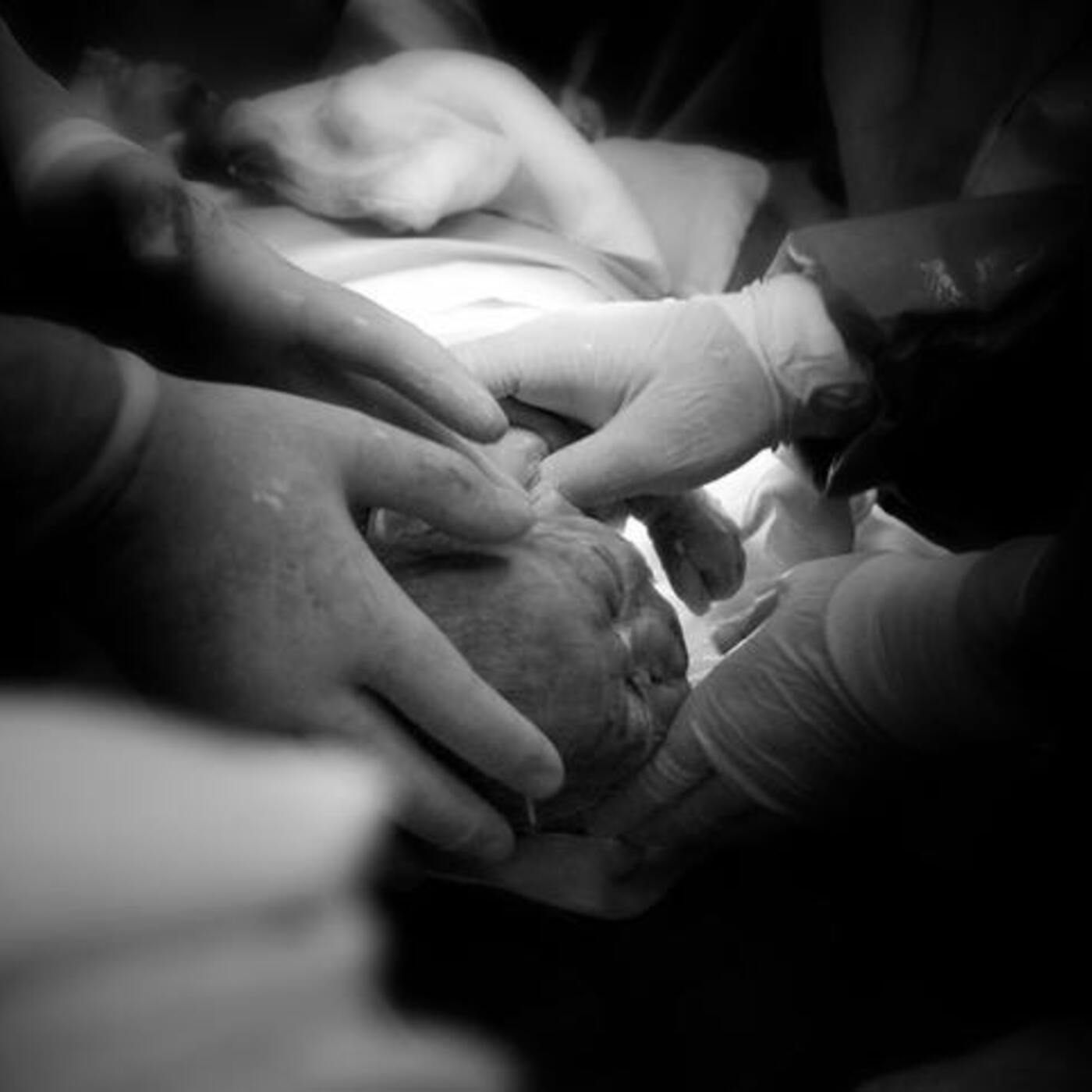
Sponsored by SleepnFeed. It’s the new multi-functional baby nesting system! It’s both a nursing pillow and bassinet in one, great for newborns all the way up to one years old. Try it today for at home or on the go! Dr. Emiliano Chavira, an OBGYN and Maternal Fetal Medicine specialist engages in the topic of cesarean birth including how the procedure is done and how women can make the experience more birth centered rather than surgery centered.

Learn more about your ad choices. Visit megaphone.fm/adchoices
See Privacy Policy at https://art19.com/privacy and California Privacy Notice at https://art19.com/privacy#do-not-sell-my-info.
Key quotes
“I think what we have to learn to do in medicine is to appropriately apply protocols where they're doing a lot of good and generating good outcomes and generating safety. Then on the other side, keep our humanity and individualize things and make exceptions when exceptions are appropriate. And flexibility. So we have to learn how to apply this artfully.”
“So there's a period of separation between mom and baby that I think historically within the maternity care system, this has not really been thought to be a thing or an issue or a problem.”
“The requirements are that the team has to believe that this is a worthwhile thing to do and they have to be willing to do it. That's really all you need. You need a mom and you need a baby. And you usually have those too when you're doing cesarean. So really skin to skin is just a matter of willingness. And there's certain things that the anesthesiologist can do, like the little sticker tapes for the EKG instead of putting them on the front of the chest, maybe they put them on the back and they read mom's EKG from the back so that the chest can be bare when the baby comes along.”
“I mean, they are super routine. Most obstetricians have done hundreds and hundreds and hundreds of cesareans. These days they have become incredibly safe. And I think if you really can, I mean, you can turn it into a birth and put all of the things into it that spiritually that you wanted to have, you can put them into birth.”
“And in my mind when I remember this C-section, I have this image in my mind if there was a disco ball. I don't think there was a disco ball, but I sort of remember it like there was a disco ball and it was just this really kind of fun, joyous event. And it was honestly, as much as I…”
Related episodes
- Ep. 207 Dr. Nate Fox – Part II – Aneuploidy and Third Tri Testing
- Ep. 43 Preterm Labor – Dr. Emiliano Chavira
- Ep. 268 Anastasiya Rul – After Birth
- Ep. 251 Tasha Gonsalves – A Birth Story
Transcript
AI-generated transcript with speaker labels — may contain errors, especially names and medical terms. Dr. Elliot Berlin, DC appears in blue; Dr. Emiliano Chavira in orange; Candice in teal.
Download PDF of the Transcript
Dr. Elliot Berlin, DC [0:36] Welcome to the Informed Pregnancy and Parenting Podcast. I'm your host, Dr. Elliot Berlin. And today we're talking about the concept of a gentle cesarean birth and about microbiome seeding. I have two really special guests in the studio today, and I deeply appreciate both of you in general, and especially for joining us for this topic tonight. You may recognize Dr. Emiliano Shavira from our episodes called Breach 101.
Dr. Emiliano Chavira [1:01] Hi.
Dr. Elliot Berlin, DC [1:01] Hey, welcome back. And preterm labor. Dr. Shavira is an obstetrician and maternal fetal medicine specialist. Welcome back to the program.
Dr. Emiliano Chavira [1:12] It's great to be back.
Dr. Elliot Berlin, DC [1:14] Also tonight, we have two guests in one. Candace is expecting her first baby and due in about a month. Candace found out a few weeks back that her baby is in a breech position and so far hasn't budged. Candace had planned for an all natural birth, but now is having to give thought to a cesarean birth if your baby stays breech. Thank you for joining us tonight.
Candice [1:35] Thank you for having me.
Dr. Elliot Berlin, DC [1:37] So how long ago did you find out your baby was breech?
Candice [1:42] Two weeks. Yeah, 34 weeks and I'm 36 weeks now.
Dr. Elliot Berlin, DC [1:46] And what kinds of things have you done to try to change that?
Candice [1:51] Oh, so many different things. Working with you, of course. Acupuncture, Moxibustion, standing on my head for half of the day, drinking a ton of water. I'm trying it all and I potentially will be doing a version in a week as well.
Dr. Elliot Berlin, DC [2:12] The external encephalic version?
Candice [2:13] Yes.
Dr. Elliot Berlin, DC [2:14] Okay. So what kind of birth… I mean, now your choices may become more limited. It's funny to say that with Dr. Shaver here because he's one of the last Mohicans who still delivers breech babies vaginally around here. But if your choices do become limited, you may be looking at a cesarean birth, right?
Candice [2:35] That's correct.
Dr. Elliot Berlin, DC [2:36] And I know for you, that's not what you were planning for. What was your original plan?
Candice [2:41] My original plan being someone… I was trying not to plan too much. It was like go with the flow. The only thing I don't want is a cesarean. That was basically it. I wanted to go as natural as possible. I was open to an epidural. I wasn't going to tell myself, no matter what, you can't do an epidural, but I wanted to try doing it without. I just really didn't want a cesarean, to be honest.
Dr. Elliot Berlin, DC [3:06] How
Candice [3:06] Come?
Dr. Elliot Berlin, DC [3:07] Why?
Candice [3:10] Well, I'm fearful of surgery, the recovery, the pain. And then secondly, I wanted to have almost like a spiritual experience with birthing a child. I only planned to have one and I'm a natural girl. I do everything holistically and naturally, so I just felt really comfortable doing that.
Dr. Emiliano Chavira [3:38] It's a great birth plan.
Dr. Elliot Berlin, DC [3:40] Which one?
Dr. Emiliano Chavira [3:41] Her birth plan.
Dr. Elliot Berlin, DC [3:42] Spiritual and natural?
Dr. Emiliano Chavira [3:44] Yeah. Everything she said, it's a great birth plan.
Dr. Elliot Berlin, DC [3:46] Yeah. Except her birth plan only had one rule, which was no cesarean.
Candice [3:49] Except it's completely potentially out the window.
Dr. Elliot Berlin, DC [3:53] Which is all parenthood, I think.
Candice [3:55] This is what everyone keeps telling me. Oh, your baby girl's just preparing you for what parenting's going to be like. I've been getting that line in one form or another.
Dr. Elliot Berlin, DC [4:06] Have you ever had surgery?
Candice [4:08] No. I've only had my wisdom teeth out. That's as far as surgery's gone for me.
Dr. Elliot Berlin, DC [4:12] How was that?
Candice [4:13] Well, they put me under, so it wasn't…
Dr. Elliot Berlin, DC [4:15] Oh.
Candice [4:16] Just a thought of being awake when the whole thing and being strapped down and I don't know. I faint when I get my blood taken, put it that way.
Dr. Elliot Berlin, DC [4:26] Do you really?
Candice [4:26] I do.
Dr. Elliot Berlin, DC [4:27] No, I though I was the only one, so I feel better now.
Candice [4:30] Great. So this is a big hurdle for me.
Dr. Elliot Berlin, DC [4:32] Actually, it's probably not as startling when you faint when you get your blood taken, but when the big hairy man comes in and sits down and I'm like, "Okay, okay, go gentle on me." And then I get all woozy on it, it just feels a little worse. It's like that time my wife bought me professional hockey skates because they were on sale for like 80% off. And then I went to ice skate for the first time and everybody though, "Oh, that guy's going to be a great skater and I'm clinging onto the wall for dear life." Anyway, I think that you came on a great night because Dr. Shabir is here and the title for tonight is Gentle Cesarean.
Candice [5:09] Yeah.
Dr. Elliot Berlin, DC [5:10] And traditionally cesarean section or cesarean birth was two things happening at the same time. There is a surgical procedure going on and there is a birth going on. And I think originally when we started doing them out of necessity, we had to focus 100% of the effort on the surgical procedure to keep the mother and the baby alive and to keep them safe and healthy because we weren't good at it. We learned a lot in the past 120 years or so. But now that it's sort of down to a science, it's possible to shift some of that attention and focus, some of that spotlight from the surgical procedure to the simultaneously occurring birth, which you said you wanted a spiritual experience.
[5:53] And I have the sense that you can still have a… It is a very sacred, beautiful moment when your baby comes into the world, whether it's an inch higher or an inch lower. And I think that there's a lot you can do to shine the spotlight on that sacred moment and not miss out on that moment. So I would like to talk to Dr. Shabira a little bit, just procedurally, what are the steps of the cesarean in general? And then maybe we can talk about how it can be made more gentle or more sacred.
Dr. Emiliano Chavira [6:25] Sure. So let's pretend that we're not talking about a real serious emergency that's sometimes done very, very quickly. Let's say this is either a planned cesarean or maybe in labor something just not going well and we're deciding to go ahead and do the cesarean at that time, but not necessarily super huge emergency. So what usually would happen is you would have a conversation with the OB about the reason for doing the C-section and they run over some of the general risks related to surgery and they talk about the anesthesia, which you may or may not have already. So let's say you're in labor and you don't have an epidural, then they might talk about giving you a spinal, which is a one shot injection in the back that puts you numb, let's say from the rib cage down, from the belly button down.
[7:26] Or you may already have the epidural in place and you were using that in labor and that epidural can be used for the cesarean as well. So you have these conversations usually in the labor room. Most of the time you have one family member or friend or somebody is going to come into the OR with you. Most hospitals and ORs allow one person. So the mom will usually go in first together with the anesthesiologist and they sit you on the table and they take care of the anesthesia part of it. So maybe they need to place the spinal or if you already have the epidural, they give you an extra dose to really numb you up for the C-section. They connect you to all the monitors and stuff.
[8:14] So this is to keep an eye on mom's vital signs, so they connect you to an EKG and a pulse oximeter and maybe give you a little oxygen through a face mask and kind of get you all ready to go. Then they have you lay down on the operating table and some places will kind of strap your arms down, some won't. I think that really the concept is just to keep you from touching the sterile field. Sterile equipment. That's something I think that could be optional. Then they prepare the belly. So there's these different special soaps that are used to try to sterilize the skin. So they wash off the belly and then they put the drapes on to cover everything up.
[8:55] Historically, these drapes are usually not clear. They tend to be like a blue color. And so actually when your head and shoulders are above the drape and you can't see anything going on below, so you don't see the surgery, you don't see the cutting, you also don't see the birth of the baby. So they get that all set up.
Dr. Elliot Berlin, DC [9:16] Is the purpose of that drape so you don't see what's happening?
Dr. Emiliano Chavira [9:20] Probably in part. The principle purpose of it is to protect the sterile field, to create a sterile field so that we don't get infection at the side of the incision.
Dr. Elliot Berlin, DC [9:34] Okay.
Dr. Emiliano Chavira [9:35] But there's probably a secondary role of minimizing people seeing what's going on during the surgery. The assumption being that people are going to freak out and maybe that's a correct assumption or maybe that's a wrong assumption.
Dr. Elliot Berlin, DC [9:53] Well, Candace, are you more worried about what you might see or what you might feel? Or both?
Candice [10:01] It depends. If I was able to feel something when I shouldn't be, then that would be terrifying. But my fear is if I see something that's over the top or traumatic that I'm going to faint. That's one of my big fears. Or I'll go into some convulsion or something and basically kind of drop the ball on the whole situation. I'm afraid I'm not going to be able to handle it. That's one way I could describe it.
Dr. Elliot Berlin, DC [10:26] Okay.
Candice [10:28] So maybe not seeing it's probably good for some people.
Dr. Elliot Berlin, DC [10:31] Oh, for sure. Not seeing it's good for some people and other people really want to see it and I think it'll be better for them to see it.
Candice [10:38] Yeah.
Dr. Emiliano Chavira [10:39] Yeah.
Dr. Elliot Berlin, DC [10:39] All right. So there's a drape in place.
Dr. Emiliano Chavira [10:42] So they put the drape and then usually we do one final test to make sure the skin is completely numb. How
Dr. Elliot Berlin, DC [10:50] Do you do that?
Dr. Emiliano Chavira [10:51] Either you take a clamp or a pincher and you just pinch the living daylights out of the skin and we listen for a scream.
Dr. Elliot Berlin, DC [10:59] Okay.
Dr. Emiliano Chavira [11:00] So if you hear a scream –
Dr. Elliot Berlin, DC [11:01] That's a positive sign that the…
Dr. Emiliano Chavira [11:03] We need to work a little bit more at the anesthesia. If there's no scream, then we know the anesthesia's working.
Dr. Elliot Berlin, DC [11:08] Got it.
Dr. Emiliano Chavira [11:10] So once we've assured that the anesthesia's working well, that's usually when they bring the partner in. We're just about ready to start. These days there's also timeout procedures. So the OR team will talk about who this person is that we're doing surgery on. They'll go over their date of birth, medical record number, what the planned procedure is, all the details about her specific case so that everybody's on board and up to date and has all the correct information, trying to minimize surgical errors and so forth.
Candice [11:44] How long are you alone?
Dr. Emiliano Chavira [11:49] It depends on how long it takes to get the anesthesia really cooking. So it could be 10, 15 minutes. It could be half an hour.
Candice [11:57] Why do they want you to be alone for that, not be able to have your partner with you?
Dr. Emiliano Chavira [12:01] Great question. There's a lot of lore out there about people witnessing medical procedures and maybe not being able to handle it. You hear things about dad's fainting and so just kind of trying to minimize the drama you get from lay people witnessing medical stuff just to keep a very, I don't know what's the word, just a calm and professional sort of atmosphere. Now, there may be some good things about that, but then like everything, there's the downsides that maybe the patient would be a lot more calm with some family in there and that maybe it would be much more helpful.
Dr. Elliot Berlin, DC [12:54] I mean, it seems like the separation of partner is traumatizing for the laboring mom.
Dr. Emiliano Chavira [13:00] Yeah.
Dr. Elliot Berlin, DC [13:02] And it also seems like there's ways to, well, selectively figure out who's not going to do well, who might really not do well by watching an epidural be placed in their partner or to sort of block that to some degree just like you do with the drape. But it definitely seems like it could be less emotionally traumatizing if a woman can have her partner there.
Candice [13:30] Do they make the partner leave to do an epidural during a vaginal birth?
Dr. Emiliano Chavira [13:35] Commonly they do.
Candice [13:36] Really?
Dr. Emiliano Chavira [13:36] Commonly they do. So I would not say that that's 100% universal, but it's very common.
Candice [13:41] Okay.
Dr. Emiliano Chavira [13:43] Yeah. I remember an old colleague of mine who would tell this story about a father that fainted during an epidural placement, went over backwards, knocked his head on the ground and actually had to go to the ER, was very seriously injured. It's sort of those kind of horror stories that generate…
Dr. Elliot Berlin, DC [14:08] Policy.
Dr. Emiliano Chavira [14:08] The policy, exactly. Yeah.
Dr. Elliot Berlin, DC [14:11] All right. So then partner comes back in.
Dr. Emiliano Chavira [14:15] Okay. So partner comes back in, basically everything is ready to go and then that's when you start cesarean. So you want to go through the procedure?
Dr. Elliot Berlin, DC [14:24] Is that okay, Candace? Yeah.
Candice [14:25] When you
Dr. Elliot Berlin, DC [14:25] Talk through the steps?
Candice [14:26] I think this is good. Slowly become more comfortable.
Dr. Emiliano Chavira [14:28] Yeah. I mean, there really are just a few basic steps with cesarean. I mean, it's a simple matter of you do an incision on the skin. For the most part, except for unusual circumstances or special circumstances, the incision is horizontal and it's kind of just under the bikini line. There's a little bit of fat below the skin, so you go through these layers.
Dr. Elliot Berlin, DC [14:57] Cutting through those layers? About how wide?
Dr. Emiliano Chavira [15:02] Maybe something like 14 centimeters, roughly. Some people make them smaller, some people make them bigger. Depends also the size of the baby. Then you encounter the muscles and the most common type of incision, you don't cut the muscles, but you can imagine them they're like a curtain. So you divide them in the midline and you pull the muscles laterally like you would be pulling the curtains open.
Dr. Elliot Berlin, DC [15:32] Oh, and there's space in the middle?
Dr. Emiliano Chavira [15:33] And there's space in the middle. Yeah. And then your final layer, there's like a sack that contains all of your innards, the intestines and livers, that's called a peritoneum. So you encounter that as your final layer. It's a very thin little layer and you pick it up and snip it with a scissor to open it and then you're in. Now you're looking at the uterus. The front of the uterus also has the bladder on it down low. So usually we create a little incision there to be able to peel the bladder down off of the uterus. Then you're ready to deliver the baby. You take a scalpel and do another horizontal incision down low on the uterus. This is the most common incision down the uterus.
[16:20] There's other types of incisions, but they're used in special circumstances. So for your routine C-section, you'll have this low transverse incision and usually right below that is baby's head or face. So that you reach a hand into the incision and you really wrap around the baby's head and lift the head up into the incision so that it can start popping through.
Dr. Elliot Berlin, DC [16:46] How do you know you're not cutting the baby?
Dr. Emiliano Chavira [16:50] So you have to obviously be very delicate and ginger, so you really kind of go just a hair thickness at a time. My particular technique is… So I go just sort of layer by layer and what starts to happen is the deeper layers start kind of bubbling out towards you. So instead of me going down deeper, I'm kind of letting the tissue come up toward me. And often what'll happen is you'll start to see the amniotic sac and you know you can kind of stop there and you just spread the muscles open and then the amniotic sac is still intact and then I'll just kind of pop that open with a little clamp. It is possible to cut the baby and that happens on occasion.
[17:40] So it's something that you have to be very careful about.
Dr. Elliot Berlin, DC [17:45] How long time wise from the time you said we're ready to start the cesarean until your hand is around the baby's neck?
Dr. Emiliano Chavira [17:53] If you're kind of going leisurely, it's a first surgery, you're not dealing with a lot of scars. It can be five minutes, but this is the kind of thing, if you have a big bad emergency, you can do most of this bluntly just with your hands and you can have a baby out in 30 seconds.
Dr. Elliot Berlin, DC [18:11] Wow.
Candice [18:11] Wow.
Dr. Elliot Berlin, DC [18:13] Okay. In the case of a breach baby, you're not going to find a head down there.
Candice [18:20] That's what I was wondering too.
Dr. Elliot Berlin, DC [18:20] What happens next? I mean, let's talk about it both ways. When you find the head, I assume you just, you said you lift it out, then you just lift the rest of the baby up.
Dr. Emiliano Chavira [18:29] Yeah, you guide the head up into the incision. So instead of pointing down toward the vagina, it's now pointing up towards the uterine incision. And usually at this point you'll take your other hand, put it on top of mom's uterus and just give some pressure and kind of push down and that helps the baby kind of pop out.
Dr. Elliot Berlin, DC [18:48] What does mom feel during that time usually?
Dr. Emiliano Chavira [18:53] It varies from case to case, also particularly depending on which type of anesthesia. The spinal tends to give you a lot better coverage. Epidurals can sometimes be a little more
Dr. Elliot Berlin, DC [19:06] Spotty.
Dr. Emiliano Chavira [19:09] You might feel your body sort of being manipulated and moved around and you might feel a little tugging. You might feel the pressure on the belly. So there's definitely… A C-section is not a sensation free experience.
Dr. Elliot Berlin, DC [19:25] But I think it's the sensation of knife cutting through flesh that people are more terrified about, but that's something that I've never heard anybody say that they actually felt.
Dr. Emiliano Chavira [19:34] Yes. And that's the purpose of the testing before you start to make sure there's no sensation in the skin before you start.
Dr. Elliot Berlin, DC [19:41] Okay. I have so many questions. Do you have any questions at this point?
Candice [19:45] Just what you asked. I'm just curious the difference between the breach, if there's complications or anything like that.
Dr. Elliot Berlin, DC [19:51] Or the different way you get them out.
Dr. Emiliano Chavira [19:53] The breach, in theory, you're supposed to deliver the breach the same way you deliver it vaginally. So again, you reach the hand in through the uterine incision and you'll wrap it around the baby's breach and lift the breach up into the incision.
Dr. Elliot Berlin, DC [20:07] So the butt.
Dr. Emiliano Chavira [20:07] So then the butt starts poking through the incision. In some cases, depending on the position of the baby, you might get the feet. That makes it a little easier because then you can just grab the ankles and tug and pull the baby out that way. But in my experience, most commonly, you get the butt, you lift it into the incision. You may have to hook a couple fingers around the baby's hips to start pulling through. And again, you're giving pressure on the top of the uterus to help the baby down. So as the baby's butt and legs and back are all kind of emerging together, you do it until most of the baby's body is out and then you can start… This is much easier to see and it's kind of harder to describe just verbally, but you can start flexing the legs so that you can gently fold the legs
[21:01] Out. So if you can kind of picture now the baby's head and arms are still inside, but the body and legs are now out. And then you rotate the baby to expose the arms and you can hook a little finger over the shoulders and slide down toward the elbow so that you can then draw the arms Out. You rotate the baby the other way to get to the other arm. And then the last thing is the head. And usually what you do is you put a hand down under the face, put a couple of fingers on the cheekbones, and you put some pressure downward just to help the head flex and then gently jaw the head out.
Candice [21:38] Is the incision bigger usually commonly for… Just because it sounds like it's coming out in a different shape.
Dr. Emiliano Chavira [21:49] Each individual surgeon will have their own preferences, but I don't know that you need to make the incision bigger because you're removing the same baby. It's the same size whether it comes out head first or butt first. So that thought never goes through my mind that I need to make the incision bigger because it's a breach baby. Other people might have that thought. I couldn't speak for everybody.
Dr. Elliot Berlin, DC [22:20] Just briefly, because soon we'll start talking about how we can make this all a little more gentle, but what happens after that in terms of the rest of the surgical portion of things?
Dr. Emiliano Chavira [22:31] Okay, so the old school way is there's a pediatric team there present in the room. So after the baby is born, there's immediate cord clamping and the baby's passed off to the team of pediatric staff that's there in the room. So that could be anybody from a pediatrician to respiratory therapist to maybe even a neonatologist, but whoever the team is in the hospital. And they take the baby over to the baby warmer and they start doing suction and getting fluids out of the mouth and checking on the baby's heart rate. And then they end up doing a whole full physical exam and looking for any kind of anomalies and checking the hips and taking their good old sweet time with the baby.
[23:21] So there's a period of separation between mom and baby that I think historically within the maternity care system, this has not really been thought to be a thing or an issue or a problem. They'll wrap up the baby and kind of bring over to mom and you get to kiss the baby on the cheek and meet the baby for a second and then they'll take the baby somewhere. Maybe it was a nursery or maybe they go to the recovery room. Historically, after C-section, there's been a substantial separation between mom and baby, and that could be half an hour, it could be a couple hours, it could be a prolonged period of time.
Dr. Elliot Berlin, DC [24:03] What's happening with her during that time? What do you still have to do?
Dr. Emiliano Chavira [24:07] So then you have to remove the placenta and then –
Dr. Elliot Berlin, DC [24:10] Manually, you take it out?
Dr. Emiliano Chavira [24:12] There's different ways to do it. Some people actually just reach in and grab it and yank it out. Some people wait for the uterus to clamp down a little bit with some tension on the cord and kind of let the uterus deliver the placenta. So different people have different styles. And then you need to sew up the uterine incision and close up the abdominal wall.
Dr. Elliot Berlin, DC [24:37] How long does that take?
Dr. Emiliano Chavira [24:40] A routine first C-section can all be done not unreasonably, somewhere like 20 to 30 minutes.
Dr. Elliot Berlin, DC [24:49] Oh, from start to finish.
Dr. Emiliano Chavira [24:51] Start to finish.
Dr. Elliot Berlin, DC [24:52] And you're out playing golf.
Dr. Emiliano Chavira [24:53] Yeah.
Dr. Elliot Berlin, DC [24:56] We're going to go to a break and then come back and talk about the gentle portion of this and the microbiome seeding. But once we have you here, are there things that you do? Should a mom be thinking about having more babies down the road and wanting to set herself up for vaginal birth after cesarean? Are there things that you can do to specifically promote that, make her more suitable for that?
Dr. Emiliano Chavira [25:24] The major thing that people talk about is when you close a uterine incision, a one layer closure versus two layer.
Dr. Elliot Berlin, DC [25:32] Of stitching?
Dr. Emiliano Chavira [25:33] Closure of stitching, yeah. As much as this is talked about, if you really look closely at these studies, it's not really a slam dunk that there's much of a difference between one and two layer closures. But that being said, I mean, I tend to always do a two layer closure. There may be some benefit to that. Maybe it makes the uterine closure a little bit stronger in preparation for the next layer, but I don't think it's an absolute requirement. And let's say, for example, I had a woman who wanted to do a VBAC and we got her operative report and we reviewed it and I discovered it's a single layer closure.
Dr. Elliot Berlin, DC [26:14] That wouldn't hold you back.
Dr. Emiliano Chavira [26:15] I would not use that to disqualify her.
Dr. Elliot Berlin, DC [26:18] Okay. Any question before we go to break? No. Okay. We're going to take a quick commercial break and be right back with Candace and Dr. Emiliano Shabira talking about gentle cesarean birth and in the next segment, microbiome seeding.

Dr. Elliot Berlin, DC [28:19] Welcome back to the Informed Pregnancy and Parenting Podcast. I'm your host, Dr. Elliot Berlin, and we are continuing our discussion of gentle cesarean birth and microbiome seeding with our guests, imminently do Mama Candace and Dr. Emiliana Shavira. And you, I think, really neatly laid out what the procedure's like, which during the break, Candace was saying that sort of helps to wrap your mind around it for you. But then you said your other thing is what about naturally there are things that take place that during childbirth that promote the health of the baby and what happens when those aren't there? What can you do to help your baby stay just as healthy?
[29:01] And then the other thing that we were going to talk about is how can we take that clinical model of cesarean? What kind of things can you do to create what Candace called a spiritual experience in childbirth, even though it's a cesarean birth?
Dr. Emiliano Chavira [29:17] Yeah. People are really thinking about this a lot these days, and some people are going way beyond thinking and changing the way we do cesarean deliveries. I think each one of those steps along the way, you can think about it and find new approaches, beginning with how you consent. There are ways to make it really scary and horrible, and there's ways to be very reassuring about it. When you go into the room, whether we separate the woman from her support team, that's something we have historically done. I think that's something that we really can give some though to. Maybe that can be done differently.
Dr. Elliot Berlin, DC [30:00] And in the changing climate, I see… It seems to be up to the anesthesiologist though.
Dr. Emiliano Chavira [30:05] Yeah.
Candice [30:05] I was going to ask, are there exceptions if you say, "I faint every time I get my blood taken, it might be better. There's less likelihood of my partner fainting," something like that?
Dr. Elliot Berlin, DC [30:16] Yeah. Less likelihood of either of you fainting if you can stay together.
Candice [30:20] That's right.
Dr. Elliot Berlin, DC [30:21] And I do see them allow that from time to time. So it's a conversation that you can
Candice [30:26] Have. And also I've requested to have my doula come in, not during the anesthesia, if that's what they're saying, but just you said only one person is typically allowed
Dr. Emiliano Chavira [30:36] In.
Candice [30:37] Is there exceptions to that as well?
Dr. Elliot Berlin, DC [30:38] I've seen a couple of exceptions to that too in something that's a non-emergency cesarean, but it also seems to be up to the anesthesiologist who's allowed to come in there.
Dr. Emiliano Chavira [30:50] Yeah. They control a lot of what goes on in ORs and it's really hard. I could not speak on behalf of another hospital or another surgical team. So that would be something that you or anybody listening would have to basically speak with their specific team.
Dr. Elliot Berlin, DC [31:11] You're at multiple hospitals. Do some of your hospitals allow…
Dr. Emiliano Chavira [31:15] They vary. So there's some hospitals I work in that are much more traditional and there's some that are more accepting of different approaches. And it kind of gets to the issue of protocols and policies in hospitals and the practice of medicine is becoming increasingly regimented and protocolized and everything surrounded by policies. Now, there is an element of that which is I think critical and essential and very important to making things safer and better. And I believe in protocols and you want to do some really interesting reading. There's a book by Atul Gawande called The Checklist Manifesto, which is just a fascinating discussion of the use of protocols.
[32:11] At the same time, the downside of protocols is if everybody becomes robotic and nobody thinks and nothing is individualized and the human being in question is no longer treated as a human being, but is sort of the next widget on the assembly line. There's a danger in that and there's a downside in that. It's very dehumanizing. I think what we have to learn to do in medicine is to appropriately apply protocols where they're doing a lot of good and generating good outcomes and generating safety. Then on the other side, keep our humanity and individualize things and make exceptions when exceptions are appropriate.
Dr. Elliot Berlin, DC [32:56] Flexibility words.
Dr. Emiliano Chavira [32:57] And flexibility. So we have to learn how to apply this artfully.
Dr. Elliot Berlin, DC [33:04] Other things during the cesarean that come up that our patients bring up all the time, you mentioned hand strapping, that sometimes your arms and legs are strapped down and I see some facilities do it and some don't, but our patients definitely report back that if even one hand, but especially both are free, it's a much different experience than if they're totally strapped down. When you're doing cesarean, I don't know what you were planning, Candace, about delayed cord clamping or not delayed cord clamping or if you have given that though.
Candice [33:36] Yeah, we want to delay.
Dr. Elliot Berlin, DC [33:39] Did you say you can do that with the cesarean?
Dr. Emiliano Chavira [33:40] You absolutely can do cord clamping during cesarean.
Dr. Elliot Berlin, DC [33:44] Delay it.
Dr. Emiliano Chavira [33:45] Delayed cord clamping. Yeah. That's been looked at and the concern from the traditional obstetrician is while I'm delaying the cord clamping, meanwhile the incision that I've made in the uterus is bleeding and bleeding and this is going to be dangerous for the mom. That's a theoretical concern. But it turns out they've done studies on this and when you do delayed cord clamping, it doesn't really seem to generate any adverse effects on the mom. It doesn't increase blood loss, it doesn't increase the frequency of transfusions. So it appears to be a safe thing to do.
Dr. Elliot Berlin, DC [34:25] Well, you're talking about a couple of minutes delay. It's not like we're going to delay it for half an hour.
Dr. Emiliano Chavira [34:30] Yeah. I mean the bulk of the benefit of the transfusion in most babies is going to happen in a minute. So if you have a policy of delaying a cord clamp for one minute after the birth, you're going to give the bulk of the benefits of delayed cord clamping to those babies without putting the mom at any significant risk.
Dr. Elliot Berlin, DC [34:53] And the benefit we're talking about is blood from the placenta moving into the baby.
Dr. Emiliano Chavira [34:57] Going to the baby, yeah.
Dr. Elliot Berlin, DC [34:58] The clear screen you mentioned that for a mom who wants to be more involved and see the birth that she could potentially ask for a clear screen, a clear drape. Of course, sometimes with a vaginal birth, moms don't want to see what's happening either. So it's just individual choice.
Dr. Emiliano Chavira [35:14] Yeah, what their needs are. But I think there are all kinds of permutations of this. So in some cases they have a traditional blue drape and what teams have done is just lower the drapes so that the mom can see the baby being born. And that's been something that a lot of moms have really enjoyed. And then they've invented these clear drapes so you can just see through it so that there's no longer an obstruction. And I've even seen some cases where they gear up the mom in sterile gear and put her in a surgical gown and put gloves on her. And I've seen cases where they drop the drape and mom reaches down
Dr. Elliot Berlin, DC [35:56] And
Dr. Emiliano Chavira [35:56] Actually –
Dr. Elliot Berlin, DC [35:57] Brings her baby out.
Dr. Emiliano Chavira [35:58] Pulls the baby out of her body.
Dr. Elliot Berlin, DC [35:59] I was wondering
Dr. Emiliano Chavira [36:00] About that. That's a thing that can be done easily during a vaginal birth. Mom can reach down and deliver her own baby. And I've had some experiences with that where the mother describes this as just the most incredible thing ever. And it's something that actually can be done in a cesarean. Now, I think at this point in time, there are probably going to be very, very few operating room teams that are set up to do this and are comfortable doing this. So I don't want listeners to think you can just ask for that and it's going to happen. You're very likely to get the response, what are you crazy? We're not doing that. But this is an idea that people have and have actually done.
[36:52] It's a thing that there's some precedent for it. So people are kind of thinking outside of the box these days.
Dr. Elliot Berlin, DC [37:01] And then after the baby comes, you mentioned usually a neonatal team taking the baby to another area of the room to do their analysis and their suction, but we're seeing more and more that you could actually do safely skin to skin right after birth. Is that something that you would have to prepare for differently? What's the downside of skin to skin?
Dr. Emiliano Chavira [37:24] I don't think you have to prepare for it differently. The requirements are that the team has to believe that this is a worthwhile thing to do and they have to be willing to do it. That's really all you need. You need a mom and you need a baby. And you usually have those too when you're doing cesarean. So really skin to skin is just a matter of willingness. And there's certain things that the anesthesiologist can do, like the little sticker tapes for the EKG instead of putting them on the front of the chest, maybe they put them on the back and they read mom's EKG from the back so that the chest can be bare when the baby comes along.
Candice [38:05] I assumed it was something to do with the sterile environment.
Dr. Emiliano Chavira [38:10] Yeah, but when you're above the drape, that part is not sterile. So if the baby is born –
Dr. Elliot Berlin, DC [38:18] Once the baby's out.
Dr. Emiliano Chavira [38:19] Through the surgical incision and then we pass off to the pediatrician or the pediatric team and then they walk around to the other side of the drape where –
Candice [38:29] So it doesn't affect the incision.
Dr. Emiliano Chavira [38:30] Where the mom and her. Right. And then you just hand the baby to the mom.
Candice [38:33] Because I did bring that up to my doctor and it seemed like it had something to do with the sterile environment, but interesting.
Dr. Emiliano Chavira [38:42] Interesting.
Candice [38:42] Yeah.
Dr. Emiliano Chavira [38:42] I think you're just sort of seeing a, just sometimes there's a knee jerk reluctance to do things differently and they may not even know what the concerns are.
Dr. Elliot Berlin, DC [38:55] The other concern I hear doctors bring up is that mom may be weak in your arms and not be able to support the baby, in which case somebody else sort of holds the baby on your chest for you.
Dr. Emiliano Chavira [39:07] So it would be a horrific thing for a baby to fall off of the operating table and land on the ground. That would be horrific. So you have to pay attention and you have to put some thought into this. If you have a mom, let's say that is very uncomfortable during the C-section and they give her additional medicine, medications to kind of deal with the pain of the C-section and maybe she's not completely alert, maybe that's somebody that you don't –
Dr. Elliot Berlin, DC [39:43] Not a great time.
Dr. Emiliano Chavira [39:44] Not a great candidate. But if that's not the case, if mom is fully alert and an epidural or a spinal really should have no effect on the arms. If you're weakening the arms, you are also weakening the lungs and the mom is not breathing and you're going to be putting her under general anesthesia. There is such a complication from epidural. That's an extremely rare complication that you almost never see. It's called a high spinal. But really if you're breathing and you're awake, your arms should be fine.
Dr. Elliot Berlin, DC [40:17] Strong enough.
Dr. Emiliano Chavira [40:18] Mom also should have somebody with her who can kind of help be an extra set of arms and make sure that –
Dr. Elliot Berlin, DC [40:24] All the more reason to let your doula in and your partner.
Dr. Emiliano Chavira [40:28] I mean there's usually somebody, there are cases where you're in there with the mom alone and doing the C-section that always kind of feel sad about that, but most of the time there's somebody with mom. So as long as we're being careful and paying attention and it's a mom that's completely awake and alert and you're careful about maybe this particular situation, let's just keep the baby on the warm or that's going to be safer. Again, you're individualizing to the situation, but there's no reason you need to say as a blanket rule that skin to skin is a dangerous thing to do.
Dr. Elliot Berlin, DC [41:02] I think other things that people do to try to make their birth more sacred and they can shine the spotlight on the birth and not so much on the surgery is to refer to it as a birth rather than a section or a procedure and to sort of get everybody in the room. How many people are in the room typically when this is happening?
Dr. Emiliano Chavira [41:21] You'll have one anesthesiologist or maybe sometimes there's two setting up and one will be walking in and out, but it'll be one or two anesthesiologists. Usually you're going to have, doing the delivery itself, there's going to be two surgeons, the primary surgeon, the assistant, and then there's an OR technician or they call them scrub tech. So this is the person that's handing the instruments back and forth to the… And then there's another person in the room called the circulator and they get equipment and supplies and bring it to the sterile field. And then you'll have whatever team you have for the baby. So there's a good handful of people in there.
Dr. Elliot Berlin, DC [42:04] No less than eight people, it sounds like in the room from the medical side and then whoever mom and whoever she brings in. And of course at the end there's another one who pops out of you.
Dr. Emiliano Chavira [42:16] Well, they were in there at the beginning as well.
Dr. Elliot Berlin, DC [42:18] But now they're out and about where we can see them.
Candice [42:21] That was one thing that my doula mentioned that definitely did affect the way I'm perceiving this is she said from now on we refer to it as a cesarean birth, no more C-section. So it still feels like you're having a birthing experience as opposed to a surgery. I realize that now, but before I was not feeling that way.
Dr. Elliot Berlin, DC [42:44] Right because you call it a C-section. I don't even know if there's another surgical procedure called a section besides cesarean section. It's just a harsh word. But again, that focuses on the surgical element.
Candice [42:57] Exactly.
Dr. Elliot Berlin, DC [42:58] And you can call it cesarean birth, abdominal birth. It's a birth. It's very much a birth. It's that sacred, beautiful moment where your baby comes into the world. And if you can get those other 10 people in the room to also refer to it as a birth. And I think sometimes it becomes routine for teams of people who do this all the time for circulators who are always in there doing a birth, it becomes work and they're not so touched by the sacred moment that's going on. But to take a moment and remind everybody that this is a birth and we'd like to really focus on that and now I see you can have your music playing and do they allow oil to control?
Candice [43:35] You can still do that. You can still play your music and have all your mood stuff.
Dr. Emiliano Chavira [43:38] I'll tell you a story about music, but regarding the choice of language, that's probably a good thing to put into your birth plan because that's not necessarily a concept that all practitioners will be attuned to and they may just be used to saying delivery. And so if that's something that has an effect on you, you put in your birth plan, I really wanted to describe my birth as a birth. So please use that word just to alert them to that you like that. Regarding the music, I remember there was a couple I took care of with they were having twins and I really love twin vaginal births, but they just had zero interest. I mean really they just wanted to do a C-section.
[44:26] But on the day of, I mean they came in with a stereo and they had chosen music and they were going to do this like a party. And in my mind when I remember this C-section, I have this image in my mind if there was a disco ball. I don't think there was a disco ball, but I sort of remember it like there was a disco ball and it was just this really kind of fun, joyous event. And it was honestly, as much as I… There was a part of me that was kind of like, oh man, we're not doing a vaginal birth. It was really fun and wonderful and we still talk about this birth to this day.
Dr. Elliot Berlin, DC [45:07] And that's true. I think with vaginal birth too, it's important to point out sometimes people want a fun experience. Sometimes people want a more sacred and quiet experience, serene experience.
Candice [45:17] Having the music would be a big game changer for me when it comes to this because it just distracts your mind.
Dr. Elliot Berlin, DC [45:24] I think you can have your music and I also think if you want to do, you just have earbuds where you're in your own little world with your music. And also I see people bringing essential oils now like lavender and a little washcloth that you put near your face and you can close your eyes and –
Candice [45:40] That makes me really happy to know that you can still do that kind of stuff. I thought all the little extras that I wanted were off the table.
Dr. Emiliano Chavira [45:47] Music is pretty typical in ORs.
Candice [45:49] Really?
Dr. Emiliano Chavira [45:50] Yeah. I would think that would be something that in most cases, if you talk about that, you would get the yes. Now you may come across some old curmudgeon who's like, we don't have music in our OR. I can't say that's impossible, but I think most people would be very accommodating that
Dr. Elliot Berlin, DC [46:06] Little Bluetooth speaker. That's great. All right. I want to talk about microbiome seeding since we promised that we would, and it's an interesting topic. We don't have a lot of time to talk about it, so we might do a whole episode on it down the road. But there's a lot of things that nature has in mind during this rite of passage of childbirth. And we don't fully understand a lot of it, but we do understand some of it and we're understanding more and more all the time. And one of the things that happens when a baby comes through during a natural birth, during a vaginal birth, is that the baby becomes exposed to its mother's microbiome to her bacteria vaginally and colonizes that bacteria because we need bacteria.
[46:48] We have good bacteria in our body that helps us do things. Colonizes that bacteria and starts to create their own normal bacterial floor. And it doesn't happen the same way in a cesarean birth coming out abdominally. So there's this concept of vaginal seeding. Can you tell us more about that?
Dr. Emiliano Chavira [47:06] Yeah. So it's very clear that the bacteria that the baby inherits, the bacteria that ends up setting up shop is different between babies that are born vaginally and babies that are born by cesarean. And this is really a very rapidly developing area where a lot of research is going on and people are starting to discover things. So there's a lot of attention paid to the long-term health outcomes in kids that are born by cesarean versus kids that are born vaginally. And they're starting to find a little bit higher chance of certain health issues after cesarean birth. So these are things like allergies, rheumatologic diseases would be things like lupus, inflammatory conditions, juvenile arthritis.
[48:05] One really big one is obesity, asthma. And so one of the questions is could it have something to do with the difference in the microbiome that the child inherits as a consequence of their mode of birth? And I don't think we know 100% that that's the explanation. It's probably a little piece of it and there's probably multiple other factors. So the idea that has occurred to some people is, well, if the baby needs the bacteria that are in the vagina and we don't get that through a C-section birth because we bypass the birth canal, how about taking some of that bacteria and putting it on the baby after birth to see if that colonizes the baby the way it would have been had there been a vaginal birth?
[48:54] So that's sort of the concept. Usually it's done with maybe putting a gauze inside the vagina, so it kind of soaks up the maternal fluids.
Dr. Elliot Berlin, DC [49:03] At what point?
Dr. Emiliano Chavira [49:05] Before the C-section.
Dr. Elliot Berlin, DC [49:07] So on the day of?
Dr. Emiliano Chavira [49:08] Yeah. There might be a lot of different ways of doing this. It might be right before the C-section, you might even do it after the C-section. We don't really know if this works, if it's a good thing to do, and if it is, what's the optimal way of doing it?
Dr. Elliot Berlin, DC [49:27] Then what do you do with it afterwards?
Dr. Emiliano Chavira [49:29] Then you basically wipe down the baby with it.
Candice [49:32] You don't put it in the mouth?
Dr. Emiliano Chavira [49:35] So there's not a protocol for this. What's described is kind of wiping around the baby's mouth and on the skin.
Dr. Elliot Berlin, DC [49:48] Babies have other access to your microbiome also. There's some of your bacteria during breastfeeding, for example, that they get exposed to. It's not the only way, but it's sort of a new concept. And I think the most important thing to understand is that we're seeing a difference in babies and the bacteria that they inherit by mode of delivery, vaginal versus cesarean. But after that, it's sort of all new and experimental trying to figure out how we can give that baby more of your exposure to inherit your bacteria.
Candice [50:26] It's fascinating. How new is this? Because I thought that was one of my main questions. Isn't there a way to rub whatever all over the baby? I wasn't sure if it would be silly, but –
Dr. Emiliano Chavira [50:39] No. Well, it's ingenious and it makes perfect sense. The microbiome has been studied for many, many decades, but what's happening now is because our technology regarding the ability to study genetics, that we're actually much better able to study this now. So it's just exploding. The thing about the vaginal seeding, I mean, I don't know who was the first person who came up with this idea and when that was, but my view of it is this is a brand new thing. This is a new idea. It's a new concept. If you look in the medical literature, there is one study that has been published and there were 11 women that had a cesarean section and they took four of them and they did the vaginal seeding.
Dr. Elliot Berlin, DC [51:31] So it's an enormous study, vast.
Dr. Emiliano Chavira [51:33] That's right. Took 17 years to complete. And it was an interesting finding because these four kids that underwent the vaginal seeding procedure, when they did tests later to analyze their microbiome, they were more similar to the kids that were born vaginally. So it kind of seemed to have an effect. However, one lesson that we have learned over and over and over again in the history of medicine is if you have a study that's based on a small number of cases, you can get really, really misleading results.
Dr. Elliot Berlin, DC [52:16] Sure.
Dr. Emiliano Chavira [52:16] So I think from a scientific point of view, there's a lot of reason to think that there might be something to this, but we don't really know if this works.
Dr. Elliot Berlin, DC [52:29] Or the
Dr. Emiliano Chavira [52:30] Best way to do it.
Dr. Elliot Berlin, DC [52:32] Or if there's a downside to it.
Dr. Emiliano Chavira [52:34] Well, yeah, absolutely. And so the American College of OB – GYN, their official point of view is we don't recommend that people do this. And initially my first reaction to this was like, oh God, I mean, ACOG just never wants anybody to do anybody. And I thought for crying out loud, we're fine letting the mother actually pass the baby physically through the vagina, but it bothers us to put a little swab on the baby. But thinking through it, I've been thinking about this for the past few months. And when you read their statement, it actually does make a lot of sense because it's possible that doing the seeding may not actually colonize the baby the same way a vaginal birth does.
[53:20] And there is a potential maybe you could put pathogens on the baby like GBS or herpes or chlamydia or something. Yeah, STDs.
Dr. Elliot Berlin, DC [53:29] I wondered about that.
Dr. Emiliano Chavira [53:31] STDs. So I think being fair about it, there is a potential risk and we don't really know how beneficial it is. So I think it's fair to say we don't really have good data on this and whether it's overall more helpful or harmful.
Dr. Elliot Berlin, DC [53:47] Something to think about. And there is more investigation going on, so hopefully over time we'll have a lot more information on how we can use this beneficially without doing harm. We're at the end of our discussion. Do you have any other questions?
Candice [54:08] I do have some questions. I guess what would help me is to just get a little tidbit from you of just how routine a cesarean is. Basically just try to make me not feel so scared of it.
Dr. Emiliano Chavira [54:23] Yeah. I could say a lot to reassure you. I mean, they are super routine. Most obstetricians have done hundreds and hundreds and hundreds of cesareans. These days they have become incredibly safe. And I think if you really can, I mean, you can turn it into a birth and put all of the things into it that spiritually that you wanted to have, you can put them into birth. And as you're nurturing and raising this baby, you're going to do all of the same things that you are going to do anyway. You're going to be a wonderful mother and the baby's going to be fine and it's going to work out.
Candice [55:17] Lovely.
Dr. Elliot Berlin, DC [55:18] I also think you're so healthy in general, like you said, you're holistic, you're natural, you take good care of your mind and body. So I think that you're also going to recover in a very healthy way, strong, healthy recovery afterwards. I think when somebody's not in shape, like if I had a C-section, it would be a disaster, but for you, I think it'd be just fine.
Dr. Emiliano Chavira [55:41] The other thing, the comment you made earlier on as we were talking, worried about freaking out and fainting and all these things, it really, it's a non-concern. You will not faint, but if you did, the anesthesiologist is there to take care of it. It would be fine.
Candice [55:58] Yeah.
Dr. Emiliano Chavira [55:59] Once in a while we do a C-section and the mom is freaking out, anxious and freaking out. And you know what happens? You just do the C-section, you get through it. You're not going to cause a complication in the surgery. You're not going to –
Candice [56:14] Oh good.
Dr. Emiliano Chavira [56:16] That's really not a thing you need to worry about.
Candice [56:18] Oh, okay. That is reassuring.
Dr. Emiliano Chavira [56:20] Yeah.
Dr. Elliot Berlin, DC [56:21] I think once you wrap your mind around it, you're going to make it awesome.
Candice [56:25] Well, hopefully this little one –
Dr. Elliot Berlin, DC [56:27] Should you have one.
Candice [56:28] I know. My partner's like, quit talking about it. It's not going to happen.
Dr. Elliot Berlin, DC [56:32] Well, I think what you're doing is looking at it as there's always a chance it was going to happen.
Candice [56:39] That's true.
Dr. Elliot Berlin, DC [56:40] But you brought up something before we started recording, which is that this is strange because you know about it weeks in advance. And so how do you wrap your mind around it then and how do you prepare for it then? But I sort of think if you, with the homework that you're doing and even how relaxed you are about it now compared to a week ago or 10 days ago, I think if you realize that you're going to do it, you'll get your mind around it, you'll get ready for it and you'll make it an amazing experience for you guys.
Candice [57:12] Yeah. Well, you, Dr. Berlin, have been so helpful in easing that for me. And also Dr. Shabara, you as well. Thank you so much for this conversation. It has made me feel much better.
Dr. Elliot Berlin, DC [57:26] All right. Well, we'll come back at some point and tell everybody how your birth went.
Candice [57:31] Okay.
Dr. Elliot Berlin, DC [57:32] Thank you so much for being here. I know it's not easy for you to talk about these things and you are our listener. A lot of our listeners are in the same shoes that you are, so it's really helpful that you're here to ask questions on their behalf. And Dr. Shabira, thanks as always for being here. Your point of view on things is really unique and refreshing and I appreciate you sharing them and I appreciate being able to refer clients to you so that they also don't have to freak out.
Dr. Emiliano Chavira [57:59] Oh yeah. I always love chatting with you. You ask great questions.
Dr. Elliot Berlin, DC [58:03] Thank you. At home, thanks for listening to the Informed Pregnancy and Parenting Podcast. If you have a topic you'd like us to discuss, drop us an email at info@informedpregnancy. com and then go visit us online for more pregnancy and parenting media at informedpregnancy. com.
Want more pregnancy + parenting? Start your FREE TRIAL of Informed Pregnancy+ and get access to all our curated pregnancy and parenting content — original series, iconic birth films like The Business of Being Born, prenatal workouts and more.