
March 9, 2023 · 67 minutes · Episode 333
About this episode
Carson Meyer, a Los Angeles based birth doula, birth photographer, childbirth educator, and prenatal/postpartum nutrition consultant, joins the podcast as a new mom to her first child.

Connect with Carson online: https://www.instagram.com/ccmeyer/
Keep up with Dr. Berlin and the Informed Pregnancy Project online!
www.instagram.com/doctorberlin/
www.facebook.com/InformedPregnancy
Learn more about your ad choices. Visit megaphone.fm/adchoices
See Privacy Policy at https://art19.com/privacy and California Privacy Notice at https://art19.com/privacy#do-not-sell-my-info.
Key quotes
“Yeah, and I always say, I say, you know, it's not my journey.”
“the dry skin postpartum is so real.”
“Like every single client of mine has taught me so much and I feel them all.”
“There's risk in birth wherever you give birth”
“Such a gift, such a gift for me.”
Related episodes
- Ep. 423 Leedia Riman: Before Birth
- Ep. 382 Caitlin Wilder: Before Birth
- Ep. 419 In Conversation with Trainer Natalie
- Ep. 418 Exploring Freebirth with Catalina Clark
Transcript
AI-generated transcript with speaker labels — may contain errors, especially names and medical terms. Dr. Elliot Berlin, DC appears in blue; Carson Meyer in orange.
Download PDF of the Transcript
Dr. Elliot Berlin, DC [1:13] Welcome to the important pregnancy and parenting podcast. I'm your host pregnancy focus car protector dr Elliott Berlin my guest today is a birth doula and educator nutrition consultant skincare company founder and now brand new mom Carson Meyer, welcome back to the podcast. You've been here before
Carson Meyer [1:55] Thank you so much. I have but it's been a while five years
Dr. Elliot Berlin, DC [1:59] It's been five years. Yes has anything changed
Carson Meyer [2:03] So much But I remember being like a newer doula when I came on your podcast
Dr. Elliot Berlin, DC [2:09] Yeah So much has changed and then you rose to the top for a million reasons and you became like the most sought-after doula Let's start at the beginning. Where are you from originally?
Carson Meyer [2:19] So originally I'm from Malibu, California and now I'm living in North Carolina right outside of Asheville How do they compare they're very different both really special places with really special people and views but I went from oceans to mountain and You know Malibu is always very mellow But I think it's so close to LA and the life that I knew and grew up in and so this is just so New and so calm and relaxing Do you miss the ocean I do I mean aside from my friends and family that's like I think the one thing that I don't have here is you grew up in the ocean. Yeah
Dr. Elliot Berlin, DC [3:01] Well, things change maybe Asheville get a notion Maybe At this rate we might you know sadly So your birth doula and your birth doula long before your mom How did that come to be Incoming a birth doula. Yeah, like was that an original? Hey, I think I'll be a birth doula like when they say when you're 15 What do you want to do when you grow up? Definitely not
Carson Meyer [3:29] Well, I always say that I think it really started with my mom's birth with me. Although I don't remember it I think that I was so drawn to the work when I found out what the work was because of my own story So it goes way back But I went to NYU I had no idea what I wanted to do with my life and I was lucky enough to go to a school called Gallatin where you Just create your own major. So I was taking women's health classes alternative medicine mind-body Eastern medicine, I was just taking my interest in bringing them together and Looking back I didn't know what a doula was but so much of the curriculum that I had created Pertain to the work I do today and in one of my classes they signed the business of being born
[4:10] Which was the first, you know, I like so many of us birth workers I think the first introduction really to this work and the first time I saw video of birth that wasn't the scary Hollywood depiction and was really just taken aback and I Realized my reaction to it was not normal. Not everybody Cries and talks about it for months on end Like I did and then I moved back home met my partner Jonathan who you know now the father of my child, but he invited me to a birthday party and We were like a month into dating and I met a midwife who was a friend of his and it was the first Time I met a midwife Haley who you know You know was not my gynecologist or a birth worker or somebody who got to do this work that I could relate
[4:55] To and was like, oh wow, like I just was captivated by her I stalked her all night and she told me she had started as a doula. And then I took the training and really never looked back. It just was a calling.
Dr. Elliot Berlin, DC [5:08] So it makes sense. You're both like so special and unique. And, you know, there are certain things that are in your hard wiring. And for both of you, it seems to me like this type of work is in your hard wiring, like it's just like you were meant to do this. I don't know if I ever told you this, but I tell people that about both of you, you and Haley Oaks, that there's no question in my mind that in a previous life, you were an extremely busy and high demand midwife. And then I also had like the honor of being at a birth with you more than once, and you know, you're like a little mouse in there, so quiet, but so powerfully supportive to see something so gentle be so powerful is rare.
[5:53] And again, for both of you long before you had kids.
Carson Meyer [5:56] So Haley and I really had that in common, which I think was why meeting her was so impactful is we both didn't have kids when we were both young for the job, and that was something I was so insecure about in the beginning, but it's always nice to meet people who do the work without having done it themselves.
Dr. Elliot Berlin, DC [6:13] Sometimes you hear people, I don't want to deal with who hasn't been through it and then, you know, both of you rose literally to the top of the demand chain because it's so much bigger than that.
Carson Meyer [6:24] Yeah, and I always say, I say, you know, it's not my journey. Like that's, I think it's actually going to be harder now having had kids to separate from it. And I think there's something so wonderful about a dual or midwife without kids is, you know, it's never a projection. And not that if you have kids, it is, but you have to do the work to step away from your own experience.
Dr. Elliot Berlin, DC [6:44] I am honored that you came in that we're going to talk about your birth experience, but I always wondered about both of those going into your birth, having had so much experience at other people's births, how that may or may not have affected you. And now that you have your own experience, how that may or may not change your supporting of other people down the road. You mentioned the business of being born. That was more than any other film. That is when I ask somebody, you know, what are your birth intentions? How did they come to be? What kind of research did you do? It's the number one thing that people mentioned. And it's what sparked me. We just launched our streaming service in foreign pregnancy plus.
[7:21] And it's what really sparked me to want to do that is to have a home because people were saying, I don't know where to find it. And to have a home for that film and other birth documentaries and web series and just build on that. A whole community of entertaining and informational video content. And then of course it's so far, we just launched, it's the number one thing that people are watching. So 15 years later.
Carson Meyer [7:46] Yeah, it's so true. It's I have chills thinking about it. And I know that they know, but I don't even think they know the extent of the impact that the film had on people and their lives and generations because of birth. Yes, so many references, even just on this podcast, that people said business of being born changed my life, even if they do. It's so fun being in the age. And now some of my friends are starting to go on their journey and they're loving your podcast. And of course, my clients love it and I tell them to watch it. But it's fun now, like coming up in my social circle of friends being like, I heard you on Dr. Berlin's podcast or I'm listening to this and they're coming to me
[8:26] talking to me about birth for the first time because of you.
Dr. Elliot Berlin, DC [8:30] Oh, thanks. I'm a tiny supporting role, but also I work long hours and it's like people have like, how do you do 12 hours a day? And I'm just like, it's the most crazy thing. Like I get to help people who are making humans, whatever it is that I'm putting in as the tiniest little ingredient in the mix. So I feel honored to be a part of it and to be accepted into that world. In addition to birth, do that in education stuff. You also do some nutritional consulting. What's your background there and what's your approach?
Carson Meyer [9:02] Yeah, so that's a little bit newer for me. I started growing together, which maybe I'm skipping ahead, but that's my virtual circle. My next one's actually coming up in March, but it started early COVID when I saw the isolation, you know, lack of support and community and not having doulas in the hospital. So I created this circle that is about 20 expecting moms. It's so special. And we go through everything from healthy pregnancy, nutrition, you know, body work, everything from in and out the whole picture and through preparing for birth, breastfeeding, postpartum. So in that class, I started noticing I would talk about nutrition, which is a passion of mine and something that had played a huge role in my life.
[9:46] And I was asking, you know, how many of you are talking to your doctors about nutrition or midwives or, you know, what do you know about gestational diabetes? And every time it was like one or two people would raise their hands and they always had midwives. It was never if they were with no beat. I was like, yes, I'm passionate about this, but I didn't feel like I had a formal training to be able to really support my clients in that area, but I know how important it is for life, but certainly for pregnancy. And I was like, if this isn't a conversation that's gonna be happening in the 10 minutes in your OB's office, I wanna be able to have those conversations.
[10:20] So I took a training online through the pandemic and now certified nutrition consultant for pregnancy and postpartum. So it's something I just weave into the classes and now with my clients and then offer it separately as well, because I'm now going through it myself, just know firsthand how big of a role it played in my journey.
Dr. Elliot Berlin, DC [10:40] Yeah, and I don't know your specific approach, but it's one of the things postpartum in particular that I see. It's one of the building blocks that gets lost sometimes where everything else is going on. And so normally if you're at least having great nutrition, your body can weather some of the other changes better, but that just falls apart. Exercise falls apart, self-care in general falls apart, support's not there. I noticed something this week actually, just like a big epiphany, because I've had several people wanna do the 40 days postpartum, like home, and not leave the house, which in some ways seems quite beautiful and traditional, not just in one culture,
[11:20] but in many cultures. And so it just seems like there's a lot of logic there, but what I realized the difference in Los Angeles anyway, is you're self-isolating. It's not like you're not leaving your house a hundred years ago in a culture that did this, where you lived with all your family and you were not leaving your space, but everybody else was there to support you, to cook you all these nutritional rich foods and to help with the baby and to support you if you were struggling in terms of lactation or anything else, make sure that you got plenty of rest. And I've now seen several people give up on the 40 days, I thought it was gonna be amazing,
[12:02] and like, okay, day 26, I'm out. And it's just a different thing, being alone without your family and without that kind of support is just kind of more isolating and putting everything on yourself. So I don't know, maybe there's a modern day version of it, but coming back to nutrition, that's one of the things that gets lost if you're doing everything that you put yourself last. And my wife always says, you know, on the airplane, you put your mask on before the baby's mask. And in this sense too, you're almost not helpful to the baby if you're not taking care of yourself.
Carson Meyer [12:33] Totally. And it's easier said than done. I think that's the tricky part with nutrition is you can know, you can talk about it, you can have an understanding for it, but you can't just snap your fingers and it's there. You know, it needs to be, like you said, a foundation of support, especially in those first 40 days when you have very little time to be, or nor should you be cooking for yourself.
Dr. Elliot Berlin, DC [12:54] Yeah. Well, now I want to take your nutrition class. Is there a separate nutrition or is it one-on-one coaching?
Carson Meyer [13:01] So I put the nutrition in growing together, but I don't have a circle for nutrition yet, but it's a great idea. Maybe I will. Right now it's just one-on-one.
Dr. Elliot Berlin, DC [13:08] Amazing. Okay. Last thing before we take a little break, you have skincare, seeing them in.
Carson Meyer [13:14] Yeah.
Dr. Elliot Berlin, DC [13:16] Now tell me all about this because I love your products I'm seeing that scrub everywhere now. When I go to homes, when I do a handful of home visits.
Carson Meyer [13:24] Oh really?
Dr. Elliot Berlin, DC [13:25] Yeah.
Carson Meyer [13:26] In people's houses?
Dr. Elliot Berlin, DC [13:27] I see it like all, you know, step in to wash my hands in the restroom and it's in their shower. It's all everywhere. I'm seeing it around.
Carson Meyer [13:33] That makes me so happy, especially because, you know, it's not a product specifically designed for pregnancy and postpartum, but you know where my heart is and just makes me so happy that it's adding a little bit, if any, like just nourishment and yumminess to that time, especially, oh my God, the dry skin postpartum is so real. And so that scrub and the oil has been so helpful for me. But yeah, I created that around the same time, actually I became a doula is when I launched Seeing the Moon and it's a clean skincare line for minimalists like myself who just want to feel good and smell good and have a yummy luxurious product without the whole 12 step ordeal
[14:13] and was really born out of necessity of I was just making it at home in my kitchen and kind of grew a cult following. And here I am and it's been a journey and never expected to be a business owner because I'm like, we're saying my heart and my calling is really in the birth work, but I like just learning so much and loving, there's a creativity in there that I really enjoy as well. And of course, just like you said, like knowing that people like it makes me so happy.
Dr. Elliot Berlin, DC [14:39] Yeah, it's like something so easy you can do for yourself and your one word description is perfect, yumminess. I just have dewy, dry skin, dry guy skin, and I love it and-
Carson Meyer [14:53] The guys, I always say the men will never buy it, but they'll steal it out of the women's shower.
Dr. Elliot Berlin, DC [14:57] Yes.
Carson Meyer [14:58] And so I'm secretly- just starting now to market towards the men because I swear they're my biggest fan. It's amazing. I don't know. It's like a treat. You feel good. It smells
Dr. Elliot Berlin, DC [15:09] great. It feels great on the skin. And, uh, yumminess is the best possible description for it. Where do you buy it? Is it only online?
Carson Meyer [15:17] Yeah. So I it's online on my website, which has seen the moon.com and then, um, violet gray also sells it. And then there's some detox market and other stores across the country.
Dr. Elliot Berlin, DC [15:28] Seeing the moon.com is good for me. I don't have to leave the house. I can stay at home scrubbing some yumminess while the next set is on the way. All right, let's take a little break. When we come back, we're going to talk about your pregnancy and then your birth. We'll be right back.

Dr. Elliot Berlin, DC [17:23] Welcome back. We're talking to new mommy, Carson Meyer. All right. Let's talk about kids. Is this the time you plan to have kids?
Carson Meyer [17:29] Um, yes, we definitely planned this, like looking, you know, way back in my life. I don't know when or if I ever had a plan, but this time was very intentional and planned when you all your birthwork
Dr. Elliot Berlin, DC [17:42] leading up to, I don't know if you keep count, but it must be a big number. All your birth work leading up to your own pregnancy. Did you ever find yourself thinking, wow, that'll be me one day?
Carson Meyer [17:52] Well, yeah, I mean, I knew I always wanted to have kids and I think around, well, that's not true. Actually, I think growing up, I was really scared. I know I was really scared. I remember saying many times being super young, like I'm never going to do that. That's crazy. It's crazy all around. How they come out is crazy. Raising them is crazy. Like that for me, um, felt very disconnected to the process, very terrified of it. And I think like most women just was taught that that was part of cultural conditioning. And what sex ed taught me was just be scared of this. But around the time I became a doula and once I started really learning about the process, that's definitely when I got the bug.
[18:35] And I always saw myself in it.
Dr. Elliot Berlin, DC [18:37] Yeah. But more specifically, different moments of birth, like even once you were into it, especially because you had overcome sort of a mental fear of it, did you see things where you're like, gosh, that could be me. And I want to avoid that or like certain birth scenarios. Yeah. Or other things like that's the birth I want for me.
Carson Meyer [18:57] Yeah. I mean, look, I think we all know in this work that like, every birth is so different. It just like someone's life, you know, you can't look at it and be like, I want that exact scenario. Just there's so much packed into it that will always be unique. And so I always tried to kind of keep that and remove myself from it. But of course, you know, there was certain births that I attended that definitely informed and inspired what I wanted from a birth experience. And I say this all the time, and it's so true. Like every single client of mine has taught me so much and I feel them all. I feel every birth and baby and mom and that journey with me in such a
[19:35] beautiful way and like did through my whole birth process and pregnancy. And I feel like they really helped me through even the hard ones, right? Even the ones where I'm like, oh man, that mama went to hell and back. You know, like those even still that strength that they tapped into, I think that I admire so much is like just such a big part of my journey. But yeah, I mean, you know, there was one birth. It was actually the last birth that I attended before giving birth. birth myself, and I don't want to put words in her mouth, but she seemed like it was completely pain free. It was the closest thing to a ecstatic or orgasmic or whatever you want to call it birth I'd ever seen.
[20:12] And so it was hard not to be like, okay, cool. I'll just do that.
Dr. Elliot Berlin, DC [20:17] I mean, I could see how that would make it tough too, because that's not the most common birth, especially for the first one.
Carson Meyer [20:24] But I do feel like, and I don't need to jump ahead. I know you're going to ask me about it, but even though my birth was far from an ecstatic birth, it was not pain-free or easy. It was like in retrospect, my dream birth and everything that I would have wanted from it, so.
Dr. Elliot Berlin, DC [20:41] Color me curious. But before we get to that, how was pregnancy?
Carson Meyer [20:46] Pregnancy was great. Like I said before, I think the nutrition part really was huge. And I'm so lucky Jonathan's a great cook and he put a lot of time and effort into nourishing me through food. And through that, I feel like I was able to avoid a lot of the, especially the first trimester crap that comes out. I was tired. I had a funny taste in my mouth the whole time and just kind of laid low a lot. But once I got past that 12 weeks, I felt amazing.
Dr. Elliot Berlin, DC [21:16] So were there things that helped you nutritionally that you think during that time?
Carson Meyer [21:22] Definitely. I mean, I think just eating frequently was-
Dr. Elliot Berlin, DC [21:27] Oh, in that case, I'd be fine.
Carson Meyer [21:28] Yeah, eating a lot and yeah, blood sugar balance is big, broths, lots of bone broths, healthy fats, just kind of minimizing processed foods and like eating a lot at home. It was so wild noticing the difference of when I ate out and when I ate at home. I don't know what that was. If that was like seed oils or just the love that was cooked with, but it was hard for me to eat out at restaurants. So those were kind of the main things, but I was just incorporating a lot of ginger and spices and things that I knew were going to be supportive of that trimester, but also of feeling good.
Dr. Elliot Berlin, DC [22:05] What do you do normally for exercise and did that change during pregnancy?
Carson Meyer [22:09] I am not like a big exerciser. I love moving and that's really important to me, but I was never like the soul cycle maniac or like high intensity interval girl. So that was easy for me to ease into a pregnancy movement routine that wasn't too different. I did a lot of just yoga, stretching, just kind of self-led strengthening weights. I really liked doing the Sculpt Society workouts that are like 20 minutes and I kind of would customize them. She has pregnancy ones, but even I would just do the normal ones and really listen to my body and kind of follow what felt good for me. I like to dance. I live on top of a 4,000 foot, well, mountain's not 4,000 feet that I live on,
[22:54] but I'm at 4,000 feet altitude and the mountain is so steep. So I walked up and down there and that was a huge part of my preparation. And then once it got too cold and I got too big to do that every day, I started just walking on the treadmill and that was medicine.
Dr. Elliot Berlin, DC [23:14] Yeah, I mean, you can't go surfing.
Carson Meyer [23:17] No surfing. I mean, I have friends who surf their whole pregnancy. I'm just not a good enough surfer for that.
Dr. Elliot Berlin, DC [23:22] Oh, you're not that close to the ocean.
Carson Meyer [23:23] And I'm not that close to the ocean.
Dr. Elliot Berlin, DC [23:26] But I mean, it just sounds like you just naturally like to move, be outdoors and move.
Carson Meyer [23:31] Yeah, and I know it's good for me.
Dr. Elliot Berlin, DC [23:33] Oh, that too.
Carson Meyer [23:34] But I do love it.
Dr. Elliot Berlin, DC [23:36] In the second and third trimester with your body changes and the baby development, were there any highlights for you?
Carson Meyer [23:45] I mean, feeling those kicks, of course, it's just the best feeling ever. And I actually didn't feel a lot of the kicks. I felt more hands wiggles, which makes me happy now because she is totally, she's so expressive with her hands. I felt those the whole time. I felt her communicating with me a lot. It was really cool. I wasn't expecting that, but I feel like I've known her for so much longer than the eight weeks she's been here. I do feel like she had a very strong presence.
Dr. Elliot Berlin, DC [24:14] And you're probably very strongly present as well. I imagine. What was your plan for birth or intentions? What was the vision?
Carson Meyer [24:26] So I knew I wanted to have a home birth, which was really important to me.
Dr. Elliot Berlin, DC [24:30] Why?
Carson Meyer [24:31] For so many reasons. I mean, I've attended so many of both. And I think even though birth is so beautiful in all the spaces, I just really admired the way the midwifery model and the model of care and even just the freedom and the comfort of being in one's own home. And not just for the birth, the prenatals too, right? Having those be in home, talking about nutrition, talking about life, about your relationship and so much more than just… just checking the heartbeat and running out the door, having-
Dr. Elliot Berlin, DC [25:03] Wait, they also measure the bump and have you pee in a cup.
Carson Meyer [25:07] That's true, don't forget to pee in the cup. Yeah, I wanted more than that. And so, and then for the birth, I loved not having to get in the car. I loved the idea of having full freedom and mobility to move and birth as I wanted to not to be home already. And I really see birth as a really sacred ceremonial event. And again, not that that can't be the case in the hospital, but for me, I knew that it would cause stress to try and control that environment or create the experience that I wanted with a bunch of strangers, not being under my own roof. And so giving birth at home, I really felt like I could create the environment that I wanted her to be born into with more ease.
Dr. Elliot Berlin, DC [25:52] I always find that at home birth, there are much better snacks.
Carson Meyer [25:56] Definitely that too, much better plants.
Dr. Elliot Berlin, DC [26:00] If you're even allowed to eat at the hospital. And yeah, everything you described sounds amazing. Did you have any, because you're human also, did you have any like anxieties or fears like anything that was like, I could overcome that?
Carson Meyer [26:16] Yeah, my fears were never home birth specific. And I think that's the beauty of getting to witness birth in both places is really like debunking these myths that there's a danger around home birth that isn't present at the hospital. There's risk in birth wherever you give birth and the hardest and scariest births I've been a part of have been in the hospital. So I knew that obviously just like life, we may have to face really dark and hard times regardless of where we are and that we can't always control for that. And so of course, like you said, I'm human. So those fears have always came up, but I never felt like being at the hospital would take away those fears, if that makes sense.
[26:56] I knew that they were more, not existential is not the right word, but you know, they're just bigger than that. They had to do with being a human in this world. Like there was more spiritual concerns or just life concerns than they were location concerns. And I think that is an important part of preparing for birth, right? Is coming to terms with the reality of what it means to be engaging in this world. Not just that we can control factors based off of isolating a certain event or provider or whatever it may be. And so those are things I've worked through with clients, but also had to work through myself. And then yeah, of course, you know, like will the baby come out breathing well,
[27:37] shoulder dystocia, like things like that that you hear a lot of and see, and you pick up on the fears of providers or even the things like bleeding too much. Those are things that I've also been a part of in birth myself and seen happen. And so it was work for me to have to detach from those experiences of others. And then also to continue what I fortunately had such a foundation on already, but to explore how can I prepare for those fears, right? How can I learn how to face them if they come up? What would I do in those situations? And so that was definitely a big part of my preparation for my partner who hasn't been in those environments. It was helpful for me to also prepare him for it,
[28:21] for those what ifs or for those fears.
Dr. Elliot Berlin, DC [28:22] What does that preparation look like?
Carson Meyer [28:25] We watched a lot of videos. You know, I think for me, I'm one of those people that like information is power. And so we would talk to our midwives about the what ifs of those. That helped kind of walking through the measures in place that would support us in those situations. I love Indy birth as a resource and those videos were really helpful for both of us. He was always planning and he did catch her. And so I helped prepare him with those videos. So he knew, you know, it's okay if we're on the bed and she's slippery and falls through your hands. Like, look, the baby just fell right onto the bed and it was okay. Or this is something we can do
[29:02] if the midwife doesn't make it and baby has a hard time breathing. You know, like these are the ways that we can support her ourselves and things like that.
Dr. Elliot Berlin, DC [29:11] I like watching birth videos of animals in nature and just trying to see like how they do it without the neocortex, without thinking about it, wondering, worrying. And it's always mind blowing to me that they don't really look fearful. They don't make a lot of noise. They don't have a lot of support. And then as soon as they give birth, they turn around and start doing neonatal care. I'm like, how do you know how to do that? You know, it's like insane. But also like you'll see, you know, I think at birth do a 240 pound baby that just like drops on the ground and they're fine when they turn around. I give them a little kick, like you're good.
Carson Meyer [29:48] Yeah, exactly. Yeah, and I think that's something part of the in-depth birth videos that really helped me was watching the moms resuscitate or the moms be involved in that process of, or even. the mom's move in a shoulder dystocia to help the baby come out. Whereas, you know, and not traditional traditional, but our current tradition in 2023 in the United States is we see and we're told kind of that we don't have the knowledge or strength to manage anything, right? You know, that has to be in the hands of somebody who is an expert. And obviously many cases there are, but you know, I think tapping back into the fact that a mom can stimulate her own baby,
[30:27] a mom can suction her own baby with her mouth, a mom can move to open her pelvis. And those things felt really empowering to me and helped alleviate fears, right? It wasn't just somebody in a lab coat that knew how to help me or my baby.
Dr. Elliot Berlin, DC [30:41] Right. I think 20, maybe almost 20 years ago, I had a conversation with the midwife, Alexandra Vangelidi, and we were talking about roadside delivery, a patient of mine who had given birth on the side of the road. And I was just like, okay, if people are not planning this, but it happens that you're in an elevator and the elevator gets stuck and you have to give birth. And I remember asking like, oh, but what do you do if the cords are on the neck? And she's like, you take it off. Right. And I think that's a normal concern people would have. Like, I'm like, I don't know what to do. I'm like, I think you will know what to do. I would be a great nutritionist for myself
[31:22] if I could hear my inner nutritional voice, but I don't. I'm always trapped by like giant billboards of fluffy stacks of pancakes with butter and syrup. And I forget what I was supposed to be eating. So, I mean, there's a lot, there's so much hardwired in particularly into the female like DNA, like the energy of building babies. You don't think about where do I put the eyes in? Where do I put the nose in? How am I gonna make this nervous system quite right? And just all there.
Carson Meyer [31:50] It's so true. I love that. I always tell it to my clients. It's like, what is it that we assume and expect that the pregnancy, like our bodies know what to do. We know how to do it. It happens without thinking and worrying about it. I mean, we, of course we worry and think and all this stuff, but it's gonna happen innately. And then at birth, one day to the next, it's something that all of a sudden, the mom has no idea what to do and could God forbid, could ever do it without one of those clamps.
Dr. Elliot Berlin, DC [32:12] Oh, you could never do this without that. All right, so before we go to break, who was the birth team? Who were you planning to have with you and around you?
Carson Meyer [32:20] Yeah, so actually Alex, who you mentioned was our virtual prenatal midwife who supported us throughout our pregnancy. And we worked with and zoomed with often for nutrition and just support all along. And we weren't sure if she was gonna make it or not cause she's in LA and in North Carolina. And she ultimately didn't, but she was an amazing part of our birth team. And then we worked with a local midwife out here and it was just her and Jonathan and I and my postpartum doula is her assistant midwife and she came the last hour and photographed and held beautiful space for us and then supported us postpartum. So that was our team.
Dr. Elliot Berlin, DC [33:03] I mean, we didn't talk about, but you're also a photographer, quite the photographer and you've done a whole bunch of birth photography.
Carson Meyer [33:10] I have, and it's funny. I didn't have a birth photographer. Our postpartum doula is not a birth photographer. She just took my iPhone and took pictures. She took great photos, but it's something I do. I knew I didn't want a birth photographer, but I wish I had had those photos because, and videos that I've done for so many other people.
Dr. Elliot Berlin, DC [33:29] I don't know if this is a good tip to infuse here at this point, but what I've seen a few people do now is set up like a camera or phone, just with a wide angle, just on all the time, just catch the whole thing and then take out whatever you want from it and throw away the rest.
Carson Meyer [33:45] Yeah, and I thought about that like before. I was like, maybe I'll do that. And then in the moment, I think there was just no way I was going to facilitate that for myself. And being that we had such a small birth team. Yeah, there was not extra hands on that. We'll talk about my birth story, but I'm glad that the things that came out of my mouth are not.
Dr. Elliot Berlin, DC [34:07] Not documented. I've seen it both ways, really small birth at home and really big birth at home teams. And I remember one, it must have been not too long before you left here that we were out together. And I don't know that she was always planning a home birth, but she definitely wanted a big cast of characters around her. And she has, I think the biggest welcome mat I've ever seen in my life inside the house. And I was one of the later people to come to that birth. And when I came in, there was still no room for my shoes on the welcome mat because there's so many people there. And I can almost even tell, I'm like, okay, those must be Carson's shoes.
[34:41] You just go around and tell who's already there. All right, let's take a break and then find out the big story of your birth. We'll be right back. Welcome back to the Informed Pregnancy Podcast. We're talking about Carson Meyer, and okay, it's time. You have your pregnancy, you've done your preparations, and it's time for birth. When in relation to your estimated due date, did birth start, and how?
Carson Meyer [35:18] I was due on my birthday. Oh, wow. Yeah, and I had no idea. I just felt really stupid admitting this as a doula that I didn't know how to calculate a due date. I just was like, okay, but I didn't realize there's two weeks that are not really pregnancy, but you count it. So I didn't know. And then I literally just put into Google, conceived on this day, what is due date? And it was my birthday. And I was like, oh my God. I was freaking out. What? In my head, I thought it was monthly. I just had no idea. And then I always say, never tell anyone your due date. It's a secret. It's going to get in your head. It's going to get in everyone else's head. Just
[35:59] leave it alone. It doesn't matter. Your baby doesn't have a calendar. But yeah, the round 39 weeks, I was like, why am I still pregnant? I went through all the motions, even though I had talked so many women off this cliff of just feeling defeated at that point. So I went only two days past my due date before my water broke, but it felt like two years, especially because of that birthday. That was such a big marker. And I didn't care if we shared a birthday or not. It wasn't that it's just, I knew the date and I was holding onto it. But yeah, two days after my due date, my water broke at 8 p.m. sharp on the couch. That's how it started. What were you doing? It's very funny. Actually, we were cuddling with
[36:40] Polly, our dog, who is adorable and was our only child until Lou came along and he was smiling ear to ear. He is such a goofball. And I don't know if he could feel it before or sense something, but he was acting really funny and making this big goofy smile. And so we kept taking pictures of him and then booing and awing over pictures of our dog. And then my water broke. And so we laughed because a few days after she was born, we were thinking like, what were we doing? And I went to my phone and the picture I took of him, I took on the exact minute my water broke. So literally we have this time stamp of what we were doing. And it's a really funny photo of him grinning ear to ear.
Dr. Elliot Berlin, DC [37:25] Okay. So you're cuddling on the couch, water breaks. And it's not a question. It's like,
Carson Meyer [37:29] well, that's water. Oh yeah. And again, I always tell people like, usually it'll break in a trickle. That Hollywood gush is more for the movies. I was like, what is going on? This is so much fluid.
Dr. Elliot Berlin, DC [37:39] You could take the girl out of Hollywood, but Okay. And then is that exciting? I mean, you seem very ready.
Carson Meyer [37:51] So exciting. Heart was pounding, but also nerve wracking. As you know, sometimes labor doesn't start for a really long time after that.
Dr. Elliot Berlin, DC [37:59] Yeah. Did yours?
Carson Meyer [38:02] It did. So I took that moment to, like, I called Alex who was in LA and I called my midwife here. I just got all excited. And then I really wanted to like get our ducks in a row. So I was like, Jonathan, make soup. So we have food and, you know, let me wash my pants. Cause these are my favorite pants. Like I started bossing him around as per usual and he was a great sport about it. And then I just got everything I felt like I needed to in order quickly. And then I really wanted to go to bed. Look, I knew that we should sleep because I knew that things could start up and could be in it for the long haul. And it ended up contractions started around
[38:40] midnight. So around four hours later. Okay. And how'd you been able to fall asleep? No, I like got settled in bed and then they kind of started exactly when I finally was dozing off naturally. But it's funny. Like I don't remember. It didn't feel sleepless. Like it didn't feel like a sleepless night. The time just went so quick.
Dr. Elliot Berlin, DC [39:01] How are the early contractions?
Carson Meyer [39:04] They were so mild and lovely. And I was having them for a few days. I had a lot of Brax and Hicks. I took a car ride a day, two days before where I just felt like the whole car ride. Everyone was like, Oh my gosh, I'm like, but I wasn't, you know, I didn't think I was in labor. And in retrospect, I might have been dilated early and I will never know, but there might have been a lot of work happening before because the contractions that came at midnight felt really familiar and they were very similar to my Brax and Hicks.
Dr. Elliot Berlin, DC [39:34] Okay. So you said lovely, which is a rare.
Carson Meyer [39:38] Well, it was not lovely the whole time, but the early ones in comparison. Yes. So like wait, like. Yeah, I guess wave like, and I was able to just move through them and move with them. And I was just really excited that they were there and happening. And so they weren't too bad. They were kind of quick. Like it was definitely not a lot of space. between and they were long, but I liked them. And it's funny, cause my mom used to always say she liked labor and that the contractions felt good. And so I was happening, I was like, oh, I'm gonna be like my mom. It feels good for us. Again, did not, that did not remain the whole time. I knew what she was talking about in that moment.
Dr. Elliot Berlin, DC [40:17] And then from that point, were you able to get any rest or?
Carson Meyer [40:21] Not really. I think I laid down like on my side throughout, but like after I'd say like around three in the morning I wanted Jonathan to be like up with me more and kind of got him up. And then by six 30, I was starting to get a little more flustered and I didn't have a doula, which is funny. Cause everyone asks, you know, did you have a doula at your birth? And I'm like, no. But in that moment I was like, and Jonathan was so amazing the whole birth. But in that moment, I told him to get rest. He was getting rest, but things shifted. And I don't think he realized, you know, that I was doing great on my own. And I was like, you do you. And all of a sudden I was like, you're not helping me.
[41:00] I was like, what? I need help. And he's like, whoa, whoa. You know, like what's going on? You were doing great. And then I started getting like a little bit, I think that was the act of labor taking over where I started to feel like, okay, like I need help.
Dr. Elliot Berlin, DC [41:13] What were you doing for all those hours?
Carson Meyer [41:15] Before?
Dr. Elliot Berlin, DC [41:16] Yeah, from like basically 12 to six.
Carson Meyer [41:18] That's like what I don't remember. I think I must've been dozing in and off. Like I just kept the lights off. It's so interesting. I really have a very strange, I think I like blacked out a lot of it because I don't have a lot of recollection, but I remember just kind of like moving around the room and cuddling and just moving through. I was like in a state of not, wasn't very conscious, but at six 30, I remember being like aggravated and kind of coming to and being like, I need help. And he was tired and he was helping me. But also I was like, okay, call our midwife because I knew it was too early for her to come, but I also wanted him to feel supported.
[41:57] I wanted female energy in the space. And the reason I didn't have a doula is because she was gonna be both for me and that's how she practices. So I knew that she would provide some physical support too and help Jonathan guide me through some of those, you know, that double hip squeeze and things like that. So she came around seven 30.
Dr. Elliot Berlin, DC [42:18] Do you remember what your dog was doing during that whole time?
Carson Meyer [42:21] So he was under the bed during, like while I was pushing and I'll tell you about what he did at the end, but he was cuddling with me most of the time when I was downstairs. He's not allowed on our bed, but he would have been right by my side. But when I moved to the couch, he sat next to me and kind of like watched on guard. So he knew something was different. He had a hard time relaxing, but he didn't leave my side.
Dr. Elliot Berlin, DC [42:43] Okay, cool. And you probably say at birth also, home birth they're just so different how they react.
Carson Meyer [42:48] Oh, and the funniest part, I keep laughing about, well A, going back to your first question is like why is a home birth important to you? Honestly, a big part of it was being able to have my dog with me.
Dr. Elliot Berlin, DC [42:59] I heard that a lot. I just became a dog owner for the first time in a year ago and I sort of get it now.
Carson Meyer [43:03] Yeah, they are. They're just like such love bugs. But what's so funny and we laugh about it is, you know, I would be like during labor, like yelling at Jonathan, poor Jonathan, my midwife, like get away. And then I remember just seeing Polly and my, I would just be like, oh, I love you Polly. I would just melt and I would be so sweet. And then I'd like snap and poor Jonathan again. And like, but he could do no wrong. And so he was, he was like this little like heart melter for me.
Dr. Elliot Berlin, DC [43:33] Oh, you did have a doula.
Carson Meyer [43:36] He was my doula, exactly.
Dr. Elliot Berlin, DC [43:37] A male doula, who would have thought. Okay, so 730 midwife comes and?
Carson Meyer [43:45] She came, but it was funny because the contractions were intense. And that's why I wanted that physical support and they were close together, but in between, no pain, no sensation, totally back to my normal self. And that's kind of always how I thought of early labor. So I was like, gosh, like this is super early because yes, the contractions are intense and yes, they're close together. But I was talking to her about like music and we were eating and I was totally myself in between. And then I would have a surgeon would be like, ah, you know, and she would help me. And then we would go back to doing our thing. So that lasted probably until noon.
Dr. Elliot Berlin, DC [44:19] Did you have a sense where you were on the spectrum from beginning to end?
Carson Meyer [44:24] In terms of progress?
Dr. Elliot Berlin, DC [44:25] Yeah.
Carson Meyer [44:26] No, so I knew that I did not want any cervical checks. I never had one in pregnancy or in labor. That was important to me because I know myself and I didn't want to get in my head. I didn't want to compare myself to other births. Oh, in this birth, when it was four centimeters at this time, this happens, you know, because it's not a crystal ball, like.
Dr. Elliot Berlin, DC [44:44] Yeah, so I'm not even talking about how many centimeters. I'm just saying in terms of your pattern, like of where you were. Can be as useless as this cervical exam.
Carson Meyer [44:53] And I don't know if you've experienced this in your practice as well, but sometimes you see these patterns and you're like, oh, baby's coming. Like look at the time. right? It looks like what the app tells you is active labor. And then you're 40 hours later,
Dr. Elliot Berlin, DC [45:04] you're still sitting there. Yeah. So I mean, not as an observer, but as inside for you. Yeah.
Carson Meyer [45:11] So I tried to stay away from all of those things that any kind of time. So we didn't time we do anything. I had no idea. I think how close I was, but I really wasn't thinking about time. At this point, my worry was that I'd have a really, really, really long labor. So I guess in my head, I was like, we're so far away. And I kind of felt bad. My midwife was pregnant. And so I've definitely felt guilty. Like, I was like, Oh, she's going to be here forever. I definitely called her too early, but I really love having her here. So I had no idea. Okay. No idea where
Dr. Elliot Berlin, DC [45:42] you were. And do you have any recollection of what that pattern looked like contraction
Carson Meyer [45:47] pattern, or you just didn't even pay attention to it? I would say it was every three minutes for a full minute would be my. And then where did you feel it? At this point, they were intense, but this was when it started to, I'd feel it in my hips. The contractions that happened in my uterus were the ones that I liked, and they didn't bother me. And they were not as bad as any period cramps or anything like that. What really took my breath away and really brought me to my knees were the feeling of my pelvis and my bones opening, which I know you could probably explain to me better than I can of what was going on. But my legs, my thighs, something was going on there where
[46:25] I just felt everything in my legs. I felt it, my pelvis opening, my hips opening. And then I felt my tailbone, which again is funny because every birth worker knows, okay, if you feel it in your tailbone, we know what that means. But I wasn't even thinking of that. I didn't know that meant the baby was low. I just was like, my tailbone is stuck. Somebody needs to pull it off. Yeah, I was like, can someone please, like where is Dr. Berlin? Pull my tailbone off and away from me. Cause I just felt like her head was pushing it back. And so honestly, the contractions, I don't remember being hard. It was the physical sensation of, and I'm petite, so I think I just- You had to open up.
[47:04] Making room. And that was really hard for me.
Dr. Elliot Berlin, DC [47:07] Yeah, you had to open up. Okay. So how did you cope with that?
Carson Meyer [47:12] The manual, you know, pressure and all that was helpful. But I got into the shower, which was nice. And then I wanted to get into the tub. And so that helped, but I still was overcome at this point. And now looking back, I was in like a very active kind of transition point in the tub. I was probably in there for two hours, but what really helped was howling. I was so loud, louder than any client. Anybody I've ever seen give birth, I was louder by a million. I was like, wow, okay. I was not expecting this, but I roared. And I could not have not done that. Like it was such an important part of my process. And I was so glad that my birth team really like invited it and encouraged it and let it happen. Cause
[47:57] I do feel like I was what I needed to do. I mean, it just sounds like primal instinct. Yeah. Oh, I was so loud. And I, I just like cry. I don't know if I cried tears, but I cried out in agony and was just like a hell, you know, that was such a big part of it for me that I think I needed to do. Is this a, like a birth tub that you set up or like a real a birth tub, but unfortunately it had holes in it, which we didn't know about. It kept it deflating while I was in it. And luckily my midwife was like repairing it in real time, but that was a little bit stressful. It worked. It all worked out fine,
Dr. Elliot Berlin, DC [48:36] but yeah, that was fun. I could see how that would be a little deflating in general. Okay. So then if you're in transition, what happens next? Yeah. So I, at this point,
Carson Meyer [48:49] this was when I was like, I'm going to die. I can't do this. I remember just like fantasizing about the hospital, which I never thought I would do. You know, that was my worst nightmare to have to go to the hospital. And all of a sudden I was like, please just take me there and give me the epidural. You know, this is too much. I remember also like really wanting external things. So like at this time I wanted other people to like come in and take the pain away. Like I was like calling for my neighbor. Like I was like, maybe call the neighbor. Like, like she was going to help or something. You know, like I just wanted somebody to come and like just do something. So that was really my
[49:23] experience transition. I was really, you know, I felt so much pressure in the tailbone and back there, which again is comical. Cause if somebody was yelling, my, my butt, my butt, I'd be like, okay, you're pushing, you know, this is the time. But I was screaming that, but had no idea that meant I was close, right? Like I had just forgotten everything I knew about birth, but I just felt her so low down there. And I'm like grunting and howling. And then I just remember saying, I had so much doubt, which is that's when I knew it was transition because that doubt was so big in me. And I said to my midwife, like, I just don't think it's going to work. Like,
[49:58] this is not going to happen. And she was like, well, why don't you just like feel? And I could feel her head like right there, but I still in my head was like, I'm days away. You know, like this is, I'm gonna have to like go have a cesarean. Like it just nothing in me, even feeling her head made me realize it was real. And then I wanted out of the tub right away. And I got onto the bed and I knew in that moment, I looked at her, I said, I'm in transition because I just knew that I couldn't go lower. Like I was in the depths of hell. So I was like, this is transition. And she shrugged. And I was like, I've never said, you know, yeah.
Dr. Elliot Berlin, DC [50:32] Or she was just like, maybe. Wow. And so when does her assistant come?
Carson Meyer [50:38] So she wasn't gonna come because she actually had a little cold and they told me that they were like, she has a cold, you wanted to come? I said, no, do not want a cold right now. So I was just gonna be my midwife, which we felt really good about. And we were totally fine. But in that moment, remember when I told you, I wanted external, like I just wanted everyone else to come save me. I was like, I screamed out like, I want her here. Again, not that she was gonna come do it for me, but I just felt like I needed something to change the environment. So they called her and I'm so glad that we did. She was getting over her cold. She was like totally fine.
[51:10] But I think she knew that I would be on edge if I heard her like, you know, clear her throat. And so she came and she really just took the photographs, which is, I'm so grateful I had because I wouldn't have had that if she not come. So she showed up probably an hour before Lou was born while I was on the bed.
Dr. Elliot Berlin, DC [51:28] Oh, right. So you got out of the tub onto the bed. Were you like in some ways more comfortable on the bed?
Carson Meyer [51:35] Well, I loved the tub, but it was so wild. It was like from one second, it was great. The next second, it was like, nope, done. Get me out now. I don't know if the temperature went down or what happened, but my body just told me time to get out.
Dr. Elliot Berlin, DC [51:48] Okay. And like, how long are you on the bed for?
Carson Meyer [51:51] Probably two hours. I was at first, I instructed Jonathan to sit with his back against the headboard. And then I like leaned over him on all fours, which was really nice. And so we kind of like snuggled like that for a while. And it allowed me to be on all fours, but like to be in his arms and supported. And he was a little nervous because he knew he was supposed to catch. And that was something to be excited about. He's like, I'm like, I'm from here. Yeah. So I remember that being like a moment where he's like, you seem to like this. Like, what should we do? But we did that for a while. And then I got on the peanut ball. Like I laid with my leg up on my hips
[52:24] and I don't even remember, but I just like tossed and turned around. I wasn't on my back at any point. I remember my midwife saying, so at this point I was clearly pushing. Again, I still don't even, no one said you're pushing. No one said push. I just was pushing, but honestly I don't even think I knew. I was so out of my body and so out of my head and into my body, I just was doing it. And then I remember my midwife saying, it might help just because of the position. Like if you wanted to get on your back, you can try that. And I just was like, I'll kill you. Like, there's no way. And in that moment, I really like my admiration for the strength of the women
[53:02] who have birthed on their backs in the hospital, unwillingly, you know, which is many. I just, there's no way. Like I could not have done it in the hospital. I just couldn't have. Because there was no way I would have been told what position to go in. I could not have tolerated that. I think the only way I was able to get through was being able to fully move in the patterns I wanted to.
Dr. Elliot Berlin, DC [53:20] Yeah. It seems like your mind kind of shuts down.
Carson Meyer [53:25] Yeah.
Dr. Elliot Berlin, DC [53:25] At that point, because you know so much and you've seen so much. And yeah, in the moment, maybe you were clueless, but just in that neocortex.
Carson Meyer [53:37] Yeah. Such a gift, such a gift for me. Cause I'm a thinker, you know? So I was so happy. I kept asking, I was like, is the baby under the pubic bone? Like, wow, she's crowning, you know, like, while I'm like, like I just, I was like in such a daze about what was going on. And I, in disbelief, I think there was a part of me, given like I was born cesarean, I was told because of my size from doctors, you know, before becoming a doula, like, oh, you're so small. It'll be hard to give birth. You won't be able to give birth vaginally. Like all the BS that I think I heard those in me while I was birthing.
Dr. Elliot Berlin, DC [54:09] But then at the same time, like while you're closing that out as much as you can, you're like very aware of what's happening and what you need on the deeper, older limbic part of your brain that does birth.
Carson Meyer [54:23] Yeah.
Dr. Elliot Berlin, DC [54:24] And it's almost magical that you're able to take so much experience from your conscious mind and put that away and have your own experience.
Carson Meyer [54:33] Yeah, it was such a gift.
Dr. Elliot Berlin, DC [54:35] All right, so you're writhing around.
Carson Meyer [54:38] Writhing around, I got on all fours. I guess at some point kind of came to the fact that, okay, I am pushing, she is close. I could feel, again, not at all what I had thought the Ring of Fire felt like, but I was like, oh, okay, like this is it. Like if I just keep pushing like this, I think this could be over soon. And I remember getting on all fours and just bringing one leg up. And I think… in a way, you know, it's kind of like the position that you would want to get into with a shoulder dystocia. And I don't know if I did that out of kind of like prevention, you know, like I was like, I'm just going to, but I remember my wife saying, like, if you
[55:12] put your leg like that, it's going to be the widest, your pelvis will be open. And I was like, great, let's do that. Like whatever the widest. So I was on all fours. I brought my leg up and just kept pushing. I mean, I don't know what was happening, but I kept doing my thing. And I remember Jonathan getting ready and he was so steady and like so confident. And I could feel that energy, which was so soothing and just amazing to have him like right behind me. And of course, somebody who's never given birth before thinks when you see the top of the head, like that you really have to catch little, they know there can still be some time. Almost there.
[55:48] I think he was like, wait, even though I prepared him for that, he was like, okay, no pushing, but I could feel there was like patience, but like that excited energy. And he was just like, so ready right there. And then her head emerged. And I remember, you know, kind of like knowing that and hearing that. And then of course, my first question, like, is she okay? And I said that while her head was still out and my midwife and Jonathan laughed because they're like, not only is she okay, she's breathing and clearing her lungs and nose and everything on your perineum. So before she came out, she started like, crying and doing her thing. Her shoulders and body are so yeah, her shoulders and bodies are still
[56:29] inside, but she was clearing her throat or her. And so that was obviously very reassuring to the first team and everyone because they're like, she's amazing. You know, she's like doing her thing while still inside of you like half inside of you. And so I was like, okay, and then this was all like, okay, shoulders now, you know, like, this is the time and I was so nervous. But like, yeah, she just came out with these into Jonathan's hands. There was a cord around the back of her neck. And Jonathan unhooked it or unwrapped it. And then I remember the midwife saying to Jonathan, bring her towards you, which was her saying, you know, it was instructing him how
[57:07] to get the cord off and saying like, you know, bring her out. But she didn't know if it was her, but bring the baby out towards you, so that she'll come out and we can take the cord off. And I heard that and I thought she was out. And so I was like, No, towards me towards me. Like, I get to hold her first. And they're like, she's coming to you. We just have to get her, you know, out and unwrap first. And so I was like, okay, fine. And then, you know, he quickly passed her to me because I was very impatient. I wanted her in my arms right away. And then we were holding her and we were like celebrating and so excited. Polly jumped up from out of the
[57:40] bed the minute he heard her cry and sort of three laps around the room. And then we were both like, okay, we're gonna find out if it's a boy or girl. And of course, I was like, Jonathan, like you get to announce, but he was taking too long. You know, he was like gentle and also just like was like in his excited fluster. And I was like, fuck it, I'm looking. And so I did it. And I was like, it's a girl. Like I just felt so strongly, like I said before, and pregnancy, I just knew she was a girl. I knew it. I stocked her closet with all my dresses from childhood. You know, I tried to get some boy things just in case because I didn't want him to feel bad.
[58:16] But I just would have bet anything that it was a girl. So it was really funny. We all laughed because I was like, yep, there she is. Just like I told you. So you pushed on all fours? Pushed Yeah, for the last part and delivered on all fours
Dr. Elliot Berlin, DC [58:29] delivered on all fours. Did you experience a ring of fire?
Carson Meyer [58:34] Again, the sensation from the muscles and the tailbone, so overpowered, whatever other sensations there are labor that I thought would be there. That seemed like the least of my worries. It was so more there than your paradigm. Yeah, I don't even remember any of that. It was all the bones. And I didn't tear. So maybe that helped. And I cried for a very long time because she had a poor thing was had a bruise on her head. But yeah, for me, the hardest part was just the bones.
Dr. Elliot Berlin, DC [59:02] How big was Lou at birth?
Carson Meyer [59:03] Seven four.
Dr. Elliot Berlin, DC [59:05] Okay. And you're like you said, pretty petite. So you gave birth to a healthy size baby. No tearing, no tearing. And it sounds like none of that intense pushing coaching.
Carson Meyer [59:18] No, I didn't even I didn't even know I was pushing. No one's coaching me. I didn't even know I was doing it.
Dr. Elliot Berlin, DC [59:23] Right. So but I'm just saying the contrast in my mind to like, you a woman on her back and you know, her legs are up, there's a bunch of people around and people are just like, okay, I breathe. Don't miss the push, push, push. And, you know, I feel like that's where a lot of the tearing comes from.
Carson Meyer [59:41] Yeah. And I think you know, there's an evidence based birth article review article that talks about how the number one factor that impacts tearing or not is provider skill, your provider. And I do have to credit my midwife, I think in that
Dr. Elliot Berlin, DC [59:58] meaning was she doing some
Carson Meyer [60:00] like massaging or definitely wasn't massaging, but she was applying manual pressure of the slowly. Okay. Yeah. And like helping to keep the tissues together more, which she was explaining to me later was very different than anything I'd seen or like kind of heard as an approach. And, and I think the not telling me to push my didn't want to not, you know, like all the other stuff, like the position and of course the freedom and flexibility, but she was very hands off in the way that I wanted her to be the whole time. But in that moment, she did step in with a skill that we had discussed before that she knew how to do to help support my perineum, which I was really grateful for. Wow. Intensely beautiful. Yeah.
[60:42] A few questions here at the tail end, starting with the tail. Did you have like tailbone soreness afterwards? I did, but it totally went away. But I also feel like I was sitting so much in bed, which it was funny. I asked Alison Oswald, you know, my public floor therapist. I was like, my tailbone hurts so bad. Do you think it's from sitting so much? She's like, um, I think it's from the birth. I was like, Oh, I wonder, cause you mentioned it so many times. I wonder if you ever injured it, like snowboarding. That's what people kept asking me. And she did tell me she's like, keep stretching, like that area, use the physio ball, like, cause it's not going to like on Titan, but I know that I remember.
Dr. Elliot Berlin, DC [61:19] Do you snowboard? No, I wouldn't have guessed that.
Carson Meyer [61:25] Okay. Did you eat during labor and so what? Yeah, but not as much as I thought. I love eating. It's like my number one source of comfort, but just didn't cross my mind. I had lentils and early labor. That was what I had asked Jonathan to me. How was birthing your placenta? Of course, birthing her was my favorite part, but I do have to say that that was a really special part for me too. That's a big fear I had. I was told in pregnancy that my iron was low and that I really couldn't afford to lose blood. And that really got in my head and really freaked me out and sent me kind of in a tailspin of trying to fix it. But then also in my way of wanting to research and understand everything, I learned a lot
[62:05] for another podcast about iron, but I also was really nervous. I was like, okay, like, and I felt confident by the end because of the measures I had taken to prevent too much blood loss. But I was like, okay, like this is the time where you can hemorrhage, you know, like after the baby's out, like this is the more I'd say dangerous part of birth for the mother. And I was really on edge about it. I really wanted that part to just be over. And my midwife was so in tune and so feel that I didn't want her help. I didn't want to rush the placenta, but I also wanted it out. And I was really nervous about it and kept asking about it. So we waited a full hour before cutting the cord. And then after an hour,
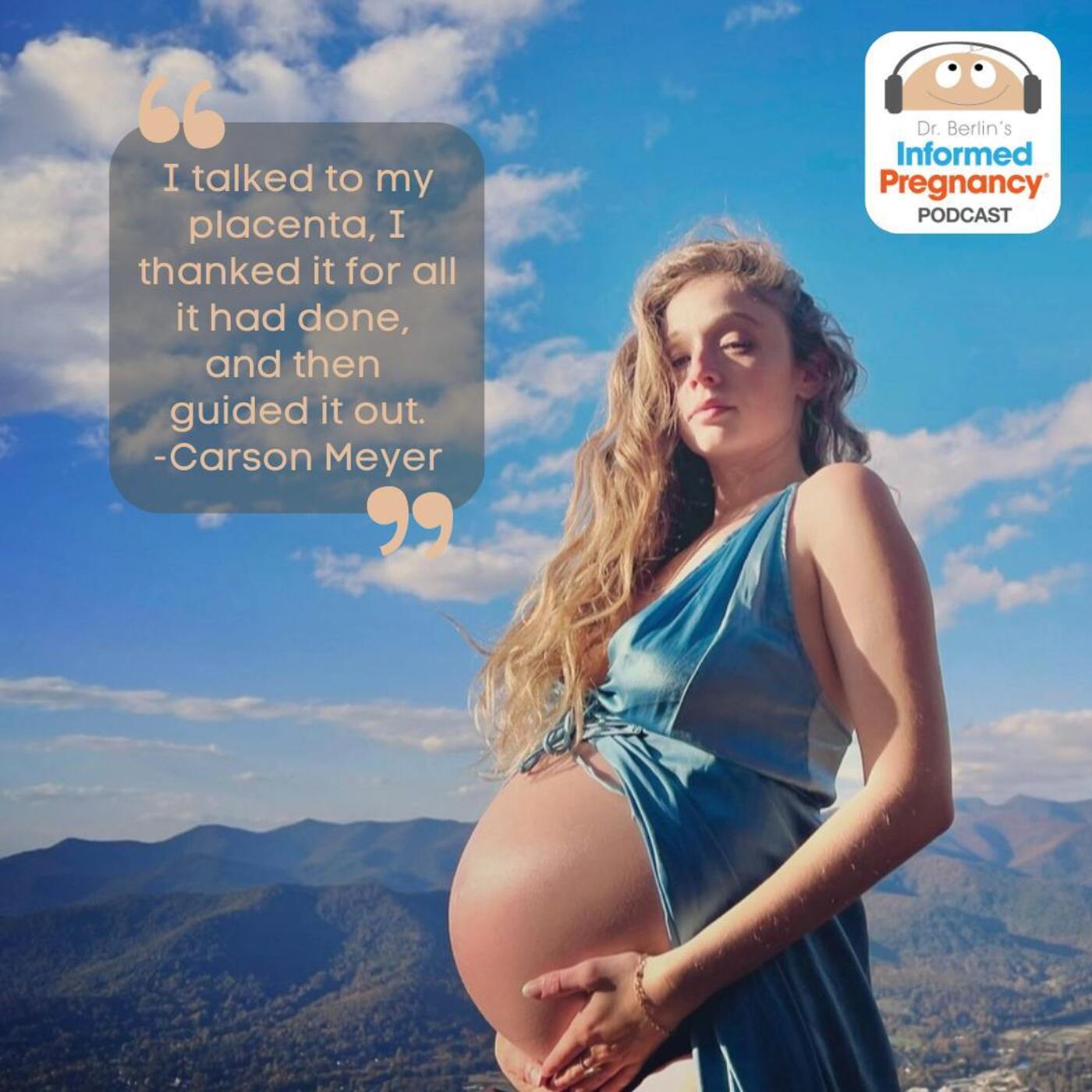
[62:41] she picked up on this and she said, why don't you get in the shower and you can do it yourself and you can just squat over a bowl. And that way you can know if the placenta is ready and you can feel the tension, like I will not intervene in this process and cause a problem because I'd seen that so many times. And so I went into the shower, squatted down and I talked to my placenta. You know, I had said like, hey, thank you so much. I'm so grateful that you protected and supported Lou and nourished her, but your work is done and you can come out now. And like you can come out in one whole piece and then like told Peter it's what to do and kind of just let that happen. And I made sure Jonathan,
[63:19] cause at this point we'd cut the cord and I'd made sure Jonathan brought Lou to be there in my eyeline so that I was connected to that oxytocin flow to support it. And then I just guided it out into the bowl and it was perfect. And I did not leave at all. Wow. I mean, of course I had some bleeding, but for the six weeks after, but there was no gush of blood or anything. So yeah, that was a powerful part for me.
Dr. Elliot Berlin, DC [63:43] That's different from anything I've ever seen. Yeah, me too.
Carson Meyer [63:47] How was transition to breastfeeding? That surprisingly, I didn't do right away. I was just like, I'm too busy staring at her and like finding my feet. And so I waited a little bit, but my midwife before she left set us up sideline. And that was really nice because we had shared. And so that was amazing to just be able to stay and also good for my tailbone to not be sitting up. I just sideline fed her for like the first four days. And then I was like, wait, I don't think I know how to breastfeed sitting up. Like I had this moment where I was like, we've mastered the sideline, but it felt so funny to like get up and feed her. Cause I was like, I don't know what I'm doing. And then when my midwife came back or
[64:23] I don't know, I just, at some point I was like, we'll try it this way. And then luckily she was a great feeder. And there was one day when my milk came in that it just hurt so bad, my nipples. And I called my sister who had three kids and her husband actually was so sweet and so cute. He like clearly paid attention in all the classes and had been a great support to her. And so he actually like helped coach me through it and was like reminding me things I know. And also just, you know, hearing my friends say like, people say it doesn't hurt, but like it can hurt. And it's not that there's anything wrong. Like the first few days, like it's okay for it to hurt. And I was like, okay, then it's normal. And once my
[64:57] milk came in, like the next day, it all got better. but I wasn't expecting that. I was sure that there's been a terrible problem.
Dr. Elliot Berlin, DC [65:04] That's a very helpful, important tidbit.
Carson Meyer [65:07] Yeah.
Dr. Elliot Berlin, DC [65:08] Okay, here's my last couple of questions. Number one, how do Polly and Luke get along?
Carson Meyer [65:15] They're so great, and I'm so proud of him because I know it's tempting to lick a cute baby's face all day long, but he's really great. He's really understanding that she's very important and that you can't go nuts on her all the time. It's a lot of energy, but I'm excited for them to be able to interact more.
Dr. Elliot Berlin, DC [65:34] Mm-hmm, coming soon.
Carson Meyer [65:35] Yeah.
Dr. Elliot Berlin, DC [65:36] And then that's, what, if anything, what did you learn about you, about birth for you, and about birth as a provider from your own experience?
Carson Meyer [65:49] Hmm, that's such a big question. I think I learned, yeah, obviously, I feel so proud of the whole process and her, mostly, and what we've created, but I do, Jonathan keeps teasing. He's like, highly recommend doing this with a birth worker. I highly recommend having a baby with a doula, but we tease, and it's not because, oh, I know something that anyone else doesn't, or have some greater capacity. It's not that at all. It's just, I've been able to apply what I've really believed in for so many years and really fully submerged myself in for so many years and all of this information and experience. And I think there's something really rewarding
[66:30] to know that there's benefit in that, and there's value in that, I think is most important. So it definitely makes me even more passionate about my work, knowing that the journey is a journey and you can't take away the challenges or the sleepless nights and all that, but there's so much we can do with support to make it easier. And I think I always knew that deep down, but now having walked my talk of what I share with my clients and got to see on the other end, how good I feel, which I wasn't fully expecting. And I do think a lot of that comes down to, like we talked about, whether it's the first 40 days, the nourishment, the nutrition, the support,
[67:05] the way you choose to birth and all of that. And so that feels really good for myself, of course, and for my confidence as a mother, but my confidence in my work and knowing that what I do out there to be of value to people. And now I kind of feel like I can really say it works when we take good care of ourselves.
Dr. Elliot Berlin, DC [67:22] Yeah, it takes some effort, doesn't it?
Carson Meyer [67:25] It does, but in many ways it's been effortless and we're lucky, you know, in so many factors, so many women can't stay home for a long time or have access to that support, of course, but I do think that if you put the work in before, it does pay off ultimately.
Dr. Elliot Berlin, DC [67:41] Is there anything that you wanted to share that I left out?
Carson Meyer [67:45] Gosh, no, I feel like I have a flower gone. No, it was so beautiful every minute.
Dr. Elliot Berlin, DC [67:52] Carson, thank you so much for joining me and for sharing your story and for all the incredible work that you do.
Carson Meyer [68:01] Thank you, Dr. Berlin, thank you. That's one part of the pregnancy and postpartum.
Dr. Elliot Berlin, DC [68:05] I wish I had had you out here, but. Oh, yeah, when you moved and then I found out you were pregnant, I was like, ah.
Carson Meyer [68:11] I know.
Dr. Elliot Berlin, DC [68:12] Of all the people I would want to be there for.
Carson Meyer [68:14] Oh my God, my tailbone would have been so happy. To have you.
Dr. Elliot Berlin, DC [68:19] It wasn't meant to be. Carson, where can we find you online?
Carson Meyer [68:23] Carson-mire.com is my website for my doula work and growing together or Instagram at ccmire and then seeinthemoon.com for Seeing the Moon products.
Dr. Elliot Berlin, DC [68:34] For yumminess. Are there new Seeing the Moon products coming?
Carson Meyer [68:37] Eventually. In development.
Dr. Elliot Berlin, DC [68:39] Eventually.
Carson Meyer [68:40] They're just steady.
Dr. Elliot Berlin, DC [68:41] Slow and steady. Amazing. All right, I will see you there and then who knows, you might also appear at some point on Informed Pregnancy Plus.
Carson Meyer [68:49] Yes, I'd love that.
Dr. Elliot Berlin, DC [68:50] Do you want to meet little Lou?
Carson Meyer [68:52] Yes, please. Sorry, I didn't know you were in the shot.
Dr. Elliot Berlin, DC [68:54] Oh, it's okay. Hi, baby. There she is. Little yum. So bakery fresh. Mm. Oh, she's so sweet. She's a sweetie. Where did she get those cheeks from? Amazing. Thank you so much. All right, everybody at home, thanks for listening, watching and we can also see you online at informedpregnancy.com.
Want more pregnancy + parenting? Start your FREE TRIAL of Informed Pregnancy+ and get access to all our curated pregnancy and parenting content — original series, iconic birth films like The Business of Being Born, prenatal workouts and more.
