by Dr. Elliot Berlin | Jan 4, 2023 | Family and Relationships, Mental Health
“Doing acts of kindness benefits us all. They boost feelings of confidence, control, happiness and optimism. Sign me up for that!”

♫ It’s the most resolute time of the year! ♫
With tension everywhere these days, my 2023 New Year’s Resolution is to adopt habits and practices that reduce stress, promote happiness and help make the worlds around and within me better places. I invite you to join me by taking on one or more of Dr. B’s ‘Be’s’ this year.
Be Proactive
Being proactive means taking responsibility for making things happen rather than responding to things that have already happened.
Waiting for opportunities to fall in our laps rarely leads to success. Let’s take the reins on the things we can control so we can push forward and accomplish our goals. When we do this we avoid wasting precious energy spinning our wheels or focusing on those things that are beyond our influence.
Be Kind
A little bit of kindness goes a long way. When we express a simple smile or warm greeting we have the power to turn around someone’s otherwise blasé day. People tend to pay kindness forward so I invite you to be the first link in a chain of kindness and positivity that will cycle through your whole community.
Doing acts of kindness benefits us all. They boost feelings of confidence, control, happiness and optimism. Sign me up for that!
Check out Dr. Berlin’s brand new extremely fun streaming channel!
Be Present
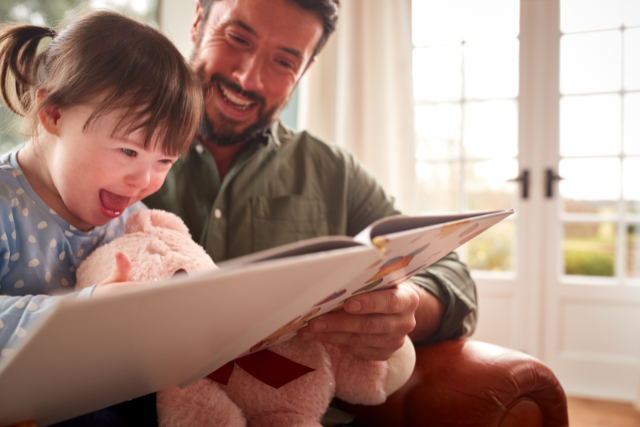
Being present, or mindful, means being focused and engaged in the current moment and not distracted by past worries or future planning. Anything you do in life you will do better if you can focus on what’s in front of you. I know for many this is easier said than done. For me, in order to shut out all the noise and fully enjoy spending time with my family I sometimes have to go out in the middle of nowhere and unplug from the digital universe. Then I can take in the complete experience of their feelings, expressions, mannerisms, voices and giggles.
Imagine the difference between scarfing down lunch on the run, and taking an hour to sit and enjoy your meal. Experience the appearance, aroma, taste, texture and even how the nutrients make you feel. Now imagine the meal is your child. Ok, that didn’t come out right – but you get my point.
Be Informed
As a new or expectant parent you have a lot of choices to make. Some people like to have choices made for them. I, and many others, like to be an active participant in conversations and decisions that affect me and my family. In order to be proactive and use our voices to choose from all the available options, we need information.
For the last ten years my Informed Pregnancy® team and I have set out to find and deliver unbiased information on everything pregnancy related from fertility to family and all the important stages in between. The podcast has grown tremendously over the years and the listener response has been heartwarming and encouraging.
This year I am pleased to announce our latest endeavor, Informed Pregnancy+, a streaming service dedicated to films, web series, podcasts, courses and meditations for every stage of family growth. I proudly invite you to visit informedpregnancy.tv to help educate yourself as you relax and enjoy our growing library of content. It’s also available on the Apple Store, Google Play and Roku. Try it for free on any platform!
I look forward to growing in these ways and hope you will as well. May the new year bring you joy, health and peace and may you bring proactivity, kindness, and presence. Don’t worry about information – we’ve got you covered!
Follow Dr. Berlin for all the latest Informed Pregnancy news!

Dr. Berlin is an award winning pregnancy-focused chiropractor, childbirth educator, and labor support doula as well as the host of the Informed Pregnancy Podcast where each week, parents, birth professionals, and parenting experts weigh in on a full range of topics surrounding the perinatal period. Dr. Berlin runs a successful perinatal wellness group in Los Angeles, CA with his wife Dr. Alyssa Berlin with whom he shares four kids and one dangerously smart Aussiedoodle.

by Susanne Grant | Nov 15, 2022 | Mental Health
**This is a repost of a classic Informed Pregnancy article.
“Taking care of yourself has to be your number one priority. The better you feel the bigger the difference you can make in this world; for yourself, your family and your friends.”

As a hypnobirthing teacher and healing coach I have mums (to-be) coming to me for emotional healing support. Many of us struggle to find our way in this life changing experience; rediscovering ourselves, our bodies and our relationships. Maybe pregnancy and birth didn’t go as you hoped for, leaving behind feelings of failure, guilt or sadness.
This new phase may have brought up old feelings from prior relationships, (sexual) abuse, or other negative experiences, triggering you as you try to continue. I see it time and time again, it is completely normal! These triggers – how overwhelming they may be – create the beautiful opportunity to allow you to find healing. These are my tips to promote emotional healing after pregnancy and birth:
Tip 1: It’s ok, not to be ok!
It begins by acknowledging what you feel is ok. That it is normal to feel like everything isn’t ok. Really, it is ok! Whatever you are feeling right now, tomorrow, or the day after tomorrow, is ok. However, do not ignore it!
Tip 2: Listen
Start paying attention to what triggers you. Is it something that is being said to you? Is it a sound, a smell, a situation that reminds you of something? When you figure out what is your trigger, you need to look at the story behind it. What are you telling yourself? Are you telling yourself you are not good enough? You don’t deserve it? For example, when you get into an argument with your partner for not doing things your way, is it because it makes you feel worthless? Or when you’re not in control, is it because you are scared to lose everything you worked so hard for? It can be helpful to start journaling and writing down what you are experiencing each day.
Stay informed and entertained with Dr. Elliot Berlin, DC!
Tip 3: Self-care needs to be the priority
Taking care of yourself has to be your number one priority. The better you feel the bigger the difference you can make in this world; for yourself, your family and your friends. Don’t be harsh on yourself, if you need to take time off to take care of yourself or your little ones, do it! The world doesn’t end when you say ‘No’ every once in a while! That’s why it is so important for you to start listening to what you need. Do you need more rest? Some alone time? Or do you need someone to help you? Remember, knowing your boundaries isn’t a sign of failure! Allow yourself, and others, to take care of you.

Tip 4: Start EFT
The Emotional Freedom Technique (EFT) or “tapping” is a great and gentle tool to help you release those trapped feelings that you just can’t seem to get rid of. Tapping on specific points of the body, it will help to releasing the blockages within the energy system which are the source of emotional intensity and discomfort you have been feeling. That is why it is so important you need to start listening to what is bothering you and where it shows up in your body. When you do, and start giving it the attention it deserves it will start shifting. When you use EFT on top of this it will promote the healing even further. You may need to do a few repetitions; you may need to do it for a few minutes each day for the next for days or weeks. Just keep going until it’s completely gone!
Postpartum recovery takes time, so give yourself the time you deserve. Take as much rest as you need and make sure you find a balance that works for you with plenty of water and nurturing foods. If you still feel like you are not feeling well, please tell someone. Talk to a friend, colleague, or family member. You are not alone!
Check out this new parenting blog post for tips on housework for kids!

Susanne is an international Hypnobirthing & Healing coach who specializes in (birth) trauma, PTSD & body issues. She coaches women around the world to heal sexual abuse & trauma as well as prior traumatic births. While pregnant, Susanne’s experience of child abuse put her on a different road of care from her team of midwives. This gave her a new mission in life, helping women heal wounds from the past. Having been diagnosed with PTSD at 17, she knows firsthand how challenging this can be.
For support pre or post birth, and her free Heal Yourself Workshop, please visit www.grantmethod.com or email her at susanne@grantmethod.com

by Kathleen Valenton | Nov 8, 2022 | Health Conditions, Mental Health, Pregnancy
**This is a repost of a classic Informed Pregnancy article.
“Stress is also implicated in decreased birth weight. The hormones that are released in a chronic stress state affect blood vessel constriction and may decrease the appetite of the mother, in turn affecting the growth of the fetus.”

Pregnancy can be an anxiety-provoking time. Not only are there constant new and often unexpected physical changes, preparing to be a parent is also emotionally taxing. While we mostly focus on things like eating nutritious food, avoiding toxins, and taking prenatal yoga classes when we talk about ‘having a healthy pregnancy,’ we should also consider our mental wellbeing and how chronic stress might adversely affect pregnancy. There is a normal amount of stress in any pregnancy, but chronic or extreme stress – like what one might experience after a death in the family, or a stressful living or financial situation, can have a significant impact on a woman’s pregnancy. Although some of the links between stress and adverse outcomes in pregnancy are not clear, we do know that in response to perceived stress our brains secrete corticotropin releasing hormone (CRH). Correlations have been made between increased levels of this hormone and an increased risk of preterm birth and even miscarriage.
Follow Dr. Berlin on Instagram to stay up to date on The Informed Pregnancy Project!
Stress is also implicated in decreased birth weight. The hormones that are released in a chronic stress state affect blood vessel constriction and may decrease the appetite of the mother, in turn affecting the growth of the fetus. Additionally, chronic stress can decrease the effectiveness of a mother’s immune system, leaving her more prone to viruses and bacteria. Not only are there possible short term effects of stress, there are some researchers who believe that there is a connection between chronic stress in pregnancy and the emotional, behavioral, and physical development of children later in life. Again, these links are not clear, but it makes sense to try to decrease chronic stress during pregnancy as much as possible.
What are some effective ways to reduce stress?
Sit in silence. In our high-tech environment, the overstimulation surrounding us is not conducive to a relaxed, stress-free pregnancy. Try meditation or a long bath or shower, focusing on breathing deeply in and out. Move. Exercise has been proven to reduce stress, lift your mood, and give you more energy. This is excellent during a time when one feels sluggish and emotional. Avoid negative energy. Turn off the television if it is provoking fear or anxiety. Avoid conflict at work and, if possible, in your family and social life. Therapeutic massage. A good massage by someone trained to work with pregnant patients reduces bodily tension on muscles and bones that are bearing more weight than usual as your baby grows.
A massage can also help with posture and breathing. Stretching is an effective adjunct to this. Express your emotions. Laughter and crying are effective ways to release any tension that might be held inside. We all know how cathartic it can be to have a good cry! Realize you can’t do it all. Accepting that not everything is under our control can help ease anxiety. Saying no to projects or tasks that may be too difficult is okay, especially during a time when your body is vulnerable. Seek out social support. Confiding in family and friends or in a healthcare professional can help alleviate stress.
Check out this new post on the Informed Pregnancy Blog!
 Dr. Kathleen Valenton received her Bachelor’s Degree in Psychology from the University of California, Berkeley. After earning her Master’s Degree in Psychology and working as a senior therapist for children with Autism, she went on to receive her Medical Degree from the prestigious University of Vermont College of Medicine, consistently rated one of the top 10 medical schools in the country. She received exceptional training in Obstetrics and Gynecology at the highly acclaimed Cedars-Sinai Medical Center, and has continued to serve on staff as an attending physician providing optimal obstetric care and offering operative gynecologic procedures. She participates in resident education, and is highly involved in nursing and MD collaborations. She has recently extended her practice to the well-reputed St. John’s Medical Center. Her main interests in the field of OB/GYN are in obstetrics, pelvic pain, infertility evaluation, and minimally invasive surgery. Her focus of research includes Infertility, Polycystic Ovarian Syndrome, Vitamin D Deficiency, Anorexia and Bulimia in Adolescents, and Social Media and Medicine.
by Dr. Alyssa Berlin | Oct 25, 2022 | Family and Relationships, Mental Health
“Let’s all agree that unilaterally, parents typically mean well and truly have your best interests at heart. That being said, after having a baby, chances are that your parents fit into one of two categories: there is the “I love you…you are amazing…I could not have done it without you” (we will call that category A), and then there is the “I love you, but you are making me crazy, and if you don’t get out of my face and give me some space I am going to scream” (category B). ”
The old saying: “You can’t live with ’em, you can’t live without ’em” must have been referring to parents/in-laws. Nothing challenges your relationship with your parents more than joining the ranks and becoming parents! Yikes! I am one of them.
Having a child often shines a spotlight on both the positive and negative experiences and feelings that you have towards your own parents. Becoming a parent can serve as catalyst for bonding with your parents in a new way, or it can serve as a direct reminder of the ways that mom and dad may have neglected to be the parent you were wanting.
The postpartum period, however, is not a good time to remind mom and dad about all the ways they may have failed you and how you are going to do better with your child. So if you are noticing some of those feelings come to the surface, pregnancy is a wonderful time to explore and work through those experiences before your baby arrives.
Let’s all agree that unilaterally, parents typically mean well and truly have your best interests at heart. That being said, after having a baby, chances are that your parents fit into one of two categories: there is the “I love you…you are amazing…I could not have done it without you” (we will call that category A), and then there is the “I love you, but you are making me crazy, and if you don’t get out of my face and give me some space I am going to scream” (category B).

The problem is that oftentimes you will not know which category your parents belong to until after your baby is born. Then it might be too late – you already committed yourself to having your mom move in with you, sleep on the couch, and be there 24/7 for the first 6 weeks of your baby’s life. (Insert scream here).
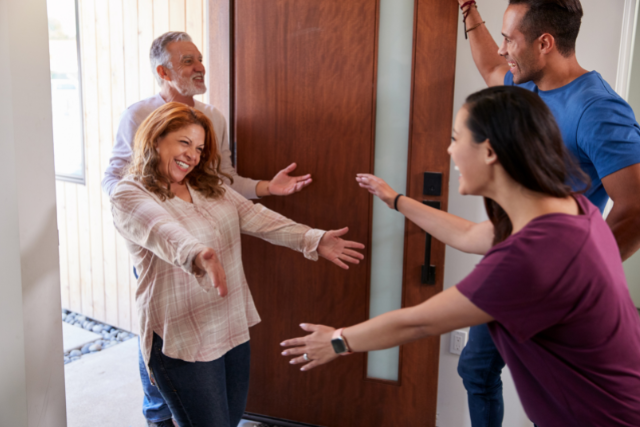
When you find yourself with category A parents – you are in luck. Embrace them and revel in the support they can offer you as you adjust to motherhood. Remember that there is nothing wrong with accepting help. In my opinion, it is the strong women that can utilize help from others, recognize that they are a part of a village, and do not have to do it all alone. There is not a special award given out to women who feel a need to prove that one day post delivery they can be superwoman. It doesn’t exist, so relax and enjoy the helping hands around you.
There are usually clues along the way that you may have a category B parent on your hands. I want you to remember that right after you have a baby, you are feeling vulnerable and emotional. You will likely not be feeling your best or in the mood to entertain any high maintenance, not self-sufficient guests. You will probably be looking to surround yourself with safe people who won’t take your mood changes, pointed comments, or emotional moments personally and will be empathic of your need to recover from birth and appreciate the emotional magnitude of your journey to parenthood.
Follow Dr. Alyssa Berlin, PsyD on Instagram!
So, if your parents are typically high maintenance, needy people who like to be catered to, chances are they are going to fall in the latter category and might not be an optimal choice to play a major role on your postpartum care team. Situations tend to get more stressful after having a baby, not less. So, if under the best of situations, an evening out with the folks usually results in you needing a stiff drink and an ice pack, then….you guessed it – great contenders for category B and an awful contender for a long-term post birth houseguest.
That doesn’t mean that mom and dad don’t have a role in the process. It simply means you want to think about the situation more strategically and please, I am begging you, don’t have them sleep on your couch or in a second bedroom in your house. There are wonderful hotels/motels or awesome friends that would be happy to host your parents so that you can enjoy the best of both worlds: quiet time alone as well as nice visits with mom and dad.
They may, however, make great people to run errands, do the food shopping, pick up dry cleaning, and other valuable contributions to your postpartum experience in a less hands-on way. As you envision your postpartum experience, it is advisable to think about everyone’s strengths and how they will be most helpful to you during this special time. Yup, you guessed it; this time is all about you and what you need in the moment to ensure that you have the best possible start to motherhood.

If one parent has a particular skill in cooking, assign them to cooking duty. If another parent enjoys shopping, they get shopping duty and everyone can pick straws for cleaning duty. Sit down with your partner while you are still pregnant and jot down a list of daily activities/errands that have to get done as well as some of your favorite recipes. You can disseminate the various tasks to different people or leave the list on the refrigerator. And in the absence of parents or in-laws, there are other wonderful people: doulas, nurses and professional services, drop off and delivery services, and cleaning services around you that will be happy to be a part of your village and postpartum team.
One last note: if during the pregnancy, you already have strong thoughts regarding what you may or may not want from your parents or what role you may or may not want them to play, I strongly recommend you share it with them before the baby’s birth. This will alleviate a lot of stress on you after the birth and will likely give them a better chance to honor your requests.
You have a plan for birth, now make sure you plan for what comes after. Click for more info!

Dr. Alyssa Berlin is a clinical psychologist specializing in pregnancy, postpartum, and parenting. She offers private counseling for women individually and with their partners. Dr. Berlin is the creator of The AfterBirth Plan™, a program that prepares couples for what to expect after a baby is born. The workshop teaches couples how to prepare for a healthy postpartum transition for the baby, for each partner, and for the evolving relationship. She combines her psychological background and her doula training to help women and their partners feel empowered and comfortable in the labor and delivery process, both on a physical and emotional level. Dr. Berlin has specific expertise addressing fear and anxiety that may arise before, during, or after birth.
Dr. Berlin is on the Board of Advisors for the International Cesarean Awareness Network (ICAN) and is a faculty member of Maternal Mental Health NOW Training Institute. She conducts live pregnancy and parenting workshops throughout Southern California and online. You can read Dr. Alyssa’s blogs on the Huffington Post where she contributes to PBS’s ‘This Emotional Life” project. Dr. Berlin received her doctorate degree at Argosy University in Atlanta, GA and went on to become a certified Gottman educator. She is a member of the American Psychological Association. She and her husband, prenatal chiropractor Dr. Elliot Berlin, live in Los Angeles and are the proud parents of four amazing children.
by Jenna Pastuszek | Oct 12, 2022 | Family and Relationships, Infant Care and Breastfeeding, Mental Health
” I assumed that since my body had chosen when to eject its womb occupant, it would also do its job to produce milk on time. You know what they say about assuming.”
I’ve never liked my boobs.
I remember learning about breasts in sixth-grade health class, hearing that as soon as a girl got her period, she’d get boobs to go with it. Yes, you now have bloody underwear once a month, but in exchange, you get nice round melons! Sounded like a good trade to me!
When I eventually got my period two years later, no boobs came with it. The bloody gift continued to show up, but my melons never got round. They looked more like pointy pyramids wearing mosquito bite hats.
In college, I did everything I could to make it seem like I had bigger boobs. I wore push up bras. I wore two bras at once. I even wore these giant silicone inserts that my roommates and I lovingly referred to as “the chicken cutlets” until one night I got too drunk, went home with the captain of the swim team, and woke up to see the chicken cutlets prominently displayed in broad daylight. That was the last time for me and him AND for me and the chicken cutlets.
Need more info? Listen to The Informed Pregnancy Podcast here!
In my 20s, I learned to cope with the hand (boob) I’d been given. I accepted that I’d always need to have clothes tailored to adjust for my unproportioned mounds. I found sticky circular cups to peel on underneath bralettes to give my body a more feminine silhouette while foregoing underwire. I even learned to laugh at how small they were alongside other people, like the time I was doing a musical and the sexagenarian male artistic director presented me with a giant pink push up bra to wear under my costume. “Don’t worry, Jenna. My wife tried this on for me last night, and it’ll help you get into character.” Fantastic.
These are not mine
Before getting pregnant, I found it easier to simply pretend that they weren’t there. I felt so ashamed of their pathetic presence that I even told my husband to stop asking me to take my shirt off when we had sex. It didn’t matter to me that he thought they were nice. To cope, I had written them off as dead.
When I got pregnant, one of the first symptoms I had was rapid breast growth. The skin pulled painfully taught and tingled and was sensitive to the touch. My nipples were so itchy, and when I looked down at my chest, I was convinced that I was staring at someone else’s areolas. Who’s missing a pair of boobs, I thought, because these are not mine.

Nursing wasn’t something I was super enthusiastic about given my lifelong breast trauma, but I was set to do it for the added health benefits for me and my baby. So I was disappointed when at 35-weeks, my OBGYN told me that my baby was Frank breech, and if he or she did not flip, I was going to have a c-section. I was nervous that scheduling the arrival of my child would affect breastfeeding if my milk didn’t come in quickly enough. After trying everything to get the baby to flip (spoiler alert- he didn’t…#Leo), I accepted my fate and scheduled my operation. As luck would have it, I went into labor spontaneously four days prior at 39w1d. I assumed that since my body had chosen when to eject its womb occupant, it would also do its job to produce milk on time. You know what they say about assuming.
Squishy and unreliable
My boobs continued to betray me into postpartum. My milk didn’t come in fast enough to prevent my son from losing over 10% of his birth weight in the hospital, so on day 3, we had to supplement with formula. It turned out that he was born with an upper lip and a posterior tongue tie, so latching was a frustrating experience for all: he, because he was working too hard to get the meager sustenance that was there, and me because he was gnawing like a weasel at my sore cracked nipples.

By the time we got the ties and latch sorted out, my child had made up his mind:
Why go back to something soft and squishy with unreliable output when a plentiful plastic bottle is an option?! He even faked falling asleep to get out of breastfeeding! Multiple times! Whether it was the hormones or not, this was the most painful rejection I had ever experienced- even worse than my sixth-grade crush Jason Miran rejecting me and my mosquito bites at the school dance.
Befriending my boobs
On the drive home from the hospital, I realized I had to befriend my boobs. It was as if they were on strike because of my reluctance to accept them for what they are. I sat down at my breast pump and decided that unlike middle school, I refused to let my son’s rejection define me. My breasts are a [small] part of my motherhood experience, but they are not all of it. Whether round or pointy, on display or hidden, elastic or inverted, over full or empty, I will still be a good mother. A good mother with a great set of tits.
Follow Dr. Berlin (on Instagram, not in real life…) for all the latest Informed Pregnancy content!

Jenna Pastuszek (she/her)is a professional actor, singer, voice over artist, musical theatre educator, and voice teacher. Jenna has performed in theatres across America in a variety of mediums, including her acclaimed solo shows GET HAPPY! and ME,MYSELF & BARBRA. She is a voiceover artist, voicing household brands like Starbucks Cafe, Pepsi, Amazon, KIND Bar, Target, IKEA, Crest, Toyota and more. She is the Co-Founder of Innovative Voice Studio, where she trains Broadway performers and works with leaders across industries through Innovative Performance. Previous faculty positions include The University of the Arts, New York University, The American Academy of Dramatic Arts, The American Musical Theatre Academy, and Musical Theater College Auditions. Pastuszek received her Masters in Teaching in Elementary Education and a BA in History and minor in French from the University of Virginia and her Masters in Vocal Performance and Advanced Certificate of Vocal Pedagogy from NYU Steinhardt. She is an Estill Voice International Master Trainer and a graduate of Seth Godin’s altMBA. Learn more at www.jennap.com.