by Informed Pregnancy and Parenting Project | Feb 28, 2023 | Labor and Delivery, Podcast Transcripts, Pregnancy
Elliot: Welcome to the Informed Pregnancy and Parenting Podcast. I’m your host, pregnancy-focused chiropractor, Dr. Elliot Berlin.
My guest today is a mom, and she’s here to discuss her life-changing experience dealing with her full-term newborn daughter’s health issues and put her in and out of the NICU from day one. This led to her leaving the hospital without the baby right away, and that led to a new career path. Keira More, welcome to the podcast.
Keira: Thank you so much.
Elliot: My goodness! You’ve been through a lot. I was sort of there as this new career path unfolded, and it’s quite the journey. Your struggle is really helping a lot of other people. Let’s get into it. Where are you from originally?
Keira: Originally from New York, but moved to LA when I was about 5. So, grew up in LA.
Elliot: Welcome to LA.
Keira: Right.
Elliot: All right. How’d you meet your partner?
Keira: Oh, we were double booked for a lunch with my oldest and closest friend, Oliver. He actually wanted to introduce me to my husband probably like six months before we actually met, and I wasn’t interested. And then, I met him and became very interested.
Elliot: Quite interested. And how long was it from there till you realized, “Wait a second. This might actually work out.”
Keira: This is it. It was about two minutes. It was really weird. I just knew. When I saw him, I knew that it was almost like a feeling of, “Oh, there you are.” You know? I felt immediately at home with him. He didn’t know that, and I don’t think he felt that way. But I decided that I was right and just hung out for a while.
Elliot: Oh, wow! Okay. And then, was there talk? Like, when things were heating up, was there talk about family and kids?
Keira: Always. Even before we were like really serious, we always talked about family. I come from a big family. He comes from a big family. We’ve both always knew that we wanted children, whether that was — I mean, I knew it was with him. But, you know, it was always a very easy conversation to talk about children.
Elliot: How long did it take for him to get on board with the whole relationship?
Keira: A couple months, and that was nine years ago. So, we’ve been together basically ever since.
Elliot: A decade. Are you generally a quick decision-maker?
Keira: Kind of. I mean, once I know something, I just know. I kind of really listen to my gut and intuition, it’s very loud. And once I make a decision, I make a decision. That’s it. Nothing is going to change my mind.
Elliot: But sometimes, it takes more than two minutes.
Keira: Sometimes. [inaudible 00:03:24]
Elliot: Gosh. I was like, “If you can decide that in two minutes, like the pair of shoes.”
Keira: I mean, I can’t pick a restaurant, but I can pick a partner in two minutes.
Elliot: Okay. I’ll pick the restaurants. That’s my strong point. So, you guys got married and then had a kid.
Keira: Basically, that’s how that happened.
Elliot: Were you planning to get pregnant when you did?
Keira: Yes, and no. I feel like if you aren’t actively not trying to get pregnant, then you’re trying to get pregnant. But we knew that we wanted to have a baby right away. I didn’t think that it was going to happen quite as fast as it did. Because everyone around me seemed to be taking a little bit longer. So, we started trying, I got pregnant the first try, which was much faster than I had anticipated.
Elliot: Were you both surprised by that?
Keira: Oh, yeah! We were both like, “Oh! Okay. ” The stars were aligned.
Elliot: How did you find out?
Keira: No. I wasn’t even late. We actually went on a road trip. We went to Laguna, and I was so tired. I couldn’t stop falling asleep. I thought I was sick. I had like a prescription of antibiotics that I just was like pushing off. I didn’t want to take it. I didn’t want to take it. And then, for some reason, I was going to take it because I felt so awful. I had a little voice that told me, “You know what? Just take a pregnancy test, just in case.” I hadn’t missed my period yet. And it was positive.
Elliot: Wow.
Keira: We went to the doctor. We double-checked it, and it was positive there, too.
Elliot: What did pregnancy feel like for you?
Keira: I didn’t love it.
Elliot: Are you allowed to say that?
Keira: Am I allowed to say that?
Elliot: I don’t know.
Keira: I’m a doula.
Elliot: You’re certainly allowed to say that to me, and I’m here. I just feel like people are so judgy.
Keira: Yeah. I loved feeling both of my children move inside of me. I loved the fact that I was able to do that. But I just didn’t feel great pregnant.
Elliot: From the beginning?
Keira: From the beginning. With my daughter, I gained a lot of weight and I was really swollen. I thought I was going to be like this glowing goddess, and that’s not what I was.
Elliot: Was it different things at different stages of the pregnancy?
Keira: Yeah. I think just like the exhaustion in the beginning, and the nausea, and everything was so new and unknown. I felt really nervous. I guess in the second trimester, I felt pretty good. In the third trimester, I just blew up. She was born in September. It was very hot.
Elliot: Third trimester.
Keira: Oh, yeah. And just like sweating and puffy. Yeah.
Elliot: You’re not selling it well.
Keira: I’m not selling it, but it’s amazing. It’s funny because I know, intellectually, that I didn’t love it but I miss it. If that makes sense.
Elliot: That almost sounds like the yes/no of “Were you trying to get pregnant?” But it sounds like you’re saying — if I’m hearing you right, you liked being with child. You just didn’t like how that made your body feel.
Keira: Totally. That’s exactly it.
Elliot: Did you have family and friends that were pregnant around the same time? Did you have exposure to pregnancy and childbirth?
Keira: Not birth, not really. Most of my friends either had children way before me or didn’t want kids. I felt kind of isolated in the pregnancy. I didn’t have like a partner in the pregnancy. It wasn’t like I had a girlfriend that I could go like on walks with. I didn’t have that. Everyone was kind of busy living their own lives. I have older siblings and they had children. But their kids were so much — like my nieces and nephews were so much older already. [inaudible 00:07:19] distance.
Elliot: And when your siblings were pregnant, were you around them?
Keira: Yeah. But I was just a kid. Like, my niece who’s closest in age with my daughter is 14. And my daughter 4.
Elliot: Okay. So, long before you were in that storybook.
Keira: Yeah.
Elliot: What were your sources of information?
Keira: The Informed Pregnancy Podcast.
Elliot: Oh, I strongly recommend it. Wait till you hear about my episode with Keira More. Life-changing. All right. I want to take a little break. When I come back, we’ll talk about your plans for birth and how things went. We’ll be right back.
[break]
Elliot: Welcome back to the Informed Pregnancy Podcast. We are talking to Keira More. So, picked your husband right away, then pregnant right away, and not a glowing goddess. At least, that’s how you felt. The third trimester in the Los Angeles summer. That’s brutal for me, and I’m not pregnant. Obviously, we can’t complain too much because there are places that are a lot worse. But to be dragging around that extra weight and just hot and humid and sweaty; no good. What were your plans for the birth?
Keira: I wanted to have an all-natural birth. And all-natural meaning, in this sense, unmedicated. But in the hospital, my husband and I decided that that was right for us. I really thought that that’s what I was going to do.
Elliot: What was important to you? Because most people have their baby in the hospital today. A small percentage don’t. But also, most people are medicated during their birth, especially at the hospital. What about not medicating was appealing to you?
Keira: I think I wanted to experience it. Also, my mom had really fast labors. And the way it was talked about was very like you can do it. “You’re fine,” which is how she is about everything. And also, I’m a little bit afraid of needles, and I was afraid of getting an epidural.
Elliot: Afraid of all needles? Like, some people are afraid of things going in, some people are afraid of things coming out, like blood draws.
Keira: I’m not afraid of blood. I’m not queasy or anything. I was really afraid of needles going in. Not on other people. That doesn’t bother me, it’s just myself. And also, just the idea of having something in my spine was scary to me. Yeah, I felt really nervous about that.
Elliot: Yeah. More so than the intensity of childbirth without medication.
Keira: Yes.
Elliot: Okay. And how did that go?
Keira: I didn’t. I ended up having really very high blood pressure toward the end. It was pre-preeclampsia. I was 39 weeks, and I ended up getting induced right away. I got all the things.
Elliot: So, did you have the epidural before the induction?
Keira: No. But I went in and I got induced. They gave me all the different medications. I think it was maybe around 14 hours in that I got the epidural. My daughter was born after 24 hours.
Elliot: Okay. You got the epidural because it started to become overwhelming?
Keira: I did some kind of math equation in my mind. I felt like I was uncomfortable, but I realized that I had so much longer to go. I think I was maybe 4 centimeters at that point, and I just knew that I needed to be able to rest. Otherwise, I wasn’t going to be able to do it. I kind of like pulled the trigger on that. After they had broke my water — and after they did that, with the Pitocin and the contractions were really kind of unbearable. I just decided that I needed to be able to rest to have the vaginal birth that I wanted.
Elliot: That makes sense. How was the epidural compared to how you thought it would be?
Keira: Well, it only worked on half of my body.
Elliot: Okay. I guess that’s not how you thought it would be.
Keira: That’s not how I thought it was going to be, but it was okay.
Elliot: The placement was fine.
Keira: Yeah.
Elliot: Okay. Now, how is it with half of your body numb during that? Because you just described a very intense, not a natural labor pattern, but one sort of fueled by Pitocin, and then they took away your kind of cushion by breaking your water.
Keira: Yeah. It did. I didn’t know what I need to know, you know. The epidural only working on my left side, it was crazy. The nurse was kind of yelling at me to lift my leg. I guess my leg had fallen off the side of the bed.
Elliot: The one you couldn’t feel?
Keira: The one I couldn’t feel. She kept kind of yelling at me to lift my leg back up. Because I think we were about to push or something, and I couldn’t. I told her. I said if I knew where my leg was, I would try to lift it. But I don’t even have a leg, as far as I’m concerned.
Elliot: You feel nothing.
Keira: I felt nothing on that side, but felt everything on the other side.
Elliot: Oh, my goodness.
Keira: It was very disoriented.
Elliot: How did that feel pushing the baby out?
Keira: I wanted to feel something, you know. I was happy that I had that, in some sense. But it was very strange. It was very strange. Luckily, she came out very fast.
Elliot: Thank goodness. You know, I can’t picture what it feels like to push a baby out in the first place. But if I’m thinking about doing something that’s overwhelmingly intense to me, that feels to me like it’s too much for me, and I want to numb it — some, but not all the way. This does not sound like that at all. This sounds like completely having all of the overwhelmingness that I didn’t want on one side, and being eerily disconnected on the other side.
Keira: Yeah. I mean, really, I feel lucky. I don’t know what would have happened had she not kind of flown out on her own. She really did.
Elliot: Was there half a ring of fire?
Keira: I guess.
Elliot: Wow! That’s so weird. Okay.
Keira: Half ring of fire.
Elliot: Half ring of fire, yeah. Okay. Well, thank God she came out quickly. And then, what happened after birth?
Keira: It was kind of a whirlwind. Everything seemed okay. She was fine. It wasn’t until we went into recovery that I had put her down in the little bed that they gave you. Like, the little bassinet. I put her down for a few minutes, and I looked over. And she kept like kind of coughing and she was spitting up a lot of fluid. Well, now, I know that it was the amniotic fluid that was still in her lungs. I guess she couldn’t get all of it out on her own. They normally say that babies can pass it on their own. But I laid her down, and she turned blue. She [coded]. We called the nurse. They took her. I mean, I was still like half off numb from an epidural and trying to chase them down the hallway. But that was kind of the first of many crazy things to happen.
Elliot: Have you already latched?
Keira: Yeah.
Elliot: So, you’ve already latched. Maybe you’re already in some, and then you put her down.
Keira: I put her down. I remember my sister-in-law coming by, and she saw the baby. She was really nervous about the coughing. And like, the kind of like the spitting up of the fluid. You know, when you’re in labor for that long, you’re just kind of out of it. You know, I was not thinking clearly. And yes, I put her down. I guess she was choking under the fluid, and she turned blue. They hit the code button on the wall.
Elliot: Oh, my goodness. That’s horrifying.
Keira: Yeah.
Elliot: And then, what did they do for her?
Keira: They rushed her to the nursing station where they used this vacuum into the lungs and suck up all the extra amniotic fluid.
Elliot: Did they realize right away that was the issue?
Keira: You know what, I don’t really remember. Because my husband ran with the baby, and I was behind them. It took me a minute to get over to where they were.
Elliot: Oh, my goodness. Had you walked before that?
Keira: Yes. I think I had. You know, they make you go to the bathroom and all that. I think I had done that. It’s kind of a blur now, but I think I had gotten up. But I wasn’t like moving, you know.
Elliot: So, after they sucked the fluid out, normal breathing and color came back?
Keira: Yeah. They brought her back.
Elliot: I don’t know if my normal color would have come back.
Keira: No, I certainly wasn’t normal.
Elliot: Oh, my goodness. How scary. Okay. So, then, what happened after that?
Keira: We were discharged. We went home. And then, the next night, we had our first night at home, which was like pretty magical. I tell everybody that that’s like the most surreal moment, like bringing your baby home. And then, we got a call the next day saying that her jaundice was out of control and that we needed to bring her back to the hospital.
Elliot: What do you mean her jaundice was out of control? You’re already home.
Keira: We were already home.
Elliot: They were just bilirubin results?
Keira: I guess, yeah. Our pediatrician had us — because we saw the pediatrician the next day. Our pediatrician told us to get her blood taken for a bilirubin test, and they called us later with the results. I was in the shower, and the hospital called me and said that her bed was ready. And that was how I found out we had to go back.
Elliot: Wow! Oh, my goodness.
Keira: Yeah. I had no idea.
Elliot: This is one day after you came home?
Keira: Yeah.
Elliot: Oh, wow. So, also scary.
Keira: Yeah.
Elliot: Especially if you don’t really understand what’s going on.
Keira: Right. And I didn’t. I really just didn’t know, you know. And so, we went back to the hospital. And they kept her under the lights for 16 hours, which was not ideal. Because when they’re under those lights, you know, they really make a big deal about you not removing them. Like, they wanted you to pump and wanted me to pump.
Elliot: Oh, you couldn’t feed her?
Keira: I couldn’t feed her. I couldn’t hold her. She had to stay under the lights. That’s what they told me.
Elliot: Continuous.
Keira: Yeah. It wasn’t until I kind of lost it, and said I’m taking her home. I found out then that there are actually companies that will run to you the bilirubin lights.
Elliot: Like, you can do it at home.
Keira: Yeah. It’s a biliblanket, and you can do it at home. That’s what we ended up doing, and it was fine.
Elliot: And in California, we have so much sunlight.
Keira: So, much sunlight. It was like late September, it was beautiful. Like, there was no reason to do all of that. I just didn’t know.
Elliot: I’m so sorry.
Keira: That’s okay.
Elliot: All right. Let’s take a little break. At some point, this has to turn around. Because I know she’s good.
Keira: I know.
Elliot: Let’s take a little break, and we’ll be right back.
[break]
Elliot: Welcome back to the Informed Pregnancy Podcast. We are talking to Keira More. So, you come home. And then, you get called right back to the hospital. Then, they put the baby in bili lights, out of reach for you for 16 hours. You pump, and then they bottle feed?
Keira: Yeah.
Elliot: Did your milk come in?
Keira: It had come in on that day.
Elliot: Oh. So, like every fiber of you just wants to latch that baby and feed, and you can’t. And then, you went home.
Keira: And then, I went home again.
Elliot: Did she still need lights?
Keira: Yeah. We had the blanket. She did the blanket. Truly, I did indirect sunlight and just kept feeding her.
Elliot: Okay. And then, one would hope everything was just jolly after that.
Keira: One would hope.
Elliot: What happened?
Keira: She started vomiting green, which felt very weird. But I was assured that it was the green juice that I had earlier. And then, she started sleeping longer stretches. I called the pediatrician.
Elliot: Wait. You thought that because you drank green juice, the baby was —
Keira: I had a newborn care specialist tell me that the reason why she was vomiting green was because I drank a green juice.
Elliot: Again, this is the baby that coded at the hospital. Then, came home and got brought back to the hospital for what they told he was extremely high jaundice. Now you’re home, same day or next day?
Keira: I think it was the next day. She started spitting up green. It just got progressively worse. And like, she would sleep much longer stretches. I called the pediatrician and told him what was happening. And he told me that I was overfeeding her. I called him three times. By the third time, it was like the morning after, and she was still vomiting green. That was when I said, “I’m either coming to your office or I’m going to the hospital, you tell me which one.”
Elliot: And?
Keira: He said to come in, and I did. I went in and the other partner in the office, he really was trying to convince me that I was just overfeeding her. Which, as a first-time mom, about four or five days postpartum, I wasn’t overfeeding her. My milk had just come in, you know. Like, there was no —
Elliot: And you were only feeding milk.
Keira: Yeah. There was no way I was overfeeding her. But, again, I didn’t know. So, my husband and I took her to the pediatrician’s office, and they saw that her stomach was distended. They saw the color of her vomit, and they sent us to the ER.
Elliot: It wasn’t spinach?
Keira: No.
Elliot: What happened at the ER?
Keira: They took us right in, and they performed every test except the test that my pediatrician asked them to perform.
Elliot: Why?
Keira: I don’t know. I think there were some young doctors who were curious about other things and wanted to do different tests. They told me that she probably had a stomach bug, a virus. And I really had to fight very hard to just get the test that the pediatrician had asked them to run.
Elliot: What test was that?
Keira: I forget what it was called.
Elliot: What was it for?
Keira: It was to see if there was a blockage in her digestion. So, they gave her a bottle of liquid. And under like an X-ray machine, you could see the liquid. Like, she’d swallow it, and then —
Elliot: They could see through. Did they eventually do it?
Keira: Yes. After like three and a half, four hours, they did it and it stopped. I could see the liquid come down and it stopped. After that, they called the surgeon and they booked her. It was one of two things. They just took her and said, “We’ll figure out what it is once we have her open, and we can see.”
Elliot: Oh. Meaning, the only way to really figure out which one of the two things is to literally cut her up.
Keira: Yeah.
Elliot: Take a look, and then treat it?
Keira: Yes.
Elliot: Were they reassuring that it was treatable either way?
Keira: Yes. They said either way, we can fix it. But we just don’t know which one it is yet.
Elliot: Wow. This is less than a week.
Keira: Yeah. It was like day five.
Elliot: So, intense. Okay. They do the surgery, and what do they figure out?
Keira: They do the surgery, which was crazy. But they figured out that she had duodenal atresia. And what that means, basically, is that there’s a little opening into her stomach. It was like very, very small. Much too small. I think what it was is that when I just had colostrum, it was fine. Because it was just such a small amount of milk going through. But once my milk actually came in, she could swallow it but it just wouldn’t go down.
Elliot: So, it wouldn’t go into her – oh geez. Okay.
Keira: With the bile.
Elliot: Green.
Keira: Created like a bypass with that. And then, removed her appendix and kind of like reorganized the way things were.
Elliot: Removed her appendix to make more room?
Keira: They removed her appendix because there’s a 15 to 20% chance that she might need surgery again, and they didn’t ask my permission for this, by the way. But they didn’t want any confusion. So, if she was an adult and she went in for stomach pain, they didn’t want anyone to say, “Oh, it’s an appendicitis,” or it’s something like that. She would just be able to say, “No, I don’t have an appendix. It’s because of my –”
Elliot: That seems like a crazy reason to take out. Even though you could live without it and we’re not quite sure how much she made it.
Keira: Yeah.
Elliot: I mean, it seems like she should just be able to say, “Oh, I have this thing.”
Keira: Right. They made that decision for us.
Elliot: Duodenal atresia. Did the surgery do the trick?
Keira: Yes, so far. She’s fine.
Elliot: How old is she now?
Keira: She’s 4, almost 4.5.
Elliot: Okay. How was the recovery? Was it a laparoscopic surgery?
Keira: No. It was —
Elliot: An incision?
Keira: Yeah. It was [inaudible]. It was very challenging. I feel really lucky that she was full-term. And I also still to this day feel really lucky that we caught it so early, and that it didn’t become infected or there wasn’t an infection. There wasn’t anything like that. She wasn’t completely malnourished. She was probably slightly dehydrated. But it could have been a lot worse. Recovery from this is normally about a month. And she did really well, she really did. Newborns are amazing. And the NICU staff is amazing. Yeah, she healed very fast. I think it was harder for us in a lot of ways. But, yeah, she’s okay.
Elliot: I’m just wondering, are these things connected at all?
Keira: I don’t know. I still don’t know.
Elliot: The coding and the jaundice.
Keira: My son had jaundice. I had jaundice. I think jaundice is fairly common. But the coding, I’m not sure. When I was pregnant, I had a lot of amniotic fluid. And they never said anything about it. Normally, in pregnancy, he’ll see a duodenal atresia in the growth scans. They look for it because it’s normally a marker of some sort of chromosomal issue. They missed it with my daughter.
Elliot: You looked more closely with your son.
Keira: Very. I looked very, very closely, yeah.
Elliot: But he didn’t have it?
Keira: No.
Elliot: Wow, Keira. And then, this changed your career path. What were you doing career-wise before having a baby?
Keira: Before I had a baby, I was in the clothing industry. And then, I stopped working and I was planning on staying home with my daughter. I just felt like there was so much I could have used. I needed more support. It wasn’t there, it wasn’t offered. It just didn’t exist. I really felt called to do something different and to help people that are in my situation, had been in my situation. The parents that will go through what we went through. Because our health care system is not built for the emotional support and hand-holding that needs to be done for families that go through things like this. I didn’t know how I wanted to give back, but I knew that I wanted to, that it felt very important to me. It started out just talking to, you know, different friends, friends started reaching out to me, and kind of looking for that support when they were pregnant. And then, I started volunteering with an organization that pairs NICU mom to NICU mom. As kind of like a peer-to-peer support.
Elliot: Current NICU with former NICU mom?
Keira: Yes. People who have all already gone through it are just kind of being there and talking to people that are currently going through it.
Elliot: That’s great. What’s that called?
Keira: “Hand to Hold.”
Elliot: Appropriate.
Keira: Yeah.
Elliot: And so, now, you’re a doula. You help people while they’re pregnant through the transition.
Keira: Yes.
Elliot: I’ve seen your clients, and they love you. It almost seems a little bit like, you know, we had a bunch of miscarriages before we had our first kid. And then, we had our kid and I think it’s just a different kind when you hear a kid scream at 2:00 in the morning. It’s like comforting. Whereas, for people who didn’t have that experience it may not be as comforting. And so, you’re helping people ideally go through typical childbirth and postpartum experiences. But your personal life experience puts you in a position to really support in a way that someone who hasn’t had that experience, couldn’t do it quite the same way you do. I know your clients feel that deep, heavy, holistic support, full well-rounded support. So, kudos to you for making a [big, old lemonade 00:28:41].
Keira: Thank you. Thank you. It’s very nice of you to say.
Elliot: I’m sorry you went through that, all of you. But I’m glad she’s healthy now. And you have the courage to do it again.
Keira: I did.
Elliot: Now, was that one also like sort of “not trying, trying”?
Keira: Yeah. You know, it was super healing. Actually, I was really nervous during my pregnancy with my son, my second child. Because of everything that we’d gone through. It was also the beginning of COVID, and it was just a very stressful time. But it ended up being totally fine and normal.
Elliot: Epidural?
Keira: Epidural.
Elliot: Both sides?
Keira: Both sides, yes! And I appreciated that because he was 10 pounds.
Elliot: Oh, wow!
Keira: Yeah. But that pregnancy and birth and postpartum period, I think just really healed that wound. Because there was a lot of grief of what I felt I lost. And recovering from birth in the NICU and not able to hold your baby, and not able to nurse. And just like everything that goes along with that experience, it really felt like full circle after my son was born and knowing what it’s like to take the baby home and stay there. I kept waiting for someone to call me, but they never did. I was really happy about it.
Elliot: Now, this is good news. Yeah, I was just thinking actually just how people, culturally, a lot of cultures stay home for 40 days so that you can heal physically, and emotionally, and transition in your bubble. I didn’t even think about that with all the running back and forth to the hospital and supporting a surgery, and you’re literally just recovering from the intensity of childbirth. Wow. Even more intense than I had previously pictured.
Keira: Yeah. It was a lot, but I’m happy that I wasn’t thinking about how much it was at the time. It was only after that I realized like, “Oh. That was really wild.” And didn’t like set me up for success in a lot of ways.
Elliot: But you succeeded.
Keira: I did, yeah. I mean, I had to go find the help and I did. And thank God for all those people that carried me, you know.
Elliot: Wow. Very powerful. It’s so crazy that a hole that’s a little too small could lead to all of that chaos. And also, equally kind of amazing that we now know how to diagnose and treat it. So, that a baby can grow into a healthy child and adult.
Keira, thank you so much for coming on and for sharing your experience. And it sounds like there’s some take-home messages here. What would your key take-home points be?
Keira: I think for the mom that is going through it or will go through it, I think the take-home message is that you just kind of have to hold on. And that there are people that want to love you and hold you up. You just have to find them. And I think my message to people that are, loving people that are going through that, is to just kind of hold on and let them have their process and be there with your arms open to catch them when they’re ready to be helped.
Elliot: Yeah. Actually, a friend/client who’s going through this right now. It’s slightly different, but same idea. In their case, beautiful healthy birth, and then the next day things didn’t seem right. So, they went back to the hospital, and it’s been a whirlwind. A lot of testing and uncertainty about what’s going on. Literally, the baby is coming home right now from the hospital a couple weeks after the birth. I don’t think they know 100% what happened or what is happening. But they got all the symptoms under control. So, clear to go home. Either way, I saw that someone set up for them a WhatsApp group. They also have a toddler, so that’s even more complicated. They’re good about saying what they needed. So, friends and family could be extra supportive in the ways that they needed support.
But in events where that doesn’t happen so black and white, what would you say to someone who has a friend going through a NICU experience like that? I think a lot of times, we don’t know what to say, we don’t know what to offer. From the other side, what would a piece of advice be and how we could be supportive?
Keira: I think if the family that is going through a NICU stay has older children, going and helping with the older children so that they can be with the baby is super helpful. Because I imagine that there would be a lot of guilt. So, kind of making sure that those older children are taken care of and maybe having fun, and distracted from whatever is going on at home. In a situation like that, I think that’s the most helpful you could be.
If you don’t have other children, I think, obviously, allowing them to vent or talk about whatever is going on without judgment or kind of that like toxic positivity. Where you’re like, “Oh, but everything happens for a reason,” or “Everything’s going to be fine.” Like, that’s really not helpful in situations like this. I think being an ear, food is always a good thing. Like, coming home from the NICU and not having anything in the house. If a friend wanted to bring some food over, just so you had something.
We had a friend who actually delivered lunch to the hospital for us. Like made us care packages with snacks that we could just keep there. Because they knew we were there for like 16 hours at a time, you know.
Elliot: That’s so thoughtful.
Keira: Yeah. Just like making it so easy. We had people that would help clean up our house after us, really just carried us in that way and took care of everything so that we could just focus on taking care of our baby.
Elliot: That’s really good advice. I think a question that we want to ask is, “Oh, hi! What do you need?” And a better answer would be just like, “Here.”
Keira: “I did this.”
Elliot: “I did this,” yeah. “Check this off your list. It’s done.”
Keira: Exactly. I think it’s so natural to say like, “How can I help you?” Like, “What can I do for you?” But the truth is, you may be unknowingly putting more of a burden onto that person and expecting them to explain what they need. Rather than just like, “Hey, I dropped off dinner at your doorstep. You don’t have to come outside or anything. I just left it there. It’s there for you.” You know, something as simple as that. Also remembering that the mom is in postpartum. She’s healing. She’s recovering. She’s likely an emotional wreck. She might not want to see people. She might not be able to properly articulate what’s going on. You don’t know what the doctor said to her today. I always think that acts of service are the best things you can do for people in need.
Elliot: Yeah. Well, that’s a helpful message for both sides friends and family, and then people going through the difficult time. So, thank you. Keira, where can we find you online?
Keira: I have a website called Noa Doula, N-O-A-D-O-U-L-A.com.
Elliot: Where’s that “noa” come from?
Keira: Oh, that’s my daughter’s middle name. Do you “noa” doula?
Elliot: Oh, I know a doula. Oh, cute. Okay. And you post cool stuff on Instagram.
Keira: I do sometimes. Sometimes, not. But whatever. My handle is @noa.doula.
Elliot: @noa.doula. Again, thank you so much for being here. I’m going to find you on Instagram because you do post interesting things, informative, and also delivered in a way that catches your eye. So, I’ll see you there. We’re also on Instagram, @doctorberlin. That’s D-O-C-T-O-R-B-E-R-L-I-N.
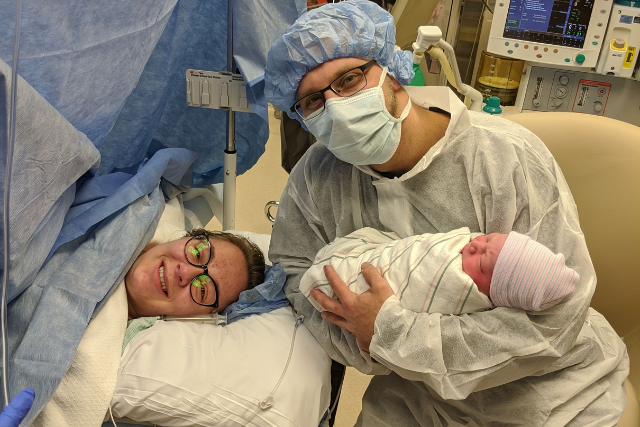
by Hannah Gill | Feb 22, 2023 | Cesarean and VBAC, Labor and Delivery
“The anesthesiologist gave me something for the pain and whatever it was, I began to doze off. The next thing I remember was hearing my husband Scott say, “Babe it’s a boy!””

Going into my first pregnancy, I thought I was doing all the “right things” to prepare. I read all the books and blogs, took a hospital childbirth course, and played twenty questions with my OBGYN. The majority of my work experience at that point was in healthcare, so I favored a medicalized approach. I simply followed the mainstream checklist of what you should do for birth, unaware of all the options I actually had.
My pregnancy was rough and I spent the majority of the 40 weeks vomiting but still somehow gained sixty pounds. The only other “complication” was gestational thrombocytopenia which meant there was potential I would risk out of epidural criteria. As the end of my third trimester approached, I was ecstatic to finally meet my baby, not knowing that birth and postpartum would shatter my entire being and make way for a rebirth I never saw coming.
My labor plan was to be unmedicated and at the time and I felt more prepared than ever. It wasn’t until five weeks postpartum from a traumatic cesarean, drowning in breastmilk and feelings of failure, that I realized how unprepared I truly had been. To put it simply, I was naïve. The notion that I could end up with a cesarean never even crossed my mind because I thought, “That only happens in emergencies which only happen to people with unhealthy or complicated pregnancies.” I’m pretty sure I glossed over that entire section in my birth education workbook.
Stream movies, shows, courses and more on Informed Pregnancy+!
When labor began, I panicked. My contractions started out extremely intense and were only 5-7
minutes apart. That was not the gradual build-up I had read about. I was immediately anxious and overwhelmed. As soon as I got to the hospital and got the okay for my platelet levels, I asked for an epidural. I was disappointed that I gave in so quickly but the disappointment faded as my body relaxed and I was able to rest. The epidural was so strong I couldn’t even feel pelvic pressure and after four hours of pushing, I opted for a cesarean. I was speechless, trying to hold myself together while my mom cried and kissed my forehead. I had no idea what my body and mind were about to go through.
Surgery started and immediately I felt more than “just some pressure,” as they had described. I was in full-blown pain. The anesthesiologist gave me something for the pain and whatever it was, I began to doze off. The next thing I remember was hearing my husband Scott say, “Babe it’s a boy!”. I don’t remember my son Hudson’s first cry or meeting him for the first time. I spent the next few hours in the recovery room hypotensive and on the verge of passing out from postpartum hemorrhage. I was unable to hold Hudson but Scott helped him latch and feed while the nurses worked to stabilize me.
During the transfer to the postpartum ward Scott went home to shower so it was just me, Hudson, and my dad. Switching beds is the moment I remember more vividly than any other. I was flat on my back, looking up at the ceiling as they began to move me. Counting to three, they slid me over from one bed to another and I let out a scream I never want to hear myself make again. As tears poured down my face and I tried to catch my breath, I noticed my dad out of the corner of my eye. He was facing away from me – his hand on Hudson’s bassinet – wiping away his own tears. I had never felt so scared and out of control in my entire life. It was at that moment I knew I could never go through this again.
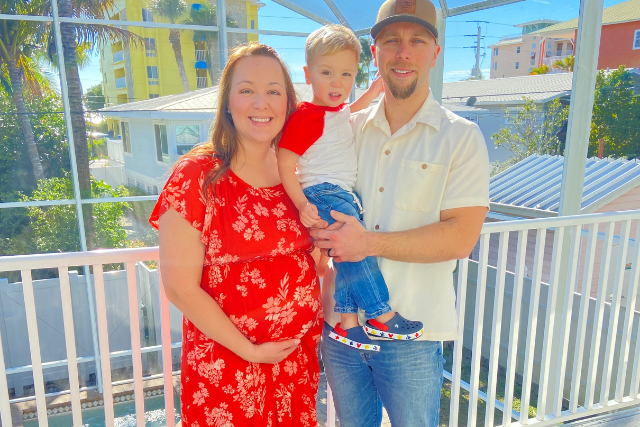
Shortly after, I began to research what had gone wrong and specifically, what I had done wrong. I felt that my body had failed me and my baby. Soon though, I realized it wasn’t my fault. I made the best decisions I could with the information I had but I didn’t know what I didn’t know. Ultimately, this process helped me plan for a vaginal birth after cesarean (VBAC) and start my journey to become a childbirth educator. My goal became to create a birth course that truly gave people information about all of their choices when it comes to pregnancy, birth, and postpartum.
…Stay tuned for Part 2 coming next week!
Check out Hannah’s episode of The Informed Pregnancy Podcast!
 Hannah Gill is a VBAC mom of two, birth and postpartum doula, birth educator, and owner of Ebb and Flow Birth Co. She has a passion for helping support women through cesarean and VBAC births and throughout the postpartum period. She believes women deserve to be respected and supported in their pregnancy, birth, and parenting choices. You can find out more about Hannah and her services at ebbandflowbirthco.com and over on Instagram @ebbandflowbirthco.
by Informed Pregnancy and Parenting Project | Feb 7, 2023 | Health Conditions, Podcast Transcripts, Pregnancy
Elliot: Welcome to the Informed Pregnancy and Parenting Podcast. I’m your host, pregnancy-focused chiropractor, Dr. Elliot Berlin.
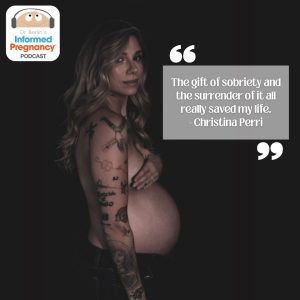
My guest today is a multi-platinum singer-songwriter and a mother. Since the beginning of her career in 2010, she has released three pop albums, two lullaby albums, and toured the world many times. Her most popular songs are “Jar of Hearts,” “A Thousand Years,” and “Human,” which have billions of streams and diamond platinum and gold awards. In 2017, she settled down and got married to Paul Costabile. And in 2018, they welcomed their first baby, a daughter named Carmella. In 2020, they had a daughter named Rosie, who was born silent. She is currently nine months pregnant with another daughter and due next week. Christina Perri, welcome to the podcast.
Christina: Hello.
Elliot: Well, a million things to talk about. I’m going to jump right in. Where are you from originally?
Christina: Born and raised in Philadelphia, Pennsylvania.
Elliot: What was that like?
Christina: You know, it was really sweet, actually. I had a really nice childhood as far as — I don’t know, it was just that generation of like we didn’t know. We didn’t have money, you know. We were just kids running around in the neighborhood, coming home when the street lights came on. Like, we are so millennial. Like, my brother and I, and we just sort of have this memory of having a good time and getting into trouble what we thought was trouble but really wasn’t that bad. My dad’s from Italy, so we have a massive family. He has eight siblings. I have 50 cousins.
Elliot: Are they here?
Christina: They’re here, yeah. I have a hundred family members in Italy, and 25 in Brazil.
Elliot: Wow!
Christina: So three siblings stayed in Italy and kept their family there. And then, the other six siblings came to America. So yeah, my family’s huge. So all I knew was, you know, family dinners, homemade wine, running around, and growing up in a barbershop. Like so, so cliché. Almost like a caricature. Like, you know, all the Italian men speaking Italian, and me sweeping hair off the floor. It kind of was nice. I can turn it and emotionally look at things that weren’t great and I have for 28 years in therapy, but that’s my brain and my perspective of it. But sort of zoomed out, it was nice. I love Philly. I still go back all the time. And funny enough, I should say Philly loves me, which is kind of hard to do.
Elliot: What do you mean “it’s hard to do”?
Christina: Oh, Philly fans, in general, are like…
Elliot: Oh, they’re tough.
Christina: And they won’t even care me saying that. Like, they literally will just reject someone so fast like Santa Claus at a parade. They’ll throw snowballs at him. And, you know, we’re known for that in Philly. So I feel like when I became sort of popular, my music became popular, I would play shows in Philly and they’re the first shows to sell out. I’m grateful for the town they play my music, they support me. I’ve been sponsored by Wawa at one point.
Elliot: They birthed you.
Christina: Yeah. And I also speak highly of them, I think that helps, you know. I support the Eagles and the Phillies, and you know all those things I’m supposed to do and so yeah.
Elliot: From the heart, though. Can I ask you a question, when did you get your first tattoo?
Christina: Oh my gosh! I was 15. The truth is my big brother got one first. So I blame every single one of my tattoos on him. Because I feel like I wouldn’t maybe have gone down this road if he didn’t make it look so cool, as my big brother. He’s two years older than me, and he got a tattoo on his 15th birthday. And so, naturally, the day I turned 15, I thought it was like my birthright.
And then, I remember it was on the back of my neck. It’s like an Egyptian Ankh. I’m not sure why. I’m not into anything Egyptian other than that, I guess. And it was very emo at the time. I was 15, I had fallen in love for the first time. I had written my first song. And I thought I felt alive for the first time in my life. Like, wow! I’m still that dramatic by the way. And I got it and I hid it from my family, I want to say for like, a good month. And then, I have to share my story now that I’m a mom. I think this is kind of brilliant. Even though maybe I wouldn’t tell my daughter Carmella to do this. But I told my mom when we were in church. My family’s Catholic.
And so, on a Sunday, I’m wearing a turtleneck in August. My mom’s like “What is your deal? I know you’re weird, in general. Why are you wearing a turtleneck?” And I was, “Oh my gosh! This is my opportunity to tell her.” And then, by the time we get out of church, she’s just going to like be less upset. She has to pray about it, you know, or whatever. And it worked! I really think my punishment was less because I told her I was like, “I have to tell you something.” And I leaned over and I whispered it to her. And by the time we got out of mass, I was only punished for like three months maybe instead of like —
Elliot: Oh, wow!
Christina: Yeah. I thought that was quite brilliant.
Elliot: She wouldn’t be incredibly surprised since your brother had already gone down that path.
Christina: Yeah. I don’t know. She was like — well, because she didn’t take either one of us. My aunt pretended to be our mom. And so, she was super bummed. And she was sort of just like, “Just please don’t get your hands or your neck or your face.” And I was like, “Okay.” And so, I have a “16” on my hands and my neck, but just not my face.
Elliot: Not your face. So, one out of three ain’t bad.
Christina: Yeah. I thought that was pretty good.
Elliot: First of all is people get addicted to them. Are you still craving the next one?
Christina: You know what? No, because I learned how unhealthy they are. Well, because I got obsessed with my health in the past five years and I learned that they’re like metal. I’m all of a sudden thinking like — and I don’t mean now, they make them without metal in the ink. But I don’t know about in like the late ’90s. And I wonder if it was just a season of my life where you know I needed them and loved them. And right now like I can’t. I’ll probably get something for my upcoming daughter because I have one for Carmella and I have one for Rosie. But I’m not planning like big pieces where I’m just going to be covered. I feel like I’m waning.
Elliot: Waning down? Do you have one or two that are most meaningful to you?
Christina: Yes. I probably have a couple that I really, really love. This is how I look at it like, “Would I get it again?” Because so many I would not get again. Like it’s a cheeseburger. It’s just unnecessary. And if you ask tattoo people this, they’ll say if they’re tattooed, like me, like refrigerator or magnets is what we sort of call my style. Like portraits and beautiful symmetry. Most people would like not get the same thing again. But the way I look at it is if I would, then obviously that means something to me. So I have a Disney Castle here, that interestingly enough, brings me a lot of joy every time I see it. So I’d probably get that again. I also have a giant Millennium Falcon on my leg.
Elliot: That was one of the coolest ones I’ve ever seen.
Christina: Thank you. I have my daughter Rosie here on my heart. My husband has it, too. I’d get that again, obviously. Yeah, it’s interesting. They all tell a story. Like even the cheeseburger, I guess. But there’s something about it. I used to say, you know, I express myself in three ways: as a writer, a singer, and I get tattoos. It’s just part of my creative expression. And I also like have a belief about our bodies being so finite. And how, “This is just the one I’m in,” you know, for right now. And I could just decorate it.
Elliot: Yeah. I don’t have any. But I think if I had a burger on my arm, I would probably be even less healthy than I am now.
Christina: Maybe. Although, I think your son would probably like my cheeseburger.
Elliot: My son would like it, yeah. Don’t give him any ideas. But I would just look at it and be like, “Okay, we’re going to get burgers now.”
Christina: Well, to be fair, I did go on a burger mission. Like finding the greatest burger in the world. And that is the tattoo in honor of that sort of like quest I went on. And, interestingly enough, the second-best burger in the whole world in my opinion is in Berlin in Germany.
Elliot: Look at that!
Christina: I know.
Elliot: We’re so connected.
Christina: I know. So I do love cheeseburgers. As much as I made fun of that one immediately, like I do really like cheeseburgers.
Elliot: So, yeah. I started this episode by saying, “There’s so much to cover, let’s jump in!” And then, I diverted and spend a whole map of your body art. Okay, music. How did you get into music?
Christina: Oh, my gosh. Well, this one, I’ll try to keep on the shorter side, because I do think obviously the journey of motherhood is maybe more, well I think it’s cooler. But I have a pretty fantastic story, I’m not going to lie. And, you know, people that do know my music sometimes know my story also because it’s so special. But I’ll give it a brief summary.
Definitely, saying my whole life did musical theater and things like that, but was very, very shy. Like, never planned performances or brought my guitar to parties and said, “Hey, look at me!” And sang songs for all my friends. Like, people would beg me to do that actually, some of my closest friends. I just thought when I started writing music, I was about 15, I said I had fallen in love and I’d been studying The Beatles for two years before I actually picked up the guitar and wrote music or sat at the piano. I taught myself both of those instruments.
Elliot: Wow!
Christina: Not very good though. In the music world, we call it songwriter-guitar and songwriter-piano.
Elliot: Yeah, but that’s like come on anyway. It’s a different kind of talent than whatever, pianist.
Christina: Well, what I do like about it is that it was so imperative that I was expressive through music that I found the chords. Do you know what I mean? My brother one time came, he’s a very talented guitar player and classically trained and played with Les Paul. I mean, he’s like a virtuoso from the age of like 7. And so, I also think I didn’t show anyone because I was not him. Do you know what I mean? He’s the star of our family and sweetest human on earth. But anyway, one time, he came home from touring the world because he had a record deal by 16. And I was, “Hey, look what I can do!” And I showed him me playing the guitar. And I was like, “What chord is this?” And he was like, “That’s a B minor.” And I was like, “Ah!” I didn’t know. I truly put my fingers in places until they sounded good like it was kind of cute.
Elliot: That’s incredible.
Christina: Thank you. But I started building a catalog at 15. I said it didn’t perform, I just was like expressing myself almost like a diary. I joke about being dramatic and emo, but I was depressed. Like, even as a kid, I remember my mom being like, “I don’t know why you’re so sad.” Like, I was like, “I don’t know either.” I think I just had depression and anxiety. I was in therapy by 8 because my parents were just like so not sure why I was the way I was. And music really saved me, I’m not going to lie. It was like my form of expression. It was obviously like I wrote love songs because I love The Beatles. But I really think it got me through really emotional hard experiences from 15 to 23, before anyone really heard my music. It was like really just for me and, truthfully, really helpful.
And so, long story long, I went to LA on my 21st birthday, only because my big brother asked me to. Definitely, wouldn’t have — again, Mr. Influencer in my life, with the tattoos and the music. So he said, “Hey, Chris. Can you come to LA?” And I was like, “Sure.” And so, I moved to LA with nothing, just a guitar. I had maybe like 300 bucks. It was just so like out of a movie. He went on tour, I stayed at his apartment for like three months. He said, “Get a job. Get yourself an apartment. You have three months to do that.” I did that. The whole while I’m here, I’m thinking, “Oh, I want to be a songwriter.” You know, at this point, I had realized I had written songs I thought were really good, but I didn’t want to perform them. And so, in this town, I thought like, “Oh, I heard there was a job where you could write songs for other people.” And so, I was a waitress by day, three different waitressing jobs just to pay my rent. And then, I would write songs at night time. Like that was sort of it.
And then, I had this best friend, her name’s Keltie. She’s like my fairy godmother in the story or in the Disney movie. Her and I would be like standing looking over Capital Records, and a shooting star goes by. And she said, “You know, Christina. You need a manager. Someone who believes in you and knows people.” She’s like, “I don’t know anybody.” She was a dancer, like a New York City Rockette. She was like, “I don’t know anyone in the music world. But, I’ll manage you, but I don’t know anyone.” And I was like, “Okay.” And I was so not into being the performer, but she was my only fan, and she thought I should be. I just kind of listened to her and she posted a video of me singing on her YouTube. And now, this is in 2010, when YouTube was not really a thing. It was certainly not like viral, you know what I mean? It wasn’t like — there was Myspace and then YouTube. But no one watched my videos but Keltie. The truth is I had no views.
But, by chance, she tweeted a YouTube video of me singing a song and her dancing, like contemporary dancing, you know. Really like emotional. She was just as emo as me. And I guess, the right person, this kid, an intern in North Carolina saw the video happened to follow Keltie, sent it to his friend Tom. His friend Tom was looking for a new artist to sign, went through my YouTube, and like saw covers. Because I did post covers on YouTube but for fun. Because it wasn’t like a business. It was not an influencer, you know what I mean? Like, that didn’t really exist.
And he reached out to me and said, “Hey, I’m a manager. I manage this guy named Jason Mraz,” who happened to be my favorite artist of all time. And I was like screaming! I mean, Keltie and I both were literally like two little girls screaming. She took a picture of me reading the email. I should have that picture somewhere of me like crying, reading this email. Like, “Oh my gosh! Like, this is it !” Like, it felt like my big break. But I also thought like, not for me. I thought this was my, you know, for me to have a manager and then write songs for other people. I was really not expecting to be like the artist. But I thought this was my way in, like my door.
And then, cut to same best friend, Keltie sends this song. I made a demo. So Tom started managing me, but like unofficially. I made some demos, sent one to Keltie. Said, “Hey, this is [unin 14:44] “Jar of Hearts.” Like, I’m so excited. I’ve never heard myself sing like with myself. I’d never recorded four-part harmony. I was like, “How cool is this!” But like, this is the demo. I’m going to shop around to other artists, you know. And she just like immediately emailed it to the choreographer on the dance show “So You Think You Can Dance,” which is funny because, originally, Keltie’s like, “I don’t know anybody.” But she knew the one person in the world I needed to know for my journey.
And so, she gave this song to Stacey Tookie, who happened to be very successful at the time on this show and said like, “Hey, maybe one day you can play this song on your show.” And Stacey said, “How about Wednesday? You know, 8 p.m., June 30th, 2010.” They played a minute and a half of “Jar of Hearts,” and went all the way to the top of the charts on iTunes. Flew to New York City the next day, quit my job as a waitress.
Elliot: Three times.
Christina: Played it on CBS “Morning Show,” “So You Think You Dance,” I performed it, and then Jay Leno. In three days, I performed it on TV three times. And like, you know, as they say in show business, “The rest is history.” I mean, literally, that was it. And I have to tell you though in all honesty, until I wrote “A Thousand Years,” which then came a year later, I really didn’t think it was me still. I thought like this was a fluke, you know the imposter syndrome that people get. I was like, “They’re going to find out I’m not really a performer.”
But there’s something charming about being so nervous and shy, and I would just talk about it. All of a sudden, I realized my superpower was like, “I don’t know what I’m doing!” I was like trying to get out, back out slowly from the spotlight, and everyone instead loved me more. And I was like, the whole time, it’s in my head. I mean, I would say, “It’s not me, it’s my music! I’m glad it’s doing what it’s doing, that’s really cool.” I never felt like I was the star of the movie.
And then, I wrote “A Thousand Years,” and I finally remember having a moment like, “Okay, I think it’s supposed to be me.” At this point, I can’t fight the universe or the forces that are choosing me to be this vessel, right? Because like that song just like blew up in a way that’s so much bigger than me became, you know, everyone’s love song, or grief song, or like whatever. And I’m so, so grateful for it and I let go at that point. I was like, “Okay, this is what I’m supposed to do.” And then, here I am!
Elliot: You know what? I have two things to say. First of all, what do you call —
Christina: [unin 17:10] of breath, too. You know, I’m very pregnant.
Elliot: Yeah, I’ll give you a little space here. What do you call a fake noodle?
Christina: Foodle?
Elliot: Oh, that’s not bad. Impasta.
Christina: Oh, it’s very Italian.
Elliot: Yeah. You were with your imposter syndrome.
Christina: That’s exactly how I felt. I felt like a fake, fake noodle. I still do, I’m not going to lie. I haven’t mastered it in any way.
Elliot: But one day, you’ll see, you’re the real deal.
Christina: Thank you.
Elliot: I think we should take a little break. And then, talk about your second career. Third, I guess. There was waitress, and now, pop star. And then, motherhood. Wow! That can be, a mother. We’ll be right back with Christina Perri.
[break]
Elliot: Welcome back to the Informed Pregnancy Podcast. We are talking to Christina Perri. Okay. So your career accidentally explodes. And then, you settle down and get married. How did you meet your hubby.
Christina: So, it was very cute and quite nauseating. We met actually at the end of the first day of my second album promo. And I remember it very specifically because it was like a 14-hour press day. I had the “Today Show” at 4 a.m. And then, I walked into iHeart Radio at some point in the evening. Like, it was my last thing of the day, which I think is important or worth noting because I was very, what they would say, like punch drunk. Like, I was just silly. At that point, I was like delirious really.
And so, I was myself entirely, which I will say most of the time I am. But, sometimes, I’m a little bit more professional, or a little bit more like structured with what I’m saying or doing. And at this point, I was just like so silly. You can see, we have the whole thing on video. I walk into this green screen room, and there’s this like handsome Italian man in a suit. And I’m already just nervous and silly, and I’m talking about barfing. I’m just like it is like a sitcom or something. If I look back now, I’m like, “How did I say that?” I feel like this is our first date. But, apparently, it was charming. And so, he says that he fell in love with me that day. He actually has an email he wrote to his mom as proof that says, “Hey, Mom. I just interviewed the girl I’m going to marry.”
Elliot: Wow!
Christina: So, that’s very cute. I was a little slower. I will say I’ve asked my manager, “Hey, did I like show any signs or mention anything about like, you know, just trying to match his romance?” with Paul. And my manager, Tom, was like, “Oh, I’m sorry. You don’t remember fake fainting into the car when we were leaving.” And I was like, “Oh, that sounds like me.” I was like okay, I think I’ve made some sort of like notion that I had, you know, fallen for him. Because the truth is we didn’t go on a date for two years.
So, that was day one of my promo cycle, and you know the music world is going to be very intense. Well, I think pre-pandemic, and also pre-family. At this time, I’m single. I have no kids. I’m on a plane every day. And so, yeah, for two whole years, we became friends. I mean, it’s actually kind of cute. I followed him on Facebook, like my secret personal Facebook. And he, was like, “She loves me.” These were like [unin] times apparently. But, I hate to tell — we laugh about it still. But like, you know Facebook suggests people. You know what I mean? Like it suggests like, “Hey, do you know this guy?” And I was like, “Oh, yeah! The guy from my iHeart.” Like Paul’s reading into it that like I’m pining over him and whatever. Maybe I was.
Maybe I just like didn’t totally realize until he asked me out like 11 times. And like, the 11th time, I was finally like, “Okay. You know, I’m in New York finally –” Because the truth is we just were never really in the same place. And when he would be in LA, I would be somewhere else. So I promised him, “Hey, when I come to New York next, I will go out with you.” And I’m a promise keeper, that’s the thing. That’s what got me, my accountability because I remember thinking like, “Oh, crap! I told this guy like I would hang out with him,” you know what I mean? Like, I felt the need to keep my promise. We’ve been together ever since. That was January 20th of 2016. So, that was our first date. Went to Broadway Show.
Elliot: What’d you see?
Christina: “School of Rock.”
Elliot: Oh, cool.
Christina: It’s very cute. Well, Atlantic Records gave me tickets to “Hamilton” if I would go to “School of Rock” and tweet about it. And I was like, “Absolutely!” I saw the original cast of “Hamilton,” but I didn’t bring Paul, unfortunately. I brought Paul to the other show. Makes sense. I didn’t know him yet. I was like, “I don’t know if I can bring you to ‘Hamilton.’ It’s the hottest ticket in town!”
Elliot: And that’s fun! You didn’t make that promise.
Christina: Right. So anyway, we felt really in love. And Paul always jokes around and says, “I was ready to have a baby the day we met.” Like, I brought it up on our first date. And I could have, I might have. I was already 29. You know, Italian. Huge Italian family. He’s Italian. He’s got a huge Italian family. I was like, “This is it! This is my guy.” I was like, “Let’s go!” Like, “What are we waiting for?” I was like CEOing our relationship a little too much, you know. But I was just ready. I wanted so, so badly to be a mom. Even my OB-GYN would be like — I would go for checkups and I would just like cry. Should be like, “Your uterus looks perfect,” and I would just cry.
I’m like, “What’s happening? Am I [unin 22:38]. She’s like, “If you’re ready,” you know. My baby [unin 22:41] was like just clicked on. And luckily, Paul’s was kind of, too. I mean, he’s my age and he’s like super dad, and I knew he would be, you know. You just like kind of see your partner in a way like, you know. Especially when you’re that age, I think you’re kind of looking for that. So like, I just was so excited to start a family and so. Well, I think we should get married first, but we didn’t. We just got pregnant.
Elliot: But did you have a wedding now since then?
Christina: No. We got married at City Hall in New York City. We did get married, but one month before she came. I was this many pregnant, and at City Hall with like our two best friends. And we had a big thing with our families. But it was funny because it’s the opposite of what you would imagine as like a big Italian kind of like wedding. But I was just, I don’t know. Our families were so Catholic, they just needed us to be married. Do you know what I mean?
Elliot: Oh, before the baby came?
Christina: Yeah. We kind of got a little pressured into it.
Elliot: [Try out of the box? 23:36]
Christina: Yeah. I’m happy with it.
Elliot: I mean, I was all geared up to ask you if they played “A Thousand Years” at your wedding. If I was on the courtroom staff, so.
Christina: You know what? It’s not too late. We joke around about maybe having a wedding like, you know, at 10 years or something, like with our kids and like doing a whole thing. And then, I guess I bet you at that point, I would consider it. Maybe I’d have like my friends play. It’d be really funny.
Elliot: You can karaoke it.
Christina: Oh, that would be even better.
Elliot: Okay, I want to get into that pregnancy and birth. But what keep swirling through my head is how you struggled with anxiety and depression as a young adult through. It sounds like your tweens, and your teens, and your early womanhood. And how music, I guess, was a very powerful tool for you in conquering that. Taking charge of your mind and being in control of that, rather than letting it control you.
And as a human, I think we all have some anxiousness and depression, some sadness, sometimes more than others, and sometimes better control than the others. But also, as a dad, as a parent, watching my teens. I have like, basically, four teenagers now. And the things that they struggle with sometimes. The anxiousness, fear about different things, sadness, and to know that it’s possible, you know, to watch you and see, “Hey, it’s possible to find yourself get control and not have those things ruin your life.” It’s kind of nice. It feels warm inside. It’s reassuring, I don’t know. Just to look at you as an example and say, “Look, this can be done,” is comforting to me.
Christina: Well, thank you. I want to say one point on that, and I love that you paused here and added that in because it plays such a huge role in the next five years of my life. So, if we’re like shooting through my life in its entirety. It’s so worth mentioning that I started therapy day. So like, I do want to just add in the tools that allowed me to get well.
Elliot: Sure.
Christina: So if I started therapy from 8. I did stick with it until I was about 17. And then, I have to say that I got really into drugs and alcohol, which I’m not proud of. But I also will say that, in some ways, it just helped me exist and get to the place where I got sober. Like, a lot of people who get sober will say like, “I’m actually quite grateful that I had had something that helped me get to the next level.” Like, I was so sad. Like, music was so helpful and the best.
And then, college in that time was really difficult. But, at least, I felt so I’m grateful that I didn’t overdo it but at the same time I’m mostly grateful that I got out of it. But I will say I can’t lie and not say there was like a scary couple years from 17 to 23 where I was a bit messy, and I’m sure my parents didn’t sleep very good. Do you know what I mean?
Elliot: Yeah.
Christina: That’s the truth. But I did have music and my family, and I had therapy. Like, I still went but I was a little bit lost. And then, the gift of sobriety, which I have to call it that because it really does feel like — like, I know so many people that want so badly to be sober and can’t get sober or can’t stay sober. So, I would like to think that the surrender of it all, and like choosing to get sober at 23 for me, really did save my life too, and was just the next thing I needed. So in that journey, and I kept going to therapy. But getting sober for me, was a huge, huge thing. Because then, I was present for my career. So my career actually happened after I got sober, which was my true self. My true essence. My true — right, like when people are cleared of substances, that’s just like their most genuine soul, I think. And so, like it’s interesting that that’s when my dreams started coming true.
That’s when I started touring the whole world. Now, I struggled with depression and anxiety on tour, and nervousness and bad relationships, and you know all those things. But like, I really, really also did a lot of work. I did the 12 steps. I had a sponsor. I had sponsees, which I think is also worth noting because I think that’s like full-circle sobriety. I was really spiritual, I did a lot of praying and meditating. And then, gosh, I had no clue what it was preparing me for.
As soon as I became a mom, the transformation that occurred, like chemically, emotionally, spiritually, mentally, physically, like it was so fundamentally shifting. I’m so grateful for everything I had been through and everything that I didn’t even realize I was sort of like prepping for. But I did want to just mention, yes, thank you for noticing. It’s been a mental health journey and a health journey, the whole time. And I did always really, really care about mental health and like putting that first. And I’m really grateful for that. I am, in a way, an example of like putting in the work and being okay.
Elliot: Yeah. You know, sometimes, sleepless dad of teenage kids, it’s just helpful to just sometimes take a deep breath, and relax, and see that sometimes it’s part of the process. And you be supportive and helpful as much as you can and let the process work its way through. But, you know, I’m comforted by looking at you and seeing that if someone puts in the work and someone wants it enough, then they can come through the other side and have benefited from that whole journey. And then, their parents can sleep a little better.
Christina: Oh, my gosh. Well, I’ll call you when Carmella is a teenager.
Elliot: Thanks. I’ll give it right back to you. Okay. And the other thing that made that so clear in my head was just how when you met Mr. Right. You were just ready to jump into motherhood, which is sometimes when if you haven’t really resolved those issues. It’s scary to jump into that role, but you did it.
Christina: Thank you. Well, I will say just very specifically, I did trauma work. I did EMDR, trauma work, six months before I went on my first date with Paul. And I will tell you, if I had not done that, I don’t know if we’d be here. Because I had a break from touring, so I was on tour. I did 19 tours in a row and was on tour for six years straight. And like that alone, was like a little bit traumatizing, but wonderful. And then, when I got home, I was single. Just to be really honest. And I finally focused on me.
And then, I was like, “Wow! I have a lot of trauma just from being a woman in the world.” And going through things as a teenager, and touring when I wasn’t sober, there were so many things I had to go through and work through. And I actually did that. And I remembered telling my therapist like, “Hey! I feel worse. Like I’m mad at the man at 7-Eleven and I don’t even know him,” you know. And she was like, “Trust the process. Trust the process.” And then, boom! I literally went on my first date with Paul, and I was like, “Oh, my gosh! I’m ready for you.” But I have to point out, I really like almost prepped for that and didn’t know it, you know?
Elliot: Yeah, hard.
Christina: Yeah. Yeah, yeah. But I was never I think ready in any other relationship I ever had. So it is cool that by the time I met like the right person, I really felt like, you know.
Elliot: In the right place.
Christina: Yeah.
Elliot: Very cool. So you guys did have a baby kind of right away?
Christina: Yeah, within a year. So we dated a year. And then, I was pregnant by the spring of 2017. And at this point, I had moved to New York City for him by the way. I was living in LA for about 10 years. And then, he was like my New Yorker guy. And I thought, “Oh, I’ll just move to New York. I’m so in love.” Like, it was just like, “I’ve always wanted to live in New York City.” I don’t know why I’m putting on like some college [inaudible 31:35]. I felt like I just was like in the clouds, you know what I mean? Like, “Oh, let me just leave the place I’ve lived for 10 years, and with all my friends and like my favorite people.” Because I find it interesting that like, I circle back. And now, we live in LA again.
But at the time, I was just so in love and I was just like, you know, took the whole year off. Like, I didn’t tour. I was just like in “La La Land,” literally, but not LA. And so, moved to New York City just to be in love, just to live out this like movie and ended up getting pregnant, moving in to a high-rise in New York City. I felt like Rapunzel at the top of a tower. So nauseous. My pregnancy was like — I’d never been pregnant before. What’s funny too, is like it was definitely not planned. So when I got pregnant, I didn’t know I was pregnant, right, for the first couple weeks. And I remember well, Paul tells the story that one day I woke up and I ordered a cake for breakfast. Like, on Postmates, I ordered a Lady M cake from the upper east side or whatever. And I ate the whole cake. And he was like, “Are you all right?” And I was like, “Yeah, I think. I needed this cake.” Like, days later, we found out I was pregnant.
Elliot: But I’m going to have to pee on a stick because I might be pregnant. If that’s the — yeah.
Christina: Honestly, it was so funny.
Elliot: Listen, you said it wasn’t planned. But were you trying to not get pregnant and it failed? Or are you just not most careful?
Christina: I’m not the most careful. And, honestly, like since then, I’ve been the same way with all my other pregnancies. Like, I think I count wrong. I don’t think I’m very good at like figuring out when I’m ovulating. And I truly mean it was an accident. Like, I certainly wouldn’t have tricked Paul into having a baby. But I guess, we were just not being careful. We weren’t trying, but we were trying, but we weren’t trying. That’s what some people say.
Elliot: There was no goalie.
Christina: Yeah, no. We didn’t have that. And then, we were just so in love. I mean, I honestly think it was like I can’t recall when it may have even happened. I don’t know if it happened. And we were so excited and happy. Even his family was happy for us, the very Catholic family that he’s from. And then, you know, that point the “When are you getting married?” questions would come up every day. But I remember it being a time of curiosity, nothing about pregnancy scared me. I had no physical complications. I had a great doctor. I would go all my appointments, everything was normal. I was super sick. Like I said, I felt like Rapunzel in my tower. I would just watch Disney movies all day and nauseous, and eating crackers, and crying. You know, that’s how emotional and dramatic I am. So that felt kind of normal.
I don’t know, it was just like a really kind of nice memory. Truthfully, I didn’t know how good I had it, if I’m being honest. Because of my next three pregnancies, I thought they were all like this. You know what I mean? Like, I didn’t have any experience before. So, I just kind of rode through it, and we got married in December of 2017, on the day we met, in the same green screen room. It was very cute.
And then, we had Carmella on January 17th of 2018. Really great birth experience also, I have to say. Like, it was in a hospital, Lennox Hill Hospital. I didn’t regret any of the things that happened. I didn’t have a traumatic experience. I know so many women have traumatic birth experiences. My water didn’t break, but I labored at home. I knew I went into labor, and I was able to be at home until like four centimeters. And then, went to the hospital. I had an epidural. I slept a little bit, woke up at 10 centimeters. Pushed her out, and she’s perfect!
Elliot: Pretty textbook.
Christina: Right? I only say that and not in a humble breath, sort of way. But in a comparison to then what came next, like you know what I mean? Like it was so —
Elliot: But did you have any vision, or plan, or idea of how you wanted the birth to go? Or just go with the flow?
Christina: I was actually pretty specific. Because I read all the blogs. At this point, I was on all the apps. I definitely was very first-time mom where like I did so much research, and I would even protect myself emotionally and say, “I’m going to stay in the trimester I’m in. I’m not going to read ahead.” And like, I didn’t make a birth plan because everyone I know said don’t. They said like have an idea of what like you maybe want or don’t want, but then you have to just like be open. Paul was even really great. I didn’t have a doula. I had Paul. He literally brought salami and mozzarella in my placenta cooler.
Elliot: Oh, my God!
Christina: And was eating it with my OB-GYN in the hospital room, while I’m like bouncing and laboring on the ball. They’re eating salami and mozzarella. And I’m like, I didn’t hate him. Especially, the journey of like loving and hating your partner through this whole thing is like so intense. I mean, I hated him like two days later. But even that moment was cute. Do you know what I mean? Maybe I’m just romanticizing it a bit. As remembering it almost five years ago. We’re also again comparing it to what the next pregnancies were like, and it just seems like I would take that one any day. You know what I mean?
Elliot: Yeah. Well, we’re going to get into your next pregnancies. And I’m curious what postpartum was like for you from that first birth.
Christina: That was much harder. That one I sort of hit the ground because real life stepped in a little bit. Where it was flu season in New York City, and Paul’s whole family got it one by one, instead of all at the same time. So all of a sudden, our plan of having mother-in-law and Paul’s three sisters helping us, was out the window. Everyone was sick. And my dad had open heart surgery, emergency open heart surgery a week before I had Carmella. So my mom couldn’t come to be with us.
Elliot: Oh, wow!
Christina: I will say like everything was like perfect maybe until then, until we got home. And then, Paul and I had to sort of figure it out on our own. Which, for a couple reasons, I look back now a little bit nostalgically because I can’t believe we made it through that. I almost wonder if we’re still married. Because we worked so hard on us not breaking up after that. Do you know what I mean? Like, it was so hard when it was just the two of us in New York, in the winter. Everyone was sick and we had no idea what we were doing. You know what I mean? Then he annoyed me. Every single thing he did and every sound he made, and you know, like in every way he held the baby, and he did everything wrong. He knocked off her belly button too soon. I cried for four days. You know what I mean? Like, that was more like realistic.
But I also say I wrote a song about postpartum depression called “Mothers,” which I’m really proud of. Because I even had the conscious thought, “This is insane.” Like, how I feel right now. And because I’m so sober, I think sometimes, I have the ability to like know something is like chemical. Because there’s nothing else in my system. So when I would get waves of postpartum, which by the way, the language of that really helped me. Because, at first, I thought postpartum depression was something you just get, and then you have it, and that’s who you are. You know what I mean? We’re kind of taught to be very scared of that. All the books and things I read always said like have a code word or a safe word, and it’s a little bit scary how we talk about it.
And then, all of a sudden, I decided to put my own filter on it. And was like, “Okay. What if they’re more like waves? What if I imagine they’re just chemical right through my body regulating, they’re my hormones regulating?” Like, at one point, my hair all fell out here and here at four months. And that’s when I had a real dip. And I was like, “Well, that makes sense. I’m having physical symptoms.” I started to like do what I do, which is make a formula and understand it. That’s kind of how my brain works I need to like understand. So once I sort of allowed the feelings to come, allowed the waves to come, talked through all of them, worked with my therapist, my sponsor, also got a doula, like a postpartum doula.
I hired this woman, Marta. She’s a polish woman in New York City whom I will love absolutely forever. And she would come over and make me soup. And she would wake up with Carmella in the middle of the night and feed her. I would pump. Because I was also like so terrified of supplementing with formula, which I now have a whole other opinion on. But, you know, 31 years old, reading all these crunchy mom things. They were all saying, “Don’t do that.” So I was trying so hard to pump exclusively or breastfeed her exclusively. And that just made me not sleep for 13 weeks. The whole thing was just sort of challenging, totally challenging. I will not say in any capacity that that was smooth. But we did make it through it.
I mean, honestly, Paul and I learned together. We had to learn to get through it as a team. We also then started asking for help. I would ask for help way sooner now. I would never go 13 weeks without sleeping and not ask for help. But, sort of how you have to learn. And that was that! I feel like the first year of Carmella’s life was challenging, but also, oh, my gosh! She was the best baby. She was just the best. She still is the best kid, but she was so good. And I only say that because I know my mother-in-law who has five was like, “She’s so good.” Like, you don’t know [unin 40:54] you are. “She’s so good,” you know.
And so, I think that really helped. And I think about and me and Paul, we began our bond that would become the most important thing. So I almost look at it like maybe it was all meant to be that it was just the three of us. Because we ended up going through so many hard things just the three of us. And so, like it’s interesting now to look back at it and have fumbled through that so ungracefully, truthfully. It was quite messy.
And then, I was able to again write songs about it because that’s how I heal. I was able to write songs that help other mothers heal, which is a new version of my life. I think that song — I get the most people write to me about that song, like the most moms. Because it’s just like how wild is this fourth trimester. It was insane. But something we all go through. The beauty of it. So, yeah, we made it through. And then, we made the worst choice of our whole lives, which was to move to New Jersey.
Elliot: Oh, all right. So you’re going to have Philadelphia fans, but I don’t know about New Jersey.
Christina: I know. I don’t want to talk trash about New Jersey. But for what comes next, the choice to move to Montclair, which is where we moved, to this 200-year-old house. I feel like now that it’s been four years, I have to forgive myself, Paul, our families who love the house, our realtor, the town itself. I always said, “I’ll never go back to Montclair.” If you paid me, I have to forgive it. I have to because I don’t want to carry it. But like I had no idea what we were walking into.
Elliot: Let’s get into that in just a moment. As we go into this next commercial break, I am thinking a few things. One is, you mentioned EMDR, which is a very powerful trauma processing tool. And it stands for Eye Movement Desensitization and Reprocessing. And it’s one of the forms — my wife is a perinatal psychologist. So she does a lot of work before and after having a baby. For individuals and for couples, and EMDR for processing trauma. Another one called Somatic Experiencing, SE. Also very powerful. There are some great tools available, post-trauma, any kind of trauma. Sometimes, trauma that has to be reprocessed before becoming a mom. And then, sometimes, afterwards. And then, you mentioned postpartum struggles with mental health, which is extremely common. And so, Alyssa and I did a podcast together. It’s the only one where it’s just the two of us.
Her name is Dr. Alyssa Berlin, and the episode is called “Preparing for Healthy Postpartum Transition.” And it’s a powerful episode to listen to for people who have not yet had the first baby. Or every time you add another one, things change also. And so, it’s a good refresher there. And of course, she has a program called “The Afterbirth Plan.” Just because of the experience that you went through and how common it is. And how she was seeing people fall into the same exact pitfalls over and over and over again. And she can only work with so many people directly face to face, so she made it into an online program that people can do from anywhere at any time and it’s called theafterbirthplan.com. On that note, with your permission, we’ll go into this break with a few bars from your song, “Mothers.” And we’ll be right back.
[“Mothers” playing]
“To the mothers who aren’t sleeping
that are having trouble feeding
too afraid to say they’re not okay, no not at all.
To the mothers who feel empty
that I’m sure they’re even ready
to be alone and responsible for somebody so small
To the mothers who are lost
hold underneath the waves
who need to cry for help
but we’re drowning in the shame
To the mothers who are falling
and don’t even make a sound
who don’t know that they’re broken
until they hit the ground
this one’s for you.
I’ve been there too.
I’ve been there too.”
Elliot: Welcome back to the Informed Pregnancy Podcast. We’re talking to Christina Perri. Okay. Well, Montclair. Let’s just start there. What made you choose to move there, and what happened when you got there?
Christina: Okay. So, I would like to make a tiny disclaimer and just say this is just my experience and my opinion. I’m not a doctor. And a lot of the things that happen in the next couple years of my story are up for interpretation, I have to say. Because a lot of it I can’t prove. But I just wanted to say that because everybody has a different experience for sure, and I want to respect that. So, okay.
When I moved to Montclair with Paul and Carmella, we were very excited to have I want to say just sort of like a life for Carmella that Paul and I had we lived in the suburbs right outside of a city. He lived right outside New York, and I lived right outside Philadelphia. And we just imagined, you know, having a big house for our big Italian family to come and visit, which they did, constantly. We had a pool. I mean, it was like such a cute town. I mean, I look back now and some of my friends in LA were like, “Are you done pretending that you’re like a totally normal person?”
Because I was on tour for so long that I wanted the exact opposite. I wanted to like go grocery shopping, and I wanted to just like enjoy my family and feel like I wasn’t constantly being a performer. Honestly, I was not sure I was going to go back to performing after I became a mom. I was like so obsessed with being a mom. And then, I made a lullaby album for Carmella, which by the way, was like one of the best things I ever did. I’m so glad I did that. And I remember my record label being like, “Wait, what? You’re making music for babies now?” They were not super into it. And now, I know they are because like they’re streaming numbers, and whatever. But it was so authentic. It was like, “No, I’m a mom now.” It changed me from the inside. I absolutely love being a mom. And like I want to record the songs I actually sing for Carmella.
And so, you know, life was looking pretty good at that point where I was making music for her. And then, I was also writing new songs based on just like the new version of me, and I was proud of the new songs I was writing, which would then be my third album. But this was four and a half years ago now. So it started like a long time ago. And everyone knows it took me like a long time to put out my third album, which I have just put out.
Elliot: Congratulations.
Christina: Thank you.
Elliot: Some of the songs were birthed at this time. Like, it really was like a pleasant time in our lives, which you know in the movie of my life would really fool the audience because that is how we felt. We just felt like you know we had arrived, you know. There’s also some weird cultural thing in America that’s like you get married, you have the baby, you buy a house, and life is good. And that’s like the goal. And then, what’s interesting is like —
Elliot: But was there a white picket fence?
Christina: No. A stone fence. It was a beautiful house, honestly. But maybe that was the missing —
Elliot: I think, obviously, if we look back.
Christina: But, anyway. So, you know, I only say that because I want to also debunk that that’s like a necessary road to take. Because, in my mind, it was the opposite of my reality, which was on tour. And what’s funny is people would probably want the life I had before that life, you know. People think being famous is really cool. People think you know touring the world is glamorous and amazing, you know. But really, it’s like 4 a.m. and you’re like crying in a bathtub. Yeah, this is life, right? It’s all perspective, but it’s all everyone thinks the other side, or the other thing, or if I would just get to this, I’ll be happy. If I just get this, I’ll be complete. And like, I’m just setting it up here to say we really had all the things checked off the list and lived near our parents. I mean, all of it. And slowly and invisibly, I was becoming very, very sick.
Well, the truth is, I don’t know if you can tell from this podcast or just for me, in general, but like I don’t miss many things. I’m like so observant. I’m so obsessed with my health. I’ve been sober at this point, seven years. And I’m like, all of a sudden, I’m having just like odd symptoms, like colds and flus like that. But like, all of a sudden, I go to my OB-GYN, and like I need thyroid medication. Because my thyroid numbers are weird. And I’m like, “Okay.”
Elliot: Well, is that something that you went in because you felt a change or just on a regular checkup?
Christina: Yep, I’m going to be really honest in the fact that none of the medical issues that started to occur set me off with red flags. None of them. And that, I regret deeply. Because I wish I noticed. But the truth is, even someone like me, who is like really, really aware can absolutely not notice. And so, I want to cut to November of 2019. So that’s a year we’re living in Montclair, but I’m traveling. I’m doing Nashville, songwriting sessions, and Paul’s working in New York City, and Carmella’s thriving, and we have a nanny who travels with us. And now, I’m working on my third album, and life is good. I’m just writing songs in LA, in New York, Nashville. LA, New York, Nashville. Never really consistently in our house for too long. But that was our hub, right? So the New Jersey’s now our hub.
So we go to LA for one of our many trips in 2019, and I have what I think is food poisoning. But it turns out I am pregnant. And so, I find out like two weeks before Thanksgiving, we’re in LA, and we are over the moon. Because, actually, we wanted that, right? We really wanted. Carmella was a year and a half, and it’s kind of all I wanted. Like, it was always the plan. It was definitely just like we were trying, but we weren’t like obsessively trying. But we were just like so ready. And it was funny because I kept saying to people jokingly, “Oh, whatever comes next, I’ll do. Whether it’s a baby or an album.” Like, I just really wanted another baby.
So I get pregnant, we go home, we tell our families on Thanksgiving. And, you know, there’s this image that I always imagine. Like, if I write a book, like putting it in the first page. Because we went to Disney World for the week between Christmas and New Year’s. Me, Paul, Carmella, and Paul’s little sister, Mary, who at the time was like 17. Like, really little sister, but wonderful Zia to Carmella. And we’re in Disney and it’s New Year’s Eve, and we’re looking at the fireworks and someone took a photo of us from behind. And it’s like Paul with his arm around me, me holding Carmella, and there’s a baby in my belly, and we’re watching the fireworks, and it’s 2019 going into 2020. And we are thinking, “This is going to be the best year ever.”
Elliot: Oh, my God!
Christina: [unin 52:25] should start.
Elliot: Okay, right. Are you visibly pregnant at that point or do you just know you’re pregnant?
Christina: No. I’m about nine weeks.
Elliot: Okay. So, very early in the pregnancy.
Christina: Yeah. Early pregnancy. We only told our families we haven’t announced it yet publicly.
Elliot: Christina, just on that point, we have a lot more to talk about. And I feel like that image going to 2020 is where we should stop this episode.
Christina: Oh, okay. I love that.
Elliot: And start part two of your before birth story because there is a lot going on.
Christina: That’s amazing. Okay, that’s a great build-up and a great place to stop. Because it is the beginning of the next chapter of my life.
Elliot: Okay. Well, just to end this episode, let me thank you for joining us. I only met you not that long ago, and I feel like I know you forever. We’re both intense introverts, and I love that about you.
Christina: Farming introverts, I must say. You wouldn’t know maybe that we are.
Elliot: You wouldn’t know. You wouldn’t know. And I do, I feel like I know you for a long time and what you’re about to talk about is pretty intense and courageous. And I know you’re doing it to help other people. I know you’re already helping other people. And it’s going to go a lot farther. So before we go there let me just ask you this question, where can we find you online?
Christina: Wow! All the places. christinaperri.com. Actually, if you go to my Instagram, there’s a little link now they make a thing where like you don’t need websites anymore. It’s like one of those link tree things where people think I’m up to or have updated in the last year is like on this little page. So it’s kind of like the link in my bio. Feels like the new website. And so, from Instagram, you can find me everywhere.
Elliot: Okay. And is it just @christinaperri? Very creative.
Christina: Yeah. I’m glad they had it available. Sometimes, they don’t, you know.
Elliot: No. Then, we’ve christinaperri.286B.
Christina: Or underscore, you know.
Elliot: Yes. Or, like us Dr. Berlin, but it’s D-O-C-T-O-R-B-E-R-L-I-N. Okay, let’s go to a new episode. And also, we’re going to do other interesting stuff together. So, that will likewise, if you just go to @doctorberlin on Instagram, you’ll be able to click on my link tree and see all the stuff that’s not as important as your stuff, but still kind of cool. All right, we’ll be back.
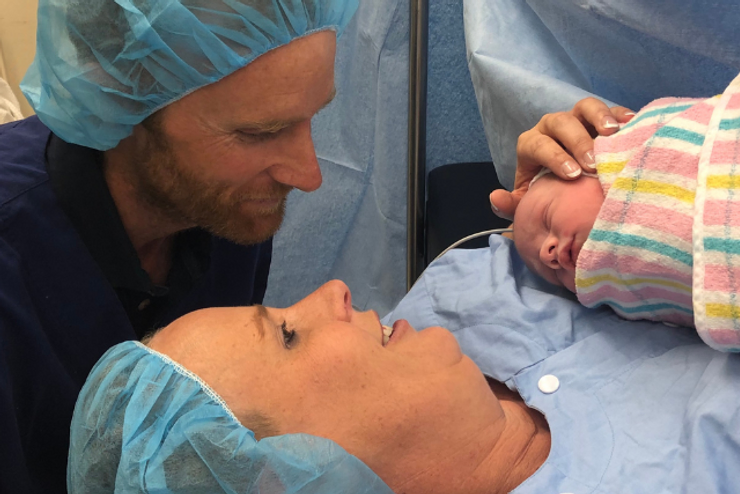
by Lyndal Redman | Feb 1, 2023 | Fertility, IP+ Filmmaker Spotlight, Pregnancy
“I met my husband later in life, although not so late that I thought we needed to talk about babies straight away. He already had children from a previous marriage so we took our time. We waited, we talked, argued and finally got to the point where we started trying.”
Informed Pregnancy+ is Dr. Elliot Berlin’s brand new multi platform streaming channel dedicated to pregnancy, postpartum and parenting. The Filmmakers Spotlight blog series features creators whose work is showcased on the channel. To learn more or sign up for a yearly or monthly subscription, click here!
 Having a child will be easy, you have time, it’ll happen. Protect yourself from getting pregnant they say… take the pill… use condoms… withdraw they say. Little did I know just how heartbreaking my journey to have a child would be.
I met my husband later in life, although not so late that I thought we needed to talk about babies straight away. He already had children from a previous marriage so we took our time. We waited, we talked, argued and finally got to the point where we started trying.
My husband was working FIFO (fly-in fly-out) at the time, and although he was away for 3-4 weeks at a time we were blessed with getting pregnant pretty quickly. Knowing the short window we as women have and the fact I was getting closer to 40 it was even more exciting.
We got our confirmation from the GP, and they told me I wouldn’t need a scan till later, my levels looked good. As it was my first pregnancy I didn’t question anything. My boobs got bigger, they were sore, all my symptoms and my body told me I was pregnant. So for the next 8 weeks we went blissfully about our business. We even started talking names. Eventually I requested a 12 week scan, just to make sure all was ok.
The morning of our first scan was a Tuesday. We spoke excitedly about the future as we headed to see our baby but once there – heartbreaking news, it was a non-viable pregnancy. In that moment my heart broke. That baby was wanted, loved already. Although I had a friend who had gone through a loss, nothing could have prepared me for the pain and grief I felt in that moment.
We rang my mum, we told those close to us. And at 2am in the morning I wrote a SMS to my friends who knew about the pregnancy with the news. I explained what had happened, then I told them not to contact me till later. I knew they cared, but the reminder of my loss would break my heart again.
Watch You Are Not Alone on Informed Pregnancy+ right now!

I thought it must have been something I had done… I worked too hard, got too stressed. I thought I had lost our baby. The next day I threw myself into work. I had back-to-back clients and because I didn’t know how to process everything, work meant I didn’t have to think about it. During a break, I rang my doctor, who hadn’t even looked at the scan yet, so I had to tell her about the miscarriage. She gave me the number of an obstetrician whose receptionist was rude and unhelpful. They didn’t have an appointment for 2 months, I was almost at breaking point when I pleaded with her to give me the number of someone who could help. I didn’t want to wait for it to pass naturally, how long would that be? Eventually I found someone who was understanding to help me get a DNC as quickly as possible.
Afterwards, I had to ring a client to cancel an appointment later that week. While on the phone she asked me if I was ok. I broke down and told her that we had lost our baby. I distinctly remember her saying, “oh I had one last year.” That was the start of a discussion I had with many other men and women in just a few days. They had all experienced loss, some of them multiple times.
A week later another very good friend of mine sent me a text message, one similar to mine, she too had lost her baby. It was in that moment that ‘You Are Not Alone’ was born. I thought, why don’t we talk about this, why is this something we suffer in silence? In pain? In grief? Why should we hold it in? I wanted to do something to help all those other women and their partners. So many people like me are going through this, but still feel so alone.
The production of the series was cathartic at times, and bloody hard at others. Just over a year after our first loss, we finally got pregnant again. Once again, excited was an understatement, but with a little more trepidation. It was super early – I was testing as soon as I was a day late. That week I headed on trip for work where I was to work a twelve hour day on the hottest day on record in full PPE on an iron ore barge.
Throughout the day I started spotting. It was hot and my body wasn’t coping. But when I rang the GP clinic they told me it was probably normal. The following morning it was more than a spot or two. I knew in my gut that this one wasn’t going to continue. I sat on the bed, took out my phone and recorded that moment. Part of me knew that if my documentary was going to happen I needed to record my journey. If I wanted others to tell me their stories, I needed to tell mine/ours too.
So I filmed moments along our journey – our journey to the ultimate joy of holding our beautiful child in our hands. Six months after our miracle was born we began filming the series proper. I watched as our wonderful subjects cried at the babies lost. I hugged them tight when we could (Covid was here) and I grieved again for ours. After a couple months of filming interviews I moved onto editing then finally the series was done. I hope that myself and the wonderful men and women who shared their stories will help someone on their own journey. My series “You Are Not Alone” is for those women, their partners, friends and families who have lost their baby, those who tried, suffered, grieved and yearned.
Check out Dr. Berlin on Instagram for all the latest news and updates!
With over 15 years experience working as an editor and camera person at some of this country’s leading television and media companies, I have had a wide range of experience.
My knowledge of video principles, technologies, and methodologies is sound through the previous positions I have held. I have excellent communication skills, which have developed through my previous roles and exercise daily through my current role. I am passionate about producing high quality video stories for any medium.
I was honored with a Commended in the Best Current Affairs and Highly Commended in the News Camera categories of the SA Press Club Awards for my documentary on the Kapunda murders for “Evil Up Close”
In 2015 I worked as a Field Producer for Channel 9’s Alysa and Lysandra to the Rescue and as an Associate Producer for Channel 7’s Seven Year Switch..
Most recently I worked as a Shooter/Producer for season two of Seven Year Switch, as well as documentaries for Moving Visuals, Singapore and WAG TVs ‘What on Earth’.
For more information check out redmanmedia.net.
by Informed Pregnancy and Parenting Project | Jan 31, 2023 | Labor and Delivery, Podcast Transcripts, Pregnancy
Elliot: Welcome to the Informed Pregnancy and Parenting Podcast. I’m your host, pregnancy-focused chiropractor, Dr. Elliot Berlin.
Today, we’re speaking with an operation supervisor for a biotechnology company working in biotherapeutics by day and birth work by night. And we’re going to compare her two birth experiences. Hannah Gill, welcome to the podcast.
Hannah: Hi, Dr. Berlin. How are you doing?
Elliot: I’m doing amazing. What a combination of night and day. By the way, I picture, based on my own introduction, I picture you’re going into a phone booth when somebody’s in labor and putting on a superhero outfit and flying over to save the day. But let’s talk about what you’re doing. Where are you from originally and what’s this biotech business?
Hannah: I was born in Kansas City, Missouri. But I’ve spent the majority of my life in Indiana, with a brief stint in Nebraska, and then back to Indiana.
Elliot: Okay, which part of Nebraska?
Hannah: Tekamah. Very, very —
Elliot: It sounds like not very many people.
Hannah: No. The population was less than my high school.
Elliot: Wow!
Hannah: It’s about an hour north of Omaha, so it’s very small.
Elliot: So, a gas station and a saloon?
Hannah: Basically.
Elliot: And a church?
Hannah: Everyone knows everyone and everyone’s related.
Elliot: Oh, boy. All the people know my business. Alright, and then, where did you go to school?
Hannah: So, undergrad, I went to I.U. Bloomington in Indiana. And then, for grad school, I did I.U.P.U.I., which is Indianapolis University-Purdue University.
Elliot: And you studied?
Hannah: Undergrad, human biology. And then, my master’s is in forensic biology.
Elliot: What does that mean in English? Forensic biology.
Hannah: So, forensic science, what a lot of people see on CSI, but it’s nothing like that.
Elliot: Okay, because?
Hannah: It’s very fabricated on TV.
Elliot: Oh, I see.
Hannah: And the process is taking much longer than that.
Elliot: Oh, doesn’t take 45 minutes to figure it out.
Hannah: No. And most of the time, there’s not an answer.
Elliot: Oh, that’s even worse. And no commercial breaks though, which is nice. Okay. And then, where’d you meet your hubby?
Hannah: We started dating in high school. So, we’ve been together since I was 15 and he was 17.
Elliot: Wow! Did you know?
Hannah: Did we know what?
Elliot: Like in high school? Did that feel like this was going to be a forever?
Hannah: Yeah, probably.
Elliot: Really? Wow, that’s very special. How cool. Alright. And then, kids. Was that like, “Hey, now we should have kids? Since we’ve been dating forever.”
Hannah: Yeah, we always wanted to have kids. We got married in 2016 and decided to not really start trying but not try in 2019 when I got diagnosed with PCOS.
Elliot: Were you having symptoms when you were trying to get pregnant?
Hannah: Yeah. So, I stopped birth control the year prior, and I had been on birth control since I was basically started my period like a lot of women are. And I stopped birth control in 2018 because I was just over it. I was tired of being on it so long, and I was tired of the side effects.
Elliot: THE pill?
Hannah: Yep, the pill. And then, after that, I started having two periods a month instead of one. So, then, I went to my OB-GYN because I said, “This is obviously not normal.” And they did an ultrasound and some blood testing and found like the string of pearls or whatever they call it for PCOS. And then, my testosterone levels were super, super high. So, that’s how I got diagnosed. I don’t have like the traditional PCOS symptoms besides those two things.
Elliot: Oh, so only the diagnostics. You didn’t feel PCOS?
Hannah: Right. So, I don’t have like the insulin resistance or anything like that.
Elliot: Oh, metabolic X syndrome.
Hannah: Right. And the only symptoms I was having was the two periods a month.
Elliot: Wow! With high testosterone, which is like —
Hannah: Yeah, I’ve had acne my whole life, so I just assumed it was just who I was. But it was apparently part of my PCOS. [inaudible 04:24]
Elliot: Symptoms of low testosterone. I feel like, “I’ll take some of yours.” Can we do that? Is that like a thing?
Hannah: Take it away, please.
Elliot: Yeah. Okay. So, then, PCOS, and have you treat that?
Hannah: So, I decided not to treat because they said you can get back on birth control to help. But I was like, “No, I don’t want to do that. I don’t want to be on birth control anymore.” So, my OB-GYN said, “Well, it could take you a while to get pregnant or it could be really fast, it just depends.” And we got pregnant, literally, the first time.
Elliot: The first time that you were off birth control? I mean, no.
Hannah: Like the first time not preventing.
Elliot: Okay. So, after the pill, you were doing something else to block.
Hannah: Yes.
Elliot: So, you were ready. You said, “Let’s try and see what happens.”
Hannah: Yeah, I said, “Well, it could take a while, it could be fast. So, let’s just not prevent and let’s just see what happens and –”
Elliot: Boom!
Hannah: Literally, the first time.
Elliot: How was your pregnancy?
Hannah: Awful.
Elliot: Oh, come on.
Hannah: Not awful. Not horrible, but I was sick the entire nine months for my first pregnancy.
Elliot: Sick. Nauseous, or also something –?
Hannah: As in like vomiting all day.
Elliot: So, hyperemesis?
Hannah: It was very borderline. So, it wasn’t officially hyperemesis because it wasn’t like constant all day every day. But the majority of my first trimester was constant all day. And then, the second and third trimester, it was at three to four times a day. But it never ended after the first trimester.
Elliot: That’s something hyperemesis to me. First of all, did it stop as soon as the baby was born?
Hannah: Oh, yeah.
Elliot: Yeah. So, it does sound like its hyperemesis. Because we have a couple episodes about hyperemesis. One with Amy Schumer discussing her experience with pregnancy and hyperemesis, and then one with a few doctors. But the doctor said is that they’re kind of nailing it down to hormones created by the placenta.
Hannah: Okay.
Elliot: So, [tied it to hormone 06:07] that makes you feel full all the time. So, in excess production so that anything you eat makes you feel like overfull. Like you’ve had too much like you have to get rid of it. So, it’s a little bit sounds like that. But there’s a foundation called the Her Foundation, H-E-R, and they have great resources for people who are struggling like that during pregnancy. And one of them is an app where you can kind of input your symptoms and then send it to your doctor to get a better handle on whether that’s hyperemesis or not. So, I was already grateful that you did the podcast, but now, another chance to help people who experience pregnancy like that.
Hannah: Agreed, because I was never diagnosed with it.
Elliot: Was there a plan for birth?
Hannah: Yes. So, I had planned to do an unmedicated hospital birth. And I just took the basic hospital birth class, and then an advanced labor birth class is what they called it to kind of help you get through it without medication.
Elliot: Also at the hospital?
Hannah: Yes, but it wasn’t after looking back at my experience and what I know now was not very helpful. It was a very fast, just like quick and dirty type of class on “here’s some comfort measures,” but it didn’t really help prepare me.
Elliot: Sometimes, the hospital birth class feels like how to be a good patient at our hospital.
Hannah: Oh, yes! I agree. That’s what I know now.
Elliot: I usually recommend if you want to do something that’s a little out-of-the-box for typical hospital birth to do a non-hospital birth class.
Hannah: No one I knew had ever birthed outside of a hospital, and the majority of people I knew did not birth unmedicated. So, I just thought, “Oh, you go to an OB, go to a hospital and that’s how it is.” I didn’t know what a birth center was. I had never even heard of a doula at that time, or I didn’t know anyone had a home birth. So, I just kind of took the route that I do best, and that’s what happened.
Elliot: Alright. Well, let’s take a quick little break and when we come back, we’ll see how that birth went. Don’t go anywhere. We’ll be right back.
[break]
Elliot: Welcome back to the podcast. We’re talking to Hannah Gill. Okay, so first pregnancy, boom! Right out of the gate and horrible motion vomiting all the way through. But then, you took a hospital birth course on childbirth and you did an extra class for unmedicated childbirth. And how did your labor start?
Hannah: So, I didn’t really feel like the gradual build-up a lot of people talked about. It was more of as soon as my contractions started, they were extremely intense and five minutes apart.
Elliot: Wow! Okay, what time of day was that?
Hannah: About 5:30 in the morning.
Elliot: Okay. So, boom! And so, I assume it woke you up.
Hannah: Yes. I had gotten up to go to the restroom and then try to go back to sleep, and that was not happening. So, I decided to get in the shower to see if that would calm anything and it definitely did not.
Elliot: I mean, it just progressed?
Hannah: It just kept getting worse and worse as far as the pain goes. So, my husband is already at work at this time.
Elliot: What?
Hannah: Yes. And I just called it. Yes, he leaves for work around 5:00 am.
Elliot: Holy moly. Okay.
Hannah: So, I called him —
Elliot: Before he left, nothing.
Hannah: No, it was not until he left, of course.
Elliot: And then, half an hour later, raging.
Hannah: Yeah.
Elliot: Okay. And then, he came back.
Hannah: Yeah. So, I gave him a call at work, or I actually texted him first. And I said, “Hey, I’m starting to have contractions. They’re really intense. I’m going to try to get in the shower, but I’ll let you know how things go.” And I started using that contraction timer and it said, “Go to the hospital.”
Elliot: Oh, wow.
Hannah: So, I called him on like the work line because he wasn’t answering his cell. And I told them, I said, “Get him home now, please.” And he got home and I was on the birth ball and he was like, “What am I supposed to do?” I said, “Just grab the bags. Let’s just get going.” And of course, it by this time, it was getting close to rush hour around where we are. And I was not looking forward for about 30 minutes from the hospital. I was [unintelligible 10:10].
Elliot: Oh, my.
Hannah: So, it was interestingly —
Elliot: If only you were in a small town with 200 people.
Hannah: Oh, yes. Like before.
Elliot: Yes, rush hour would be like rush minute.
Hannah: Yes. So, the drive to the hospital was pretty rough with having to wait in traffic.
Elliot: With that kind of intensity especially.
Hannah: Yeah.
Elliot: We’re you in the front seat?
Hannah: Front seat.
Elliot: Like buckled in like or on your hands and knees?
Hannah: At first, I was buckled in and then I got off buckled, took my coat off because I was sweating. Rolled the window down and mind you, this was December and it was freezing, but my husband was cold. I was like, sweating. So, no, I was buckled in at first. And then, it was just like bracing myself and holding on to the door, trying to breathe through my contractions.
Elliot: I mean, it sounds like a caged animal.
Hannah: Yes. That’s exactly how it felt.
Elliot: I’ll probably get in trouble for saying that, but that’s what it just sounds like. You need to have space and get out of there and move.
Hannah: And I was vomiting my entire labor, too.
Elliot: Oh, in the car?
Hannah: Yeah.
Elliot: What happened when you got to the hospital?
Hannah: So, they had me sign all those fun forms as I’m reading through my contractions and then got me into triage and I was only three centimeters.
Elliot: Ouch. Okay.
Hannah: Yeah.
Elliot: Have you been checked before?
Hannah: Yeah. So, my first pregnancy, I did get checked the day before I went into labor. I was 2 centimeters and I had my OB membrane sweep.
Elliot: Oh, okay. Do you think that contributed to the morning events?
Hannah: Probably, yes.
Elliot: Okay.
Hannah: I think so because it was much more intense than I had expected. So, maybe the sweep kind of escalated that.
Elliot: Was there like any blood after the sweep?
Hannah: No.
Elliot: Okay. So, 3 centimeters only. In your words, 3 centimeters?
Hannah: Yes, because [I had been to 11:59] the day before and with how intense my contractions were, I was expecting to be way further along. So, that was kind of —
Elliot: Six or something?
Hannah: Yeah. And they did check my platelets. I did not mention I had gestational thrombocytopenia, where your platelets are low.
Elliot: Oh, wow. We do have a whole episode on gestational thrombocytopenia with Dr. Nate Fox, that was triggered by Mandy Moore who had it with at least her first pregnancy. Wow. So, does that mean you were borderline epidural?
Hannah: I was borderline. So, I wasn’t as low as where you absolutely know for sure you can’t have it. It was always really borderline. And for my hospital when they checked it, it was like right at the level. So, that’s why I decided, “Okay, I’m just going to get it.” Because who knows, in a couple hours, I may not be able to anymore.” So, I just went ahead and got it because my contractions were so intense and I was right on that level. So, I got them right away.
Elliot: I mean, it also sounds like with the intensity and the progress, like your mind might have been easily persuaded anyway.
Hannah: Oh, yes, it was all mine game. Yeah, for sure.
Elliot: Okay. So, did it work?
Hannah: The epidural? Yes, it worked wonderfully. And I took a nap.
Elliot: Okay, great. And how did the rest of that labor progress?
Hannah: So, I progressed very quickly. I got my epidural around 8:00 or 9:00 o’clock, started pushing around 1:00 o’clock.
Elliot: So, four hours? And this is 1:00 pm.
Hannah: Yes.
Elliot: So, really not that long after your entire labor started.
Hannah: Right.
Elliot: Okay. So, how was pushing?
Hannah: I pushed for four hours.
Elliot: Did the epidural start to wear off? Did they turn it down?
Hannah: No. The epidural was so strong. I could not even tell I was pushing.
Elliot: Oh, wow.
Hannah: Which is part of the problem.
Elliot: Oh, four hours of that.
Hannah: Yes. So, four hours of that.
Elliot: What position?
Hannah: Just like the semi-reclined position. So, I couldn’t —
Elliot: You couldn’t get into like hands and knees or stuff like that?
Hannah: I didn’t know that was an option at the time. So, yeah.
Elliot: Well, if you could go back in time, listen to this episode.
Alright. So, pushing on your back with your pelvis closed and numb from the chest down.
Hannah: Right. And then, the whole holding your breath counting for 10 seconds. Push, push, push, push, push, that type of thing. So, the “coach pushing” that everyone hears about.
Elliot: Yeah. Okay. And in the four hours, was the baby handling it well? I assume [inaudible 14:25].
Hannah: There was one [unintelligible 14:27], but they didn’t make a big deal about it. They just had me put some oxygen on and rest for a minute.
Elliot: Okay. And then, what happened?
Hannah: So, we figured out that baby was most likely asynclitic, the way he was coming down. And we didn’t know if it was a boy or girl at this time, just a side note. So, the way the baby was coming down, just kept coming down, going back up, coming down, going back up. So, after this four hours, I opted for a cesarean.
Elliot: Okay. Asynclitic essentially means not lined up with the runway very well. So, all that pushing is not really coming down, it’s just flexing the head sideways. And then, as soon as you stop pushing, the head flexes back up. Always recommend seeing a baby chiropractor after a labor like that, by the way. Okay. So, how is the cesarean for you?
Hannah: It was not great. Like, I actually felt a lot more than I expected to. So, they gave me —
Elliot: Oh, great. You didn’t feel you’re pushing, but you felt your abdominal surgery.
Hannah: Right. So, I was like basically screaming and telling my husband like, “I need something else. This hurts really bad. I can feel a lot.” So, they gave me some additional medication through the epidural, whatever they give you that’s extra. And I kind of dozed off for a few minutes, I think. I don’t know if I fell asleep or what they gave me just kind of knocked me out a little bit, but I don’t remember my baby being born, basically.
Elliot: I was afraid you’re going to say that.
Hannah: Yeah. I don’t remember hearing him cry. The first thing I remember is my husband saying, “Babe, it’s a boy,” because we didn’t know. And I was just so out of it and so loopy that I don’t really remember much of it all.
Elliot: I’m so sorry.
Hannah: Thank you. I mean, I appreciate the sentiment there. And I know it’s hard for a lot of women who have that experience. I know a lot of people go through it, especially if they’re having to be put under general anesthesia, too. Thankfully, I didn’t have to do that.
Elliot: But it sounds like you’re pretty close.
Hannah: It was pretty close, yeah. I mean, I just had the epidural, so I didn’t need general. But they did give me, I don’t know what they gave me additional to help with the pain, but I kind of dozed off for a little bit.
Elliot: For a key moment.
Hannah: Yes.
Elliot: So, how was your recovery?
Hannah: So, in actual recovery room, I went hypotensive and I hemorrhaged really bad. So, I was like on the verge of completely passing out because my blood pressure was so low and I had a lot of blood loss. So, during that process, I was kind of out of it. But my husband was trying to help my son nurse at the same time, but I was like shaking and I couldn’t really hold him. So, he was helping him do that.
Elliot: Oh, this begs the question, did he get any pictures or video of the baby coming?
Hannah: Not of him actually coming out, but like in the operating room. We got some photos of him on, like the warmer thing.
Elliot: I was saying anything to fill in the blanks of when you were out.
Hannah: Not really. They got a picture of us all three together in the OR. But I don’t really remember that being taken. I just see the picture.
Elliot: Okay, so something.
Hannah: Yeah, something.
Elliot: That you can look at. Okay. And then, recovery at home. Wait, so did your blood transfusions?
Hannah: I did not have to get transfusions. They just said it was more than they would like to see from the cesarean, but not enough to get a transfusion.
Elliot: Related to the thrombocytopenia?
Hannah: I don’t know. I guess it could be. That would make sense. I don’t know if it was that or I know that if you, I guess pushing for a long time cause that.
Elliot: The uterus doesn’t, yeah. Okay. How was your home recovery?
Hannah: It was pretty rough. I was on quite a bit of pain postpartum at the hospital and at home, and I didn’t really feel comfortable doing much of anything for several weeks. And I think it was a lot of emotional pain as well as physical.
Elliot: So, on the physical side at the incision?
Hannah: Yeah. And in my abdomen in general.
Elliot: Are you athletically?
Hannah: I was before I got pregnant. Yeah. Not as much during my pregnancy or postpartum.
Elliot: My observation, it seems to affect people more than people who are less, you know, in tune with the body.
Hannah: Right. And I’ve heard that the like tension, if your muscles are tighter, can cause a lot of issues too. So, if you are athletic and you have really tense muscles and they’re not relaxed, they can cause some issues.
Elliot: Well, again, in my observation, clinically in the office, one of the things that we see is if you’re strong and also tight, combination of strong, tight creates a rigid environment. And if the baby’s not lined up well with the runway, then it’s a bit harder to maneuver in that static environment. And that’s where you end up spinning your wheels a lot in labor.
But the cool thing about that is if you can do something, get rid of that tension, the excess tightness, the dysfunctional shortness, and all you have is the strength, then it goes the other way. Those are like the most powerful births that I’ve ever seen.
And then, emotionally, how were you feeling? You said that was also uncomfortable.
Hannah: Yeah, it was really just kind of thrown off and shocked by my birth experience. And I ended up with postpartum depression and anxiety and had to go to therapy to help talk through that, which was extremely helpful. I recommend it to anyone that needs it. So, it was a rough postpartum, physically and mentally, for sure.
Elliot: Did lactation go well for you?
Hannah: Yeah, yeah. He actually nursed great. Breastfeeding was wonderful and we breastfed for a year.
Elliot: Oh, okay. At least, there’s some things that did go well.
Hannah: Positivity?
Elliot: Yeah. In your way that you wanted them to go. I guess looking back, would you have done anything specific differently?
Hannah: I probably would have waited on the epidural. Or if I would have known at the time, gotten a doula for that birth, but I didn’t know what a doula was. I didn’t know that was the thing. So, that’s probably what it done differently. And then, I also would have, I didn’t mention this, but they did break my water at 9 centimeters. I asked them to break it because I didn’t know any different. And I feel like he could have gotten a better position if my water wasn’t broken.
Elliot: Yeah. It’s hard to know, but one wonders for sure. And just getting ready for the hyperemesis before we move on to your next baby, was it like literally that same day that it stopped?
Hannah: Yeah. I wasn’t sick at all. I was sick all through labor, and that I wasn’t sick at all afterwards.
Elliot: Were you hungry?
Hannah: I was hungry. I think the only other thing that made me sick with my pain meds postpartum. That made me sick until they got the right one.
Elliot: This is when you start going to phone booths and helping other people in labor. Tell me about that.
Hannah: So, I started out with childbirth education first.
Elliot: Okay. Becoming a childbirth educator?
Hannah: Yes, yes.
Elliot: A specific method?
Hannah: Not a specific method. I just wanted to become an out-of-hospital specifically. Because of how my experience with my birth class and how I did not enjoy it. And I thought, “Well, there needs to be a better option for people because that wasn’t great.” So, I just started to do that first. And then, I did not get into doula work until after the birth of my second.
Elliot: Oh, wow. Okay, wow. That sounds like an excellent place to take a quick break. And let’s find out about the second pregnancy, birth, and the doula work. We’ll be right back.
[break]
Elliot: Welcome back. We’re talking to Hannah Gill. And let’s talk about baby number two. So, was that planned?
Hannah: Yes, the second was planned for sure.
Elliot: Super fast again?
Hannah: It took two cycles, but still relatively fast, yeah.
Elliot: Pretty darn fast. Especially, people get very nervous with PCOS. So, that it’s always going to take a while. How was your second pregnancy?
Hannah: So, the first trimester was extremely rough for about 17 weeks. Again, borderline. Probably, this time was actually hyperemesis again. I wasn’t diagnosed. But I did end up in the hospital with fluids because I couldn’t keep anything down, and how to take time off work. So, the first trimester was rough, but then it got better after that this time.
Elliot: Good thing about taking time off at work is usually don’t get the answer anyway.
Hannah: I know.
Elliot: So, nobody will even know you’re not there. Okay. So, wow, you said 17 weeks. Does that mean that got better?
Hannah: Yes. After 17 weeks, it got better. I was still nauseous here and there, and had random bouts of vomiting, but nothing nearly like my first.
Elliot: Right. So, it sounds like the first part of your second pregnancy was worse than the first pregnancy.
Hannah: Oh, yes.
Elliot: But then it got a lot better than the first pregnancy. So, interesting how it works. Who knows? And then, what was your plan for this one?
Hannah: So, this time, I originally wanted to do birth center, but it is illegal to VBAC in Indiana in a birth center.
Elliot: Really?
Hannah: Yes.
Elliot: It’s how they made VBAC outside the scope of practice of a birth center.
Hannah: Yes. It’s not allowed.
Elliot: That’s weird.
Hannah: I know. I didn’t know it was a thing until I looked into it.
Elliot: I could see insurance not wanting to cover it but to [outlaw 23:46] it seems strange.
Hannah: Yeah, it’s a little drastic.
Elliot: I feels like restrictive in a free country.
Hannah: Yeah.
Elliot: Okay.
Hannah: So, after figuring that out, I thought, “Well, let’s go the route of home birth.” But the closest midwife to me would not take the first VBAC after cesarean. She would only take the second VBAC after cesarean. So, the closest midwife to me that would take me on was about two hours away, and I didn’t feel comfortable driving that far for appointments. So, everywhere else was out of my service area, unfortunately. So, I decided to stay with my OB that did my cesarean because she was great as far as supporting me through that. And she was completely on board with me having a VBAC.
Elliot: That’s cool.
Hannah: And then, I hired a doula as well.
Elliot: Okay. And did you have the thrombocytopenia again?
Hannah: I did, yes.
Elliot: Okay. So, that was still a question mark in terms of how that might affect you.
Hannah: Yeah. So, I just completely plan to not have an epidural and didn’t even think of it as an option in my mind, just in case.
Elliot: I think the thrombocytopenia kind of risks you out of the out-of-hospital birth anyway.
Hannah: Yeah, it does. Depending on the level, I believe.
Elliot: Right. Yeah.
Hannah: Mine were never that low, I don’t think.
Elliot: In the second?
Hannah: Yeah. They were low in the second, but it was more of just risking you out of an epidural versus out-of-hospital.
Elliot: If you’re low enough to risk out of an epidural, you’re probably too low for a home birth.
Hannah: Yeah, potentially, I think so.
Elliot: It’s my guess. It’s not my area of expertise. But anyway, anything else that popped up during that second pregnancy?
Hannah: I had a marginal cord insertion with my placenta.
Elliot: Okay.
Hannah: And that was the only other weird thing. So, they just did a couple extra ultrasounds just to make sure baby was growing okay. But baby was always fine.
Elliot: Cool. How did that labor start?
Hannah: So, again, it was fast and furious. But when I went into the hospital, I didn’t know I was in labor. I just had some excessive bleeding. That was concerning.
Elliot: Interesting. So, where is this in relation to your due date?
Hannah: I was two days past my due date.
Elliot: Okay.
Hannah: I was a week early with my son, the first.
Elliot: Was there a sweep on the second?
Hannah: No, I did not have any cervical checks and no sweeps.
Elliot: Oh, wow. Okay. So, then, you just start bleeding a bunch, you go to the hospital.
Hannah: Yeah.
Elliot: No contractions though?
Hannah: No contractions.
Elliot: Okay.
Hannah: So, I get to the hospital and they put me on the monitor. They want to check and make sure it’s not placental abruption or anything like that. And I was 3 centimeters at that time. And they said, “Well, how about we –” Actually, probably closer to four. So, they wanted to sit me on the monitor because I wanted to labor at home as long as possible. So, I plan to go home if we could because I wasn’t having contractions. And they wanted to monitor me for about an hour just to see if I made any progress. And in that hour, I dilated another centimeter. So, we just decided to stay at the hospital at that time.
Elliot: Okay. So, now, you’re like 5-ish. No idea where that blood was coming from?
Hannah: No. They said that it just kind of trickled off. It didn’t happen a lot. They said it could have been a partial abruption. It could just have been part of like, a bloody show that was more intense.
Elliot: Yeah. Okay.
Hannah: They didn’t give me an answer on that.
Elliot: And how the labor progress?
Hannah: So, it was a whirlwind, but we got to the hospital around 8:00. I progressed extremely quickly. And my entire labor was five hours.
Elliot: Oh, wow. And how was the intensity?
Hannah: So, it was still pretty intense. But I had done a hypnobabies course. So, I was pretty good at staying relaxed. And then, my husband was very helpful as well. But they were really intense when they picked up. The first ones were very gradual. But then, right around transition, obviously they got super intense.
Elliot: Were you planning to stay unmedicated?
Hannah: Yes. Yeah. So, I was planning no epidural whatsoever. Unless, it was absolutely needed.
Elliot: And was the team around you, the hospital staff, supportive?
Hannah: Yes. So, the nurse we had was super supportive. I was up and moving. I was on the toilet and the shower. She was great about letting me do my thing. And I had wireless monitors. They tried to keep him on as best as possible, but I was moving so much it didn’t really work.
Elliot: Okay. And then, how does that birth end?
Hannah: So, my doula almost didn’t make it because it was so fast. I was texting her throughout the process on like how I was doing. And I text her around right when my water broke, which was a little after five centimeters. I was GBS-positive. So, I did have to get a round of antibiotics.
Elliot: But we should explain that. Group B Strep is a type of bacteria that can sometimes colonize in the birth canal. Generally, In the United States, everyone gets swabbed for it somewhere around 37 weeks. And if you’re positive, then the general recommended treatment is IV antibiotics during labor. Usually, every few hours.
So, you have the GBS. There’s also an episode on Group B Strep Positive with Rebecca Dekker from Evidence Based Birth. And she goes into a lot more detail about what it is, and if there is anything that you can do to prevent it and other potential treatments. Check them out.
Okay, so you have GBS. You’re getting your IV antibiotics.
Hannah: Mm-hmm. And I was up and moving after that, but my water did break around 5-ish centimeters. And right after my water broke is when things really, really picked up.
Elliot: Where were you when it broke?
Hannah: I was still in the bed because I had just got down to my antibiotics. And then, after that, I basically got up and went to the toilet and sat there for an hour.
Elliot: Was it a big old gush?
Hannah: It wasn’t a huge gush, but it was quite like it. Isn’t like obviously a gush, but it was a ton of fluid that came out. Yeah.
Elliot: Okay. It wasn’t like, “Oh, did I just pee a drop?”
Hannah: No, it was like, “This happened.”
Elliot: Okay. Alright. Sitting on the toilet with people around you or did you –?
Hannah: My husband was with me in the bathroom while I was on the toilet, getting me washcloths for my face, rubbing my shoulders, that type of thing. And so, I was on the toilet for at least an hour and that’s when I started transitioning. At the dilation station.
Elliot: What did that feel like?
Hannah: So, my contractions were on top of each other at that point. Like one, back-to-back-to-back. And that’s when my doula walked in, and I told her — her name’s Julie. I said, “Julie, I need an epidural.” She said, “Well, let’s maybe try to switch positions, get off the toilet.” So, we moved to the shower at that point, which was extremely helpful.
Elliot: Warm. Warm water?
Hannah: It was warm. At first, it was way too hot and it was really sensitive on my back, and I had to wait till it cooled down. So, I was leaning over the sink counter until I could get in.
Elliot: Was the intensity in your back? Was it like more period –?
Hannah: No. It was in my pelvis. Like I felt like I was pushing, basically. My husband got in the shower with me and I was hanging on him around his neck. And then, my doula was behind me putting the water on my back.
Elliot: Sounds streamy.
Hannah: Yeah. And I started basically bearing down and pushing in the shower.
Elliot: Grunting?
Hannah: Yeah. And the nurse was like, “Well, maybe we should move to the bed.”
Elliot: Yeah. Did you?
Hannah: We did eventually move to the bed. I was very reluctant to do so, but we moved to the bed and I got on hands and knees to start my pushing process.
Elliot: Was that instinct or was that planned?
Hannah: So, my doula suggested it because I had a partial cervical lip. So, she said with the position of the lip that being on hands and knees would kind of help push that away.
Elliot: Cervical lip, just a piece of the cervix is not quite out of the way yet for the baby to pass through more easily. Okay. And were you starting to push?
Hannah: Yes. So, I was pushing at that point. I pushed on hands and knees for about 10 minutes. And then my doula suggested switching to squat position to kind of help it become down more.
Elliot: Did you have a squat bar?
Hannah: Yes. We had a squat bar. And I was very reluctant to move to that as well because I was just exhausted, and it was great to lean on the back of the bed. And I said, “There’s no way I can hold myself up with a squat.” So, I had this squat bar and then my husband supported me as well.
Elliot: From behind you?
Hannah: Kind of on the side. Like holding my back up so I wouldn’t fall backwards a little bit.
Elliot: How long was pushing?
Hannah: So, it was a total of 15 minutes.
Elliot: Oh, my goodness!
Hannah: Yeah, hands and knees. And then, as soon as I moved to a squat position, it was maybe two contractions and the baby was out. She didn’t have any head mold or anything. She came out so fast.
Elliot: Just came right through. Did that surprise you?
Hannah: It did. Because pushing was like the one feat I wanted to get past because it was so long with my son that I was pushing. And it was intense, and I just felt like she just shot out.
Elliot: Wow! What was going through your mind at that point?
Hannah: First of all, we didn’t know if it was a girl or boy again. So, I wanted to first find out if it was a girl or boy. But it was just so intense and I thought, “Okay, just if I could just get her out, then there’s no chance I’ll have a C-section.” I just wanted to get her out. I just wanted to get past that. But yeah, the ring of fire was brutal.
Elliot: Oh, really? For how long did that last, would you say?
Hannah: Just probably 30 seconds.
Elliot: Okay, 30-second ring of fire.
Hannah: Yeah.
Elliot: How was your recovery?
Hannah: It was great. So, I just had a slight second-degree tear just because she did come out so fast and I didn’t control the pushing to slow it down much at all. But I had a little bit of a retained placenta as well. So, it took a little bit for them to really get all that out and they did an ultrasound to make sure. I actually had to get more of it removed several weeks later.
Elliot: Later? Oh, wow.
Hannah: Because it’s still there. But, overall, recovery from the VBAC was 100 times easier than C-section.
Elliot: Mind and body?
Hannah: Mind and body, yes.
Elliot: Hmm. Well, congratulations.
Hannah: Thank you.
Elliot: I know you worked hard for that. And what an intense journey from beginning to end even just finding out that you had PCOS and the question marks that that brings up. What would you do with a third pregnancy for the birth?
Hannah: One hundred percent home birth, as long as I’m able to.
Elliot: Because now you can — The second VBAC, now that you have a “proven” pelvis.
Hannah: Right. But as long as my platelet levels are fine and everything checks out, I would 100% want to have a home birth.
Elliot: We just have to do another episode in a couple of years. Before we go, tell me about your new nightlife.
Hannah: Yes. So, I am a childbirth educator, birth and postpartum doula. I am owner of Ebb and Flow Birth Co., is what my business is called. So, I do doula support for postpartum and birth, and I’m in Indianapolis in that area. So, I’m really liking it so far. I just started doula work. I’ve only had one birth for my birth support, but I have childbirth education classes lined up as well.
Elliot: Is that what you named your kids, Ebb and Flow?
Hannah: No, no. They’re Hudson and Marley.
Elliot: Oh, Hudson and Marley. I though they’re going to be like Evan and Florence.
Hannah: No.
Elliot: Hey, Hannah, I thank you so much for joining and for sharing your story. And for now, the amazing work that you do supporting others.
Hannah: Thank you.
Elliot: Tell me where we can find you online.
Hannah: So, Instagram is @ebbandflowbirthco. No underscores or anything like that. And then, my website is ebbandflowbirthco.com.
Elliot: Amazing. And we’re over there on the Instagram as well @doctorberlin, D-O-C-T-O-R-B-E-R-L-I-N.
