
by Sara Haley | Oct 4, 2022 | Fitness & Nutrition, Mental Health, Pregnancy
**This is a classic Informed Pregnancy article repost
“When I refer to feeling ‘sexy’ during pregnancy, what I mean is accepting and enjoying your pregnant body. Not only are you undergoing the amazing task of growing a child, but you have the opportunity to flaunt and move the most womanly assets you have – your breasts, belly, hips and butt. Instead of ignoring them or hiding them away, get off the couch and find ways to make those body parts look and feel good. Freedom to move without any inhibitions is sexy.”
Empowerment
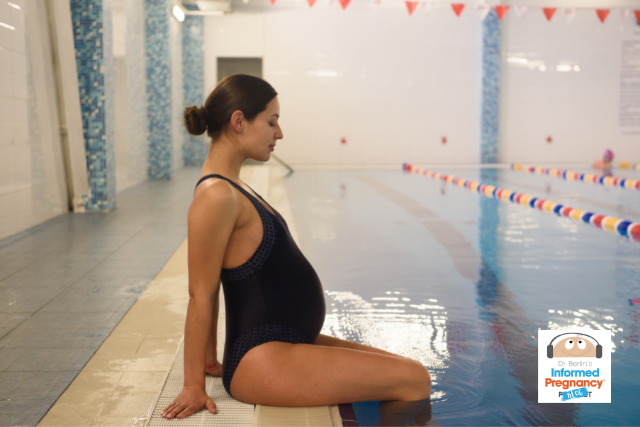
“Empowerment” is not just a buzzword. It feeds our self-esteem, our confidence, and our identities. I think that’s why motherhood changes so many of us for the better. While parenting always has its challenges, it can also make us feel strong, feminine and joyful, all at the same time.
Another thing that has always given me a feeling of empowerment is exercise. I would never say that exercise is equally empowering as bringing new life into the world, but working out does fulfill my desire to feel strong, sexy and happy.
Before you roll your eyes and turn the page, let me define what I mean by exercise. I’m not insinuating grueling hours at the gym (unless that’s your thing, in which case, go for it!) For me, exercise means waking my body up, keeping my muscles alive and enjoying the ability to move.
I’m a pre and postnatal exercise specialist and as I write this, I’m 35 weeks pregnant with my second child. I’ve always preached that every pregnancy is different, and now I know that for sure. With my son, I had no pain, no bothersome symptoms, and was still doing jumping jacks on the day he was due (He made his debut ten days later.) This pregnancy has been a different ride in many ways, and no, I don’t think that necessarily means I’m having a girl. I just think I’m three years older and my body is coming from a different place, or perhaps this baby simply has his or her own unique needs, just like all of us! Despite the differences in my pregnancies, one need has not changed for me; I’m still determined to keep my body fit and healthy so that I can have the best possible pregnancy, labor and birth, as well as an easier postnatal recovery.
Instagram is where the info is! Follow Dr. Berlin for updates on Informed Pregnancy content!
When I created a DVD fitness program for pregnant women, I had three main goals in mind. The first was to include exercises that allowed expectant moms to feel and be strong. Secondly, I wanted to inspire and motivate pregnant women with movements that made them feel womanly and sexy. Finally, I wanted to create fun routines so moms-to-be would smile, laugh and enjoy their workouts. I believe the combination of these three powerful elements – strong, sexy and fun – is the perfect recipe for an empowered workout, body, and life.
FEEL STRONG
A strong body and mind are essential for a successful labor. I’m sure all expectant mothers would love to feel the strongest and healthiest they’ve ever been when they go into labor. Lunging to keep your legs and butt strong, stretching your back and chest to release tension and stay limber, and elongating your limbs to work your balance and core are some of the best ways to keep your body safe and strong through your pregnancy.

FEEL SEXY
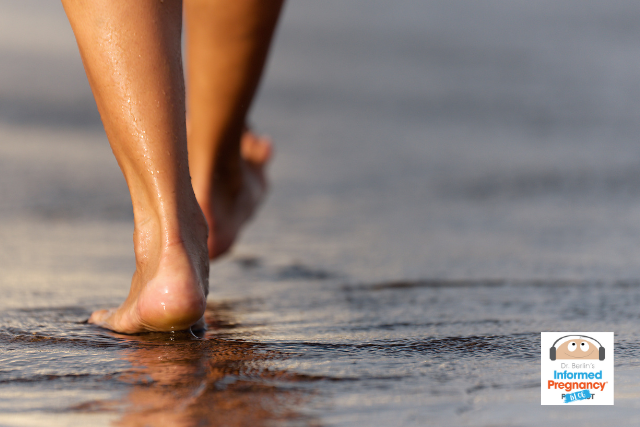
When I refer to feeling ‘sexy’ during pregnancy, what I mean is accepting and enjoying your pregnant body. Not only are you undergoing the amazing task of growing a child, but you have the opportunity to flaunt and move the most womanly assets you have – your breasts, belly, hips and butt. Instead of ignoring them or hiding them away, get off the couch and find ways to make those body parts look and feel good. Freedom to move without any inhibitions is sexy. Why not put on your favorite maternity dress and go for a walk outdoors somewhere that you love? Feel the sand or the soft grass between your toes, enjoy the breeze blowing through your hair, and hold your baby bump close. Be proud of your amazing body!
HAVE FUN
As you progress through your pregnancy, movements that once seemed fun and enjoyable may start to feel awkward and uncomfortable. Rather than getting frustrated, I’ve found the best way to handle this challenge is to work on changing your state of mind. Working out during pregnancy should not be about burning calories, looking a certain way, or sweating your butt off. Instead, focus on just moving your body each day and finding ways to stay active and have fun.
If traditional workouts aren’t for you, just do something active that makes you smile – head to the beach, run and play with your older children or the family dog, hold hands with your spouse or partner, and enjoy being fully present in the moment. After all, no matter how many children you already have, a new arrival changes everything!
I wish you a healthy and fit pregnancy and a joyful introduction (or re-introduction!) into motherhood.
Check out this episode of the Informed Pregnancy Podcast featuring Sara Haley!
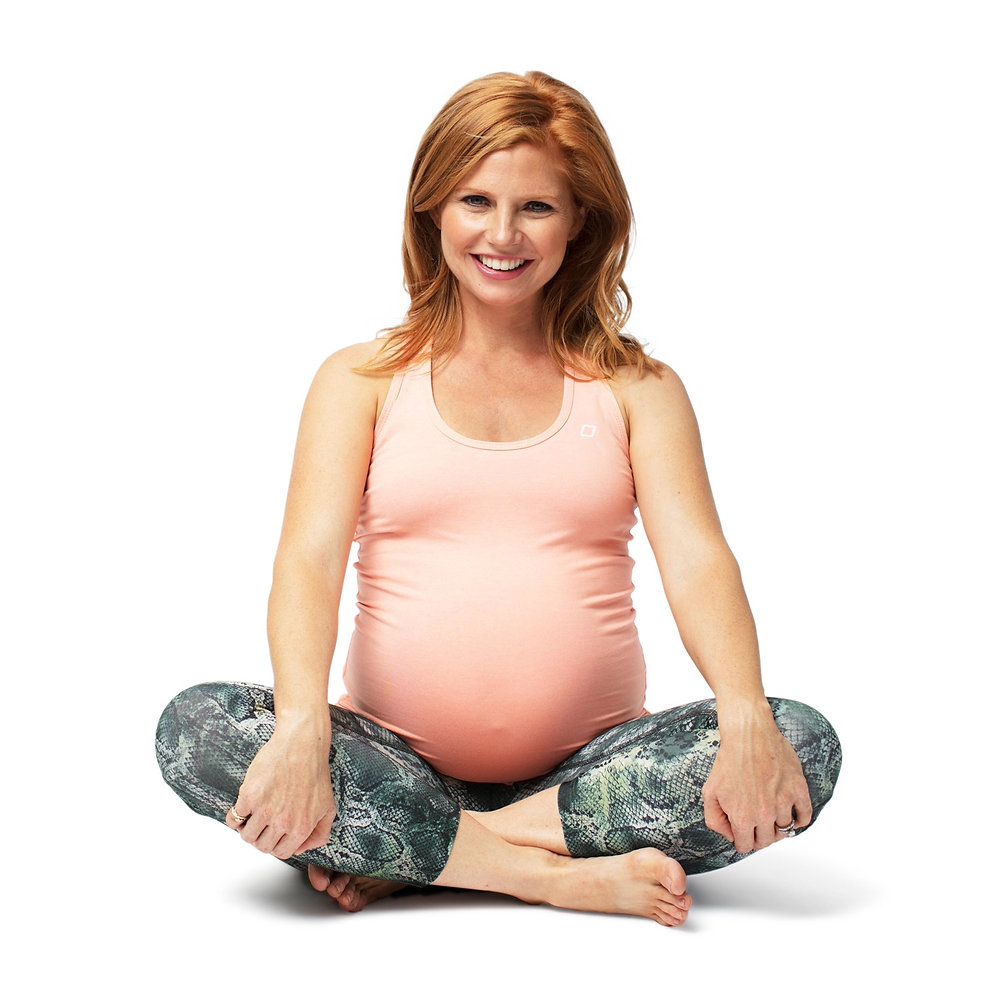
Sara Haley is a fitness expert who specializes in pre- and postnatal exercise. Drawing on more than twenty years of fitness and dance training, Sara has developed her own brand of fitness DVDs, The Daily Sweat®, which includes her award-winning prenatal workout program, Expecting More®. Follow @SaraHaleyFit on Facebook, Twitter and Instagram.
by Lara Catone | Sep 27, 2022 | Fitness & Nutrition, Health Conditions
**This is a repost of a classic Informed Pregnancy Project article.
“The squat is the queen of pelvic floor exercises, so you can ditch all of the kegels and start squatting each day!”
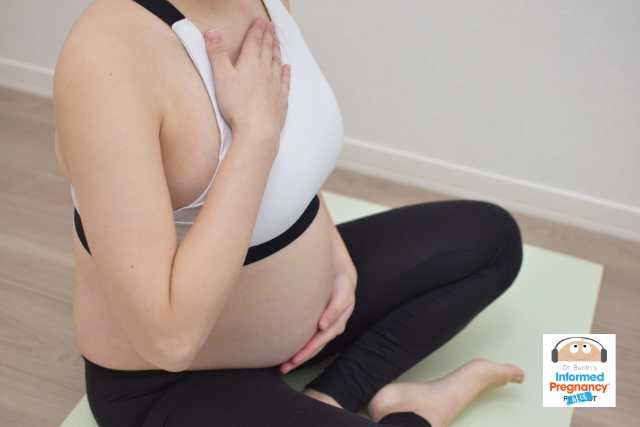
As a yoga teacher and doula, I have discovered that healing the core postpartum does not require hundreds of kegels and crunches. In my experience, the body does much better when slowly building on a solid foundation. This begins with relearning your body after the changes of pregnancy and childbirth.
Your core consists of your diaphragm, the muscles of the abdomen and low back, and the pelvic floor (the hammock of muscles at the base of your pelvis that stretch from your pubic bone to your tailbone).
Here are step by step instructions on how to feel these muscles and begin to bring them on board in all of your daily movements.
- Breath Awareness – The first step in regaining integrity in the core postpartum is to simply reconnect to it with your breath. These are the very first exercises you can begin right after having your baby. There are two types of breathing to practice.
Pelvic Breathing – Gently inhale into the bowl of your pelvis. Notice the bones of the pelvis and the muscles in between. See if you can feel a slight expansion as you inhale and a relaxation on the exhale. There is no need to add any squeezing or tightening, just sense the muscles.
Belly Breathing – Gently inhale into the low belly. As you breathe in, let the belly soften and expand. As you exhale, allow the belly to relax back to its resting state. Note: Many people are used to sucking their bellies in when they inhale and pushing them out when they exhale. It may take a bit of practice to learn to reverse this way of breathing. You can think of softly blowing air into your belly, like blowing up a balloon on the inhale and the air leaving on the exhale.
- Find Transversus Abdominis – Your transversus abdominis (TA) is your own inner belly band. It is the deepest abdominal muscle and wraps from the low back around to the front of your midsection. It is a large muscle that runs the length from your low ribs to your hip bones. The TA supports all of your abdominal organs and your posture.
Need more Informed Pregnancy? Click to check out this related podcast episode!
Sit up tall with your back against a wall or straight back chair for support. Inhale into your belly as you exhale. Imagine an inner corset wrapping from back to front, and hug these muscles toward your midline as you draw your belly back toward your spine. This is different from the habit of sucking your belly in that many women are used to. Instead, the belly button draws back, and the ribs and hip bones move toward the center. It’s a hugging in rather than a sucking in.
- Posture – Now that you’ve found your TA, you can use it to support you as you move around in the world, and you will strengthen your core simultaneously. Engage your TA about 25-30% of the time while sitting, feeding your baby, and walking. While lifting things or standing up from sitting, engage your TA as much as 60-70%. Build up to using your TA more and more over time, and continue to breathe into your belly and side waist. Avoid the pitfall of over stiffening and not breathing.
- Walk – Walking is one of the best exercises for toning your pelvic floor, and when you bring your TA on board, you’ll also be building abdominal strength. You will also be getting some cardio and enjoying fresh air. A good pair of sneakers with arch support will make all the difference. Walk around barefoot as much as possible when you are at home and around your yard.
- Squat – The squat is the queen of pelvic floor exercises, so you can ditch all of the kegels and start squatting each day! Here’s a way to come into a squat that is easy on the knees. Stand with your feet a little bit wider than hip distance, and allow your toes to turn out about 45 degrees. Engage your TA, bend your knees enough to keep the spine straight as you fold from the hinge at your waist and bring your hands to the floor. Then bend your knees completely, dropping your butt toward the floor. This will take you into a full, low squat. Be sure that the toes and knees are pointing in the same direction. If your heels do not touch the floor, fold up a yoga mat or blanket and place it underneath them.
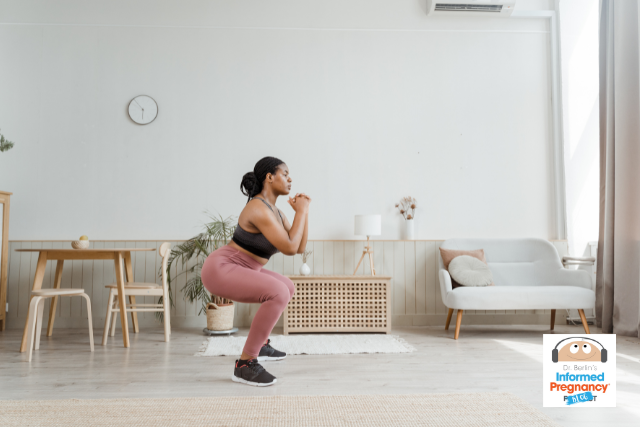
Postpartum recovery is a gentle and patient process. Be sure to balance any exercise with lots of rest, water, and a variety of healthy foods. Time is one of your best partners in restoring your core. Instead of focusing on what your body used to be, celebrate the subtle changes toward strength and health that happen over time.

Lara Catone is helping to establish the field of sexual wellness as a yoga teacher and somatic sexologist with a specialty in women’s health. She has attended nearly 50 women in birth as a birth doula and midwife assistant. In 2011, she began development of the Restore Your Core Program that includes nonsurgical approaches to diastasis recti (abdominal separation) and pelvic pain and dysfunction.
Lara trains fitness, birth, and medical professionals in her progressive approach to core health. She has a thriving private practice in Venice, CA and teaches workshops and retreats worldwide. Lara recently expanded her global community through the launch of an online studio with live webcam classes. Her mission is to empower radiant health and pleasure. Visit www.laracatone.com for musings and educational media as well as videos of transversus abdominis (TA) and pelvic floor exercises.

by Kim Walls | Sep 20, 2022 | Pregnancy
**This is a repost of a classic Informed Pregnancy Project article.
“Treating new stretch marks usually leads to better results than treating older stretch marks, but preventing them from occurring in the first place is obviously even better.”
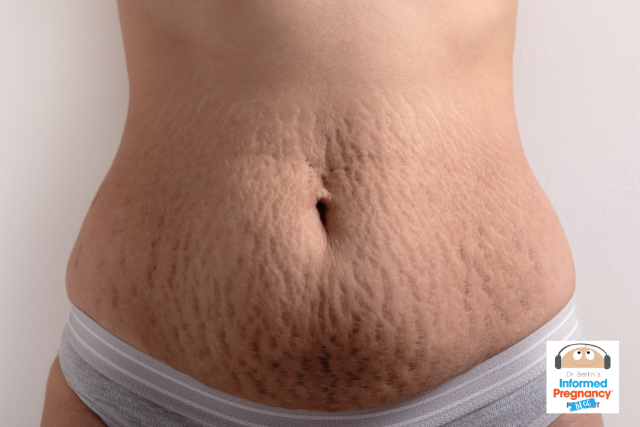 One of the most common changes in a woman’s body during pregnancy is the emergence of stretch marks, clinically known as striae. If you are feeling self conscious about your stretch marks, it might help you to know that as many as 90% of women develop at least some stretch marks during pregnancy. These tiny tears in the skin usually appear on the tummy, breasts, hips and thighs, and result from the skin failing to ‘keep up’ with the rapid growth of your body during pregnancy. Surprisingly, you can even develop stretch marks after your baby is born, possibly as a result of the rapid downsizing of your belly immediately after giving birth. The good news? Your stretch marks will probably be one of the first signs of pregnancy to diminish after your baby is born. The bad news? They may never disappear altogether.
The severity and longevity of stretch marks are determined by a combination of factors that are mostly out of your control, including your genetic code and fluctuations in the levels of the hormones estrogen and relaxin during your pregnancy. Treating new stretch marks usually leads to better results than treating older stretch marks, but preventing them from occurring in the first place is obviously even better. Well hydrated and moisturized skin is thought to be key in preventing the breakdown of collagen — the supportive elastic tissue beneath the skin — which causes the depressed ridges that characterize stretch marks.
Stretched skin also tends to be itchy. The best defense against both itching and striae is to gently massage the skin and keep it well-hydrated at all times. Massaging your growing body parts with a probiotic-rich moisturizer that soothes and softens stressed skin and contains a full spectrum of vitamins and minerals to nourish and foster skin repair can help prevent dryness and act as a natural mood booster. With massage and great products, you can soothe your skin and your mood at the same time!
An added benefit of using moisturizers chocked-full of probiotics on your growing belly is that you can transfer this healthy microflora (‘good’ bacteria) to your baby by maximizing early skin-to-skin contact. Your baby can start to benefit from the healthy colonization of beneficial microflora on your skin within moments of birth, playing an important role in helping to optimize your newborn’s immune system. Stretch marks usually diminish 6-12 months after childbirth. The pigmentation fades and the marks usually become lighter than the surrounding skin. The right skincare products can potentially help minimize stretch marks and reduce healing time.

Choose a natural moisturizing serum that is designed with nutrient-rich fruit oils to help increase skin’s elasticity, lock in moisture and help increase collagen production, all of which could help minimize the discoloration and appearance of stretch marks over time. The most important thing to remember about stretch marks is that you should never feel embarrassed or ashamed by them – they’re just a small reminder of the amazing feat your body performed in growing and nurturing a new life. Focus on the connection between yourself and your baby, and love the skin you’re in!

Kim Walls is an internationally recognized skincare expert focused on optimizing health through skincare. Leading child health advocacy groups and national media rely on Kim’s clinical expertise to help parents navigate the often confusing world of natural skincare. You can read more about her here.
by Nousha Salimi | Sep 7, 2022 | Pregnancy
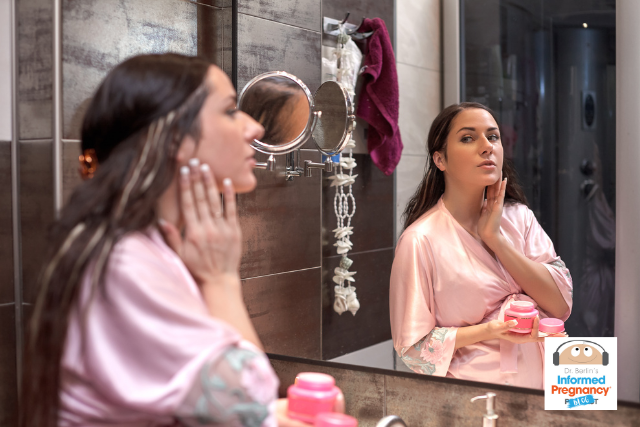
“Some ingredients are not safe during pregnancy like retinol. You want to keep your routine really simple and sweet, and not use a lot of products with active ingredients because we never really know how our skin is going to react while pregnant.”
Changes to skin during pregnancy
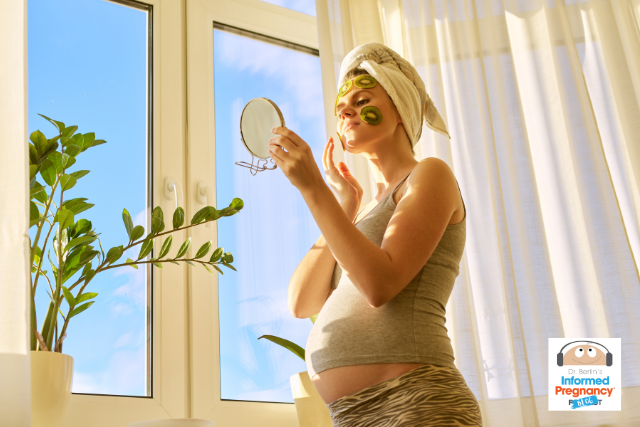
Hormones can change your skin during pregnancy. There is one hormone that we release when we are pregnant to help loosen up the ligaments and joints called elastin. When there is a lot of elastin in the body, I find that the skin elasticity in the face tends to feel more loose and it stretches and people get a little bit of that pregnancy bloating in their face. So, that’s you know, one of the biggest things that changes when we get pregnant. The other thing is the fact that with sun exposure we become super likely to have pigmentation issues. A huge percentage of women will get the pregnancy melasma, which luckily goes away a lot of time after pregnancy, but there’s still a chance that it can give residual effects post pregnancy.
Hormonal acne can come up along the jawline while pregnant and I often tell people to keep their pregnancy skincare routine really simple. A lot of exfoliation to help cleanse the skin I think is great. I often will recommend the Obaji product line or the Kora Organics turmeric scrub for use one to two times a week which will help reduce the chance of having any blemishes. I also suggest a cleanser by IS clinical which is really clean, easy to use and helps remove any dirt and residual things that are left on the skin that can exacerbate hormonal acne. Then you can use a bit of CBD oil, which I used throughout my pregnancy. I feel like it is safe and the one I used has rose, arnica, and bromelain, all things that help bring down inflammation which is something that is super common while you’re pregnant.
Some ingredients are not safe during pregnancy like retinol. You want to keep your routine really simple and sweet, and not use a lot of products with active ingredients because we never really know how our skin is going to react while pregnant.
What can you do about it?
I love the brand Bao Laboratory to hydrate stretch marks which helps prevent them from getting worse. You can also get a CO2 laser treatment to help take down the pigmentation issues from the stretch mark but only after you have had the baby. Usually you want to wait a year after breastfeeding to use a laser because they are actually super effective.
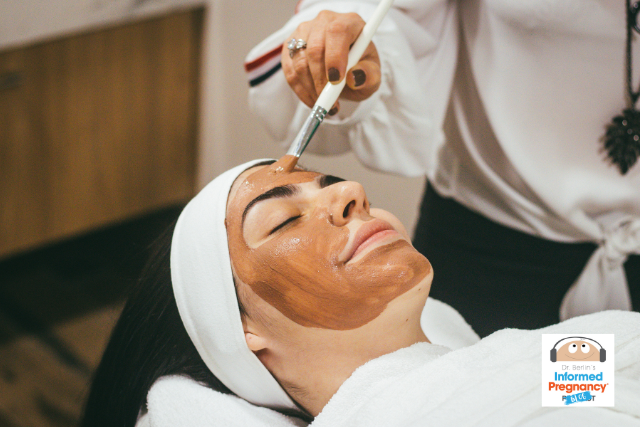
Deep peels are not appropriate during pregnancy because we don’t know if there’s an issue with the blood barrier that would potentially cross into the placenta, and because the skin is more hormonally sensitive so you can have issues like hyperpigmentation and brown spots that come up. Getting a facial while pregnant is totally safe. Many places customize facials specifically to be pregnancy safe. Microneedling is also safe while pregnant just to give a nice little glow, exfoliate, and shrink the pores. You can also safely get a really light microneedling session, with a customized formula using Aquagold and I recommend hyaluronic acid because a lot of times when we are pregnant or breastfeeding we are dehydrated and the skin shows it. So, I like to replace that with hyaluronic acid.

Nurse Nousha Salimi has been New York’s secret skincare weapon for well over a decade. Having collaborated with some of the most elite faces of the fashion, finance, society and art communities, she has become a master in her craft whilst working alongside top New York facial plastic surgeons.
Today, she sees patients at her Los Angeles office alongside world renowned plastic surgeons Dr. John C. Lake and Dr. Paymon J. Danielpour. To connect with Nousha check out www.rejuvenatewithnousha.com

by Dr. Alyssa Berlin | Sep 6, 2022 | Family and Relationships, Mental Health
**This is a repost of a classic Informed Pregnancy Project article.
“I find that moms in particular often view caring for themselves as a shameful experience; as if they should be above needing time for themselves. Just yesterday, I had a friend ask me what I was doing this morning and when I mentioned that my husband took the kids out so I could have some quiet time, her reply was, “What…really? You need that too?”

I want to share some principles for happy parents and effective parenting. But before I do, I want you to know that I am a firm believer that your ability to care for others, be it a partner or a child, stems from nurturing yourself. If you are completely depleted then you have nothing to give to others.
I find that moms in particular often view caring for themselves as a shameful experience; as if they should be above needing time for themselves. Just yesterday, I had a friend ask me what I was doing this morning and when I mentioned that my husband took the kids out so I could have some quiet time, her reply was, “What…really? You need that too?” The answer is yes, without exception we all need to charge our batteries from time to time, and right here and now I am giving you permission to take care of yourself. Your partner and kids will thank you.
Now that we got that covered, here are my 5 Key Principles for Happy Parents and Effective Parenting:
- There is no such thing as too much love and affection (emotional and/or physical), so bring it on! Affection is the basis for developing an emotional connection with your children. The numbers to live by are 4:1. You want to aim to have a minimum of 4 positive moments of emotional connectedness for every 1 negative interaction you have with your child. Because physical affection is so important to your children’s development, you want to strive for 2 moments of daily physical connection. Keep in mind that there are more natural opportunities for physical closeness when they are young, as they will likely come to you and seek out that hug or snuggle. But as your kids get older, you may have to find more creative ways to connect. We always want to be sensitive to how/when our kids want to be affectionate, so those days of kissing your child goodbye in the carpool line may disappear, to be replaced with a “high five” or my personal favorite, “mommy, bump it.”
- Firmness and consistency wins the race. There are tons of wonderful approaches to parenting out there, all taking a slightly different slant on the topic. No matter the approach that you pick, it’s the firmness and consistency with which you implement that method that will likely determine your success. I caution you to not project your feelings on to your kids. Unlike adults who may feel put upon by structure, it actually helps kids to thrive by developing an environment of safety and stability. When you give in to your child’s demands, you are sending a message that your own rules aren’t really important. That being said, make sure the rules you establish are there for a reason, and be open to tweaking and amending them when necessary. With a consistent and predictable environment, you will notice increased rule compliance (but yes, kids will still test limits). Your words will take on greater meaning, and you will be taking an important step toward minimizing tantrums.
Want more Informed Pregnancy? Click for a popular podcast episode!
- Equal does not mean fair. This is a very challenging concept for kids to digest, and is sometimes challenging for parents to wrap their heads around the concept as well. Many parents believe that if “I buy X for one kid, isn’t it only fair to buy X for all my kids?” Let’s think about this concept slightly differently. If a child needed eye drops because of an eye infection, are you going to line up the rest of your kids and give them eye drops as well? Of course not. So equal and fair are not synonymous. Rather, a common saying in our household is “everyone gets what they need.”

- Sound byte your way to effective parenting. No one likes a lecture. Especially kids and especially if whatever lesson or nugget of wisdom you might want to impart is likely pointed or focused on something your child did wrong. Instead, try to model the public service announcement approach, and at quiet, uneventful times offer a sound byte of something you want to instill in them. For example, “It’s important to brush your teeth twice a day” or “Equal does not mean fair.” Let’s be honest: we all listen better when we feel like the lesson is not aimed at showcasing our flaws. So think of a rule or principle that is important to you and find ways to nonchalantly pepper that concept into your daily interactions with your kids. (This may work for partners also!)
- Don’t parent to public opinion. Interactions with our kids typically feel more stressful and anxiety provoking when there is an audience around to witness the moment. However, it is imperative that we give our children consistent messages regarding what is or is not acceptable and not alter parenting practices because of that watchful eye. Chances are that any seemingly disapproving onlooker is probably just identifying with us, because they have been in our shoes. If we imagine them trying to subliminally offer support instead of judgment, it will remove the intensity from the moment, freeing us up to address the problematic behavior at hand.
Baby on the way? Click to safeguard your relationship before things get crazy!

Dr. Alyssa Berlin is a clinical psychologist specializing in pregnancy, postpartum, and parenting. She offers private counseling for women individually and with their partners. Dr. Berlin is the creator of The AfterBirth Plan™, a program that prepares couples for what to expect after a baby is born. The workshop teaches couples how to prepare for a healthy postpartum transition for the baby, for each partner, and for the evolving relationship. She combines her psychological background and her doula training to help women and their partners feel empowered and comfortable in the labor and delivery process, both on a physical and emotional level. Dr. Berlin has specific expertise addressing fear and anxiety that may arise before, during, or after birth.
Dr. Berlin is on the Board of Advisors for the International Cesarean Awareness Network (ICAN) and is a faculty member of Maternal Mental Health NOW Training Institute. She conducts live pregnancy and parenting workshops throughout Southern California and online. You can read Dr. Alyssa’s blogs on the Huffington Post where she contributes to PBS’s ‘This Emotional Life” project. Dr. Berlin received her doctorate degree at Argosy University in Atlanta, GA and went on to become a certified Gottman educator. She is a member of the American Psychological Association. She and her husband, prenatal chiropractor Dr. Elliot Berlin, live in Los Angeles and are the proud parents of four amazing children