by Ana Paula Markel | Sep 13, 2022 | Labor and Delivery, Pregnancy
**This is a repost of a classic Informed Pregnancy Project article.
“Doulas are not only for mothers planning an all-natural birth, but for mothers planning or investigating all kinds of birth choices. The doula movement is all about options, information and nonjudgmental support. Doulas are hired for all scenarios, including scheduled cesareans.”

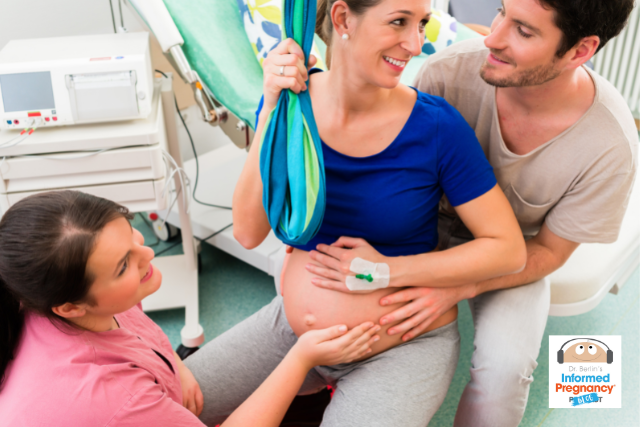
In the days before modern medicine and hospitals, laboring women would often be supported by other ‘wise women’ in their communities, who held and passed along the knowledge needed for the next generation to assist women during the process of labor and birth. These women were among the earliest ‘doulas’ – women whose sole role was to provide comfort, encouragement and wisdom during a woman’s labor and birth. The idea of the modern doula began to gain popularity from the studies of Dr. Marshall Klaus and John Kennel during the 1980s, which clearly showed the benefits of the presence of a doula during the labor process. DONA International was founded in 1992, and the role of the doula became a legitimate profession, with prospective doulas required to complete extensive training and assist in multiple births before becoming certified. In the past 20 years, one birth at a time, doulas have secured their role as an instrumental component in the birth team. People commonly think of doulas and midwives as having similar tasks, when in reality the midwife is a licensed care provider in charge of the mother and baby’s health while the doula’s focus is on supporting and promoting an environment of calmness and confidence in the mother.
As reported in many studies, the presence of a doula has many health benefits (less medical interventions, faster labors, easier breastfeeding) and the presence of a doula also highly increases birth satisfaction for the new mother. Doulas are not only for mothers planning an all-natural birth, but for mothers planning or investigating all kinds of birth choices. The doula movement is all about options, information and nonjudgmental support. Doulas are hired for all scenarios, including scheduled cesareans. In current maternity care, women often feel rushed during OB visits and sometimes are too self-conscious to share concerns, questions or fears with medical personnel. This is one of the gaps that doulas can fill.
One of the greatest benefits of hiring a doula is that doulas are well-read, informed and trained in medical terms, and understand routine hospital protocols along with the risks and benefits of various medical interventions. Doulas do NOT make medical decisions for their clients, but they do help clients to make informed decisions. In all up-to-date facilities across the country, doctors and nurses welcome the presence of a calming and professional doula. There is no role confusion; doulas are not there to take over the care of the woman, but to add to it. Doulas and nurses complement each other. During the process of hiring a doula, mothers should not feel shy to interview as many doulas as they feel they need to find their ‘match.’ An interview should be free of charge and commitment and usually last around one hour.
Some of the important points for a family to consider in hiring a doula are:
- How much experience does she have?
- How many births has she attended?
- Is she a mother herself?
- How many births does the doula take a month?
The answers to these questions may mean different things to different mothers-to-be. A mother may feel comfortable with a newer doula based on a personality match, and hiring the most experienced doula is not always the best fit for all families. The last question in the list is a very important one. Obviously, a doula willing to “book” 8 births in a typical month is much more likely to need to send a back-up doula to your birth than a doula who only schedules 3 births. A busy schedule may also affect when the doula joins a laboring woman, or how tired your doula is when she joins you for your birth.
- Is the doula certified?
- If so, by what organization?
DONA International is not the largest, but is by far the most respected doula organization worldwide. DONA has been training and certifying doulas for the past 22 years in 23 countries. If a doula is not certified, ask her to read and practice according to the DONA code of ethics and scope of practice, easily found at www.dona.org.
• How many prenatal visits will the doula provide prior to the birth? And after the birth? Not all doulas have a set schedule of visits, but the majority will do two prenatal meetings that last around 2 hours each, and one postpartum visit that lasts around 1 hour. The prenatal meetings can often substitute for a public birthing class.
Need more Informed Pregnancy? Click to listen to a popular podcast episode!
• When does the doula join the labor? Some doulas come when mothers first call; others come when labor is more established. Mothers should think about what they want and the doula should be willing to adjust to that, not the other way around.

• How much does a doula charge? This is a difficult question, as prices vary a lot. A more experienced doula will usually charge more, as will a doula with more services to provide (for example, prenatal yoga, nutrition help, or postpartum doula services – like doing laundry, watching the baby while you nap, or helping you and your newborn perfect your ‘latch’ for nursing.) In Los Angeles, doulas can charge anywhere between $500 and $3000. Some doulas work on a sliding scale, and most of the national organizations will help women to find doulas at no cost or low cost. The idea is that every woman that wants a doula should have one. Insurance companies are also starting to reimburse for doula services, so ask your insurance provider if a doula’s services are covered by your plan.
To find a doula in your area, please go to www.binibirth.com.
Need more guidance? Check out these workshops available through Berlin Wellness!

Ana Paula Markel is a childbirth educator, doula trainer, practicing doula and volunteer in international birth organizations. She is also the mother of four children. In 2008 Ana founded BINI Birth, a center in Los Angeles dedicated to the childbirth education field, doula training, parenting classes and green pregnancy retail.
by Nousha Salimi | Sep 7, 2022 | Pregnancy
“Some ingredients are not safe during pregnancy like retinol. You want to keep your routine really simple and sweet, and not use a lot of products with active ingredients because we never really know how our skin is going to react while pregnant.”
Changes to skin during pregnancy
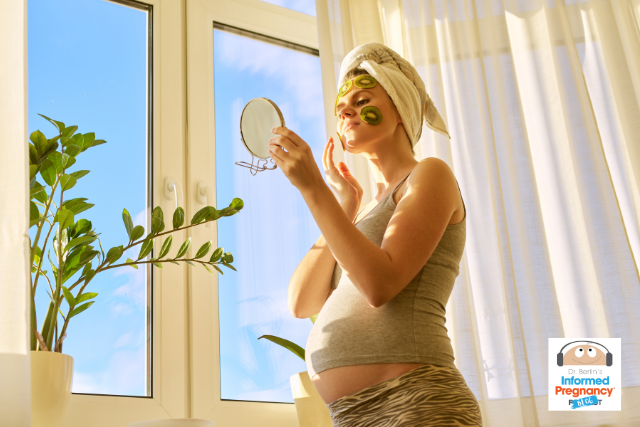
Hormones can change your skin during pregnancy. There is one hormone that we release when we are pregnant to help loosen up the ligaments and joints called elastin. When there is a lot of elastin in the body, I find that the skin elasticity in the face tends to feel more loose and it stretches and people get a little bit of that pregnancy bloating in their face. So, that’s you know, one of the biggest things that changes when we get pregnant. The other thing is the fact that with sun exposure we become super likely to have pigmentation issues. A huge percentage of women will get the pregnancy melasma, which luckily goes away a lot of time after pregnancy, but there’s still a chance that it can give residual effects post pregnancy.
Hormonal acne can come up along the jawline while pregnant and I often tell people to keep their pregnancy skincare routine really simple. A lot of exfoliation to help cleanse the skin I think is great. I often will recommend the Obaji product line or the Kora Organics turmeric scrub for use one to two times a week which will help reduce the chance of having any blemishes. I also suggest a cleanser by IS clinical which is really clean, easy to use and helps remove any dirt and residual things that are left on the skin that can exacerbate hormonal acne. Then you can use a bit of CBD oil, which I used throughout my pregnancy. I feel like it is safe and the one I used has rose, arnica, and bromelain, all things that help bring down inflammation which is something that is super common while you’re pregnant.
Some ingredients are not safe during pregnancy like retinol. You want to keep your routine really simple and sweet, and not use a lot of products with active ingredients because we never really know how our skin is going to react while pregnant.
What can you do about it?
I love the brand Bao Laboratory to hydrate stretch marks which helps prevent them from getting worse. You can also get a CO2 laser treatment to help take down the pigmentation issues from the stretch mark but only after you have had the baby. Usually you want to wait a year after breastfeeding to use a laser because they are actually super effective.
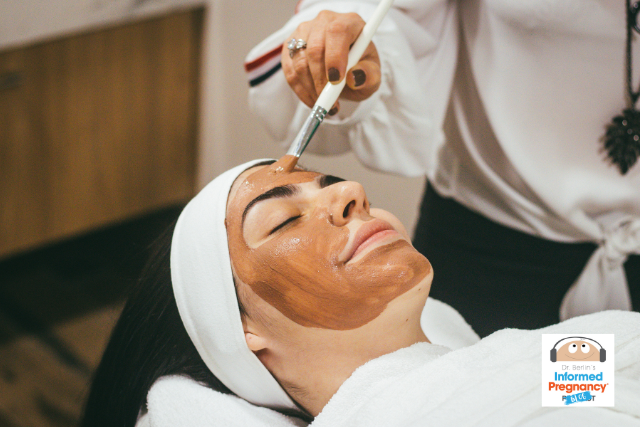
Deep peels are not appropriate during pregnancy because we don’t know if there’s an issue with the blood barrier that would potentially cross into the placenta, and because the skin is more hormonally sensitive so you can have issues like hyperpigmentation and brown spots that come up. Getting a facial while pregnant is totally safe. Many places customize facials specifically to be pregnancy safe. Microneedling is also safe while pregnant just to give a nice little glow, exfoliate, and shrink the pores. You can also safely get a really light microneedling session, with a customized formula using Aquagold and I recommend hyaluronic acid because a lot of times when we are pregnant or breastfeeding we are dehydrated and the skin shows it. So, I like to replace that with hyaluronic acid.

Nurse Nousha Salimi has been New York’s secret skincare weapon for well over a decade. Having collaborated with some of the most elite faces of the fashion, finance, society and art communities, she has become a master in her craft whilst working alongside top New York facial plastic surgeons.
Today, she sees patients at her Los Angeles office alongside world renowned plastic surgeons Dr. John C. Lake and Dr. Paymon J. Danielpour. To connect with Nousha check out www.rejuvenatewithnousha.com

by Dr. Alyssa Berlin | Sep 6, 2022 | Family and Relationships, Mental Health
**This is a repost of a classic Informed Pregnancy Project article.
“I find that moms in particular often view caring for themselves as a shameful experience; as if they should be above needing time for themselves. Just yesterday, I had a friend ask me what I was doing this morning and when I mentioned that my husband took the kids out so I could have some quiet time, her reply was, “What…really? You need that too?”

I want to share some principles for happy parents and effective parenting. But before I do, I want you to know that I am a firm believer that your ability to care for others, be it a partner or a child, stems from nurturing yourself. If you are completely depleted then you have nothing to give to others.
I find that moms in particular often view caring for themselves as a shameful experience; as if they should be above needing time for themselves. Just yesterday, I had a friend ask me what I was doing this morning and when I mentioned that my husband took the kids out so I could have some quiet time, her reply was, “What…really? You need that too?” The answer is yes, without exception we all need to charge our batteries from time to time, and right here and now I am giving you permission to take care of yourself. Your partner and kids will thank you.
Now that we got that covered, here are my 5 Key Principles for Happy Parents and Effective Parenting:
- There is no such thing as too much love and affection (emotional and/or physical), so bring it on! Affection is the basis for developing an emotional connection with your children. The numbers to live by are 4:1. You want to aim to have a minimum of 4 positive moments of emotional connectedness for every 1 negative interaction you have with your child. Because physical affection is so important to your children’s development, you want to strive for 2 moments of daily physical connection. Keep in mind that there are more natural opportunities for physical closeness when they are young, as they will likely come to you and seek out that hug or snuggle. But as your kids get older, you may have to find more creative ways to connect. We always want to be sensitive to how/when our kids want to be affectionate, so those days of kissing your child goodbye in the carpool line may disappear, to be replaced with a “high five” or my personal favorite, “mommy, bump it.”
- Firmness and consistency wins the race. There are tons of wonderful approaches to parenting out there, all taking a slightly different slant on the topic. No matter the approach that you pick, it’s the firmness and consistency with which you implement that method that will likely determine your success. I caution you to not project your feelings on to your kids. Unlike adults who may feel put upon by structure, it actually helps kids to thrive by developing an environment of safety and stability. When you give in to your child’s demands, you are sending a message that your own rules aren’t really important. That being said, make sure the rules you establish are there for a reason, and be open to tweaking and amending them when necessary. With a consistent and predictable environment, you will notice increased rule compliance (but yes, kids will still test limits). Your words will take on greater meaning, and you will be taking an important step toward minimizing tantrums.
Want more Informed Pregnancy? Click for a popular podcast episode!
- Equal does not mean fair. This is a very challenging concept for kids to digest, and is sometimes challenging for parents to wrap their heads around the concept as well. Many parents believe that if “I buy X for one kid, isn’t it only fair to buy X for all my kids?” Let’s think about this concept slightly differently. If a child needed eye drops because of an eye infection, are you going to line up the rest of your kids and give them eye drops as well? Of course not. So equal and fair are not synonymous. Rather, a common saying in our household is “everyone gets what they need.”

- Sound byte your way to effective parenting. No one likes a lecture. Especially kids and especially if whatever lesson or nugget of wisdom you might want to impart is likely pointed or focused on something your child did wrong. Instead, try to model the public service announcement approach, and at quiet, uneventful times offer a sound byte of something you want to instill in them. For example, “It’s important to brush your teeth twice a day” or “Equal does not mean fair.” Let’s be honest: we all listen better when we feel like the lesson is not aimed at showcasing our flaws. So think of a rule or principle that is important to you and find ways to nonchalantly pepper that concept into your daily interactions with your kids. (This may work for partners also!)
- Don’t parent to public opinion. Interactions with our kids typically feel more stressful and anxiety provoking when there is an audience around to witness the moment. However, it is imperative that we give our children consistent messages regarding what is or is not acceptable and not alter parenting practices because of that watchful eye. Chances are that any seemingly disapproving onlooker is probably just identifying with us, because they have been in our shoes. If we imagine them trying to subliminally offer support instead of judgment, it will remove the intensity from the moment, freeing us up to address the problematic behavior at hand.
Baby on the way? Click to safeguard your relationship before things get crazy!
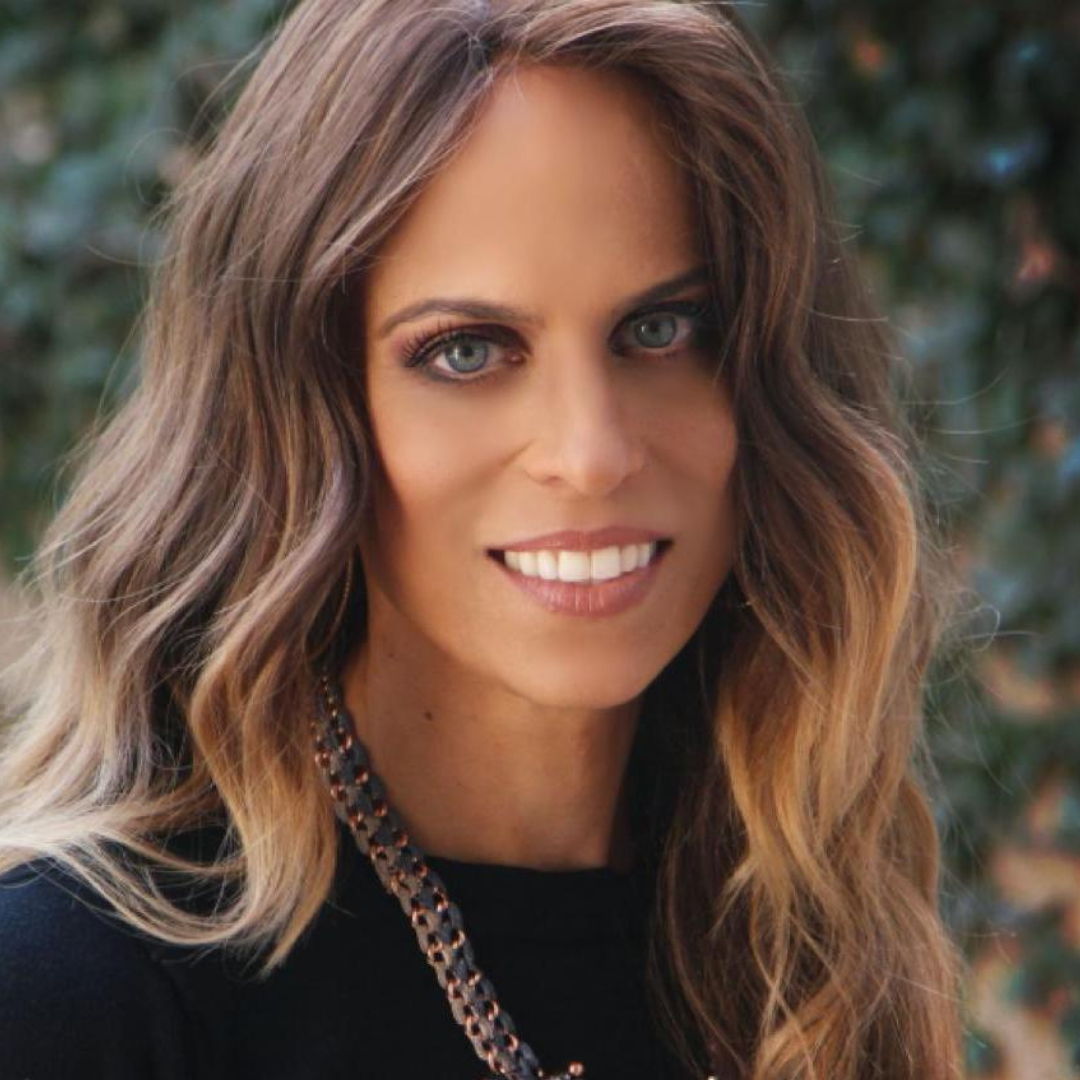
Dr. Alyssa Berlin is a clinical psychologist specializing in pregnancy, postpartum, and parenting. She offers private counseling for women individually and with their partners. Dr. Berlin is the creator of The AfterBirth Plan™, a program that prepares couples for what to expect after a baby is born. The workshop teaches couples how to prepare for a healthy postpartum transition for the baby, for each partner, and for the evolving relationship. She combines her psychological background and her doula training to help women and their partners feel empowered and comfortable in the labor and delivery process, both on a physical and emotional level. Dr. Berlin has specific expertise addressing fear and anxiety that may arise before, during, or after birth.
Dr. Berlin is on the Board of Advisors for the International Cesarean Awareness Network (ICAN) and is a faculty member of Maternal Mental Health NOW Training Institute. She conducts live pregnancy and parenting workshops throughout Southern California and online. You can read Dr. Alyssa’s blogs on the Huffington Post where she contributes to PBS’s ‘This Emotional Life” project. Dr. Berlin received her doctorate degree at Argosy University in Atlanta, GA and went on to become a certified Gottman educator. She is a member of the American Psychological Association. She and her husband, prenatal chiropractor Dr. Elliot Berlin, live in Los Angeles and are the proud parents of four amazing children
