Beverly Hills based cosmetic dermatologist Dr. Gaby Newman is a specialist in anti aging medicine and dermatological surgery. She just had her first baby and joins the podcast to talk all things skin during pregnancy and postpartum.
Informed Pregnancy Media andMahmee present an all new podcast! One Way or a Mother is a new narrative podcast from Dr. Elliot Berlin, DC.
Each season is an intimate story of one woman, one pregnancy, and all of the preparations, emotions, and personal history leading up to the birth. Episodes feature the expectant mother along with her family, doctors, and birth work team.
“So when you're pregnant, you know, the really the most important thing is sun protection because melasma is significantly worsened by sunlight. So wearing broad-rimmed hats, daily sun protection, extremely important. I can't stress that enough for melasma.”
“No magic. Unfortunately, no, you just have to kind of embrace it and accept it as that's like a very natural, healthy thing that happens when you're pregnant.”
“Listen, just a gentle cleanser, a moisturizer, and then you want to top it off with SPF. If you do that every single day, you will notice dramatic changes in your skin.”
“Now, all of a sudden, immediately after childbirth, boom, your levels of estrogen drop dramatically. Right. And they return to your non-pregnant levels. And what this does is it immediately changes from the growth phase to the shedding phase, kind of even skips the middle phase. Right. So now your hair is all in the same phase and it's just shedding dramatically.”
“You know, a lot happens while you're sleeping. So you need to allow yourself to have that time. So really try to rely on some other people to help you so that you can get that rest. It helps a lot with stress.”
AI-generated transcript with speaker labels — may contain errors, especially names and medical terms. Dr. Elliot Berlin, DC appears in blue; Dr. Gaby Newman in orange.
Dr. Elliot Berlin, DC[0:00] My guest today is a Beverly Hills-based cosmetic dermatologist who combines cutting-edge cosmetic and medical dermatology with a passion for holistic wellness. She's a specialist in anti-aging medicine, dermatological surgery, and regenerative treatments like PRP therapy. She is one of the physicians at Newman Dermatology, which is a father and two-daughter practice and she recently welcomed her first baby, giving her first-hand insight into the skin changes that come with pregnancy and postpartum. Stay tuned! Great tips ahead. I'm pregnancy-focused chiropractor Dr. Elliott Berlin and you're listening to the Informed Pregnancy Podcast. Dr. Gabby Newman, welcome to the podcast.
Dr. Gaby Newman[0:55] Thanks so much for having me.
Dr. Elliot Berlin, DC[0:57] My pleasure. Tremendous honor to work with you while you were pregnant and to meet you. You have incredible energy that goes much deeper than skin and it was a fun ride. What was your pregnancy like?
Dr. Gaby Newman[1:08] It was an amazing journey. I was so excited to be pregnant and I guess my body knew that because I didn't go into labor until I got induced at 42 weeks, so I was pregnant for a long time.
Dr. Elliot Berlin, DC[1:26] During your pregnancy, did you notice things about skin that you maybe couldn't have known the same way without experiencing it?
Dr. Gaby Newman[1:32] Absolutely. There is nothing like going through it yourself and to day by day notice all the changes that are happening to your body physically and I feel like a lot of the skin changes that happen can almost occur before you see some of those physical changes where you actually really expand and your belly grows. I actually feel like skin-wise, I started to see a lot of changes very early on.
Dr. Elliot Berlin, DC[1:55] Okay, so some of the things that become fairly obvious are like molasma, like back acne, stretch marks. What's happening to the skin when you're pregnant?
Dr. Gaby Newman[2:08] Great question and just before we dive in, I just want to make a note that even though I am a licensed physician, everything discussed today is just for general informational and educational purposes only. It's not medical advice. So if you have any questions, just reach out to your medical provider, okay? But I will say when you're pregnant, a lot of people hear you're glowing, right? It's like a common thing that a lot of people hear and so like what's going on hormonally that is causing those skin changes? So number one, you have an increased blood circulation. So all of a sudden, your blood circulation increases 50% more from its previous capacity.
[2:48] So that contributes a lot to looking more like plump and having rosier cheeks.
Dr. Elliot Berlin, DC[2:54] Maybe I'm pregnant. I feel plump and rosy.
Dr. Gaby Newman[2:58] A lot of people really want that, Dr. Verlin, so yeah, it doesn't happen for everyone, you know? The second thing is that you're having those really elevated levels of both progesterone and estrogen. Those are the major female sex hormones and those things can improve the skin's elasticity, the moisture, and they also can significantly increase the oil production so it can make you look more dewy and glowing. So those are like some of the general things that are happening that can contribute to that glowing skin.
Dr. Elliot Berlin, DC[3:31] Do you know that Moses said that to a pregnant woman? Well, of course these things don't happen for every pregnant woman, but these happen for the lucky ones. Okay. But Moses says to a pregnant woman, you're glowing. And of course I'm referring to the Showtime TV series, The Curse, in which the male doula named Moses looks at his client and says, you're glowing, and very few people know this, but I played Moses. And so every time you say, you're glowing, the glow in the skin, I'm like, I saw it and it wasn't even a real pregnancy. Okay, so some people could have these really like good, beneficial skin changes in the pregnancy, but then some people don't.
Dr. Gaby Newman[4:13] Absolutely. So some people, they're really anticipating what their skin is going to look like during pregnancy and they're very pleasantly surprised because their skin actually requires a lot less day-to-day maintenance and they just have better skin integrity overall. But for some women, those elevated levels of estrogen and podestrone can have some negative skin effects that are unwanted. So one of those that you already mentioned was, you know, the acne, and that's going to be caused by the increased oil production from the high levels of estrogen. Also, the melasma is probably the most common one and, you know, it does actually go away usually over time, but that one's caused by the elevated hormone levels as
[4:55] well that stimulate more melanin, which is the color that gives the dark mask of pregnancy. And not only is that hormone responsible for melasma on the face, but you can get darkening in various areas. And if you've ever been pregnant, you already know the nipples can darken. You can get the dark line that goes from the belly button all the way down to the pubic bone. So there's a lot of things that will darken and those should usually lighten after the months after pregnancy.
Dr. Elliot Berlin, DC[5:25] Yeah, the line is so interesting because it's so prominent. It's not like one of those pregnancy tests. Is that a line or is that not? It's like, wow, look at that racing stripe.
Dr. Gaby Newman[5:35] Yeah, I mean, most people get I would say 90 percent of women get it, but it's not necessary.
Dr. Elliot Berlin, DC[5:41] Yeah, I know. It seems like there must be some purpose to it that maybe we lost the meaning behind it, but it's just so prominent and so many people get it. And then there's that racing stripe on the belly. But the melasma, you mean, could be also on the face or other parts of the body?
Dr. Gaby Newman[5:57] The melasma is usually going to be on the face, but the increased melanin production, so that darkening of the skin can occur pretty much anywhere on the body. You can get it in various locations.
Dr. Elliot Berlin, DC[6:10] The melasma can be patchy. So is there anything to do about that? Like how it looks?
Dr. Gaby Newman[6:16] So while you're pregnant, the treatment is going to be very different for when you're not pregnant and or not breastfeeding. So when you're pregnant, you know, the really the most important thing is sun protection because melasma is significantly worsened by sunlight. So wearing broad-rimmed hats, daily sun protection, extremely important. I can't stress that enough for melasma. And then, you know, while you're pregnant, there's more limited options for melasma. There's some medications that are deemed safe. I would say probably, and I'll talk a little bit more about medications later in terms of just understanding how we categorize them as safe or not safe,
[7:00] because I feel like you can't just tell a pregnant woman something is safe or not safe. That's just a really, really broad generalization. There's always a caveat or some sort of discussion that needs to be had. But in general, there's a medication called azelic acid. It's like a substitute for retin-A, tretinoin, those really popular exfoliators, which are a hundred percent not safe to use during pregnancy. But you can use something called azelic acid, which is another exfoliator, which is deemed generally very safe to use during pregnancy and breastfeeding. And it should help lighten those spots over time.
Dr. Elliot Berlin, DC[7:36] What about the acne?
Dr. Gaby Newman[7:38] The acne is another one that there are some treatment options that you can do. I'd say things like salicylic acid is not a great medication, especially in high doses. You definitely can't be on Accutane or retinoids or anything like that. But there are some things like vitamin C, niacinamide. Again, azelic acid is also really good for acne. You can use generally things like lactic acid, which would be like a cleanser, another exfoliator. And then there are some in-office treatments that you could do that are safe. They're known as like blue light or red light therapy. I have them at my office and even children can do them. They're very, very safe.
[8:22] It's essentially like a powerful LED light that stimulates a healing response in the body. Photobiobondylation.
Dr. Elliot Berlin, DC[8:29] Similar, yeah. The healing response to the right wavelengths of red light, blue light, violet, infrared, near infrared. It's not just the face though, like I see, because I do massage all day, like acne all over the back and maybe other parts.
Dr. Gaby Newman[8:47] Totally. So whenever you have acne on a large surface area, like all over the back, I would opt in for either a treatment like a red light, because that gets over at a large surface or to also combine that with something like a lactic acid that I mentioned or a benzoyl peroxide. Those are generally deemed safe and they're basically something that you can apply in the shower and wash off. So they're very easy to apply and they can be used sparingly during pregnancy and lactation.
Dr. Elliot Berlin, DC[9:17] Let's talk about stretch marks.
Dr. Gaby Newman[9:20] Yeah, that's a good one. That one's a tough one. I'm not going to lie.
Dr. Elliot Berlin, DC[9:24] I mean, first of all, it seems like some people get them even early on and some people don't get them at all. Is there something that predisposes you and is there something you can do to mitigate it?
Dr. Gaby Newman[9:34] Yeah. So I would say that there is a genetic component to getting those stretch marks. And you can get them, unfortunately, in more places than just the one area where the fetus is growing. You can get them kind of in the hips area. You can get them on the breasts. You can get them in a lot of places. Usually they appear like reddish white, and unfortunately they usually don't completely go away. So yeah, it usually doesn't go away. They definitely improve in the postpartum time, but they don't fully, fully go away in most people. What you can do to prevent them is to have a healthy amount of weight gain during your pregnancy. That's something that, you know,
[10:16] your doctor will tell you what you should expect to try to gain. But, you know, when you have excessive weight gain, that's just going to exacerbate the amount of pressure on those parts of your body. So that'll make the stretch marks worse. Aside from that. No magic. Unfortunately, no, you just have to kind of embrace it and accept it as that's like a very natural, healthy thing that happens when you're pregnant.
Dr. Elliot Berlin, DC[10:41] Okay. Let's talk about the veins. Some people, the veins seem strained during pregnancy and start to show their strain.
Dr. Gaby Newman[10:51] Yeah. So like those veins, those also have a genetic component. A lot of people will never have a spider vein or a varicose vein before pregnancy. And then as soon as they have pregnancy, they'll just notice many, many occurring at once. Part of that is actually hormonal because of those elevated estrogen and progesterone levels, they cause the walls of the veins to relax. And so the valves can no longer prevent the blood from backflowing. And so now you have a pooling of blood. Yes, exactly. So you have that. And then the buildup is what causes the engorgement of the veins and the appearance of spider veins or varicose veins.
Dr. Elliot Berlin, DC[11:31] That does not sound pleasant or pretty.
Dr. Gaby Newman[11:34] No, it's not. And, you know, that added with the actual weight from the uterus and from the, you know, the extra weight gain puts a lot of pressure and that exacerbates it as well, because like we talked about your blood volume increases by 50%. So there's just so much more going on that your body has to be able to deal with. The good news with the spider veins is there's a lot more things you can do to prevent from getting them or from exacerbating the ones that you might already have. So things like that would be elevating your legs above the level of the heart, being, you know, active, walking, you know, many times throughout the day. What else? Compression stockings.
Dr. Elliot Berlin, DC[12:16] A lot of compression sort of depends on the season. Some people don't mind them when they're winter babies and then in the hot days of summer, they seem a lot less comfortable. I would say they're worth it though, in any season, because again, a lot of people do not like having those spider veins. Would you just recommend it for anybody proactively or just if you start to notice the signs? I mean,
Dr. Gaby Newman[12:42] I think that the measures to prevent them are beneficial for any woman in pregnancy. Like most women have some level of swelling in their legs or benefit from being active. So I would say to do those measures, and maybe to hold off on the compression stockings, unless you actually see some signs of spider veins coming in.
Dr. Elliot Berlin, DC[13:01] Sounds good. Well, that's a nutshell of pregnancy. At least there was some good at the beginning, the glowing, and then there's a bunch of other things that are not as comfortable, but I appreciate all the tips you gave us and perhaps either how to mitigate or treat them. Let's take a little break and we come back.
Dr. Elliot Berlin, DC[13:19] We'll talk postpartum. Welcome back. We're talking to Dr. Gabby Newman. All right. So, uh, your own postpartum, did you get the glowy plumpness or did you get some of the other junk?
Dr. Gaby Newman[13:41] I don't want everyone to hate me. You know what? My skin did look better, I think during pregnancy.
Dr. Elliot Berlin, DC[13:49] I only met you during pregnancy and I was like, is this because this is your specialty or where you just win the genetic lottery? You have incredible skin.
Dr. Gaby Newman[13:59] Thank you. I honestly think it's a combination of everything you talked about. I don't think that anyone has just a hundred percent like winning the genetic lottery. I'm obviously obsessed with skin and I spend a lot of time talking to people about skin. What I really like to recommend to people, especially mothers who are extremely busy and don't have time for like a 15 step routine and they just want something that's going to be effective and relatively safe. You know, even if they do get pregnant again, won't be a problem is I really love to do laser treatments. These are not extremely harsh ablative treatments where you were burning the top layer of the skin.
[14:39] These are lasers that penetrate beyond the top two layers of your skin and actually go deeper into where the collagen and elastin are and they build that healthy skin and they also help remove any imperfections like redness, acne, discoloration. So I find doing those every like three months or so is just perfect with a very simple skincare routine. If you want to talk about like simple skincare, I'm happy to do that too.
Dr. Elliot Berlin, DC[15:05] I do want to talk about it, but for the laser, do you feel it?
Dr. Gaby Newman[15:09] Yeah, you certainly feel it, but it's extremely comfortable. We have patients that are teenagers that do it and they feel totally fine.
Dr. Elliot Berlin, DC[15:18] Nice. I definitely want to talk about it for a regular routine. I even have this Shark Tank product in my mind, some sort of mask that you put on your face that does the whole 15 steps for you. You know, you just sit back, relax, and then, I don't know. Is that a real thing? Should we make that? Why not? I mean, I want to do the skin routine, but the steps, like just standing there over the sink, those steps, I don't know, they bother me. But my daughter, who's a teenager, she's like, dad, you gotta do the skin. Come on. Here, five things to do every night.
Dr. Gaby Newman[15:50] I agree. Like, I feel like you do have to be consistent, but I know my patients, I know the ones that are willing to do the one or two products and that's all they want and the ones that already do 15 things and they're looking for more. I don't think that that's necessary. I think that if you do a few things regularly, you can dramatically improve your skin. So that would be having a gentle cleanser that you really like. That would be the first step. You can do that in morning and at nighttime. Moisturize right after. The best time to moisturize is right after a shower. That's when your skin is like, well your pores are open and whatever you apply to your skin will
[16:28] penetrate even better. Of course, I have my recommendations for moisturizers, but I think any moisturizer is better than no moisturizer.
Dr. Elliot Berlin, DC[16:36] I mean, would you spill the tea on a gentle cleanser that you like and a moisturizer that you like?
Dr. Gaby Newman[16:42] To be honest, our office has products, so I do tend to use a lot of our own products because I find them really gentle and effective. But, you know, if you're going to buy something more like mainstream, I would buy something that's non-fragrance, that's, you know, made for acne prone skin, like all of those things you want to read on the label.
Dr. Elliot Berlin, DC[17:01] Most confused, am I oily or am I dry? I don't know. Do you get oily skin? I get oily, but sometimes I feel dry.
Dr. Gaby Newman[17:10] Yeah, well, that's normal. I would say to opt for the products that you feel like you're more so that on most days.
Dr. Elliot Berlin, DC[17:17] Oh, on most days. Yeah. Is it possible that it changes with season?
Dr. Gaby Newman[17:21] Certainly, yeah.
Dr. Elliot Berlin, DC[17:23] I think that's what's happening. Oh, I'm confused. All right.
Dr. Gaby Newman[17:28] Listen, just a gentle cleanser, a moisturizer, and then you want to top it off with SPF. If you do that every single day, you will notice dramatic changes in your skin.
Dr. Elliot Berlin, DC[17:38] That's great. OK. I could do three things in daytime. You mean right after the shower?
Dr. Gaby Newman[17:44] Preferably to do it twice a day. But my preference, if you're going to do it once, would be right after a shower in the morning.
Dr. Elliot Berlin, DC[17:51] I think I'm going to have to give up one of the flossings if I do it twice a day.
Dr. Gaby Newman[17:55] Yeah, I guess something's got to give.
Dr. Elliot Berlin, DC[17:57] Yeah. Postpartum, I'll tell you what the number one thing people come into my office freaked out about when it comes to that system. Hair, skin and nails is hair. Right. They feel like they're losing their hair. Right. What is this about?
Dr. Gaby Newman[18:12] Yeah, I think it's one of the most terrifying aspects of postpartum because physically, I would say, because it's just so dramatic and it happens all at once. It's like you have this beautiful, lush hair. You have this increased estrogen and podestrum during pregnancy. And what that does is it keeps your hair in the growth phase. Right. Because we have three phases of hair. We have the growth phase. Then we have a phase where it's not growth. It's not falling out. It's just staying as is. And then it ends with the falling out phase. Right. So during your pregnancy, it's pretty much staying in the growth phase. And that's why you see that fuller, thicker hair.
[18:54] Now, all of a sudden, immediately after childbirth, boom, your levels of estrogen drop dramatically. Right. And they return to your non-pregnant levels. And what this does is it immediately changes from the growth phase to the shedding phase, kind of even skips the middle phase. Right. So now your hair is all in the same phase and it's just shedding dramatically. And it becomes really noticeable because for maybe nine months or so, you weren't having any shedding or very little shedding at all. So part of it is just the fact that it's all happening at once, which makes it so dramatic. And usually that starts two to three months postpartum. The levels of estrogen are going down, down, down, down, down.
[19:35] And it peaks four months after delivery. It doesn't really matter that much if you're lactating or not.
Dr. Elliot Berlin, DC[19:41] Oh, interesting. OK. First of all, I hate to always bring it back to me, but I think I've been in the shedding phase since I turned 39.
Dr. Gaby Newman[19:48] It's not always about you, Dr. Verlin.
Dr. Elliot Berlin, DC[19:51] I know, but I don't think I've peaked yet. I'm still shedding a lot. So is it just like don't get nervous that's going to change? Or is it something to do about it?
Dr. Gaby Newman[20:00] Part of it is, again, kind of like with the stretch marks, it's just accepting that this is the natural progression of what happens. And it's a very healthy thing to happen. It doesn't mean that you're losing a ton of hair that you previously had. It was just that you didn't go through the normal hair cycle as we normally go through when we're not pregnant. Also, when you're pregnant, you have much lower levels of testosterone. As you were saying, you're familiar with high levels of testosterone can cause some of that hair loss. But during pregnancy, we have low levels of testosterone, which also contributes to lower hair loss. So low testosterone, high estrogen, and then it kind of switches back.
[20:41] Yes. OK. Wait, to top all of that off, all the hormonal changes, I want to remind you that when you're postpartum, you have an intense amount of stress, physical strain, all these things that you're going through. You have a new baby that's crying throughout the night. I mean, those things are going to cause some, you know, some stress and some hair loss. And that's still something that, you know, partly is cortisol related. The high levels of cortisol, if they go kind of like unchecked and you have a high level of stress, can contribute to even more hair loss.
Dr. Elliot Berlin, DC[21:15] That's a great point. And I think in the third segment, I'd love to talk more about lifestyle suggestions for hair and skin, both collectively. And also, all transitions are stressful. In every study and poll, transitions just come up as the most stressful times during life. Anything like getting married, getting divorced, getting a new job, moving locations, having a baby. Someone's born, someone dies. These are all very stressful times for us. And even if it's a wonderful thing, celebrated, joyous, welcome, and happy, it could still be stressful. Stress isn't always bad. It just is sometimes. And so that has an effect on us as an organism, all the different body parts, including skin and hair.
[21:55] But it sounds like for the most part, for that postpartum hair loss, hang in there. It's going to stop happening for most people. Once the hormones balance out, in the meantime, just get some extra strong drain unclogger. You won't be here in the shower. Also in postpartum, there's the question of when to get back to the skin things that people were doing before pregnancy. Those things that you said that are like 100% not okay during pregnancy. Some of the skin treatments or Botox or fillers. When after the baby comes, and also this may be different for people who are lactating or not lactating. When can people jump back into their pre-pregnancy skin routines?
Dr. Gaby Newman[22:38] Yeah, I mean, I definitely think that that question is on a case-by-case basis. But in general, Botox is probably the number one thing that people want to do immediately because they didn't do it for a minimum nine months. And people that get their Botox, they want their fix. So, Botox is not known to pass through into breast milk in any significant amounts. So there's no specific warnings against using Botox while breastfeeding. The FDA categorizes Botox as a category C medication during pregnancy. Meaning, it hasn't been well studied, but there aren't a lot of known detrimental effects to the fetus, okay? So most medical professionals do feel safe
[23:28] giving Botox a few weeks postpartum. They just want you to kind of heal a little bit from the physical stress a little bit. But in general, most people feel comfortable doing it a couple weeks after, even if you are breastfeeding.
Dr. Elliot Berlin, DC[23:42] Are there things that you recommend for recovery to soft tissue after a vaginal birth and or a cesarean birth?
Dr. Gaby Newman[23:51] And things that I would recommend like in my office?
Dr. Elliot Berlin, DC[23:56] Yeah, I mean, like, you know, either way there tends to be some trauma. Again, like stress, I don't want to use it as an overly negative word, but, you know, the tissue does become traumatized sometimes from a vaginal birth and certainly from a cesarean birth through surgery. Are there recovery things to do that are specific to helping the skin and layers under the skin heal?
Dr. Gaby Newman[24:18] Yeah, so one thing you can do is, I mean, and this is of course a preference, but if you do choose to breastfeed or if you're able to, that does help the uterus contract. So that allows your body to kind of get back to where it was a little bit faster and that's a general statement. Another thing I did this, I recommend everyone does this is get kind of like a waist trainer or something like some sort of compression over your abdomen. Pretty much like right after you have the baby, you can start using that or once you get the okay from the OB, I used it as soon as I got home. And I pretty much used it all the time because you have a little bit of skin laxity
[24:56] and we want all that skin to kind of go back to where it was before. So we want to apply some pressure to allow it to do that. So that's something that's super easy and I would recommend for everyone to do. And then as soon as you get the green light to start exercising, I mean, it's great. Like I think six weeks postpartum in most cases, you get the green light if it's a vaginal delivery, a little bit longer, I think for C-section, but those are great. At the very least, maybe you can walk a little bit, but you know, and then the hydration. Drink, drink a lot of water. You're probably gonna be so thirsty anyways, so you don't even need anyone to tell you,
[25:32] but just drink a ton of water. That helps a lot with restoring a lot of the nutrients that you lost.
Dr. Elliot Berlin, DC[25:37] And my patients who do wear some kind of belly binding or compression, generally love it. They're really happy that they did it with very few exceptions. And then exercise, yeah, it seems to be on a case-by-case basis. So interesting that there's a couple of doctors in town who check, they do that postpartum check at three weeks and not everybody's ready yet, but some people get the green light earlier than other people. And I noticed that, like you said, sometimes people who love their Botox fix can't wait to get the next Botox fix, but I see that also with people with exercise, like really wanna get going and moving sooner than six weeks.
Dr. Gaby Newman[26:16] Yeah, that's exactly how I felt.
Dr. Elliot Berlin, DC[26:18] Back to me, my son's almost 21 years old and I still don't feel the urge to get back into my workouts, but I'm pushing myself once in a while. I aim for two or three times a year. Anyway.
Dr. Gaby Newman[26:28] It's just a crazy feeling to finally feel like you're getting back to just being, cause you get to have this experience of being you plus one and then you get to just be you again with the one outside of your body and it feels great to just try to get your body moving again. I don't really know how to describe it.
Dr. Elliot Berlin, DC[26:45] I mean, you're describing it well. I can feel it without feeling it. Also, are there things for post-surgery to do for the skin itself, to heal the skin?
Dr. Gaby Newman[26:56] Okay, yes. So after your postpartum, with the skin laxity or maybe a C-section scar, stuff like that, there are a lot of very safe options that you can do even if you choose to breastfeed. We have an amazing laser called V-beam. It's great for any scarring. You can pretty much do that within a couple of weeks of delivering. Basically the scar has to fully heal and there has to be no open wounds or anything like that. The faster you start using it, the more effective it'll be and it's completely painless, no downtime. I highly recommend that for any scar, but especially C-section scar because it just looks so good after.
Dr. Elliot Berlin, DC[27:35] That's good to know.
Dr. Gaby Newman[27:36] Yeah, and then in terms of maybe some abdominal wall tightening, there are some things available out there. I think what would probably be the most effective is what's called M-Sculpt. It's basically a non-invasive body contouring. You put this probe on your abdomen and it essentially causes hundreds of mini contractions. It's like doing a ton of ab curls, but without doing the work.
Dr. Elliot Berlin, DC[28:02] Now you're talking my language.
Dr. Gaby Newman[28:03] Yeah, there we go. It takes about 20 to 30 minutes and you do it like maybe four or five times. And it helps a lot with also with the uterus, getting the uterus to contract, the abs to start contracting. It's a muscle that you haven't used really very much in nine months or so. So then it really kind of jump starts that reminding your body that muscle is there, let's keep using it and it's very effective for body contouring. So those are two really good treatments.
Dr. Elliot Berlin, DC[28:30] Is that something you do in the office?
Dr. Gaby Newman[28:32] Yeah, we do them both in the office.
Dr. Elliot Berlin, DC[28:33] Oh, cool. All right, let's take a little break. When we come back, we'll talk about lifestyle as it pertains to skin, hair and body during and after pregnancy. We'll be right back with Dr. Gabby Newman. Welcome back. I have learned a lot today with cosmetic dermatologist, Dr. Gabby Newman, and also so charming to speak to. I hope you have another baby soon because I miss hanging out with you.
Dr. Gaby Newman[29:10] Thank you. I hope sometime soon, whenever the time is right.
Dr. Elliot Berlin, DC[29:13] Whenever the time is right, I'll be ready. All right, we talked a lot about skin changes, hair changes that take place during and after pregnancy and we started to tap into the fact that some of these things don't necessarily require advanced medical treatment and they can be super helpful for a variety of things but also there are things you can do with lifestyle changes. Let's talk a little bit about things that we can do in our lifestyle or diet and other things that can help improve the health of our skin and hair.
Dr. Gaby Newman[29:45] Yeah, I mean, there's definitely a lot of things you can do from home and you might already be doing them but I would say to eat a balanced diet rich in a lot of vitamins and minerals, things like iron, zinc, B vitamins and I know you probably hear that all the time no matter if you're postpartum or not but it's especially important postpartum because you have a lot of nutritional deficiencies going through labor and being pregnant, you're sharing your nutrients with another person and then all of a sudden you're like supposed to have all these nutrients again, you have to replenish them. So eating things high in omega-3s so that'd be like fish would be really healthy,
[30:21] eating things high in antioxidants like vegetables and all those colorful fruit would be super good for your skin.
Dr. Elliot Berlin, DC[30:28] Because my nutritionist said to make sure you get a lot of color in the diet and then she was mad when I told her it was skittles and the donuts with the multicolor sprinkles.
Dr. Gaby Newman[30:40] I don't think that's what she meant.
Dr. Elliot Berlin, DC[30:41] Apparently not. She should have specified. I tried. Yeah, she also told me to drink a lot and that didn't go well either. She has to be more explicit. With me. So a variety of natural colorful fruits and vegetables because each color really literally represents different nutrients.
Dr. Gaby Newman[31:02] Exactly. So that's why they say like when you prepare a meal like are you seeing different colors there? If you're seeing only brown, that's bad. You're seeing only like a light brown, dark brown. That's all carbs. So you wanna see some color.
Dr. Elliot Berlin, DC[31:19] That could be a good palette for your living room.
Dr. Gaby Newman[31:22] Not so much for your body. No, not for your digestive tract. And then with hair, it's also super important to avoid tight hairstyles. So like really pulling on the hair is gonna cause trauma. Using a lot of heat styling or harsh chemical treatments, those things I would avoid them because you're already going through a major change. You don't really wanna add in all those other harsh treatments. Continue taking your prenatal vitamins. You need them just as much postpartum. Also, if you're breastfeeding, super important. I love Nutriful is pretty popular. I really love their postpartum hair supplement because it has a ton of biotin, which is great for strong, healthy hair.
[32:05] And you can use it while breastfeeding. And collagen powder, I use that even now. I started postpartum when I started having hair loss. I think that it's great. So I would recommend that as well for healthy hair and skin.
Dr. Elliot Berlin, DC[32:17] Yeah, I started adding collagen once a day. And I don't know if it's doing anything great for me or not, but I think my hair loss has slowed down.
Dr. Gaby Newman[32:27] What type of collagen are you using?
Dr. Elliot Berlin, DC[32:28] Yeah, I use the Marine. It's hard to find bovine ones that are kosher certified. I know. So I take all the supplements I can from Needed. They started as a pregnancy and postpartum brand.
Dr. Gaby Newman[32:41] That's right.
Dr. Elliot Berlin, DC[32:42] But their quality and sourcing and bioavailability of their supplements are so thoughtfully crafted. And I love taking their supplements, but they don't have a Marine collagen. So that's the one thing I take outside. But I started taking it, and now it's been a couple of years already. But I really think it's slowed down hair growth.
Dr. Gaby Newman[33:01] I mean, it could be other things. Yeah, it probably has a really big component. I noticed an improvement myself with the collagen. Oh, I thought you were saying in my hair.
Dr. Elliot Berlin, DC[33:09] I haven't known you for years.
Dr. Gaby Newman[33:12] No, yeah.
Dr. Elliot Berlin, DC[33:13] But you have good hair.
Dr. Gaby Newman[33:15] Thank you.
Dr. Elliot Berlin, DC[33:15] I mean, it was going, going, going. My yarmulke was getting bigger every year. Cover that little spot in the middle. People are like, oh, you're getting more religious. I'm like, yeah, sort of. All right. You talked about eating well, supplementing, and you talked a lot about hydration being important for hair and for skin. And then stress, so. Stress, yes. What do you do for stress? What's your outlet?
Dr. Gaby Newman[33:42] I mean, I always think the best thing you can do for stress aside from having like a good support system, which I think is really important, but have, you know, as much as you can get rest. You know, it shouldn't be, of course you're postpartum and you have a baby, and you're going to have interrupted sleep, but it's extremely important for you to rest in order to replenish a lot of the nutrients. You know, a lot happens while you're sleeping. So you need to allow yourself to have that time. So really try to rely on some other people to help you so that you can get that rest. It helps a lot with stress. I think exercise is like a two for one. So not only are you, you know, getting all of that,
[34:24] like those endorphins that help with stress from exercising, it also is great for your health physically. So I think that that's great. You can go to yoga or meditate. There's apps now that are available to help you manage your stress. You can listen to something before you go to sleep that kind of puts you in a deep state of relaxation. So anything that helps you as an individual with stress, I would just recommend it.
Dr. Elliot Berlin, DC[34:51] Maybe as a two for, we put on our streaming platform Informed Pregnancy Plus, we have a yoga Nidra series on sleep, different ways to ease into a deeper sleep. And my favorite one is a track on there called Falling Back Asleep, when I wake up in the middle of the night for one reason or another. And then I'm just tossing and turning. I no longer do that because I listen to Falling Back Asleep and I fall back into a deep sleep.
Dr. Gaby Newman[35:16] Wow, and that's available on your podcast?
Dr. Elliot Berlin, DC[35:18] That's on Informed Pregnancy Plus, our streaming platform. So it's mostly video content and these do have a video element to it, but I really just recommend listening to them because it's mindful and it helps you relax and unwind before you fall asleep and then go into a nicer, deeper, more nurturing slumber.
Dr. Gaby Newman[35:37] That sounds great.
Dr. Elliot Berlin, DC[35:39] We also have yoga on there. We also have pre and postnatal workouts on there and belly dance on there. I don't do it, but.
Dr. Gaby Newman[35:47] You showed me that. Yeah, belly dance for birth. You showed me that because I had initially come to see you because my baby was breech and I was asking you, what can I do to flip this baby? And you were like, belly dance. And we're always joking around, so I thought you were kidding.
Dr. Elliot Berlin, DC[36:04] No, I was serious.
Dr. Gaby Newman[36:07] You were serious.
Dr. Elliot Berlin, DC[36:08] Oh yeah, and then you did get that baby to flip with a little elbow grease and then baby still didn't want to come out of you.
Dr. Gaby Newman[36:15] She didn't, but I'm so grateful I was able to have at least like a vaginal delivery, which is what I wanted in my mind.
Dr. Elliot Berlin, DC[36:21] Yeah, you worked for it. Well, Dr. Gabby Newman, cosmetic dermatologist. I have learned a lot here today. Everyone listening has learned a lot here today. I appreciate you. You're so easy to talk to and you deliver information in a way that's easy to digest. So thank you for joining me today. Where can we find you online?
Dr. Gaby Newman[36:42] Yeah, thanks so much for having me. And I really hope that some of the information that I talked about is helpful to at least somebody. And if you wanna meet me in person or find out more about the services that we provide, we have a website. It's www.newmendermatology.com. That's spelled N-E-W-M-A-N. And then we also have an Instagram Newman Dermatology. So look us up, follow us. I would love to help anybody in their pregnancy or postpartum.
Dr. Elliot Berlin, DC[37:12] It's also really sweet that it's your dad and your sister.
Dr. Gaby Newman[37:16] It's really sweet. You know, I bring Aurora to work with me sometimes.
Dr. Elliot Berlin, DC[37:20] Aw, that's amazing.
Dr. Gaby Newman[37:22] Yeah, with my parents, that's cute.
Dr. Elliot Berlin, DC[37:24] So sweet that it's a family practice like that and that you still like each other.
Dr. Gaby Newman[37:28] We do, yeah.
Dr. Elliot Berlin, DC[37:30] I could tell. I mean, you could really see it. Many people, I would say, working with family can get very dicey. It's very sweet that you work so well together. Doc, thanks again for joining me in at home. Thanks for listening to the Informed Pregnancy podcast. For more pregnancy and parenting information just like this, visit us online at informedpregnancy.com.
Want more pregnancy + parenting? Start your FREE TRIAL of Informed Pregnancy+ and get access to all our curated pregnancy and parenting content — original series, iconic birth films like The Business of Being Born, prenatal workouts and more.
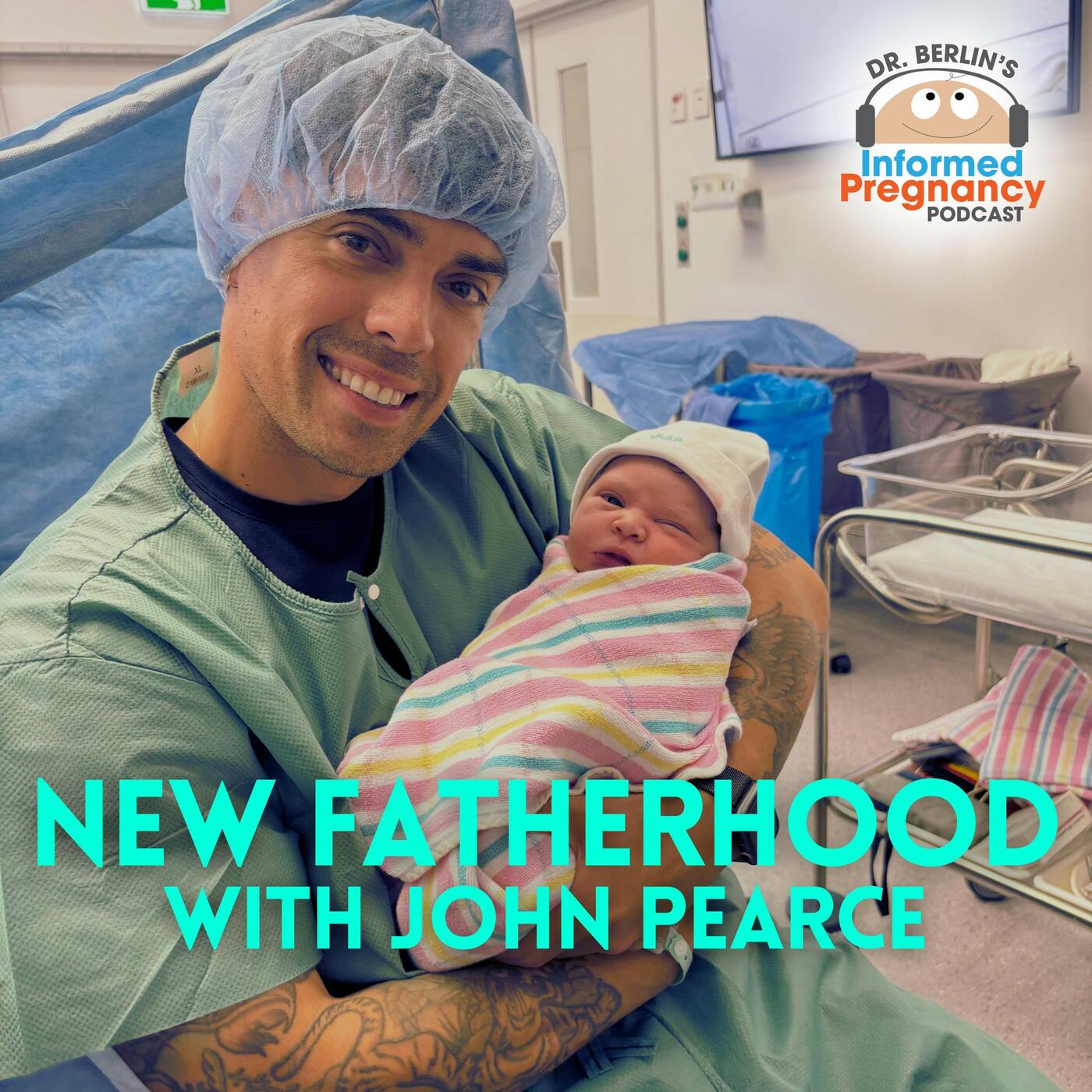
New dad John Pearce got his start on Australia’s Got Talent. The Sydney-born dancer and performer best known as the Purple Wiggle joins the podcast to discuss his latest role: the adventure of fatherhood.
Informed Pregnancy Media and Mahmee present an all new podcast! One Way or a Mother is a new narrative podcast from Dr. Elliot Berlin, DC. Each season is an intimate story of one woman, one pregnancy, and all of the preparations, emotions, and personal history leading up to the birth. Episodes feature the expectant mother along with her family, doctors, and birth work team.
“Yes, it's been life-changing ever since and I've loved every moment of this whole journey and it's a privilege to be able to Wear the skivvy this iconic skivvy. So that's kind of how I ended up”
“I think that was the hardest part was being told frustrating. You just got to keep doing it You always want them to be like, oh, this is the problem. Here's the solution”
“But you know, thank God for letresol and help from the fertility clinic that you know It kind of just gave her that extra boost a little medical technology boost”
“To obviously come out and he got stuck and it just felt like a dream when they pulled him out and you could just hear The cry for the first time so it's such a memorable experience and we're glad we've got a video footage of this whole thing”
“I'm helping just as much as she's helping me and we're both new to this and it's been such a wild experience and Wouldn't change it for the world But you know changing nappies and and burping the babies on a daily is just part of my life now and I love it”
AI-generated transcript with speaker labels — may contain errors, especially names and medical terms. Dr. Elliot Berlin, DC appears in blue; John Pearce in orange.
Dr. Elliot Berlin, DC[0:00] My guest today is a dancer performer and new dad from Australia who got his big break on Australia's Got Talent Became a pop star and now is perhaps best known as the purple wiggle I'm pregnancy focus chiropractor. Dr. Elliot Berlin and you're listening to the informed pregnancy podcast John Pierce, welcome to the podcast. Good morning. Thanks for having me. This is great
John Pearce[0:37] I'm very excited to chat all things pregnancy in my life
Dr. Elliot Berlin, DC[0:40] I Bet that has consumed quite a bit of your life over the recent times But let's start at the beginning you're from Sydney originally
John Pearce[0:50] Yeah, so I was born in Sydney, Australia. I am an identical twin So growing up was very interesting, but I guess I had a different life to most people I'm growing up to learn to share everything and having someone that looks identical to you So great great time growing up in Sydney. Who's older? Apparently I'm older look my mom's detail is a bit questionable when I ask her it's always different but I'm That's all I've known is I'm 30 minutes older than my brother. Okay, so you have rank senior But you know what? He does say that he was developed first for some reason So I don't know how he knows that but
Dr. Elliot Berlin, DC[1:26] You know we have twins where the one who came out first is actually younger than the one who came out second Oh, why is that it happened soon after midnight and the first baby came out and then we changed the clock back an hour And the second baby came I saw on paper the one who came out Actually happened it probably happens, you know once in a while Yeah, what a story Did you love being a twin hated or both?
John Pearce[2:00] You know, I had a great time growing up I guess I've always had a best friend there and like most brothers and twins you fight all the time But I guess I had that friendly competition and he was my best man at my wedding So we've we've been best friends ever since going to school, you know people like Kids would fight over who get to play with the twins and things like that So I guess we had a great time growing up and I don't know Otherwise, I wouldn't be able to compare it to not being a twin. So I wouldn't do about their siblings Yep, I've got a younger brother younger sister and four older half brothers. Oh, it's a nice-sized clan Yeah, it's quite extended. But um, the main family we grew up around around the same age was me and my twin brother and my
[2:39] Younger brother and younger sister sister nice. Okay. So how'd you get into dance by accident? I think growing up. I never really wanted to dance my older brother who was full Filipina descent Which was on my mom's side used to make me and my twin brother learn his dance routines I'm at home so he'd be obsessed with writing rap songs and learning dance and would get us to teach us look to learn the dance and We kind of were introduced to it when we were about maybe 10 10 11 years old I didn't really like it until about 2005 we were about 15 years old when we watched a movie called you got served Which I'm not sure if you're familiar with that movie
[3:18] It's heavily involved with breakdancing and hip-hop pop and lock and stuff like that We fell in love with that movie and want to learn every dance move from that movie So we copied everything and taught our friends at school. Yeah, that's how we got into the dance
Dr. Elliot Berlin, DC[3:30] How did you make a career out of it?
John Pearce[3:32] Another another accident. I think I really believe in the parent universe and because we were so passionate and we enjoyed Dancing we didn't take it too. Seriously. We did it as a hobby during lunchtimes at school So we did it with our mates and then we took it to a dance competition outside of school because we thought we were that cool And we met another dance group which essentially formed Justice Crew Which we entered Australia's Got Talent with and it all kind of happened organically We didn't really think you know We're gonna break the internet or try to become dancers or backup dancers or musicians in the future We just did something because we loved it and stuck to it and I think it just you know
[4:11] I'm knowing we're in the purple skivvy today touring entertaining children. So yeah
Dr. Elliot Berlin, DC[4:15] I mean sometimes I feel like in my life also sometimes a little sign pops up and just says go this way go This way and it works out like probably when I'm assuming when people ask you when you're a kid What do you want to do when you grow up? You didn't say I want to be the purple wiggle
John Pearce[4:30] No, I've actually got a recording of myself in kindergarten Which is when I was six years old saying I wanted to be a construction worker And that's what I wanted to be I want to build houses and I'm far from that Taking a different direction
Dr. Elliot Berlin, DC[4:44] Dances hard on the body. Did you have any injuries along the way?
John Pearce[4:48] No, there are a few injuries I guess breakdancing and trying to learn flips in your backyard does come with its own risks and I did break my hand once That's about it. I'm pretty safe. You know when I broke my hand, I was trying to learn this 360 It's called a corkscrew in breakdancing world when you do a backflip a running backflip and you do a twist in The air and because I'm learning off YouTube and trying to copy the moves I didn't really understand the technique correctly and just threw my body and landed on my hand and alert really fast Yeah The wrong way to do it
Dr. Elliot Berlin, DC[5:21] That's why they call it breakdancing Well Australia's got talent what was that like for you is that your first time on a bigger stage like that
John Pearce[5:31] Yeah, a hundred percent. It was totally new. Look as justice crew. We used to busk in the streets of Sydney We used to you know get together and practice in Pitt Street Mall Which is you know One of the main strips of shopping in Sydney and we used to busk and make a few cents here And that was a good experience and essentially going from that and taking it onto a global platform like Australia's got talent Oh not a global platform now just being a national TV was something different and we didn't think we wanted to win the show We just wanted to try something different because we had a routine and then again I feel like it's just an organic thing that happened and we didn't prepare for the consequences of winning the show
[6:04] It just happened again, and I just finished school was 19 years old I didn't know what I wanted to do, but we did love dance. We did love performing So that's just something that just happened and we all stuck with it and we became pop stars overnight literally
Dr. Elliot Berlin, DC[6:16] Wow, I don't know if it's better the acts that are like solo acts or the acts that are group You know if it's more comforting to have other people in your group or if you know You have to worry about more people than just yourself
John Pearce[6:28] Yeah, I think it kind of kept us grounded having a group group of guys around and it's having your mates They kind of keeps you kind of you know keeps you with it I feel like if you're on your own You don't know you know people are talking in your ear and you've got no one to kind of enjoy that journey with Like I wouldn't really know I've never done it by myself I've always been in a group and I've loved it every single part of the way and it's been fun Especially having my twin brother involved in that process too. So it's always having that person to share with it I think that's the most important thing. It sounds really cool. What was the aftermath like after Australia's got talent?
[7:00] Like I just finished school didn't know what I want to do $250,000 and split it between nine of us. So just finishing school and we all had a big chunk of money to go Hey, what do we buy shoes and cars? That's kind of We didn't really have a plan afterwards we didn't know what that would look like, you know winning as a breakdancing group a TV show and people telling us You know, you're gonna go on tour and you're gonna travel and do all these things and I was still working at a supermarket Called Aldi it's equivalent to Woolworths or Coles here and I actually resigned two weeks before we won the show But I still had two weeks to you know, finish up my duties there and after winning the show
[7:40] Did a few shifts at the till and people were asking for my autograph while I was scanning their groceries It's really cool. You kept your word on the two weeks notice. Yeah. Yeah, exactly
Dr. Elliot Berlin, DC[7:51] Don't you got to keep that you know in my mind? We told that all the managers will be back in a year and I'm pretty sure that job still waiting for us
John Pearce[7:59] Did that turn into touring with dance? Yeah. Look we won as a breakdancing group so initially we recorded a documentary with Sony music and Because our background in writing music and singing and rapping and things like that was quite foreign to us We only danced to our music the opportunity to record our own songs came up through Sony music and they asked us You know if we'd be open to doing that and getting the studio with a few writers and things like that and making a Video clip and being able to tour those songs. So essentially we had nothing to really tool other than just dance So we went from being a breakdancing group that used to busking the streets of Sydney to recording
[8:35] our first single with Sony music and became recording artists and we kind of learned you know the tricks of the trade and how to write music and all that sort of stuff and it gave us a Foundation to tour from and we ended up, you know taking it on the road and touring and performing You know on different stages around Australia and the US it kind of opened up another opportunity and another avenue for just this group. Yeah, I mean would she like better song or dance? Look dancing is always fun. But now I'm getting a bit older like I'm 30 35 But I feel like I'm becoming more efficient and dancing feels like so much such an effort. Yeah
Dr. Elliot Berlin, DC[9:11] Okay I mean look I just eat pizza and that feels like an effort but Alright I'm excited to learn how your career then kind of folded into the wiggles and also Your new full-time job fatherhood. Let's take a little break when we come back. We'll learn more
Dr. Elliot Berlin, DC[9:41] Welcome back. We're talking to John Pierce. Okay, Ozzy Ozzy Ozzy. So Thank you here you were born, you know 30 minutes later a carbon copy of you comes out allegedly and you grew up with best friends and fighting in between being best friends and Get into dance YouTube video break dance Get together with another crew break dance more end up on Australia's Got Talent and make enough money to buy a lot of shoes and stuff like that But then it turns into a singing career and traveling around and now the wiggles. How did that transformation happen?
John Pearce[10:19] Yeah, I think you know Being injustice crew. We got to perform in some amazing events around Australia. You know, we have different concerts The carousel domain which is like a you know Jingle bell ball like things like that way all the main acts around Australia perform and during my time in justice crew I got to meet the Wiggles and you know growing up watching the Wiggles I was always big fans and we were all big fans of the Wiggles and you know I kind of connected with a few of the guys here and there throughout time and nine years later Justice crew everyone grew up and kind of took different paths and different passions and you know in a group
[10:52] It's hard to kind of stick together for long term if everyone's got different visions and different ways I want to like take our music and things like that So there was a time just before COVID-19 kind of struck and the music industry was really halted and everyone had to kind of decide, you know We couldn't tool we couldn't do too much We had to find other means of making a living and that was a good turning point for me You know, I became a personal trainer something that I can control I started nutrition and I actually bumped into Anthony the blue we go the founder of the Wiggles who lived down the street From me so he lived in the same neighborhood and because in Australia in Sydney
[11:24] Especially you couldn't leave your neighborhood in COVID you were locked down to your neighborhood and that was it So I bumped into Anthony quite a lot during that period and you know We got to chatting and he was telling me about you know The touring industry I was affected and all that sort of stuff and you know What are we up to and all that and he actually invited me shortly after to Once we were able to return to work to go check out Wiggles HQ and come and have a look and we worked On a project which didn't involve the Wiggles But the Wiggles kind of looking after and it was a TV show that you know I could feature on and I was a mime. I was a pantomime. It was a fun little thing and I thought you know
[11:58] I didn't really think much of it It was just something you know, I just give it a go and this is Anthony my childhood hero That's just you know asking me to try this and he told me then you know There's a big future in this industry for you and I thought to myself Wonder what he meant by that, you know, I went home told my wife You know He said this and it was really fun and I really enjoyed it was a really good team there and you know And a few months later it kind of went a bit quiet after that The Wiggles went back on tour and I went back to my personal training out of my home garage gym and you know Anthony would message me here and they're saying, you know, hey good news on that show
[12:28] We filmed like it's we're taking it. We're gonna try to turn it into like a series and I said, okay, cool This is exciting. Okay, and then another few months went quiet and then all of a sudden say Anthony messages me Hey, let's catch up for a coffee Awesome. Well down the road. I'll come up Let's chat and then he presents me with a slideshow of you know The Wiggles and what it means to wear the skivvy and all this sort of stuff and then I started thinking at that point Is he gonna ask me to join the Wiggles? What is going? You know, it was in a nutshell at the bottom of this slideshow We went through, you know, who wore the skivvy, you know Jeff was in the wake up Jeff was the purple skivvy and this is what it means and this is what it represents
[13:05] And at the bottom of this slideshow was four new faces and I was one of those faces And and become eight members and have two of every color and include, you know More diversity and gender equality and I was gonna be part of that So he asked if I would do it and initially I was so excited deep down. I don't show much emotion Play cool and I go. Yeah, cool. Yeah, this is great. Yeah, why not? Of course, I'd love to and you know I just went home and called my wife and I said, you know I think Anthony just asked me to be that the new purple wiggle Yes, it's been life-changing ever since and I've loved every moment of this whole journey and it's a privilege to be able to
[13:41] Wear the skivvy this iconic skivvy. So that's kind of how I ended up What a great story. How long have you been doing it? It's been about four years now So it's coming to four years 20 21 when I first came into record and yet 20 25 now and counting
Dr. Elliot Berlin, DC[13:55] Your world is full of purple
John Pearce[13:57] Exactly. It's um, what my my wardrobe is slowly getting more purple and purple and I think it's it helped when the fashion industry
Dr. Elliot Berlin, DC[14:05] Includes purple lately. So it was in fact good time Maybe you set a trend you mentioned your wife a couple of times. How did you guys meet?
John Pearce[14:13] I met my wife in high school. So we've been together for over 13 years and married for six and you know She's been my best friend ever since and we started dating shortly after high school I knew her from high school, but we met early days and yeah It feels like I've known her known her for a long time now, but you know every day feels like it's our first day
Dr. Elliot Berlin, DC[14:31] Really? Were you people that discussed like we're gonna have a family one day
John Pearce[14:36] Like I'm pretty spontaneous the first maybe the first week we met and hang out hung out I was always kind of joking like let's let's just have a baby. Let's just do this You know a bit spontaneous I don't think too much of consequences I just you know go with it if I really love somebody I really like somebody I'm just I'm all there straightaway and you know, we're young we're 20 years old Okay, a bit of a ridiculous thing to do and some people do it's just totally fine But you know at the time Jess is still young and you know We're still working trying to figure our lives out and like we did put it off But you know when we did start trying it was a lot more complicated than we thought so
[15:12] Yeah, but we did speak about it early days and you know Once we got married and and moved in together and bought our first place and I think the foundations are correct And yeah, the time was right Yeah, it sounds like it took you by surprise that it wasn't just one plus one equals two to make the baby
Dr. Elliot Berlin, DC[15:27] What was the journey like for you guys?
John Pearce[15:29] It was confusing, you know at the start you think it's so easy you just try you'll just do it and you'll Pregnant straightaway you'll walk past somebody in the street or you're gonna be careful dancing next to somebody you get them pregnant It is and that can happen too, but you know our journey was a little bit more on complex It's not not as complicated and it's I'm sure it's more common than not, you know We started trying a few years ago three and a half years ago It was the first time we you know actively like, you know checking ovulation and we tried to line it up with You know the menstrual cycle and and the ovulation window and and it didn't happen the first time
[16:04] I'm like far out. Okay, you know, we tried again the next month and we tried again the next month and you just kind Of keep trying hearing then it took about a year of kind of doing that until we kind of started asking the question Or maybe we should get some professional help or get some fertility advice I'm gonna speak to somebody and see what's going on Jessie always knew she had extended periods that she got high levels of testosterone So she used to control that with the pill when she was younger and things like that and she had PCOS So she found out she had post-hystic ovarian syndrome, which can you know ultimately, you know Affected your ovulation and fertility and it can make conceiving a little bit more difficult
[16:39] And we knew that it was still possible to fall pregnant, but we just kept trying and then I checked myself Maybe it's me. I was okay. Everything looked okay. And every time we went and got checked everything was fine I think that was the hardest part was being told frustrating. You just got to keep doing it You always want them to be like, oh, this is the problem. Here's the solution
Dr. Elliot Berlin, DC[16:59] Exactly. And then sometimes you want to hear an answer. It's just as bad to hear. They don't know or it's fine You just got to keep trying as only 30% chance of falling pregnant in the best-case scenario or something like that
John Pearce[17:09] And then we kind of had a while. Yeah explained infertility is hard Yeah, and it's a bit frustrating and it's upsetting at times but we persevere and just you know stuck with each other and just you know kept going through and just kept trying and Just was saying positive and trying to fix our health and and better everything else in our lives But the time came when we conceived Henry, so I guess that was you know, a long story short
Dr. Elliot Berlin, DC[17:32] Yeah, so you ended up holding off on doing any kind of interventions
John Pearce[17:37] Yeah, so we spoke to a fertility doctor. We did a few checks and everything looked okay So we continued for another year and then we went back and said, you know What what we're doing is something is not right. Something's not happening Are there any other alternatives, you know before we head to IVF or things like that because we really want to have a child Now we don't want to every day It's getting longer and longer and we really want to capitalize on you know The momentum now and we're young and we want to be young as possible with our babies But you know, they mentioned letresol was a tablet that you can take which can induce ovulation Which is you know, it's an oral tablet you take and we did a just did ovulation tracking with blood tests
[18:15] so, you know they sell the next period take this tablet on the second day period and For five days straight and we'll come in and do a blood test every two to three days to see what your hormones are doing and They told us by text message when to try much actively try and that was the first time we felt pregnant So we did that The tablet it was that first try the first cycle of it and literally that first time we felt pregnant So that was yeah when we heard that message we thought how quick because Just the cycles are normally six to seven weeks as opposed to 28 days So you waiting so long to try again We would be waiting five weeks to the next cycle and then you know two weeks plus and this time was literally like
[18:57] Ten days and they said, you know from your last period try now try today and come back for a pregnancy test next week Well, is it that quick? Something must not be right But you know, thank God for letresol and help from the fertility clinic that you know It kind of just gave her that extra boost a little medical technology boost Yeah
Dr. Elliot Berlin, DC[19:15] Must have been a big relief finding out like a happy surprise that it were
John Pearce[19:20] Yeah, and I think we've been documenting this whole thing because we wanted to get our reactions when we found out We're pregnant each time. So I was kind of filming each time We checked, you know And it's nice now to look back and you had this journey that you didn't think you were gonna kind of be able To put it all into one video Each time was you know a failure another failure another failure and this time, you know I was filming in the car just waited to pick me up from work because the doctor was calling her during the day to give Her the results from you know, the pregnancy tests and she waited to pick me up so we'd hear it together And that's that I posted a video online that you can see, you know actual genuine responses and that was the first time
[19:56] We heard it. Oh Wow, I can't wait to check it out. What was the pregnancy like I can see was really good Just didn't get too sick. She was okay. She didn't get much morning sickness You know everything was as we've been reading up on it because we've been trying for a long time We looked up everything of detail and what it'd be like to be pregnant and all that stuff So all those things Jess was okay, you know, she had energy. She's a bit tired She had high risk of preeclampsia her mom had preeclampsia With diagnosed with preeclampsia and she was a preterm baby So she was already a kind of high risk and there was a marker early days that she also could be at risk
[20:33] So she was taking aspirin to kind of help, you know alleviate that through the journey other than that Everything was good healthy scans baby was tracking pretty big. It was about a week in front each time big baby We're worried. It's not gonna come out of my tiny wife
Dr. Elliot Berlin, DC[20:51] Were you traveling like for work during the pregnancy
John Pearce[20:54] Yeah, not too much Look, I've read stories about people missing the birth of their babies and that's something that I didn't want to miss out on We were due for a tour when baby was due. So baby was due December and we were on to our November and December So I'm thinking I'm already thinking this is in June. Oh my gosh, okay, so we've got an important tour You know, I'm one of the Wiggles, you know, I've got to be on stage How am I gonna kind of navigate and kind of navigate this and not risk missing? You know the birth of my babe my firstborn and just having that risk of preeclampsia too and having that risk of also coming Early if something was to go wrong and I didn't want to be away somewhere where I had to rush home
[21:35] So there was a few days shows that I missed and thank God for a good team here They're all really supportive and they allowed me to kind of miss these last few shows Especially the last few weeks of pregnancy from 36 weeks on was I'm just to be there and also to help help my wife Which is that big and struggling to get out of the bed and just you know Just to go for walks and things like that. So yeah, very great
Dr. Elliot Berlin, DC[21:55] Did they do anything specific to care for her preeclampsia or to try to prevent it?
John Pearce[22:01] Yeah, we had a good obstetrician We were going for checks every two weeks and taking that aspirin just kept their blood pressure low and I think they were just Staying on top of that and any rise or anything like that. They were kind of intervene early, but it stayed pretty well It was good the whole time She should stop taking aspirin from 36 weeks and her blood pressure kind of stayed the same until birth Which we went full term so it was okay. So everything was fine
Dr. Elliot Berlin, DC[22:25] Yeah, there's a brand new test for testing for markers for preeclampsia and it seems to be pretty accurate that you can find out early in the pregnancy if You're gonna have a significant risk. So people who are already high risk for it Don't don't really need that test because they already know but just random people can find out and be prepared Well, let's take a little break. We come back. We'll find out how your birth went. Don't go anywhere Welcome back we are talking to John Pierce. I closed my eyes for one second and all I can see is purple They I think it's not just the outfit like you're starting to exude purple in your energy. Can you see it? Yeah, there it is
[23:16] Okay, so here's my question for you like in my mind I'm like what happens when a wiggle is missing during a show. Is there an understudy or they just know I think now
John Pearce[23:25] Because there are eight wiggles. There's two of every color each color is represented if one's missing So some shows we can get away with that and it's okay and especially You know that they make an announcement the only shows parents understand that You know I'm there for my wife and waiting for my baby to be born and no one really complains or says anything Which is yeah, thank God for a good good understand audience Yeah, it's great. We can just jump straight back on stage and and children see the colors and the music is all there And and you know, you've got seven other wiggles to keep you entertained
Dr. Elliot Berlin, DC[23:53] Yeah, it's actually three more wiggles than I used to get so how could we get you getting extra? All right birth. So did you guys have a plan? I know you said you're spontaneous Did you have a plan for or a vision for who you wanted the birth to go?
John Pearce[24:09] Like we wanted to go natural So we want to as natural as possible just really wanted to experience labor and really pushing the baby out and all that I don't know if she was a bit naive You know once we got there we did a stretch and sweep a day before Because we passed our due date and we thought, you know, you can do a little stretch and sweep and just try to Yeah encourage a bit of the water to break Yeah membrane sweep yet we wanted to experience the water breaking at home and rushing like in the movies I think that day before baby was due Well, we just passed the due date actually and I had a show in Sydney and and just came with me So I actually performed in a Sydney show knowing the hospitals ten minutes up the road and my wife is right next to me
[24:55] I still performed at the Wiggles show and just actually got up on stage because Anthony the blue We go dictates the show and he's more spontaneous than I am He decides to bring Jess up which is 40 weeks pregnant and we sang baby shark together on There's a video of this too and I was just thinking how ironic how funny would this be if a water broke on Stage and we rushed off to the hospital. They didn't it didn't that would have been Ultimate It was a fun story, but there's a fun footage there in the next that afternoon. We literally went straight to hospital Yeah, so water didn't break we went there to get induced. So we stayed overnight, you know, the membrane sweep didn't do too much
[25:35] I'm sure lots of mucus plug at home, which we thought yes This is a first stage of labor coming we stayed the night in the birthing suite the next morning and you know I was in there with her so I said that brought a bed out for the husband Which is great enough to sleep on the couch You know, we're sleeping in we're thinking this is the holiday this is like how exciting we're gonna meet our baby tomorrow She's in her bed. I mean that seven in the morning obstetrician walks in with four midwives lights come on and they go All right, we're gonna break your water and we're still sleep. We kind of woke up like this is gonna happen right now She said yes, she goes every need now. I'm gonna go to the toilet
[26:10] I gotta go do this stuff But yeah, they came in and broke the water and they said you can still do you have to do go the bathroom Water will start to come out. So that was a pretty interesting process I stood there and I watched him break the water and you know Once you see all this liquid start coming out you something and this is for real. This is all happening This is starting now and it was all pretty smooth sailing at that point Just started feeling a bit of contractions. She went to the bathroom We were just kind of walking around the hospital ward just to kind of keep moving and she started getting you know I don't know if that brought on the earliest ages of labor. It started cramping. It started getting those
[26:43] Contractions still quite far apart and we thought at this point and what we just did she said, you know, this is fine I'm still walking around like I'm in labor. Like this is great. This is all good Yeah, and it didn't take long until she was sitting down the bed and she couldn't get back up off the bed I think you know, it's getting a lot worse and you know, they check the cervix and they say oh you're three Centimeters dilated and this is after three hours of those contractions Only seven to go. Yeah, I know we need to get to ten So, you know, it's another four hours would go by and it's getting pretty bad She's on the gas and she's really she kind of do a dangerous oxide
[27:19] Yeah, so she's you know, just every time it gets bad just suck on this it teaches you to breathe And so she's got that didn't really do too much and she was getting really bad and as an observer and her husband Just standing there I can kind of see that she's really in pain and she said she wants to go through this So I'm just gonna you know respect that and I'm just gonna kind of intervene if I need to You know, they'd come in a few hours later and check the cervix and it was only three and a half centimeters dilated and this Is me that's a bit slow to progress and it hasn't really hit active labor and that's when it gets really bad We're thinking oh my gosh, I can see that Jess is really fun
[27:54] It's difficult and I actually said to her do you need the epidural because it takes a while to get once you Request it and I said to her, you know, just get the epidural There's no point of pushing yourself through this and I can say that you know This is tough and most people get through it. My mom got through pregnancy without a pejoral, but we're not in that age anymore Yeah, so we got the epidural that was good. You know what? I didn't realize how graphic the epidural is The placement. Yeah, just getting it in I just you know, you think that like she's going through contractions She's gonna sit up. I'm holding her legs in my lap and they're putting you know that into I'm not looking at the spine
[28:29] But I can see the glove of the doctor's shoulder as he's trying to straighten her back And it's just like, you know, there's blood on the hands and I'm just like what are they doing back there pretty intense You got to be careful right and getting that epidural into the spine, but just the red spot You know after that kicked in she was totally fine. She could fall asleep She was relaxing and you can still see the contractions on the screen and it was progressing and you know This was another five hours would go by and they said, you know, you've only died out to four centimeters So it found to progress and just she started getting a bit of a fever at this point
[29:00] So we started getting a bit worried, you know, the doctors coming the OB came in and said, you know We're not sure if there's an infection baby's healthy heart rates great blood pressure is fine. We're not sure what's happening So that's when they recommended getting an emergency Caesar And this is about you know, 730 at night time after about 12 hours of labor just so, you know opt for Emergency Caesar just to be sure and you were at the point where I'm exhausted You know, Jesse who knows what she's feeling and and she says she made the call and she said let's just get him out Let's just play the safest part We don't want to push through something that we're not really sure the experts are recommending to take him out now
[29:36] And let's just do that. So we went down and baby was born in like 30 minutes
Dr. Elliot Berlin, DC[29:42] Yeah, what was that like for the two of you together just going into surgery room for the caesarean, you know
John Pearce[29:48] I get a bit clammy with blood tests So when I get a blood test and I'm one of those guys I have to lie down and you know I feel a bit funny and it takes me a while So being in that real clean sterile environment I was worried that I was gonna pass out or I was gonna feel sick or and I'm thinking out of everyone here Why would I feel something healthy is here? This has got these wires hanging out of her she did 12 hours of labor She hasn't eaten she hasn't done anything and I just have to like, you know Just push through this but it was a really beautiful experience and just being able to sit there. The anesthetist was really nice It was really caring and reassuring and our OB was there and you know, the midwives are so nice
[30:24] They grab your phone and they can take photos and film for you while you're just there and just focusing You know, I just want to be there for Jess I want to make sure she was healthy and she was feeling okay And you know the first moment they pulled a baby out and I'm just watching I think it felt a bit like a dream I'm just watching when they pull the screen down and you can kind of look over and you see the baby Kind of getting pulled out, you know just covered in blood and They're connected by the umbilical cord and they look like an alien and his head was a bit cone-shaped because he tried To obviously come out and he got stuck and it just felt like a dream when they pulled him out and you could just hear
[30:57] The cry for the first time so it's such a memorable experience and we're glad we've got a video footage of this whole thing
Dr. Elliot Berlin, DC[31:03] That's incredible. It's always amazing But I think even more so when you have to work for the pregnancy when you put so much into it Emotionally and physically and that's a roller coaster It's a tough roller coaster to go on either by yourself or with a partner It can really be straining on the relationship and straining on your faith and then all of a sudden Here you are and there's a baby a bloody little baby
John Pearce[31:28] Cut the umbilical cord and parent hold starts Congratulations, yeah, thank you. How has father been for you? It's been really good, you know from a dad's perspective like most new dads It's confusing as well. I was surprised at the beginning the first two weeks. I was running off minimal sleep It's probably adrenaline the excitement that you think, you know, I don't get sleep deprived This is not as bad as I imagined or you know We're sleeping in chunks of hours or two hours and you might only get two three hours of good sleep a night I felt okay and I think it was a few weeks after and it kind of catches up when you it kind of repetitive every day is
[32:04] The same you're kind of you're chasing after your sleep But you know, we're embracing it and this is something we've always wanted and we've got such a beautiful boy And we're both there for him You know I'm helping just as much as she's helping me and we're both new to this and it's been such a wild experience and Wouldn't change it for the world But you know changing nappies and and burping the babies on a daily is just part of my life now and I love it
Dr. Elliot Berlin, DC[32:26] How old does he know?
John Pearce[32:27] His nearly four months. He'll be four months next week. So he's got four months sleep regression. I think that's what it's called Yeah, do you feel like it's going fast or slow? Oh, it's going super fast I think even the days go super fast when you're waiting just to settle in for an hour And the next you realize there's very lunchtime and it's dinner time and then it's the next day and then I'm back At work and then you know, he's four months now I just remember the birth yesterday and it's four months old and by the end of this year, he'd be walking
Dr. Elliot Berlin, DC[32:55] That's really fast. I remember holding my little guy in a hand like he's a football just one hand No, he's turning 21. Oh wow. So it's like a blink, you know, it happened so fast Sometimes it's not slow it down, but you can't so yeah
John Pearce[33:10] That's what I was just to just to you know live in the moment if his contact napping just really just embrace that moment because that won't be there much longer and you'll Look back and you'll just remember this is just you want to go back to this stage. Yeah
Dr. Elliot Berlin, DC[33:23] Absolutely. You guys are getting ready to go on tour again. How does that work with the wife and kid?
John Pearce[33:27] Well, my wife and kid are gonna come on the road as well. So they're gonna be living the rock star last They're gonna tag along to the UK to US Canada. It'd be great You know, he'll be five months five six seven months He'll age two months on the trip and he'll come back and he'll be crawling So that's something that you know, I didn't want to miss out on, you know, leaving my family for a few months Of course, they're not gonna remember any of the trip at all But you know for us it's just those memories that me and my wife create with our son and being able to experience all This together as a family. Yeah, it sounds like you document things really well. So that memory will be there for him, too
[34:00] Yeah, 100% and we always look back on it and yeah, you know He's possible have more stamps than I ever did until I turned 18 Does he have a lot of purple clothing? He gets sent a lot of purple things I don't know if you'll like purple. Let's hope he likes the wiggles
Dr. Elliot Berlin, DC[34:15] I know who'll love one wiggle. Oh, that's not sure Dorothy the dinosaur Well, I appreciate you coming on and sharing your story with a great story and you know Especially when you have a difficult time conceiving and work all the way through It's just when you have that triumphant moment and you get to hold your baby for the first time It's so so powerful. It's really cool that you documented everything Where can people go find you online and see some of these cool videos?
John Pearce[34:45] It's on my social media. So John Pierce is my Instagram and tick tock as well. So John and Dharma Pierce It's all linked together check out the wiggles too It's all kind of you can't find my name go through the wiggles and you can find it through there We try to document everything there's just lives on and you look back You don't realize how fast they grow and you just take photos every day
Dr. Elliot Berlin, DC[35:03] Absolutely gonna go check it out some of those videos sound incredible John
John Pearce[35:07] Thank you so much for joining me and who knows maybe we'll spot you while you're moving through the US. Yeah, awesome
Dr. Elliot Berlin, DC[35:13] That'd be great. Thanks. Oh, yeah. Thanks for your time. My pleasure at home Thanks for listening to the informed pregnancy podcast for more pregnancy and parenting information just like this visit us online at informed pregnancy
Want more pregnancy + parenting? Start your FREE TRIAL of Informed Pregnancy+ and get access to all our curated pregnancy and parenting content — original series, iconic birth films like The Business of Being Born, prenatal workouts and more.
Nutrition junkie Julie Sawaya returns to the podcast to talk about her third home birth, exciting scientific updates from her company Needed, and losing her home in the Los Angeles fires.
Informed Pregnancy Media and Mahmee present an all new podcast! One Way or a Mother is a new narrative podcast from Dr. Elliot Berlin, DC. Each season is an intimate story of one woman, one pregnancy, and all of the preparations, emotions, and personal history leading up to the birth. Episodes feature the expectant mother along with her family, doctors, and birth work team.
“And in retrospect, I'm so glad it didn't because I then fully, fully for the first time and, you know, probably for the last time surrendered completely into trusting that it was going to happen and that it was going to happen on the baby's timing, not my timing.”
“And I really have drawn on that experience recently with everything that has happened since that baby's been born. Just that feeling of like we can do hard things and still be OK.”
“You know, I think it's a resiliency builder for our family and, you know, something that we hope to teach our kids that you don't take those things with you when you go. And what matters ultimately is family and friends and each other. That's really the only thing in life that matters.”
“We were really interested in looking at, you know, we know from the available clinical research that upwards of 95 percent of women in the US who take a prenatal vitamin are still left depleted.”
“But, you know, I think there's power in recognizing, I guess, like taking care of yourself, you know, as a mom and you can't pour from an empty cup.”
AI-generated transcript with speaker labels — may contain errors, especially names and medical terms. Dr. Elliot Berlin, DC appears in blue; Julie Sawaya in orange.
Dr. Elliot Berlin, DC[0:00] My guest today is a returning voice on the podcast, a mom of three, a lifelong nutrition nerd and co-founder of Needed, a company that generously sponsors this podcast and a tremendous amount of other empowering content for women and families. There's exciting news on both the personal and professional fronts. Needed just released its first IRB approved clinical study and the findings are incredible. And my guest recently gave birth to her third baby in another beautiful home birth. Sadly, just months later, that home was destroyed in the Los Angeles fires. I'm pregnancy focused chiropractor, Dr. Elliott Berlin, and you're listening to the Informed Pregnancy Podcast.
[0:55] Julie Sawaya, welcome back to the podcast.
Julie Sawaya[0:59] Thank you so much for having me.
Dr. Elliot Berlin, DC[1:01] My pleasure.
Julie Sawaya[1:02] It's great to be here.
Dr. Elliot Berlin, DC[1:03] Who is busier right now than you? Oh my gosh. You, I think. I don't know. I'm not a mom. So I'm not even in the same league.
Julie Sawaya[1:10] Well, you keep yourself pretty busy for a non-mom.
Dr. Elliot Berlin, DC[1:14] For a non-mom, I hold my own, but
Julie Sawaya[1:16] You have a lot of hats that you wear, a lot of the moms who come to see you. And let's make this podcast.
Dr. Elliot Berlin, DC[1:22] I mean, what a busy time for you, especially now, I mean, you're now three kids and a flourishing company and homeless all at the same time.
Julie Sawaya[1:32] Yep. Yep. Hopefully this year didn't start off the way we anticipated, but we're among the more fortunate homeless folks. So
Dr. Elliot Berlin, DC[1:41] Well, one thing was anticipated, which was that third baby. And I guess we should start there. Let's just recap the first two. How did those births go and what did you have in mind for number three?
Julie Sawaya[1:50] Yes. I was really lucky to have really positive home birth experiences with my first two, the first oldest was born in July, 2020. So a COVID baby and I pivoted late in that pregnancy from the plan of having a hospital delivery with an OB to working with a home birth midwife. I mean, it felt at the time a bit like a leap of faith, but with such a positive experience, the birth proceeded very well. I would say the only complication, not really a complication, but the unplanned for turn of events for me was that that baby came two days shy of 42 weeks. So it was very much a lesson in patience and surrendering of control around the timeline. But it was such a positive experience.
[2:37] I really couldn't envision anything differently for my second pregnancy, other than I had the ability in that pregnancy to work with a backup OB who you know, Dr. Fabby, who's like a unicorn.
Dr. Elliot Berlin, DC[2:48] Fabulous.
Julie Sawaya[2:49] Yeah, she truly is. She is amazing and offers complimentary kind of collaborative care. All of the model that exists in other countries, you know, in European countries and you know, other developed nations that have really positive birth outcomes for both moms and babies. And I loved that. You know, I come from a family of medical professionals. My dad's a doctor, my sister's a doctor, my brother-in-law's a doctor, my mom's a nurse. So a little like risk averse, a little Western medical in terms of the family culture I grew up with. So to me, that was the perfect mix of having an OB who can do ultrasounds. She actually practices in a mobile way, comes to your home to do the ultrasounds, which
[3:29] is incredible. And having those extra reassurances, I had had a pregnancy loss in between the first and second birth. So for me, it was wonderful to be able to have that added reassurance of, you know, a backup OB, but get to fully experience for the full duration of that pregnancy what midwifery care is like and just the care and attention and the time that you get through working with a midwife was really amazing.
Dr. Elliot Berlin, DC[3:54] Was the first switch late in the game because of COVID?
Julie Sawaya[3:57] You know, it was, I would say, related to COVID. I sort of had in the back of my mind this idea that maybe I would do a home birth. A home birth really appealed to me. I wanted a low intervention birth. I had a doula for that first pregnancy, but then COVID hospital policies changed. Doulas weren't allowed in as support. You know, laboring people were only allowed to have one support person and that would have been my husband. So that was certainly kind of like a catalyst for it. But I think the interest for me was peaked prior to COVID through Nita. We did an amazing informed consent educational event that really opened my eyes to the power of informed consent and what birth really looks like in the U.S.
[4:38] I watched the business of being born, a lot of probably the resources that I know you are also passionate about. So I think my eyes were opened a bit, but I think COVID was the nudge of like, you know, I don't know that it's safer now to birth in a hospital or I don't have higher conviction than I'm going to have the birth that I want to have in a hospital versus trying it at home. So I'm really glad that I did that. You know, at the time, as I said, it felt like a leap of faith, but I, you know, through more research and now having had the experience three times over, I really feel like it can be a very safe, a really positive choice for women, but you need to go into it with the right research and the
[5:16] right support.
Dr. Elliot Berlin, DC[5:17] It's kind of amazing. First of all, this is not a sponsored podcast episode, even though you're, I couldn't do it without sponsors like you guys, but the truth is we met really long before that and needed was just a fledgling company. And I fell in love with your energy and your passion in general for like life and you just glow positive energy, even now with everything going on, you still glow positive energy and your energy, the just tremendous desire to redo women's supplementation in a much, much better way. And you're sort of like, hi, I'm the girl next door. And then you're like, I'm really smart and really dedicated to improving women's health and pregnancy in particular.
[6:01] That's what I fell in love with at the beginning. And then as your company grew, I think it's really cool that you take some of the resources that you have and pour them into making these resources that originally shaped your experiences and you've had great experiences and make them available to everybody else so that other people can sort of get informed and be exposed to not just whatever choice is right in front of them and then really be able to think about the pros and cons and choose the choice that they really want, not the one that just whatever conveyor belt they were on before they started thinking about it.
Julie Sawaya[6:33] Yeah.
Dr. Elliot Berlin, DC[6:33] So I guess I'm saying thank you.
Julie Sawaya[6:35] Yeah. I will thank you. I mean, for the work that you do, you have had a huge, I mean, I should really say that I think you were a big part, like, yes, the business of being born and all those other things, but I started seeing you maybe like a month or so pre-COVID in 2020 prior to your own experience with COVID as well. And I remember us talking throughout that appointment that maybe there were a few appointments about home birth, about midwifery, who was my OB, what was my birth plan? And I think, you know, you just are such like you live and breathe education and empowerment for women. It's just kind of infectious. And, you know, I think you really helped me to feel like it
[7:12] wasn't a crazy choice. It was a smart, well-researched choice and that I could do it. And the funny thing is, you know, you asked about my third birth. It was very similar in a lot of ways to my first birth. And I guess they say, you know, third babies can be wild cards, but I found that with my three kids, I've had to relearn the same lesson in the lead up to birth. And for me, that lesson is always one of patience and surrender. My babies tend to come late. The first one came two days prior to 42 weeks and the third came one day prior to 42 weeks. And I saw you the day before I went into labor. Finally, I had had a lot of pre-labor and sort of dilation
[7:52] and warmups, but not active labor. And I saw you probably, I don't know, maybe eight hours or less before going into active labor. And it was sort of like, you know, I think seeing you, and I also saw Dr. Fabby, my backup OB that week, I think just that energy, the reassuring energy and the trust that, you know, you both have, as well as my amazing midwife, Jennifer, that you have in women's bodies and in the birth process really, really helped me to relax into and surrender to the fact that like, I've done this before. This may look different. I don't know. Is the baby going to come? Is the baby not, you know, eventually the baby's going to come.
[8:29] I don't know if the baby's going to come at home in a low intervention way, or if I'll go to the hospital and be induced. But I think really seeing you the day before gave me that extra energy boost that I needed, just like a little bit of energetic reset, because it's hard to wait for your baby, especially at 42 weeks, especially when you have two other kids. You know, I know I'm not alone in, you know, being a lone gestator of kids, but it feels uncommon when you're going through that because so many births are induced. So many. Nobody makes it past 40 weeks. Yeah, honestly, I had so many people tell me I've never known anyone to be pregnant as long as you.
[9:07] And the first time around that kind of shook my confidence. I guess the second time around, the baby was a little more on time, only a couple of days late. The third time around, I sort of like just laughed it off, but sometimes it would get to me. I, you know, I think it's hard to be relaxed and chill about it all the time, you know, you know, that it's normal. It's still real. It's some days it's just, you got to take it a day at a time.
Dr. Elliot Berlin, DC[9:29] And in California, you kind of time out of being able to have the baby at home, although I guess if you have a doctor who's willing to step in the scope of practice for midwifery, it doesn't matter as much.
Julie Sawaya[9:39] And she was, and I think I had some more time and, you know, dates are kind of like a funny thing. You know, there's probably a window whereby, you know, who knows exactly what the right due date was. I had a little bit more time, but I was feeling the pressure and literally, literally, um, the long and the short of it was that this was my only birth where castor oil didn't work for me. I took castor oil with my first and my second, and they were both born in the first case. I don't actually know that castor oil was what started labor, but my labor started about eight hours later and it was a pretty quick birth start to finish was about seven hours.
[10:16] My second, I'm pretty sure it was the castor oil. I took castor oil and within an hour I was an active labor. And she was born four hours after I took my one to two tablespoons of castor oil. So certainly I just thought that that would work for me the third time around. And it didn't, it did not work. I mean, I had contractions, but it didn't progress to active labor. And in retrospect, I'm so glad it didn't because I then fully, fully for the first time and, you know, probably for the last time surrendered completely into trusting that it was going to happen and that it was going to happen on the baby's timing, not my timing. And the interesting thing about that birth experience is that it was by far
[10:59] my most positive birth experience. It was the slowest of the births. You know, I woke up at 1130 PM after going to bed at 8 PM the night before with mild contractions, but that had been happening for a few days. So I sort of ignored it. I even took a Benadryl at like five in the morning being like, I'm just going to go back to sleep. Like this is just going to be like it was the day before. And then it wasn't, and it progressed. But the whole time, even to the point of pushing and the baby being born, the whole time, I felt that I could do it. I didn't have a moment of wavering from that trust and that feeling of like, I've got this and with my first two, maybe it was related
[11:40] to the castor oil or just the intensity of birth. I felt underwater for a lot of the births. I did not feel like, oh, I've got this. I felt like, when is this going to end? And it was just really cool. I mean, I wish everyone would be able to have that empowering of a birth, the feeling of like all the way through this, that I've got this was awesome. And I really have drawn on that experience recently with everything that has happened since that baby's been born. Just that feeling of like we can do hard things and still be OK.
Dr. Elliot Berlin, DC[12:14] That's amazing. This is really beautiful. And it's kind of cool that your body made you wait.
Julie Sawaya[12:20] Yeah, there's a lot to learn from the birthing experience. A lot of some people say how you birth is how you live life. And I feel like it's changed me. It's changed who I am as for the better, you know. And so, you know, motherhood will change you one way or another. But for me, it's very much been that like, you know, training ground for the next stage of motherhood for me.
Dr. Elliot Berlin, DC[12:41] Were your other kids at the birth?
Julie Sawaya[12:44] They were not. The baby was born at eight thirty nine, I believe, something like that. In the morning. So they had just gone off to school. They were there kind of in the house up until the end. But our nanny was able to make it over in time. And I didn't know in advance if I would want my older daughter to be there. I kind of thought that I would. But then once I was in the birthing experience, I felt pretty clear that, like, I want to stay in the zone. I actually had headphones on this whole time for this most recent birth, listening to music. And that really helped me to just stay super focused on each breath, kind of getting through each contraction in a way that felt really productive.
Dr. Elliot Berlin, DC[13:21] In water, in water.
Julie Sawaya[13:22] Yeah, all three babies were born in water. Yeah, that water for me is really calming. I'm a bath person for sure. I mean, I'm telling you, I was at the point of surrender at the end of this pregnancy where I was like, give me potosin. Like, you know, I'm ready for whatever needs to happen. Sign me up because I just want to just accept that this might not go exactly as I want it to. And I'm just so grateful that it did. It went exactly as I wanted it to. Just about two weeks later than I wanted it to. But that's life.
Dr. Elliot Berlin, DC[13:53] That's really beautiful. You know, for someone who loves you, you had all three babies in the same house.
Julie Sawaya[13:59] Two of them in the same house. First, we were in a rental townhouse for the first, and then we moved into our house in the palisades when my oldest turned one. So the same month that she turned one, we moved into that house. So I was in that house for my miscarriage. I was in that house for the births of my second and third babies. And, you know, really thought we'd be there for a long time.
Dr. Elliot Berlin, DC[14:21] How long after the birth did you lose the house?
Julie Sawaya[14:24] About three and a half months. So it was on January 7th. We had just gotten back from a family trip the night before. So our suitcases were still half packed, which, you know, in retrospect was probably helpful. Yeah. If anyone needs, you know, goggles or diving stick, we were on a tropical, we were in Florida. So we had like swimsuits and, yeah, goggles and, you know, really the practical things that that you want to evacuate from a fire with. But it's interesting. My husband and I both have talked about it after the fact. Like the feeling, you know, it always feels good to come home from a trip. But the feeling we had of coming home the night before
[15:02] and then that next morning, probably because it was right after the holidays. It was the start to a new year. It was just this like overwhelming, like, gosh, it feels good to be home. And then, you know, within a few hours later, we were evacuating my daughter's schools in the palisades. I had to go get her from school by the time I got home from getting her. There was so much traffic that there really wasn't time to think about anything other than like throw a few things in a suitcase and leave. I certainly wasn't even though I was up close to the fire when I was getting her. I just, you know, it's L.A. We have brush fire. It's California, frankly, like we have brush fires.
[15:39] And there had already been several fires in Malibu earlier this year. And I had friends who lived in Malibu who had evacuated and then come back, you know, the next day or two days later to their homes being fine. And I just don't think anyone could have contemplated the scale, the magnitude of the destruction of both the palisades and the Eaton fires. You know, it's really like kind of unfathomable.
Dr. Elliot Berlin, DC[16:02] I think even in retrospect, I'm not there. I'm not far, but I'm not there. Even in retrospect, the magnitude is insane and right, uncomfortable. But to be in it when it's happening just seems terrifying, especially with little kids, including essentially a newborn. I would take a little break when I come back. I just want to sort of get into what that was like in the moment as it's unfolding. We'll be right back. We're back with Julie Sawaya. OK, so there was a minute when I was at my office looking out my window, doing paperwork, and I'm looking right at Runyon Canyon. And all of a sudden I was like, is Runyon Canyon on fire? And it was. And that fire just went from a little fire that I could see from my office.
[17:00] I'm a few miles away to this huge blaze of helicopters all of a sudden flying around. And Runyon Canyon is like maybe two miles north of my house. And by that point, if I look to the east, there was the Eaton fire. If I look to the west, the Palisades are on fire. And right here in the middle, it just sort of felt like that's never going to come over here. It can't come over here. And it was still hard to wrap your mind. I was taking pictures in the morning of the sky, especially over on the east side, was just pure black. And then on the west side, you could sort of see the sun trying to come up over the black smoke. But it was having a hard time peeking through.
[17:40] And then I look at Runyon Canyon on fire and like, I should go home. So I just got out of here. But it's not like there were any clear instructions on what was happening or what to do or do we need to pack or do we need to get out of there. And I got home and my whole block was sort of confused and in chaos. People were packing. And interestingly enough, somebody told everybody back your car into the driveway so that if we all have to take off at the same time, we're all just backing out and hitting each other, you know, be able to see where you're going. And so we did. And for the first time, I'm like, what's important? Like, what do I want to take with me for me in real time?
[18:17] It was very, very strange. I don't have little kids, not all that sentimental. But I was like, what is important? What do we got to take? Yeah, they're like, take pictures of your stuff in case it burns down, you know, and I could see the fire is getting bigger and bigger out my window. And then I heard them just on the news, evacuating people from the immediate area around Runyon Canyon to a shelter that's only a few blocks away from me. And I'm like, wait a second. If they're moving them to the shelter that's right here, they're not expecting the fire to come this far. And that fire was out probably by the next morning. People did leave. But the next morning, we were no longer in any kind of danger.
[18:56] Yeah, that whole thing for me was terrifying and not have any like clear source saying, OK, now it's time for you to go do this, go this and get out of here. I'm just in my mind, and this was a nothing fire. Your house burned down, your whole neighborhood burned down in a very short period of time. Like, where were you getting information from? And how are you knowing what to do and where to go?
Julie Sawaya[19:22] Yeah, it's a it's a real thinking back to it. But that day, so we got an alert from my daughter's school, which was close to the, you know, one of the main roads, I guess, the road that leads up to the canyon where the fire broke out. My daughter's school is at the base of that road. It's close to sunset. It's close to Pacific Coast Highway. The school itself is actually fine. The buildings are standing, thank God. But because the fire broke out close to the school, we were alerted early on. I forget exactly the time, but probably a little bit before 11 a.m. We were alerted that there's a fire in the area, maybe 1030. And that they weren't evacuating.
[20:06] They were, you know, discussion with the fire department and that, you know, stay tuned. And then we kept getting updates. And it was like, now we are evacuating. So I got in the car right away. It's usually a seven minute drive from our house to my daughter's school. And it took an hour and a half to get there. And I didn't even get through because by the time I got close, they had shut down the road to her school to car traffic. If you've seen the videos and the photos of the cars that were abandoned near PCH in the palisades, that's right by where the school was. So the fire was moving so quickly, not probably at the moment I was there, but very shortly after it was moving so rapidly that people just left their cars
[20:48] because if they stayed in their cars, they wouldn't have survived. The fire was moving so fast. So it was chaos. It was chaos. It was terrifying.
Dr. Elliot Berlin, DC[20:57] How did you get your children?
Julie Sawaya[20:58] So thankfully, you know, I had a neighbor who lived three doors down from us, get out on foot and run to the school to get his kids. And I was going to do the same park and run. But I kind of had the thought to call one of my friends, who I'd just seen that morning, her daughter's in the same grade as my oldest. And I got through to her and she was on the campus. And there are two ways to get out because you could go down to PCH or you could take Sunset to head back into the palisades. And she had already gotten into the school and was able to get my daughter and get out to PCH and then meet me back at our home. And meanwhile, you know, when we were trying to figure out a plan
[21:35] of where do we meet up, she also lived in the palisades. We were going to meet at her house and then I'm driving by her house. And it's like, you're not going to be able to get here. So let's meet at our house, which is more close to the Palisades village, kind of downtown area. It was chaos. It was 90 minutes of trying to figure out, do I keep going forward? Do I go backwards? Do I park? Do I get out on foot? What should we do? And meanwhile, the fire is just spreading across the Santa Monica mountains. But literally still, even though I saw the flames up close and there was tons of smoke by the time I got home, I was just so focused on the five of us were together,
[22:10] plus our nanny and our dog. We were together like, let's get out of here. And like my brain wasn't fully comprehending that it could reach our house. I was just so scared of getting stuck in that traffic and maybe having to get out on foot, especially with a three and a half month old. And I didn't want him exposed to the smoke.
Dr. Elliot Berlin, DC[22:30] Terrifying that whole thing.
Julie Sawaya[22:33] It was completely terrifying.
Dr. Elliot Berlin, DC[22:34] Aside from the school, was there any giving instructions?
Julie Sawaya[22:38] So we did. By the time we got home, there was an official, you know, kind of like SMS alert of an evacuation order. But it was still pretty surreal. You know, we spent almost no time packing things up. To your point, in that moment, when you're like, what should I take? It's kind of like it all is sentimental and also like none of it matters. You know, and of course, in retrospect, there are things I wish that I had had the foresight to take, like the clothes that my sister and I wore when we were young girls and that my girls were then wearing. Or I had some of my grandmother's sentimental things like her china and a necklace of hers, a few necklaces of hers.
[23:19] You know, I mean, I left the house without a purse. I didn't have my computer. I was so focused on just getting to safety. And I really didn't think we were going to lose our house. I think that's the thing to, you know, that since then, in processing the loss that I've really tried to be gentle with myself about is that how could I ever have known that our house was going to be destroyed and that not just our house, but literally everything around us. We lived in a very residential area. We did not view it as, you know, of course, in retrospect. We lived at the intersection of the urban wildlife kind of intersection. But we lived walking distance to all the shops and restaurants in the palisades.
[24:01] Like it feels like a little town. It didn't feel in any way like a rural setting. And there's thousands of houses around us. I just never would have thought that the fire would reach that area and that they wouldn't be able to protect the neighborhood. So, you know, I think we left our house at one, maybe 1230. And I'm pretty sure by the kind of camera alerts that we were getting. Well, our cameras were out at that point, but we were getting calls from our alarm company about smoke and fire alerts. We probably left five to six hours before our home was destroyed. It was a shocking speed.
Dr. Elliot Berlin, DC[24:37] Well, that's really intense. Where did you go?
Julie Sawaya[24:41] We didn't go far because we had just flown back from that cross-country trip the day before, and we were all tired. The kids were tired. We stayed at a hotel in Santa Monica that night, and it was too close. You know, we were safe, but we didn't know if it was going to spread to Santa Monica and we could see the smoke and we could hear the sirens all night. We were all staying in a one-bedroom hotel room at the time that we started getting those calls from the alarm company. And then there was a fire map that was updated periodically. And I remember seeing the map update refresh to the house next door to us, showing that the fire had spread to the house next door
[25:20] and all the houses across the street. And I just couldn't help. Even though the kids were around, I couldn't help but just wail. Just couldn't control my emotional reaction. Just started sobbing. And I had the baby asleep in the carrier on me and the girls were there. And some people have chosen to, you know, tell their kids later or haven't told their kids that the houses are gone. But we told our kids that night that, you know, we were safe, but we don't know that our house will be safe and that, you know, we are always going to keep them. You know, we're always going to be there. And, you know, but that sometimes we can't protect our things or our house.
[26:00] And, you know, I think they've taken it pretty well. They're two and a half and not yet five.
Dr. Elliot Berlin, DC[26:06] It's a crazy hard conversation to have. I mean, again, you're wailing because it's so shocking, startling and painful for you.
Julie Sawaya[26:16] Yeah. You know, home is it's material things. And, you know, I have very little attachment to things, especially right now. But the sense of safety that home provides is, you know, and I am a sentimental person. I as a kid, we moved when I was maybe seven. And for half of my life, I said, I'm going to buy that house. You know, when I'm older someday, I'm going to buy that house and I'm going to live there again. And like that, you know, I'm a very sentimental person. So, you know, that shattering of that sense of safety. I mean, that was the home my kids were born in and where they were growing up. And we loved the community. We've lived in big cities.
[26:56] We've lived in other parts of L.A. And, you know, there are a lot of great places to live. But the sense of community and safety and like knowing your neighbors and the walkability that we had in the palisades, it was a community.
Dr. Elliot Berlin, DC[27:11] And this may be a dumb analogy, but I was a theater major and we did two productions a year and the buildup in creating the team and creating that world and doing the rehearsals and then having the run. And you're just putting more time and more time and creating more and more of this world in this little universe. And the day after, when it's just all gone, as if it never existed and you can never bring it back, like, no matter what happens, it's never going to be like it was. And like you said, the sense of safety and just like your whole world turning upside down in a way where you're physically safe, but you've got to be emotionally and spiritually rattled.
Julie Sawaya[27:55] Yeah. And then with little kids, it's a good analogy. Yeah. And it also after the fact, there's a level of exhaustion. You know, grief can make you feel overwhelmingly depleted and exhausted. But on top of that, it felt like losing a loved one, like someone you're close to in a shocking or unexpected way. Piled on with, you know, I've been fortunate to my parents are still alive. You know, I've not firsthand experienced all of the paperwork that can sometimes come with losing a loved one. But the paperwork associated with losing your home, it's just like my husband and I took a I was about two weeks away from going back to work at Nita and he took a leave of absence.
[28:38] So we, you know, I delayed my return to work for a few weeks. And I don't think we've ever been busier just dealing with insurance and trying to catalog and remember everything you ever owned and what the price of that thing was. And if you have a photo of it.
Dr. Elliot Berlin, DC[28:52] Yes. Yeah.
Julie Sawaya[28:54] And then trying to figure out stability for the kids. And, you know, we've been lucky to land in a rental in Santa Monica, but it was unfurnished. And, you know, it's hard to furnish a place basically overnight. You know, I think we feel deeply grateful that we, you know, I don't know if you've ever seen the movie. It's a wonderful life. But it's my family is, you know, might not be your cup of tea. It's very much a Christmas movie. But it is our family tradition to watch that movie every year on Christmas Eve. And the ending of the movie, it basically ends with the lead character getting to see what his life would have been like if he hadn't been born.
[29:30] And then he gets a do over and this flood of community support and realizes that he really is like the richest man in town and just has this amazing life. I mean, I could almost cry talking about it because I felt like this is the hardest thing. Probably, you know, I think this is the hardest thing I've ever experienced in my life. But oh, my gosh, the feeling of gratitude from just the outpouring of love. And I mean, until that point, I think I'd only ever felt that level of like how loved I am in this lifetime at maybe my wedding. You know, so there is silver linings in this, obviously. You know, I think it's a resiliency builder for our family
[30:13] and, you know, something that we hope to teach our kids that you don't take those things with you when you go. And what matters ultimately is family and friends and each other. That's really the only thing in life that matters. But my gosh, I mean, I was crying happy tears for a while, you know, for the first few weeks, just with the outpouring of love and kindness coming our way.
Dr. Elliot Berlin, DC[30:34] To know you is to love you. And I think anybody who gets to have you in their life in any capacity, we all feel grateful for it. And my heart was so broken for you and worried for you, really. And I remember the first time I talked to you, I think you were by your parents and you just sounded OK. That made me feel a lot better inside. So you burned all the love that was coming back at you. When it comes to the house of one more question, then I want to get to this awesome IRB study. But before we get there, did you go back? Have you been back?
Julie Sawaya[31:08] We went back once, not right away. You know, I'm breastfeeding and I still am concerned about the toxic exposure. It's really sad. But, you know, the things that were there aren't really there anymore. It's debris. And we were connected through a friend of a friend of a friend to a firefighter who was on duty patrolling the palisades in that first few days after the fire. And he was able to go with his crew to the side of our home and cut into. We had a fire safe. Those are designed for house fires, not wildfires. So not much survived, but we were able to find my grandmother's cross necklace was in the safe and they were able to retrieve it. But the damage of it and everything else that was in it, you know,
[31:55] we had kind of like we're on FaceTime when they were there. You know, we also had a sloped property. We just knew like there's not anything recoverable there. But once we were back in L.A. for a few weeks, we did want to go see it with our own eyes. And it was really hard to see it in person. But I think I needed to see it to just, you know, for it to sink in a little bit on a different level. Yeah, but I'm not there every day. I don't know if I will go back until the area is cleared and it's a little safer to be there and it's a little less, you know, I mean, it looks I've never seen a war zone up front and center, but it looks as I would imagine a war zone looks just utterly destroyed
[32:39] other than a few houses or businesses that are untouched, which is a miracle. But it's hard to see.
Dr. Elliot Berlin, DC[32:45] It's its own ball of trouble because of a patient whose house didn't burn down. Yeah. But, you know, the insurance company is like, oh, we'll paint it. She's like, that's not going to work. Everything inside is like an ashtray.
Julie Sawaya[32:58] Yeah. You know, the night of the fire on the seventh before we had confirmation the next morning that the house was gone, I was just sitting there praying by some miracle. Maybe our house would be spared and they would stop the fire before it reached our house. We are along from it. He said that the alarms were on for the fire and smoke, but then they cleared and the system was still online. So I had a little false hope that night that maybe our house would be there. And now I see from knowing others who have homes that are standing but badly smoked damage, that actually having a total loss, even though it's hard to even like wrap your head around this,
[33:33] but a total loss in some ways is the better outcome.
Dr. Elliot Berlin, DC[33:36] Yeah, that's what they're saying.
Julie Sawaya[33:37] It's more straightforward as much paperwork and, you know, busy work as we have. It's a lot more straightforward than having to fight your insurance. The insurance can't fight you as much if it's a total loss.
Dr. Elliot Berlin, DC[33:48] The whole situation is crazy and just unimaginable. And, you know, for me, a few months later, it feels like a story you learn about in a history book.
Julie Sawaya[34:00] Honestly, for me, too, you know, I can talk about it and go back to how I felt in that moment. But it almost feels like this, like, inevitability factor that's now settling in of like, oh, yeah, this thing happened. And it just happened. And, you know, now we have life after that. It's surreal in that way. But it is. It's a historical moment, for sure.
Dr. Elliot Berlin, DC[34:19] Luckily, you're incredibly resilient. Must be all the collagen and omega 3s and other yummy things that you load your body with. And I do two things to you. I mean, I want to talk more about those. Let's take a little break and come back with the exciting news from Needed. Well, we're back with Julie Sawaya, who always inspires me. And again, I'm really sorry about part two of this episode. Part one is another beautiful birth, a really incredibly sort of new groundbreaking birth for you. And then just a few months later, the craziness of the fires. And now still just kind of picking up the pieces there. But all the while running this growing, incredible company, Needed.
[35:10] And you guys just released your findings from a new IRB approved study. So let's start with what is an IRB approved study?
Julie Sawaya[35:18] Yes. So, you know, we needed did just complete our first clinical study. And, you know, I think at Needed, we hold ourselves to a really high standard around the way that we talk about clinical validation. And, you know, I think there are a number of ways to make a claim that your products are clinically studied. You know, the kind of gold standard in clinical research is a double blind, placebo controlled interventional study. That type of a study would go through IRB, which is basically a review board that's approving that this research is safe for human subjects. And there's a whole kind of process of getting the research project approved prior to starting to conduct it.
[36:04] In our case, we did a clinical study that was non-interventional, meaning I should take a step back and maybe say that that double blind placebo controlled study, it's the gold standard, but it is also the number one reason why there is a lack of research being funded in and around women's health. It is really, really difficult to conduct a placebo controlled study on pregnant women because of the potential risk factors. You know, there's never a, you know, kind of an acceptable level of risk when it comes to the health of a baby or a health of a mom. And so rather than coming up with new ways of studying, such as the study that we did, which was to look at a cross
[36:49] section of women in the US, those women who are taking a standard prenatal vitamin and by that, we define it as a folic acid containing prenatal vitamin and then compare that group's nutritional status to a needed group of users who are taking the needed prenatal vitamin. That is a safe method of studying pregnant women because you're keeping the kind of control group. It's not really a control group, but you're keeping a comparative group still on a prenatal vitamin. We know that prenatal vitamins are essential for the prevention of birth defects and for a range of outcomes related to baby's health. So, you know, when it comes to designing a research study,
[37:30] it's really important to make sure that that group isn't taking nothing. We were really interested in looking at, you know, we know from the available clinical research that upwards of 95 percent of women in the US who take a prenatal vitamin are still left depleted. That research came together through a very disaggregated collection of clinical studies. You know, we wrote a white paper in 2023 that aggregated over 600 research studies that are demonstrating this deficient state of pregnant women in the US. But who's going to read 674? I think it is research studies, not very many people. So it was really important to us to contribute to that research
[38:13] and to study a range of different prenatal nutrients in one study. So it's not just one study looking in an isolated way at choline deficiencies or B12 deficiencies, but it's really looking at baseline nutritional status of women in the US. And that's really how the study was designed in a thoughtful way that looks across socioeconomic status, across race, across geographies. But that standardizes the weeks of pregnancy where women are coming into the study that has comparable age ranges between the two groups, the needed users and the standard prenatal vitamin group. And that as much as possible standardizes for things like, you know, what nutrient intake are these women
[38:55] consuming outside of their prenatal vitamin. And what we found very much confirms what we knew to be true, that women who are taking a standard prenatal vitamin are significantly more likely to be nutrient depleted than women taking needed prenatal vitamin. That's dosed at optimal levels. And we now have the research to back that up.
Dr. Elliot Berlin, DC[39:19] What were the top nutrient deficiencies?
Julie Sawaya[39:23] So some of the key nutrients that had the biggest significant difference between groups were vitamin D, vitamin B6, riboflavin, which is a B vitamin, vitamin B12, vitamin K2, selenium and zinc. And for some of those nutrients, only the needed group was able to achieve nutrient sufficiency. No one in, you know, basically the vast majority of women who were in the standard prenatal vitamin group weren't able to get to nutrient sufficiency at the dosage levels that are in a standard prenatal vitamin.
Dr. Elliot Berlin, DC[39:57] I think it's important. It's not like they were taking vitamin A and needed was vitamin B. They're taking whatever vitamin they wanted to be taking. A whole host of different brands of vitamins. And for these particular nutrients, none of them were able to get them to the levels except for the needed. And it's obviously not just quantity, because if you look on the label, you'll see some of the other vitamins have similar quantities to these nutrients that needed those. So how do you account for the difference?
Julie Sawaya[40:26] Yeah, I think when you speak about quantity, I think what you mean is the number of distinct nutrients that are in the prenatal needed has 26 vitamins and minerals in our flagship prenatal that we studied. There's a big difference, though, between having a nutrient on a supple impacts panel and having a meaningful quantity of that nutrient in the prenatal and having the right nutrient form that the body can best utilize. So in the case of a nutrient like vitamin D, the standard dosage of vitamin D in a prenatal last time I checked was somewhere between 400 to 800 international units. That's just the kind of standard dosage. It's prenatal has 4000 international units of vitamin D.
[41:07] So that's an order of magnitude difference. And, you know, I think what's compelling about the study is now we have the research that shows you're not just consuming more of the nutrient, but you're actually absorbing it because women's blood serum levels of those nutrients and demonstrated a statistically significant difference between the groups.
Dr. Elliot Berlin, DC[41:27] Right. So I'm lazy and I always like, oh, I could just take one of these and I get everything done with this one a day pill. And then, you know, I'll look at something like needed, which as a prenatal is not a one a day, it's many capsules a day. So you kind of have to wonder why would I do this when I can just take a one a day and here's part of the answer, you can't smush everything you need into one tiny piece of chalk and hope that your body's going to be able to absorb it and use it in a meaningful way.
Julie Sawaya[41:57] Yeah. You know, we started the conversation and talking about education. I think that's really where education is so powerful. And, you know, we do the clinical research that we do it needed really as a platform for educating, educating consumers, educating their healthcare practitioners, because when you're provided with the information about why this is needed, why this is powerful, why this can change your outcomes, how you feel as a pregnant or postpartum woman and the health of your baby. I think there's so much more willingness to do something like take eight capsules a day. That's in the flagship prenatal, or you can take two scoops of the powder.
[42:35] They're nutritionally equivalent, but I think that the research is really compelling and we've known that for a number of years it needed that when we lead with education and information, it really does change women's willingness to kind of embark on the journey of optimal nutrition, which generally speaking is taking more than one to two pills a day.
Dr. Elliot Berlin, DC[42:55] Yeah. I love that you have the foresight and the mental strength to develop these products, knowing that you're going to be up against one of days and that a lot of people are just like looking at the two things like this one's quick and easy. I'm just going to do that. And knowing that eventually you're going to have to sort of have the educational piece to demonstrate why you would go the extra mile there.
Julie Sawaya[43:18] Yeah. And I think, you know, we live in a time where we have big quotas access to information and some consumers, some practitioners are really, I guess, like influenced by data and by science, like this clinical study for other consumers though, you know, we found that the best way to connect isn't through data, it's through kind of connecting to how women feel, you know, like we can show you a clinical study showing that women taking needed have significantly higher B12 levels, but it's another thing to actually feel that energy difference, you know, B12 is really influential in the kind of like the energy baseline, energy metabolism, things
[43:57] like that, that you can actually feel a physiological difference. That's one of the kind of most early indicators that needed customers let us know that they feel is just an energy difference taking needed. And so I think data is really critical. It's important for us that we're kind of contributing to this body of understanding women's needs. Our mission at NIDA really is to change the standard around perinatal nutrition from one of minimalism to one of, I guess, minimalism and depletion to one of abundance and lack of depletion, kind of nutrient replete-ness, but, you know, I think it also, I guess, just reaffirms how women feel, you know, I think it's so
[44:40] common for women to say that they feel depleted, to say that they don't have energy, that they just feel run down and look like I've been there, you know, I think that there are times in life like, you know, if your house burns down that you're probably going to feel depleted no matter what you do, but having the right nutrition can make a huge difference, like truly a world of difference in how you feel and how resilient your body is to those sleep-ness nights with a newborn or the demands of breastfeeding, the juggles of having one or more kids while maybe working or having, you know, a really busy life.
Dr. Elliot Berlin, DC[45:17] I'm glad you mentioned those because it's not just pregnancy. It's not like after pregnancy all of a sudden have tons of energy and nutrient replete-ness, which I think is going to be the name of my new band.
Julie Sawaya[45:27] Well, it's a bit of a mouthful, but there's no better way to say it than, yeah. I like it, yeah, it's descriptive and it's true.
Dr. Elliot Berlin, DC[45:34] So like afterwards you're being depleted in whole other ways. And so it's also extremely important to be able to replenish.
Julie Sawaya[45:42] Yeah, and what we find is that, you know, many women start off pregnancy deficient and want to work key nutrients and that depletion only gets magnified through the course of pregnancy. We've talked about this before when I'm on the podcast, but for those kind of new to the conversation, your body's really good at preferencing the baby's nutrient needs at the expense of your nutrient reserve. So if you don't have adequate levels of minerals like calcium, magnesium, your body will pull that from your teeth, from your bones. And I don't say that to scare you. That's just the reality that our bodies are really smart and they want to protect the developing baby.
[46:20] And oftentimes what that means is that mom is left depleted and if you breastfeed or give birth as, you know, every woman who is pregnant will eventually give birth, you know, the toll that it takes on your body if you're already depleted heading into that event can last for years. And so we really are big on educating around the prenatal isn't just for baby. I think that's a common misunderstanding. The prenatal really is for the mom, for the woman.
Dr. Elliot Berlin, DC[46:49] I think that is true. Like when you look at it, you're mostly thinking about the baby.
Julie Sawaya[46:54] Yeah, I think we as women are really good at prioritizing the needs of our kids even before they're here. But, you know, I think there's power in recognizing, I guess, like taking care of yourself, you know, as a mom and you can't pour from an empty cup. I think every parent has felt that at one point or another. And, you know, I think the data that came out of this study just really shines a light on that. You know, you take a prenatal vitamin thinking it's providing for what you and your baby need. And it turns out it's not closing the gap. It's not getting you to the nutrition levels that we think all women deserve to have.
Dr. Elliot Berlin, DC[47:31] And luckily along came needed because you have all the results of the study. Where can we find those?
Julie Sawaya[47:36] Yes. So the easiest way we did share about them on our Instagram, which is at needed one word. But for those who want to deep dive, the easiest place to direct you to is this is needed dot com forward slash thrive. And you will find there a page that has a lot of information around deficiency rates, why women are depleted, you know, from the soil that our food has grown into, you know, modern stressors, modern diets. And then there is a link on that page to the results of our IRB approved study. So you can read the full kind of download on how the study was designed, what the results were. And we have some nifty charts that look at some of those key nutrients where there were
[48:19] statistically significant differences between groups.
Dr. Elliot Berlin, DC[48:22] And once you're at this as needed, you could check out the full and growing product line and amazing family of products. Before we let you go, what's the sneak peek? What's coming next from needed?
Julie Sawaya[48:34] Oh, good question. You know, I think that you will continue to see needed investing in education and in having these conversations that really, I think, you know, you know this, but for those who don't know, like education to needed is as important as our supplements. We really feel strongly that every woman deserves to know every woman deserves to be informed about what their nutritional needs are. And we know that we don't live in a perfect world where every woman has access to their own prenatal nutritionist. And so we really through our education want to be that free resource for every woman to learn whether or not you ever try our products.
[49:10] You know, there is information that we share about ways to get as much nutrition as you can out of your food or out of the prenatal that you're taking. So you'll continue to see a lot more education from needed. And then we're excited to follow our customer. I would say that there are so many unmet needs in and around fertility, pregnancy and postpartum that as a company we want to make sure that we're continuing to come out with new products. We have an extensive product line, as you mentioned, everything from cognitive support that's breastfeeding safe to stress support to sleep, hydration support, the baseline nutritional products that we discussed.
[49:45] But we also want to follow women into that next stage of motherhood and make sure that we have the product range that helps meet her needs when she's done having children, when she's done breastfeeding. And, you know, I think there is a small but meaningful window of time for many women between the end of the perinatal stage and the beginning of the perimenopause stage. And oftentimes women stop taking their supplements during that window. And I think there's really an opportunity through the education and through the right products to ensure that women have the nutritional support that they need for that next major hormonal shift in their lives, which in a lot of
[50:20] ways mirrors the postpartum period, you know, the changes of the brain that's influenced by hormones, the physiological kind of symptoms that come with that transition in life. And, you know, we will approach that next stage of life with the same research-backed, practitioner-backed, clinical insights-backed approach that we approached perinatal with. Because I think anything short of that, it's going to fall short of really meeting women's needs. So we're not rushing, you know, to do that right away. We're really taking our time to make sure that we do our homework and bring the level of rigor and science that's needed to make a change in that next stage of
[50:56] women's health.
Dr. Elliot Berlin, DC[50:56] Well, I love that even though your primary focus is women's health, you also think about us dudes once in a while.
Julie Sawaya[51:03] We do, especially in and around fertility, because we really think that men's health is a women's health issue in the fertility stage of life, because men contribute 50% of that baby's day-to-day. You know, it's really important to the health of that future baby.
Dr. Elliot Berlin, DC[51:19] Well, even though I'm done having kids, I take sperm support every single day for the antioxidants and probiotics. And I hope that when you move into perimenopause and menopause, you don't leave out manopause.
Julie Sawaya[51:33] It's certainly on, you know, on the radar. My dad, you know, my dad's 83, he takes our men's health plan, men's fertility support plan, not for the fertility benefits, but exactly for the reasons you mentioned. It's just really good antioxidant support that who couldn't use more antioxidant support as we age and our mitochondria are not quite as vibrant as they once were.
Dr. Elliot Berlin, DC[51:53] Well, thanks for keeping me healthy and my whole family and all of our patients get exposed to Needed. And I become a superhero once they realize how great it is. So thanks for all that. Thanks for joining me here again today and sharing your personal story and alongside the great things that are happening at Needed.
Julie Sawaya[52:11] Thank you for having me. It's certainly a bright spot Needed is the journey, you know, building, growing a company. But one of the things that I think, especially in a year like 2025, that keeps me optimistic is the impact that we're able to have at Needed. And, you know, outcomes like this study and just knowing this is not the end point, it's really like the jumping off point to be able to make more change in the category with this research now under our belt. So thank you for having me and letting me share a little bit about it.
Dr. Elliot Berlin, DC[52:37] My pleasure. At home, thanks for listening. If you found this conversation meaningful, please share it with someone who might benefit. Then go ahead and leave us a five star review and check out our other brand new podcast, One Way or a Mother, and a full library of content for new and expecting parents on Informed Pregnancy Plus. You can find all of it at informedpregnancy.com.
Want more pregnancy + parenting? Start your FREE TRIAL of Informed Pregnancy+ and get access to all our curated pregnancy and parenting content — original series, iconic birth films like The Business of Being Born, prenatal workouts and more.
“And I so appreciated that because I was going into labor with a lot of fear. But watching that kind of helped me know that, you know, the body intuitively knows what to do and it just does it. And you can't control it. It's just going to do its thing.”
“And it was it was the most magical and emotional and special experience of my life. And I'll never forget it.”
“I never knew I could love something so much.”
“And now it's one of my favorite things that I do with her.”
“And then all I have to say is that when you are pregnant and you are in labor, all dignity gone. Like your booty is going to be out. You're going to poop on the table.”
AI-generated transcript with speaker labels — may contain errors, especially names and medical terms. Dr. Elliot Berlin, DC appears in blue; Liberté Chan in orange.
Dr. Elliot Berlin, DC[0:00] Well, my guest today is a successful on-air reporter and meteorologist, as well as a digital creator focused on wellness, fashion, and travel. Last time we saw her, she was about to pop, and the forecast was predicting a wonderful birth experience. Today, we're going to find out how it actually went down. I'm Pregnancy Focus Chiropractor Dr. Elliott Berlin, and you're listening to the Informed Pregnancy Podcast. Leverte Chan, welcome back to the podcast.
Liberté Chan[0:42] New job, mommy. This is the hardest job I've ever done. This is real.
Dr. Elliot Berlin, DC[0:48] That's saying a lot, because you've done a lot of jobs.
Liberté Chan[0:51] Yeah, yeah. This is no joke. I worked the morning show for, you know, over a decade here in LA, and it kind of trains you to have a newborn. Waking up at that ungodly hour. Exactly. And again and again, you have to be on. The good news is I don't have to put makeup on. There's no hair and makeup at 2 a.m. and 3 a.m. That's nice. Yeah. Really, really nice. But a very good friend of mine who also worked on the morning show and had a newborn 10 years ago, she said, you're going to be fine. We're trained for this. Guess what? You get to wake up and feed your baby, who you love and adore, and then you get to go back to sleep. How easy is that? And I thought to myself, my gosh, she's so right.
[1:39] So every time I wake up, I'm like, oh, no hair and makeup. I get to feed my baby. And it was such a good way to like reframe those like early hours that, you know, no one should be awake at.
Dr. Elliot Berlin, DC[1:53] Yet somehow Los Angeles still always has traffic at that time. OK, I want to find out about your labor, your birth, postpartum, motherhood. How did it start?
Liberté Chan[2:02] Oh, my gosh. OK, so did I text you that night? Because I almost texted you. You were on my list of people because I wasn't sure if I was actually having real labor pains and contractions or if they were Braxton Hicks. But I don't know if I did. I don't think so. OK, so Friday night, it was like the lunar eclipse, March 14th. And I started to have what I thought was Braxton Hicks again. And it was eight o'clock at night. And I had gone to sleep at seven because I was working the morning show And I was excited to just like do like my last morning show before popping out the baby. And so I was trying to sleep. And these consistent contractions kept happening.
[2:45] And I'm like, what is going on? Like, I just want to get a little bit of sleep because I want to work tomorrow. Whatever. So then it started to get more consistent and a little bit stronger. And then I did text one of my doctors and I was like, I don't know if this is just uncomfortable or this is painful, but it's happening like every five minutes. Is this real? And she's like, well, if it's painful, you need to go to the doctor. And then she said, do the what's the five one one rule or four one one rule? What's that thing? If you have contractions.
Dr. Elliot Berlin, DC[3:21] So if the contractions are X number of minutes apart, sometimes they say five, four, three minutes apart, lasting a minute apiece. That's the first one. And then for more than an hour is the second one.
Liberté Chan[3:33] OK, so that started happening. And I was so upset because I really wanted to work the next day. And I look at Luis and I said, I don't think I can go to work. If this is continuing, what am I going to do? And by this time, it started at eight, then it was nine o'clock, then it was ten o'clock. And if you ever work the morning show, you don't want to cancel at the last moment. Like, that's not a good move because who are they going to call to fill
Dr. Elliot Berlin, DC[3:57] in for you? But I don't say liberty. Most of us have not worked the morning show. I know, I know. I'm just you have. Yeah, OK. So you get it. You don't want to call in at the last minute.
Liberté Chan[4:09] Yeah. Yeah. So finally, I just got out of bed because I couldn't just sit there. I couldn't sleep. And I was like, well, I'm going to take a shower because just in case this is the real thing, I at least want to have clean hair. So I hopped in the shower and then the contractions really got bad. And I found myself on all fours and then in child's pose. And I was just trying to breathe. And I thought, oh, this is the real thing. So then I go back in the bedroom. I tell Luis and I said, we have to go to the hospital. I'm in a lot of pain. And then it started coming stronger. And I couldn't even talk when I started to have the contractions. And we grabbed everything.
[4:47] We have this little dog at home and she's not used to being by herself. So we had to call someone in to babysit her. So I was worried about her. And then I got in the car and then I went to Cedars and it was probably midnight. And I have a very tall car and it doesn't fit in the parking garage.
Dr. Elliot Berlin, DC[5:06] Oh, really?
Liberté Chan[5:08] And so Luis is like, oh, let me find, let me go to another parking garage. And I'm looking at him. I'm like, I can't wait. I was like, I need to get inside. I need help. I need like something to like stop this immense pain. And he's like, well, I can't drive in there. I'm like, I'm going to get out. I'm going to walk up where it says no pedestrian walkway. And I'm going to go and walk into the hospital myself. And he's like, well, I don't want you to do that. And I'm like, please, let me just get out of the car. So I walk up at midnight of the non-pedestrian walkway. And if you go to Cedars, like they have like a little like, what is it called?
[5:41] You have to go in. What am I trying to say? They have them at airports to see if you're carrying a weapon. You know, like security scanner. There's some sort of security scan. And so it was on the left side. And I look at the guy and he's like, oh no, he's like third floor. He didn't even worry about that because I was very pregnant. And you know me, like I just have the belly out. Like I don't cover it up. I'm all belly at that point. And so I'm in pain and I walk up to the front and I had my ID because I knew they were going to ask me and I give them my ID and the contraction starts again. And I'm like, hold on. And I literally like down on all fours in the lobby trying to check in.
[6:22] And that's they're like, it's OK, take your time. And I'm like, this isn't your first time that you've seen this. So they're like, it's OK, breathe through it, breathe through.
Dr. Elliot Berlin, DC[6:32] Well, where were you feeling that was it in your belly and your back?
Liberté Chan[6:36] Darn it in my back. And then it kind of just spread to my entire torso.
Dr. Elliot Berlin, DC[6:44] Because you're describing it as pretty intense was the intensity worse in the back or in the front or just the whole thing worse than that.
Liberté Chan[6:51] And the back pain started earlier in the day, like it almost felt like a period pain and I kind of ignored it, but there was no ignoring it at that point. So finally they put me in this room and apparently they had an influx of people there that night. And I think it's the lunar eclipse. I don't know what was happening, but they didn't have a room for me. So they put me in like the postpartum area. And I was thinking to myself, OK, I don't think I can handle this pain because at that point it was coming probably every four minutes and very strong. And they hooked me up to a machine. And so Luis was tracking the contractions and he's like, OK, here's another one
[7:29] coming, here's another one coming, just breathe through it, breathe through it. This one's a big one. And I was like, oh, my gosh. And at that point I had my hospital gown on and I don't know why they don't close in the back. But my booty was out. I was on again, of course, on the bed. And I'm like thinking to myself, there's zero dignity. Like zero. You know, people are walking in. The nurse is walking in. She's like, do you need the epidural? You requested this. And I said, yes, I really need some help because I don't think I can deal with this like teeth chattering pain. It was literally my body was shaking and my teeth went cold. Like my entire mouth was cold.
[8:13] It was the weirdest thing.
Dr. Elliot Berlin, DC[8:15] Was there a cervical check at any point? Because usually before they'll do the epidural, they want you to have a bag of fluid and oftentimes they check your
Liberté Chan[8:23] service. Yes, yes. So they came in and I'm still healing from the IV. So, yeah, the IV, I'm sorry, my mind is not working properly. And during that time, it was probably not working properly. It was like an outer body experience. Totally. But they had an IV. They did check my cervix. It was at five centimeters.
Dr. Elliot Berlin, DC[8:43] OK, five down, five to go.
Liberté Chan[8:46] Yes, yeah. And I was like, OK, I need the epidural. Like I just need some help. And so they're like, well, we don't have a room for you. And the anesthesiologist is with some other patients. Someone came in at 10 centimeters dilated, screaming. And then it was like they kept delaying the epidural. And by three thirty in the morning, I got there at midnight and I'd been having contractions since 8 p.m. By three thirty. Finally, I had a room. The anesthesiologist came in. He gave me the epidural and it was like all the pain subsided. But then I was worried that I wouldn't dilate. You know, I thought that it would slow everything down. But at least I wasn't in pain and I could at least kind of relax.
Dr. Elliot Berlin, DC[9:32] At that point, you could have just done the morning show.
Liberté Chan[9:35] Exactly.
Dr. Elliot Berlin, DC[9:37] It's getting almost time. All right, let's take a little break. This is getting exciting. And I want to see how the rest of it unfolds. And also, nobody can see you, but you don't look like you had a baby anytime recently. How old is the baby?
Liberté Chan[9:53] She is 17 days.
Dr. Elliot Berlin, DC[9:55] That's crazy. Yeah, you look like 17 days before you got pregnant. Not after you had the baby. All right, let's take a little break. When we come back, we'll find out how the story continues.
Dr. Elliot Berlin, DC[10:18] Welcome back with Liberty. In the commercial break, she got even younger looking somehow. I mean, I'm not even just talking about like the belly, which is totally gone. I'm just talking about like your energy. You're glowing in a way that looks like you've just been relaxing in Maui for the past 17 days. OK, no, no, no. We'll get to that part of the story. But for now, you go into labor, you get to the 4-1-1, you head to the hospital. I still have no idea where Luis put the big car and you walked up the ramp, skirted security on all fours for everyone to walk into.
Liberté Chan[10:53] Yeah, my belly, everything was out like you just don't care.
Dr. Elliot Berlin, DC[10:58] And then finally, your five centimeters and you get your epidural. But concerned, what if that slows down your labor? How did things go after that?
Liberté Chan[11:05] I don't know. It slowed it down. I think it slowed it down. And then I was thinking to myself, I was kind of kicking myself like, oh, I should have just gone through some more of the contractions, but it was so painful. And I had, I don't know, like seven hours of contractions. And I was like breathing through it. So I feel like I felt it. You know, I was in it. I was in it. They told me they're like, oh, it's weird because they give you the epidural and then they're like, well, now you have to wait like six hours and we have to see if you dilate. And I'm like, what? This is weird. I thought you just go into the hospital and out pops the baby.
[11:42] There's a lot of like, let me lay down. And Luis took a nap. And I was sitting there. I just kept watching the machine showing me the contractions. And I mean, at that point, when you get the epidural, you don't feel the pain, but you feel a little bit of the pressure. But it was so sweet because I just have to give my husband a shout out and you because you had inspired me and encouraged me to create these inspo boards, which I had done at these like probably like six, maybe eight inspo boards that I had made a few days prior. And Luis went in the bag when I was having the contractions and I was in a lot of pain. And he's like, oh, let me put these up.
[12:22] And, you know, I had my tape and he started to put them on the walls. And the nurse who was there, she's like, oh, that's so nice. And at the end of the whole thing, once the baby popped out, they actually kept the inspo boards up because I was like, well, someone else wants the inspo boards, keep them up. And so the nurse was like, oh, that's a great idea. So, you know, I don't know who was in there after me, but maybe they had a little dose of inspiration from Liberté. OK. So he was putting that up and that was really nice. And during the contractions, he's like, OK, just just look at the board. Just look at the field, you know, just read the board.
[12:58] Just think about that. And it was like every contraction brings you closer to your baby. And it was just like, relax and stay open and visualize. And so I'm really into that. But that pain was no joke. So anyways, back to the epidural. So I'm waiting six hours, Luis is asleep. I'm just trying to listen to my meditation music and visualize this baby dropping and putting pressure on my, I don't know, is it cervix, cervix, pelvis? Yes. So I was hoping that that would happen because then I knew that I was getting closer and closer. So that was kind of how I spent my six hours listening to like meditation, you know, visualization. Elephant? You know, I didn't think about the elephant.
Dr. Elliot Berlin, DC[13:41] Oh, bummer. OK.
Liberté Chan[13:43] Next, baby.
Dr. Elliot Berlin, DC[13:45] You should probably explain the elephant. Oh, well, yeah. You know, I think sometimes when you watch Animals Good Birth in Nature, it is kind of eye opening how much they know and how much they do without having, you know, listened to a great podcast or read a book or taken a class. And they don't really have anybody around them. They don't have the partner, the doula, the midwife, midwife assistant, nurse, doctor, and they just do it. And there's a great elephant birth video on YouTube called Risky Business. And the baby's name is Risky and the mama's name is Nikki. And Nikki just really just knows what to do. You watch her kind of shifting around
[14:24] from leg to leg and bearing down and not really looking fearful and not making a lot of noise and baby just comes out. And she just does all the neonatal care. She turns around and she does an assessment. The baby does not appear to be breathing. And she comes up with all these remedies to fix it. It's something worth watching. But sometimes I recommend putting it on the inspo board if you've seen that, if you've seen that film, because it's like, you know, we actually have this hardwired in us too. Yeah.
Liberté Chan[14:53] And you had me watch that during one of our sessions. And I so appreciated that because I was going into labor with a lot of fear. But watching that kind of helped me know that, you know, the body intuitively knows what to do and it just does it. And you can't control it. It's just going to do its thing.
Dr. Elliot Berlin, DC[15:10] Now, they predicted it would be six hours until you were ready to push.
Liberté Chan[15:14] He did. They did. So I have little notes because, you know, I am a journalist. So I'm going to look at it. I was rapidly taking that day. So, yeah, so they gave me the epidural, which brought some relief. The water broke. So they insert a catheter and the water broke around 430, which was weird. I thought I peed on myself, but I didn't.
Dr. Elliot Berlin, DC[15:36] They inserted a urinary catheter.
Liberté Chan[15:38] Yes.
Dr. Elliot Berlin, DC[15:39] But then your water broke spontaneously later.
Liberté Chan[15:41] Yeah, yes. Like probably five minutes after they inserted the catheter. So my body was working. You know, it was having these contractions. My water broke. I didn't have to be induced. So everything kind of just was working. You know, the body is designed to do give birth. And thankfully, my body did all of that stuff naturally by 11 a.m. That was six hours after the epidural. They checked and I was dilated to nine point five centimeters. So close, so close. And then they're like, OK, let's wait another two hours. I'm like, what is this? Like two hours, six hours. You know, I just wanted to push, you know, LA traffic, two hours for a half a centimeter.
Dr. Elliot Berlin, DC[16:22] Exactly, exactly.
Liberté Chan[16:24] So it was Saturday and then around one p.m. The midwife checked me and she did three test pushes. And then she checked my cervix and she said there was like a little bit of the cervix still left. And so she said, OK, you have to wait another hour. So finally, by two o'clock, my doctor came in and it wasn't my OB who I had been seeing because she was out of town, but a lovely doctor, Dr. Chang, and she came in and she did the cervix test and she goes, oh, it's time, it's time to push. And I didn't understand how difficult it was to push. I didn't understand how much energy it took to push until I pushed for an hour and a half. I was coached like they would watch the contractions on the monitor and I had to
[17:13] do three pushes each time to kind of work with the contractions. And I feel like I'm in pretty good shape, but that pushing, I mean, that floored me literally pelvic for you.
Dr. Elliot Berlin, DC[17:25] Oh, exactly.
Liberté Chan[17:27] I've never felt anything so difficult.
Dr. Elliot Berlin, DC[17:30] But there are a couple of things. Number one, how much could you feel at this point with the level of epidural that you had?
Liberté Chan[17:36] I was not in pain. I was definitely not in pain, but the push could feel the pushing like when you would engage your muscles, can you feel the pressure in the birth now? More felt like I was pushing from my abs.
Dr. Elliot Berlin, DC[17:50] Right. So you feel your muscles contracting. But I guess what I'm saying is there's a couple of things that can make the pushing a little bit more strenuous, I think, than if these two things weren't the case. Number one, with the epidural, I don't think you can feel as much. So it's a little hard to you're disconnected from the messages that you're getting from that musculature. And number two is I think that my observation from my time as a doula going to births is that when you just wait until you have the urge to push is a little bit different than when you're coached into pushing. So when you have the urge, it's sort of a sign that your body is ready for your body's ready, your baby's ready,
[18:32] and you're pushing with your body's sort of will to push. Whereas sometimes when you don't have the urge to push and you're being coached into pushing anyway, you have to overcome the fact that your body is not ready to push.
Liberté Chan[18:45] That makes sense.
Dr. Elliot Berlin, DC[18:46] You know, and kind of push against its will. And sometimes if you can't feel anything, you may not feel the urge to push, so they sort of go together if you're numb. The pushing part may be, at least the early pushing especially, may be a bit more challenging in effort required than if the other two things were different. But still, when I do massage on you and I hit my trigger points, I always fear for my life because if you accidentally just hit me in that, you are so strong and you have a lot of strength in all of your muscles. So if it was hard for you, then it would be hard for anybody.
Liberté Chan[19:21] Yeah, thank you. Yeah, I do take working out very seriously, but I was humbled by that experience. I was thinking to myself, my gosh, if people are not in shape while they're pregnant or prior to pregnancy, they're going to have a very tough time pushing because it was the most challenging workout of my life, but eventually. So an hour and a half of pushing and the last two pushes. Again, I got to give Luis a shout out. I had a picture of my mom and my dad in the hospital room with like battery operated candles because obviously no flame in the hospital and I just wanted to feel them close to me because we talked about it on the last podcast that I lost them in my 30s.
[20:09] So I wanted my parents there and the last two pushes. Luis looks at me and he's like, I know you can do this. He's like, call on your strength from your mom. And that just got me. And it was two pushes after that and she was out and it was like so beautiful because, yes, I had the epidural, but I could feel her head coming out through the birth canal and then her shoulders. And then there was like her booty. So it was like three little expansions. And then all of a sudden I look down and I see this beautiful, like beautiful, tiny, tiny human. And she wasn't covered in her neck. She wasn't gray. She didn't look like a little man because, you know,
[20:56] most babies look like aliens or like little old men and I feared myself for. And it was like this beautiful, perfect pink, you know, baby with perfect skin and like a lot of hair, like a lot of jet black hair. She's only a quarter Chinese because I'm half Chinese. And so, you know, I'm hop up and she's quapa, as they call it, but she looks a hopper. Like she looks half Asian and it's so cute. She actually looks like my mom and like has these little almond eyes and like this jet black hair. And I just looked at Luis and we both started crying. And it was it was the most magical and emotional and special experience of my life. And I'll never forget it.
[21:44] Oh, my gosh, getting all the warm fuzzies. Like the skin to skin, like Cedars gave me probably an hour and a half of skin to skin after the birth, and she was so perfect. She was just under six pounds. So she was five pounds, five point one five ounces. And now she's gaining weight. So now she's almost seven pounds. Like she's doing so good. I never knew I could love something so much.
Dr. Elliot Berlin, DC[22:11] You're making my heart melt. But when it came to the birth, though, you were kind of nervous about it and like rocked it.
Liberté Chan[22:17] They said that my body did what it needed to do. And they said, usually for first time moms, it takes about three hours of pushing. And I did it in an hour and a half. So I felt good about that. It was like gold star.
Dr. Elliot Berlin, DC[22:29] Yeah, absolutely.
Liberté Chan[22:31] They said, you know, usually first time moms, it takes about 24 hours from first contraction to, you know, when you're holding your baby. So mine was less than 24 hours. So, you know, I think, yes, it was painful, but it was so worth it. I mean, she's everything. And I don't even know what my life was like before I had her. And that was 18 days ago.
Dr. Elliot Berlin, DC[22:53] Exactly. Maybe that there's a lack of sleep, but yeah. No, I often have a hard time imagining life before kids. You know, it's just a different world.
Liberté Chan[23:04] A hundred percent.
Dr. Elliot Berlin, DC[23:06] Oh, that's crazy. Well, first comes labor, then comes delivery, then comes postpartum. Let's take a little break when we come back. I want to find out how the early days of motherhood are going for you. Welcome back. We're talking to Liberty, who has two babies. One is one we just talked about and one is the one she's holding right now. Little Bala. What kind of doggy is Bala?
Liberté Chan[23:38] She's a rescue, but she looks like a designer dog, I have to say. She is a Maltese Shih Tzu poodle.
Dr. Elliot Berlin, DC[23:47] Wow.
Liberté Chan[23:49] Mostly I mean, Malti Poo with a little bit of Shih Tzu. Malti Shih Poo. Yeah, it's OK.
Dr. Elliot Berlin, DC[23:56] You just came up with a new designer name. There must be an emoji for that. She hears us talking about her now. She's running away. Hi, Bala.
Liberté Chan[24:06] Remember Dr.
Dr. Elliot Berlin, DC[24:07] Berlin? He actually worked on you. OK, so first, let's talk about the time in the hospital. Hopefully just a short time and then coming home.
Liberté Chan[24:16] Yeah, my friends had all warned me and they said, get ready for adult diapers. So I thought I would be in adult diapers for a month or two. I mean, it was painful. I had a small tear, but it wasn't that painful after giving birth. It was manageable. You know, I did the little spray, whatever the witch hazel pads. And then I wore, you know, a maxi pad because he bleed. Now I just have to wear like a liner and because I'm eating a little. But I thought the pain would be a lot worse after birth. And I know that every pregnancy is unique. And, you know, many people have major surgery if they have a C-section or, you know, they experience pain a little bit differently.
[25:04] But it wasn't too bad. It wasn't too bad. It was manageable.
Dr. Elliot Berlin, DC[25:07] OK, how about the breastfeeding?
Liberté Chan[25:09] That was a challenge. You know, I had colostrum initially, and then I was concerned that the milk wouldn't come in. And now it's really flowing. But I would highly recommend and I reached out to you for this hiring a lactation expert. I spoke with Linda from Mommy, again, your recommendation, and she helped me out so much. So I think, you know, it's like you come home and you want to feed your baby and you don't know how to do that, like no one taught you how to do that. And you think, OK, the baby is just going to suck on your boob and get what it needs, and it doesn't really work like that. At least it didn't work like that for me. So it was all about the angle.
[25:50] And I found that my shoulders were really high and I was like really sore because I was like trying to muscle her into the nipple. And that's really just not what you should do. But Linda helped me with the latch, the angle. And now it's one of my favorite things that I do with her. I'm there for every feeding, except one of them I take off at 2 a.m. Just to get a little bit more sleep, I pump at that time because if you don't, your boobs just start to hurt. But I do have a night nurse right now. So thankfully I have a little bit of help. But I'm there for every single feeding and cluster feeding. So that's a lot. Yeah, many times a day.
Dr. Elliot Berlin, DC[26:30] Oh, yeah. Well, what about the fact that you're not really, quote unquote, allowed to work out right now? This must be the longest you've gone since you started walking.
Liberté Chan[26:42] OK, I'll be honest. I did not really listen to doctor's orders.
Dr. Elliot Berlin, DC[26:47] OK.
Liberté Chan[26:49] I mean, for the first three days, I didn't work out. When I came home from the hospital by day four, I walked down the hill I walked up the hill, I walked slowly and I didn't do the whole hill. So I was dialing it back and I listened to my body like it felt a little bit heavy in my middle, so I was wearing like a support band. And now I feel great. And now I do kind of work out, but I can't really do an hour long session of working out, I can maybe do half an hour of yoga. I can walk the dog for half an hour down the hill and up the hill. So I'm not doing what I used to do. I think those things are helpful, like sort of easing back in and are things not like you're, you know, deadlifting.
[27:37] Exactly. And for me, it's about mental health as well. Like, if I don't go outside and walk, nobody wants to talk to me.
Dr. Elliot Berlin, DC[27:44] Well, that's what I was saying. That's what I was asking, because it's such a huge part of you, of your organism is working out and six weeks seems like an enormous time to not get a workout in. Yeah.
Liberté Chan[27:55] So I haven't followed doctor's orders, but I haven't followed doctor's orders 100 percent. But I am dialing it back and I'm listening to my body.
Dr. Elliot Berlin, DC[28:05] But so you're listening to the doctor within.
Liberté Chan[28:08] Exactly. Exactly.
Dr. Elliot Berlin, DC[28:10] Kind of are following doctor's orders.
Liberté Chan[28:12] Yeah, yeah, yeah. And I did try to do some abs on the app machine downstairs because we have a gym because of COVID, you know, so we still have that gym. And that was not a good idea. And that was my body saying it's too soon. So no abs. I can do yoga. I can do arms and I can do lunges and body weight. But I'm not, you know, dead lifting, like you say. Yeah, neither of us. I'm listening to your doctor.
Dr. Elliot Berlin, DC[28:43] What are you looking forward to?
Liberté Chan[28:46] Oh, like with the baby or?
Dr. Elliot Berlin, DC[28:48] Yeah, with the baby. I saw your baby was on TV. She's already a little star. Where's my heart?
Liberté Chan[28:56] Because I feel like, you know, we talked about this, how my parents aren't here and I don't really have like a lot of family that's Earth side. But those that are have really stepped up to the plate. Like my cousin, who's a sister to me, she was in the hospital the next day. She's like, I have to come see. She's like, I feel like a grandparent. She's like, I just have to come see the baby and you. And she brought me like green strings, better food than the hospital food. So I was really, really thankful. But like everyone's just come out of the woodwork. And I just feel like I've created such a strong circle of girlfriends who want to be this little baby's auntie and, you know, a few men as well who want to be
[29:37] her uncles and, you know, like it's just so sweet. So many of them work in news and they kind of gifted me this announcement, this birth announcement, which, you know, I'll show Mila one day and hopefully she'll think it's cool and not like cheesy. But, you know, it just warmed my heart that she's so loved and she's 18 days old.
Dr. Elliot Berlin, DC[29:57] Yeah, you know, she really is sweet. I mean, just a sweet, beautiful face. Well, that's a great story. Interesting and entertaining. It's all the above. I mean, if I get pregnant, I'm going to listen to the story for inspo and hope that when I get to my labor and delivery room, your inspo pictures are still over the walls.
Liberté Chan[30:18] They should make wallpaper out of them and just put them up in hospital rooms. Yeah.
Dr. Elliot Berlin, DC[30:24] Liberty, in the pre-interview before you had the baby, there was one thing that you were a little bit extra nervous about and we had to talk about it. But now it's time to sort of get down to business. Poop on the table. Did you poop during labor?
Liberté Chan[30:39] I did. And I'm so upset with myself.
Dr. Elliot Berlin, DC[30:42] Really?
Liberté Chan[30:43] I'm so upset. And my doctor was like, everyone does. Like, they literally tell you, push like you're having a big bowel movement. Like, they literally tell you to push like that. And it's like, how do you poop like that and get your baby out, but not poop on the table? So unfortunately, I pooped on the table. And I'm very upset about that.
Dr. Elliot Berlin, DC[31:03] You were aware of it while you were…
Liberté Chan[31:05] No, I had no idea. And so the next day I looked at Luis and I'm like, and I'm so happy I didn't poop on the table, holding the baby. He goes, you did. And he goes, I asked him to clean it up. But I was like, oh, my gosh, you saw, like I share a bathroom with him at home, like I have a separate bathroom. And then all I have to say is that when you are pregnant and you are in labor, all dignity gone. Like your booty is going to be out. You're going to poop on the table.
Dr. Elliot Berlin, DC[31:38] Scream and cry.
Liberté Chan[31:39] I didn't scream, but like your dignity goes out the window.
Dr. Elliot Berlin, DC[31:42] OK, maybe that's why you have a shit poo, Maltese, whatever it is, a dog. But here's what I'm saying. I think this is what I said in the episode when you were nervous about it. To begin with, I said, probably you won't even know what happened. And you didn't. And that there's a reason for it, which is that I think the baby needs to be exposed to your microbiome, your bacteria, so healthy for Mila. You did something good for Mila. And that's why you have to kind of push towards the rectum. And whatever is in there is going to come out with the baby. And also, I'm not sure if we kind of went into detail, but it's not like big logs of poop, it's a smear of poop, almost always.
Liberté Chan[32:23] It's still poop. Yeah, it's poop, but it's poop with a purpose.
Dr. Elliot Berlin, DC[32:26] Oh, poop with a purpose. There you go.
Liberté Chan[32:30] That's my new T-shirt.
Dr. Elliot Berlin, DC[32:31] Welcome, Mila.
Liberté Chan[32:34] What a mom won't do for her baby.
Dr. Elliot Berlin, DC[32:36] Exactly. Liberty, thank you so much for sharing your beautiful story and open, honest and real and raw. Where can we find you online?
Liberté Chan[32:48] I have a website, LifeOfLiberté.com. And then I'm pretty much on Instagram. That's my go to. It's just at Liberté Chan, L-I-B-E-R-T-E-C-H-A-N.
Dr. Elliot Berlin, DC[33:02] Well, I will go visit you there and thank you again for joining me at home. Thanks for listening to the Informed Pregnancy podcast for more pregnancy and parenting information just like this. Visit us online at InformedPregnancy.com.
Want more pregnancy + parenting? Start your FREE TRIAL of Informed Pregnancy+ and get access to all our curated pregnancy and parenting content — original series, iconic birth films like The Business of Being Born, prenatal workouts and more.