
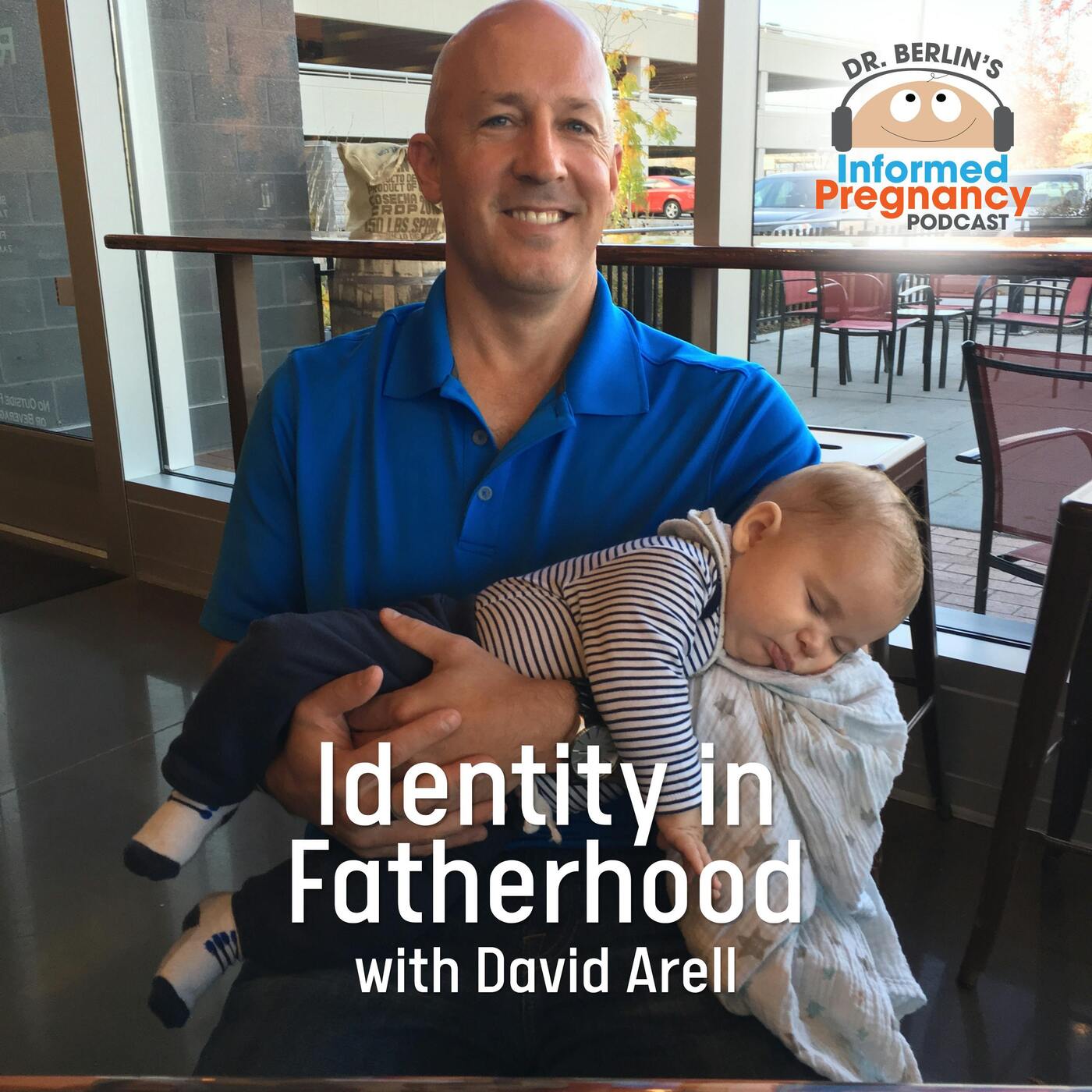
July 23, 2026 · 41 minutes · Episode 511
About this episode
Few men are prepared for the identity shifts when becoming a father. Father of two and executive coach David Arell returns to the podcast to explore mindset shifts, unexpected grief, changing relationships, and lessons that only years of parenting can teach.
Connect with the guest:
Grow with us on IP+! Informed Pregnancy Media presents two all new intimate short-form video series following Garrett and HeHe’s real-time pregnancy journeys as they prepare for an empowered birth and postpartum experience. Each episode features weekly updates with personal photos and videos to help bring these raw stories to life, a visually dynamic guide through each mother’s emotional and physical experiences.
Keep up with Dr. Berlin and Informed Pregnancy Media online!
Learn more about your ad choices. Visit megaphone.fm/adchoices
See Privacy Policy at https://art19.com/privacy and California Privacy Notice at https://art19.com/privacy#do-not-sell-my-info.
Key quotes
“I don't ask you to be the leader of the relationship. I just ask you to be a leader in the relationship.”
“Your working is now adjective and dad is the noun.”
“It says pause and presence, in big black Sharpie letters, that's on my desk as a reminder that in my parenting, in my partnership, in my executive coaching work, often the best thing I can do is slow down.”
“We may have some good answers, but wisdom is knowing if and when to share it, how to share it, at what time and what tone and tenor.”
Related episodes
- Ep. 514 Before Baby #4 with Kara Sutton
- Ep. 500 The Unexpected with Dr. Elliot Berlin Part 1
- Ep. 493 In Conversation with Esther Friedman Schwartz
- Ep. 516 Doing It All with Sarah Olin
Transcript
AI-generated transcript with speaker labels — may contain errors, especially names and medical terms. Dr. Elliot Berlin, DC appears in blue; David Arell in orange.
Dr. Elliot Berlin, DC [0:00] Most men spend months preparing for diapers, strollers, and car seats. Very few prepare for the identity shift that comes with becoming a father. What happens when the biggest surprise isn't the baby, but the person you become? My guest today is executive coach, father of two, and creator of Welcome to Fatherhood, currently streaming on Informed Pregnancy Plus. He's back to explore the mindset shifts, unexpected grief, changing relationships, balancing work and family, and the lessons that only years of parenting can teach. I'm pregnancy-focused chiropractor, Dr. Elliot Berlin, and you are listening to the Informed Pregnancy Podcast. David Arell, welcome back to the podcast.
David Arell [0:58] Good to see you here, Dr. Berlin. Looking forward to covering some fun ground here together.
Dr. Elliot Berlin, DC [1:03] I'm looking forward to it, and we don't do all that much stuff on fatherhood, and it's important to do. And according to our demographics, more and more dads are listening to the podcast. So I'm really excited to learn from you again. Last time you were here, we talked mostly about preparing men for fatherhood. Now we fast forward a few years. Your kids are getting older. How old are they now?
David Arell [1:25] My son is now 10, and my daughter just turned eight. So I have a rough decade of experiences and the wrinkles to prove it.
Dr. Elliot Berlin, DC [1:35] Happy birthday. How has the continued fatherhood continued to change you?
David Arell [1:42] The changes are a little bit more slow-rolling these days. You know, they're both, you know, plenty verbal, plenty of will, plenty of activities. But the persistent challenge of how do I bring my best self forward? Well, how do I discover what that is, and how do I bring that forward? Those challenges persist. As I joke with some of the new dads I see whose toddlers are toddling, I say they only get bigger and faster and stronger. So your challenges persist likewise.
Dr. Elliot Berlin, DC [2:14] Yeah. I mean, if we can go back a little bit towards the beginning. When you first became a dad, what surprised you most about how your own identity would change with fatherhood?
David Arell [2:27] Yeah, I think looking back, the biggest surprise, and then this is coming from somebody like I really thought I was doing all my homework. And I still had plenty of surprises. I had gone to birth classes and hypno birthing and all these different things where I felt I was studying for my new role. However, my idea was that it would be my wife and I, and then my wife and I plus baby as this like third little small, you know, sticker like you see on the back of people's cars, two large parents and one small baby. And it turns out that baby was a massive and the center of our identity at that point. So it wasn't plus baby. It was sort of we were in peripheral relationship with baby at the center in our lives.
[3:12] And that took a long time for me to really kind of get ultimately. And that was surprising. I thought it would just be me plus baby. And turns out that was not at all correct. Sometimes feels like that little sign should say like two big ones, mother and baby and a little one in the background and dad. Yeah, yeah. That's a very common experience. Like, hey, what about me? Am I still cool? Like, how do I fit in here? That's definitely a challenge.
Dr. Elliot Berlin, DC [3:38] The puzzle changes with an extra piece or eventually sometimes even more pieces. I think the mothers experience the transformation in a more obvious way through their pregnancy and through giving birth. And for fathers, we don't have the same visible transition. So I wonder your thoughts on that. And maybe that's why men kind of underestimate how much fatherhood does change them.
David Arell [4:05] Yeah, I think there's two sides to that coin. One, and you spoke to both of them there. The first is that we don't really experience the process of change as that gradual yet increasingly real situation as our partners do. I kind of joke with some of the expectant moms I still connect with occasionally. And I'll say I guarantee he'll be surprised when he's actually holding baby that all of a sudden he's a dad as if he never saw it coming. You know, there's that reality of like, oh, now I'm a dad. So that's sort of a crash course. But then what does that mean and how do we experience that? And for us men, the demand there is for that opportunity to really step up
[4:46] into fatherhood, into partnership. And that requires a lot more willful participation and sort of ownership over that being the challenge. The guys that struggle the most that I see, and I'm sure you see some in your practice as well, are the ones that are still sort of imagining that we're going to get back to normal, the old normal. We're going to bounce back or they're still holding on to that older version of themselves that just much like an older version of an iPhone becomes increasingly irrelevant as the days roll by. So what's that opportunity to bounce forward and take more ownership over that role? And that's some of the territory we'll be getting into here.
[5:26] I'm sure of the course of the conversation, meaning the change is not automatic. It's not automatic, but there's a way for us men to the more we embrace the demands of that change and the more that we take ownership over, oh, this is a good opportunity for me to grow. Then we can participate in that change in a more constructive fashion, both for ourselves and for our partner and ultimately for a baby too. Right. So it's an opportunity for change, but it doesn't just happen. Yes. And the more we sort of I would say for me, for example, when I was a little bit oblivious of the changes that were being asked or those opportunities, the more I sort of was unaware or resistant,
[6:09] the more friction that caused in my relationship with my partner. Like I was as much as I thought I was prepared, like the old Mike Tyson adage, everybody has a plan until they get punched kind of thing. I thought I was prepared and then baby came. And, you know, to your point earlier, I felt myself become less of a part of my partner's experience. And correctly so. She's got a brand new baby. She's nursing and doing the caretaking. And I initially imagined myself as a helper of sorts. Oh, I'm going to help with baby. I'm going to help with diapers. And that framework is really disempowering for me. And it puts a lot more of a burden of responsibility on my partner
[6:48] to like she didn't sign up to like boss me around or like tell me how to do all these things. And I didn't really sign up to be bossed around. But when we have that helper mindset, we're automatically putting ourselves in a secondary wait and see, wait for this, wait for that. And it doesn't really work. And so the big shift I was able to make when I recognized that and like many things, it took me a lot longer than I would like to admit. I could be pretty slow witted at times and hard headed. But I was like, wait a second, like this isn't working. What do I really want here? How do I get into that sort of like creator mindset of what do I want?
[7:23] And what are some steps I can take to invite my partner to have that conversation with me? And so we kind of moved out of this mom primary person, me helper role to being partners. We're able to start to have some of those conversations like, okay, we're doing these cloth diapers, which I'll tell you right away was both a blessing and a curse because imagine me sitting on the side of our toilet, like hosing down all these dirty diapers, but we're kind of hippies a little bit. So we were kind of aiming at that. But all these little challenge of like, I do it my way, she did it her way. We did it these different ways. It just made things unnecessarily complicated.
[7:57] So a big step that I was able to take to really embrace that creator mindset and step up into partnership was like, hey, let's just have a couple of conversations. And how do we wanna do these things? What are the agreements we wanna put in place about the diapers and how we're gonna wash the bottles that we're trying to do some pumping, she was getting ready to go back to work. How are we gonna come up with some plans that we both are on the same page that lets us sort of relax into this partnership role versus one of us not feeling like the other one's doing it right? So that was a big step I was able to make that I like to share that anecdote as a way to say,
[8:30] okay, how can we agree on these things to have that foundation of this new partnership going forward?
Dr. Elliot Berlin, DC [8:36] I really like how you talked about how she didn't sign up to be a manager. And we don't necessarily love to be managed, but then if you're not proactive, then that's just the relationship that will happen. And nobody likes it.
David Arell [8:52] Exactly, it's such a catch-22. Nobody's happy. And this is where I encourage my guys like, look, I don't ask you to be the leader of the relationship. I just ask you to be a leader in the relationship. Raise your hand, let's have some conversations, let's come up with these, again, these shared agreements or shared understandings. And from that, that's where you have plenty of room to play with your own individuality. I often say fathers don't mother. For example, we had this baby carrier that was like a transformer. You could wear it on the front or back or sideways. And I always liked to wear my son specifically facing out where he could hold my fingers
[9:29] like little motorcycle grips. And he and I were looking at the world together and I'd be pointing out birds or whatever. And my wife liked to hold him facing in so she could look at him and he can look at her. And this was a place where it was like, well, sure, wear the baby however you feel like. As long as he's not screaming, then we're okay. So that allowed us to play with our differences because we had that shared sense of agreement on some of the more fundamentals.
Dr. Elliot Berlin, DC [9:52] So I wanna talk more about partnership in the second segment. But in terms of an individual, someone who becomes a father, I've heard you say that you kind of grieve the old life a little bit. What are you grieving?
David Arell [10:08] I think the grief on some level is the, I wanna say this as delicately as I can, even in a relationship with a partner, with our wife, our girlfriend, our spouse, et cetera, we're still able on some level to sort of imagine ourselves as main character. We hear that sort of phrase these days, main character syndrome. But we still imagine it's our life and we have a partner and there's this sense of it, it's sort of easy to sort of slip into a little bit of a self-centered perspective there. And there's a lot of validity to looking at the world as like we're equal partners and I'm doing my thing, you're doing yours. And when baby comes along, there's a sort of mandatory explosion
[10:52] of all those delusionary beliefs of like, I'm a free agent, I can do whatever I want type of experience. And it really puts baby and the baby's concerns and needs and the relationship, it's a radical re-centering of baby and the relationship at the center of their lives, at least that's the invitation. And there's some grief there. It's like, I don't get to go play golf with my buddies two, three days a week. Well, I could, but at what cost? So those trade-offs that are those opportunities to step up do require a letting go of things that were formerly very important to us or a part of our core identity.
Dr. Elliot Berlin, DC [11:27] I think that's really honest of you because I think a lot of people feel it, but sometimes have a hard time admitting those feelings. And maybe some people don't feel it, but it's not that you don't appreciate the new relationship, the new role, but there were some cool things about the old role and they're just different. And I think it's okay to miss those things and to acknowledge that you miss them. It doesn't mean you want it back. With that in mind, when you think about fatherhood today, do you see it more like a sacrifice or more like an opportunity?
David Arell [12:01] I think both of those words fit to there because there are some necessary sacrifices, but in the deepest definition of sacrifice, if we look back at some of our spiritual traditions where this phrase has its strongest roots, it's an offer made willingly. It's a trade-off that is coming from a place of devotion is a word I bring into a lot of my work, a place of care, a place of sincerity and a place of appreciation. There are trade-offs that need to be made. You can't fit 10 pounds of potatoes in a five pound bag. I'm going to use a PG friendly version of that expression here for your audience, but there's just trade-offs. And when you really ask yourself again,
[12:44] getting into that creator mindset of what do I really want here? I want to be a great dad. I want to be a great partner. I want to really show up for my family. And so I'm able to sort of sacrifice my golf clubs sticking with that one on the altar of reality and do so with both the tear in my eye, but also gratitude in my heart. Like what an opportunity to be able to be more present with my loved ones and continue to invest time and care and attention into the people in my life, as opposed to a hobby that was formerly a more central pillar.
Dr. Elliot Berlin, DC [13:17] That's very well said. We've been talking about the internal transformation of fatherhood. After a little break, we'll talk about the practical reality of balancing family, work, partnership, and maintaining your own identity. We'll be right back.

Dr. Elliot Berlin, DC [13:44] Welcome back. We are talking to David Arell about fatherhood. He's an executive coach and a fatherhood educator, and I'm learning a lot. All right, your path was a little unusual because you plan to become a stay-at-home dad. How did that happen?
David Arell [14:02] It was just a confluence of circumstances. I met my now wife at a time in my life when I was not at all looking for relationship or love. I was building a business. I use the word empire in quotes because it was at the time three cafes. But my aspirations were to build out the eco-friendly version of Starbucks. I was building up a series of cafes in Philadelphia and that was my vision. There was no room in that vision for dating or girlfriends at the time, but I met my now wife and I heard a voice clearly say in my ear, there she is, when I saw her and I shook off the voice. I was like, I'm busy. I don't have time for this. But the heart has its own truth.
[14:47] And so shortly thereafter, my priorities radically changed and I wanted to partner with her and she was signing up for the Air Force as a pediatric nurse practitioner. And that was moving us out of Philadelphia to Omaha, Nebraska. And I looked at that choice and I was like, well, there's one way to do this and that's all in. So I sold my business and jumped into becoming a, our aspiration, we weren't pregnant at the time, but that was our goal to start a family. And I was excited to be Mr. Mom full time, stay at home dad. So I started again with the clearest of intentions in mind, even if with no idea of what the reality of how that would unfold.
Dr. Elliot Berlin, DC [15:25] Talking about realities, this is 10 years ago. You do have the first baby. How long is your wife home before she goes back to work?
David Arell [15:33] Three months and this day and age, three months still seems generous for maternity leave here in the state. So we had a full three months of all of us being home together.
Dr. Elliot Berlin, DC [15:43] It's funny that that seems generous. I mean, not funny, funny, sad, funny. Now, once she went back to work, I guess that's when reality really sets in. What was that like?
David Arell [15:54] That's exactly right. The first three months, we were kind of figuring things out. As it is, and this is something I can circle back to later, we were establishing routines, watching baby age right out of them, and then reestablishing new routines and trying to. At this point, we had had those conversations about shared baby basics and shared agreements. She goes back to work. I'm loving being my stay at home dad. I'm up with our son and she's nursing him in the morning. We had it set up where I was able to drive down to the base so she could nurse him over lunch. She was pumping both in the morning and afternoon windows. From a family perspective, everything was working great,
[16:32] but internally, by month six, or three months after she'd gotten back to work and we had these new routines, part of me was very enthusiastically thinking, this is great. I'm taking care of my family. I'm being a stay at home dad. We're doing our things, but then frankly, Dr. Berlin, another part of me was like, this sucks. It's like, imagine you have a nice, big four-wheel drive Jeep that has all these off-road capacities and all you're doing is going back and forth to the grocery store. There's a certain sense of, I was feeling deeply fulfilled on one side and completely unfulfilled on another.
Dr. Elliot Berlin, DC [17:07] I hear this a lot from my patients who are mostly moms as well. Some moms, their full fulfillment in life is being around the nest, taking care of the baby, taking care of the house. That gives them tremendous joy and a complete sense of purpose. But then there are other moms who really need more interaction than that, more stimulation than that, a different kind of productivity than that. Crave working at least part-time to be able to be back in the world that they were in before they became a mom and also like being a mom, but that's of course a very, very difficult juggle. And so I would think for stay at home dads, I have this theory that's sometimes unpopular
[17:52] and it is that I think men are generally, it's a generalization, hardwired that after a baby comes, we have this instinct, animal instinct, to go out and hunt and gather more and sustain the growing family and that women generally have this instinct to be around the nest, around the young ones and take care of the nest. And of course not everybody's like that, but I think that sometimes when you reverse the role, then it's even more profound how that instinct is like, I wanna go hunt and gather, wanna go hunt and gather. Did you experience that?
David Arell [18:28] Definitely, especially as I mentioned, my previous role, the previous chapter of my life, I was the visionary entrepreneur making things happen and building new in the world and opening up more cafes and really feeling excited and fulfilled by being a force for good. This was like the early days of like conscious capitalism, B Corp. The company was eco-friendly coffee, organic, fair trade. Like I really felt like I was living out a mission of inherent value. And so I was able to sort of hold onto that side of things with being, my aspirations to be a great dad. I felt that was equally a mission of value. And as I mentioned, I felt radically underutilized
[19:14] under like my skillsets, my temperament was not really being nurtured or being called forth or engaged within the limitations of a six month old and driving to the base every day for nursing and sitting by the toilet, as I mentioned, hosing off the cloth diapers and taking out the recycling and cutting the grass. Like these are all great things, but deeply unfulfilling from that side of things. And again, just to make a quick point here, as relates to what you hear from your patients, I think I would talk about with all of my clients, male and female, is that I'm not here to argue about your purpose or to suggest you have a different one or change it
[19:55] or whatever your purpose is, is misaligned. So if you're perfectly content with where you are, regardless of that's working mostly at home mostly or somewhere in between, great. But when you feel that misalignment, like that's where I think we can approach that with more care and concern and support and try to help each other figure out how do we live a life where we're feeling deeply fulfilled along those dimensions of parenthood and professional engagement. And that's gonna vary differentially for men and women and for individuals. And that's an open conversation I encourage all of your listeners to just sort of sit with for themselves. What's the right dynamic tension here
[20:34] between being a dad or a working dad or a part-time, full-time, all those different dimensions?
Dr. Elliot Berlin, DC [20:40] That makes a lot of sense. In your case, how did you keep from losing yourself?
David Arell [20:45] It took me a while to accept and sort of be okay with that I wasn't perfectly fulfilled on my very loudly proclaimed aspiration to be stay at home dad. So I had to kind of own the reality of my identity that was different than my goal or my aspiration. And that was a little bit of a challenge because I felt I had to kind of backpedal a little bit on some of the shared agreements my wife and I had put together like I was gonna be a stay home dad. I was able to start by leveraging where do we already have trusted childcare? Because again, I wanna make sure I was keeping baby at the center. And thankfully the gym that I belonged to had two hours of childcare
[21:21] that they would give you each day that you came in. So I cut that back in my workouts and I would work out for like an hour then I would sit in the cafe with my laptop and just start to think like, what are these entrepreneurial ideas? Like, where am I feeling enthused? Where am I feeling called? What am I excited to like pour myself into? And that's where the welcome to fatherhood work was starting to be birthed. All these different places, I was leveraging my experience, what I've learned, where I felt frustrated, where I thought I could contribute to the world around me. And it came out of those initially, one hour a day, Monday through Friday
[21:58] when I had time at the gym already sort of covered when it came to childcare. So really it's finding where you have childcare that's trusted, or even with your partner taking turns. Honey, I'll have baby for two hours on Sunday afternoon, go do whatever you need to do for either self-care or self-development. And then on Saturday, I would like two hours to devote to my self-care, self-development side of things. But the point is making sure that baby is still being primarily centered in that whole dynamic is critical for long-term success.
Dr. Elliot Berlin, DC [22:28] I need to switch gyms. I have no childcare at my gym. That sounds like a brilliant place to start, to just give you a place to clear your head, be free of that obligation for a little while. I think for anybody, like you said, for moms, for dads, for anybody, it's a great place to start. I feel like some people though feel guilty using any childcare. Do you find that?
David Arell [22:54] I think it takes a little bit of experimenting. Like I remember our first date night out after our first baby, we lived in a nice little area of Omaha. It was two blocks away from a little commercial area with like restaurants and shops and whatever. And we had a trusted friend home with our son and we walked around the corner and we sat down. And within 20 minutes, my wife was texting, like, how's he doing? And I was less concerned because in my head I'm like, well, she's right there, she'll call us. But there's a very, but I was still, we were very happy to skip dessert and go back home. So there's a learning phase of like the little progressive,
[23:37] taking some time away again with people you trust, those shared agreements, like this is how we want you to hold them and this is how he prefers to bottle feed. But as you build that trust and you build that comfort with being away from baby for different periods of time, you can grow at your own pace. So like with anything, often those first steps are the hardest ones, which is where I at the gym, I could see the childcare like from the cafe. So I was very present if needed. And then the next step that I took there was after having several conversations with the different workers there, do any of you do babysitting? This is a place where I already have a personal relationship
[24:15] with the different caretakers at the gym. And there were some that clearly liked my son more than others that, you could tell they had a calling for childcare and like, okay, I already kind of trust this person. They already know my son, they've spent time with him. I feel comfortable inviting them into our house for an evening for my wife and I to go out. And that then became two afternoons a week for three hours. So it was a slow but steady progression based on building those trusting relationships where they were available.
Dr. Elliot Berlin, DC [24:45] I think that it's really smart to start slow like that if you're not comfortable. Some people, everybody has different comfort level with these things. And if you're not comfortable with childcare at first, but you need to, you know, everyone recognizes I have needs that aren't being met. And if I can't meet those needs, I'm not gonna be a great parent either or a great partner either. Those are great tips for easing into it and starting slow and building trust and feeling confident so that you could be a great caregiver, a great partner, and also take care of yourself at the same time. Let's take another little break. When we come back, we'll talk about some of the biggest leadership lessons
[25:25] fatherhood has taught David, including why sometimes the strongest thing a dad can do is absolutely nothing. We'll be right back. Welcome back to the Informed Pregnancy podcast. We are talking with David Arell. Okay, so at first you realized, okay, stay at home father is not exactly what I thought it was gonna be and wasn't fully fulfilling you in the way you wanted it to be. And you found a way to start carving out time for yourself and also taking care of your child and your partner. You had doubled up and had another kid. As they got older, how did you find the new definition of what working dad means to you?
David Arell [26:14] I think one of the biggest challenges there, Dr. Berlin, that I experienced personally and I see with my clients all the time is how do we embrace this new identity that we're forming, that we're kind of being called into or growing into, and how do we manage owning that in the context of previous relationship dynamics or agreements or roles that we signed up for earlier? How do we balance the need to honor the integrity of our new self and manage the commitments our old self made? So for me, as I alluded to a moment ago, when I got to that place where I needed to be engaged professionally, I had to go back to my wife and be like, hey babe, I know we've talked about me being
[27:01] a stay-at-home dad, and that's not really fulfilling for me. I need to do more. Can we have a conversation of what that might look like? So the challenge there was sort of owning what was true for me and initiating a conversation with my partner to see what kind of changes we can agree to. That was a much better strategy than either simmering in resentment and feeling like, oh, she wants me to do X, Y, or Z, putting the blame on her for why I couldn't do it, or kind of going rogue and saying, this is what I'm doing, take it or leave it. So it's having those conversations, and this applies at work as well. Like for working dads, maybe before baby was born,
[27:41] you were on this career track A, but now you're centering yourself as dad. Your working is now adjective and dad is the noun. Like this is now a modifier. So how are you gonna modify your professional contribution correctly with dad as the center? That's the conversation that you first have to have with your partner, and then perhaps start to have those conversations with your employer or your business relationships, et cetera. So for me, I had to have that with my partner, and then I had to have that with some clients I was working with. I was doing small business consulting, and I had told them I would be more engaged once things settled down after baby,
[28:21] and I had to come back to them and say, I know I told you this six months ago, but from where I am now, this is really important to me and I still wanna support you. Can we have a conversation about how that support's gonna look different if I'm available only this many hours per week versus what we had talked about circling back six months ago when we last had that conversation? So it's a little bit humbling to have to own, hey, I know what I told you, X, but now Y is true, but from that is that honesty is where now you can build something that's more true going forward.
Dr. Elliot Berlin, DC [28:52] Love the self-awareness and the confidence and like you said, honesty that's required in order to be able to change course and say, I know I was promising this, that I was gonna be able to deliver this, but now I realize I can't do that. Is there something else I can deliver that would work for you guys? And that's just life. It's not a flat line, it's a roller coaster. It needs to go up and down, and if you hold on so rigidly that you can't change track ever, then you end up either being miserable or making the people around you miserable. Or both if you're really lucky. So I think it's a great lesson to be able to aim for something, give it a honest, solid shot,
[29:33] and then realize, nope, that's not gonna be the right thing and figure out how to change gears with not leaving anybody abandoned or hanging, taking everybody into the new track with you in a way that works for them as well. I mean, I think that's one of the main characteristics that makes someone a great leader too is your ability to kind of take in stimuli about the things that are happening around you and then be able to make decisions and execute those decisions. Do you feel like this journey through the various stages of fatherhood have given you lessons that make you a better leader?
David Arell [30:09] Oh, absolutely. I will share with a degree of self-deprecation and a little bit of shame about some of my, how I embodied leadership pre-dad, more hard charging, more this is what we're doing, my way, lead follower, get out of the way. There are certain aspects, I was sort of a stereotypical visionary entrepreneur, like me against the world mindset, and I treated people at different times in a way that after becoming a dad, I look back on, I see how I treated some of the people that were important to my success with a degree of shame or like, I wouldn't do that today. I've learned more empathy, more compassion, more appreciation, and all of those skills are things
[30:57] I think have made me a 100% better leader in so many ways, and my children still teach me. This is one of the things you mentioned a moment ago about the sort of like iterative approach to learning and leadership is that we're never there. We're just trying to be a better version of ourselves tomorrow than we are today and better today than we were yesterday, and our children are our best teachers with that. The degree of care and comfort and compassion that they will elicit, but then also, you're gonna recognize moments like I gotta be better in these moments. I need to not allow this disturbance to get me so emotionally frustrated. And like, my daughter's eight.
[31:36] Why am I thinking this is like some sort of like cross-examination? Like, what am I doing? This is not effective here.
Dr. Elliot Berlin, DC [31:41] It does sometimes feel like a courtroom. I know that men, again, I'm gonna generalize, men are problem solvers by nature. We see this in labor a lot. You see your partners in discomfort and you just wanna solve the problem. And sometimes it's not a solution that your partner's looking for, that your child's looking for. Rather, it's just being present, being supportive, being a listening ear, a lending shoulder. Tell me more about your experiences with that.
David Arell [32:12] That's such a great question, Elliot, and it's a front burner question that I still sit with. I know this is audio only, but I'm gonna show you a post-it I have here. It says pause and presence, and big black Sharpie letters that's on my desk as a reminder that in my parenting, in my partnership, in my executive coaching work, my consulting work, often the best thing I can do is slow down. I can still run all my problem solving algorithms in my head, but just slow down and make sure I'm staying in relationship with the person in front of me. I'm staying present. I'm making sure I'm sort of like, I imagine my face is like a little sun, I'm shining my attention on them with care,
[32:55] with warmth, and with connection and trusting that that will ultimately be more helpful from their point of view than any of the shoulds, coulds, woulds, and questions that are formulating sort of automatically in my mind. And I can ask them later if they're still relevant, but in the moment, oftentimes, like you said in labor, it's not about offering ideas. Dads in labor don't offer any ideas, real quick. It's about offering a hand and just a loving presence and just some affirmations. This looks hard. Yeah, that sounds tough. Yeah, I can see why that would be frustrating, just that really that deep, authentic connection is inherently palliative
[33:37] and it feels good to have somebody kind of feel into that space you're in with you. And oftentimes, people know what the solutions are. They're just having a hard time in the moment.
Dr. Elliot Berlin, DC [33:46] Yeah, I find it sometimes hard to fight the instinct or even be aware of the instinct. Oh, you got a problem. I immediately go to, here's five solutions. Which one do you want to do? Yeah, let's line them up, right? And that's irritating to somebody who's not looking for a solution but looking to vent the frustration of the problem. And so there, sometimes it's so much better to do nothing in terms of action and just be a good listener, good supporter, and empathetic. Give me a couple of other ideas. I mean, you do coaching. Tell me about how that works and something based on your coaching that someone who's listening who maybe just is about to become a dad,
[34:27] I feel like there were so many pearls of wisdom in this episode already. But maybe one or two things that you think would be really important for someone who's about to or recently became a dad to know.
David Arell [34:38] Yeah, I think the idea of leadership is one that I would encourage all of your listeners, especially the dads out there, just to sort of sit with and allow the different ideas of what that means and what that might look like. Just sort of come to mind and not feel they need to rush into what does that mean, but sort of sit with it. And my sense of that is as they sort of allow that question to sort of percolate into their mind, there'll be a couple of things that will emerge to be more true. One is that leadership is about creating value. And to your point we just made, sometimes we create value by not acting, which can be kind of tricky. Sometimes we create value by simply being present
[35:20] in a emotionally available manner. Other times there is an opportunity to take action or to start a conversation or to the way we handle a certain topic. There's lots of ways to create value, but that's a great way to frame that. A place I would point is the concept of wisdom. It's a concept that's really lacking in our culture. We hear about artificial intelligence, but nobody's talking about artificial or real wisdom. Like where do we go for wisdom? And sure, some of us rest a little bit more firmly on our great traditions than others, but still there's a real lack of appreciation for the value of wisdom in our culture. And so we may have, especially as problem solving guys,
[36:02] we may have some good answers, but wisdom is knowing if and when to share it, how to share it, at what time and what tone and tenor. So I think wisdom and leadership are two qualities that can start to be linked a little bit more carefully as we're starting to look forward. Like how can I lead and create value and embody some wisdom here? So that would be something that I would throw out here right away to kind of get the audience thinking about those bigger picture questions.
Dr. Elliot Berlin, DC [36:29] How does your coaching work?
David Arell [36:31] So generally speaking, where I find people is they're feeling stuck or frustrated when it comes to some aspect of their professional growth. There's a lot of different ways that can show up, but usually, especially in a professional environment, these days, many companies don't really have a lot of effective programs in place for people who wanna grow and become more effective leaders. And so the clients are coming to me, they're feeling a little bit frustrated, they're stuck, or a leader will come to me and be like, hey, I wanna provide some leadership training for my team, but I wanna do something that's more than just these skill sets, these horizontal skill sets
[37:08] where now they're the same person, but now they know how to use Claude better or some AI better. So same person, but different skills. You talked about the idea of mindset earlier you introduced it. So how do I elevate my team's mindset or back to my individual client? What's in the way of me here? And oftentimes, my questions will be looked into, where are your own beliefs sort of holding you back? Where do you have what I call competing commitments? Getting back to fatherhood, where do you wanna still play golf and be a great dad? Where are those places where your own beliefs or your aspirations are creating the tension, and the more you succeed at one,
[37:47] the more you kind of fail at the other, and then the more you succeed at the other, the more you fail at the one. So a lot of the initial work is just surfacing those old patterns, those old beliefs, those old assumptions, where they realize that every time they try to make a move towards goal A, they're putting goal B at risk, or they move towards goal B and they put goal A at risk. So a lot of it is really just surfacing those places where our own beliefs or limiting beliefs are in the way, and then we try to start to design some real-world experiments, behavior changes, that are now done with awareness of our competing commitments, and we can start to make some more conscious trade-offs
[38:24] between those goals, versus actively thwarting one to succeed at the other. So it's really about surfacing awareness and then deciding on some actions and experiments about changing our behavior, and then seeing what comes as a result, and then we put that right back in the front of the engine of more awareness, leads to more choices, which then lead to different responses from the world around us. And we just sort of iterate to elevate was one of my favorite phrases to use there.
Dr. Elliot Berlin, DC [38:51] You have a bunch of great phrases. They're short and powerful. David, thank you so much for sharing incredible information for dads in general, new dads, about-to-be dads, dads who've been at it for a while. Your insights are helpful, they're sharp, and they're inspiring. I think they're thought-provoking, and once we start to think about it, some of the other things that you said will sink in as solutions for us. So I always learn from you, and I'm grateful for you joining me here, again, on the podcast, for sharing Welcome to Fatherhood on Informed Pregnancy Plus, which people can check out on informedpregnancy.tv. Where else can we find you on?
David Arell [39:32] You can find me over at my coaching websites. Kind of awkward, so I will say it slowly. It's www.catalystforchange, F-O-R, catalystforchange.xyz. That's my primary individual coaching site. And then I do group coaching work over at www.accelerade, like Gatorade plus Accelerate together, Accelerade.net. So individual coaching, group coaching, webinars, and all my Good Dad stuff still is available at www.welcometofatherhood.com as well.
Dr. Elliot Berlin, DC [40:07] Great to see you again at home. Thanks for listening to the Informed Pregnancy podcast. For more pregnancy and parenting information just like this, visit us online at www.informedpregnancy.com.
Want more pregnancy + parenting? Start your FREE TRIAL of Informed Pregnancy+ and get access to all our curated pregnancy and parenting content — original series, iconic birth films like The Business of Being Born, prenatal workouts and more.

0 Comments