
January 22, 2026 · 40 minutes · Episode 495
About this episode
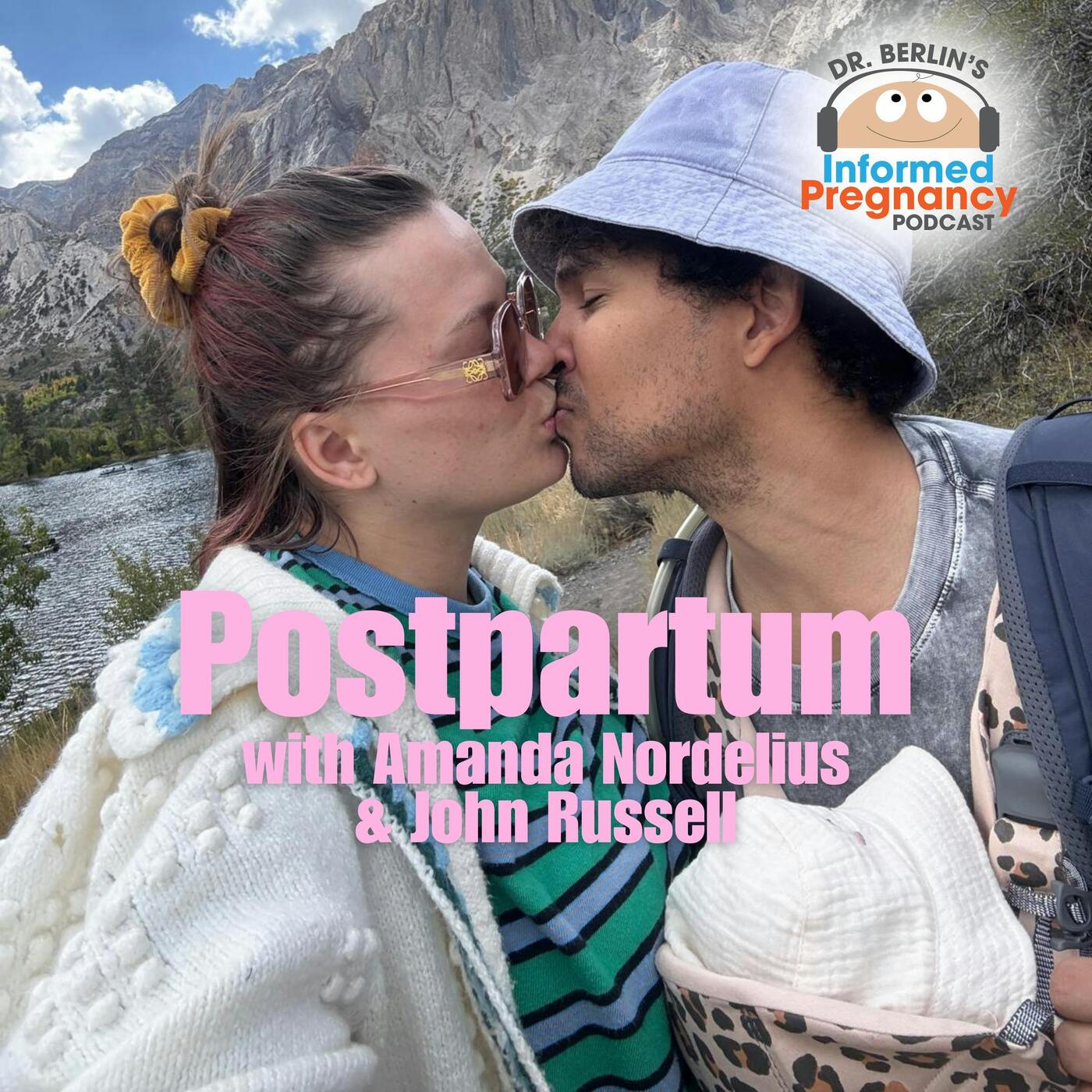
After an unplanned home breech birth, international songwriting couple Amanda Nordelius and John Russell return to discuss the postpartum experience.
Connect with the guests:
Grow with us on IP+! Informed Pregnancy Media presents two all new intimate short-form video series following Garrett and HeHe’s real-time pregnancy journeys as they prepare for an empowered birth and postpartum experience. Each episode features weekly updates with personal photos and videos to help bring these raw stories to life, a visually dynamic guide through each mother’s emotional and physical experiences.
Keep up with Dr. Berlin and Informed Pregnancy Media online!
Learn more about your ad choices. Visit megaphone.fm/adchoices
See Privacy Policy at https://art19.com/privacy and California Privacy Notice at https://art19.com/privacy#do-not-sell-my-info.
Key quotes
“mothering you is also mothering me. And because of you, I have found healing that I never thought was possible.”
“It was like a heat seeking missile.”
“It's like asking for help is so key.”
“And to learn how to live with your heart running around outside of your body.”
“just had this kind of like faith or assuredness that like, she's going to be okay, this doesn't make sense and it doesn't look good, but she's going to be okay, she's going to be okay.”
Related episodes
- Ep. 490 Unexpected Harmony with Amanda Nordelius & John Russell
- Ep. 514 Before Baby #4 with Kara Sutton
- Ep. 500 The Unexpected with Dr. Elliot Berlin Part 1
- Ep. 523 Chiropractic Care for Mothers & Babies with Dr. Estefania Magallanes
Transcript
AI-generated transcript with speaker labels — may contain errors, especially names and medical terms. Dr. Elliot Berlin, DC appears in blue; Amanda Nordelius & John Russell in orange.
Dr. Elliot Berlin, DC [0:00] My returning guests today are an international songwriting duo splitting their time between Los Angeles and Stockholm. Together, they've built a creative partnership, a family, and a life that blends two cultures. In their previous episode, they shared their pregnancy and birth story, including a powerful unplanned home breech birth. As it turns out, the birth was only the beginning. I'm pregnancy-focused chiropractor Dr. Elliott Berlin, and you're listening to the Informed Pregnancy Podcast. Amanda Nordelius and John Russell, welcome back to the podcast.
Amanda Nordelius & John Russell [0:46] Thank you. Thanks. Thanks for having us back.
Dr. Elliot Berlin, DC [0:49] My pleasure. Okay. So birth was not exactly what you had expected. Things changed a lot from the very beginning to the very end. One might say they turned upside down. And then the baby comes and I think for a lot of us, we do whatever it is that we do for pregnancy and birth. We put in a lot of time, effort, thought, and planning, and then the baby comes with no user manual instruction guide. It's a little life that needs a lot of input from us. And there are various stages of just hard learning curve from minute one, day one, week one, month one, year one. What was the afterbirth like for you?
Amanda Nordelius & John Russell [1:35] I remember when we did all the pregnancy prep and John was like, I do kind of want to do a class on after when a baby is here. Yeah. And I was like, ah, no. Yeah. Who do I talk to to get one of those manuals?
Dr. Elliot Berlin, DC [1:47] Yeah. By the way, I could tell you not about the baby so much, but about the relationship. My wife, Dr. Alyssa, has a course called the After Birth Plan that streams on informed pregnancy plus.
Amanda Nordelius & John Russell [2:00] Oh, incredible. Is it too late for us to?
Dr. Elliot Berlin, DC [2:03] It's never too late. No, I even know people do it before their second baby. The ideal, obviously, is to do it while you're in that blissful state before the first baby comes and you have more time. But it's a little hard to sell a solution to a problem that you don't feel yet.
Amanda Nordelius & John Russell [2:20] Definitely.
Dr. Elliot Berlin, DC [2:21] Yeah. And I think the people who do it while they're pregnant always afterwards they write back, oh, thank goodness I had that preparation. But it's hard for all of us to invest time and effort into something that's not in front of us right now. So there is that course, but okay, so I guess you didn't do one.
Amanda Nordelius & John Russell [2:39] Well, no. No, we didn't. And I think we were as prepared as we could be for seeing our baby's butt be the first thing that comes out, the pushing but not ever pushing out a baby before, so not knowing what that actually feels like. So there are those aspects. But I think the thing that we were kind of most caught off guard by was just like when Freya was born, she was unresponsive and she was limp. It didn't look like she was breathing. And then the midwives started giving her mouth-to-mouth. And we were like, wait, where was this in our classes or our, you know, books that we were reading or whatever, like we didn't hear about this. So that was really, I think a really shocking moment for both of us.
[3:25] Because I think you, you know, Amanda can definitely attest to this, but you hear all the stories of, you know, you're going to practice it. You're going to lift your baby up to your chest. You're going to, baby's going to come out and you're going to lift the baby up to your chest. And it's going to be this magical moment of oxytocin and everything flowing. And that moment didn't really happen right away. That wasn't what we were created with. And I think it was also like, ironically, you know, like a part of the birth mantra that we learned is like, have no expectations and, you know, I'll take whatever twist and turn this birth is taking. I'm sure that's not the verbatim.
[4:02] So I think none of us had any expectations like during birth, but without knowing it, I had kind of planned this little expectations on when the baby is born. We will have this moment. Like that will be, you know, like all the hard work. Like this will be the moment. But what we had, I guess, forgot or missed to be, to like, to research was that when it is a breech baby and a C-section baby, very often this happens because their lungs are not compressed. So it's very common that they have to do the mouth-to-mouth and that they have to rub them to like get the circulation going. Once again, I'm not, you know, I'm not a doctor, so I'm sure this is just my expressions.
[4:42] So it was kind of expected in a way, but we just didn't know. So we thought the baby will not, you know, like to have all the little, what do you call it, like the keeping the baby's little, you know, the goo on and stuff. So I think that's the correct medical term. When they start to like rub her and like, you know, give us the circulation and mouth-to-mouth, like it was just like, we thought it wasn't according to protocol, but obviously it probably was, or it was. So then.
Dr. Elliot Berlin, DC [5:13] I can only imagine, right. The expectation is that you have this intense labor, you have pregnancy, then an intense labor and finally birth. And that moment is supposed to be like the shiniest moment ever. Like where all the feelings feel, the oxytocin hits its peak and you're just in bliss with your new baby. And if it doesn't happen exactly like that, like somebody accidentally wipes off the Bernix or something like that. It's already, you know, a blow to that blissful expectation. But when it's the exact opposite, when your baby comes out limp, not breathing and needs like resuscitation breath, rescue breathing, I can't imagine the panic, the exact opposite, going from a oxytocin high to an adrenaline high.
Amanda Nordelius & John Russell [6:02] Yeah. I think it just was such a shocking moment for both of us, which I think once she started to breathe, which, I mean, it felt like forever to us. I'm sure it was 30 seconds in real life. Once she started to breathe and cry, they handed her over to me. And at that point, I think I had just kind of gone into some kind of like freeze state, I think it was so scared to lose her those 30 seconds that I had a hard time, like when they finally gave her to me, I had a hard time like accepting that everything was fine. Just like that. Now she's just here. And I'm sure everything was fine the whole time. It just looked so scary to us. And then John was, I feel like you were really good at coming back
[6:44] to the moment and realizing everything was fine. Yeah. It's a weird thing. I don't really know how to explain or quantify, but I think part of me just had this kind of like faith or assuredness that like, she's going to be okay, this doesn't make sense and it doesn't look good, but she's going to be okay, she's going to be okay. And I just kept telling myself like that, she's going to be okay, she's going to be okay, it's okay, she's going to be okay. And then I think as soon as her eyes cracked open, just a smidge, as soon as I just saw like the tiniest sign of life, I was like, oh, okay. She looked so cool too, I remember. Like she looked so badass when she opened her eyes, it was like,
[7:22] oh my God, there you are. Like she just looked like such a cool baby. And then we waited for that glorious cry to come. And thank God for our midwives, because they kind of, one midwife tried and didn't seem to be working and then like they kind of passed her around. And then finally the last midwife that was there and was able to get her coughing and breathing and crying. And yeah, it's very intense.
Dr. Elliot Berlin, DC [7:48] Can't imagine being in that situation, like not having them there, you know, can't imagine that at all. You know, as a doula, I've been in this situation and I sometimes feel like maybe a terrible analogy, but bad turbulence on the plane. Or what feels like bad turbulence to me on the plane, but the flight attendants are still handing out snacks, so I'm like, oh, okay, we're going to be okay, you know, sometimes as a doula, you see this, you know, this little rescue breath that's needed. You see a baby come out a little bit limp or blue and the midwives don't panic, they just do what they're trained to do and they take care of it. And then they're like, oh, okay, here's your baby.
[8:33] And you know, like I'm still green and want that little bag to throw up in. And she's like, oh, you don't want this biscuit?
Amanda Nordelius & John Russell [8:42] Exactly.
Dr. Elliot Berlin, DC [8:44] I'm not sure I'm ready to accept that biscuit just yet.
Amanda Nordelius & John Russell [8:47] Right. Yeah. So it was, needless to say, it was a bit of a rocky start to postpartum from the first moment we met her. It took me a while to understand. I think because of that, like it took me a while to understand and fully accept that she was like here. Right. But we, I had to like, I mean, I was just going to say it was almost like, it feels like there was almost like an amount of dissociation from the moment because of like your body just preparing itself for something, you know, that it couldn't like handle. Are we allowed to celebrate? Like, are we allowed to like go on with our lives? Is everything good now? Like it took a while to come down from that turbulence on the plane.
Dr. Elliot Berlin, DC [9:30] But totally makes sense. Especially if you weren't prepped for it, you know, I've definitely heard people prepare couples in the past to say, Hey, this could happen. Don't panic.
Amanda Nordelius & John Russell [9:41] Right.
Dr. Elliot Berlin, DC [9:42] And maybe that would have gone a long way for you.
Amanda Nordelius & John Russell [9:44] Yeah.
Dr. Elliot Berlin, DC [9:45] All right. I want to take a little break because that's intense. So let me just sit on that for a minute and come back and find out how the next few minutes evolved. We'll be right back.

Dr. Elliot Berlin, DC [10:07] Welcome back. We're talking to Amanda and John and okay. So your first moments as parents, uh, not exactly what you expected, but it seems like that whole episode was probably just a couple of minutes. And then you do get the baby, maybe a little numb and a little detached. How does the rest of that first day unfold?
Amanda Nordelius & John Russell [10:29] She basically crawled, like we put her on my chest. I laid down and she basically just found her way to the breast and started to breastfeed. It was like a heat seeking missile. It was incredible. She was just knew exactly where to look. It was wild because we thought like, Oh, babies don't know how to latch. Like this is going to be a whole thing with a lactation consultant. Like we were so prepared. And then she just kind of honestly, like she did all the work. I didn't have to do anything. Yeah, she just had the instinct. It was crazy.
Dr. Elliot Berlin, DC [11:03] What a contrast from coming out to like needing, you know, a human to help her survive. And then all of a sudden just knowing exactly, I got to go get that food right now. Right. You know, already like just minutes old already on a mission. You know, already trained and programmed.
Amanda Nordelius & John Russell [11:21] Exactly. No, her dad is very motivated by food as well. So I think it may be a apple tree situation. Exactly. Yeah. But yeah, I remember we did all the, you know, weights and all of that. Yeah. Like weight checking and had a little cranial sacral therapy moment. Yeah. And then everyone left and then everyone left. So it was just us calling family and we had the privilege to do the like 15 day, you know, five days on bed, five, five days in bed. No, yeah. In bed, five days on bed and then five days close to bed. Right. Yeah, I think so. Sounds like a dream by the way. Yeah. No, we would actually, we're like, if we ever have a second child, this won't happen.
[12:06] So we were like, I really enjoy this because this might be the once in a lifetime and I mean, I had needed it, like my body recovered very quickly and I feel like it's all thanks to this. Resting. Yeah. Can't be. Rested so much and we were watching, we had the projector up and John was, you know, he got me this little medical table. Like it's like medical grade. It's like the little tables in the hospital have wheels on them and you can put them over the bed, you know, for meals. Yeah. It's amazing. You can just buy it on Amazon for like 50 bucks. It was like, it was amazing.
Dr. Elliot Berlin, DC [12:43] Oh, good to know. I don't have to have a heart attack to get that kind of service. You get one.
Amanda Nordelius & John Russell [12:51] So nice. Yeah. Also, instead of having, you know, like a fixed table when you're nursing, like just being able to like roll it on around, like on bed and off bed when you needed to. Or not trying to balance a tray while you're like, you know, right on your bed, you know, it was the best. All the Lord of the Rings movies. Extended editions. Yes. On very quiet volume. Cause we were like, this cannot be the soundtrack that she's entering the world to. Right. She was born into middle earth.
Dr. Elliot Berlin, DC [13:21] Those movies are so long. Now I get it. You need five days for the first movie. Five days for the second one.
Amanda Nordelius & John Russell [13:27] He was basically it. Exactly. Yeah.
Dr. Elliot Berlin, DC [13:31] Was it hard when everyone left after that traumatic beginning? Did you have like nerves about now there's no professionals here?
Amanda Nordelius & John Russell [13:39] No. Weirdly, it felt wonderful. Yeah. I was like, I cannot wait to be alone. Yeah. It was really nice. And it didn't feel like, I don't know, a lot of dads that I've met or men that I've met a lot of times are kind of like, Ooh, I don't know how to touch this, you know, small seven pound, six pound baby. It feels a little fragile, but it just felt like something in me. And I'm sure you felt the same thing was just like, Oh, this is mine. I know what to do with this. So John just, I mean, the oxytocin that maybe went over my head, like crashed right into John. He was like, uh, I've never seen him like this. Like he was like smiling. He was like moving like phonetically.
[14:23] Like, like, what can I do? Like he was just like, it was just wild to see him like.
Dr. Elliot Berlin, DC [14:29] Because it's an audio podcast, people can't see Amanda mimicking that guy on top of the car dealership that blows around in the wind.
Amanda Nordelius & John Russell [14:41] But you know, John is pretty calm and composed, like, you know, usually, but you were so just happy. You were beaming and you know, it was just so cool to see. I was also not sure for some reason I went into a weird mind space after birth of like some weird performance anxiety. Like, did I do well? Like, it was really strange. So I was like, I don't know if I did that well, like, like you can give birth to a baby in a different, it was like a weird, really weird thing. Who's scoring this and she is born. So it went well.
Dr. Elliot Berlin, DC [15:16] But that's interesting because you are a performer, right?
Amanda Nordelius & John Russell [15:20] Oh my gosh.
Dr. Elliot Berlin, DC [15:21] Do you critique your performances historically like that as well?
Amanda Nordelius & John Russell [15:24] I mean, yeah, I guess you're right. I am, but this would not be a performance. I thought I would ever critique. Oh, of course. But I mean, just sometimes it's the training. Like, how could I have done better? No, it's probably right. Yeah. It's like part of you felt like you did something wrong or something. Could have done it better. Yeah. It was all of those thoughts. And then John was like, no, that was the coolest thing I've ever seen. Like I'm going to write the story about birth. And like, he was like, he gave me so many compliments. It made me feel like the most loved and seen. He was like, he literally made me feel like the coolest woman alive.
[16:00] Yeah, it was the most beautiful thing. And you are the coolest woman alive. I honestly think that moment rewired something in me. Like if he wouldn't have given me all of that, like all the reassurance and like just lifting me up like that, I don't know how my postpartum journey would have looked like. I feel like there could have been like, that could have been a little dork, like cracked into going into some kind of depression of feeling bad about myself, but John was there to like, just kind of like, you know, just feed into like, just give me a lot of love. And I remember I was like, oh my gosh, thank you for telling me this. Like, this is so important.
[16:35] And I asked him to write it down and he did. He wrote down basically how he viewed me through birth. Just, yeah, what it looked like from, from my eyes, from my perspective. And reading that was just like, I think extremely healing. I'm so grateful that you like for doing that.
Dr. Elliot Berlin, DC [16:52] Yeah, I'm getting a little period here. I love for you to write one about me at some point. My first credit. Oh, my second. I have that Showtime credit, but, um, okay.
Amanda Nordelius & John Russell [17:08] Oh my gosh. Wait, sorry. Just because you mentioned it. I love Nathan Fielder and I don't know how we saw, but you were on an episode of the curse. Yeah, episode 10 of an hour.
Dr. Elliot Berlin, DC [17:23] Incredible. I love it.
Amanda Nordelius & John Russell [17:24] Very random.
Dr. Elliot Berlin, DC [17:26] Yeah, I have yet to see this. I do have to see it now, but it's once in a while I'll get a weird text. It could even be 2 a.m. And someone's like coughing up their midnight ice cream because they're just randomly watching the curse on Showtime and I show up and I'm like, wait a second, is that, is that my car? Ask yourself too.
Amanda Nordelius & John Russell [17:46] I mean, that's sort of Moses, the male doula. Oh, okay. I haven't seen this. I don't.
Dr. Elliot Berlin, DC [17:54] All right. No more spoilers. You're going to have to want it. So I get a three cent royalty check. There you go.
Amanda Nordelius & John Russell [18:00] Um, but yeah, that was just an incredible moment. It's nice to know that it counts, you know, because you can feel helpless a lot of times as like the one who's not actively birthing the baby and able to feed the baby and I think just having that feedback between each other is just really helpful that like I was able to really help and make a difference in that, like the partnership that we had through that, like my, whatever role I took on and whatever weight I carried was really worth something and really meant something through the birthing process and even the postpartum process, you know, I think it would be a mistake to just like check out and just be like, oh, you know, she's the one
[18:42] equipped to deal with all of this. So, you know, I'll leave that to her. Um, yeah. Or just being like all about the baby, which obviously you were too, but you were also able to kind of see me and know what I just, like what I just went through and coming down from something big like that, like, it was really nice to feel still very seen like in that process. And the first 15 days, you know, John just like, I had to recover. I couldn't hold her all the time. Cause I felt so much pressure on my pelvic floor. So John would spend a lot of time with Freya the first 14 days, which was also very beautiful for your bonding. That's nice. I was her mattress.
Dr. Elliot Berlin, DC [19:22] You know, you guys, honestly, from the first time I met you, I remember the sofa you were sitting on when we talked and we talk about how challenging it is in our community. We just talk about how challenging it is to take two totally independent people and merge them together, you know, through a relationship, through marriage and make a new whole. That's almost literally like what happens with this coming together and make a human being, but taking two independent people making a whole that's a new whole that you can't picture, you know, either part of that whole not being there because it's one entity now. And that's the image I got of you guys from day one and it's
[20:03] still all the way through. And it just sort of feels like you have this great teamwork situation where like the ideal business partnership, I always tell people, if my kids even ask me, should I go into like this with somebody? And I'm like, if you're making a peanut butter sandwich and both of you are peanut butter, then you shouldn't take on a partner because you don't need a partner for who's doing more stickiness. But if you want to make a peanut butter and jelly sandwich and you're a peanut butter, you might need to take on jelly as a partner. And it just sort of feels like wherever one has a strength or a weakness or a need, then the other one's able to fill that gap,
[20:39] you know, like a perfect Tetris. So it sounds like that was super helpful and impactful in the first days and weeks after the baby came. And in ways, John, that I definitely was not able to do when my kids came. I was that guy like, what is this little squishy thing? It's like, I'm like 300 times its size and I'm nervous about it. And I think at our first birth, which was a long birth, 42 hours, totally unmedicated except for the Advil, which I kept taking for my terrible headache. I was like, baby, you have no idea how painful this is. The doula was almost more for me than for my wife. I mean, she was mostly for my wife, but yeah, just even just making
[21:28] me comfortable with birth and this is long before I became a doula and just like useful ideas, like maybe you could do this to comfort her. Maybe you could do that. I'm like, well, that's a great idea, but I don't know if it would have come to me intuitively. And it sounds like you guys have this chemistry where you can talk to each other without even talking to each other.
Amanda Nordelius & John Russell [21:46] Yeah. I mean, honestly, when we initially hired a doula, that was also, it was for John too. Like it was like, we need someone to like look over, like make sure that John is okay, because if John is okay, I'm okay, you know, like it's like, we're connected and I feel like that is maybe not talked enough about like the dad's role in it and how much it, I mean, it is talked about, but I feel like the more support the dad gets, the more support the mom gets. At least I feel like that's how it was in our situation.
Dr. Elliot Berlin, DC [22:15] Well, in your case, especially because I think it's a whole. So anything that goes into the unit, it goes into both of you. I would love to take one more break. And when we come back, I want to find out the ups and downs and the things that you couldn't have known without going through it. So we can share with the group. We'll be right back. Welcome back to Amanda and John. So far I got listening in my eyes two or three times in this episode. It's just a lot of emotion coming through here. So I'm hoping I can reach out to Kleenex as a sponsor. Um, you've now had months of parenthood through the evolution. Tell me some of the things that you learned that either were surprising
[23:06] to you in a positive way, surprising to you in a way that you didn't expect that was more of a struggle. What's the trajectory been like?
Amanda Nordelius & John Russell [23:15] So I'm surprised on how little sleep I can live off. Like I feel like I sleep, you know, my, I have sleep very interrupted, but I feel great. And it's five months and I still feel great. So I'm just in awe of, I think when you're not a parent and people say, oh, the sleep, you don't sleep a lot. You think how that would look like without having a child, which would be so hard. But then once you have a child, at least for me, like, I think there's just so many hormones and other things supporting me. So it's not at all as hard as I thought it would be, which is really cool. I don't know what you're talking about. Doesn't she sleep through the whole night?
[23:56] Yeah. John is not hit the same way by that. Or you, I mean, you are. I don't have to, no, I don't have to nurse, uh, when she's No, but you're also more tired. Like, ironically, John is, he's sleeping. I have a vitamin. I have some sort of genetic, uh, oh yeah, that's what it is. Yeah. I don't synthesize B vitamin or something like that. So it makes me think it might be the Y gene. Yeah.
Dr. Elliot Berlin, DC [24:22] Yeah, that's true.
Amanda Nordelius & John Russell [24:27] Can do crazy things that we can't do. That's right. That's very true. But yeah, is there anything you can think about? Oh, yeah. Tons of things. We didn't know how far a baby could poop. Or pee. The first couple of weeks. Very talented.
Dr. Elliot Berlin, DC [24:47] Incredible. Like six feet from the diaper changing table. You guys should have competitions with the other babies. Exactly.
Amanda Nordelius & John Russell [24:56] No more big cough. Exactly. Exactly. Um, I think we, neither one of us were prepared to like fall in love again. I think that was something that was really wonderful of a surprise is everyone says like this love is different and it's something you've never felt before, you know, it's the most wonderful thing, but like, I don't know. It's like, when you find the love of your life, it's like people could explain it to you, but you don't know it till you know it till you feel it. And just like getting to fall in love with this little person again was such a beautiful thing and brought so much energy and joy and to our lives. It's a really beautiful thing.
[25:38] All her little noises. Yeah. Like I feel like to me now I just view kids different. Like now they're so advanced from the start and they have so much personality from the start. Like she's so much her already. I can't even explain it. I just know her and that is wild to me how advanced they are right from the start, like when you don't know a baby, I feel like you just see them as like a baby, but I just see so much in her. So even when she just like lifts a finger, you know, everything just feels so complex and I'm just so in awe of every moment she does. It's like so cool to see it. Right. And now she's, it's almost like she's communicating something all the time.
[26:20] Like if you are really listening, she's saying something like whether it's like, I'm happy, I'm content here. I'm having fun playing, or it's like, I'm a little uncomfortable. I have poop in my diaper right now. You know, it's like, she has little ways of communicating all of these things and it's like, honestly so impressive. I think we both thought it would be like impossible to like understand a baby, but it is really. I mean, not that we always get it right, but it is easier than we thought. It would be definitely guilty of like bouncing her for 30 minutes. Why won't this baby go to sleep? We smell her. She's got a full diaper. Like, ah, we feel bad.
[26:59] We feel real bad. But a lot of times at least, yeah, she's very communicative. Yeah.
Dr. Elliot Berlin, DC [27:03] I remember my oldest, um, when I would take him for walks in the stroller and it was just a few months old, probably five months, like Freya is now. And I don't know, like a fire truck would go by and his expression, it was just literally light up and be so excited and taking it like, what is that, you know? And for me, like how many times does a fire truck go by? I don't even notice it with all the lights and sirens and everything and the big horns, you know? And it definitely opened up something in me to be more aware, more perceptive and just taking in the things around me, like being more present, being more mindful. And they're mindful of everything.
[27:44] Cause everything's just like a brand new experience. I thought it was pretty cool.
Amanda Nordelius & John Russell [27:48] It's beautiful. And speaking about strollers, but that is some strollers are a scam, right? We're like, oh, babies are not, they don't lay in them. Babies don't lay in strollers. Oh, really? You're having that problem. She does not like to lay in it. I don't have ever used it for anything else but groceries. Yeah, it's, it is good for the groceries in the stroller. People come up to me and they're like, oh, what a cute baby. And they look down and then there's like vegetables there. What a cute gourd. But no, we've been very much more present. And I think another big thing for both of us is all the reflection we're doing, like, I don't think we've ever reflected this much about our
[28:31] own childhoods and how we were raised, where we're coming from, you know, what we want to pass on, what we don't want to pass on. And there's a lot of healing in that, that none of us could ever prepare for. I did pull up a little poem here that I feel like represents how I feel about it. And it's a poem by someone called Jessica Jocelyn, and it says, mothering you is also mothering me. And because of you, I have found healing that I never thought was possible. And that I feel like explains in a way, postpartum, I think to me, at least. That's beautiful.
Dr. Elliot Berlin, DC [29:10] What's, um, these are all pretty joyous things. Has there been any part of the experience that was a surprise struggle that you've had to adapt to?
Amanda Nordelius & John Russell [29:21] Yeah, I mean, the sleep has been like, that has been hard, like feeling really tired. Although once again, like she's been quite merciful to us, honestly, with how much she's sleeping. Like, I don't know why or how, but she just kind of gets it that like nighttime is when you sleep for longer stretches. And so we have a lot of friends or people who have babies and they're like, I'm up every hour and I have to, you know, bounce her back to sleep. And we don't have that necessarily, you know, it's more like she wakes mom up to feed and then she falls asleep while she's eating. Yeah. Even the jet lag, she took pretty well coming to Sweden. Yeah. I think for me, it's been like the whole postpartum journey.
[30:04] I think I've been just giving me a lot of chance to reflect. I think the initial shock left some, you know, what do you say? Marks, some early wounds that I had to work through. I did have some really weird thoughts that I definitely just felt like these are not mine. And that's also when I decided to seek help. Like I had early weeks, I had some thoughts of like, it was weird. It was like, I just felt like maybe they will be fine without me. Like not that I wouldn't want to be here, but I just thought like John can do this on his own. Maybe I shouldn't be a part of it. Like almost like I would be, how do you say it? Like they would be better off if I wasn't a part of it, like if I wasn't there.
[30:44] And then when I had those thoughts, I was like, Whoa, this is things that I feel like I've read about that can happen even postpartum. And that's when I decided to like seek some help, get into some therapy. Cause I felt like it was weird, but I was like, these are not my thoughts. Like, this is not how I think about things.
Dr. Elliot Berlin, DC [30:59] So at what point did you start to feel that?
Amanda Nordelius & John Russell [31:03] It was pretty early. I think it was like that kind of feeling of the performance anxiety just lingered and I felt like I had failed and I didn't feel like I just did a bad job. Like it was just that feel negative feeling about myself, not being good enough, almost like, you know, like loving her so much and loving John so much and not feeling good enough for them. And then also we did like Encapsule and my placenta and I do not know. I'm not telling anyone to do it. And I don't know the science behind it, but I got told to take it when I had these like anxious thoughts and I swear, I don't know if it's placebo, but every time I did, I felt completely normal again.
[31:45] So it was weird. Like how much it helped it's placebo. I don't know, but then, you know, so be it, but I noticed a difference. Yeah, John would be like, I would, I would turn to him and be like, now I have these thoughts again. Like, I feel like, you know, you would better off without me. And he's like, have you taken your supplement? Like I was like, no, I haven't. So that was intense, but I did feel like, okay, like I'm going to get so much stronger because of it and I'm going to learn to like love harder because I'm starting off here in the woods. And I don't wish it to be different. Like the therapy I've done since have been so healing. And I feel like the bond I have with Freya today is, you know, so strong
[32:29] that I wouldn't want any part of it to change, but I do think it's good and nice to know that like these things can happen and you just feel like alienated because everyone else is like, how are you feeling? Like, are you the happiest ever? You're like, I am the happiest ever, but I'm also like two things can be true at once, you know, like.
Dr. Elliot Berlin, DC [32:48] That's an important message. That's very true. First of all, all this, you know, because I do a lot of postpartum care, a lot of people open up about how they're feeling. And I think what's sort of great in your experience is that you recognized that early on and not just recognized it, but talked about it and addressed it and got support around it. A lot of people either don't want to recognize it consciously. They feel it, but don't want to put it into words or accept it. Or think, you know, oh, it's just baby blows. It'll pass. Sometimes it's true. Sometimes it isn't, but if you talk about it and if you seek support and there's so many avenues for support today, then it can make the whole
[33:30] experience not only better, but in your case, it sounds like positive. Like you learned a lot from having that experience.
Amanda Nordelius & John Russell [33:37] And I honestly think I do love very, very like deeply and hard. And I think I just got so scared to lose her. So I think I was just really scared to open up, to open up all of me and be vulnerable. And I mean, that is parenthood. Like you have to love, like you have to be vulnerable every day. And to learn how to live with your heart running around outside of your body. And I think I was scared of doing that. So I maybe kept myself safe in that way. Obviously not consciously, but sure.
Dr. Elliot Berlin, DC [34:09] So you guys had that super scary moment right after birth, but this happens even when things go picture perfect, even when there's nothing that you could look back and critique. Right.
Amanda Nordelius & John Russell [34:20] Yeah. It's a wild experience, but it was, I think overall, it's been a very, very like special fall for both of us learning and reflecting and growing a lot.
Dr. Elliot Berlin, DC [34:32] Yeah. I feel like there's going to be a lot of songs that come out of this child.
Amanda Nordelius & John Russell [34:38] So many.
Dr. Elliot Berlin, DC [34:39] Yeah. Prey of the album. Yeah. Yeah. Prey of the musical.
Amanda Nordelius & John Russell [34:44] Prey of the musical. She's very musical. She's already, already trying to sing. And this is a funny thing we just discovered. So she loves like Disney jazz piano, you know, music. And we found that it like helps her sleep sometimes, but at some point in the past month, she kind of shifted and she was just decided she didn't like music anymore. But we kept playing it for her when it was bedtime. And then one day we just put her to sleep without it. And she was just out like a light and she was so happy. She cried so much and we realized maybe it was the music that pissed her off. What if she hates this Disney music? You have to try a different genre.
[35:28] Right. Yeah, exactly. We do have a different genre, but now it's quiet and she loves that. Yeah. Yeah. You have a routine and then, you know, suddenly they changed their preference. Right. That was, that's the thing is loving it too. Hating. She does. Every day is my, my parenting tip.
Dr. Elliot Berlin, DC [35:45] Wait, what was that?
Amanda Nordelius & John Russell [35:46] Get used to that.
Dr. Elliot Berlin, DC [35:47] They, with everything. Sometimes they love mommy and then don't care about daddy. Sometimes they want to come to me and I don't get, you know, just with everything I love red. Now I hate red. I want this and, you know, and just as I get more expressive and, and want to make their own decisions, it's just, you don't let go and let them, let them be them. All right. As we're wrapping up any final thoughts you'd like to share?
Amanda Nordelius & John Russell [36:12] I want to say I have a deep respect for parents. Yeah. Now, like the hard work that we are doing and they are doing, I mean, we as parents and how strong you have to be and how much you have to love there to be vulnerable. Like, Oh, it's a baby crying.
Dr. Elliot Berlin, DC [36:29] I know we have Amanda, John and Freya. Yes. Freya wanted the last word. She did.
Amanda Nordelius & John Russell [36:35] She's like, you talking about me? No, but yeah, I'm just in awe of all the hard work and how vulnerable you have to be. I think it's really cool. I feel like more connected to society as a whole and other parents. You just see them on the street and you nod. You know, you know what, you know, we're sharing the same experience and I think that's very connecting. Yeah.
Dr. Elliot Berlin, DC [36:54] You're part of a community now, a group. Yeah. Exactly.
Amanda Nordelius & John Russell [36:58] Yeah. It feels really connecting. Or comparing the cuteness of our babies. It's amazing how everyone has the cutest baby. They all have. But we do actually have. But we, yeah, really though. I wanted to say just, you know, we mentioned it earlier and you mentioned it, but I think just like one, asking for help is like, so, so important if, you know, even as the dad or the husband, like asking for help when you're having relational problems, because it's like the craziest hormone changes, you know, that will probably happen in your relationship and you're misunderstanding each other. It's hard, you know, just reaching out and asking someone else who's
[37:44] a dad or, you know, for help, or if you're a mom and, you know, you just need help with doing intrusive thoughts or doing the dishes or, you know, eating meals. It's like asking for help is so key. Or you feel like, maybe, I don't know, possibly I had a traumatic event happen during this time, like reaching out for help as soon as possible. It feels like so, so important. I'm not feeling ashamed. Understanding and accepting is just a part of it. She's smiling at it. Are the best smiles right now. She's like, yeah, reach out for help guys. Yeah. It's just all a part of a human, of your human experience. And it just makes it more beautiful to have a rich human experience.
[38:25] And it comes with all of these different sides to it. And highly recommend writing down, uh, writing it down when it's fresh. That's also really cool. Cause it is honestly, it's the most beautiful experience I've had in my life. Yeah. We both wrote it down within the first week knowing we will sure forget this. And we have, no, we haven't yet, but
Dr. Elliot Berlin, DC [38:45] this is great advice. Actually people sometimes record even closer to the birth, uh, either the birth story or the postpartum story and then listen to it a year later. And there's so many details they forgot already by then. So I think writing it down, recording it somehow is a great idea. Well, I take back what I said before about the two of you being a whole. Now that you're holding Freya, it appears to me it's the three of you are a whole. Really, really beautiful. I want to thank you guys again for sharing so openly your unique and interesting pregnancy and birth experience and also your postpartum experience and your highlights. So fresh, raw and real and impactful and helpful for other people.
[39:25] So thank you. Tell us again where we can find you online.
Amanda Nordelius & John Russell [39:29] Yeah, gluten-freemusic.com. You can find us on Instagram is probably the best place at amanda.nordelius or at John Shy Russell with two L's. Two L's.
Dr. Elliot Berlin, DC [39:44] Amazing. Thank you again at home. Thanks for listening to the informed pregnancy podcast for more pregnancy and parenting information, just like this. Visit us online at informedpregnancy.com.
Want more pregnancy + parenting? Start your FREE TRIAL of Informed Pregnancy+ and get access to all our curated pregnancy and parenting content — original series, iconic birth films like The Business of Being Born, prenatal workouts and more.

0 Comments