
October 5, 2023 · 42 minutes · Episode 375
About this episode
Dr. Rebecca Jackson, Chief Programming Officer for Brain Balance Centers and author of Back on Track, discusses all things related to cognition and mental well-being including preventive care, neuroplasticity, and how to ensure your baby gets sensory input needed for healthy emotional development.

Connect with the guest!
- Check out Dr. Jackson’s website: https://drrebeccajackson.com/
- Connect with Dr. Jackson online: https://www.instagram.com/drrebeccajackson/
RELATED CONTENT: Check out the Informed Pregnancy Blog post “Understanding Life Through Prenatal Memory”: https://informedpregnancy.com/single-post/understanding-life-through-prenatal-memory-tainai-kioku-dr-akira-ikegawa-md/
Keep up with Dr. Berlin and the Informed Pregnancy Project online!
- www.informedpregnancy.com
- www.instagram.com/doctorberlin/
- www.facebook.com/InformedPregnancy
- www.twitter.com/doctorberlin
Learn more about your ad choices. Visit megaphone.fm/adchoices
See Privacy Policy at https://art19.com/privacy and California Privacy Notice at https://art19.com/privacy#do-not-sell-my-info.
Key quotes
“I wanted information beyond sing songs and play patty cake.”
“You don't need a label for the challenge to be real and for there to be an opportunity to improve the brain, which improves maturity and minimizes many of the concerns.”
“your child isn't broken. There's not anything wrong with them. There are differences and oftentimes those differences can be strengthened and influenced.”
“If I have a 10-year-old child with a 30% deficit, that means that 10-year-old in some areas of development is going to look more like a 7-year-old.”
“sensory stimulation can be as simple as when you're outside, have your kids barefoot. So that way, when they're going from grass to the sand, to concrete, to dirt, that's varied input on the bottoms of their feet where there's tons and tons of receptors.”
Related episodes
- Ep. 371 Energy Healing with Kirstin Ford
- Ep. 376 Behind the Lens: Birth Photography with Cristina King
- Ep. 350 Ciara Whaley: After Birth
- Ep. 329 Valentina Trentini: After Birth
Transcript
AI-generated transcript with speaker labels — may contain errors, especially names and medical terms. Dr. Elliot Berlin, DC appears in blue; Dr. Rebecca Jackson in orange.
Download PDF of the Transcript
Dr. Elliot Berlin, DC [0:12] Welcome to the Informed Pregnancy and Parenting Podcast. I'm your host, pregnancy-focused chiropractor Dr. Elliot Berlin. My guest today is the Chief Programming Officer for Brain Balance Centers. She's also the author of the book Back on Track, a practical guide to help kids of all ages thrive. She's a mom of two and my former chiropractic college classmate. We're going to discuss preventative care, neuroplasticity, and how you can ensure you're giving your baby the sensory input they need for healthy, emotional, and mental development. You want to listen to this one all the way through. Dr. Rebecca Jackson,
Dr. Rebecca Jackson [1:12] welcome to the podcast. Thank you so much for having me. It's so great to see you again all these years later. It's literally been 20 years. We're in different parts of the country.
Dr. Elliot Berlin, DC [1:20] You know, once in a while I see you pop up on class chats from back in the day, but my strong memories of you are, if I could put like a little tagline on you, it would be, I'll have what she's having. Just always so positive and I don't know, warm and relaxed and comfortable in your environment. And I was like, wow, I get when I grow up, I want to be like Rebecca. Well, that's a beautiful kind
Dr. Rebecca Jackson [1:47] memory. I appreciate you sharing that. And I have to say my memory and vision of you was the quintessential student. So if anybody missed class, you know, you were the guy to go to for excellent notes and just the quintessential student.
Dr. Elliot Berlin, DC [2:00] And here you are now. Oh, thanks. It's great to catch up with you. I want to find out about all this work that you've been doing lately, but let's go back to the beginning. Where are you from originally?
Dr. Rebecca Jackson [2:11] I grew up in Minnesota and currently now live in North Carolina. So Minnesota will always be home to me, but we've been now in North Carolina for 15 years where we love our short winters and our ability to day trip and go to the beach. So it's been a great place to raise our family, but then we get the best of both worlds where we get to spend time in Minnesota each summer and over Christmas.
Dr. Elliot Berlin, DC [2:31] Yeah. Yeah. Short winter sound nice compared to the well-preserved Minnesotans frozen in time. Exactly. I love when, you know, it'll be like March. I mean, now I'm in Los Angeles, so we just only have one season really, but I'd love even when I was in New York, it would be March and some of my friends and colleagues around the country were just like, Oh yeah, we've got a big snowstorm. Like what?
Dr. Rebecca Jackson [2:57] We watched the weather daily during the winter to send a family their update. So we will always love being there and visiting or being from there and visiting, but sure appreciate where we are now.
Dr. Elliot Berlin, DC [3:07] Okay. So we went to school to be chiropractors. Let's start there. How did you get into chiropractic, become aware of it, want to study it?
Dr. Rebecca Jackson [3:15] One of my first memories about being excited and interested in science and anatomy was I was in third grade in a summer science program. And I learned that if you stood on your head, you could still swallow in spite of gravity. So the peristaltic waves of the esophagus would allow you to still swallow. And as an eight-year-old that blew my mind. I thought that was fascinating. I tested it over and over. So I always knew that I wanted to do something in medicine, healthcare, anatomy, but I also had an experience when I was in 10th grade, my grandmother had a stroke. And so I spent a lot of time in the hospital over the next couple of years as she was going through recovery and then had other complications.
[3:50] And I realized hospitals were cold, freezing cold. It was cold all the time. I didn't like the smell. And I watched this process of just layering on medication after medication. So they would be a medication for one concern that would cause ripple side effects. So then there was a medication layered on for the side effect. And I remember watching that thinking as much as I want to be a part of health and wellness, that wasn't the part that excited me and interested me. So the more I found out and learned about chiropractic, that wellness side of things is really what attracted me to what can we do preventatively to live our best lives and maintain quality.
[4:26] So that's how I ended up in chiropractic school.
Dr. Elliot Berlin, DC [4:29] You know, we have very parallel in that way because I think I was seven years old when I saw the CPR class and I was like, Oh my God, what are they doing to that poor woman with no arms and no legs? And then when they explained to me that you could use your body to be somebody else's heart and lungs for a little while so they can get advanced medical care from that point forward was laser focused on health care. And it wasn't till my father died partially from a medical mix up when I was 19 years old. And it was the same thing. I just went through all the medications he was taking. Like he's taking this for that, but then he's taking that because of the side effect caused
[5:04] by this one. And it was sort of like a who's on first routine with all the drugs, like until you get to the bottom of why they're taking them and you know, still love and respect drugs and surgery and the role they play, the incredible, magnificent role they play, but it didn't seem like a good first line of healthcare, but I had to take a whole year off. I was working in emergency rooms and ambulances as an EMT and I had to take a whole year off and like retrain my brain into healthcare does not necessarily mean drugs and surgery and really explore. I think I got like the idiot's guide to alternative healthcare and just like explored each one until I fell in love with the combination of chiropractic and massage together,
[5:46] which is what I still practice. How did you like go from medicine to chiropractic?
Dr. Rebecca Jackson [5:52] You know, I actually have a cousin who's a chiropractor and I visited their practice and it was not freezing cold. It was warm. It was all good watching the relationships that they had with their patients where they'd walk in and it was a big hug and how are you doing and what's going on with your kids and their care wasn't just for the individual in front of them, but the whole family and they grew up with these families and so watching just that experience and you know, at that time, my vision of chiropractic was back pain, not pain headaches, right? And watching the cases and who they were working with, it was fascinating and it was interesting.
[6:23] So spending time just observing their practice showed me that, oh my gosh, this is so much more than, you know, it is back pain and neck pain and headaches, but so much more than that as well. And so it was an environment that I could see myself in and I'm a relationship person. I love people. I love connections. And so seeing that ability to have the privilege of working with the same people over a long period of time just meant a lot to me.
Dr. Elliot Berlin, DC [6:46] I got to make sure that my office smells good.
Dr. Rebecca Jackson [6:48] It's important, Elliot.
Dr. Elliot Berlin, DC [6:49] Yes, I mean, I think it does, but now you made me sensitive to it. And then what was your path after chiropractic school?
Dr. Rebecca Jackson [6:57] So I had my own practice and I practiced as a chiropractor for 10 years and loved it. Had you told me then that years from now, I wouldn't still be in practice. I wouldn't have believed you. My husband's job moved us out of state and we knew it was coming and we were excited about it. It's how we transitioned from Minnesota to North Carolina. And it was at that time that I was pregnant with our first child. And so it was a great time to sell my practice and take some time off. The mom that I wanted to be was a very hands-on mom. And I think that's part of our, you know, I always say chiropractic. It's a lifestyle. It's a mentality. It's not just a job.
[7:31] So I wanted to, you know, how we exercise and what we eat. And our lifestyle is really important to me in that wellness mentality. And so I was really excited to stay home and focus on raising our family. And I didn't last long in that role. I loved it, but I needed mental engagement. I was missing class. I was missing learning. I was missing my patients. And so I started taking some additional coursework in functional neurology. And to me, it was like magic, but with a legitimate grounded explanation behind it. So I couldn't learn enough. And one of the first classes I took was the neurology of dyslexia. And my mom had been an elementary school psychologist for 20 years.
[8:12] And I would call my mom every day after class and say, mom, what are the schools doing about this? How are you using this information? How are you helping these kids that are struggling? And her answer was, we're not. We're doing everything in our power that we can. I mean, I don't want to take away anything from the role that our educators and schools have in our kids' lives. But our schools at that time didn't have the tools to create change. So they would pull a child from a classroom to spend more one-on-one time teaching and supporting. But it wasn't changing the pathways and mechanisms for how a child processed auditory information or the way their eyes could track and move across a line of text.
[8:48] And so this knowledge that there are kids that are struggling and there's the potential to change or minimize the struggle just lit a fire in me. And so my husband had been traveling one weekend and he came home and I said, Doug, I'm going to talk for like two hours. Just hear me out. But I've got a new life direction for us. So just bear with me. Oh, wow. And as it turns out, and this is such an interesting story, and my husband's dyslexic and he didn't know it. And as I was sitting in that class, I was like, oh my gosh, this is a description of my husband who's brilliant. He went to Vanderbilt. He's been very successful. So he never thought of himself as dyslexic.
[9:25] And his parents made the decision to not share that diagnosis with him. They didn't want it to hold him back or to create a vision of himself. And his comment was, wow, I had to work harder than I needed to. And if we can create change for our own kids so they don't have to face some of the struggles and challenges I did, wouldn't that be cool? So that's how we ended up with Brain Balance.
Dr. Elliot Berlin, DC [9:48] Wow. What an incredible story. Over the past 10 years, I've learned a lot about my brain, some things that neurologically are only starting to be discussed or only worse. started to be discussed after I was born. So like my parents had no idea and I don't fault them at all for not picking up on it or doing anything about it. But one of them in particular, the second I found out about it and realized that's me, changed my entire life. And I wanna schmooze with you about it as the brain expert. We're gonna take a quick break. Don't go anywhere, we'll be right back.

Dr. Elliot Berlin, DC [12:02] Welcome back. We're talking to Dr. Rebecca Jackson, a blast for the past, for me. Okay, so the brain stuff. Now it's incredible the fact that you take a class and you learn, but I think for most of us, we just like, oh, that's interesting. Or maybe try to apply it to our own family, our own lives. You went out and decided to take it to the world and help in what I think is a very emerging science, an important emerging science. Tell me how that developed.
Dr. Rebecca Jackson [12:32] Brain Balance is a national franchise organization. And so there's centers all across the country. So I had this information. I had this knowledge that change is possible. And I was feeling like parents didn't know that. I was a young parent myself with friends and surrounded by young parents. And I was watching parents have concern about their kids that gut instinct that something's not tracking on track. And I was watching them often get blown off by the professionals in their life who are very well-meaning, but that answer of, oh, he's a boy. He'll outgrow it. Mom, just relax. He'll be fine. She'll be fine. And these are parents that they weren't hysterical,
[13:09] but they were concerned and they wanted to know what they could do to help. And I felt that way myself where reading through pregnancy, I wanted to know what I could do as a parent to set my kids up for success. And I wasn't finding what I wanted. I wanted information beyond sing songs and play patty cake. I wanted to understand what drives development, which is ultimately part of what led me to writing the book I did is I wanted to write the book that I didn't have as a parent. And so again, reading the neurology, the neurology of the vestibular system in the eyes and how the development of these systems contributes to our ability to pay attention
[13:44] and learn and regulate mood and emotions. These are things that we can be built upon and strengthen and improve. So really wanted to implement change that I feel to this day still parents don't know is possible. Parents need more tools at their disposal to help their kids. There is absolutely an important time and place for medication and counseling and all of the services available. But for some families, those services aren't enough. And so for parents to know that there are additional options out there that can be a really important compliment to the existing services is important. So my husband and I ran three brain balance centers for a decade in the Southeast
[14:22] and got the privilege of working hands-on directly with well over a thousand families.
Dr. Elliot Berlin, DC [14:28] Wow, that's incredible. So just to be clear, are the principles that you're talking about, I'll talk about the principles first and the center second. Are they for, you know, people ask me this about pediatric chiropractic all the time. Do I bring my kid in for symptoms? And you know, the answer is depends what you want really. But I always like infants. We like to check them four times in the first year if there are no symptoms, right? Just make sure things are developing properly, find restrictions early on, correct them before they become bigger problems. and other people come when there are symptoms, a baby doesn't latch well, the baby only turns their head to one side,
[15:04] they have taco neck, things like that. Is it the same with the things that you're talking about on a more neurological level?
Dr. Rebecca Jackson [15:11] Absolutely, the brain is so complex. Every single one of us would benefit from purposeful exercise and stimulation to strengthen and improve endurance and resilience in the brain. However, what we typically see is, most parents aren't seeking help unless there's a pain point or a challenge. So for me, my own kids have done the brain balance program, not because there was a concern or a challenge, but because we had these tools at our disposal. So why wouldn't I gift my kids the ability to strengthen and improve the gifts that they already have? But for most families that we work with, it's a combination of about 50-50 kids that have a label or a diagnosis
[15:50] or parents that have a struggle and their child doesn't have a label or a diagnosis. You don't need a label for the challenge to be real and for there to be an opportunity to improve the brain, which improves maturity and minimizes many of the concerns.
Dr. Elliot Berlin, DC [16:02] Do you find parents are concerned about a label? Like, maybe, I think sometimes people resist seeking out this type of care or help or modality because they don't want to have a child with a diagnosis or a label.
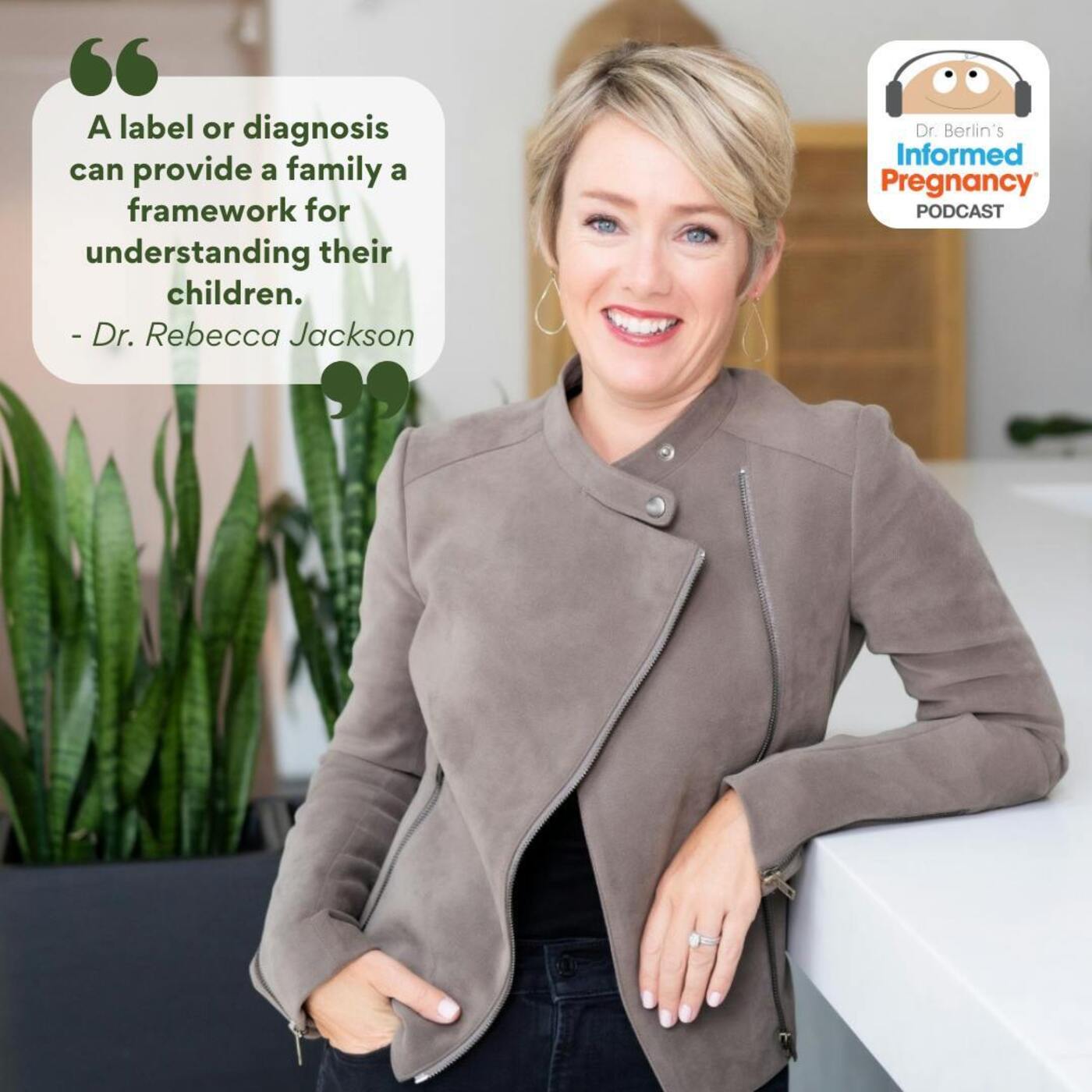
Dr. Rebecca Jackson [16:19] Absolutely, and there's pros and cons to it. A label can provide a family or a parent or an individual a framework for understanding. So when I say ADHD, you have an instant vision that comes to mind. So there's a framework of understanding and it can provide a little bit of guidance and direction. Now, what was surprising to me the more I got into this area and field is there's not a clear path forward. I thought when you received a diagnosis that there would be a, you know, do this, this, and this, and that sets you on the path. Parents so often are really left trying to search and find the help and answers on their own and really takes a lot of research and exploration.
[16:59] So there can be some positives in that label and diagnosis for providing understanding, providing direction for next steps. In the schools, sometimes you need a label and diagnosis in order to qualify for certain services. But there's also this idea that I don't want to label to define who my child is. My child is so much more than a term or a label. So a lot of families want to do everything they can before going that route. And sometimes we're able to minimize the concerns enough that maybe the label isn't necessary or is no longer needed. Not always, you know, challenges are always on a spectrum of severity. And so if we can minimize the severity,
[17:37] that can look different. So parents don't want their child pigeonholed and sometimes the concern isn't enough to warrant a label or a diagnosis. So maybe they go that route and in the end they're told they don't qualify. It doesn't mean that their challenge isn't real. They maybe just didn't meet the threshold for a particular diagnosis.
Dr. Elliot Berlin, DC [17:55] So I want to learn more about the process at the centers. But before we go there, I will give my own personal example since I teased it before we started this second segment. Three things that I found out about myself. One was utterly life-changing. A is that I have ADD, but I call it ADDD, which I'll explain as my own little diagnosis. Two is aphantasia. I can't picture things in my mind's eye. And then three, the big one is presopagnosia. I have complete and total face blindness. I don't recognize anybody by face, including my wife, my kids, my mother, and my own face. And I never knew that about myself. And so I think they only started talking about it
[18:41] just around the time I was born. And even then it was acquired presopagnosia where somebody had face recognition, then had some kind of neurological trauma and lost it. And so they could say, wait, who are you? And at first I thought it was amnesia. And then they, you know, a lot of research and study. I read an article by Oliver Sacks, a neurologist from NYU. He wrote several books about it and he had it and he researched it. And I just read this article in the New Yorker. And as I read it, I was like, oh, and gee, that is my whole life just started to make sense. And I really thought I had some kind of social disorder autism, which would have been fine.
[19:24] I just didn't understand because I hated being in public. I would go around people who I see all the time and never have any idea who I'm talking to until I can discern it from other clues, you know? And learning about it just changed my life for the better a million times over because I understand me. And I know that's true for a bunch of these sort of things that we're learning about the brain and how the brain works and how our brains are different from each other and we see things differently and perceive things differently. And I know for a fact from firsthand experience that when kids are going to be able to find these things out, or parents will be able to discover these
[20:04] things much earlier on. And especially now that we're developing all these tools to sort of work with them and sort of maximize whatever benefits are there. I have celebrity clients who are tickled pink that I have no idea who they are, you know? So there's pluses and minuses to everything. And how to take the challenges and overcome them, find the tools to overcome those challenges is really important. So I imagine parents who are nervous about, oh, is my kid different? Are they going to be labeled? Maybe. But I have a feeling that the good you could do by learning about their differences and how to maximize the pros and overcome the challenges is going to really be a lot more powerful for them lifelong.
Dr. Rebecca Jackson [20:48] I agree. And I'll tell you, there's so many directions we can go in this conversation right now. But I have to tell you, one of my favorite things about working at the Brain Balance Centers over the years was that open understanding that we were able to provide to parents of your child isn't broken. There's not anything wrong with them. There are differences and oftentimes those differences can be strengthened and influenced. So, you know, when you look at how our brain takes in and processes information and how it synthesizes it with multiple different networks and pathways at a time impacts our experience. And it's so fascinating. I've worked with many kids over the years that have struggled with some of
[21:27] the things that you've shared. And to hear you describe that from the adult perspective of that inability to recognize a face, you know, in a child and for a parent, it is enormously frightening to know that if you displace your child in the crowd, that they're not going to look at you and know that you're a mom. But that's a really hard thing to be able to pinpoint and recognize where kids don't have the words to explain it because they don't realize that their experience is different than anyone else. But when we look at how they process visual information and how that gets stored in memory and how it's retrieved in the environment, it can have such a profound effect on how they
[22:02] socialize their comfort level in different scenarios. And I think what's so important also to understand is nothing in the brain happens in isolation. And so what you just described of having multiple areas that have been impacted by you, that's what we see in our kids that we work with as well. The brain is made up of millions of nerves that have billions of connections. So when there's an impact in one area, there will be an impact in other areas as well because the brain is so interconnected. So what's so important is to strengthen those individual systems and networks and pathways in the brain, but then get them to synthesize with other things as well so that you can be successful in the classroom. You can recognize
[22:44] a face in a crowd even when there's a lot of noise and chaos and movement happening.
Dr. Elliot Berlin, DC [22:49] So fascinating. Yeah, interesting. So the other thing is ADD. I never knew that I had ADD and it's partially because I think there's no H for me. And I think some of the other things go in my brain just give me a little bit of a faster processor, not the greatest memory, but still somehow a little above average on the IQ. And that means some things will come easier to me, right? So up until grad school, I was never a disturbance. I don't have the hyperactivity and I never fell behind because even if I wasn't paying attention, I could sort of just look at the bolds, print in the textbook and piece it together. But I knew that I have a really hard time focusing on things that I'm not extremely excited about and you can't pull me
[23:39] away from things that I am extremely excited about. I didn't know that was ADD until I started looking into it for one of my kids. I'm like, that's what that is. I have that. And I realized to compensate, I call it ADDD because I think when you have an attention issue and you're sort of being forced to focus on something but the gates are closed, your brain doesn't want anything to come in at that moment, it's uncomfortable. It's physically and mentally uncomfortable. And I think you have to do something with that discomfort. For some kids, it's like fidgeting or bouncing off the walls. For me, it was eating carbohydrates, like simple carbs. So I call myself ADDD, attention deficit donut disorder.
[24:19] And I only found out later from Kelly Lavec, a well-known nutritionist, that there is research that shows that when you have ADD, your brain has a hard time bringing blood to the frontal cortex and gluten carbohydrates help push blood to the frontal cortex. So for me, I was medicating myself on vitamin Krispy Kreme and it was working. So it's interesting you remember of me as a diligent student is because I knew that if I didn't sit in the front row with a laptop and type in every word that I heard come out of a professor's mouth, I was going to miss it. Like something's very exciting, especially the Chiropractic Sciences and techniques. Microbiology, not so much. So if I didn't sit there and type it and then
[25:04] go home immediately and organize what I typed, you know, and start to absorb it and look for pictures and visual to kind of go with the text, because a picture tells a million words. And then that's what I was just doing for my own notes so that I could get it and overcome ADD that I didn't know I had. And then people were like, oh, can I get your notes? Can I get your notes? Can I get your notes? And then that became Norm's sort of put me through chiropractic school.
Dr. Rebecca Jackson [25:32] And you know, it's so fascinating because you had enough development and enough executive function where even though you didn't pinpoint to understand the diagnosis that told you about some of your brain functions, you naturally figured out the compensatory strategy so you could be successful. And what oftentimes we see happening with our kids is the younger you are, the less executive function you have just by nature of development. So it's harder to compensate for those challenges. And so that's where then parents need to provide that scaffolding of helping to drive the organization, the structure, reducing distractions when it's focus time. But, you know, the goal is how do we strengthen the
[26:14] networks and pathways in the brain so those compensatory strategies aren't as needed? But just, again, fascinating to be able to hear you talk about it in your adult perspective. There was a study from a team at Harvard that the study was looking at brain balance, a home program, and Dr. Martin Teicher was the head of the study. So I had flown to Boston to visit his lab and he was going over functional MRI was a part of the study. And so he was going over some of the fMRI results of me. And before he showed me any of the fMRIs, he said to me, so what do you think this is going to show, you know, based on your experience? And I felt like I was like front row of the
[26:48] class put on the spot, you know, tell this world renowned scientists what the findings are going to be. But you know, taking a step back, I said, okay, the differences and changes we see at brain balance as we see increase in sustained attention and focus, decrease in impulsivity, we see increase in emotional regulation. So I think we're going to see change in prefrontal cortex and amygdala. And as he started showing the results, he was like, you're spot on. And that was such a goosebumps moment. I had lived it with the kids for decades, seeing the changes play out from what we were doing, but then to be able to see it in actual brain structure function
[27:25] of looking at the blood flow and what parts of the brain are active when there was just it was fascinating. So you figured out how to drive blood flow through donuts. Ideally, we can access that part of the brain without donuts, so that we could, you know, find a healthy balance.
Dr. Elliot Berlin, DC [27:41] Totally. I was trying to figure out how I could turn them into capsules and go in shark tank. Yeah. Well, let's take another break. And we come back, I want to learn more about the process at brain balance and the book and a few tips that parents can use at home as their children develop. We'll be right back. Welcome back. I'm learning a lot about myself from Dr. Rebecca Jackson. So tell me about brain balance. How's the whole thing work?
Dr. Rebecca Jackson [28:18] The brain balance is a program that's focused on strengthening the brain. So we are a physical active engaging program and how we drive whole brain connectivity and improve brain endurance, resilience, productivity is through engaging as many networks and systems in the brain as we can all at the same time. So when you think about a child sitting in a classroom, or even you and I having this conversation right now, we have visual processing so that we're watching each other's facial expression as we're talking. We have auditory processing as I'm taking in and responding to what it is that you're saying, I'm blocking out the distractions of my two kids and two dogs in the next room. And
[28:59] sitting in class, and we're also having to remember information and take notes. Those are many different systems that all need to individually work perfect, but then they all need to be able to synthesize and come online together. And if a child or an adult has a disruption in any one of those processes, it's going to change the learning and classroom experience or the social experience. So at brain balance, through a layered and progressively challenging approach, we're exercising and engaging as many separate networks and systems in the brain as we can at the same time. So what that looks like for a child or an adult doing the program is our participants wear lots of
[29:40] sensory gear, the power of our sensory system cannot be emphasized enough. It is how we engage and interact with the world around us. And any dysregulation in the sensory system can increase anxiety, decrease attention and focus. It has a profound impact on our interactions with the world. So providing layered sensory stimulation while there's coordinated body movements, balance, rhythm, and timing, and then we do a lot with the visual system. Our visual system is incredibly complex and we want to make sure that we're optimizing and maximizing how we track information, how we process what we see, and that helps to build endurance and efficiency in the brain.
Dr. Elliot Berlin, DC [30:24] At what age would someone start?
Dr. Rebecca Jackson [30:26] We work with kids as young as four and all the way up through adulthood. We have a virtual program and we do have centers in California.
Dr. Elliot Berlin, DC [30:37] Oh, amazing. So again, is it something that you start a series of visits to?
Dr. Rebecca Jackson [30:45] It is. So this is all based on neuroplasticity, which means the brain is able to change. And the principles of neuroplasticity are frequency, so you need to do it often enough each time you engage the pathway in the brain, it gets stronger and faster. So there's a lot of repetition to strengthen pathways in the brain. And then it's increasing in complexity. So right when something gets easy for you, the brain doesn't have to work as hard for it. And so we're constantly increasing the complexity so that you're always growing. So think about if you're doing physical activity to increase muscles, if you're not challenging the muscles,
Dr. Elliot Berlin, DC [31:20] the muscles aren't growing and improving. So it's literally like the gym for the brain. Absolutely. So we talked about the fact that this is good for anybody, but also certain specific conditions. What are some of those conditions?
Dr. Rebecca Jackson [31:36] I always think about things less in terms of label and more in terms of outcome. So the number one thing that we work with and the number one thing that we drive and enhance is attention. And I talk about attention as a standalone concept and not as something tied to a label because our attention abilities are some of our most fragile resources. They're one of the last things to fully mature and develop. And one of the first things to be impacted with distraction, with pathology, with aging and degeneration. So our attention can be impacted with autism, with ADHD, with anxiety, with sensory processing. So it's not specific to one label or diagnosis, but because it's such a fragile, precious resource, it really carries
[32:20] over into all areas. Another area that's really become a passion and interest of mine is anxiety. And so when we are able to mature and regulate many of the systems in the body that change how we react to information, how we take in and process information, we can see big reductions and changes in anxiety. So we work with kids that struggle with aspects of learning, with emotional regulation and pulsivity, anxiety, and attention.
Dr. Elliot Berlin, DC [32:44] – It's incredible. First of all, some of those things are so different because some of them take place in a neurotypical brain and some of them in a neurodivergent brain, but you can make progress with both, it sounds like.
Dr. Rebecca Jackson [32:55] – You can. I would call it, 100% is 100%. And so what we see in the research that I've been able to lead at Brain Balance, we always say it's stratified by baseline severity. And what we mean by that is we see the biggest change and the largest deficits. So somebody that is neurotypical can still see change in progress. That change in progress isn't going to be as significant as somebody that is below the threshold of age-appropriate development or development in that category. So we see the biggest change where there's the largest deficit, but you're able to see progress and change throughout.
Dr. Elliot Berlin, DC [33:31] – On the neurodivergent side, are these types of skills helpful? You know, a lot of parents struggle, their kids struggle, social cues. Is that an attention thing, being able to pay attention to how people are reacting to you, or is there more to it?
Dr. Rebecca Jackson [33:48] – There's more to it. You know, we want to make everything linear. We want to make everything a one-to-one correlation of if I do this, it's going to change that. Even a social conversation is visual processing, auditory processing, it's empathy, it's being able to make a connection and process the words. And so it's about maturing the whole brain. And so again, having all these systems being able to come online together. And to me, the best way to visualize this or understand it is if we take ADD, for example, what research has shown us about ADD is there's going to be parts of the brain that are going to be about 30% behind. And so with some of the executive
[34:24] functions, sustained attention, emotional regulation, there can be about a 30% deficit. If I have a 10-year-old child with a 30% deficit, that means that 10-year-old in some areas of development is going to look more like a 7-year-old. So their ability to handle their emotions when they're upset or to restrain impulses. And so our job is to target those areas of immaturity so that it's more age-appropriate across the board, and then you're not having to work as hard on some of those tasks and functions. So it's just maturing the connections in the brain.
Dr. Elliot Berlin, DC [34:57] At a time when there's so much anxiety, so much distraction, and a clear, growing, underserved mental health, I would say crisis, waiting till something is wrong when you don't have to anymore seems like a terrible idea. We don't just start eating healthy and exercising, you know, when one of the systems is failing. You do that from the beginning to try to live a very healthy physical lifestyle. And it sounds like the work that you're doing does the same on the mental, emotional and neurological side.
Dr. Rebecca Jackson [35:36] Absolutely. And there's such a need for this right now. I mean, headline news article earlier this week is CNN did a piece looking at the overlap between mental health and ADHD. An individual with ADHD has a much higher likelihood of mental health challenges, some of the same networks and pathways in the brain involved in both. But we've looked at everything through a very siloed lens. If we look at ADHD as something completely separate from anxiety, from depression, from impulse control, but the networks and the pathways in the brain, again, nothing in the brain happens in isolation, there's a lot of overlap. And so understanding and looking at these
[36:09] things through the lens of development and through the lens of brain health, a healthy brain is able to take in and process information appropriately and react to it well. A healthy brain gets rest and healthy nutrition so it can perform in its best. Brain health is about development and environment. And it has a huge influence and impact on our mental health. And, you know, no one thing is a replacement for another. There's a need for all programs and services. However, there's a big need to look at this through the lens of brain connectivity to minimize and support areas of brain health and mental health as well.
Dr. Elliot Berlin, DC [36:46] Let's talk about the book, your brand new baby, back on track, a practical guide to help kids of all ages thrive. What's the structure of the book?
Dr. Rebecca Jackson [36:56] You know, to back up before I talk about the structure, I was really inspired throughout the pandemic to write this book and inspired isn't the right word, driven is more the word, where I was watching an increase in the number of phone calls we were getting from families across the country because kids were struggling more. And the headline news for years have continued to talk about, you know, we're still seeing an increase in the academic achievement gap with low socioeconomic economic areas and families hit the hardest, seeing an increase in ADHD, seeing an increase in anxiety. And the headlines for years have been so negative. And so I sat back waiting and hoping and watching
[37:32] for some of the positive, what can we do about this information? We're doing all of these studies to understand the why, and there's not enough information to give us the what, what do we do about this information? And so I finally got fed up and said, Okay, I need to contribute to this conversation. The conversation isn't happening loudly or often enough, in my opinion. And so I want to encourage that conversation. I want parents to know that there's things that we do on a daily basis that can help maximize our kids current abilities, as well as things that we can do daily to support and enhance development to minimize the downstream complications.
Dr. Elliot Berlin, DC [38:10] Well, I mean, driven sounds like you in general, the right word. Yeah. So how does this book address that?
Dr. Rebecca Jackson [38:18] Sure, you know, to go back to the structure question, this book is really looking at developmental milestones from birth through 18. It was always fascinating to me that you could read a book during pregnancy that told me week by week, day by day, what was happening in that development, and then your baby's born and you've got a ton of great resources through age two talking about developmental milestones, when it comes to physical coordination and communication. But there's other areas of development that are also important anxiety, tantrums and upsets how we learn. And then there's a fall off around age two or three where we have less information about those developmental
[38:53] milestones. So I wanted to provide parents with the information of this is what typical development looks like from birth to 18 in all of these categories, communication, learning, anxiety, upsets, as well as coordination, and then providing parents with tools and understanding why did what happened during the pandemic influence and change in a negative way the development of our kids, what can we do to foster that development to get it back on track? And for every parent, whether your child is neurodivergent, or typically developing what you can do on a daily basis to drive and enhance and support that development. So the book is hoping to provide a
[39:31] deeper understanding for families as to what they're seeing and why and arming them with tips and tools and strategies to help.
Dr. Elliot Berlin, DC [39:38] Are there going to be sequels?
Dr. Rebecca Jackson [39:40] I don't know. We'll see. You know, I would love to write the adult book. I guess a lot of information is still the same, but
Dr. Elliot Berlin, DC [39:48] I have four teenagers right now. So I'd like to see the adolescent book. I know this goes through 18. But yeah, I bet there could be a whole book on adolescence. And then my wife needs the one on husbands who have tantrum.
Dr. Rebecca Jackson [40:00] over 19. Absolutely, all spouses need that to understand one another and to help and support
Dr. Elliot Berlin, DC [40:05] for sure. In closing, most of our audience has little kids in the first couple of years of life.
Dr. Rebecca Jackson [40:12] Any tips for at home on how to help your child thrive? Absolutely. You know, to give our parents of young kids some tips and suggestions, a couple things that we can't stress enough is the importance of sensory stimulation and physical activity. And when our kids are spending a lot of time on devices, it's taking away from the time where they're going to be receiving varied sensory stimulation and movement. And so it's so important that we maximize movement and sensory stimulation. And the research on sensory stimulation is fascinating and it leads to the development of our emotional circuitry and maturation. And so sensory stimulation can be as simple as when
[40:51] you're outside, have your kids barefoot. So that way, when they're going from grass to the sand, to concrete, to dirt, that's varied input on the bottoms of their feet where there's tons and tons of receptors. It's when you're putting your kids to bed at night, taking some time to do some massage and some sensory input where it's some deep, gentle pressure, tickling vibration is the very powerful sensory stimulation piece. So finding ways to vary the sensory input that they're getting. If our kids are just at home all day, every day or on a device, they're not getting as much varied exposure. And so making sure that we're getting varied sensory input from smell, from what they see, from tactile, also from movement and
[41:31] stimulation. So break outside your typical routine so that you're providing lots of varied input and then doing it over and over and over will stimulate and engage those pathways that set the stage for developing attention, emotional regulation, the things that we want our kids to have when they're in the teenage years and beyond.
Dr. Elliot Berlin, DC [41:49] Wow. This has been a super informative episode. And even though I haven't had any donuts, I've been able to very much focus on everything that you're saying and take it in. And I think it's because you have such a great understanding from both research and experience and such a great way of breaking it down and sharing it in ways that are easy to digest. So thank you very much for all of that. Absolutely. Thanks for having me. My pleasure. And I know we're going to have you back. But until then, Rebecca, where can our listeners find you online?
Dr. Rebecca Jackson [42:23] Sure. You can learn more about Brain Balance at brainbalance.com. You can find me at drrebeccajackson.com or on Instagram at drrebeccajackson. And you can get the book anywhere you order books. So Barnes & Noble, Amazon, Indie Books, anywhere you buy books, you will find back on track.
Dr. Elliot Berlin, DC [42:39] Back on track. A practical guide to help kids of all ages thrive. Thank you again for joining me and at home. Thanks for listening to the Informed Pregnancy Podcast. For more pregnancy and parenting information, visit us online at informedpregnancy.com.
Want more pregnancy + parenting? Start your FREE TRIAL of Informed Pregnancy+ and get access to all our curated pregnancy and parenting content — original series, iconic birth films like The Business of Being Born, prenatal workouts and more.
