
July 22, 2022 · 44 minutes · Episode 292
About this episode
Jenna Ushkowitz returns to discuss the end-of-pregnancy scramble of exploring options for her baby (who was still in a breech presentation) as time was running out. Listen in as Jenna shares how she chose which path to travel and not travel as well as how her birth turned out.

This podcast has been brought to you in part by LMNT electrolyte drink mix. You can get a free sample pack with every order at drinklmnt.com/berlin .
Learn more about your ad choices. Visit megaphone.fm/adchoices
See Privacy Policy at https://art19.com/privacy and California Privacy Notice at https://art19.com/privacy#do-not-sell-my-info.
Key quotes
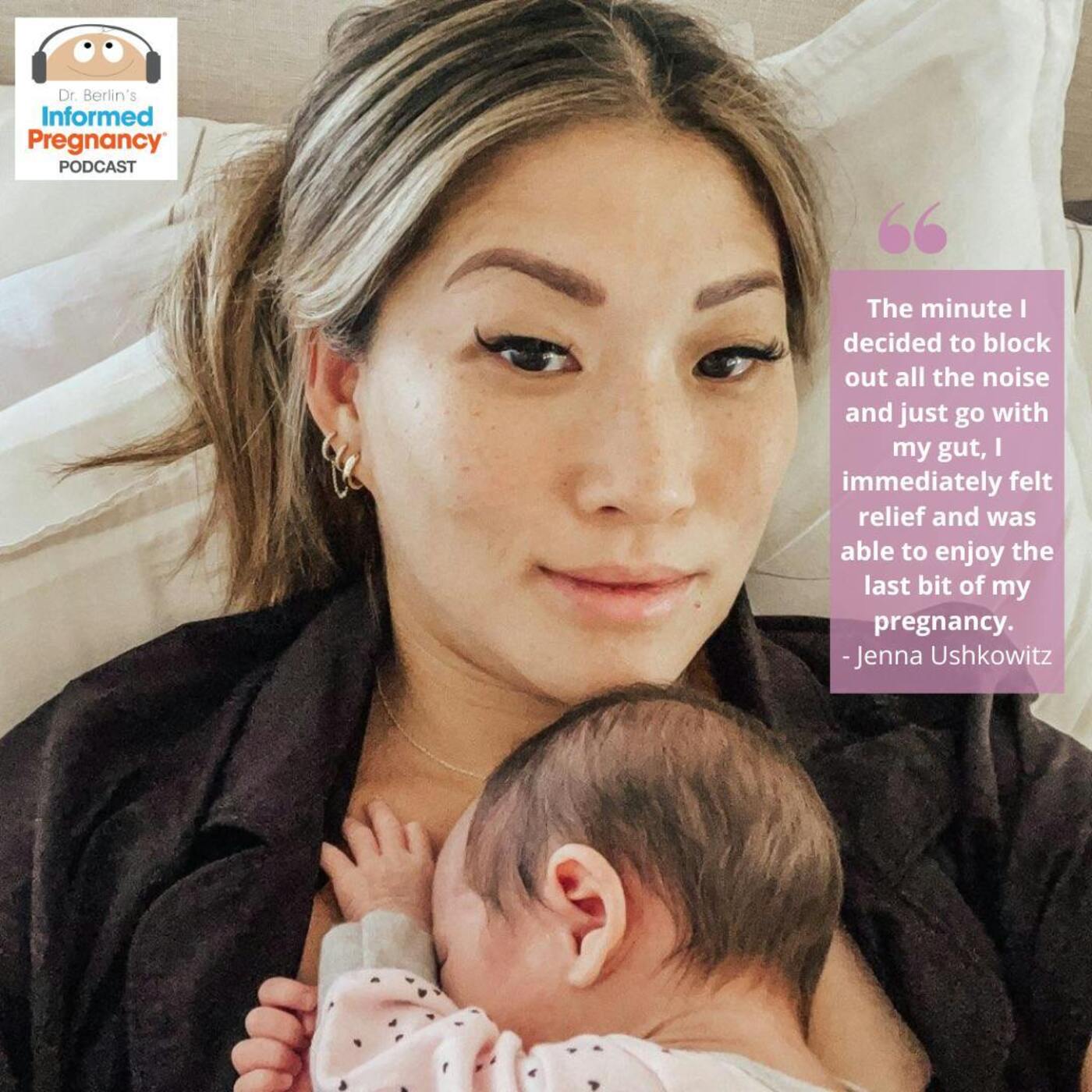
“I have to drown out the noise. I have to stop hearing everybody's opinions. And I have to just really go with my gut at this point”
“because I think learning from your podcasts and all of these women and everybody, you have to be able to be flexible with how this is gonna go,”
“And I went in with the two mantras. This is supposed to happen. And it's supposed to feel this way and I can do hard things.”
“Your experience is going to be your experience no matter what in your pregnancy, in your labor, in your recovery, take as much information as you can prepare for all of it, but like, drown out the noise because it was helpful for me to know, but it was so drastically different from what I had heard.”
“I tell people that who are looking to get pregnant and people have told me this, like just get in shape and really take care of yourself because it really does seem well on your whole pregnancy and recovery, at least for me, that was my experience.”
Related episodes
- Ep. 295 Michele Maturo – After Birth
- Ep. 280 Kayleigh Harrigan – After Birth
- Ep. 286 Jen Lilley – After Birth (Again!)
- Ep. 277 Kelly Kilmartin – After Birth
Transcript
AI-generated transcript with speaker labels — may contain errors, especially names and medical terms. Dr. Elliot Berlin, DC appears in blue; Jenna Ushkowitz in orange.
Download PDF of the Transcript
Dr. Elliot Berlin, DC [1:13] Welcome to the informed pregnancy and parenting podcast on your host pregnancy focus carprector. Dr. Elliot Berlin My guest today is returning just shortly after having her first baby last time we talked things were taking an interesting turn Jenna Ashko, it's welcome back to the podcast. Thank you Or maybe I should say things weren't Not You're all fit and healthy and you're playing for this epic vaginal birth and then your baby was not cooperating with positioning
Jenna Ushkowitz [2:09] That's right. She was breached and she was breached all the way until she was born
Dr. Elliot Berlin, DC [2:14] So what kind of things did you do or not do? To try to help encourage the turn
Jenna Ushkowitz [2:21] I You know, I did almost everything except for the ECV I worked with you and I Was basically on you know cat cow all night long every night and upside down and I Did the mock Sebastian I did? Swimming in a pool handstands you name it except for the CV. I tried it
Dr. Elliot Berlin, DC [2:47] Yeah, I mean were you swimming through the pregnancy? I
Jenna Ushkowitz [2:51] Wasn't swimming through the pregnancy, which is you know, if I could go back, maybe I would stretch more But I wasn't swimming through the pregnancy it wasn't warm enough here But you know nothing said to me that I would be Having an issue with a breech baby until probably 34 weeks Was it ever like discussed or brought up to me that this could be an issue? You know or could be something we'd have to you know, kind of explore in terms of c-sections or ECVs
Dr. Elliot Berlin, DC [3:22] You're not a lot of time to react to it, but you managed to do a lot of stuff. Anyway, I did
Jenna Ushkowitz [3:28] I fit it all in into four good weeks
Dr. Elliot Berlin, DC [3:33] So if you hadn't been swimming was it weird to get into a pool with the baby in you
Jenna Ushkowitz [3:38] Yeah, it definitely was it felt really nice. Actually felt you know, like a little bit weightless It like gave me a little bit of rest my back and I didn't swim a ton That was probably the thing. I did the least out of all the things I tried Just because I didn't have access to my own pool, but I did enjoy it and handstands were kind of fun
Dr. Elliot Berlin, DC [4:00] Did you go with a lifeguard? I
Jenna Ushkowitz [4:03] Had a lifeguard in my stomach It's true. You're never alone quite at that point. No, I saw him with a friend. I saw him with a friend for sure
Dr. Elliot Berlin, DC [4:12] So did any of those things feel like oh, you know what? Maybe this is working
Jenna Ushkowitz [4:17] You know the swimming and for like two or three days after the first time I swam and did about 15 handstands It felt like she was moving quite a bit a bit more than I normally felt So I thought maybe she turned maybe she turned and then you know I think I went back to you and we were doing our you know massages and you were like, oh no She's definitely not turned Not yet, and I think you were also encouraged although we were a little late We were pretty close to my due date when you were like, you know She keeps moving out of your pelvis more and more like we were pretty encouraged by it But by that point we were pretty close to the date that I actually had scheduled my c-section for
Dr. Elliot Berlin, DC [4:57] right the ECV so it's the external cephalic version. It's where the doctor tries to turn the baby manually from the outside through your belly. And you gave it a lot of thought. What information did you have that you were taking into account in your analysis of whether to do it or not?
Jenna Ushkowitz [5:15] Yeah, I gave it more than a lot of thought. I gave it the most thought. And it kind of stressed me out, which in turn I thought, she's never gonna turn if my body is so stressed about doing this or not doing this. The information that I had that my doctor gave me was it's 50% success rate, if that. And I asked her, I said, how many people who are breeched do it? And she said, it's a good question about 50% of the people who she talks to. So it's not a lot of people. I had asked a bunch of friends who I knew had breeched babies, if they did the ECV and 99% of them did not, they opted out. So there were very few people that I spoke to that actually even tried it.
[6:00] There were a few that said in retrospect, they maybe would have tried it now that they thought about it, but most of them just kind of opted in for the C-section or they turned. And then, I did a bit of my own online research. I talked to you. I talked to my doctor. I talked to friends. I had one family member who did the ECV and she turned successfully. She was then induced that day. And then she ended up having to have a C-section anyway. So the risk factors kind of outweighed the pros for me. And then also just knowing how stubborn I am. If she was anything like me, she was not turning. So it's just something in my gut said, this is her journey and she was not gonna turn.
Dr. Elliot Berlin, DC [6:47] There's definitely something in your gut.
Jenna Ushkowitz [6:49] Yeah, yeah, exactly. She was in my gut.
Dr. Elliot Berlin, DC [6:54] Yeah, but I mean, you really give a lot of thought because it seemed like you were back and forth and back and forth.
Jenna Ushkowitz [6:59] Every day. Every day was like every minute it changed. My husband had to ask like, how do you feel today? And how do you feel now? And every day it would change a little bit. And then the weekend before the Monday, I was scheduled for the ECV. I just said, you know what? I have to drown out the noise. I have to stop hearing everybody's opinions. And I have to just really go with my gut at this point because I'm a very competitive person. I like to be challenged. I'm stubborn. I will do something in spite of somebody else. So I just didn't wanna do this for somebody else or in spite of something else. So I really took the weekend. I stopped asking questions.
[7:39] I kind of just went inward and thought about it really. And after speaking to all my friends who had had C-sections and said, you know, look, if she doesn't turn, C-section is not the worst thing in the world. A million people do it. So the alternative wasn't so bad to me anymore that I just kind of came to peace with not getting on the table, putting ourselves with more stress. And the minute I decided there was like this relief that kind of came over me and I was able to really enjoy the last week of my pregnancy.
Dr. Elliot Berlin, DC [8:11] Well, that's great. In that decision making, in that back and forth in your mind, were there different personal pros and cons to the vaginal birth versus cesarean birth?
Jenna Ushkowitz [8:24] You know, I was never really married to the vaginal birth. I just thought, you know, for eight months, I had imagined that's how it was gonna go. And I was excited about it. It's kind of feels like a rite of passage, you know, to go through the hours and hours of labor and go through all the pain and kind of grit and, you know, ride the whole thing out. And it's very exhilarating and exciting to me. And I love how athletic giving birth vaginally sounds. That sounded so exciting to me. But when, you know, at 34 weeks, when she kind of told me like, we should schedule a C-section for you just in case, and, you know, we could try the ECV. And it just kind of really became very real to me.
[9:03] And I thought, wow, I guess this isn't exactly how I imagined it going, but I wasn't devastated by it. So, you know, there were pros and cons. I just thought, if she turns, I'm supposed to have a vaginal birth. If she doesn't turn, this is how it's gonna go. And I'm just kind of gonna go with the flow because I think learning from your podcasts and all of these women and everybody, you have to be able to be flexible with how this is gonna go, because I could have went and done the ECV and ended up having to have an emergency C-section anyway, I could have done all the things and she could have turned and I could have ended up with an emergency C-section anyway.
[9:43] So it was just kind of one of those things that I thought, I don't think it ever really goes exactly how you imagine it going. And that kind of kept me at peace with however this was gonna kind of turn out.
Dr. Elliot Berlin, DC [9:55] Once you made that decision and peace settled upon you and you still have a little. time left before the caesarian date, what did you do with your final days of freedom?
Jenna Ushkowitz [10:05] Yeah. You know, after that logistically forced plan C sections, I talked to two friends who had scheduled C sections where they had a time and a date and they went in and they knew, and they checked in on their own and, you know, that was really helpful. That was really, really helpful for me to understand from their exact perspective, what I was getting into. And then from like a leisure standpoint, I just kind of stopped getting upside down as much and I stopped working out and, you know, took more walks, not too many, cause I didn't also want to put myself in labor and, you know, went and ate dinner with my husband and we had some dates and we finished renovating
[10:46] my house. I'd had workers up until I think two days before I gave birth at the house finishing our kitchen and everybody's like, you don't look like you're giving birth tomorrow. And I'm like, well, it's happening. Yeah, exactly. Finish up here. Chop chop.
Dr. Elliot Berlin, DC [11:05] Did you do anything in those days to prepare? I mean, you talk to people, but did you do anything specifically to prepare either your mind or your body for the birth?
Jenna Ushkowitz [11:17] You know, I made a birth playlist because I was allowed to play music
Dr. Elliot Berlin, DC [11:21] in the O R but what's on the play. Oh, you didn't play it.
Jenna Ushkowitz [11:25] Well, it did start playing. And then when she came out, my husband went over to like the table to see her and somehow the playlist went on shuffle and it started playing his music and it was like the one thing that didn't go to my
Dr. Elliot Berlin, DC [11:37] plan was on your playlist.
Jenna Ushkowitz [11:42] My playlist was one of our wedding songs from a band called need to breathe. They're like a folk band. I had a couple of 2000 songs, like backstreet boys. I'm not going to lie. My doctor was like, I love that. This is on your playlist. Um, we had some nice John Mayer. I had Milana on there because I played Disney songs for her when she was in my stomach. Yeah. And there was a couple of other songs on there that I had played for her as well every day leading up to when she was born. Yeah. It was just a mellow playlist. It was like fun, but mellow. I didn't want any like punk rock on there, you know, from my heart to the world. And you know, I actually, I had stayed pretty active because I was
[12:27] lucky enough to have a good pregnancy and a pretty low key healthy pregnancy. So I really did stay active, which I think helped in my recovery a million times over, but I did mostly just little yoga flows leading up that last week, I kind of laid off everything else hardcore when I was told she was screech.
Dr. Elliot Berlin, DC [12:50] Did things go through your mind about what it would be like, or are you good at just shoving that off and waiting till you get there?
Jenna Ushkowitz [12:56] Oh, no, for sure. It played in my mind. I think I only allowed myself to play the best case scenario just because I'd heard so many horror stories about emergency C sections and C sections in general on the recovery. I was mostly scared about the recovery, to be honest, rather than the actual procedure. And I have a close friend who warned me about a couple of things that she wasn't worried about that she wished she had known going in, such as when you get the spinal, because when you're, you know, you have a plant C section, you get to do that instead of going in with the epidural and laboring for hours, you know, you're breathing. Like sometimes you can't feel your chest rise and fall and you
[13:35] panic because you don't feel like you're actually able to breathe. She recommended talking a lot. So just like, keep talking to remind yourself that you can breathe. Mm-hmm. Funnily enough though, my spinal was strong enough that I couldn't feel pain, but I felt everything. Like I felt a lot of pressure. I felt movement. I felt touch. So I wasn't a hundred percent numb where I felt paralyzed, you know, where I couldn't feel anything at all. Yeah. There are definitely moments where like sleep was not non in any way, but leading up to is definitely, there were so many scenarios that played out in my head. I think I had heard somebody on your podcast who had an emergency C
[14:17] section that like she kept bleeding out after, and so that was going through my mind and you know, all these things, but you just kind of try to shut it out after a while and go, you know, I just hope for the best and yeah, exactly. And prepare for, you know, you just prepare your brain, but I feel lucky because I was able to process the switch, you know, from going to a bachelor work to a C section, I had weeks to process if that was going to happen to me and to know that that's what I was getting into versus somebody who delivers and, you know, has zero seconds to really kind of go through that and then they're going through it postpartum.
Dr. Elliot Berlin, DC [14:56] So, right. Well, let's take a break and you're an excellent story. So, I feel like a lot of people are in this position and just so curious about what to expect and I feel like you're going to be able to really bring us into the experience. So we'll be right back with Jenna Ashquitz.

Dr. Elliot Berlin, DC [17:28] Welcome back to the podcast, we're talking to Jenna Oshkowitz. Okay, fine. So you're planning on a vaginal birth, you're super athletic, you thought it was going to be an amazing experience, and the baby had other ideas. You did lots of things to encourage the baby to pick the position which is more conducive for vaginal birth. Baby did not comply, and then he chose not to force the baby into place, but rather to prepare for the baby's birth. So what time of day was it scheduled for?
Jenna Ushkowitz [18:01] Well, funnily enough, it was scheduled for a date that I did not want. It was scheduled for 6-6.
Dr. Elliot Berlin, DC [18:11] Oh.
Jenna Ushkowitz [18:12] And sorry to all the kids out there with 6-6 birthday, I just figured if I have some semblance of control over this, I can kind of pick her birthday, which I thought was cool. And I called my doctor and she's like, yeah, you're slated for 6-6. And I was like, it's the one day I really didn't want. Is there any way you can swap me? And being the wonderful woman she is, she's like, we went through a bunch of dates and she said, look, they don't normally schedule noon C-sections at Cedars, but I'm going to ask. And she got me a noon C-section in early June. So I was not on 6-6, which I was very happy. 6-6-2-2. Well, it would have been 6-6 at 6 PM.
[18:57] And I wasn't thrilled about having a C-section at 6 PM because it's a fastball day. And like, you're just sitting there waiting for this thing to happen all day long.
Dr. Elliot Berlin, DC [19:07] Oh, that's already like a good amount of forethought.
Jenna Ushkowitz [19:09] Yeah. I was like, you know, I'd prefer a morning where I wake up, you know, not thinking about not having breakfast in my coffee for too long. So it was at 12 o'clock. We went to dinner the night before. I enjoyed a really nice meal. And then I had to be there at 10 AM, two hours before my actual appointment, if you will. And you're not allowed to have any water or anything, but I am a voracious water drinker. I am always, always thirsty. So I brought some ice cubes on the way. And you're nervous already, right? You're on your way to like have your baby. You're like nervous and your mouth's dry. So I had put an ice cube in my mouth. I would like take three little like socks of it.
[19:54] And then I would throw it out the window.
Dr. Elliot Berlin, DC [20:00] Oh, wow. Just so that I wouldn't even let you have ice chips.
Jenna Ushkowitz [20:05] No, nothing. Yeah. Crazy. I mean, I thought, okay, if people have emergency C-sections on full stomachs, like I can have a couple of sex of an ice cube. Yeah.
Dr. Elliot Berlin, DC [20:17] You're such a rebel.
Jenna Ushkowitz [20:19] Like I am. I am hardcore. Live on the whole breaker. So I got there at 10. We checked in. I brought my cooler for my placenta. We had brought all of our stuff and it was very low key. He's like, oh, you have a scheduled C-section. That's why you're so calm, like checking in. And they brought me back and they made sure she was still breach, which I thought was funny. Like watch. She turns now and they send you home, right? Yeah, well, wouldn't be funny as if they know exactly. Exactly. They're like, oh, look ahead. So, so yeah, we gone in and, you know, they prepped me and they gave my husband his scrubs and like, before, you know, it, we were getting ready to go.
[21:08] Like they had put the heart monitor on her to make sure, you know, her heart rate was good. They put me in my little scrubs, my hospital down, and then I walked myself to the O R I was like, oh, you're not going to wheel me. And they're like, no, you can work yourself. So, so I walked myself in and my husband waited outside while they do the spinal and that's when I got really nervous because I was like, what without my husband, but my doctor was like trying to talk to me and she was like, what did you guys do last night? And the anesthesiologist came in and introduced herself earlier in my like pre-op and then I was in the O R and I thought, you know, it's
[21:48] funny, I imagined that there would be like 15 people in this O R. Like you see in gray's anatomy and they all be working on you, but it was really my nurse, my doctor and like two assistants and the anesthesiologist. Like it was so chill and low key and there were like four people in there. And it was so cozy and comfortable and really nobody, honestly, it was pretty lovely. And then they started the anesthesia, which was so strange. I think that was the hardest, strangest part for me. And I went in with the two mantras. This is supposed to happen. And it's supposed to feel this way and I can do hard things. And just when I would start to get nervous or my mind would wander, I would
[22:31] just come back to those because I've never had major surgery before really any kind of surgery, except for maybe an inocopy where I was in like Twilight sleep. So this was like the biggest kind of thing and obviously life-changing anyway that you're going to be your baby. So, you know, I tried to like prep myself that way and they put the spinal in. I barely felt it. I really didn't feel it at all. They said there's going to be a pinch and a burn. And I was like, where's the pinch? Where's the burn? Oh, you don't feel the pinch? No, I think the pinch is them numbing you. Yeah, I didn't feel any of that. And then they're like, you should lay down before you get too numb.
[23:09] And I was like, Oh God. So they laid me down and then I started to feel like numb a little bit and they would do the cold test where they would put the cold thing on your arm and obviously that was not numb. So I could feel that. And then they would do it below my rib cage. And over time, it definitely just started to wear in and they tip the table. They're like, you're going to feel like you're going to fall off this table, but we got you just to make sure that the medicine was being evenly dispersed throughout my body. Yeah.
Dr. Elliot Berlin, DC [23:37] Is your husband still not in there at this point?
Jenna Ushkowitz [23:40] No, he's not. Um, my doctor is still in there and she's like, Oh, let me go give him the speaker that he can set up his phone for the playlist. And they warned us like, here, make sure you bring your phone and a separate phone for your playlist, cause you'll want to take pictures, obviously with one phone and play music with the other. So he's still not there. And then they did a timeout and then they brought him in probably about 15 minutes. The timeout is, yeah, they just say my name and my birthday and what we're doing and I confirm all of it. And then they brought my husband in and he said for him, that was the craziest moment was him standing out there and his scrubs all by himself.
[24:21] And that was the craziest for me.
Dr. Elliot Berlin, DC [24:25] Is there a solid reason why he can't be with you?
Jenna Ushkowitz [24:28] No, but that is like standard. I've heard like everybody says they separate you for a bit and then you guys come back together. And I always thought that was interesting because when people do the epidural, you know, when they're in labor, they don't make the husband sleep the room. So I don't know what that is, but
Dr. Elliot Berlin, DC [24:45] well, at that hospital, they usually that you have one person in there with you.
Jenna Ushkowitz [24:50] So, you know, he was by himself for a bit. He said it was pretty crazy.
Dr. Elliot Berlin, DC [24:55] Would you have been able to like FaceTime?
Jenna Ushkowitz [24:58] Um, I mean, I don't think it was long. enough to do that. Okay. I mean, he came back in pretty quickly after I was pretty dumb, you know, and just went through the numbing for the whole. Yeah. Yeah. Yeah. No, no. He
Dr. Elliot Berlin, DC [25:09] was allowed in. He just had to come in just for the nothing. Yeah. Okay. It was probably about 10, 15 minutes. Yeah. So I would just for a lot of people, that's an anxious time. So it'd be nice to have your partner with you. Certainly. And if not face to face, then at least maybe digitally, like over FaceTime. I think I was rambling
Jenna Ushkowitz [25:28] too, to the nurses and the doctor. And I was just talking a lot to make sure that I was distracting myself. And I think I was telling them about my other friends, C section experience, like they had never heard of a C section. Yeah. Tell us what it's like. Exactly. Now you guys tell me what it's like. And then yeah, they put the sheet up and it was the blue sheet and the clear sheet. And they had asked me earlier what I wanted and if I wanted to see everything. And I said, yes. So luckily at Cedars Nine-Eye where I gave birth, they gave me the option to have the clear drop for when she was being pulled out and taking her first breath. So we opted in for that. And then my nurse was kind of taking
[26:10] photos behind me the whole time, which I thought was really funny. I'm like, you don't need her, but yeah, she took amazing, like hundreds of photos, which is really cool. And as I was lying there, I was just having a conversation with David, my husband. And he was like, this is so crazy. I was like, you're telling me as I'm laid out and it was pretty quick. I'd say it was about eight minutes, nine minutes before, you know, her little butt came out and my doctor was talking to me over the drape and she said, Jenna, this is so crazy. Your abs are so crazy. And I said, when she goes, you just have so many, I was like, could you put those back together for me? That would be great. I might
[26:53] want those. And I thought that was really weird because she's just staring at my abs, like inside as I'm laying there like, oh, that's cool. And again, it was like pretty chill. I was like a little nervous, but I was a little out of it at that point and just waiting. We're just waiting to meet our baby and you know, know that she's okay and you know, breathing and wow. And she came out and her little, they said her butt came out first and then her little legs were kicking on the way out and they got her out. She swallowed a lot of fluid. They're like, oh, she's so cute.
Dr. Elliot Berlin, DC [27:24] Wait, did you get to see that?
Jenna Ushkowitz [27:27] I did. So it's kind of hard, you know, in theory, you get to see through the plastic, but it's hard to lift yourself up when you're being cut, you know, your abs are being cut over. Yeah, your lower abs, which you normally would use to lift yourself up that way. I didn't see her butt come out. I saw photos afterwards of that experience, but then I saw her fully like lifted out and you know, there she was and it was amazing. It was really cool. And they put her through the plastic onto my chest so I could actually feel her immediately. It wasn't skin to skin, but they were, you know, delaying the cord cutting. And the first words on it, I think I said like,
[28:04] oh, she's so small. She was really little, but it makes sense. I was pretty little. How big was she? Five pounds, 15 ounces. Oh, she was really little, but it was really amazing. And then my husband went away and they take dad over to do like an honorary umbilical cord cut. And I didn't hear her cry for a bit. And I was worried. And everybody kind of like went over to the baby, of course, and they're, you know, suturing me up and everybody went silent. And I was like, is everything okay? Everything good over there? Like, I'm thinking something's wrong. But she just took a second to cry. Everything was great. And before you know it, I think 20, 30 minutes after that I
[28:47] was in recovery. It was just the wildest and fastest experience is definitely under an hour that we were out of there.
Dr. Elliot Berlin, DC [28:54] Wow. But you said you didn't feel pain, but you were able to feel like the pulling tugging things like that. Is that true also afterwards when they were closing your backup?
Jenna Ushkowitz [29:04] No, at that point, I couldn't really feel anything. And I was kind of more in my head about, you know, when I was going to be able to see my daughter and when they were going to bring her over to me. So I didn't feel any of that. No, I could just feel them maneuvering me a little bit, you know, like I could feel them kind of like, you know, shifting me over. And I could kind of feel when they were pulling her out a little bit, like there was just a little bit of rejiggering there. But no, nothing, nothing too crazy.
Dr. Elliot Berlin, DC [29:32] And how about the placenta?
Jenna Ushkowitz [29:34] The placenta came out and they put it on ice for us. I didn't feel any of that either. I'm pretty sure that was very swift. Right after I had an anterior placenta, which we partially thought was why she hadn't turned. It was just not enough room, but you know, who's to say?
Dr. Elliot Berlin, DC [29:49] Oh, yeah. So that's the other thing I was going to ask did they see any clues about any roadblocks?
Jenna Ushkowitz [29:54] Nothing, no short cord, nothing like that. None of the things that they say might be the reason. and why, no.
Dr. Elliot Berlin, DC [30:01] Just crazy abs?
Jenna Ushkowitz [30:03] Yeah, just some tight abs and a tight pelvis and that tiny baby.
Dr. Elliot Berlin, DC [30:08] All right, you make it sound like just a routine kind of little thing. Let's go in and get this baby out and close me back up. It sounds like you had a really good experience.
Jenna Ushkowitz [30:19] I did, I did. I think going in, knowing what to expect, having heard the step-by-step of somebody else's experience. I had called my doctor before also and just said, could you take me through the day? And she did. She took me through checking in, checking my blood pressure to when I was gonna be in the OR, to how long that was gonna take, to everything. She took me through like a timestamp of everything and I think that was really helpful for my brain, especially as a planner and just having enough control over something, I think was really helpful for me. So going in, knowing kind of what to expect, I was like, this is what a normal, quick, easy routine C-section feels like
[30:59] and that's what mine was basically felt like. And it was, it really was, I can't complain about the experience at all.
Dr. Elliot Berlin, DC [31:08] It's amazing. I'm glad you had a great experience. I would love to find out how your postpartum experience has been in the hours, days, and weeks since the baby came. Let's take a quick break and we'll be right back. Welcome back to the Informed Pregnancy Podcast. We're talking to mommy, Jenna Ashkowitz. So baby's out, there's Stitcha, how's recovery? You go into, I assume some sort of pack you, post-anesthesia care unit. What happens in there?
Jenna Ushkowitz [31:50] We were hanging out in recovery. We had the room to ourselves. My husband was drafting an announcement email while we were in there. I was hanging out with the baby. I was able to do skin-to-skin about three minutes after my C-section. They brought her over. My trembles and shakiness that you hear about was definitely there. It just wasn't there noticeably enough that I couldn't hold her by myself, which was nice. And then they will you in your bed with your baby and everybody's congratulating you on the way. I was definitely a bit out of it. And I was really trying to stay lucid because I wanted to remember it so badly. I wanted to have all of these
[32:29] really crisp, sharp memories. And I do, but I was definitely out of it. My blood pressure was definitely playing games with the nurse for a while. So I was kept in there probably an hour, which is I think a little bit longer than normal. And they just wanted to make sure that I wasn't getting postpartum preeclampsia and all of these crazy things that you hear about. But it definitely-
Dr. Elliot Berlin, DC [32:49] Oh, so your blood pressure was going up high?
Jenna Ushkowitz [32:51] And then down low. It would play games with us. They would take it from different parts of my body just to see if it was my arm or my leg. And I don't know. Maybe just my body reacting to-
Dr. Elliot Berlin, DC [33:04] Interval training, it sounds like.
Jenna Ushkowitz [33:05] Yeah, exactly. It was like a hit. It was doing a hit workout. But it leveled out probably by the end of the day. So we were fine. But I had to wait because there were no postpartum rooms.
Dr. Elliot Berlin, DC [33:18] Oh wow, there must be a lot of babies.
Jenna Ushkowitz [33:20] Yeah, it must be. All the people trying to avoid sex. Yeah, exactly. They're like, can I schedule a C-section too? So we were in there for probably about two hours just hanging out with our daughter. That was actually nice. We didn't mind it. Postpartum rooms are fine. It all kind of looked the same. So we got into the postpartum room. It was so warm in there. It was like my one bout of anxiety that I got the whole time. It was so warm in the room. And the room was so small. And I was like, this is our room and this is where we're gonna be. And somebody opened the door. It's like, could somebody just open this door right now? And we were in there.
[33:59] She slept forever. I mean, the babies that come out are just like, they sleep forever and they're just so cute. And you just wanna stare at them. And obviously after a C-section, I wasn't able to walk unattended for probably about 12 hours. So there was that, but I drank a lot of water. And that was really, it is my thing. And the nurses were so impressed. They were like, look at this catheter. She filled it up already. And I think it really helped my recovery. So to all the people out there prepping, I think it really helped me get that water going.
Dr. Elliot Berlin, DC [34:32] You know, at some point you must start to have the sensation back in your body.
Jenna Ushkowitz [34:36] Pretty quickly.
Dr. Elliot Berlin, DC [34:37] The feel just in terms of post surgery.
Jenna Ushkowitz [34:42] Yeah, they definitely have that down to a T, the pain management, your IV and getting ahead of it. That was like the big thing. It was like always staying ahead of the pain. And I started getting my sensation back in recovery, legs first. And then, you know, I did. even try to wiggle my toes because I knew that I would freak out if I couldn't wiggle them and feel them so I just kind of let it be for a while but it came back probably within two or three hours like fully I felt everything and was able to like you know move and there was one point where they moved my legs for me and I didn't feel it at all that was wild to watch and not feel that weird yeah so so weird but no pain um very little pain at all the first 24 hours
[35:29] probably are you just somebody that doesn't feel pain that much I have a pretty high pain threshold which is kind of why I was excited for bash my birth this is my thing to test my pain tolerance no but I do have a high pain tolerance I didn't feel it and a bunch of friends telling me who know me really well like don't try to be a hero here like you know just take the meds and go with it and my doctor saying the same thing so I did I really did I know that I can try and push it and people probably think like oh she works out so hard and you know I definitely like try to push things and I didn't want to push this recovery too soon I didn't want to
[36:09] injure myself I'm still taking it easy and I'm two and a half weeks postpartum so you know I didn't do anything to like test my battery you know postpartum and yeah I was definitely up and going to the bathroom myself within that evening after surgery probably around
Dr. Elliot Berlin, DC [36:26] midnight so just really hours after you had this yeah is that how you pictured it
Jenna Ushkowitz [36:33] not at all I thought I was going to be laid out for like maybe weeks I really did not know what to expect and I expected the worst I think my husband did too and we were just prepared because we had heard such I don't know crazy stories and people saying like you don't want to do the stairs and you don't want to walk and you don't want to do any of these things too much but I had heard other people who had actually had c-section say like I got up and I walked and it was the most helpful thing and I felt ready to get up and walk especially just to go a couple of steps to the bathroom and you know they say like make sure you get somebody to help you and nurse to help you don't go unattended but I could
[37:10] have I probably could have I just didn't I'm a rule follower and because we know about those ice licks we're going to breastfeed I was and I am and it has been the steepest learning curve of all of motherhood and pregnancy and postpartum it is so hard luckily I've met a couple lactation consultants just wanted cedars and wanted our pediatrician that have been so helpful in giving us tools and kind of guiding us but I mean it is a marathon it is a marathon and nobody prepares you for that and I mean TMI but like you know my nipples are raw like my boobs are just sore like your body is healing and then all of a sudden there's this new pain that you're feeling constantly and I don't know how you sustain
[38:03] that without help so when were you able to try and latch for the first time after the birth very quickly after and recover I think she tried to breastfeed and she did and she latched and I was like is this what's supposed to feel like it just clicked she's a really good locker most of the time and I don't really remember that though I don't really remember probably like an hour of recovery that's my guess and that's one of the things that I don't remember but she was getting colostrum and then the lactation consultant that cedars came and she was great and she actually showed me how to hand express and I was doing syringes to just compensate for how little she was we would breastfeed and then after I would give her about
[38:52] two milliliters of colostrum that I hand expressed to make sure that you know I knew she was getting those two milliliters another thing I didn't know that our pediatrician told us in the hospital was there's this mean thing that happens where newborns appetites come in just probably a day before your mother's milk comes in yeah and that was really hard that was probably one of our hardest days was her breastfeeding and then screaming after and not getting what she needed and you going wow I can't give her what she needs right now that's so frustrating and so hard and so stressful honestly but luckily my milk came in the next day so like it did come in when they said it would and you know it's amazing
[39:36] what our bodies just know how to do and just totally I am floored by my body in pregnancy and postpartum but yeah my milk came in and she's eating great and she's gaining weight we saw a lactation consultant where they weighed her after and she's doing fine but even so I can't imagine how hard it is for people who breastfeeding is not that easy to begin with I mean like, this has been pretty seamless for me. And this is so much and it's so hard and it's such a steep learning curve.
Dr. Elliot Berlin, DC [40:07] Like most people who breastfeed for, you know, six weeks or more. My experiences, they'll generally say that there are two to three times where they feel like I'm not going to do this. I'm just going to give up. I can't do this. And then once you push past those, it gets a lot more regular, normal, simple, just part of regular life.
Jenna Ushkowitz [40:30] Yeah, that sounds right. I mean, I've definitely been through one of those humps already where you're like, how do I sustain this? How does this happen constantly? Where you are on a running clock and you are just a machine, honestly. Like I am a feeding machine and you go, how do I do this forever? And then you just remember like, oh, the newborn phase isn't forever. This can't be forever then. And I'm sure it gets easier, but man, it is painful. And it is a constant. It is really constant.
Dr. Elliot Berlin, DC [41:01] Well, that should all clear up, meaning it shouldn't be painful. And also, you know, they don't need to be as close to cut there as their belly gets a little bit bigger. Before you know it, they're also eating some foods and then you miss it.
Jenna Ushkowitz [41:17] I'm sure. I mean, I am something as every moment going, she's too big already. This is going too fast. Two weeks in. Yeah.
Dr. Elliot Berlin, DC [41:25] So now in terms of your recovery, I would say caesarian recovery, but overall, like post pregnancy, as your body's starting to change back to pre-pregnancy, how's that going for you?
Jenna Ushkowitz [41:38] Yeah, it's amazing. My recovery in general has been, again, like I feel very charmed by this whole thing, I've been very lucky and it's been pretty seamless and the C-section recovery was the biggest thing that I was most concerned about. We set up camp downstairs in our guest bedroom, so I wouldn't have to do my stairs to my bedroom. We've now moved upstairs finally, but that was really helpful because I just didn't want to push doing stairs too soon. I didn't push myself at all. Honestly, I really rested and I really took to what people had said, like, just take it easy. And I loved it. It was like the biggest excuse for me to be lazy, which not lazy,
[42:20] but, you know, to relax, which was nice. And I was walking, you know, a day or two after getting in our bed pretty easy. And the more I did stuff, the more I would feel it though. That's for sure. And I did take the meds and I did listen and I did rest and not push myself too hard. And I think because of that, I healed a lot quicker. My scar and everything is just less noticeable. The pain is, you know, I'm two plus weeks now, and I took a really nice walk today, you know, pushing the stroller, which was nice. And so I'm definitely mobile, which was great. And we were surprised. We were definitely surprised by how well it went and how well my recovery was.
Dr. Elliot Berlin, DC [43:05] That's at least one of the better surprises to have.
Jenna Ushkowitz [43:08] Certainly. I mean, I think my expectations were low about all of postpartum. And I hope that people are encouraged by that, you know, because of C-section. I hear horror stories. I heard horror story after horror story. I heard how hard it is, how not fun it was, how bad it was. And then, you know, I came and I had this recovery and I was like, it doesn't matter, I have this bundle of joy in my arm and nothing else mattered. And my recovery was fine. So I feel really lucky in that sense.
Dr. Elliot Berlin, DC [43:37] So on a closing note, I would ask maybe two or three questions. One is now that you've been through it, is there anything that you learned from the experience that you didn't know that might be helpful to somebody else?
Jenna Ushkowitz [43:49] Oh, my goodness. Honestly, I think like, drown out the noise. Your experience is going to be your experience no matter what in your pregnancy, in your labor, in your recovery, take as much information as you can prepare for all of it, but like, drown out the noise because it was helpful for me to know, but it was so drastically different from what I had heard. So.
Dr. Elliot Berlin, DC [44:16] So second question might be too soon. But if you get pregnant and have another baby and that one's head down, do you have a leaning on whether you would just rinse and repeat or, you know, test your pain tolerance?
Jenna Ushkowitz [44:29] I don't know. If my C-section report is good enough. And if we do this again, I would definitely try for a VBAC for sure. But I wouldn't be devastated by another plan C-section because of just the experience, you know, and knowing what I know.
Dr. Elliot Berlin, DC [44:50] It's kind of fantastic because you're good either way. So, yeah, it seems like it would be less pressure. Exactly. Cool. Well. I was right. You're a great storyteller. It's true. Most people don't have that kind of detail from what happens right afterwards, even just a couple of weeks after the birth, but you're pretty lucid on the details. Yeah. It's pretty cool. How you just, uh, Oh, you're going to poke me with that giant, you know, I didn't feel the pinch or the burn, you know, oh, I just said surgery, I'm going to go for a walk.
Jenna Ushkowitz [45:26] I know, I know, I know I felt really lucky for all of it,
Dr. Elliot Berlin, DC [45:29] but most of that it's important to say you earned it. Like you really worked hard to treat your body well. And it sounds like your body really treated you well in return.
Jenna Ushkowitz [45:39] It did. Yeah. Thank you. I tell people that who are looking to get pregnant and people have told me this, like just get in shape and really take care of yourself because it really does seem well on your whole pregnancy and recovery, at least for me, that was my experience. Yeah.
Dr. Elliot Berlin, DC [45:54] Seemingly mind and body. Yeah, always. I'm so appreciate you and you sharing with us and you know, now you feel better, like if I get pregnant, I feel better about it. I wouldn't be too nervous about it now.
Jenna Ushkowitz [46:10] Oh, good.
Dr. Elliot Berlin, DC [46:10] I'm so glad. So thank you.
Jenna Ushkowitz [46:12] You're welcome.
Dr. Elliot Berlin, DC [46:13] Jenna remind us where we can find you online.
Jenna Ushkowitz [46:16] Yes. Um, my Instagram, my Facebook, my Twitter, all Jenna Ishkowitz, and you spell that U S H K O W I T Z.
Dr. Elliot Berlin, DC [46:25] Sure you do.
Jenna Ushkowitz [46:25] For those who are curious.
Dr. Elliot Berlin, DC [46:29] I love that you got them all the same.
Jenna Ushkowitz [46:32] What?
Dr. Elliot Berlin, DC [46:33] All your handles on all the different social media. I love how they're all the same. Yeah. There's not that many Gen X, but he's out there that I have to fight with. Yeah. That's one of the perks of being in a sports. All right. I will find you over there on social media. And if you want to connect with us, we're on there to a Dr. Berlin D O C T O R B E R L I N.
Want more pregnancy + parenting? Start your FREE TRIAL of Informed Pregnancy+ and get access to all our curated pregnancy and parenting content — original series, iconic birth films like The Business of Being Born, prenatal workouts and more.
