
July 28, 2022 · 60 minutes · Episode 293
About this episode
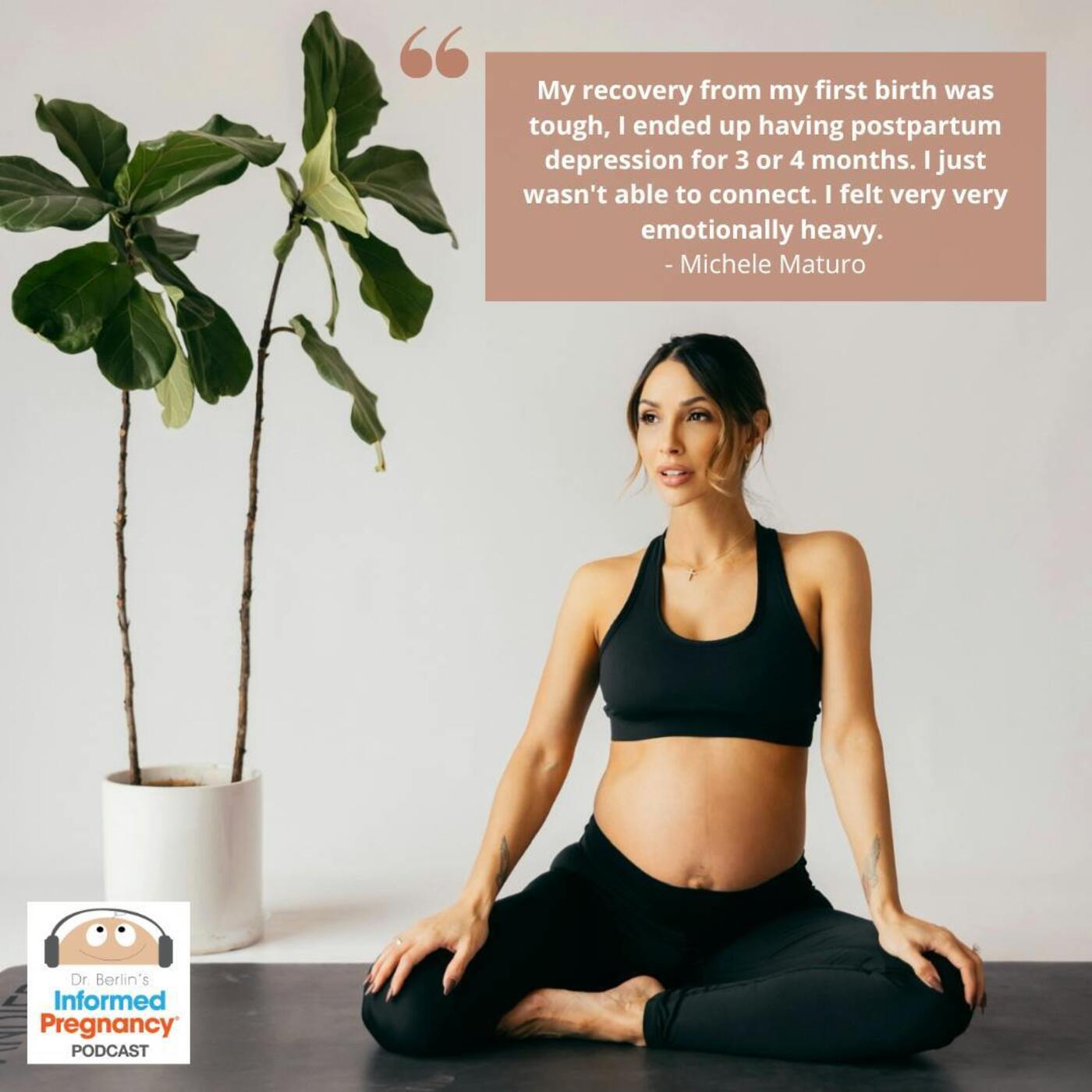
Michele Maturo, fitness coach and creator of the fitness app ‘Move With Michele’, is pregnant and exploring her options for a Vaginal Birth After Cesarean (VBAC) after her initial labor experience ended in an unexpected cesarean birth. Michele describes her first pregnancy and birth, including some of the postnatal physical and emotional struggles, lessons learned, and what she is doing differently this time around.

This podcast has been brought to you in part by LMNT electrolyte drink mix. You can get a free sample pack with every order at drinklmnt.com/berlin .
Learn more about your ad choices. Visit megaphone.fm/adchoices
See Privacy Policy at https://art19.com/privacy and California Privacy Notice at https://art19.com/privacy#do-not-sell-my-info.
Key quotes
“We're, you know, I always preach like we're striving for movement, not perfection, and we're lucky we even get to move our bodies. Not everyone gets that opportunity.”
“Yeah, big, big advocate of therapy. I don't care who you are, what you do. I feel everybody. on this planet could benefit from therapy.”
“expect a little bit more and not be so intimidated when a doctor tries to tell me something or a nurse, like I can second guess them. They are people. And if I feel it's going against what I want to do or what I feel like my body's capable of, I can advocate a little bit more knowing that I'm not going in completely blind. No, I don't have the experience or the credentials, but I am learning as much as I possibly can before I get to that point.”
“Again, obviously, if push comes to shove and I have to do what's best for the baby or my body, I'm not going to give so much push back that, you know, I'm doing this just because I've made up my mind and I don't care what anyone says. No, I just want to be able to know that I have the ability now to make an informed decision.”
“Yeah. So I feel that working through issues now will help them not feel so intense after the baby, because you know, everything does drop and change drastically after you have the baby. And if you already are feeling those any sort of low lows or you're feeling any sort of trauma, it's just going to really hit like a ton of bricks, at least for myself. So I'm trying to lighten my mind and my emotions and my heart as much as I can before it's time for the big day.”
Related episodes
- Ep. 295 Michele Maturo – After Birth
- Ep. 280 Kayleigh Harrigan – After Birth
- Ep. 286 Jen Lilley – After Birth (Again!)
- Ep. 277 Kelly Kilmartin – After Birth
Transcript
AI-generated transcript with speaker labels — may contain errors, especially names and medical terms. Dr. Elliot Berlin, DC appears in blue; Michele Maturo in orange.
Download PDF of the Transcript
Dr. Elliot Berlin, DC [1:13] Welcome to the informed pregnancy and parenting podcast I'm your host Dr. Elliot Berlin My awesome guest today is a fitness coach and a fitness app creator as well as a mom of one currently pregnant with her Second she is planning a hospital vaginal birth after Sarian Michelle went to her a welcome to the podcast. Thanks for having me Amazing. I'm so honored that you're here. You're kind of an incredible human I say that a lot, but I mean it this time Let's start beginning where you from I'm from Los Angeles, I've heard of it. Yes a little place on the west coast. Yeah
Michele Maturo [2:13] Sunshine for all and then what do you do for work? I'm a fitness coach and I did create an app this year and I've released like prenatal programs and I'm also actually in school working toward my doctorate in psychology. Oh my goodness
Dr. Elliot Berlin, DC [2:30] If my trainer like could get into my head and make me do stuff, that would be like perfect
Michele Maturo [2:36] That's the goal. That is the absolute goal that I have. Oh my goodness
Dr. Elliot Berlin, DC [2:40] That's gonna be amazing. And I don't know part of me is like, okay when you get that going on Call me cuz I need it but then I'm terrified No, you're fine. I hate working out and then if you get in my head, you're gonna make me do it. I
Michele Maturo [2:54] Hope so. How'd you get into fitness? well, I Would say I've just always been drawn to it naturally my mom growing up has always been really into health and wellness and She's a holistic specialist. She's wonderful and it was such a good influence in that way and I wanted to Feel my best not just mentally but physically as well and then I don't know I just kind of realized I was working out as a passion and then as a really good outlet and then it just became a career path while I was in school Like working on as a passion in high school in college. Yeah, it actually in high school It's just been a form of release for me whenever I found myself stressed whenever I found myself needing me time
[3:43] I would go on a run or I would do yoga As long as I was active and hiking and in the sunshine and moving my body I noticed that my mind followed because I'm always in my head as you know And kind of having that escape between like reading and fitness. It's what works for me Similarly when I was in high school, I started eating out with a passion And I still do i'm very good at it
Dr. Elliot Berlin, DC [4:13] You know, i'm pretty good at it too. It's just eating the right things. Okay, dr b and then working out afterwards I'm not gonna sleep So at what point did you turn them into a more formal? Like I want to do this Like for people for work
Michele Maturo [4:26] well I'd say two years ago, but initially I just wanted to really learn for myself. So I knew what I was doing right And I wanted to be as educated as possible and make sure that I was taking care of my body and not Doing things that were going to actually hinder myself in the future or decrease mobility Whatever it may be and then I started training my friends and I was seeing results with them and seeing how happy and confident They were and how they were transforming mentally and physically. And that's when I was like, okay, I need to step this up and really open up to training other people because I want to be able to impact others in a positive
[5:08] way and share that knowledge. And I just started doing it and really dove in head first for sure.
Dr. Elliot Berlin, DC [5:16] Yeah. I think a few things that are awesome about you as a trainer. Number one, like you are what you preach. So you're not just being like, Hey, you do these and I'm going to go over there and have a snack. Number two, you're very positive and encouraging and realistic. I feel like that kind of energy doesn't come, you know, it's sort of like gentle motivation.
Michele Maturo [5:38] Well, thank you. Well, I think when I talk to other people, I genuinely truly tried to speak to others as if I'm speaking to myself. So I like to do live workouts with people. I do live workouts on the app. I was doing live workouts on social media. And I found like, if you have that accountability partner, if you see, I'm not just telling you what to do. I'm sweating. I look like I'm suffering. I'm making mistakes. I'm not doing anything perfect, but I'm doing my best and I'm showing up and I'm showing up with you. And I feel that's been the most effective way, because if someone just tells me what to do, there's going to be pushback. So I respect other people in that way, too.
[6:19] And I'm like, hey, you know what, we're in this together and I messed up. So don't feel goofy if you do either and don't be hard on yourself. We're, you know, I always preach like we're striving for movement, not perfection, and we're lucky we even get to move our bodies. Not everyone gets that opportunity. So I just try to make it a lighthearted thing because man, not every day is easy getting in there.
Dr. Elliot Berlin, DC [6:45] Yeah, I can relate to that. I'm part of it. So then you said your mother was like a holistic practitioner. What kind of holistic practitioner?
Michele Maturo [6:55] She does a lot of detoxes and health and like body wraps and lymphatic drainage, and she also works on interventions for, you know, substance abuse and everything is very, very natural. And I'm like, when we were younger, I mean, I don't even remember getting milk, it was just soy milk.
Dr. Elliot Berlin, DC [7:19] Oh, wow. Yeah, that's not really milk. It isn't, it isn't my friend. Louis black says it's not milk. It's soy juice, but you can't call it soy juice because it makes you gag when you say soy juice. So they have to call it soy milk.
Michele Maturo [7:37] You know, you're not wrong. And soy milk is not my favorite. So I'm not mad at you for saying that. I do like the oat milk. I just learned oat milk's not the best for you. I know. I like it though. I mean, oh, well, I like a lot of things.
Dr. Elliot Berlin, DC [7:50] I think it was healthy. I just said, yeah, out of all the not milk milks, I think I like oat the best.
Michele Maturo [7:57] Really? I like almond, but oh, it's okay.
Dr. Elliot Berlin, DC [7:59] Oh, it's okay. I like almond too. All right, let's move on. Okay. So where'd you meet your partner?
Michele Maturo [8:06] Wow. We were friends for about six years before we started dating, truly platonic friends. So we met through mutual friends. That's a whole other podcast time, but I'll say mutual friends. Okay.
Dr. Elliot Berlin, DC [8:21] So you met through mutual friends, but over six years of platonic, we're buddies. How does that develop into, we're a couple. Wow.
Michele Maturo [8:29] Well, in a nutshell, in a nutshell, we really respected each other throughout that time period. We respected each other while we were in relationships. We never crossed those lines, but we knew there was a connection. And then he is a singer and songwriter. And there was a time where he was like, Hey, would you be in my music video? And I was like, okay, cool. Like let's do it. Cause I was doing some acting and commercial work at the time. And I did a music video with him and there was a kissing scene. I was in a relationship and he was in a relationship and just friends. We ended up kissing and afterwards I was just like, Oh no. Oh no, but nothing came of it.
[9:11] I was a good girl and he was good, but we both knew. Oh no. But again, we still didn't date after that. Nothing happened. And then the stars aligned. We both happened to be single for the first time at the same time. And we were like, let's go hiking. Let's just hang out and be friends. And now we are here with two babies and happily engaged.
Dr. Elliot Berlin, DC [9:38] I never thought about that. Uh, Hey, you want to be in my music video?
Michele Maturo [9:45] He, you know what? He's very creative and he's such an all around, incredible, good guy. And so thoughtful and genuine. And that's really what got me like, even as friends, he would just randomly. and be like, Hey, if you're not feeling well, like send me something to like pick up my spirits, like send me crystals or he just, he knew, he knew what he was doing. He was a smart man. Smart man.
Dr. Elliot Berlin, DC [10:11] I mean, it sounds like a win-win for both of you. Yeah. And then how soon after that did the baby come along?
Michele Maturo [10:21] Pretty soon. But yeah, we just hit the ground running. And I think we both were just at a time in our life where he knew I wasn't going to date unless it was the person I really was going to be with. And he felt the same. And he was like, by next year, I want to have a family. Oh, wow. Yeah. He knew what he wanted. And I was like, let's take it slow. And again, here we are with another baby who I was like, let's wait another year, but then, you know, here again. Yeah.
Dr. Elliot Berlin, DC [10:52] So it sounds like the first one was planned.
Michele Maturo [10:55] You know, always babies are only planned.
Dr. Elliot Berlin, DC [10:57] Really? That's not what I heard. All right. We don't have to dig into that. You're pregnant again.
Michele Maturo [11:05] I am.
Dr. Elliot Berlin, DC [11:07] How was your first pregnancy?
Michele Maturo [11:09] Well, the beginning, I felt the first pregnancy, I was a little more emotional. My hormones, it was really hard for me to adjust, but I came around. I had energy. I felt physically incredible. I really lucked out. I had hardly any morning sickness and, you know, we went on our baby moon and I got a little bit more morning sickness because we were on a boat, which, you know, makes all the sense in the world. But I worked out the whole time. I meditated and it was an overall incredible pregnancy.
Dr. Elliot Berlin, DC [11:43] I mean, you had been a worker out there for a long time, but then like working out pregnant, how was that different for you?
Michele Maturo [11:50] I had to really be patient with myself, take time with my body, really work on stability and balance and a lot of mobility. I also had to learn how to strengthen my body without tightening those hips, you know, that you get so working on me with. Yeah.
Dr. Elliot Berlin, DC [12:10] What's the secret to that? I mean, if people could strengthen without tightening, that's the win-win. Yeah.
Michele Maturo [12:16] Well, I think in the beginning you can work more on strengthening and then when you get later into the pregnancy, the third trimester, really start opening up the hips and you do workouts that are, you know, you're not worrying about the weight, you're just worrying about, again, like stretches and movements, like moving lateral side to side and pelvic tilts and, you know, all that fun stuff. Super fun.
Dr. Elliot Berlin, DC [12:43] How was nutrition during pregnancy?
Michele Maturo [12:46] The first pregnancy I started off vegetarian and by the end I was vegan.
Dr. Elliot Berlin, DC [12:52] Oh, so prior to pregnancy, you were not vegetarian or vegan?
Michele Maturo [12:57] I was pescetarian. So I ate fish, but I didn't really do dairy. I wasn't as strict with it, but I did eat salmon and fish for the most part, but I hadn't had poultry since I was probably 13 or 14. Yeah.
Dr. Elliot Berlin, DC [13:12] Well, if you call it poultry, who wants to eat that? Well, I mean, chicken doesn't sound like, oh.
Michele Maturo [13:18] No, you're right.
Dr. Elliot Berlin, DC [13:19] It doesn't sound much better. Burger. I don't know what. Okay. So was the vegetarian slash veganism and even pescetarianism, was that for health? No.
Michele Maturo [13:32] Well, yes and no. I was a pescetarian because I just didn't like the texture of meat. I didn't like, you know, fish was easier for me to get down. I didn't like the smell of the other meat. Any of that, it just turned me off, but I became vegetarian because I was told you can't really eat a ton of fish when you're pregnant. So I just X'd it out all the way. And then Matt has chronic pancreatitis and he has to be very careful with his diet and what he consumes. And he was in and out of the hospital a lot when I was pregnant and we were just trying to figure out, we're really reaching. And one of the things we reached for was veganism. And he thought if he was vegan, that it may help with his pancreas pain
[14:18] because it was lower in fat if you did it right and it was cleaner. So I was trying to be as supportive as possible and turned out, you know, became vegan with him. And then I ended up staying vegan and he was like, yeah, this isn't for me. He left me in the dust.
Dr. Elliot Berlin, DC [14:38] Was the pancreatitis diagnosed around the time you got pregnant?
Michele Maturo [14:44] No, he's had it. I believe since he was 25, I could be wrong. I could be off by a few years, but he had it really young. Typically when you're diagnosed with chronic pancreatitis, it's later in life. But it's a genetic disposition. and he didn't do anything to get it. It was, you know, it's just genetic. Genetic bad luck. Cause it's pretty intense. Yeah, I mean, I can't imagine, but I'm told that the pain could be worse than labor and childbirth, which I wouldn't know about that. Yet.
Dr. Elliot Berlin, DC [15:24] Okay, we're gonna find out more about that. Actually, why don't we take a quick break and we'll come back and find out about your first labor and birth experience. Don't go anywhere. We'll be right back.

Dr. Elliot Berlin, DC [17:58] Welcome back to the Informed Pregnancy Podcast. We're talking to Michelle, who's currently pregnant and just about due with baby number two, but let's go back in time and talk about the first birth plan. I mean, you grew up in a holistic house, you eat healthy, you work out all the time, you worked out through your pregnancy. What was your plan if you had one for your labor and delivery first time around?
Michele Maturo [18:22] Well, my plan was, I had a plan and it was to do a vaginal birth. I was open to having an epidural, but it wasn't the plan and I didn't want any pain meds and last resort would be a cesarean if my life or the baby were at risk.
Dr. Elliot Berlin, DC [18:43] Okay, but before we go further, let's unpack that no pain medication because why?
Michele Maturo [18:50] I just don't feel they mix well with me. I just don't do well. I don't like the way I feel when I'm on pain medicine. I don't like the disconnection that I feel from it. I tend to notice I get a little moodier. So I was hoping minus the epidural, like just really no pain meds. I'm not a fan of pain meds at all.
Dr. Elliot Berlin, DC [19:13] Minus epidural, meaning you're yes to epidural, but no to like narcotic pain meds?
Michele Maturo [19:18] Yeah, so if I needed the epidural because it was just too hard, I could not push. I understood that and I was like, you know what? I'm not gonna try and be a superhero, but the pain meds, well, thank you, thank you. But like pain medication, especially like opiates and stuff like, I don't like them. I get other people need them, but they're just not for me.
Dr. Elliot Berlin, DC [19:42] I don't blame you. I mean, nobody ever offered them to me, but I think I'd say no, thank you. So that was the plan. And were you doing things to like get your mind ready for that? I mean, your body's, you've been working on since high school, but were you doing things to get your mind ready for either the mental or? physical intensity of bringing a baby into the world through your body?
Michele Maturo [20:04] I thought I was, but I think my scope sense has been broadened on what really that means and what it entails. But at the time I was like, Oh yeah, I'll totally get the app headspace and I'll meditate. They have a pregnancy package and then I'm ready. Obviously that's all you have to do. An extra five, 99. I was like, I'll obviously just meditate for five minutes a day and work out and that's really it.
Dr. Elliot Berlin, DC [20:33] I mean, what kind of meditations were in the pregnancy package? Were they preparatory for birth type meditations?
Michele Maturo [20:40] Yeah, it was just kind of about connecting with your body and connecting with your baby and imagining, you know, this white light coming down and wrapping it around your baby and you and thinking of calm things. But it by no means was like a labor hypnotherapy session.
Dr. Elliot Berlin, DC [20:57] And you were planning your birth at a hospital with a medical doctor. Yes. Okay. And anybody else on the team? No.
Michele Maturo [21:08] Okay. So you and Matt and yeah, me, Matt and a doctor, my doctor, who was my OB at the time, I think she's a great person. She was a great OB, but I asked her, Hey, can I have a doula? Like I heard that it would really help during, you know, pregnancy. And especially because Matt does have a condition I wanted to make sure that he and I both had support just in case he was having a flare up. And she basically was like, you can have me or a doula. Oh, ouch. Yeah. And I didn't know, you know, and from my experience, which was very little, you know, she's a doctor and I'm not, I'm like, well, I'd obviously rather have a doctor than a doula, like, you know,
[21:53] Right.
Dr. Elliot Berlin, DC [21:54] I mean, it's usually not one or the other. They play very different roles. Did she have a bad experience with a doula? Did she explain that position?
Michele Maturo [22:03] If I'm being honest, like I just didn't question it. I just said, okay, good. I kind of felt maybe intimidated by the credentials. I don't know what it was, but I just didn't in that moment think to question her and I thought, okay, cool. End of conversation. Like obviously she's done this more than I have. So I'm going to trust that I don't need one. Okay.
Dr. Elliot Berlin, DC [22:25] Did you do any childbirth classes? I thought about it. Does that count? Sure. Of course it does. Okay. So you didn't do any classes and you've never been to a birth before.
Michele Maturo [22:39] No, no, you actually showed me my first birth.
Dr. Elliot Berlin, DC [22:44] Oh, on the video. Okay. And then Matt hadn't been to a birth before. So you were just kind of winging it because you had the headspace. Yeah.
Michele Maturo [22:53] You know, well, I just, in my mind, I just was like, you know, millions of billions of women have done this. Like I'm no different and I got it. And I really pride myself on being resilient mentally and physically. And I just was hoping for the best. And I thought, you know, my doctor and my birth plan just had my back and we were on our merry way to a happy labor and delivery.
Dr. Elliot Berlin, DC [23:16] Look, I mean, I'm actually, I don't think it's a terrible plan. If you know the system, right? I almost think that's a much better plan. If you're planning to go outside and squat in a strawberry field, have your baby and come back in. But the system is where sometimes those childbirth classes really come in helpful or do it comes in helpful. So in your case, how did your labor start?
Michele Maturo [23:38] Um, we are actually, we're on our way to dinner and I was like, Hey, let's just stop by my doctor's appointment real quick.
Dr. Elliot Berlin, DC [23:44] Cause I would say that on my way to dinner.
Michele Maturo [23:46] I was 40 and a half weeks, actually I was 40 weeks plus five. So right there. And I was like, Oh, I just have to go in really quick. She just needs to check me out really quick. And when I got in there, she was like, Michelle, your amniotic fluid is extremely low. Also did not know what amniotic fluid was just sounded awful to me. And I was like, Oh, are we, are we okay? And like, are we good? And she goes, no, you need to get admitted to the hospital and we need to induce you. So already, like I didn't even have my hospital bag. I didn't already my birth plan. I was like, but, but, but, but, but the control is gone. You know, also you didn't eat dinner yet.
[24:24] The worst part about it is I didn't eat dinner. You're right. And there's nothing worse because I knew that when I went into that hospital, I was getting ice chips. Yeah. So I was if you're lucky, if I'm lucky. So I was just not pumped.
Dr. Elliot Berlin, DC [24:41] So you literally just got in the car and went to the hospital.
Michele Maturo [24:44] Yeah.
Dr. Elliot Berlin, DC [24:45] So we went to the hospital and did you have your bag or anything? No, I had nothing. Did you have a bag at home packed?
Michele Maturo [24:56] Yep. My birth plan, my bag, everything, but literally no time to go get it. No, because we live further out.
Dr. Elliot Berlin, DC [25:03] Okay.
Michele Maturo [25:04] We live about like further out of the city. And I asked her, can I go home? She said, no, you need to be induced. It's very low. I don't know how low it was. And if she would have told me, I would never be able to remember because it meant nothing to me at the time. Sure. I didn't understand it. Yeah, no, nobody knows like what a normal amniotic fluid is. Like most people don't have any idea. I had no clue. I just knew like, okay, great. I don't get to go to dinner and I don't get to get my bag. We have to go get admitted. So that's what we did. And we showed up to the hospital, just Matt and I and no birth plan.
Dr. Elliot Berlin, DC [25:41] Well, and a baby. Okay. And no birth plan. I just, my mind is weirdly curious. What was the most important thing in your bag that you didn't have that you wish you would have?
Michele Maturo [25:52] I think probably my phone charger. Yes. Honestly, I was making a lip balm joke, but phone charger would be number one. It was probably my phone charger and my gown. Like I ordered like a special hospital gown because I didn't want to wear the hospitals. So I was like, there's no way I'm wearing that. I want my special pretty gown. And, you know, luckily my father-in-law, he brought it all. So in the end, it was fine.
Dr. Elliot Berlin, DC [26:17] You can always count on your father-in-law to bring the special pretty gown.
Michele Maturo [26:21] Yeah. He brought my hospital bag. I think. Yeah.
Dr. Elliot Berlin, DC [26:25] Okay. So you're there and they're like, we got to induce you right away. Had you considered induction, like familiarity with the different methods of induction?
Michele Maturo [26:34] No, I was not familiar with it because my mom has had five kids and she was late, like two weeks late with each of us about a week or two. And with my mom, she is a super woman, especially when it comes to being pregnant and having babies. I don't know like what superpower she has. So I just was like, oh, genetically fine. I'm fine.
Dr. Elliot Berlin, DC [26:58] So, you know, you didn't think about induction?
Michele Maturo [27:01] No, she, she went into labor naturally. She never needed assistance or anything.
Dr. Elliot Berlin, DC [27:06] Do you remember what they did to induce you?
Michele Maturo [27:09] I believe they gave me pitocin. Okay.
Dr. Elliot Berlin, DC [27:14] IV drip.
Michele Maturo [27:15] Yeah. And IV drip.
Dr. Elliot Berlin, DC [27:17] And so at that point, no epidural?
Michele Maturo [27:19] No. Just pitocin.
Dr. Elliot Berlin, DC [27:21] Did you feel labor kick in?
Michele Maturo [27:24] Not really. I thought, oh, wow, I have such a high pain tolerance. This is unreal. You know, um, I wasn't in pain. I felt like almost like Braxton Hicks happening where I felt the tightness of the stomach and the release. I felt the waves and I was like, if this is all it is, like I got this in the bag. So they came in and they checked on me and I was still riding that wave and through I started to feel some contractions, but nothing too painful.
Dr. Elliot Berlin, DC [27:59] Okay. And were they checking you to see if you were progressing?
Michele Maturo [28:03] Yes. And I wasn't.
Dr. Elliot Berlin, DC [28:05] You were not progressing. Okay. So what happens next?
Michele Maturo [28:11] So my doctor comes in at seven 30 in the morning and she checks me and she was like, basically what the hell's going on? And she calls the nurses in and she's like, she hasn't dilated at all. Like what is happening? She's had the pitocin on, on, on that. Like she's what is going on in the her and the nurse and the doctor start arguing in front of us and you know, Matt and I are just like, what is happening? Like, did we do something wrong? So I'm assuming what was supposed to happen was the nurse that we had throughout the night was supposed to up the pitocin every so often. However, my body's responding. Right. She didn't. She just left it flat.
[28:53] She left it flat at a low level. So I had no progression by the time the doctor came in and it was just a total miscommunication or a lapse of judgment on the nurse's call. I don't know who to blame, but it was just an oversight. So from that point on, the doctor said up everything and give her what her body can take up the pitocin to however, yeah, to what her body and the baby can take. So now it's been 24 hours and I'm feeling contractions. I'm feeling the wave. I start dilating. I start making progression. I remember I was at four and then five.
Dr. Elliot Berlin, DC [29:32] Was that exciting?
Michele Maturo [29:33] It was. I thought I was doing this. We got it. But by the time the night hit that second night, I remember my water finally breaking on its own. Yeah. Finally broke on its own and the contractions were starting to get worse and then more intense and more intense. I will say not worse, just intense. And then they finally were. like, because my body just was tired at this point and we were there for so long. So they, were you right?
Dr. Elliot Berlin, DC [30:07] Just ice chips this whole time?
Michele Maturo [30:09] Yeah. They still know food. Yeah. Thanks for reminding me of that.
Dr. Elliot Berlin, DC [30:13] That was the real trauma would be for me.
Michele Maturo [30:18] So I guess by then things just started going downhill and it was a really rough night for the baby, Matt and I, and the nurses all were coming in trying to put me in every position possible because we were losing the baby's heart rate. And at a point it completely dropped there with an oxygen mask on all fours, Trish trying to do what they can to get movement. And I, like I said, I had that epidural at this point and I dilated till six and we did this throughout the whole night and you've been watching the baby's heart rate sort of dip, come back, dip, come back, move to the side, move to the outside. And they were all running in like a rush. Like the room would fill with nurses and they're like, get her up, get her
[31:08] up, get her up, put her on our floors, put her on her side, give her the oxygen mask. And like, there was a point, you know, where by this time I just had so much fear because I didn't know what was going on. I didn't know what my body was doing. I didn't know if my body was working with them or against them. I just had no idea what was happening and why my body wasn't working. But at the time I was like, my body's not working. Why am I not dilating? But it was really like, I was dilating, but the baby and my body were so stressed at this time. Like his heart was so stressed and it was just too dangerous.
Dr. Elliot Berlin, DC [31:42] So then nobody really explained to you what was going on.
Michele Maturo [31:46] We would ask our questions, you know, we didn't really get in depth answers. Like we just need to keep moving you. We need to keep monitoring him. We need to make sure like, it's fine. We're just going to keep pushing and keep trying. We're going to lower the pitocin again, because it's too much for him. You know, it's too much on the baby. So we're going to lower it and see if your body can start to do it a little bit more. And by this time, I think it's like seven in the morning, the next day, another day. And the doctor came in and she was like, what happened last night? What is going on? I was like, you tell me, like, I have no idea. And then Chandra said that, you know, I just need to let you know, Michelle,
[32:30] like, I know this was your last resort, but we need to get the baby out of there, like, and now. And I was like, well, I can't push yet. And she's like, no, we, you need to have a C-section, you know? And then it was because the baby had like fetal distress. And she said, I'm going to give you some time to think about it. You can always refuse, but we need to get them out now. And I was like, that doesn't sound like I have the opportunity. Your baby's in grave danger. If you don't do this, but why don't you take some time over. And by the time she came back, they were already like moving my bed to, you know, get ready to go and handing the outfit to my partner.
[33:12] And my mom came in and she just was crying because, and I was like, why are you crying? And she's like, cause I know you want to cry. You know, I know you're hurting and I know this is the last thing you want it. You know, I'm hurting for you. And I was like, okay, you know, yeah, this is an ideal, but obviously when push comes to shove, I want what's best for the baby. And as far as I know, this is what's best. So let's just do it.
Dr. Elliot Berlin, DC [33:39] How was the actual cesarean birth?
Michele Maturo [33:42] I learned that I'm nutty. I was just making jokes. Really? Yeah, I was making jokes. I was asking Matt to take pictures and it was like, you know, it's not like a beautiful thing. Selfies. You know, I don't see. I didn't. Yes. I see what you did there. Thank you very much. Um, I was so out of it. You know, I hadn't eaten in 36 hours and I was on meds and IV anesthesia at this point and epidural and I think a pain med, who even knows? So a little blurry. Yeah. I just was like, what's happening. At least you have pictures. Yeah. And I was looking at Matt and I was like, wow, you look hot in that gown. It was like, what is wrong with you?
Dr. Elliot Berlin, DC [34:36] Well, I mean, good, at least you have the flexibility and the fun mindset to be able to roll with the punches, switch gears, and, you know, like you said, that's what you were told is the best thing for your baby. And you said from the beginning, that's what I'll do if I have to. And you did.
Michele Maturo [34:53] Yeah. I was using humor to mask, obviously how upset I was, you know? Yeah. was definitely using humor because if not, I would just sort of been emotional and I didn't want to be at the time. I didn't want to make it scarier than it felt that makes sense. He came out healthy.
Dr. Elliot Berlin, DC [35:12] He came out great.
Michele Maturo [35:13] Yeah.
Dr. Elliot Berlin, DC [35:14] And you came out healthy.
Michele Maturo [35:15] Yeah.
Dr. Elliot Berlin, DC [35:16] So there's something for that.
Michele Maturo [35:18] Yeah, I know. And that's what matters at the end. So I'll work for the PTSD later.
Dr. Elliot Berlin, DC [35:23] Before we go to break, like, what did you eat? Like, what was the first thing you ate? Do you remember?
Michele Maturo [35:28] I can't remember the first thing I ate. I feel like Matt got me like some sort of popsicle that I love and maybe air one, not to sound like bougie, but I feel like that's what I ate, like a breakfast burrito or something like that. I feel like they should sponsor this episode.
Dr. Elliot Berlin, DC [35:44] I would love that.
Michele Maturo [35:47] And the first thing I ate was.
Dr. Elliot Berlin, DC [35:49] Air one shout out to everyone. All right. Let's take a break. We'll come back and find out about this pregnancy and your plans for the imminent birth. We'll be right back. Welcome back to the informed pregnancy podcast. We're talking to a super pregnant Michelle Maturo. And in our story, you just had your caesarian birth with your first baby and definitely wasn't planned. Wasn't what you wanted and you made the best of it, but you didn't really feel great about it. How did things progress after? How was your recovery?
Michele Maturo [36:28] Covering for me just sucked. I'm so used to being active and having that movement. And I just couldn't do very much. It was hard for me to walk up and down the stairs. My mom had to give me my first bath. Yeah. My mom was back to bathing me. I had staples across my belly and it wasn't a very pleasant experience for me and I don't know if there's some people that have C-sections and then they just get up and go, that's awesome. Good for them, but I didn't have that same feeling and especially mentally and emotionally, I felt it really dragged me down and I do feel it played a big part in postpartum depression that I ended up having for about maybe four to six months after the postpartum depression.
Dr. Elliot Berlin, DC [37:21] How did you know that's what you're having? Like what were your symptoms?
Michele Maturo [37:25] I was having trouble connecting and I was having, well, yes, with the baby and no, but also just with myself and my surroundings and the adjustment and I knew this is the happiest moment of my life, but it didn't in my heart feel like I wasn't jumping over the moon. I was like, wow, like I feel this heaviness and I know I love this baby and I feel I love this baby. And I'm so madly in love with my partner, but why am I feeling so heavy? And I just remember calling my mom and crying and I just was like, I don't know why I'm feeling this way. I've never been so sad. And she was trying to be a supportive of possible, but I was on anesthesia and I was on painkillers and I did have an experience that I wasn't
[38:15] anticipating and it was traumatic and I was acting like everything was fine when it wasn't and then to just do the icing on the cake, then that's when the pandemic started. Oh, wow. Okay. Yeah.
Dr. Elliot Berlin, DC [38:29] I guess it was probably your fault.
Michele Maturo [38:31] Yeah. So basically it was all my fault and I started, you know, yeah, I can't believe it was you. All me and we couldn't have help at the time. You know, we had help for maybe like a week or two and then she was like, Hey, I have COVID at the very beginning, the very beginning and yeah, the bad one. And Matt and I just said, bye, sorry. You know, so it was just Matt and I, and at that time it was locked down. We didn't have a ton of family that was coming over. We had, you know, my father-in-law coming over, you know, and here with us and his amazing, incredible girlfriend, but for the most part, it was me and Matt and he has a chronic illness and I have postpartum.
[39:18] So it felt very intense at that time. I mean, thank God for her one.
Dr. Elliot Berlin, DC [39:23] No, because we weren't going to everyone.
Michele Maturo [39:27] Everyone delivers.
Dr. Elliot Berlin, DC [39:28] No, not to where we live.
Michele Maturo [39:30] That's where you live. If only you had air one, if we had air one, I'm sure that life would have just been just completely different. Totally. Great.
Dr. Elliot Berlin, DC [39:41] How did you deal with postpartum depression?
Michele Maturo [39:44] You know, therapy, therapy for that. And yes, applied it to the postpartum. Yeah, big, big advocate of therapy. I don't care who you are, what you do. I feel everybody. on this planet could benefit from therapy.
Dr. Elliot Berlin, DC [40:03] I think it's true. Like the way we are built and the world that we live in, it's just a lot for the mind to process and handle even when things are going well.
Michele Maturo [40:13] Yeah, absolutely. It doesn't hurt to have someone to talk to with a non-biased opinion and who is really advocating for you and your mindset. So I'm really lucky that I had that in place already before. And I have a really supportive partner and I can talk to him about anything and everything, which really helps as well. And my family is really supportive and loving. So they were very gentle with me at the time, which helped a lot.
Dr. Elliot Berlin, DC [40:43] Oh, good. Amazing family all around.
Michele Maturo [40:46] My family's nuts, but one thing they know how to do is love hard. I'll take it. They're a wild bunch, but they're a bunch of lovers.
Dr. Elliot Berlin, DC [40:55] So did your body recover in the way you had hoped?
Michele Maturo [41:03] It did. I still get a little bit of pain and every time a doctor sees my scar, I'm like, Oh, it's not a keloid. It's some sort of other scar. It just didn't heal pretty or right or whatever it was, you know, and there was weird times where I would feel like I'd put my hand on my stomach after I ate and I'd feel the bubbles. You know, like I was like, did I get put back wrong? Oh, it didn't feel that good for me.
Dr. Elliot Berlin, DC [41:27] So oddly an OB-GYN once described to me how her perception of a caesarian is, and she said, if you ever go camping, like with a tent and it's your first time using that tent and you take it out and you pitch it and you have a good three days of camping, and then you take your tent down and go try stuff it back in that bag that it came in. You can kind of get it in there, but it's not like it was when you got it. That's how she kind of describes a caesarian. I've never done one or had one. She never had one either, but she's done many of them. And that, you know, when she was thinking about her own birth plan, that was something that was in her mind, like caesarian may not be too bad,
[42:07] but I know I'm not going to ever be exactly the same.
Michele Maturo [42:11] Yeah, I can empathize and relate with that. Even my belly button got different. It's like an Audi now, but if that's the worst case, I think I can live with that. But yeah, I think so. I'm like, you know, I'm never doing that again. I'm an Audi belly button. Maybe it'll go back in. It felt weird. I felt unsettled for a few months after, but I did find normalcy in that feeling again and in my body. And I also, when the second I got the six week, okay, to work out again, you know, I was back at it. Which I think actually helped with my recovery a lot.
Dr. Elliot Berlin, DC [42:48] All right. Now you're pregnant and you have a kid. That's a lot. We're still in a pandemic, but not quite as crazy. I feel like it's toward the endemic, but I'm not. I mean, just for reference, we're literally past Omicron already. We've gone through this transformation from the first COVID that came around the first train, where everybody's like, oh my God, I don't want to get COVID because I don't want to die. And then Omicron came around and people are like, I don't want to get COVID because, you know, I need my nanny and my whatever, you know, it's a total shift to people who are saying, gosh, I hope I get COVID so I'm immune longer. It's just changed a lot. And now the masks are coming off, even in Los Angeles and this,
[43:30] you know, you brought us a pandemic with your first baby and you're bringing us out with the second baby. It's very nice of you.
Michele Maturo [43:37] You're very welcome. Just trying to do my duty.
Dr. Elliot Berlin, DC [43:40] Your part. You're the best, Michelle. Okay. So now pregnant again, how's this pregnancy going for you?
Michele Maturo [43:47] Now it is great. It is great. In the beginning, I would describe it something like a layer, like a different level of purgatory. It was awful.
Dr. Elliot Berlin, DC [44:03] What happened?
Michele Maturo [44:04] I had, um, hypermesis, gravidarum. Is that how you say it?
Dr. Elliot Berlin, DC [44:08] Oh, hypermesis. Yeah. You were throwing up a lot.
Michele Maturo [44:11] Just not a lot. A lot is an understatement. It was so hard for me to even get out of bed vomiting so terribly, so nauseous. I couldn't even make it to the toilet. I would throw up in my sink. I would throw up wherever I could. I'd be outside. I would be walking. It was so bad.
Dr. Elliot Berlin, DC [44:31] Did you lose weight?
Michele Maturo [44:33] Oh yeah. I ended up dropping down. I'm already pretty small and I lost a lot the first trimester.
Dr. Elliot Berlin, DC [44:41] Yeah. I was only asking because one of the signs of hypermesis versus let's say nausea and vomiting or pregnancy is weight loss.
Michele Maturo [44:48] Oh yeah. I dropped down to, I mean, maybe, I don't know, a hundred pounds. It's like, I'm supposed to be gaining weight. I also had severe hair loss and started losing all my hair because I couldn't even get the prenatals down. They made me sick. I was listening to my OB and I started eating eggs and protein shakes. So, I mean, I've always had protein shakes, but I started eating eggs again because I was like, whatever is going to be good for my body and this baby. I don't. Oh, you are still vegan. Yeah, I stayed on that whole vegan diet because by the time I committed, I was so grossed out by everything. So I just actually stayed vegan, which I feel I may not
[45:37] have done it the best because I lost my supply early. I don't know what it was, but because I work out, I just needed to have more protein. So it was really hard. I didn't work out like in the beginning. Did your doctor call it hyperemesis? Yeah. Was there any kind of therapy or treatment for it? IV. How often? I only had gotten it once and then I refused it again because after I got it, she had them put vitamins in it. She's like, you need your vitamins. And it made me so sick that after the IV, I was worse. And I was on the bathroom floor, just like hugging the toilet. And at this time, Matt's schedule is really crazy busy. And I think he was on tour at this time. So I was just home and I have my sister who helps and
[46:28] she would come up and bring me some Gatorade and then, you know, crazy family who knows how to love. Yeah. It took me a while to get through that phase. I think it finally ended when I was like four or five months where I was finally able to get a grip, but I still had to start slow. Everything was still making me pretty sick. And then I also had the stomach flu at the
Dr. Elliot Berlin, DC [46:51] same time. That's amazing. That sounds so comfortable. Yeah. Okay. Now, you know, after you have a cesarean birth, your next pregnancy of two options, you could have a repeat cesarean or go for a vaginal birth after cesarean. Have you made a decision
Michele Maturo [47:09] which one you're aiming for? I'm aiming for the VBAC and I would like so deeply for that to happen because I feel like it's possible. So this time around we are taking VBAC classes. I have listened to as many podcasts, videos. I now have a doula. Even at around 32 weeks, I switched OBs to a different OB who we feel is more suitable for the procedure for the VBAC. It was a procedure for me last time. So I don't say labor and delivery. I'm like procedure and birth. No, totally. I get that. I mean, but the whole thing is by definition VBAC is the absence of a procedure. It's just without intervention. And so now I'm understanding that knowledge. I know knowledge is power, but now I know it's freedom. It's being able
[48:08] to advocate for myself. The more I know, the more comfortable I'm going to be in that room, the more comfortable I'm going to be to stand up for myself and my body and know what to expect a little bit more and not be so intimidated when a doctor tries to tell me something or a nurse, like I can second guess them. They are people. And if I feel it's going against what I want to do or what I feel like my body's capable of, I can advocate a little bit more knowing that I'm not going in completely blind. No, I don't have the experience or the credentials, but I am learning as much as I possibly can before I get to that point. And I am putting in that work. I'm also seeing obviously you who I think makes a huge
[48:53] difference in preparing my body. I mean, it makes a huge difference. I could tell in my body, it's just my hips are getting looser. My mind is better. Like, I mean, you've helped guide me so much, you know, when we first sat down, you asked me like, Oh, you know, so you want to try for a VBAC or Cisteria. And I was like, well, I'd like to do. And you're like, sounds like, you know, you need to listen to these podcasts and do this. And you know what you want and don't let other people bully you. And I was like, Hey, you're right. I mean, you never know how it's going to go. Right. But if you want something, you got to go for, you got to aim for it. It doesn't just like show up on your radar.
[49:34] Yeah. I told it was almost like, it was such a no-no. I was told that after you have a Cisterian that you should just have another one and that your uterus was going to explode and that no doctor really wants to do it. And it's just more difficult. And I just heard so many negative things about it. But then after doing the research, I learned that couldn't be further from the truth. They both have risks. a second cesarean, has just as much risk as a VBAC, if not more.
Dr. Elliot Berlin, DC [50:05] They have different risks, and some of them are for this pregnancy. Some of them would be if you're planning to have another kid down the road, then how you do this one will affect that pregnancy and birth. There's a lot to consider. There's pros and cons to both, and it's not black and white. And as long as you learn the risks and benefits and make a choice, then we're supposed to support you in that choice. And the current recommendations are that more people should have access to VBAC. It got a bad rep, and there are risks. There's certain things you can do to mitigate the risks. There's certain things that we can do if those things happen to
[50:37] immediately jump into action. But it should be your choice.
Michele Maturo [50:40] Yeah, I agree. And I feel like when I started to learn more about it, the risks were worth it. And just even with the healing alone, I just was like, wow, especially now having a toddler and a newborn. I just feel that, you know, recovery will be smoother. I feel it'll be easier to connect. I feel that I won't have to be on pain meds after the birth, which is a huge bonus. Again, obviously, if push comes to shove and I have to do what's best for the baby or my body, I'm not going to give so much push back that, you know, I'm doing this just because I've made up my mind and I don't care what anyone says. No, I just want to be able to know that I have the ability now to
[51:25] make an informed decision.
Dr. Elliot Berlin, DC [51:28] That's amazing. I have so many questions. Are you going to bring food?
Michele Maturo [51:33] I don't know. We don't have to tell them.
Dr. Elliot Berlin, DC [51:36] Yeah, I don't know. But like, I don't want to like poop my pants or something. Oh, that's what you're worried about? I mean, I don't know. I have this discussion from time to time on the podcast and, you know, observations of a male doula. Number one, in the moment, you usually don't know or care. Number two, nobody else around you cares. Generally in the hospital, especially the one that you're going to, you have like layers of chucks, disposable chucks underneath you. And if something comes out, it's not usually buckets of poo. It's like a sliver. And you don't even know sometimes that they've just wiped it away and taken out that truck and you're sitting on a clean one. Oh, look, I get it.
[52:17] I'd be mortified, but just from observation, my patients who have been really nervous about that in the moment couldn't care less.
Michele Maturo [52:26] Yeah, you know, I'm just here to keep it real. And I, you know, I just don't know how I feel about all that. And I get it. It's all natural. And it's like, you know, and there's just so many other women. It's like, it's just relaxed. It's natural in the process. You know, more power to, um, you're not buying anything. I'm saying, okay, no, hopefully I'll get there. You know, hopefully I'll get there, but you know, like, I feel like you, you know, how my mind is, you know, at this point and you know, maybe I'll get there. I'll loosen up a little bit. Like it in the moment. It's a little different than now. So did you get another cool nursing? I mean, a labor gown.
[53:05] I have to order it still. I'm working on my hospital bag now. I had to work on everything else first. And now that the nursery's done, I feel like I can get the hospital bag ready.
Dr. Elliot Berlin, DC [53:16] Food for thought. Sometimes fitness people like to wear fitness clothes when they're in labor. You mean what I'm right while in labor. I was like, well, you mean what I'm right right now? Yeah, I can't see exactly what you're wearing right now. But yeah, like what you would wear if you were going to work out. No, why would I want to wear pants? Oh, it doesn't have to be pants. It doesn't have to be pants. But I mean, like the sports top and you know what people were sometimes who are athletic or like a little tennis skirt, just something that makes you feel like when you look in the mirror, you see active, healthy, strong fit, not like a hospital gown. Even the nicer ones are
[53:55] like, I am dependent. I need help. Somebody has to take care of me. It's just a different mindset. The psyche when you look in the mirror, when you put on workout clothes, then you have like an energy about you. That's different than when you put on like a hospital gown.
Michele Maturo [54:10] I have to admit, I didn't really look at it that way. It's food for thought. I don't know what it's food for thought. I've never even worn a really tennis skirt maybe since I was five, but you know, I've seen it. It's food for thought. You're right. It's something to think about. But I just want to be the most comfortable. And I'm hoping that I'm just going to feel empowered either way. And I feel like as long as I can get my mind to really relax, and that's what I'm really leaning on my doula for, you know, to help me really just melt. That's what I'm hoping for.
Dr. Elliot Berlin, DC [54:48] I know from firsthand experience that you're an intense fighter. Like I would not want to be on the receiving end of your angry fight, but you're also a very powerful releaser, like when you get in there and take the reins of your nervous system, you can really just melt into whatever you need to melt into. So I think that'll be a big piece for you, like that with a little bit of luck and you should be golden. Are you going to labor at home at all?
Michele Maturo [55:19] I was told that I'm not supposed to, because I know, because I know I was told because of the cesarean that when I start to feel those contractions, that I should be going to the hospital. So I questioned that. And, you know, like, obviously you've shown me examples of women who have gone completely the other way and done B backs at home, no meds, just with a midwife and it's been successful. So I have a little bit of hope that I could do some labor at home and then go, but the hospital is a little far for us.
Dr. Elliot Berlin, DC [56:00] So, yeah. So that's where the hotel comes in handy. Yeah. Labor at the hotel across the street from the hospital. If you feel like that's what you want, do you have to do it? What feels safe to you? And those women that have V back at home, we have many of those stories on here. They do though, have a midwife who's a medical practitioner with them, monitoring them, monitoring the baby, checking the cervix, things like that. So, uh, I don't know. It's food for thought.
Michele Maturo [56:25] Yeah, it is something to think about. Also, I feel like I would genuinely feel blessed if I went into labor on my own. That's a game changer. Yeah. So I feel even lucky enough to get there because I didn't even have that the first time. So if I go into labor on my own, I guess I'll just go from there and see how I'm feeling and call Sarah and have her kind of guide me through that moment and see what works best and what I can handle or what she thinks, because that's something I'm not familiar with, but I am open to going with the flow.
Dr. Elliot Berlin, DC [57:03] Okay. That's always healthy. Are you doing anything to prepare for the postpartum on the mental health side?
Michele Maturo [57:11] I'm working now with my therapist. She told me I had PTSD for my first one that I've been neglecting to work on. So we're working on that and we're doing a little bit more intense therapy to prepare myself for it, but I'm not taking any sort of antidepressant or anything.
Dr. Elliot Berlin, DC [57:35] I mean, but you have a mind now for what it might feel like on the other side. It seems like you'll probably catch it sooner and your therapist is on board with it. So it's like, you guys will have a lifeline right away.
Michele Maturo [57:46] Yeah. So I feel that working through issues now will help them not feel so intense after the baby, because you know, everything does drop and change drastically after you have the baby. And if you already are feeling those any sort of low lows or you're feeling any sort of trauma, it's just going to really hit like a ton of bricks, at least for myself. So I'm trying to lighten my mind and my emotions and my heart as much as I can before it's time for the big day.
Dr. Elliot Berlin, DC [58:15] How many weeks are you?
Michele Maturo [58:17] I believe I'm 37.
Dr. Elliot Berlin, DC [58:20] This is it. You're in the zone, man.
Michele Maturo [58:23] I'm in the zone and like my stomach is so tight. I just don't know how much longer the baby was your first seven three.
Dr. Elliot Berlin, DC [58:34] Do you have a prediction on this one?
Michele Maturo [58:36] Seven three.
Dr. Elliot Berlin, DC [58:37] Oh, wow. Okay. You're going for the same season.
Michele Maturo [58:40] Yeah. From what my doctor even said, she's like, they're going to be about the same size.
Dr. Elliot Berlin, DC [58:45] Okay. Cool.
Michele Maturo [58:47] If I go full term, if I don't go full term, he'll probably be like six, nine, six, 10.
Dr. Elliot Berlin, DC [58:54] I'm predicting seven, four, seven, four.
Michele Maturo [58:59] Well, let's see, let's see who gets closer. I feel like I'm on the price is right. One dollar. Seven, four. So then what would I say? Seven, three or six, 10 full term. Seven, three, if he's not full term, six, 10, I'm going seven,
Dr. Elliot Berlin, DC [59:14] four, no matter what. Okay. I don't know that he had the hyper-emesis. I don't know how that affects things. All right. We'll find out it's a work in progress. Okay. Michelle, you're the real, real, you tell it like it is you don't hold back and it's refreshing. And I'm sorry for the lows that you've had in the journey. And I'm happy for you for the highs that you had your passionate person. So when you're happy, you're super happy when you're mad. I wouldn't want to be there.
Michele Maturo [59:39] That is not fair. You started off with this podcast calling me gentle and now you're
Dr. Elliot Berlin, DC [59:44] no, you're very passionate. You're gentle as a trainer. Like you have this like gentle motivating. I don't know. It's hard to explain, but you're passionate person is all I'm saying. Like passionate people feel things on a bigger level, which is why when you were so happy to have a baby and in love with your baby and in love with your partner and feeling sad like that's obviously something's not adding up there and you realized it and you dealt with it but yeah you're just passionate and you're real you don't hide it and you know i know that you must be somewhat anxious about going into this birth especially if you have PTSD but yeah i'm
Michele Maturo [60:21] pretty anxious but i feel like i'm doing everything possible like i feel like this i'm a little bit more prepared i still have some preparing to do but i feel 90 better than i even did when we first started working together on getting my body in the right place so thank you by the way because no i know but really because it's made such a difference for me mentally like i didn't even know i was reaching out for support and you just were like it sounds like you need support so like how can i be here for you and you've really showed up and pointed me in a lot of really amazing directions and opened up my eyes and my mind in a lot of ways and so i appreciate it and you opened up my
Dr. Elliot Berlin, DC [61:06] your body no you're amazing i would try to put the therapy in massage therapy so 37 weeks that means next time we talk to you on the podcast you'll be holding this baby in your arms and we'll find out the rest of the story and we'll find out more about your fitness app and especially the pre and probably soon postnatal elements of it
Michele Maturo [61:29] yes you know there's going to be a postnatal program i cannot wait thank you so much where can we find you online you can find me on instagram at at michelle mature with one l and then simple enough my app is just in the bio it's the easiest way to get to it and then i will give you guys a link and you could just probably click it here in the
Dr. Elliot Berlin, DC [61:49] comments oh yeah we'll pop it up there yeah what's it called move with michelle oh that's so great so i know i'm just saying it sounds like a moving company you know what it is a moving company i'm moving your body thank you i walked right into that but you're right all right michelle have an amazing birth we'll talk to you on the other side thanks dr b thanks for listening to the informed pregnancy podcast after you check out at michelle material with one l visit us on instagram at dr berlin d-o-c-t-o-r-b-e-r-l-i-n
Want more pregnancy + parenting? Start your FREE TRIAL of Informed Pregnancy+ and get access to all our curated pregnancy and parenting content — original series, iconic birth films like The Business of Being Born, prenatal workouts and more.
