
March 24, 2022 · 53 minutes · Episode 274
About this episode
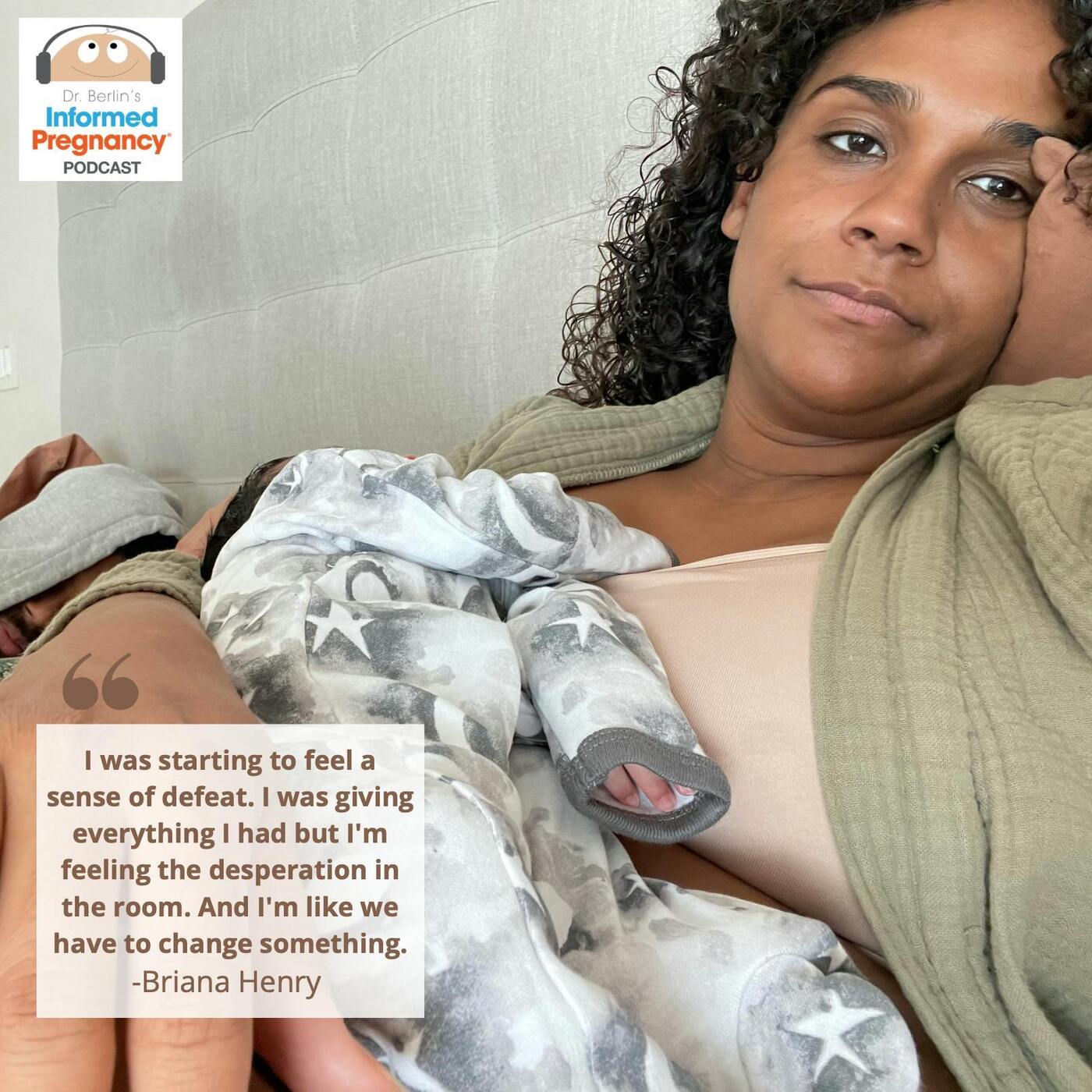
Actress, fitness enthusiast and new mother, Briana Henry joins the show just six days after welcoming her first child. After getting her cervical cerclage removed Briana is dedicated to an unmedicated hospital birth. As her birth journey unfolds Briana is faced with contraction coupling, last minute back labor, and other unforeseen challenges, in this raw, descriptive, and empowering birth story.

Learn more about your ad choices. Visit megaphone.fm/adchoices
See Privacy Policy at https://art19.com/privacy and California Privacy Notice at https://art19.com/privacy#do-not-sell-my-info.
Key quotes
“And it also made me feel more dedicated and determined to do it unmedicated birth than even prior to.”
“And I was really getting into a super grounded meditative, like I have to be powerful and grounded when I am going to give birth to this baby type of mentality, which I think really served my labor well.”
“And then all of a sudden I felt like a rush of water and I was wearing sweatpants, thank God. Jumped off of my couch and jumped onto my wood floor and just like a movie, a gush of water just came out of me.”
“I think you should get a doula. I think that more than anything, Chris felt so empowered once he had the guidance.”
“And I would actually say that the back labor was the nails and the curling iron. If I had described the front pain, man, I would just say like period cramps on steroids, just like, Oh, like just so achy. Whereas the back labor was just, it was next level.”
Related episodes
- Ep. 263 Taryn Slater – After Birth
- Ep. 303 Olesya Rulina – After Birth
- Ep. 273 Briana Henry – Before Birth
- Ep. 182 Randi Wood – Birth Story
Transcript
AI-generated transcript with speaker labels — may contain errors, especially names and medical terms. Dr. Elliot Berlin, DC appears in blue; Briana Henry in orange.
Download PDF of the Transcript
Dr. Elliot Berlin, DC [1:13] Welcome to the informed pregnancy and parenting podcast You've tuned into the after episode of a before and after birth story My guest today is an actress and a fitness guru and instructor and lots of other cool stuff But most recently a mommy Brianna Henry. Welcome back to the podcast. I am so happy to be back You just had your baby. How long ago six days ago Wow Super congratulations. Thank you so much. You're amazing for coming back now I love doing the podcast early if it's not a disruption to your life because this is one that details are still the clearest and Lots of people tell me that they listen to it down the road and like I forgot all those details
Briana Henry [2:17] I'm so glad I did this. So I'm doing this for you. I know I feel it I I'm a big diary entry person and I've been so exhausted that I haven't been able to do that So this will be my like live diary
Dr. Elliot Berlin, DC [2:31] I'm glad to be part of your life diary Okay, so you had a whole bunch of things going on you're literally a fitness like freak and we're doing soul cycle classes every 20 minutes and Burnt out even a little bit from them And then in the past you've had thrombocytopenia where your platelet counts go low And because of that, even though you had toyed with home birth people thought you should have your baby at the hospital to be And then a little surprise of all surprises you go to the doctor and they measure your cervix and it gets short So you take progesterone and then it gets really short So you have a sir collage when we left you last time you were towards the end of pregnancy getting ready to remove
[3:12] That's her collage. How did it go?
Briana Henry [3:14] You know, the removal was a lot less intense than the putting it in
Dr. Elliot Berlin, DC [3:21] Okay, that's good. I know you were like kind of dreading it. So I really was dreading it
Briana Henry [3:26] I didn't realize how much I was spiritually dreading it until it was over and Then I felt so much lighter. I was like eating my saltines as soon as I finished in the hospital
Dr. Elliot Berlin, DC [3:41] Fantastic so did you have anesthesia again?
Briana Henry [3:43] yeah, I instead of the first time around I did a spinal to get it put in and you know, I just thought that that was it felt really intense after and I felt really numb and I Kind of talked to the anesthesiologist and she was like, well, you know, you can't do an epidural And so I was like, okay, let's do an epidural and I might lose a little less sensation Slash I'll get to kind of experience that in case that were you know I wanted to do an unmedicated birth but in case that were to have to happen I would have know the experience and that was actually even worse because You know, they do that little test on you to see like what your tolerance is
[4:19] Yeah, or they bring you into the OR and my tolerance was pretty low like I you know, they were joking they're like, you know, you're a cheap date because I Tingly like immediately and kind of losing sensation and then they took me into the OR and you know they kept doing the check to see if I could feel stuff and I could feel it and feel it and feel it and so she ended up giving me near a Cesarean dose of epidural and so I couldn't feel my legs for like three hours after and you know My heart rate kept dropping every time I'd fall asleep and the baby's heart rate kept dropping and it was very dramatic And despite all that it was better than having them put in.
[5:01] Yes. And it also made me feel more dedicated and determined to do it unmedicated birth than even prior to. Dedicated to unmedicated.
Dr. Elliot Berlin, DC [5:11] Dedicated to unmedicated.
Briana Henry [5:13] With Brianna Henry.
Dr. Elliot Berlin, DC [5:14] Yeah, yeah. Okay, inquiring minds want to know, cause you had all these restrictions, things you couldn't do with the Sir Clash. Did you take advantage of your post-Sir Clash removal freedom?
Briana Henry [5:25] You know, I did to some extent. You know, I had envisioned a very pregnant Brianna going on super long walks and I was carrying so much weight and I was so exhausted and waddling. And you know, I had that groin pain that I had been seeing you about. That vision of Brianna was not quite the Brianna that I ended up meeting towards the end of my experience of pregnancy. So my husband and I did go on a really long walk and we did get to have a little fun before he came. And yeah, so I got a little taste of pregnancy freedom.
Dr. Elliot Berlin, DC [6:05] Was that helpful for the relationship?
Briana Henry [6:08] I think it was. I mean, Chris and I have such great intimacy, you know, with or without sex, but it was just nice to be close again and to be intimate, especially before this like baby was gonna come. And I think more than anything, it was just nice to not fear like what could happen if we did it. Oh, right. Yeah, that's an awful feeling.
Dr. Elliot Berlin, DC [6:31] Just like a cloud of scariness. Yeah. And then also because you talk openly about your battles with depression and how not being able to exercise because of the surrogate also was difficult for you because exercise is one of your vitamins essentially for keeping depression at bay. So was that long walk or other types of exercise helpful before the baby came in that regard?
Briana Henry [6:58] I think it was. You know, I'm that person that loves to sit there and look at the flowers on the side of the road and observe the trees that I'm walking under. So I think it really was good for my heart space to get out and be able to walk a little further than what I had been like.
Dr. Elliot Berlin, DC [7:12] The mailbox?
Briana Henry [7:13] Yes, even if I was in pain, it was really nice. And it made me just excited for the walks that would come with her one day, you know.
Dr. Elliot Berlin, DC [7:21] It's funny, because when I go walking, I love to observe the watch and see how much more time we have to go. Because, yeah, sometimes I notice that there are trees too. Okay. You and your husband are pretty vegan, but during pregnancy, you really let it go and had honey and eggs.
Briana Henry [7:45] Oh yeah.
Dr. Elliot Berlin, DC [7:46] Now that you've had the baby, are you still having honey and eggs?
Briana Henry [7:50] Yeah, man. Love honey and my lactation tea. And eggs are still my jam. I think I'm going to invest in that backyard chicken that I can love and feel guiltless about.
Dr. Elliot Berlin, DC [8:00] Oh, okay. All right, so eggs are here to stay.
Briana Henry [8:04] Eggs are here to stay for now.
Dr. Elliot Berlin, DC [8:06] So you had your surclosure at 36 or 37?
Briana Henry [8:11] I think it was 36 weeks. I think it was like the tail end of 36 weeks. I was like three days shy of 37 weeks, I think.
Dr. Elliot Berlin, DC [8:19] Okay. And then was there any time limit put on when you would need to have the baby by?
Briana Henry [8:25] Yeah, my OB said that she would give me until 41 weeks. She knew how much I really wanted to avoid any kind of intervention or augmentation. And she was really great about, you know, giving me as much bandwidth as possible. So she was like, okay, at 41 weeks, we got to talk, but I'll give you until then to get this baby.
Dr. Elliot Berlin, DC [8:47] Okay, that seems fair. But then also it's kind of weird because you spent most of your pregnancy hoping the baby wouldn't come out yet.
Briana Henry [8:54] Yeah, I feel like I'm gonna change my energy up. Right, all of a sudden you're in the zone and it's like, come out, come out wherever you are.
Dr. Elliot Berlin, DC [9:01] It's like, please, please. How were the last few weeks of pregnancy?
Briana Henry [9:06] You know, they were actually really great. They were really uncomfortable. I was having such a hard time sleeping. I mean, honestly, without you, I think that I would have, I was joking with Chris. I feel like I'm really glad you see non-pregnant patients because if you only saw pregnant patients, I feel like I just have to keep getting pregnant because you were a lifesaver through the last couple of weeks of my pregnancy, truly. But I felt good, you know, I was feeling more in my body. I think with the circulation removed, I was doing PT, which felt really nice to just be able to like kind of move a little bit. And I was really getting into a super grounded meditative,
[9:43] like I have to be powerful and grounded when I am going to give birth to this baby type of mentality, which I think really served my labor well.
Dr. Elliot Berlin, DC [9:55] Okay, wonderful. How did labor start and where in the week count?
Briana Henry [10:00] Oh man, so labor started, technically I was 40 weeks and it happened this past Saturday, so last Saturday. I don't even know what date that was. At like 11 p.m. Saturday night, I was sitting on the couch with my husband and felt kind of like a drop and went to the bathroom and thought maybe it was my mucus plug, but it wasn't any bloody show or anything like that. It just looked like, you know, your average day pregnancy discharge. And so I went back to the couch and we continued watching some terrible reality TV show. And then all of a sudden I felt like a rush of water and I was wearing sweatpants, thank God. Jumped off of my couch and jumped onto my wood floor
[10:49] and just like a movie, a gush of water just came out of me. And it's funny because Dr. Mercy, my OB told me, you have a lot of amniotic fluid. She was like, this is gonna be like a movie gush. She was like, it's not gonna be a trickle. It's gonna be a gush. And she was right. I literally just stood there and Chris was like, okay, what do I do? And we had all of our stuff for over a week by the front door. I was like, okay, get that towel. I'm just gonna stand here. He was like, that's it? I was like, I just wanna leak for a second. Like, let me stand here. And then we kind of just like, you know, I was like, all right, it's happening. I was a little excited that my water broke,
[11:29] but I also know that that gives you this like countdown of like when you have to go to the hospital now. So I was like, okay, not my most ideal. I wanted to labor at home for like, as long as I possibly could. It's like, all right, let's just see how this goes. And I didn't have contractions right away. It was really weird because I hadn't had contractions like that whole day. Not that I noticed at least.
Dr. Elliot Berlin, DC [11:49] Yeah, so are you saying you had contractions before that day?
Briana Henry [11:52] Yeah, I had experienced contractions before that day and it almost felt like they had slowed down, especially the day that I, like my water broke. So I was really kind of thrown off that my water broke that night.
Dr. Elliot Berlin, DC [12:04] I love how tricky your body is. Like loves to play tricks on you.
Briana Henry [12:07] Loves to play tricks on me.
Dr. Elliot Berlin, DC [12:09] But in those couple of days before this, did you have thoughts like, ooh, this might be it?
Briana Henry [12:15] Yeah, there were a couple of contractions I had that felt stronger than a Braxton Hicks, but were not regular enough to be like a proper contraction. So I was like, okay, something's warming up. My cervix felt a little weird. I think I told you that when I came in. I was like, I feel like stuff is happening. Like I felt like stuff was spinning or something.
Dr. Elliot Berlin, DC [12:35] You know, which is cool because you said before the whole circumcise, but you didn't really think about where your cervix is. Like you- Yeah. And now you're like, oh, I'm feeling some cervical stuff.
Briana Henry [12:45] Yeah, I'm like a doctor now. I'm like, oh, it's right there. Right for general hospital.
Dr. Elliot Berlin, DC [12:51] Yes. Okay, so your water breaks, I mean, is it exciting for you?
Briana Henry [12:57] It was pretty exciting. I was like in a really Zen place. I was just like, cool, I'm gonna go shower. I like conditioned my hair because I was in the last shower for a second. And you know, I came out, my husband was like, he was really calm, but he was like very excitable and like wanting to get everything ready. And so I just kind of sat at the kitchen table and wrote out like a final list of things that I hadn't finished that I needed him to finish. And then something interesting happened.
Dr. Elliot Berlin, DC [13:21] Ooh, I love interesting things. That sounds like a cliffhanger. Let's take a break and we're gonna come right back and find out what interesting thing happened with Brianna Henry. Sorry, we're talking to Breonna Henry. She has her circlage out of 37 weeks, water breaks up 40 weeks, and then something interesting happens. But before we get to that, two housekeeping notes. Number one, you inspired me to do more research on circlage, and so we're going to have an episode all about circlage with Dr. Steven Rad and OB-GYN and maternal fetal medical specialists coming up very soon. We already scheduled it. And number two, I now have met two other couples who met on Bumble and then got pregnant by
[16:31] accident. What? I know you guys are going to have to start a Facebook page soon. One of them is I just recorded a podcast with her. It's about to come out also. So Bumble users, careful. Fall in love and get pregnant. Up there. Okay, so back to you. Then your water breaks, cool, exciting, Zen place, conditioner in the hair, and then your contractions start coming and something
Briana Henry [16:56] interesting happens. Yes, my contractions start lasting like two minutes. And we're both kind of like weirded out by it. Chris is on Google, which is always a terrible idea, but he is. Of course, Google's like, oh, it's either like not a big deal, or it's like totally a big deal. Yeah, we're like, great. So we text my OB Dr. Mercy and she was like, I know you're not going to like this, but you got to come into the hospital sooner now. So I didn't love that, but I was like, all right, I just got to do what I got to do. My mom and my dad come over because my dad is like so cute. He's like helping my husband like set up the car. He came into town because he was very anxious about me giving
[17:35] birth and wanted to be here when it happened. And my mom is like, you know, rubbing my feet while I prepare to leave the house. And she's like, I'm so proud of you. It was a very sweet departure to the hospital. From her perspective, how long is that from,
Dr. Elliot Berlin, DC [17:49] because you said you want to work around 11 o'clock during bad reality TV. Yeah. Yeah.
Briana Henry [17:54] It broke around 11 o'clock and we went to the hospital. I want to say we headed to the hospital at like two 30. Okay. So you had a few hours of labor at home. I had a few hours of labor at home. And by the time I was in the car and got to the hospital, my contractions were getting more painful, like walking up to the baby award, the labor and delivery, the labor and delivery word. I kind of had to stop on a bench because I was experiencing contraction. That was really painful in the front of your body. Oh yes. It was all in the front of my body at this point. So different than your generally painful period cramps. They still felt like period cramps, just like a bit more debilitating.
Dr. Elliot Berlin, DC [18:37] Okay. It was just like, Oh, I can't move. Hey listeners, this is awesome.
Briana Henry [18:44] Okay. Just a little bit more debilitating. And so we finally get up there. We check in Chris and I are kind of like hanging out in the bed and you know, he's like kissing me and just like, we're trying to like kind of stay calm. And my contractions are definitely getting a bit more intense and they check me at, I think they did my first cervical check at, I want to say it was like 8 30 a.m. And was it 8 30? It was either 5 30 a.m. or 8 30 a.m. Which is a good thing we recorded now. Good thing we recorded now. Two weeks from now you'll be like, I think it was Tuesday. Was it? Maybe it was our third day of labor. But yeah, I'm almost positive it
[19:27] was 8 30 and I was four centimeters dilated. Is that news like exciting to you or a let down or? It was exciting. I was like, cool. Like for the pain level I was at, I was like, I got more in me. I could handle more. And is the little snuggly lovey approach coming to you helpful to you? Yeah, it was really nice. At this point, it was still really sweet. Like I couldn't feel anything.
Dr. Elliot Berlin, DC [19:53] All right. So four centimeters and then you let them know I'm aiming for unmedicated.
Briana Henry [19:59] Yeah. And, you know, my OB Dr. Mercy, she had let the nurse know that was kind of going to be in charge of me that morning, that I was going for unmedicated, that I didn't want to take any potosin or I didn't want to take anything, but I just wanted to kind of let it ride. And so everybody was really respectful and left me alone. They let me do intermittent monitoring. So I wasn't strapped up the whole time and could really move around the space. I was able to eat. Oh, they let you eat. Yeah, I was able to eat. Anything like anything. I mean, I brought like vegetable broth. Chris and I had someone come and cook us some food and prepare it for us for the hospital.
[20:38] It was brilliant. It was really sweet. It was like one of my Christmas gifts. He was like, I know you're going to be wrecked after this baby. So I'm going to have someone come and help you like recover. And so this amazing vegan chef became and cooked this awesome vegetable broth that I brought to the hospital. I had like apple juices with me and all kinds of like little snacks. OK, great. Yeah. And so I was able to eat, which was great. And my doula didn't want to show up until I was kind of more an active labor. So kind of just Chris and I getting through the first part of it. And by the time Hayes came, I was I needed Hayes. I was starting to feel a lot of pain.
[21:18] And again, is this the same region pain just ramping up even more or? Yeah, it was the same region pain. But the coupling contractions got much more intense.
Dr. Elliot Berlin, DC [21:29] OK, so that's why you went in early.
Briana Henry [21:32] I went in early for those long contractions with very little break.
Dr. Elliot Berlin, DC [21:36] I mean, so obviously they weren't too worried about it once you got there.
Briana Henry [21:41] No, I mean, my heart rate was fine. And so was the baby's. So nobody was like stressed out about what the contractions were doing. The baby would every once in a while, her heart rate would jump like because I was experiencing two peaks during my contractions, which was really exciting.
Dr. Elliot Berlin, DC [21:56] Oh, so it would start to happen. You'd feel it coming. And then it would hit Max and then start to go away. But trick you again and then Max out again.
Briana Henry [22:07] Yes. Wow. It was really intense. And as the contractions got closer together, I got less of a break. So it felt like I was just contracting consistently for like ever.
Dr. Elliot Berlin, DC [22:20] OK, did they talk about anything why that would happen?
Briana Henry [22:23] Just since it's out of the use. No, and nobody. I mean, even my doula, she was like, it's really uncommon for people to have coupling contractions. She's like, I've only seen it a couple of times. And it's really the first time all peaks. Yeah, it was really, really intense.
Dr. Elliot Berlin, DC [22:41] And I had I'm wondering also separate from this and maybe related. Who knows if your cervix is still kind of irritable from having your surgery removed three weeks prior.
Briana Henry [22:53] I wonder, too. You know, I wondered that even when I was going to get it removed, I was like, is this not going to do anything to my cervix? And everyone told me it wouldn't. So I was like, OK. Was not uncomfortable during post-circulation removal sex. No, it really wasn't. Like, I didn't really feel any discomfort with my cervix. If anything, I felt like more of a release, like I felt freer, I think, anatomically, once it was removed.
Dr. Elliot Berlin, DC [23:20] So I mentioned it to Dr. See if there's any correlation between labor, either discomfort or contraction pattern and surplus. OK, so it's getting more and more intense. And then Hayes comes and then Hayes comes.
Briana Henry [23:35] And Hayes has us in like a really clear routine. She's like, you know, getting me up. We're doing all these different, you know, counter pressure exercises. I'm like laboring on the back of the toilet, walking around, kind of like leaning over and like swinging my hips back and forth, just all these kinds of things that are helping like drop the baby and open me up. What was also really interesting was I remember when I came to your office, you told me the baby was really low and she was really low for the whole rest of my pregnancy. And she was actually stationed. I forget what the stations are, but she was remind me. Yes, starts at minus three and then ends at plus three.
Dr. Elliot Berlin, DC [24:17] So minus three, minus two, minus one, zero, plus one, two and three. OK, so she was already.
Briana Henry [24:23] I want to say she was already at a plus two. Is that OK? Yeah. She was stationed really low. She was already like they kept telling me that when I did have to push that I was going to be able to push her out and like two or three pushes. Quick. OK. So low. So it was like really encouraging when they did the second cervical check, because at the second cervical check, they could feel her head. And they also were like your eight centimeters dilated. Oh, this is exciting. Super exciting. And it was interesting because once we found out that news, Hayes was like, when I got here, you were like in the transitioning phase. And she was like, I didn't want to tell you.
[25:00] because it was like you were in a lot of really intense pain. And I didn't want to be wrong about you being in the transitioning. You know, but she was like, but I thought that's where you were. And she's like, and now that I know you're eight centimeters, you're definitely there. And I was like, cool.
Dr. Elliot Berlin, DC [25:14] I know that some people are gonna be wondering when you said you were laboring on the back of the toilet. Does that mean you were sitting backwards on the toilet facing the back of it?
Briana Henry [25:23] Yeah. And like Hayes and Chris had set me up with pillows. So I could kind of rest in between contractions, which was like kind of a joke because I didn't have an opportunity.
Dr. Elliot Berlin, DC [25:31] You don't have time because you're weird. Brianna contraction panic is the purpose of facing the other way so that they can still kind of have access for you. Okay,
Briana Henry [25:44] Chris and Hayes had their hands on me for really pretty much the second Hayes got there. They had their hands on me for the entire rest of my labor. Like they were just like pressing into my pack with their like knuckles and like trying to massage me. Hayes was using a bunch of aromatherapy, which was interesting because I'm not a big sense person, but it was really helpful during the peaks of some of my contractions to have that aromatherapy. No kind of sense they were like, we're more calming like lavender or like energizing like citrus. I think she meant, yeah, meant for some of it, which was really great. And yeah, the toilet drills that we did were like really intense. Like I was just
[26:27] sitting on the toilet, but I think because I was just opening so much, it was probably some of the most painful, like part of our early brewing that we did. You know, I was being coached by Hayes, which was really helpful to kind of change the way I was looking at the pain and kind of saying like, thank you every time a contraction came because I was opening and like just kind of repeating like I'm opening, I'm opening to just re imagine the experience of how intense it was, which was
Dr. Elliot Berlin, DC [26:57] see that your instinct is like, no, no, not another one. And then your body's like, no, this is bad. We have to fight this versus like first just saying, yes, bring it on, bring me closer. And then once your body believes it, then it's a powerful payoff. Was there no moment where you thought about getting into water?
Briana Henry [27:17] You know, I delivered at St. John's in Santa Monica, they have a shower, but for some reason, I didn't really want to get wet. Like, I just feel like it felt your hair. You know, like it just felt dramatic, like not even dramatic. Honestly, I think I was in so much pain. I was in such a transfixed, otherworldly state of mind for a majority of this. I mean, Chris was telling me that it was like awe inspiring to watch me because he would talk to me and I had like an 1000 yard like gaze. He was like, I couldn't reach you like you were in a different dimension. So the things we were doing were working pretty well. So I was just like, let me just keep doing this. So I
[28:00] thought about it for half a second, but I wanted more of like a bath than I wanted a shower and they don't have a bath. So I was just like, I'm just going to stay dry.
Dr. Elliot Berlin, DC [28:11] In terms of the support you're getting from your husband and from Hayes, did you feel like they had different roles?
Briana Henry [28:22] You know, it was really beautiful to observe them. And it was cool because there were a couple of times where like Hayes would show Chris counter pressure, like thing to do to help me with the pain. And I wouldn't even notice that they switched because it was really doing a great job. And she kind of would teach him what to do and then let him kind of step in and do it for me. And there were a couple of times where I'd be like, Hayes, Hayes. It was like, no, no, I need you. But I would say for the most part, they were a really great team. They just kind of both had hands on me. And anytime I needed both of them, they just kind of gave it to me.
Dr. Elliot Berlin, DC [28:59] Okay, cool. A lot of times people wonder like, what do I need to do? Like, can't my husband be my doula?
Briana Henry [29:06] I think you should get a doula. I think that more than anything, Chris felt so empowered once he had the guidance. Because even prior to that, when I was just in kind of early labor, like the early stages and was in pain, I think that he was a little unsure of how to help me. And I'm like suffering and why I wasn't suffering yet, but I was just in pain. And I think once Hayes got there, it was just like, do this, do that, do this. And he felt empowered.
Dr. Elliot Berlin, DC [29:33] Right. So I think sometimes guys are worried that they're going to be replaced by the doula or partners are worried that they're going to be replaced by the doula. But at our first birth, it was before I really got into prenatal work. And we had a doula and exactly what you're saying. Like I wanted to be helpful, but didn't really know how to be helpful. And by her giving me things to do, it was like so calming for me. And then I was able to be, you know, calling for my wife. So after that, you know, we both became doulas, my wife and I, and we still had a doula by the other three births because I realized that anybody could be the doula, but the partner has a different role that only the partner can do. All right. It's
[30:17] starting to get exciting here at eight centimeters. Why don't we take a little break and come

Dr. Elliot Berlin, DC [30:21] back and find out the rest of the story. Welcome back to the informed pregnancy podcast. We're talking to Brianna Henry, who by the way, in the past half hour has experienced 30 more minutes of motherhood, which percentage wise we've been with you for a large portion of your mothering career. Yeah. Thank you guys for me. All right. So in your birth story, you're intense and you're tough. You're tough to begin with and you're fit and you have very intense periods normally. And it's getting intense for you partially because you're having these long contractions with two peaks and very little break in between and partially because you're in transition, you're getting
Briana Henry [31:14] close. Yes. Yes. Yes. Yes. And so we end up laboring once I get to eight centimeters, I'm like overjoyed. I think I cried when they gave me the cervical check. I was just like, yes, I felt really, I remember you telling me during one of our sessions, you're going to hit this wall of fear and pain. And I was like, cool. Like if I haven't climbed it, like I'm really close to being like to oxytocin land of pushing this baby out of my body. So I was feeling really empowered, I think, at that cervical check. And so Hayes, Chris and I just labored hardcore for like the next three hours. And this is when I definitely was introduced to the wall of pain and fear. And it was probably the most excruciating
[32:03] pain I've ever experienced in my life. Yeah, I described to my girlfriend, it felt like a like, hot, curling iron with like nails hold through the center of my body. And I was starting to experience back pain during my labor, then a lot of like back labor, and we didn't really know if it was proper back labor yet, or it was just like, everything was opening. But it was to the point where I was starting to, you know, when I would lay down on my side on the bed, I could feel her like wiggling in my pelvis, like trying to get further down. And what they realized when they checked that I was eight centimeters was that there was a piece of my cervix that wasn't thinning. So the baby was kind of
[32:52] stuck. And so it was like, okay, this part of your cervix needs to thin and the dilation will continue and we'll be on our way. And so we labored super hard for three hours, excruciating. And three hours go by, we do another cervical check. And I'm just like, it has to be 10 centimeters now, like there's just no way that this is not a 10 centimeters. And they checked me. I'm at nine centimeters. And my cervix is still not thinning. And there's a little cervical lip lip. And I am now I felt the spirit in me get like, I was at a level of pain that I knew I would not be able to maintain. And what was discovered was that the baby had turned and was out in
[33:50] a sunny side up position. So her skull against your spine, her skull is against my spine, which is why the pain had significantly increased and back labor kicked in and back labor kicked in at nine centimeters.
Dr. Elliot Berlin, DC [34:04] Because you're so descriptive. Can you describe the difference in sensation from labor that was more typical in the front, but intense versus back labor?
Briana Henry [34:14] Yeah, man, the labor in the front was really, really excruciating, but it was excruciating for like moments in time, when the contractions were really at their peak. And it just felt like the same sensation of those period cramps I was explaining on like a 30, you know, it was just like throbbing in the front, you could feel it all in the front of your pelvis. Whereas back labor felt like someone was sticking a knife in my spine. It just felt like a really sharp, sharp, it really felt like I was being stabbed. And it was it was consistent because she was just kind of resting there pushing, trying to get down.
Dr. Elliot Berlin, DC [34:54] Wow, so hot curling iron with nails on one side and stabbed on the other side.
Briana Henry [35:01] And I would actually say that the back labor was the nails and the curling iron. If I had described the front pain, man, I would just say like period cramps on steroids, just like, Oh, like just so achy. Whereas the back labor was just, it was next level. It was, I almost felt like I could like fall unconscious at any minute. Like I was so much pain. Yeah.
Dr. Elliot Berlin, DC [35:29] Sharp intents is different than achy intents.
Briana Henry [35:32] Yeah. And the counter pressure was no longer working. Nothing that Chris and Hayes did was taking away the pain at this point. And it was interesting because I kept, you know, I was now, I was laboring on my back, I was feeling some of that sensation of wanting to push, which was actually even more distracting because I knew that that sensation was what it was going to feel like when I wanted to push her out, but it was coming and going. And Hayes kept telling me like, no, you don't need to push it. Like when you have to push, you're going to know you have to push. And I'm like out here hustling everybody. I'm like, no, no, no, I have to push.
[36:07] Like this, like this baby has to come out of me. And, you know, I think that I was at nine centimeters. I was so close. And I think what was difficult for me was I kept hearing you in my voice of like this, you know, wall of fear and pain, and I kept having a hard time distinguishing, is that this or am I now stuck in this place? And there's not getting over the wall. It's like I've broken through it and there's just consistent pain from now. And I couldn't tell if I was suffering. Like it wasn't even an ego thing of, oh, Briana, like be stronger. It was like, have you reached your edge? Is this it? And it got to a point where I literally, you know, Hayes actually
[36:50] said to me, I was laboring, I think on the toilet and she was like, baby. She was like, you kind of have to ask yourself, like, am I suffering or am I just needing to lean more into the pain? And she was like, you're the only one that can answer that. She was like, from my perspective, she's like, it looks like you're suffering and she was like, this is the point where if I had a home birth client, I would tell them to transfer to the hospital to get an epidural. She's seen so many births. She's seen so many births. And I think her saying that made me, it was interesting. I checked into a different place. Once I got to that nine centimeters where I was almost really calm through
[37:33] the pain because I felt so defeated. I was just like, I surrendered so much and I was really trying to like have a come to some kind of Jesus moment with myself of like, what do we need to do to get through this? Because I feel lost as to what's next. And when she said that to me and literally like 15 minutes later, my OB calls and she's like, Brianna, she's like, I love you. I'm so proud of you. She's like, you have labored so long and hard. And she was like, but you are suffering. She was like, I think that you should just be open to some other options. She was like, you are so close. And she's like, I'm just worried about you and what's happening to the baby.
[38:18] She's like, I hadn't eaten, like, because I brought a bunch of cool food to the hospital, but I wasn't eating it. I was not in the mood to eat. I was not in the mood to eat. I mean, I was trying, but I was just drinking water and Hayes and Chris were like regularly liquid IV. Like I was just drinking as much water as I could. And I felt pretty hydrated, but I hadn't slept in over 24 hours at this point. And I hadn't eaten really in over like 24 hours.
Dr. Elliot Berlin, DC [38:50] I mean, we talked about in the previous episode, how you kind of have a thing about not feeling your legs because your stepdad shortly after joining the family became paralyzed from a sporting injury and how that might play a role for you in wanting to, well, in general, not really loving hospitals and the medical apparatus, but then also not really wanting to necessarily feel that temporary perils is feeling. And then you had both a spinal and an epidural and neither one went great for you. So is any of that playing a role in your decision-making now?
Briana Henry [39:32] 100%. At this point, I think it was more, I was so close that there was a part of me that was just like, do not cave, like keep going. I think that played a smaller role than I was expecting it to play to be fair. And so, you know, Dr. Mercy's like, get the epidural. Hayes is like, I support whatever you want to do, but I kind of think you should get the epidural. And, you know, once Chris realizes that I'm laboring like sunny side up, because he knew that I really wanted to do this on medicated. So he knew this was like championing me. It was just like, you can do it, you can do it. And then at one point I was just like, I can't and don't want to.
[40:10] I was like, I need the epidural. So I get the epidural. And Dr. Mercy wanted me to go on pitocin with the epidural right away. And I was able to kind of fend that off and say that I wanted to just start with the epidural. And she was like, fair. So they give me the epidural, I rest for like, well, first of all, I was having really intense contractions when I got the epidural.
Dr. Elliot Berlin, DC [40:34] Oh, you mean while they're, you have to sit still on the little cat position?
Briana Henry [40:38] Oh yeah. Talk about like self-discipline. I was just like, Brianna, you have to sit still through. I mean, I'm like wailing in these contractions at this point. So it was really hard, but the idea that I was going to have relief was more motivating to me than the pain of the contractions. And they got it in. I was able to have a full conversation with the anesthesiologist about like what happened with the epidural last time. And she was able to make some adjustments.
Dr. Elliot Berlin, DC [41:08] Oh, nice.
Briana Henry [41:08] And within 10 minutes, I felt like a completely different human being.
Dr. Elliot Berlin, DC [41:14] So did you still feel anything?
Briana Henry [41:17] It was interesting. I could feel when I was having a contraction because well, one, we started it really, really low. So usually I guess they start the epidural a little higher to tick with the pain and turn it down when you're about to push because they want you to have the sensation of pushing. At least that's how Dr. Mercy does it. But with me, we started me really low to begin with because I didn't want to lose too much sensation in my legs.
Dr. Elliot Berlin, DC [41:38] Also you're already nine centimeters. So could be soon. Total. And plus two baby.
Briana Henry [41:45] Yes, exactly. So I could feel the contractions and I mostly could just feel it on my back, but it didn't hurt anymore. It was more just like, oh, I can feel like a throbbing or something that's happening. And within an hour, I was fully dilated. They did a cervical check. So I didn't get as much rest as I was hoping. I was kind of hoping I'd get like three hours of sleep at least, but I got maybe 35 minutes of sleep before Dr. Mercy was like, I want you to start pushing. It was like a quick charge on the phone. It was like a quick charge on the phone. And it was interesting because she also brought up pitocin again because my contractions, what happened is as soon as I got the epidural,
[42:30] baby reverted back. So she was now not stationed as low. Oh, okay. So I had to get her past my pelvis again and my contractions slowed significantly. So they were like two, three minutes apart before, and now they were at like seven to nine.
Dr. Elliot Berlin, DC [42:47] Okay. And you can't walk around anymore. You can't walk around. To try to bring them back up. So, yeah. Did you get pit?
Briana Henry [42:56] I got pit, man. I pushed her off for a long time. She was like calling me. Like I felt like it was like quite a negotiation. I love her. She was really putting up with me. I was just like, I don't want the pitocin. I don't want the pitocin. And at one point like Hayes and you know, we were like, okay, let's try to push a little bit and just see what happens because I was definitely feeling like the sensation and my pushes were really forceful. So the nurse that was kind of starting us off with pushing, who was wonderful. She was such an amazing woman. She also was like, okay, like let's see what your body will do. And then when she saw how forceful my pushes were,
[43:34] she was like, everybody in the room after like 30 minutes of pushing was like, if you do the pitocin, we're gonna get this baby out. Like it's gonna move fast if you take the pitocin. And so we finally caved, called Dr. Mercy. We're like, okay, she's gonna do the pitocin.
Dr. Elliot Berlin, DC [43:51] Hit me with the pit. When we were talking during your pregnancy, even though we normally do three segments here, we did four because you're extra cool and so expressive. And I think we should do the same now. Let's do it. We'll be right back with the big finish. Welcome back to the Informed Pregnancy Podcast. Okay, so Brianna like nine centimeters and then things kind of turned when the baby rotated against your spine. You decided to get the epidural, which was challenging to get in, but then big payoff with 35 minutes of sleep. Then magically you're totally faced and 10 centimeters dilated and ready to start pushing, but your contractions are all spaced out.
[44:43] So after a lot of negotiating, you'll get some pitocin. Yep. What happens next?
Briana Henry [44:50] So at this point, just to give reference, I'm at 30 hours of labor and we're about to start pushing. And, you know, I started pushing and. And once they give me the pitocin, my contractions were like, let's go. They were coming so regularly. It happened so fast, you know, I was practicing my pushes with Hayes and the nurse and Chris. We had a playlist that Chris and I made that was playing like the whole time I was laboring and I got the pitocin after pushing for about 30, 45 minutes. And then we were pushing for an additional maybe like hour and a half and the baby was like close to crowning. Like I pushed her really far down my vaginal canal.
[45:36] So they were like, all right, time to call Dr. Mercy. So we call Dr. Mercy. She comes in and the room like floods with like a bajillion people. Which Hayes kind of warned me about, but I was like in such a state of mind when I was pushing and whatnot that I wasn't really taking into consideration how that was going to make me feel very overwhelming. Oh, really? A little bit like it was wonderful because it was a lot of female energy that I love being around women. So it was great in that sense, but it was a lot of like different direction. Like it was a lot of people talking at once and not all of them knew my journey. Right. Not all of them knew how long I'd been laboring.
[46:15] Not all of them knew where I was at. So I was really just focusing on Dr. Mercy and Hayes like those were just like the two people that I was focusing on during pushing. And so I'm pushing, I'm pushing. And what I'm noticing is that like my first push is like strong and like really like everyone's always very excited about the first push in the room. And I'm super energy sensitive. So even though I'm like back in this transfixed animalistic, like another universe state of mind that I was before I got the epidural, I can still feel the energy in the room of like people. And they're really excited about the first push. And then my second and third pushes, they're like getting less forceful.
[46:55] And you know, people are like, think of your baby, think of your baby. And I'm like, I'm thinking of my, like, this is not a thinking of my baby kind of concern. This is a, I haven't slept. I haven't ate and I've been unmedicated laboring this child for like 24 plus hours.
Dr. Elliot Berlin, DC [47:12] So just to be clear, you're saying that during a contraction, they would coach you to push and get a really solid push and then try to maximize that same contraction by kind of taking air and pushing again, taking air and pushing again. And the second, third one, those are where you're getting weaker. Exactly.
Briana Henry [47:29] And I can feel it. And I'm an athlete, right? So like everyone's like harder, harder. And I can feel in my body. I'm like, I'm at my hardest. Like in soul cycle, come on, get your booty out of that saddle. Exactly. There was at least one time where I thought of like the excruciating pain of teaching and pushing through that pain and getting through. And I was thinking of everything. My mantra is the baby, putting the baby on my chest. Like I was really emotionally and psychologically coaching myself. And I was still feeling like I was running out of steam.
Dr. Elliot Berlin, DC [48:01] Did you reach down and touch the baby's head?
Briana Henry [48:03] I did touch the baby's head. Yeah, that was helpful. I got a really great push after I touched that and they even brought a mirror, the mirror, so many people that it was challenging because there was a lot of bodies in the room, but the mirror helped a little bit. And finally I could feel her head. Like it was like ring of fire time and I could feel her like wanting to come out of me, but that second and third push, because she was O P and the sunny side up position, her head was just so big to come out of my vagina. That Dr. Immersy at one point, she was like, push Brianna. And I was like, I'm pushing. I was like, I can't. And she was like, listen, she's like, if this baby was not in this
[48:44] position, she's like, she would have been out already. She's like, this is not about your pushes. She's like, your pushes are powerful. She was like, this is about the fact that the baby is in the most complicated position that she could be in to come out of you right now. And that kind of made me feel better because I was starting to feel like that sense of like defeat a little bit again, cause I was like, I'm giving this everything I have. And so finally the mood changes a little bit because the baby's now starting to get in distress and her heart rate starting to do some weird things and I can feel it, I can feel in the room and Dr. Mercy's like, I'm going to give you like a couple more pushes and
[49:18] then like, we have to talk. And so I'm like really giving it everything I have. I'm feeling the desperation from everyone in the room. And I can hear Dr. Mercy starting to talk to Hayes a bit about a vacuum. And so then she is like Brianna. She's like, you are pushing so magnificently, but the baby's starting to be in distress and we need to get her out. We need to get her out now. And she was like, I think that we need to use a vacuum. And I looked to Hayes and Hayes is like, yes. And I was like, okay, yes. And I've done so much research and I know the vacuums lead one to just like messing up the baby a bit. And two, like that's where tears like
[50:00] Big tearing. Yeah. So literally my first thought was like, you know, I won't use profanity, but like there goes my vagina. It was just like, all right, this is about to get messed up. And the second thought was like, we got to get her out. So who cares? So I was just like, all right, let's do it. And Dr. Mercy was like, okay, so this is what I'm going to do. And I was like, I'm having a contraction. And so I was like, I didn't see what she was about to do. I was just like, let's do it. And Chris, by the way, is down there the whole time. Cause Dr. Mercy does this amazing thing where she lets the fathers catch the babies. Oh, cool. So Chris is down there like watching all of this happen. All these fingers are being
[50:36] put in me to open me up and try to get the baby out. The whole time I was like, do you have to be that hard? Like, do you have to be that rough with her? Like he was just like heartbroken to just watch my vagina being like destroyed for this child. So finally they put the vacuum on me and I do one like huge push and they vacuum her out. And I literally feel like I'm in another like universe. I'm like staring at the ceiling. I don't even know where I am. Chris puts the baby on my chest. The umbilical cord is really short. So she couldn't like get all the way up there, but she got really close. And the poor little thing, like she just had this huge gash on her forehead. It's all bloody. Her face is all
[51:20] smushed because she's been like laboring with me forever and in my vaginal canal and out of my vaginal canal and back in it. And it was just relief. I was just like,
Dr. Elliot Berlin, DC [51:30] oh, she's here. Thank God. Thank God. And not dusty because she had a vacuum. Yeah, not dusty. So clean and bloody. I mean, the truth is you do the push. The vacuum is really just to kind of orient the head into a better position so that your push is more effective. They can't pull the baby out because the vacuum only allows a certain amount of suction pressure and then it pops off. Exactly. Wow. A second degree tear. Okay. Lots of sutures. A lot of sutures. A lot of sutures. Yeah. But you made that
Briana Henry [52:08] calculation. I knew it. I was like, it's going to have to be what it's going to be. I'll take the tear. I want the baby. I want the baby. Oh my gosh. What a crazy journey. Yes. Just briefly. How was the first week of motherhood? Honestly, it's beautiful. It's been emotional, but I'm so in love with her. She's so, so, so, so delicious.
Dr. Elliot Berlin, DC [52:33] Her name is Coda. Oh, I thought you were going to name her Hans.
Briana Henry [52:38] Well, because she was so low. I know. Okay. Coda. Where's that name come from? So Chris and I, a couple of years ago, watched this documentary about this composer, Raichi Sakamoto. He's this Japanese composer and he's like done The Revenant and a bunch of other really big films. And he was diagnosed with cancer and took on this final project that he thought was going to be the last thing he'd composed before he died. And it's all about like this journey of composing this piece of music. And Coda is an Italian term means the tail, but it's often when it's an association with music, like a music sonata, it's the tail end. It's like its own piece of music after the bigger piece of music that recreates some of the
[53:22] major themes and some of the really important elements of the major piece that you just listened to. And it's kind of its own recreation of that sound and that experience. And it's like a finale. Chris and I decided that that's exactly what she kind of is, that's really cool. How beautiful. I mean, it's hard to explain every time somebody says, where's the name from? Of course we would like have some really here. Why don't you watch this YouTube video? I wish it was after the Coda movie. The one that just came out this past year would be way simpler.
Dr. Elliot Berlin, DC [53:57] Briana, you're amazing. Thank you so much for sharing your real open, broad, honest and beautiful journey. I mean, it's been amazing to work with you and to know you, but I have a feeling we're going to come back and do a part three because we're going to follow you through these early stages of motherhood. Love it. Anytime. I'll be here. Amazing. Okay. I had a few questions I couldn't get to like what's on your playlist. So many things. Was there like one in particular that was like, yes.
Briana Henry [54:29] Yes. Well, one that didn't make it there that I was really sad about was Chris actually composed a piece of music for our vows that he wrote for me. And because we use Spotify, we couldn't get it on there because that song actually isn't on like any of his playlist because Chris is a composer. He hasn't released it. So I was really sad that that song, I had an idea of her being born to that. If I can remember correctly, I think that the song that was playing when she was born was The Sun's Gonna Rise by Citizen Cope, which is all about the birth of his first child. Oh, look at that. Why didn't you play that earlier?
Dr. Elliot Berlin, DC [55:05] I know. Obviously it wasn't loud enough. There were many opportunities. Okay. All good things
Briana Henry [55:13] come to an end. Where can we find you online? You can probably best find me on my Instagram. Brianna Nicole E. B-R-I-A-N-A-N-I-C-O-L-E. E. E. Brianna Nicole E. E. Amazing. We'll see
Dr. Elliot Berlin, DC [55:31] you there. And we're also on Instagram at Dr. Berlin. D-O-C-T-O-R-B-E-R-L-I-N.
Want more pregnancy + parenting? Start your FREE TRIAL of Informed Pregnancy+ and get access to all our curated pregnancy and parenting content — original series, iconic birth films like The Business of Being Born, prenatal workouts and more.
