
December 16, 2021 · 54 minutes · Episode 260
About this episode
Former Miss USA and Sports Illustrated model Olivia Jordan recently welcomed her first baby. She shares her personal birth journey in hopes of providing future mothers with insight and perspective.

Learn more about your ad choices. Visit megaphone.fm/adchoices
See Privacy Policy at https://art19.com/privacy and California Privacy Notice at https://art19.com/privacy#do-not-sell-my-info.
Key quotes
“And that sort of very early showing is okay. And then once I popped and once I was visibly pregnant, it was the best thing ever. I like loved watching my body change.”
“So it was in my early plans to try to find a good midwife, to find an option where I could do a water birth, whether that be home or hospital or birth center.”
“But as I was tracking the app said, get ready to go to the hospital. So I was like, oh my gosh, it's happening.”
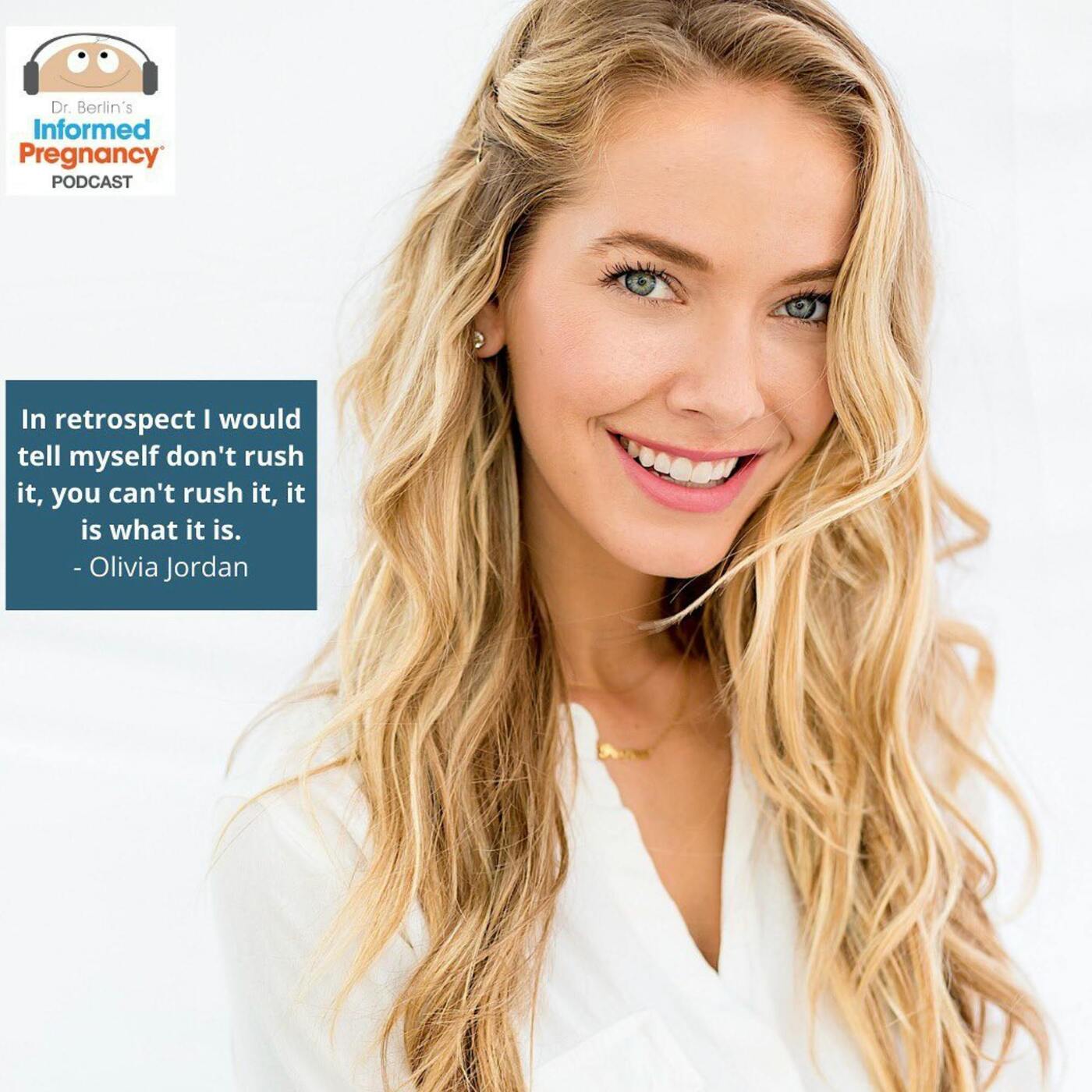
“the whole time. The only thing that I would say to myself, like in retrospect, or if I ever go through this again, it's like, don't rush it. Like you can't rush it. It is what it is. But I was so eager. Like I wanted the midwives to tell me when this baby was going to get here, how many more hours do I need to do this? And it just wasn't a realistic expectation.”
“I liked knowing where we were. I liked knowing that we were progressing. So they helped my mental state. I was like, okay, all of these contractions are doing something, this is good.”
Related episodes
- Ep. 188 Joanna Bavero – Birth Story
- Ep. 182 Randi Wood – Birth Story
- Ep. 456 Liberté Chan: Before Birth
- Ep. 438 Postpartum Preeclampsia with Dr. Jamie Barstein and Dr. Nathan Fox
Transcript
AI-generated transcript with speaker labels — may contain errors, especially names and medical terms. Dr. Elliot Berlin, DC appears in blue; Olivia Jordan in orange.
Download PDF of the Transcript
Dr. Elliot Berlin, DC [1:13] Welcome to the informed pregnancy and parenting podcast. I'm your host dr Elliot berlin My guest today recently had her first baby and after finding our podcast Especially personal birth stories to be helpful in preparing for her pregnancy and birth journey She decided to pay it forward and help others by sharing her personal experience as well She is a former sports illustrated swimsuit model miss usa and has become a powerful influencer and entrepreneur Olivia jordan, welcome to the podcast
Olivia Jordan [2:05] Thanks for having me. This is very surreal to see your face
Dr. Elliot Berlin, DC [2:12] Nowadays it's surreal to see anybody's face there It's not like on a regular basis now i'll see people like five or six times No face just a mask and then all of a sudden i'll see them without the mask nothing like what I thought ever We're all hiding we're all hiding i'm like that is not you know But at least the good thing is i'm giving people the benefit of the doubt All right, let's talk you have an interesting past we have nothing in common. Where are you from originally?
Olivia Jordan [2:46] I'm originally from tulsa, oklahoma And I left tulsa went to boston Moved to la to pursue entertainment stuff and then I found myself pregnant and wanting to be back in oklahoma never would have thought i'd see the day
Dr. Elliot Berlin, DC [3:03] But here we are. Oh really it was the pregnancy that drove you home
Olivia Jordan [3:07] I in november said I will never in a million years move back to oklahoma and in december found out I was pregnant and turned to my husband We were home for the holidays and I said should we just look at open houses here? So that changed everything
Dr. Elliot Berlin, DC [3:25] Okay, so many questions. What is it like growing up in oklahoma, especially now that you've been to other places How does it compare?
Olivia Jordan [3:33] I think the main thing about being back is it's a quieter life In tulsa than it is in la probably obviously, but I have so much family here And of course like, you know, you create family wherever you are So I have like my chosen family in la but since being back it's been really nice to be around aunts and uncles and cousins and to Have a baby get to meet her grandparents, you know the first day all of these things that Wouldn't have been the case had I been in la during this chapter
Dr. Elliot Berlin, DC [4:06] well I grew up in new york city and then we moved to atlanta which I bet is like the opposite of what happened to you and then we went from there to lincoln nebraska and I really enjoyed lincoln nebraska, but I think that if I went straight from new york city to nebraska Probably just would have passed out and died because that would have been shocking. I'm glad yeah, you had a little step down
Olivia Jordan [4:30] It just took some of the new york out of like I just want to move on and and you're in the grocery store Oh, how's jean and I heard she found a new man and i'm like I can I just pay for these potatoes and get out of here
Dr. Elliot Berlin, DC [4:44] Yes, yeah, there's definitely a lot of catching up with people although a little bit of that is saved by the mask situation Sometimes can skirt out of a grocery store without having 10 conversations. Yeah, I like that. Um, all right, so You miss USAID.
Olivia Jordan [5:02] I miss USAID, yeah.
Dr. Elliot Berlin, DC [5:04] Were you a pageant girl growing up?
Olivia Jordan [5:06] I wasn't, no. I got into pageants because I just wasn't hitting it as much as I wanted to on the acting and modeling circuit in LA. And I felt like it was an opportunity to sort of get my name out there to try to get into bigger audition rooms. So I competed at Miss California USA first, and then I sort of like went down the rabbit hole. I competed in local pageants in California. I competed at Miss World, which was super weird and random. And then I came back to Oklahoma, won Miss Oklahoma USA, and then finally won that whole Miss USA thing.
Dr. Elliot Berlin, DC [5:47] Ooh, is there a Miss Galaxy?
Olivia Jordan [5:50] There's not, but there is a Miss Universe.
Dr. Elliot Berlin, DC [5:52] Oh, we should start a Miss Galaxy. Yeah, yeah. Or not even Miss, just a galaxy person. Galaxy person of the year. So I didn't realize that acting and modeling came first for you. How did you become interested in those?
Olivia Jordan [6:09] I think I always was. I always was like a kid that wanted to perform and get attention. And I was drawn to acting things from a very, very young age. But I was super awkwardly tall. And so I also was sort of like told that I should start modeling. I was like a tall, gangly kid. So I started modeling around 14, just locally in Oklahoma, nothing super serious. And by the time I was 18, I had an opportunity to go to Milan and give it a real shot. But I went to Boston University instead. My parents really encouraged me to take the road most traveled. The more traditional route. What did you study at Boston? I studied health science. I was so lost there.
[7:04] I really just knew that I wanted to be in the entertainment industry, but it didn't make sense in my brain for some reason to try to actually study acting in retrospect. That's what I should have done. But I just wanted to get a practical major and then get out of there and move to LA. And I did that. I've never used my health science degree, although I do understand a little bit about epidemiology. So this year has been interesting.
Dr. Elliot Berlin, DC [7:29] Oh, that came in handy, didn't it?
Olivia Jordan [7:32] Finally came back around.
Dr. Elliot Berlin, DC [7:33] Those girls in Milan have no idea what's going on. 14 years old to start modeling. I don't know anything about the industry, but it does seem like 14 year olds in general don't wanna be in the spotlight and are awkward about how they look and don't want that kind of attention. Was that hard for you? Or is it just like, you're not built like that?
Olivia Jordan [7:56] It's sort of a weird thing because I feel like I'm sort of socially awkward. So like when I enter a party or a new group of friends, like I don't really know how to talk or how to make friends. Like I have more of an introverted side in that way. But when it comes to sort of things that I look at as like performance, so Miss USA, modeling, acting, I feel super comfortable like being distant and being center of attention. I'm not like the life of the party at all.
Dr. Elliot Berlin, DC [8:30] Well, that's really interesting because I also am very socially awkward which means there's hope for me. Yeah. So I also am that way. I only learned much later in life why I'm super socially awkward, which is because I'm face blind. I have no face recognition. So whenever I see people, I have no idea that I've seen them before. I don't know who they are. I can't literally ever recognize somebody by face no matter how many times I see the face, no matter how much it means to me. I can't pick my kids out of a crowd, my wife out of a crowd. I can't even pick my own face out.
Olivia Jordan [9:04] Wait, this is a real thing?
Dr. Elliot Berlin, DC [9:05] This is a real thing.
Olivia Jordan [9:07] Wow. I am very person specific. Like I'm very situational about my people. Like if I see an acting class friend at the grocery store, my brain does not compute. Like if I see an acting class friend at an audition, then I'm like, yeah, my good friend, Presley. Like that makes sense to me. But when it's like outside of my normal, or if I'm like in a different country, my brain has a hard time computing.
Dr. Elliot Berlin, DC [9:37] Well, it is a bit of a spectrum. And the way it works is you can't save faces. So you can see them, but you can't save them. So as soon as I close my eyes, I really can't picture your face at all. Which is funny for the audience because I can't picture our faces at all. But I can see your face here. And close my eyes, I can't picture your face. I can't picture my kids' faces. picture other things about you and them, but not the face. So it's a spectrum. Like I have a cousin who has it, but she can recognize faces as long as they don't change their hair or cover their hair. So they put on a big hat or something like that, dye their hair, get a new do. She has to relearn them by their hair.
[10:20] We do have something in common. I have. I know. Finally, I bet you do. And there's, I'm going to check back with you and because I'm going to tell you how you can test for it. And most people who have it never heard of it and don't realize why they're so socially weird. Well, I always feel like I'm like a mean girl.
Olivia Jordan [10:38] I'm like, well, how can I not remember this person that means a lot to me just because I'm in a grocery store? Like my wife, I'm like the meanest husband ever. But I do recognize
Dr. Elliot Berlin, DC [10:51] you're in certain settings. Yeah. See, there you go. Yes. So the other interesting thing is I was a drama major in college and I did a lot of acting and I love acting. I love being on stage, but it's all like scripted and it's somebody else. It's not me. And I think I have an extra love for being somebody else because me is so awkward. Yes. Wait, this is 100%. The year is
Olivia Jordan [11:16] Miss USA. The only challenge was the calm down was really hard because I was not fully myself. Like I was playing the role of Miss USA. So the calm down was very awkward because then I had to like come back into myself and I forgot who I was. Like it was a very weird
Dr. Elliot Berlin, DC [11:36] transition. I always had that after a run of a play where I'm somebody else for a long time. And then there's like this big emptiness inside me for a little while because I'm like, oh, I missed that whole world where I knew everybody. And being Miss USA is a very fun
Olivia Jordan [11:52] role to play because you get to pretend that you're this confident, self-assured person. And I think I like had enough of those sides like tucked in myself that you pull them out and perform them. But in normal life, I'm pretty socially awkward. Yeah, this is making
Dr. Elliot Berlin, DC [12:09] a lot of sense. Actually at this point, I just consider us 20s. People can probably not even tell us the same. Yeah. Okay. There's so much more I want to know. I'm going to have to do another episode with you once you do your face blind testing because you can kind of tell as soon as you said socially awkward, but I love to be on stage. That doesn't make any sense. Yeah. Okay. Moving on. Acting and then modeling, modeling and then acting. Did acting
Olivia Jordan [12:36] have like some sparks of starting? It's had some like fits and starts. I'm definitely, no one's ever going to say that I was an overnight success as an actress, but I have had a good time exploring that industry and have had some, you know, bit roles here and there. My husband and I were together on Hawaii five Oh, which was kind of fun. Oh, wow. Yeah. So that's sort of, and you got to be in Hawaii, got to be in Hawaii. It was good times. What did you say? He's also an actor. He's also an actor. Yes. Alrighty. Cause sometimes people have a hard time working together with their partner. Yeah, it was just one episode. So it's a lot easier. I think long-term, that would be hard if we were like
[13:19] leading a show together, that would be a big challenge. Well, my wife was a psychologist and
Dr. Elliot Berlin, DC [13:24] we worked together in the same office and a lot of people struggle with that, but we're fine because if we get into a little fight, she just takes us into her office, does a little therapy with us and we resolve it and she gives us the family discount. Yeah. And then she changes her hair and you don't even know that it was her. I don't even know it's her. How could I be mad at her? All she has to do is go in another room and come back out. All right. I think we should take a little break. And when we come back, I have a lot of questions. By the way, people should know we've never met before. This is our first time connecting, but I feel like my little sister here. So it was a quick bond.
Olivia Jordan [13:58] I'm a fan. I'm a fan of the show and I feel so surreal to actually get to see your face because I've heard your voice for so many episodes. I love that. I know I have you
Dr. Elliot Berlin, DC [14:10] and my mom and I think one other and it means the world to me. All right. We'll be right back with Olivia Jordan.

Dr. Elliot Berlin, DC [16:43] Welcome back to the Informed Pregnancy Podcast. We are talking to my sister from another mother, Olivia Jordan. Okay, we're definitely going to have you back and talk more because I have a million questions about your progression through pageantry and modeling and sports illustrated and so many other things, but we're here to talk all things pregnancy and birth. So let's talk about pregnancy. You had a baby, you're first recently.
Olivia Jordan [17:08] Yes.
Dr. Elliot Berlin, DC [17:08] Congratulations.
Olivia Jordan [17:09] Thank you.
Dr. Elliot Berlin, DC [17:11] Were you planning on having a kid or did the kid just say, I'm here?
Olivia Jordan [17:15] Yes. She was a plan and it was a plan that happened a lot quicker because of COVID and all the things, but we got away at one point during COVID. We got to go to Jackson Hole. We did a big road trip. My family has a cap in there. And when we were there, it was just magical and this reprieve. And we kind of looked at each other on a walk one day and we were like, we should make babies. So we both were on the same page.
Dr. Elliot Berlin, DC [17:45] I had almost the same exact experience with my wife. Once again, we were on a walk together. It went on longer than I expected. And by the end of it, I was like, we should make dinner, which is not the same exactly, but it was powerful. We made dinner together and you made a child. Did conception come quickly for you?
Olivia Jordan [18:04] It did. It did. It was sort of an unexpected journey. It came very quickly and we got a positive pregnancy test and I took the photos. I did a video reveal to my husband, Jay. It was a very exciting time. And then we ended up having a very early miscarriage. So it was about a week of knowing, but it was a high highs and low lows in that one week of time.
Dr. Elliot Berlin, DC [18:33] Yeah, that could be really crushing. I mean, especially most people in that position for the first time don't realize how extremely common they are. And especially that early, a lot of times people don't even know they were pregnant, you know, their cycles late by a few days and they get a period and like, Oh, I guess I'm not pregnant. Did you test
Olivia Jordan [18:53] super early? I did. I was so excited to be trying. And I sort of felt like I had symptoms. I felt like my breasts were way more tender than they normally would be like just before a period. So I just like had an intuition. I really felt like I was pregnant and I took a test and it was positive. Wow. And then was it long until you had another conception? The advice from our OBGYN was to try again immediately because it had been early enough. My hormones would be in a good position to try again. So we did try again and we ended
Dr. Elliot Berlin, DC [19:33] up getting pregnant in the next cycle. Oh, wow. Right away. That is a very common story too. You know, a miscarriage sometime during the first trimester and then all of a sudden an immediate pregnancy that's healthy and goes all the way through. That's pretty common. Were you slow to accept the pregnancy because of the previous one?
Olivia Jordan [19:53] Yes. I think since the first one I had done like photos and videos of telling my husband. we both, when I was really waiting to take a pregnancy test, even though I was feeling symptoms, I actually woke up and vomited on Christmas morning. And it was like a day before I would have missed a period, but I was like, Oh my gosh, I'm pregnant, but don't test like don't jinx this. Or I don't even know. So I kind of knew on Christmas that I was pregnant, but didn't want to test too soon. I waited a couple of days and I took a test. And when I showed Jay, he was like, no, you're messing with me. Like both of us were just in like a, don't get too excited too soon
Dr. Elliot Berlin, DC [20:38] feeling disbelief, just to protect yourself emotionally. Yeah. Once you did accept that
Olivia Jordan [20:44] you were pregnant, how was the various stages of pregnancy for you? I loved pregnancy. Yeah. Once we accepted it, which was sort of like an ebb and flow, I definitely was like checking for signs of bleeding. I was so eager for every single one of my doctor's appointments, the entire pregnancy. Like I just wanted to see baby. I wanted to see that everything was okay. Was so eager for like that 20 week test where they do all the structural shots and can tell you more about the health of the little one. But I had loved being pregnant. It was fun. It was a really wonderful journey. I had some morning sickness in first trimester. I was a little moody. We also picked up our lives and moved across the country unexpectedly
[21:34] in first trimester. So there was a lot of emotion going on, but by second trimester, I sort of hit my stride. Like I had energy again, the morning sickness went away. It was amazing. As someone who really made an early career out of modeling and pageantry and acting,
Dr. Elliot Berlin, DC [21:58] how do the changes that your body goes through affect you mentally or emotionally? Do you love
Olivia Jordan [22:05] them? Do they scare you? Do you hate them? I think I was nervous about seeing my body change because I have been in a career where I've had to keep my body so the same. And I many years ago gave up weighing myself. I just haven't felt like that's a healthy thing for my brain. So I just go off how clothes fit. But during pregnancy, of course, nothing fits for me. Nothing fit from like week seven. Like I like voted immediately. So it was very quickly that I needed to move up in sizes. And I got a few pregnancy, maternity specific things that were more comfortable from very early on. So that was a little bit of an adjustment for my brain to be like, okay, this is normal and this is okay.
[22:58] And that sort of very early showing is okay. And then once I popped and once I was visibly pregnant, it was the best thing ever. I like loved watching my body change. When you're in that like not telling people and just like none of my clothes fit and I was tired and bloated and uncomfortable and nauseous, that was an awkward time.
Dr. Elliot Berlin, DC [23:19] Yeah, I can't imagine that. Okay, first of all, you said two things now that made me realize we probably are siblings. One is that you were getting a little moody, because I've been told that by my wife and kids. And then the other one is you stopped weighing yourself a long time ago. That was definitely me when I was like 15. No more weighing, just eating. Yeah, it's a good philosophy. Actually, someone came into my office recently, filled out the paperwork and on the intake form where it says weight, she wrote at least 160 pounds, because I guess she didn't know her exact pregnancy weight. But as soon as I saw that, I was like, every time I go to a doctor
[23:56] now, I'm going to write at least 160 pounds, because it's accurate. It's totally accurate. It fits. That's all you get to know. Birth, when did you start to give birth a thought in how you'd want
Olivia Jordan [24:07] to deliver your baby? In my plan, in my brain, I have always wanted to have a water birth for a longer time than I should have been thinking about how I wanted to give birth. So it was in my early plans to try to find a good midwife, to find an option where I could do a water birth, whether that be home or hospital or birth center. And when moving to Tulsa, I was kind of nervous because I was leaving LA and I was leaving all of these wonderful birth centers and midwives, and I didn't know what I was going to get in Oklahoma. So I started at an OB-GYN here, and I got through my 20-week appointment, because I think I just wanted to make sure everything was okay. I was a low-risk pregnancy.
[24:53] I could sort of shake off the fears and anxieties from that very early miscalculation. that had happened the first time. But once I had got the all clear that everything was good, I asked my OB-GYN at that appointment how she felt about me moving to a birth center. And she was like, you know, the birth center that I had mentioned is called Breed there in Tulsa. And she said, you know, if you're gonna go anywhere, I feel comfortable with you going there. So I was like, I think that's as much of an endorsement you can get from an OB. An OB. So I moved to the midwives and the birth center and had a wonderful experience with them from then on.
Dr. Elliot Berlin, DC [25:35] When you were looking for houses, did you look for one that had a nice tub?
Olivia Jordan [25:39] I did. We have a really nice tub. Just in case we ended up doing a home birth. I am sort of into the birth center thing though. The birth center that I ended up at is across the street from a hospital. So it kind of felt like best of both worlds. Like we have emergency assistance as needed, but we also have sort of this homey safe environment where we don't have to be attached to an IV and have such a hospital type setting.
Dr. Elliot Berlin, DC [26:10] When we come back, we're gonna find out how your birth actually played out. We'll be right back with Olivia Jordan. Welcome back to the Informed Pregnancy Podcast. We are talking to Olivia Jordan. Okay, she wanted a baby, got pregnant pretty quick and it was a chemical pregnancy, a very, very early miscarriage. Then immediately got pregnant again. And after the 20-week structural ultrasound started to be more comfortable and confident with the pregnancy, it started thinking about birth and made plans to deliver at a birth center with midwives right across the street from a hospital. Olivia, how did your labor start?
Olivia Jordan [27:29] It started on a Saturday. So I, for some reason, had in my brain that I was going to go into labor early. So like 38 weeks was in my brain. So by the time I got to 37 weeks, I was like, okay, any day now, any moment. And then 38 weeks passed and then 39. And then I was at my 40-week appointment, like why am I still pregnant? And they wanted to do a cervical check, which I had been sort of avoiding because I was like, no, I'm gonna go into early labor. We don't have to stress. And at 40 weeks, they were like, let's just see how things are progressing. And I think I did my first cervical check at that time and things were not progressing. Like I was not dilated.
[28:14] I was not effaced. Everything was like really high, all the things. Poor nonks. It was not good news. So all of my ideas of this early quick labor were like, oh my gosh, am I going to make it before this deadline, before the 42-week birth center deadline that they have? So I started doing all the things at 40 weeks. Like every option that I had, I did got a massage, which when I got to my masseuse and said I was 40 weeks pregnant, she was like, you know that massages don't really start labor. And I was like, whatever, just. Do something. At least I'll be calm when the baby comes. I did an acupuncture session. I did like the, they do the little electrobe.
Dr. Elliot Berlin, DC [28:59] Oh yeah. They hook you up to the car battery and just start zapping away.
Olivia Jordan [29:03] It was wild. So I did that. I ate all the spicy foods. I was walking like an insane amount my whole last month of pregnancy, just thinking that was going to get things moving. I was doing curb walking, squats. I was like, come on. So by the end of that week, so 40 weeks was on a Monday. And on Saturday night, my husband was like, let's just have a curry. He's from London. And his like big thing was like, if we just have a spicy curry, you're going to go into labor. So I was like, great. Yeah, fine. Let's get spicy curry. So we ordered it out. We ordered a takeout. We ordered as spicy as we could handle. He ate it too in solidarity, which like, I love spicy foods.
[29:47] I didn't think this was going to put me into labor because I had been eating spicy foods all of pregnancy. He never eats spicy foods. So he's like sweating during the meal. Very committed. Very committed. And then that night we went to bed and around like in between four and 5 a.m. I started having contractions and started tracking them. And I had this little app on my phone that was like track. And I had had a lot of Braxton Hicks contractions. So I had used this app before and like, it always was like, no, they're super irregular. Like it was like, you're not in labor. The app just tells it like it is. But as I was tracking the app said, get ready to go to the hospital.
[30:30] So I was like, oh my gosh, it's happening. So I kind of like got out of bed. I started doing things cause I was like, okay, I could be in labor all day. So like, let's have a good breakfast. I made like blueberry pancakes for breakfast. I started making overnight oats cause I was like, okay, I'm gonna want oats with me with my newborn. I'm like making all these things and the more food that I'm making, the more I'm like, I don't think I'm an active labor because this is like, I have way too much like energy to be in labor. But I did text the midwife and say like, just so you know, like I have been having contractions now for hours. They're pretty regular.
[31:10] They're just not super strong. My midwife said it sounded like prodromal labor. And I didn't really know what that meant. I had to Google it. But she said to come in, come to the birth center that afternoon around 2 p.m. She would meet me there because she was like, just in case you are getting closer, don't wanna do like an emergency middle of the night thing let's just like meet in the day and see how we're doing. So we met at the birth center at 2 p.m. She did another check. So it had been, you know, six days since the last check. And at this point I was now 1.5 centimeters dilated. So this whole day of contractions had led to the tiniest bit dilated.
[31:56] So she was like, okay, you're definitely not in labor. Would you like me to do a membrane sweep while I'm in here? And I was like, sweep it away. Let's go. We're already like cervical checks for me were so painful. This was only my second one, but I was like, yeah, like keep moving, whatever you have to do. So the membrane sweep was nothing more like the cervical check was already painful.
Dr. Elliot Berlin, DC [32:20] Okay. So she was maybe right. Peridromal labor is like labor that kind of starts to happen and then Peter's out. Or it's labor-like in its pattern, but it's not really doing anything productive. And sometimes they call it false labor. So in my mind, by the way, only eight and a half to go.
Olivia Jordan [32:40] Yes, we were on to something. Yeah.
Dr. Elliot Berlin, DC [32:45] All right, so were you home?
Olivia Jordan [32:46] Yes, so we went back home. We had had our stuff in the car just in case, but even on the way there, I was like, I'm definitely not in labor because I've like been able to do too much today. So she said, go home and rest. But the contractions did continue. And then I was like having more pain, I think maybe because of the membrane sweep.
Dr. Elliot Berlin, DC [33:06] Any blood?
Olivia Jordan [33:07] Yeah, a little bit. And I was just tired because I'd been, you know, since four thinking that I was gonna have a baby that day. So I kept trying to like nap and rest. We like watched TV, relaxed. I'm just gonna say at this point.
Dr. Elliot Berlin, DC [33:24] Yes. It almost feels like you're gonna be able to have your overnight oats before you go into labor.
Olivia Jordan [33:30] For sure. Yes, I started feeling that way.
Dr. Elliot Berlin, DC [33:33] There was supposed to be for after you have the baby,
Olivia Jordan [33:35] but. I know. But that night we go to bed, we all fall asleep around 9 p.m.
Dr. Elliot Berlin, DC [33:43] No more labor induction tricks?
Olivia Jordan [33:45] No, we gave up the contract.
Dr. Elliot Berlin, DC [33:46] You gave up everything?
Olivia Jordan [33:47] Yeah, the contractions had kind of petered out at that point. I was able to fall asleep. And then at midnight, so three hours later, I woke up with intense contractions. Like it was the first time that whole day of all the contractions that I literally was like, oh my gosh, breathe. Like I was like, oh, these are what contractions feels like that was all practice.
Dr. Elliot Berlin, DC [34:09] What was it that you felt more intensity or longer or fullness? What was different about them?
Olivia Jordan [34:15] It was intensity. So earlier in the day, they had been almost a minute, but I could talk through them, remember to breathe through them. They weren't that big of a deal. And then by midnight they kicked in and I had to really like focus on breathing. It was still very early on, but it was a big shift at midnight.
Dr. Elliot Berlin, DC [34:38] Okay, so is the Brit up at this point or are you on your own?
Olivia Jordan [34:44] He was sleeping soundly and I didn't wanna wake him up prematurely. So I continued contracting. I like left the bed because I was definitely gonna wake him up if I stayed in the room. So I like went to the bathroom, was like contracted. in there, walking around between contractions, like trying to like stretch. I just didn't know what I was supposed to be doing. I made peanut butter banana sandwiches in between contractions. I was very focused on food. I was very hungry. I didn't want to be hungry. And then around 1 a.m. I texted the midwife again and said, it's been an hour every three to five minutes apart. They're a minute long and they feel
[35:26] pretty intense. And she said, okay, this sounds like this could be happening. Let's meet back at the birth center at 2 a.m. So another hour away where we got to continue and then meet her there at 2 a.m. And now Jay's awake.
Dr. Elliot Berlin, DC [35:44] Now Jay's awake. You said that they're significantly more intense. Is there any part of you that feels like they're not tolerable or?
Olivia Jordan [35:56] No, it was just finally a recognizing of like, oh, earlier today was not this. Like it was like, oh, this is a different new thing. They weren't intolerable. I will say the whole birth center idea, my whole family was very nervous about it. And I had a lot of friends that were nervous about it. So I think I had taken on the nerves of like that I'm going to have an accidental home birth birth in my car on the way there. So how far is the birth center from you where you live? Oh, only 20 minutes. Okay. It was very close, you know, relatively or in LA terms, it was very close. Yeah. 20 minutes is like two doors down. Yeah. So I don't know why it was like in my head that I really needed to be at the birth
[36:42] center when I was starting labor. So that's what we did. So you went to the birth center. What happened when you got there? Well, they didn't see a lot of progression. I was more faced. The baby was in a better position. So she was like, things are happening. You're definitely in labor, but she was like, I think the baby's going to come in the evening. So like, we're now in the middle of the night. And I was like, oh no, we have to do this for that long. So essentially another whole day. Right. So she said, you know, go home and just monitor this, or you guys can try to rest here. And then we'll just see in the morning what's going on. So she gave me two Benadryl sent us
[37:24] to bed. I did not sleep at home or at the center at the center. We stayed. I kept contracting through the night was like, what the heck move faster, baby, dilate faster body, all the things you can't control. While we were there, we hear around like 5 AM, another mom come in. She is like very much in labor. And we both kind of look at each other like, Oh, that's what it sounds like when you're about to have a baby. Like we're like, that's different than the contractions that she is like, you know, very much in labor. And within two hours we hear a baby crying and we're like, Oh, wow. We could have had that experience. But I mean, there wasn't their first. Well, so that's I in my brain was like,
[38:11] Oh, I'm sure they just have had a bunch of kids and they know how to do this. But when the midwife came in, I was like, Oh, have they had multiple pregnancies? And she was like, no, that was their first. I was like, man, I'm just such a novice over here. But they had a healthy baby and we were encouraged like, okay, it's going to happen today. At least today we'll be in this position. So by nine AM, which was kind of when the other midwife got there, the first midwife had been preoccupied with the actual labor that had been happening and the new baby and the new mom. So then the regular hours of the birth center started our midwife checked in Kim and great news. I was finally four centimeters dilated.
[38:58] Ooh. Or as I always say, only six to go. Only six to go. It was a very long process to get there.
Dr. Elliot Berlin, DC [39:06] But you hear that is, is it like a let down to you or is it like, Hey, we are making progress?
Olivia Jordan [39:12] I was really hoping for six. That was in my brain. I was like, we're going to get six. But before the midwife had checked in and nurse had checked in and she was like, do you guys want to go home? Do you want to take a midwife's brew? And I was like, I don't really want to take a midwife's brew, but like, I was already so uncomfortable that I was like, the last thing I want is to add the whole castor oil reactive situation on top of the contractions I've been having. So what'd you do? So when the midwife checks, she was like, you're four centimeters. You don't need to take the midwife's brew with you're going to have this baby. So at least that was the good news.
Dr. Elliot Berlin, DC [39:54] No new food, like no sandwiches, or you didn't start making fresh pasta from scratch or
Olivia Jordan [40:00] my sandwiches. I asked if my husband could go get snacks. I was very concerned. So he picked up an acai bowl and some juice. Yes. Good snacks. Did that stay down? It did. It stayed down for a few
Dr. Elliot Berlin, DC [40:14] hours and then it did not. Right. I was just wondering what that tastes like on the way out,
Olivia Jordan [40:19] but you don't have to say. Okay. So then how did things pick up after the snacks? So after snacks, things kind of slowed down again. At that point, our doula arrived and checked on us and she asked if she could call my chiropractor. Cause she also was friends with my chiropractor that had like been with me through all of pregnancy. And I was like, please call anyone like SOS. Let's get this moving. So she came during her lunch break and did an adjustment and instantly, like while she was still in the room, the contractions got super, super intense again, got closer together again. So everything that had been sort of slowing down and spreading out
[41:05] was now like re-amplified. We were back in business. Oh, it was good. That sounds great.
Dr. Elliot Berlin, DC [41:15] Dr. Valens saved the day. But you're, I mean, it's kind of interesting because you thought you're going to have your baby two weeks ago at this point. And that was just a very quick, easy labor. Now it's two weeks later. You've been in labor for a long time. We've gone through several meals at this point and a chiropractor visit. Do you get worn down?
Olivia Jordan [41:36] I was getting very tired. That was a real thing at that point. I was definitely getting tired the whole time. The only thing that I would say to myself, like in retrospect, or if I ever go through this again, it's like, don't rush it. Like you can't rush it. It is what it is. But I was so eager. Like I wanted the midwives to tell me when this baby was going to get here, how many more hours do I need to do this? And it just wasn't a realistic expectation.
Dr. Elliot Berlin, DC [42:05] Our first labor just by parallel was over 40 hours and completely unmedicated except for 400 milligrams of Advil, which I kept taking from my ridiculous headache. I kept telling
Olivia Jordan [42:18] my wife, baby, you have no idea how painful this is. We had one of those moments where Jay laid down on the bed and was like, I'm so tired. And everyone in the room, like the energy shifted to him, like, seriously. So we were both getting worn out by probably knocked down by that curry from the day before.
Dr. Elliot Berlin, DC [42:42] Right. All right. So chiropractor, Jesse, things are picking up.
Olivia Jordan [42:47] Things were picking up. And then from there, things kind of progressed like almost by the book. Like right after she left, I lost my mucus plug. And then about an hour later, I was like sobbing, crying. Like I literally got like hit with a wave of tears. And I was so happy that I was crying because I knew that that meant I was in transition. So I'm like sobbing, like cannot get myself together to tell Jay what's happening. But in my head, I'm like, oh my gosh, this transition, it's happening. But Jay is panicked. And at that point, for some reason, no one was in the room. It was like the one time the doula had taken a break to go get her own food.
[43:29] Everyone was dispersed and Jay like ran out of the room as I'm like bawling, crying. He like thinks something's wrong. Nothing was wrong. I was so happy. We were going through transition. And at that point, they wanted to do another check. And I was like, we really don't need to I know that I'm seven centimeters, but we did another cervical check. And that's exactly where we were. So I got in the tub, because I was like, oh, we're moving. It's happening. It's all gonna happen. And I really wanted to have a water birth. But then I got in the water and things slowed down. No, yes. Yes. It just never ending story. Yeah. So after maybe did it feel nice in the water? It felt really nice. It was very soothing,
[44:16] relaxing. The contractions felt easier in the water. But I was getting very tired. Now it was the afternoon, we had been up all night. I had not slept well the day before because I had been contracting that day. So I was exhausted. And I felt like holding my body up in the bathtub was too much effort. Like I just wanted to nap. Oh, so I got out got dressed, got in the bed, laid with the peanut ball between my legs, put on my hypno birth for the first time in this entire journey. And was like, I'm just going to take a nap, which I don't know, I thought this was likely. And I was like, everyone, be quiet. We're just going to take a nap. So as the hypnobirth is counting down like 10, nine,
[45:03] and I'm drifting off into this land, I have such a strong contraction start that I like kick the ball out of my legs and my water breaks all over the bed. Huge mess, like a huge gush of water. So I was like, my water's breaking. Like throw out the ear pods. Again, like every step that was happening, I was excited that it was happening because I was like, finally. But it also was a very painful contraction, so.
Dr. Elliot Berlin, DC [45:32] I have two questions. One is, was your water breaking, did that feel like, other than painful contraction that did it, does that feel relieving in terms of the pressure?
Olivia Jordan [45:43] I don't think that I fully noticed a pressure changing. The contraction was intense. And then like the gush of water was relieving for my brain because I was like, this means baby's coming and now we don't have to do an intervention to break the water, which was, you know, a potential on the table.
Dr. Elliot Berlin, DC [46:02] My other question is at the beginning, you said that your cervical checks were very, very uncomfortable and painful and everybody sort of describes them a little bit differently. And I'm not sure what makes it more and less painful for people. Could be the provider, it could be a number of things. But I'm just curious as you're getting more and more dilated and deeper into labor, do they feel the same or more irritating or do they start to get more comfortable?
Olivia Jordan [46:28] I think they probably are less irritating yet as I went, as opposed to at that 40 week appointment, it was so painful because it was almost like she had to go up higher, I guess. So that maybe changed and that made it better. But I was never a fan of this. I was never, that was very uncomfortable for me every time.
Dr. Elliot Berlin, DC [46:49] Yeah, I was just wondering for other people, you know, if this thing's going, if there's hope that it'll become less uncomfortable.
Olivia Jordan [46:54] Right, right. For me, and I think everyone has like a different energy. I liked knowing where we were. I liked knowing that we were progressing. So they helped my mental state. I was like, okay, all of these contractions are doing something, this is good.
Dr. Elliot Berlin, DC [47:12] That's good. Okay, after the big gush of water.
Olivia Jordan [47:16] Yes, yes, we decided to get back in the tub. Why not? Now I was already drenched, so.
Dr. Elliot Berlin, DC [47:23] And were things still on the slower side or had they started to pick back up?
Olivia Jordan [47:28] From there, things finally progressed. So we got in the tub and I think I was in the water. I think it was collectively about two hours from that point, but only pushing for like maybe the last 30 minutes of that.
Dr. Elliot Berlin, DC [47:44] Okay, pushing because you felt like you wanted to push or were you?
Olivia Jordan [47:48] I wanted to wait for that fetal ejection.
Dr. Elliot Berlin, DC [47:51] Ejection reflex.
Olivia Jordan [47:52] Yes, fetal ejection reflex, but it didn't happen. And at that point, I was so exhausted. I had been vomiting since like transition. I had been.
Dr. Elliot Berlin, DC [48:05] I saw you eating sandwiches.
Olivia Jordan [48:07] Yeah, I was really tired. And I felt like it was just hard to hold my body up, like a weird, like I just wanted to like be laying down, but laying down was so uncomfortable. Being in the water was better. I just was exhausted. So that was the hard part. But besides the exhaustion, things were moving and I was encouraged, but I think the midwife was seeing how tired I was and was like, you need to start pushing because we need to start progressing this because I think she was worried about my energy if we were to wait for the next several hours.
Dr. Elliot Berlin, DC [48:42] You pushed for 30 minutes approximately. Did you feel like there was a learning curve on your pushing or did you get it right away?
Olivia Jordan [48:50] It definitely was a learning curve. I was over any kind of cervical checks. I was like, nothing more is going in. I just want to push the baby out. So she wasn't able to check what the station was as we're coming down or like how close the head was getting because I kept like pushing her away. Like I was like, no, baby's coming out from here. So she had to really like coach me through what I was supposed to be feeling because I wasn't letting her feel inside to make sure that I was doing it correctly.
Dr. Elliot Berlin, DC [49:20] Or sometimes I just kind of give you a little touch so that you have something to focus on, like where to push, but you figured it out.
Olivia Jordan [49:28] But I just didn't want to be touched anymore.
Dr. Elliot Berlin, DC [49:30] Yeah, really two questions here. So number one is, I never hear you talk about pain in your whole discussion of labor and the starts and the stops and the in the water. Like, oh yeah, I got in the water which is even more comfortable. Is there intensity that you don't expect or is it just exactly what you thought it would be? Not the timeline, but the intensity.
Olivia Jordan [49:55] It's very, very intense. It was more painful in some ways than I- realized. But because it is in contractions, like, and it truly is in these moments, it is survivable. You know, like I was encouraged that I was like, Oh, and then the contractions over. And the only thing for me was that I wanted to take a nap when the contraction was over. And that's just like not really a viable option, especially towards the end when it's like every three minutes. So close. Yeah. Did you reach down and feel the baby before the birth? Okay. So we had a moment where the head started to come out. And I don't know why my brain just like left all of my birth classes at the door and like anatomy one-on-one, but I could see
[50:40] this head and it was so tiny that for a minute my brain was like, Oh my gosh, my child's head is the size of an orange and there's something very serious. Like I was like, this is something's wrong because you know, you can only like see a piece at first and there was hair and it looked like green. I don't know because of the hair, it was a weird sight. And my midwife was like, that's your baby touch your baby because she felt like that would be encouraging. But my husband and I both had this weird out of body experience where we just forgot what was happening and thought we were having a baby with an orange sized head. So he was like, just look at me. You can do this. He was an awesome coach through this.
Dr. Elliot Berlin, DC [51:23] Oh, that's great. Did you know what you were having?
Olivia Jordan [51:27] We knew we were having to go out.
Dr. Elliot Berlin, DC [51:28] Okay. So that's a present there, but the tiny head was a surprise until you realize it's not really a tiny head. When the head did emerge, did you have the classic famed ring of fire experience?
Olivia Jordan [51:41] I didn't really notice the ring of fire. I think it was in the pushing process itself was so intense and we were doing controlled pushing. Like we were waiting for contractions to push. So that like holding was very intense and the very sharp pain. So I guess maybe that was during a fire, but because it was coming in like weird waves, it wasn't how I pictured during a fire to be. Cause we were like having to hold and wait.
Dr. Elliot Berlin, DC [52:10] I mean, once you can kind of see the head out, the actual full head, it sounds like it didn't take much longer for the rest of her to come through.
Olivia Jordan [52:18] She came through pretty quick. And the midwife, when we thought she just had the teeny tiny head, I was like, her head's so small. Is she okay? And she was like the smallest head I've seen today. I think that's a good thing. Like she was like, the small head is good.
Dr. Elliot Berlin, DC [52:34] Helpful. Did you tear?
Olivia Jordan [52:37] I did. I had first degree tearing. So there was some tearing, but once the head and the shoulders were through, the midwife had said, reach down and grab your baby. And I was like, no, I was just so overwhelmed. And she said, grab your baby. So I did reach down and I pulled her out the final stretch. Out of you still in water.
Dr. Elliot Berlin, DC [52:58] We were still in water. Yeah. So was she born into the water?
Olivia Jordan [53:02] Did you pour out into water? Yeah, she was born into water.
Dr. Elliot Berlin, DC [53:04] So ultimately what you had wanted. Yes. Yeah. Wow. Came together.
Olivia Jordan [53:11] Yeah. It's so many things in retrospect that I was like, that was so meant to be. And I think that the long labor looking back was meant to be because I was able to be so present in every stage of what was happening to my body that I was like processing. I don't feel like I had any birth trauma because I was so aware of what was happening. I had time to process. Okay. Now that happened. And now this is happening. Nothing was rushed the whole
Dr. Elliot Berlin, DC [53:37] time. Oh, I mean, that's a good perspective, meaning it is true. I do see people have the baby very fast, faster. You know, I think a lot of people are like, when you say, what kind of birth do you want? They say, fast and easy, but sometimes it's too fast. And there is no time for the transition, not just the mechanical transition, but the overall transition from non-mother to mother, from someone's daughter to someone's mother. You know, it's another birth happening at the same time. And I think that it can be too quickly. So on the flip side, yours was pretty long, but it sounds like you took advantage of that opportunity to kind of let your mind
[54:14] catch up to what was going on and process the very big things. Probably one of the biggest things, if not the biggest that you've ever done. For sure. Even though it was a pretty small hit. It sounds like you also, because of the longer timeline, had enough time to get the full food pyramid. I did have a honey stick at the very end. You're a glutton. Had to get it. I love the food pyramid. Okay. I'm gonna not take up more of your time because it's late at night and I'm in LA and you're in Oklahoma. So it's even later at night. You have a kid and you have really generously donated your time and your personal experience. And my first time meeting you, and I just think you're a fantastic person.
[55:06] The way you process things, the way you appreciate things, even just the way you talk about your partner and things like that. It just sounds like you have a really wonderful chemistry. And I'm glad you too made another human because I don't know when people are going to be listening to this, but the world needs more nice people at this moment. So thanks for making one. Thank you so much. That's so nice to say. I'm definitely going to try to reach out to you and beg you to do a prequel to this and a sequel because I want to know more about all that stuff at the beginning. Just so much curiosity of you, your personal life, and then also the postpartum and the motherhood
[55:45] and everything like that. All I can say is very hopefully to be continued. I hope so. And you've got to let me know how I take this test to find out. We're going to do that too. And we can talk about that also on Olivia episode two. Okay. Before we wrap it up, where can we find you online?
Olivia Jordan [56:04] Oh, I'm mostly on Instagram these days. So at the Olivia Jordan. Yeah, I'm around.
Dr. Elliot Berlin, DC [56:11] The Olivia Jordan. I guess it's a pretty common name, maybe.
Olivia Jordan [56:15] Apparently it is. I mean, I didn't feel like it when I was growing up, but I guess there's a few of us.
Dr. Elliot Berlin, DC [56:20] Well, you're in Oklahoma.
Olivia Jordan [56:21] Yeah.
Dr. Elliot Berlin, DC [56:24] So it's at the Olivia Jordan. You're mostly on Instagram. I'm mostly on Postmates.
Olivia Jordan [56:30] Yeah. That's also a good one.
Dr. Elliot Berlin, DC [56:32] Yeah. You can find me there anytime. Olivia, I really appreciate you. Thank you. Thank you. Thank you. And at home, thanks for listening to the Informed Pregnancy podcast. If you want to connect with us, we're also on Instagram at Dr. Berlin, D-O-C-T-O-R-B-E-R-L-I-N.
Want more pregnancy + parenting? Start your FREE TRIAL of Informed Pregnancy+ and get access to all our curated pregnancy and parenting content — original series, iconic birth films like The Business of Being Born, prenatal workouts and more.
