
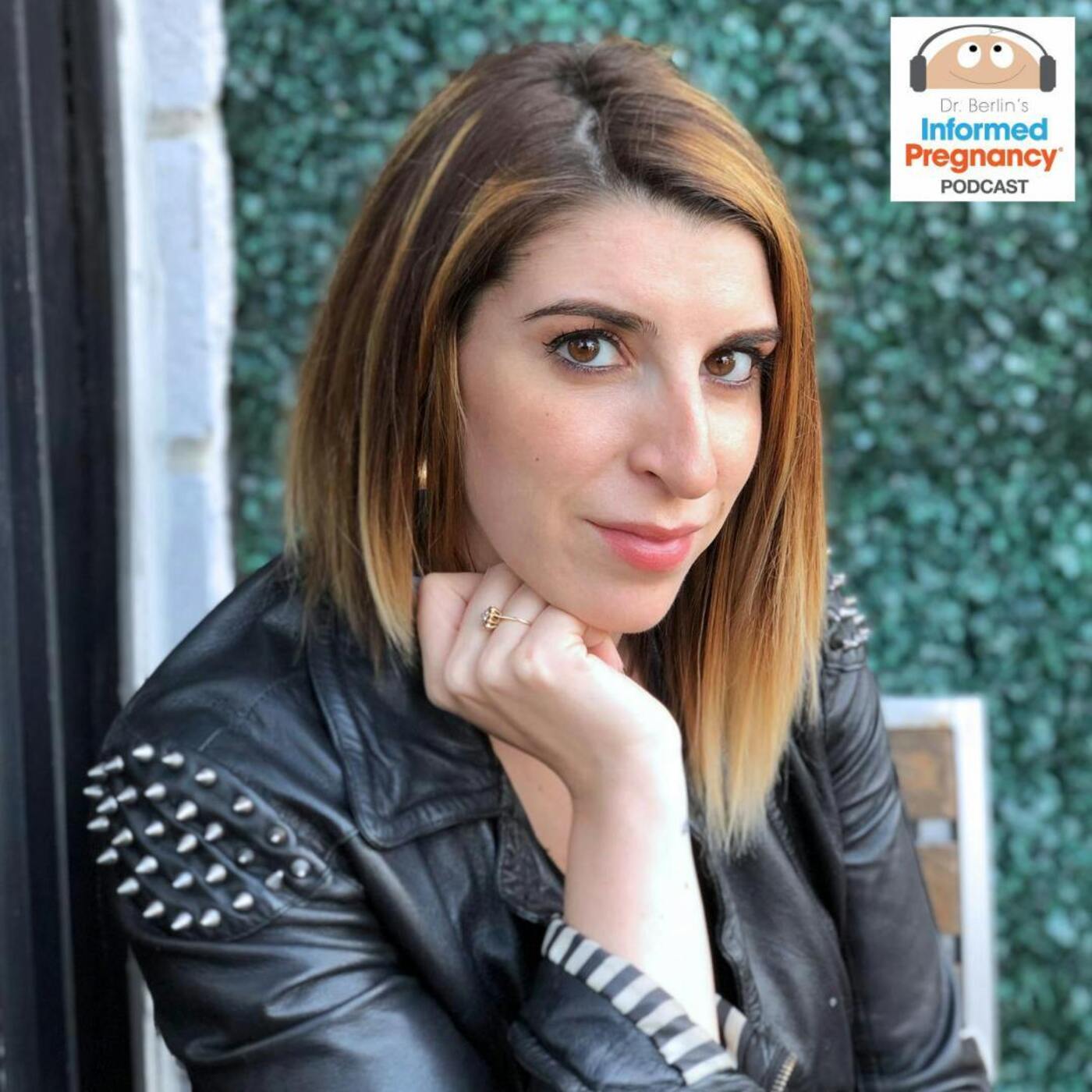
August 13, 2020 · 53 minutes · Episode 188
About this episode
Female empowerment artist shares her pregnancy journey and surprise filled path to a beautiful birth experience.

Learn more about your ad choices. Visit megaphone.fm/adchoices
See Privacy Policy at https://art19.com/privacy and California Privacy Notice at https://art19.com/privacy#do-not-sell-my-info.
Key quotes
“I connected so much to your work, which is really the goal because art is only good when it's coming from a true and vulnerable place. People won't connect to it if they don't feel like it's real or raw.”
“Birth only requires the strength that I possess was the one that really stuck out to me.”
“I don't even think experience is the most important thing with a doula. I think connection is so important.”
“It was just one of those meetings that you feel like you just have known the person forever, and we just hit it off and just things moved at like such a nice pace just the way that they needed to.”
“Absolutely. Yeah, it's very cathartic and that was my way of processing for a really long time, yeah.”
Related episodes
- Ep. 393 Directing Your Own Birth with Rylee Ebsen
- Ep. 467 A Before & After Birth Story with Aimee Carrero: Part Three
- Ep. 396 First Baby After 40 with Rachel Gerrol
- Ep. 366 Dr. Erica Rozmid: A Personal Experience with Microcephaly
Transcript
AI-generated transcript with speaker labels — may contain errors, especially names and medical terms. Dr. Elliot Berlin, DC appears in blue; Joanna Bavero in orange.
Download PDF of the Transcript
Dr. Elliot Berlin, DC [1:13] Welcome to the informed pregnancy and parenting podcast. I'm your host dr. Elliott Berlin in today's episode We're talking about a wild birth story that will have you on the edge of your seat At least it had me on the edge of mine My guest today is an artist from Westchester, New York who just recently gave birth to her first baby She's a podcast listener who wrote in with warm words of thanks for the information and support that she received from listening to the podcast During her pregnancy and to share her beautiful birth experience When I read her story and write it her to join us and share it with the audience and she happily agreed Joanna Piccoli, welcome to the podcast. Thank you so much for having me my pleasure
[2:14] I'm glad that the podcast was helpful for you while you were pregnant. Oh, yeah, absolutely I think people often think that if you write in that we don't read them and don't care But we absolutely do I do personally read all of them and then you were nice enough to share your birth story And it's such a beautiful story. So I'm glad you're here to tell it over to the crowd
Joanna Bavero [2:32] Yeah, I mean, thank you so much for having me and you were so good with getting back to me like immediately I was
Dr. Elliot Berlin, DC [2:40] Pleasantly surprised so thanks. Let's start at the beginning. You're an artist. Yes, what kind of art?
Joanna Bavero [2:47] So I make figurative work that is all based around my experience as a woman Drawing and painting mostly it's pretty realistic So up until recently I was doing mostly self portraiture that was kind of Describing who I am and really trying to make work from a vulnerable and raw place
Dr. Elliot Berlin, DC [3:13] When you say that I immediately became terrified. I'm like if I had to make artwork of who I am It seems so terrifying and I wouldn't even know where to start I mean it just kudos for even tackling that project But you said from a raw place. So what does that mean?
Joanna Bavero [3:31] So I really went on that journey in my graduate program I have an undergrad degree that I just learned the skills So during graduate school, they were really Encouraging us to make work that was true to ourselves So I had to really think about what that was and what I was trying to say through my work so I had always been drawn to figurative work and Had a really unique experience. I've had some sexual trauma and assault in my past and Describing and Really putting out images that I couldn't put words to But just almost glimpses into my life and my feelings Was the way that that manifested for me
Dr. Elliot Berlin, DC [4:29] Sorry to hear that you had those experiences How old were you when that happened I
Joanna Bavero [4:36] was 12 first time and Then I had a couple of other experiences later on in life but at 12 that was really the turning point in how I felt about myself and That's just such a pivotal point in your life, right? When you're defining your identity, so it really Made up kind of, those conversations that you have about yourself for the rest of your life.
Dr. Elliot Berlin, DC [5:06] Had you had other opportunities to process that experience?
Joanna Bavero [5:10] No, so I hadn't told anyone really about it. And when, actually, during graduate school I also did some workshops that were kind of, not therapy, but they were processing workshops where I really delved a little deeper into that. And it was during that time that I was also starting to find myself as an artist. So I really took that on and that's when I first started telling people in my life, like my family, about it. And I was able to process some of it and then talk about it. It was so terrifying the first time that I had to stand up in front of a room full of people and talk about my work and why I made the work that I did.
Dr. Elliot Berlin, DC [6:03] Oh, wow. Does the work then become therapeutic for you?
Joanna Bavero [6:08] Absolutely. Yeah, it's very cathartic and that was my way of processing for a really long time, yeah.
Dr. Elliot Berlin, DC [6:17] Well, I mean, it seems like it could be a really powerful outlet. How do people receive that?
Joanna Bavero [6:23] You know, so much better than I had expected. And I got so many people coming up to me and sharing their stories with me, which was amazing. You know, either pulling me aside or coming up during the opening and saying, you know, this is the experience I had. I connected so much to your work, which is really the goal because art is only good when it's coming from a true and vulnerable place. People won't connect to it if they don't feel like it's real or raw. So powerful. I'm sure your artwork in itself is helpful to people, especially other people who have had similar experiences, but like almost for you to do like art therapy workshops where you can help other people sort of process their experiences and get them out and, you know, express themselves through art.
[7:19] Yeah, and my one sister is actually an art therapist, so she went that route, yeah.
Dr. Elliot Berlin, DC [7:27] So you just had a baby recently.
Joanna Bavero [7:29] Yes.
Dr. Elliot Berlin, DC [7:30] Your first, congratulations.
Joanna Bavero [7:32] Thank you.
Dr. Elliot Berlin, DC [7:33] I just met your husband for like two seconds. It seems like a super sweet guy. How did you guys meet?
Joanna Bavero [7:39] So we met online, actually, which was great. I had been dating online for a little bit and knew exactly what I was looking for, so it just all fell into place. It was just one of those meetings that you feel like you just have known the person forever, and we just hit it off and just things moved at like such a nice pace just the way that they needed to.
Dr. Elliot Berlin, DC [8:08] And how soon into your relationship did you plan to have a baby when you did?
Joanna Bavero [8:13] Yeah, so we got pregnant a couple months after we got married in September, two years ago, and then we found out we were pregnant right after Valentine's Day.
Dr. Elliot Berlin, DC [8:27] And you were ready, you were trying.
Joanna Bavero [8:30] Yeah, we were trying. I thought it might take a bit, and it did not. We were really fortunate to get pregnant pretty much the first month that we tried.
Dr. Elliot Berlin, DC [8:43] That's always a nice surprise.
Joanna Bavero [8:45] Yeah, so I don't know why I was expecting it to take longer, probably because my mom, it took her a little while, so we were pleasantly surprised with that.
Dr. Elliot Berlin, DC [8:56] How did you find out?
Joanna Bavero [8:58] I missed my period that day, or I think it was like one day that I had a missed period, but it was Valentine's Day. So we went out, we had a nice dinner together, and then the next morning I had already had pregnancy tests because we were trying. And I took a pregnancy test that morning, and of course I couldn't wait at all, so I just texted my husband a picture of the pregnancy test immediately. Like, we're pregnant!
Dr. Elliot Berlin, DC [9:31] That's so nice, so fun. How was your early pregnancy?
Joanna Bavero [9:36] It was really good.
Dr. Elliot Berlin, DC [9:39] You don't hear that a lot?
Joanna Bavero [9:41] Yeah, you know, I mean I had the normal, I had a little bit of nausea, but I felt pretty good otherwise, and I kept waiting for the other shoe to drop because every other woman in my family had terrible nausea and vomiting, like everybody. So I kept being like I'm gonna start throwing up any second And it skipped you it skipped me. I got so lucky and then were you tired like fatigue? Fatigued but not anything to yet During this time we were also started the moving process So that was a lot to do in the first couple months my pregnancy Like I was definitely fatigued from packing and doing all that Otherwise, I felt really good. How about your second trimester?
[10:35] My second trimester was great. I was really active my whole pregnancy. I was playing tennis the whole time So I yeah, so I was able to play tennis up until I was like six months pregnant, which was really nice So I felt good, you know second trimester is even better than the first you're showing you feel Like excited about that
Dr. Elliot Berlin, DC [10:59] Yeah, I played tennis twice one time. I lost the tooth and one time. I caused a car accident So my dad tennis is not for me the test. Yeah There's enough other sports for me like Netflix that's my sport of choice So you were with the OB-GYN just in terms of there's so many choices and you were planning your birth at a hospital Where along the way did you start to look for sources of information or start to explore the options and choices that you have?
Joanna Bavero [11:30] yeah, so I was kind of debating what I wanted to do and I come from a long line of strong women who a Lot of natural pregnancies and natural births in my family So I started considering that and my cousin at the time actually was Doing some doula work she was thinking about becoming a doula so I had talked to her about you know, what should I have my eye on if I'm looking to have a natural birth and the three things she recommended to me were Listen to positive birth stories Get a hypnobirthing class find a hypnobirthing class near you and get a dual So those were the three things that I decided to kind of first have my eye on and yours was the first podcast
[12:31] Yeah for some positive birthing stories which were very helpful and now you're here to share your positive birthing story
Dr. Elliot Berlin, DC [12:39] Yeah, let's take a quick break and we come back We'll get into more about how you prepared and how your labor and delivery went. Don't go anywhere. We'll be right back

Dr. Elliot Berlin, DC [15:14] Welcome back to the Informed Pregnancy podcast. We're talking to Joanna about her birth story. And you know, you wanted a more natural experience. Is that because you live a more natural lifestyle in general?
Joanna Bavero [15:27] Yeah, I do. Generally, my family, we all see a lot of body work. People get a lot done in terms of chiropractics and Nate. I don't know if you're familiar with Nate practitioners.
Dr. Elliot Berlin, DC [15:48] Yeah.
Joanna Bavero [15:48] So I had wanted to be as natural as possible.
Dr. Elliot Berlin, DC [15:56] And so you did the trio of things that your cousin recommended.
Joanna Bavero [16:01] I did.
Dr. Elliot Berlin, DC [16:02] And with the podcast, were there any episodes in particular that you found extra helpful?
Joanna Bavero [16:08] I mean, they were all helpful. The first one sticks out in my mind just because that was the first one I ever listened to, which was Hilary Duff's Home Birth. So I kind of just started listening to like everything that I could listen to about birth, just to have a positive association with it. Because you talk to people and they're so negative about wanting to do anything naturally or you'll need an epidural kind of thing.
Dr. Elliot Berlin, DC [16:44] Did you consider yourself a person who has high pain tolerance?
Joanna Bavero [16:48] I didn't really know. I haven't really ever had any serious injuries in my past. So I wasn't sure. But that was the other part of hypnobirthing really helped with changing my perspective on what I could physically do.
Dr. Elliot Berlin, DC [17:12] After your hypnobirthing class, did you do a lot of homework, like hypnobirthing homework practicing?
Joanna Bavero [17:19] I did, yeah. I listened to the tapes over and over again and I had some really good birth mantras geared towards that. Birth only requires the strength that I possess was the one that really stuck out to me.
Dr. Elliot Berlin, DC [17:39] It seems to me that you possess a lot of strength.
Joanna Bavero [17:42] Oh, thank you. I mean, I was scared at first. I was really scared. So I had to really wrap my mind around changing that context.
Dr. Elliot Berlin, DC [17:54] And then you also, the third part of that was to find a doula.
Joanna Bavero [17:58] Yes, and I found an amazing doula. She was awesome. She was randomly recommended to me. My mother-in-law had a friend at the office who knew this doula, who's been working for 20-plus years. She started out with the woman who wrote Orgasmic Birth, Debbie, I can't remember her last name, but she used to work with her. So she had a lot of experience, but I don't even think experience is the most important thing with a doula. I think connection is so important. Yeah, chemistry. Yeah, absolutely. And she was just so warm and motherly and made me feel at ease immediately without being pushy in any way, which I really liked.
Dr. Elliot Berlin, DC [18:50] That sounds like a nice combination. I love the three things that your cousin recommended. The thing that I would add to that list is making sure that you have a medical provider who's sort of on the same page as you, if that's at all possible.
Joanna Bavero [19:01] Absolutely, yeah. And we did talk about that a lot. She did mention, make sure your doctor's on board with all of this. So I can't remember, I guess at that time I had already had a doctor.
Dr. Elliot Berlin, DC [19:17] Yeah, and so, you know, Obijuan, all of us, everybody who's a practitioner just has a style of practicing, but I think in medicine in general and Obie specifically, there's like this continuum of very, very natural minded or very, very medically minded or someplace in between. Sometimes my favorite is very, very open minded to whatever is important to you. But how did you find your doctor to be?
Joanna Bavero [19:42] So I asked a million questions, especially I had found her before the hypnobirthing class and someone had recommended her to me and she was so open minded and so patient. So I asked every question from even in the hypnobirthing class. no birthing book. They have like a list of questions to ask your provider, like on force pushing. How do they feel about, you know, group B, strep, like all sorts of things. She actually even let me, because I am natural, I didn't want to drink the glucose. Yeah. So she let me do the like yummy breakfast. That's like a banana, orange juice, and I can't remember what else. Oh, rice pudding. Rice pudding. I'm up for that. I like your doctor.
[20:39] Yeah, exactly. So that was much better than drinking the gross drink, but she was just so good. The one thing that I made sure to really drive home was that I wanted to make sure that she would not at all rush me during labor and be really patient and not jump straight to any
Dr. Elliot Berlin, DC [21:04] conclusions without first consulting me. Yeah, that seems like a fair, you know, outside of like a very urgent emergency. And I'm sure that you left space for that too, where they sometimes just have to jump in and go. But outside of that, you know, it's a conversation. Doctors really means to educate, to educate her. And that's our job is to sort of help you understand what your choices are. So what some of the pros and cons of our each choice of recommendation, if you're asking for one, but then also to have the discussion with you and see what you want to do and support the choices that you make. So I'm glad you found a doctor like that. So as you got closer, how did things unfold for
Joanna Bavero [21:44] you when you were almost ready for birth? Yeah. So the first snag that I hit, because up until then it had been kind of easy, breezy, felt good. I could tell that my baby was not in the right position. This was around like 34 weeks. You could just tell by looking at my stomach. She moved around so much and I could kind of feel all of her parts. So I asked my doctor to check and she was transverse. So she was sideways. So transverse is the one like,
Dr. Elliot Berlin, DC [22:25] it's kind of easier to tell that something's off because instead of going vertical up and down, they're going sideways, horizontal. And so there's nothing at the top and nothing at the bottom. Yeah. You could feel like two bumps on the right and left instead of up and down. Yeah. So that's sometimes people, when they're transverse, they can tell. Whereas other types of breach are much harder to tell because those two bumps are up and down and you're not sure which is the head and which is the butt. So when you found out transverse, that was 34 weeks, did you say? Yeah, 34 weeks. And what did your doctor say about that? So she recommended that I go to a chiropractor that she works with closely.
Joanna Bavero [23:08] She does the Webster technique. So that's a combination of chiropractic adjustments and some ligament stretching. Is that how it was for you? Yes. So she was fantastic. And this is one of the reasons I just loved my doctor so much because I was so happy that she made that recommendation instead of trying to do something else like a version or anything like that. So I was happy that she was open-minded enough to even send me to a chiropractor. And the chiropractor was wonderful. She flipped the baby very quickly. Did you see her multiple times or just? Yes, I started seeing her for two to three times a week. I was serious. All in. Yeah. And so the baby flipped after a few visits? Yeah, just a few visits. I think by the time I
[24:09] went back for my 36th week, I think that was the next appointment I had. I can't remember. By the next time I saw my doctor, she was head down. It's kind of lucky in a way also because
Dr. Elliot Berlin, DC [24:25] the adjustments and the Webster technique are not meant specifically for breach. They're meant to improve the function of the muscles, well, the ligaments and the joints of your low back, hips, and pelvis. So if those joints and soft tissues together, your musculoskeletal pelvis is functioning better. If it's not so stiff, tight, and rigid, then the baby has an easier time getting down there. The baby wants to get down there and your pelvis is more accommodating to that move, but also sets you up for a more functional birth experience. Because if your pelvis is, again, stiff, tight, and rigid, and your uterus is pushing down, but your body's resisting that,
[25:00] that generally doesn't go as well as if it's relaxed, loose and open, which is what your body's trying to do with the hormones, the relaxant and the progesterone. To make everything so loose and have more give, you kind of didn't go necessarily for that purpose, but you end up getting both. By making your pelvis more functional, you create a better environment for the baby to position well, and then also for a good birth experience. So sometimes those babies are like, you know what, I'm gonna help mom out and get into a funky position so the doctor recommends a chiropractor. So at 36 weeks, your head down, that must have been a breath of relief.
Joanna Bavero [25:34] Yes, and just a side note, I had been seeing other chiropractors the whole pregnancy. So I was already kind of familiar with that. So I think that helped as well that I had been getting adjustments the whole time. But yeah, so I was totally relieved, but when I got checked again, my doctor let me know that she had settled into my right hip.
Dr. Elliot Berlin, DC [26:04] Her head was pushing to her hip, oh wow. Did you feel that? That's usually painful. Did you feel the pressure of it?
Joanna Bavero [26:11] I didn't know what to expect because this was my first pregnancy. So she just moved around so much. I did have a lot of pain and my right hip is always very tight. That's my bum hip. So I did have a lot of pressure, but I mean, everybody feels a lot of pressure towards the end of their pregnancy, right? Like people always say.
Dr. Elliot Berlin, DC [26:36] Yeah, there's a bowling ball pushing down into my pelvis is what I hear a lot. So that makes sense. So was your doctor concerned about that?
Joanna Bavero [26:45] A little concerned. She's a pretty cool and calm doctor. So she never got me concerned about it. It was more me being concerned. She briefly mentioned what could possibly happen if she didn't adjust. Just that she could get stuck if she flipped a certain way, something else, her hand could come, her arm could come out or something funky could happen during delivery. So she wasn't terribly concerned or didn't at least tell me that she was terribly concerned, but I was terribly concerned.
Dr. Elliot Berlin, DC [27:27] What did you do to try to help get a better orientation?
Joanna Bavero [27:31] So I did all the spinning babies. My doula recommended getting on a peanut ball because she would do this weird thing. I'd wake up from sleeping on my side because I had to sleep on my side and her whole body would be on one side of my stomach. It was really bizarre. She would just switch positions so often. I didn't really know what was happening and I was wondering if it was normal or not. It didn't seem to be… People describe they settle into place and they're there. I wonder, do you know how much amniotic fluid you had towards the end of the pregnancy? I know that it was never low and I was drinking a ton of water. I was so thirsty and I was always concerned
[28:25] about it being low.
Dr. Elliot Berlin, DC [28:26] I think when you have… Because the normal range is a decent range. It's hard to know without going back and checking. I'm sure that your doctor wrote it down, but sometimes when your fluid is more generous, then the babies have more room to move around and that's why you're sometimes transverse even though you're getting closer or the baby flip flops up and down. Even once they pivot down and stay there, then they rotate a lot and so those babies aren't stuck necessarily with their head in the hip or asynclytic or posterior, but they just can go there and they can move out of there. Did your baby eventually move into a better position?
Joanna Bavero [28:59] No, she moved into a worse position.
Dr. Elliot Berlin, DC [29:01] Oh, no.
Joanna Bavero [29:02] So, but at about maybe 38 weeks, I had always heard you wanna feel like a smooth of their back and up until that point I had felt what I thought was her back and spine and then all of a sudden one night I was sitting there with my husband and I felt a lot of bumpiness like what I felt was limbs in the front.
Dr. Elliot Berlin, DC [29:32] Oh, not the smooth of the back.
Joanna Bavero [29:33] Yeah, so I was pretty sure she was sunny side up.
Dr. Elliot Berlin, DC [29:39] So this is where the baby's skull is against your spine, which sometimes during labor causes back labor, more intense labor and can be a bit harder for them to move down, to glide down the pelvis. So did you get that confirmed?
Joanna Bavero [29:55] I didn't, I asked the chiropractor and she said, I didn't wanna. make any assumptions like ask your doctor and then my doctor didn't really I mentioned it to her briefly but I don't think we really talked about it I did talk to my doula extensively saying that I was terrified about that because I had heard so much about back labor yeah they were close you're in the
Dr. Elliot Berlin, DC [30:22] zone already at 38 yeah yeah happen any time all right so let's let's take one more break and when we come back we're gonna have to hear how this epic birth story played out we'll be right back welcome back to the informed pregnancy podcast we promised you a labor and delivery story and here it is we're back with Joanna Piccoli all right so your baby flipped into all sorts of weird positions made you very nervous by the time labor started were you in a better position when did you go into labor in relation to your
Joanna Bavero [31:08] due date so I went into labor the day after my duty and how did it start for you it started about three in the morning I woke up and just felt pretty uncomfortable I thought that I might be in labor not really knowing what that was so I asked my husband to make me a peanut butter and jelly sandwich just in case I would not be able to eat for a while and I called my sister who was going to be with me at my birth she had kind of all hands on deck and had her phone beside her just in case so nice yes and then from there
Dr. Elliot Berlin, DC [31:59] I mean was it indeed contractions that you were feeling it was so I was
Joanna Bavero [32:05] able to kind of sleep on and off they kind of subsided towards like the early hours of the morning and slowed down pretty significantly for a few hours so I wanted it to pick back up so I went to see my chiropractor I had a session with her scheduled anyway so she was able to adjust me and I felt like things picked up a little bit from there and I went for a nice walk after that so things picked up from there and did you stay home for a long time I did so I always had envisioned wanting a natural birth that I would stay in labor at home for a really long time and get to the hospital and I'd be nice five six centimeters along and that would go perfectly right common plan yeah so I called my sister to come over so she
[33:10] came over like pretty early on and then I called my doula and she came over a little later so it had started about 3 a.m. my doula probably came over around 4 p.m. and we did some good laboring at home like 13 hours in yeah you know but they hadn't been super intense that whole time but they definitely picked up in like the early afternoon by the time my doula came I felt like I was I mean it's laughable now but I felt like I was doing some intense laboring and you know she had me in the shower on the peanut ball we kind of kept mixing things up and going from room to room so that good changes of scenery yes some changes of scenery changes of positions I felt
Dr. Elliot Berlin, DC [34:11] a lot of pressure in my back okay and were there any things that helped
Joanna Bavero [34:19] alleviate that pressure massage did she was massaging my back a lot through most of my contractions that counterpressure did really help when
Dr. Elliot Berlin, DC [34:30] did you go to the hospital what point did you say now it's time to go so my
Joanna Bavero [34:35] contractions were about three or four minutes apart at 7 p.m. so we decided to go to the hospital then we all felt that I was probably you know progressing enough that we should head out had you been in touch with your doctor so a few days before I went into labor my a doctor had told me that she was going out of town the day after my due date.
Dr. Elliot Berlin, DC [35:06] Oh my, that's a surprise.
Joanna Bavero [35:07] Yes, so I was really stressed about that. And then she told me that the doctor who covers for her because it's only her in her practice and a nurse practitioner. So I had never met this doctor who was covering a male doctor. So I was distraught about that. I had called my sister and was crying that, somebody else was gonna deliver me and it was gonna be a male doctor and I'm not comfortable with having a male doctor. And she basically said that my daughter whose name is Clementine would be the one to choose who was going to deliver her.
Dr. Elliot Berlin, DC [35:55] This is when she came out?
Joanna Bavero [35:57] Yes, so she-
Dr. Elliot Berlin, DC [35:59] How long was your doctor away for?
Joanna Bavero [36:01] She was away for four days right after my due date. But she was like, oh, most first time mothers go late and I'm sure I'll be back. And I knew she wouldn't because I had always had it in my head that Clementine was gonna come right around the due date for some reason.
Dr. Elliot Berlin, DC [36:22] But had Clementine come before the due date, just even a day or two, you would have made it with your doctor. I mean, distraught for a few reasons. Number one, we talked about earlier how you have to have great chemistry with your doctor and you had asked a million questions and really worked hard to make sure you were on the same page, which is so good and so necessary for the type of birth experience you were trying to have. And then also in terms of your preference to have a female doctor, is that because of your traumatic past or sexual trauma in the past?
Joanna Bavero [36:52] Yes, that. And I always felt like anytime I was around male doctors, I had had other kind of interactions in my past where it left me feeling really disempowered. I felt like a lot of male doctors had kind of talked down to me or kind of brushed off things that I had said. So I wanted to be able to advocate for myself and I was worried that I might back down or feel smaller with male doctor.
Dr. Elliot Berlin, DC [37:23] Wow.
Joanna Bavero [37:24] So who did Clementine choose? She chose the male doctor.
Dr. Elliot Berlin, DC [37:30] Oh boy.
Joanna Bavero [37:31] So she waited until the exact day
Dr. Elliot Berlin, DC [37:33] that my doctor went out of town, basically. And you had never met him before?
Joanna Bavero [37:38] No, I didn't even know his name. I had no information on him besides that my doctor had said that he was wonderful.
Dr. Elliot Berlin, DC [37:47] How did you meet him for the first time? Just when you got to the hospital?
Joanna Bavero [37:51] That we get to the hospital, my husband made the frantic call to him, we're having a baby now. So we get to the hospital and in walks this tall, huge Iranian man with long hair and a leather jacket pulled up on a Vespa. And he's like, I'm here to deliver you baby.
Dr. Elliot Berlin, DC [38:16] Oh, interesting.
Joanna Bavero [38:18] Yes, it was amazing.
Dr. Elliot Berlin, DC [38:21] Oh, you liked him.
Joanna Bavero [38:22] I loved him immediately. He was so casual, so warm, like big teddy bear and my husband was just horrified.
Dr. Elliot Berlin, DC [38:32] What a big surprise for both of you.
Joanna Bavero [38:34] Yeah, there's no way if we had met him beforehand, my husband would have been like, absolutely not, not happening.
Dr. Elliot Berlin, DC [38:41] So you got to the hospital, I assume you felt like you're inactive labor progressing.
Joanna Bavero [38:49] Yes.
Dr. Elliot Berlin, DC [38:50] What did you find when they checked you?
Joanna Bavero [38:52] So disappointing. So he checked me and I was only about two to three centimeters.
Dr. Elliot Berlin, DC [38:58] Yay, yay, yay. That's, I mean, I just, if you assume you're much further along than that, then the energy is sort of like when you unplug that inflatable bounce house and everything just comes down. That must have been tough. That must have been tough.
Joanna Bavero [39:11] Yeah, I was devastated. That was exactly what I was fearing.
Dr. Elliot Berlin, DC [39:16] You were far enough along to be admitted for them to keep you there?
Joanna Bavero [39:20] No, so he didn't even want to keep me there. He basically said, you're gonna have to go start walking the halls, squatting, lunging, get further.
Dr. Elliot Berlin, DC [39:31] Yeah. They're gonna send you home.
Joanna Bavero [39:33] Yes.
Dr. Elliot Berlin, DC [39:34] Did it work?
Joanna Bavero [39:35] And I said, no way. Yeah. I was like, I'm not leaving here without a baby. So my doula was so wonderful. She had me lunging. She had like a kind of little step that I would put my leg on, bare down. That way we were squatting in the hall, doing all. of that stuff. So it did work. We did get further. So the next time, he checked.
Dr. Elliot Berlin, DC [40:07] Was your doctor just hanging out at the hospital, waiting for?
Joanna Bavero [40:10] I can't remember what he was doing. I don't think he hung out. I think he kind of bounced back and forth a lot, because he didn't actually, he doesn't practice out of that hospital. He practices out of another hospital usually.
Dr. Elliot Berlin, DC [40:23] Oh, so he was just there covering you.
Joanna Bavero [40:26] Yeah, so he was kind of back and forth, and it was a couple hours. So he might have left. I don't know what he did.
Dr. Elliot Berlin, DC [40:33] And at this point, you're not medicated, right?
Joanna Bavero [40:36] Yeah, so I'm still natural at this point. So…
Dr. Elliot Berlin, DC [40:41] Did that change at some point?
Joanna Bavero [40:43] Yes, it does change at some point, but not for many, many hours later.
Dr. Elliot Berlin, DC [40:47] So you're just storming through them, powering through them.
Joanna Bavero [40:51] Yeah.
Dr. Elliot Berlin, DC [40:52] And who's supporting you is your husband and your doula. And your sister?
Joanna Bavero [40:56] And my sister, yeah. So that was the dream team of people I had envisioned for my birth. My sister, I knew had to be there, because I had always envisioned her being there for the birth of my baby. And I had lost my mom when I was 19.
Dr. Elliot Berlin, DC [41:18] Oh, wow. That's when I lost my dad.
Joanna Bavero [41:22] Really?
Dr. Elliot Berlin, DC [41:22] Yeah.
Joanna Bavero [41:24] Cancer, pancreatic cancer.
Dr. Elliot Berlin, DC [41:27] I'm so sorry.
Joanna Bavero [41:28] Thank you. How did your dad pass?
Dr. Elliot Berlin, DC [41:31] He just had a cardiac arrhythmia. I mean, it was partially connected to a medication that he started to take.
Joanna Bavero [41:38] Oh, so sudden.
Dr. Elliot Berlin, DC [41:40] Yeah, it was very sudden. Yeah, I assumed the cancer was longer.
Joanna Bavero [41:46] She lived for two years, which is very long, actually, with pancreatic cancer, because that can deteriorate very quickly. So I was really close with my sister. And I knew that if my mom couldn't be there for the birth of my baby, my sister had to be the one to be there. And she would be able to kind of say something to get me through when it was the hardest.
Dr. Elliot Berlin, DC [42:14] Yeah. Well, how did things progress from there?
Joanna Bavero [42:18] So the doctor checks me again, and he manually stretched me, which was awful. So I immediately threw up.
Dr. Elliot Berlin, DC [42:30] Stretched you, getting more dilation? He opened up more servers?
Joanna Bavero [42:33] Yeah, he just completely, yeah, went in there with his hand. Like I had to just like bear down in like the middle of a contraction. And he stretched me open to a five.
Dr. Elliot Berlin, DC [42:47] Is that what you wanted? I mean, you knew that was going to happen?
Joanna Bavero [42:51] I don't remember if I knew. He was basically like, I'm going to check you. And then he was like, oh, just let me, you know, I don't remember what he said, but yeah, yeah. And he did. He he was very hands on in that way. He really manipulated and like manually manipulated a lot to help the labor a lot.
Dr. Elliot Berlin, DC [43:17] OK. And then so after he did that, where did you get to with?
Joanna Bavero [43:21] So I was like a five going on six at that point.
Dr. Elliot Berlin, DC [43:26] More than halfway. Yeah.
Joanna Bavero [43:27] Yeah. So then he asked if he could break my water because my bag was bulging and he thought that it would help speed things along, which I was very nervous to have happen because I was scared it was going to just intensify things so much. Did you do it? I did.
Dr. Elliot Berlin, DC [43:49] And this is where doulas are definitely the people who can really provide great feedback from their past experiences.
Joanna Bavero [43:59] So she was basically like, you know, from my experience, my sister kind of asked her if it was your daughter, what would you advise her to do? And so she said I would tell her to get her water broken.
Dr. Elliot Berlin, DC [44:15] And was it I mean, after you did it, did things intensify in terms of the sensations?
Joanna Bavero [44:20] They didn't. Yeah, it didn't actually intensify that much. So that was relieving.
Dr. Elliot Berlin, DC [44:27] Did it speed things up? I mean, it was so long.
Joanna Bavero [44:34] Who knows? It maybe did, but it didn't really, from my perspective, change anything. I didn't feel any different by that point.
Dr. Elliot Berlin, DC [44:46] But you were planning to go unmedicated, but at some point, I mean, it sounds like birth went on for a while for a long time. Yeah. What changed? At what point did you want to change gear? years and have some vein relief.
Joanna Bavero [45:02] So I labored for another couple of hours and it was just getting so intense and there was so much pressure. I felt like I was kind of heading towards transition or I was like there because I had so much rectal pressure. It felt like there was just a bowling ball there. So my doula wanted me to get checked again. And I knew going into that check, if I wasn't there, then something was going to have to change and I was going to have to get some sort of relief because it was just way too intense for way too long. This is going on 24, 25 hours by this point.
Dr. Elliot Berlin, DC [45:50] Wow. What did you find when you got checked?
Joanna Bavero [45:53] So unfortunately, I wish it had been my doctor who checked me. It was like a new nurse who had just come in and she hadn't like witnessed everything that had been going on. So she like enthusiastically is like, oh, I think you're like a six, maybe a seven. You're doing great.
Dr. Elliot Berlin, DC [46:14] And I was just like, no, yeah, how did it feel once you got the epidural?
Joanna Bavero [46:22] Amazing. I mean, it was definitely necessary. I unfortunately had to get like a bag and a half of fluid in before I could even do that. So that was, I mean, they always give you food so that your blood pressure won't go down. Yeah. But it was just, I already knew I needed it. So it was so long that I had to wait. Yeah.
Dr. Elliot Berlin, DC [46:49] Oh, you wanted the epidural, but first they had to give you the fluid. There was a delay. Yeah.
Joanna Bavero [46:54] Yes.
Dr. Elliot Berlin, DC [46:55] Did you feel like things slowed down, picked up or stayed the same once you had that ?
Joanna Bavero [47:00] They slowed down immediately. Yeah. As soon as I got the epidural, everything stopped and which was good because I needed a little break and my baby needed a break. So like we both kind of slept and everyone went home.
Dr. Elliot Berlin, DC [47:20] Everyone meaning your sister.
Joanna Bavero [47:22] Not my husband. Yeah. Okay. Yeah. My sister, my doula went home to rest and my husband slept in the chair. Everyone was very concerned about his comfort.
Dr. Elliot Berlin, DC [47:33] Did you have to, I mean, normally if you want to try to pick things back up, you would try to walk around, but you can't really do that with the epidural. So did you have to augment the labor with?
Joanna Bavero [47:44] Yeah. So I did sleep for a couple of hours and then first thing in the morning, the doctor came in and he was like, okay, I've been monitoring. We need to pick this back up because my water had been broken for a good couple hours too.
Dr. Elliot Berlin, DC [47:59] You're on the clock now.
Joanna Bavero [48:00] Yeah. So he wanted to start me on pitocin, which I hadn't originally wanted, but we got to get things rolling. So we started the pitocin.
Dr. Elliot Berlin, DC [48:12] Did it have the desired effect?
Joanna Bavero [48:14] It did. So I progressed along, you know, my epidural wasn't, it was a good epidural in that I actually could feel a lot and I could still move my legs a little bit. You know, I wasn't able to get up, but I certainly felt a lot of the contractions still.
Dr. Elliot Berlin, DC [48:36] And you wanted to.
Joanna Bavero [48:38] I wanted to because I felt for pushing, I would need to feel something to be able to do that.
Dr. Elliot Berlin, DC [48:45] And before the hours earlier, you're already almost seven centimeters. So with the pitocin, do you get to 10 pretty quick?
Joanna Bavero [48:51] Yeah, it happened pretty quickly. I think by maybe we started at 8 a.m. by 12, I was probably ready to push.
Dr. Elliot Berlin, DC [49:04] Was your Dooled sister back with you?
Joanna Bavero [49:06] So I called both of them, the doctor and my husband were like, don't call your sister back because she actually has had a four month old at this time.
Dr. Elliot Berlin, DC [49:17] Oh, wow.
Joanna Bavero [49:19] Yeah, she was pumping while like we were. Yeah, it was a kid. Yeah, she is amazing. So she had gone home for a little bit and they said, don't call her back. And I said, everyone is telling me not to tell you to come back, but you need to come back because there's something you have to say to me. And I know you haven't said it yet. So she made it. So she made it. My Doola made it back as well before the doctor said that, you know, he wanted to. We were ready to start pushing. So I was pushing. Oh, God. So, well, first my doctor walks out and then he says, we've had an emergency and I have to leave.
Dr. Elliot Berlin, DC [50:08] Oh, no.
Joanna Bavero [50:09] Yes.
Dr. Elliot Berlin, DC [50:10] Like another patient emergency?
Joanna Bavero [50:12] Yeah, so there was a patient of his who had an emergency that he had to go perform surgery.
Dr. Elliot Berlin, DC [50:19] Oh, wow. And you're ready to push.
Joanna Bavero [50:21] And I'm ready to push. So he's like, I've called in another doctor and I was like, no, you can't leave.
Dr. Elliot Berlin, DC [50:27] A third doctor. Oh.
Joanna Bavero [50:29] You've gotten me through 30 something hours of labor. So then he walks back in the room and he says, oh, change of plans. There's been another, a bigger emergency. And they took the room I'm supposed to.
Dr. Elliot Berlin, DC [50:43] Operating?
Joanna Bavero [50:44] Form surgery. Yeah.
Dr. Elliot Berlin, DC [50:46] Oh, wow.
Joanna Bavero [50:47] So I got it back.
Dr. Elliot Berlin, DC [50:48] You had to push fast.
Joanna Bavero [50:49] Yes, I got him back. Got him back. It happened fast. So pushing was really hard. There was a clock right in front of me. So I unfortunately saw every single minute tick by and it didn't feel like I was making a whole lot of progress for a long time, even though my sister and my doula were taking pictures and they were showing me to keep me motivated. You could see her head, the top of her head.
Dr. Elliot Berlin, DC [51:17] Yeah. Which was awful. Did you reach down and feel it?
Joanna Bavero [51:20] I didn't because I was just working so hard. I had originally wanted to be more, like I originally wanted to see what was going on, but I was working so hard that I couldn't even like look, do anything besides like close my eyes and push so hard. Yeah. It was really because of her position, it was really hard to get her under my pelvic bone because she was in fact, sunny side up.
Dr. Elliot Berlin, DC [51:48] Oh, no kidding. She never. She never turned back.
Joanna Bavero [51:51] Yeah. Nope.
Dr. Elliot Berlin, DC [51:53] So how did you get her out?
Joanna Bavero [51:56] So at one point I had to literally leave my body. I had to hover above it in an out of body experience and stay grounded enough to be able to push. It was wild because I was like in between these two planes and my sister was just whispering in my ear, mom has your baby. She's holding her, hugging and kissing her and just waiting to deliver her to you. So I in this other plane literally saw my mom with my baby hugging and kissing her And I said to her, I know you love her, but you have got to hand her over to me because I cannot endure this any longer. And that was the moment she came out.
Dr. Elliot Berlin, DC [52:58] My goodness. Wow. So powerful.
Joanna Bavero [53:01] Yeah, it was amazing. It was powerful, religious, just the most intense experience you could ever have.
Dr. Elliot Berlin, DC [53:12] I love everybody. I love you and your passion, your energy. I love your strength. I knew your mother would be there the second you told me she passed when you were 19. I just knew my father's always there with me in these big moments. I love your sister. I love your husband. I love your doula. I love this crazy doctor. It all just came together after all those little bumps and snags. It came together. Another thing that I love is that because a lot of times people think if the baby's posterior, it can't be done. You had a long labor and you ended up having some interventions that you weren't planning for but were open to if you needed them. And it sounds like they were used relatively sparingly and you were able to accomplish
[53:53] the ultimate goal of getting your healthy baby out of you and out of your healthy body. And I always say it's sort of like the birth plan is aiming for a specific map or route to get from where you are to where you want to be. But once it starts, you're kind of trying to steer a hot air balloon. And sometimes the wind blows this way or that way. Such a powerful, beautiful story. I really appreciate you for, first of all, sharing your warm feedback about the podcast. I make them every week. You know, I know my mom's listening, but I don't know about anybody else. So when you guys write in, it means a lot to me. And then also for just coming out and sharing so beautiful and open.
[54:31] I have a question for you before we go. Where can we find your artwork?
Joanna Bavero [54:35] Yes. So I have two Instagrams and a website. So my website is actually I practice art under my maiden name, which is Joanna J.O.A. and then a Bavaro B-A-V-E-R-O. My website is JoannaBavaro.com. And I have… Instagram, Joanna Bavaro Fine Art.
Dr. Elliot Berlin, DC [55:03] Joanna Bavaro Fine Art on Instagram. I'm going to check it out. I can't wait to see.
Joanna Bavero [55:09] Yeah, please do. I do a lot of portraits of mamas and babies and stuff like that as well.
Dr. Elliot Berlin, DC [55:16] Oh, so beautiful. Thank you again for joining us and for sharing your story. I can't wait to check out your artwork. And at home, thanks for listening to the Informed Pregnancy podcast. If you'd like more pregnancy and parenting information, you can visit us on Instagram at Dr. Berlin, D-O-C-T-O-R-B-E-R-L-I-M.
Want more pregnancy + parenting? Start your FREE TRIAL of Informed Pregnancy+ and get access to all our curated pregnancy and parenting content — original series, iconic birth films like The Business of Being Born, prenatal workouts and more.
