
April 7, 2020 · 44 minutes · Episode 170
About this episode
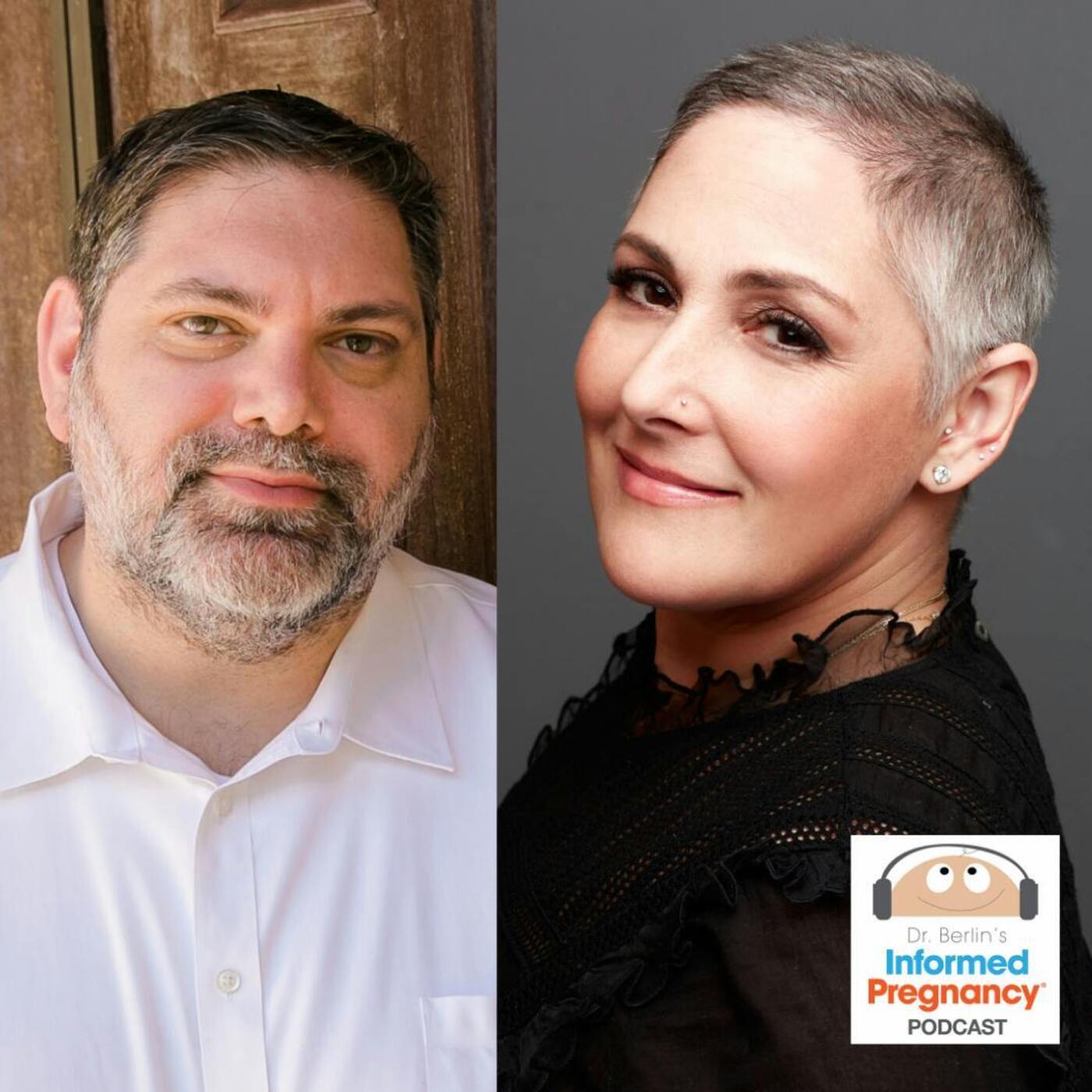
Ricki Lake guest hosts this special episode interviewing Dr. Elliot Berlin about his recent personal journey with coronavirus and a difficult case of Covid-19.

Learn more about your ad choices. Visit megaphone.fm/adchoices
See Privacy Policy at https://art19.com/privacy and California Privacy Notice at https://art19.com/privacy#do-not-sell-my-info.
Key quotes
“Hi everyone, it's me, Ricky Lake, which is so strange. I'm actually guest hosting Elliot Berlin's podcast for him, interviewing him about his experience of getting COVID-19 and now on the recovery of it after hospitalization and time in ICU. So Elliot, again, it's such a privilege to talk to you and that you're on the other side of this. If we could go back to, you know,”
“Elliot, the story brings tears to my eyes and I just can't believe the hell you've gone through and now to be back on the other side and being able to tell this story. Thank you.”
“Hmm, how beautiful. Wow, it's such a story. And I speak for everyone in the birth world. We needed you here. You have so much more work to do and you're such a gift to all who know you. One other”
“Thank goodness. What advice would you give to someone, you know, who's maybe feeling like they may have it? I mean, for me, you know, my son, my younger son, he was with someone about nine or 10 days ago that turned out positive. And so Owen showed symptoms for a few days without the fever. He had the body aches, the dry cough and one other thing. Can't remember, sore throat.”
“Wow. Wow. You're a walking miracle. And I love you. We all love you. And thank you for sharing your story.”
Related episodes
- Ep. 500 The Unexpected with Dr. Elliot Berlin Part 2
- Ep. 475 An Empowered Birth in Lockdown with Natalie Richeimer
- Ep. 500 The Unexpected with Dr. Elliot Berlin Part 1
- Ep. 491 Introducing Growing with Garrett
Transcript
AI-generated transcript with speaker labels — may contain errors, especially names and medical terms. Dr. Elliot Berlin, DC appears in blue; Ricki Lake in orange.
Download PDF of the Transcript
Dr. Elliot Berlin, DC [1:13] Welcome to the informed pregnancy and parenting podcast. I'm your guest. Dr. Elliott Berlin Many of you know that I recently contracted the novell coronavirus and became very ill with kovat 19 I was hospitalized and ended up in the ICU. Thankfully. I'm home now still recovering and surrounded and Supported by my loving family friends patients old acquaintances and podcast listeners Have sent in many prayers and messages of love and support, but also lots of curious inquiries about the journey Today, I'm ready to share my personal experience I've asked my good friend personal hero and the inspiration behind much of the informed pregnancy work that I do
[2:14] To join me as the host Ricky Lake, thank you so much for all of your incredible love and support during this journey and for hosting this episode
Ricki Lake [2:23] It's an honor Elliott and it's it's such a joy for me To be able to talk to you now I mean I I was gutted when I heard the news that you were ill and I know everyone in our birth world was reaching out and and We just we just needed you better And so the fact that you're on the other side of this and the fact that you know You're such a good storyteller with the work you do with women and your practice But to have gone through, you know I would imagine is hell and back and to be able to share your story is Is so necessary for so much of us that are living in fear of the unknown and it's truly a pleasure to put my old Skills back to you. So I haven't done this in a long time, but I really really want to hear your story
[3:04] So why don't you tell us, you know, were you working at the time? How did you lead up to you think when you contracted this virus?
Dr. Elliot Berlin, DC [3:11] Yeah, so the first thing is I have no idea where I got it from I was trying to follow CDC guidelines at the office Which for us meant that we asked nobody to come in if they had any kind of symptoms at all fever cough Sneezing that meant our providers that meant the people that worked for us or staff myself included and also patients Normally, you know if a patient has a little bit of a cough or a cold no problem We can sanitize after we see them But we asked them to not come in with any kind of symptoms at all
Ricki Lake [3:43] And when was this when were you to when did you put this protocol in place?
Dr. Elliot Berlin, DC [3:47] this was just like as the whole thing started to unfold before there were any stay-in-place orders and Before they started shutting businesses down. Let's say a week to ten days before all that happened
Ricki Lake [3:59] Okay, so probably that was probably early March, right?
Dr. Elliot Berlin, DC [4:02] Yes early March and we also changed the way we were sanitizing the rooms between patients lots of extra layers of protection for the face cradle cover and Also, just giving people options to not even use face cradle cover We were wiping down common areas door knobs lights, which is countertops with disinfectants Many times throughout the day and of course a vigorous vigorous hand washing 30 seconds at least before and after every patient with so Before any kind of contact. So those were just some of the protocols we were taking to try to do things safely as Things started to really progress and you could see in the news that it was Spreading a couple of days before the stay-in-place order
[4:50] We decided to shut the practice down. It just felt like news was coming in of transmission even among people who were symptomatic, and there was no…
Ricki Lake [5:02] Were there stories of any people that had it, that had come through your office?
Dr. Elliot Berlin, DC [5:06] No. I had no known contact with somebody who had tested positive. And it was just that it became sort of clear that the CDC wanted you to maintain a distance of six feet. And there's no way for me to do the kind of work that I do from a distance of six feet. It's very, very hands-on, close-up work.
Ricki Lake [5:27] And so… And what about your birth work? You were also a doula. Did you have births that you were scheduled to be at?
Dr. Elliot Berlin, DC [5:32] So I had one birth that I did, and also just insane, constant hand washing and sanitization. But that was about a week before we closed the practice. And then I had no upcoming scheduled births. And that was a home birth also, because by that point, they were not really allowing people to come into the hospital to do birth work. Okay. So I think about two days before the stay-in-place order, I talked to my team and I said, look, I really think we need to take a little break for a couple of weeks and see what happens, because there's no way for us to deliver this kind of care without being very hands-on. Right. And the team agreed, and we shut the practice.
[6:16] And it was two days later that the governor of California issued a stay-in-place order. Chiropractic is actually considered an essential service. So we're allowed to stay open, but we decided not to for at least a couple of weeks to see how things would go.
Ricki Lake [6:33] Did you think that you had a chance of contracting this? Did you think it was a real risk at all?
Dr. Elliot Berlin, DC [6:39] I was really careful. I really tried to follow the CDC guidelines hardcore. We really stayed away from anybody who had any kind of symptoms at all. So I didn't think I was going to get it.
Ricki Lake [6:51] Wow. And so what were your initial symptoms? Do you remember what day? Did you start feeling different?
Dr. Elliot Berlin, DC [6:57] Yeah. We closed the office. I think Wednesday was our last day that we saw people. So we're closed Thursday, Friday, Saturday. By Sunday, I started to get symptoms that at the time, I didn't realize were connected to coronavirus, which is digestive. I had diarrhea, but I had fever. That was the combination. It was really intense. The fever was 102.5, which I have not had since childhood, and a lot of chills and shivering and temperature regulation issues. The diarrhea was really bad too. After a couple of days of that, I used Heal, the kind of come to your house doctor.
Ricki Lake [7:39] Were they still coming to the house or they were just doing virtual?
Dr. Elliot Berlin, DC [7:42] Just telemedicine. Okay. They said, look, there's a chance it's coronavirus, but it's atypical for that. It seems more like a stomach virus and that after a couple more days, it would probably just go away. So I waited a couple more days. It didn't go away. And then I called them again and they said, well, it could be a stomach bacteria. So they wrote a prescription for that, which I had someone was able to pick up for me. But I never ended up taking it because I developed a cough. So this is now four days into it or five days into it, I developed a cough. And right up until the cough, I would constantly take a deep breath into my lungs and it was
[8:23] really easy. And it also convinced me in my mind, I probably didn't have coronavirus.
Ricki Lake [8:28] There was no respiratory… What do you mean it was easy? It was easy to breathe in is what you're saying?
Dr. Elliot Berlin, DC [8:31] Yeah. I could take a nice full deep breath with no problem. No shortness of breath, no difficulty taking a deep breath. And it made me think, and it made the doctors think, no coronavirus. But once that cough started, it progressed really quickly over a two day period and it did turn into shortness of breath, difficulty taking a deep breath and pressure in my chest. So this whole thing started on a Sunday. By Thursday night, I had isolated myself because it just didn't feel right. And I thought maybe this is coronavirus. I put myself in a separate bedroom and bathroom from the rest of the family as soon as that cough started. And by Thursday night, I told my wife, I think I need to go to the hospital and
[9:13] get tested or whatever. It was just very hard to breathe. And people describe it as like someone standing on your chest.
Ricki Lake [9:20] Is that what it felt like to you?
Dr. Elliot Berlin, DC [9:21] It kind of a lot of pressure right in the center of my chest. And the more I would try to take a deep breath, the more I would feel that pressure and like there was a barrier to the air getting in. Like I could not take a deep breath. It was hard to even catch my breath.
Ricki Lake [9:38] So did your wife bring you to the ER or did you call 911?
Dr. Elliot Berlin, DC [9:43] She brought me in.
Ricki Lake [9:44] So what is that process like? Because the truth is if you are positive, you don't want to interact with people. You went to Cedars, I imagine.
Dr. Elliot Berlin, DC [9:52] Yeah, so I went to Cedars-Sinai, which is only about 10 minutes away. It was about 8 p.m. I was worried that it would be a zoo there. You just keep saying. on the news that the hospitals are overwhelmed and that they don't want to get exposed either. So I didn't know, you know, am I even allowed to go into the ER? It was a very, very smooth process. Years ago, I got one box of N95 masks for our earthquake kit. So we still have them. I put on an N95 mask. I went into the ER. I walked up to the window and told them what was going on. They immediately put me in a triage chair, took pulse, vital signs, blood pressure. What was your fever at that time? It was 102 still, around 102.5.
[10:37] And they said, you know, based on the symptoms of the breathing, that I'm very suspect for coronavirus. And they immediately took me back to an area of the emergency department that was set up for this. No visitors allowed. So Alyssa had to say goodbye to you there? Yeah, she had to leave. Initially, she was waiting in the car and she was like, I'll just wait till you're done. But it became clear that it was going to take at least several hours. So I just asked her to go home and just will stay in touch remotely.
Ricki Lake [11:07] And at that point, were you thinking you're going to be staying and put in ICU? What was going through your mind?
Dr. Elliot Berlin, DC [11:13] I definitely didn't think ICU. I was pretty sure I had it at this point. I had been doing some more reading and I saw that some people do get digestive symptoms first. And with the difficulty breathing, I thought this was it. But, you know, most of the cases that I've heard of, even people I knew who had it, they just had the hard time breathing and a bad cough and it lasted a week or two. And then they were OK. I only knew one person who was in the ICU and he was on a ventilator. And sadly, he's still on a ventilator as of this recording.
Ricki Lake [11:46] Oh, my goodness. You know what? Let's just take a quick break and we'll come back and hear the rest of the story. Hi everyone, it's me, Ricky Lake, which is so strange. I'm actually guest hosting Elliot Berlin's podcast for him, interviewing him about his experience of getting COVID-19 and now on the recovery of it after hospitalization and time in ICU. So Elliot, again, it's such a privilege to talk to you and that you're on the other side of this. If we could go back to, you know, when you checked into Cedars and they decided to keep you, what was their reasoning? It was
Dr. Elliot Berlin, DC [14:46] because you were having these issues with breathing? Yeah, they did a chest x-ray very, very quickly and based on the pattern of what they saw in my lungs, they said it's 90% that I have COVID-19. And what did they look like?
Ricki Lake [15:00] Like are they covered from head to toe and like full on here and they don't touch you, right?
Dr. Elliot Berlin, DC [15:05] Well from the time I got in to the time I left Even though there were varying degrees of where I was Emergency room than a regular unit than ICU and then back to a regular unit their protocols are pretty strict Nobody can come into your sealed area. You're always in a sealed area Nobody can come in unless they have the face mask the face shield a personal protection gown and gloves So, you know every single time they come in they have to suit up totally like hazmat and then they do touch you you know and they're pretty relaxed about it actually once they're all suited up and so in the Emergency department they did that chest x-ray really quickly and they did a kovat test
[15:49] But the results for kovat test still take 24 to 48 hours to come in based on the x-ray and the symptoms They were pretty sure I had it and they said I would get it admitted and I did get admitted that night
Ricki Lake [16:02] And were you able to get a room right away? There was space for you
Dr. Elliot Berlin, DC [16:05] Yeah So if the hospital's feeling overwhelmed that was never apparent to me in any way at all in terms of getting rooms When I needed them in terms of the staff availability to work with me It did not feel pressured rushed or overwhelmed at all. They took me right to a room They started an IV and started giving me clear fluids right away. I mean fluid through the IV and they gave me oxygen through a regular oxygen nasal cannula and The goal was to see if the blood saturation of oxygen was high enough with just that treatment Meaning my lungs were so weak and and not working well then even when I could get air into my lungs The oxygen wasn't coming through into my blood in high enough quantities
Ricki Lake [16:51] You know what that number was because I've seen those those those things you can buy for your finger and you're supposed to Be between 90 and 95 and if it's under 90, there's a problem potentially, right?
Dr. Elliot Berlin, DC [17:01] So I was under 90 with no oxygen I was in the 80s with a little supplemental oxygen through the nose. It would come up just over 90 90 92 And that's all they really needed to see Friday morning. It was still holding steady The doctor came in to talk to me to say they're pretty sure I have kovat 19 There's no treatment for it, but they can use Plaquino, which is anti malaria drug That has been used since this outbreak started around the world
Ricki Lake [17:33] Is that what Trump is the hydrochlorine that the thing that Trump is touting? Yes
Dr. Elliot Berlin, DC [17:39] Okay Hydroxychloroquine and So their protocol is to use the hydroxychloroquine together with IV antibiotics And he said it seems to be helping anecdotally people it seems to be helping this there's no complete study on it yet But it came with a few risks mostly minor side effects, but one potential big one, which is cardiac arrhythmia I had done a full EKG in the emergency department and my heart looked really strong So he thought the risk of that was pretty small But he wanted to let me know and for me to decide so he gave you informed consent Totally hundred percent and I decided to do it and do you think that was instrumental in you recovering the way you did?
[18:24] It's really hard to know but I do think so I think that as the next five days progressed although things initially slipped down pretty bad as I was taking that Plaquino and those IV antibiotics every day I did slowly start to get better and better and my lungs cleared out So it's either my body was able to just start fighting it on its own or those drugs were really helpful It's hard to say but in my heart. I feel like they were helpful
Ricki Lake [18:50] Wow, so he came to you and said these are there's no studies on this But we can try this and you weighed the pros and cons and you decided to use it and what day is this is
Dr. Elliot Berlin, DC [18:59] Friday so that was Friday when I started my oxygen levels were doing pretty well on Friday To the extent that they were able to lower, you know the most they can give you outside the ICU is six liters and They had lowered it to four and then three and I was still keeping my saturation up over 90 For some reason that I can't explain and I was on IV fluids Which was sort of helping my stomach recover as well Saturday morning all of a sudden it took a turn for the worst my breathing felt much more labored that pressure in my chest was back and even on six liters my Saturation was falling below 90 and so their protocol at that point is to transfer to ICU and at this point
Ricki Lake [19:45] I mean you're fully conscious right? You're fully aware of what's going on. Can you talk? Are you talking? Are you covered with like this oxygen equipment and the oxygen is just in my nose?
Dr. Elliot Berlin, DC [19:55] I can talk but it's hard. It's labored to breathe and it's labor to talk. And it's, you know, scary. It's like, why am I all of a sudden getting worse, not better when it seemed like I was getting better?
Ricki Lake [20:08] Were you able to talk to Alyssa during this time or?
Dr. Elliot Berlin, DC [20:11] So this is Saturday morning, which is Sabbath for us. And so although in a health crisis, you could violate the Sabbath and make phone calls, I didn't see how it would be helpful. I thought it was just ruin the Sabbath for my family. And there's nothing that they could really do. So I made the decision to wait until dark. So they transferred me to ICU. It was very chaotic. The ICU is all glass. Your room is all glass. You're in a sealed glass room, but like floor-to-ceiling glass. So there's a lot of people running around out there, doctors and nurses and respiratory therapists and other people that just kind of walk up to your glass and look in and get a sense of like, how are you breathing? They're
[21:00] asking for thumbs up, thumbs down or in between. They're looking at monitors. So at this point, I'm on a cardiac monitor. I'm on a blood pressure cuff that's taking my blood pressure every 15 minutes. I'm on a different kind of oxygen, a high-pressured nasal oxygen that kind of not just puts oxygen by your nose, but kind of pushes it in with some force. And it's very high. It's like 90%. Are you able to rest during this period or are you just like freaking out? So I really couldn't rest from 12 o'clock when I got to the ICU until 8 p.m. I was just literally counting the minutes and seconds till I could call my family till the Sabbath was over. I wasn't

[21:41] using my phone or my tablet for entertainment. I just was kind of meditating to the extent that I could and praying. It was really scary. It was hard to breathe and things seemed to be going downhill. Saturday night when I was able to connect with my family, it was really uplifting to talk to them and to just get it off my chest that I had been transferred.
Ricki Lake [22:03] I imagine that's when Alyssa posted about it, right? Was it around that time?
Dr. Elliot Berlin, DC [22:06] I think so. I think that's when she posted. And she was able to talk to the nurses and get a sense of what's going on. They had cut all food and drink at this point in fear that I would end up on a ventilator. And the one good thing that was happening is my fever was going down. So it was a reassuring sign from my body that there was some healing taking place. But I'd gone about 12 hours with no Tylenol, no fever, and that was somewhat reassuring. The downside was my blood pressure was dropping. I normally have relatively high blood pressure even with medication, which may have put me at risk for greater symptoms from COVID. I don't know. But now it was 90
[22:48] over 50, which is really low. And so then the doctor came and called from the other side of the glass and said, if your blood pressure drops anymore, we need to give you medication to raise it up. But it's a medication that has to be given through a central IV in the jugular vein. So they wanted my permission to do that in general, but especially in case I would become unconscious. And of course, I mean, it sounds scary and terrible, but I consented to it should I need it.
Ricki Lake [23:19] And you did not need it?
Dr. Elliot Berlin, DC [23:21] In the end, I didn't need it. Saturday night was really scary. I tried to lay my head back, you know, lower the bed, the hospital bed, so I can try to get a little sleep. Very hard just being hooked up to all those things. Very hard not being able to breathe. But for some reason, when I flatten things out, I went into this fit where I started to cough and then couldn't breathe at all. I could not get any oxygen into my lungs. I could not get any air into my lungs. Very scary. I thought I was gonna die. The nurses need to take the time to suit up with those personal protection equipment. And so it was like three minutes before she could come in and even just help me. Very, very scary episode.
[24:04] Eventually, she coached me out of it into little breaths and medium breaths and bigger breaths. She gave me albuterol to help with the breathing. And over the next couple of hours, the episode broke completely and I was back to where I was. But in the morning, the doctor came in and said, Look, your lungs are having a very hard time doing their job. We think that putting you on a ventilator is a good idea. And we don't want to wait for it to become this emergency. It goes better if we do it non-emergency, which was also scary. So now I was still looking at getting on a ventilator and my blood pressure was still unstable. So I was still looking at that jugular vein IV. The one thing that was
[24:50] a blessing, I can't tell you Ricky, all night after that episode, I couldn't sleep anymore. I don't know what made me do it. But I took my phone and I just started looking the texts and the emails and the WhatsApp messages and the social media messages. So many people, hundreds of people from my life, either friends and relatives, patients of mine, people who I work with in the birth world, people who I went to school with a long time ago, acquaintances from very long ago, were starting to send all these messages of love, prayer, personal stories about how I affected them in their lives. And I was very emotional. I was literally crying like a baby
[25:37] as I was reading these stories. But I can't describe enough how during this most dark time of the whole journey, the spirit, my spirit was really uplifted and cleansed by reading these messages. I didn't have strength to reply to anyone. But I was just so touched and so moved and so grateful for people taking the time to share and to create prayer groups and to send so much love. By morning, I was breathing a little bit better. You think you turned a corner maybe because you felt the energy from all of your loved ones around the world? I really feel it changed something deep in my soul. It made positive light, positive energy, and maybe opened me up to the other healing methods that were going on. I just by morning
[26:34] was able to breathe a little bit better. So when that doctor called to say, we think we should put you on a ventilator, the nurse said, Doc, I just want you to know, he looks like he's breathing a little easier this morning over the past couple of hours. And so the doctor said, let's give it 12 hours and see if the breathing continues to improve, we'll hold off on the ventilator. And if not, we'll get on the ventilator.
Ricki Lake [27:00] And so in those 12 hours, you continue to improve?
Dr. Elliot Berlin, DC [27:03] I continued to improve. My fever didn't come back. So now it was 24 hours with no fever. My digestive symptoms were gone, but I wasn't eating or drinking and I wasn't on IV fluids anymore. They just said, you have enough in your body to sustain you for now. But I had no more digestive pain or discomfort or diarrhea. That was all gone.
Ricki Lake [27:26] Were you hungry at all? Did you have that loss of taste and smell?
Dr. Elliot Berlin, DC [27:30] I never got the loss of taste and smell. It might've been muted a little bit, but it never really went away. And I was not hungry in the sense of like picturing a meal. I just felt weak and intuitively I felt like, how am I going to continue to heal and get strong if I'm not eating or drinking anything? But I fully trusted the team. They were constantly, constantly monitoring 24-7. And they made the decision that it wasn't a good idea to eat or drink in case things would turn, which apparently with COVID, they could go either way rapidly. And if I needed to get on a ventilator, it wouldn't be safe to have stuff in my belly.
Ricki Lake [28:12] So when did you know you had finally turned like the corner that you, that you were going to recover from this?
Dr. Elliot Berlin, DC [28:18] I was still convinced that I was going to end up on a ventilator and I was still convinced I was going to get that jugular IV, but it's now Monday morning and things started to really stabilize. My blood pressure was 100 over 60, which is very low for me, but high enough for them to not intervene. And my breathing started to get easier. The pressure in my chest was going away. So this is Monday. So I had taken Plaquenil Friday, Saturday, Sunday, and this was my fourth day on it. And my breathing was just getting easier. So they started to lower the amount of oxygen that I was on and the saturation was holding in my blood. Maybe this is a good point for the last break. Let's take a quick break and
Ricki Lake [29:07] we'll be right back. Hi, it's me, Ricky. And I'm back with Elliot Berlin on his podcast, interviewing him about his experience of getting and recovering from COVID-19. Elliot, the story brings tears to my eyes and I just can't believe the hell you've gone through and now to be back on the other side and being able to tell this story. Thank you. Did you have any pre-existing conditions that made you higher risk besides the high blood
Dr. Elliot Berlin, DC [29:45] pressure? So I just have high blood pressure. I would say borderline diabetes, but nothing else. I never had any kind of respiratory issues or immune issues. It was really just
Ricki Lake [29:57] those two. Okay. And so now it's Monday, you're feeling better, your blood pressure is stabilizing, you haven't had a fever for more than 24 hours. Did they move you out of ICU at this point?
Dr. Elliot Berlin, DC [30:08] So they needed to get me off the high-pressured oxygen and what they did is they would lower the concentration from 100 to 90 to 70 and eventually as they would lower it they would really closely monitor. Throughout the day they kept lowering it, my oxygen saturation would stay strong unless I was able to start getting up and walking around a little bit, but not much. They give you an injection of lovinox, a blood thinner, every day just so you don't get blood clots from the inactivity. But even just walking to the bathroom would be a lot of exertion for my body. My breathing would get labored, my oxygen saturation would go down. Did you still have a cough at this time? I
[30:50] still do have a cough to today. At that time it was still pretty intense and so there was just a lot of gunk in my lungs that needed to come out. The only way really to get it out is to cough it up. So I would get into these coughing fits. I was taking albuterol every six hours to help with the breathing, but nighttime was the worst. First of all I just had anxiety because of that one attack. Second of all I don't know like if I was busy doing things I wouldn't cough that much. As soon as I would stop doing things and try to
Ricki Lake [31:22] rest the coughing would really kick in. Can I ask a question because sometimes because I know they talk about the dry cough and then there's the wet cough. So when
Dr. Elliot Berlin, DC [31:30] you're coughing stuff up more of a wet cough right? Yeah and then you know it was actually good like if I could get stuff out I instantly feel my
Ricki Lake [31:38] breathing get better. Wow and do you still feel I mean there's a pneumonia
Dr. Elliot Berlin, DC [31:43] gone now? So I don't know that I ever had pneumonia but my breathing is very clear and easy. No more pressure on the chest. It's hard like if I yawn like that full deep yawn kind of thing it's still a little hard. There's not totally room for it so I have to kind of do it really slowly. It freaks my kids out. I kind of make a wheezing noise when I yawn, but it doesn't feel bad. It's just that the lungs are not totally clear yet. I cough a lot less. I can talk a lot more. You know on that Monday as things got better they actually told me we're gonna release me from ICU and they packed everything up and I was ready to go and I was so excited but you know the hospital is
[32:24] still trying to figure it out and they needed an in-between an in-between ICU and a regular unit and they they hadn't really worked it out yet so I spent one more night in the ICU. The nurse told me she said look you're doing amazing you're gonna get out of here you're not gonna need the ventilator and you're not gonna need that blood pressure medication and they put me on liquids. I was able to have some clear liquids which includes jello and broth and it was really nice to have it. I felt another level of strengthening my body and the next day they moved me into a newly created step-down unit so it's still in the critical care tower at Cedars-Sinai
[33:03] and you're closely monitor but it's not exactly as intense. It's a lot less intense. I was over there. This is Tuesday they move you? Yeah. Okay. I was only there for about 12 hours and then they moved me. With monitoring I look good. They were able to stop that high-pressured oxygen just put back a regular nose cannula oxygen. My blood pressure was stable no more temperature at all and my stomach was pretty stable. I was tolerating the liquids well so they just moved me to a regular unit. The nurse in that unit was incredible, so calming, so reassuring. She took out two out of the three IVs that I was on. She took off the cardiac monitor. I didn't need it anymore. I was just on regular nasal oxygen and they put an
[33:52] extending tubing on it so I could really move anywhere around the room and not be too restricted by it. You're still completely isolated. You can't walk the floor. No, totally isolated in my room and they still do that full hazmat dressing up in the mask and the shield and the personal protection robe and gown situation every time they come in. Before they come in they'd call and say do you need anything at all because they want to just come in as little as possible which is very understandable. You could
Ricki Lake [34:25] call them if you needed them. Totally, totally. But it was no more glass
Dr. Elliot Berlin, DC [34:29] windows. They're monitoring from a distance mostly just the oxygen. So I have a pulse oximeter on my finger. I have the oxygen and over the next day they kept slowly lowering the oxygen. They switched me to full food so I was eating regular meals which felt very, very good and I was still communicating a lot with my family by FaceTime and Zoom and I was able to respond now to some of the love and messages that were coming in from people and it still was very, very uplifting. at a time where I was doing a lot better but kind of isolated and just deeply craving to go home and be with my family. I'm sure and so what did you get
Ricki Lake [35:10] through the time? Did you watch movies? Did you? Yeah. I mean I think about what I would do. I would think I'd be going crazy. Yeah I had a Kindle with me
Dr. Elliot Berlin, DC [35:18] and through the Kindle I have access to all those streaming channels. My phone has a hotspot. I'm very grateful to T-Mobile. I thought over time they were gonna start to kill my internet but they didn't so I was hotspotting the Kindle off my phone and I picked up a couple of TV series that I was watching. I watched the Tiger King which was really bizarrely fascinating. Definitely got you through a few hours. Yeah well it just made me feel more normal about my own life. You know the Kindle is also books so I got a James Patterson book that I started to read that helped me through.
Ricki Lake [35:58] You did get rest now now that you were like you know not scared you were
Dr. Elliot Berlin, DC [36:02] gonna die. Yes. Did they give you anything to sleep? They did give me ambient to help sleep at night time for a couple of nights and then they stopped doing that. It was mostly in the ICU when I was really terrified and anxious and the rooms actually in outside of the ICU the rooms have little Amazon Docs in them so I would just ask Alexa to play some relaxing music. It played some iHeartRadio relaxing music which created an environment for me that was just a little more relaxing of a nest and I spent the time just remotely talking to family. My wife is so incredible, so amazing. She was there for me constantly trying to figure out how to send little love packages even though nobody's allowed to visit the
[36:50] hospital. She would find a nurse that worked on the floor and asked the nurse to bring things and meanwhile she's a psychologist so she's working remotely. She's seeing clients on a pretty full schedule and also managing the kids and their remote schooling and homework and also getting her home ready for Passover and not even one ounce of like complaint on how difficult it was. She's really incredible, amazing human being and also my whole family. My mom is living with us and she was so worried about me and she was incredible and my brother and his kids in New York constantly checking on me. The family was amazing. My own kids sent so much love in these
[37:32] beautiful cards that they made and just seeing their faces and hearing their voices gave me the motivation to say I got to get better. I got to get home to these beautiful kids. I will also say that every single person I came in contact with at Cedars-Sinai, one more than the next, was just so professional, so compassionate, incredible at what they do and just in addition to the all the mechanical things that they have to do and doing those in a really compassionate way, just the psychological first aid, the reassurance and the confidence building, I really was blown away by how
Ricki Lake [38:12] amazing everybody at Cedars-Sinai was. Clearly this has changed you. You know you're you're a different person having gone through this experience. Can you
Dr. Elliot Berlin, DC [38:21] describe how you've changed? I spent a lot of time talking directly to God especially during those darker parts where I was sure I was gonna end up on a ventilator and I just cried out to God and and try to do a lot of soul-searching on who am I and in what ways am I doing well on this earth and planet, both in my relationship to people around me and my relationship to God. How am I as a husband, as a father, as a son? How am I as a doctor, as a business person? In what ways can I improve? In what ways can I be a better person? And in my relationship with God, how can I serve God better? And that's what we do every year around Rosh Hashan and Yom Kippur, but the
[39:10] passion and the intensity level through which I was able to dig deep into my own soul and maybe change the course of my life. I think I'm a pretty good person generally, but how I can do better, how I can be a more compassionate and understanding husband and father and doctor and I'm excited to be able to start implementing these things. Things that used to really bother me that I realized just don't matter in the big picture and being able to let them go and just a really deep desire to help. I always had this, that's why I became a doctor, but to just help people around me, make life better for people around me. Those are some of the things that I came out
[39:53] with globally, but also I took a deep look in the mirror and I realized that I have not taken care of myself. physically. I'm a giver. I take care of other people, but I haven't really slept well, exercised well, eaten well, meditated as much as I should have been. And so I made a really strong commitment to myself to do better in terms of taking care of my own health.
Ricki Lake [40:16] Hmm, how beautiful. Wow, it's such a story. And I speak for everyone in the birth world. We needed you here. You have so much more work to do and you're such a gift to all who know you. One other question I had, you know, is Alyssa, you're now clear, you're now no longer contagious. Did Alyssa show symptoms? Did your children show symptoms? Are they in the clear now?
Dr. Elliot Berlin, DC [40:44] That's a really good question. So according to my doctor from really seven, but now it's been 14 days since the first symptom, together with three days of no fever means that I'm not contagious anymore. So I'm not really isolating from my own family, although they've quarantined themselves for 14 days just in case, you know, to not quarantine themselves from other people. Yes. So within the house, they're together with each other and they're seeing me, but they haven't left the house, you know, just to make sure that they don't transmit it to somebody else. The person I was worried about most was my mom. She's in her seventies. She came to visit for a holiday called Purim and I begged her to stay
[41:27] because I was concerned about her traveling through California, New York airports and picking up COVID. And of course, then I got it, which made me feel awful. She has a little bit of a cough, but she actually got tested and she's negative for coronavirus. She does not have COVID. Nobody else in my family exhibited any notable symptoms. So if the kids got it, they just didn't really have any symptoms at all. Same for my wife. She doesn't have any symptoms. They didn't get tested, but they have not exhibited any like fever, chills, shortness of breath.
Ricki Lake [42:02] Thank goodness. What advice would you give to someone, you know, who's maybe feeling like they may have it? I mean, for me, you know, my son, my younger son, he was with someone about nine or 10 days ago that turned out positive. And so Owen showed symptoms for a few days without the fever. He had the body aches, the dry cough and one other thing. Can't remember, sore throat. But we didn't get him tested because he had no fever. They said he wasn't a good candidate.
Dr. Elliot Berlin, DC [42:29] Yeah. So, I mean, look, most of the people who I know who had it, even if they tested positive, had symptoms that did not need to be hospitalized. They either had a fever and a cough, for the most part, some shortness of breath. The cough could be pretty gnarly. Generally speaking, over 10 to 14 day period, they somewhere in there turn a corner and start to feel better and better. And by the end of 14 days, they don't really have the symptoms anymore. They may be weak and need to recover some more, but they don't really have the symptoms. Only a few of the people who I know who got it needed to be hospitalized. A smaller number needed to be in the ICU. And a smaller
[43:11] number needed to be on ventilators. I have two friends right now at Cedars-Sinai on ventilators with COVID. But for the most part, it seems to really be something that can be managed at home. And you get it, you get over it, and you move on and you're okay. Unfortunately, as of this recording, there is not a great antibody test, a reliable antibody test. But I'm confident that there will be one soon where you can prick your finger with a little blood and see if you have the antibodies to this coronavirus so that you'd know that you actually got it and your body fought it off. And now you're immune for a bit. Right? The idea is that you might be immune for, they say
Ricki Lake [43:52] a year?
Dr. Elliot Berlin, DC [43:52] Yeah, a year or two. I guess it's too early to really know. But at least for a while. And hopefully by then we'll have either better treatments or vaccines. And this won't be the threat that it was this time.
Ricki Lake [44:06] I'm so happy that you're feeling well. Where are you now in your recovery?
Dr. Elliot Berlin, DC [44:11] So I'm home. I don't have any symptoms other than weakness. And the hard thing for me is walking up the steps. I get up to the top and I'm a little shorter breath and my heart's beating quick. And I know that it's a strain on my body and it just takes me a few minutes to recover from that. So the doctor says about a week of just mostly being sitting or laying down, getting up just to walk around a little bit and keep the blood flowing so I don't get blood clots. But as long as my symptoms continue to improve and not revert, he'll want to do a follow up in a week from now and he thinks I'll just be over it.
Ricki Lake [44:46] Wow. Wow. You're a walking miracle. And I love you. We all love you. And thank you for sharing your story.
Dr. Elliot Berlin, DC [44:56] Oh, Ricky. You know this from years ago. when you did the business of being born and all my work in birth, literally on a daily basis, people come into the office and talk about how your film and you sharing your personal story changed their lives so much, changed their decisions in the course of their whole pregnancy birth experience. And that was just one of many things that you've done. You're truly a personal hero to me. I'm very lucky to have you as a friend and the reaching out that you did and the prayers and the blessings that you gave me through this whole process really were part of what helped me. So I'm grateful for all of that. I'm really grateful for you coming on
Ricki Lake [45:38] to interview me and help me share my story. It's my pleasure. And I should just add that to your listeners that anyone can watch the business of being born and more business of being born on our website, thebusinessof.life. It's available for free. We want everyone to be educated, particularly right now with the conditions with COVID-19 and the protocols changing in hospitals. We want everyone to have access to that information. And I'll send a link out to that as well. Okay, great. And please continue to get better. And I can't wait for Shabbat soon.
Dr. Elliot Berlin, DC [46:09] Thank you so, so much. And to our listeners, I'm really grateful to people who I never even met. You sent out a lot of love and support as well. And it really meant the world to me. So here's my story. Thanks for listening to it. If you want other information on pregnancy and childbirth, visit us online at informedpregnancy.com.
Want more pregnancy + parenting? Start your FREE TRIAL of Informed Pregnancy+ and get access to all our curated pregnancy and parenting content — original series, iconic birth films like The Business of Being Born, prenatal workouts and more.
