
December 25, 2025 · 38 minutes · Episode 491
About this episode
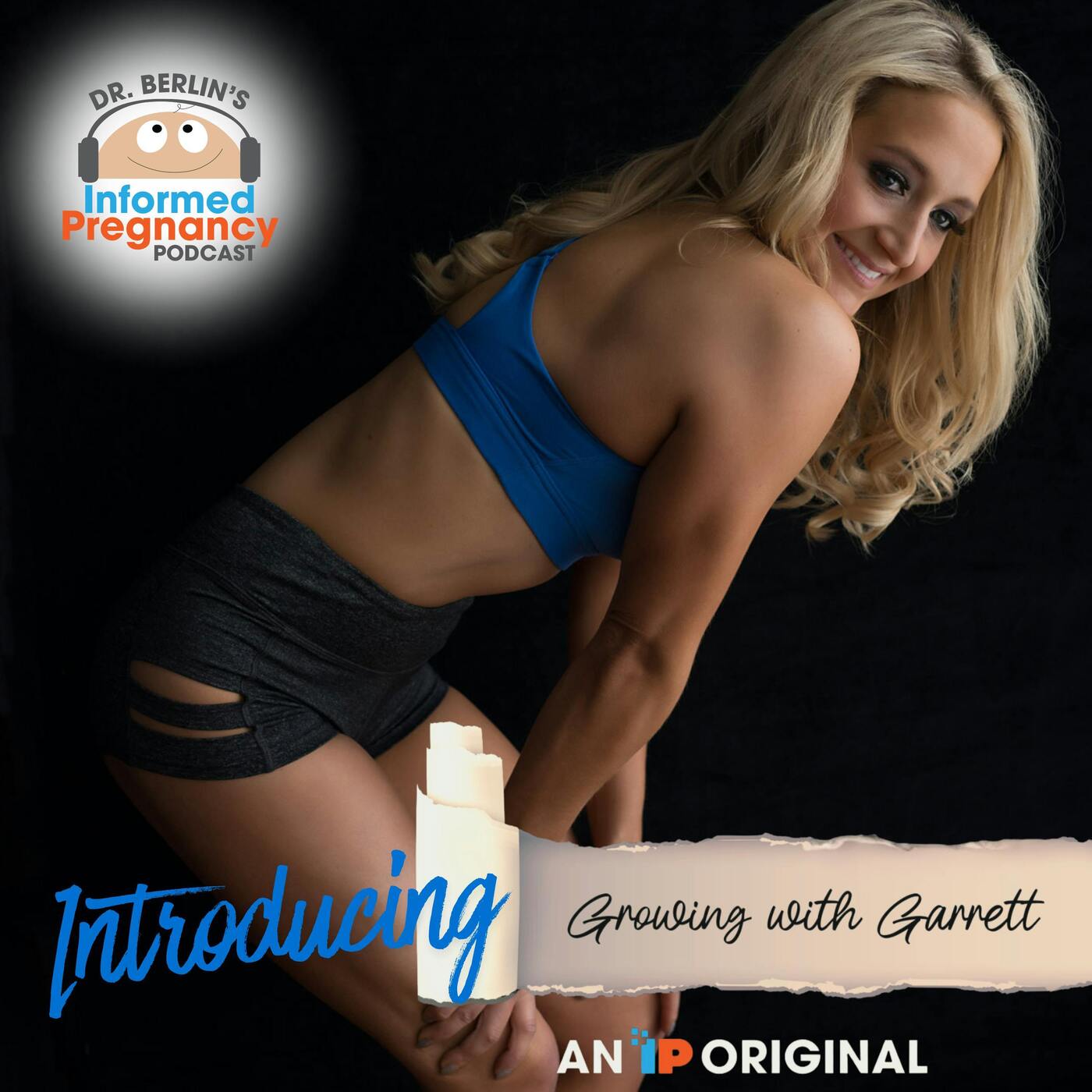
We have a brand new addition to the Informed Pregnancy family! Here’s a special holiday audio preview of the first 3 episodes of Growing with Garrett. Or check out the full visual series here!
Growing with Garrett is an intimate short-form video series following Garrett Kusmierz’s real-time pregnancy journey as she prepares for a more empowered second birth and postpartum experience. The series was inspired by Garrett’s guest appearance on The Informed Pregnancy Podcast where she shared her remarkable story: an easy conception, a traumatic birth, a challenging postpartum recovery, and an unexpected struggle with infertility leading up to her second pregnancy.
We’ll follow Garrett through weekly checkins as she navigates this pregnancy differently, armed with lessons learned from her past and a deep commitment to making this experience better. Each episode features Garrett’s personal photos and videos to help bring her raw story to life, a visually dynamic guide through Garrett’s mental and physical experiences.
Connect with Garrett:
Keep up with Dr. Berlin and Informed Pregnancy Media online!
Learn more about your ad choices. Visit megaphone.fm/adchoices
See Privacy Policy at https://art19.com/privacy and California Privacy Notice at https://art19.com/privacy#do-not-sell-my-info.
Key quotes
“I don't say this to scare anyone, but the lived experience I had felt like being a prisoner of war by the end”
“I felt like the second they actually missed the IV port three times in my arm, I felt disconnected from my body.”
“And I looked at my husband and I was like, I'm not doing anything.”
“I literally felt like I landed in a new body.”
“personal hygiene shouldn't get in the way of bonding with your baby.”
Related episodes
- Ep. 514 Before Baby #4 with Kara Sutton
- Ep. 500 The Unexpected with Dr. Elliot Berlin Part 1
- Ep. 493 In Conversation with Esther Friedman Schwartz
- Ep. 519 Genetics, IVF, & Motherhood with Jennifer Veatch
Transcript
AI-generated transcript with speaker labels — may contain errors, especially names and medical terms. Dr. Elliot Berlin, DC appears in blue; Garrett Kusmierz in orange.
Dr. Elliot Berlin, DC [0:00] Hey everyone, it's pregnancy-focused chiropractor Dr. Elliott Berlin. While our team takes a short holiday break from our regularly scheduled Informed Pregnancy podcast episodes, I'm excited to share something really special from our Informed Pregnancy Plus streaming channel. We recently launched an original series called Growing with Garrett, which follows the real-time pregnancy journey of Garrett Kozmeyers, founder of Cozy Kozy, and a resilient, thoughtful second-time mom navigating a challenging and emotional chapter of her life. Garrett takes us along through unexpected detours, emotional hurdles, and powerful breakthroughs she's navigating,
[0:37] all while juggling the everyday challenges and rewards of parenting her toddler. Through the series, Garrett and I connect over Zoom for honest conversations about the physical and emotional changes of pregnancy, lingering postpartum feelings, preparing for birth as an entrepreneur, and the realities of growing a baby while managing real life. The video version blends our talks with personal photos and footage from Garrett's world, creating a warm, intimate portrait of her journey as it unfolds. After a rough first birth, Garrett struggles with postpartum, and then secondary infertility, and then a rollercoaster of a second pregnancy and plans for a better birth. What you're about to hear is a special audio-only
[1:22] cut from a three-episode arc of Growing with Garrett. If you find yourself drawn into her story and want to follow the full experience from vulnerability to resilience to birth and beyond, you can watch the complete series on Informed Pregnancy Plus. Visit informedpregnancy.tv. Now, let's get started. Welcome to Growing with Garrett. Garrett's first pregnancy was smooth and easy, but her birth and postpartum experience? Not so much. The reality of what happened in the delivery room and the weeks that followed changed everything, not just for her, but for the work she does and now to help other parents. This series, Growing with Garrett, was sparked by her conversation
[2:16] on the Informed Pregnancy podcast, episode number 451, where she shared her full pregnancy, birth, and postpartum story. Now, we're following up with her in real time through this pregnancy, a brand new pregnancy, seeing how she's preparing for a more empowered birth and postpartum experience. Today, we start at the very beginning. What happened the first time around? Garrett Cosmiers, welcome to your show, Growing with Garrett. Let's dig in.
Garrett Kusmierz [2:44] I'm so excited to be here and to share all the things, but really, I think to reflect in this first episode on my very first pregnancy, it was the easiest thing I've ever done.
Dr. Elliot Berlin, DC [2:57] Oh, you don't hear that a lot. Okay. Let's even jump before pregnancy. What was your life like before you had your first baby? Can you even remember?
Garrett Kusmierz [3:05] I can because it was very busy. I was in the girl boss era. I had five jobs. I wrote a book. I did real estate. I had a coaching business. I started a podcast. I was really doing the most. And on top of that, really focused on my fitness. I wanted to become as strong as humanly possible. And I think I did it. I competed in powerlifting. I competed in bodybuilding. And I was really dedicated to fitness. At the time, I didn't realize how obsessive it was in a healthy way. But what I realized in hindsight is it was really a grounding thing for me because I was so in my head for work. So fitness was really how I got into my body and connected with myself.
Dr. Elliot Berlin, DC [3:46] I mean, does that leave you with a great relationship with your body,
Garrett Kusmierz [3:49] really aware and understanding and taking care of each other? Yeah. You know, the beginning of bodybuilding, I didn't realize it, but it was the beginning of a healing journey with a long standing eating disorder, with a long standing, I guess, poor self image that I didn't realize I was healing. And I had to master my physical self to really heal my inner self. And so there was some wounding that informed the beginning of the bodybuilding journey. But it became such an empowering journey. It became something that was really healthy for me. And getting as strong as humanly possible had this crazy side effect of also getting into the best shape of my life with ease, really. And I enjoyed it.
[4:29] So it was a powerful healing experience that I can say by the end of it. Aside from some injuries, I'm also a former gymnast and cheerleader. I was just really proud of myself.
Dr. Elliot Berlin, DC [4:40] Gymnasts, did you start that as a kid?
Garrett Kusmierz [4:43] Yes. Like as soon as I was out of diapers, I was.
Dr. Elliot Berlin, DC [4:46] Oh, wow. And that came full circle, which we'll talk about later. But
Garrett Kusmierz [4:51] so a lot of flying through the air. Yes. Lots of that. I really thrived on living on the edge.
Dr. Elliot Berlin, DC [4:57] And what kind of time commitment during bodybuilding? What's the daily grind like
Garrett Kusmierz [5:02] there? Is it at the gym every day? I would do Monday through Friday. I was also a fitness instructor in Boston. I taught spinning. I taught Barry's boot camp. And so I taught 5 a.m. for about three years of my life, Monday through Friday. And then after I teach the 5 a.m., if I wasn't teaching the 6 a.m., I'd go lift and then I'd teach a spin class. And then some days I'd go back later after like the nine to five hours to teach more classes. So it was very full, but I based it on a squat bench and deadlift day. So lower body and upper body pull, lower body, upper body push. And then some days I'd have a fourth kind of mixed day with accessory work.
Dr. Elliot Berlin, DC [5:43] You make it sound so easy. How many hours? How many hours in the gym on a given day?
Garrett Kusmierz [5:48] I was pretty efficient. I think 45 minutes I could get a pretty solid workout done. But if I was filming stuff or wanting to watch my form, I would sometimes be in there an hour to 75 minutes.
Dr. Elliot Berlin, DC [6:00] And for someone who has poor self-image, not a lot of self-confidence, a competition, what's a competition like both in terms of competing against other people and then just being so observed?
Garrett Kusmierz [6:11] You know, it didn't feel like observed until the moment I was on stage. For me, it was really this competition of feeling like I wonder what… It was a science experiment. I wonder what will happen if I tweak my carbs, if I cut water weight for a weigh-in, you know, what will happen? I really approached it with curiosity, which I think helped my, I guess, self-image and the leaner I got. I just I actually had the the reverse experience of that movie Shallow Howl, where once I saw myself in the best shape of my life, I really can't see myself in any other way. And I'm definitely not in that shape right now, but I still feel that because I got to see it and see what was possible for myself.
[6:53] But the only thing that kind of, I guess, bothered me was that people would start commenting on how great I looked. And it almost for a… Before I did some work around it, I was like, oh, are they affirming that I didn't look good before that?
Dr. Elliot Berlin, DC [7:07] You know, that's where my mind would go. Yeah, if ever I spent the 45 minutes. Okay, so then you've got the whole pregnancy thing came easy to you, both in terms of conceiving, first shot, and then being that healthy going through a pregnancy, you felt good.
Garrett Kusmierz [7:28] Yeah, I was shocked at how hungry I was. I was constantly eating and I just leaned into that. My dad has a story about going out to dinner with me and I always ordered two entrees. And he's like thinking he's going to get some of my leftovers and there were none. Very hungry. I leaned into the weight gain. I didn't feel like fat or I just felt like, wow, I can't believe what my body's doing right now. This is wild.
Dr. Elliot Berlin, DC [7:56] Did you keep up working out during the pregnancy?
Garrett Kusmierz [7:59] Yes, I didn't have as robust of a business as I do now. It was during the pandemic, so I didn't have a robust social life. So the gym was really where I spent the most quality time with myself and my internet friends posting my workouts. And I was doing three to four workouts a week in the gym lifting on top of walking and jogging.
Dr. Elliot Berlin, DC [8:20] Oh, weight lifting. And were you still teaching fitness?
Garrett Kusmierz [8:24] I taught until 14 weeks.
Dr. Elliot Berlin, DC [8:27] Until 14 weeks. What kind of classes?
Garrett Kusmierz [8:29] So this was during the COVID era, but I was doing Zoom, Barry's Bootcamp classes. I was doing some of my own fitness classes on Zoom. And then I did actually teach one Barry's class in Boston while they had like plexiglass up. And I was 14 weeks and I was like, something just feels weird about this choice right now. We were living in New Hampshire. It was a commute. And I was like, I think right now I need to pause.
Dr. Elliot Berlin, DC [8:54] And for your own personal workouts, did you go all the way to the end?
Garrett Kusmierz [8:58] I dead lifted the day I went in for my induction.
Dr. Elliot Berlin, DC [9:00] Wow. Other types of exercise besides lifting?
Garrett Kusmierz [9:06] I did a lot of mobility work. I spent much more time working on breath work, pelvic floor stuff, and a little bit of yoga. Not as much as I thought I would do, to be honest. I think since I'm pretty hypermobile that sometimes going, you know, that you get even more lax in pregnancy. So I almost felt like it was a little too much. But a lot of stabilization work on top of lifting.
Dr. Elliot Berlin, DC [9:29] And what did you have in mind for birth? Did you give a lot of thought?
Garrett Kusmierz [9:32] I didn't want to set myself up for just one reality. I was open-minded and I wanted to have a natural birth if possible. I wanted low intervention. I had met some experts through my podcast that had given me a lot of great information and I had a doula. But I also knew that if I needed the epidural to relax and open up, that I would do it if I needed to, but it wasn't part of my ideal plan.
Dr. Elliot Berlin, DC [9:59] What was your motivation for leaning towards unmedicated? Are you just not a medication person in life? Did you want to be more attached to the birth, be more present? What was driving that decision for you?
Garrett Kusmierz [10:12] Many things. I, like many, watched the business of being born and I was worried about what Pitocin could feel like, what it could do. I really wanted to focus on the fact that for hundreds of thousands of years, people have been giving birth and that it's something my body's designed to do and that it can do. And I also figured that I was strong and that I could move through the pain and use my breath to get through it. So I wanted that experience of, like you said, the presence and connection.
Dr. Elliot Berlin, DC [10:43] So super healthy fit person at the prime of your fitness of life, deadlifting on the last day before birth, planning for an empowered, ideally unmedicated or low intervention birth. What could possibly go wrong? Well, I guess you could listen to the full story of Garrett's first pregnancy, birth and postpartum experience on episode number 451 of the Informed Pregnancy podcast. And also you mentioned the business of being born. That wonderful documentary plus 30 others or so are streaming on Informed Pregnancy Plus, which can be accessed at informedpregnancy.tv. Thanks for joining us, Garrett. We're going to be back next time and really talk about the birth experience
[11:24] that you had. Don't miss it. Thanks for watching Growing with Garrett. Please share us with your friends and stay tuned as the journey continues. Previously on Growing with Garrett, we talked about Garrett's pre-pregnancy life, fitness, competitions, healthiest time of her life, peak and prime, and then an easy conception and a fairly easy pregnancy, and lots of thoughts and preparations for a low intervention empowered birth. What other kinds of things did you do to prepare for birth specifically? I know you mentioned the business of being born.
Garrett Kusmierz [12:37] Yes, I had the pleasure of having several guests on my podcast that were midwives, doulas, childbirth educators, and they all gave me access to their courses and portals, and I was just really inundated with great information about what I can do, what I can choose, what my rights are. I had a doula. I was doing prenatal massage. I was seeing a chiropractor. I was doing breath work, meditation, like anything and everything I could do to just get into the head space of trusting myself, and I was tipped off to a little bit of anxiety and fear just because it's something new that I had never done, but otherwise just working through that.
Dr. Elliot Berlin, DC [13:25] So it sounds like you are ready physically, ready mentally, ready emotionally, just very well-informed, well-prepared. Who was coming to the birth with you?
Garrett Kusmierz [13:34] My husband and my doula, and my mom wasn't coming, but she was going to be
Dr. Elliot Berlin, DC [13:40] geographically in the state of New Hampshire so that when I got home, she would be there. Oh, that's sweet. Okay. So what could possibly go wrong, I guess, is what I said last episode. How did your birth go?
Garrett Kusmierz [13:53] It was awful. I don't say this to scare anyone, but the lived experience I had felt like being a prisoner of war by the end, and I was induced, and so it was kind of a series of many interventions, but what I thought was positive was that I wasn't induced until 41 weeks, or maybe 41 in one was the day that I went in.
Dr. Elliot Berlin, DC [14:19] And was there a particular reason for the induction or just that you were beyond your
Garrett Kusmierz [14:24] due date? Just that I was beyond my due date. I had done a non-stress test. Everything looked good. They made me at 40 weeks. The day or two before I went in for the induction, we did another ultrasound, and everything looked good. Placenta looked good, and they just said, if you don't come in for your induction at 41 weeks, we can't guarantee that we'll have a spot for you in this hospital.
Dr. Elliot Berlin, DC [14:45] One of those lovely scare tactics. Were you doing things like some of the, I don't know, medical things, old wives tales to try to get things rolling?
Garrett Kusmierz [14:55] I think we tried everything except the pump, like trying to induce by nipple stimulation, like using my pump scared me a little bit, and so I was like, we tried it, and I was like, oh no, there's milk coming out. I want to save that for the baby. I don't want to do this. But literally everything dates, raspberry leaf tea, having sex, working out more, curb walking, induction massage. We tried it all.
Dr. Elliot Berlin, DC [15:22] Reflexology, acupuncture?
Garrett Kusmierz [15:23] Acupuncture. I hadn't met the acupuncture yet in the town that I live in. So I hadn't done that, but there were many points on my feet that my doula, who was also my prenatal masseuse, was activating.
Dr. Elliot Berlin, DC [15:36] All right. So all the things, and did anything seem like it was getting the ball rolling?
Garrett Kusmierz [15:42] Nothing. I was doing cartwheels on 41 and a half, 40 and a half weeks,
Dr. Elliot Berlin, DC [15:49] and I was like, maybe this will help, and nothing. Literal cartwheels?
Garrett Kusmierz [15:53] Literal. I have footage of this.
Dr. Elliot Berlin, DC [15:54] Oh my God. Okay. So already from outside the gate, you went to low intervention birth, and you're starting with interventions. I know it was a long process. What are the different interventions that you ended up having?
Garrett Kusmierz [16:14] So when I got to the hospital, I had zero dilation. So the first step was the pill that's designed to soften your cervix. And it took, I want to say, three or four of those pills to try to get me to open up. And I made it to a half a centimeter, maybe considerably one. It was questionable. And so then we did the Foley balloon, and that got me to just a hair under four. But we had to pull it out early because of my son's heart rate dropping. So that wasn't ideal. And then we tried Pitocin without an epidural. And by, it was technically day three of being in the hospital at night, we did an epidural that I believe did not work. And also, at the same time, things started to speed up.

[17:09] I'm trying to think what else would be considered an intervention. Just a lot of breaking my water, a lot of cervical checks.
Dr. Elliot Berlin, DC [17:16] I mean, that sounds like pretty much everything except surgery. So I mean, the pill, was that a vaginal pill? Inserted vaginal? Yes. Okay, so misoprostol probably. And then the Foley balloon, and then Pitocin without an epidural, then with an epidural, then water breaking, and a bunch of cervical checks. Sounds the exact opposite of what you were planning for. It sounds actually fairly business of being born, you know, sequel. Yeah. I mean, was that barreling towards potential cesarean?
Garrett Kusmierz [17:57] It's interesting in hindsight. I don't know why they waited so long because a few, I want to say 30 minutes after the epidural, I learned that I was spiking a fever. And my son's heart rate was continuing to drop, and I was transitioning. So I was making progress, but there were also things happening that were not ideal. The epidural technically happened on Wednesday, but it was very close to midnight. And it was by about 2 a.m., 1 or 2 a.m., I hit 10 centimeters. And then by about 4-ish in the morning, they said, it's time to start pushing. And I said, well, I don't feel like I need to push. But they were like, nope, this is what we're doing.
[18:37] And I was like, well, okay, I guess I'll just do what you are asking. But I hadn't thought about C-section. It wasn't until about 9 a.m. of pushing that the doctor came in and said if the baby's not out in 15 minutes, we'll go to C-section. So I went in on a Monday, and that was Thursday morning.
Dr. Elliot Berlin, DC [18:54] Wow. You really got everything you could out of the insurance, I guess.
Garrett Kusmierz [18:58] Yeah.
Dr. Elliot Berlin, DC [18:58] So there's that. What was your mind and spirit like during this time? Because I only know you as strong, confident, mellow, a weird combination of wonderful things that aren't being strained. But seeing your birth plan go not in the opposite direction of what you wanted. And it's such a big, important, pivotal thing. And also in my mind, just knowing that you do have that strong relationship with your body and you push your body to do a whole bunch of things. And now you're wanting it to, and it just seems like it isn't.
Garrett Kusmierz [19:38] Yeah. It's such an interesting question because I've always wanted that. I've always had that connection to my body. And I felt like the second they actually missed the IV port three times in my arm, I felt disconnected from my body. So all these interventions made me question how I feel, because how I felt when I went in was not like I'm ready to give birth. And I continued to be disconnected, disconnected, disconnected. And I didn't realize it at the time. It was a doula who informed me later. But that your brainwaves go to a different state once you're in labor. And so by the time I had the fever and I was hungry because they hadn't told me I needed to eat before the epidural
[20:20] and they didn't want me to eat, I couldn't be my bulldog self because I was in this labor land brainwave state. But I remember feeling rage. I remember feeling angry at them. I actually got into an argument with the nurse because she wanted me to push like I was taking a poop. And I said, I took a class on how to push using my core. I don't want to do it that way. And she said, well, you can do one your way and then you have to do two my way. And we got nowhere. And doing the catheters, I could feel everything. So that was really uncomfortable because they told me I wouldn't feel it because the epidural, but I did feel it. And towards the end of four hours of pushing,
[21:01] I was like, I can't take this anymore. I don't feel great. And so I had been the whole time, my mindset had been you're going to do the hardest thing of your life and it isn't here yet. So no matter how hard the fall by balloon feels, no matter how hard the epidural feels, it's not birth. And that will be the hardest thing. So brace yourself, brace yourself, brace yourself. But all those things accumulated to a point where I felt like I couldn't take anymore, hence feeling like a prisoner of war. And as soon as the doctor came in and said, you got to get this baby out, I pretty much like, I remember kind of looking up to God, I don't know. I just felt like, okay, I'm done.
[21:37] And that's when the fetal ejection reflex kicked in. And my body did eventually take over to get the baby out.
Dr. Elliot Berlin, DC [21:44] What was that moment like?
Garrett Kusmierz [21:47] It was really sad. Like I didn't consciously think, wow, I'm really sad, but it was just like hopeless. It was, I had used my anger up. Like anger takes energy. And so I felt like I was getting nowhere, being angry and frustrated. And so I just felt like sad, but it was also a level of surrender because I had to trust that something was going to work out. And I just remember laying my head back. And then all of a sudden, I felt like I was going to curl up and throw up. And instead of it coming out of my mouth, like throw up coming out, my body bared down. And the nurse said, that, whatever you're doing, that, that's what we want. Keep doing that.
[22:25] And I looked at my husband and I was like, I'm not doing anything. And so they're like, do it again. And I said, I don't feel it again. And then like 10 seconds later, it felt like a long 10 seconds. My body did it again. And so that's eventually how my son came out.
Dr. Elliot Berlin, DC [22:37] Wow. That's pretty dynamic. Pretty incredible. So you probably came through in the end.
Garrett Kusmierz [22:44] Yes.
Dr. Elliot Berlin, DC [22:48] Difficult birth, all the things that you didn't really want for the most part. And then you have that powerful concluding moment. And of course, the next thing that happens is postpartum. And have you given postpartum a thought? A lot of people don't.
Garrett Kusmierz [23:06] I was so fortunate to have a lot of people come into my world by way of my podcast and give me advice on what to do. And there was a woman who advised that I schedule a lactation consultant to come to my house for either the day I get home or the next day. And so knowing that this professional was going to be at my house felt so nice. Just knowing when I get home, I have my mom, I have a professional coming to check my latch because I was getting a lot of different feedback about breastfeeding in the hospital. And then I also knew through this podcast connection that she had a whole list of postpartum doulas should I want to reach for that. I knew where to call.
[23:45] I didn't have anyone scheduled, but I knew I could tap that. And then my own doula was going to be making a house visit about four or five days postpartum. So I also knew I had her coming.
Dr. Elliot Berlin, DC [23:55] I honestly see because our practice is all pregnancy and postpartum. Especially before we used to actively try to help people think about the postpartum experience, I just see people so focused on the pregnancy with very little thought about what happens afterwards. My wife was a psychologist, says people spend nine months planning on a 12 hour event and very little time planning on the next 12 to 20 years. And then it takes you by surprise. But you're in a position where you had some intel and were able to prepare before you got there. I'm curious to see what that experience went like when we come back next time. But before we do that, you keep mentioning your podcast.
[24:36] Tell us a little bit more about it.
Garrett Kusmierz [24:38] Sure. I have a podcast called the Cozy Cozy Podcast. It's spelled with K, so K-O-Z-E-K-O-Z-E. It was actually originally called Dare to Move when I launched my book that was called Dare to Move. And then when I started my new venture, which I'm sure we'll talk about, I changed the name. And we talk about all things birth and business.
Dr. Elliot Berlin, DC [24:57] Check out the Cozy Cozy Podcast. One episode will feature somebody who will sound familiar to our audience. And for Garrett's full story of her first pregnancy, birth and postpartum experience with all the details, check out episodes 451 of the Informed Pregnancy Podcast. When we come back next time, we'll dig into your postpartum experience. You're not going to want to miss it. Join us on Growing with Garrett. Thanks for watching Growing with Garrett. Please share us with your friends and stay tuned as the journey continues. We're back with Garrett Kozmeyers on Growing with Garrett. Okay, so Garrett was super strong, super fit, super healthy, nothing I can relate to.
[26:09] And then she had a great easy conception, very fit pregnancy, aimed for a low intervention birth and got all the interventions but the cesarean. And eventually her body kicked in, did the fetal ejection reflex. And postpartum, right? You don't just go to Disneyland. It's like, okay, now the real juice begins. The real work begins. And unlike I think a lot of people, you were very prepared from your podcast, the Cozy Cozy podcast and all the experts that you've been in touch with. You had support ready for you. So let's start with right after the baby came out, that golden hour. And how was the experience of postpartum for you?
Garrett Kusmierz [26:50] The golden hour was not so golden. There was immediate relief, obviously, seeing him, hearing him. But I noticed that there were a bunch of people in the room that I really hadn't been aware of. So then we got to cuddle and work on our connection and starting to breastfeed, even though the nurses said, don't try. You don't need to right now. Thought that was interesting because it was sort of a natural reaction. And we stayed for two days and then we went home.
Dr. Elliot Berlin, DC [27:20] How was the toll of the multi-day birth on your body?
Garrett Kusmierz [27:24] It was awful. It felt like I truly did an Ironman. The first hour of pushing, I had been holding onto this bar and my favorite exercise is chin-ups. And so I was prepared because I'm pulling, like a lat pull down, like a chin-up almost. But my lats were so sore, I could not lift my arms up to put a shirt on for about five days. So you can imagine I felt pretty broken sitting in that hospital bed.
Dr. Elliot Berlin, DC [27:48] Wow. Did you tear?
Garrett Kusmierz [27:51] I had a second degree tear. What's interesting is they didn't tell me that I tore. They just said, we're stitching you. I found out at my six-week appointment that I had had a second degree tear.
Dr. Elliot Berlin, DC [28:00] Oh, wow. I think that would be nice to know. And you talked about starting to latch and breastfeed at the hospital. How did that go for you?
Garrett Kusmierz [28:13] Again, it just felt like this thing that you're supposed to try. The baby's kind of rooting down. This is a natural thing. And then the doctor or nurse who came in was like, oh, you don't need to worry about that yet. And I was kind of like, that's a weird comment. I know my milk's not in, but maybe there's colostrum I'm going to try. So we were just kind of fumbling through the dark, trying to check it out. And by the 24 hours later, so about a day and a half, he was a day and a half old, both of my nipples were raw and cracked and bleeding. And it was very uncomfortable. I had a couple lactation consultants come in and try to give me support that night,
[28:51] the first full day, second full day he was alive. And then right before we were discharged from the hospital.
Dr. Elliot Berlin, DC [28:58] Did they attribute that to anything in particular?
Garrett Kusmierz [29:02] They were just saying, oh, it could be his latch. He's not getting a proper latch. But then they each were kind of instructing me different ways that they said I needed, positions I needed to be in. So they were conflicting views coming at me. And so I just knew in the back of my mind, okay, lactation consultants coming to my house. I'll see what she says. She'll be the third opinion. And we ended up kind of going with the third opinion. And that's sort of what started to work for us.
Dr. Elliot Berlin, DC [29:27] Okay. So once you're home, your body's recovering, it sounds like in multiple ways, like your whole upper body is sore and been through the five day Ironman. You're recovering not even knowingly from second degree tear stitching. And you're on this learning curve with raw crack nipples and a new dependent who needs you for everything in life. How has that mind, body and spirit journey unfold?
Garrett Kusmierz [30:01] It was really rough. And it was also a day's. I basically fell into my mom's arms when I came home and I said, please take the baby. We need to sleep. And we slept for the 90 minutes till he needed to feed. And I just felt like I woke up in a new reality, I'm grateful to be home, obviously, but in a lot of pain. I kept thinking to myself like, I'm supposed to take care of this baby now and do all these basically sit ups in bed to sit up, feed him. And yet I know I'm not supposed to be active right now, but taking care of a newborn felt like the most physical thing I could be doing because you hold them so long, they start to feel heavy actually.
[30:40] And so I'm like, I'm sore, I'm exhausted. I'm walking to and from the kitchen to drop milk off that I'm catching in a milk collector. I'm making trips to and from the bathroom. And granted, I have my husband who's on paternity leave and my mom helping, but it just felt like so, so, so much. And my feet actually felt really interesting because of the weight change in my body. I had gained 55 plus pounds. And so while I didn't go home 55 pounds later, I probably went home, I think I only went home like 50 pounds later from the fluid. I just felt different walking. I literally felt like I landed in a new body. My feet were really sore.
Dr. Elliot Berlin, DC [31:20] What things were helpful to you in that moment? What either things that people said or did or products, what helped you out?
Garrett Kusmierz [31:30] It was really helpful to know that we created the space to just not have to worry about anything else. Knowing my husband was on a leave, I was on a leave. I had my mom's support there and I had two experts coming to check on me. That was huge. And then I actually heavily relied on a nipple shield because I was so raw, cracked and chafed. The nipple shield really helped me feel like I could have him latch and feed. It was complicated because I had my husband have to like help me put it on while I'm holding the baby and getting in the right position. And then my mom would help the baby latch, but the nipple shield was just something that really came into play for us.
Dr. Elliot Berlin, DC [32:09] Also just a lot of people involved in feeding the baby. How did the next weeks and months progress? And I guess one thing that runs through my mind is as such an active person, you know, healing, how did you incorporate getting movement and physical activity back into your life?
Garrett Kusmierz [32:30] Great question. I think it was really quiet and really precious, but it was also like a lot of night sweats that were really uncomfortable. A lot of just complete haze because of going into postpartum under slept and then going into sleepless nights. I actually remember laying on a heating pad that was really interesting. It was like an infrared heating pad and it felt like it was helping my swelling go down. And I would lay with that for like 20 minutes and then I would do core activations like on all fours, I'd push one hand into a ball. And that was really nice just to feel like I could kind of connect back to my tummy muscles. And then I started doing some walking,
[33:12] but I really had to take it slow. We live on a hill and so you're kind of committing to a hill walk and we had to go very, very slow, but getting some steps in was really nice.
Dr. Elliot Berlin, DC [33:21] And ultimately did breastfeeding get easier?
Garrett Kusmierz [33:27] It did eventually. I will say that I went from a not memorable B cup I joke to just massive engorged boobs that were, I mean, just I couldn't understand what was on my body. I felt like I had two appendages that I couldn't take off. It was so uncomfortable, so heavy, so much back pain. I wasn't able to breastfeed without having like a series of pillows and a special formation to help me until like eight weeks. I tried to nurse one time at a park at four weeks postpartum. And somehow I think we maybe did it, but otherwise I think that was a fluke. And so it took me a long time to feel comfortable. And I also had just constant engorgement. I never felt empty.
[34:11] I never felt like I wasn't leaking. And that was just an interesting experience. The only thing I can point to is that my mom had the same experience. So maybe it's genetic. About seven months, I felt a little bit more regulated.
Dr. Elliot Berlin, DC [34:25] That's a long time. I mean, that's already when the baby started eating solids or, you know, food. So not the just shopping right into the fitting room for the baby and keep going experience for you.
Garrett Kusmierz [34:41] No, I wish.
Dr. Elliot Berlin, DC [34:44] Your postpartum experience led you to realize there are some ailments, some discomforts, some needs of postpartum women that aren't being met. And you created a couple of very innovative products. Tell me about them.
Garrett Kusmierz [35:02] Yeah, thank you. And hopefully more in the future. I really wanted to invent a solution for leakage that didn't have to do with collecting the milk or anything that had to be attached to you because I wanted that feeling of freedom. I didn't want to wear a real bra, but I also didn't want to leak breast milk all over my house, all over my bed, wherever I was, I was leaking. And a lot of women joke that they'll be naked around their house because they're just really engorged and uncomfortable, at least for the first few days after you get birthed. So I wanted to invent the world's first absorbent disposable bra and liken it to really like the hospital underwear you go home with
[35:38] or the adult diaper that you're wearing if you had a vaginal birth because nobody thinks twice about throwing that away. And yet we're leaking into whether it's a real bra or a sweatshirt or a t-shirt, if you're a leaker like I was, and then that's adding to your laundry pile. And if you want to keep your baby and your body hygienic, you really do have to wash that bra every day. And the chances of getting a load of laundry every day done for yourself and baby is kind of crazy. So I didn't start working on it until my son was 18 months, but I really wanted to bring that to the world as my gift because personal hygiene shouldn't get in the way of bonding with your baby.
[36:13] It really shouldn't. And so when you're going through engorgement and leaking, you're also potentially dealing with the bra cracked, chafed, bleeding nipples. So I made a ceramic applicator nipple bomb that allows for easy use, mess free. You know, we're dunking your finger in a jar, but also it's in sustainable packaging and it's USDA certified organic. I found that a lot of the organic options out there were in a jar and I'm getting it stuck on my hands and then I have to either get up to go wash them or like wipe it on a burp cloth. And I'm just like, let's reduce the mess and stress for moms.
Dr. Elliot Berlin, DC [36:48] You have the nipple diaper and the nip gloss,
Garrett Kusmierz [36:52] which is also a lip gloss. It is, yes.
Dr. Elliot Berlin, DC [36:55] Multipurpose.
Garrett Kusmierz [36:56] Multipurpose.
Dr. Elliot Berlin, DC [36:58] And where can we find them?
Garrett Kusmierz [37:00] They are both found on cozycozy.com and Amazon.
Dr. Elliot Berlin, DC [37:05] Garrett, thanks for sharing your postpartum story. Again, not easy for someone who's super strong and well-informed. You were set up for potentially a great postpartum experience and it was not easy for you. But you're one of those people who picks yourself up, dusts yourself off and keeps going and comes up with innovative products to help other people have a better experience. We're going to be back next time because spoiler alert, Garrett's pregnant again and through growing with Garrett, we're going to check in regularly and see how this experience is going for you the second time around. We're going to see what you have in mind for your next birth and postpartum experience
[37:49] and all the things that you do to prepare for it along the way. Tune in to Growing with Garrett as the story continues. Thanks for watching Growing with Garrett. Please share us with your friends and stay tuned as the journey continues.
Want more pregnancy + parenting? Start your FREE TRIAL of Informed Pregnancy+ and get access to all our curated pregnancy and parenting content — original series, iconic birth films like The Business of Being Born, prenatal workouts and more.

0 Comments