
December 19, 2019 · 37 minutes · Episode 153
About this episode
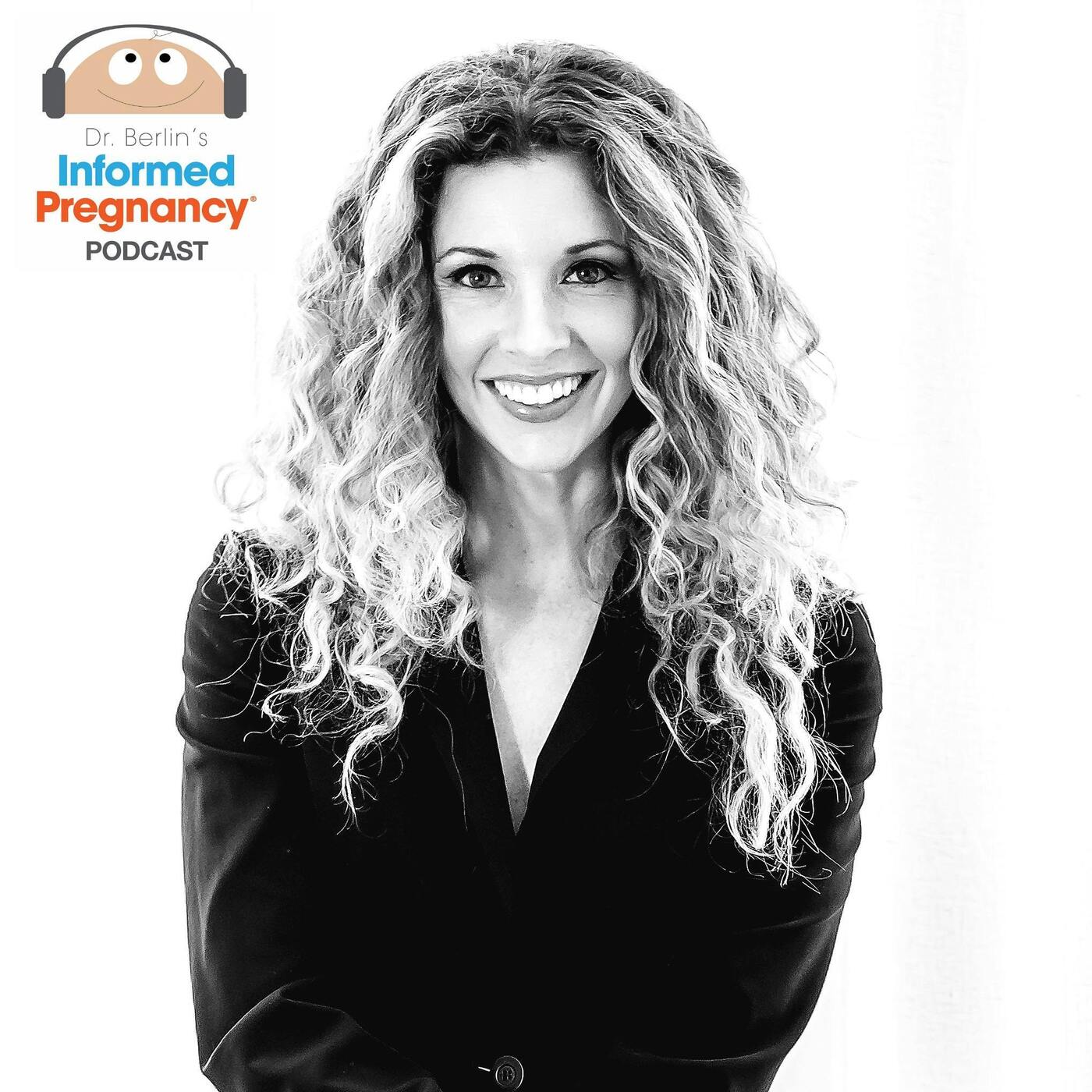
Kirsten Thompson, MD is a board certified psychiatrist with a sub-specialty focus in reproductive psychiatry. In this episode we take a deep dive into mental health conditions and pros and cons of various treatment options during and after pregnancy.

Learn more about your ad choices. Visit megaphone.fm/adchoices
See Privacy Policy at https://art19.com/privacy and California Privacy Notice at https://art19.com/privacy#do-not-sell-my-info.
Key quotes
“And so we as women really need to kind of advocate for ourselves because if a woman has a history of, for example, severe depression where they attempted suicide and their doctor doesn't know that, but tells them, hey, go off your medication, the risk of being off medication may be far worse than the risk of being on medication.”
“But I think there's a misconception that pregnancy is protective. And I think that sort of does a disservice to most women because they think they should feel better. And a lot of women actually end up feeling worse because of the hormonal changes.”
“So I think just getting a therapist that you're aligned with, I tell my patients that therapy is like dating. It has to be a good fit. So you meet someone, you give it like three sessions, and if it doesn't feel like a good fit, that's okay. You move on, you find a new therapist.”
“And instead of feeling like it's a last resort and a stigma, I try to make patients feel empowered that medication is a tool. And it's a lever that they can pull to feel better. And it's great when I see people who finally elect to do that and they say, Oh my God, I feel so much better.”
“You know, one of the risk factors for postpartum depression is lack of support and lack of planning or an unplanned pregnancy. So those increase the risk of peripartum mood disorders. And so I think as much as we can, to a certain extent, plan our lives and be as supported by friends, family, therapists, et cetera, that makes mental health so much healthier.”
Related episodes
- Ep. 432 Dr. Kirsten Thompson on PMDD
- Ep. 24 Dr. Allison Hill – Your Pregnancy Your Way
- Ep. 230 Laughter Yoga with Jamie Poster
- Ep. 190 Julie Sawaya – After Birth
Transcript
AI-generated transcript with speaker labels — may contain errors, especially names and medical terms. Dr. Elliot Berlin, DC appears in blue; Dr. Kirsten Thompson in orange.
Download PDF of the Transcript
Dr. Elliot Berlin, DC [1:36] Welcome to the informed pregnancy and parenting podcast. I'm your host dr. Elliot Berlin on this episode We have a guest who has worn many hats right after college She worked at JP Morgan until she decided to become a physician After earning her medical degree from downstate College of Medicine She trained as a surgeon for two years before deciding to flip to the less invasive side of medicine and specialize in psychiatry Until recently she held a teaching faculty role at the UCLA Women's Life Center Where she was devoted to mental health care for peripartum and perimenopausal mood disorders. She's now in private practice Specializing in reproductive psychiatry and has a whole bunch of kids. Dr. Kirsten Thompson. Welcome to the podcast
Dr. Kirsten Thompson [2:18] Thank you for having me. What a pleasure
Dr. Elliot Berlin, DC [2:20] I get the joy of speaking to you from time to time and learning stuff from you and being impressed at home LLM laid-back you are I try especially given what you do, which is not always light and easy
Dr. Kirsten Thompson [2:32] No, in fact, you know, you said less invasive I think psychiatry in a lot of ways is more invasive than surgery because you just go deep on the emotional
Dr. Elliot Berlin, DC [2:41] Talk. Yes do with the scalpel invasive. Okay To a different type of invasive medicine in this little segment. Let's talk about your background Where'd you come from? And what are the interesting path?
Dr. Kirsten Thompson [2:54] So I'm from upstate New York originally Rochester cold very cold lots of snow very little Sun Kind of the opposite of Los Angeles And I went to college at Cornell and upstate New York as well. And then study I studied engineering What I always loved math and science. Oh, yeah So I was a dork from the beginning And then right after college I graduated around the dot-com boom So I moved to New York wanted to be on Wall Street when companies are kind of going public right and left and it was Kind of a really fun time to be in business and finance Also the math side of things. Yeah, exactly the math side of things So, you know, I thought it would be fun and then unfortunately my first day of work was September 11th 2001
[3:40] Otherwise known as 9-eleven now So it was kind of a harrowing first day of work and I was about a block and a half away from the Trade towers when they fell So I had this really sentinel experience where I was kind of running for my life. Luckily, I was totally fine But I was looking around me and seeing all these people in suits kind of running and clutching their bags And I thought I was gonna die and I thought this is how I'm gonna die If I'm you know, 65 and I'm doing this and my life was just about making money Would I really be happy and the glaring answer for me was no So I went home and I started kind of volunteering at night I still work during the day for a couple of years and on Wall Street to support myself
[4:20] But I started doing volunteer programs at night throughout New York working a lot with women and health and medicine to try to figure
Dr. Elliot Berlin, DC [4:26] Out what I wanted to do next. Well, what a tricky time. Yeah to just be there I mean even after the dust sort of settled. Yeah, a lot of soul-searching. Yeah, I did not know that It's like sort of like a whole other podcast So working your volunteer work is what led you into medicine
Dr. Kirsten Thompson [4:46] Yeah, I mean I actually originally wanted to be a physician when I was probably 12 And then I went to college and you know things sort of temporarily changed But I think that moment actually on September 11th was where I realized like life is short You have to do what's meaningful to you what will lead to a good life and to me that was helping people and kind of going back to medicine which is always I had always been fascinated by. So yeah I did these volunteer opportunities and then I did a post-bac program at Columbia which means taking the pre-med classes so you can apply and I went to med school in Brooklyn at the very old age or so it seemed of 26 and that's
[5:22] how I got onto the path of becoming a doctor. This is a little older than probably the other people around you. Oh yes it felt like ancient at the time. I literally cried the first two weeks as I felt so old at 26 which now seems ridiculous because I have friends that I'm encouraging to go to medical school at like 45. It's all relative. Sure it's relative. What led you to surgery? I think the sort of like immediacy of the satisfaction of kind of you know someone has a problem like a cancer you you know essentially cut them open and take it out and they're healed and I also really liked kind of working with my hands that was really satisfying so I think that was kind of
[6:01] those were the two big things kind of just a satisfying notion of it and yeah.
Dr. Elliot Berlin, DC [6:06] I mean is it it's gonna be like a big moment when you're cutting people open and they're alive but sleepy and you know fixing the insides. I mean I know you like working with your hands but is there a bigness to that?
Dr. Kirsten Thompson [6:19] There's a hugeness to it for sure. I mean I only did it for two years of training but you know held hearts in my hands and held lungs as we transplanted them from one human to another. I mean to me it was profound and I'm really grateful for those two years even though I didn't end up staying in surgery. So then what moved you away from that? I was sort of an odd duck as it comes to surgeons. You know people used to tell me you know you're too nice to be a surgeon which you know of course all surgeons are not mean horrible people but there was you know there was many moments where I trained at USC and we had a lot of trauma victims and we had a lot of
[6:57] gunshot victims and there were a couple moments where I just felt like this isn't a great fit for me. For example one night we had two 18 year old kids who had both been stabbed in the heart and literally died you know moments after coming in. We as part of the trauma team kind of ran in to try to save them both and then they both couldn't be saved and kind of had sort of died on the table and I was the one who sort of stood in the room and held their hand while they died. While everyone else you know the person had died so they kind of ran to the next trauma and there's something to me really profound about transitioning from life to death and
[7:36] that that person you know didn't deserve to be alone. You're like an end-of-life doula. Yeah I guess kind of. So there was that and I just felt like as I sort of have gotten older I think kind of our internal mind and our perspective and our emotions is so much more interesting to me and I think I learned that myself just kind of getting older and doing my own therapy and seeing this whole world open up of the mind and mental health and pain and emotion and human experience and everything that kind of goes along with it. So that was a huge part of it. I would say that's the biggest part of it. The other part of it was I was working 110 hours a week and I
[8:13] wanted to eventually have a family and a life and I don't think it would have been that easy as a surgeon because I was working basically or I was working six days a week and sometimes 32 hour shifts without sleeping at all and so you don't really want to know that your surgeon is on the 31st hour of
Dr. Elliot Berlin, DC [8:31] a shift. Totally. No it's not ideal for anyone. I used to do ambulances and sometimes do really long times out in the field and just at some point the numbers on that little syringe you know they get blurry. Yeah there's I mean there's been studies done on it. It's equivalent to being drunk right when you don't sleep for two days at a time so it is kind of scary. Yeah we're not built that way. No. It would be cool if we just pop out a battery and put in a fresh one. I know. Caffeine. We try but it doesn't work. No not so well. So then psychiatry and also you have these like big epic things in your transitions like I'll go work on Wall Street and then 9-11 happens and then
[9:10] I'll go work in surgery and then people are dying on your table like young people are dying on your table so those are kind of psychological
Dr. Kirsten Thompson [9:18] events in of themselves. Yeah completely. I think I had definitely had a little PTSD I would say after 9-11. Some of my friends and family said you know you really change. You're super contemplative. That's a big word. I'm gonna contemplate that word. Yeah but I think you know much like life in general right we go through these huge traumas and terrible experiences and there is a silver lining I think if we look for it and that was it for me. Or you can change your yeah in a
Dr. Elliot Berlin, DC [9:45] positive way. Why women's health? Because your psychiatry is a specialty and then women's health specifically a more narrow subspecialty. I guess
Dr. Kirsten Thompson [9:57] there's a couple of reasons. I think in my own way, I knew I wanted to get pregnant and I had a little bit of anxiety and sort of own personal struggles there initially and that sort of, and I'd had friends who had sort of gotten pregnant before me and had fertility issues or pregnancy issues and miscarriages and it was like this little door that opened into a different universe that I didn't know existed before I contemplated having kids. So that was a big thing. And it was a door that showed a darker side, right? So you see moms on the street and they have babies and everyone's happy and people love babies, but then you start to hear about friends
[10:35] if they're comfortable talking about miscarriage and hard times getting pregnant or getting pregnant and how hard it is and you realize there's a lot of anxiety and depression behind it. And to me, that was fascinating. Also the fact that there's so many ways to get better. So for a lot of medicine that is chronic, we don't have treatment that's effective, but for the sort of reproductive life cycle, we have things we can do that help women. And so getting better is a nice thing to participate in.
Dr. Elliot Berlin, DC [11:03] Yeah. Before we go to our first break, can you define peripartum and perimenopausal?
Dr. Kirsten Thompson [11:10] Yes, so peripartum means around pregnancy. So for someone who's planning pregnancy, well, that would be pre-pregnancy, but pregnant or around the pregnancy itself. So postpartum being after birth. I already forgot the second part.
Dr. Elliot Berlin, DC [11:30] Perimenopausal.
Dr. Kirsten Thompson [11:31] Sorry, perimenopausal is actually preceding menopause. So menopause is defined as 12 months without a period. And so perimenopause can be up to 10 years before menopause and can include symptoms that may be sort of thought to be menopausal symptoms. So if someone can be perimenopausal and even in their late 30s, but have hot flashes or irregular periods or hormonal changes. So symptoms that are leading up to menopause, but not yet menopause.
Dr. Elliot Berlin, DC [12:01] And I just bring those up because this is the population that you work with, right? Peripartum, perimenopausal and reproductive psychiatry.
Dr. Kirsten Thompson [12:09] Exactly.
Dr. Elliot Berlin, DC [12:10] All right, we're gonna take a quick break and when we come back, we're gonna talk about some of the conditions that come up during these phases of life and how they can be treated. Don't go anywhere. We'll be right back with Dr. Kirsten Thompson.

Dr. Elliot Berlin, DC [13:50] Welcome back to the Informed Pregnancy podcast. We're talking to Dr. Kirsten Thompson. All right, so your specialty is mental health, especially around reproductive years. If somebody has mood and anxiety issues before pregnancy and now they're planning a pregnancy, what are some of the considerations to take into mind?
Dr. Kirsten Thompson [14:09] So the first one would be to make sure you're advocating for yourself, meaning getting good care and if possible kind of planning pregnancy and making sure you're getting good information. So for example, many very well-meaning physicians hear that someone's trying to plan pregnancy and say, oh, you have to go off all your medication, go off that Zoloft, go off that Xanax without knowing the woman's own mental health history. And so we as women really need to kind of advocate for ourselves because if a woman has a history of, for example, severe depression where they attempted suicide and their doctor doesn't know that, but tells them, hey, go off your medication,
[14:50] the risk of being off medication may be far worse than the risk of being on medication.
Dr. Elliot Berlin, DC [14:55] The doctor you're talking about, the OB-GYN?
Dr. Kirsten Thompson [14:57] Yeah, OB-GYN or primary care, even friends and family. can be well-meaning, but not know a patient's history and say, you have to get off your medication without knowing the risk of being off medication. And so it's really important for women to kind of make sure they're getting the right information.
Dr. Elliot Berlin, DC [15:11] You mentioned severe depression, but what are some of the other conditions that fall into these categories?
Dr. Kirsten Thompson [15:16] Sure. So, you know, depression, anxiety, bipolar disorder, and certainly things like schizophrenia or schizoaffective disorder, which can include a kind of a psychotic component and symptoms in that realm. And even things like ADHD, you know, a lot of women think they absolutely have to go off their stimulant medication because they want to get pregnant. And that may be true and that may be fine for them. But for example, sometimes I have a patient whose ADHD is so severe that if they go off their medication, they make it in a car accident. If they've got five kids and they want to get pregnant with the six, we don't want to risk them getting in a car accident and, you know, killing your whole family.
[15:56] Worst case scenario. So it just makes sense to be really informed about each individual's medications and the risks of being on them and then off them before deciding what to do.
Dr. Elliot Berlin, DC [16:07] So somebody who's already taking medications and then they want to get pregnant, they're going to advocate for themselves. But where do they get the best sources of information? Like who is the best person to talk to?
Dr. Kirsten Thompson [16:20] So if it's a psychiatric medication or mental health medication, I would certainly advocate for having an informed psychiatrist. You know, plenty of people get their mental health medications from their primary care physician or even their obstetrician. But sometimes to get a more detailed explanation of things during pregnancy, I would definitely advocate for talking to a psychiatrist kind of like myself or someone who works in reproductive psychiatry and knows the data and the risks and benefits of medication during pregnancy and breastfeeding.
Dr. Elliot Berlin, DC [16:47] So even if a psychiatrist prescribes the medication that you're taking, you might want to go one step further to a psychiatrist who has reproductive experience. Is there additional training for it?
Dr. Kirsten Thompson [16:58] Yes, exactly. Because I get a lot of patients actually that I see as kind of a one-time consultation because their psychiatrist is simply not comfortable prescribing medication while they're pregnant. So I even, you know, see people who their psychiatrist literally says you have to go off your medication or I won't see you while you're pregnant. And that puts the woman in a terrible situation.
Dr. Elliot Berlin, DC [17:17] That sounds awful.
Dr. Kirsten Thompson [17:18] Because they're basically losing care if they stay on their medication. So sometimes it is unfortunate that that's the situation, first of all, and that all psychiatrists are not fully informed about medications during pregnancy. But that's the case. So I would say, yes, definitely see a reproductive psychiatrist to get the details regarding medication during pregnancy.
Dr. Elliot Berlin, DC [17:41] I wonder, you know, there could be no correlation at all. But I wonder the effect of pregnancy on mental health. Sometimes, for example, in my line of work, chiropractic care, we'll see somebody who has chronic migraine headaches, somebody who has awful carpal tunnel syndrome, sciatica. And then they get pregnant and those pregnancy hormones kick in and everything that's too stiff, tight, and restricted, compressing a nerve or compressing a blood vessel just magically loosens up and they feel so good during pregnancy. I'm always like, oh, you're going to have like 12 kids because when those hormones go away, some of those issues tend to come back.
[18:16] What effect does pregnancy tend to have? Or maybe it's very different from person to person. Could somebody feel better just from the pregnancy hormones?
Dr. Kirsten Thompson [18:25] It's possible. But I think there's a misconception that pregnancy is protective. And I think that sort of does a disservice to most women because they think they should feel better. And a lot of women actually end up feeling worse because of the hormonal changes. So much like women in general, it's all on a spectrum. So some may feel better and their mood may improve and their anxiety may improve. And I do see that sometimes. But they may feel worse. And they may certainly have depression, which often starts during pregnancy, even though we think a lot about postpartum depression.
Dr. Elliot Berlin, DC [18:56] So I mean, that's the same for us also. The other side of that coin is sometimes people who never had headaches or never had rib pain or sciatic pain all of a sudden during the pregnancy will start to get these symptoms. So when somebody doesn't have a known mood or anxiety disorder or condition, and then during pregnancy starts, and I see this just in my practice alone, someone will say, for the first time in my life, I'm starting to feel depressive thoughts. So that must happen to people during pregnancy. When you start to feel things that you're not used to, anxiousness, that you just can't clear your mind the way you used to, insomnia because you can't sleep because of that anxiety or depressive feelings.
[19:37] Where do you go for help with that?
Dr. Kirsten Thompson [19:40] So if you're, you mean first timers, in other words?
Dr. Elliot Berlin, DC [19:41] Yeah, first timers, you're just like 20 weeks into a pregnancy and all of a sudden you're feeling things and you're in tune with those feelings. Is that something that I would bring to my obstetrician or do I call my primary care physician? And then even within mental health, it seems like there are therapists and psychologists and psychiatrists. Who do I go to?
Dr. Kirsten Thompson [20:02] Well, I think the first line of defense is usually the obstetrician, because that's where the frequent appointments are. And I think that's a good first step just for a woman to get some help initially. And they can often refer patients out to psychiatrists. I think also, in the vein of trying to go least invasive as possible, I'm a fan of therapy for everyone. So I think if a woman is open to therapy, starting with finding a therapist who can then refer her to a psychiatrist for medication if needed is a good option, because I think most people benefit from more support, and therapy can do that. But I think the most important piece is really just not
[20:43] hiding those emotions and feelings and getting help telling somebody, even if that means telling a partner or a family member or someone to trust so that they can even help get help, if that makes sense. Because sometimes, if you're starting to feel depressed, you don't even want to pick up the phone call to make a doctor's appointment, and you need help. And so letting people know around you that you trust, I think, would be the first step.
Dr. Elliot Berlin, DC [21:05] Yeah, and I think it can be scary. I think I sometimes end up putting the therapy in massage therapy, when people are relaxed enough and comfortable enough, and I just walk in and say, how are you feeling today? And we're talking. Those things will just sometimes bubble up to the surface. When the body is relaxed, the mind lets itself be known. And when you talk about doing therapy, when these things happen, as a first line, is it also, would you say, important for someone to find a therapist who has experience with reproductive health? Are some of these things specific to that time period?
Dr. Kirsten Thompson [21:39] So there certainly are therapists that specialize in that. I don't think that's as critical, because you're not talking about, so if psychiatry, you want to consider a medication and how that may affect the baby. When you're talking about therapy, you're not concerned necessarily with the baby at that point on a medical level. So I think just getting a therapist that you're aligned with, I tell my patients that therapy is like dating. It has to be a good fit. So you meet someone, you give it like three sessions, and if it doesn't feel like a good fit, that's okay. You move on, you find a new therapist. It has to just feel like a good fit, meaning you feel heard, you feel like it's effective,
[22:15] and you're making progress after time.
Dr. Elliot Berlin, DC [22:18] When I had ADHD, I went to a psychiatrist to talk about it. By the way, I think I'm sure I had ADHD as a kid. It was never diagnosed. I wasn't the hyperactive kid. I called myself ADDD, attention deficit donut disorder. When I'd feel that, my brain would shut and not want any more information, but I'd have to sit there and shove in information. I'd just want to eat a donut, and then sort of self-medicate on my Krispy Kreme. So vitamin K. So what happened is I just didn't get diagnosed. I kind of ate sort of A-B plus student always, and I can compensate for it in other ways. Then at 39 or somewhere around there, I was exploring ADDD a little bit.
[23:05] Some of my patients were talking about their experiences going off their medication during pregnancy and how these very successful lawyers would talk about getting back to their work, but still not taking the medication because they're breastfeeding and they didn't want to take the medication and just being in court and just losing the train of conversation. One of them told me that everybody in the court assumed she's hard of hearing because she'll just all of a sudden say, what, I'm sorry, what was that? And they'll just assume she's hard of hearing, so say it again, louder. And she just went with that because she didn't want to know that she just totally lost the conversation.
[23:44] But when I sat down with my psychiatrist and was diagnosed at that time, I think about a three and a half minute visit. So I know your visits are a lot longer and that you do other things besides just collect symptoms and dispense medication. What's your approach?
Dr. Kirsten Thompson [24:00] So yeah, I don't see anybody for less than 30 minutes and I do 30 minutes to 90 minutes depending on the patient. And some patients are fine with going in for a very short visit if they're on medication, but for me, I like to kind of mix medication and therapy because I think we all need support and that's a way to deliver it even during a medication visit of 30 minutes. So we talk about kind of life updates and with some patients, I just do therapy and they don't want medication. So every person, every woman is different. Some women during pregnancy want to go off medication completely and just do all sort of natural things, therapy and lifestyle things, and that works for them.
[24:39] And so for some people, I see them just for 45 minute therapy sessions and we kind of process what's going on in their life. And then for other women, again, kind of embracing what is the spectrum to be a woman. Some women need to be on multiple medications during pregnancy and so we talk about their life, but then we also talk about the medications and how they're doing and make adjustments as needed.
Dr. Elliot Berlin, DC [25:00] All right. We're coming up on a second break. When we come back, I want to talk about some of the effects of these medications, like why people are not eager to take them, even though they help, and some of the effects that they may have on the pregnancy or in breastfeeding, and some of the other stigmas that are getting away from people seeking out help. We will be right back with Dr. Kirsten Thompson. Welcome back to the Informed Pregnancy Podcast. We're talking to Dr. Kirsten Thompson. All right. So, you know, we did an episode of our podcast with Amanda Seyfried, and she talked about her OCD, and she talked about her anxiety and her panic attacks, and how she took medication,
[25:48] low-dose medication, all throughout pregnancy. And the media picked that up, and there was like this, I think a blogger picked it up and said how she, you know, shouldn't have taken the medication during pregnancy. I don't know who the blogger was, but it kind of sparked this storm, and I think reputable media outlets brought in professionals, and for the most part, they agreed that it's probably she did the right thing. So there's reasons like this. There's a lot of stigma around mental health in general, and then especially during pregnancy and breastfeeding, that get in the way of people seeking out care. My wife, who you know, is a perinatal psychologist, and she's gone to OBs and
[26:29] tried to really push them to do a third trimester mental health checkup. Just to get a pulse, like, how is this person doing? You check everything else. You check the urine, and you check the blood, and the blood pressure, and the amniotic fluid, how big the baby is. That's all physical. What about the mental health? How is the whole package here? You can't separate mind and body. And the pushback that she gets is that in their experience, women who are struggling, who haven't said anything, are going to lie, because they're afraid that if they are perceived as having a mental health issue, their baby will be taken away or something like that,
[27:05] or they won't be a fit parent. So first of all, let's talk about the medications themselves and why people are so passionate about other people not taking them. What are the concerns?
Dr. Kirsten Thompson [27:16] Well, I think people have the worst case scenario as it relates to the baby getting exposed to medication in mind, and there certainly are medications throughout history that have been found to cause major birth defects. And so I think that's what people have in the back of their mind. The reality is every medication has to be looked at differently because, for example, people take tons of Tylenol during pregnancy for headaches and things like that, and that's thought to be pretty safe. So we need to look at each woman individually and what medication she's on and then make a decision also based on her symptoms and history. So before I talked about, you know, worst case scenario for some women, maybe if
[27:54] she's depressed and ends up feeling suicidal, that ending her life and therefore the babies while pregnant would be much worse than exposing her to a medication. And a caveat to that is many of the medications now are just thought to be generally very safe. It's just that there's kind of a discussion that needs to be had about the risks and benefits and alternatives of each medication. But for some women also, I've had a patient who, you know, had such severe anxiety, wanted desperately to get pregnant, was, you know, in her 40s, went to great lengths to do IVF and get pregnant and then became so anxious off medication that she ended up having a termination of a baby she really wanted.
[28:35] But because the anxiety was so strong and uncontrolled. And so that's a loss of a pregnancy that she actually wanted. But because her mental health was not being adequately treated. So it's really every medication is different, every woman is different. And it makes sense to evaluate the medication and kind of the research we have on each medication and the risks and benefits, because now many, many medications, namely the SSRIs, are thought to be relatively safe. And as of right now, don't increase the risk of major birth defects beyond what happens in nature kind of on its own for women who aren't on medication. So the incidence doesn't go up just because you're taking that
[29:12] medication. Exactly like the three to five percent of women in general on no medication may have a baby with a major birth defect because of nature or God or whatever you kind of believe in. And women, as of right now, SSRIs have that same three to five percent risk.
Dr. Elliot Berlin, DC [29:27] What are some examples of SSRIs?
Dr. Kirsten Thompson [29:30] Zoloft, Prozac, Paxil, although Paxil has a little bit of a different story, but Selexa.
Dr. Elliot Berlin, DC [29:37] You know, we want to know the Paxil story.
Dr. Kirsten Thompson [29:38] Lexapro. Yeah, there was one study years ago that showed kind of a, you know, basically a bigger defect with that medication. And then that study was actually later refuted. So for the most part, we think the SSRIs are generally thought to be very safe. There's, you know, sort of little things to know about them. they may increase the length of pregnancy by a few days, but that's not meaningful when it comes to the overall health of the pregnancy. And there are risks too, and I always tell my patients this, you know, it's never a zero-risk scenario. So if you're talking to someone who has a history of depression or anxiety, you have to talk about the risk of illness, which we
[30:18] know can cause preterm birth and growth restriction, and then the risk of medication. So we're always just weighing those two risks back and
Dr. Elliot Berlin, DC [30:25] forth. It's a risk-benefit analysis like any other medication or intervention that you do. And for one person, it may make sense to do a particular intervention or take a medication for somebody else that may
Dr. Kirsten Thompson [30:37] not. Definitely. And I think for women who have a history of depression who go off their medications during pregnancy, their risk of relapse is around 60 to 70 percent. Versus women who stay on medication, their risk of relapse in the postpartum is about 30 percent. So it's just really important to kind of think about that when I'm going off medication, what that looks like for each person. What about taking these medications in conjunction with breastfeeding? So great question. Again, each medication is a little bit different in how it transmits into the breast milk. But again, a lot of them are thought to be very safe. Even if it goes through the breast milk.
[31:13] Right. Even that things like the SSRIs go into the breast milk for the most part in very, very small amounts so that the baby is getting. In a lot of studies, for example, Zoloft's a really common SSRI, one of the ones I use the most in pregnancy. And a lot of times it can't even be detected in breast milk. So we assume just like anything that goes in the mom goes in the baby, we assume on a microscopic level. But this a lot of studies show that it can't even be detected. So the exposure is very low and it's much less than even that during pregnancy. You know, it's
Dr. Elliot Berlin, DC [31:44] interesting. I think a lot of people, myself included, are nervous about taking medications because of side effects. And even when I was diagnosed with ADD and he's like, why don't you try Ritalin for a little bit? I sat on it for six months without even looking into what the side effects are just because I didn't want to take medication. Because in general, medications always have some kind of side effect that's possible. When I finally got curious enough to look it up, I saw that the number one side effect was weight loss. I was like, Oh my God, this is like a miracle pill. I'm like, will it also make my hair grow back? So it's important to look, to look at, you know,
[32:23] to investigate.
Dr. Kirsten Thompson [32:25] Yeah, definitely to know the medication and yes.
Dr. Elliot Berlin, DC [32:28] What about the stigma in general? Just people afraid to, you know, if you have a broken leg, no problem. But if you're anxious, people judge you.
Dr. Kirsten Thompson [32:35] So I hope things are changing, but that being said, they're certainly not changing fast enough. I think we try and pretty much everyone tries to do everything in their power before they get medication and see a psychiatrist. So they change their lifestyle. They, you know, try to get help. They do therapy. And instead of feeling like it's a last resort and a stigma, I try to make patients feel empowered that medication is a tool. And it's a lever that they can pull to feel better. And it's great when I see people who finally elect to do that and they say, Oh my God, I feel so much better. People are so worried to patients are worried about not feeling like
[33:15] themselves on medication. And more often than not, I see people feel kind of returned to themselves.
Dr. Elliot Berlin, DC [33:20] Yeah, that's interesting. So I see that also in our clients, that that exact thing they're afraid to just feel too neutral or to, you know, no feelings at all. And then they take it. And they're like, that's who I miss. That's who I was. I'm glad to be back. You're an interesting for like a surgeon, psychiatrist, pharmaceutical person. You're interestingly holistic in your own life. I try. You're like a marathon runner. You're like a wellness person.
Dr. Kirsten Thompson [33:50] Yeah. And before kids, um, I did run six marathons and then I started having children. Um, but yeah, I think lifestyle for sure. So I, you know, try to, and I talk about this with my patients. I first and foremost advocate for self care time and particularly in a postpartum too, even when you have this new baby trying to cut out 10 or 30 minutes of alone time. But diet is really important to me. Exercise eating whole foods is 60% less associated with depression than eating processed foods. So I advocate that for all my patients pregnant or not. Exercise has been shown in so many studies to reduce the risk of anxiety and depression. So that's a very effective and therapy and medication
[34:28] alone. And in a lot of studies have been shown to reduce the risk of depression in about 60%. So for sure, we want to try those things that don't include medication first. And I, you know, I'm an advocate personally to a therapy and done tons of therapy in the past. And you know, my husband's a fan of therapy too. At one point I said, we have to have fewer therapists overdosing on therapy for ourselves. And right now I see a life coach. Like I think everyone deserves a therapist and the world would be better if we all had one. So I'm an advocate for all those lifestyle things. You know, one of the risk factors for postpartum depression is lack of support and lack of
[35:05] planning or an unplanned pregnancy. So those increase the risk of peripartum mood disorders. And so I think as much as we can, to a certain extent, plan our lives and be as supported by friends, family, therapists, et cetera, that makes mental health so much healthier.
Dr. Elliot Berlin, DC [35:20] I have a weird question. Do other animals have postpartum sadness?
Dr. Kirsten Thompson [35:26] I don't know the answer to that. If I saw animals, I would probably know.
Dr. Elliot Berlin, DC [35:30] I've got to talk to a peripartum veterinarian, reproductive psychiatrist. Maybe that's an episode.
Dr. Kirsten Thompson [35:38] I do know that we are the only mammals that don't eat our placenta. And that is a reason why many women advocate for placental encapsulation as a sort of means of reducing postpartum depression. I will say that as of right now, the data doesn't show that it's so effective. And there is a risk that-
Dr. Elliot Berlin, DC [35:56] Is it because there's not enough data or because-
Dr. Kirsten Thompson [35:58] You know, possibly. I'm not an expert in placental encapsulation, so I always leave room for the option that it does work. And obviously, also, the placebo effect is profound. So maybe for someone, it really does work. But there's also the risk, too, that if the placental is kind of a filter. So if you're not eating necessarily an organic diet, the placenta can actually have filtered material from the woman's diet in it that you're then encapsulating and kind of taking again, if that makes sense.
Dr. Elliot Berlin, DC [36:25] You mean your second go at poor nutrition?
Dr. Kirsten Thompson [36:27] Yes, exactly. Like if you're eating food with pesticides and your placenta's catching it so the baby doesn't get it, and then you decide to encapsulate and eat your placenta, you know, you could, in essence, be kind of eating some of the toxins that your placenta was preventing the baby from getting. I've not, to date, seen large-scale studies on it. So without the data, it's really hard to know.
Dr. Elliot Berlin, DC [36:46] Yeah, there's not too much out there. Could be super helpful. Could be not that great. We just don't know. Yeah. As of right now. Probably not that tasty. Yeah. My final question's a weird one. Do you miss surgery at all?
Dr. Kirsten Thompson [36:58] I do have moments of missing kind of the glory and the speed of it.
Dr. Elliot Berlin, DC [37:05] Different outfit.
Dr. Kirsten Thompson [37:06] Different, yes. Definitely different. And I miss wearing scrubs every single day and not having to spend any time thinking about what to wear in the morning. So I do have those, and sort of the critical nature of it. Psychiatry can be critical, but certainly not to the extent that kind of a life-saving message has for us. It doesn't have that big, like, ER heartbeat.
Dr. Elliot Berlin, DC [37:24] Yeah, like the dopamine, you know, sort of rush, epinephrine rush of surgery.
Dr. Kirsten Thompson [37:29] But I think for me, this was, you know, I love my work.
Dr. Elliot Berlin, DC [37:32] I get that from watching cable news. All right, we're out of time. I've learned a lot from you, yet again. Thank you for joining us and sharing your wisdom. Where can we find you online?
Dr. Kirsten Thompson [37:45] You can find me on my website, which is www.thompsychiatry.com, which is T-H-O-M-P-S-O-N. Psychiatry, which is P-S-Y-C-H-I-A-T-R-Y.com.
Dr. Elliot Berlin, DC [38:00] It is a mouthful. ThompsonPsychiatry.com. And at home, thanks for listening. If you have topic ideas, and many of you seem to have topic ideas because they are coming fast and furious, but we read every email, we respond to pretty much every email, and your topic ideas are what make our future episodes. So look for us on social media at Dr. Berlin, D-O-C-T-O-R-B-E-R-L-I-N, or online at informedpregnancy.com.
Want more pregnancy + parenting? Start your FREE TRIAL of Informed Pregnancy+ and get access to all our curated pregnancy and parenting content — original series, iconic birth films like The Business of Being Born, prenatal workouts and more.
